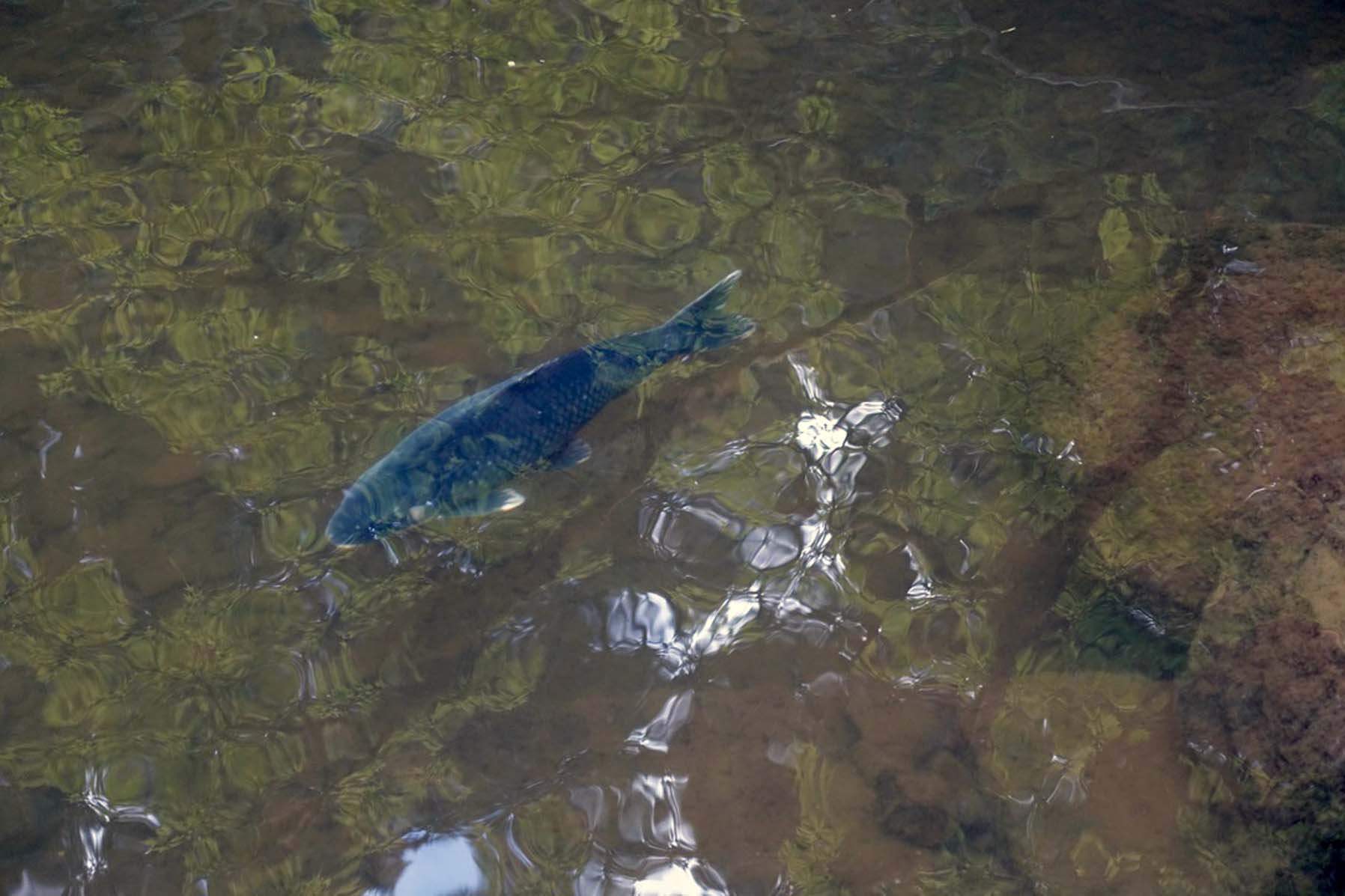
I have been absolutely hooked on an album by Fabrizio Cucco, called Tempo Fermo. It unfolds slowly, getting more powerful with each subsequent listening, creating and simultaneously satisfying a sense of longing. It is sung in Italian, so you might wonder why I am posting it with pictures of Portland Japanese Garden, an altogether different culture. Well, depending where you inquire, the English translation of the title says Down time, or Time Standing Still.

That is the garden for you: it forever offers down time, a shelter from thinking hard, feeling hard, worrying hard.
It provides beauty, in so many different dimensions, differences in patterns, from whole vistas to the smallest details.

Light,


and color.


It offers calm, as only nature can do, even if nature is pushed into defined configurations by mostly invisible sources (from garden designers to the knowledgable gardeners, who one encounters occasionally.)


It provides the comfort of familiarity, a place to return to that greets you with old standbys, or that you proudly assess for seasonal changes, like the familiar decorations alternating across holidays in your childhood home. Except here it is not decorations, it is nature itself that changes with the shifting amounts of daylight and temperatures. Change that is of the essence, not some imposed by-product of celebrating seasonal events.


Visiting the garden, like yesterday morning, also elicits, on occasion, my hopes for the other translation of the phrase tempo fermo: time standing still.
For a short moment I wished for time to stand still, to be preserved, just like my photographs preserve my way of seeing the world around me. I wanted not to have to leave the hazy light of the early morning, the still cool air before the heat settles in, the company of a friend who relishes quietude just as much as I do. I wanted to put that moment into a piece of amber, a moment when I could still walk and climb stairs, when pain was perfectly manageable, when news were tuned out and my brain switched away from analysis to simple, grateful awareness of nature’s beauty.


I wanted to hold on to a moment where the world can still be healed, in theory, where gardens can still defy the challenges brought on by climate change change, where frequent outings are not a luxury out of reach. Time standing still, so that no more deaths are accrued on the battlefields, the regions of genocidal starvation, the areas of natural disasters.
That wish – Time, stand still! – is of course one that has been shared by many people across the centuries. It has been experienced, most often in the context of love, longing, separation. Listen to one more piece of music that encapsulates the notion – from the 17th century by John Dowland.


Then again, here is the thing: if time stood still there would be no music. After all music is an unfolding in time – we have to switch from stand-still to procession, if we want to experience that art form. Beauty, then, offered in development rather than permanence, in “becoming” – I take that as a major consolation for futile longings of halting time!

And here is yet one more perspective on time:
On Meditating, Sort Of
Meditation, so I’ve heard, is best accomplished
if you entertain a certain strict posture.
Frankly, I prefer just to lounge under a tree.
So why should I think I could ever be successful?
Some days I fall asleep, or land in that
even better place – half-asleep – where the world,
spring, summer, autumn, winter –
flies through my mind in its
hardy ascent and its uncompromising descent.
So I just lie like that, while distance and time
reveal their true attitudes: they never
heard of me, and never will, or ever need to.
Of course I wake up finally
thinking, how wonderful to be who I am,
made out of earth and water,
my own thoughts, my own fingerprints –
all that glorious, temporary stuff.
By Mary Oliver
