Today I want us to think through the connection between hobbies and Pope Francis. “What on earth,” you mutter, wondering if I have lost my marbles, or at least the relevant respect for the recently deceased. Neither, I assure you, just give me a minute.
The number of obituaries for the Pope matched those of articles contemplating what will come next, just as the differing political leanings were obvious in both kinds of publications: reverence for what he represented and had accomplished, or hopes for a return to less progressive eras.

“Some popes perfectly complement the age in which they live. A few were reformers—agents of positive change. Others railed against modernity and the diminishing power of the Roman Catholic Church. Some accomplished great things, some horrific.”
“It was a pope who, parleying with Attila the Hun, persuaded the great conqueror not to invade Italy; a pope who, in what remains the greatest psy-op of all time, riled up disgruntled Normans and sent them to Jerusalem to repulse the Seljuk Turks; a pope whose legate, after indiscriminately slaughtering the entire population of Béziers because a gnostic sect was based there, replied, when asked how to tell the heretics from the faithful, “Kill them all and let God sort them out”; a pope who divvied up lands in the New World between Portugal and Spain; a pope whose Papal Bull was used to justify slavery in the Americas; a pope who excommunicated Henry VIII, indirectly establishing the Church of England; a pope whose corrupt and venal policies prompted Martin Luther to nail his Ninety-Five Theses to the door of the Wittenberg church, jumpstarting the Reformation; and so on.”
This from the most insightful – and funny – essay on the power of the papacy in general that I read yesterday.


What stuck we me, however, regarding Pope Francis, was a paragraph in the NYT obituary about his personal focus:
“Francis …called for “Synodality”, the word given to the ancient church habit of assembling, discussing, discerning and deciding. Francis adapted the ancient practice of synods and councils in a radically inclusive way that invites all the faithful to be involved. The cardinals may conclude that right now, this is the greatest sign of hope the church can offer the world.
This “culture of encounter,” as Francis called it, may seem a puny thing to the powers that be. But it starts from the idea that those in thrall to the will to power cannot understand: the innate dignity of all, the need to listen to everyone, including those on the margins, and the importance of patiently waiting for consensus. These things are all crucial to the repair of a torn civic fabric.“
And here, of course, we have our bridge to hobbies: the culture of encounter.
New reports on the effects of the devastating consequences of this administration’s economic kamikaze include the fact that many people are priced out of their hobbies, with cost increases put on consumers’ backs. Now, for usually more solitary passions like mine, knitting, the horrendous prices for wool might register in decreased sanity – after all, it is my form of therapy, and absent those hours spent with my needles, neuroticism might visibly increase – beware, dear reader. Might lose my marbles after all.
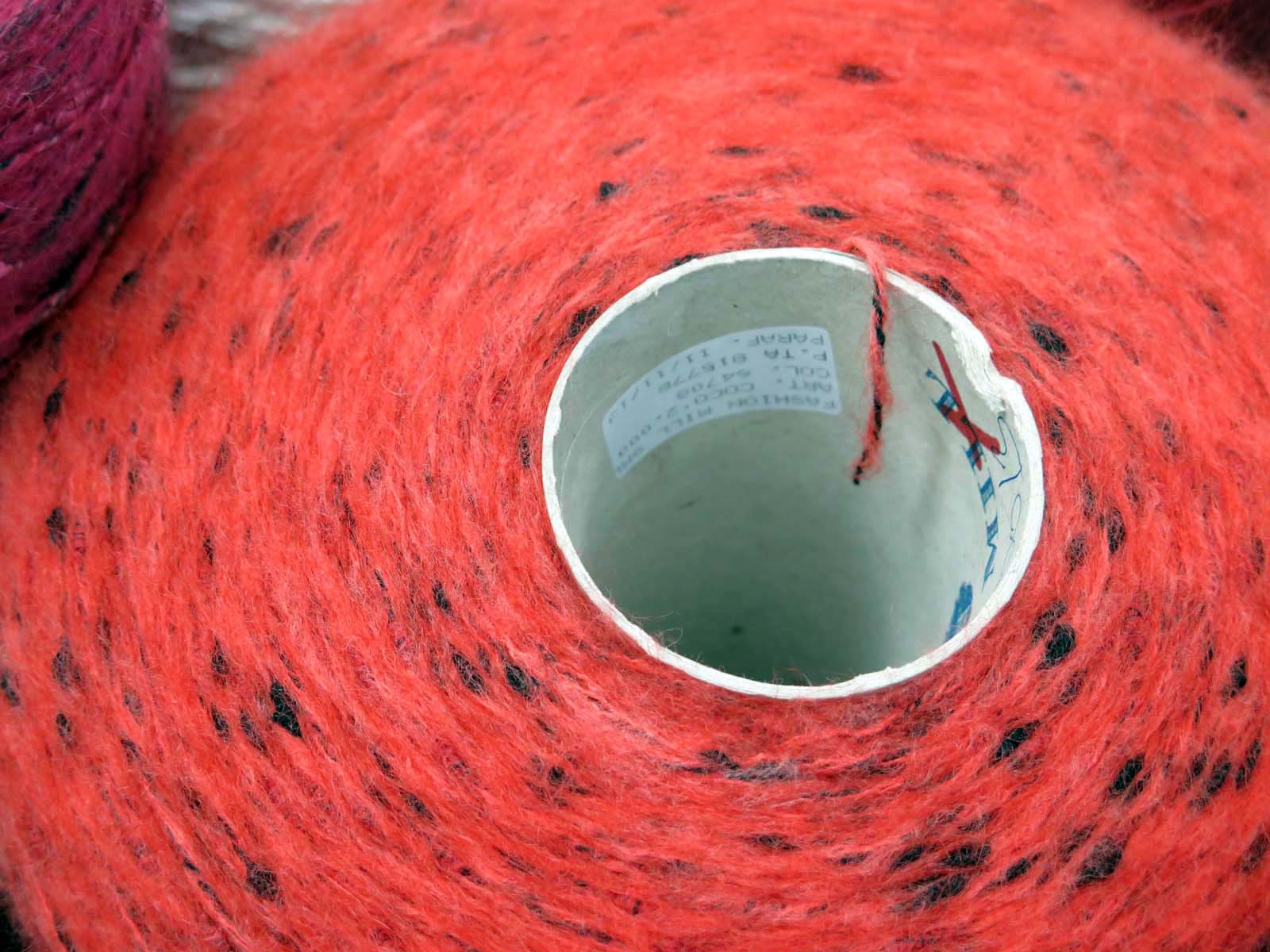
Can you guys what my current project is?

But many hobbies are activities where you meet other people, or engage with them, often providing exposure to very different types from different walks of life, who would usually not be encountered. You meet people fishing, bowling, hunting, or in bike clubs – you get the idea. Usually, the Meso-world, as sociologists call it, the tiny publics you find in groups that come together to act on the local level, consist of people who already have much in common. Your unions, your prayer circle, your book club or who you go to demonstrations with are all comprised of somewhat like-minded compatriots.

Hobbies, on the other hand, really draw participants from different worlds. And if they now exclude the segments that simply can no longer afford them, you have lost an opportunity for civic encounter in small collectives. That means losing the dialogues that can lead to cooperation, or to conflict – both drive civic commitment that can provide a metaphorical hinge between individuals and societies. (Informative reading here: Gary Alan Fine The Hinge: Civil Society, Group Cultures, and the Power of Local Commitments.)

One way to counteract the price surges and foster local engagement at the same time, are lending libraries – not for books, but for tools or other items needed for activities once easily shared. These are, of course, not new inventions. I remember driving my teenager, who had a new expensive hobby every 5 minutes, to a tool shop where you could rent space and time with existing wood working tools that would have cost a fortune, even then, to acquire. He met quite a few people who would mentor or share his interests. These days, these shops take on a different kind of urgency.
These non-profits have, of course, their challenges. Who does the tool maintenance? How do you recoup the tools that wander off… who pays for liability insurance and how do you raise funds, if you don’t charge membership dues or other fees? But on net, they are a marvelous way to create community, connecting people around them and supporting other communal efforts of small collectives. After all, community-based volunteer programs around the country, from tree plantings to building renovations, from picking up trash to community garden projects, all depend on borrowing massive numbers of tools when they call for action.


Here is a way to find your local tool lending library or other ways to share tools.
As for crafts? There are certainly ways to find or found local craft groups, or, if your health or transportation issues preclude in-person meetings, there are zoom encounters with like-minded knitters. For folks in Portland, there is a wonderful offer by the Multnomah Library system, to be taught and to meet with others in their A good yarn project for knitting and crocheting, all levels of experience welcome. And of course there is always the BUY NOTHING possibility for scoring some tools and wool that generous people donate.

The civic fabric might be torn, but we still have ways to mend it. Don’t let inertia be the enemy.
And since we are talking politics and craft/ tools, it has to be Hans Sachs today, singing about the madness of the world… Wagner’s Meistersänger is endless (4:29 hours, although in Herman Prey’s company it might fly by…), but I figured we could stomach this short aria.