“A Third Way: Between mute submission and blind hate – I choose the third way. I am ṣāmid. – Raja Shehadeh, A Journal of Life in the Westbank (1982).
I am writing this on the last day of Hanukkah, the Jewish celebration of a miracle during ancient times of war (between two Jewish factions, no less.) It is a minor holiday for us, in contrast to Christmas for others, coming up in a few days. The promise of peace through a newly born savior is central to Christianity, even though one might wonder about the seeds of conflict already inherent in the Christmas story per announcement in Luke 2:14 : “Glory to God in the highest heaven, and on earth peace to those on whom his favor rests.” Favoring one set of people over others is a recipe for conflict, in my opinion, and currying favor in order to be in the desirable in-group has often implied exclusion of others. But I digress.
Today’s thoughts are about peace, the absence thereof, and the steadfastness of those who try to dream about a just world amidst war and violence, including the anti-Semitic mass murder in Australia last week and the ongoing genocidal actions in Gaza for the last 2 years.
There is a term in Arabic, Sumud, which means “steadfastness” or “steadfast perseverance”. In one interpretation, it encompasses everyday nonviolent resistance against injustice imposed on you. Sumud is an alternative to and rejection of passive submission to oppression and dispossession. It became an important aspect of Palestinian existence under Israeli occupation, summarized early by Edward Said as work which “becomes a form of elementary resistance, a way of turning presence into small-scale obduracy.” (Ref.)

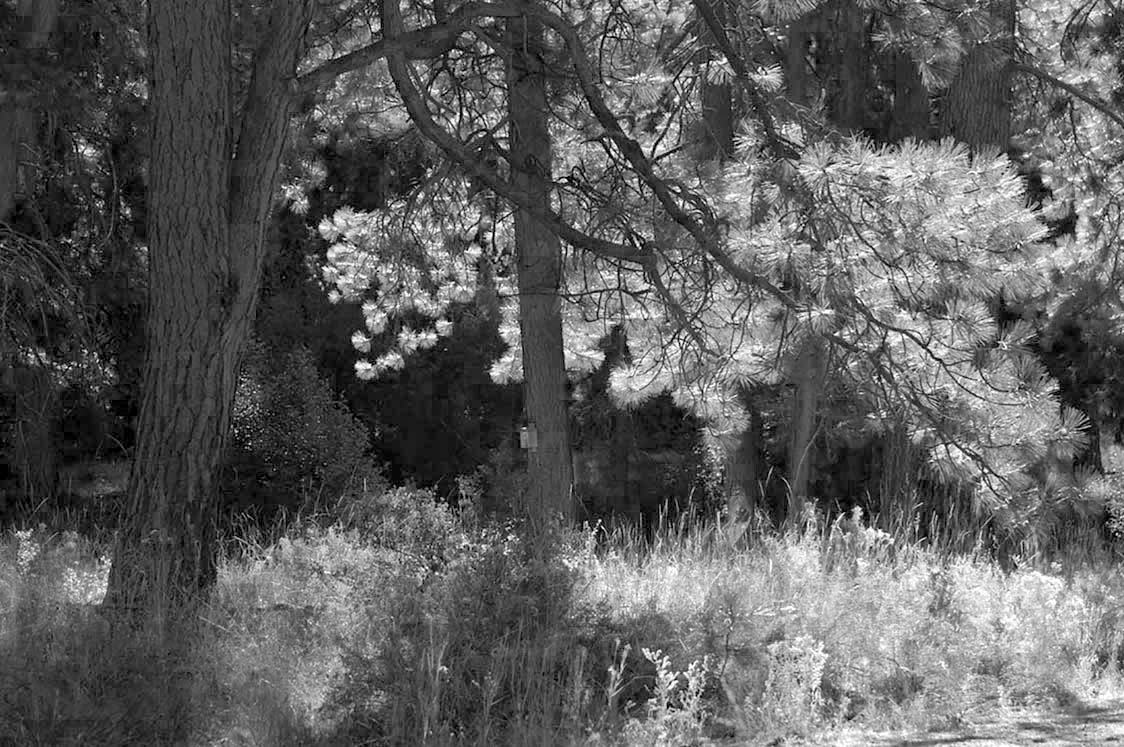
Folks at the Arab Educational Institute in Bethlehem defined the sumud concept as, “on the one hand, [relating] to a vertical dimension, ‘standing strong’ on the land, having deep roots. On the other hand”, sumud indicates “a horizontal time dimension – an attitude of patience and persistence, of not giving up”, despite the odds. (Ref.) I chose photographs of roots and trees for this reason today.
A person who practices sumud is called ṣāmid, and I can think of no better example right now than Ahmed “Muin” Abu Amsha, a musician, sound engineer, composer, and music educator from Gaza. He has steadily worked with children under the onslaught of bombs and drones, teaching them music that incorporated the sounds of the drones, making something terrifying into something beautiful. He insists that music is just as important as finding shelter and food, a steadfast focus on something more than war. His choir, Gaza Birds Singing, has provided meaning for so many youths living under excruciating existential threat. Watch for yourself.

Sumud is also the title of a new, short film by documentary film maker Jan Haaken, featuring a Portland anesthesiologist who regularly travels to Gaza to provide assistance to a medical system under systematic attack, and Omar El Akkad, a now Portland-based author whose most recent book, One Day, Everyone Will Have Always Been Against This, won the 2025 National Book Award for non-fiction.
Truth be told, I had to force myself to watch these 27 minutes, given how overwhelmed I feel by my mix of emotions every time I think of Gaza. The sorrow over the Israeli victims of the Hamas attacks; the subsequent killing, maiming and psychological torture of Palestinian men, women and children for two full years. The horrid and completely counterproductive Israeli response, with our tax dollars supporting an indiscriminate war against civilians. The lack of will of the political establishment around the world to put an end to the slaughter. The undeniable fact that the current “cease fire” is a sham, with more than 360 Palestinians, mostly kids and the elderly, killed since it was announced 10 weeks ago. I just want to hide my head in the sand.

I did watch, though, and learned a lot, much of it new to me, including the report of the anesthesiologist on the systematic nature of the injuries they encountered with victims all waiting in lines at food distribution centers. But much of the film also gave me renewed hope that there are people out there who can and will help, with their courage, their wisdom, their insights and longing for justice, to move ahead. These are, of course, people who need us, in return, to join for collective actions that might have an impact on ending the war. In an earlier print interview, author Omar El Akkad outlined his observations and recommended action, asking: “How does one finish the sentence: ‘It is unfortunate that tens of thousands of children are dead, but …’”
Pondering this sentence might be a first step towards overcoming the tendency to avoid facing what is going on in the Middle East, a tendency otherwise fueled by the need to keep one’s peace of mind somewhat intact in the face of the onslaught of bad news in our world. If we want to be agents of peace, we likely need to leave our clinging to peace of mind behind. Period. It’s our turn to embrace the concept of steadfastness, not as cultural appropriation but as an expression of solidarity with victims everywhere.
If you are interested in screening this documentary with a group of friends or colleagues for free, you can go to the website. In the lower left corner is a red square where you can apply for a free link to see the film.

***
People who decry the extent of Palestinian suffering are constantly challenged to justify themselves, particularly so if they are Jewish. Anyone standing in solidarity with Palestinians is tagged as suspicious, as if support for this devastated population necessarily involves anti-Semitism. This challenge, though, is incoherent, and there should be no obstacle to asserting two simple concepts at once: a respect for Jewish lives and a respect for Palestinian lives; a rejection of anti-Semitism, and an abhorrence of the indiscriminate killings of Gazan civilians. Why do I have to defend myself for these simple, humanistic statements? Why do I have to justify them and defend myself against the bizarre notion that these views are anti-Semitic?
Just look at the table of contents of the current issue of Jewish Currents, the award-winning quarterly of politics, culture, and ideas. There you will find a plethora of reports and analyses authored by people raising their voices against those who have distorted all discussions of the war in Gaza and the future for a Palestinian homeland, deliberately (and falsely) equating anti-Zionism with anti-Semitism, and falsely condemning calls for Palestinians statehood as anti-Semitic. Amid the horrors of the reality in Gaza, it is dismaying that so much time and energy are now spent defending against how the notion of anti-Semitism is instrumentalized to push through political projects that are rooted in very different considerations.

A poignant summary comes from Will Saletan at The Bulwark, noting how supporters of contemporary Zionism, ever more exclusionary and territorially expansive, play into the hands of anti-Semitic terrorists like the Bondi Beach murderers.
“Supporters of Israel have shifted their position again. Any endorsement of Palestinian statehood, they contend, is an invitation to antisemitic violence.
This is a false and dangerous argument. If you tell people that accepting Palestinian statehood is tantamount to promoting or provoking the murder of Jews, you’re erasing the nuances that make coexistence possible. You’re conflating Palestinian autonomy with opposition to Israel. You’re conflating opposition to Israel with hostility to Jews. And you’re conflating hostility to Jews with murder.
All of these conflations serve the interests of antisemitic terrorists. Their goal is to polarize the issue. They want to equate supporting Palestine with killing Jews. Prominent supporters of Israel are now, in effect, endorsing that equation.“

***
I started with references to the sound of drones, and I will end with another one.
Let me close with a poem by Mosab Abu Toha, who received the Pulitzer Prize for Commentary with essays published in the New Yorker this year (2025). His first volume of poems won the American Book Award, the Palestine Book Award and Arrowsmith Press’s 2023 Derek Walcott Poetry Prize.
Things You May Find Hidden in My Ear
For Alicia M. Quesnel, MD
I
When you open my ear, touch it
gently.
My mother’s voice lingers somewhere inside.
Her voice is the echo that helps recover my equilibrium
when I feel dizzy during my attentiveness.
You may encounter songs in Arabic,
poems in English I recite to myself,
or a song I chant to the chirping birds in our backyard.
When you stitch the cut, don’t forget to put all these back in my ear.
Put them back in order as you would do with books on your shelf.
II
The drone’s buzzing sound,
the roar of an F-16,
the screams of bombs falling on houses,
on fields, and on bodies,
of rockets flying away—
rid my small ear canal of them all.
Spray the perfume of your smiles on the incision.
Inject the song of life into my veins to wake me up.
Gently beat the drum so my mind may dance with yours,
my doctor, day and night.
BY MOSAB ABU TOHA
Music today is more by the Gaza Birds Singing – here, here and here.
The entire album, Wings over Wire, can be found on Bandcamp for a pittance. All proceeds for purchase go to the Gaza Bird project.
