
We used to bring the kids to this small coastal town in Oregon. Long, sandy beaches, a wonderful aquarium, a Marine Science Center, a bustling bay front offering sea lions, ice cream, saltwater taffy (not necessarily in that order) – it all made for the perfect family vacation.


There is something special beaches offer: the possibility for kids to physically exhaust themselves to the limit, with running, wave jumping, digging holes or building sand castles. They end up in bed early, out to the world, and parents can have quiet evenings, watching spectacular sunsets, glass of wine in hand, with, miracle of miracles, uninterrupted conversations.
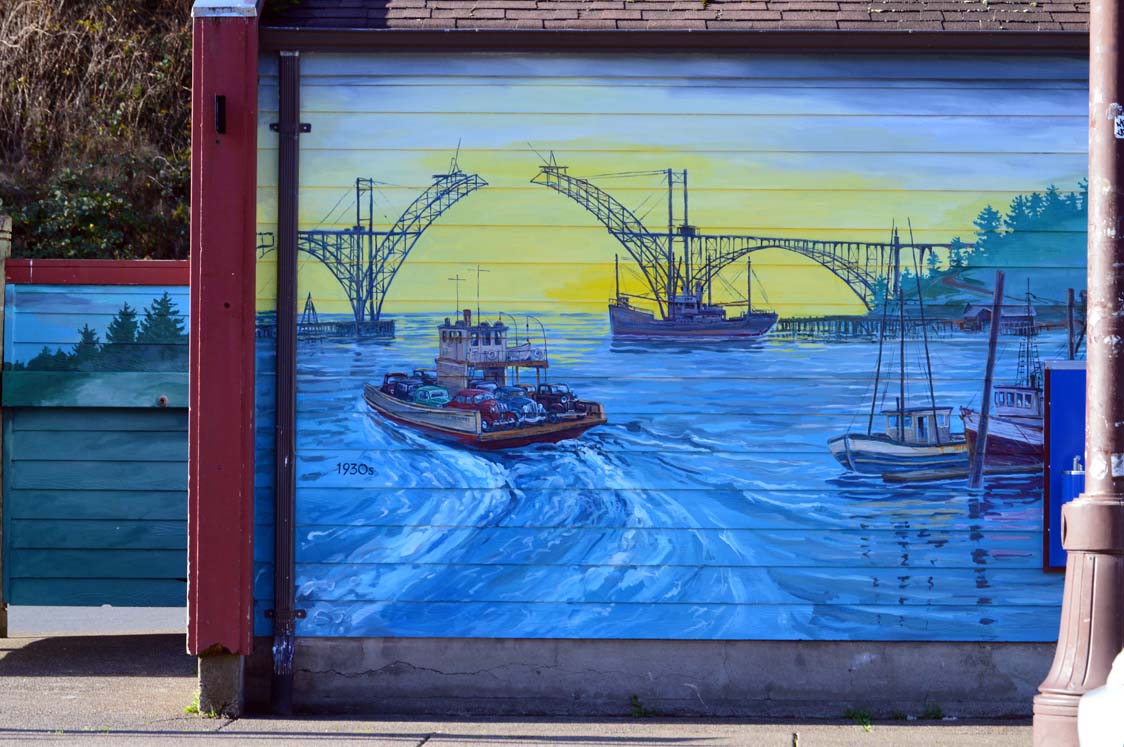
Newport also provided something that you rarely find in coastal towns these days: a working waterfront, mingling with the tourist trade. It’s filled with colorful murals depicting the trade and the history of the town, plenty to talk about with the kids.


The harbor has a fleet of boats that provide some 12% of the county’s employment and add $354 million a year to the economy. Fishing boats, shrimp trawlers, whatever they do to catch crabs, all make for jobs for fisher folks, next to the tourist cruises for whale watching during migratory seasons.


At the time we could also catch glimpses into several of the seafood processing plants from the side walks, and alert the kids to what it means to be a worker under demanding, often harsh conditions. They were too young to understand the politics of it, but old enough to grasp the difference between people frolicking on beaches, able to pay for hotels, and those standing in cold halls with bloody rubber gloves and boots, working their butt off for very little money.


Thirty years later, things have changed, not always for the better. The town of some 10.000 inhabitants now has fancy restaurants next to the old bars, and you have to pay for limited parking during the season. The unemployment rate hovers around 5.1% (state wide it is closer to 4%). During the height of the Covid pandemic, in 2020, it was 26%, telling us that the bulk of the jobs are concentrated in the hospitality industry which completely shut down in those early phases. (I had a personal glimpse of the shutdown. An exhibition of my work had an opening at the Newport Visual Arts Center slated for March of that year. The show was hung but never opened to visitors for the following months due to social distancing rules.)
***
There is a single sea food processing plant left, after the last of the four remaining ones shut down in 2024. A monopoly position like that allows for price and wage setting: fishermen who bring their catch in have no alternatives to whom to sell, and labor has to accept whatever wage is offered.

Pacific Seafood has been in the news regularly for both environmental as well as workplace safety and health violations. It is a family owned business with more than 3000 employees across 40 different locations in Oregon and elsewhere. The company has been fined over 3.2 million dollars across the last years for water pollution violations. Most of it is concerned with the absence of waste water treatment plants; fish detritus in the filleting plants now flows into the wastewater. The struggle between the company and DEQ has been ongoing for years, with no end in sight.
Currently there is also a lawsuit brought by two environmental nonprofits against a subsidiary of Pacific Seafood, claiming that BioOregon Protein discharges chlorine into the Columbia River.
The company has publicly responded: “Oregon DEQ is out of control and this fine is another example of the agency making it impossible to do business in this state,” the company said in a statement attributed to its senior director of environmental, health and safety, Amy Wentworth. (Ref.) and recommended Oregonians should vote for the Republican candidate for Governor in November. (Oregon voters had a different view…)


On October 25th 2026, part of their Newport processing plant caught fire. The 11.000 square feet building used for cold storage is a heap of rubble. Luckily no-one was hurt, but every business on the bay front and all of the residents in adjacent areas had to evacuate because flames threatened two large ammonia tanks housed in the company’s cold storage building.


Here is a local reporting providing the details.
“The Oregon State Fire Marshal’s office is leading the investigation into what started the fire. A video on social media showed equipment on the plant’s exterior exploding shortly before the fire started but the Central Lincoln People’s Utility District said later it was not their transformers.
A Pacific Seafood facility in Warrenton was destroyed by fire in 2013 and rebuilt as a state-of-the-art 78,000-square-foot facility with a two-story cold storage plant in 2018.“

Walking along the bay front this week seemed like the typical off season experience; few people, lots of sea lions, boats in-between shrimp and crabbing season, outside sculptures lovingly decorated – and an empty shell of a building seamlessly fenced off inbetween. No clues why it will mean for the future of the fishing business with all that cold storage gone.


No more kids alongside of me, sharing the saltwater taffies. I’ll need to bring the grandkids next!

Here is some music about (faraway) fish. (Alas, lots of ads interspersed.)
