Browsing Category

Nature

Nature’s Bounty – For All

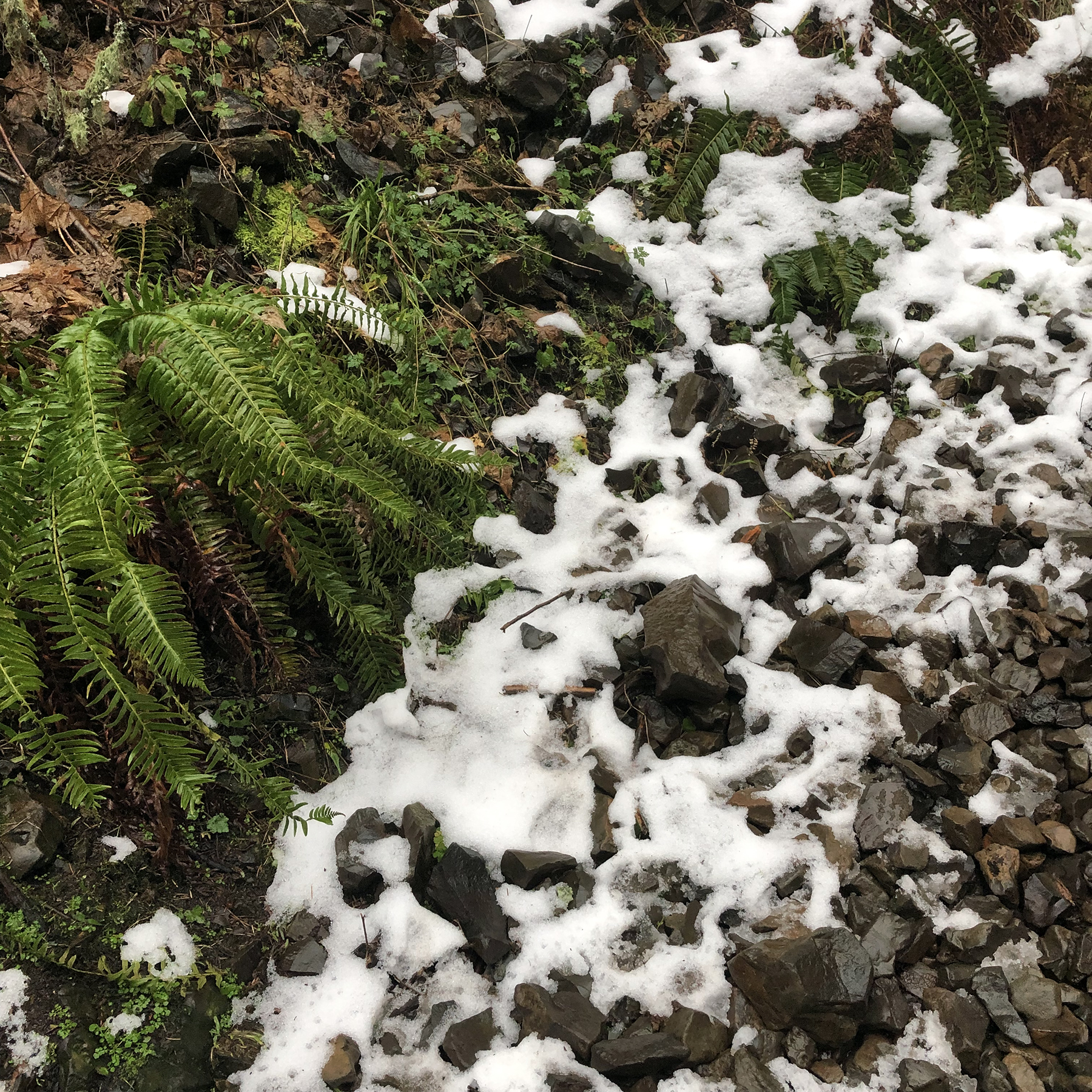
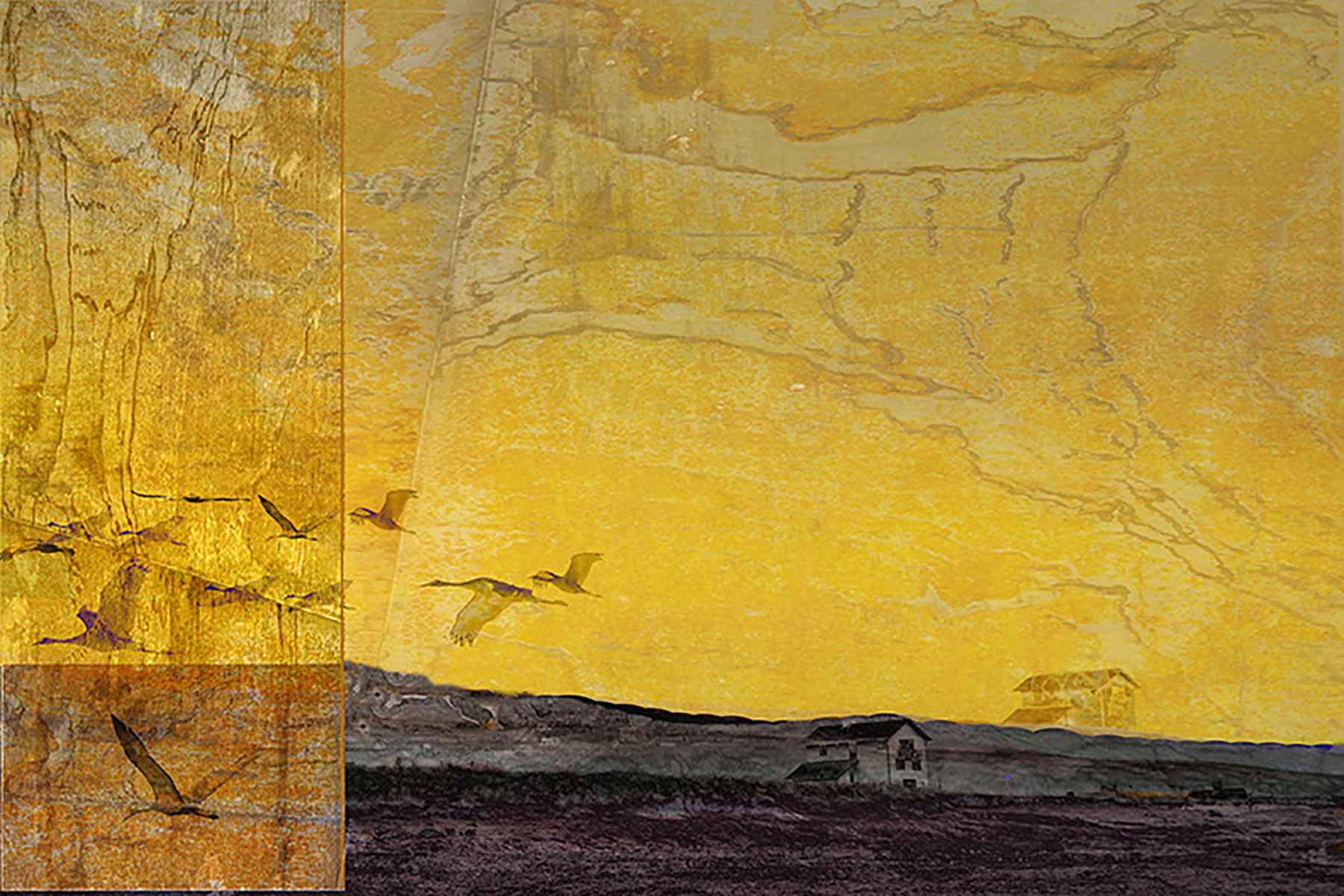
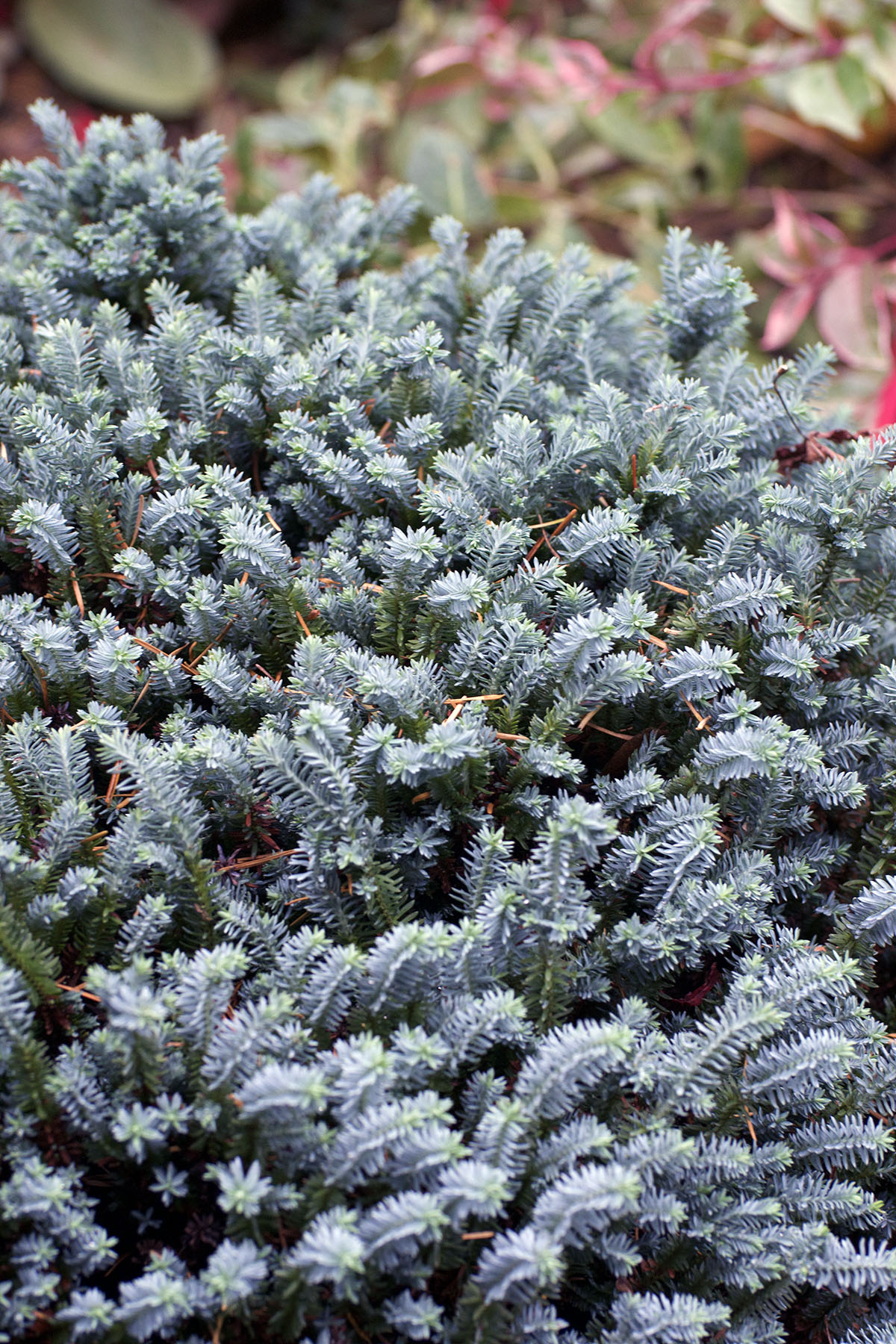
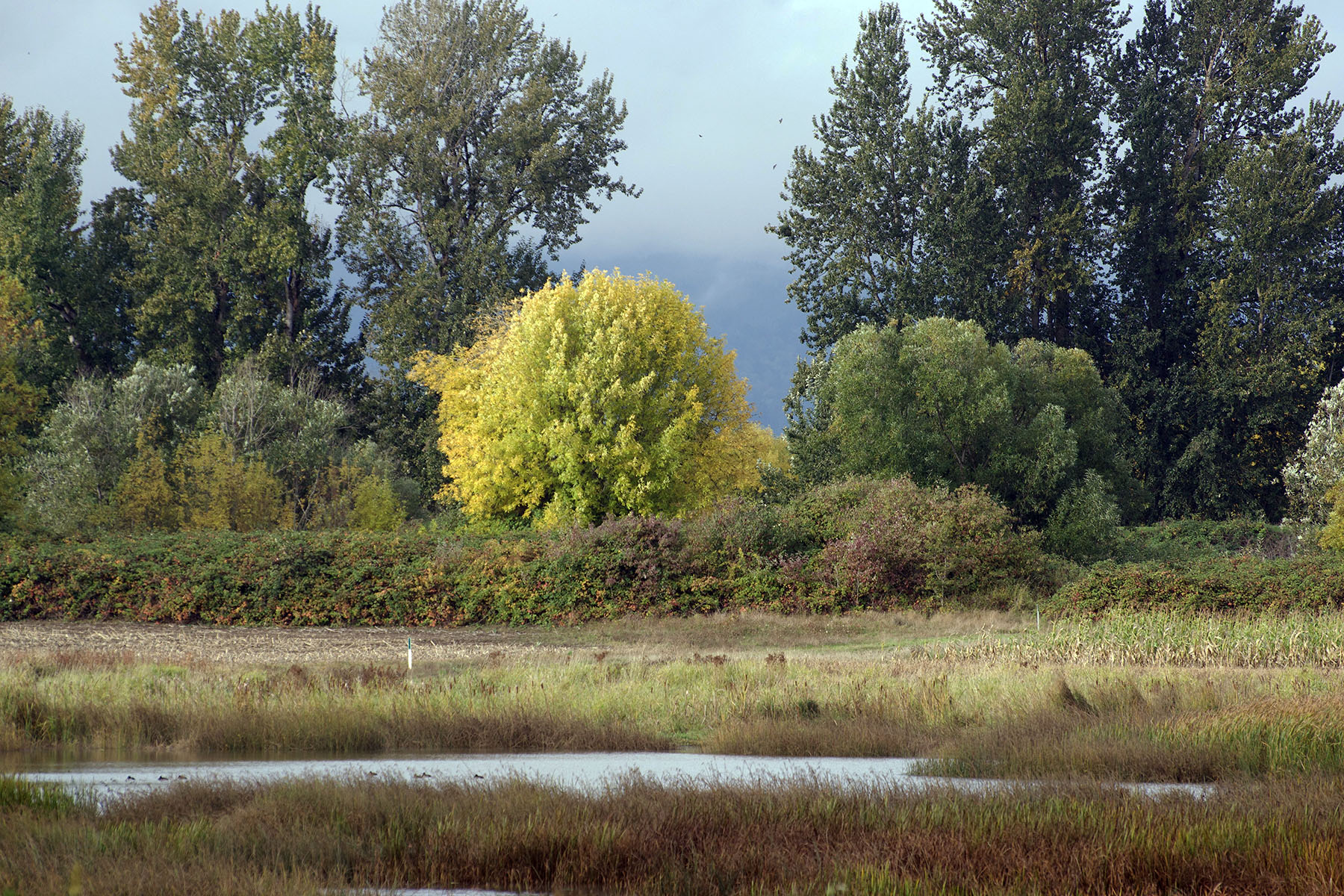
Today’s photographs are views of fall’s bright yellows. The woods and meadows are not just full of color but also teeming with plants that are edible, mushrooms at this time of year first and foremost (I offered their photographs already last week.)

I was taught about edible plants in a podcast on foraging, the search for food in the wild, or your back yard, or the town commons, take your pick. A young Black woman from Ohio, Alexis Nikole Nelson, provided in equal measure food for thought and references to food for our stomachs.

Beyond introducing (real) food stuff, teaching about biology and botany and creating amazing recipes, she reminds the listener of how Black people had a relationship to foraging during slavery, and how their traditions and knowledge were cut off with the hardships and legal or customary exclusion from nature following emancipation. Proprietary rights of White landowners were harshly enforced, once they had no gain from people’s survival, a survival that depended on supplementing the meager scraps of food they received on plantations.

Nelson has by now over 3 million followers on TikTok, and I must say that I got drawn into her videos, getting used to the intensely lively quality that many of them display – after a while it becomes infectious, or less noticeable, can’t say. The content is what convinced me, so much to learn in ways that obviously appeal to a HUGE number of people who are now equipped to bring food to the table even when funds are short. She is a gifted teacher beyond her culinary skills and adventurous spirit.

Here is a link to her site, where you can choose among so many interesting offerings (you don’t have to sign up, just click on any of the videos.) She talks about food as a way to connect to people, a way to show love and and way to express creativity – available for free to all if you know where to look in our eco-system. This is a key point for learning how to forage in a society where 50 million people are food insecure – not knowing where their next meal is coming from.

Black populations were, of course, not just prevented from accessing naturally occurring food sources that grew on private or local lands. There is now a public conservation about how access to nature in general is inherently more difficult for Blacks than for Whites.

If you are tempted to join the chorus that protests: “Public trailheads are open to everyone. Campsites are not segregated. Rivers belong to all!” I urge you to familiarize yourself – as I had to do, since I was clueless about the severity of the issues – with what is happening in real life.

The range of obstacles is vast.(Ref.) – It starts with the experience that you are singled out as someone unusual on the hiking path (borne out by statistics that show how enormously underrepresented Blacks are in outdoor recreational activities,) and beyond that hypervisibility often made to feel the you don’t belong. It continues with being told directly or indirectly not to trespass on traditionally White activities like fly fishing, or entering a space that was meant as an escape for people from “crowded urban centers,” often a euphemism for poverty, crime and POCs. Most frighteningly the range includes attacks on your property and physical safety, from slashing tires and tents, to actual attempts at lynching. If you don’t believe me, read up in such publications as the Sierra Club Magazine, not known for hyped-up commentary. Or the local Washington State news. Or stories about Black birders in Central Park….

The history of public park systems – culturally segregated even after legal segregation ended – and current day prejudices against non-Whites interact. POCs are three times more likely to live in places where they have no immediate access to nature, and lacking the funds or time to travel far. That is not a coincidence, given the historic structural issues around racism in the National Park movement, claims Myron Floyd, dean of the College of Natural Resources.

The underlying rationale for creating parks was this idea of U.S. nationalism, to promote the American identity, and the American identity was primarily white, male and young. …..It was really trying to distinguish the American identity from the European identity: being a separate, more mature nation in the mid-19th century.”

John Muir, who is credited with the creation of the National Park System and the conservation movement, was recently called out for his long history of racism by the Sierra Club. For Muir, who co-founded the organization in 1892, Indigenous people “seemed to have no right place in the landscape” despite the fact that they had lived there for thousands of years. He also believed that Indigenous peoples’ villages and their ways of life should be destroyed in order to have “unblighted, unredeemed wilderness.” 

Other important figures in the conservation movement, like Gifford Pinchot, the first head of the U.S. Forest Service, held racist beliefs and believed that parks were created for Americans of only Northern European descent.

Some months ago the American Trails organization published a list of new organizations that hope to increase participation in outdoor activities by all those traditionally excluded. It did so in the context of a historical perspective on racisms in the outdoors, a short read that I highly recommend.

One of my favorite essays this year describes how another question of access to nature plays out in our own back yard. Strongly recommended reading. It is about the urban rural divide in Yamhill County and how a proposed hiking path was torpedoed by the extreme Right. It was a locally supported trail project that all of a sudden became a hot button in the “culture wars,”now dominating election campaigns for local office, dividing a community, enhancing bigotry and extremism. Spoiler alert – the 12 mile trail project got successfully killed by conservative forces that did not want urban “trash” to blight their landscape. Its remaining proponents are receiving death threats.

Here is an upbeat musical offering to fall – with leaves rustling and colors shimmering, before ending in a pensive mood that goes with today’s discussion of continued inequities.

Mushrooms

Before we get to today’s musings, here is an urgent request (and please share the information.)

With the grocery shelf shortages, please remember NOT to buy WIC marked items. (Special Supplemental Nutrition Program for Women, Infants, and Children (WIC) I think we used to call them food stamps.) The people who use WIC benefits to get their food are not allowed to switch to other brands or types. When those items are gone (usually labeled on the shelves) people go hungry.

———————————————————

Mushrooms

by Sylvia Plath (1932 – 1963)

Overnight, very Whitely, discreetly, Very quietly

Our toes, our noses Take hold on the loam, Acquire the air.

Nobody sees us,
Stops us, betrays us;
The small grains make room.

Soft fists insist on Heaving the needles, The leafy bedding,

Even the paving.
Our hammers, our rams, Earless and eyeless,

Perfectly voiceless,
Widen the crannies, Shoulder through holes. We

Diet on water,
On crumbs of shadow, Bland-mannered, asking

Little or nothing. So many of us! So many of us!

We are shelves, we are Tables, we are meek, We are edible,

Nudgers and shovers In spite of ourselves. Our kind multiplies:

We shall by morning Inherit the earth.
Our foot’s in the door.

Yes, this poem was actually used by the Oklahoma Ag in the Classroom, a program of the Oklahoma Cooperative Extension Service, the Oklahoma Department of Agriculture, Food and Forestry and the Oklahoma State Department of Education to teach about mushrooms. (Ref.) Together with an instruction page on the biology of mushrooms and how they grow.

No, this poem is not really all about mushrooms. Some see it as a gender metaphor, a feminist allegory about the fate of women kept small in a misogynist world, asking little or nothing. Others see it as veiled description of the fate of immigrants.

“… it was really about immigrants making their surreptitious way into a country. Hence ‘Nobody sees us’ because of their movement by night, or ‘We diet on water’ which suggests their impoverished state. The choice of vegetable is witty as these people are a ‘mush’ in the cabins through which they travel and the places they will have to secretly live in.

Plath herself is an immigrant to Britain. But it doesn’t matter if she did or didn’t mean this, the point is that mushrooms seem metaphorical for, for example, women’s rights and many other issues regarding the powerful and the powerless.”

Judge for yourselves…

Here is a lovely analysis of the poem by a biologist and poet who tries to give weight to the voices of nature as much as those of women who might try to be seen through the lens of the verses. Worth a short read.

All photographs were taken last week in my immediate vicinity. Fall has arrived.

Music today is recommended by no other than the scientists from Johns Hopkins University. Here is the link to their work and playlist when trying to figure out the effects of psilocybin (shrooms!) on patients living with depression.(carefully tailored to ascent, peak, descent of the experience.) I chose the Gorecki piece since I’ve always liked it. I think Sylvia Plath would have approved.

Crossbones

Well, I lived to tell the tale. For a moment, though, I thought I’d succumb to a heart attack. Here I am, early morning in my chair at the window overlooking the pear tree, scrolling though my emails on my iPhone. All of a sudden something like a cannonball approaches, hitting the window right next to my head with a loud enough boom that the dog starts barking at the three-fire-alarm level. Not one, but two sizable birds, one clutching the desperate other, tumble downwards after impact, leaving in their wake a cloud of soft, small, white feathers that drift slowly like snowflakes over the butterfly bushes onto the ground.

All the way down there, the bigger one, a hawk, finishes what he started, hacking the mourning dove to death. High on adrenaline I manage to get a picture on the iPhone, then start yelling at him, if only to prevent the poor dove to be torn to pieces – which I would have to remove bit by bit… Then I run down, hissing at my dog to stay inside, and pick up the poor bird to dispose it where the puppy can’t get to it.

Upon my return, the hawk sits among the leftover feathers, wondering where breakfast went. With me still standing there, just a few meters away, a couple of crows swoop down and start to chase him. That was the end of it.

Except in my head. I could not stop thinking about the symbolism of hawks and doves, of war and peace, of the demise of the latter, no matter how much I tell myself about the necessary ways of food chains in nature. What is a woman to do? Why, distract herself with questions that can be answered, in contrast to the ones about warriors seeming to rule, forever.

Where did the hawks and doves connotation come from? It turns out it was coined, about 200 years ago, by a Congressman in this country, John Randolph.

“In the run-up to the War of 1812, Randolph described those clamoring for military action against Great Britain in the name of American honor and territory as “war hawks.” The term had talons and caught on. He was especially thinking of Henry Clay and John C. Calhoun, members of his own Republican party.

Of course I had to look up that war as well, and found bitter-sweet convergence to my last blog’s claims about the variability of historical narratives. Historian C.P. Stacey summed it up:

“..the War of 1812 is ‘an episode in history that makes everybody happy, because everybody interprets it differently’. Americans believe they gave their former mother country a good drumming, Canadians pride themselves in turning back ‘the massed might of the United States’, and ‘the English are happiest of all, because they don’t even know it happened’. These competing perspectives are the result of the different functions the Anglo-American conflict served in their respective nations’ historical master narratives.”

“The war provided Americans with a set of symbols, heroes, and legends on which to build their national identity. Aside from giving a boost to American westward expansion and growing political support for a large standing army and a sizable navy, federally sponsored internal improvements, and a national bank, the war also produced symbols of national identity such as ‘The Star-Spangled Banner’ and ‘Uncle Sam.’” (Ref.)

What was it all about? Well, who would have guessed, economic competition and trade disputes at a time when England was busy trying to fight Napoleon, the British blockading sea ports and trying to prevent American westwards expansion, capturing American ships and forcing some 15.000 American soldiers shanghaied at sea into their own military forces. Hailed as a second War of Independence here in the US, it eventually catapulted General Andrew Jackson into the presidency. He was an expansionist who opposed the abolitionist movement and is most infamously known for his pivotal role in signing the Indian Removal Act, which forcibly removed most members of the major tribes of the Southeast to Indian Territory; these removals were subsequently known as the Trail of Tears.

And our friend John Randolph, he of the hawks and doves? Not really our friend, even though he did oppose the war of 1812. He was pro-slavery with a passion, with ardent speeches during his many years in congress. In 1825, he talked for several days in opposition to a series of measures proposed by President John Quincy Adams; Randolph argued these measures would give advantage to the emerging industrial powers of New England at the expense of the Southern states. This series of speeches was the first Senate filibuster. I repeat, not our friend.

Makes me grieve the dove, the doves, all over again.

But, of course, life goes on.

This is actually two doves, one drinking, shown from behind, the other looking on.

Meanwhile, in the old countries, Russia was fighting off the French, and this 1812 Overture is the eternal reminder….

Scents and Sensibility

When you catch me reading Popular Mechanics you know something is off. Well, you should know if you are a regular reader. In fact, all of today’s musings came about because something was off: my (insensible) assumption that irises have no smell. From flowers to a popular mechanics article – it’s been an interesting ride. Let me drag you along.

I have been photographing irises in my neighborhood across the last week, thinking I might do a bit on painters who were drawn to these showy plants. Along the way I was wondering why some flowers smell and others don’t, believing that the latter was true for irises. It turns out they do smell, if faintly, as long as you stick your nose into the blossom. It also seems to be the case that the rarest of perfume ingredients is delivered by irises, although by their roots – orris roots. The reason the stuff is so precious has to do with the fact that when you harvest the rhizomes you have to store them (insect- and fungus-proof) for 3 to 4 years in order for them to develop some scent.

My general question about smell vs no smell had a pretty straightforward answer: if plants are pollinated by birds (wildflowers, hibiscus and many other tropical plants, for example) then scent is unnecessary since birds don’t have an olfactory sense. If plants need insect pollinators, then they want to smell good to guide bees or other critters to the blossoms. And here it gets truly interesting: there is an insane calibration going on between what insects are around, when they are around, and how the plants maximize their attractiveness in idiosyncratic ways. (I was told across the dinner table that all that is taught in 5th grade – well, I must have played hooky…)

Let’s start with time: flowers who are pollinated by moths or bats smell the strongest in the evening into the night. Others prefer morning or afternoon, depending on who is most active during those times, bees and butterflies included. The period before blossoms open widely, and when they are almost spent and have been already sufficiently pollinated, matter as well. During these times the plant produces few volatiles (as the scent molecules are called in science speak), sparing their pollinators effort without reward.

Each scent sends specific signals, often across long distances, attracting those who are the best match. Species pollinated by bees and flies have sweet scents, while those pollinated by beetles have strong musty, spicy, or fruity smells. Successful pollination is of course essential to agricultural crops and fruit-bearing trees, so maximizing your chances of getting the right insect to the right plant is what scent is all about.

Next, leave it to us humans to put a wrench in the works. Flowers smell far less intensely these days than they used to. Selective breeding of flowers has focused on many attributes, all of which seem to have had a detrimental effect on the genetic make-up responsible for odors. Breeders in the cut-flower and ornamental plants market have concentrated on aesthetics (color and shape,)improved vase life and shipping characteristics.So long, scents….

Which finally brings me to Popular Mechanics, where I found, while learning about all this genetic engineering, an article that talks about genetic engineering of scents in reverse order. The plants are no longer among us, but scientists are able to recreate their scent with pretty nifty synthetic chemistry. Scientists from a Boston-based synthetic biology company Ginkgo Bioworks, a smell researcher and an artist teamed up to re-create the scents from extinct plants. They got DNA extracted from specimens of three plants stored at Harvard University’s Herbaria, and used synthetic biology to predict and resynthesize gene sequences that might be responsible for the smell. Using Ginkgo’s findings, Sissel Tolaas used her expertise to reconstruct the flowers’ smells in her lab, using identical or comparative smell molecules.

The smells they tried to resurrect were from plants that where killed off by human expansion: Hibiscadelphus wilderianus, a plant from Hawaii last seen in 1912, destroyed by cattle ranching; Orbexilum stipulatum, a scurf pea that was drowned when a dam built in the Ohio River flooded its habitat in 1920; and the Wynberg Conebush, native to South Africa, superseded by vineyards in Cape Town. The collaborative work was eventually made into an interactive art exhibit, Resurrecting the Sublime, which can be visited here, should you want to travel again. The video in this link tells the whole story.

Nature. Science. Art. All you’ve come to expect to read about in this space. Just tell me, how do I fit in the politics?

Music today is from a few centuries apart. Haydn addressing the flower and Ibarrondo perhaps a woman, but we can pretend it’s the flower. Enough flowing ruffles in the composition to match the blossoms….

Old – and alive

One of my lasting childhood memories involves standing in front of huge European cathedrals. My mother would explain to me that they were built across centuries, often by generations of masons within one family, given that trades were handed down from father to son. A strange thing to think that you would not see the completion of your work, but others related to you might. And then the endless dragging through pews and naves and side altars would commence…. (For the record, there isn’t a cathedral I have left out in all of my adult travels – clearly I was hooked.)

The memory was triggered by reading about a parallel development in science. What would you call a scientific experiment that lasted 142 years, so far? I call it old. And remarkable. And astounding.

William Beal, photograph from MSU archives

Started in 1879 by a botanist at the campus of what is now Michigan State University, the experiment is ongoing, tended by subsequent generations of scientists, and planned to last another 80 years. What could it be?

William Beal, a frequent correspondent with Charles Darwin, was interested in how long seeds would last in the soil until they could no longer germinate – a question pressing for agricultural farmers weeding their fields. To find out how long dormancy could last, he buried 20 bottles, each with 1,050 seeds from 21 species, the bottles uncorked and placed with the neck downward to avoid accumulation of water. All weeds!

Agrostemma githago, Amaranthus retroflexus, Ambrosia artemisiifolia, Anthemis cotula, Brassica nigra, Bromus secalinus, Capsella bursa-pastoris, Erechtites hieracifolia, Euphorbia maculata, Lepidum virginicum, Malva rotundifolia, Oenothera biennis, Plantago major, Polygonum hydropiper, Portulaca oleracea, Rumex crispus, Setaria glauca, Stellaria media, Trifolium repens, Verbascum thapsus, Verbascum blattaria.

Photographs today are of some of these – and no, I did not have the patience to label them all.

Buried in a secret location, the bottles remained undisturbed. Opened first every 5 years, then 10, then 20 years, to make the experiment last, one bottle was removed from the cache at a time, brought to the lab for germination under favorable conditions, and nowadays for cell structure analysis with the tools of genetic research. During the latest round they removed some seeds of Setaria glauca — a species of millet, which hasn’t sprouted in the experiment since 1914 — for genetic analysis of DNA and RNA. It allows scientists to find out whether the seeds’ machinery has degraded or persisted, how damaged the genetic material is and what processes may still be possible even if germination isn’t. (Ref.)

From Beal on down, each researcher entrusted with the map for the location chose a scientist from another generation to carry on. This year it has been more than one successor, given the fear that a single person might fall prey to illness or accident, and also included, for the first time ever, women. Maybe there is progress after all….

When bottle # 15 was removed in the year 2000, Verbascum blattaria, a splay-leaved, yellow-flowered herb, seemed to be the most viable. Nearly half the Verbascum seeds bloomed, even though they’d been dormant for 121 years. Its common name is Moth mullein (so named because of the resemblance of its flowers’ stamen to a moth’s antennae.) (See image below.)

After a treatment with cold, simulating a second winter, a single seedling of Malva pusilla sprouted as well – you know it as small mallow.

This year’s bottle (one year delayed due to the pandemic) was removed on April 15th. So far one seed has sprouted, still waiting on a full report. The scientific interest has, of course, expanded over the century, away from the question of weeds’ effects on agriculture, towards the preservation of species under changing climate conditions. (I wrote a short bit about that here 4 years ago.) Next to dooms-day prevention seed vaults, Indigenous food sovereignty projects are a also increasingly focused on seed viability research.

The soil seed banks underlying different habitats are “great unknowns” in restoration ecology, as experts try to promote native species while fending off invasive ones, said Lars Brudvig, an assistant professor at Michigan State and another member of the Beal seed experiment team. In some cases, seeds of endangered or long-lost plants may even be hiding out in the soil.

Next step in this experiment? Expose the seeds to smoke. It might trigger germination in plants that thrive after wildfires. The fireweed seeds included by Beal in the samples have never once sprouted. Maybe this is what will do the trick. Other than that? Wait for 19 years to exhume the next bottle. We’ll be old. Well, ancient, really.

Today’s song is called Through the Woods – the nightly adventure of the seed-searching ministry of William Beal, in my imagination. The musician, Yasmine Williams, is a young artist who is changing the way of traditional guitar playing.

Then again, Juvenescence would work as well.

On a personal note, since I mentioned the Indigenous food sovereignty project above: wild rice harvesting is threatened by the Enbridge Line 3 Oil Pipeline approved in Minnesota’s Wild Rice Region. As I have written here before, I am part of a documentary project that tackles the issues of Climate Resistance, spearheaded by indigenous leadership. On May 6th, 6-7:30 PM we have a webinar, Climate  Resistance: Art, Action and Allyship.

Hosted by Portland State University, the panel includes artists, activists and an attorney who bring their wisdom and knowledge to the Necessity film project– a two-part documentary that features Indigneous leadership in responding to the climate crisis and shows how activists are using legal tactics, including the necessity defense, in the fight to save the planet.

Registered attendees will receive a link to watch Necessity Part I: Oil, Water and Climate Resistance with their donation, and will also get a link to the panel five days before the May 6th event.  Contributions to this event support Necessity Part II, currently in post-production.

Tickets are available via Eventbrite and more information about the project at our website and on social media @necessitythemovie. 

(The Eventbrite site will give you a choice of dates – just click on one that works for you and from then on things are straightforward – zoom ticket will be delivered to your email.)

Size Sizzlers

Remember all those times you were told size doesn’t matter? They lied.

No lies about size, though, when it comes to gorillas beating their chest. It turns out that those percussive sounds of gorillas drumming against their upper chest reveal accurate information about their size. The bigger the gorilla the lower the frequency of the sounds, possibly because bigger gorillas have larger air sacs near their larynx. This means that chest-beating isn’t just a visual display, but what a study calls an “honest signal of competitive ability.” And wouldn’t you know it, the bigger males attract the females, after all.

Gorillas stand up and thump their chests with cupped hands, not fists, which allows for a sound that can be heard up to half a mile way, signaling to females from other troops where the best mating choices lie. Not only that, it also informs other males if and when to choose to get into dominance fights – thus actually preventing aggression, since it makes smaller gorillas think twice. Or whatever the equivalence is in gorilla decision making….

They don’t thump all day; and apparently each one has a signature rhythm that allows them to be identified.And they are not the only ones. Honest acoustic cues to size can be found in the bellows of alligators and the vocalizations of North American Bisons, to name just a few, with those who have longer vocal tracts mating more successfully.

And if you don’t have a voice? No problem! Funnel-web building spiders, for example, use their body weight directly. It determines their web vibrations, so that conspecific receivers can reliably predict a potential opponent’s competitive abilities. Get that net swinging!

And then there are the Indian jumping ants. They are the first species that we know of that can voluntarily shrink their brains up to 25% – all in the service of their ovaries that swell up to five times their earlier size when energy used for the brain is rerouted. They do this when a queen dies, eliciting competition between these emerging pseudo-queens, one of whom takes the prize with the biggest reproductive system. Normally colonies die off when their queen goes. This system makes these specific colonies functionally immortal.

Not only that. If they didn’t make the cut, they can regrow their brains and revert to the previous existence as a worker ant. Oh, as a dear reader recently declared about nature’s tricks: ASTOUNDING!

Now all we need to learn is how to prevent our own involuntary shrinking of brains by any degree…

Here is traditional Rwandan music to end the week. Enjoy the sunshine!

Photographs are of things that are small and beautiful and blissfully silent.

Magicicada Mysteries

If creepy-crawlies give you the creeps you might consider skipping today’s blog. Not for the faint of heart. But, oh, so fascinating in terms of what nature has, once again, to offer, and in terms of the utter cluelessness of science in answering some very big questions. Skip right to the end to listen to Bartok’s piano piece which will enrich your day.

2021 is the year where the central and eastern U.S. is expecting a mass emergence of cicadas, millions and millions of them who leave their burrows underground and climb the trees in synchronized fashion, for a 6 week-short life- span of reproduction after having been underground for 17 years.

They are known as periodical cicadas. Only 7 of the 300 species of cicadas worldwide have this strange life rhythm, waiting for 17 or 13 years, respectively, to then come up all at once. While developing underground they suck the liquid of plant roots, apparently counting the seasonal pulsed of fluid flowing from those roots – when the plants have completed 13 or 17 cycles and the temperature has gotten warm enough (65º/18º) they know to emerge. During the long time underground they molt their shells 5 times – and not all at the same speed. But somehow towards the end of that interval the more developed nymphs wait and the lagging ones catch up, so the they are all ready for time x, ready to fly and populate the trees where they mate and lay eggs. No one knows how they pull that off.

Unlike locusts that devour crops, cicadas are good for our ecosystem. Their weight en masse in the trees helps to prune weak branches, they release tons of nutrients into the soil after death and they serve as an abundant food source for all kinds of predators, four-legged and winged varieties included. This despite the fact that the sheer number of bugs (as many as 1.5 million may crowd a single acre) has anyone of them at practically zero risk for being breakfast, lunch or dinner. Although interestingly – and here is one of the unanswered questions – bird populations that are normally predators of annual cicadas decline just at the point where the periodical cicadas emerge. In the years before and after these birds a back to their normal population density.

So why these prime numbers – 13, 17, – for the emergence? We do not know for sure. Some mathematicians have offered the following hypothesis:

Both 13 and 17 are prime numbers, meaning they’re divisible only by 1 and themselves. This means that emergences rarely overlap with predator population cycles that occur in shorter intervals. For example, if cicadas emerged every 10 years, they’d be susceptible to predators whose population boomed on a cycle of one, two, five or 10 years. If they came out every 12 years, they’d be a tasty snack for any predator on a cycle of one, two, three, four, six or 12 years. Thirteen years, though? Only one and 13. The same goes for a 17-year cycle.

Climate change might put and end to that, too. Scientist are seeing shorter emergence cycles on the horizon for cicadas, prompted by ever warmer temperature and speculated to come down to something like 9 years in the future – no longer a prime number. This implies far more exposure to predators, obviously.

Cicadas have one natural enemy that is not affected by time spans at all: a fungus named Massaspora which does an ugly job on them. Its spores colonize the backend of the bugs, disintegrating it while the cicadas are alive, while injecting the them with a compound similar to amphetamine that keeps them moving while dying. Thus they disseminate the spores across a larger area. For male cicadas it also has the weird effect that they start flicking their wings like females, attracting other males who then try to mate, getting immediately infected. Told you it would get creepy.

The short clip below is a marvel of time-lapse photography showing the life cycle of cicadas.

Photographs are of Maryland and Massachusetts birds, cardinals in particular, that will be in shorter supply this year.

And maybe not the best way to play: saxophone amidst the cicadas.

Here is a different musical take: “The most obsessive admirer of bugs was Bela Bartók. The Hungarian composer evoked the cicada in his 1926 piano suite Out of Doors, the fourth movement of which is called “The Night’s Music.” Here Bartók piles up tone clusters to create an eerie evocation of frogs, birds and cicadas that are audible right from the very beginning.”

Cherry Blossom Contemplations

I should have gone there earlier. When I meandered along the Esplanade last week the peak of the cherry blossoms was clearly a thing of the past. But there were still enough pretty ones left to be fodder for the camera.

There were also many other stimulating sights that reassured me that I was still living in a world populated by other human beings. It was my first outing into the city proper since the beginning of January. Clad in jeans and down coat I was clearly not appraised of the appropriate dress code.

You might have heard that some of the Japanese cities famous for their cherry blossom festivals experienced the earliest peak ever since measurements began 1200 years ago. Scientists blame the warming spring temperatures due to climate change. What is worse, though, and less reported, are the delayed blooms in some areas of the country. These happen when winter, not spring, temperatures are too warm. The average cherry tree variety needs a full month of cold weather (below 41º F/5º C) in order to bloom properly.

There are about 600 or so variety of cherry trees. These days 70% of all Japanese cherry trees are of the Yoshino variety, which blooms profusely and not too long after it has been planted. These are also the trees you see in Washington, DC and in Portland, gifts given by Japan. Unfortunately they are quite susceptible to climate issues and disease. It is quite important to start to diversify varieties or we run out of cherry blossoms altogether in no time. Think of what that would do to tourism in Japan, or cities like Macon, GA which attract thousands for their annual celebration – they have more than 300.000 Yoshino trees, far more than the number in Washington, DC. Never mind the issue of pollinators being deprived of an important food source, endangering the food chain for all of us….

Then again, you would never have to stand again in a line like this.

Source

That’s what it looked like pre-Covid times in the Amsterdam Bos, which is one of Holland’s most famous cherry tree arbors in the middle of a forest. 400 trees were donated by Japan in the year 2000, and each one of them was named, half Dutch and half Japanese female names. Alas, I could not find a single source to identify those names…. The municipality of Amstelveen, home to about 1700 Japanese ex-pats, organizes the festival.

And if you miss out on the real thing, this or any year where things change out of the blue, you can always create your very own blossoming cherry tree. Just requires a crane and a lot of blocks….881,470 to be precise. You can see this and numerous festivals if you travel to Japan in 2022 – here is you handy travel guide should the borders be reopened by then.

Or you can just walk down the Esplanade and enjoy what’s left of the bounty, strewn into nooks and crannies, hidden beauty wherever you look.

Here is the traditional Japanese version of Sakura, Sakura the cherry blossom song.

Here is a sweet variation with guitar.

First Signs of Spring

Spring is officially on the calendar and sure enough, the first messengers, trilliums, are popping up left and right in the woods. These wondrous little sentinels from the Lily family grow from rhysomes, have three furled leaves, a short stalk and, in these parts, mostly white flowers.

Before the flowers unfold, the shoots are easily overlooked, and I worry when Hundchen does his exuberant run in the woods that things get trampled – just like the damage done to the wildflowers by the tree cutter in Frost’s poem below.

Frost’s protagonist goes to the woods to collect birch boughs for a trellis for his peas.

As much as he is in favor of utilizing what nature has to offer, he also cares about the damage done – the axed stumps are bleeding and the wildflowers might be crushed by all the debris on top of them – go, clean up the mess! In fact, it might be too late for the trilliums, having been “crooked” by man’s arboreal harvest. I assume that means sort of crushed.

Somehow, though, nature seems to prevail. That last line reminds of the inevitability of growth, even if damage awaits. They just push through, next after next.

That certainly seems to be the case in the woods here, still bruised from the recent storms, windfall wherever you look. The little stars dot the landscape – affirmation of resilience, or nature doing its thing, unperturbed, you choose.

Pea Brush 

Robert Frost – 1874-1963

I walked down alone Sunday after church
   To the place where John has been cutting trees
To see for myself about the birch
   He said I could have to bush my peas.

The sun in the new-cut narrow gap
   Was hot enough for the first of May,
And stifling hot with the odor of sap
   From stumps still bleeding their life away.

The frogs that were peeping a thousand shrill
   Wherever the ground was low and wet,
The minute they heard my step went still
   To watch me and see what I came to get.

Birch boughs enough piled everywhere!—
   All fresh and sound from the recent axe.
Time someone came with cart and pair
   And got them off the wild flower’s backs.

They might be good for garden things
   To curl a little finger round,
The same as you seize cat’s-cradle strings,
   And lift themselves up off the ground.

Small good to anything growing wild,
   They were crooking many a trillium
That had budded before the boughs were piled
   And since it was coming up had to come.
 

Here is some music that captures the sparseness of the woods and the still cool light in March, reflected off the white petals of the Trillium.

Photographs mostly from archives, a few from this week, 4 legged creature included.