Browsing Category

Nature

Walk About

I know I seemed all over the map this week, no discernible shared topic among the blog offerings, none of the usual weekly theme. Upon closer inspection, however, they were tied to the typical year-end deluge of thoughts about what mattered, what could have been different, and what I am grateful for.

By no means a comprehensive list, but: Music and art mattered, as did friendships and my photo gigs for diverse organizations in town. There could have been more traveling and fewer surgeries to make it a different year. I am, however, content and above all grateful for learning new things each day, still being able to read and think, with lots of time to do both. And being able to walk about in nature where everything else becomes so inconsequential.

Beyond my personal view on 2018, here is what 16 historians claim will be in future history books (spoiler alert: it ain’t good….)

https://www.politico.com/magazine/story/2018/12/28/what-will-history-books-say-about-2018-223561

White egret approaching


Join me, then, on my walk that I took yesterday. So much coming and going, so much noise, the air was filled with it. None of it as pearling as Liszt’s piece, Sermon at Assisi, that I chose for today, a piece that I tried to fall asleep to when my mother played it in the room below my bedroom. https://www.youtube.com/watch?v=20f-bYmi62E

The geese were but noisy,

and the herons had the squeakiest voice imaginable, in great contrast to their visual elegance.

Even the pintail ducks were full of songs, obviously confused about what season it is.https://www.youtube.com/watch?v=gKU42FkOd2o

And the kingfisher was cackling, as if he was making fun of me, for my end-of-year contemplations. https://www.youtube.com/watch?v=fTFxIF5FY-Q

Here is Schumann’s Bird as Prophet https://www.youtube.com/watch?v=3HQ9yxiDLSM

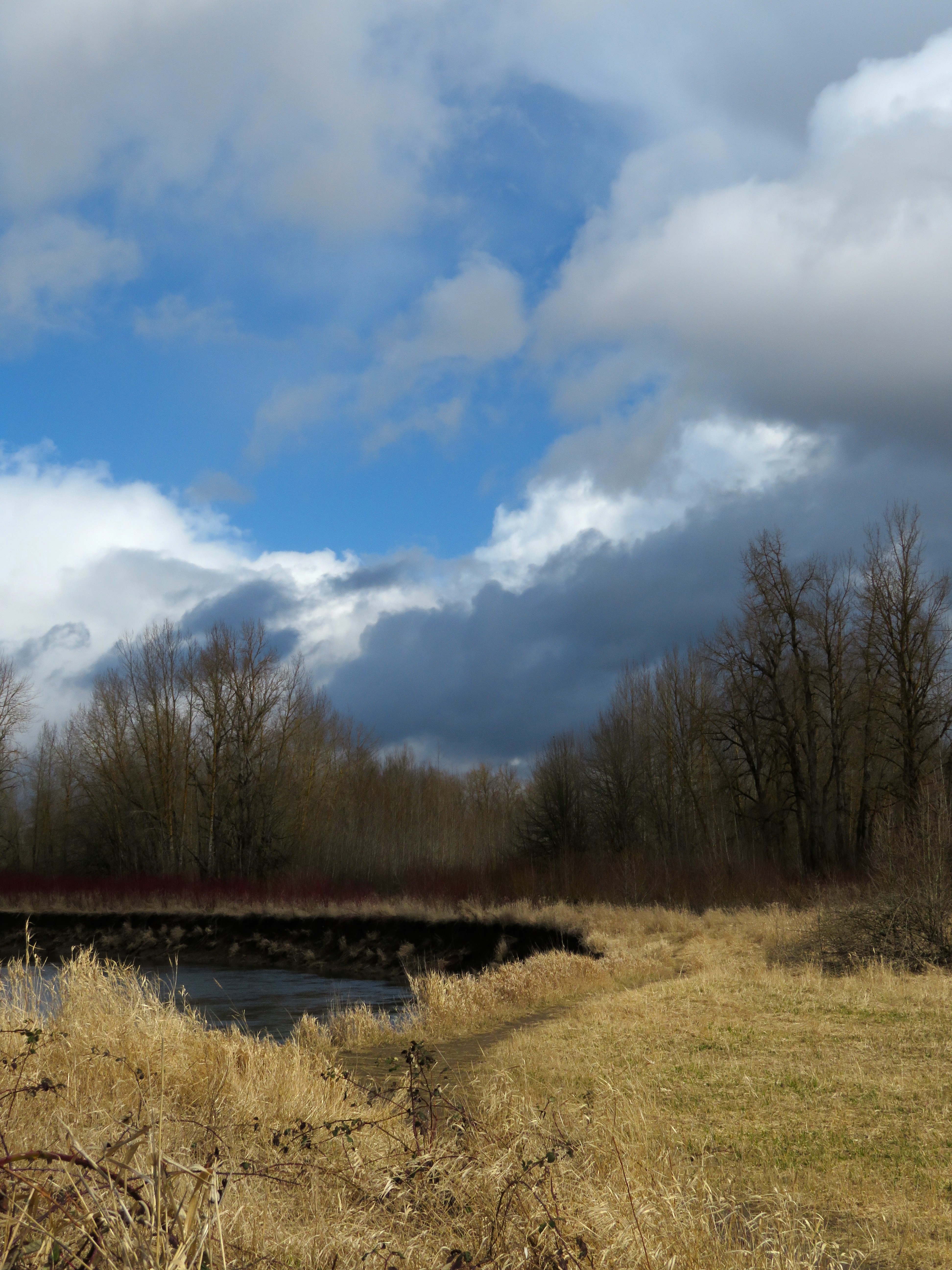
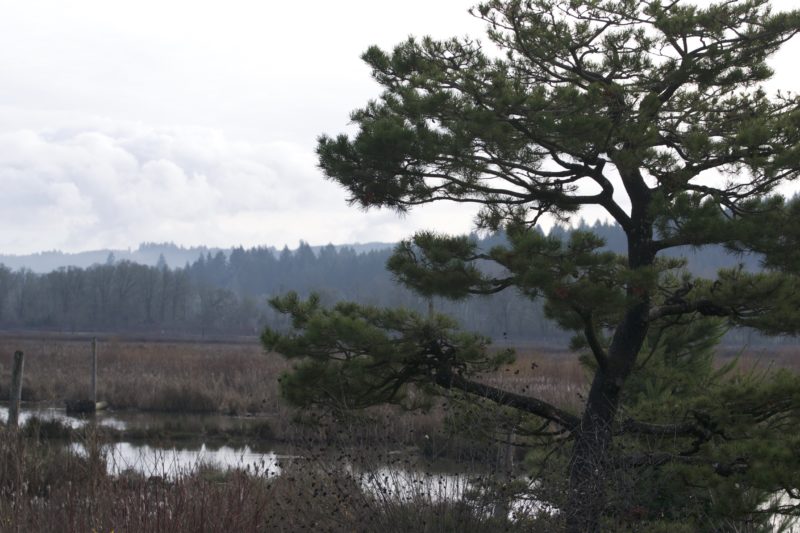
The place I chose is half way to the coast, Fernhill near Forest Grove, an old water recycling plant area that has been converted into a nature preserve, with local volunteers keeping it up, replanting it, making sure it is ecologically attractive for many of the migrating birds. A wondrous place.


Three Versions of Nature

I just love it when people have clever ideas that make me laugh but also speak to a deeper issues. This was certainly the case when I came across the work of Anne Percoco, who got her inspiration to create an imaginary herbarium from floral images printed on the packaging of every day items.

Percoco: “These range from abstract little leaf icons used on packaging to indicate the product is eco-friendly in some way, to leaf and tree-shaped, chemical-laden air fresheners, to fake Christmas trees, which are abundant this time of year. Once I started looking for them, I saw them everywhere.”

Why observe real nature when you can look at a fake one? Alluding to nature to sell products seems to work, never mind that it is a cleaned-up, stylized, concocted one in many cases. The art work makes us think.

In itself it’s inventive, indeed, but so are the names the artist gives her specimens – that alone must have been a hoot, the latin cat and dog included (check out the silhouettes taken from pet food bags.)

For my Philly and NYC peeps: here is where you can catch the exhibit if you’re up for a trip to Jersey City…

Parallel Botany: The Study of Imaginary Plantscontinues at Casa Colombo (380 Monmouth Street, Jersey City) through February 26, 2019.

——————————————————

I just despise it when people have clever ideas that make me cry but also speak to deeper issues. Tears of envy, I hasten to add – for want of traveling the world. SF based Photographer Beth Moon did so for 14 years to capture images of the oldest and rarest trees on earth. For me the work draws attention to what we are putting at risk with our absence of environmental protection – in an interview she seemed to be more keen on documenting what is before it decays, but who knows…https://mymodernmet.com/beth-moon-interview-ancient-trees/

Beth Moon

The outcome is stunning work, in b&w duotone for the trees photographed during day time and in color for the same or similar trees at night. These are analog, not digital prints, extensive work with palladium added in the darkroom, requiring real skill in addition to the eye she has.

Fake nature, real nature: Liszt’s imagined nature shall complete the trio. https://www.youtube.com/watch?v=T6VHPJZdSJIh

Feux Follets are the ghostlike sparks of light you see on the ground in the moors and forests of Northern Europe. Images today are from an older series of that name, where I combined my photographs of German trees with lights of sorts.


Hanukkah in Miami

The Miami Art Week this year runs from December 3 -9. I won’t be there, so I’ll miss out on press releases that try to answer questions along the line of what’s the point? “Slowing down and paying attention to the art,” we are told, which makes me laugh. I guess that is a good thing. Also a good thing: I am not a gallery worker.

https://hyperallergic.com/416445/gallery-worker-glimpses-art-basel-miami-beach/

An even better thing is taking Miami in, prestigious fairs or not, when you manage to escape the crowds of hanger-on’s. I was there some years back during Hanukkah and had a blast;  the city is a mecca for street photography, the graffiti impressive and the angular nature of much of the architecture augmented by the stark, glazing light.


As is typical for me, though, the best parts were the nature experiences, whether at the Fairchild Botanical Gardens, or during a day hike with a guide in the mangrove swamps.


Close encounters with the local wildlife, alligators, iguanas and all, made it into the journal titled What to tell my imaginary grand children,


and a sense of gratitude for all those incredible sights made it into the journal titled Heuer’s life rocks.


Note how much pattern there is in the landscape.


Between red tides and rising sea levels those excursions will soon be a thing of the past, so instead of “Slow down and pay attention to the art,” my advice would be: “Hurry up and pay attention to the landscape.”  Photographs today are a placeholder for just that.


Below is a guide to the cornucopia of art offerings, for those who are on site.


Your Concise Guide to Miami Art Week 2018

Things to be grateful for: Nature

With Thanksgiving coming up, I will devote this week’s musings to things I am grateful for.

As so often, that puts nature in first place, particularly the nature that surrounds me where I live, a place of astounding beauty.


That is true even if – or perhaps particularly if – you can’t see it very well, since in November it is often shrouded in mist.

I now know to call it mist, since I looked up the difference in definition between mist and fog: they both are ‘Obscurity in the surface layers of the atmosphere, which is caused by a suspension of water droplets’. They differ, though, in the range of visibility: By international agreement (particularly for aviation purposes) fog is the name given to resulting visibility less than 1 km, however the term in forecasts for the public generally relates to visibility less than 180 m. Mist simply has a lower density of water droplets and you can look farther than 1000 meters.


And in case you also want to know the meaning of haze, another visual phenomenon: it is a suspension of extremely small, dry particles in the air (not water droplets) which are invisible to the naked eye, but sufficient to give the air an opalescent appearance.

All this, of course, stands in benevolent contrast to the horrors of air pollution and smog created by the fires in California. https://www.nytimes.com/2018/11/16/us/air-quality-california.html

From the article: The precise biological mechanics of how people develop chronic lung problems, while not fully flushed out, lie at the intersection of two seemingly disparate scientific areas, immunology and environmental study.

Immune cells that respond to foreign particles douse the particles with toxins, among other tactics, to destroy them. But an intense event like extremely poor air quality can prompt such a strong immune response that it can throw the body’s delicate network out of balance, particularly in people predisposed to asthma or allergy.A vicious cycle can begin where each time a person experiences even small, related stress — like smoke — the body overreacts, leading to constricted air flow and intensifying the risk of heart attack and stroke for some people.

Researchers say that climate change leads to this kind of ill health through wildfire, but also through prolonged pollen seasons, dust storms and other events that affect air quality.“We’re setting up a tipping point in the immune system that leads to more inflammation and disease,” said Dr. Sharon Chinthrajah, a pulmonologist and allergist at Stanford, speaking of the way climate change has put increased pressure on human defenses. “California,” she added, “is being reset to a new reality.”


Grateful, then, for these election winners to tackle climate change, air and water quality, and persuading others in congress to sign on:

https://insideclimatenews.org/news/12112018/election-congress-climate-change-environment-activists-osasio-cortez-casten-tlaib-escobar-levin


And the swans are grateful that they aren’t turkeys…


Patterns

Here is the chain of events that led to today’s blog. Another one of those days of just me and the dog at home. I: trying to play the piano, as I only do when no-one is around given how much my skills have deteriorated these days. The dog: doing his best to make me stop, sharing that quality assessment, I guess. I: trying to explain to him the complicated structure of Bach’s fugues and how I needed to concentrate. He telling me in no uncertain terms that he hates counter point and really wants someone to throw a  ball.

Guess who won?

And guess who, reduced to reading, came across an interesting essay by Freud, flagged by someone who wrote about Bach’s ability to invoke both joy and fear, horror and beauty, exact opposites in his compositions?  Freud’s (1910) essay is called The Antithetical Meaning of primal Words (Über den Gegensinn der Urworte) and starts with a reference to his work on dreams and their ability to combine contraries into a unity – said simply: something can stand for both one meaning and its opposite. He then introduces an 1884 text by a historical linguist, Karl Abel, that describes at length a peculiarity of ancient languages. They contained, according to Abel, numerous words that have two meanings, one the exact opposite of the other. Some old Egyptian word might mean wet as well as dry, for example. Further, he claims, there were compound words that bind together things of opposite meaning (old- young, far-near) but they express only one of them.  All this was postulated for Egyptian, Semitic and Indo-European languages (and, coincidentally published at the same time in the late 1800s when Marx had written extensively about dialectics…)

Freud enthusiastically took off with finding words in the more familiar Latin that seemed proof for this: altus means high and low, sacer means sacred and accursed, and so on. Then he explored German, and wouldn’t you know it there were words with opposite meaning: e.g. Boden meaning the lowest part of the house as well as the attic… voila, archaic languages provided the pattern that re-appeared in dreams.

You can read his deductions now linking this perceived pattern to the analysis of dreams yourself (if you are not distracted by a bored puppy…) https://www.sas.upenn.edu/~cavitch/pdf-library/Freud_Antithetical.pdf

Only one problem: The bulk of Abel’s work was thoroughly discredited, it’s a croc; and that was already established by serious philologists in the late 19th century, for sure at the time of Freud’s writing. Freud was clearly seduced by a claimed pattern that fit with his hypothesizing around his discoveries and methods in his psychoanalytic studies. Whether he willfully ignored or was just hopelessly blind to the state of the art in linguistics, who knows. It is certainly the case that we are all subject to this kind of confirmation bias.

Independent of dreams, it is a fact that contradictory emotions can be experienced when listening to a single piece of music, and that patterns can be woven into compositions that are of a dialectical nature. Nobody did that better than J.S. Bach. Which was what started this whole train of thought….

Photographs today of some lovely point/counterpoint reflections, collected during fall.


One for the birds, again…..

My grandfather was a small, musical man, his stand-up bass looming over him, or so it looked from the perspective of a small child. We rarely visited, but the visits were full of wonder and never more so than when he took us out on walks through the heather, forest and flats of Lower-Saxony. He knew all the bird sounds and was able to imitate them with his precise whistling, making music as we walked. He taught me about thrushes, robins and black birds, chickadees and woodpeckers, wrens, cuckoos and nightingales. I learned that there was a repertoire of communication among birds, from mating to warning to war fare, not unlike our own.

Listening to bird sounds, then, is a big source of joy for me; the first melodic ones in spring in the garden, or the rare, high pitched ones that hint at the presence of raptors when I am out on my jaunts, and now, in fall, the choruses of migrating flocks.

The migration of birds is in full swing – I thought it would be fun to share some of what I saw last week, and provide some recordings of what I heard. The Cornell Lab of Ornithology is a wonderful source – most of what is below I found there.

Here are the Canada geese which really are around all year, but seem to flock in masses during fall.

https://www.allaboutbirds.org/guide/Canada_Goose/sounds

“Various loud honks, barks, and cackles. Also some hisses.”

Then there are their cousins, the snow geese. This goose breeds north of the timberline in Greenland, Canada, Alaska, and the northeastern tip of Siberia, and spends winters in warm parts of North America from southwestern British Columbia through parts of the United States to Mexico. They fly as far south as Texas and Mexico during winter, and return to nest on the Arctic tundra each spring – says Wikipedia. I always feel particularly happy when I encounter them, since they remind me of one of my favorite children’s book: The wonderful adventures of Nils Holgersson by Selma Lagerlöf. A little misbehaving boy is shrunk and travels across Sweden on the back of a snow goose, having all sorts of adventures and providing the young readers, unawares, with a geography and biology lesson.


Then there were these huge flocks of ducks. I believe they were pintails, but am not sure, was too far away. They are shy creatures.

https://www.allaboutbirds.org/guide/Northern_Pintail/sounds

Throughout the year, male Northern Pintails give a short burst that sounds similar to a wheezy trainlike whistle. Females often make a rough stuttering quack similar to a Mallard.

And finally, my favorite of them all, the cranes. Not only are they beautiful, almost regal in their steady flight, but they have these amazing dances, of courtship or in territorial defense, where they seem to defy gravity, jumping high in the air with barely a lift of the wings, signaling muscle power that my limp, aging body can only dream of.

The link below gives you a glimpse of their toughness, engaging with black bears:

https://www.youtube.com/watch?v=M-NQgobvz40


https://www.allaboutbirds.org/guide/Sandhill_Crane/sounds

Sandhill Cranes give loud, rattling bugle calls, each lasting a couple of seconds and often strung together. They can be heard up to 2.5 miles away and are given on the ground as well as in flight, when the flock may be very high and hard to see. They also give moans, hisses, gooselike honks, and snoring sounds. Chicks give trills and purrs.

Here they are in flight:


Don’t you wish you could just travel with them? They are calling…..

Mushrooms Galore

Shortly after I first set foot on US soil in January 1978, New York City was blanketed by a snow storm. The kind where people where skiing up and down 5th Ave. Unprepared for the weather I went to Canal Jeans, a cavernous store on Canal St. near the lower Eastside that had a bargain bin/fleamarket section where you could purchase a used, moth-eaten, knee-length fur coat for less than the price of a new sweatshirt. Fur was not yet taboo and the warmest thing you could find on a severely limited budget.

Bundled in that monstrosity, woolen scarves wrapped around my head, I trecked north through winter wonder land, up to 57th St near Carnegie Hall, to check out the Russian Tea Room which had a significant reputation in the tourist guides.

http://www.russiantearoomnyc.com

I fit right in in that outfit, mothball smell and all, except that I did not have tightly curled bluish-white hair at the time but long blonde tresses. The waitress looked not a day over 100, which gave the the rest of those present a youthful appearance. Then 26, my age probably dropped the mean age in that room to around 79…..

Link below spells out the dress code for NYC restaurants in 1978….

All my budget allowed were a few mushroom-filled dumplings, which were divine. And every fall when mushrooms sprout and I am captivated by their beauty during my walks, I think back to those carefree times when the world seemed to be a place to be explored and conquered, observed and recorded. Come to think of it, I still do that. So enough of the nostalgia.

The mushrooms and fungi in our North Western forests at this time of year are little points of light,


popping up when you least expect them, guiding your gaze both downwards and upwards.

Some are like lacy ruffles,


others stodgy little fellows, some glow with moisture,

while the rest plays hide and seek.

Mushrooms have inspired composers to record “their” music:

and apparently they can save the world (poisoning certain people threatening the world not one of the suggested methods….)

Am I succeeding in taking your minds off politics today???

Another Hike

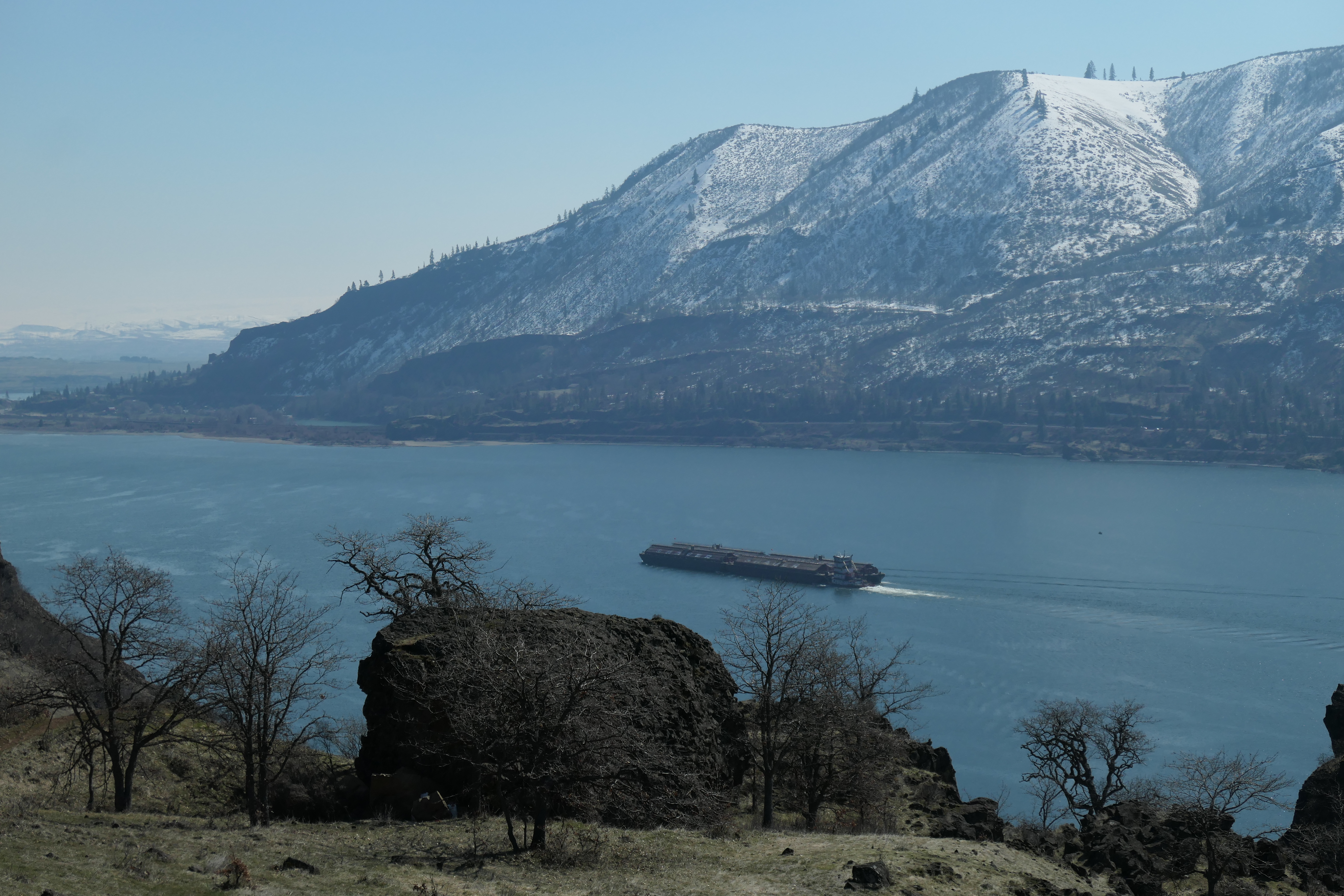
One of the things I like about Portland is the fact that you can immerse yourself in intense scenery with only an hour’s or so drive. To the West there is the stark Pacific, to the East there is the spectacular landscape of the Gorge. Somehow the wild mood swings of these fraught days can be absorbed into the drama of the vistas, the ever changing clouds, as mine did yesterday when driving along the Columbia River. It was intensely windy out there to the point where I had to hold on to the guard rails at the bluffs overlooking the river.


It also rained on and off in the morning, which meant I had to whip the camera out of my pocket and back in again during my hike. And hike I did, with physical exhaustion providing the desired peacefulness by the end of the day.

I chose the Klickitat trail, a 31 mile trail along Klickitat river in an old railroad corridor that used to link the towns of Lyle and Goldendale in the state of Washington. It starts at the confluence of the Klickitat and the Columbia, then goes for 13 miles through oaks and Pondarosa Pine woodlands, winds into the old town of Klickitat and eventually turns up into the remote Swale canyon, ending on the Goldendale plateau. I have never made it this far – my limit is at about 7-8 miles these days, for which I pay the next day….but it is fairly level and usually (not yesterday) fairly travelled, which means it’s safe when I do a solo hike.

But, man, was it worth it. The trail along the river was a symphony in rust,


Percy Manser In the Klickitats (1960)


sheltered from the wind, the only noises coming from the rushing water.


Some tribal members could be seen at their fishing spots. The traditional platforms seem to have been abandoned, I saw only salmon fishing from the banks and moored boats.


The best thing is, for me, the light.  With the large cloud banks driven over, the landscape often has homogenous shade punctuated by just one brilliant spot. I took it as a pointer to our times: let’s find that spot and ignore the rest.

Looking Up


Let’s take a deep breath and look up. Into an, admittedly, grey sky here in Oregon, but flecks of brightness can be seen none the less, in woods that have the beauty of mosaics right now, between leafy tiles and dark lines.

Not that I believe that help is guaranteed from up high, but there is something to be said for symbolic gestures. And if we are to make it through the least days before November 6 without losing our sanity, we might as well fortify ourselves with glimpses of nature.  That and bits of music written for fall.


Sometimes, however, it also pays to look straight ahead – in that case you might be cheered by Van Gogh’s Girl in the Woods or Heuer’s dog in same.

http://art-vangogh.com/

Or you might get lost in Gustav Klimt’s Buchenwald while I pursue the alders…


Get out there and breathe deeply. It will help.

Pigs and Pioneers

On Monday I reported on young artists working for change, on Tuesday on a long-ago icon being subjected to change, and today I am turning to someone who completely changed her life. Dr. Neena Roumell is the mother of one of my closest friends. Trained in developmental psychology by Barry Brazelton among others, she worked for large parts of her life with infants and their parents in the Detroit, MI area and authored books on fathers and infant attachment.

Recently married, she and her husband Atto Assi, a petroleum engineer from the Ivory Coast, decided in 2007 to pack everything up and move to Hawaii to start a self-sustaining farm. Now in her early 80s, Neena looks back at a decade + of adventure, learning, hard, hard work and incredible achievements.

Upon arrival the two cleared the 25 acres they had purchased from remnants of sugar cane and shrubbery, with their own physical labor as everything else they did. They built a house and water purification systems run by solar power, distilling drinking water.  They also constructed a green house, that provides zucchini, strawberries, tomatoes, cucumbers and numerous other fruits; together with an extended vegetable garden, and citrus and banana plants, they have their own basic food supply covered. I am trying to imagine tending to the gardens in a climate that drops 200 inches of rain annually on the Big Island….wimping out right there.

Next they planted 3500 oil palms, with the original seeds provided by the former Dean of the College of Agriculture at UH Hilo, who shared their interest in growing fuel crops to make the islands fuel-independent. Crushing the seeds provides bio-fuel, as do left-over restaurant oils with an extraction method devised by Atto. At peak, they can produce 240 gallons of bio-fuel per day. Trucks, tractors and generators are all covered by their yield, the rest is sold. Neena also wrote grants that received USDA support for their conservation efforts, helping them to set up the next big project:

A piggery!

Pigs are an essential staple of the Hawaiian diet and there used to be thousands of pig farming operations on the islands. The industry shrunk to next to nothing because of the smells associated with the trade and the incredibly unhealthy run-offs contaminating soil and water, and so most meat has to be imported, at high cost. There is a new movement now, however, joined by Neena and Atto, that reconnects to traditional Korean natural farming, a method that eliminates both odor and run-off problem. The approach uses IMOs, indigenous microorganisms, that break down the waste when combined with solar positioning and natural ventilation for drying and cooling.  Details here: https://www.hawaiitribune-herald.com/2014/02/10/hawaii-news/pioneering-piggery/

Key elements are a mix of homemade bacteria solutions applied to beds of organic mulch and logs that generate heat during the fermentation of the waste products, which is funneled off naturally. The beds stay dry, the piglets are snug and warm. The piglets are also fed a homemade diet of agricultural waste, algae, academia nuts, purple potatoes, papayas and tapioca. What started with 70 pigs is now a growing operation of hundreds, planned to peak at 1000.

Our pioneering farmers so far have only had occasional help, including numerous Wwoofers (WWOOF is a worldwide movement linking volunteers with organic farmers and growers to promote cultural and educational experiences based on trust and non-monetary exchange, thereby helping to build a sustainable, global community.) They are now hiring help, given how the farm has grown.

 http://wwoof.net  


I don’t aspire to be a newly minted farmer in my 80s. I do, however, hope to have the pioneering spirit and physical strength to try out novel ways of being at any age that remains to me. I also hope to visit Hawaii at some point in time to take photographs myself. Today’s images are either sent by Neena or depict pigs that crossed my way stateside.