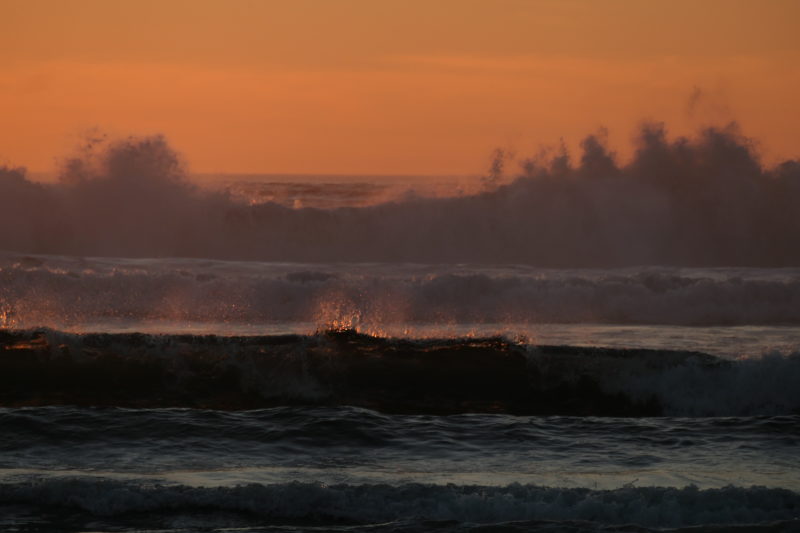
Fall at the Pacific coast is another one of those reminders that nature rules, and even overrules the bad mood inflicted by too many thoughts about politics. This is particularly true if fall weather is as sunny as it has been this October, really breaking all norms. It makes for very happy bunnies,
intensely happy dogs
and extremely happy people.
It also foreshadows what is largely predicted now by all relevant researchers: a return of El Nino this winter, with warmer temperatures and less precipitation – maybe a boon for the coast but a disaster for snowpacks on inland mountains which serve as fresh water supply for Oregon all year long.
I have lived in the Pacific Northwest since 1986, and am still in awe, after 32 years, at the beauty of the landscape, its wilderness, its variety. I am also amused at the descriptions of this region – here is an example found in the Encyclopedia Britannica: …. the American Pacific Coast represented the western borderland area of the United States. As such, the people and the press of this region displayed over the years a degree of regional self-consciousness. Isolation from the rest of the country was early corrected by regional efforts to bring about a union of Eastern and Western lines of transportation and communication, an enhancement of maritime trade, and adequate coastal military defenses. Since then the Pacific Coast has been obliged to cope with many problems more peculiar to the West than to the East. For example, large-scale immigration from Mexico and Central America has been a major Pacific Coast concern, as has rapid urban population growth beginning during World War II. Another problem peculiar to this region has been the heavy dependence of West Coast business enterprises upon Eastern capital investment.
The people of the Pacific Coast are generally credited with being individualistic, casual in dress, and innovative in business management.
I arrived here yesterday and woke up to a misty sky this morning, just right for a planned hike on Neahkahnie mountain. There will be enough sweating as is, given the shape I’m in. I will take an individualistic tempo up hill, be casual in dress and innovative in my photography…..
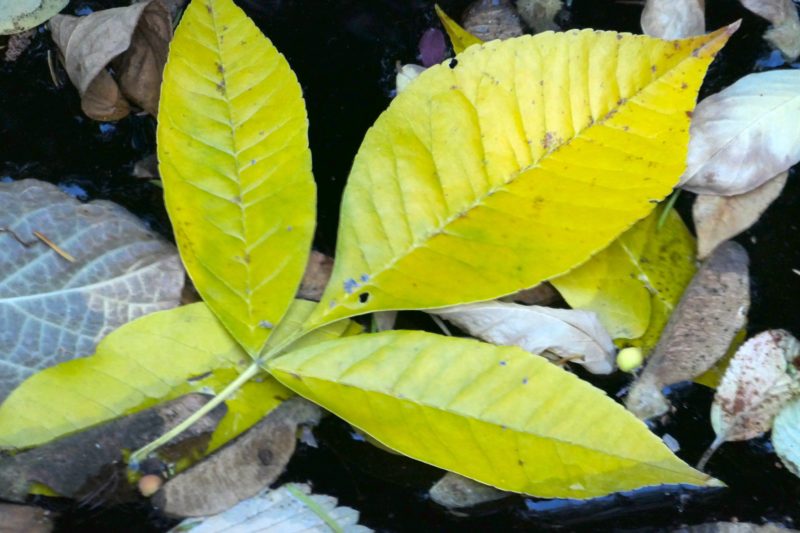
The leaves are changing color. Uniform green now glows in gold, chartreuse, orange, red and brown. Some of the patterns look almost like expressionist watercolors.
Change is generally in the air, or so we hope. Across the generational divide people are promoting change – look, for one, what young people accomplish. On the heels of Parkland and the political engagement of the shooting survivors, we have seen a surge on youth voter registration. Will the young actually show up at the midterms? Some think it is possible, again the traditional pattern of midterm apathy among the 18-30 years olds.
On the other end of the spectrum is this example of musical exhortation created by friends at the senior residence in Boston.of my 90-year old mother-in-law.
Walking these last days under ethereally blue skies with leaves seemingly floating in the air even if they were still attached to their branches had a certain feeling of unreality.
There was a world suffused with beauty in front of my eyes, about to change the minute the rains hit, or the storms come in, just as nature proscribes it. We might not be able to escape the changes imposed by nature, but we sure do, as a society, make it hard for other change to happen. That is true on the individual level – attached is a thought-provoking article from the NYT -click on the picture –
as well as the general level. And no, I am not going to discuss voter suppression, redistricting, closure of voting locales, hacking and so on – you are aware of it all as well as I am. I am just going to hop around in big piles of leaves, camera in hand, wishing that the forces battling the midterm elections are as strong as the forces of nature.
And here are Autumn Leaves from 1924 by Georgia o’Keefe
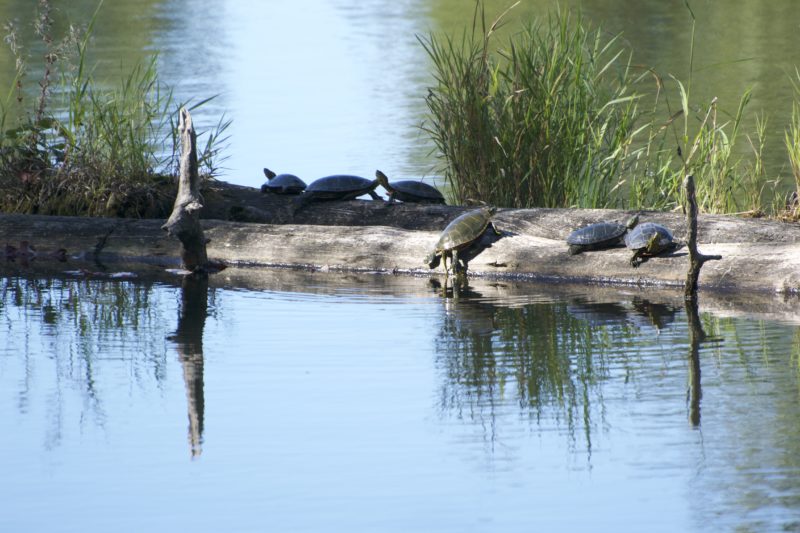
Lies have short legs is one of the most commonly used German proverbs, implying you won’t get far with them. I was reminded of that phrase when photographing turtles and their short legs last Friday on an insanely beautiful Indian summer day out in Washington. Since I had every intention not to talk about politics during this week’s blog I won’t (for the most part) and instead regale you with another terrific travel adventure, conveniently linked to turtles.
Before I do so, though, let me point you to some psychological research attached at the end of today’s blog. The references might be of interest to those interested in understanding the evolutionary (dis)advantages of lying. My current favorite is towards the bottom: the Pinocchio Effect – nose temperature rises during lying…. maybe that’s why certain liars have to crumple it so often.
In the meantime, let’s flee to the turtle-paradise of the Galapagos Islands, specifically to the small island of Floreana, as did a bunch of truly strange people before us. I’ll skip the early inhabitants, marooned on the island in the 18oos and departing when a prison colony was established there by Equador by stealing some boats.
Rather, let’s look at the early 1930s when a Berlin couple, escaping married life of each to someone else, ventured to try a nudist life on the island. Dr. Ritter was a dentist (which probably led him to decide that in the absence of dental care to have all his teeth pulled and replaced by steel dentures. Rumor has it the same was true for his lover, Dore Strauch, and they shared the one set between them…) They settled on Floreana, trying hard to live off the land which was perennially short of water.
Another German family, the Wittmers, settled on the opposite side of the island; eventually, a mystery lady, “Baroness” Wagner de Bosquet and her male harem of 3 men, Robert Philippson, Rudolf Lorenz, and Felipe Valdiviseo appeared and she soon announced herself to be Empress of Floreana.
The Austrian woman seemed to have had a zest for life, particularly its more carnal aspects, attracting many a yacht to this “end of the world,” to greet those sailors with ardor. She also got into endless fights with Dr. Ritter and was prone to violent fits if people did not heed the arbitrary rules she decided to impose. It did not end well.
We do, however, not know exactly how it ended for her – she simply disappeared with one of her lovers, after two others turned up dead on another island; and Dr. Ritter, a vegetarian, died of food poisoning, with Dore Strauch somehow making it back to Germany. A few other mysterious deaths occurred in the following years – an eyewitness account can be found in Frau Wittmer’s book Floreana – A Woman’s pilgrimage to the Galapagos. She died in 2000 at the age of 95, her family these days firmly established in the hospitality business on the island. Not that I’ve ever been there – and not on my list either, frankly, since all the excitement seems to have run out by the mid 1930s.
Here is some fascinating documentary footage and a link to a fuller exploration of the tale, a link I simply picked because I adored the title:
“The gruesome Tale of the Galapagos Islands’ Nietzsche-fueled Homesteader Death Showdown…..”
I WILL succeed in distracting us from the Kavanagh saga, eventually, but for now psychological research on lying can be found here:
Abe, N. (2011). How the Brain shapes deception: an integrated review of the literature. The Neuroscientist 17(5), 560–574.
Anthony, C. I., & Cowley, E. (2012). The labor of lies: how lying for material rewards polarizes consumers’ outcome satisfaction. Journal of Consumer Research 39, 478–492.
Bond, C. F., Jr., & DePaulo, B. M (2006). Accuracy of Deception Judgements. Personality and Social Psychology Review 10(3), 214–234.
Campbell, W. K., Hoffman, B. J., Campbell, S. M., & Marchisio, G. (2011). Narcissism in organizational contexts. Human Resource Management Review 21, 268–284
Dechêne, A., Stahl, C., Hansen, J., & Wänke, M. (2010). The truth about the truth: A meta-analytic review of the truth effect. Personality and Social Psychology Review 14(2), 238–257.
DePaulo, B. M., Kashy, D. A., Kirkendol, S. E., Wyer, M. M., & Epstein, J. A. (1996). Lying in everyday life. Journal of Personality and Social Psychology 70(5), 979–995.
Ekman, P. (2003). Darwin, deception, and facial expression. New York Academy of Science 1000, 205–221.
Ekman, P., & O’Sullivan, M. (1991). Who can catch a liar? American Psychologist 46, 913–920.
Levine, E. E., & Schweitzer, M. E. (2014). Are liars ethical? On the tension between benevolence and honesty. Journal of Experimental Social Psychology 53, 107–117.
Piff, P. K., Stancato, D. M., Coté, S., Mendoza-Denton, R., & Keltner, D. (2012). Higher social class predicts increased unethical behavior. Psychological and Cognitive Sciences109(11), 4086–4091.
This mini-Trump. This histrionic, petulant, entitled, raging, shameless small man. This liar. Even in the details – The WSJ reports that he listened to Dr. Ford’s testimony on a monitor in a side room. He denied this when asked by Senator Harris. Never mind the lies about all the rest of it, even for facts that can be verified, like drinking age in 1980s Maryland.
These sycophants. A huge round of applause, apparently, when Senator Graham walked into a closed-door meeting after the hearings. These hypocrites. After their female assistant so spectacularly blew her job by not catching the accuser in any conflicts and starting to dig into endangering facts with the accused, she was fired on the spot, and never publicly thanked for her role even pro forma after that. These angry old, white men, (a)rousing themselves after their cowardly silence in front of Dr. Ford.
And now they vote. Judicial temperament be damned. Truth be ignored. Power exercised. Perhaps it is just as well that the farce of having a Supreme Court pretend to be a neutral arbiter and guardian of checks and balances can no longer be upheld. And perhaps important to acknowledge that this is not only a Trumpian phenomenon but the result of a long arc – Bush himself made multiple phone calls to senators urging a vote for the dissembler. As one of Germany’s major newspaper wrote over night: The Senate hearings fully revealed the advanced state of decay of American political culture.
This courage. This exemplary willingness to overcome sheer terror for the good of the nation. This calmness, vulnerability, honor. This dignity. Whatever the outcome, Dr. Christine Blasey Ford will be a model for generations of women to come. As the target of unadulterated misogyny she stood in for all of us, prepared to sacrifice life as she knew it to do what is right. Reminds me of a another heroine, Käthe Kollwitz, “I am in the world to change the world.”
One of my thoughts while listening to the Senate Hearings was about today’s blog: How could I possibly write something while in a state of disbelief, upset, sadness, and above all anger at what is unfolding before us?
I came up with an imperfect solution, but the only one I could think of: depict a moment of unadulterated happiness during this last week of misery and churning, even if the happiness came swiftly, and went swiftly.
Boys and birds. All it took. Or, come to think of it, lovely girls as well. (Since I feel 100 years-old this morning I am allowed to use that youthful term for once.)
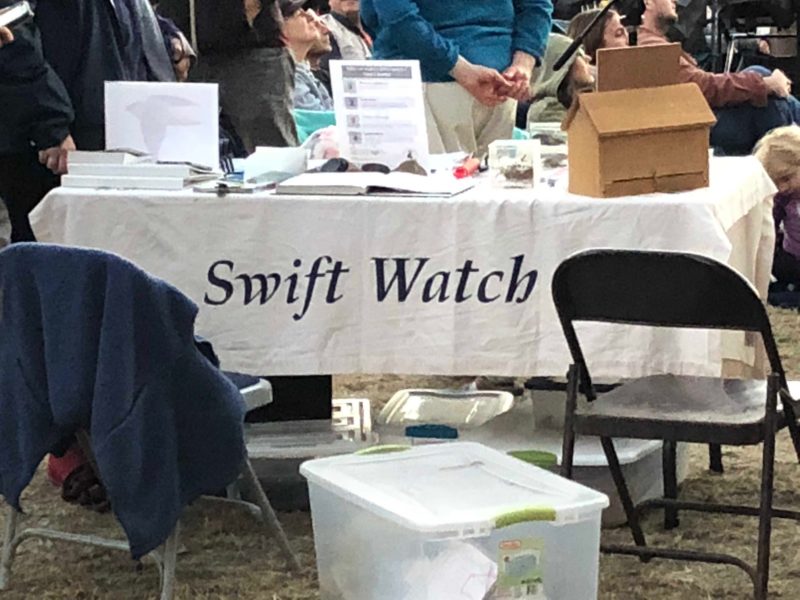
Boy and girl took me to see the annual fleeting spectacle of swifts filling the evening sky, before they descend, at some mysterious signal, into the chimney of a local grade school for their night’s rest.
The Vaughx swifts visit PDX every September during their annual migration South. With much old growth forest being cut down they use artificial structures like chimneys these days to take a break. They adapt to changing environments to ensure their survival. As we will have to do. Alas, hiding in chimneys is not one of our options.
Up to 12.ooo or more birds twirling in the sky, advancing and retreating until they disappear, it is a sight to behold.
The mood on the ground is communal and festive.
Young entrepreneurs make the rounds.
Up to 2000 people gather nightly on the school grounds, bring the kids, have a picnic, marvel at the movement and lightness above them. For a short while your awe of nature takes over and lets you forget the ugliness of our world.
As Flake declares he is voting for the liar and TV declares that too much of a year of woman is happily gone and this is the year of men, cherish whatever fleeting moments of happiness you can get – there won’t be many of them for many of us.
Be warned: today’s blog will read like the back of a cereal box, or the kind of placemat factoids meant to keep the impatient kids at bay in restaurants. Then again, you might be dying to start your Friday with new information on snowshoes for birds.
Really, there are some astonishing facts out there about animals in fall, preparing for winter. Seasonal cycles can affect all kinds of things from reproductive and metabolic activities to migration, hibernation and coat changes.
Here goes:
Q: Why do bears hibernate?
A: To drive those of us stumbling to the bathroom in the middle of the night into fits of envy…. did you know they can “sleep” for up to 100 days without peeing? And of course without eating or drinking, slowing down their entire system during food shortage time, snug in whatever den they found.
Q: What is an existential difference between bees and wasps?
A: The former survive hibernation, the latter all die except for the queen. Invertebrates such as mollusks, myriapods, crustaceans, arachnids and the insect family all hibernate – who knew.
Q: Who are the true living dead?
A: Frogs! They often cannot dig deep enough to be protected from the cold under the leaves when hibernating.
“And yet the frogs do not die. Why? Antifreeze! True enough, ice crystals form in such places as the body cavity and bladder and under the skin, but a high concentration of glucose in the frog’s vital organs prevents freezing. A partially frozen frog will stop breathing, and its heart will stop beating. It will appear quite dead. But when the hibernaculum warms up above freezing, the frog’s frozen portions will thaw, and its heart and lungs resume activity–there really is such a thing as the living dead!”
Q: Do all animals slow down in fall to prepare their bodies for the onslaught of winter?
A: Nope. Deer, boar and bats are seeking mates in fall, elk and moose becoming particularly aggressive.
Q: Why do mammals and birds change color to white in late fall?
A: If you answered: “camouflage in the snow,” you are partially right. More interesting, though, is the fact that white fur, lacking pigment, has more space in its hair shafts. When air fills the empty spaces, it traps the animal’s body heat and provide insulation from the cold. Birds experience a similar benefit when they fluff their feathers, trapping pockets of air close to their body for added warmth. Many animals go through molting, shedding their fur for a generally thicker version. Many of these changes are triggered by length of daylight, not temperatures. Think about the effects of climate change – you’ll go white to escape predators and then there is no snow…..
Q: Heard a bird lately?
A: Probably a robin, they never shut up. The rest of them do, though, since there is no longer a need to call for a mate, or define their territorial borders. And many migrate to warmer climes. Which is also complicated by climate change because many who used to fly south now stay in different territories, upsetting the natural balance in the food chain. Never mind that some of the migrating birds now also have routes open to them through previous permafrost territories that allow them to come to new grounds – bringing with them viruses that we previously did not have to face. Bonus fact: some birds are carnivores in the summer, herbivores in the winter.
And here is one of my favorites: in winter, some grouse dive-bomb head first into powder snow. Completely submerged, their heat creates a sealed dome, forming their very own igloo. Before that, in September, they grow extended scales on their feet, practically functioning as snowshoes!
Thoughts of grouse, particularly sage grouse, were triggered by seeing small patches of sagebrush this week (Have never been able to photograph the birds themselves). Large sagebrush patches are required for their survival, since they shelter the birds and are the one and only source of highly nutritious food during the winter. This puts ranchers, builders and conservationists in conflict – although in Oregon they found a compromised approach that seems to have helped the birds stay off the endangered list. That is until the Trump administration came along and eyed changes….
260 miles east of Portland lies La Grande, a small town of 13.000 or so people nestled in the Grand Ronde valley, in the eastern foothills of the Blue Mountains. Median income is $39.000 a year, and 91% of the population is white, 1 % black, 4 % Latinos 1.5% Asian and the rest Hawaiian. It was settled in 1861 by immigrants coming along the Oregon Trail
who (violently) displaced the Native people of the southern Columbia Plateau from the Umatilla, Nez Perce, Cayuse tribes who used the valley to harvest camas root and other plants and to hunt, fish, and trade.
The city grew in the 187os during the gold rush in Idaho and eastern OR, with miners buying up the agricultural produce delivered by La Grande’s farmers. During 1884 the railroad came to town and with it a large Chinese population who stayed on as successful business men after having worked the mines or the railroad. Practically all of them were driven out by a mob in 1893, which looted and burned their businesses and homes, forcibly removing the men and marching them to a railway depot to send them “back home.” If you wonder about the current politics of some in the place, look at who attends the “freedom Rallies.” This spring Dana Loesch and Sheriff Clark were the guest speakers at a Freedom Rally in a state where Trump won 28 of 36 counties and Republican Greg Walden hopes to hold his power in District 2. The one who voted 99% of the time in line with Trump’s positions, that Walden.
A small liberal arts university is one of the major employer in La Grande, the only one east of the Cascades, and has brought a lot of focus on culture to the region. Most of the tourist traffic, though, is devoted to outdoor activities, including hunters, campers, mushroomers, birders, cyclists, skiers, snowmobilers, and snowboarders.
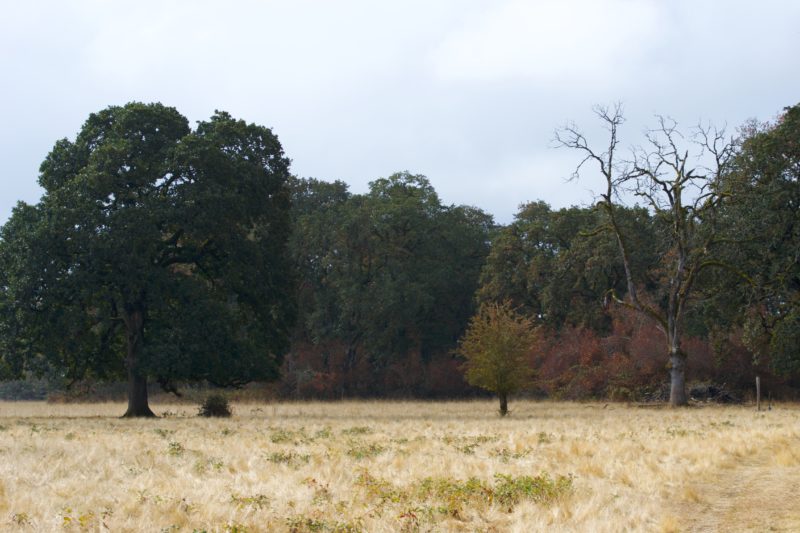
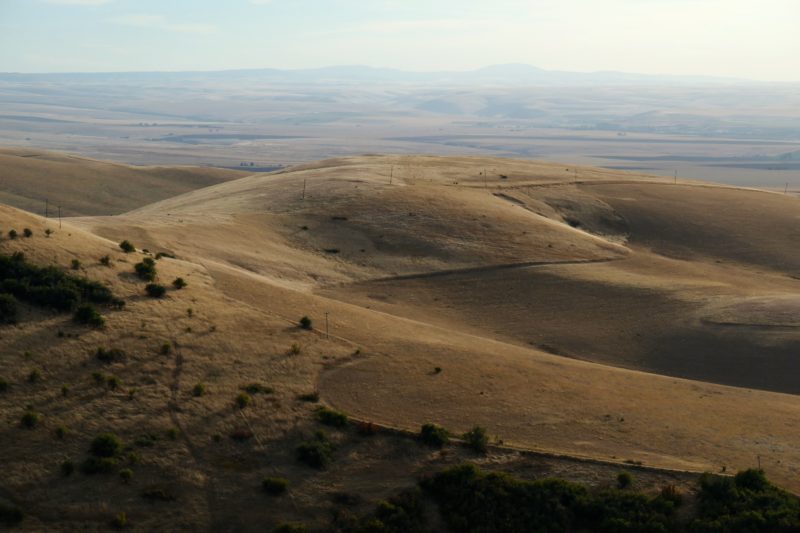
Count me in on the outdoor tourism. On Tuesday I visited the 6,000-acre Ladd Marsh Wildlife Area, a popular destination for birdwatchers and hunters, and the largest hardstem bulrush marsh in northeastern Oregon, five miles south of La Grande. I really had meant to capture the beauty of the place, not to harp on politics again, so you are perfectly justified in just looking at the photographs. Fall after an intensely dry summer has left his mark in gold, yellow and ochres,
dust blowing everywhere.
Even the bullrush ponds were largely dry, just a few puddles left, attracting the first migratory birds (which will in the spring, when water is back in the marsh, number in the 1000s.)
What’s with the pelicans? They follow me everywhere!
Wild antelopes settled under the irrigation lines or close to them, in hope of water. So did the birds and live stock.
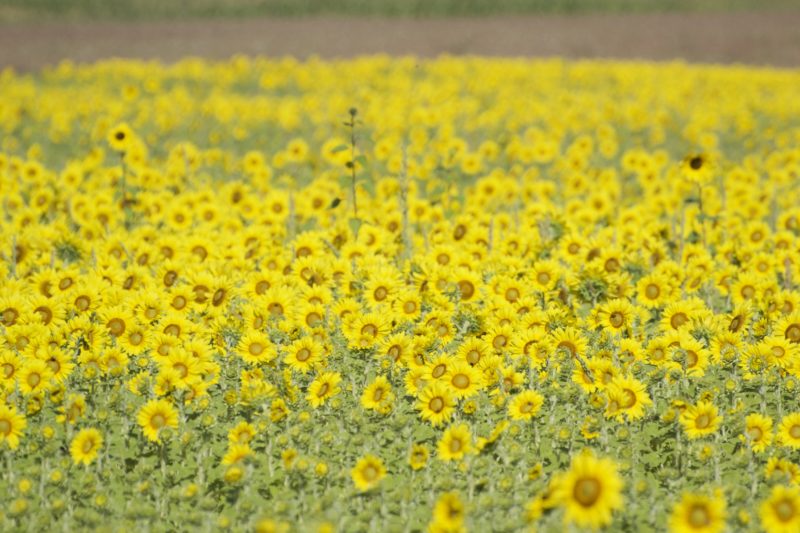
Only the sunflowers gave up.
Music today is accompanying a compendium of images of those who lived here before they were driven into reservations. I do not know the source of the music, or the source of the photographs, but thought we should remind ourselves of our history.
Sunflower fields are a gift of fall – particularly for those of us who like to photograph. The colors, the strong forms, the way they attract wildlife all make me visit them again and again. They also seem to elicit a lot of associations from poets, composers, film makers and so on. (My generation will remember Sophia Loren and Marcello Mastroianni in Sunflower if only for Mancini’s saccharine musical score that was whistled across all of Europe in 1970.) I’ll spare you.
For a poem I chose William Blake’s Ah Sunflower, because it reflects autumnal transience in better ways than I could possibly offer.It also gives me always a kick to read about something that looks like 8 simple lines and then learning what they could possibly stand for. Or, more precisely, how scholars fight over potential meanings. Is the Ah a sigh? Of delight? Of surprise? Of pity?
Your guess is as good as mine, or, come to think of it, probably better than mine. I say this because I was also completely clueless when it comes to the symbolism of the sunflower (again, offered by scholars): a “fallen” human, or persistent love, or frustrated love, or lost innocence, or corrupted love, or poetic imagination, or spiritual yearning, or all of these?” Oh, (sigh of irritation) the things I don’t know. Here is Wikipedia to the rescue. https://en.wikipedia.org/wiki/Ah!_Sun-flower
Attached below are Benjamin Britten’s take on the poem
There is a decided smell of fall in the air when walking early in the morning, hints of russet and smidgens of gold in the scorched landscape, and migratory birds starting to appear. I feel, so far, none of the melancholia associated with fall, just plain relief that the heat is over and the rains have come.
During antiquity the Greeks coined melancholia from the words melas and cholé, blackness of the bile. They thought an overabundance of this black bile poisoned you and it was associated with the fall months, the astrological signs of libra, scorpio and sagittarius. If you look up the definition it speaks of deep sadness or gloom. During the middle ages melancholia was touted as one of the deadly sins, to be defied with prayer and willpower. During the romantic age with the emerging celebration (if not cult) of “geniuses,” people took recourse to Aristoteles’ writings, who claimed melancholia was the precursor of mania which enabled all kinds of glorious deeds by philosophers, artists, poets and politicians…
The combination of depression and mania is of course known to us as bipolar disease and indeed, many famous people are said to have lived with it, including Florence Nightingale, Virginia Woolf, Marilyn Monroe,Ernest Hemingway, Winston Churchill, Vincent van Gogh, Buzz Aldrin, Edgar All Poe, Jimmy Hendrix, Graham Greene, Alvin Ailey, John Ruskin, Edvard Munch and Gustav Mahler to name just a few in no particular order. If you Google it, the list is overwhelming – https://en.wikipedia.org/wiki/List_of_people_with_bipolar_disorder
but the real statistics includes of course many more non-famous than famous people: the World Health Organization considers it the 6th leading cause of disability worldwide, affecting up to 30 million people.
Well, no gloom on this end and no glorious deeds either, even if it is the time of year that has me listen to “fall” music, which often has a melancholy tinge, focussing on the transient nature of things. The only thing I want to think about in terms of transience is that of our current political landscape after the outcome of the November election…but that doesn’t keep me from pulling up my fall play list!
Let’s start with the oboe, with its perfect melancholy sound – there is a full album with works by French composers dedicated to that instrument, played by one of Germany’s major oboists – principal oboist at the Berlin Philharmonic – Albrecht Mayer. It is called Bonjour Paris. (And you are better off listening to the clip from it attached below with your eyes closed, because of the inane posing in front of major landmarks.)
This week’s topics of luck, randomness and bias have all been discussed in the context of inequality. I tried to point out some of the beliefs attached to these terms and how they psychologically benefit those who hold them or harm those who are excluded by them.
Should that be changed? Some clearly don’t think so – here is an elucidating editorial from yesterday’s Washington Post, arguing that Trump and his ilk actually want racism and misogyny, to choose but two examples, to continue to exist:
For the rest of us, the question is more likely: how can we change it? We have a few answers to that question, but nothing definitive and certainly nothing that could pull societal transformation easily out of a hat. In history, only truly earthshaking events have made a dent into inequality, and even then only for limited amounts of time.
Wars, revolution, state collapse and plagues have been the great levelers, according to Stanford ancient history professor, Walter Scheidel – and who wants to live through those? Revolution might have a cool ring to it, but the societal costs have historically been tremendous.
is worth your time for Scheidel’s science fiction-like speculations of what type of levelers the future might hold. Interesting concepts, for a guy who teaches classics. In terms of real policy changes, he has nothing convincing to offer. Man, there are days where I am grateful that I am at the older range of the spectrum……
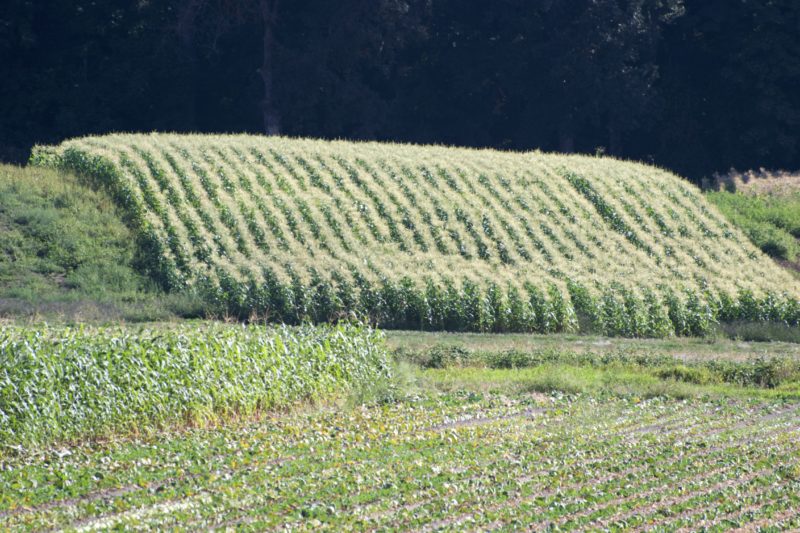
I am writing this while hurricane Florence is about to make landfall, and after I walked through the fields of Sauvie Island, documenting this summer’s drought that has yellowed the corn stalks before their time; both are triggering thoughts how climate change might lead to the kinds of upheavals that are discussed in the article above. I fear, however, that the consequences might lead to even greater inequality rather than excising the existing one. Time will tell.
Each summer my Beloved vanishes into the Northern wilderness, paddling his solo canoe, in calm and quietude, persisting on what the REI freeze dried section had to offer. I’m saying calm and quietude both as description of what it is he seeks and what I tell myself as mantra, in place of thoughts of forest fires, bear attacks, appendicitis or any other scary mishap, thoughts that destabilize me.
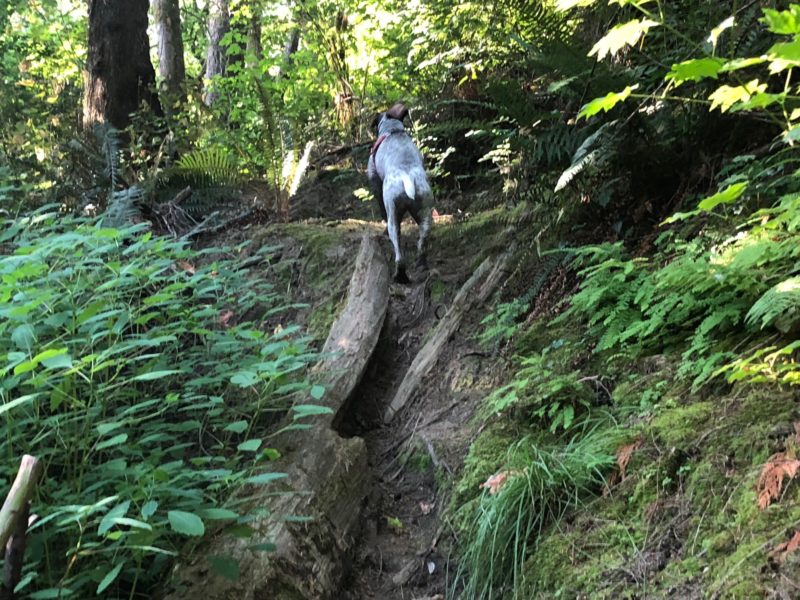
And while he sleeps under the stars cl0se to the arctic circle, or swims in icy rivers of Saskatchewan, I try to escape our insane heat with early, early morning walks with my dog Milo. The photos, all taken with an iPhone this morning, document the beauty in front of my doorstep – a quick 15 minute walk away from my house.
Around 6 am you have the forest to yourself – proof of that lies in the fact that about every 5 meters you walk into a spiderweb threaded across the path that no-one before you disturbed and that now clings to hair and nose and glasses…..
There is a nest with fledglings of a red-tailed hawk, too high to photograph, but you hear them screech and see the parents swoop in and out. There is a dried-out stream where clouds of little dragonflies hover until the pup storms in and disperses them. There’s tons of scat, coyote and deer (who have decimated the flowers in my yard, but are polite enough to go and do their business in the woods…)
And after you come home, already drenched in sweat even this early in the day, there waits a shower and clean clothes. Who needs Alaska?










 Sand hill cranes