Browsing Category

Nature

Up and Down

The weather is echoing the mood – from spring in the air, sun galore, take- the -downjacket-off temperatures to snow on the ground with rain, sleet, and wind in-between.

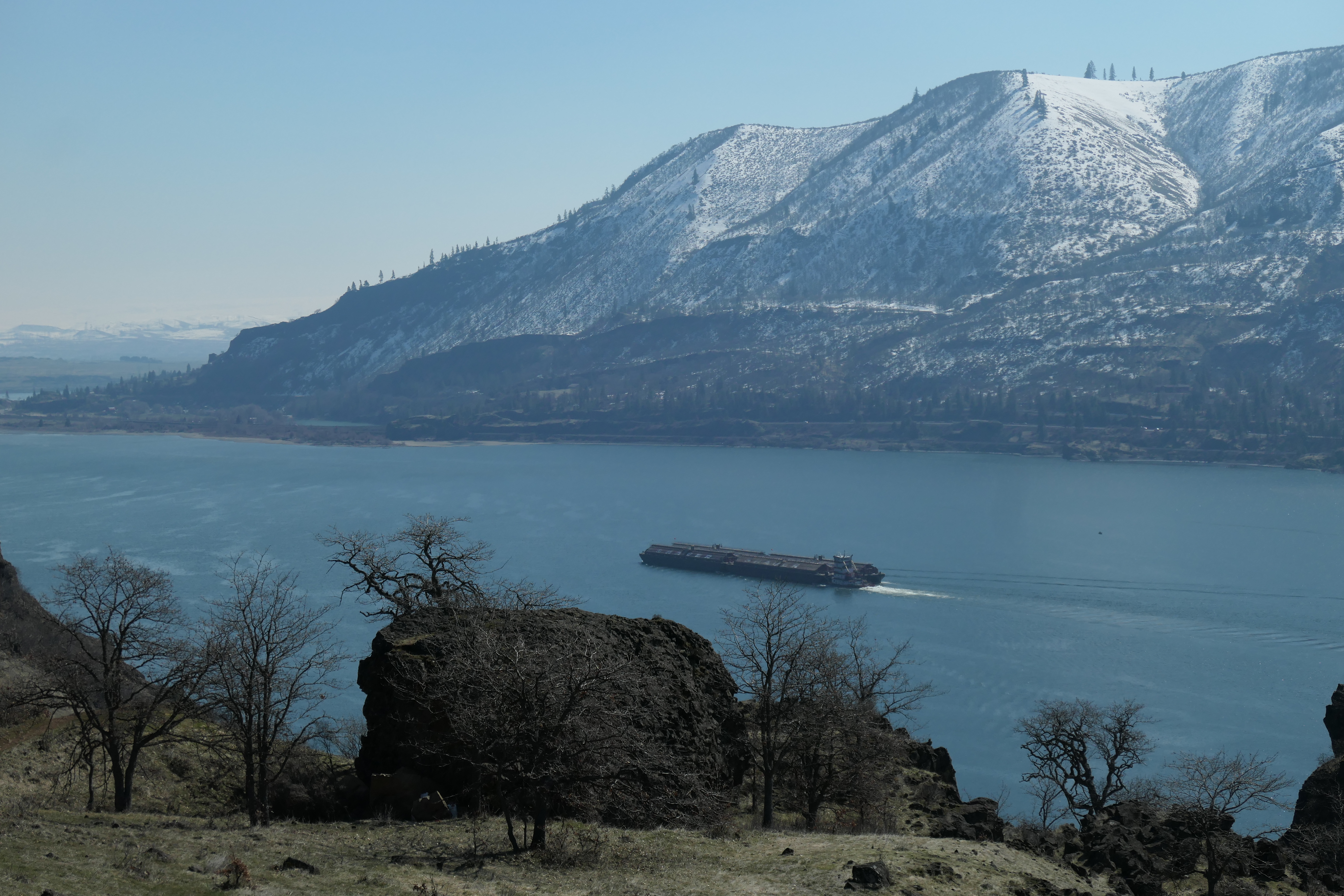
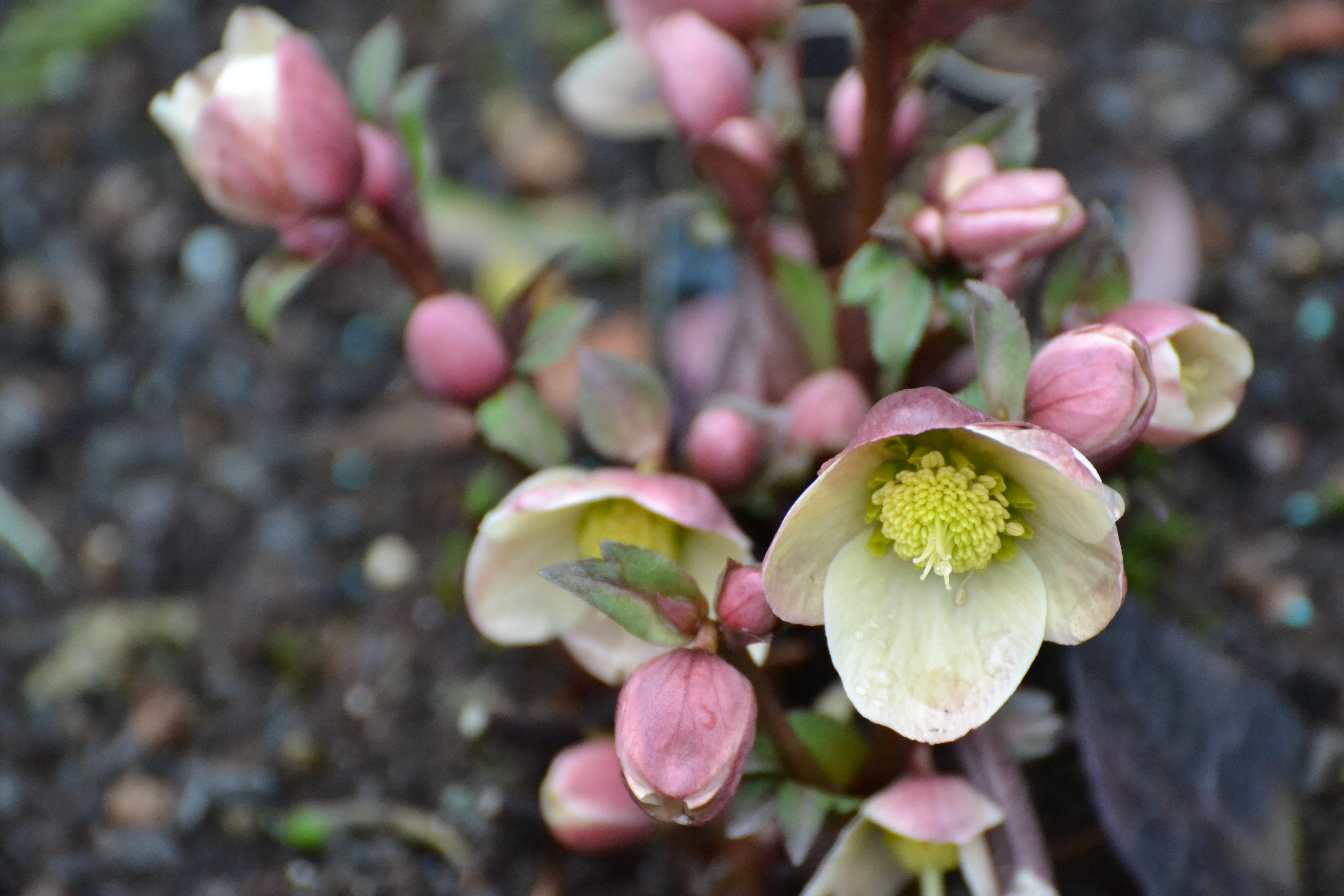
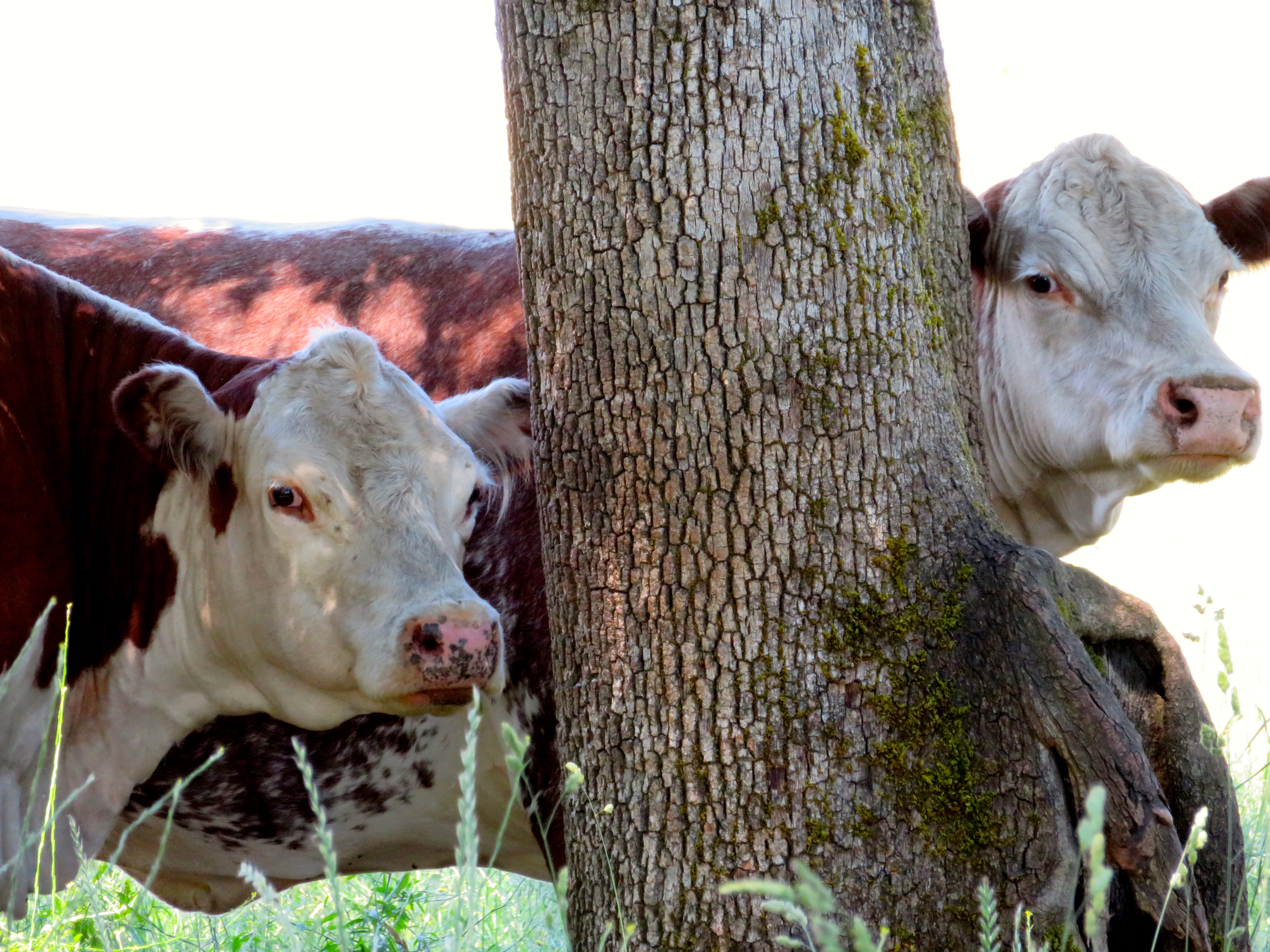
Let’s focus on spring and good moods. And Kulning. What’s that, you ask? It’s what comes to my mind when I wander on Sauvie Island, happy, looking at the first signs of spring off-set by the snow covered mountains. Stare at the cows, and admire the birds.

Kulning was the traditional singing of Scandinavian women herders. “Less than a century ago, Sweden’s remote forests and mountain pastures swelled with women’s voices each summer. As dusk approached, the haunting calls of kulning echoed through the trees in short, cascading, lyricless phrases. Though often quite melodic, these weren’t simply musical expressions. They were messages intended for a responsive audience: wayfaring cattle.

Kulning was a surefire way to hurry the herds home at the end of the day.

Susanne Rosenberg, Professor of folk singing at the Royal College of Music in Stockholm (KMH), head of Department of Folk Music and member of the Academy of Music is an expert on kulning. She has been a pioneer in both rediscovering the older Swedish style of traditional singing, as well as using it in new artistic environments, involving cooperation with Sweden’s foremost contemporary composers.

Accoding to her research “the vocal technique likely dates back to at least the medieval era. In the spring, farmers sent their livestock to a small fäbod, or remote, temporary settlement in the mountains, so cows and goats could graze freely. Women, young and old, accompanied the herds, living in relative isolation from late May until early October. Far from the village, they tended to the animals, knitted, crafted whisks and brooms, milked the cows, and made cheese—often working sixteen hour days. Life on the fäbod was arduous work, but it was freeing, too.” Women alone, making a lot of noise. My good mood continues.

Not that I dare to scream out like that – the birding community on Sauvie would declare me finally mad rather than a wizard woman of the Northwest….

But even swans have been seen to respond to kulning – unless they approach you hoping for breadcrumbs.

Jonna Jinton, in the link attached above, is currently riding the wave, and making pretty you-tube videos re-introducing the ancient art.

The serious music, combining old and new, can be found below. It’ll preserve the good mood for the entire day, even if I see the first snowflakes mixed with icy rain when looking out of my window.

Photographs are from Sauvie 5 days ago.

Ways to reminisce

When I read the passages posted below I was moved on so many levels. Moved by the pervasive sense of home-sickness. Moved by the way wit is used to defuse nostalgia. Moved by the display of fabulous teaching – who will forget the names of the birds and their sounds after seeing them placed in these snarky contexts?

The author is Liam Heneghan who is a professor of environmental science at DePaul University, where he also co-directs the Center for Nature&Culture. The piece below was published here:

https://www.irishtimes.com/culture/books/memories-of-irish-birdsong-1.3765719?fbclid=IwAR3gRIetTqrp9eqce9xtfg-WQQ8bVm42AJO0Z-e8xExeMdaSNI-XERyge_A

Before I get to it, let me mention that he also wrote a well-received book on the ways ecosystems are described in children’ literature. Here is an excerpt from the TLS review: Those familiar with Tin Woodman in The Wonderful Wizard of Oz, the Ents in The Lord of the Rings or the Once-ler in Dr Seuss’s book The Lorax may well have learnt something about the spiritual and economic value of trees, or at least the deeds of the brave but usually unromantic eco-warriors who protect them. As the zoologist Liam Heneghan argues in his new book Beasts at Bedtime, ecological themes and nature lore have long been deeply embedded in children’s bedtime stories.https://www.the-tls.co.uk/articles/private/let-the-wild-rumpus-start/)

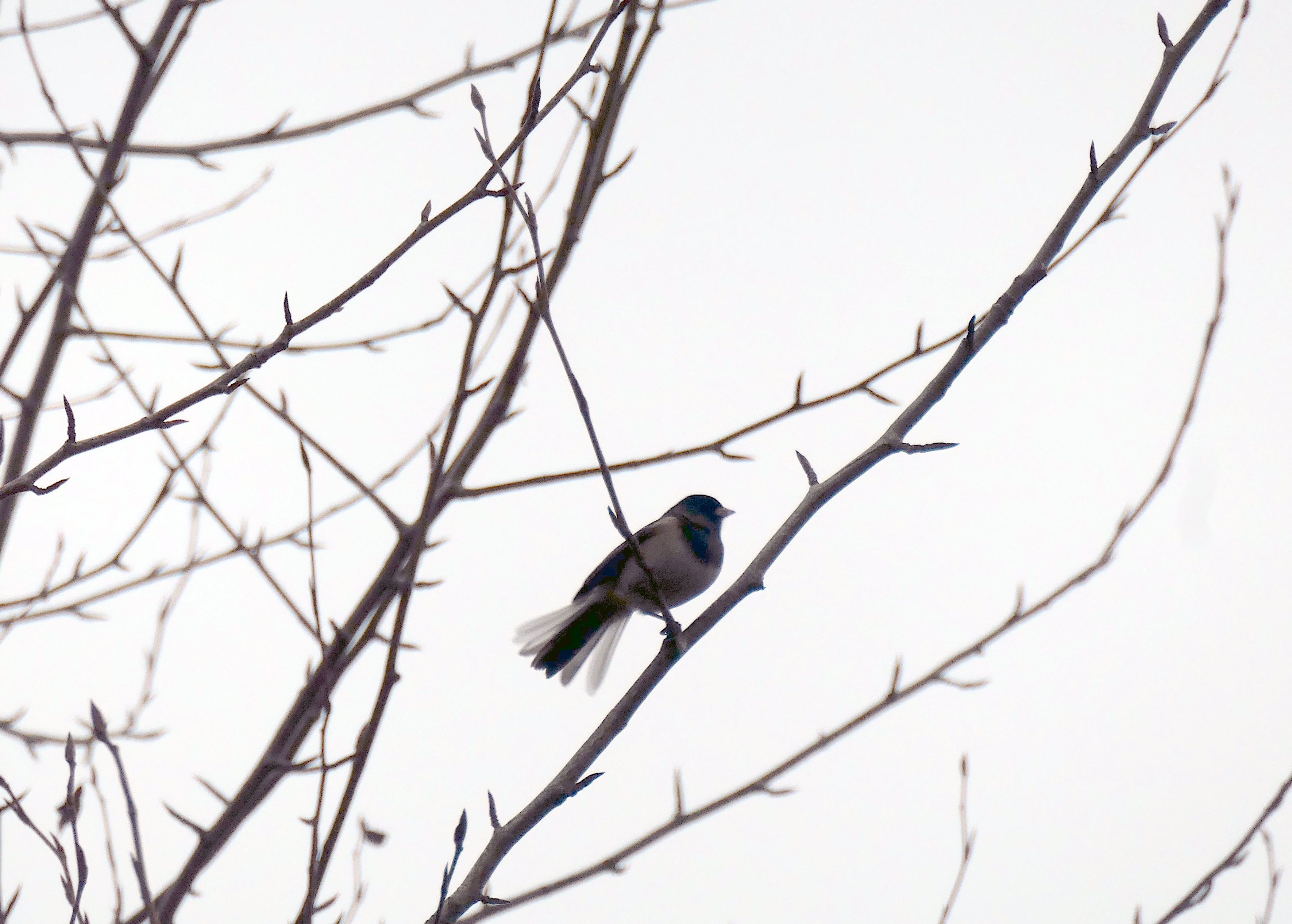
Today’s photographs are not necessarily matched to the birds named in the passages below – they were taken in recent weeks in these parts, true US musicians all.

Memories of Irish Birdsong

By Liam Heneghan

1. My mother once saw the chaffinch (Fringilla coelebs; in Irish: “Rí Rua”) take a shit on Grafton Street and she scolded him. He just kept repeating his distinctive call “pink, pink, pink, trup,” over and over again, but you could kinda tell that he was mortified. Good bird, really; had trouble later with the auld drugs, and got very stout. Died way too young. In the eighties, those birds had a string of great hits.

2. I worked one summer on the Cork Train on the food trolley. A young fella with me in the kitchen car was really into the skylark (Alauda arvensis, in Irish: “Fuiseog”). He could play skylark’s famous guitar riff on his knock-off Les Paul (you know the one, it goes “chirrup… chirrup, trrrp”). Claimed the skylark did not play a real Gibson either. I will never forget that little detail; I lost touch with that kid later on. 

3. Back in the day, I’d hear corncrakes (Crex crex; in Irish: “Traonach”) along the Co Mayo coast all the time. They are a rare breed now, of course; almost extinct. Once when I was pushing my bike up a laneway I saw the corncrake standing with his sister outside a cottage. He must have thought I had looked at his sister funny, as he snarled “kerrx-kerrx” at me and started to fling his droppings. I was told afterwards that the whole family was mad. Brothers all musicians in America.

4. I heard the wren (Troglodytes troglodytes, in Irish: “Dreolín”) play in An Béal Bocht on Charlemont Street Dublin back in 1986. Small fella, drab feathers; mainly sang in hedges. It was almost Christmas time; when he finally sang his big hit “check…, check, churrrrr”, there wasn’t a dry eye in the house. Very Christmassy. Then they passed around a can, collecting for “the lads north of the border.” They were different times, back then, that’s for sure.

5. Every summer in the mid-80s, I’d pitch a tent in a field by the River Flesk in Killarney. Right beside the Gleneagle Hotel. Back then, the woodcock (Scolopax rusticola, in Irish: “Creabhar”) was blowing up. He’d fly in from his perch in the oak woods and appear there on Friday evenings, flying high above the mainstage groaning and whispering ‘pissp.’ “Roding” is what the birders call it. The fans went wild when he swooped down and ate earthworms. You can never really tell what some people will think is cool. 

6. My father and I took a trip up in Gweedore in the early 90s and he tried to strike up a conversation with the Lesser Black-backed Gull (Larus fuscus, in Irish: “Droimneach beag”). Big bloke, wore a heavy sea-worthy jacket. I’d seen that bird play all the seisúns in pubs in the area. My dad let out a very plaintive ‘peep, peep, peep’ and then anxiously flicked his head from side the side. But the gull either didn’t understand him, or perhaps he thought he was a herring gull. My dad muttered something under his breathe, but I did not quite catch it. 

7. When I moved to New York in December 1987, I avoided Irish birds as best I could; they made me homesick I suppose. Once I was on a “2” train going up to the Bronx Zoo and spotted the starling (Sturnus vulgaris, in Irish: “Druid”) fly on at Times Square. She used to busk at the Dandelion market on Stephen’s Green. Sold jewelry on the side, condoms too. It had been snowing heavily so she had ice packed hard on her toes. Starling slipped, swiveled and fell onto an old woman’s lap, called out “chackerchackerchacker” and laughing like it was the funniest thing. Everyone on the subway car just ignored her; she’s just put out her new album. 

8. You will consider me nostalgic, I suppose, but the music those guys were making in the 1970s was rawer, more radical, really. I once heard the fieldfare (Turdus pilaris; in Irish: “Sacán”) in a park in Dublin sing one glorious note, just a single gawddammed note, sustained it for an eternity, as if he really did not give a shit. But you could really feel the emotion in it. I dated his sister back then, but told her I didn’t want to meet her garage band loser of a brother. I regret that now; those guys became huge in America.

And here are some Irish musicians: https://www.youtube.com/watch?v=SBATrLRWySg

Beware, Arachnophobes

This week I’ll explore some topics outside of politics. It will improve my sanity, and, judging by the volume of emails received last week, also that of my readers.

I’ll start with flying spiders. Now that should put your mind at rest…. https://www.theguardian.com/world/2019/jan/11/raining-spiders-brazil

If you look at the link attached above, you’ll see a video of a sky that seems to have spider raindrops or snowflakes, 1000s of them, come down. It is a phenomenon associated with particularly hot air. (Climate change? Nope, not going there today.) Before you cringe in disgust, listen to the really amazing facts associated with these spiders.

First of all, they are tremendously good for the environment, because they devour insects and pests. (Which reminds me, so are ducks. They are increasingly used to replaced toxic pesticides in rice farming – check it out here: https://www.bbc.com/news/av/world-europe-43588774/dumping-pesticides-using-ducks-instead) 

Secondly, they are amazingly social – out of 40.000 species of spiders there are only 23 that form communities, and parawixia bistriata is one of them. They basically curl up in a tight ball in the trees during the day

and then come out at dusk to weave giant, connected, invisible nets where they hang out waiting for dinner. A colony can have up to 50.000 individuals with females outnumbering males at a high ratio. If there is enough wind, the nets break loose and get carried, spiders and all, across the sky which makes for the illusion of raining spiders.

And before you comfort yourself with the thought that all of this happens between Panama and Argentina, I have news: ballooning spiders have arrived in Texas. (Maybe they could stand in for the wall, building an elongated web along the border? I forgot, no politics. My bad.)

The good news: they are not poisonous, and they are exceedingly small (otherwise they’d be too heavy to float in the air) so that their bite, if it ever happens, is no more harmful than a mosquito’s.

The fascinating news: individual spiders do not only travel with the wind, but use flight by electrostatic compulsion, reaching heights of over a mile and many more in distance.

Every day, around 40,000 thunderstorms crackle around the world, collectively turning Earth’s atmosphere into a giant electrical circuit. The upper reaches of the atmosphere have a positive charge, and the planet’s surface has a negative one. Even on sunny days with cloudless skies, the air carries a voltage of around 100 volts for every meter above the ground. In foggy or stormy conditions, that gradient might increase to tens of thousands of volts per meter. Ballooning spiders operate within this planetary electric field. When their silk leaves their bodies, it typically picks up a negative charge. This repels the similar negative charges on the surfaces on which the spiders sit, creating enough force to lift them into the air. And spiders can increase those forces by climbing onto twigs, leaves, or blades of grass. Plants, being earthed, have the same negative charge as the ground that they grow upon, but they protrude into the positively charged air. This creates substantial electric fields between the air around them and the tips of their leaves and branches—and the spiders ballooning from those tips.

The whole argument can be found here:

https://www.theatlantic.com/science/archive/2018/07/the-electric-flight-of-spiders/564437/

Nature will never cease to amaze me. And here is a little something to commemorate the spiders’ victims:

Photographs are of spiderwebs found in the Northwest woods.

Walk About

I know I seemed all over the map this week, no discernible shared topic among the blog offerings, none of the usual weekly theme. Upon closer inspection, however, they were tied to the typical year-end deluge of thoughts about what mattered, what could have been different, and what I am grateful for.

By no means a comprehensive list, but: Music and art mattered, as did friendships and my photo gigs for diverse organizations in town. There could have been more traveling and fewer surgeries to make it a different year. I am, however, content and above all grateful for learning new things each day, still being able to read and think, with lots of time to do both. And being able to walk about in nature where everything else becomes so inconsequential.

Beyond my personal view on 2018, here is what 16 historians claim will be in future history books (spoiler alert: it ain’t good….)

https://www.politico.com/magazine/story/2018/12/28/what-will-history-books-say-about-2018-223561

White egret approaching


Join me, then, on my walk that I took yesterday. So much coming and going, so much noise, the air was filled with it. None of it as pearling as Liszt’s piece, Sermon at Assisi, that I chose for today, a piece that I tried to fall asleep to when my mother played it in the room below my bedroom. https://www.youtube.com/watch?v=20f-bYmi62E

The geese were but noisy,

and the herons had the squeakiest voice imaginable, in great contrast to their visual elegance.

Even the pintail ducks were full of songs, obviously confused about what season it is.https://www.youtube.com/watch?v=gKU42FkOd2o

And the kingfisher was cackling, as if he was making fun of me, for my end-of-year contemplations. https://www.youtube.com/watch?v=fTFxIF5FY-Q

Here is Schumann’s Bird as Prophet https://www.youtube.com/watch?v=3HQ9yxiDLSM

The place I chose is half way to the coast, Fernhill near Forest Grove, an old water recycling plant area that has been converted into a nature preserve, with local volunteers keeping it up, replanting it, making sure it is ecologically attractive for many of the migrating birds. A wondrous place.


Three Versions of Nature

I just love it when people have clever ideas that make me laugh but also speak to a deeper issues. This was certainly the case when I came across the work of Anne Percoco, who got her inspiration to create an imaginary herbarium from floral images printed on the packaging of every day items.

Percoco: “These range from abstract little leaf icons used on packaging to indicate the product is eco-friendly in some way, to leaf and tree-shaped, chemical-laden air fresheners, to fake Christmas trees, which are abundant this time of year. Once I started looking for them, I saw them everywhere.”

Why observe real nature when you can look at a fake one? Alluding to nature to sell products seems to work, never mind that it is a cleaned-up, stylized, concocted one in many cases. The art work makes us think.

In itself it’s inventive, indeed, but so are the names the artist gives her specimens – that alone must have been a hoot, the latin cat and dog included (check out the silhouettes taken from pet food bags.)

For my Philly and NYC peeps: here is where you can catch the exhibit if you’re up for a trip to Jersey City…

Parallel Botany: The Study of Imaginary Plantscontinues at Casa Colombo (380 Monmouth Street, Jersey City) through February 26, 2019.

——————————————————

I just despise it when people have clever ideas that make me cry but also speak to deeper issues. Tears of envy, I hasten to add – for want of traveling the world. SF based Photographer Beth Moon did so for 14 years to capture images of the oldest and rarest trees on earth. For me the work draws attention to what we are putting at risk with our absence of environmental protection – in an interview she seemed to be more keen on documenting what is before it decays, but who knows…https://mymodernmet.com/beth-moon-interview-ancient-trees/

Beth Moon

The outcome is stunning work, in b&w duotone for the trees photographed during day time and in color for the same or similar trees at night. These are analog, not digital prints, extensive work with palladium added in the darkroom, requiring real skill in addition to the eye she has.

Fake nature, real nature: Liszt’s imagined nature shall complete the trio. https://www.youtube.com/watch?v=T6VHPJZdSJIh

Feux Follets are the ghostlike sparks of light you see on the ground in the moors and forests of Northern Europe. Images today are from an older series of that name, where I combined my photographs of German trees with lights of sorts.


Hanukkah in Miami

The Miami Art Week this year runs from December 3 -9. I won’t be there, so I’ll miss out on press releases that try to answer questions along the line of what’s the point? “Slowing down and paying attention to the art,” we are told, which makes me laugh. I guess that is a good thing. Also a good thing: I am not a gallery worker.

https://hyperallergic.com/416445/gallery-worker-glimpses-art-basel-miami-beach/

An even better thing is taking Miami in, prestigious fairs or not, when you manage to escape the crowds of hanger-on’s. I was there some years back during Hanukkah and had a blast;  the city is a mecca for street photography, the graffiti impressive and the angular nature of much of the architecture augmented by the stark, glazing light.


As is typical for me, though, the best parts were the nature experiences, whether at the Fairchild Botanical Gardens, or during a day hike with a guide in the mangrove swamps.


Close encounters with the local wildlife, alligators, iguanas and all, made it into the journal titled What to tell my imaginary grand children,


and a sense of gratitude for all those incredible sights made it into the journal titled Heuer’s life rocks.


Note how much pattern there is in the landscape.


Between red tides and rising sea levels those excursions will soon be a thing of the past, so instead of “Slow down and pay attention to the art,” my advice would be: “Hurry up and pay attention to the landscape.”  Photographs today are a placeholder for just that.


Below is a guide to the cornucopia of art offerings, for those who are on site.


Your Concise Guide to Miami Art Week 2018

Things to be grateful for: Nature

With Thanksgiving coming up, I will devote this week’s musings to things I am grateful for.

As so often, that puts nature in first place, particularly the nature that surrounds me where I live, a place of astounding beauty.


That is true even if – or perhaps particularly if – you can’t see it very well, since in November it is often shrouded in mist.

I now know to call it mist, since I looked up the difference in definition between mist and fog: they both are ‘Obscurity in the surface layers of the atmosphere, which is caused by a suspension of water droplets’. They differ, though, in the range of visibility: By international agreement (particularly for aviation purposes) fog is the name given to resulting visibility less than 1 km, however the term in forecasts for the public generally relates to visibility less than 180 m. Mist simply has a lower density of water droplets and you can look farther than 1000 meters.


And in case you also want to know the meaning of haze, another visual phenomenon: it is a suspension of extremely small, dry particles in the air (not water droplets) which are invisible to the naked eye, but sufficient to give the air an opalescent appearance.

All this, of course, stands in benevolent contrast to the horrors of air pollution and smog created by the fires in California. https://www.nytimes.com/2018/11/16/us/air-quality-california.html

From the article: The precise biological mechanics of how people develop chronic lung problems, while not fully flushed out, lie at the intersection of two seemingly disparate scientific areas, immunology and environmental study.

Immune cells that respond to foreign particles douse the particles with toxins, among other tactics, to destroy them. But an intense event like extremely poor air quality can prompt such a strong immune response that it can throw the body’s delicate network out of balance, particularly in people predisposed to asthma or allergy.A vicious cycle can begin where each time a person experiences even small, related stress — like smoke — the body overreacts, leading to constricted air flow and intensifying the risk of heart attack and stroke for some people.

Researchers say that climate change leads to this kind of ill health through wildfire, but also through prolonged pollen seasons, dust storms and other events that affect air quality.“We’re setting up a tipping point in the immune system that leads to more inflammation and disease,” said Dr. Sharon Chinthrajah, a pulmonologist and allergist at Stanford, speaking of the way climate change has put increased pressure on human defenses. “California,” she added, “is being reset to a new reality.”


Grateful, then, for these election winners to tackle climate change, air and water quality, and persuading others in congress to sign on:

https://insideclimatenews.org/news/12112018/election-congress-climate-change-environment-activists-osasio-cortez-casten-tlaib-escobar-levin


And the swans are grateful that they aren’t turkeys…


Patterns

Here is the chain of events that led to today’s blog. Another one of those days of just me and the dog at home. I: trying to play the piano, as I only do when no-one is around given how much my skills have deteriorated these days. The dog: doing his best to make me stop, sharing that quality assessment, I guess. I: trying to explain to him the complicated structure of Bach’s fugues and how I needed to concentrate. He telling me in no uncertain terms that he hates counter point and really wants someone to throw a  ball.

Guess who won?

And guess who, reduced to reading, came across an interesting essay by Freud, flagged by someone who wrote about Bach’s ability to invoke both joy and fear, horror and beauty, exact opposites in his compositions?  Freud’s (1910) essay is called The Antithetical Meaning of primal Words (Über den Gegensinn der Urworte) and starts with a reference to his work on dreams and their ability to combine contraries into a unity – said simply: something can stand for both one meaning and its opposite. He then introduces an 1884 text by a historical linguist, Karl Abel, that describes at length a peculiarity of ancient languages. They contained, according to Abel, numerous words that have two meanings, one the exact opposite of the other. Some old Egyptian word might mean wet as well as dry, for example. Further, he claims, there were compound words that bind together things of opposite meaning (old- young, far-near) but they express only one of them.  All this was postulated for Egyptian, Semitic and Indo-European languages (and, coincidentally published at the same time in the late 1800s when Marx had written extensively about dialectics…)

Freud enthusiastically took off with finding words in the more familiar Latin that seemed proof for this: altus means high and low, sacer means sacred and accursed, and so on. Then he explored German, and wouldn’t you know it there were words with opposite meaning: e.g. Boden meaning the lowest part of the house as well as the attic… voila, archaic languages provided the pattern that re-appeared in dreams.

You can read his deductions now linking this perceived pattern to the analysis of dreams yourself (if you are not distracted by a bored puppy…) https://www.sas.upenn.edu/~cavitch/pdf-library/Freud_Antithetical.pdf

Only one problem: The bulk of Abel’s work was thoroughly discredited, it’s a croc; and that was already established by serious philologists in the late 19th century, for sure at the time of Freud’s writing. Freud was clearly seduced by a claimed pattern that fit with his hypothesizing around his discoveries and methods in his psychoanalytic studies. Whether he willfully ignored or was just hopelessly blind to the state of the art in linguistics, who knows. It is certainly the case that we are all subject to this kind of confirmation bias.

Independent of dreams, it is a fact that contradictory emotions can be experienced when listening to a single piece of music, and that patterns can be woven into compositions that are of a dialectical nature. Nobody did that better than J.S. Bach. Which was what started this whole train of thought….

Photographs today of some lovely point/counterpoint reflections, collected during fall.


One for the birds, again…..

My grandfather was a small, musical man, his stand-up bass looming over him, or so it looked from the perspective of a small child. We rarely visited, but the visits were full of wonder and never more so than when he took us out on walks through the heather, forest and flats of Lower-Saxony. He knew all the bird sounds and was able to imitate them with his precise whistling, making music as we walked. He taught me about thrushes, robins and black birds, chickadees and woodpeckers, wrens, cuckoos and nightingales. I learned that there was a repertoire of communication among birds, from mating to warning to war fare, not unlike our own.

Listening to bird sounds, then, is a big source of joy for me; the first melodic ones in spring in the garden, or the rare, high pitched ones that hint at the presence of raptors when I am out on my jaunts, and now, in fall, the choruses of migrating flocks.

The migration of birds is in full swing – I thought it would be fun to share some of what I saw last week, and provide some recordings of what I heard. The Cornell Lab of Ornithology is a wonderful source – most of what is below I found there.

Here are the Canada geese which really are around all year, but seem to flock in masses during fall.

https://www.allaboutbirds.org/guide/Canada_Goose/sounds

“Various loud honks, barks, and cackles. Also some hisses.”

Then there are their cousins, the snow geese. This goose breeds north of the timberline in Greenland, Canada, Alaska, and the northeastern tip of Siberia, and spends winters in warm parts of North America from southwestern British Columbia through parts of the United States to Mexico. They fly as far south as Texas and Mexico during winter, and return to nest on the Arctic tundra each spring – says Wikipedia. I always feel particularly happy when I encounter them, since they remind me of one of my favorite children’s book: The wonderful adventures of Nils Holgersson by Selma Lagerlöf. A little misbehaving boy is shrunk and travels across Sweden on the back of a snow goose, having all sorts of adventures and providing the young readers, unawares, with a geography and biology lesson.


Then there were these huge flocks of ducks. I believe they were pintails, but am not sure, was too far away. They are shy creatures.

https://www.allaboutbirds.org/guide/Northern_Pintail/sounds

Throughout the year, male Northern Pintails give a short burst that sounds similar to a wheezy trainlike whistle. Females often make a rough stuttering quack similar to a Mallard.

And finally, my favorite of them all, the cranes. Not only are they beautiful, almost regal in their steady flight, but they have these amazing dances, of courtship or in territorial defense, where they seem to defy gravity, jumping high in the air with barely a lift of the wings, signaling muscle power that my limp, aging body can only dream of.

The link below gives you a glimpse of their toughness, engaging with black bears:

https://www.youtube.com/watch?v=M-NQgobvz40


https://www.allaboutbirds.org/guide/Sandhill_Crane/sounds

Sandhill Cranes give loud, rattling bugle calls, each lasting a couple of seconds and often strung together. They can be heard up to 2.5 miles away and are given on the ground as well as in flight, when the flock may be very high and hard to see. They also give moans, hisses, gooselike honks, and snoring sounds. Chicks give trills and purrs.

Here they are in flight:


Don’t you wish you could just travel with them? They are calling…..

Mushrooms Galore

Shortly after I first set foot on US soil in January 1978, New York City was blanketed by a snow storm. The kind where people where skiing up and down 5th Ave. Unprepared for the weather I went to Canal Jeans, a cavernous store on Canal St. near the lower Eastside that had a bargain bin/fleamarket section where you could purchase a used, moth-eaten, knee-length fur coat for less than the price of a new sweatshirt. Fur was not yet taboo and the warmest thing you could find on a severely limited budget.

Bundled in that monstrosity, woolen scarves wrapped around my head, I trecked north through winter wonder land, up to 57th St near Carnegie Hall, to check out the Russian Tea Room which had a significant reputation in the tourist guides.

http://www.russiantearoomnyc.com

I fit right in in that outfit, mothball smell and all, except that I did not have tightly curled bluish-white hair at the time but long blonde tresses. The waitress looked not a day over 100, which gave the the rest of those present a youthful appearance. Then 26, my age probably dropped the mean age in that room to around 79…..

Link below spells out the dress code for NYC restaurants in 1978….

All my budget allowed were a few mushroom-filled dumplings, which were divine. And every fall when mushrooms sprout and I am captivated by their beauty during my walks, I think back to those carefree times when the world seemed to be a place to be explored and conquered, observed and recorded. Come to think of it, I still do that. So enough of the nostalgia.

The mushrooms and fungi in our North Western forests at this time of year are little points of light,


popping up when you least expect them, guiding your gaze both downwards and upwards.

Some are like lacy ruffles,


others stodgy little fellows, some glow with moisture,

while the rest plays hide and seek.

Mushrooms have inspired composers to record “their” music:

and apparently they can save the world (poisoning certain people threatening the world not one of the suggested methods….)

Am I succeeding in taking your minds off politics today???