I thought today is a good day to express my appreciation – love having you all around. Seriously.
It is also a good day to remind all of us, now that you’ve listened to the song and Stevie Wonder’s expressed desire to fly kites and ride camels, that playfulness and adventure is not just a luxury, but a necessity to live fully nourished lives.
The visual representation of today’s claim then, is the one found on my resumed neighborhood walks, or should I call them shuffles….
A fist raised in defiance to all that stands in the way of calling in what we really need for more than sheer survival.
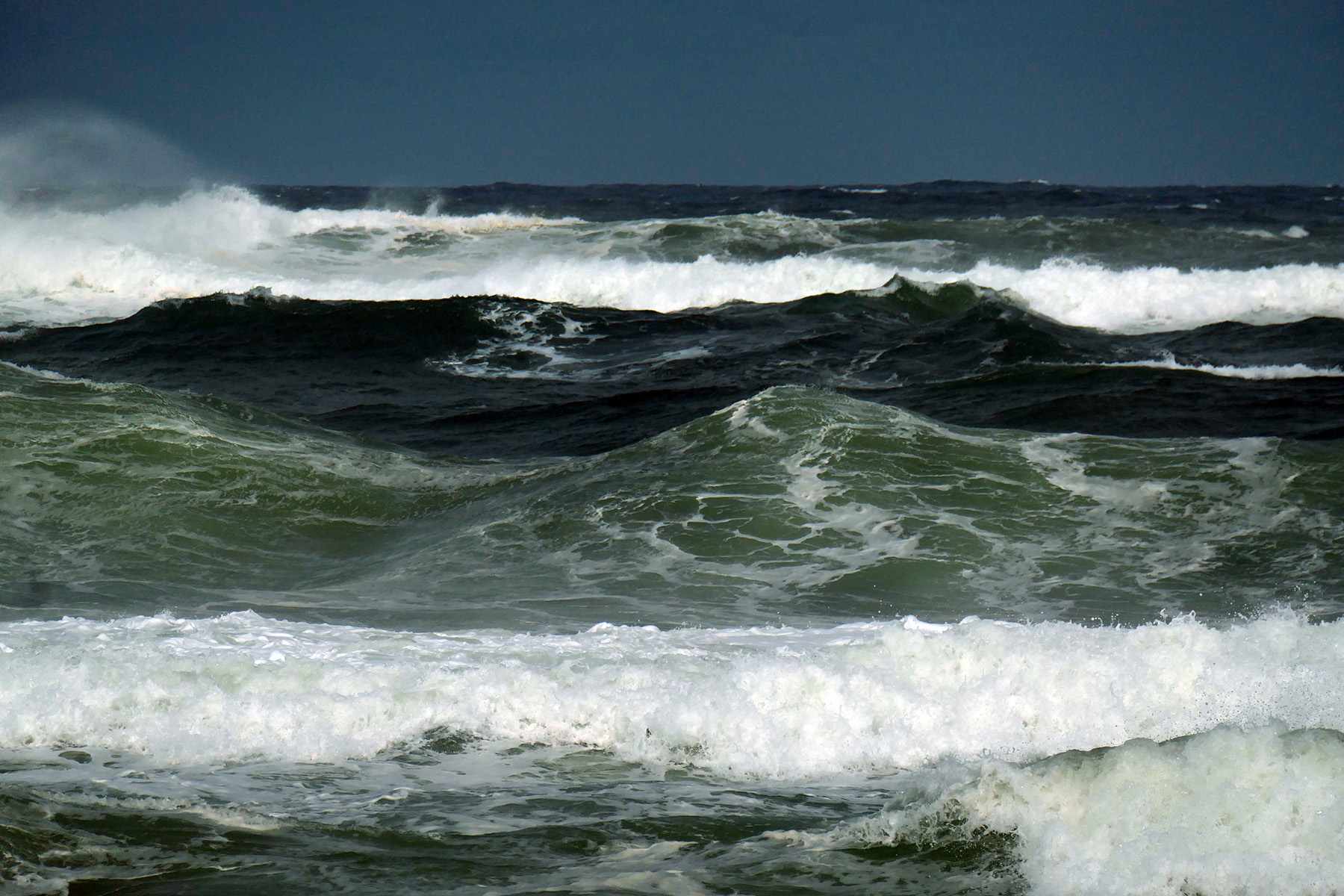
Installment #3 of visual representation(s) of current ruminations. Let the waves roll.
Some of the most frequently uttered phrases I heard during the last year contained the word “wave.”
“I am overwhelmed by waves of sadness.” “I was flooded by a wave of rage.” “I can barely keep in check the waves of despair.” “Fear comes and goes in waves, night and day.” These are all, mind you, not just reactions to personal illness but communal response to the events in the world, our 12 months-long exposure to serious isolation, to threats to our health and livelihoods, to the acknowledgement that mental health is at stake as much as anything else. And that’s before we even get to politics…
Waves, in these contexts, describe an onslaught by a powerful force, ready to bowl you over, if not drown you. Yet if you asked me about my spontaneous associations to waves, they would be primarily positive.
There are the gentle waves lapping at the shore at sunset during a perfect beach get-away.
There are the waves that steadily, across millennia, chisel away at seemingly unsurmountable obstacles. A soft but patient force producing change in a hard substance, relentlessly opening space that seemed impenetrable. Channels are carved that allow for flow rather than blockage.
(Imagined) Dinosaur tooth guarding the action since the Mesozoic era….
Waves leave beauty behind, in constellations and patterns, in scars and markings that tell tales of survival and resistance.
And then there are the waves of my childhood summers at the North Sea. I cannot adequately describe the joy that a little girl experienced at the pure physicality of jumping into the waves, letting them pummel you, resisting your small body and swallowing it at the same time. I never participated in sports, and had few outlets to let the body rip, except peddling my bike at top speed. Waves allowed you to throw yourself around, wildly thrashing limbs, leaning in, ducking under, rolling and diving. Once a little further out they carried you in sinusoidal motion, lying on your back while ignoring parental yelling to come back, being rocked like an infant, water brushing against all that skin that was usually covered neck to toe. Feeling body without shame and hesitation, calmed by fluidity all around you, but also thrilled by your own daring.
Perhaps we can focus on that perspective, then, a reappraisal of the power of these waves. They can serve us just as they can overwhelm. Those waves of anger will need millions of years before they grind us down, the waves of sadness soften us to feel what we once blocked. The waves that scar us are the same that cradle us until we are ready to move on. Moving on to waves of joy, of gratitude, of re-immersion onto sounder footing. And before I get lost in sermonizing, let’s remember you can always rent a boat! Preferably the one envisioned by Ravel, gliding through some of the most beautiful waves music has ever produced.
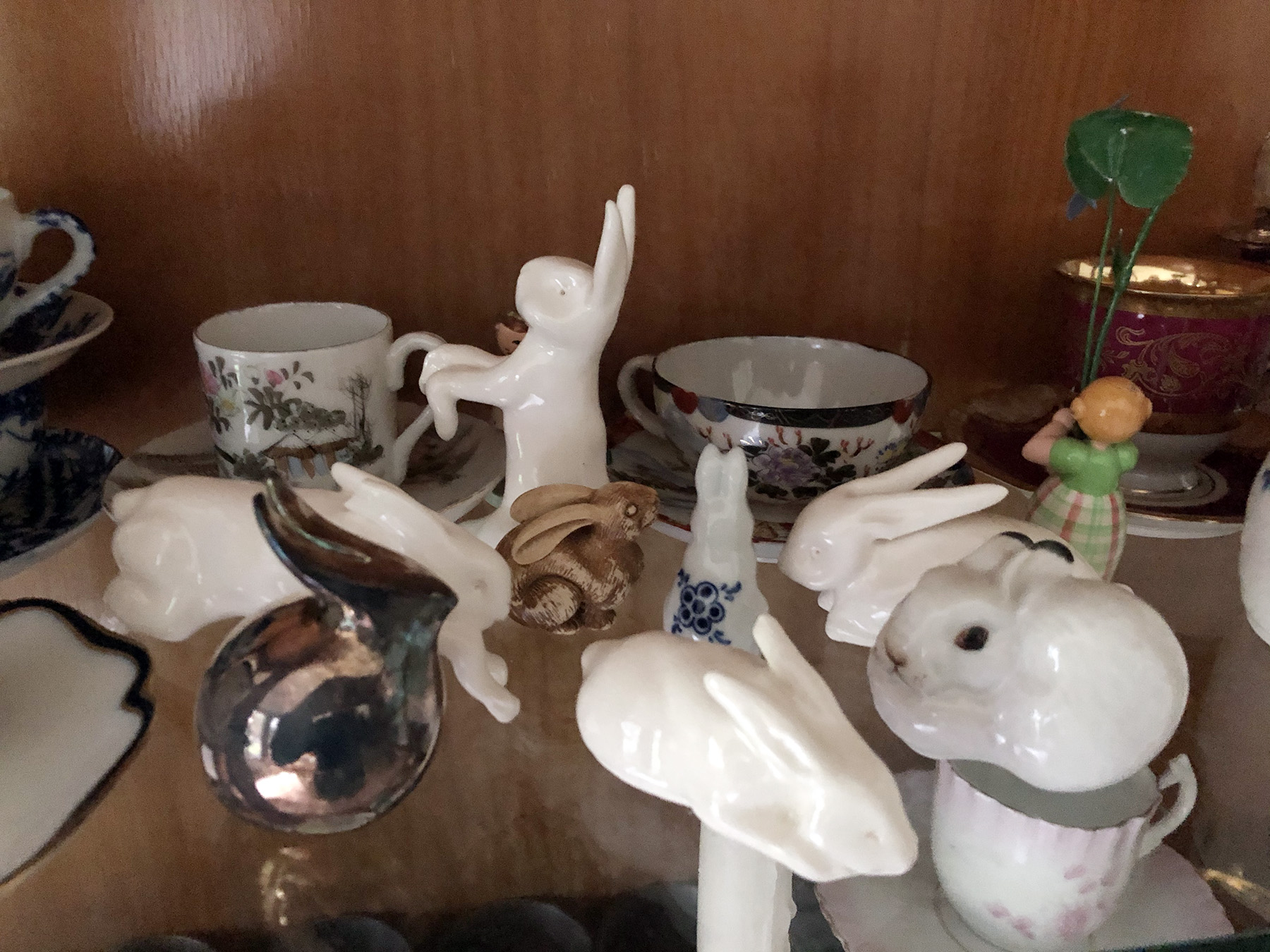
Installment #2 of a visual representation of current ruminations. Meet the March Hares.
The photograph’s central characters are a bunch of bunnies, looking disoriented in all kinds of directions, with an upright sentinel standing guard in the background. They are surrounded by tea cups – March Hares love themselves a tea party after all – and a little doll – Alice, exhausted? – lies prone behind them. A candle burnt down to a stump stands in front. The silver bunny is tarnished, the Netsuke one has a scratched coat and the porcelain ones have postures and facial expressions that remind of the German compound word Angsthase (fear bunny,) our equivalent for Scaredy Cat.
Life-threatening illness does that to you. Having prided yourself all your life of not being a scaredy cat, you find yourself being an Angsthase, hyper-vigilantly monitoring every blip in your body, noticing every scrap of tarnished decay, crouching paralyzed, directionless among your fears, too embarrassed to voice them all. A burnt down candle? Why, life is about to melt away. A doll keeled over? A sign, an omen! Everyone looking in different directions? Loneliness personified.The world interpreted through the looking glass of experienced disaster.
But hey, it’s March! Bunnies congregate (once they’ve relearned to socialize after the eternal Covid isolation) to frolic, never mind to engage in ever more pleasurable activities. In fact Mad as a March Hare is an English idiomatic phrase first found in the 16th century, referring to the strange and excited behavior of hares during the breeding season. Spring is around the corner, and the historical morphing of March hares into Easter bunnies is linked to the empowering (if perhaps illusory) belief that light can rise from the darkness, life from death.
Let’s look at certain forms of over-excitability as a life force then, not mental decline. And let’s remind ourselves that the famous tea party for Alice forced a serious re-evaluation of philosophical concepts, time included, offered dryly by the March Hare. Strange new worlds we might find ourselves in, but they do allow for re-negotiation. What was important might no longer be, what wants to be pursued might have changed. A fresh start then, rather than paralysis, just like spring in its affirmation of renewal.
Maybe if I say it often enough, I might actually start to believe it……
Here is Beethoven’s Violin Concerto #5 – Spring Sonata
Alternatively, you can peek at a mad, mad version of the tea party… and ingenious but hard to process opera by Unsuk Chin.
Let’s do some experimentation to bridge these weeks where I am not at full strength – brain and body alike – with something focussed on a single photograph.
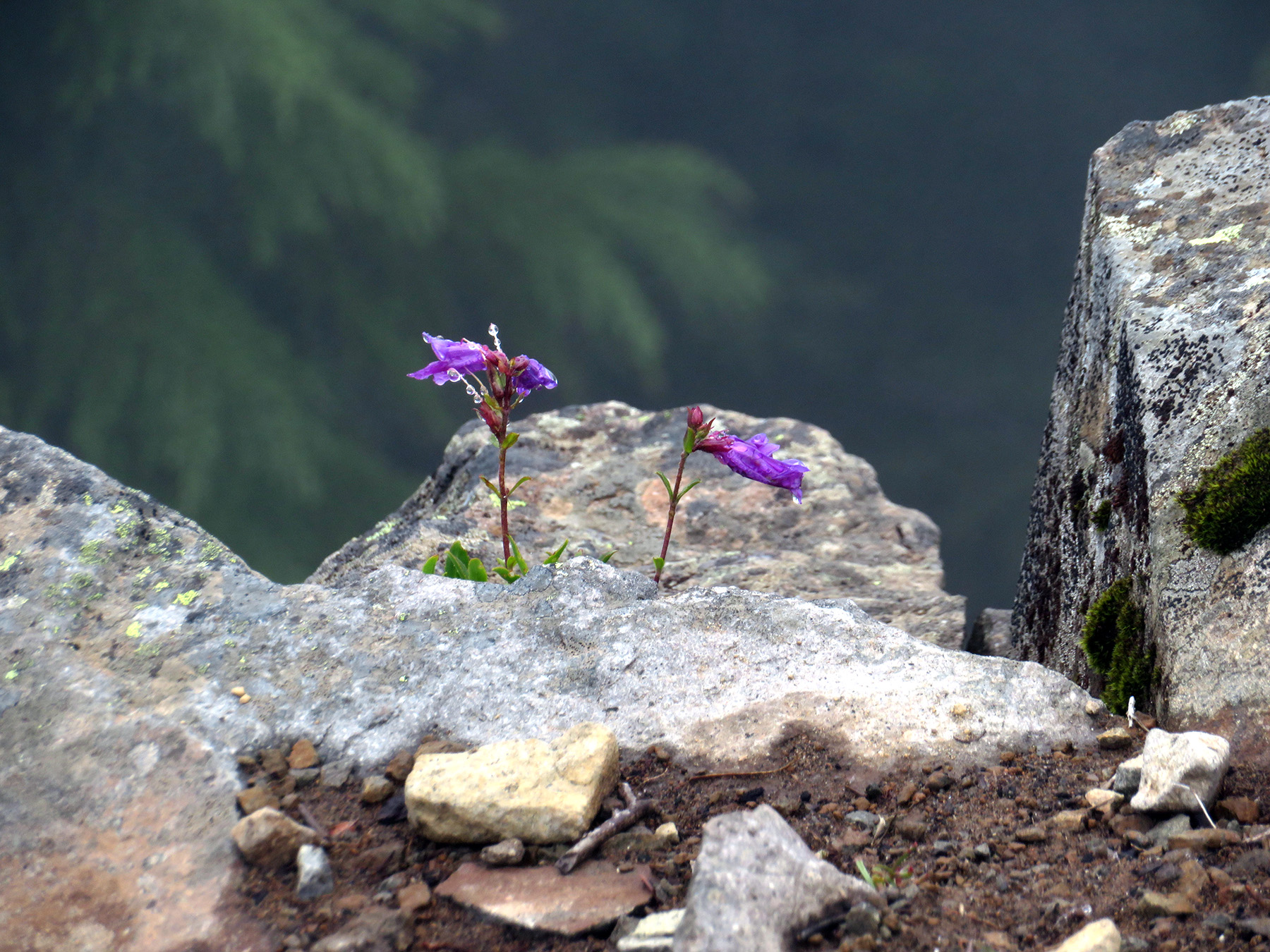
My choice of image was based on how well the picture captures what’s going on in my current state. Here is today’s visual representation of the status quo.
The central characters are stuck at a cliff edge. Looking ahead, fog envelopes the landscape, with no clear view of what the future holds. The blossoms are curled into themselves, with tear-like rain or dew drops attached. The path towards the edge is filled with broken pieces of granite, pebbles, sticks and stones that make for precarious footing.
I’m stuck as well. Not necessarily at the cliff edge, but with little predictive power as to how the future unfolds, with the fate of lung capacity uncertain. I have so little stamina after two consecutive surgeries, and so little breath available that I can slowly walk for only 30 minutes. Forget hiking. Water drops cling to me as well, be they tears or be they frequent night sweats that try to push all the medication out of my body.The path has been anything but smooth, and now we have to wait until early April to determine if I need yet more surgical repairs.
But, oh, look at the defiance of these Penstemons!!! They make due in the harshest of conditions, are luminous in their rebellious purple, smartly planting themselves in the vicinity of a natural wall that protects against the harsh mountain winds. They don’t have to go anywhere, the world comes to them, pollinators grateful for a destination, hikers silent in appreciation of the unexpected beauty.
Count me their cousin. I might be purple in the face from huffing and puffing, but it is a purple of determination to get this body back to working. Conditions are somewhat harsh, the Covid isolation making everything more complicated, the pain requiring a delicate balance between weaning off the meds while not have pain interfere with healing. I, too, however, am graced with the shelter of my surround, practical and emotional support arriving from all directions, some intermezzos of calm before the winds arise again. Things could be worse!
This essay was supposed to be up on Monday, but we lost power for literally 4 full days, with no heat, no internet, no telephone. Luckily the contents are not bound to a specific time; I tried to convey general knowledge by health psychologists, oncologists and research teams about what we know about stigmatized diseases.
A dear friend sent me an extraordinarily beautiful piece of music. It will be your reward after making it through the troubling and/or enraging facts I am going to introduce today.
I want to talk about the consequences of being diagnosed with a disease that is generally stigmatized in our society, consequences that affect both the individual patient and also the general fight against the disease. I will need to cover some general statistics, but my focus will be on the psychological and societal effects of living with or dying of a disease that carries a large stigma. (I have by now read widely on the issue, but am too tired to put all the references in order – you just have to trust me. General sources for many of the details can be found here and here. These were the most recent data I could find, maybe lagging by two years or so.)
It used to be the case that AIDS was the prototypical stigmatized disease. General homophobia had plowed the ground for condemnation of sexual “lifestyle” choices that resulted in this deadly illness. People were judged to be, if not deserving (according to bigots), then at least responsible for their own fate, given their sexual behavior. In addition to carrying the stigma of being gay, they now were perceived to be spreaders of the plague, usurpers of medical resources that could have been devoted elsewhere.
Many patients internalized a sense of shame or guilt (even if they acquired the disease through non-sexual contact like blood transfusions) and suffered from the taboo to reveal it. But patients were also diagnosed relatively young and increasingly able to live long, full lives on pharmacological regimens; subsequently, many of them had the years and motivation to become advocates and fundraisers that pushed research in to treatment and cures forward.
These age characteristics are not true for lung cancer, another deadly scourge that carries the great stigma of having been self inflicted, through smoking. Lung cancer can be triggered by genetic factors, by external pollutants like asbestos and radon, by exposure to second hand smoke – but about 80% of patients do have a smoking history, often barely remembered in their youth, stopped long ago, which comes back to haunt them.
The disease has a dreadful prognosis, when detected late which is mostly the case (only 16% are detected early, I am one of the lucky ones.) More than half of people with lung cancer die within one year of being diagnosed. It is the leading cancer death among men and women (these days almost as many women are diagnosed as are men,) killing more than colon, breast, and prostate cancers combined. Blacks die from lung cancer in larger numbers than Whites, even though they smoke less than their counterparts. Mediating factors seem to be worse access to good health care, genetic factors, co-morbidity of other ailments, and additional exposure to environmental pollutants.
The guilt over having smoked, or fear of being judged as a morally weak person for giving in to the addiction (never mind that the product, cigarettes, is made addictive and cleverly advertised to promote sales) has many patients wait to go to the doctor until it is too late. It also leads to self recrimination and depression which are not conducive to an engaged fight against the disease. Lung cancer patients have one of the highest rate of refusing treatment because some of them feel they deserve their fate.
The hesitancy to admit to a lung cancer diagnosis for fear of being shunned isolates people, preventing joint advocacy for better treatment conditions. Being on average diagnosed around age 70 and having such short survival rates does not help either with advocacy. As a result, non-profit fundraising for research and treatment developments is woefully meager, complicated by the fact that people do not want to give money to people who they feel caused their own suffering.
The money raised for breast cancer, for example, is five-fold compared to what lung cancer receives. In absolute terms, lung cancer accounts for 32% of cancer deaths while receiving 10% of governmental cancer research funding. The difference is staggering and has a “spill over” effect—fewer dollars attracts fewer researchers which leads to fewer breakthroughs. We do start to see targeted therapies and immunotherapies, but it is sparse in comparison to other cancer research successes.
Here is the crux: many oncological researchers advance a “utilitarian” argument, insisting that it is not lives saved that matter but years of life overall – and that is of course correlated to the age of diagnosis (again late in life for lung cancer) and the speed of spread of the particular cancer. Saving a 40 year-old with a cancer that has less of a tendency to ravage all parts of your body in no time, gains more years of life than saving several crones for a short while before they come down with likely metastases. It is a rational argument, and a devastating one, not unlike the considerations we have seen in Covid-19 situations where limited resources led to triage decisions that involved statistical life expectancy. I get it.
I think the tendency to hold people responsible for their own fate – you should never have smoked!! – can be sourced back to a much deeper psychological need, the maintenance of an illusion of control. “If I do the right thing, nothing bad will happen to me. If they didn’t do the right thing, then no wonder that bad things ensued…” – That logic protects you from the disquieting fear that something ripping your breath away and taking the very source of life with it might lurk haphazardly around every corner. But the logic also requires to stick to blaming the victims in obvious ways, even if they were young, uneducated or unknowing, acquiring the seeds of the cancer in the 1960s and 70s.
To stigmatize – describe or regard as worthy of disgrace or great disapproval – for a single behavior, irrespective the qualities of a patient as a whole, allows distancing from the fear of a miserable death.
A cruel assessment, from the perspective of the patient, let me tell you.
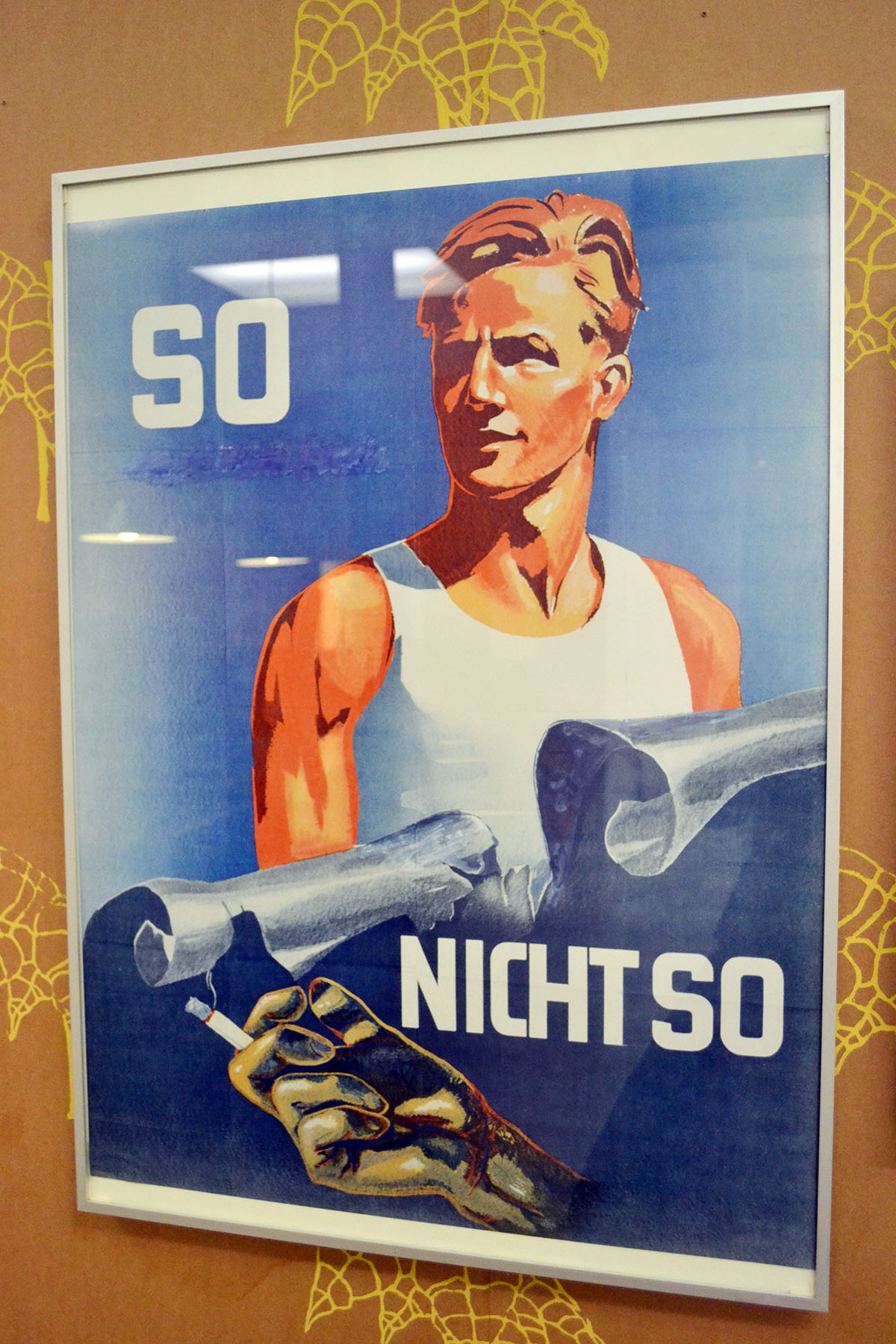
Photographs are of posters in an exhibition about smoking and advertisement at the Museum der Arbeit In Hamburg, Germany.
Music as promised. Dedicated to my Beloved the day after Valentine’s Day, since I could not make it through all this without him.
A shout-out also to the cardiothoracic surgeon Dr. David G. Tse and the oncologist Dr. Dilip Babu, both at Kaiser Permanente. Their medical expertise was matched by their kindness, both valuable in more ways than I can count.
Today I am thinking about a ruler contemplating the invasion of Persia. Croesus, not tRump, in case your thoughts went there. There are admittedly some parallels, of course. Filthy rich comes to mind (although purportedly rich, in the case of the latter,) invading and subjugating, and eventually facing a downfall through overreach. (Hello Georgia: a shout-out to all the organizers and voters!)
Croesus (c. 560–546 BC,) having successfully conquered Ioania, was in turn subjugated by the Persians under Cyrus when he went to war with them. His country paid the price, he, on the other hand, got away with it – Herodotus claims that the King, condemned by Cyrus to be burned alive, was saved by the god Apollo and eventually accompanied Cyrus’ successor, Cambyses II, to Egypt.
Will we see something similar unfolding in our contemporary situation with Iran and the slinking off of a defeated ruler, escaping his just punishment? According to Israeli news sources, the war pressure is on. According to the pattern of a life time, he just might.
Croesus was on my mind because of the puzzling observation that a wonderful poem about him and his relations to the oracle of Delphi pretends that we don’t know what important question he asked. History has, after all, preserved exactly that question and the catastrophic misinterpretation of the oracle’s answer. The king wanted to know whether he should go to war against the Persian Empire and the oracle replied: “If Croesus goes to war he will destroy a great empire.” Turns out he did. His own.
Brian Culhane, the poet, is perfectly aware of what the question was. He is educated in classics, his work steeped in them. (I had earlier presented one of his poems here. The King’s Question, the book that contains today’s selection, was the winner of the Emily Dickinson First Book Award, which recognizes an American poet over the age of fifty who has yet to publish a book of poetry.) The interplay between ancient history and his contemporary writing is what made me choose him for today’s musings in the first place.
Before he put his important question to an oracle, Croesus planned to test all the famous soothsayers, Sending runners half around the world, to Delphi, Dodona, Amphiarius, Branchidae, and Ammon, So as to determine the accuracy of their words; His challenge: not to say anything of his future
But rather what he was doing in his capital, Sardis (Eating an unlikely meal of lamb and tortoise, Exactly one hundred days after messengers had set out). This posed a challenge, then, of far space not of time: Of seeing past dunes and rock fortresses; of flying, Freighted, above caravans and seas; of sightedness,
As it were, in the present construed as a darkened room. Croesus of Lydia sought by this means to gauge The unplumbed limits of what each oracle knew, Hesitant to entrust his fate to any unable to divine Lamb and tortoise stewing in a bronze pot. When only the Pythia of Apollo at Delphi correctly
Answered from her cleft, her tripod just the lens For seeing into the royal ego, she put his mind to rest, But not before speaking in her smoke-stung voice: I count the grains of sand on the beach and the sea’s depth; I know the speech of the dumb and I hear those without voice. We know this because those present wrote it down.
Of the King’s crucial questions, however, there is nothing. We have no word. The histories are silent. My analyst, Whose office on Madison was narrow as an anchorite’s cave, Would sit behind me as I stared up at her impassive ceiling, As the uptown buses slushed all the way to Harlem, And I would recount, with many hesitations and asides,
The play I was starring in, whose Acts were as yet Fluid, though the whole loomed tragically enough. She would listen, bent over knitting, or occasionally note Some fact made less random by my tremulous soliloquy. When much later I heard of her death after long cancer, I walked across town and stood, in front of her building,
Trying to resurrect those afternoons that became the years We labored together toward a time without neurosis, When I might work and raise a family and find peace. Find, if not happiness exactly, some surcease from pain. What question had I failed to ask, when the chance was mine? When she, who knew me so well, could have answered?
Let just one of those quicksilver hours be returned to me, With my knowledge now of the world, and not a boy’s, With all that I have become a lighted room. One hour To ask the question that burned, once, in a King’s throat: The question of all questions, the true source and center, Without which a soul must make do, clap hands and sing.
The pretense of not knowing what the king’s question was serves a Gedankenexperiment that leads to today’s oracles, psychoanalysts. Here is a power hungry guy, itching to go to war, testing his soothsayers’ capabilities by inquiring about the mundane issue of what’s for supper. Only the wise woman from Delphi correctly identifies what’s on the menu: the (sacrificial?) lamb and the tortoise (Χελωνη,) the one so perfectly shielded against assault.
The tortoise, it turns out, who used to be a nymph refusing to go to divine weddings, loving to stay home. Subsequently punished by Zeus with transformation into an animal that has to carry that home forever on her back. Also the one that is reported to have killed playwright Aeschylus when dropped on his head by a bird. Also the one that was a sacred symbol of Hermes, the swift messenger God and all around trickster. And of course the one mentioned by Freud In Totem and Taboo as one of the animals used for totemic meals, the annual sacrifice and consumption of the animal, symbolizing the murder of the archaic father. Pick your preferred symbolism from the soup bowl!
But no mention of the question.
So let’s turn to the analyst’s office of years gone by, a place to choose symbolic meaning and interpretation with care, as if it mattered. The poet reminisces about the construction of a life narrative with certain roles and uncertain outcomes, perceived at the time as a tragedy with the self-pity of youth.
The quiet lady is a knitter – now where did we hear about yarn last? Moirai, the fates, where Clotho (the nicest of the three) spins the yarn, the thread of life, that is tied to your destiny. But also Ariadne, who plies Theseus with a sword and a ball of red yarn that helps him escape the labyrinth after he kills the Minotaur. It was Freud himself, after all, who claimed in an interview in 1927 that psychoanalysis “supplies the thread that leads a man out of the labyrinth of his own unconscious.”
Spinning a yarn, as some conceive of therapy, is not to be dismissed. Threads weave patterns, and they become stories, with a beginning and an end, mapping the maze, which is, after all, finite as well. Would any particular question change that? Would an oracle/ therapist supply an answer any less ambiguous than that which led Croesus astray? The very fact that the narrator is even wondering what question he failed to ask, suggests it could not have made that much of a difference. Narratives shift, narratives might not be based on reality, but narratives do bring some order into the experienced upheaval. They need to be cohesive, but they do not depend on definitive answers. The very fact that the oracle of Delphi denied certitude – like the Gods, or life itself – to the questioner, frames how loaded questioning – and answers – can be. Catastrophe might well ensue.
Without definitive answers Culhane’s last line suggests we “must make do, clap hands and sing.” Action is what counts in this play that we have been assigned to, or this script that we constructed ourselves, preferably with joyful expression. Living a life rather than thinking about it. The only way out of the maze.
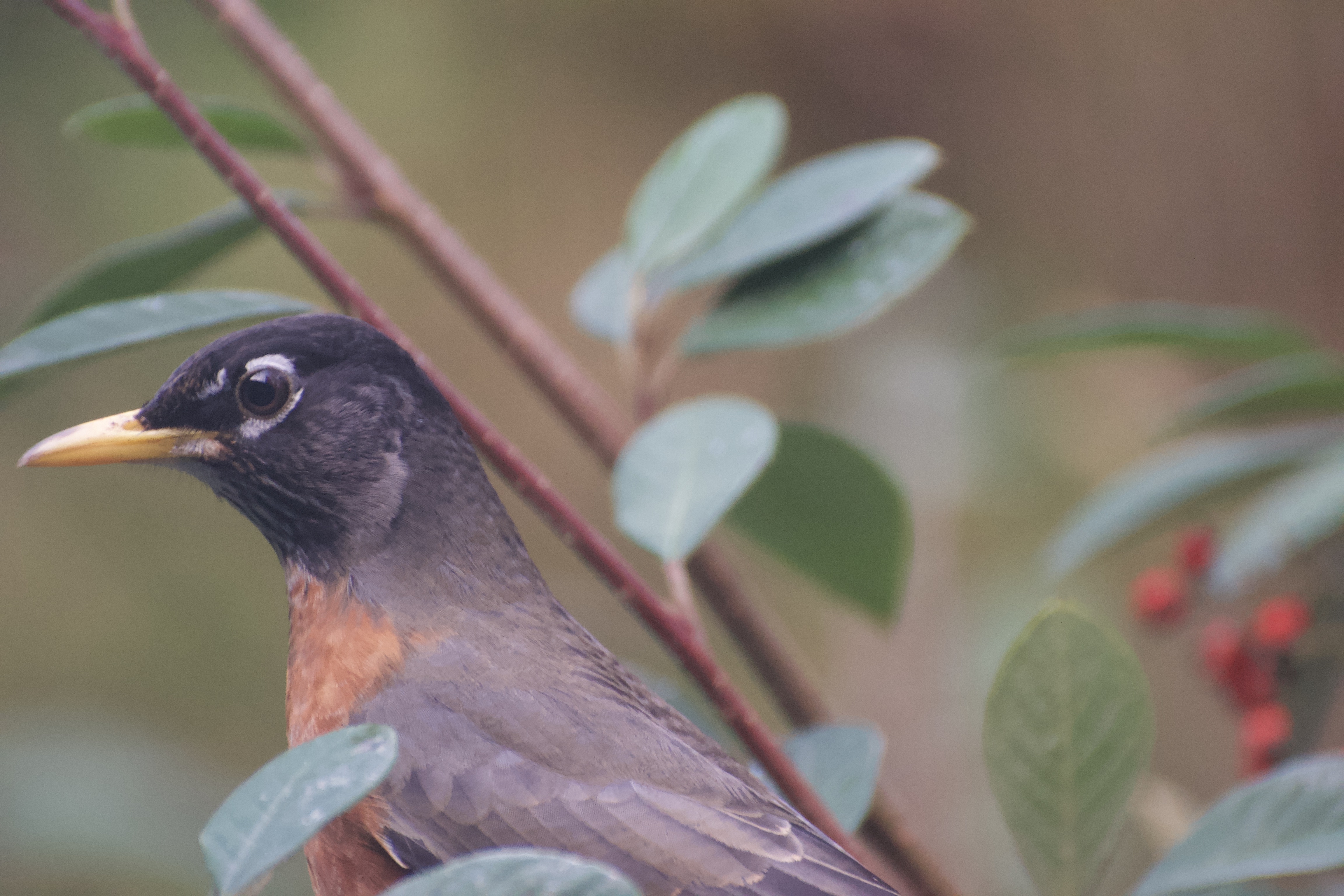
Photographs today are of a different kind of invasion: not kings, but robins decided to pick the last specks of colors in my wintry yard, gorging on the red berries.
Music by Strauss tells the tale of Ariadne, one who saves with love and pragmatism.
Bonus: There is a lovely 1971 album by Francoise Hardy called La question. Available in full on Spotify. Here is the title song.
I think we can all agree that thoughts and feelings interact with each other. What I think can shape what I feel – if I think highly of myself or one of my accomplishments, I will feel pleasure, or elation, or sustained confidence. If I think poorly of myself or the outcome of my actions, I can feel insecurity, or shame ore guilt.
The opposite is true as well: my emotions can affect my thinking. If I am feeling happy-go-lucky, self-confident and optimistic, I might be protected from catastrophic thinking. (I might also fail to prepare for potential disaster and caught helpless when it strikes, just saying….). If I feel needy for approval, or belonging, or fearful of change, I might think in ways that make sure these needs and fears are dealt with. In these cases, I will think along the lines of the group I want to belong to and avoid dissent even if data suggest I have the wrong ideas (think climate change, for example.) I might not see the world as it is, but my feelings will be protected.
Julia Galef, a co-founder of the Center of Applied Rationality, offers a persuasive explanation of how different categories of emotional needs and skills interact with how rationally and accurately we assess the world. Her book, The Scout Mindset, will be released this April. For a lightening overview of her model, here is a 10 minute TED talk.
Galef’s ideas begin with the assumption, shared by a host of contemporary psychologists, that there is such a thing as directionally motivated reasoning. Most of us are trying to make ideas that we like “win” and those that we don’t like, “lose.” In a nutshell, we ask for those things that we want to be true if we can believe the evidence. For undesirable conclusions, on the other hand, we ask ourselves if we must believe the evidence. In the process of forming our beliefs we have a lot of flexibility: we can choose what evidence to include and which to ignore, who we find trustworthy and who we avoid, whether we consult second opinions and so on.
The author suggests that two different mindsets, that of a Soldier and that of a Scout, decide how we approach the world and look at evidence to protect our feelings. The Soldier Mindsetdefends what it believes, advances arguments, holds positions on issues and fights what contradicts their beliefs, shoots down ideas, refuses to concede points. Importantly, sticking to your preconceptions or beliefs despite evidence that they might be false, is driven by feelings of need for belonging and approval (tribalism,) fear of showing weakness if changing opinion, and a choice to see the world through optimistic glasses to feed your psychological immune system with positive illusions against the threats of the world.
(I talked about some of these processes, including confirmation bias, previously here.)
The Scout Mindset, on the other hand, is all about being able to see things as they are, not as you wish they were, even if that implies unpleasant or inconvenient insights. It explores the actual lay of the land rather than defending assumptions about how the land is configured.
” It’s what allows you to recognize when you were wrong, to seek out your blind spots, to test your assumptions and change course. It’s what prompts you to honestly ask yourself questions like “Was I at fault in that argument?” or “Is this risk really worth it?” As the physicist Richard Feynman said: “The first rule is that you must not fool yourself – and you are the easiest person to fool.” Easier said than done, of course. The Scout Mindsetis about how, concretely, to keep from fooling yourself. Throughout the book, I lead the reader through key techniques for becoming aware of your own rationalizations, making more accurate predictions, learning from disagreements, and noticing what you’re wrong about.”
What feelings drive this more rare and difficult mindset? Feelings of curiosity, it turns out, and feeling grounded enough that you are not dependent on ideology or others’ opinions or them liking you, feeling ok rather than weak when you are openminded and proven wrong, and full of yearning to understand the world as it is. I very much hope that her book’s publication in April provides the promised pointers as to how pursue this way of thinking so that we are able to discern truth amongst all the noise and prejudices surrounding it. I believe in a world where polarization has increasingly grown, with tribalism encouraging group think and constraining available information, it is more urgent than ever to help us get to scout mode.
Photographs today depict seedpods of the Western White Clematis, Clematis ligusticifolia. It grows in our NW forests and wetlands. I thought they’d serve as a good example of the difference between what you believe to be true – here are flimsy, fluffy things, their vines probably strangling trees, beautiful but useless – and what you learn when you apply scouting:
The seed floss has been used by natives as tinder for starting fires, as insulation in shoes, and as an absorbent in baby diapers; the stems to make carrying nets and bow strings; the roots to make a shampoo. An infusion or poultice of this plant was applied to sores, wounds, bruises, swellings, painful joints, and was also used to treat chest pain and backaches and to treat horses and other animals. Crushed roots were reportedly placed in the nostrils of tired horses to revive them. Stems and leaves, which have a peppery taste, were chewed for colds or sore throats. (Ref.)
Music is by Chopin. His Preludesinclude one titled Uncertainty (Op. 28. #5) – we need to tolerate uncertainty to become good scouts…
Riddle me that: Switzerland is supposed to have the largest number of satirical publications per capita. There’s a stereotype-defying fact that will evaporate from my brain as fast as you can say yodel (defined as practicing a form of singing or calling marked by rapid alternation between the normal voice and falsetto.)
One of these publications, the oldest in fact, is Der Nebelspalter (The Fogsplitter) which in 1920, exactly 100 years ago and still under shock of the carnage produced by the Spanish Flu, published a poem that could be written for all of us, today. Looks like what goes around comes around – true both for pandemics and also the way people react to them.
I have translated the bitingly sharp verses, but of course had to do without rhyming since I am not a good enough translator for that. It was hard enough as is, since the German was quite old-fashioned. I thought, however, the gist would suffice to have us all feel like someone just put a century-old mirror up to our faces, with nary an occluding patina softening our recognition.
The Flu and the People
A slayer traveled through the land
with drums and with a scythe
with gruesome drumrolls from the band
shrouded in black, the flu arrived.

She entered each and every house
and reaped the sheafs in full -
many pink cheeked maidens died
and strapping young men were culled.

The people in their anguish called
loudly for the public authorities:
What are you waiting for? Protect us from death -
Whatever shall become of us?

You have the power, the duty too,
show us what you can do -
We'll warn you, don't dodge it now,
what else are you good for?

It's a scandal, the way it's handled,
where are the prohibitions -
there's singing, dancing, partying and bars,
haven't enough people died already?

The governors had puzzled thoughts
traversing through their brains,
how to combat this adversity
their brows were deeply furrowed.

Hark, their efforts found reward,
their thoughts were indeed blessed;
Soon prohibitions, harsh and unfamiliar,
rained down onto the land.

The flu ducked deep and timidly
and was about to disappear,
when the people newly clamored
in a chorus of a hundred thousand voices:

"Government, hey!  What are you, nuts?
What's this supposed to mean?
What is all this stuff that oppresses us,
you wisest of the wise?

Are we only here to pay taxes?
Why do you deprive us of all joy?
Particularly now with MardiGras upon us - ha!
The masses bellowed and blustered.

You can prohibit church and all,
the singing and the praying.
But regarding the rest,
we refuse to be shackled!

That was not really what we wanted,
allow us dancing and boozing,
otherwise the people  - listen to their grumbling -
will march on the city in hostile mobs.

The flu, already on its last leg,
squinted quietly,
and said, " Finally -  after all!"
And laughed maliciously.

"Well, well, it never learns
that old humanity!"
She unfurls, grows, is pale
and sharpens the scythe anew.
Sounds familiar?
I have a lot of positive associations with Switzerland. I learned how to ski there, something I loved if only because I scared everyone around me with my speed, inappropriate for a wobbly beginner.
I improved my French there, when farmed out to a family in Neuchatel for months on end, being left to my own devices which included hours on end spent in movie houses watching Brigitte Bardot in her prime.
I met an old lady in Lausanne who had spent her youth at the Russian Tsar’s Court before the revolution and had sketchbooks, shown to me at length, that documented every outfit she ever wore to any occasion at the palace, in watercolor no less. Since I was exactly in-between being starstruck with royalty (age 13 – 15 ) and devoting my life to being a revolutionary (age 16 to 16. 5) I drifted on a cloud of deliciously ambivalent reaction.
Add to that now the admiration for a satirical poem that describes ageless human behavior, when confronted with a pandemic, to perfection.
The viral form anticipated???
Re-emergence is, of course, not just reserved for viruses and human behavior, but exists in art as well. Case in point is captured in today’s photographs, chosen for their fit with the topic (and also, truth be told, because I have no photographs of Switzerland.)
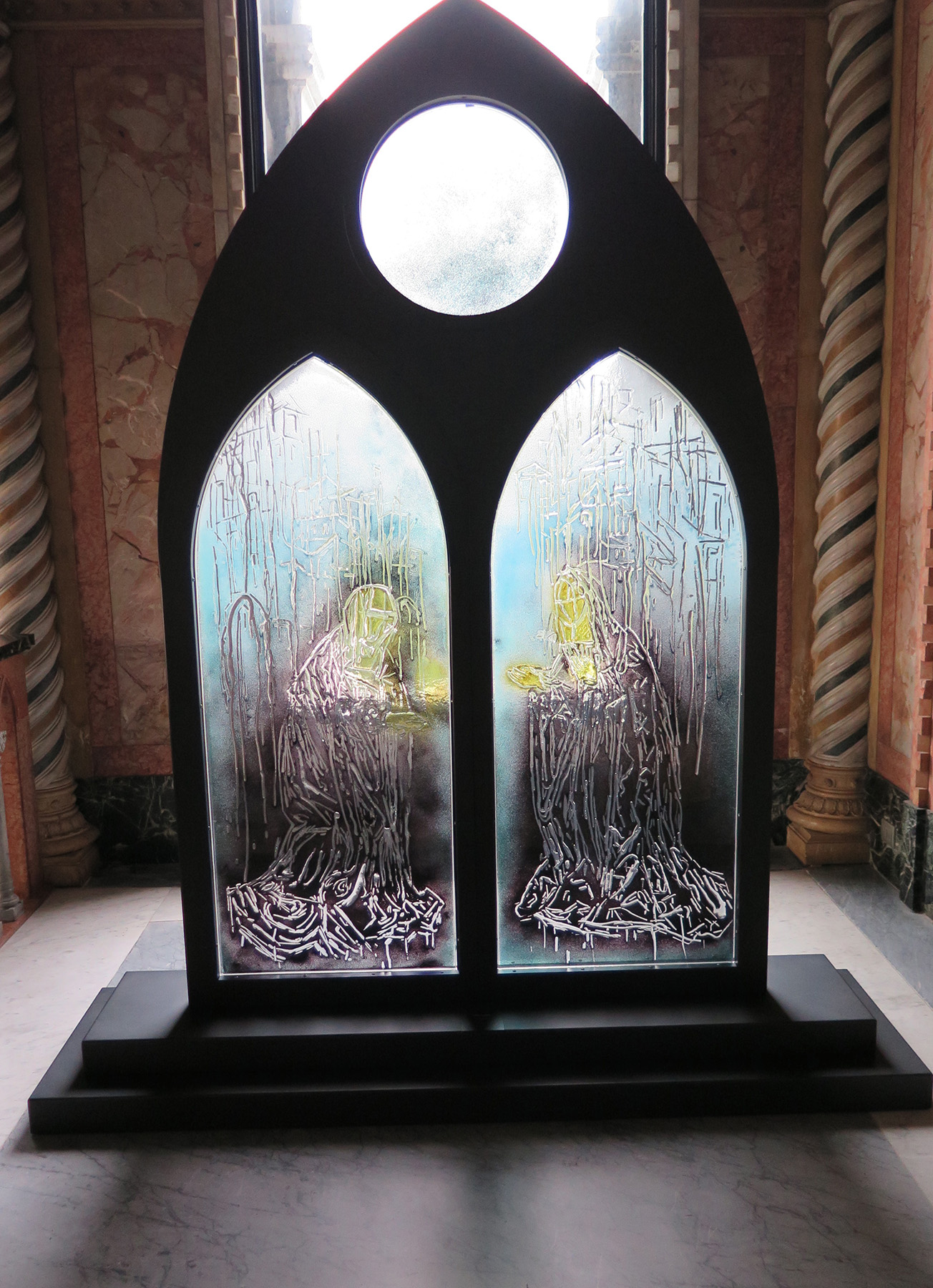
The intricate glass objects were part of Glasstress 2015,an exhibition in conjunction with the Venice Biennale, titled Gotica. Curated by he State Hermitage Museum of St. Petersburg and Venetian glass blowing studios like Berengo, it explored how “medieval ideas and communication methods have imperceptibly crept into our modern conscience despite our technological advances and how the Gothic concept influences contemporary art.” Fittingly, it was on display in the neo-gothic Palazzo Franchetti, which in late September I had practically all to myself.
Venice itself is of course a city deeply imprinted with gothic and neolithic architecture. But its artists, or so the exhibition notes state, are also reclaiming medieval themes and styles, if not processes. Some of the works took themselves too seriously, some were witty, all were superbly crafted and some linger with meaning, even now, years later. My kind of show.
The artists used the vernacular, referred to exorcism, eschatology, death and resurrection, alchemy and the search for the Holy Grail. They asked, and I quote, the Gothic question: Are we about to enter the new Middle Ages?
Are we any closer to an answer now, five years hence?
Music today from the time of plague and courtly love…
In the early morning hours of November 27, 2020 I received an email that let me know that gifted painter and adventurous woman Dorothy Goode had suddenly and unexpectedly died in her sleep. I had written about her, in admiration, in January here.
The news arrived literally while I was lighting a memorial candle for my mother, who had died on that very date decades earlier, also suddenly and unexpectedly in her sleep. Neither woman reached her 6th decade of life.
I will leave it to others to reminisce about Dorothy. Her devoted partner and circle of family, friends and admirers are better able to do so than I ever would. I do want to say a few words about grieving, though, particularly mourning for those who are loved with unusual intensity and passion and who are ripped away without a chance for mental and emotional preparedness.
My firm belief that there is no right or wrong way to grieve comes from personal experience, though it is informed by my familiarity with the psychological literature on mourning. I find it irritating that stage- theories of grieving (originally derived from the Kübler-Ross speculations on 5 stages of grief) are still propagated by healthcare professionals and pop-psych publications alike, when they have long been debunked. The idea that you have to progress through a series of defined emotional reactions to adapt to the loss of a loved one, and if you don’t you’re doing something wrong, has added to the burden of those overwhelmed with mourning in their own way.
Recent findings regarding the stages-of-grief models make it clear:
“Major concerns include the absence of sound empirical evidence, conceptual clarity, or explanatory potential. It lacks practical utility for the design or allocation of treatment services, and it does not help identification of those at risk or with complications in the grieving process. Most disturbingly, the expectation that bereaved persons will, even should, go through stages of grieving can be harmful to those who do not.”
Grief comes in many shapes and forms. The large majority of people will be resilient enough to make it through months and sometimes years of mourning without life-long psychological damage that interferes with continued functioning. This is particularly true if there were no other pathologies preceding the loss, like a preexisting pattern of clinical depression, for example.
Immediately after a loss hits you, grief overwhelms you, sears you, seizes you, eviscerates you. It can interfere with regulation of your days, your ability to sleep, eat, connect to others and maintain a healthy immune system. Acute grief has many of us intensely sad, angry, anxious; you can also experience, at the very same time, an emotional numbness, and are hard pressed to concentrate on anything at all. Others do not feel this way, or do so with less intensity, or do not communicate that they feel this way. There is no evidence that they adapt less well, ultimately, to equally hurtful losses.
Bereavement is shaped both by the pain of having to live without the person (loss-related factors) and the stress of having to function in a new identity, a life change abruptly requiring you to change with it (restoration-related factors.) They obviously vary from person to person – a widow’s ability to feed her family when her husband was the sole bread winner is a different kind of existential threat than when I lost my daughter. Losing the love of your life after decades of togetherness is different from a a child dying at birth.
When death arrives suddenly and unexpectedly it adds a burden. In addition to the pain and the absence of anticipatory mourning that can blunt the feeling when the actual grief arrives, it propels rumination. Should I have seen this coming? Was I blind to something that could have prevented this? Were there signs that I missed? These thoughts certainly crop up with health-related early death. But there is also the brooding over the last exchanges that might have been different if we were already in the frame of mind of saying good-bye to a loved one. Did we have to fight? Was I too selfish? Did I spend enough time? They will fade, peacefully, when there is room for rationality again.
I believe it is paramount to allow the bereaved to feel those feelings and think those thoughts. No promise of “it will get better.” No admonition “don’t worry about that.” And never, ever, urging the mourner to move on, leave it behind, be grateful for what you had. Grief takes its own time, finds its own path, and the one thing another human being can do for you when you grieve is to acknowledge your pain and not shy away from witnessing it.
I think Dorothy would have liked the poem I am attaching below. She certainly summitted the mountains, many of them, not leaving dreams to be fulfilled “later.” I don’t think her life was easy, but she lived, created – and loved – with a vengeance.
Imagine her joy on rising.
How to Fly (in Ten Thousand Easy Lessons)

by Barbara Kingsolver

Behold your body as water
and mineral worth, the selfsame
water that soon (from a tree's
way of thinking, soon) will
be lifted through the elevator hearts
of a forest, returned to the sun
in a leaf-eyed gaze. And the rest!
All wordless leavings, the perfect
bonewhite ash of you: light
as snowflakes, falling on updrafts
toward the unbodied breath of a bird.

Behold your elements reassembled
as pieces of sky, ascending
without regret, for you've been lucky
enough. Fallen for the last time into
a slump, the wrong crowd, love.
You've made the best deal.
You summitted the mountain
or you didn't. Anything left undone
you can slip like a cloth bag of marbles
into the hand of a child
who will be none the wiser.

Imagine your joy on rising.
Repeat as necessary.
Music today is dedicated to Richard, for whom Dorothy was the sun and the moon. Last movement of Schumann’s Davidsbündler Tänze.
This is what it says on my sheet music edition:
In all und jeder Zeit
Verknüpft sich Lust mit Leid
Bleibt fromm in Lust
und seid dem Leid mit Mut bereit.

In all and every time
Joy and suffering are intertwined
Stay devoted in joy
And meet suffering with courage.
Hard times when sadness hits. Advice comes in all forms and shapes and levels of triteness (if earnestly felt), levels of pragmatism, levels of wishful thinking, or levels of abandon to a higher power. Nothing wrong with picking and choosing among the options, whatever appeals, as long as it lifts the dark.
Today’s Smörgåsbord (some of it found in selected offerings by Maria Popova’s incomparable newsletter BrainPickings) includes
the “human connection and plants will heal” variety,
and the “God will right it, but in the meantime, for God’s Sake, stay busy” variety,
found in a letter by Charles Dickens, written in 1862 to console his grieving sister:
I do not preach consolation because I am unwilling to preach at any time, and know my own weakness too well. But in this world there is no stay but the hope of a better, and no reliance but on the mercy and goodness of God. Through those two harbours of a shipwrecked heart, I fully believe that you will, in time, find a peaceful resting-place even on this careworn earth. Heaven speed the time, and do you try hard to help it on! It is impossible to say but that our prolonged grief for the beloved dead may grieve them in their unknown abiding-place, and give them trouble. The one influencing consideration in all you do as to your disposition of yourself (coupled, of course, with a real earnest strenuous endeavour to recover the lost tone of spirit) is, that you think and feel you can do. . . . I rather hope it is likely that through such restlessness you will come to a far quieter frame of mind. The disturbed mind and affections, like the tossed sea, seldom calm without an intervening time of confusion and trouble.
But nothing is to be attained without striving. In a determined effort to settle the thoughts, to parcel out the day, to find occupation regularly or to make it, to be up and doing something, are chiefly to be found the mere mechanical means which must come to the aid of the best mental efforts.
There is the “always look for the bright side” variety (alas communicated by an artist who took his own life after decades of depression, by drinking a glass of cholera infected water no less) Pyotr Ilyich Tchaikovsky:
I am sitting at the open window (at four a.m.) and breathing the lovely air of a spring morning… Life is still good, [and] it is worth living on a May morning… I assert that life is beautiful in spite of everything! This “everything” includes the following items: 1. Illness; I am getting much too stout, and my nerves are all to pieces. 2. The Conservatoire oppresses me to extinction; I am more and more convinced that I am absolutely unfitted to teach the theory of music. 3. My pecuniary situation is very bad. 4. I am very doubtful if Undine will be performed. I have heard that they are likely to throw me over. In a word, there are many thorns, but the roses are there too.
Of course there’s also Emily Dickinson, who knew that in the end, advice is useless. (And who knew how to mess with readers’ expectations – the poem below could be anything, a description of depression, a descent into madness, an ode to forgetting something traumatic, or a REALLY bad migraine….)
I felt a Funeral, in my Brain, And Mourners to and fro Kept treading – treading – till it seemed That Sense was breaking through –
And when they all were seated, A Service, like a Drum – Kept beating – beating – till I thought My mind was going numb –
And then I heard them lift a Box And creak across my Soul With those same Boots of Lead, again, Then Space – began to toll,
As all the Heavens were a Bell, And Being, but an Ear, And I, and Silence, some strange Race, Wrecked, solitary, here –
And then a Plank in Reason, broke, And I dropped down, and down – And hit a World, at every plunge, And Finished knowing – then –
(How I a d o r e Dickinson – that final ambiguity, finished knowing – it could be the end of knowing, or a state of arrival after plunging where you now know….)
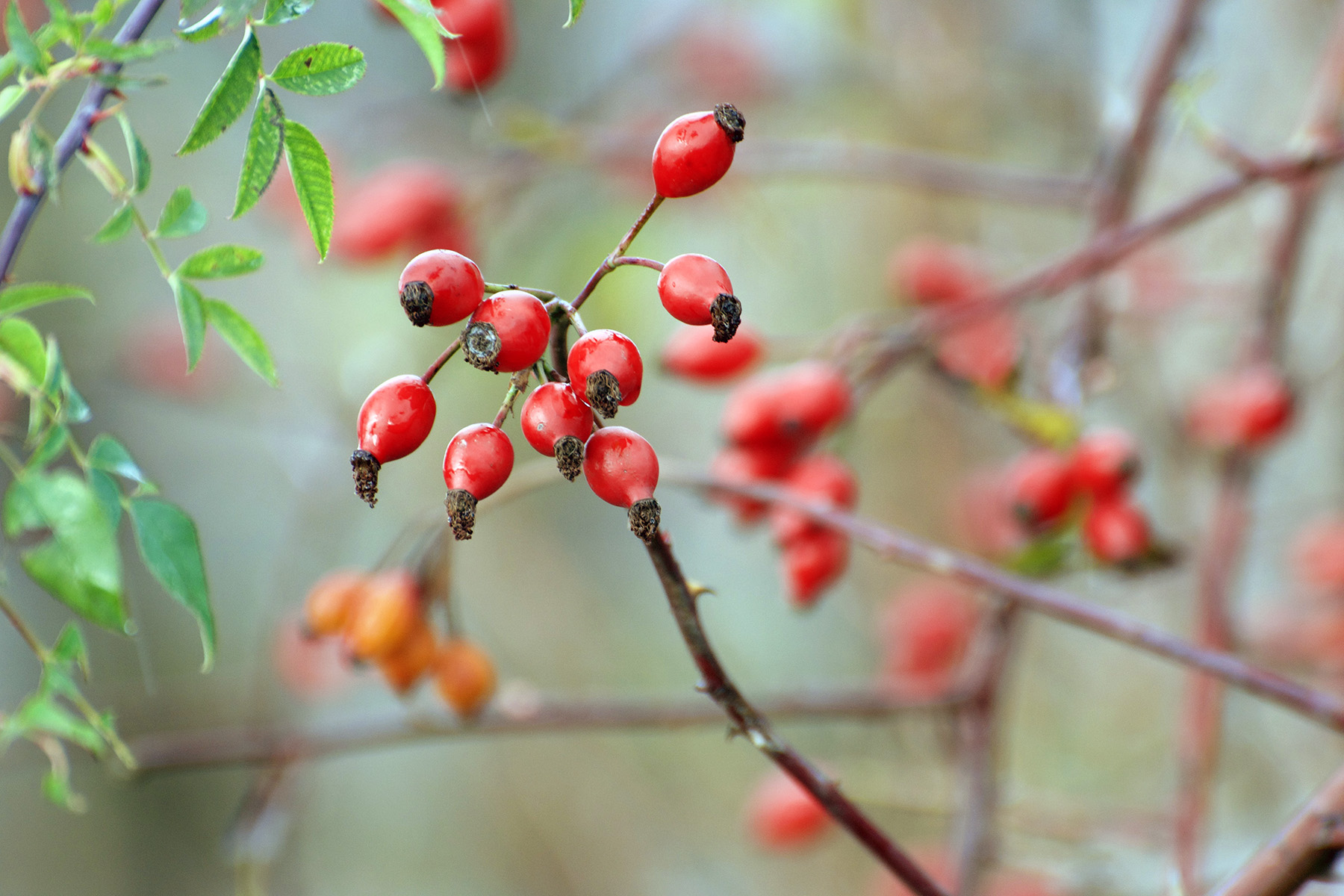
May the planks of reason be sturdy and refuse to break. May a neighbor bring you amaryllis. May your day be busy with a structure that has meaning. May this endless rain stop so I can go out and forget everything while photographing plenty of rose hips among the thorns! November’s red confetti.
Muskrat baby (in November?) agrees – saw him this week.