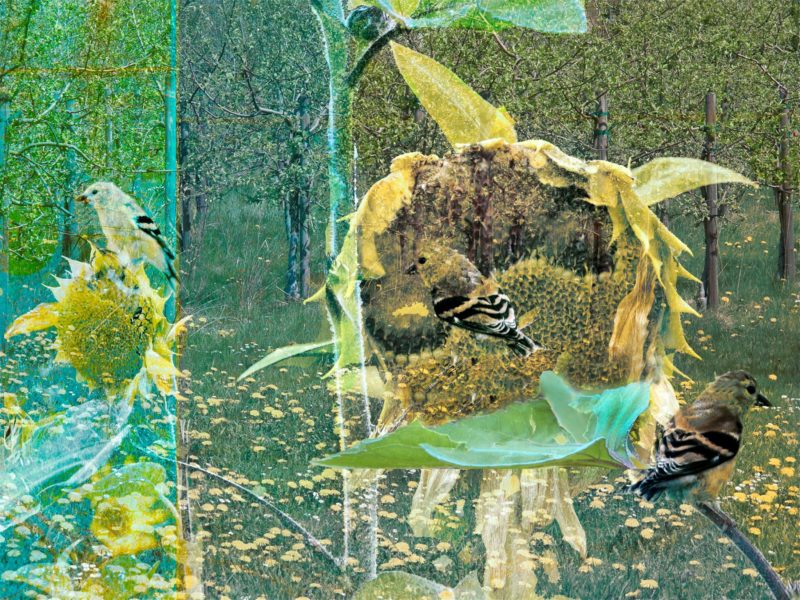

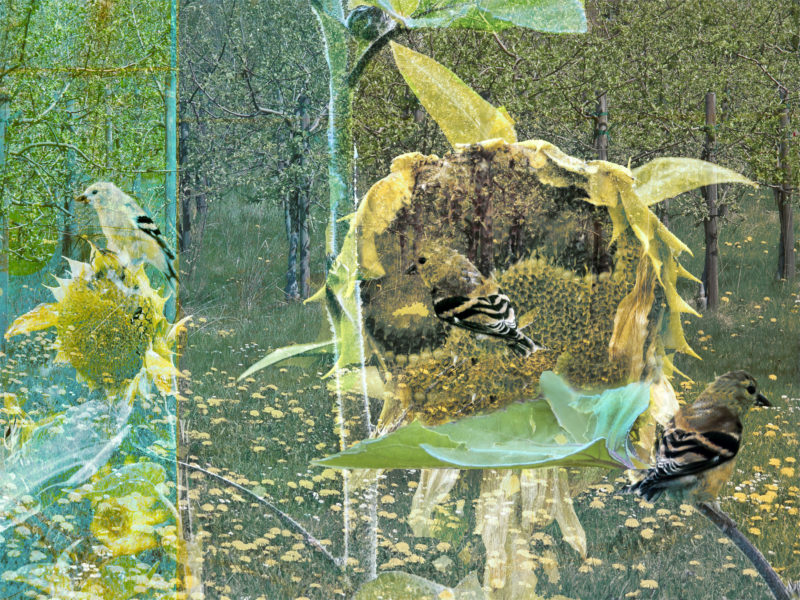
The goldfinch it shall be…..captured year-round in places near Portland.

At Least 47 Shades
The goldfinch in its full spring molt.
The bee pollen of sticky and thick.
The quince to perfume a new bride’s kiss.
The ocher yellow in Vermeer’s pearl-necklaced woman.
The opal cream floral on a kimonoed sleeve.
The zest yellow of a Nike Quickstrike in limited numbers.
The imperial yellow embroided robes.
The Aztec gold send by Cortés to Spain.
The Zinnia gold favored by butterflies.
The iguana who keeps watch on Mayan ruins.
The straw hat a cone woven with young bamboo.
The rising sun of Japan’s Amaterasu leaving her cave.
The sand dune that swallows the film’s lovers but keeps them alive.
The coastlight of sun lost in fog.
The chilled lemonade from the fruit of bitterness.
The Manila tint to sunny the laundry room.
The blond and boring heartthrob.
The yellow flash before the grin gets too tight.
The lemon tart with a mouth to match.
The star fruit which can mean two-faced in Tagalog.
The fool’s gold of sojourners and farmers.
The golden promise that still lures us here.
The sunshower which turns my tawny skin brown.
The banana split of Asian outside white underneath.
The Chinese mustard stirred with a dribble of soy sauce.
The yellowtail tuna father cleaned and sliced thin.
The yolk we ate raw with sukiyaki and rice.
The pear ice cream we licked that Tohoku summer.
The moonscape suffusing a rice paper screen.
The theater lights which make the audience vanish.
The electric yellow called Lake Malawi’s yellow prince.
The daffodil that doesn’t match these mean streets.
The marigold for night sweats and contusions.
The summer haze which splits open the sky.
The slicker yellow bands on those 9/11 jackets.
The dandelion that bursts through sidewalks.
The blazing star we still can’t see rushing toward us.
The yellow rose legend of a Texas slave woman.
The atomic tangerine of Los Alamos, New Mexico.
The Jasper yellow of gemstone and James Byrd.
The flame yellow as bone turns to ash.
The wick moving in time with my measured breath.
The first light an eye latches on to.
The whisper yellow as a pale strand of moon.
The yellow lotus that’s nourished by mud.
The poppy spring returns to the Antelope Valley.
The wonderstruck even in those old eyes.
The Chinese lantern riding a night sky.
The sparkler a child waves in the dark.
by Amy Uyematsu
from The Yellow Door
Red Hen Press, 2015


 .
.
I did it – 3 full minutes without thinking of that dismal orange hue…
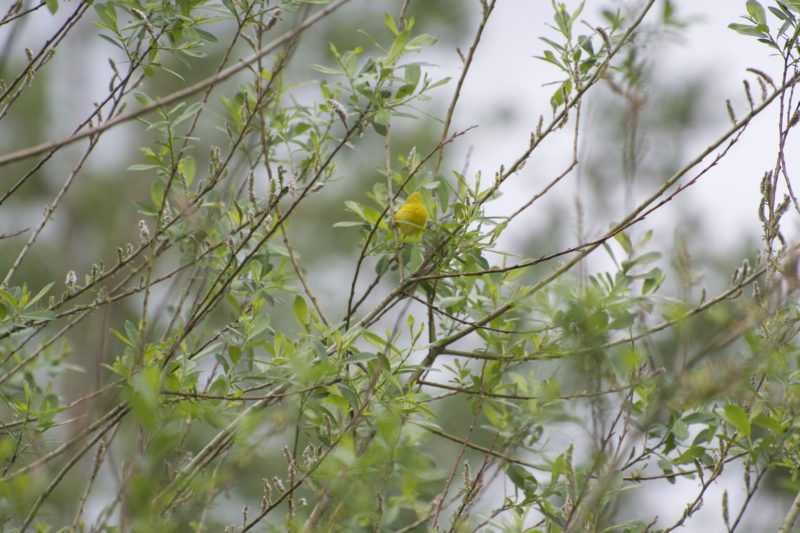


 Photographs of warblers in the Columbia Gorge last week.)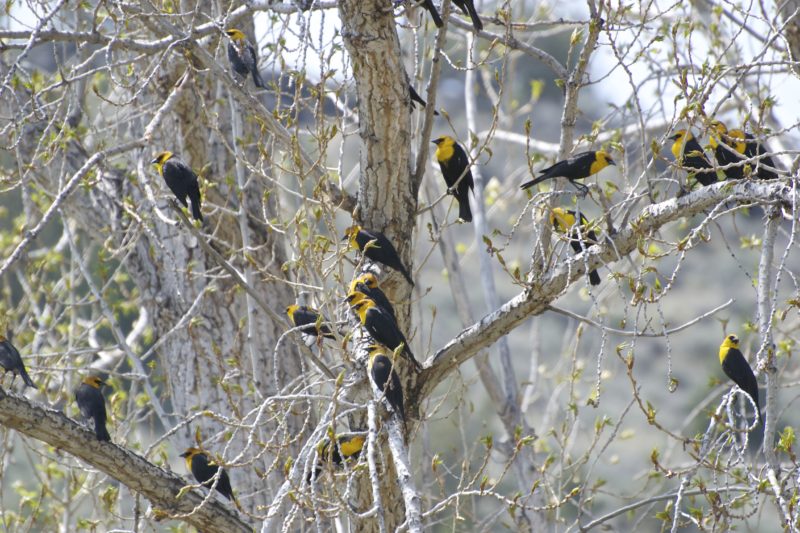


 He captured, in my opinion, an idealized version of what is really a harsh environment around the Steen Mountains. Part desert, part mountain wilderness, few interspersed water features that host 1000s of birds during migration, all combine to deliver astonishing beauty but also intense hardship for the few people who settle this landscape and try to make a living of it.


 Part of what made it special are the many unfamiliar bird sounds that you hear there, including some birds that make music with its feathers – here is the sound of a common snipe






 Last Sunday the entire grandiose Catalogue of Birds by Messiaen was played across different places in nature during the course of a day into the night. Starting with a walk at dawn to hear the real birds, the concert commenced among the reeds. At night it finished fittingly in a hall, performing the calls of the night owl. Luckily all this happened in England, at the Aldeburgh Festival last week, so I didn’t have to stay up late, which is harder for me than to get up early. Wouldn’t have liked to miss the owl. Unluckily, this seems like an event of a lifetime, organized with British precision, stamina and a sense of adventure, shuttling the audience from one spot to another, an experience I would have relished. The festival director, Pierre-Laurent Aimard, was also the pianist, playing, as you can see in the clip below, with hand warmers in the dawn!