Browsing Category

Bird Photography

Random Thoughts.

Not the most gripping title, I know. But that is what happened during a walk yesterday, a walk that you would have surely enjoyed for the views. The plan had been to go on some more distant photo adventure with my friend Ken. Had to scratch that because I did not want to expose him to my lingering cold during a long car ride.

Mt. St. Helens

Mt. Adams

Mt. Hood

So I went to walk closer to home, looking at the mountains from afar, immediately roped into thoughts about – you guessed it – our assaults on climate commitments. We are in the middle of a snow drought, with abnormally low levels of snow, predicting high dangers for the upcoming fire seasons, and generally poor water conditions which affects fisheries and agriculture.

Spring arrives early, wild currants blooming.

Instead of leaning in to protect the common good and avert the worst climate disasters, we learned that Trump is to repeal the landmark Climate Finding in a huge regulatory rollback. The administration is trying to get rid of the “endangerment finding” — the scientific investigation that led the EPA to conclude that climate change is dangerous to humans, with six greenhouse gases posing a threat to public health and welfare. It could also include the repeal of federal regulations on planet-warming emissions from cars and trucks. The Trump administration is also separately moving toward repealing all climate regulations for power plants, the second highest-emitting sector of the economy. Trump’s press secretary proudly touted this package as the largest deregulatory action in American history.

My thoughts jumped from dismay about the accumulation and maximizing profits (what this is all about) to disgust about the sheer cruelty of it all – the reckless endangerment of communal health. Morbidity and mortality are all going to rise, all affecting the poor, the very young and the very old disproportionately. Had me thinking about kids again and the most upsetting thing I read this week.

ProPublica had an in-depth report about kids in detention camps. Thousands are detained with their families, some close to a year, although a long-standing legal settlement generally limits the time children can be held in detention to 20 days.

Missing out on education? “School” classes allow only 12 students of mixed age groups and last for just one hour. Slots are assigned on a first-come-first-served basis and staff leading the class distribute handouts and worksheets to those who made it inside.

Age appropriate nutrition? Food comes with worms and mold, and repetitive meals with portions too small, so that adults go hungry and often take from kids. Water is unclean, toilet facilities unspeakable. Rooms, with metal cots, are overcrowded, some holding up to 20 people. Extreme cold has them suffer.

The biggest complaint is the lack of appropriate medical care. People are constantly sick, measles are spreading. Legal representatives declared in court that more than 700 complaints since last August noted that children with medical problems frequently experience delays, dismissals, or lack of follow-up. Even after hospitalization, denied for so long that babies develop additional diseases like pneumonia, children returning to the camps are refused follow up medication.

Here are letters written by interned children – I guess your first reaction, like mine originally, is to not want to read, given the sense of sadness and helplessness in general, with no capacity for more. But I beg you, be a witness. It will be coming to somewhere near all of us: Federal records reveal ICE is secretly expanding into 150+ facilities across nearly every state — many near schools, medical offices, and places of worship. DHS asked the General Services Administration to hide lease listings and bypass normal procedures – you wonder why.

Thoughts jumping from greed to cruelty to amazement at the natural beauty around me, still accessible and open to all. That, in turn, led to thinking about National Parks, severely impacted by financial cuts on all levels. On top of it, the Trump administration has ordered the National Park Service (NPS) to remove historical signs at at least 17 national park sites across six states that we know of, including one at the Grand Canyon and another at Glacier National Park. The former referenced the displacement of Native Americans, the latter how climate change is contributing to glacial loss at the park in Montana. A sign was removed at Big Bend National Park in Texas, that referenced geology, fossils, and prehistoric history, some of which were written in both Spanish and English. In Wyoming’s Grand Teton National Park, officials also removed a sign referencing Native American history.

The National Parks Conservation Association (NPCA) says that the removals are an attempt to erase history. The Sierra Club is suing the administration for refusing to disclose how the sign removals are being carried out. A librarian led organization, Save our Signs, is collecting photographic evidence of the signs out there, so that we remember what they said before removal. Here is their website.

“To all your readers, please go out and collect photos of signs at National Parks before they are removed, to help us all collectively remember our history – the good, the bad, everything.”

SOS hosts an online database archiving photographs of all sign removals. The group also asks NPS visitors to submit photos of empty spots where signs used to be and of creative responses, like protest art, that have been put up where NPS signs were removed.

So if you are traveling farther than I am currently, you know what to do! The only sign I’ve come across the last days was this – I approve this message!

And in honor of the plastic duck I saw yesterday among all the real birds here is TajMahal

Possibilities

Walk with me. Today the universe sent a graffiti message to find the birds, so we shall.

It will be the last stroll of 2025, a year full of challenges and sorrows, but also joy from unanticipated quarters.

Rather than listing the highs and lows of 2025 as do so many other retrospectives, I want to focus on one thing: let us continue to fight indifference in 2026. I know I have harped on this all year long, but it is important enough to reiterate in this last YDP of the year.

Wood Duck

*

There are many meanings of being indifferent. Here are some gleaned from the Thesaurus:

  • not mattering one way or another (what others think is altogether indifferent to them.)
  • of no importance or value one way or another ( they talked about indifferent things.)
  • being neither excessive or inadequate (hills of indifferent size.)
  • being neither good or bad (in the sense of mediocre work.)
  • marked by no special like or dislike (indifferent about the task they were given.)
  • marked by lack of interest or concern (indifferent to suffering or injustice.)

It is, as you likely anticipated, the last option I am after, the ongoing struggle with apathy.

Kestrel

*

I do not want to be unconcerned, incurious, aloof, detached, disinterested or all the other synonyms that come to mind (or appear on the Thesaurus page, as the case may be.)

I don’t want ANYONE to be that way, because we are in this TOGETHER, in need of the strength of collective action.

What is “This” I am referring to, you ask? I am thinking of a world that is coming apart at the seams, in need of accelerated stitching to prevent dissolution, moral as much as physical.

A world where some not only hold on to existing inequality, but think it is a G-d-given right, with a biblically defined hierarchy of White over all darker shades, male over female, rich over poor. A world that desires inequality to continue or even be expanded.

A world where climate change, spread of disease and death are hastened by anti-science policies, removal of aid, eugenics, greed and war.

A world where the tools of promoting differentiated thinking – education, a free press, mechanisms to increase differences of opinion, including free speech – are systematically removed and broken.

A world where diversity is despised instead of celebrated.

Indifference will make it possible for this world to exist, something we should oppose at all cost. It might be an uphill struggle, but, as Miles Davis reminds us in today’s music, “So What?”

Crow eating mouse….

***

Grateful that a friend sent out the poem below. As so often with Szymborska, she uses the first person singular approach to establish a direct connection to the reader. (I had posted another of her poems like that here.) SHE has all those preferences, what about yours? SHE questions established truths and mainstream narratives, what about you? SHE made choices, isn’t it your turn?

Not only does she invite us into a mindset that alternates between the small and the large, interior and exterior worlds, the philosophical and the mundane. She reminds us that we have agency – we can make up our minds about what we believe and care about, instead of being indifferent. We have options, even if the powers that be try to convince us that we have run out of them (or our state of overwhelmed fatigue insinuates the same). There are possibilities, if we only think a little harder, accept being governed by reason, avoid being stymied by borrowing trouble.

Meadow Lark. A rare find at this time of year.

What this poem provides for me is the permission to contain sometimes contradictory multitudes, as long as I care and make choices, all of which is in my power. More importantly, it makes me aware of the need for action to follow from belief, given that she lists numerous morally consequential preferences that don’t exist in a void, but require positioning.

Let us remind each other of this in 2026.

Possibilities

I prefer movies.
I prefer cats.
I prefer the oaks along the Warta.
I prefer Dickens to Dostoyevsky.
I prefer myself liking people
to myself loving mankind.
I prefer keeping a needle and thread on hand, just in case.
I prefer the color green.
I prefer not to maintain
that reason is to blame for everything.
I prefer exceptions.
I prefer to leave early.
I prefer talking to doctors about something else.
I prefer the old fine-lined illustrations.
I prefer the absurdity of writing poems
to the absurdity of not writing poems.
I prefer, where love’s concerned, nonspecific anniversaries
that can be celebrated every day.
I prefer moralists
who promise me nothing.
I prefer cunning kindness to the over-trustful kind.
I prefer the earth in civvies.
I prefer conquered to conquering countries.
I prefer having some reservations.
I prefer the hell of chaos to the hell of order.
I prefer Grimms’ fairy tales to the newspapers’ front pages.
I prefer leaves without flowers to flowers without leaves.
I prefer dogs with uncropped tails.
I prefer light eyes, since mine are dark.
I prefer desk drawers.
I prefer many things that I haven’t mentioned here
to many things I’ve also left unsaid.
I prefer zeroes on the loose
to those lined up behind a cipher.
I prefer the time of insects to the time of stars.
I prefer to knock on wood.
I prefer not to ask how much longer and when.
I prefer keeping in mind even the possibility
that existence has its own reason for being.

By Wislawa Szymborska

Translated by Stanislaw Baranczak and Clare Cavanagh

Happy New Year. Much gratitude that you all have come along for the ride so far.

Downy Woodpecker

Resonance

During my sojourn in California there was a nest with two humming bird fledglings in the garden. The parent would come and go, feeding them, eventually helping them to fly out into the world. You could practically stand beside their nest and watch them, or photograph them – it was wondrous.

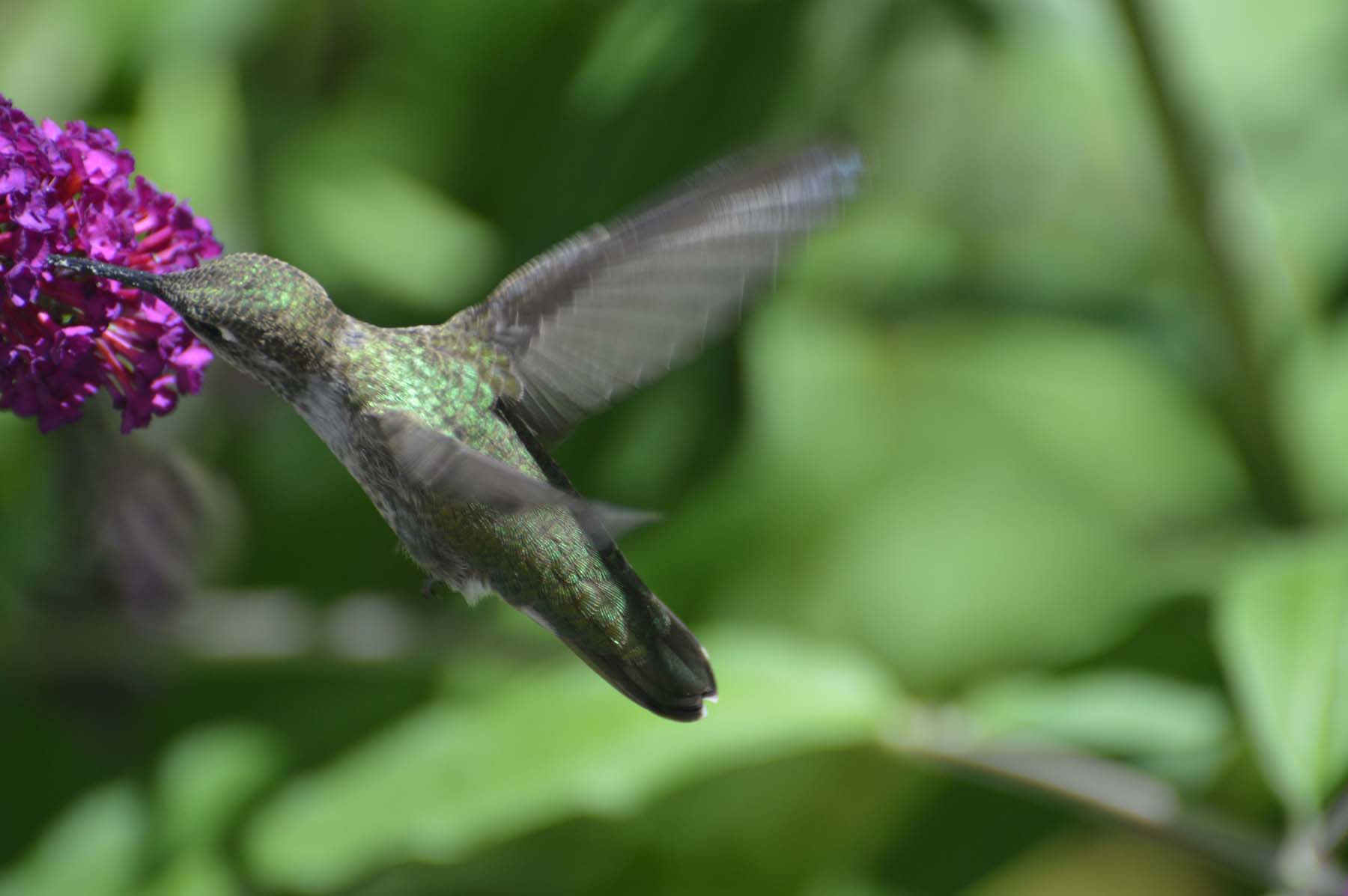
Now in my own garden, I have hummingbirds come to the butterfly bush, or the salvias, like most years. It requires patience to catch a glimpse of them, sitting quietly near the plants, hoping they make an appearance. And then there they are, fluttering, flitting, an occasional short rest break, and as suddenly gone as they appeared.

They are acrobats, they are beautiful, they are for me, coming from colder climates, still exotic. Here in the US we have about a dozen species, the birds’ real ecological home is Peru and there are multitudes. If I were younger and had the relevant pocket change (ca. $10 000 for a trip, anyone?), I’d join one of those birding tours that expose you to large numbers of species in their habitat – making due instead with marvelous photos of the birds they typically see.

But back to my garden – and the joy derived from sitting still, waiting, anticipating and being rewarded with glimpses of metallic sheen and wings in motion and soft, clicking chatter that somehow resonates in my soul.

Resonance is a normative concept that has recently incurred a lot of buzz. The construct is offered in the context of how to lead better lives by Hartmut Rosa, a Professor of General and Theoretical Sociology at the University of Jena and Director of the Max Weber Center for Advanced Cultural and Social Studies at the University of Erfurt. Rosa had a large impact two decades ago with his study Social Acceleration: A New Theory of Modernity. In 2019, the English translation of his book Resonance. A Sociology of our Relationship to the World followed up on the former explanatory model. It offers a guide to how we can and should slow down under conditions of ever faster production and performance orientation, of running ever faster to just stay in place, missing out on ways of living that would fill the emptiness so many people are experiencing.

Here is an interview with him from last year, not coincidentally published in the Church Times, since he is a deeply religious person and draws on the history of faith systems to support some of his ideas. He considers religious spaces as “realms of deceleration, pockets and resources of resistance against the overall imperatives of speed and growth.”

The goal for all of us striving to get out of the rat race, the over stimulation, the performance demands, is, in the simplest terms, to develop an attitude, or a habitus, of attention, of receptivity — in short, a resonant disposition, a mode of listening and responding. The concept does not just include people – it also applies to nature or more abstract entities out there. As Rilke once demanded: Listen to the singing of things (or hummingbirds, as the case may be….)

by Rainer Maria Rilke, translated by Daniel S. Shabasson

I am, of course, a solid believer in words, as long as they do not drown out everything else. And I believe in listening to people as well as things, although it gets complicated when you know it is futile if all that is served is lies, misconstructions, gaslighting and so on. We have to find the fine line between listening to those with different views, and not listening to those who abuse a power differential. It sounds like some people are wildly successful with that in politics as well, if you assume that Mamdami’s strong position as a NYC mayoral candidate is connected to his listening strength.

Some of the words that triggered todays’s musings can be found here, a worthwhile long read for the weekend. Brian Klaas gives a much more learned overview of the whole acceleration/deceleration bit that so engulfs us, a better exposition than I could ever muster. It is a captivating essay, and maybe the antidote to thinking about all the terrifying things that happened this week, in nature as well as in politics.

Not sure, of course, any words can truly distract from all this. But the quiet minutes in nature, listening, resonating, still able to feel awe did – do – provide a respite.

Music today is unusual for my ears and requires close listening – you’ll be rewarded. The Peruvian duo (in honor of the hummingbirds) uses pre-Hispanic instruments and traditional songs.
 

And on a totally different note, just to end with a smile, here is a version of book reviews I might contemplate….

Enjoy your weekend, perhaps listening to a classic book. That will do us good, too!

Sunscreen, fitted shirts and other lifesaving devices.

So it turns out that anatomically modern humans (AMH) knew a trick or two that ensured their survival and evolution into Homo Sapiens while their contemporary Neanderthals bit the dust, eventually. During the Laschamps geomagnetic excursion, about 41 000 years ago, our planet lost its magnetic bearings for some 2000 years. During the shift, the earth’s magnetic shield was reduced to 10 percent of its strength, exposing everything on its surface to a flood of cosmic radiation, and auroras floating everywhere, down to the Sahara desert.

Researchers at the university of Michigan point to the fact that clever AMHs figured out a way to protect against radiation exposure, covering themselves with ochre, smearing mud all over their bodies and faces. They also invented techniques to produce tailored clothing (compared the Neanderthals’ loosely draped capes) which shielded their bodies from burns and cancer-inducing rays. (I learned about all this on the consistently funny and informative 404 Media Post.) These folks also point out that if such a geomagnetic shift happens in the future, ochre sunscreen would be the least of our worries. All technologies would likely fail….

But really today we just want to slather on the factor 50 and explore the reopened wildlife sanctuary, now that nesting season is completed. Walk with me through a wonderland of fluff balls,

protective mothers,

Nutria be gone!

tending their nest and rolling eggs.

Turtles were out, and blue herons,

flocks of egrets hanging out at the waters edge, as did bald eagles.

Swallows came and went

Kestrels rested.

Fish were jumping (trout? carp?) and little critters emerged from their burrows.

Lupines in full splendor, spit bugs (aka cuckoo spit in German) everywhere, and the contrast of light and dark green marking the season of leafing.

Eagles and osprey soaring, and red winged black birds singing. My soul did as well.

Not exactly tailored clothing, but a home-made costume accompanied this wildlife enthusiast Matt Trevelyan on a long, long hike to raise funds for the endangered curlew. wild story – he walked 53 miles in 3 days across England to raise awareness as well as money for the cause. so you know what music will be today, an old favorite on YDP. This album raises fund as well.

Finding Gifts.

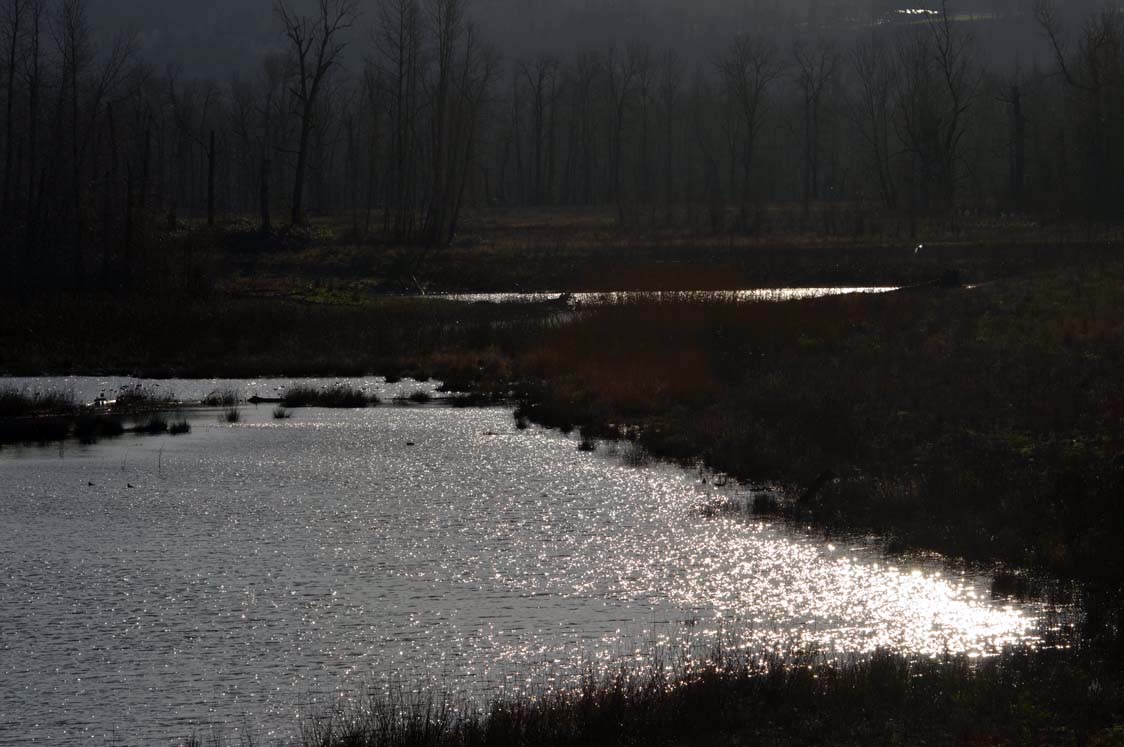
Yesterday was a good, a surprisingly good day. I had gone to Sauvies Island, rather than giving in to fatigue, and found myself with an embarrassment of riches. It was as if all of nature conspired to wait for me and shower me with extraordinary beauty, wherever I turned. The wetlands looked like a Dutch landscape painting from the Golden Age.

The willows glowed like little lanterns against soft air.

32 egrets (I counted!) grazed in a field, occasionally flying off to a better spot for hunting.

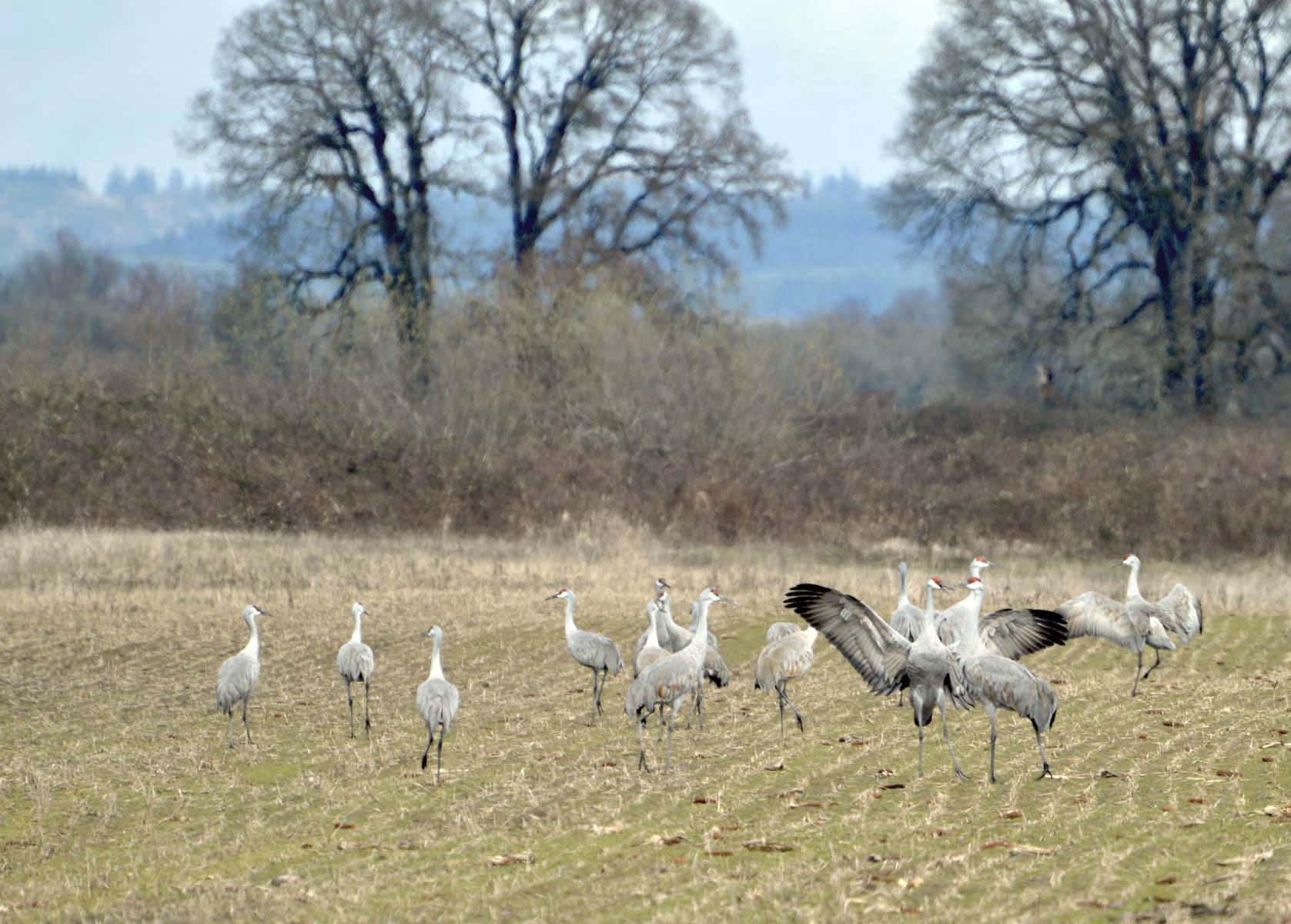
Sandhill cranes overhead and hopping around in their elegant, if short-lived, staccato dances tugged on my heart strings – I so love these birds.

Ducks joined them.

Swans moved northwards, will I ever see the tundra again? No. That’s ok. Can’t be greedy.

Snow geese rose with a cacophony of noise when spooked by a raptor. When they eventually settled it looked like huge white blossoms tumbling down onto the ground.

And then a pair of eagles decided to show off, noisily announcing their arrival, or yelling at each other, what do I know, maybe they’re courting. Not mutually exclusive, I hear.

So, just for today, I’ll revel in nature’s gifts, leaving politics aside. In that spirit, music will also be enchanting, a new find of an L.A.- based Jazz trio. Little guy below hops in rhythm….

Valentine’s Day 2025.

Some claim that Valentine’s Day had its origins in the Roman festival of Lupercalia, held in mid-February. The festival included fertility rites, wild bacchanalia and the pairing off of women with men by lottery. “Young women’s names were drawn by bachelors from a jar. These matches, initially formed for the festival’s duration, often led to long-term relationships and marriages.”

Enter the church, eager to replace Pagan rites with Christian values. Up pops the symbolic martyr St. Valentine who secretly married lovers, ignoring Roman Emperor Claudius II’s edict that prohibited young men from marrying, as to serve more efficiently as soldiers. Valentinus was executed for his defiance, but lives on as a champion of love. (Ref.)

First comes love, then comes marriage. And then comes the forfeit of women’s right to vote.

Think I am joking? Here is what Wendy Weiser at the Brennan Center for Justice has to say about the consequences of a new Republican voter registration bill sponsored by Texas Republican congressman Chip Roy, the SAVE Act, which experts warn could be a major threat to voting rights for all Americans, and particularly for married women, in addition to people of color, young voters, and other marginalized groups.

“The legislation would require all potential voters to provide, in person, proof of citizenship, such as a passport or birth certificate, when they register or reregister to vote.” The bill would not only impact the 21.3 million Americans who do not have ready access to a birth certificate or passport, as well as anyone who relies on voting by mail. It would also have a direct impact on anyone whose legal name does not match the name on their birth certificate or passport, such as the 79% of heterosexual married women, per Pew Research, who take their spouse’s last name. “If a married woman hasn’t paid $130 to update her passport—assuming she has one, which only about half of Americans do—she may not be able to vote in the next election if the SAVE Act becomes law.”

They chitter at each other violently, then hop at each other, until one flies off.

The festival Lupercalia was celebrated in and around caves. Looks like that is the location we are pushed back towards – Project 2025 explicitly condones and seeks to enforce a family structure where only the head of household, the man, votes. This was, of course, a common argument against women’s suffrage before the 19th amendment was introduced.

While I might angrily scream at the hostility extended towards all those threatening the top tier of the power hierarchy, there are others devoted to peace – probably way more effective (and certainly better for your blood pressure…)

You can join them in a Multicultural Celebration for Connection, Love, and Peace this Sunday in Hillsboro, OR. Here are the details:

A Community Event Promoting Unity and Understanding


The Oregon Society of Translators and Interpreters (OSTI), Lutheran
Community Services Northwest (Beaverton Office), the Immigrant and Refugee Community
Organization – Greater Middle East Center (IRCO GMEC), DAWN, and Unite Oregon, in
partnership with the City of Hillsboro and the Office of Immigrant and Refugee Advancement,
are proud to present the Multicultural Celebration for Connection, Love, and Peace.

This inaugural event will bring together community members from diverse backgrounds to celebrate culture, share stories, and promote unity through music, dance, art, and meaningful
conversations. This event aims to foster a sense of community amidst the attacks on immigrant and refugee communities in Oregon and across the country by the new administration.

Date: Sunday, February 16, 2025
Time: 2:00 – 5:00 PM
Location: The Walters Cultural Arts Center, 527 E Main St, Hillsboro, OR 97123
Website: https://tinyurl.com/connectionlovepeace

Here is a poem that will be read on Sunday, in various translations as well.

A Proclamation for Peace 

Whereas the world is a house on fire;
Whereas the nations are filled with shouting;
Whereas hope seems small, sometimes
a single bird on a wire
left by migration behind.

Whereas kindness is seldom in the news
and peace an abstraction
while war is real;

Whereas words are all I have;
Whereas my life is short;
Whereas I am afraid;
Whereas I am free—despite all
fire and anger and fear;

Be it therefore resolved a song
shall be my calling—a song
not yet made shall be vocation
and peaceful words the work
of my remaining days.

by Kim Stafford

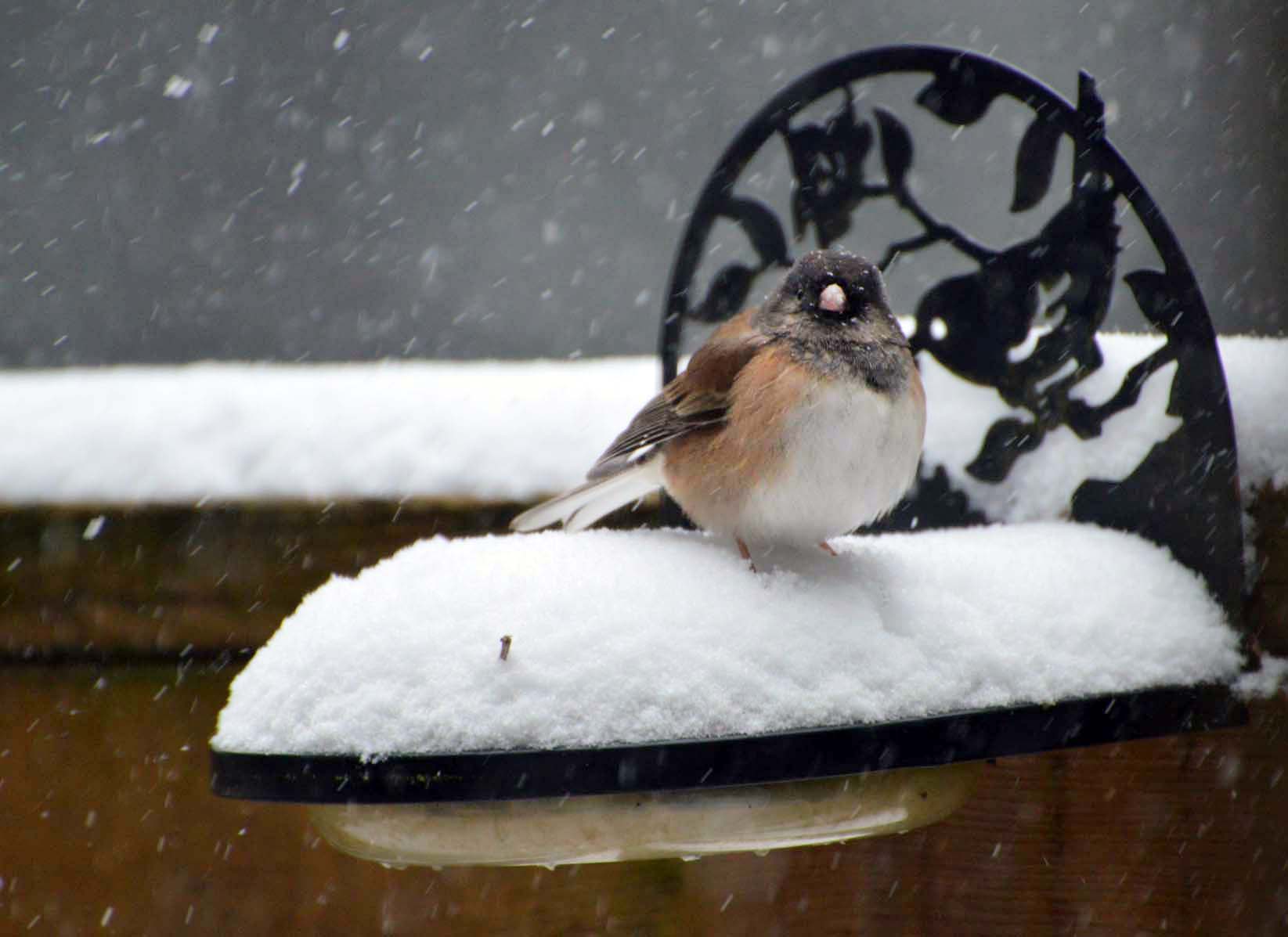
Photographs from yesterday through my (dirty) window, with House Finches and Junkos going at it, competing for seeds rather than showing some loving solidarity. Then again, maybe they are off mating in a cave, once fed. Happy Valentine’s Day!

Music is a Romanze by Schumann so long held apart from his beloved Clara. I really like this slow version. Brings out the longing.


Another Thought Experiment.

When I wrote about my worries regarding the novel Corona virus in early (!) January 2020, I got some push-back. Did I have to be catastrophizing all the time? Couldn’t I provide a bit more levity or at least some art? 1.9 million U.S. deaths later, much as I’d like not to, I am back in Cassandra mode.

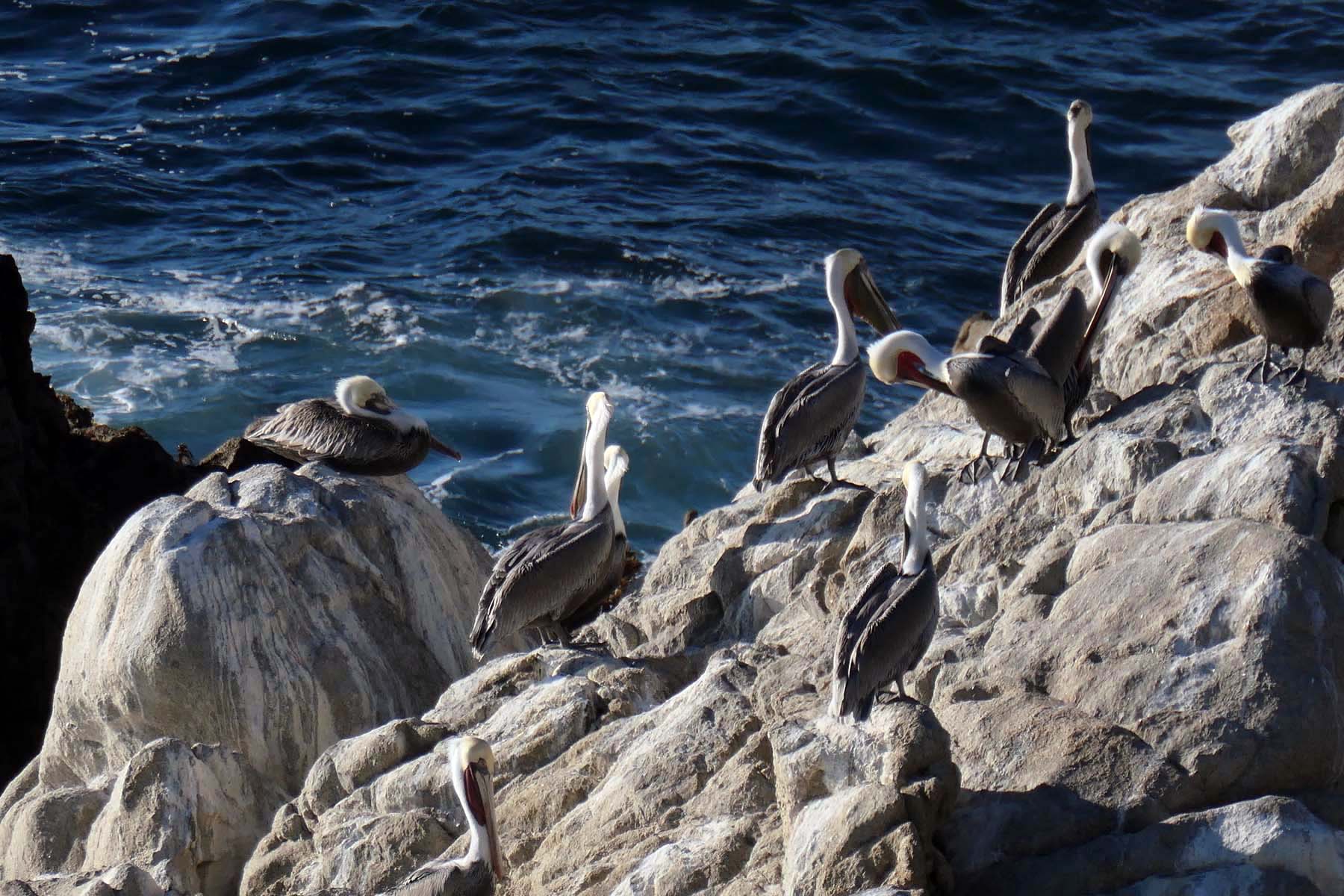
I’ll provide art (a poem below), all right, and photographs that I took at beautiful Point Lobos, CA last November, but today’s focus are issues related to the bird flu. Don’t yell at me. I am as sick, literally, as the next person, under the barrage of bad news. And today’s musings are as bleak as they come. But we must think things through to reach some kind of preparedness. That much we’ve learned from the last epidemic.

Let’s try a thought experiment, given that the Republicans’ slashing of NIH/NSF grants by more than half curtails actual scientific experimentation. (Here is a detailed, excellent review of the new rules.) Assume you learn the most important facts and statistics about the new H5N1 virus. Why assume? Well, since last week, many official publications of information about infectious diseases have disappeared from government websites. Data that briefly appeared on a C.D.C. website were gone a short time later, irretrievable despite scientists begging for a full report. For example, according to the NYT, “Cats that became infected with bird flu might have spread the virus to humans in the same household and vice versa, according to data that briefly appeared online in a report from the Centers for Disease Control and Prevention but then abruptly vanished. The data appear to have been mistakenly posted but includes crucial information about the risks of bird flu to people and pets.”

So what facts do we actually know? The disease originated in Asia, almost 30 years ago. It spread among poultry farms, caused some 400 deaths in humans across these years, but rarely spread human-to-human. The virus started to explode exponentially since 2020, when it did not simply jump from poultry farms to wild bird populations, but when the latter started to disperse it along migration routes, spreading from flock to flock. It arrived on our shores in 2021, with 148 million poultry alone ordered to be euthanized since 2022. More than 5 million egg-laying chickens died in the first 16 days of 2025. (Ref.)

From North America it jumped to South America where it traveled 6000 km in just 6 months. It caused mass mortality, not just in birds, but in infected mammals as well, with elephant seals, sea lions, porpoises, dolphins and otters all affected. Almost 50% of the Peruvian pelican population succumbed. The ecological consequences are still up for grabs but likely devastating up and down the food chain.

Deceased elephant seal pups line the beach at Punta Delgada in Chabut, Argentina, along with a bird carcass. Cause of death: bird flu. Ralph Venstreets/University of California, Davis

Now cows are infected with the virus. As of last week almost 1000 herds across 16 states in the U.S. tested positive. In fact, cows in Nevada exhibited a new variant of the virus which has scientists alarmed for its potential to trigger a pandemic in humans. The genotype, known as D1.1, contains a genetic mutation that may help the virus more easily copy itself in mammals—including humans. This D1.1 version of the virus is the same variant that killed a man in Louisiana and left a Canadian teen hospitalized in critical condition. (Ref.) The real worry: with each genetic mutation, so easily accomplished since this virus mixes with other flu viruses quite rapidly, we might see increased severity of the disease and increased probability for human-to-human infection.

Back to our thought experiment. You now know that the virus is around us, mutating, and you start seeing people felled by it (by current expectations, it has a mortality rate between 40 and 50%. Compare that to Corona Disease mortality rate: about 1%. Imagine the hospital overload, increasing otherwise preventable deaths outside of bird flu mortality as well.) Let’s assume that scientists do find a vaccine (we have to be optimistic until the last minute!), just like they did for Covid, and it proves to be safe and effective in tests done outside of the U.S., since stateside we no longer support much contagious disease research. And now factor in the fact that you have an anti-vaxxer health tzar voted into office by a Republican Senate, instructing the FDA not to approve the vaccine. (You can still write to your Senator about Kennedy’s confirmation… their websites have a contact me link.) Fantasy? Read the proposed law debated on Friday in Montana (House Bill 371) that would ban the use of mRNA vaccines – you know the ones used to treat tuberculosis, malaria, zika, the rapidly mutating influenza viruses, hepatitis b, HPV, Covid 19 and in treatment of pancreatic, lung, prostate, and brain cancer.

What would you do?

Rich folks traveling abroad to inoculate themselves and their families? Would foreigners even be served if there are limited quantities available? What about poor folks?

Stock up on masks? There are already 16 states with masking prohibitions in effect, with more legislation in the works. And always think of the babies and toddlers that can’t be masked…

What will we do?

I can’t help but wonder about questions raised a decade ago by America’s smartest Cassandra, Sarah Kendzior, who has previously predicted everything we have seen unfolding since January 20th, 2025. in great detail.

***

Omnicide

And when our children ask,
Why did  you do nothing as the world
was dying?
   what will we tell them?

Will we say, We didn’t know how
sick it was
, or admit that We gathered
our rosebuds while we could
,

Old  Time was still a-flying—?
It’s now the end of  everything
,
our children will say, go crawl

into your arks and sail off  destitute into
your doom, and leave us only
your shadows.
And our children

will light candles across seven continents
empty now of  lions, kangaroos, ravens,
squirrels, javelinas, pelicans—

devoid of praying mantises, koalas, ants,
cobras, snails, Doberman pinschers, pigs,
vultures, lizards, and alley cats.

Our children will hide in caves with blind
cockroaches, together feeding on the algae
glowing in neon greens and blues

across dolomite and limestone walls.
They’ll leave no pictographs behind,
no sprayed handprints, no artful gods.

Such silence now, they’ll say, this  you’ve
bequeathed us, this human indifference
.
And we’ll beg them, Survive.

BY MAURYA SIMON

Music today is from France, with entirely home-made and recycled instruments, a funky melange that should cheer us up. Always music.

Helpful Advice.

Walk with me, but bring the gloves, on a brilliantly sunny and cold day at the wetlands. Puddles covered with ice, ponds slightly frozen, fallen leaves coated with sparkling crystals putting to shame any jewelry store – display.

My avian friends are warming up in the sun. For every heron at rest, there is an egret flying to the next perch, surveying their realm.

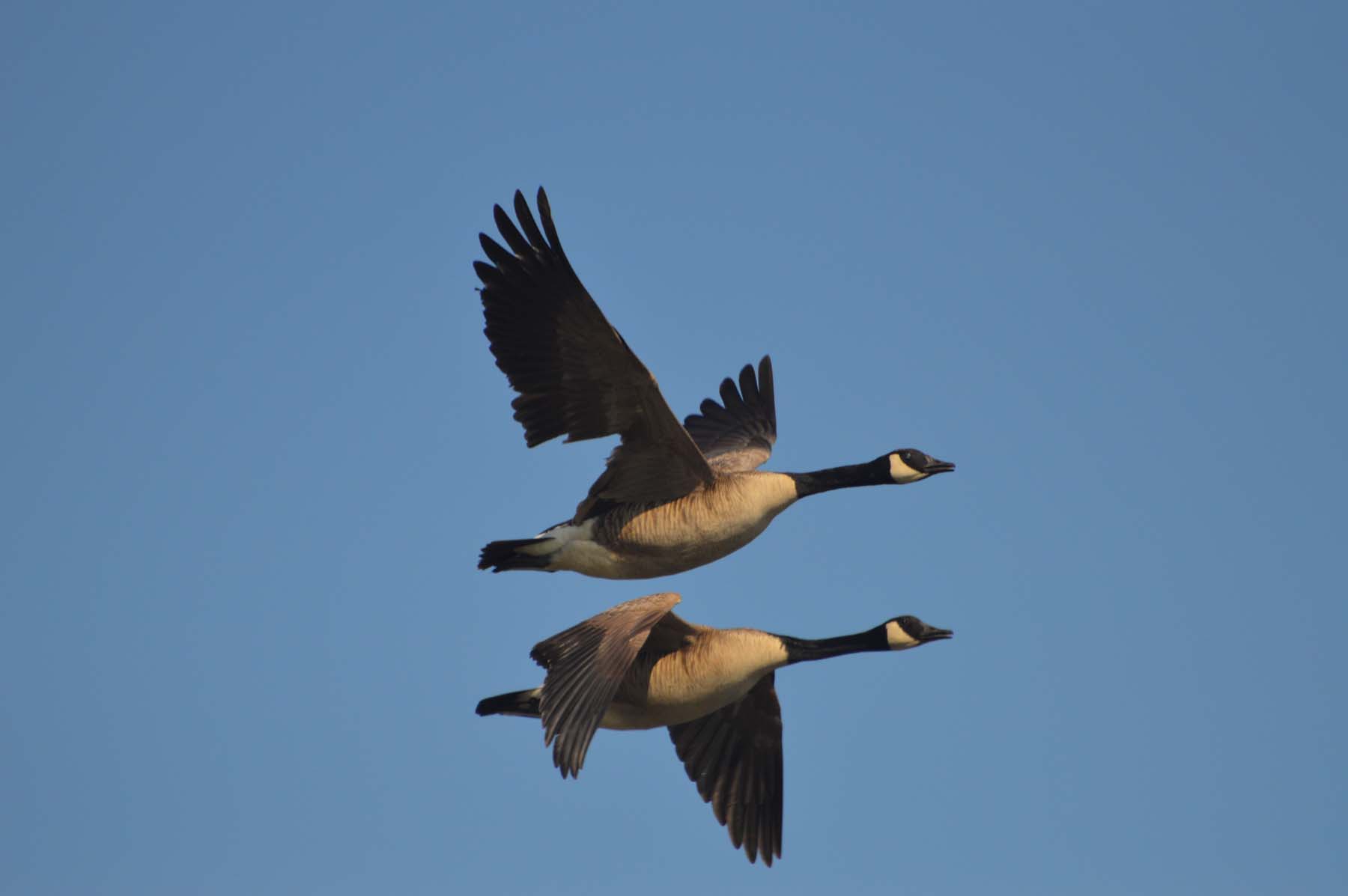
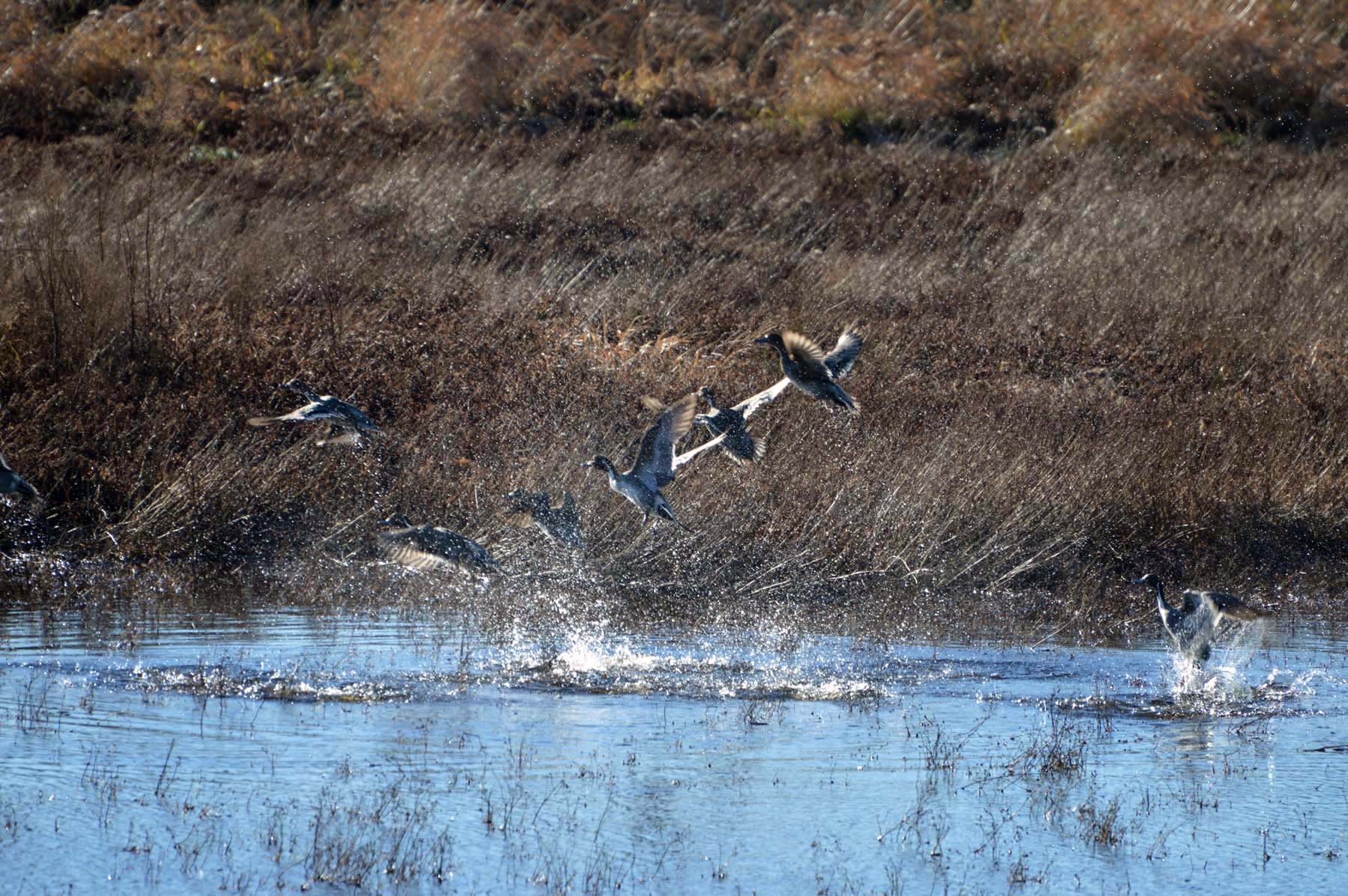
The sky occasionally fills with geese spooked by some raptor, and I wish I could add the sound here of them chattering and honking, a spectacular chorus. Eventually they come to rest, returning to snoozing.

I, on the other hand, have not been snoozing this week, driven by a sentiment probably shared by many of you: What can we do? I have been reading quite a bit, soaking up good advice from trusted sources, and making use of many helpful sites that display what we need to know in straightforward and legible ways.

Much of the advice overlaps: inform yourself, pace yourself, don’t give up in advance, protect the most vulnerable, engage, build and cherish community from the ground up. Two things I found particularly helpful:

  • Ask yourself what your strengths are: not all of us are able or willing to do public work, or join committees, or have the resources to support causes financially, or get engaged in elective office. We all have something to contribute, however. If you like baking, organize bake sales. Agreed, chocolate chip cookies are not going to defeat fascism, but a community nourished by seeing members contribute in whatever ways they can, will be more resistent and more effective in coming together and taking the necessary steps.
  • Focus on your interest. You cannot fight on every front. Pick the arenas where you have the most expertise or the most passion, and join efforts there.

In my case, I have a platform with this blog where I can summarize both relevant sources and write about my interpretations of them. I can do much of the reading you don’t have time for, and pick the best pieces with a critical eye on informational value, not necessarily ideology. I am also deeply interested in science and climate crisis, so that is where I will be particularly involved. Note, though, it really is up to everyone – if you are interested in protecting immigrants, DEI-or women’s rights, or fight against racism, Islamophobia, anti-Semitism or newly established prison camps, it matters. There is no hierarchy of what needs to be protected- there is much under attack and requires advocates.

Here are Robert Reich, Dave Troy, and Timothy Snyder with pragmatic advice lists. And here is a helpful conversation between Jen Rubin and Heather Cox Richardson.

Here is a nifty google drive action tracker listing all the Executive Orders and memos proclaimed so far, grouped by targets. That allows you to inform yourself about your area of interest and what is currently affecting the status quo.

***

Given one of my interests, science, here is another bit of news (in more detail in Paul Krugman’s assessment today):

As of now there is a new communications ban from HHS. The gag order includes the publication of scientific information, including reports that are already done, prohibits emergency alerts for pandemic information, or rising health risks, including weekly data on respiratory disease developments.

Meetings and report releases for the National Vaccine Advisory Committee and the Presidential Advisory Council for Combating Antibiotic Resistance are canceled. HHS is searching for DEIA programs and threatening anyone who disguises them. They are asking for people to report colleagues.

NIH study sections are canceled/postponed. These are the sections that approve grant proposals and provide funding for institutional research. This affects more than 300.000 researchers and 2500 institutions. All travel is suspended and conference publications must be approved in advance by a presidential appointee. That affects nearly $50 billion of scientific research.

Pausing public health communications and research means delays in responding to emerging threats, like H5N1. But these measures also have an economic impact. Public health protects more than health—it safeguards our economy. Disruptions in systems can ripple across industries, as we’ve already seen with avian flu and egg prices.

Note that every $1 spent by NIH generates $2.46. For example, in 2023, $47B in NIH spending generated ~$93B. Halting it all will cost us money, create worse health outcome and might motivate all the scientific talent that is now losing their grant funded jobs to go elsewhere. As of now, it is all gone, with health and education directly implicated.

If you click this link, it offers map and you can tap on your state and find out what is affected by the new administration’s directive towards the National Institute for Health (NIH). Here are the OR and CA impacts, respectively.

Before we are getting too discouraged, here is the long read for the weekend that argues the world isn’t as bad as you think. I agree with much of it, but also want to point out that it is psychologically much harder to relinquish a right or protective matter that you already held or is available to you, than experiencing improvements of a state of need. If we know we can protect our children with vaccines or health risk alerts and they are subsequently blocked by political maniacs, it is a huge blow, individually for all the little ones I love and societally for what the future will hold.

Music today dates me since I still saw it live – album by The Band. RIP Garth Hudson, who died this week.

Thoughts triggered by Geese.

Returning Birds.

This spring the birds came back again too early.
Rejoice, O reason: instinct can err, too.
It gathers wool, it dozes off — and down they fall
into the snow, into a foolish fate, a death
that doesn’t suit their well-wrought throats and splendid claws,
their honest cartilage and conscientious webbing,
the heart’s sensible sluice, the entrails’ maze,
the nave of ribs, the vertebrae in stunning enfilades,
feathers deserving their own wing in any crafts museum,
the Benedictine patience of the beak.

This is not a dirge — no, it’s only indignation.
An angel made of earthbound protein,
a living kite with glands straight from the Song of Songs,
singular in air, without number in the hand,
its tissues tied into a common knot
of place and time, as in an Aristotelian drama
unfolding to the wings’ applause,
falls down and lies beside a stone,
which in its own archaic, simpleminded way
sees life as a chain of failed attempts.

by Wislawa Szymborska

Still awed by all the snow geese I recently encountered. And it was tempting to post Mary Oliver’s Snow Geese poem for its gratitude for unexpected beauty, or Wendell Berry’s Wild Geese with its admonition to recognize the here and now, but you know me. Szymborska hits the spot, every single time. Particularly since she depicts the death of a few unlucky birds, while I try not to think about the deaths of millions of them, saving the dispiriting topic of the bird flu (and its catastrophic implications) for another blog. We’ve had our fill of horrors already earlier this week.

I adore the poet’s sly juxtaposition of instinct and reason, both known to fail. I admire the way she describes the biological features of the birds in all their beauty, linking them to positive traits like patience, honesty and conscientiousness, but also works of art, sculptural finesse worthy of museums.

This is not a dirge — no, it’s only indignation.”

That is the feistiness I want to take into my day, my life, when contemplating mortality or dealing with the “foolish fate” of witnessing erosion of achievements, justice and equality among them, that so many generations fought for. Maybe each single life is a chain of failed attempts, indeed, but lives accumulating across centuries were clearly able to improve the world.

What was this thing about the arc of the moral universe? It’s long, but bends towards justice? If a murdered man could cling to this belief, so can we. We could even muster some sort of hope that the danger of a snowy death upon too early a return is now gone with the arrival of climate change and rising temperatures. Oh well, another “failed attempt” – at gallows humor.

Then again, we could just stick with the poet’s resigned realism. It served her well, all the way to the Nobel Prize.

No, indignation it shall be, not sorrow, indignation hatching action.

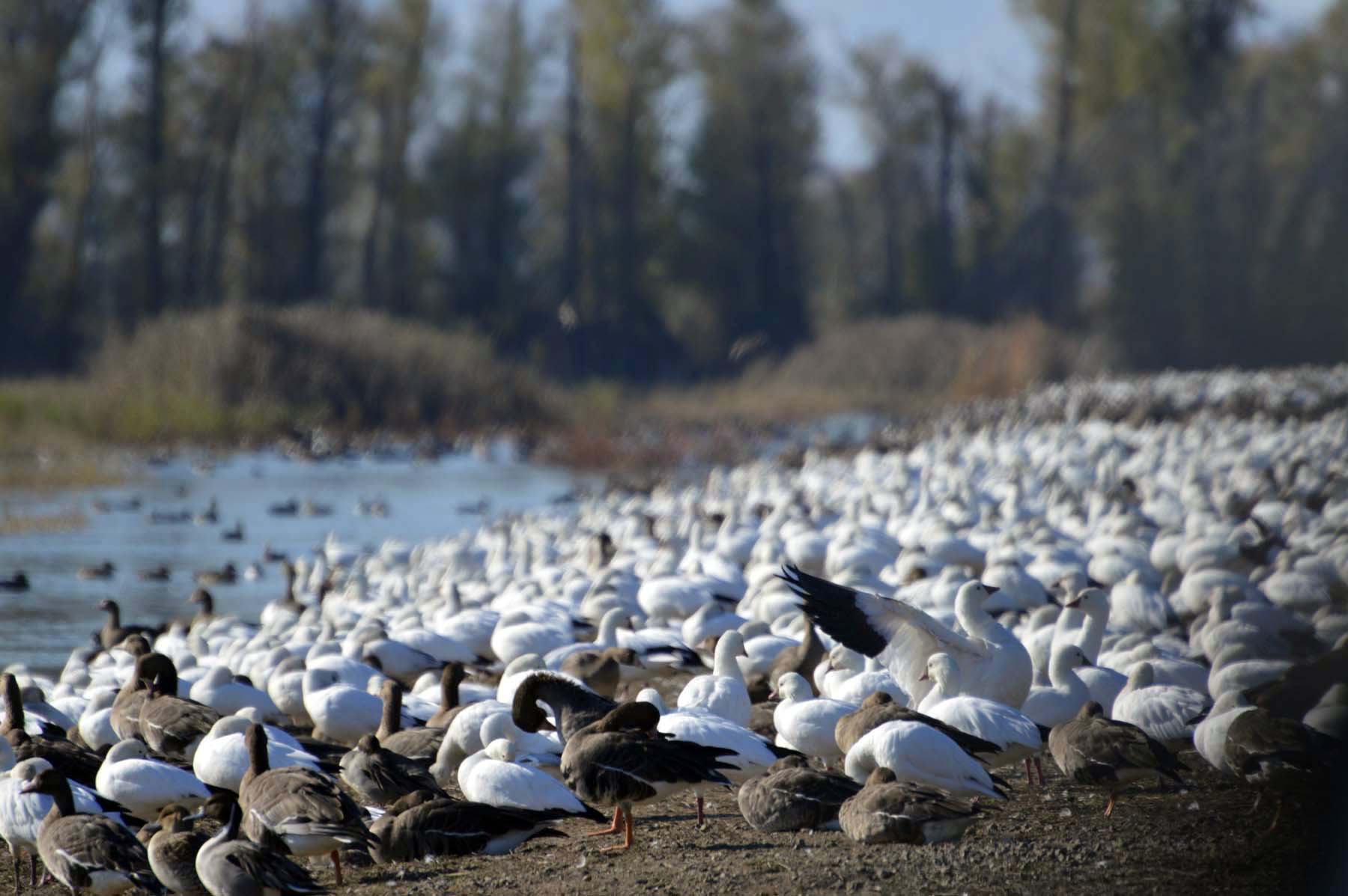
In any case. The geese were luminous and loud and basking in the California sun, grey and white geese alike. The light still radiates inside of me, providing needed warmth.

Music today is about another white bird….

Southbound, with company.

I was not alone on my way South. Surrounded by innumerable drivers, we were all stuck on I 5 behind a garbage truck that managed to blow up and burn out on the middle of a bridge over the Willamette river, with no room to move it aside for people to pass. Firetrucks, police, all on site, with us patiently sitting and waiting for eternity in turned-off cars.

Fire seems to have been a theme of the drive. When I arrived at my motel for the first overnight stop, all fire alarms were blaring, fire police frantically trying to find the source of the alarms. 45 minute wait later, they decided it was just a false signal from a corrupted sprinkler system. I fell into bed, fried.

Surrounded by innumerable water fowl, I saw smoke of a small fire billowing on the horizon. By the time I had left the wildlife preserve, smoke clouds covered the landscape and wafted over the highway, the fire had clearly exploded.

What was really fascinating, though, was the constant change in light in this California landscape, close to Sacramento. All the variations you see in the photographs below were taken during a 45 minute stay amongst my migrating pals.

Rain coming down hard

Some 10.000 white fronted geese and about 2000 snow geese hung out, if we can trust the species lists provided by birders for the day I came through.

Snow Geese

White fronted Geese

I did not focus on many of the other birds,

a large flock of turkey vultures, however, focused on me. One came so close overhead that I thought he’d dive….

There is something interesting about people naming collections of these birds, depending on the activity they can be found in. Mostly they are called a flock or a kettle, but when they rest they are called a committee and when they feed on carrion they are called a wake. Sometimes they are called a venue or a congregation Is that true for other raptors as well? In any case, do migrate as well, sometimes in kettles of up to 10.000 birds. I had no idea that was the case. I sure was surrounded.

I am now near San Francisco, hoping to see gardens new to me. Stay tuned.

Here is some New Music.

“The performers of this work by Canadian composer R. Murray Schafer (b. 1933) imagined that the central figure of Wild Bird (1998) is a vulture, who finding his prey on the ground, tears it to pieces and eats it, before flying off again. The work is full of extreme dynamics, changing tempos and meters, and sharp dissonances. Clearly this is not your cute little song bird. In “Wild Bird” from 1997, the violin embodies the startled fluttering spirit, while the harp creates an echo chamber for it. The exhausting tour ends in audible fatigue.

Perfect parallel to driving south days on end …