Browsing Category

Bird Photography

For the birds

Kirtland Warbler, photo source on the web

This week is dedicated to some of the birds I recently photographed and stories and questions they brought to mind.

We will start with a report I heard on the radio yesterday, a re-broadcast of an old NPR radiolab piece about a threatened species, the Kirtland warbler. The basics of the story as I remember them are as follows.

Happy little warbler in Michigan disappears. Wildlife services try to figure out why and pinpoint the nasty cow bird, a non-native species. Cowbirds, like cuckoos,  surreptitiously place their ow egg in the warblers’ nest, throwing one of the old eggs out to make space. When chick hatches, it grows at 4 times the speed than the warbler hatchlings, and so commands more room, throwing another chick out and gets all the food, since the parents feed the noisiest one first.

(These photos from the internet.)

A killing of cowbird commences to save the warblers. Traps are set, birds are killed by hand. 12ooo dead cowbirds later, the warbler population seems not to improve. So they figure that it was really also the absence of young trees, because wildfires have not been allowed to happen to protect humans. Wildlife services decide to try controlled burns. With few resources, few firefighters etc, burn gets out of control and ravages 20.000 acres in a blink, killing in its way a young wildlife technician who was eager to save the birds.

The question that many ask is: is saving a species worth a human life? After all there are some 50 species of warblers alive and well? Is putting so many resources into species protection, killing so many other birds worth the warbler continuity? If you decide to forgo saving one species, what about the next and the next and the next?

In some important way, the premise is wrong. The young man was killed due to circumstances in the process of protection, not because of the protection. The species is disappearing because of land use issues, interrupting the natural cycle of things.

Framing issues as human interest stories were emotions are roused when you hear the sad family, are dangerous in times where the Endanger Species Act is under assault by a reckless administration. ( Knew I would get there somehow….)

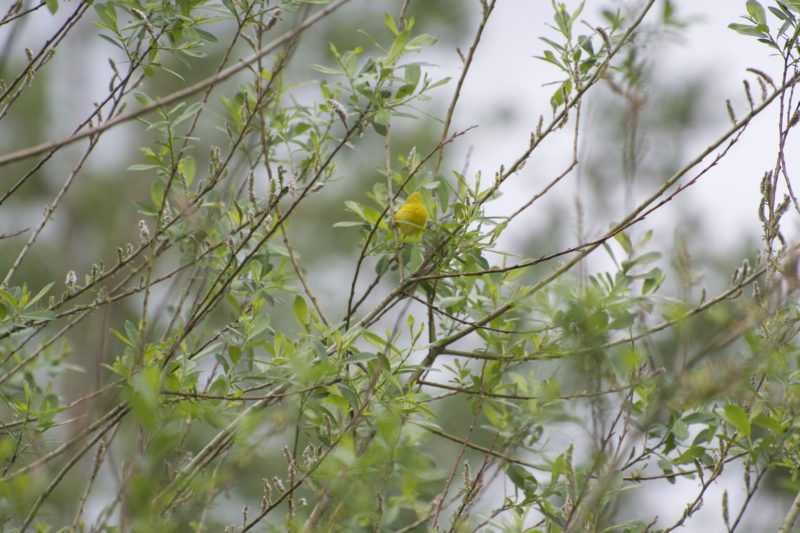
Photographs of warblers in the Columbia Gorge last week.)
http://www.radiolab.org/story/91723-weighing-good-intentions/


Harney County, Eastern Oregon

Malheur lies in the furthest south/east corner of our state. Before this part of Oregon became infamous through the occupation of the right wing, nationalist militia crooks around Amon Bundy last year, it was a magnet for nature lovers, wildlife protectionists, birding enthusiasts and artists. It still is, I suppose, with many working hard to restore what has been defiled.

Childe Hassam 1908 Afternoon Sky, Harney Desert

Hassan Childe (1859-1935) was one of the early painters who lend his impressionist style to depicting the beauty of Harney County. In fact one of his paintings was the first acquisition of the Portland Art Museum, founded in 1905.He captured, in my opinion, an idealized version of what is really a harsh environment around the Steen Mountains. Part desert, part mountain wilderness, few interspersed water features that host 1000s of birds during migration, all combine to deliver astonishing beauty but also intense hardship for the few people who settle this landscape and try to make a living of it.

https://oregonencyclopedia.org/articles/hassam_childe_1859_1935_/#.WNHdfzvt–Q


I find Henk Pander’s work a more fitting testimony to the reality out there, both in his water colors and his oil paintings that often add a psychologically astute dimension to what is. He captures the intense light but also the foreboding of the Eastern landscape.

Here is a link to his website – check out the watercolors of the Blitzen river, the Malheur Field station and the landscape of the Steens.

http://henkpander.format.com/#1


I have only visited once, 2 years ago, for a precious few days on a road trip from LA to PDX. I have been wanting to go back there ever since, and hope this year will afford it.  Who knows.

In the meantime I frequently go back to the photographs I took and try to recreate the experience.

Part of what made it special are the many unfamiliar bird sounds that you hear there, including some birds that make music with its feathers – here is the sound of a common snipe https://www.youtubecom/watch?v=dam0sDp6Xig.

At night you hear owls,

during the day you walk among families of quails,

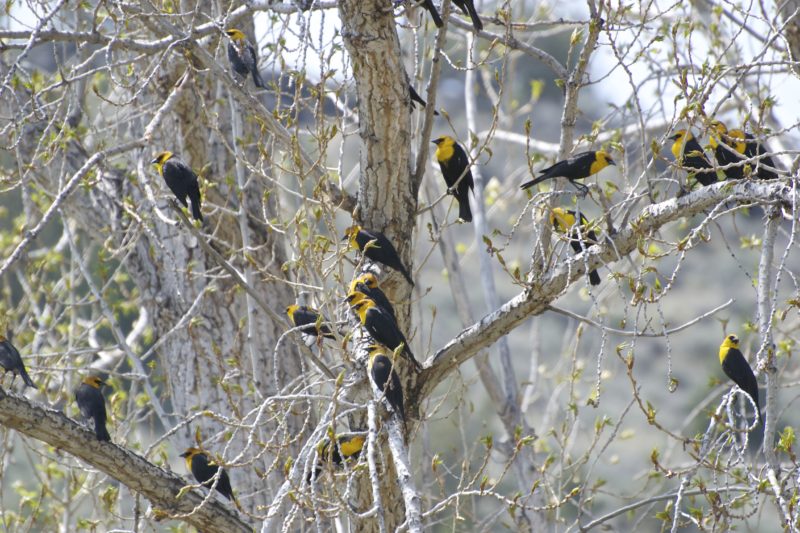
and you are surrounded by ubiquitous species of blackbirds, many of them unfamiliar to me.

It is a special place if you like birds and find solace in their freedom and their song.


Up with the Birds

Screen Shot 2016-06-23 at 9.12.11 AM

I wonder if I had it in me to get up at 3:00 in the morning to be at a concert at 4:30 am. The answer is a resounding NO, unless… the concert took place at a bird sanctuary. And offered music by Messiaen. (Although playing him on the piano was a bear rather than a bird. Ok. Done with the bad puns.)

Summer Meadow copy 3

DSC_0064Last Sunday the entire grandiose Catalogue of Birds by Messiaen was played across different places in nature during the course of a day into the night. Starting with a walk at dawn to hear the real birds, the concert commenced among the reeds. At night it finished fittingly in a hall, performing the calls of the night owl. Luckily all this happened in England, at the Aldeburgh Festival last week, so I didn’t have to stay up late, which is harder for me than to get up early. Wouldn’t have liked to miss the owl. Unluckily, this seems like an event of a lifetime, organized with British precision, stamina and a sense of adventure, shuttling the audience from one spot to another, an experience I would have relished. The festival director, Pierre-Laurent Aimard, was also the pianist, playing, as you can see in the clip below, with hand warmers in the dawn!  DSC_0069https://www.youtube.com/watch?v=15xFa2U5thw

Thirteen individual pieces, each echoing the song of a particular bird from France, comprise this musical work, finished in 1958. From then on, Messiaen traveled all over the world to transcribe songs of birds in the wilderness, including exotic birds, and incorporate the tunes into his compositions. Paul Griffiths observed that “Messiaen was a more conscientious ornithologist than any previous composer, and a more musical observer of birdsong than any previous ornithologist.” Three of my favorite things: music, birds, travel! I wonder if he would have considered taking a photographer.DSC_0040 - Version 2

DSC_0103

Here is a glowing review of the entire Aldeburgh event http://www.telegraph.co.uk/music/what-to-listen-to/messaiens-catalogue-of-birds-pierre-laurent-aimard-aldeburgh-fes/ Makes me jealous.

996808_662538280427681_570695776_n

Fabric(action)s

· A short history of lace and its depictions in art ·

IMG_5075 copy

This week will be devoted to fabric.  Velvet, cotton, curtains, linen on laundry lines, you’ll be surprised how many interesting facts are associated with stuff we usually ignore. Ignore, that is, until we see it painted and can’t believe how intricate these renderings are, how superbly crafted and deceptively life-like.

As you have guessed, we’ll start with lace. The history is a long one, with mention of it in the old testament, and lacy hairnets found in Egyptian tombs. It took off, though, in the 16th century, first reserved for high ranking clergy, then taking over at the courts of Europe. Some countries exchanged the basic materials for the final product, with Belgium, for example providing finest flax (by now extinct, since fertilization and crossbreeding made the fibers less soft) to France for their centers of lace making. Italy, and in particular Venice, was the cradle of much of the skill, and the court threatened those workers who were lured to France to teach lace-making, with holding their families hostage to the point of execution. (I photographed the handmade lace in Burano, an island of lace makers off the coast of Venice.)  Lace became so desired as a status symbol that it was worth smuggling it across borders (sometimes in loaves of bread, sometimes in coffins where much of the body had been removed to make space) despite the harsh punishments if caught.  There is a lace guild in England which runs a museum in Stourbridge and provides detailed historical information. https://www.laceguild.org/craft/history.html

DSC_0023 copy

The interesting part is of course how artists have rendered this delicate fabric and I will give one example here –  but point you to a terrific collection of artists and their works here http://www.sophieploeg.com/blog/the-10-best-lace-paintings. Her essay with illustrations gives a cross section of paintings across the centuries, with interesting commentary. I chose the Portrait of a Woman, Possibly Maria Trip, Rembrandt Harmensz. van Rijn, 1639 as my personal favorite, which can now be visited in the Rijksmuseum. It is astonishingly detailed and beautiful.

Portret_van_een_vrouw,_mogelijk_Maria_Trip_Rijksmuseum_SK-C-597.jpeg

Finding a Balance

· experiencing nature vs photographing nature ·

11174621_1043240765690762_8977066694953103930_o

Shlomo Breznitz, an Israeli psychologist and sometime member of the Knesset, advised me years ago not to take photographs – ever. He was convinced that the focus on capturing the moment would supersede experiencing the moment; he insisted it would narrow memory of the moment to the confines of the photograph and exclude all other contextual information.

There is a kernel of truth in this, although not enough to convince me to give up something that fills my days with joy. Digital photography allows for seamless documentation of your world, since there is no cost attached to taking it all in (that is unless you count the time spent deleting the 90% of pictures that didn’t turn out as a major cost.) However, when you start hunting for a specific subject, as so many of us do who photograph birds, it really changes the way you stroll through the landscape. Rather than enjoying nature as a whole as you would during any old hike, you experience the outing as a success if you got some good shots, and a failure if you didn’t. And then there are the moments where the long sought-after bird appears – there’s the kingfisher! – and you happen to be without camera…

One solution is to go for regular walks without photographic equipment to remind yourself that it is nature that counts, not documentation. Another is to bring only a lens that can be carried rather than requiring a tripod, so you remain mobile.  Another justification is for me the fact that the images bring joy to so many who can not or no longer be out in the fields themselves. In addition, you meet some terrific photographers in the field (Hello, Steve Halpern, Neil Ferguson). And the frequent insight how ignorant I am – barely able to identify the major bird species –  makes for a good reminder to be humble.  That said, today’s photograph is of a hummingbird, taken last spring at the Malheur Wildlife Refuge before the militias sowed their destruction. Happy to learn his exact name!