Browsing Category

Bird Photography

A Journey in Sound

If you are like me your household chores have suffered across the holidays. (Not the holidays’ fault but my indulgence in an extra dose of Netflix – I am here to report that I have progressed from November’s Chinese Soap Opera, via -terrific- Korean historic fiction, Turkish fantasy -forgettable except for the footage on Istanbul which recalled wonderful memories- to a German horror movie. Yes, keep your reaction to yourself. I already live with enough raised eyebrows around here…. )

That said, the pile of ironing is waiting, and what better than to tackle it while listening to the sounds of another country that I will never see, but want to know more about.

The BBC has this terrific series called Documentary, and in one segment Alastair Leithead, the BBC’s Africa Correspondent, takes you on an epic adventure in sound across the Democratic Republic of Congo. He basically narrates his trip (I assume only possible because they plunged mega bucks on guards and guides and audio crew, quite frankly) but also records all the sounds during his journey. It is fascinating.

https://www.bbc.co.uk/programmes/p06vm1jd 

Congo has, of course been in the news – if certain US government officials watched anything other than FOX they might even get ideas: another way to suppress voting by undesirable constituencies? Claim it is too dangerous for public health! Details here:

https://www.reuters.com/article/us-congo-election/vote-delayed-in-three-congo-opposition-districts-wont-count-toward-presidential-result-idUSKCN1OP0J9

I am not kidding, either. The second worst outbreak in history of the dreaded Ebola disease has been used as justification by outgoing President Kabila and his cronies to decree that three opposition strongholds will not be allowed to vote until March – when swearing in of the newly elected president – the elections are this Sunday – will take place in January.

If you have not yet read or long forgotten (unlikely) Barbara Kingsolver’s Poisonwood Bible, it is your best introduction to the history of the Congo, in a novel that has some of the strongest character development in recent memory. It is a beautiful and deeply moving book that also makes you aware of struggles that have not appeared in our history books. Or at least not mine.

.http://mentalfloss.com/article/62832/13-things-you-may-not-know-about-poisonwood-bible

For music today it will be Grand Maitre Franco singing Attention Na Sida (he died of complications from Aids in the late 80s, 2 years after he recorded this). The origin of the epidemic was in 1920s Kinshasa, now Democratic Republic of Congo.

https://www.youtube.com/watch?time_continue=156&v=OkfYs2_r1y8

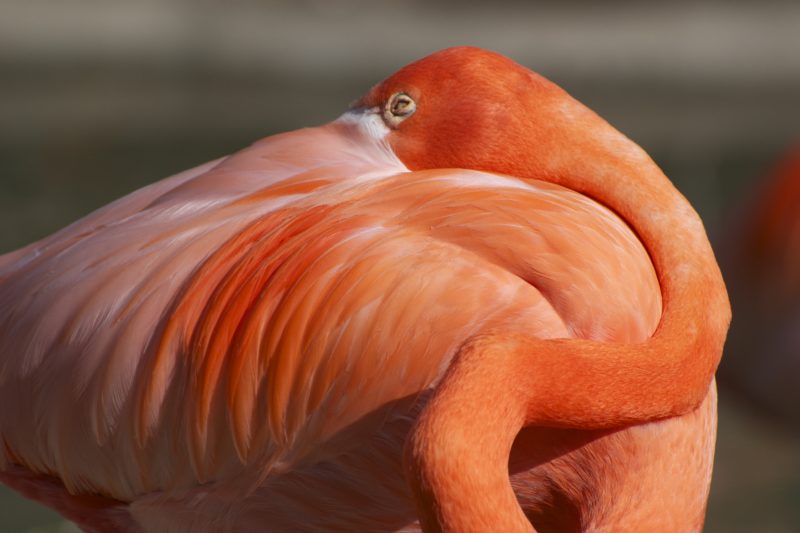
My photographs are of flamingos, my approximation of visiting the tropics…. The Democratic Republic of Congo houses 4 species of those strange birds.

Cause for Caroling

I feel like that bedraggled, aging thrush of Hardy’s poem, who believes in hope in a world that is a rather dark place, then and now. Or who simply does what nature requires, doing what’s needed for survival, equipped for that with instincts that aim at continuity and consequently inspiring hope.

Hope it shall be, then, during a celebration of same that is called Christmas.

The Darkling Thrush

BY THOMAS HARDY

I leant upon a coppice gate
      When Frost was spectre-grey,
And Winter’s dregs made desolate
      The weakening eye of day.
The tangled bine-stems scored the sky
      Like strings of broken lyres,
And all mankind that haunted nigh
      Had sought their household fires.

The land’s sharp features seemed to be
      The Century’s corpse outleant,
His crypt the cloudy canopy,
      The wind his death-lament.
The ancient pulse of germ and birth
      Was shrunken hard and dry,
And every spirit upon earth
      Seemed fervourless as I.

At once a voice arose among
      The bleak twigs overhead
In a full-hearted evensong
      Of joy illimited;
An aged thrush, frail, gaunt, and small,
      In blast-beruffled plume,
Had chosen thus to fling his soul
      Upon the growing gloom.

So little cause for carolings
      Of such ecstatic sound
Was written on terrestrial things
      Afar or nigh around,
That I could think there trembled through
      His happy good-night air
Some blessed Hope, whereof he knew
      And I was unaware.

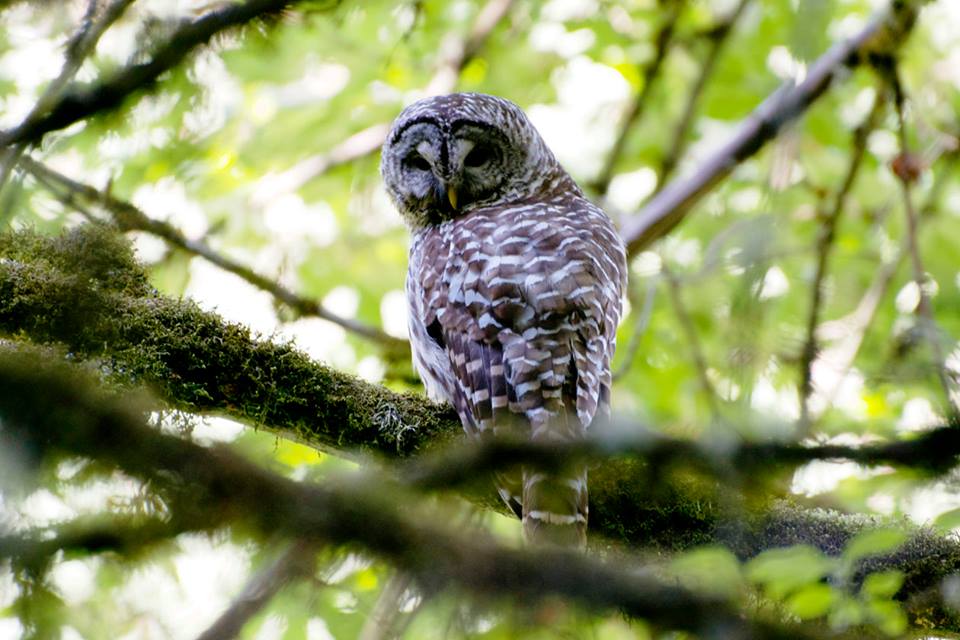
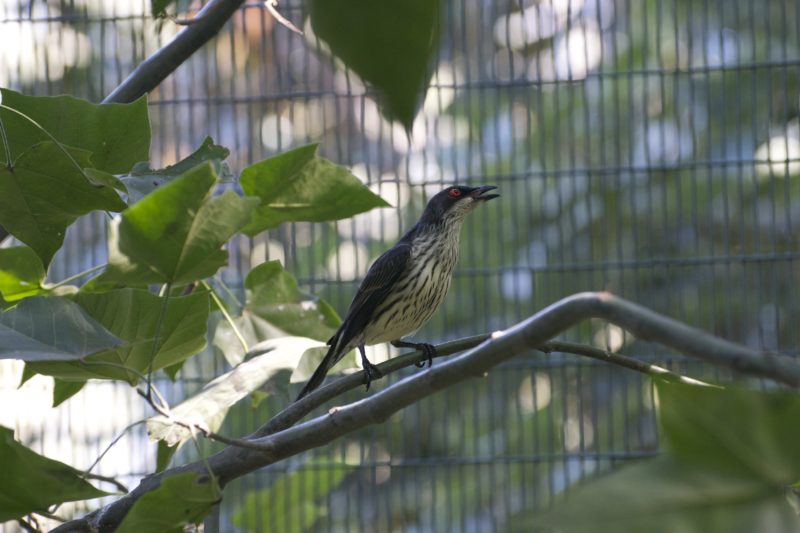
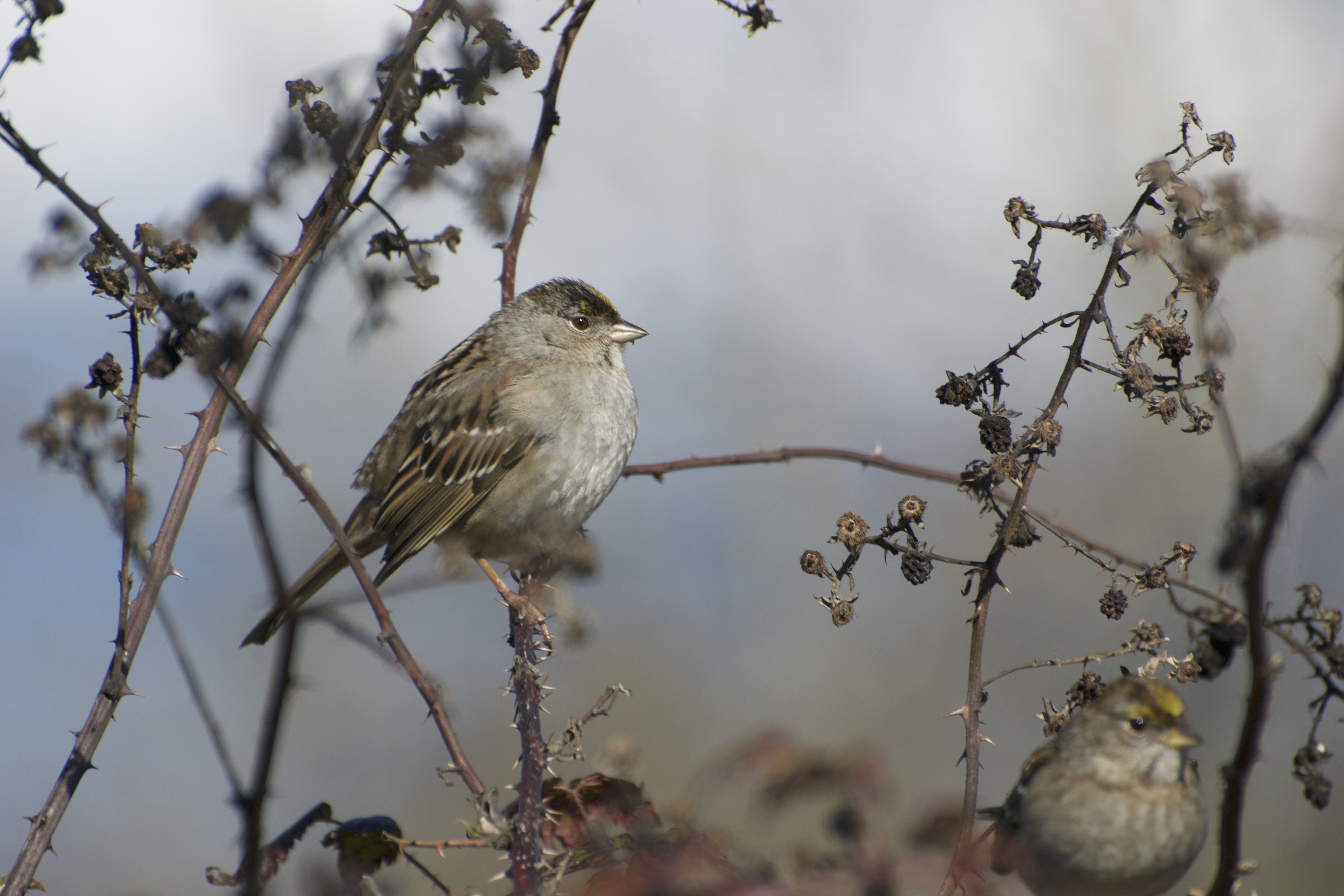
Photographs of owls, sparrow and finches.

Now where do I find my blast-beruffled plume?

Persuading

In the mid 1980s I worked as an RA for Leon Festinger, one of the giants in the field of social psychology, and as demanding a boss as they come. Chain smoking through our occasional lunches, he would grow irritated if I tried to pin him down with requests to hear more about the times he studied cults by pretending to be a member, building his theory of cognitive dissonance.

He had at my time turned his back on his earlier bodies of work as an experimental psychologist and was exploring completely new domaines.  He studied archeological sites and data collections which led him to speculate about the nature of early man and the structure of primitive societies, summarized in The Human Legacy in 1983.

Eventually he became passionate about the history of religion and its implication for the development and acceptance of technology. Comparing two societies, alternatively dominated by the Eastern and the Roman church, he analyzed material technology and what it meant for political and national development, in particular warfare. Consider the adoption of the stirrup, for example, the foothold that allows a rider to be safely and in balance positioned on horseback. If you don’t have to cling with your arms to the horse’s neck, why, you could use them for all kinds of belligerent actions, holding swords, throwing spears, you name it, giving you a distinct advantage on the battle field. (The stirrup, by the way, was invented in China and made its way to the West in the early 8th century, something we know both from archeological data and medieval art.) These kinds of technological inventions and adaptations are fostered in forwards looking societies, leaving others, quite literally, in the dust, as we can see with the decline of the Byzantium.

Here is an old obituary by his friend Stan Schachter – Leon died in 1989. https://motherjones.com/files/lfestinger.pdf

All this came back to me when I read the article linked below about cult membership, Trump and the Republican party, which introduces Festinger’s earlier research, to get eventually to the bigger question of how one gets people out of these cults, persuading them to change their views and question their identity.

I am not sure I agree with the approach the author offers in consultation with renowned scholars of peace and conflict resolution. Many of them recommend a community-based approach (after modeling of the Irish initiatives that laid the groundwork for peace in that divided country: “Important work to overcome divides is done at the grassroots level—through NGOs, religious initiatives, social service programs, schools, at the workplace, etc.,” …. “Civil society organizations that cut across identity borders can promote reconciliation and reduce conflict.”

That I can see as a requirement for success, and I can see how it works when the feuding parties are on somewhat equal footing. What, though, when one party has been oppressed to the point of being dehumanized, and is now expected to reach out a hand to the oppressor who deems himself a victim these days? I don’t know how to reconcile that with the racism and anti-Semitism that is the basis for the identity formations for the 25% of our population that adheres to the White Supremacy cult. Would you have asked Jews to start reconciliation groups in Germany after the war, or Blacks in SouthAfrica, reaching out a hand to those who approved of their murder?  Hard reading below:

https://newrepublic.com/article/152638/escape-trump-cult

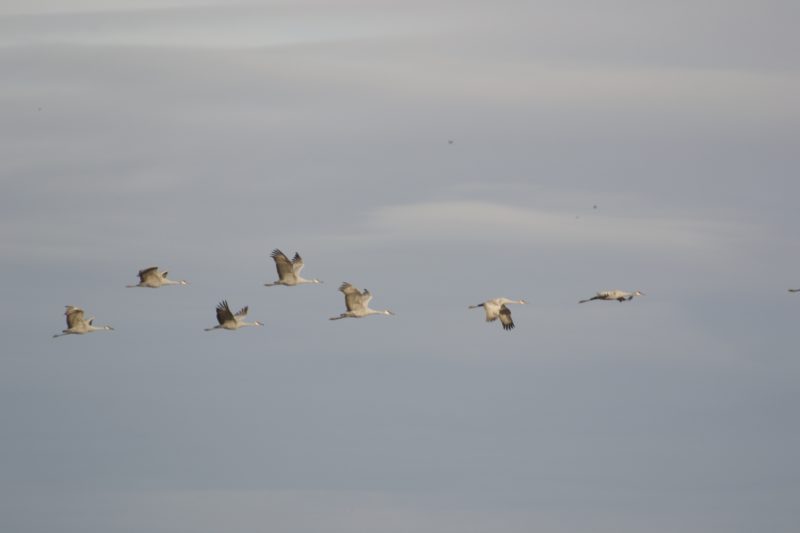
Photographs todays are of sandhill cranes seen last week on their long, long journeys to the South. Maybe we can also travel some distances in this country bridging the canyons that divide us. 

One for the birds, again…..

My grandfather was a small, musical man, his stand-up bass looming over him, or so it looked from the perspective of a small child. We rarely visited, but the visits were full of wonder and never more so than when he took us out on walks through the heather, forest and flats of Lower-Saxony. He knew all the bird sounds and was able to imitate them with his precise whistling, making music as we walked. He taught me about thrushes, robins and black birds, chickadees and woodpeckers, wrens, cuckoos and nightingales. I learned that there was a repertoire of communication among birds, from mating to warning to war fare, not unlike our own.

Listening to bird sounds, then, is a big source of joy for me; the first melodic ones in spring in the garden, or the rare, high pitched ones that hint at the presence of raptors when I am out on my jaunts, and now, in fall, the choruses of migrating flocks.

The migration of birds is in full swing – I thought it would be fun to share some of what I saw last week, and provide some recordings of what I heard. The Cornell Lab of Ornithology is a wonderful source – most of what is below I found there.

Here are the Canada geese which really are around all year, but seem to flock in masses during fall.

https://www.allaboutbirds.org/guide/Canada_Goose/sounds

“Various loud honks, barks, and cackles. Also some hisses.”

Then there are their cousins, the snow geese. This goose breeds north of the timberline in Greenland, Canada, Alaska, and the northeastern tip of Siberia, and spends winters in warm parts of North America from southwestern British Columbia through parts of the United States to Mexico. They fly as far south as Texas and Mexico during winter, and return to nest on the Arctic tundra each spring – says Wikipedia. I always feel particularly happy when I encounter them, since they remind me of one of my favorite children’s book: The wonderful adventures of Nils Holgersson by Selma Lagerlöf. A little misbehaving boy is shrunk and travels across Sweden on the back of a snow goose, having all sorts of adventures and providing the young readers, unawares, with a geography and biology lesson.


Then there were these huge flocks of ducks. I believe they were pintails, but am not sure, was too far away. They are shy creatures.

https://www.allaboutbirds.org/guide/Northern_Pintail/sounds

Throughout the year, male Northern Pintails give a short burst that sounds similar to a wheezy trainlike whistle. Females often make a rough stuttering quack similar to a Mallard.

And finally, my favorite of them all, the cranes. Not only are they beautiful, almost regal in their steady flight, but they have these amazing dances, of courtship or in territorial defense, where they seem to defy gravity, jumping high in the air with barely a lift of the wings, signaling muscle power that my limp, aging body can only dream of.

The link below gives you a glimpse of their toughness, engaging with black bears:

https://www.youtube.com/watch?v=M-NQgobvz40


https://www.allaboutbirds.org/guide/Sandhill_Crane/sounds

Sandhill Cranes give loud, rattling bugle calls, each lasting a couple of seconds and often strung together. They can be heard up to 2.5 miles away and are given on the ground as well as in flight, when the flock may be very high and hard to see. They also give moans, hisses, gooselike honks, and snoring sounds. Chicks give trills and purrs.

Here they are in flight:


Don’t you wish you could just travel with them? They are calling…..

Sympathy

I know why the caged bird sings….I first “heard” these words in a piece of music – Buckshot Lefonque’s version to be precise.

Only later did I realize it was an actual poem by Paul Laurence Dunbar, published in 1899; the phrase I cited above might be familiar to some as the title of Maya Angelou’s autobiography.

Here is the whole poem:

https://www.poetryfoundation.org/poems/46459/sympathy-56d22658afbc0

And here is an excerpt:

Dunbar died at age 33 in 1906. He was gifted, achieved recognition during his life time, but also troubled, in ill health and caught in a political trap. The public wanted his humorous, sometimes sentimental accounts of Black life during and after slavery written in dialect, and showed disdain for his descriptions of violence and injustice. To sell his works and make it as a writer, critics claim he resorted to caricaturing his own race, portraying black slaves as faithful and obedient, slow-witted but good-natured workers appreciative of their benevolent white owners. Dunbar drew the ire of many critics for his stereotyped characters, and some of his detractors even alleged that he contributed to racist concepts while simultaneously disdaining such thinking. (See link below)

Many current scholars draw a more complex picture, pointing to his many ways of describing and attacking racism, more so in his poetry than his novels and story collections.

https://www.poetryfoundation.org/poets/paul-laurence-dunbar

The poem I chose is a lament, a painfully sad expression of all that is denied to the being deprived of its freedom.

Dunbar’s parents were slaves. The majority of their descendants live in different kinds of cages – being deprived of the rights to walk without fear, to chose where to live and be treated as equals. On the 50th anniversary of MLK’s assassination today I fear he is rolling in his grave.


Duck cum Fit

· with some goose bumps thrown in ·

In so may words: They are ducking their responsibility.

http://nymag.com/daily/intelligencer/2018/01/ryan-hopes-to-avert-shutdown-by-funding-chip-cutting-taxes.html

They are complicit by sticking their head in the sand, or the mud, as the case may be.


http://www.cnn.com/2018/01/16/politics/cory-booker-kirstjen-nielsen/index.html

They are continuously, remorselessly pursuing a course to undermine DACA and escort the dreamers out of this country.


https://www.washingtonpost.com/local/immigration/trump-administration-appeals-judges-order-that-daca-must-remain-for-now/2018/01/16/41a8c960-f6e8-11e7-beb6-c8d48830c54d_story.html?utm_term=.f22842a53d74

After all, it’s all water off a duck’s back.


They are preening for the next affair, conveniently tolerated by their evangelical base – and hush money is a good way to launder money as well….

https://slate.com/news-and-politics/2018/01/did-donald-trump-pay-porn-star-stormy-daniels-to-keep-quiet-about-an-affair.html

Let’s hope it all ends with a splash landing.

https://www.politico.com/story/2018/01/17/republicans-mueller-midterms-russia-probe-341592

Then again, a stable genius might also be able to walk (away) on water….

Status: In Flight

I figured we can all use some lift by proxy at the end of this very week. So here are some birds in flight. Given my amateur equipment, it is hard to get far away, moving birds in focus, but I lucked out with at least some of these shots. They were collected over the last couple of years in my favorite haunts: Sauvie Island, Steigerwald Bird Sanctuary, Tualatin River National Wildlife Refuge, Finley Refuge, Ankeny Refuge and Fernhill wetlands. All except Finley are less than an hour’s drive from Portland and none charges fees.


Flying today are geese, cranes, egrets, swans, hawks, ospreys and eagles. You might find it interesting – I certainly did – how eagles are put to work in our modern times. Rather than train them to hunt small pray, they are now made to hunt drones. One can imagine all kinds of applications….. and here we thought drug sniffing dogs were (custom)men’s best friend.


This next photograph was taken in pouring rain, a harrier hawk attacking a red tail hawk.  Fuzzy but quite the sight then and there.

https://www.washingtonpost.com/news/worldviews/wp/2016/02/01/trained-eagle-destroys-drone-in-dutch-police-video/?utm_term=.1e5709a0d3cd


Ardeidae

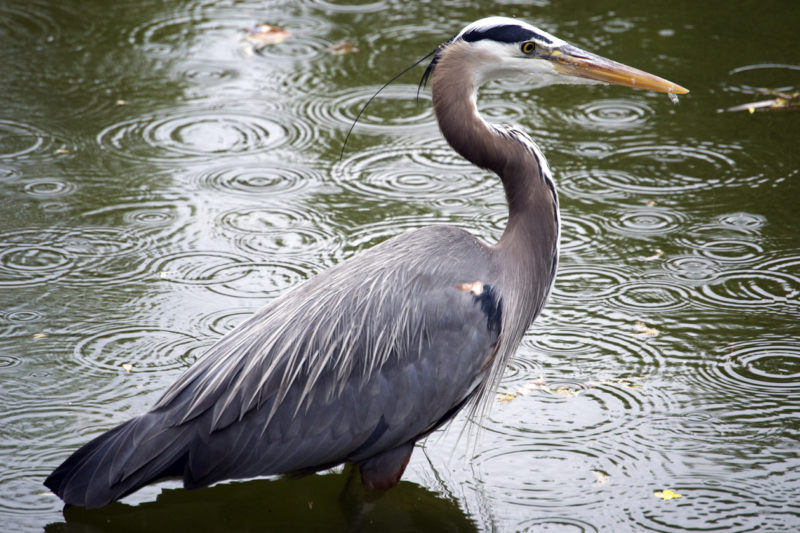
Ardeidae is the family name of those long legged waterbirds: herons, egrets and bitterns. Herons are beautiful birds. They come in different colors and sizes but all have amazing plumage. Their movements are elegant, on land and in flight, with an economy to their motion, an ease and fluidity. When the light hits just right they are almost iridescent. And they are pretty peaceful, quite unflappable.

To wit, here’s an encounter I photographed last week while standing on a shaded bridge in the woods.  The red-winged blackbird was sitting on the log, probably close to the reeds where his mate is nesting. When the heron decided to join him, the blackbird wouldn’t have it. He flew wildly around, eventually pecking at the heron, then in exasperation sitting next to him for a while as if he could prevent him to move. Eventually the heron gave up and stepped into the pond, searching for lunch.


Unfazed, as I said. Regal in their indifference. Beautiful.


Except when they open their mouth, or their beak, as the case may be.

Taken in the evening, low light made it hazy…..

Have you ever heard a heron’s voice? It is as ugly as their appearance is pretty. Squawks of such shrill and loud discordance will want you to cover your ears if you are close by. The mismatch between what you expect to hear and what fills your hearing reminded me of this.  Enjoy!


Shore Birds

Will it surprise you, dear Reader, to hear that I sometimes have a vivid imagination? Most of the time, to be honest? It happened again last Sunday when I wandered, by myself, along the coastline of Ft. Stevens.

The Fort, and its adjacent hundreds of acres of National park, guards the spot where the mighty Columbia river enters the Pacific. It was constructed in the 1860s to provide a defense for the Oregon Territories. After the Civil War, the Army Corps of Engineers took over to improve the Columbia River Channel; around 1900 the building of a true defense installation began; luckily the soldiers at the Fort never engaged in active combat even when shelled by a Japanese submarine gun in June 1942 – since they incurred no damage they decided not to fire back. Wise men. (Won’t point out the contrast to you know who.)

History

So here I stood on land that was the sea when Lewis&Clark arrived in 1805 or so. The building of a long jetty had helped to wrestle almost a mile of land from the ocean. Behind that dike now lie salty marshes, ideal breeding ground for shore birds.

On the jetty itself sea gulls, crows, and, astonishingly, swallows jostle for the best space.

There are so many old, decaying wooden structures left from the heyday of the Fort that the swallows have an ideal breeding ground.

Numerous species of ducks, cormorants and other sea birds swim in the ocean, sand pipers roam the beach and sanderlings flit about.


My imagination? I saw the birds as merry carriers of the many souls lost at that very spot: the dangerous waters where ocean meets river provided one of the largest grave yards of the Pacific – more than 200 ships went down there with few lives rescued. The birds, however, soar and float and careen above the watery graves, looping through shimmering rain and eventual some rays of sun.


My heart shed some weight.


PS: On a practical note: The park is only an hour and 40 minutes from Portland. It has a museum, lakes to swim in, various beaches, an old shipwreck and perfect hiking paths for day trips. One MUST, however, bring sturdy boots because climbing around the jetty is extremely slippery. In the summer, insect repellant is also essential or you get eaten alive in the woods there.

In Need of Cheer?

The goldfinch it shall be…..captured year-round in places near Portland.

At Least 47 Shades

The goldfinch in its full spring molt.
The bee pollen of sticky and thick.
The quince to perfume a new bride’s kiss.
The ocher yellow in Vermeer’s pearl-necklaced woman.
The opal cream floral on a kimonoed sleeve.
The zest yellow of a Nike Quickstrike in limited numbers.
The imperial yellow embroided robes.
The Aztec gold send by Cortés to Spain.
The Zinnia gold favored by butterflies.
The iguana who keeps watch on Mayan ruins.
The straw hat a cone woven with young bamboo.
The rising sun of Japan’s Amaterasu leaving her cave.
The sand dune that swallows the film’s lovers but keeps them alive.
The coastlight of sun lost in fog.
The chilled lemonade from the fruit of bitterness.
The Manila tint to sunny the laundry room.
The blond and boring heartthrob.
The yellow flash before the grin gets too tight.
The lemon tart with a mouth to match.
The star fruit which can mean two-faced in Tagalog.
The fool’s gold of sojourners and farmers.
The golden promise that still lures us here.
The sunshower which turns my tawny skin brown.
The banana split of Asian outside white underneath.
The Chinese mustard stirred with a dribble of soy sauce.
The yellowtail tuna father cleaned and sliced thin.
The yolk we ate raw with sukiyaki and rice.
The pear ice cream we licked that Tohoku summer.
The moonscape suffusing a rice paper screen.
The theater lights which make the audience vanish.
The electric yellow called Lake Malawi’s yellow prince.
The daffodil that doesn’t match these mean streets.
The marigold for night sweats and contusions.
The summer haze which splits open the sky.
The slicker yellow bands on those 9/11 jackets.
The dandelion that bursts through sidewalks.
The blazing star we still can’t see rushing toward us.
The yellow rose legend of a Texas slave woman.
The atomic tangerine of Los Alamos, New Mexico.
The Jasper yellow of gemstone and James Byrd.
The flame yellow as bone turns to ash.
The wick moving in time with my measured breath.
The first light an eye latches on to.
The whisper yellow as a pale strand of moon.
The yellow lotus that’s nourished by mud.
The poppy spring returns to the Antelope Valley.
The wonderstruck even in those old eyes.
The Chinese lantern riding a night sky.
The sparkler a child waves in the dark.

by Amy Uyematsu
from The Yellow Door
Red Hen Press, 2015

.

I did it – 3 full minutes without thinking of that dismal orange hue…