Browsing Category

Bird Photography

Papageno

One way of cheering myself up when I am about to sink into a prolonged period of the doldrums, is to look at how other people created art during difficult times. It is pretty amazing how many insanely talented people were out there – and productive – when fascism, war, and displacement ruled the day. A reminder that it can be done, with the requisite discipline and defiant attitude.

One of them who you have probably never heard of before, was Lotte Reininger (June 2, 1899 – June 19, 1981) who lived and worked in Berlin until she and her husband left in late 1935 to escape the Nazis. From then on they stayed in multiple European countries as long as their respective visas allowed, with a short interlude to care for her ailing mother back in Berlin, promptly being forced by the Nazi regime to help with their propaganda machine. Eventually she settled in England and became a British citizen in 1961.

Reininger, a writer, director and film maker, was friends with numerous notable artists of the time, Bertholt Brecht and Benjamin Britten among them. Her main focus, though was on making animated films with shadow silhouettes (Scherenschnitt) and a first form of a multiplane camera that she devised in 1923. They were strange films, some short, some feature lengths, with topics ranging from fairy tales, to operas, to parodies, with the occasional advertisement to make some money.

Her films were successful for their novelty and their strongly erotic atmosphere, but many of them had so many references to classical music and/or literature, that a less educated public did not exactly get all the action, irony or satirical jokes. They are genuinely fascinating, craft and creative content alike. They are playful, and integrate a number of cultural markers from different countries, referencing western and non-western art alike. The idea that all of the intricate detail was cut by hand and assembled, a century before AI where something akin could be devised in a minute, is mind boggling to me.

She pioneered “paper and cardboard cut-out figures, weighted with lead, and hinged at the joints—the more complex the characters’ narrative role, the larger their range of movements, and therefore, the more hinges for the body—were hand-manipulated from frame to frame and shot via stop motion photography. The figures were placed on an animation table and usually lit from below. In some of her later sound films the figures were lit both from above and below, depending on the desired visual effect. Framed with elaborate backgrounds made from varying layers of translucent paper or colorful acetate foils for color films, Reiniger’s characters were created and animated with exceptional skill and precision.” (Ref.)

I chose one of my favorites, Papageno, for you to enjoy.

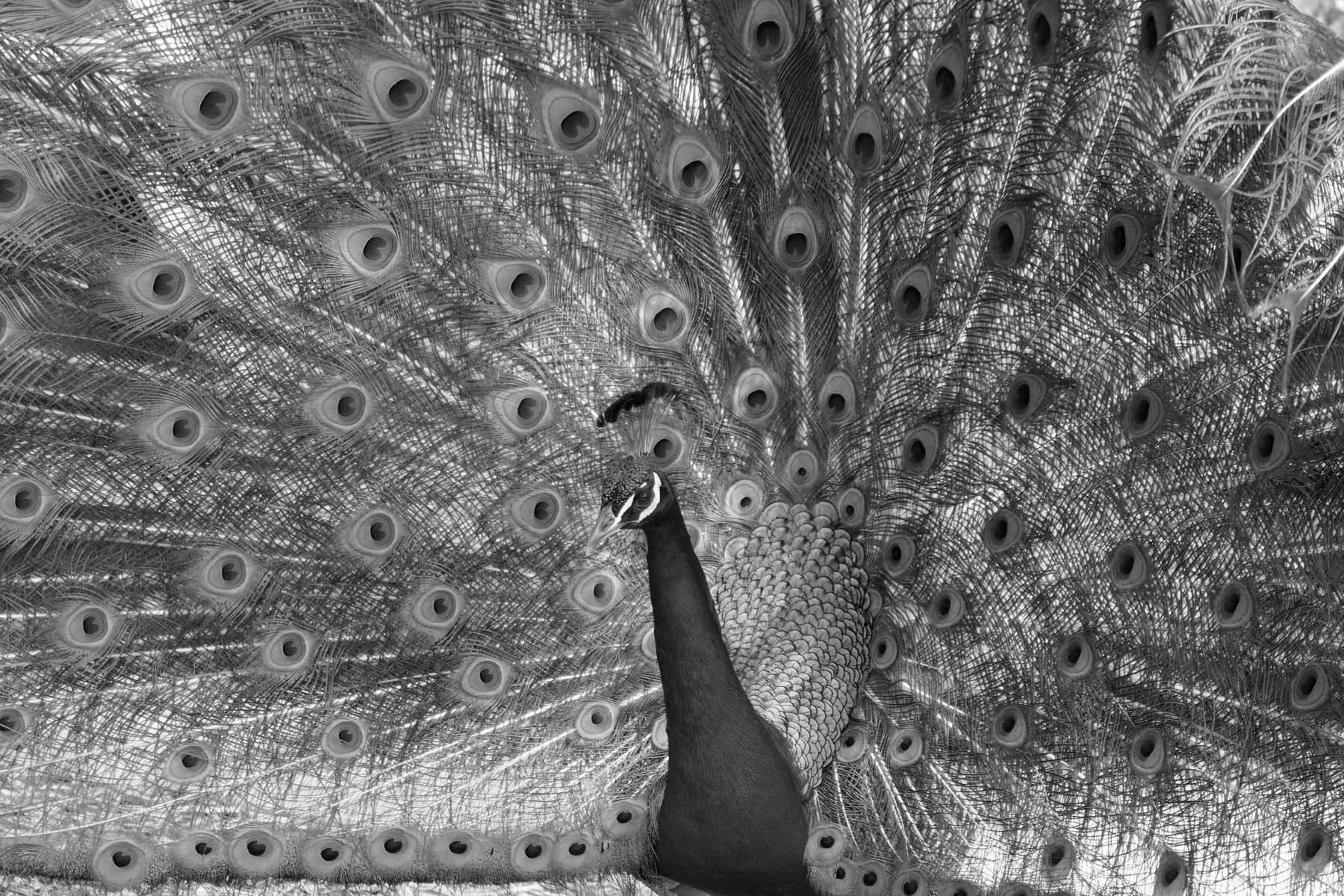
It uses a number of tropical bird silhouettes, some almost looking like squirrels, some parrots, some emus. So I thought I’d dig out photographs of something semi-exotic, the lovely peacock. The music and the references to Mozart’s opera are self-explanatory.

If you want to enjoy the whole opera, here is a link to a 1971 Hamburgische Staatsoper production that I actually saw live. Man, I’m old.

And here is a link to a 15 minute overview of Lotte Reininger’s genius, produced by The Met.

If you interested in the art of paper cutting, here is an overview essay, that describes different ways of doing it and their historical and geographic origins, from China in the second century AD to Aztecs in Mexico, to Ashkenazi Jews in the 17th century. Scherenschnitt, cutting with scissors, as used by Reininger, was likely developed in Switzerland and then Germany in the 1500s. Pennsylvania Germans brought it to the US in the 1700s.

So, if this miserable weather does not allow for photography, maybe I should grab a pair of scissors. Or not. Too tempting to use it as a weapon, given my mood and the politics du jour…. so maybe watercolor instead.

Down // Up

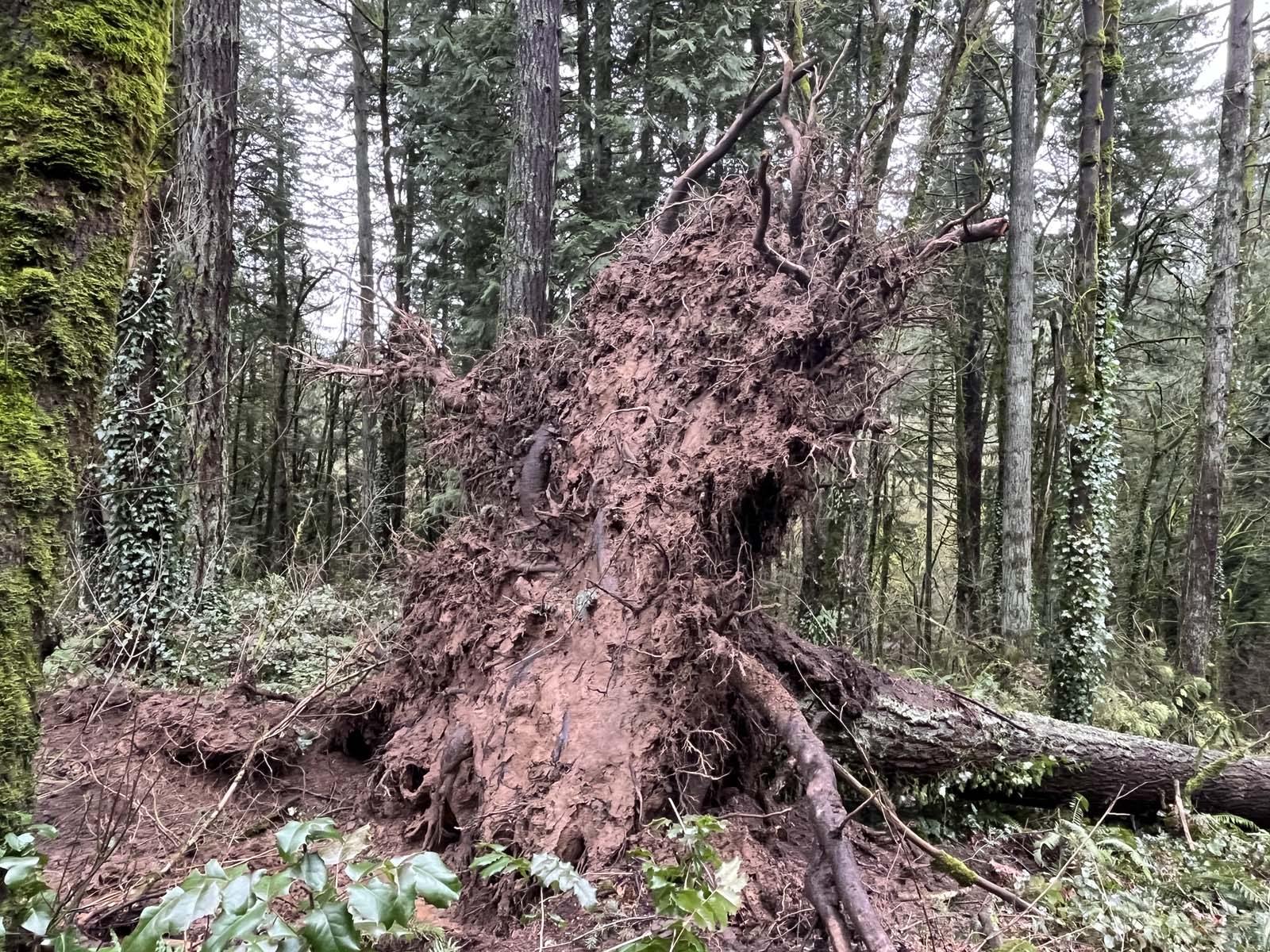
Climb with me over the fallen trees in my immediate neighborhood, the park where I walk every day. Sink your boots with the most delicious sloshing sounds into the mud of the holes that the root balls left, and once again realize the power in nature. Bringing it all down.

Several speculations have been making the rounds why this particular ice storm did so much damage, and the given reasons probably overlap or interact. For one, the drought of the last several years has really stressed the trees and their root system. Secondly, the heavy rains in late fall saturated the ground, leaving the roots in unstable earth. Lastly, the storm that arrived two weeks ago had winds with gusts of up to 60 mph, winds that spiraled for some reason, encircling the trees, rather than swaying them back and forth, which apparently has more power (with even higher speeds those would be tornadoes or hurricanes, with a rotating function.) The ice then did the rest, its weight on the trees felling those that were unstable.

Hundchen not so sure about all of this

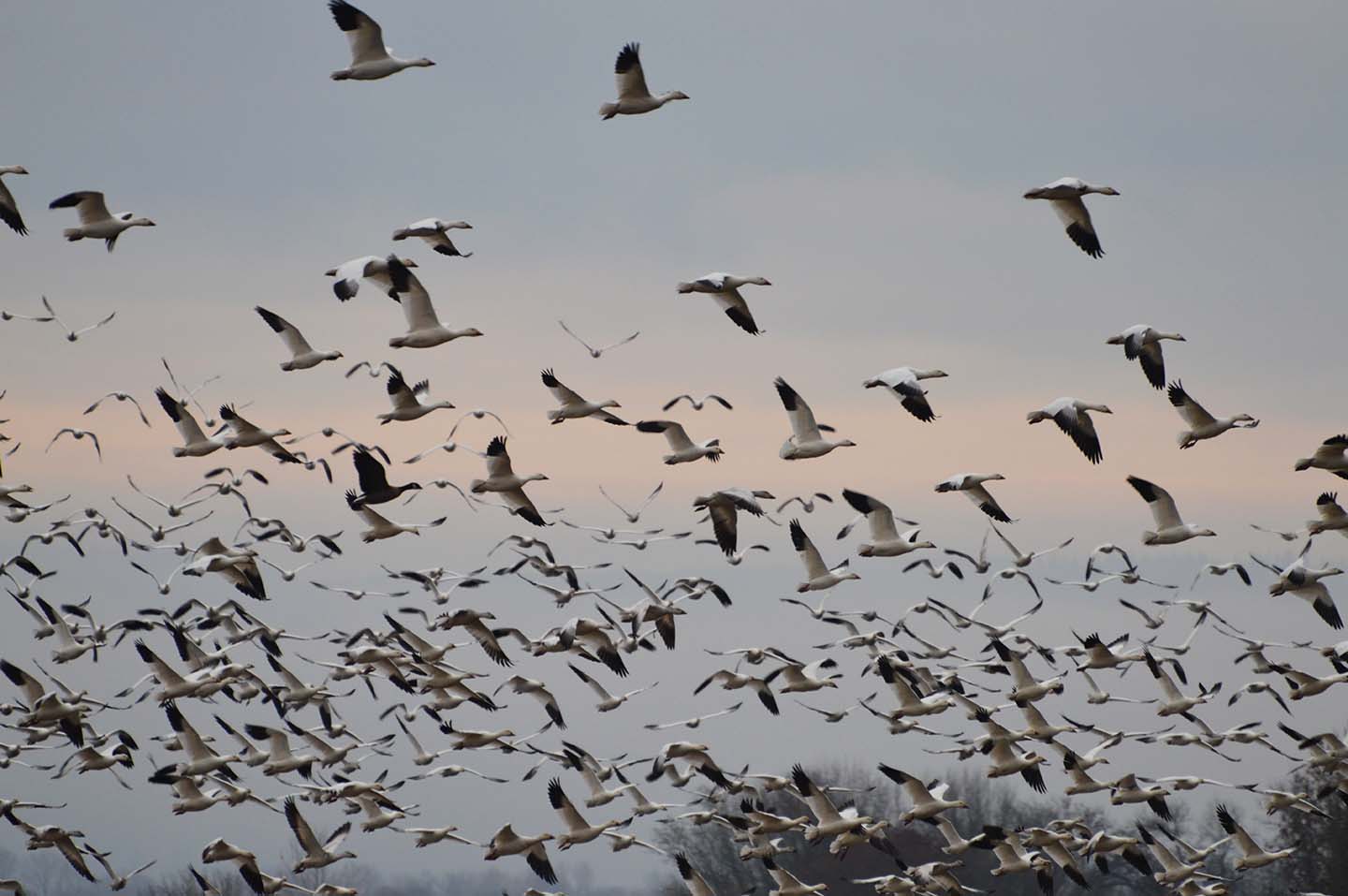
For counterbalance, here are a few of the soaring creatures that I photographed on Tuesday – with some others thrown in from previous January/February visits to Sauvie Island, just to marvel at the diversity of migrating visitors. Up they go….

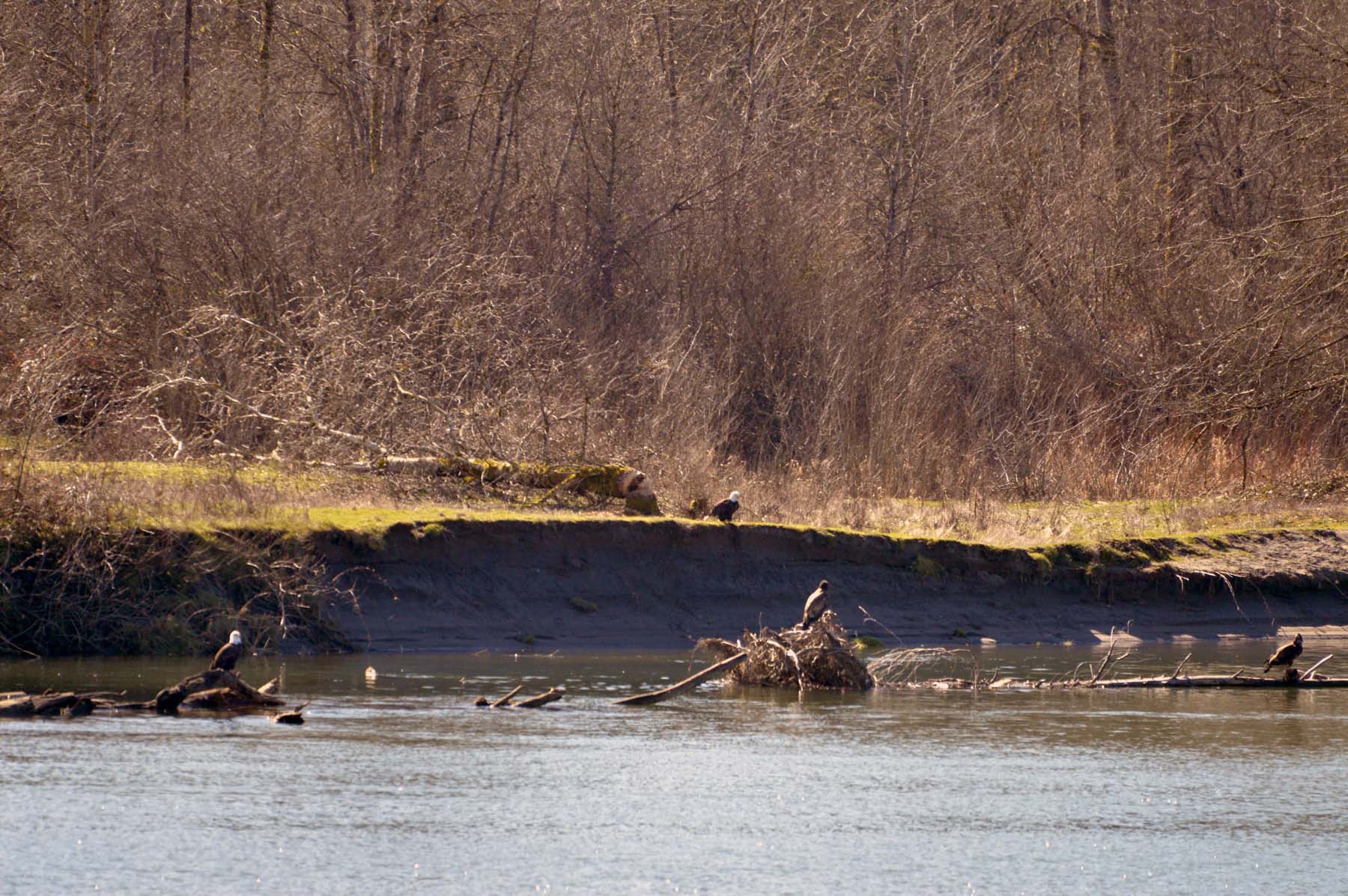
Pelicans, Geese, Swans, Sandhill cranes, buzzards, kestrels. And then there were the bald eagles, cavorting, resting, chasing each other again, and finally getting some lunch.

That really is all for today, I simply do not have much stamina after these outings. But I do have an up & down song by Blood, Sweat and Tears from a looong time ago……

And since we’re already on memory lane, here is Earth, Wind and Fire I guess all we’re missing is the ice that the storm brought.

Winter Ponder Land

When you are iced in for pretty much a full week, as we were last week, there is a lot of time to ponder disaster scenarios.

If 200 ft (61 meters) sequoias topple in your yard (sparing your house with a stroke of luck, while many others in the Portland area saw their houses destroyed or even human life taken) your vulnerability becomes even more the center of attention.

Several trees came down, this the largest – about half of it in view here.

When you have no power for 4 full days, as we did during temperatures in the teens, you focus on what can be done during even worse scenarios: the mega earthquake that is looming on the time horizon for the Pacific Northwest.

I am talking about all this for another reason as well: somehow the prolonged shut-in has also frozen my brain, and so I have no capacity to write about something more interesting. Humor me then with reading a few suggestions for disaster preparedness, and store the links to more detailed instruction for a time when you have room and interest to act on them.

Wrens in action (Zaunkönig)

The most essential needs will be water, food and warmth (See the FEMA instructions for quantities, per head.) Energy bars will do for a few days if you have no means to heat up other dried food. If you have pets remember some emergency rations for them as well (and have a sticker at your door that informs rescue personnel what animals live in your house – they can be ordered on line.) Camping stoves will be useful if a major disaster cuts you off for weeks on end. (And yes, I realize, it is hard to stash all that stuff if you live in an apartment.)

Robins (Rotkehlchen)

Having a bag that contains solid shoes, a change of warm clothes, basic toiletries, first aid kit and some spare meds that are essential, water and energy bars, is helpful if you need to leave for a shelter in a hurry. Flashlights that wrap around the head are useful since they keep your hands free. Include a whistle, so search teams can find you. Matches or lighter. Stash in it photocopies of your drivers license, your insurance name and number, and your prescriptions for medications. Spare power blocks and charging wires for your cell phone should be included.

Thrushes (Drosseln)

If you can stay in your (damaged) house, a cheap tent and sleeping bags come in handy to preserve body heat. We stayed warm(ish) this week and had no water pipes break because we have a wood stove in the basement that heated the adjacent area and kept the house overall in the 40s. Having a crowbar available helps with earthquake debris. A fire extinguisher is helpful.

Sparrows (Spatzen)

Here is the FEMA safety preparation booklet.

Here is a website that offers the FEMA recommendations, with a few highlights for preparing the house/apartment, some relevant links for insurance and building codes, and a detailed listing of the risk to the PDX neighborhoods where we live.

Junkos and Towhees (Winterammern und Grundammern)

This week was a reminder that nature should never be underestimated. And now I’ll go and check out ads for generators…..

Photographs are self explanatory.

Chickadee (Kohlmeise)

Let’s make the music equally melodramatic as the weather: Sviridov’s Snowstorm.

Schwanengesang

· (Biological) Swansong ·

The silver Swan, who living had no Note,
when Death approached, unlocked her silent throat.
Leaning her breast against the reedy shore,
thus sang her first and last, and sang no more:
“Farewell, all joys! O Death, come close mine eyes!
“More Geese than Swans now live, more Fools than Wise.””

Orlando Gibbons The Silver Swan Madrigals & Motets 1612

Walk with me. In the wetlands, before the intense cold, predicted for the days to come, is settling in. The air is damp, a grayish blue that intensifies all the yellows and oranges around, the bark of the willow bushes, the buds of the hazelnut trees. (And also makes it very difficult to photograph birds in flight as you will see below.)

A dreamy landscape, with occasional glimpses of the sun trying to break through the cloud cover

Herons and egrets drying off and combing for morsels, respectively.

Bald eagle on the look-out.

Some geese,

lots of duck action, ducks unknown to me,

some happily (?) planning for future ducklings…

The silence, only occasionally interrupted by their flapping wings, or splashing water, is shattered when a wedge of swans appears overhead in flight, calling loudly.

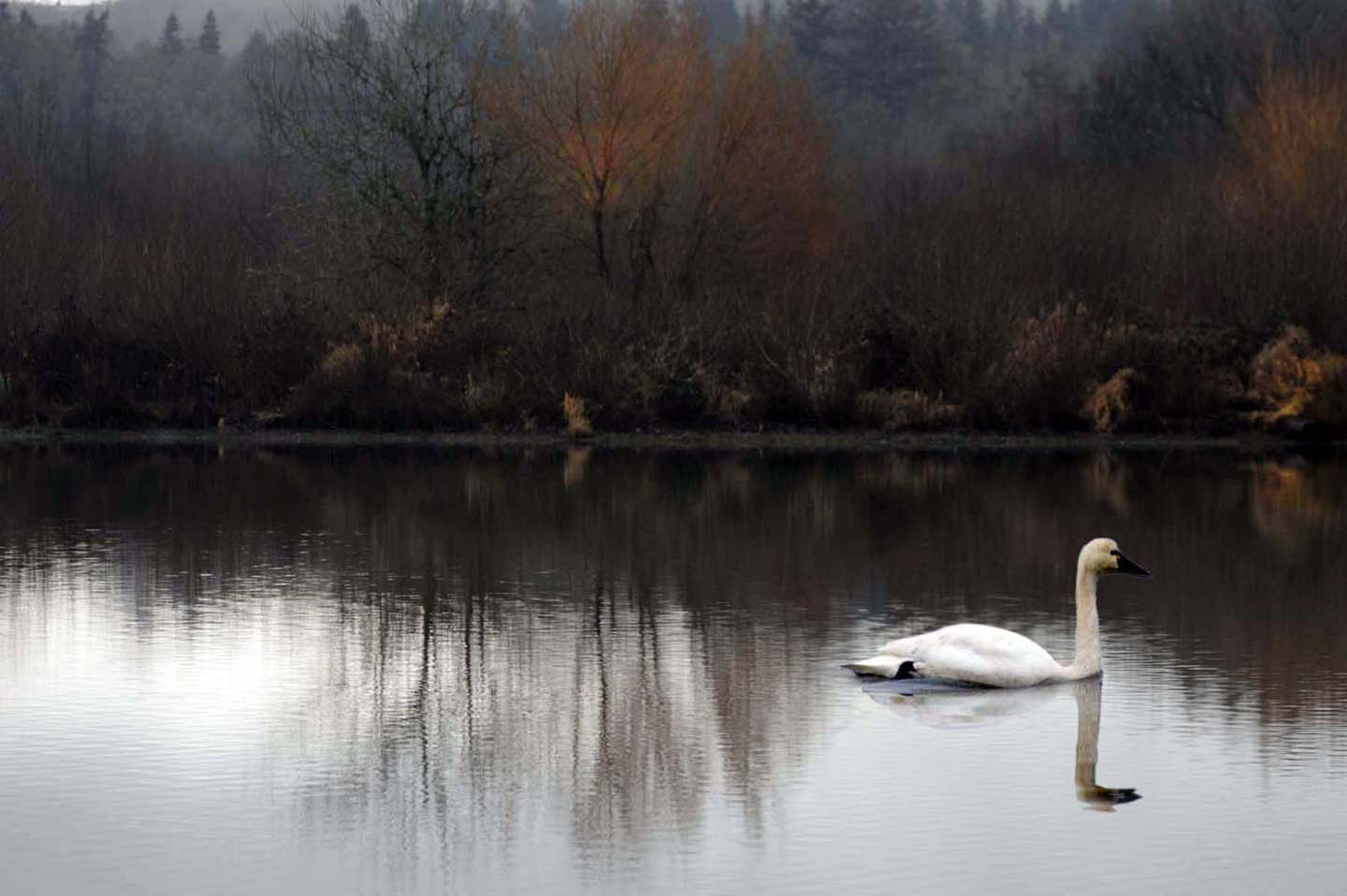
A sight to behold! These are Tundra swans (Cygnus columbianus sometimes called Whistling swans)), recognizable by their black beaks and slight yellow streak around their eye (I could only see that with the single one I caught close on camera, while swimming.) They are native to North America and we can see them in winter when they fly over Oregon, foraging here in our wetlands.

These swans are monogamous and mate for life (they can live for more than 20 years), breeding once a year in the tundras of Canada and the Alaskan arctic. Come autumn, they merge in groups of up to 100 birds to fly south. The journey covers 4000 miles, flown at an altitude as high as 26.000 feet and with speeds up to 60 mph! Their biology is all about making this flight possible: bones are hollow and there are fewer of them compared to mammals; their breathing systems is adjusted in multiple ways – (during flight birds need to breathe up to 10 times faster to enable sufficient oxygen to be delivered to the muscles. All of these details, btw, I found here.)

The lungs have far more tissue density so that more blood can flow through them for oxygen exchange. Their breath flows in one direction only, entering on one path, exiting on another, enabling lots of volume to flow through in a steady stream. Their windpipe, the trachea, is different from ours’ as well – as you can see in the picture, it has coiled loops at the end, rather than going straight into the lungs.

“Why is she blasting me with all these details?” you might wonder. “Do I really need to know tundra swan anatomy?” Well, you might want to if you are interested in the genesis of the phrase “Swansong,” a phrase commonly used to describe the last output of someone before their stage exit or death, often heard in the context of famous artists showering us with brilliant work at the end of their life. (In fact, music today is Schubert’s collection of songs titled Swansong, published posthumously.)

OK, maybe Swansong is not on the forefront of your thoughts either, but it really is an interesting bit of lore – or, as it turns out, a biological fact.

Throughout history, swans have held a special place in mankind’s imagination. Tons of confabulation revolves around them, from the Greek fables to Norse mythology to the European fairy tales of the 19th century. (Details can be found in this essay, which was also the source of today’s entry citation.) One of the lasting assumptions across cultures was the claim that swans are pretty much silent or mute throughout their life time, and only sing beautifully at the point of their death. Some smart cookies, like Pliny the Elder, were already critical of that observation in CE 77, but the belief would not die. Da Vinci noted it, as did Chaucer, Shakespeare, Tennyson and Coleridge, to mention just a few.

Here is the deal: swans are not mute during their lifetime. But it is also true, that due to the nature of their coiled trachea, they emit a series of long, plaintive tones when their lungs collapse during death and the air gets pushed through the windpipe, probably the base observation that started the legend.

Now where the other piece of persistent lore originates – swans are maidens, who shed their feather coats at night to bathe in the lakes and can be trapped if you steal the plumage – remains a mystery not yet solved by naturalists…

For those less inclined towards biology and more interested in art: Here is a truly terrific collection of 44 art works centered on the myth of Leda and the Swan. The author did an amazing tour de force from Michelangelo to modern photography and everyone in between, with helpful description and discussion of each piece. Really worth a read!

The Pear Tree revisited.

I figured I’d offer some reassurance at the beginning of 2024: YDP will be as eclectic as ever, as haphazard in what gets picked up and woven in with the rest of what fills my brain, so that you can rely on at least one thing remaining the same in your lives.

For a start it’ll be some thoughts by the Italian Marxist Antonin Gramsci, a poem by Ruth Awad, a Lebanese-American poet who is also a tattoo artist and an insurance manager who collects rescue Pomeranians, and some views of my pear tree. How is that for a mix?

House Finches

Regular readers are familiar with the pear tree, and its neighboring hawthorn tree, seen from my chair where I hang out when my body – what else is new – vetoes the plans for various hikes and outings yet again. It is where I found myself last week, amazed at the variety of birds who kept me company this late in the season, a humming bird included.

Anna’s Hummingbird

It gave me time to reread Gramsci, in particular his apropos musings on (not) celebrating the New Year. I don’t share his sentiment of hating the occasion, although I don’t love New Year’s either. At my age, frankly, one of the thoughts that is inescapable when you are feeling lousy and the numbers change from ’23 to ’24, is personal: will this be the year I die? After all we lost a lot of friends this year – here is an Oregon ArtsWatch list which included a mirror photograph I took of Henk Pander during our Mutual Portraits project, a close friend enormously missed.

But Gramsci sets me right in the rest of his one page-proclamation: you want to focus on continuity and spirit, not on breaking points and final balances, filled with resolutions that you will not keep.

I want every morning to be a new year’s for me. Every day I want to reckon with myself, and every day I want to renew myself…..I would like every hour of my life to be new, though connected to the ones that have passed.”

Song Sparrow

In one of the stranger deliberations I’ve read in a while, he also hopes for the arrival of socialism in order to jettison the celebration dates handed down by the ancestors. I guess it would give us something to talk about, shared hopes for differing reasons….

Thrushes

Not so sure what I would talk about with today’s poet, Ruth Awad, whose work, as far as I’ve read it, lacks the balance of emotionality and intellect that I so crave. If that sounds condescending it is not meant to be – there is much to be said for the offerings of the Ruth Awads or Maggi Smiths of the world, embraced by contemporary readers for their accessibility and courage to be sentimental. If it keeps an interest in poetry alive, so be it.

I mean it.

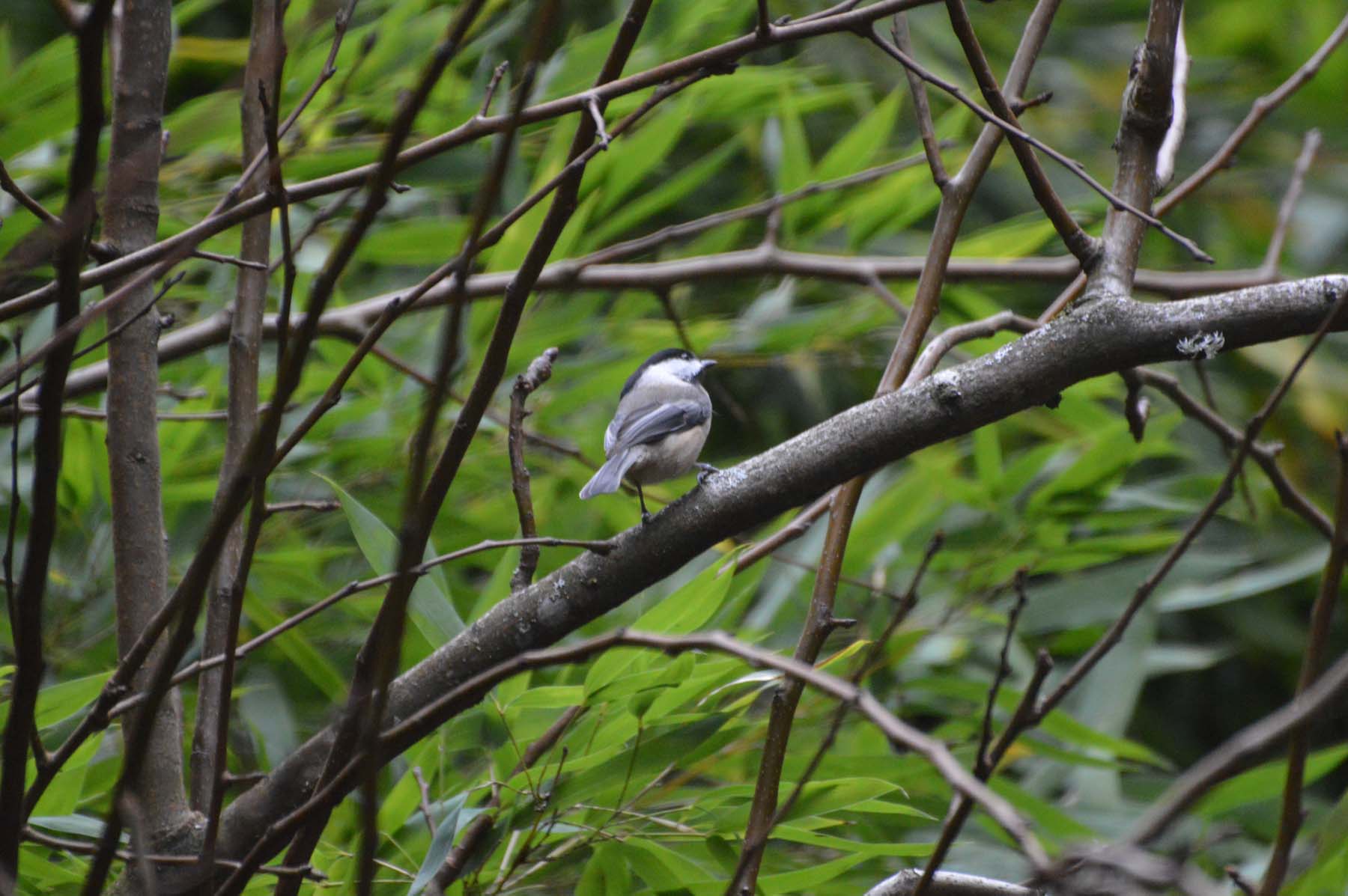
Black capped chickadees

The poem below, published in The Atlantic at the end of the year, drew me in, though, for one specific sentiment, expressed in the last words:

“…if only you’ll let he world soften you with its touching.”

To let the world soften us, or even better, to comfort and fill us with occasional awe at a time when we tend to harden from fear and/or sorrow, we have to attend to it. The “world” is all around us, easily, constantly available, no extravagant or even local excursions needed. You just have to sit and look, birds perching in the pear tree, reminding us of an existence not governed by dates, or resolutions, just renewal from hour to hour, here, now, in 2024.

Gramsci’s theory of Hegemony, a strategy of power pursued through cultural work, can wait. So can my knitting. Or folding the laundry. I just look at the birds. It is healing.

White crowned sparrow

Reasons to Live

Because if you can survive
the violet night, you can survive

the next, and the fig tree will ache
with sweetness for you in sunlight that arrives

first at your window, quietly pawing
even when you can’t stand it,

and you’ll heavy the whining floorboards
of the house you filled with animals

as hurt and lost as you, and the bearded irises will form
fully in their roots, their golden manes

swaying with the want of spring—
live, live, live, live!

one day you’ll put your hands in the earth
and understand an afterlife isn’t promised,

but the spray of scorpion grass keeps growing,
and the dogs will sing their whole bodies

in praise of you, and the redbuds will lay
down their pink crowns, and the rivers

will set their stones and ribbons
at your door if only

you’ll let the world
soften you with its touching.

by Ruth Awad

Chestnut backed Chickadees

Music today is conducted by a guy named Birnbaum – pear tree – the enchanting second movement of Schubert’ Symphony #8, the Great.

Here is the full version with a different orchestra, Mallwitz conducting.

Nuthatch

Mothers and Daughters

Walk with me. No, scratch that. Stand with me. Because that is what I have been doing, standing, ever so slightly frustrated, at the edge of flooded roads, hiking paths, and wetlands, with no way in. This is what the start of the rainy season looks like in Oregon. By February, if the winter has average amounts of precipitation which you never know these days, it will be worse.

Still plenty of landscape, fall color and birds there for appreciation. Photographs from 3 outings combined across this week. The herons and egrets sure loved the flooding.

Happy to have you around today, particularly the literary types, since I need help to understand something. A title that I have trouble with, of a poem by Andrea Cohen that was first published in 2012 in the ThreePenny Review. I rather like it and think I’ve have a handle on it overall, if not the issues it raises. Yet, the title???

The Committee Weighs In

I tell my mother
I’ve won the Nobel Prize.

Again? she says. Which
discipline this time?

It’s a little game
we play: I pretend

I’m somebody, she
pretends she isn’t dead.

—Andrea Cohen

The waterway on the left is a footpath, usually!

A seeming interaction between mother and daughter ends with the revelation that the mother is no longer alive. With that new perspective we understand that an issue of self-worth, expectations, and appreciation (or lack thereof) continues to be salient for the daughter even after the source of those sentiments is no longer around.

It begins with achievement and why not go for the top of the heap, the Nobel Prize. Will receiving the prize satisfy a parent? Will receiving it for the umpteenth time make a difference? No word of praise, no explanation of delight, no pride expressed towards the achieving daughter. Just a matter-of-fact question about the discipline, as if to check that in the hierarchy of the Nobel you’ve climbed the ladder. Maybe physics is more important than literature, maybe the Peace Nobel Prize is the epitome? Is anything ever enough?

That sense of having to perform, yearning for acknowledgement is so ingrained that the game has to be played with an imaginary parent, or one that only carries on in one’s imagination, in perpetuity.

Duckies!

One the one hand, it is scary to think that we, the parents, who inevitably have messed up across our children’s life time, will have made such an impact that it cannot be shaken, even if that impact is based on perceptions that don’t need to be entirely true. Maybe our children assumed us to be much more demanding than we actually were or meant to be.

Goldfinches

Brown creeper and downy woodpecker

Flicker

On the other hand, it is frightening that we, the children, will never be free of these psychological binds, conjuring our parents up in endlessly empty gestures of imagined appeasement. And then encounter repeat performances of lack of appreciation. In essence telling ourselves in this inner monologue/dialogue that we are simply never good enough.

This image has an empty alt attribute; its file name is DSC_0045-2-1024x681.jpg

But then again, maybe the desire to please speaks of love, of a connection that we thought would hold if we are mutually recognizing players. The poem certainly gives agency to both, daughter and mother, in the sense that both are presented as “pretending.” Yet the expressed sense of inadequacy, framed by a mother’s refusal to recognize, overshadows, for me everything else.

Or maybe it all means something completely different, what do I know.

But who is the committee that weighs in? Nobel prize is associated with committee, but don’t we assume “weighing in” refers to the current vignette of mother-daughter interaction? Is she awarded a prize for keeping the memory of her mother alive, warts and prior hurt and all? Help me out!

Turned color of blackberries, hazelnuts, wild currants, hawthorn and dog roses.

Here are some comforting thoughts about remedying what we’ve wrought, (or at least acknowledging that sometimes remedy is necessary,) words encountered in a post by a friend of LeGuin’s:

I think that when I die, I can breathe back the breath that made me live. I can give back to the world all that I didn’t do. All that I might have been and couldn’t be. All the choices I didn’t make. All the things I lost and spent and wasted. I can give them back to the world. To the lives that haven’t been lived yet. That will be my gift back to the world that gave me the life I did live, the love I loved, the breath I breathed.”

~Ursula K. Le Guin

(From: The Other Wind)

Fish for lunch…

Music today is a sweet debut album of a young singer, Kara Jackson, who reminds me of Joni Mitchell half a century ago. The topics, if you listen closely, are very much concerned with self worth, fearing or defying expectations set by society, struggling as a woman to find her own personae. But there is also a song about the loss of a loved one (unfortunately over-orchestrated/ Why does the earth give you people to love) that is quite moving.

Views from the Road – from Amusement to Awe.

40 years ago on this day my mother died suddenly and unexpectedly. I was a continent away and had to scramble to get home for the funeral. I thought I’d never get over the grief. I did, though. Whatever deep-seated sadness remains is certainly more than balanced by the gratitude to have known unconditional love and been given gifts galore: an interest in all of what the world has to offer among them. She was an intrepid traveler, and nothing escaped her eyes, no matter how mundane. Her moods could swing from amused to serious to fearful to exuberant in the shortest amounts of time and I see myself in that as well.

Mt. Shasta with no and very little snow 6 weeks apart. New crops planted now that rain has started.

Fall colors have arrived.

And frost once you crossed back into southern Oregon.

She would have enjoyed the roadtrip that brought me to L.A. and back, all 3.400 kilometers in a small car, with frequent stops to take in roadside attractions. She loved to drive, as do I, which is a blessing since I can no longer fly. She would have exulted in meeting the newest generation, named Lina in her honor, who will perhaps – hopefully – see the world with the same wonder as her predecessors.

Same view from a slightly different angle 6 weeks apart – beginning of October, end of November, pains now flooded.

Today’s photographs are selected to describe the range from amusement to awe. Here is the absurdity of a Potemkin village mimicking a Western town, a playground for children adjacent to a diner off of I 5 near Kettleman City, with Bravo Farms proudly displaying their collection of old signs, surely ignored by the kiddos who are overly excited to be released from the confines of their carseats. (Be warned: inside the restaurant, it is a zoo, with shooting arcades and proud display of gun imagery, overpriced and greasy pulled pork sandwiches, and noise levels that aim to deafen your remaining hearing capacity.)

Maybe they should reconsider their choice of beverage?

The second set was taken at the Sacramento National Wildlife Refuge. On my way South the first white chested geese had arrived.

On the way North, 1000s of Ross geese had reached their destination, ready to stay in California for the winter. Seeing this abundance of beauty is one thing, hearing it is another – the sounds are indescribably moving.

I picked today’s music accordingly – migrating swans and other birds can be heard in the background.

Mud hens congregate in front of the geese

And since that was the only serious piece I could find on migration, there is another Swansong , Schubert’s Ständchen transcribed and transformed for piano by Liszt – one that was played by my mother at bedtime, right below my room. Love is nigh.

A Curtain of Clouds

Walk with me. Make sure you bring the rubber boots which I, as per usual, forgot on Monday.

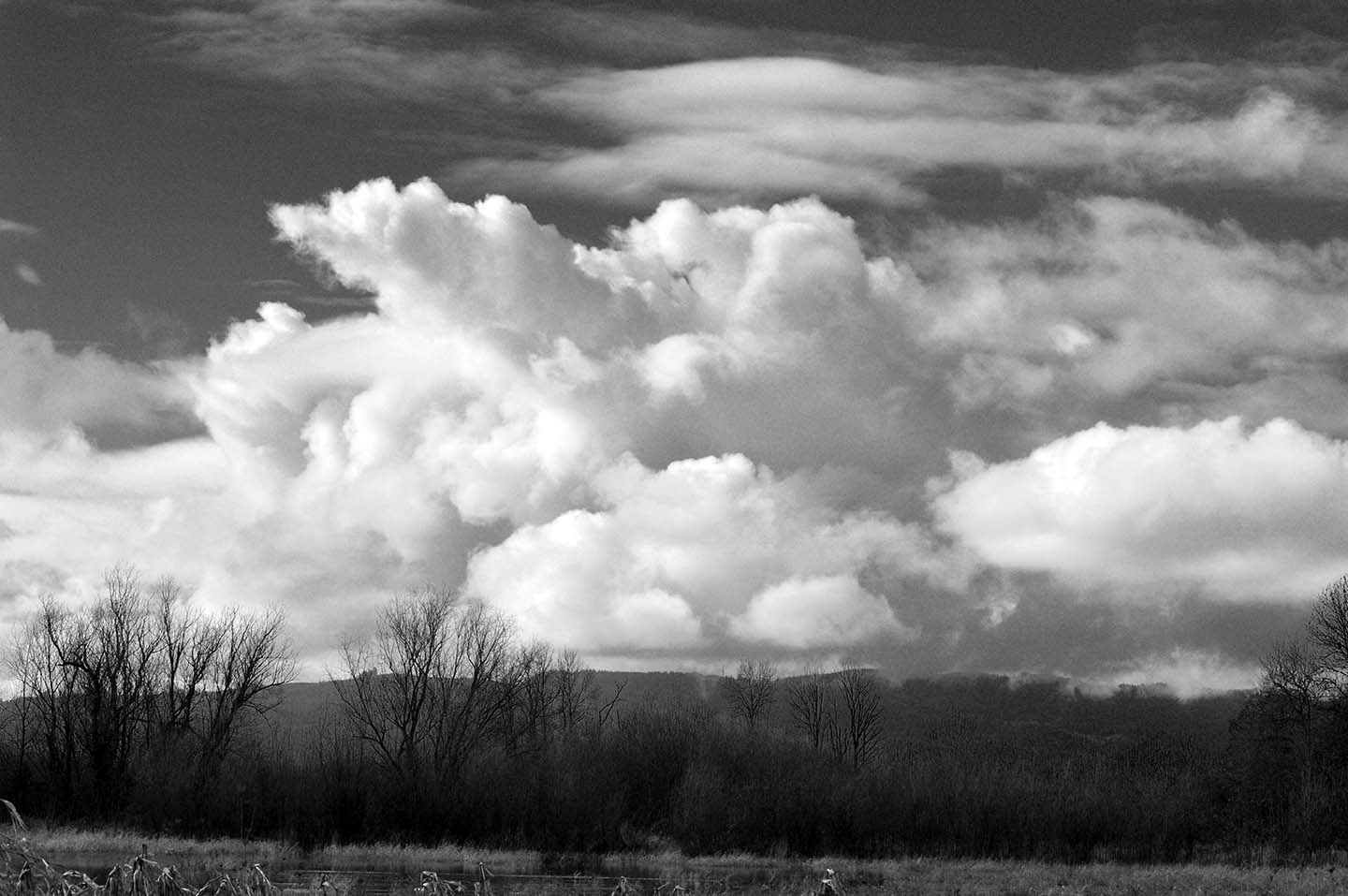
It was a spectacularly beautiful day along the Columbia river, with cloudscapes encouraging all kinds of fantasies and re-interpretations. They also made you wonder what would appear if you lifted them. Were they hiding Mt. Hood, or Mt. St. Helens, or would a peek of Mt. Adams appear? Those speculations relied, of course, on the general knowledge that those mountains are situated in the approximate location you were staring at.

What happens when you lift clouds without having the faintest idea what the background will reveal? Pleasant surprise, useful information, or a wish they’d hung in the air forever given what you discover?

These thoughts were rumbling since I had just read a fascinating new paper by two Yale psychologists, Woo-Kyoung Ahn and Annalise Perricone. In essence their research looks at the consequences of providing genetic information to people, information concerned with their potential susceptibility to mental disorders like depression, Alzheimer’s disease, alcohol abuse or eating disorders. (I’m summarizing below.)

Would you like to receive that information? Hand it over, hey, all knowledge is good! Allows for personalized treatments, specific interventions! What could possibly go wrong?

A lot, as it turns out, and not always what you’d predict. Information can harm you, and curiously enough, both the kind of information that confirms genetic susceptibility to a disease or its opposite, the reassurance that you don’t have the genes that might contribute to a problem.

Let’s say you learn that you have an elevated genetic risk of living with depression. Would you change your behavior in ways that might affect the emergence or severity of the disease? As it turns out, people generally don’t. That failure to do so is closely connected to our general misunderstanding of how genes work: most of us think they are immutable, that we can’t change anything about their expression. “Genes are destiny,” is the assumption. This mistaken belief is called psychological essentialism, where genes are believed to provide the essence for the characteristics observed in a person. Take height, for example. People tie a person’s height to their genetic make-up – never mind that an environmental manipulation, the absence of presence of sufficient nutrition, can stunt growth in any given individual.

Now add prognostic pessimism, our general belief that mental disease is pretty resistant to treatment.

“The extent to which one believes that one’s mental disorder has a genetic origin is positively associated with the extent to which one believes that mental disorders are untreatable or inevitable . For instance, the more individuals with depression attribute their symptoms to genetic factors, the more pessimistic they are about their own prognoses.”

Once you’re in this loop – knowing you have an elevated genetic risk and doubting treatment efficacy, the clinical consequences are dire, since your negative expectations will affect the treatment course.

However, we are able to intervene if we teach people about the malleability of genes, and how genetic expression can be counteracted, even shut down, with environmental interventions. Learning about this, people actually become more optimistic about the prognosis. Lots of clinical programs now use that kind of education to help people understand that genes do not mean a certain destiny.

Unfortunately, even if we are able to help people look more confidently at a future where their genetic risk is not all that counts, we have so far no comparable mediations of how they look at the past. When people learn that they have a genetic predisposition for depression, for example, they start to interpret their experienced symptoms as much worse than they actually were. Study after study show memory distortions of the severity of symptoms once you learn about your genetic risk. That exaggerated belief, of course, affects one’s expectation in therapeutic efficacy, a self-fulfilling prophecy.

___

What about learning that you do not have an elevated risk for a particular condition?

That, too, can produce harm. Let’s say you enjoy drinking, or eating, in ways that border on abuse, or so you fear. Receiving the results from your genetic test that you do not have an elevated risk for Alcohol Abuse Disorder or Eating Disorder can now become a risk factor, as you think you’ve been given green light to continue or even increase your behavior. The feedback affects your interpretation of the seriousness of the harm you might expose yourself to, a false reassurance that can have disastrous consequences.

Lifting the clouds of ignorance? Maybe not.

The birds didn’t care, one way or another. Flocks of snow geese huddled in great masses against the wind.

Sandhill cranes starting their track north.

Harrier hawk, hungry as always,

bald eagle surveying his kingdom,

and ibis and herons doing their thing,

all just on autopilot as their nature demands. No mediations required. No pessimism to optimism. Just BEING.

Debussy on clouds for your listening pleasure.

A Dream within a Dream.

Last blog of 2022.

Comprehensive retrospective? Nope.

Prognoses for 2023? Nah.

Capturing once more the beauty that surrounds us and respond with loosely (if at all) related musings? Let’s try.

If you are lucky enough to be present when a flock of snow geese gets spooked and you look at them through the very circumscribed lens of your camera, you sometimes experience something strange. Some of the geese are still ascending while others are descending already. If you loose track of who is who – easy to do from far away in the chaos – you perceive a strange undulation – as if the same thing is obliquely going up and down simultaneously, the laws of physics abandoned. For a split second you question the reality that surrounds you, fooled by a perceptual illusion.

A related question has been debated since times immemorial: what is reality and how can we be certain we perceive it correctly? It is on my mind because of the current glut of suggestions in both the cultural scene and computer science, that maybe we are mistaken about the reality we experience. Maybe, just maybe, we all live in a simulation, a computer game if you will, in which we are just puppets playing within the structures set by code, installed by some advanced beings somewhere in the universe. Frown all you want (as I do) but there are some serious, smart philosophers out there thinking through this possibility.

Honestly, watch Netflix, and there is the simulation hypothesis, if you click on 1899, a German series that is even darker and less comprehensible than its predecessor, Dark. (Actually, don’t, not worth it.) Or turn to the bestseller lists. The NYT raved aboutSea of Tranquility” by Emily St. John Mandel, the simulation hypothesis was the basis of the plot. (Again, don’t, I thought it infuriatingly superficial, never getting to the interesting question, much less providing answers about the concept of living in a simulation. An alternative would be a book on the same topic, The Anomaly, that I found more clever by far earlier this year.)

More seriously you find even respectable thinkers and philosophers captivated by the idea, frequently debated in academia and tech/computer science circles. (Link below gives a graspable overview.)

So why this sudden preoccupation with it, decades after The Matrix offered the proposal that we are all dreaming our existence while stuffed into electronic boxes, our bodies mined for whatever the advanced evil civilization that is holding all of humanity captive, needs for their purposes? Why this emergence of Longtermism, whose prominent adherents often subscribe to the simulation hypothesis?

Why seriously engage with a hypothesis when it cannot be tested and so far there has been zero evidence to support it? If we live in a perfect simulation there is no way to get outside of the game (that is one of the problems that all these movies and books simply ignore.) Only from the outside could you judge if something is real or not. This is already the trap Descartes, wondering about our perception of reality, was caught in. His way out was to postulate that innate feelings and thoughts are pre-determined by God, and as a result, an individual’s perception of reality is in fact defined by God. Therefore, it cannot be the wrong one.

Instead of (a) God/ess who preordained everything, now we have some advanced civilization taking that place? Calvinism 2.0? Why would such a civilization waste computational superpowers on creating a simulation? What would the simulation be for? Why does it simulate consciousness, why stay within certain parameters, like the laws of evolution? Why create a place of misery and harm? And how do you deal with the problem of infinite regression, where every simulated world has potentially one above it, equally simulated into perpetuity – where is the endpoint? Back to a God/ess?

What does it buy us to engage with such a concept? Escapist fantasy? The hope that future life-forms are interested in us, some form of ancestor worship? Release from moral imperatives – if I have no free will, just like a character in Grand Theft Auto the umpteenth or Minecraft, why not engage in immoral, unethical or violent behavior without pangs of conscience? Giving in to ennui and lack of initiative because nothing can be changed, unless the puppeteers permit? Being so bored with your life that you do everything to find a glitch in the matrix as evidence that your life is not “real”? Having lost or given up on one religion, turning to the next one in disguise?

Let me know if you have the answers. Clearly the question of reality perception has been around for a long time.

Wishing you all a healthy 2023 with a grip on reality and dreams that are not turning into nightmares.

Music a favorite by Fauré, after the dream.

Bird Bazaar

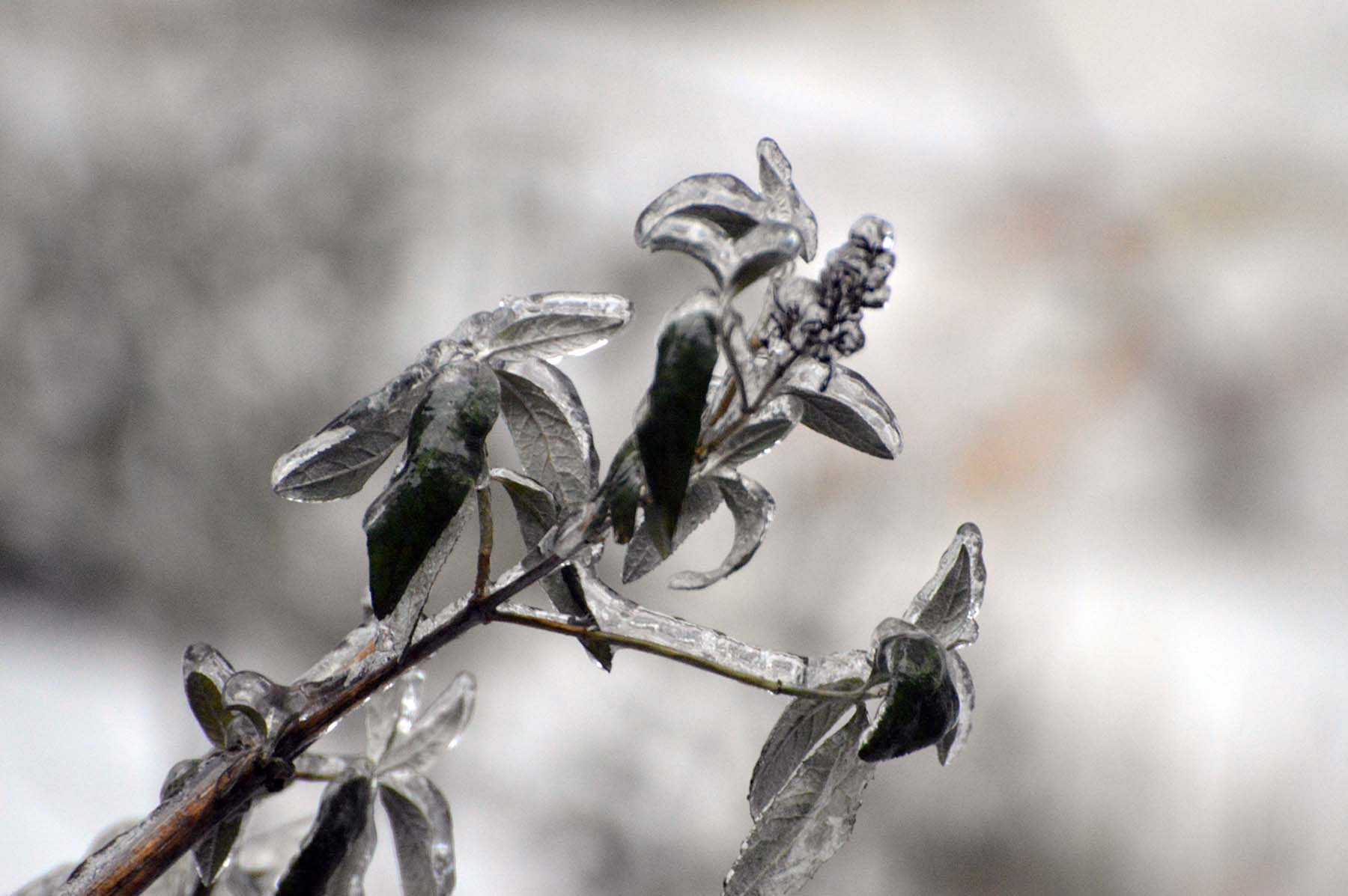
We were iced in for a bit last week, although thankfully not for long or as intensely as much of the rest of the country. Photography was restricted to what was available out of the windows, ample traffic given the cold. All those birds made me think of my unhealthy preoccupation with the demise of the bird app: TWITTER.

Nuthatches galore (Kleiber)

Scold me all you want (you know who you are), my time spent on that medium was not preoccupied with “doom scrolling.” It has been a source of information about politics I care about that would have been – is – otherwise unavailable. A lot of the European news are behind paywalls, and some not published in the main media at all, as for example a lot of the discussions among young, progressive Jewish voices in Germany. A lot of Black voices opened new horizons not easily accessible otherwise.

Twitter has been indeed a platform that allowed marginalized voices to communicate and to be heard, internationally it was the choice for many movements that were able to organize this way and get the news out. With the arrival of Emperor Musk, as many call him, although I prefer Elmo, the safety of those voices is endangered. Next to the monopolized print press in large parts of the world, a platform that allowed new collectives to form has now become the plaything of yet another oligarch, his whims defining the rules.

Plaything is too harmless a word – the site is now a weaponized tool that can wield large influence, not least over the upcoming 2024 election in this country. But it can also wreak havoc abroad. Major investors in Musk’s take-over of the company are Saudi prince Alwaleed bin Talal, the Quatar Investment Company and Binance, the massive crypto finance company founded in China. They have been given special access to confidential company information. (Ref.) There is a huge worry that so far anonymous voices of dissidents will be outed, leading to their persecution. In Saudi-Arabia alone, 40% of all citizens are on twitter, anonymously.

As owner and CEO, Musk has removed the entire human rights team, as well as the team dedicated to disabled users, and the old content curation team which dealt with fighting disinformation. His next move was to ban the accounts of people publicly critical of him, journalists included. The re-admission of previously banned, extremist sites en masse has of course led to explosions of lies, racist and anti-Semitic tropes and disinformation, much to the satisfaction of the owner who encouraged voters to choose far right candidates during the mid-term elections. Just yesterday he tweeted, once again, a word that squarely panders to the extremist belief system that nefarious Jewish powers plan to replace the white US population with Brown people.

Flicker (Goldspecht)

Wren (Zaunkönig)

Importantly, and that is why I think I am so preoccupied with it all, there are no mechanisms that could curb the whims of an emperor. Maybe the financial chaos, with advertisers leaving as well as the important content providers, will lead to bankruptcy. But given that there is a network of unimaginably rich individual and state entities across the world that support his political ambitions, I don’t believe lack of money will be the downfall. Unfathomable riches of a few allow manipulation of public opinion and elimination of critics, quite literally.

Likely a hermit thrush, I learned, an unusual bird here at this time of year (Drossel)

Here is one of my favorite political reviews of the year that speaks to the choices the powerful have, reminding us of and analyzing a biting poem by Browning in this context, no less. Greg Olear’s column Prevail has been a recent discovery for me and a source of pleasure. So are the birds, to which I will now return, hidden behind the window frame, camera in hand.

Robins (Rotkehlchen)

My Last Duchess 

BY ROBERT BROWNING

FERRARA

That’s my last Duchess painted on the wall,

Looking as if she were alive. I call

That piece a wonder, now; Fra Pandolf’s hands

Worked busily a day, and there she stands.

Will’t please you sit and look at her? I said

“Fra Pandolf” by design, for never read

Strangers like you that pictured countenance,

The depth and passion of its earnest glance,

But to myself they turned (since none puts by

The curtain I have drawn for you, but I)

And seemed as they would ask me, if they durst,

How such a glance came there; so, not the first

Are you to turn and ask thus. Sir, ’twas not

Her husband’s presence only, called that spot

Of joy into the Duchess’ cheek; perhaps

Fra Pandolf chanced to say, “Her mantle laps

Over my lady’s wrist too much,” or “Paint

Must never hope to reproduce the faint

Half-flush that dies along her throat.” Such stuff

Was courtesy, she thought, and cause enough

For calling up that spot of joy. She had

A heart—how shall I say?— too soon made glad,

Too easily impressed; she liked whate’er

She looked on, and her looks went everywhere.

Sir, ’twas all one! My favour at her breast,

The dropping of the daylight in the West,

The bough of cherries some officious fool

Broke in the orchard for her, the white mule

She rode with round the terrace—all and each

Would draw from her alike the approving speech,

Or blush, at least. She thanked men—good! but thanked

Somehow—I know not how—as if she ranked

My gift of a nine-hundred-years-old name

With anybody’s gift. Who’d stoop to blame

This sort of trifling? Even had you skill

In speech—which I have not—to make your will

Quite clear to such an one, and say, “Just this

Or that in you disgusts me; here you miss,

Or there exceed the mark”—and if she let

Herself be lessoned so, nor plainly set

Her wits to yours, forsooth, and made excuse—

E’en then would be some stooping; and I choose

Never to stoop. Oh, sir, she smiled, no doubt,

Whene’er I passed her; but who passed without

Much the same smile? This grew; I gave commands;

Then all smiles stopped together. There she stands

As if alive. Will’t please you rise? We’ll meet

The company below, then. I repeat,

The Count your master’s known munificence

Is ample warrant that no just pretense

Of mine for dowry will be disallowed;

Though his fair daughter’s self, as I avowed

At starting, is my object. Nay, we’ll go

Together down, sir. Notice Neptune, though,

Taming a sea-horse, thought a rarity,

Which Claus of Innsbruck cast in bronze for me!

Chickadee, Towhee and Junko (Meise, Winterammer, Grundammer.)

Music, staying with the topic, is Beethoven’s Emperor Piano concerto Nr. 5, played by the incomparable Ashkenazy.