Browsing Category

Bird Photography

The Grace of the World

The Peace of Wild Things

by Wendell Berry

When despair for the world grows in me
and I wake in the night at the least sound
in fear of what my life and my children’s lives may be,
I go and lie down where the wood drake
rests in his beauty on the water, and the great heron feeds.
I come into the peace of wild things
who do not tax their lives with forethought
of grief. I come into the presence of still water.
And I feel above me the day-blind stars
waiting with their light. For a time
I rest in the grace of the world, and am free.

All Human Beings

Today the text is the music and the music is the text. The words of the 1948 UN Human Rights Declaration, in their demands for and implicit belief in humanity – the vision of a better and fairer world that is within our reach if we choose it – remind us that we still have a long way to relieve the trauma that millions of people undergo everyday, imposed by cruelty, greed and injustice.

Eleanor Roosevelt, credited with its inspiration, was the chair person of the UN Committee that drafted the document. She referred to the Declaration as the “international Magna Carta for all mankind,” and considered the 30 Articles of the Declaration as her greatest achievement. It was adopted by the United Nations on December 10, 1948. Here is Roosevelt reading the preamble.

Composer Max Richter put her words to music, incorporating her reading of the preamble into a piece called All Human Beings from his new album Voices, to be released by the end of July. He then crowdsourced hundreds of readers of all ages who repeated the words in various languages, interwoven with the music. They are the voices of the title.

Here is an interview with the composer about his approach to music as a conduit for political or philosophical thought and here is a play list of his works broadcast on NPR.

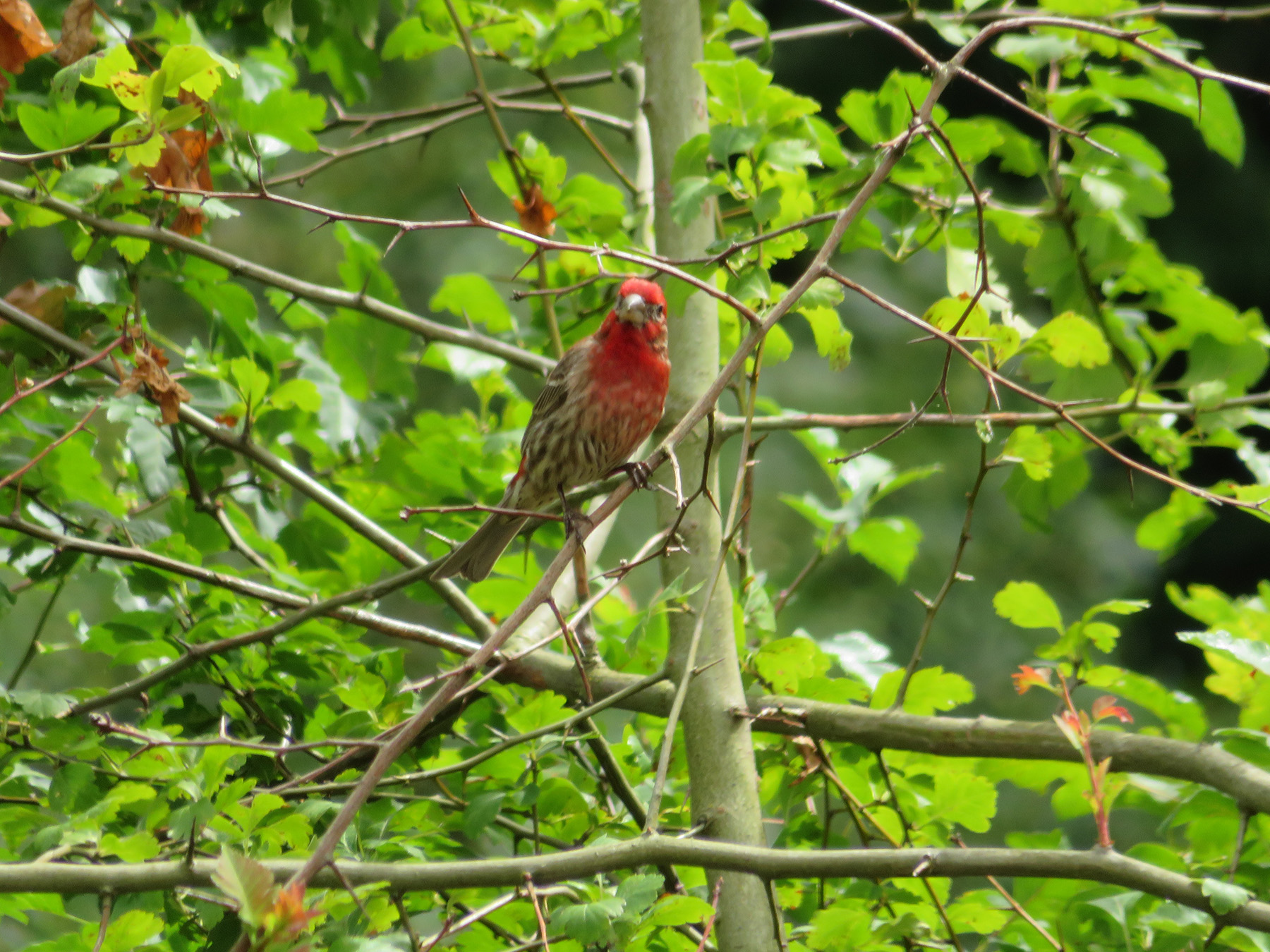
Photographs today are a variety of finches, gold finches, house finches – the male plumage still intense for mating, to produce a second clutch of eggs. Their color comes from pigments in the food they eat, and so varies depending on the quality of the food. The better quality food, the more intense color, the more likely to be chosen as a mate by Ms. Finch….

I chose finches because they range across the entire world – in tune with the United Nations mission. Bunting, canary, cardinal, chaffinch, crossbill, Galapagos finch, goldfinch, grass finch, grosbeak, and sparrow classify as finches.

Of Bloodlust and Shorebirds

There we were sitting outside on the deck having dinner. Halfway through, one of us who shall remain nameless, departed for the kitchen where he finished his plate without being constantly attacked by mosquitoes, at the cost of staring at the dirty dishes. “Where is my boy,”he moaned, “he used to be the mosquito magnet, so I could eat in peace. ”

Ever wondered how dangerous mosquitoes really are, beyond being an itch-producing nuisance? Turns out they are the most dangerous animals in the world – the females are feeding on vertebrate blood, necessary to make the eggs for their own reproduction, transmitting pathogens that are deadly: some species are a vector for malaria, others for dengue fever, yellow fever, chikungunya, and Zika. That used to be geographically constrained, but some of these mosquitoes have hitchhiked on container ships and airplanes to more temperate zones now as well. In fact some researchers believe they have killed half of all humans ever alive (debated, but not too much of an exaggeration – – in case you needed a downward comparison to the rotten Corona virus!) Here is the book about mosquitoes that tells you more.

Greater Yellow Legs

And ever wondered if it is really true that some people are more frequently bitten than others, and if so, why that should be? Looks like it is a fact that people differ in their attractiveness for mosquitoes, and much of it has to do with genetics. There seem to be some 7 spots on our DNA that can make us more or less susceptible to the flying plague, likely related to kinds of body odors that either seduce or repel. How do we know? Good old epidemiological studies, collecting data from tens of thousands of people who report how attractive or not they are to mosquitoes and then comparing their DNA for similarities and differences, isolating causal factors. Furthermore, good old twin studies – we can vary how alike subjects are (with most other factors being held constant,) and then exposing siblings, fraternal twins or identical twins to mosquitoes. If one twin is judged to be the best thing on the menu by the mosquitoes, they should show the same interest in the other twin, which they do, and do so particularly with identical twins, who of course share all their genes.

Sandpiper

Mosquitoes also go for carbon dioxide, so if your metabolism is up, you exercised, you’re pregnant, they come for you. I forget the names of the other volatiles that either attract or deter the pest, but researchers believe that heredity of your deliciousness to stingers is comparable to that for height or IQ.

Killdear lined up

A lot of research on this topic is coming out of New Mexico, with work on all aspects of mosquito lives and troubles done by the Hansen Lab. One of the things they explore has certainly applications for our household: what can you use to repel them, short of poisoning yourself and your environment with DEET or other similarly toxic chemicals? They found that peppermint and lemongrass oil were effective for 30 min. Spearmint and garlic oil had a strong initial effect, however, both lost their efficacy at 30 min. Cinnamon oil was effective in significantly reducing mosquito attraction for 1.5 h.

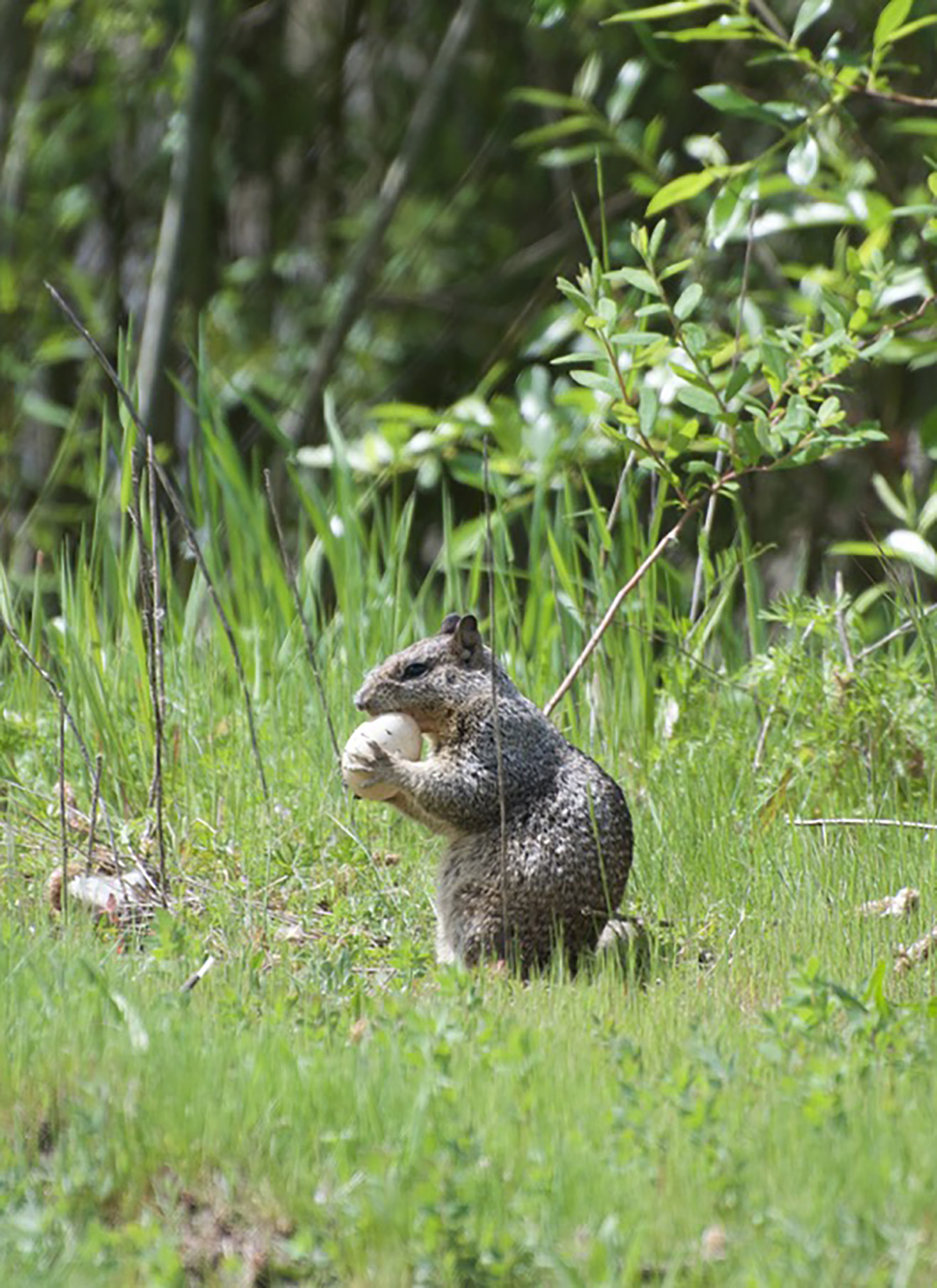
Muskrat eying the duck….

You know what to apply or burn or drip around you now. Happy al fresco dining!

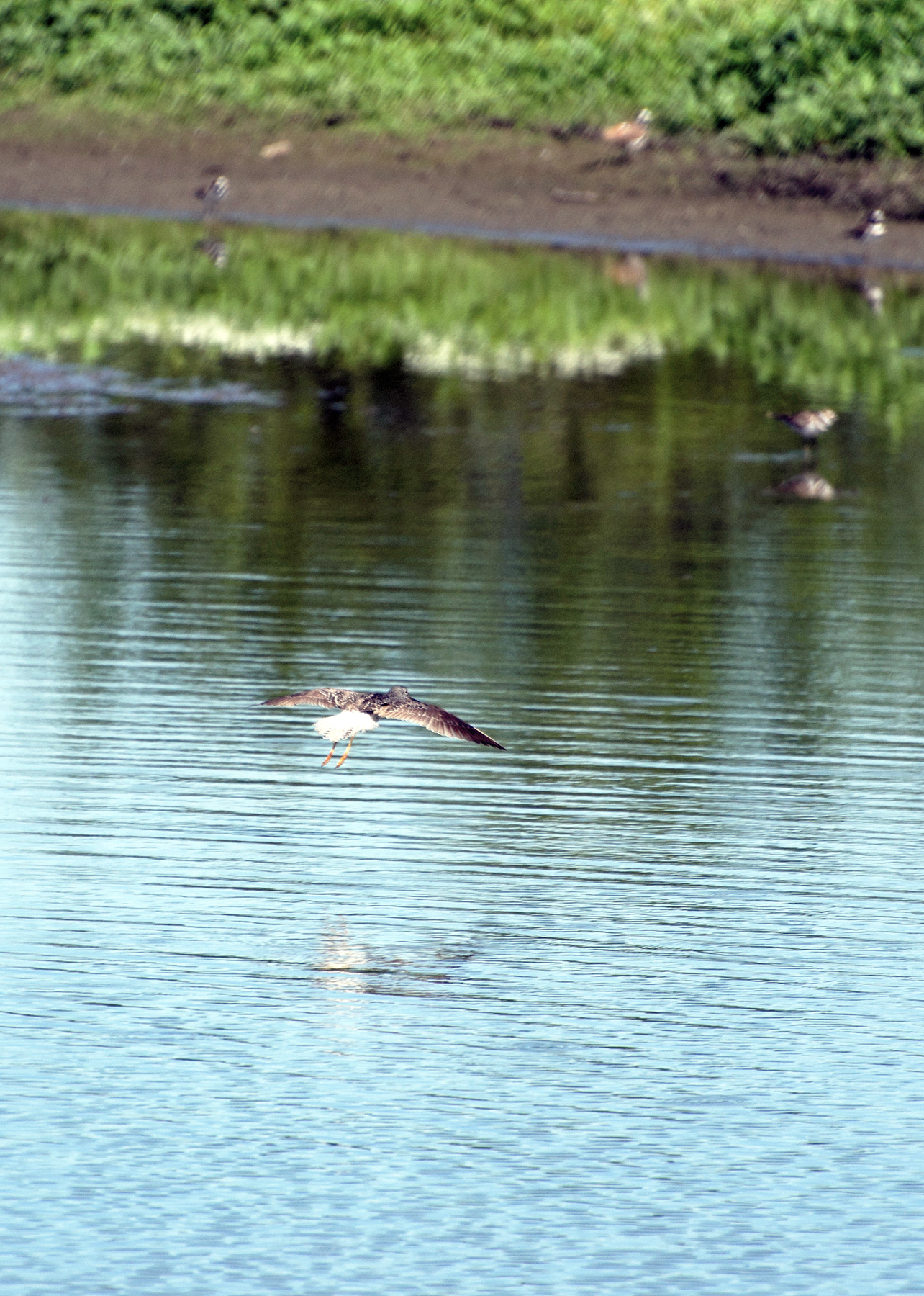
Time spent photographing critters and shorebirds at inland ponds this week required long sleeves and constant cursing: the insects were out at the edge of the water and no wind to blow them away. But it was worth to see the many killdeers, sand pipers and greater yellow legs feasting on – potentially – mosquitoes.

Cabbage Butterfly

And whole swarms of mosquitoes can be heard in this music, Crumb’s Music for a summer evening.

Red-winged Blackbird

Sweetness and Beauty

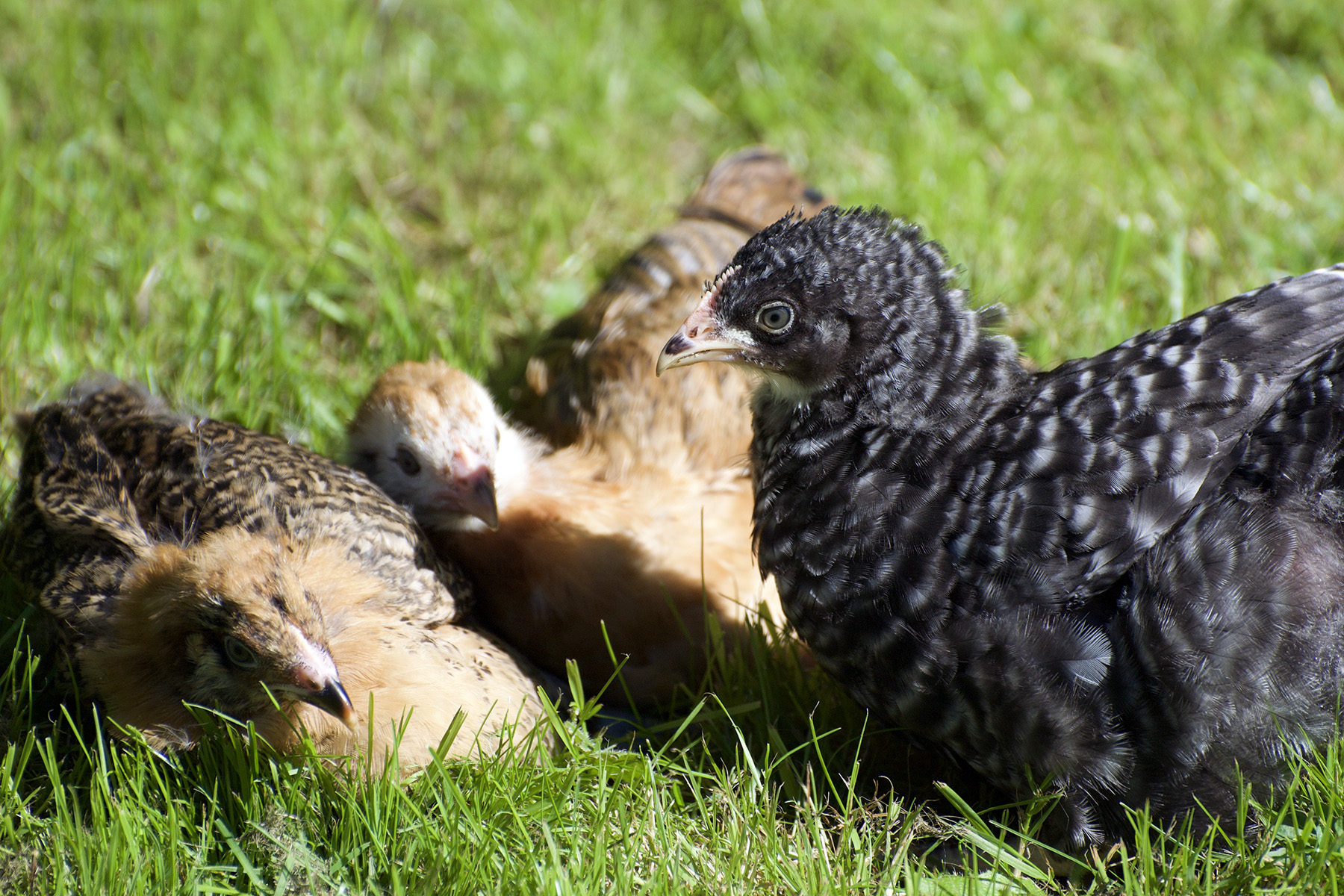
Meet Jumper. A recent addition to our neighborhood, this chick lives up to her name.

Meet Miles. He tends to Jumper and her two companions with care, dedication and an abundance of tenderness.

There are numerous chickens around the area, despite the constant lurking of hungry coyotes. Some are in coops all day, some are let loose under close supervision, and some are supper.

I cherish the noises, particularly those of the occasional rooster – officially prohibited to be kept in residential neighborhoods for exactly that reason, noise – because it reminds me of my childhood.

I cherish the sight, because there is something marvelous about the dedicated business of chickens pecking away at anything they can find. Singular focus on the business at hand – survival! – is a welcome model to this here worrier of mythic proportions.

I cherish the idea of children growing up with animals that are not just cuddly pets to be toyed with, but require real responsibilities and commitments. Miles is certainly doing his share of feeding, watering, supervising and endlessly cleaning the boxes before the final coop is built by him and his Dad.

The chicks are surely attached to him, or his sun-warmed rubber boots, which provide perfect resting places.

I was reminded of old science on imprinting of avians, and found this clip from 1975 (!) about the research of Konrad Lorenz and associates here, little goslings following their human foster parents unperturbed. A sight to be seen.

*

Chicks become chickens, chicken lay eggs, and what better use of those than being whisked into batter. Batter to make pies, to be precise, although I believe they are then called crusts? English can be so confounding.

All Photographs by Karin Pfeiff-Boschek

I wonder if the German baker of pies, Karin Pfeiff-Boscheck, encounters the same problems with technical terms, or, for that matter, recalculating German measurements into American ones. Ounces vs grams, anyone? Conversion of oven temperature from Celsius to Fahrenheit?

She has certainly surmounted any obstacle to come up with these marvelous creations – in fact artful ones, high brow art connoisseur- eye rolling be damned. She is also generously sharing her knowledge – here is her book that helps even kitchen-phobic people like me to approach baking. I first learned about it here.

Her background in design is obvious; I just wonder how it would feel to cut into these little art works when you are ready to eat, but not ready to destroy the pattern.

Sweetness and beauty, on all fronts, as I said. How is that for ending the week?

Music a bit on the saccharine end of the spectrum, but a fitting companion to the baked goods. The Schlagober (whipped cream) Suite by Strauss was also performed as a ballet by ABT – here are extracts.

Hope there is pie in your weekend!

Contrasts

What was I thinking. I did not bring rain paints. I wore my ancient, squeaky hiking boots that long ago stopped being waterproof. No plastic cover for my camera. And yet I followed the trail up coyote hill, despite the fact that misty sprays of rain soon turned into real showers.

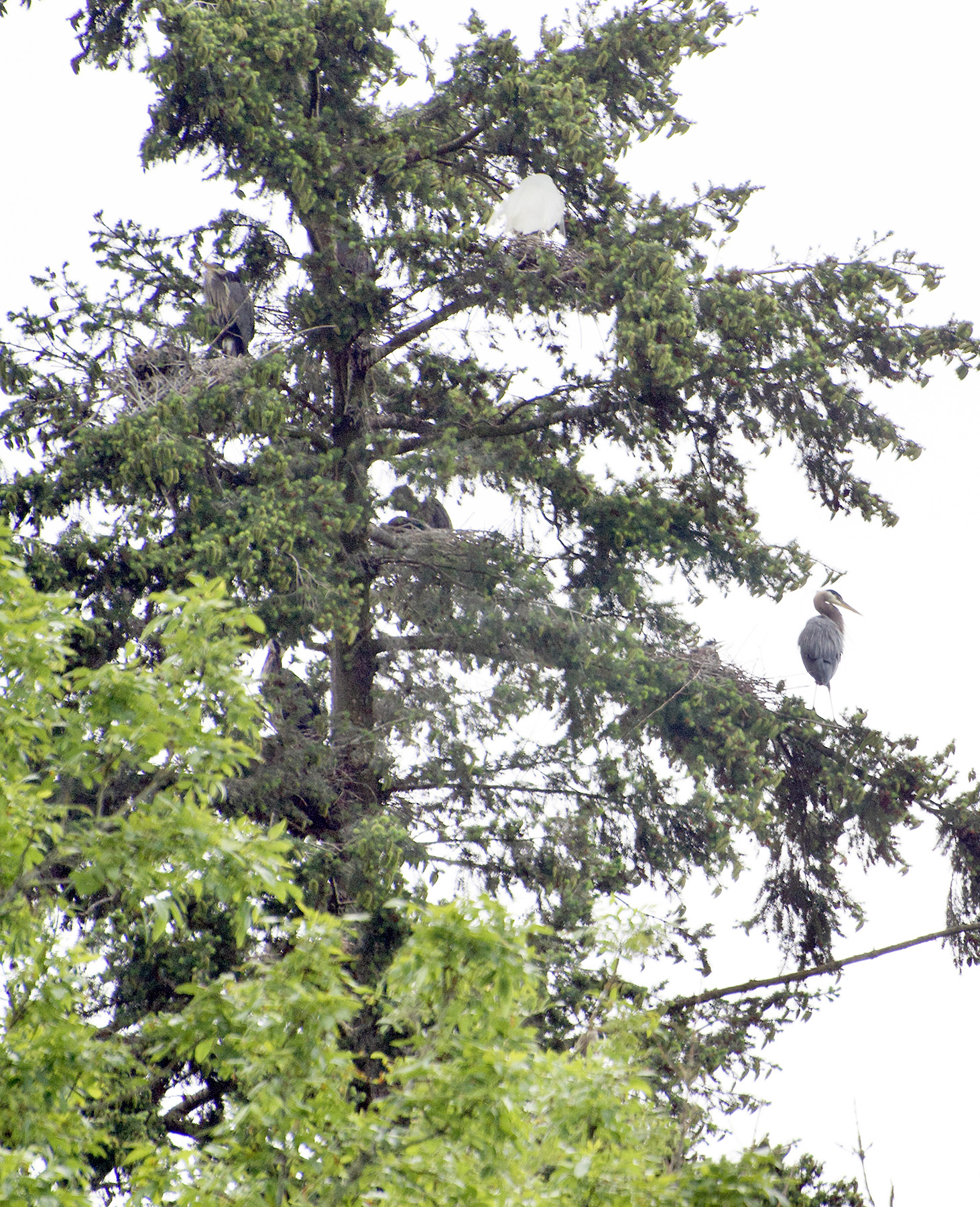
It was the fault of all those herons, flying constantly in one direction our coming from there, ever since I had spotted them in the ponds. It was the lure of distant noise, increasingly louder when I approached a stand of tall trees at the western rim of the wetlands preserve.

I had found the heron rookery, an accumulation of nests in the fir trees, chicks squawking loudly, parents announcing their arrival with raspy, penetrating voices.

I crouched under a canopy of bushes away from the path, trying to get out of the downpour, camera peeking through the inside of my coat, unbuttoned in one place to let the lens through. I was quite a distance away, separated by a marsh, vision blurry from all the moisture in the air, in awe of the constant action.

Look closely how many gather in one tree.

Parents flying in to feed the babies, then reversing roles with those who had stood guard. A cacophony of bird calls announcing or assuaging need.

And then it went all quiet. As if the world stood still. Birds calmed, stoically standing in the rain, or crouching in the nests. All I could hear, all of a sudden, was the relentless drumming of the rain on the leaves above my head. One of those moments were your heart expands, with gratitude, while your soul is struck with slivers of disquietude.

*

In this week’s blogs I juxtaposed forms with lines, isolation with connectedness, and now, today, the natural with the staged. The heron photographs were snapshots, badly taken under challenging circumstances with layperson equipment. They caught a moment in time, captured as is in nature in all its blurry glory.

Contrast this with the work of Kylli Sparre, a young Estonian photographer, whose work is technically flawless, delightful in its creativity, and as choreographed as any of the ballets she ever danced in (having given up a career as a dancer for photography and photoshop manipulation.) In fact I think that’s why she came to mind when I was watching the choreographed approaches and departures of the herons in the rookery, quietly fluid during departure, loudly proclaiming their arrival. They really are among the more elegantly moving birds, as long as they don’t open their mouths and disturb the mood with their screeching.

Sparre has had a fast and pretty steep professional ascent – just look at the accumulation of awards, including the 2014 Sony world photography award, and the invitations to show in arrived venues. I appreciate the combination of painterly sensibility in her staging, her ability to invoke fairy-tales, or at least fairy tale moods, and her embrace of modern technology to alter and manipulate the photographed image.

I think, though, that what speaks to me most is the sense of motion about to invite a dramatic development, the very next move leading to a denouement.

That is even contained in the images where there’s perfect stillness, as paradoxical as that sounds.

There is a sense of eeriness, just as I experienced one hidden under a hedgerow, seemingly the only human on a planet filled with screaming birds who suddenly fell silent. Similarities then as well, not just contrast. At least in the evoked emotions.

Music today picks up the fairy-tale theme – von Zemlinsky’s fantasy for orchestra, The Mermaid.

(“Die Seejungfrau has an unusual history. Having heard the latest Richard Strauss, Ein Heldenleben, conducted by the composer in Vienna, Zemlinsky determined to create an equally grandiloquent tone poem of his own. Possibly he settled on his program, “The Little Mermaid” by Hans Christian Andersen — a fairy tale of a lover who fails to secure her intended — in response to losing his own intended, Alma Schindler, to the greater charms of Gustav Mahler. At any rate nobody discusses the music without mentioning this”. Ref.)

Fairytale Friday

Your turn to write. I will hand you the setting and characters, and a short refresher on narrative arc.

Before you pick up your pencil, check on the important parts of beginning, middle, and ending and don’t forget to make use of sequencing words (firstsothennext, after thatfinally) ….at least that’s what I hear they teach in 2nd grade these days.

Setting: a garden, an enchanted wood with a white giant guardian of the path, a clearing and a mysterious pond with golden flowers.

Beginning: good for exposition: introduce the actors and the main conflict.

The heroine and her mother:

Middle: rising action can enhance the conflict – surprises, complications, challenges….eventually getting to the greatest tension, forcing a critical choice.

A magic flower and a magical pathway that narrows:

End: path towards resolution, implied change, punishment, reward. Or just a big gaping hole that leaves the reader wondering….

Alternatively, you can watch Kurt Vonnegut explain it with delicious wit.

*

Arcs have multiple and predictable directionality, as A.I. discovered by crunching through thousands of narratives, in case you hadn’t already figured it out yourselves during a life time of reading.

The Heroine’s friend and her mother and father

1. Rags to Riches (rise)

2. Riches to Rags (fall)

3. Man in a Hole (fall then rise)

4. Icarus (rise then fall)

Villains: A sneaky muskrat and a thief of the (golden)goose egg – loudly protested:

5. Cinderella (rise then fall then rise)

6. Oedipus (fall then rise then fall)

Various supportive characters and sidekicks:

A Western Tanager strutting his goods
A Whitethroat (warbler) planning the next move
A very loud wren
A red-winged black-bird, stumped
A yellow-rumped warbler on the look out
A goldfinch in a sea of green

Compose! Just make it a happy ending – the little heroine fell out of her nest in my garden. She deserves the fledgling in a hole arc!

And here is a gorgeous operatic fairy tale: Strauss’ Frau ohne Schatten with English subtitles.

All this to prove we cared.

Lots of birds on yesterday’s walk, searching for and bringing back nesting materials, some birds in their bright mating colors already.

I was reminded of a Robert Frost poem, The Exposed Nest, that provides for me at its core a sense of unease around unresolved moral issues.

The poet sees his young companion, perhaps his child, trying to build a shelter out of grass and ferns. It’s not just play but the desire to protect a ground-nest full of fledglings that was accidentally disturbed by someone mowing the meadow. The innocent birds are left defenseless – you do want to protect them from “too much world” (and all the danger that implies,) but the very act of building a shelter might frighten the parent bird away, leading them to abandon their brood.

We saw the risk we took in doing good, but dared not spare to do the best we could though harm should come of it…” – all this to prove we cared.

There is this sense of moral obligation, but also of having to make a choice between errors of omission and error of commission. Damned if you do and damned of you don’t.

Prove that we care – to whom? To nature? The young child who needs a model? Some higher power that set moral standards? The self that has an internalized vision of what it means to be a good person?

In the poem they decide to fashion a shelter. Then all is left hanging in the air, an irritatingly incomplete gesture. The narrator doesn’t go back to check on the fledglings’ survival, he turns to other things or conveniently claims to have forgotten if they did or did not return. Clearly there is a defensiveness against accepting the outcome of one’s action, should one have made the wrong choice. We fed our pretense or our hope to be “good,” but that’s enough. Let’s not dwell on potentially dead, abandoned birds…. since we suspect that’ll be the outcome in a world that is cruel to the innocent. (The poem was written in the middle of WW I, after all.)

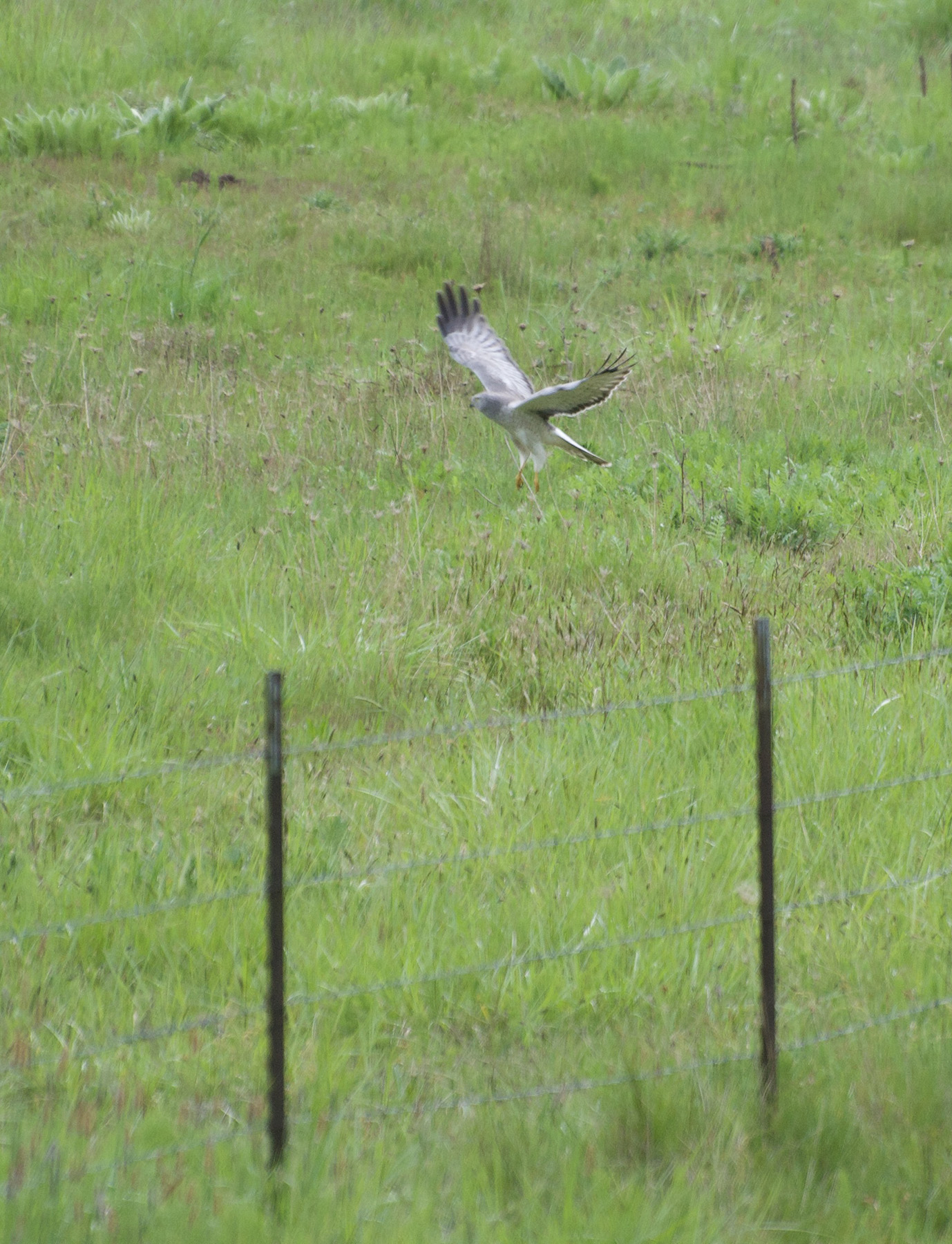
Uneasy parallels to our current situation as well where we have a chance to alter some that ails the world beyond pandemic: we need to make risky choices, unable to predict the outcome. In contrast to the narrator, we do have to face the results, though, unable to turn to other things since our decisions affect us all, not just some creatures we can keep out of our sight. Our choices are not just some gestures, demanded by our need to appear moral – if they are immoral choices, we will all be exposed to the harm that comes from them. And (feigned) ignorance after a bit of initial commitment stands in the way of finding solutions. If we don’t know what needs to be handled and how to fight for it, we are doomed to suffer the consequences. Mull that while trying to photograph a Northern Harrier…

The Exposed Nest

Robert Frost – 1874-1963

You were forever finding some new play. 
So when I saw you down on hands and knees 
In the meadow, busy with the new-cut hay, 
Trying, I thought, to set it up on end, 
I went to show you how to make it stay, 
If that was your idea, against the breeze, 
And, if you asked me, even help pretend 
To make it root again and grow afresh. 
But ’twas no make-believe with you to-day, 
Nor was the grass itself your real concern, 
Though I found your hand full of wilted fern, 
Steel-bright June-grass, and blackening heads of clover. 
‘Twas a nest full of young birds on the ground 
The cutter-bar had just gone champing over 
(Miraculously without tasting flesh) 
And left defenseless to the heat and light. 
You wanted to restore them to their right 
Of something interposed between their sight 
And too much world at once—could means be found. 
The way the nest-full every time we stirred 
Stood up to us as to a mother-bird 
Whose coming home has been too long deferred, 
Made me ask would the mother-bird return 
And care for them in such a change of scene 
And might our meddling make her more afraid. 
That was a thing we could not wait to learn. 
We saw the risk we took in doing good, 
But dared not spare to do the best we could 
Though harm should come of it; so built the screen 
You had begun, and gave them back their shade. 
All this to prove we cared. Why is there then 
No more to tell? We turned to other things. 
I haven’t any memory—have you?—
Of ever coming to the place again 
To see if the birds lived the first night through, 
And so at last to learn to use their wings. 

Luckily the walk provided sights that led to more hopeful thoughts as well.

Birds that have pretty safe nests:

Fearless hares

And optimistic taggers

Here is a beautiful Sonata by Delius, composed in the same year as the poem was written. The cellist is outstanding.

Antidote

So here I am wrecking my head over what I could possible offer this week to cheer us all up and distract us from all things virus-related for a measly five days. Not going to mention Corona once, at least not directly. Wish me luck.

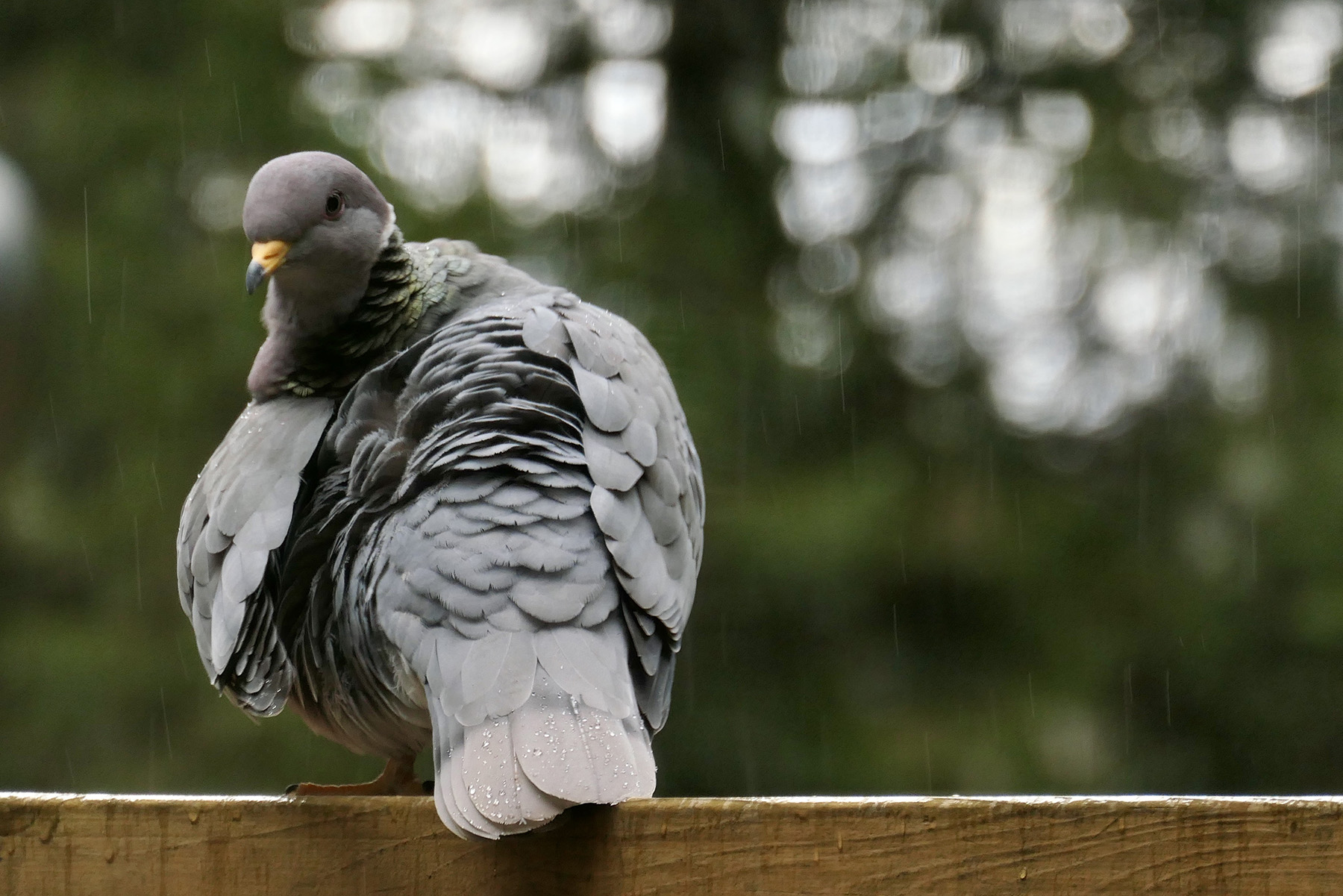
(And if the options below have you rolling your eyes, at least admit that the photographs are pretty nifty given that they were taken while I was writing, through the window onto my balcony – the doves make regular appearances these days, drinking from the dish in the middle of rain…)

So, what shall we discuss? The Guardian offers antidotes, as a daily regimen, but honestly, do they excite you?

Looks like I am reduced to posting an animal video, good grief.

However, it perfectly captures my current vocalizing….

Maybe I’ll find something slightly more sensible, as always, with music.

And here it is: Schubert’s Die Taubenpost (Carrier Pigeon). It was the last song he wrote in his life, part of Schwanengesang D 957, a collection of songs published posthumously. Hah, got the education in, anyhow! Here is the text, check out the very last stanza: Longing…. the messenger of constancy. THAT is the concept to think about today!

Sky

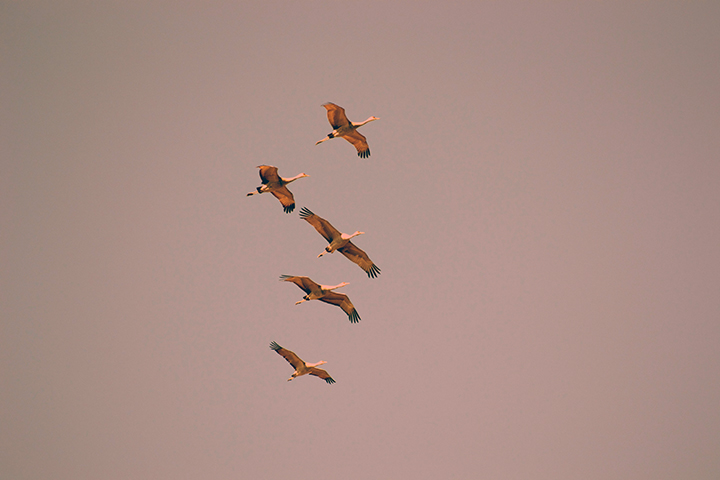
Dancing is generally believed to be a normal part of motor development …. and thwarts aggression, relieves tension, and strengthens the pair bond.” 

Yup. Oh, to dance again. Turns out, that sentence included two words I replaced with dots, namely the words: for cranes.

I learned about the use of cranes’ dancing at the website of the International Crane Foundation, the only place in the world where all 15 species of cranes can be observed. In Baraboo, southern Wisconsin, no less. Hard for me to imagine to see these birds in exhibits in a refuge, though, rather than in the wild, where they represent such freedom.

I have written about them before, with a few scientific details. Today I want you to see them through the lens of a poet. Linda Hogan is currently the Chickasaw Nation’s Writer in Residence and lives in Tishomingo, Oklahoma.

I have introduced her work here before, a poem about herons, I believe, since her concern for ecological matters, cultural heritage and dispossession of Native Americans is, as my regular readers know, something I share (as part of my documentary film focus for Necessity – Oil, Water and Climate Resistance – there will be an on-line screening for Earth Day – check the link.)

Others more knowledgable than I have also shown admiration of Hogan’s writing: she is the recipient of numerous prestigious awards including the American Book AwardGuggenheim Fellowship for Creative Arts, US & Canada, and the Lannan Literary Award for Poetry.

The Sandhills

BY LINDA HOGAN
The language of cranes
we once were told
is the wind. The wind 
is their method,
their current, the translated story 
of life they write across the sky. 
Millions of years
they have blown here
on ancestral longing,
their wings of wide arrival, 
necks long, legs stretched out 
above strands of earth
where they arrive
with the shine of water, 
stories, interminable
language of exchanges 
descended from the sky
and then they stand,
earth made only of crane 
from bank to bank of the river 
as far as you can see
the ancient story made new.

*

This concludes a week where meadows, fields, flowers, birds and sky were all still to be seen on walks, and brought to you as tokens of nature that exist independent of our human worries. Reminders, too, that there are still many pleasures to be had.

And talking about pleasure:

Fields

There they were in the fields, this Monday. Hundreds and hundreds of them. So much for social distancing….

Usually at this time of year Canada Geese would gather for the migration back North. Many of them now stay here, having found both food sources and breeding grounds that suit them. They are really amazing in what they pull off, once in flight. They can fly up to 1000 km a day, which means they could fly around the world in 48 days, if they’d wish to. But they wish to stay.

Looking at them reminded me of Inuit art that has depicted them for ages.

Traditional stencil,

Lukta Qiatsuk, Canada Geese Nesting Ground, 1959

modern stone cut and stencil,

Killiktte Killiktee, Canada Geese, 2016

Litographs,

Kananginak Pootoogook, Canada Geese Mating, 1976

Carvings,

Johnnysa Mathewsie Canada Goose, 2018

Acrylic and ink on paper,

Benjamin Chee Chee Goose in Flight 1977

And these artworks, in turn, reminded me of a small, riveting exhibit at the Portland Art Museum that I had a chance to explore earlier this year before everything shut down. Akunnittinni: A Kinngait Family Portrait exhibited the works of three Inuk women, grandmother, mother and daughter, Pitseolak Ashoona, Napachie Pootoogook, and Annie Pootoogook respectively. Their work was intimate, direct, jarring. They described the world as seen and experienced by them, providing autobiographical narratives as much as a glimpse of historical and cultural episodes that taught me much about Inuit culture and the resilience of women in a violent world, violence to which the youngest artist succumbed in 2016, and which was born by the older ones, during a time where husbands would rent out their wives by the hour to traveling sailors.

Trading Women for Supplies by Napachie Pootoogook, Ink,(1997/98). 

It was fascinating to see three generations describe their lives, and display an astute summary of the mundane, the quotidian, the cultural influences of later years on the first nation lives. PAM’s Center for Contemporary Native Art picked a winner (the exhibition was curated by Andrea R. Hanley (Navajo.) I will be eager to go back to the smaller galleries, once the museum is open again, and let me be surprised at what I find.

Oh, to be a bird, and just leave it all behind, hide in that big gaggle in the safety of numbers, wander through the fields with less of a sense of past or future and just living in the moment of grazing. There is some continuity for them as well, though – they mate for life! And geese, believe it or not, often live for up to 24 years.

And here is Mother Goose….

And here is a bonus Ravel – really a much more interesting piece, and we can just pretend we walk along some fields in Spain….