Browsing Category

Biology

Yellows

“A ray of sunshine” is one way to describe a bit of good news. I saw that sunny yellow reflected in the gold medal recently awarded to a brave rat.

You read that right, I am reporting on Magawa, the HeroRat. To date he has found 39 landmines and 28 items of unexploded ordnance in Cambodia. Over the past 4 years he has helped clear over 141,000 square meters of land (the equivalent of twenty football fields), allowing local communities to live, work and play without fear of losing life or limb.

Actually I am introducing a general program, APOPO, that breeds and trains rats for multiple important purposes: detecting landmines, identifying tuberculosis in people, and sniffing out illegally trafficked wildlife. APOPO is an acronym from Dutch which stands for “Anti-Persoonsmijnen Ontmijnende Product Ontwikkeling“, or in English, Anti-Personnel Landmines Detection Product Development. The idea to use rats was born in the mid 1990s in Holland, the choice to train African Giant Pouched rats based on their longevity and origins in Africa where the work was to be done.

Rats get rewarded with treats like ripe, yellow bananas when they detect the correct scent (associated with explosives, or TB or pangolins, one of the most smuggled endangered species) in the lab. Eventually they will do the same in the field, with a speed that escapes their human counter parts, and with more accuracy in detection, as it turns out. Rats can check on 100 TB samples in 20 minutes, for example, which would take 4 days to be done by a doctor with a microscope. You can watch them here.

In 2000, APOPO established office and training facilities in Tanzania, and started developing what would be the most extensive training minefield in Africa in collaboration with local universities and the people defence forces. A year later they were approved by The Geneva International Centre for Humanitarian Demining (GICHD) and expanded to teach the rats to smell remote explosive, and soon started research into detecting tuberculosis via scent. In 2004 the first 11 rats passed International Mine Action Standards accreditation and began to operate in multiple countries in Africa and later Cambodia, Laos, Thailand and Vietnam. By 2015 a country like Mozambique was cleared of all landmines! By 2017 the mine action was invited to Colombia, South America.

Since the APOPO TB-detection research program began in 2007, the rats have checked more than 680.000 patient samples. They discovered 18.300 missed cases, helping not just those patients but preventing another 150,000 likely new infections. APOPO’s programs work within government health systems to support over 100 partner clinics in Tanzania, Mozambique and Ethiopia in their fight against TB. They find both, cases that have been missed – according to estimates of the World Health Organization (WHO), about half of the TB patients in these countries are ‘missed’ – and find TB among non-symptomatic but high-risk population ( like prison inmates.)

I think it is phenomenal to see something this life-saving to develop from the idea of a single person to a global organization in 2 decades. They surely had a lot of help on the way, from educational institutions to stay agencies to business initiatives to NGOs – individuals can and have helped, too – you can adopt a rat to support the program, for example.

It also stands in stark contrast to using animals to enact warfare in the first place. As I learned at the dinner table last night, when talking about today’s subject, B.F. Skinner spearheaded Project Pigeon during WW II. It aimed at using pigeons to guide missiles to their respective targets but apparently never took off. Video describing the idea can be found in this link.

Detecting illness by scent has become a hot topic in scientific study in general, with the hopes of finding helpful markers for diagnosis that avoid intrusive procedures for diseases as varied as cancer, Parkinson’s Disease, asthma and traumatic brain injury. Not all done by rats, of course. Dogs are involved, and electronic “noses,” devices that pick up and analyze scent.

I like to think of it though as if it looks like we’re moving from smelling a rat to have one smell us!

Since I don’t have my own photographs of banana loving rats (rats today are from the APOPO website), I’ll make do with random yellows from my archive that might deliver tasty bits to rats – sunflowers, canola, corn, pears, some odds and ends.

Music depicts rats in a variety of ways….

words by Carl Sandburg :
There was a gray rat looked at me
with green eyes out of a rathole.
“Hello, rat,” I said
“Is there any chance for me
to get on to the language of the rats?”
And the green eyes blinked at me, blinked from a gray rat’s rathole.

Rats away opens the second movement. Hear them scurry!

Matched Pair

Two articles caught my attention last week, reporting on people who at first glance could not be more different. The first appeared in the New York Times, The Social Life of Forests, and (re)introduced Suzanne Simard, a scientist who looks at forest ecosystems. You might have encountered her if you followed my earlier recommendation to read Richard Power’s The Overstory, one of my favorite books of recent years. She was the model for one of the prominent characters in the novel.

The second was a book review in Jacobin Magazine, familiarizing me with William Morris and his conceptions of art and politics, How William Morris became a Socialist.

What could a contemporary professor of forest ecology and a 19th century artist and writer known prominently for his wall paper designs possibly have in common? Lots, I tell you!

Both devoted their lives to exploring new directions in their respective fields, Simard as a researcher who ventures daringly (and brilliantly) far from the main stream science at times, Morris as an artist who is now known as a founding father of the British Arts and Craft movement which upended the trend towards industrialization and mass production in the Great Britain of the 1800s.

Both can be counted as ardent environmentalists.

And, importantly for my spontaneous linking the two in my mind after reading these pieces, both make us see, keenly, the interconnectedness of things in nature as much as in our social, political, and economic lives. Interconnectedness can be a boon, when all pieces work together for maximum achievement, and it can be a bust, if some random (or not so random) interruption paralyzes the system as a whole.

The NYT article is an easy read, and reveals some astonishing scientific findings in everyday language. (It also reinforces things we have learned form another book about the secret life of trees, which is reviewed here.) Among other things,

“….Simard has discovered that fungal threads link nearly every tree in a forest — even trees of different species. Carbon, water, nutrients, alarm signals and hormones can pass from tree to tree through these subterranean circuits. Resources tend to flow from the oldest and biggest trees to the youngest and smallest. Chemical alarm signals generated by one tree prepare nearby trees for danger. Seedlings severed from the forest’s underground lifelines are much more likely to die than their networked counterparts. And if a tree is on the brink of death, it sometimes bequeaths a substantial share of its carbon to its neighbors.”

Underground fungal networks that improve the overall health of the forest system by re-directing needed resources are, of course, affected by indiscriminate logging, or other forms of environmental degradation. William Morris thought the same to be true for art when the benefits it bestows on a given society are endangered. Environmental degradation, either in the literal sense of destroying the beauty and health of nature, or in the figurative sense of our lives being accosted by industrialization and labor exploitation, was the main culprit in his view when it came to the disappearance of art in everyday life.

If you have the time and interest, here is a prescient lecture that Morris gave on the relationship between destroying the earth, undermining its beauty and the pernicious effects of wage labor, all of which alienates humans from their creative capacities. In general, he believed that “art was man’s expression in his joy of labor,” art encompassing not just the intellectual achievements of a chosen few, but the daily beautification of one’s environment that across centuries was part of society’s existence.

He implored us “to take in not only painting and sculpture, and architecture, but the shapes and colors of all household goods, nay, even the arrangement of the fields for tillage and pasture, the management of towns and of our highways of all kinds; in a word, to extend to the aspect of the externals of our life.” That could be accomplished by a medieval potter’s careful decorations, a glass blower’s feel for form, a cottage gardener’s lush color schemes up to the hand-pressed paper, hand-printed and colored designs of Morris’ famous tapestries. The very ideas of combining the higher arts with applied art eventually found their homes in the German Bauhaus in the 1920s and its contemporary Russian twin, Vkhutemas, the most fascinating art school you have never heard of. The workshops had artistic and industrial faculties; the art faculty taught courses in graphics, sculpture and architecture while the industrial faculty taught courses in printing, textiles, ceramics, woodworking, and metalworking.

By no means did Morris imply that industrialization and machine production were the causal agent in the disappearance of daily creativity. It was the fact that only capital, not laborers benefitted from the automization and speed of production, workers receiving no increased leisure time to use for creative activities to make up for the increasingly non-creative work serving the machines. His writings on socialist models to remedy the unfairness were astoundingly clear-sighted and pragmatic.

He was also quite the character, which, as you all know by now, always excites me. A rich Bourgeois drawn to Ruskin and Marx, an artist and successful business man who marries a working class girl who happens to be his painting model, leaves him for his best friend and then they all manage to establish a menage à trois, a risk taker who late in life shifts gear from designing pretty things (if you like flowery wall paper) to establishing a printing press – it’s all pretty fascinating. Details here.

For a final bit of reading on new claims about the ultimate biological interconnectedness, the Gaia Hypothesis, go here. Would love to know what either Simard or Morris or for that matter Darwin would have thought about this view of an evolving planet.

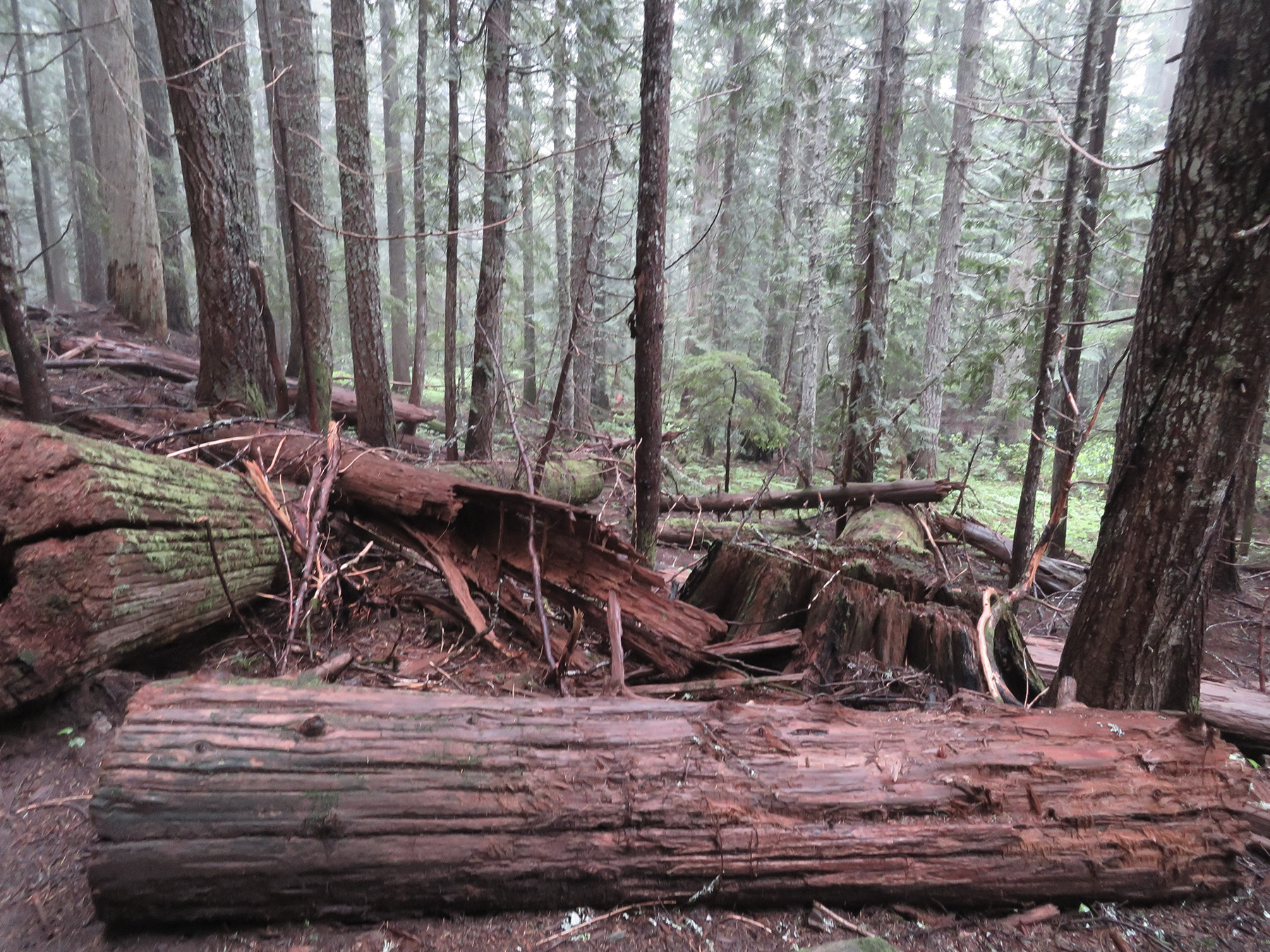
Photographs of Pacific Northwest forests from this spring. Wallpaper has to wait….

And here are Silent Woods by Dvorak.

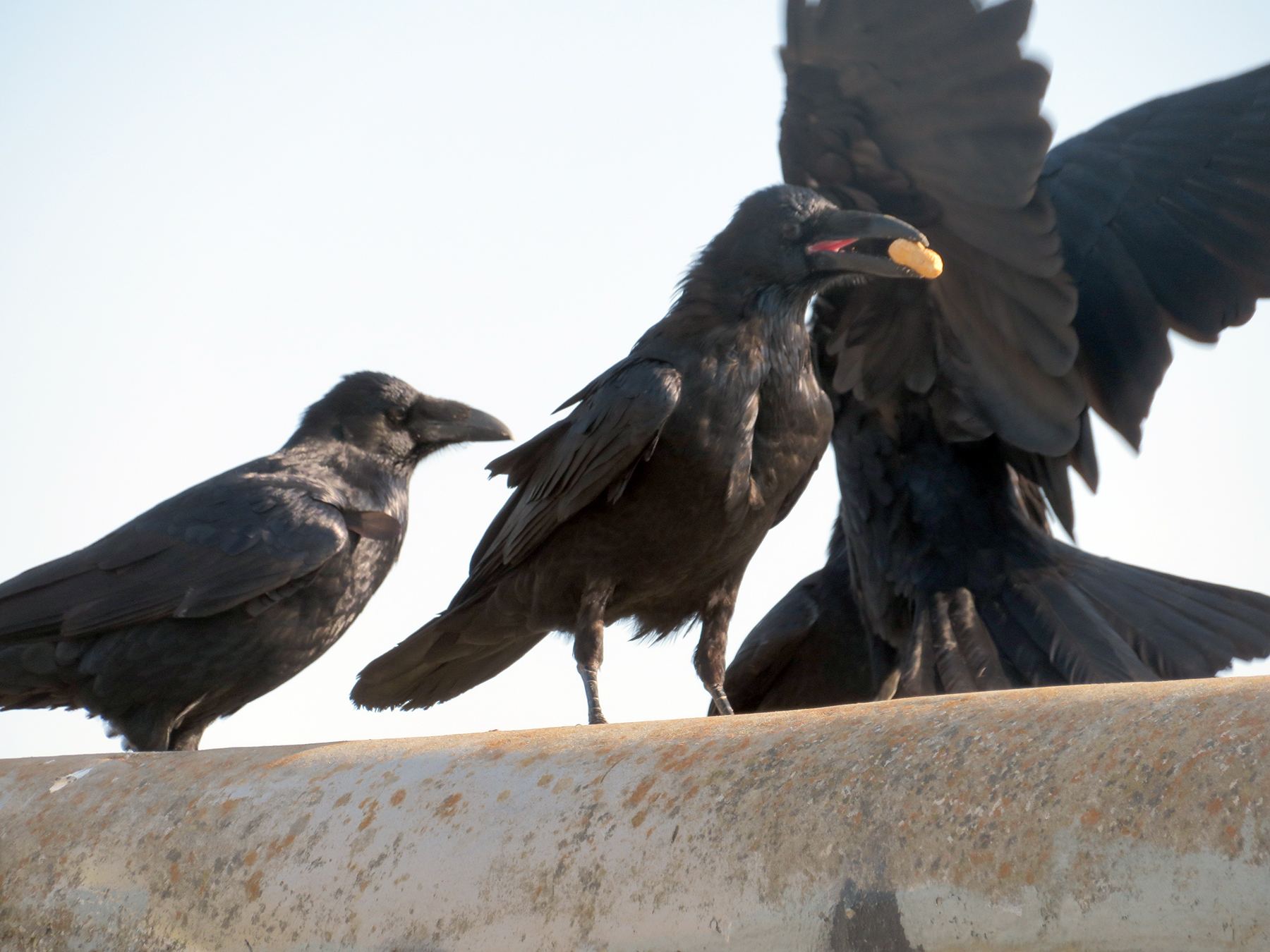
Crows, Pursued.

I have written about crows before, describing my fascination with and admiration for corvids.

New research results have the birds back on my mind, as did observing their antics during a short walk on the beach when the air cleared.

The newest neurobiological evidence claims that crows have a kind of consciousness previously believed to only exists in humans and macaque monkeys. Should we trust those claims? They are based on the the fact that the 1.5 billion neurons in a crow’s brain are architecturally arranged in similar ways as are our’s, and that they seem to fire in a similar manner to our’s when we consciously experience something or relate that we are experiencing something.

I am always weary of the “if it looks like a duck and it quacks like a duck, it must be a duck!” kind of arguments pursuing the quest to find ourselves in other forms of life. To equate forms of neuronal reactions to our human consciousness is a huge step; I would be much happier if people cautiously formulated that along a continuum of reacting to a stimulus directly on one end to having thoughts about one’s reaction, or being aware of one’s thoughts on the other end of the scale, some biological entities approach us more closely than others, but all in degrees.

There is no question that corvids are extremely smart, but why insist that their experience is the same as ours, when you are a scientist? Let’s leave that to the poets. And none has done a better job of pursuing crows as conscious, questing heroes than Ted Hughes in his book Crow, From the Life and Songs of a Crow (1970.) Recovering from the loss of his wife through suicide, he responded to the American artist Leonard Baskin’s request to write a collection that would complement Baskin’s crow-focussed artwork.

Crow, born from a nightmare in the story, is an ultimately inadequate hero on a quest. Lots of mythological and folkloric tidbits are woven into the narrative, and this little hero is very much like a traditional trickster, challenging, funny, amoral, sometimes destructive and always sharp.

Here is one of Hughes’ poems that fits perfectly with my recent observations of crows (and brought home how many birds I am sorely missing) at the edge of the ocean:

Aware of their thoughts or not, they sure know how to survive, and seem to have fun while at it. My kind of model!

Music today was inspired by Hughes’ book – the piece by Benjamin Dwyer is called Crow’s Vanity. For a bit more cheerful enjoyment let’s have Charlie Parker guide us into the weekend with Ornithology.

Of Bloodlust and Shorebirds

There we were sitting outside on the deck having dinner. Halfway through, one of us who shall remain nameless, departed for the kitchen where he finished his plate without being constantly attacked by mosquitoes, at the cost of staring at the dirty dishes. “Where is my boy,”he moaned, “he used to be the mosquito magnet, so I could eat in peace. ”

Ever wondered how dangerous mosquitoes really are, beyond being an itch-producing nuisance? Turns out they are the most dangerous animals in the world – the females are feeding on vertebrate blood, necessary to make the eggs for their own reproduction, transmitting pathogens that are deadly: some species are a vector for malaria, others for dengue fever, yellow fever, chikungunya, and Zika. That used to be geographically constrained, but some of these mosquitoes have hitchhiked on container ships and airplanes to more temperate zones now as well. In fact some researchers believe they have killed half of all humans ever alive (debated, but not too much of an exaggeration – – in case you needed a downward comparison to the rotten Corona virus!) Here is the book about mosquitoes that tells you more.

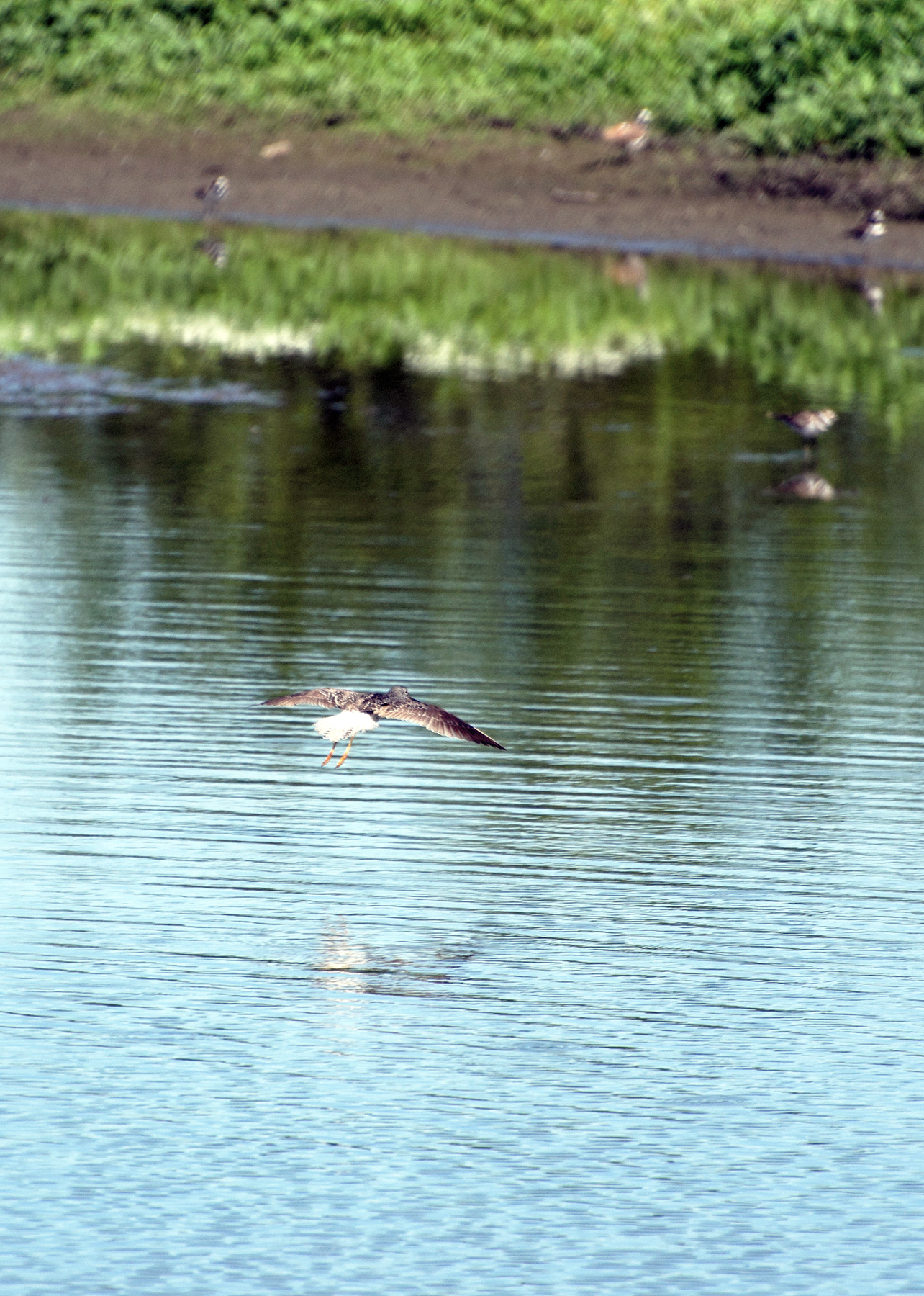
Greater Yellow Legs

And ever wondered if it is really true that some people are more frequently bitten than others, and if so, why that should be? Looks like it is a fact that people differ in their attractiveness for mosquitoes, and much of it has to do with genetics. There seem to be some 7 spots on our DNA that can make us more or less susceptible to the flying plague, likely related to kinds of body odors that either seduce or repel. How do we know? Good old epidemiological studies, collecting data from tens of thousands of people who report how attractive or not they are to mosquitoes and then comparing their DNA for similarities and differences, isolating causal factors. Furthermore, good old twin studies – we can vary how alike subjects are (with most other factors being held constant,) and then exposing siblings, fraternal twins or identical twins to mosquitoes. If one twin is judged to be the best thing on the menu by the mosquitoes, they should show the same interest in the other twin, which they do, and do so particularly with identical twins, who of course share all their genes.

Sandpiper

Mosquitoes also go for carbon dioxide, so if your metabolism is up, you exercised, you’re pregnant, they come for you. I forget the names of the other volatiles that either attract or deter the pest, but researchers believe that heredity of your deliciousness to stingers is comparable to that for height or IQ.

Killdear lined up

A lot of research on this topic is coming out of New Mexico, with work on all aspects of mosquito lives and troubles done by the Hansen Lab. One of the things they explore has certainly applications for our household: what can you use to repel them, short of poisoning yourself and your environment with DEET or other similarly toxic chemicals? They found that peppermint and lemongrass oil were effective for 30 min. Spearmint and garlic oil had a strong initial effect, however, both lost their efficacy at 30 min. Cinnamon oil was effective in significantly reducing mosquito attraction for 1.5 h.

Muskrat eying the duck….

You know what to apply or burn or drip around you now. Happy al fresco dining!

Time spent photographing critters and shorebirds at inland ponds this week required long sleeves and constant cursing: the insects were out at the edge of the water and no wind to blow them away. But it was worth to see the many killdeers, sand pipers and greater yellow legs feasting on – potentially – mosquitoes.

Cabbage Butterfly

And whole swarms of mosquitoes can be heard in this music, Crumb’s Music for a summer evening.

Red-winged Blackbird

Moss Musings and Lichen Lament

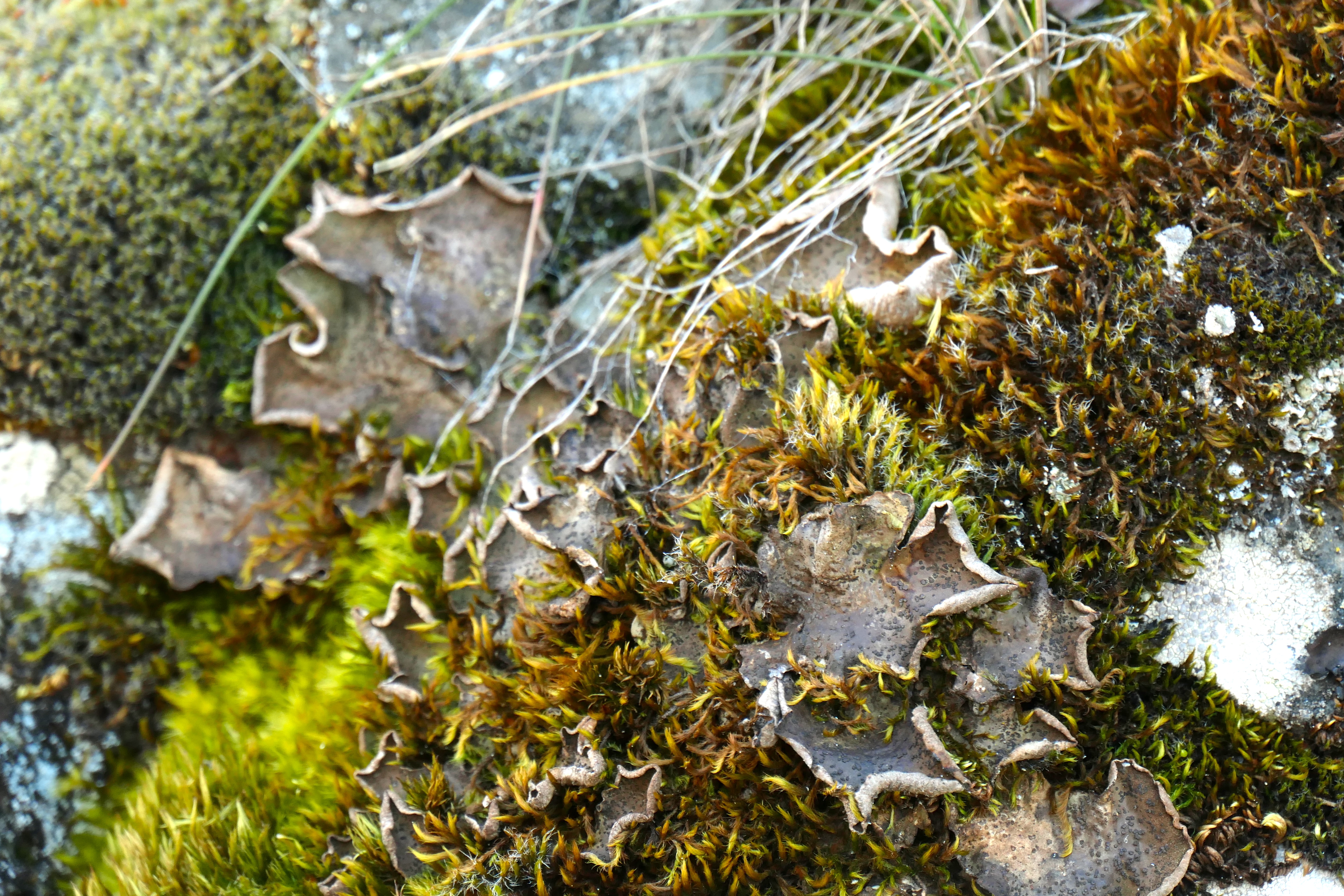
This is the time for wildflower hikes, more to be found every single week. It is also the time where there is enough moisture and warmth in the air that mosses and lichens awake from potential dormancy and fill the world with green, or, for that matter, orange, yellow, white and black, depending on the species.

The distinction between mosses and lichens, at my pay grade, is simple. One is a plant and the other a sandwich. Or so claim the teaching materials trying to instruct grade schoolers about their environment. Mosses are multicellular organisms that are able to use photosynthesis, like any other plant. They can’t transport moisture though, and thus need to stay close to the surface to absorb it.

Lichen, in contrast. are a mix of different organisms, one enveloping the other, thus the metaphor. The assembly consists of fungi fused with algae or cyanobacteria, and, only recently discovered, yeast. The individual ingredients benefit each other – the algae provide food for the fungus via photosynthesis and the fungal layer protects the algae from drying out, or being damaged by the sun. The yeast, as it turns out, produces noxious stuff that keeps animals from eating certain lichen. The resulting intact surfaces of lichen carpets help to keep things where they’re supposed to be, sort of gluing them down.

Most interestingly, lichens are a superb bioindicator – another sentinel warning us of environmental danger and destruction. “Because lichens have no specialized protective barriers, they also readily absorb contaminants and are among the first organisms to die when pollution increases, making them good sentinels for air quality.” They are sensitive to acid rain (the culprit being sulfur dioxide, from coal plants or long range industrial emissions.) They also get hurt by ammonia and nitrates used in agriculture, and they accumulate metals from power plant emissions. When they die off, we know WE are in trouble.


The US Forest Service has had a bio-monitoring program for lichen since the 1990s,

http://gis.nacse.org/lichenair/

in which scientists record census data on the diversity and abundance of lichens in thousands of designated survey plots across the country. They collect some samples and send them off to a lab for elemental analysis to identify the type and amount of pollutants. The data help federal agencies set pollution targets and map out areas where the targets are not being met, and they also help state and federal agencies that review emissions permit applications and existing regulations.”

https://cen.acs.org/articles/95/i46/meet-the-sentinels.html

Who wants to bet that under the current administration pollution targets are changing, regulations are shifted – or for that matter, whole programs like these are terminated? Luckily, lichen are ubiquitous, and one or another of the up to 17.000 species will survive in regions where none of us would. We are the ones that will pay the health and environmental cost in our areas, when pollution is again unchecked.

In any case, I find all this fascinating; if you don’t, perhaps you can at least enjoy the beauty of these lifeforms as they cling to the surfaces around us.

Music today shall be Mahler’s 3rd – probably of his symphonies the closest to nature, in its description of glory and wrath, both. That should make your morning lively!!

Bonus: some daily wildlife!

Wanted: Time Machine

One of my many reactions to the events of these long weeks has been: let me run away!  Won’t do, of course, but a woman can dream. Dreams that include a variety of travel companions who strike me as people I’d love to run away with and learn from.

One of them is Jeanne Baret, who was the first woman to circumnavigate the globe, although she had to do it as a man. Well, dressing, looking and acting like a man.

Born into a poor, illiterate family in France in 1740, she was trained as a herbalist to be a healer, eventually becoming an expert botanist. During her foraging outdoors she met recently widowed naturalist Philibert Commerçon. Soon they would share a bed as well as their passion for the world of plants.

In 1766, on the recommendation of the famous botanist Linneaus, Admiral Louis-Antoine de Bougainville hired Commerçon for his expedition exploring the new world. The latter took his lover on board, disguised as a man since the French Navy did not permit women on their vessels. Baret took care to bind her breasts, never undress in public and she slept in his cabin. More importantly, though she did all the work required by one hired as assistant (or beast of burden), hacking her way through jungles, carrying the heavy wooden botany presses, the containers filled with specimen, facing unknown dangers in a new world, while traveling on  a small supply ship for three years.

She was the one who discovered the bougainvillea named in honor of the ship’s commander. A commander who secretly admired her, but also took care to stress that this was not to be a model, once she was discovered.

Baret, with tears in her eyes, admitted that she was a girl, that she had misled her master by appearing before him in men’s clothing at Rochefort at the time of boarding…that moreover when she came on board she knew that it was a question of circumnavigating the world and this voyage had excited her curiosity. She will be the only one of her sex to do this and I admire her determination…The Court will, I think, forgive her for these infractions to the ordinances. Her example will hardly be contagious. She is neither ugly nor pretty and is not yet 25.
Louis Antoine de Bougainville, Journal, 28-29 May 1768


Rumors had, of course, flown about that she was not a man. For a while she countered them with tales of having been castrated while imprisoned earlier. But eventually she was discovered while exploring in Tahiti, or so the tale goes – there seems to be a bit of fudging of the truth to preserve her honor and that of the captain who would otherwise have been liable in court – crew members actually forcibly stripped her in New Ireland. She and her lover ended up in Mauritius working for the French East India Company establishing a botanic garden. When he died a few years later, she was thrown out and never saw the collection again that she had helped to build. A genus named after her, Baretia, was soon reclassified and renamed Quivisia.


Upon return to France she spent years in litigation to receive some of her lover’s estate that he had promised; an annual state pension on account of her services (petitioned for by her former captain!) saved her until her death in 1807. Only in 2012 was a new species of night shade, Solanum Baretiae, found in Equador and Peru, named after her. The woman had pluck, was driven, did not give up, and followed her passion. My kind of travel companion, although I probably would not have been able to keep up with her, ever.

Here is her story in some detail:

https://www.npr.org/sections/krulwich/2012/01/23/145664873/the-first-woman-to-go-round-the-world-did-it-as-a-man

And here is a link to the botanical description of the new species named in her honor – don’t waste time to read it, just marvel with me at the conventions of scientific writing that are now adopted by botany, while Baret counted leaves and risked her life…

https://www.ncbi.nlm.nih.gov/pmc/articles/PMC3254248/

And tomatoes are of course part of the nightshade family.

93 Degrees

Hot enough to flee the city and go to the beach. A long and leisurely drive along US Highway 30, the Old St. Helens Road,  gives you enough time to listen to a Radiolab podcast that reveals the most amazing story.

(I, by the way, usually do not listen to podcasts or books on tape. Part of that has to do with the fact that I associate taped narrative with all the times I was hospitalized as a child or teenager and could not even hold a book. So they would set me up with tape recordings, TVs were not present in pediatric wards. These days I also find that I am just impatient – I read fast, and admit to skipping, and listening slows me down to a degree that makes me twitchy.)

In any case, I make exceptions if I am told by a trustworthy source, now paddling his canoe, that I HAVE to listen to this or that recording. And so I stumbled onto this modern medical miracle, a feel-good-story if there ever was one.

https://www.wnycstudios.org/story/fronads

Here is the short version: Women who undergo chemotherapy or radiation usually lose their fertility, the ovaries get poisoned, fried or otherwise shut down. Freezing eggs beforehand is not an option – they contain so much liquid that gets crystallized by freezing that it bursts the ovum.

Several years back a doctor in NYC experimented with the removal of one of the ovaries of a young woman about to undergo serious chemo for Hodgkin’s Lymphoma. Her survival chances were slim, but she clung to the promise that if she was cancer free 2 years after treatment, they would re-implant the ovary. Which she was and they did – putting it for easy access right under her belly button, assuming that they would harvest eggs for IVF from there, should it kick back into action. In other instances they implant the tissue into your arm. Go figure.

Imagine everyone’s surprise when she got pregnant the old-fashioned way.  Not once but three times across the next several years. And she is not the only one; by now there are over 100 children born with this type of implantation, all without IVF.

So what’s happening here? They still don’t know, but two major theories are offered, one stranger than the other. Either the implanted ovary starts ovulating and somehow the egg migrates into the bloodstream and finds its way to the niche where it belongs, locating the fallopian tubes and moving into the uterus. Or the hormonal set-up from the implanted ovarian tissue triggers something in the system, bringing the seemingly destroyed ovary that is still down in the original  place back to life and pumping. In either case, it is miraculous.

Once you are at the beach you can photograph crabs (the German name Krebs denotes both the crustacean and cancer), cool off, and think about the mysteries of science……

….or about the fact that if all these miracle children learn not to giggle, they can partake in Haydn’s Kindersynfonie  ….


Hide and Seek

On Monday we mentioned evidence that face recognition follows different rules than other forms of recognition and is served by specialized brain tissue. But what are those rules?

The first part of the answer lies in the fact that we don’t recognized faces by looking at the individual features. Instead, we recognize faces by perceiving complex relationships – the spacing of the eyes relative to the length of the nose and so on.

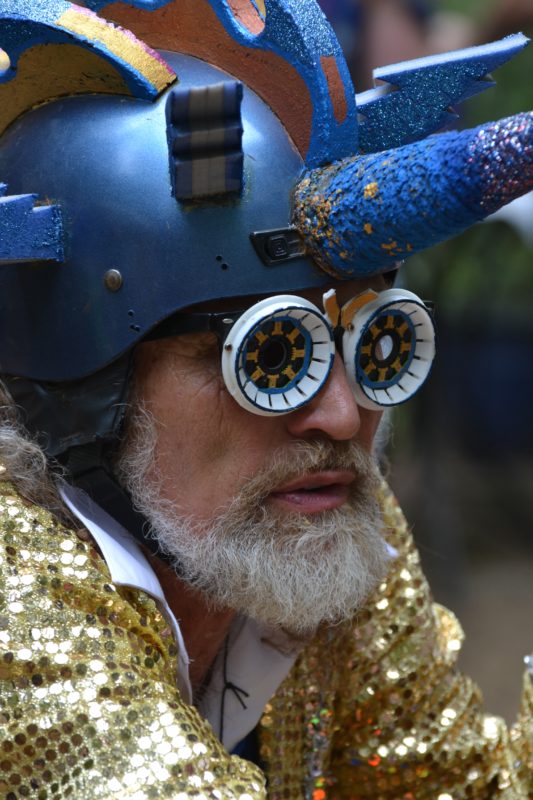
Common sense says that you best disguise a face by changing or hiding the features (unless you have access to a costume featured  in today’s cover ….). It turns out, though, that you can much more successfully disguise someone by changing familiar proportions into something else. For example, a hat pulled low, a cap or bandana, or bangs added, hiding the forhead and therefore changing the face height, are extremely effective as a disguise.

But it is not just the relationships. People recognize faces by comparing the relationships of the face in question to their understanding of an average or typical face with its relationships. As a result, people are actually more successful in recognizing portraits that distort the face, slightly exaggerating the ways in which the face differs from the average face. You can take this too far, and lose recognition, but a slight charicature helps recognition.

In fact, with a bit of computer manipulation you an distort a photograph by slightly exaggerating the relationships. You then show people the actual (accurate!) photograph of someone and then the distorted one and ask them which photo is a better likeness. People choose the exaggerated photo, apparently thinking that the inaccurate image is more accurate.

Of course, caricatures are perhaps more common in editorial cartoons than in fine art. However, modern portraiture has really committed to showing the essence of a person rather than his or her photographic likeness. Maybe then, the modern artists are more sensitive to psychological mechanisms and less to the demands of visual accuracy.

https://www.wired.com/2011/07/ff_caricature/.


I came across an article about (gorgeous)photographs of transgender people who seem to exaggerate stereotypic notions of femininity or masculinity in terms of outfits, make-up, body shapes and musculature. I wonder if we are seeing a parallel here with regard to being recognizable – given how little society recognizes them, in every meaning of the word, maybe slight caricature is the visual equivalent of “woman!”  or “man!”  – just wondering.

http://hyperallergic.com/357978/photographic-portraits-of-transgender-life-in-the-west-village/?utm_medium=email&utm_campaign=Photographic%20Portraits%20of%20Transgender%20Life%20in%20the%20West%20Village&utm_content=Photographic%20Portraits%20of%20Transgender%20Life%20in%20the%20West%20Village+CID_02932d0611b8b29450010cedb98b119e&utm_source=HyperallergicNewsletter&utm_term=Read%20More


Body Shapes

IMG_4368

The New York Times provided a fun little exercise of guessing type of olympic sport associated with certain body shapes some days back. For some reason the link does not like to be posted, so you are on your own finding it in the NYT archives…

However, it made me think of body shapes in general and the eternal question why women try to conform to any particular era’s expectations of looks. The link below gives you a recap of the shifts occurring only during the last 100 years – often with funny comments attached. http://greatist.com/grow/100-years-womens-body-image  I particularly liked the quote from Tina Fey in Bossypants: “Now every girl is expected to have Caucasian blue eyes, full Spanish lips, a classic button nose, hairless Asian skin with a California tan, a Jamaican dance hall ass, long Swedish legs, small Japanese feet, the abs of a lesbian gym owner, the hips of a nine-year-old boy, the arms of Michelle Obama, and doll tits.”

All of this would be, of course, just another nutty social convention, if it weren’t for the psychological and sometimes physiological cost attached to it for those who cannot escape the pressure to conform. Eating disorders have skyrocketed during times when extremes of thins were in fashion (for girls and boys, both – see report on gender, comorbidity and mortality rates (scary!) here: https://www.nationaleatingdisorders.org/prevalence-and-correlates-eating-disorders-adolescents) and culturally defined ideals have excluded minorities, whose shapes of course never ruled the day.

DSC_0087 copy

If you google female body shapes you get mostly porn or self help tips for, and I quote, “beauty and eternal sexiness.” Here is a slightly more scientific account: http://theconversation.com/is-there-really-a-single-ideal-body-shape-for-women-38432

IMG_3711

Let’s hope the olympic sports men and women provide some different focus!


The Zika Virus (again)

IMG_2217

I mistakenly sent this draft out before finishing it on Sunday. Maybe it’s the heat that makes me so incompetent a n d  cranky. Add to that reading about nasty viruses here to stay. Add to that selected phrases on the history of the virus penned in the World Health Organization’s report  – in its entirety here:

http://www.portal.pmnch.org/emergencies/zika-virus/articles/one-year-outbreak/en/

And I quote: “One year into the Zika outbreak: how an obscure disease became a global health emergency.” One year? That thing has been around – documented – since 1947. True outbreaks, when hopping from Africa to Micronesia and then French Polynesia, occurred around 2013/14, with 70% of the population of some islands infected. Guillain-Barré syndrome, a debilitating neurological disorder caused by the – now probably mutated virus – already documented. (Microcephaly, the birth defect, also found in retrospective research – nobody associated it with Zika at the times.) But now it hits countries we travel to or live in….it reached Brazil in 2014 with the World Sprint championship canoe races.

Late 2014 we have an explosion of cases all across Brazil. Within a year, the virus had been detected in nearly every country or territory infested with Aedes aegypti, the principal mosquito species that transmits Zika, dengue, and chikungunya. People’s lack of immunity and the behavior of the day-feeding, water breeding mosquito contribute. And I quote: “The mosquitos flourish in the litter, open ditches, clogged drains, containers for water storage, old tyre dumps, and crowded flimsy dwellings typically seen in urban and periurban areas where population growth has outstripped the capacity to construct essential infrastructure, like piped water and sanitation.” Population growth outstripped capacity for infrastructure? Hello? What about lack of funding and political will for emptying shantytowns and building safe environments?

Ok, let’s be fair. After the report prominently mentions that caring for a child with microcephaly costs $10,000.000 for a lifetime it acknowledges that in most countries this burden falls on the poor who have no access to healthcare in the first place and need to store water in containers, the ideal breeding grounds for mosquitos.

IMG_2577 copy

And here we see it in Puerto Rico and Florida, http://www.nbcnews.com/storyline/zika-virus-outbreak/u-s-declares-health-emergency-puerto-rico-due-zika-virus-n630131 – states, incidentally, that rely economically on a tourist industry. Any bets on travel plan changes?