Browsing Category

Poetry

Speaking her Words


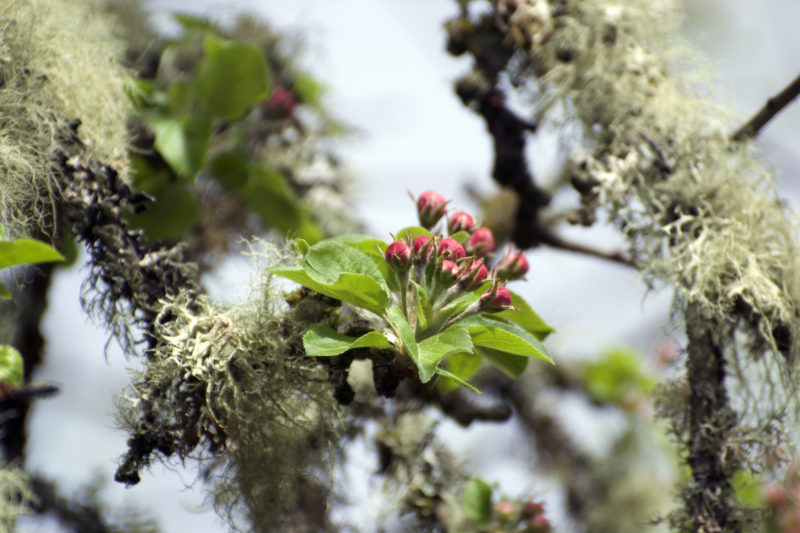
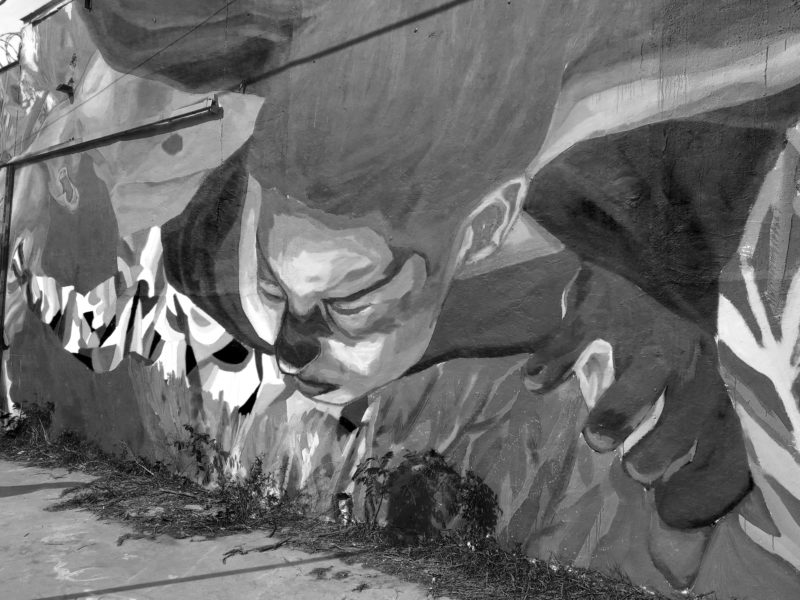
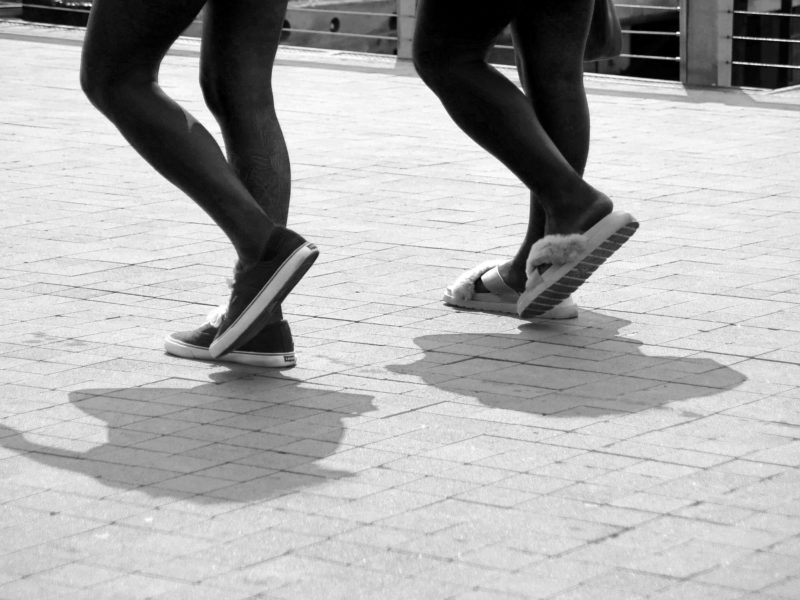
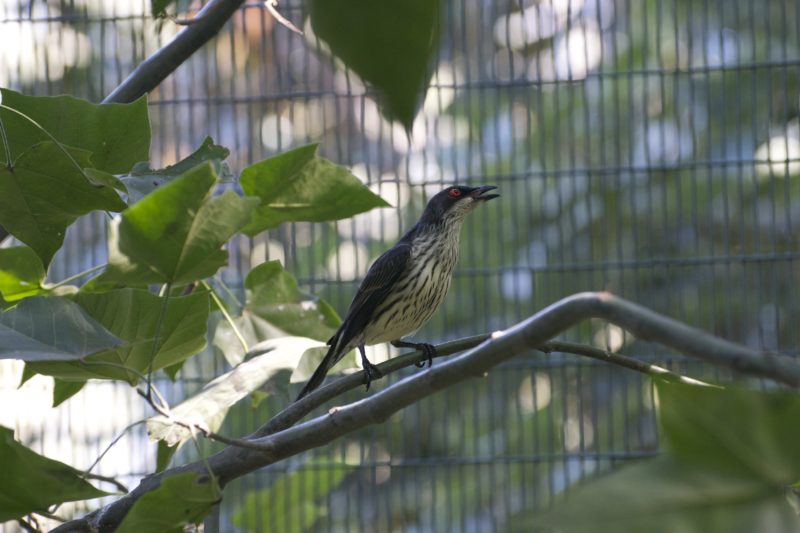
I have always felt an affinity to the poetry of Rose Ausländer (her last name means foreigner in German) as well as to the poet. Her poetry evolved from tightly structured writing early on to more free flowing, ethereal words, not coincidentally perhaps after she developed a friendship with Paul Celan, one of my favorite poets of all time.  I am drawn to the ways she uses language, but I am also drawn to the person who owned but two suitcases (if that) for all of her life, and who had an intense, loving, perhaps even enmeshed connection to her mother, not unlike my own. (Today’s photographs of lines are meant to represent both: connection and parallels.)

I think I have written about her in this blog before, but here is a quick summary of her life – details in link below. Ausländer was born in Czernowitz in 1901 (now Ukraine) surrounded by the many languages of the many different nationalities all congregating in Bukowina. She came from a liberal Jewish household, studied literature and philosophy, survived being forced into the Ghetto and hiding during the Holocaust, and, after a stint in the US, chose to return to Germany and live there until her death in 1988.

She was by all reports a warm person with a sunny disposition and she became the voice of reconciliation in her last years of life in Germany, embracing even her enemies. Another thing I admire and feel drawn to: the ability to forgive.

https://jwa.org/encyclopedia/article/auslander-rose

I chose two poems by her, one that expresses such bittersweet longing and mourning for her mother (Ausländer had a physical and emotional breakdown when hearing of her mother’s death that kept her ill for a year.)


The other poem is in response to her own request: I am speaking her words, as I hope will you.

That English translation, by the way, is really weak.

This is what the German actually says:

When I pass

the sun will continue to burn


the planets will

move according to their own laws

around a center 

unknown to anyone.

A sweet fragrance will emanate forever from

the lilac

white streaks of lightning radiate from the snow.

When I depart

from our oblivious earth

will you speak my words for me

for a short while? 


No-Man’s-Land

Her name is often spoken in the same breath as these others who are considered among the most brilliant German lyricist of the 20th century: Hilde Domin, Rose Ausländer, Ingeborg Bachman.  I am talking about Dagmar Nick who is nonetheless most likely NOT a household name. At least she wasn’t in my household. Not quite sure why that is.

Born in Poland in 1926 to musician parents, with some Jewish background, she experienced several displacements, among them one caused by World War II bombs that hit her apartment in Berlin.  She had a steady career as a writer, author of radio plays and poetry anthologies, with early acknowledgement through national rewards and prizes, and is still alive, living in Munich.

I came across her when reading After Every War – 20th century women poets –   (a Princeton Paperback) which has been one of my nightstand go-to’s since I discovered this small volume a decade or so ago. Here is a link that informs you about the anthology.

https://www.irishtimes.com/news/the-rubble-women-of-poetry-1.406672

The sheer breadth of poetry in it, and the emotional depth, intensified by the awareness that several of these poets did not survive the Holocaust, make it a must – read.

Since we read Nowhereland on Monday, I thought No-Man’s-Land today would be a good follow-up, particularly since it touches on the guilt experienced by those who survived.


No-Man’s-Land

Where the landscape dissolves

into sky,

where night after night

our shadows

touch each other

its fettered wings

on the narrow ridge

between here and there,

between where we are

and where we are not –

in a cursed circle of blood,

our dreams gone and no guarantees –

we lie on the pulsing shore

battered and beneath

our fallen banners –

Powerlessness. Guilt.

Dagmar Nick, translated by Eavan Boland

I, by the way, have not read one of her more recent books, Alter Baum, but was amused by her publisher’s description of the series that added her work. “Only authors who are 80 or older and write about transience or death without sentimentality and with wit….. ”


Clouds as Guarantors

Yesterday I introduced an Eastern European poet writing about exile who was not very well known. As a permanently poor refugee she never had the privilege of higher education, but started writing early in life.

Today I offer a striking contrast. Hilde Domin, (Hildegard Löwenstein) was born in 1909 into a well-to-do Jewish family near Cologne, got her PhD in political science among other degrees, studying with Karl Jaspers; she left Germany early, in 1930, to Italy, then to England, then fled to Santa Domingo in 1940, since she could get no-one to be a guarantor in any other countries that accepted Nazi refugees. She only starte to write poetry in 1951 when her mother died, and took up in full force upon her return to Germany in 1954.

She was smart, regal, prone to acerbic gossip, and never shy. She was a brilliant poet, with a confidence that I believe originated in her sense of self that was securely rooted in her intellect and her belief that poetry had a responsibility to be political.

She won about every honor and prize there is, was active until her last breath (she died this month in 2006 in her 90s.)

The obituary below gives the details.

https://www.theguardian.com/news/2006/mar/16/guardianobituaries.bookscomment1

I am also attaching a clip from a documentary about her that gives you a sense of her personality.

And I liked the fact that Abbas Khider, a Germany Iraqi poet who won the Literature in Exile prize in 2013, prefaced his collection with one of Domin’s most famous poems. (You can see the dove in question in the documentary trailer.)

http://www.dw.com/en/german-iraqi-wins-literature-in-exile-prize/a-17095449


My choice of poem, though, is more closely related to the experience of those who seek a haven and have little chance to find one if they are without means and/or connections. Ask anyone in Aleppo today.


Nowhereland

Last week I found myself averting my eyes every time I came across images or words on the carnage in Syria. I simply could not integrate the fact that we are witnessing another genocide, and I, personally, as a by-stander, doing nothing.  Those who are so much more familiar to me, the European poets of the 1930s, who faced the same situation as today’s Syrians, some lucky to escape some not, at least wrote about their experience, facing it head on.

This week, then, I will dig out some of that poetry as a stand-in for what Syrians experience right now, as a way to confront my own cowardice when I try not to think about war.

Some of the poets are well known, others less so. I will start with one of the latter, Masha Kaléko. A Galician Jew, she moved to Germany with her parents to flee the progoms; living in Frankfurt, Marburg, and eventually Berlin she became part of a group of writers know for their political approach and everyday wit. In 1938 she had to flee again, this time the Nazis. In New York she faced poverty and isolation, trying to support a scholar husband and a young son while trying to learn the language. Her husbands occupation as a scholar of synagogal music eventually led them to Israel, where she again had no words and needed to make ends meet. In the 1960s her poetry saw a revival in Germany which was brought to a halt when she declined a major literary prize because one of the jury members had belonged to the SS. She died miserably of stomach cancer, having lost her 31 year old son and husband in short succession to illness, in Zurich. The link below gives a comprehensive description of a life lived out of a suitcase.

https://jwa.org/encyclopedia/article/kaleko-mascha

It is hard to find her poetry in English. The book below is out of print; I believe it is also extraordinarily difficult to translate her German, since it has a certain style that is know as Berliner Schnauze, a Berlin argot that refuses to be transnational.

Mascha: The Poetry of Masha Kaleko – Andreas Nolte.

This is the one poem I could find in translation.


Not a Children’s Song

No matter where I travel,

I go to Nowhereland.

The suitcase full of longing,

Just knick-knacks in my hand.

As lonely as the desert wind.

As homeless as the sand.

No matter where I travel,

I come to Nowhereland.

The forests are all gone now,

Each home a firebrand.

Found no one left whom I know.

Not one knew me first-hand.

And when the alien bird cried out,

I ran, could not withstand.

No matter where I travel,

I come to Nowhereland.

Fleeting Years. Lasting Words.

The world lost an important voice this week. Ursula LeGuin died on Monday, age 88, after some months of ill health.

Today you could not open a newspaper or journal or relevant website without reading thoughtful obits, intensely varied and in their variety capturing the complexity of the author and the person – and all in awe of her.

I discovered LeGuin’s writings in the 1980s when I taught a psychology of women course at Lewis&Clark and came across a video where she expounded on issues of gender bias: in both directions. I still remember the students’ faces when after long discussions of women’s oppression she turned to the fact that young men have always been perceived to be the most expendable in any society and thus the perfect cannon fodder in wars throughout the ages. She saw the whole picture, not yielding just to please one side.

From then on I read her books with attention and pleasure, and not just her science fiction. Much of  her sharp, incisive observations and analysis first appeared in that genre – science fiction –  that many people unfortunately just shrug off as a literary category to be avoided. Her’s was political writing at its best, ignored by a public that often had stereotyped assumption about what science fiction literature is.

Of course she wrote in many genres, including poetry, and was also quite generous in her collaboration with other artists, be they photographers, writers or musicians. The numerous prizes and honors she won, the unconstrained admiration she received from her fellow writers, speak for themselves.

As much as her writings focused on “freedom from” oppression, bias, patriarchy, injustice and so on, I think her central theme was “freedom to” – in particular freedom to speak up, to act, to choose and create the kind of world you want to leave to the next generation.

Two years ago I attended a poetry reading at Broadway Books where she read some of her new poems. They resonated, among other things, because of their deep connection to a landscape which I count as particularly meaningful in my own little universe. I am attaching a poem that can be found in a book called OUT HERE, a contemplation on the Steens Mountain Landscape (with beyond gorgeous photography by Roger Dorband, a colleague who lives and works in Astoria.)

Check out his website: http://www.ravenstudiosart.com

She is in a different out there  now, with another way to be – or maybe relieved from ways of being, who knows. We are the poorer for it.

Here is her voice, set to the challenging and beautiful music by Eleanor Armer.

https://www.youtube.com/watch?v=tGdLXwjyb7w

Photographs of the creatures and landscapes mentioned in the poem are all from the Steen Mountains.


Fleeting Usage. Lasting Damage.

Living in a sandcastle might be considered fleeting. Then again, this guy managed to do it for decades….

http://www.bbc.com/news/av/world-latin-america-42761099/the-brazilian-man-who-lives-in-a-sandcastle


The more serious issue, and one to stay, is related to the fact that global reserves for sand are being exhausted. Demand has led to extraction that is reaching dangerous levels.

https://theconversation.com/the-world-is-facing-a-global-sand-crisis-83557

Sounds improbable, huh? Isn’t there sand all around us, every coastline in the world? It turns out that the demand for constructing buildings and roads, glass and electronics, for land reclamation, shale gas extraction and beach re-nourishment programs has made sand the most extracted resource in the world, exceeding fossil fuels.

And the staggering numbers (details in the link above) are perhaps not even accurate because much of the record keeping is hidden. Profiteering across national borders, since local supplies are now exhausted in many countries, has become common and are hurting entire countries.


Sand mining disproportionally affects developing countries and fragile environments. Nothing fleeting about the damage done to coastal communities that have fewer barricades against tropical storm damage; nothing fleeting about the consequence of extraction in Africa and Asia: left-over hollows develop into standing water pools that are breeding sites for malaria carrying mosquitoes and other diseases. Sand extraction in river deltas often leads to influx of saltwater that threatens local drinking water supply.

Let’s counterbalance the bad news with a splendid poem by a Dutch poet, a poem that somehow resonated strongly with me for its optimism and focus on the positive results of shared efforts.

Photographs are from the US and Holland.


The Bigger Picture

I’ve concentrated on detail for most of the week, so today I thought we’d look at landscapes to get the bigger picture. The photographs were taken in the Gorge in 2016 before the fires of this year, in the coast range and recently on Sauvie Island, now familiar to my faithful readers!

I picked the poem The Silent Heavens by Victorian poet Richard Watson Dixon shortly after the news of yet another mass shooting, this time in Texas. It reflects a sense of loss, not just of youth, of faith, of lives, but of the ability to connect; to connect in order to find answers. In secular terms perhaps even answers that could be pragmatically turned into political action.


For a long and insightful analysis that places the poem and the poet in their historical context as well go here:

https://www.theguardian.com/books/booksblog/2017/sep/25/poem-of-the-week-the-silent-heavens-by-richard-watson-dixon


I explore nature to escape thinking, more often than not. The part of me that “sees” the world, in ever lasting gratitude for the beauty around us, is mostly able to shut out the part of me that “thinks” about the world. Until it isn’t.


Taking pictures along the Columbia river, for example, makes my heart beat faster, first in awe, and then in anger, because I remember this: http://www.miamiherald.com/news/politics-government/national-politics/article181771226.html

It brings back the theme of the poem, translated into our modern, secular realm – the lack of humanity when we ignore the faces of the dispossessed.


Captured, of course, by Mahler im Lied der Erde, at his best: https://www.youtube.com/watch?v=PeghTtEcreM


Root Vegetables

We had yellow leaves, white pumpkins and red rose hips this week. Time to expand the palette. Root vegetables (and other fall crop) will lend their saturated colors, providing opportunity to go the farmer’s market to photograph and to share a poem that spoke to me for years.

If you ever need a thoughtful gift for a friend struck with serious illness I recommend Tisha Turk’s small volume of poetry Coming out Alive. Turk teaches at the University of Minnesota with a research focus on popular videography; a life threatening illness in 2003 produced her first volume of poems; they tell stories.

https://www.library.wisc.edu/parallelpress/pp-catalog/poetry-series/2003-2/getting-out-alive/

Some are directly related to issues of how to cope with illness, some are indirectly related to themes of how to survive any number of psychological or physical impairments. They are pragmatic, hopeful, sometimes wise.  (I realize that just like I prefer paintings that tell stories I also tend towards narrative poetry. I wonder what’s that all about.)

In any case, here’s to root vegetables. And toughness. And shared pain. To those who listen.


And here comes the fun part:

Go make that soup!!!

Autumn Rose Hips

Rose Hips also known as Apothecary Rose, Cynorhodon, Cynorhodons, Cynosbatos, Dog Rose, Dog Rose Hips, Églantier, Fruit de l’Églantier, Gulab, Heps, Hip, Hip Fruit, Hip Sweet, Hipberry, Hop Fruit, Persian Rose, Phool Gulab, Pink Rose, Poire d’oiseaux, Rosa alba, Rosa centifolia, Rosa damascena, Rosa de castillo, Rosa gallica, Rosa Mosqueta, Rosa provincialis, Rosa canina, Rosa lutetiana, Rosa pomifera, Rosa rugosa, Rosa villosa, Satapatri, Rosae pseudofructus cum semen, Rosehip, Rosehips, Rose des Apothicaires, Rose de Provins, Rose Rouge de Lancaster, Rosier de Provence, Satapatrika, Shatpari, Wild Boar Fruit are THE best thing to make jam with.

Or so I thought when arriving in a small bed&breakfast in some remote part of Southern Argentina, after months of being deprived of sugar, an essential, perhaps the essential staple of my diet…. I might have told the story before, but I could not stop eating that jam, generously supplied at the breakfast table, by the spoonful.  (These days I favor currant jam, not easily found here, and a special sour treat when done right.)

Rose Hips are visually enticing, providing such saturated color in fall, red to black splashes in the fading landscape. High in Vitamin C they are also recommended to be taken as a supplement (although as it turns out, when you process them and dry them yourself, almost all the Vitamin C disappears.)

Here is the deal, though: just because rose hip supplements are “natural” it does not mean they don’t have possible interactions with other medications or certain ailments. The assumption that things that are plant-based are safe is one of my pet peeves.

Just a few pointers, before you mega dose on natural Vitamin C in this cold season: Rose Hips increase how much estrogen your body absorbs; if at risk for cancer you don’t want to up the amount of estrogen floating around. Rose Hips interact with aluminum, (found in most antacids) increasing the amount the body stores. If you are on lithium, Rose Hips interfere with getting rid of the drug, leading to side effects. If you are on Coumadin, which is used to slow blood clotting, Rose Hips decrease the effectiveness of the drug. If you are diabetic they interfere with blood sugar regulation. And last but not least there are some data that point to the possibility of developing kidney stones if you eat large amounts of the Vitamin C in Rose Hips.

I guess it’s better to stick to the visual beauty and leave them as food for the birds…. and listen to folk songs about them https://www.youtube.com/watch?v=ETQTDMP17Ks

Or read poems about them that are deliciously subversive.

This young poet, by the way, is a force to be reckoned with. My kind of approach to nature…..

http://sorlil.wixsite.com/mmccready


And here is a vibrant red matching the vibrant wins of the Democrats in last night’s election – what  a ray of hope.


Pumpkins

I had not known that pumpkins come in colors other than orange. The white ones are particularly photogenic, not sure if they are equally suited for soup compared to the ones more familiar to me. I like pumpkin soup, and do not like pumpkin pie – riddle me that. Then again, pumpkin bread is a constant fall companion as my ever increasing hip volume can testify.

The poem I chose for today mentions pumpkin bread – as a kind, if futile, gesture towards someone struck by tragedy. I was caught by the poem as a “matter of fact, don’t really spell it out, let the insight hit a moment later” – piece of writing.

The music matches the mood.


Let me counterbalance the sadness with some of the most exuberant art currently on the scene:

https://www.dma.org/kusama

Yayoi Kusama is something else altogether, whether she applies her polka dots to pumpkins or anything else. The woman is creativity incarnate. I’m drooling over her energy…. https://www.nytimes.com/2017/11/03/arts/design/yayoi-kusama-david-zwirner-festival-of-life-review.html


Better get back drooling over the pumpkin bread….