Browsing Category

Technology

Flying

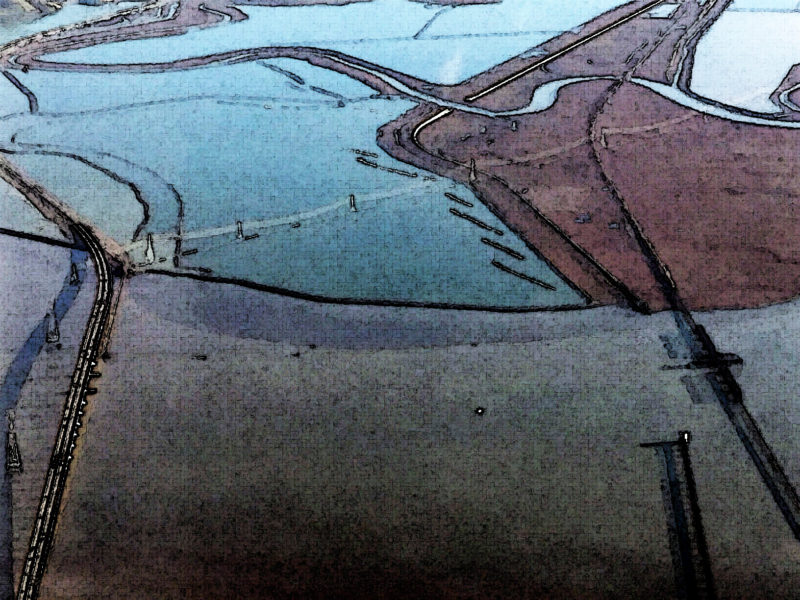
In an airplane, I just point my iPhone to things that look interesting, through the usually smudged and wet windows. (These images are from approaching SFO and put through a watercolor filter.)

Not so for someone with a passion for photography while flying. And with a passion for a cause: the environmental destruction happening across the globe in the pursuit of riches. I thought this was a timely topic given the impending retraction of protected national monuments and parks so the earth can be depleted some more. And I was impressed by someone who makes it possible for himself to travel to all these different countries that he photographed to warn us.

Let me introduce a man who is steering us all towards awareness of the hidden cost of consumerism. Henry Fair photographs the industrial scars of diverse countries while flying over them.  The resulting images are almost too beautiful to believe, particularly when thinking about the ugliness of what they represent. So I am breaking my rule of showing only my own photos (oh the freedom of blogging!) and present some of his. They are all contained in the link below:

http://www.spiegel.de/fotostrecke/industrial-scars-fotoband-zeigt-umweltsuenden-fotostrecke-146647.html

CANADYS, SOUTH CAROLINA, USA. When ash comes into contact with water, contaminants including arsenic, lead, mercury, selenium and others can migrate into groundwater, lakes and streams. This plant (since closed) was cited by the US Environmental Protection Agency (EPA) in 2011 as a âproven caseâ of environmental damage. It is know to have contaminated groundwater with arsenic, and is one of the largest emitters of sulphur dioxide in the USA.

GRAMERCY, LOUISIANA, USA. Red mud waste material is pumped onto the upper surface of a massive waste impoundment in a water slurry. The impoundments are essentially very large shallow bowls, engineered to de-water the slurry through evaporation and an internal drainage system fed by an arrangement of funnel-like decant points where water collects in pools.

SPRINGVILLE, PENNSYLVANIA, USA. Collection pit for drilling waste containing ground rock, drilling muds (the lubricants and chemicals used during drilling), and in some cases radioactive material existing in the target shale layer. The overspray at the top is a violation and a danger to any water bodies downhill.

LAUSITZ, GERMANY. The earth and rock overburden covering the coal is excavated and moved aside by conveyor to allow access to the coal. The conveyor feeds the overburden to a machine with a long, swinging arm which distributes the material by oscillating back and forth as it pours. When the mine is depleted, the overburden is used to partially fill the remaining pit.

KIRUNA, SWEDEN. Waste impoundment at Kiruna Iron Mine. The fine waste material is mixed with water and pumped in a slurry through long systems of pipes, or âlaundersâ, to tailings impoundments where the water runs off and is collected in ponds.


How can poison, waste and destruction look so beautiful? Abstract paintings are shallow echoes of these natural occurring patterns. And yet the images make me itch to pick up a paintbrush again…..Next life.


Hafenliebe

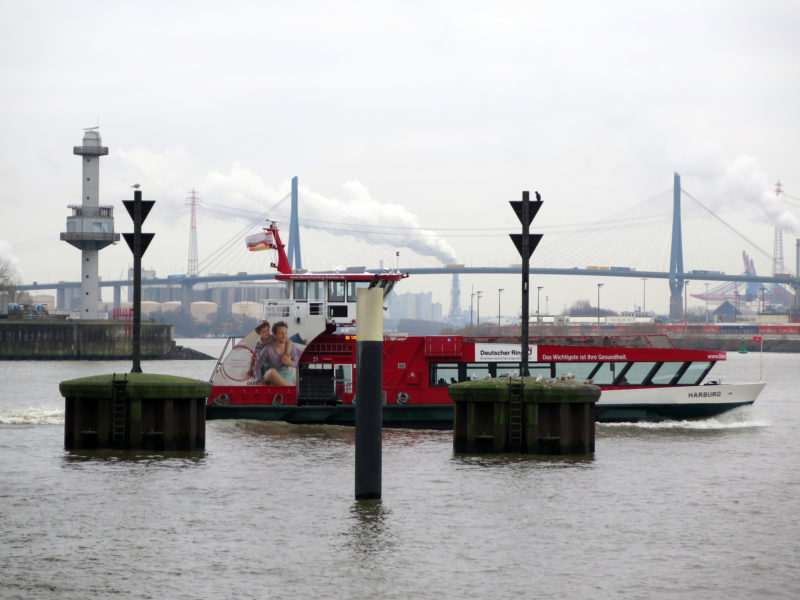
Hamburg’s port was founded in 1189 by Friedrich I and has been central to Europe’s commerce ever since. It is the largest port in Germany (74 square kilometers) and the second busiest, after Rotterdam, in Europe.

The way the river Elbe curves provided ideal locations for ware houses and transshipment complexes.

The old ware house city is a marvelous sight in itself, but so are the many views from different points of industrial facilities and river traffic.

Water treatment plant called “the rotten eggs.”

Hamburg has over 2400 bridges – more than Venice or Amsterdam – here are some “drive by” samples….


The harbor has been one of my favorite things to explore ever since childhood since it is so alive with coming and going and a promise of foreign worlds and adventure.  During this trip I have only photographed it in passing, on my way to other locations, except for a newly built house that you can walk on (the building is designated for businesses,) and the historic water treatment fields next to the harbor and the river, which are now open to the public together with a museum covering the history.


Going Underground

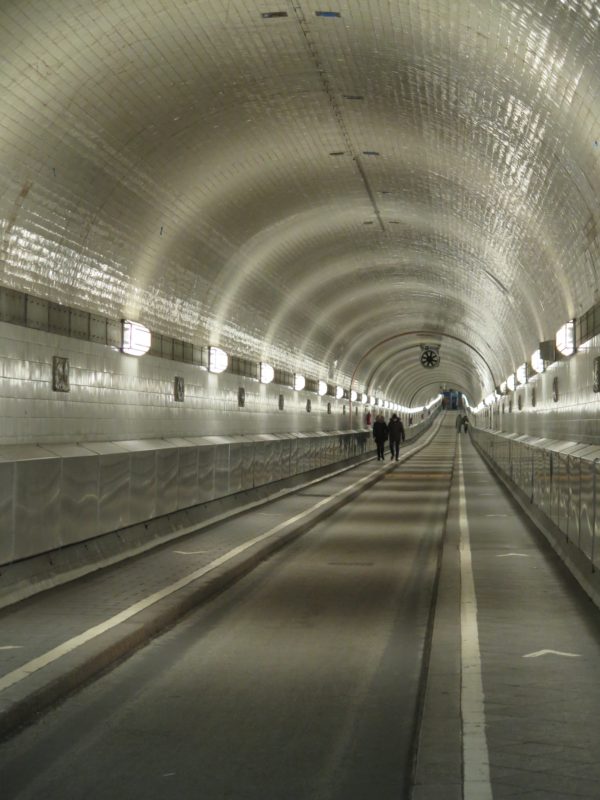
The river Elbe separates the Hamburg harbor and industrial sites from the city proper of Hamburg. Every day 10.000s of workers had to cross the river by boat under all kinds of inclement weather conditions; eventually the city decided to build a tunnel deep under the river, so that people could walk and later bike to and from work (the available bridges were too far away.) They started the novel and dangerous task of digging a tunnel – the first of its kind – in 1907. It took 4 years to complete and involved new technology and a lot of civic engagement from various engineering bureaus, architects, construction companies and city planners.


The tunnel has no ramps – each end has staircases, 2 elevators to carry pedestrians, and 4 elevators to transport carriages, loads and, later on, cars. The building of the tunnel was made possible by the use of a caisson, a huge iron cage that carried the workers into the depth; compressed air made working in this cage and also later in the tunnel rings possible.

It is amazing to see the open steel construction that holds the elevators. Their doors open vertically. The whole shaft into which you descend is elaborately adorned with sculptures, tiles, and now historical photographs. The tunnel itself is filled with three dimensional tiles of sea creatures, fish and the like.

When you work your way down you pass by a number of wood carved statues depicting the important people involved in the project. All but one. Of the 4400 workers hired for the labor, about 700 were hurt by Caisson- or divers disease. Coming up too fast from compressed air can kill you, and indeed did kill three workers. The workers fought to have a doctor with research experience on the topic to help deal with the problem. Dr. Arthur Bornstein and his wife Adele, a doctor as well, improved the working conditions and pushed science forward with their research on the effects of air pressure. But their likeness was not included in the display of luminaries – they were Jewish.  Later on the Nazis systematically destroyed their papers and silenced their contribution to this path breaking engineering marvel.


PDX LEDs

img_3618

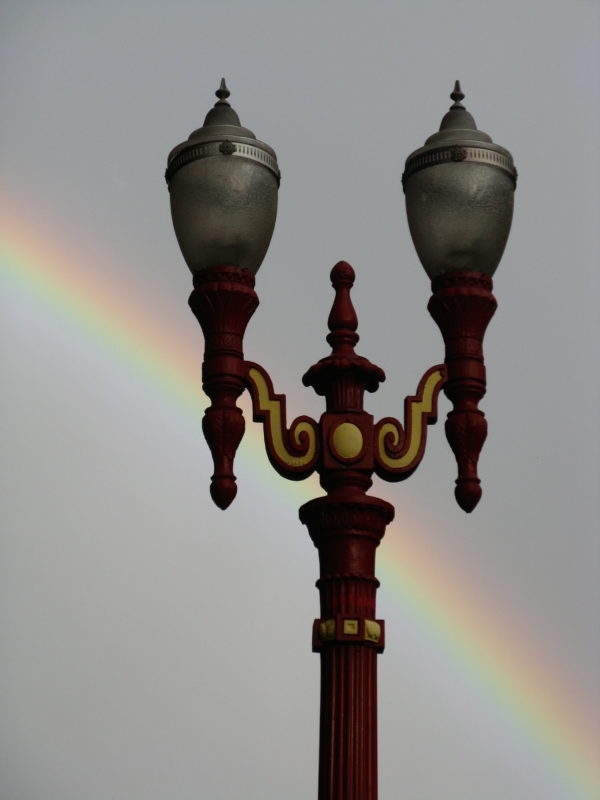
We started the week in Venice and will end it in Portland. I think Venice has nothing on us – if you go out and look at both the old and the new lamp posts that brighten our city there is much to admire. Then again, there always seems to be room for complaint…. as wittily recounted in this article from last year which describes the history of change in Portland’s illumination. It is a fun, quick read.

img_3660

http://www.oregonlive.com/history/2015/12/joseph_rose_remembering_portla.html

And I quote:”Long before then, back in the uncultivated frontier days, settlers white-washed stumps to keep horse-drawn wagons from careening off rough roads after sunset. By 1852, Stumptown had mounted lamps burning whale-oil eight feet above sidewalks. They really didn’t do much good, giving off about as much light as six candles.” By 1914 you had this:

19307212-standardThird St (now 3rd Ave) \: The Great Light Way….

I favor the old fashioned posts that you find in Old Town, Chinatown, and some of the bridges. What’s happening on the newer bridges, for example on the Sellwood bridge, might be economically efficient, but surely lacks beauty. Then again, we have all this light art adorning our bridges from the sides at night, so I am content.

img_3940

dsc_0027

Some of my favorite views of lamp posts are in the small pools at the waterfront, where they are reflected in various ways throughout the year. Chinatown with its vivid red colors are a close second. img_1076


img_2734

And, of course, we have all the light beams at Oaks Park!dsc_0014-2


Functional Posts and Poles

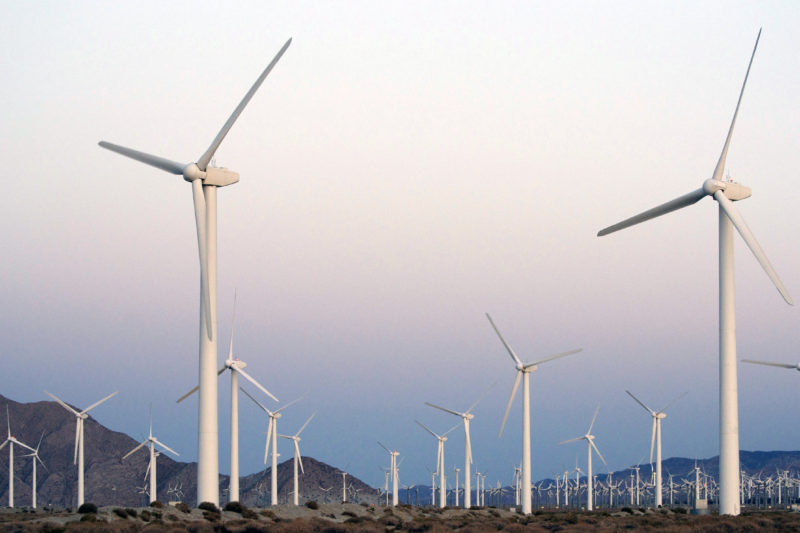
I am starting today with photographs of wind turbines because I am always in awe of how they look and sound. I know that there is a lot to design to make functional things in everyday life prettier or more interesting. But I also feel that things that are designed for ergonomic reasons only can be quite beautiful – these towers among them.

As an aside, it struck me as funny that the nation’s wind power museum is actually located in Lubbock, Texas – wasn’t that the oil producing state? Here is a short history of the harnessing of wind power:

http://energy.gov/eere/wind/history-wind-energy  .

dsc_0448

Other utility poles have their own charm – those for the laundry, as well as those for the aerial tram (although the people who fought the tram probably disagree.) Can you believe it will be 10 years old in January already?

http://www.gobytram.com

img_1949

Bridge posts construction has its own attractiveness and sometimes mysterious looks – I will show only a few photos here, since I will probably talk about bridges during another week. I don’t know a single photographer who is not enamored with bridges…..newport-112010_20101112_1071-copy


img_5841

dsc_0664

And then, of course, there are those posts that separate the acolytes from the masses at mass…..

dsc_0063


Halloween Post(s)

img_1615

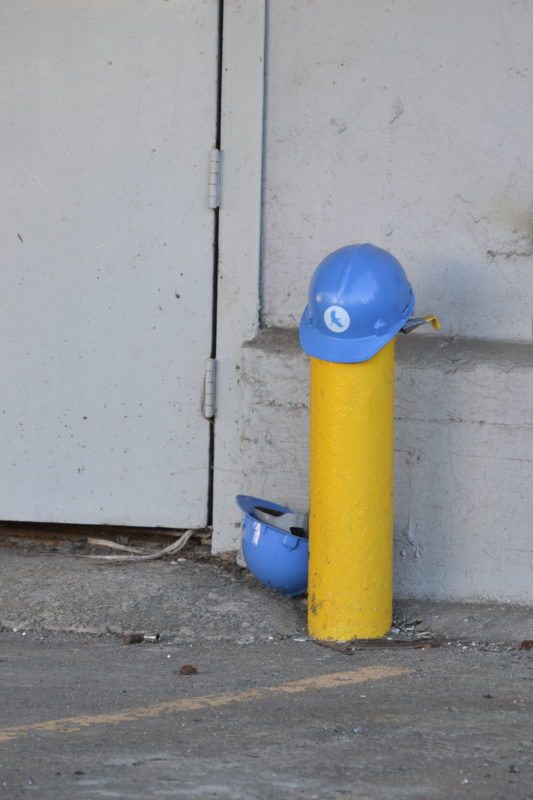
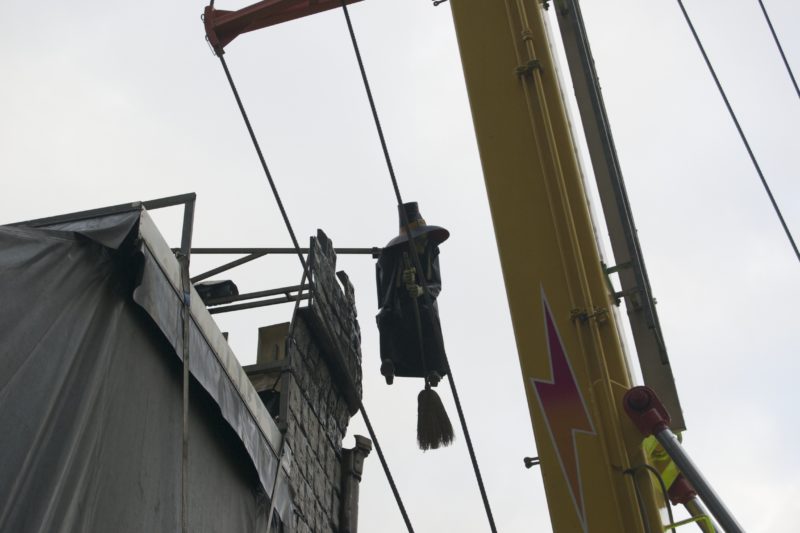
In keeping with today’s Halloween customs, I’ll post some photographs of posts and poles that struck me as eerie in one or another fashion.

img_1627

Definition of eerie:

  1. chiefly Scottish:  affected with fright :scared

  2.   so mysterious, strange, or unexpected as to send a chill up the spine <a coyote’s eeriehowl> <the similarities were eerie>also:  seemingly not of earthly origin <the flames cast an eerie glow>

  3. in use since the 14th century

img_1548-copy1Note that not all of them are in diffuse light. Some are in bright sunshine and still had a goose-bumpy quality. (I know, that is not English, but I am also not a native speaker….)


dsc_0330


I should have used any one of these, perhaps:

img_2388

uncanny, sinister, ghostly, unnatural, unearthly, supernatural, otherworldly; strange, abnormal, odd, weird, freakish; creepy, scary, spooky, freaky, frightening; bone-chilling, spine-chilling, hair-raising, blood-curdling, terrifying.

dsc_0652-copy


Happy Halloween!

tilden-builds-an-arch


 dsc_0792

Post, poles and pilings

Time to get back to man-made structures – and also time to don some pink glasses to persuade ourselves the world is not all dark and grey….. this week I am rummaging through the archives for poles of all sorts. Fence posts, telephone and utility poles, barber poles, you get the idea.


img_4343

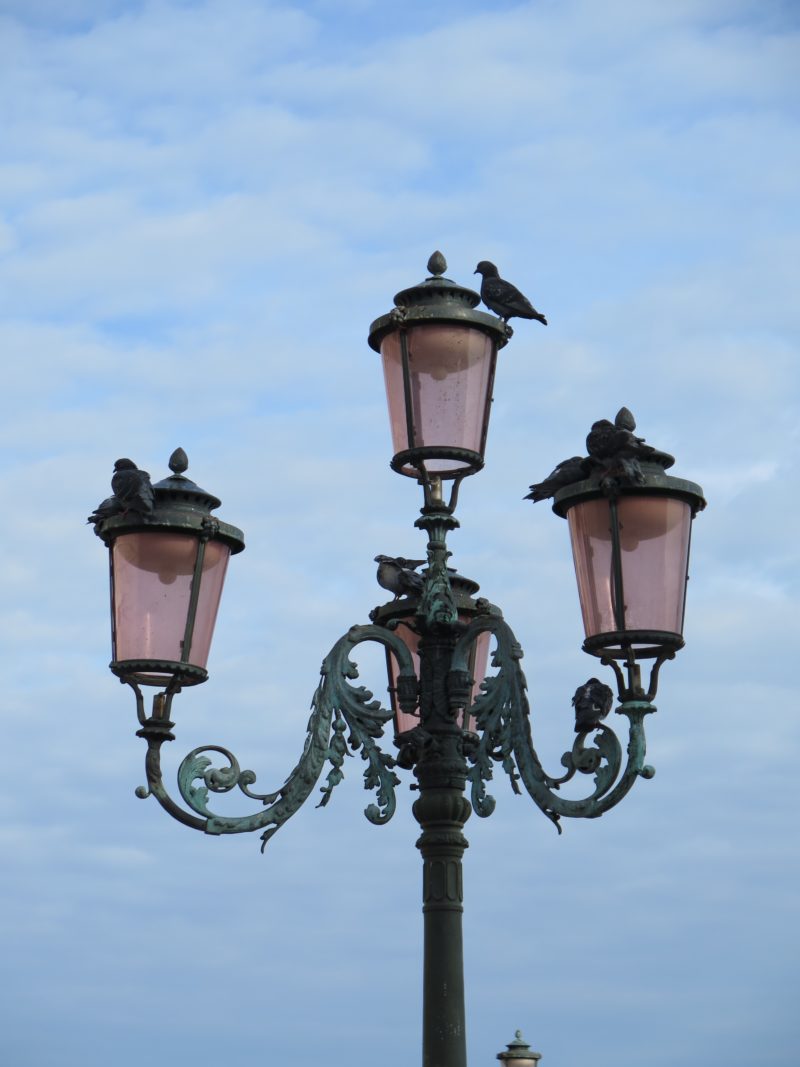
We start with the pink of Venice, found in its lamp posts, in its pilings, in rain spouts (a kind of post, sort of….)

Venice was the first European city to provide public street lighting. Doge Domenico Michiel decreed in 1128 that every night small lamps would be lit at shrines, gondola stops and intersections around the city at state expense in order to improve public safety and combat night time crime. The pink glass you see now in most of the Venetian street lights was originally more of an amethyst color, the natural color of the glass produced at Murano.

img_4922

Pink has clearly become a preferential color, complimented by azur skies, or grey clouds, depending on the season.

untitled-1

Cheerful, in any case, as long as you don’t think about Venice’s ultimate fate….as already described some 20 years ago

http://www.independent.co.uk/life-style/bickering-while-venice-sinks-1316639.html

img_5287-copy