Browsing Category

Music

From the Ground up.

The last installment of this week’s theme is dedicated to the foot soldiers of the civil rights movement. Their marches in the early 60s were the catalysts of the 1965 Voting Rights Act. They participated in Bloody Sunday, Turnaround Tuesday and the final Selma to Montgomery Voting Rights March, at great risk to their physical well being, and ultimately lives.

In 2016 they received collectively a Congressional Gold Medal — the nation’s highest civilian award, along with the Presidential Medal of Freedom – accepted on behalf of the 3000 or so young people by Rep. John Lewis (D-Ga.) and the Rev. F.D. Reese — two giants of the civil rights movement. These were children marching, led by men who believed that G-d would grant them justice.

Congressional Gold Medal presented to 1965 ‘foot soldiers,’ including four representatives of Ripon College

This came to mind because these weeks we see another group of children, young people, pouring their energy, courage and grief into a movement to curb the gun industry, undermine the nefarious goals of the NRA, and, most importantly, make our society safe against shooters with automatic weapons. Schools, clubs, concerts, and, yes, churches, are all places that should be sacrosanct against violence. I hope they will be as successful as the kids in Alabama, although that success has of course seen non-stop direct and indirect attacks since the signing of the law. Yet it was a beginning, a momentous victory. Let’s make sure March 24, 2018 mirrors that, with all of our feet on the ground.

Here is the last song of the week, from 1965, a hopeful note.

Shedding Light

Yesterday I had the chance, finally, to see the Marvel movie Black Panther. I cannot recommend it highly enough, for both the way its crafted, and more importantly, for the messages it contains. Super heroes fight for the best way to preserve their African heritage – coincidentally having escaped colonialism – and share their advanced technological knowledge for peaceful purposes – or not.

The best analysis of the film was written here by Jelani Cobb : https://www.newyorker.com/news/daily-comment/black-panther-and-the-invention-of-africa

And there is some in-depth discussion of the religious background as well as the historic struggle for black liberation here: https://www.washingtonpost.com/news/acts-of-faith/wp/2018/03/07/the-surprising-religious-backstory-of-black-panthers-wakanda/?utm_term=.c6ce4bff0688

Marvel made me marvel, as simple as that, since its film spoke to the strength of women ( today is International Women’s day) just as much as the issues of division in the black community and the potential of hope for a more peaceful desegregated future.  It was also a visual feast from landscapes to costumes to theatrical make-up, my eyes were hooked. Go see it, if you have not already.

The music was written and partially performed by Kendrick Lamar, our current most brilliant (and successful) rap artist whose music I have featured before. He is a deeply spiritual as well as religious contemporary artist, who does not shy away from expressing his thoughts on, doubts about and consolation through religion, most notably on his album Damn.

https://noisey.vice.com/en_us/article/jpzppp/kendrick-lamar-damn-spiritual-reawakening-religion

Film as well as music together provided a window to glimpse into possible worlds and towards a better understanding of culture(s) that have been artificially separated from us white folks in the pursuit of retaining the spoils of slavery.

Here are some of the tracks that speak to these issues https://www.vibe.com/2017/04/kendrick-lamar-damn-biblical-elements/ – I chose this one:


Released from the Pews

One of the challenges and one of the joys of writing blogs about things that you find interesting but know really very little about, is finding sources that inform you and on a good day, teach you.


This week, while looking into the connectedness between contemporary music and religion, I lucked out. I located numerous articles, among them the smart writing of a young woman, Lauren Jackson, who is a phD candidate at the University of Chicago interested in language and the roots of pop culture.

From her I learned that “Marvin Gaye, Little Richard, Aretha Franklin, John Legend, Katy Perry, Whitney Houston, Lou Rawls, Diana Ross, Jessica Simpson, Usher, Avril Lavigne, Faith Evans, Kristin Chenoweth, Beyoncé, Ethel Merman, Tina Turner, Britney Spears, all started out in church, in choir, on keyboard, as a soloist, each in their own way.”

She also argues in a review of contemporary singers that “Beyoncé Giselle Knowles-Carter is a Christian and a black Christian at that, which, all due respect to all other Christians, is an important distinction. Black folks with a love for God—or a fear of God—just aren’t the same.”

https://thepointmag.com/2017/criticism/touched-by-the-sacred

That sentence vividly reminded me of my first encounter with black worship – namely sitting in a movie theater in Germany watching the Blues Brothers movie, startled at what unfolded on the screen, certain it was an insane parody. Not entirely so, I was told by my American friends, who enlightened me about tent revivalism, voice-filled services, gospel choirs and the like. All quite outside my experience.

Fast forward to the last couple of years which saw videos like this:

One of the biggest stars of our time with a fan community that worships her like a goddess, presents a song about loss of a friend, mourning and salvation in church and in a cemetery. Not exactly sticking to the pews, but in keeping with her strong belief in God and adherence to Christian faith (as can be seen in this documentary about her life.) Christian media call her album Lemonade a modern book of psalms, no less.

 http://www.christianitytoday.com/ct/2016/may-web-only/bey-and-beys-god.html


And let’s add something for levity: a nice little conspiracy clip about how Beyonce really is on the side of the forces of darkness. https://www.youtube.com/watch?v=rEerVHe8DRc&t=201s

Here is something less funny, that analyzes the general hatred for black music, Christian or not, by certain parts of our population.

http://www.complex.com/music/2016/10/hip-hop-and-beyonce-trump-supporter-betsy-mccaughey

Enough reading and viewing material to sit in those pews for hours – bring a pillow.


Loud and Clear.

Contrary to what I used to be taught, namely that nuns were tucked away in nunneries, never to be seen or heard from again, they played an enormous, often progressive, role in the catholic landscape of the Middle Ages. They were active land owners, managers, litigators and teachers. Urban environments, like Florence in the 15th century, saw increased numbers of them (1 in 26 citizens!) due to many factors, including the plague and its consequence for the marriage market, the rise of the Medici and papal intervention. Nuns were integral to neighborhoods as well as the market economy – in fact they were in large scale responsible for the production and weaving of metallic threads. The book linked below argues that they affected broad social change, being political in relevant ways.

https://jhupbooks.press.jhu.edu/content/nuns-and-nunneries-renaissance-florence

Progressive nuns these days (starting with the Vietnam War) follow in that proud tradition, even if it has punitive consequences. Here are some of the causes they fight for (or against): immigrants, pipelines, war and missile silos.

Capitol Police arrest scores of Catholic nuns and leaders calling for immigration reform

https://www.washingtonpost.com/news/acts-of-faith/wp/2017/10/19/at-chapel-where-nuns-protest-a-pipeline-23-arrested-including-several-in-their-70s-and-80s/?utm_term=.16801a39480a

www.nytimes.com/…/7-nuns-arrested-in-antiwar-protest-inside-st-patricks-7-nuns.html

Jackie Hudson, one of three nuns arrested in 2002 missile silo protest, dies

I think these kind of nuns would agree with the song I chose for today: church can be anywhere where love, tolerance, respect is practiced.

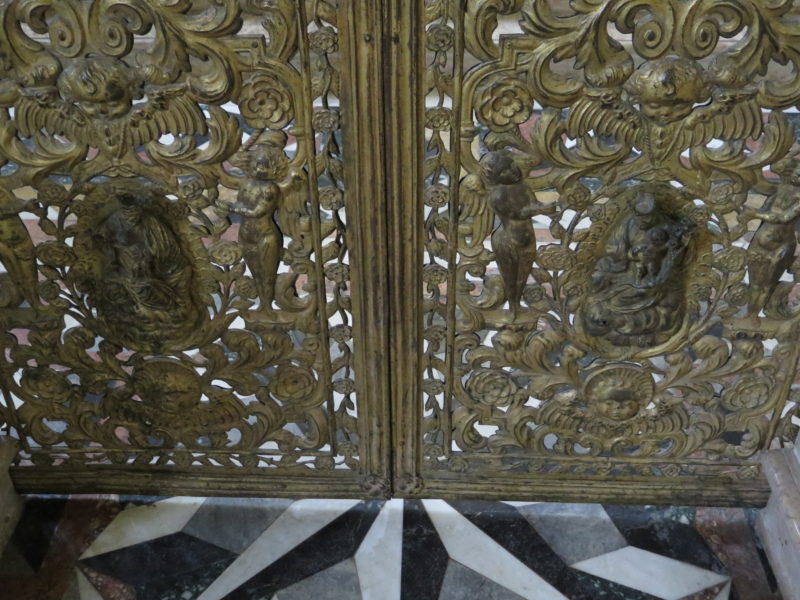
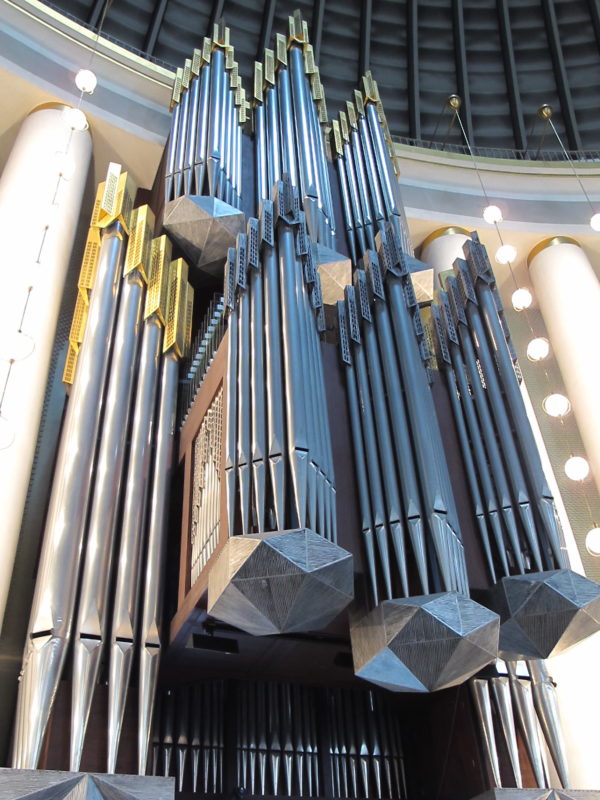
Photographs in honor of my sister’s upcoming birthday; she used to professionally build church organs before she switched careers.

Beyond Steeples

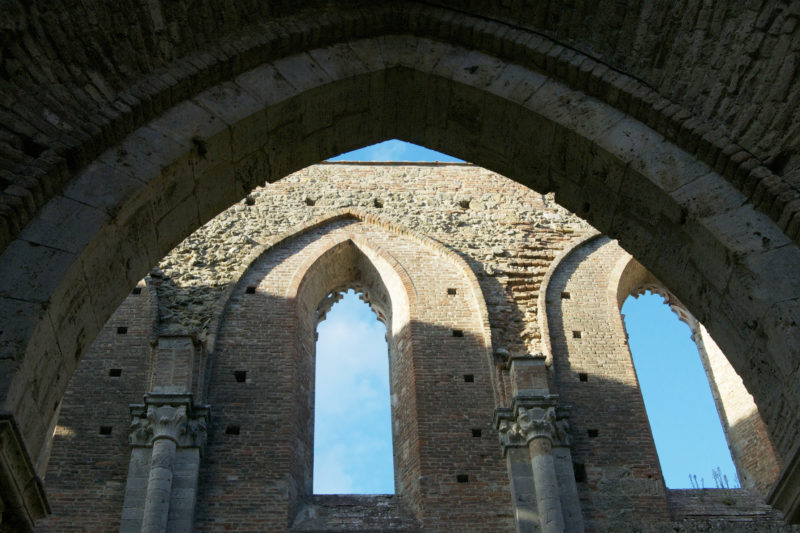
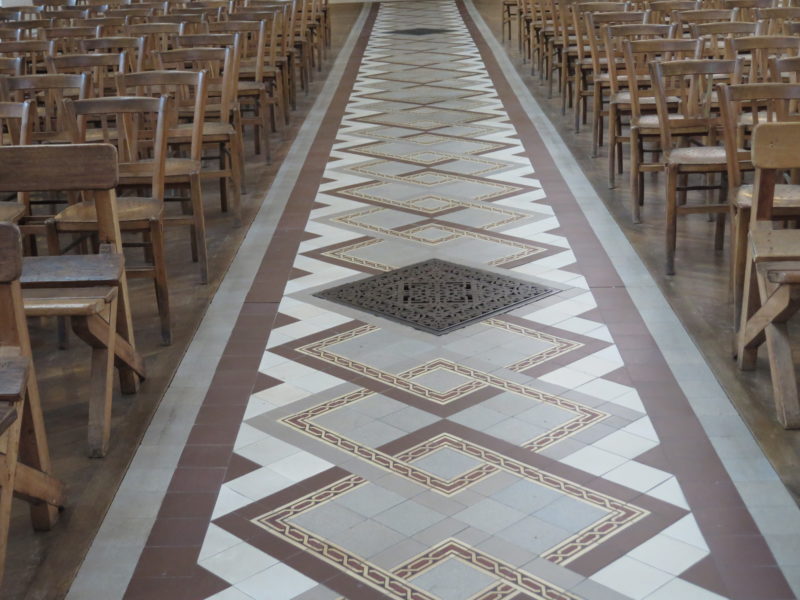
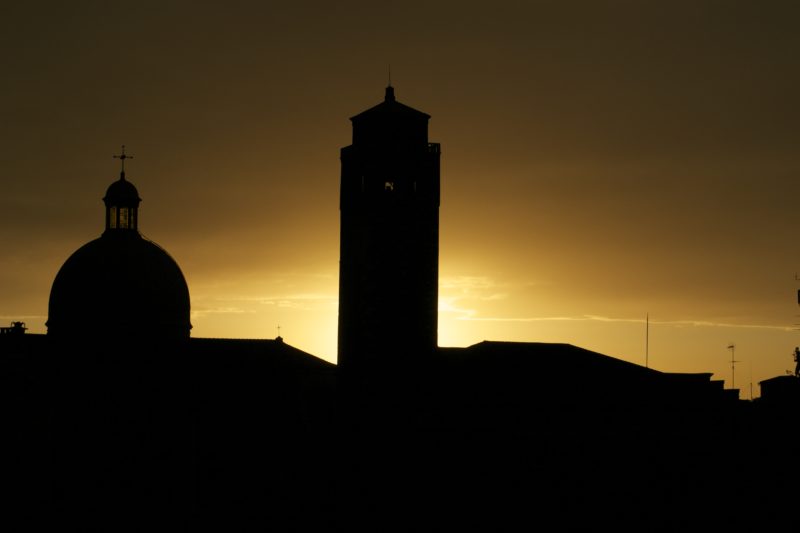
Churches will be on display this week.  Whatever complex – and complicated – relationship I have with organized religion of any kind, I often stand in awe at what was built in the name of it, from cathedrals to mosques to synagogues. For some moments I can forget the issues of money, power, oppression, proselytizing, misogyny and the like, and just marvel at the mountains of stones moved by faith.

This is particularly true for medieval cathedrals where those who started the project did not live to see its completion, with sometimes three generations of stone masons from a family consecutively working on the same building. The grandeur of these churches, their overwhelming size but also their interior beauty surely helped to keep the locals in check, remind them of power relations; but it was also, I strongly believe, testament to deeply felt devotion to a God who deserved beauty and sacrifice beyond a sermon on the mount, in the minds of his followers.

It is also true that the church was a patron to the arts for centuries, certainly across the middle ages. During that era religion was integrated into every day life. Its rites, feasts and fasts, in line with the seasonal rhythms, provided the structure of the Catholic existence. Religion flourished through this integration, and ecclesiastical patronage tried to be inspirational to keep it that way  – as well as keep an eye on the artistic output being in line with what was to be taught. These days, of course, religion and life are separate for most people, and the dearth of inspirational art is one of the consequences.


There is an exception, though. Music is interwoven with our daily life, and it is astonishing to see how many widely distributed forms of music are inspired by religion and communicating that inspiration. For this week, then, I have picked a number of diverse contemporary, popular musicians for us to listen to, who are deeply grounded in one or another faith tradition.

My first choice is this song by Bob Dylan, since I had just read this article about the exploitation of nuns, who were historically required to serve the church males….


The Bigger Picture

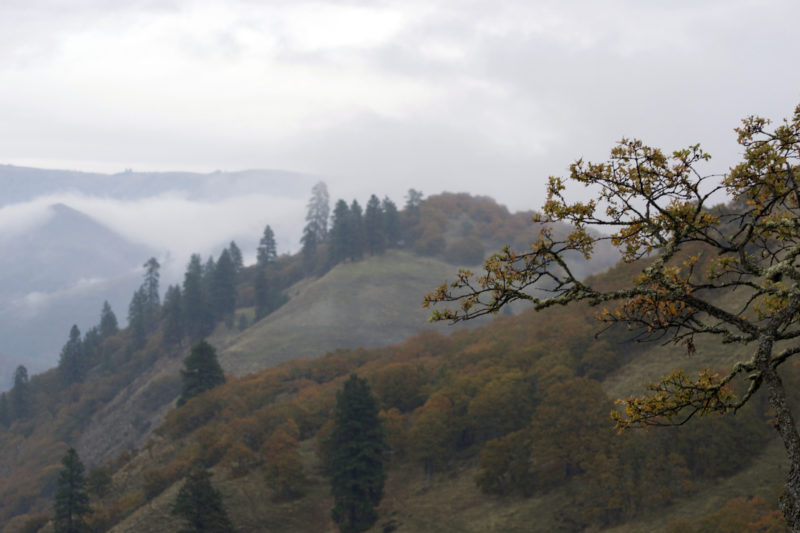
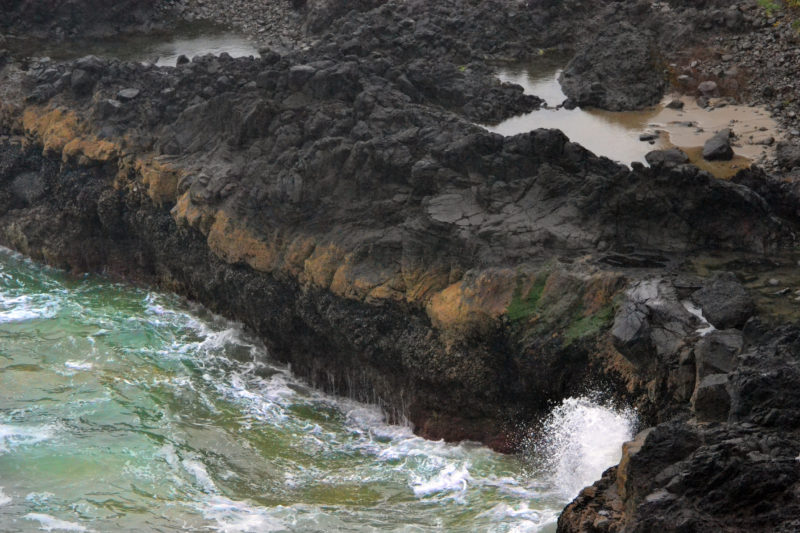
I’ve concentrated on detail for most of the week, so today I thought we’d look at landscapes to get the bigger picture. The photographs were taken in the Gorge in 2016 before the fires of this year, in the coast range and recently on Sauvie Island, now familiar to my faithful readers!

I picked the poem The Silent Heavens by Victorian poet Richard Watson Dixon shortly after the news of yet another mass shooting, this time in Texas. It reflects a sense of loss, not just of youth, of faith, of lives, but of the ability to connect; to connect in order to find answers. In secular terms perhaps even answers that could be pragmatically turned into political action.


For a long and insightful analysis that places the poem and the poet in their historical context as well go here:

https://www.theguardian.com/books/booksblog/2017/sep/25/poem-of-the-week-the-silent-heavens-by-richard-watson-dixon


I explore nature to escape thinking, more often than not. The part of me that “sees” the world, in ever lasting gratitude for the beauty around us, is mostly able to shut out the part of me that “thinks” about the world. Until it isn’t.


Taking pictures along the Columbia river, for example, makes my heart beat faster, first in awe, and then in anger, because I remember this: http://www.miamiherald.com/news/politics-government/national-politics/article181771226.html

It brings back the theme of the poem, translated into our modern, secular realm – the lack of humanity when we ignore the faces of the dispossessed.


Captured, of course, by Mahler im Lied der Erde, at his best: https://www.youtube.com/watch?v=PeghTtEcreM


Root Vegetables

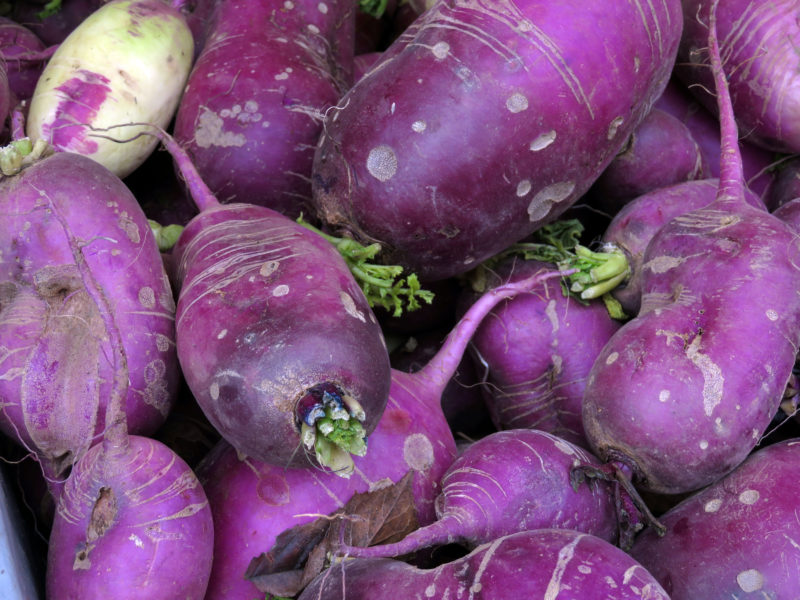
We had yellow leaves, white pumpkins and red rose hips this week. Time to expand the palette. Root vegetables (and other fall crop) will lend their saturated colors, providing opportunity to go the farmer’s market to photograph and to share a poem that spoke to me for years.

If you ever need a thoughtful gift for a friend struck with serious illness I recommend Tisha Turk’s small volume of poetry Coming out Alive. Turk teaches at the University of Minnesota with a research focus on popular videography; a life threatening illness in 2003 produced her first volume of poems; they tell stories.

https://www.library.wisc.edu/parallelpress/pp-catalog/poetry-series/2003-2/getting-out-alive/

Some are directly related to issues of how to cope with illness, some are indirectly related to themes of how to survive any number of psychological or physical impairments. They are pragmatic, hopeful, sometimes wise.  (I realize that just like I prefer paintings that tell stories I also tend towards narrative poetry. I wonder what’s that all about.)

In any case, here’s to root vegetables. And toughness. And shared pain. To those who listen.


And here comes the fun part:

Go make that soup!!!

Autumn Rose Hips

Rose Hips also known as Apothecary Rose, Cynorhodon, Cynorhodons, Cynosbatos, Dog Rose, Dog Rose Hips, Églantier, Fruit de l’Églantier, Gulab, Heps, Hip, Hip Fruit, Hip Sweet, Hipberry, Hop Fruit, Persian Rose, Phool Gulab, Pink Rose, Poire d’oiseaux, Rosa alba, Rosa centifolia, Rosa damascena, Rosa de castillo, Rosa gallica, Rosa Mosqueta, Rosa provincialis, Rosa canina, Rosa lutetiana, Rosa pomifera, Rosa rugosa, Rosa villosa, Satapatri, Rosae pseudofructus cum semen, Rosehip, Rosehips, Rose des Apothicaires, Rose de Provins, Rose Rouge de Lancaster, Rosier de Provence, Satapatrika, Shatpari, Wild Boar Fruit are THE best thing to make jam with.

Or so I thought when arriving in a small bed&breakfast in some remote part of Southern Argentina, after months of being deprived of sugar, an essential, perhaps the essential staple of my diet…. I might have told the story before, but I could not stop eating that jam, generously supplied at the breakfast table, by the spoonful.  (These days I favor currant jam, not easily found here, and a special sour treat when done right.)

Rose Hips are visually enticing, providing such saturated color in fall, red to black splashes in the fading landscape. High in Vitamin C they are also recommended to be taken as a supplement (although as it turns out, when you process them and dry them yourself, almost all the Vitamin C disappears.)

Here is the deal, though: just because rose hip supplements are “natural” it does not mean they don’t have possible interactions with other medications or certain ailments. The assumption that things that are plant-based are safe is one of my pet peeves.

Just a few pointers, before you mega dose on natural Vitamin C in this cold season: Rose Hips increase how much estrogen your body absorbs; if at risk for cancer you don’t want to up the amount of estrogen floating around. Rose Hips interact with aluminum, (found in most antacids) increasing the amount the body stores. If you are on lithium, Rose Hips interfere with getting rid of the drug, leading to side effects. If you are on Coumadin, which is used to slow blood clotting, Rose Hips decrease the effectiveness of the drug. If you are diabetic they interfere with blood sugar regulation. And last but not least there are some data that point to the possibility of developing kidney stones if you eat large amounts of the Vitamin C in Rose Hips.

I guess it’s better to stick to the visual beauty and leave them as food for the birds…. and listen to folk songs about them https://www.youtube.com/watch?v=ETQTDMP17Ks

Or read poems about them that are deliciously subversive.

This young poet, by the way, is a force to be reckoned with. My kind of approach to nature…..

http://sorlil.wixsite.com/mmccready


And here is a vibrant red matching the vibrant wins of the Democrats in last night’s election – what  a ray of hope.


Pumpkins

I had not known that pumpkins come in colors other than orange. The white ones are particularly photogenic, not sure if they are equally suited for soup compared to the ones more familiar to me. I like pumpkin soup, and do not like pumpkin pie – riddle me that. Then again, pumpkin bread is a constant fall companion as my ever increasing hip volume can testify.

The poem I chose for today mentions pumpkin bread – as a kind, if futile, gesture towards someone struck by tragedy. I was caught by the poem as a “matter of fact, don’t really spell it out, let the insight hit a moment later” – piece of writing.

The music matches the mood.


Let me counterbalance the sadness with some of the most exuberant art currently on the scene:

https://www.dma.org/kusama

Yayoi Kusama is something else altogether, whether she applies her polka dots to pumpkins or anything else. The woman is creativity incarnate. I’m drooling over her energy…. https://www.nytimes.com/2017/11/03/arts/design/yayoi-kusama-david-zwirner-festival-of-life-review.html


Better get back drooling over the pumpkin bread….


Herbst

Last night was the beginning of Sukkoth, the Jewish celebration of the harvest and commemoration of endless years of wandering in the desert. It marks the beginning of fall – where non-Jewish Germans celebrate the harvest as well, decorating their yards and churches.


It let me to thinking: what else was shared? Beyond citizenship, language, service in the military (an estimated 100000 Jewish men served in WW I, of whom approximately 12.000 were killed,) schools, hospitals, volunteer work, neighborhoods, worries about the kids, worries about the economy, you name it, in those years before the Nazis’ rise?


The arts. The arts were equally beloved, by those who produced them and those who consumed them irrespective of racial or religious background.

So for today, a day that should be spent grateful for the bounty of the earth, but instead is spent think about the past being too close to the present, I chose songs about fall by Jewish composers Felix Mendelssohn and Fanny Hensel, songs sung in all German households.

I am also adding a contemporary German Klezmer piece about Sukkoth. The video accompanying the music is clippings from The Golem, a 1920 movie made by Paul Wegener, who was born in the late 1800s in Prussia and studied with Max Reinhardt. The guy is something to behold and not just as one of the greats of expressionist cinema. In the 1930s he appeared in Nazi propaganda films such as Mein Leben für Irland in 1941 and Kolberg, a 1944–45 propaganda film epic about the Napoleonic Wars. At the same time, in real life, he expressed his disdain for the Nazis by donating money to resistance groups, hiding vulnerable people in his apartment and writing anti-Hitler slogans on walls. He also found time to get married 6 times…..  https://en.wikipedia.org/wiki/Paul_Wegener

Photographs are of German landscapes in fall.