Browsing Category

History

Changing History

Ever heard of Maria Louise Baldwin (1856 – 1922)? Neither had I. You can find a portrait of her and other female African-American activists at this Library of Congress site. I came across her name and that of many other activists in an illuminating essay by a SUNY professor of anthropology and women’s studies, Denise Oliver Velez, who talks about a fitting term for the lack of prominence that black women activists experience: misogynoir. Love that word, hate the concept, namely that being black makes it even harder for women to be treated fairly or even being remembered…. gender compounded by race.

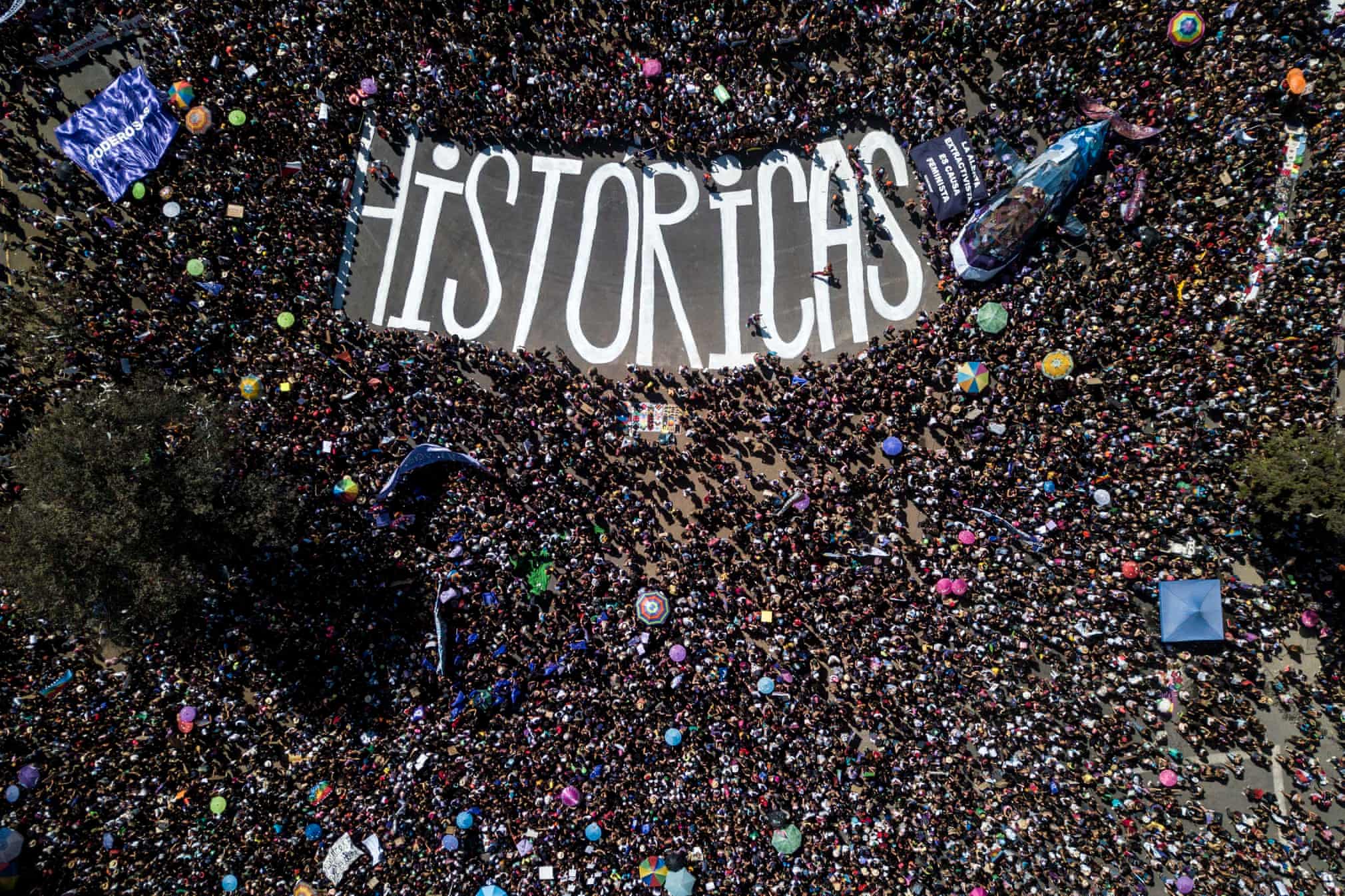
Photograph today are from a Guardian report on International Women’s Day 2020 – poignant images, NOT my own.

Baldwin was a highly respected and successful educator in the Boston area in the early 1900s, and believed that a democratic multiracial society could be established in the US. She was a prominent leader, teaching people like e.e.cummings, among others, and became part of the Niagara Movement, the precursor of the NAAPC (not without a fight there, either: the male members of the movements at first did not want to admit women…) The movement was convened to renounce Booker T. Washington’s accommodation-ism (the movement name derived from the fact that as black folks they had to rent hotel rooms in Ontario, Canada, because nobody would let them on the US side.) Here is what Baldwin and others in the movement fought for (and here is a good source for the general history of resistance in that era:)

…. freedom of speech and criticism; a free press; manhood suffrage; abolition of all caste distinctions based on race or color; recognition of the principle of human brotherhood; belief in the dignity of labor; and a united effort to realize these ideals under wise and courageous leadership.

That fight has continued throughout the last 120 years, obviously, with black women leading the charge in so many cases, voting rights included. We only have to remember the events of Bloody Sunday in Selma, which has its anniversary in close proximity to this International Women’s Day. To borrow the words of Marcela Howell, the founder and president of In Our Own Voice: National Black Women’s Reproductive Justice Agenda: “Black women leaders are carrying both the water — as we do the hard, unglamorous work of organizing in and nurturing our communities — and the torch, as we inspire the country to see past the darkness to a just future.”

If all this makes you more curious about history and you are looking for informative sources – here’s a reading list (selected not by me but Keisha N. Blain, an Associate Professor of History at the University of Pittsburgh. She is the author of the multi-prize winning book, Set the World on Fire: Black Nationalist Women and the Global Struggle for Freedom. The list looked interesting, and the two books I knew spoke for the rest that I have not (yet) read.

When and Where I Enter: The Impact of Black Women on Race and Sex in America Paula Giddings (1984) 
To Joy My Freedom: Southern Black Women’s Lives and Labors after the Civil War Tera W. Hunter (1998)
Blues Legacies and Black Feminism: Gertrude “Ma” Rainey, Bessie Smith and Billie Holiday Angela Davis (1999)
Ella Baker and the Black Freedom Movement: A Radical Democratic Vision Barbara Ransby (2005)

Southern Horrors: Women and the Politics of Rape and Lynching Crystal N. Feimster (2009)
Sojourning for Freedom: Black Women, American Communism and the Making of Black Left Feminism Erik S. McDuffie (2011)
Jane Crow: The Life of Pauli Murray Rosalind Rosenberg (2017)
Sex Workers, Psychics and Numbers Runners: Black Women in New York City’s Underground Economy LaShawn D. Harris (2017)

Let’s resurrect the memory of these incredible women!

And do it while listening to some of the more energetic music around – Yola will make us hum!

It’s just rowdy youth, they say

It’s just rowdy youth was a typical commentary found in some Austrian media in light of the news that an art project honoring Holocaust survivors was defaced and destroyed over the last couple of days in Vienna. German-Italian photographer Luigi Toscano had erected 80 larger-than-life portraits of Holocaust survivors, an exhibit called Lest We Forget, opened recently by Austrian’s President Van Bellen.

Photo credit:DPA

Many of these faces were slashed by knives, some had antisemitic slurs and swastikas written all over them.

The portraits are large, 8 ft tall, and printed onto gauzy, water-repellent material. The exhibit has been shown in San Francisco and other places without incidents, while one version that is currently up in Germany has police protection. So does every single Jewish institution from daycare centers to schools to synagogues in Germany, according to Chancellor Merkel who was interviewed about the matter after the government agent responsible for anti-Semitism had announced last Saturday that Jews should not always be wearing kippot in public because it has become unsafe. As a response to this warning the German government suggested that all German citizens should go out in public with skull caps to show solidarity. A lot of good it will do….

Certainly the Austrian police will not follow this call for solidarity. They did not even show up when the vandalism was reported originally and the artist called to have the perpetrators pursued. “It’s just property damage.” Yes, let’s pretend there is no political context during a week where the Austrian Neo-Nazi Vice Chancellor Strache had to resign amidst scandal (a secret taping of his pre-election discussions with a presumed Russian agent to exchange favors for help.) A resignation that extended to cabinet members, a vote of no confidence for Chancellor Kurz, and new elections slated for September. The whole sordid story here.

Before we descend into complete gloom, however, there is also good news. Muslim citizens came to protect the images, artist collectives guarded them overnight, and a group of young people brought sewing kits and repaired the slashed surfaces. And at the beginning of this month Timothy Snyder (a Yale historian who specializes in the study of the Holocaust) delivered a remarkable speech at the Viennese Judenplatz on the occasion of Europe Day 2019. If you have time and inclination, it’s truly worth a read.

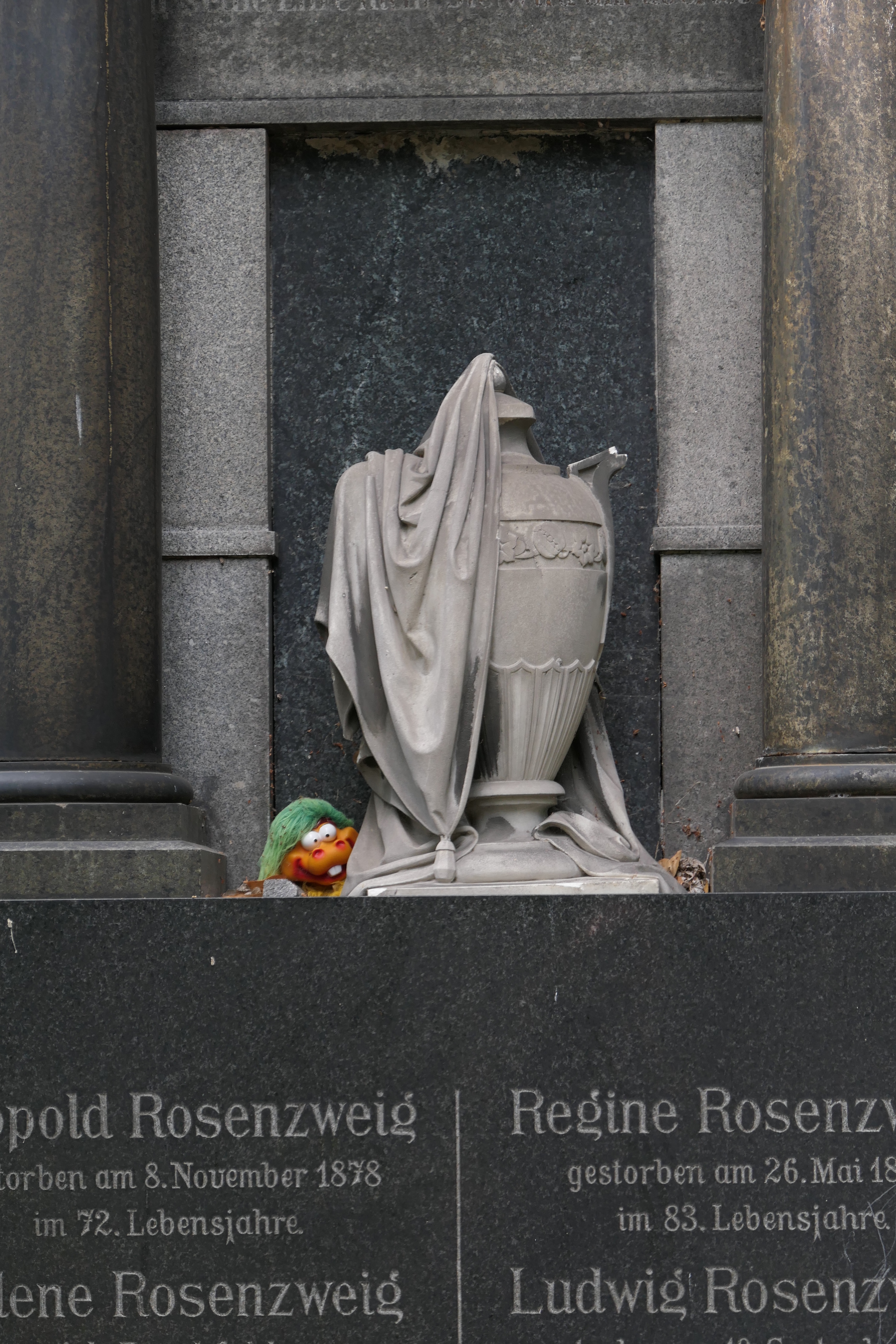
Photographs are from the old Jewish section of the Zentral Friedhof in Vienna. It has fallen into terrible disrepair, with waving fields of stinging nettles, roaming deer, and only an occasional sign that someone still comes to visit.

Music is by the quintessential Viennese composer Schubert. This, his very last sonata, was called by someone a message from the dead to the living if there ever was one.

Lest we forget.

Community Memory

One of the regrettable side products of a society on the move – whether moving is voluntary or not – is the loss of historical knowledge. If you grow up in a place and stay there for most of your life you are usually familiar with the history of your surroundings. You relate facts and stories to the next generation and you recognize them in the art that surrounds you, if it is focussed on any of these issues.

None of that is true any longer when you move to another area, another part of the country, another country. You have to do painstaking work to put all the pieces together and even then you might not have the information that comes with narratives handed down from generation to generation.

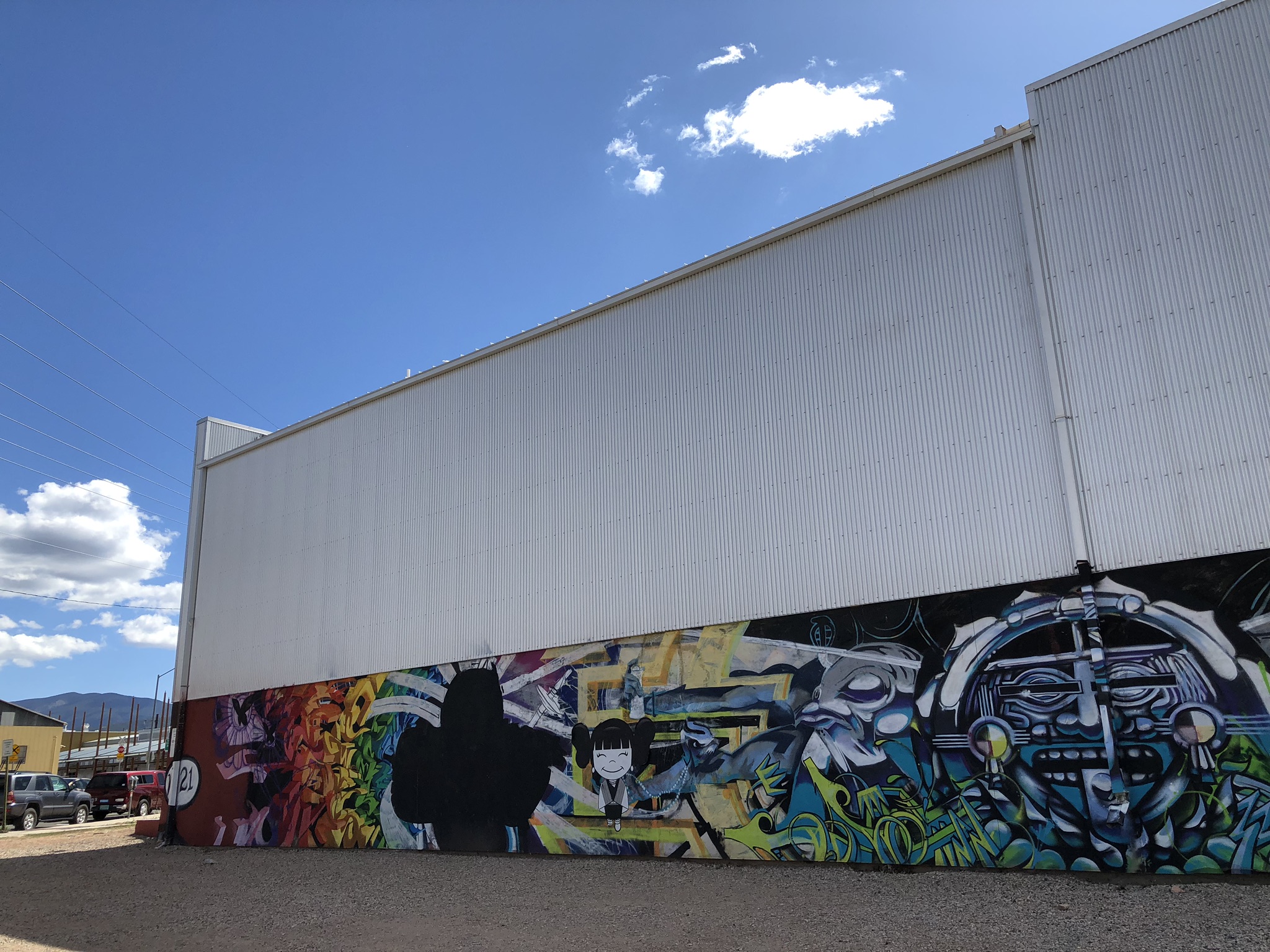
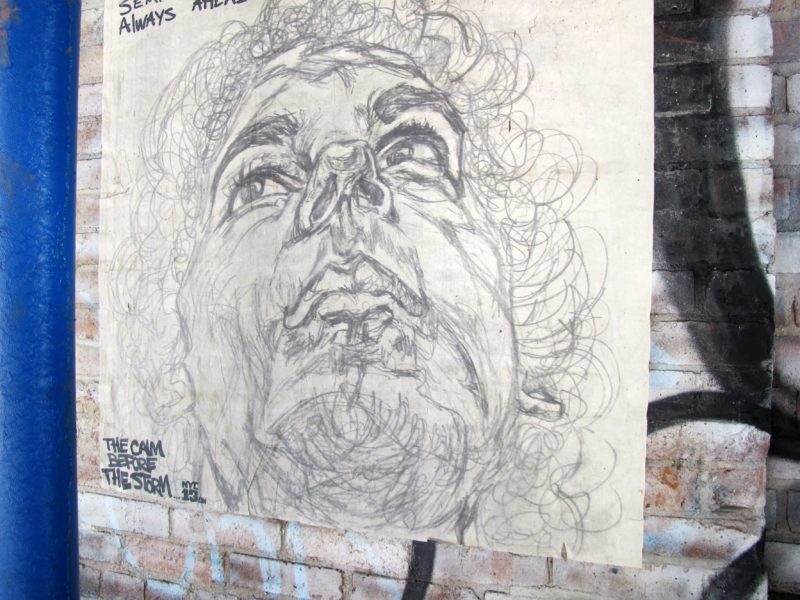
I found myself reminded of that twice lately. Once when exploring some non-touristy areas in Santa Fe and seeing a lot of murals and graffiti that clearly spoke to some issues related to New Mexico, or so it seemed. I had, of course, no clue. Photographs today are from those jaunts.

The second time it happened when I read this ArtsWatch piece by Bob Hicks yesterday, describing the work of Henk Pander (full disclosure, they are both friends of mine) that relates the history of the Vanport flood. An exhibit of new work around this topic opens here. There has been a festival since 2015 that commemorates annually the 1948 accidental flooding of Oregon’s then second largest city and its horrific destruction of lives and housing in a predominantly black neighborhood. It took an artist and an art critic, however, to get through to people like me with the story.

Why should we care about knowing the history of any given place? For one, I believe it connects us to prior generations, increases an understanding of the place and provides a sense of belonging, which in turn makes it more likely that we stand up for “our” community when that is required. Secondly, we might learn from what has happened in the past to protect us against similar mistakes in the future. That covers about any area I can think of, from awareness of the fragility of an eco system, the perils of building in potential floodplains, preparedness for earthquakes, to the more sociological issues of housing segregation and so on. And, come to think of it, the folly of war.

And since this week was Malcom X’s birthday, here is a master story teller when it comes to drawing the arc of history from past to present, offering alternative visions, warnings and hope: the compilation of speech excerpts is exquisite.

And music? Turns out people use music, big time, to teach history….

Here is Malcolm’s Gone – performed by Leon Thomas.

Campaign Memorabilia

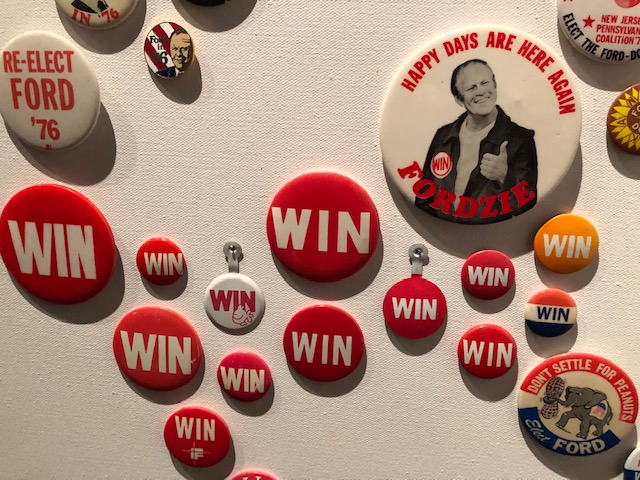
This weekend we were invited to dinner at a friend’s house. Still dreaming of the pasta carbonara…. the second attraction was a guided tour to the host’s collection of buttons given out by political campaigns.

It never ceases to amaze me what people collect. Can’t help but roll my eyes at many collections given my hesitancy to amass objects, but not this one – this one scored. I think it has to do with the continuity between what these buttons represent and the rest of the owner’s life, a life in large parts devoted to political activism.

It also links to lived history – my Beloved got unusually animated when discovering buttons that were part of his own youth, worn during presidential campaigns, and largely forgotten for decades.

It is educational – your’s truly got a lecture in two voices about her ignorance of the difference between Eugene McCarthy and McCarthyism… and certainly a crash course in Presidential campaigns before my arrival on US shores.


And last but not least the collection was displayed in ways that were artistically designed and often gripping.

Collector Carl Wolfson was the host of “Carl in the Morning” on AM 620 KPOJ and FM 107.1 KXRY, Portland, Oregon’s progressive talk stations, for almost a decade until 2016. The show and his many other radio appearances were devoted to the issues he cared about: healthcare, social and economic justice, foreign policy. These topics were also a large part of his routines as a comedian, a fixture on national television, appearing on Showtime’s Comedy Club Network, VH-1 Stand-Up Spotlight, An Evening at the Improv, and The Joan Rivers Show.

He is certainly a funny man, something we cherish. Passion takes over, however, when the subject comes to American Political Items, the category these button belong to. The study of campaign memorabilia is serious business as any historian can tell you. The collection by now contains some 20.000 buttons, displayed on over 200 canvas boards, put together in pop-art-like grids. Most of them, alas, in storage, since there is not enough space to hang them all. The prognosis calls for about 600 boards when all is pinned and done – time to explore public venues!

https://carlwolfson.com/collector

The progression through time of these buttons is in itself fascinating – what began as a simple identifier soon morphed to slogans, was elaborated, became strategic tool and followed the roots of all other persuasive mechanisms, advertisement included. Some of it barbed, but none of it in the slime pits of contemporary discourse of the Trumpian universe. They also provide glimpses in the kinds of civic organizations actively involved in the political process, and windows into the role of women as flattering by-products of electoral choices (or not….)

A museum is called for, if there was only a funding angel to be found…. in the meantime I wonder what large space in our area would be feasible for hosting a temporary exhibition. It would be a blockbuster, I am sure. Hive mind, get to work!

Music today can be chosen by yourself from this play list: https://www.newyorker.com/culture/culture-desk/playlist-election-day

My pick was this: https://www.youtube.com/watch?v=QSwzjD0L4co

(The album it comes from, “My Name is Buddy,” recounts the early-twentieth-century history of big labor and leftist politics using a cat, Buddy, as a protagonist.)


In the Name of Manifest Destiny…

How can you not be drawn to a movie review of an epic about the massacre of American Indians titled Serious Reservations? The body of the review, some 12 years ago, delivered as well when describing what was wrong with HBO’s Bury my Heart at Wounded Knee. Giving due where due was earned, it nonetheless concluded with the following paragraph:

But there, precisely, is the problem. Through no fault of its own except tardiness, Bury My Heart at Wounded Knee seems as if we’ve already seen it. Slow to build to a horrific last half-hour, its punches have been telegraphed. Since Dee Brown published his scholarly indictment more than 35 years ago, we’ve forded this river many times—carried, of course, on his shoulders, but still: We have guilt-tripped from the insouciant artfulness of Smoke Signals to the earnest moralizings of Walker, Texas Ranger; from Dances With Wolves, in which Kevin Costner sought if not to cross over at least to cross-dress as an aboriginal, to Into the West, Steven Spielberg’s nine-hour inquiry into lynching bees, land grabs, Bible nuts, prophetic utterance, and buckskin sex. This cultural appropriation—of glass beads, turquoise buckles, and dead buffalo, as of the blues—is our principal business, the marketing of murdered difference.

http://nymag.com/arts/tv/reviews/32114/

Here is the movie: https://vimeo.com/112639971?ref=fb-share

I was reminded of that because yesterday was the anniversary of a different historical event: Occupy Wounded Knee started on 2/27 in 1973.

I did not live in the US at that time but the protest received much attention in Germany, as did all things Native American which seems to have a deep place in the subconscious of the German left – I have always wondered if that is due to the fact that we can stand up for victims without for once being counted as the perpetrator. Mere speculation, of course.

In any case, in 1973 a group of 200 or so Oglala Lakota (Sioux) activists and members of the American Indian Movement (AIM) took over a tiny town known for its history — Wounded Knee, South Dakota, which had seen a massacre of 146 Native American men, women and children by white military forces 83 years earlier.

There was already trouble on the Pine Ridge Reservation when the caravan arrived and took over the public buildings. AIM had been called in by tribal leaders who tried to oust what they considered a corrupt tribal president, Richard Wilson. When impeachment proceedings failed, the U.S. Department of Justice sent out 50 U.S. Marshals to the Pine Ridge Reservation to be available in the case of a civil disturbance on 25 February 1973.

The takeover on 2/27 started a 71 day siege and armed conflict, with US marshals together with the FBI and National Guards blocking entrance and exits to the occupied town and preventing food from coming in, cutting off water and electricity. At that time it was the longest lasting “civil disorder” in US history. When a pilot tried to drop food from his plane on the 50th day of the stand-off, people ran out to grab it when agents opened fire. In the end the conflict saw two protestors dead and one agent paralyzed. As one former member of AIM told PBS, “They were shooting machine gun fire at us, tracers coming at us at nighttime just like a war zone. We had some Vietnam vets with us, and they said, ‘Man, this is just like Vietnam.’ “

Here is a summary of the time and what followed it from 6 years ago – I assume the statistics have not changed much and they are frightening.

https://www.theatlantic.com/national/archive/2012/10/occupy-wounded-knee-a-71-day-siege-and-a-forgotten-civil-rights-movement/263998/

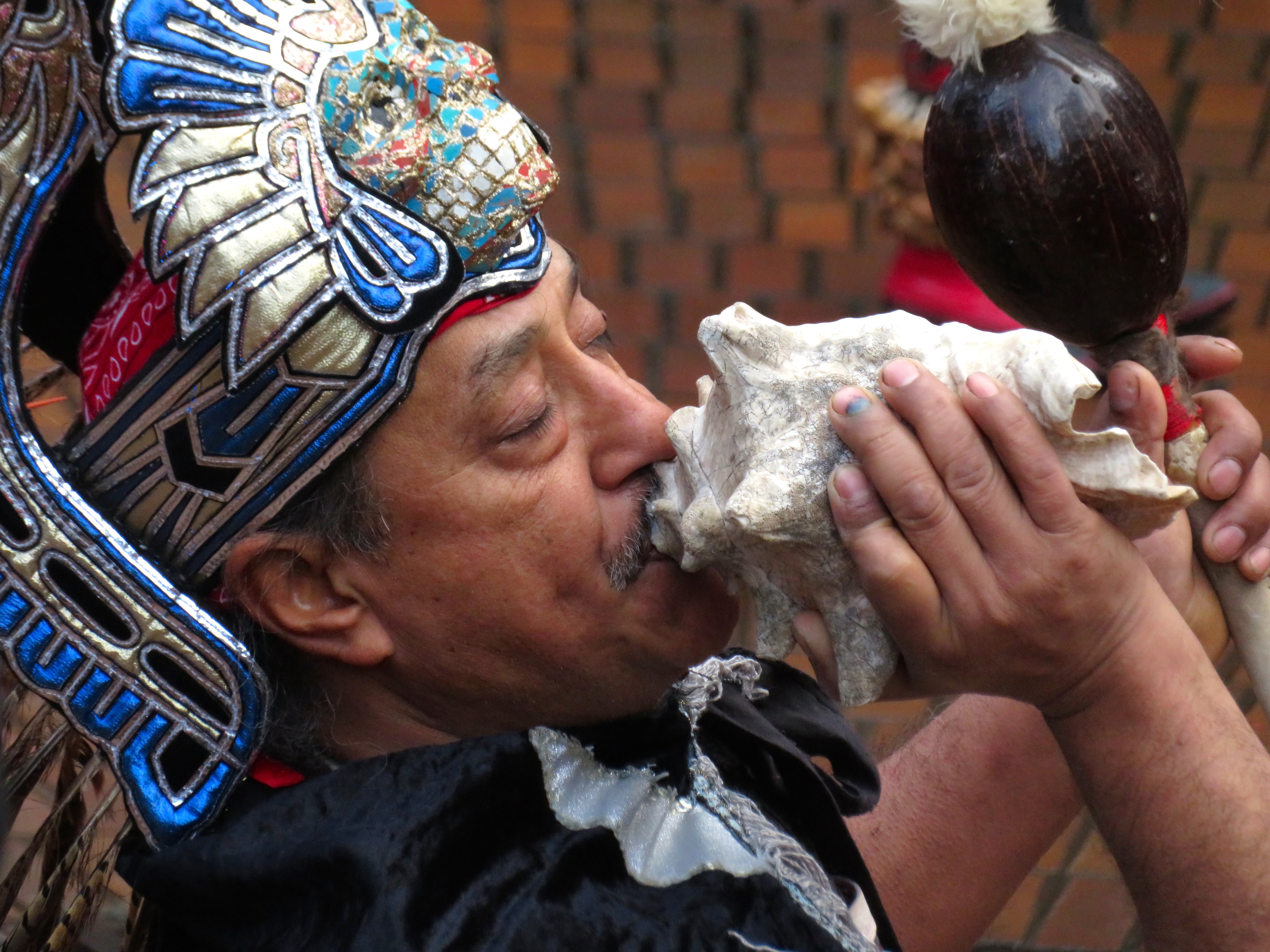
Photographs today from the Indigenous Women’s March in PDX last year.

Music is a 1973 Redbone clip https://www.youtube.com/watch?v=2VB2LdOU6vo

And here is a description of the connection between Standing Rock and Wounded Knee from 2016, relevant in our own contemporary landscape.


Vision

“So brave you’re crazy.” That is the meaning of the last name of poet Joy Harjo, a member of the Muscogee (Creek) Nation. I chose her poem attached below (it is too long to paste, alas,) given that her vision of mapping unknown worlds is related to today’s topic.

https://www.poetryfoundation.org/poems/49621/a-map-to-the-next-world

After talking about an art detective yesterday, I want to introduce an archeological sleuth today, a man who was indeed both brave and crazy. Heinrich Schliemann took old texts as a map for his archeological ventures. Old as in The Iliad. His vision was set on fire when, as a seven year-old in 1829, he saw a print of burning Troy in a history book, and later, in the green-grocer store where he clerked, heard someone reciting the Iliad in the original Greek. (It’s Germany. It’s possible…so many of us running around looking for potatoes while declaiming classical texts in the original.)

Anyhow, the guy was a bit of a self-promoter, so it is hard to tell what is truth and what is fiction. The following facts are supported, however: he survived a shipwreck near the Dutch coast and later sailed on to America. (Brave and crazy.) He made fortunes in the US Gold Rush and as a war profiteer during the Crimean War in Russia. (Neither brave nor crazy.)

Barely 36, he used his fortune to educate himself both linguistically (it is said he was fluent in more than 10 languages, crazy) and archeology (brave.) He went around the world to gather knowledge, including India, China and Japan. Long story short: he discovered the sites of Troy, Mycenae, and Tiryns by taking the Iliad’s story as a guide that was not just a literary invention.

Along the way he conveniently omitted the names of all the experts who helped him, divorced his Russian wife to marry a young Greek schoolgirl, destroyed important evidence at the archeological digs through rough and unprofessional excavations and stretched the facts whenever it helped his reputation. Let’s settle on crazy.

He did, however, rekindle enormous interest in ancient history and popularized archeology. And German kids like me certainly read wide-eyed about his discoveries when young. Until the day when we realized that he in some fashion was responsible for the introduction of one of the most reprehensible symbols in the 20th century, the swastika.

“He would go on to see the swastika everywhere, from Tibet to Paraguay to the Gold Coast of Africa. And as Schliemann’s exploits grew more famous, and archaeological discoveries became a way of creating a narrative of national identity, the swastika grew more prominent. It exploded in popularity as a symbol of good fortune, appearing on Coca-Cola products, Boy Scouts’ and Girls’ Club materials and even American military uniforms, reports the BBC. But as it rose to fame, the swastika became tied into a much more volatile movement: a wave of nationalism spreading across Germany.

https://www.smithsonianmag.com/history/man-who-brought-swastika-germany-and-how-nazis-stole-it-180962812/#KFzGXickGsDgSmYU.99

Photographs today are of the state where he was born, Mecklenburg-Vorpommern. They were taken in 2007, 18 years after the wall came down.

For music it shall be something from Mendelssohn’s Antigone. For those interested, there is a fascinating 2014 book on the Politics of Appropriation: German Romantic Music and the Ancient Greek Legacy by Jason Geary.


The Sleuthing Eye

Maybe in my next life I’ll be an art detective. Mystery! Adventure! Travel! Righting Wrongs! Call me Indiana Heuer, anytime….

This was brought to mind by reports that a Dutch art detective, Arthur Brand, tracked down two priceless Spanish reliefs stolen from a Visigoth church near Burgos in northern Spain to a garden in the United Kingdom.

https://www.dutchnews.nl/news/2019/01/dutch-art-detective-tracks-down-stolen-spanish-visigoth-carvings/

The church itself is a mystery, effectively lost for centuries before being rediscovered in 1921 by a local priest and declared a national monument in 1929. An academic debate rages about its actual age, for which these reliefs, found in the garden of British aristocracy who unwittingly acquired them as garden ornaments, are crucial evidence.

This is the latest in a long line of discoveries by art historian Brand, who has made a name for himself as being a terrific sleuth of all things looted and/or forged, driven by passionate love for art ( the real thing.) “Devotion to pursuing art that “belongs in a museum” is the only way to function in a corrupt art world, Brand insists. While Interpol stresses that illegal art trade is difficult to measure, Brand estimates that a full third of the billion-dollar art market is forged, and at least 30% of antiques in galleries and museums were excavated from illegal dig sites. As it turns out, only black market drugs and guns generate more money than the black market for art. https://www.vice.com/en_us/article/bmybyd/arthur-brand-ukraine-feature

From colonial looting to Nazi theft http://www.spiegel.de/international/world/how-german-investigators-found-lost-nazi-art-beloved-by-hitler-a-1035230.html

to modern museum heists, the art historian turned detective has delivered the goods, quite literally, back to their rightful owners. One of his scoops was recent: the return to Cyprus of a mosaic of St. Mark that was looted from the Panayia Kanakaria church in Lythragomi in the aftermath of the Turkish invasion in1974.

https://www.independent.co.uk/news/world/europe/missing-mosaic-saint-mark-cyprus-monaco-art-detective-arthur-brand-historian-a8641531.html


Which brings me to the Metropolitan Museum’s strange silence on its own collection of Cyprian art, the Cesnola collection, acquired from a robber of antiquities of large proportions. I am linking to the full, fascinating story below – it might as well be a script for a thriller movie about treasures stolen, who stole them, who fenced them and who now makes money off their display. Of course, unless we are talking museum break -in’s, it’s always more complicated than “that’s mine! Give it back!”

As the article states: “Theft may indeed be theft, but the topic of restitution is complex, global, emotional and legalistic. Governments and museums usually declare that their precious exhibits came to them in line with laws in place at the time of their removal. This was often done with the consent of regimes eager to profit from their local heritage. It’s an argument that can be self-serving because even when the theft was taking place, there often were voices that condemned it.”

https://www.3quarksdaily.com/3quarksdaily/2019/01/the-met-museums-scholarly-looter.html#more-155054

So maybe in my next life I won’t be an art detective, but a museum directrice. Art! Travel! Righting wrongs!

Here is some traditional Cyprian music – https://www.youtube.com/watch?v=mY7Q0KAxH1M

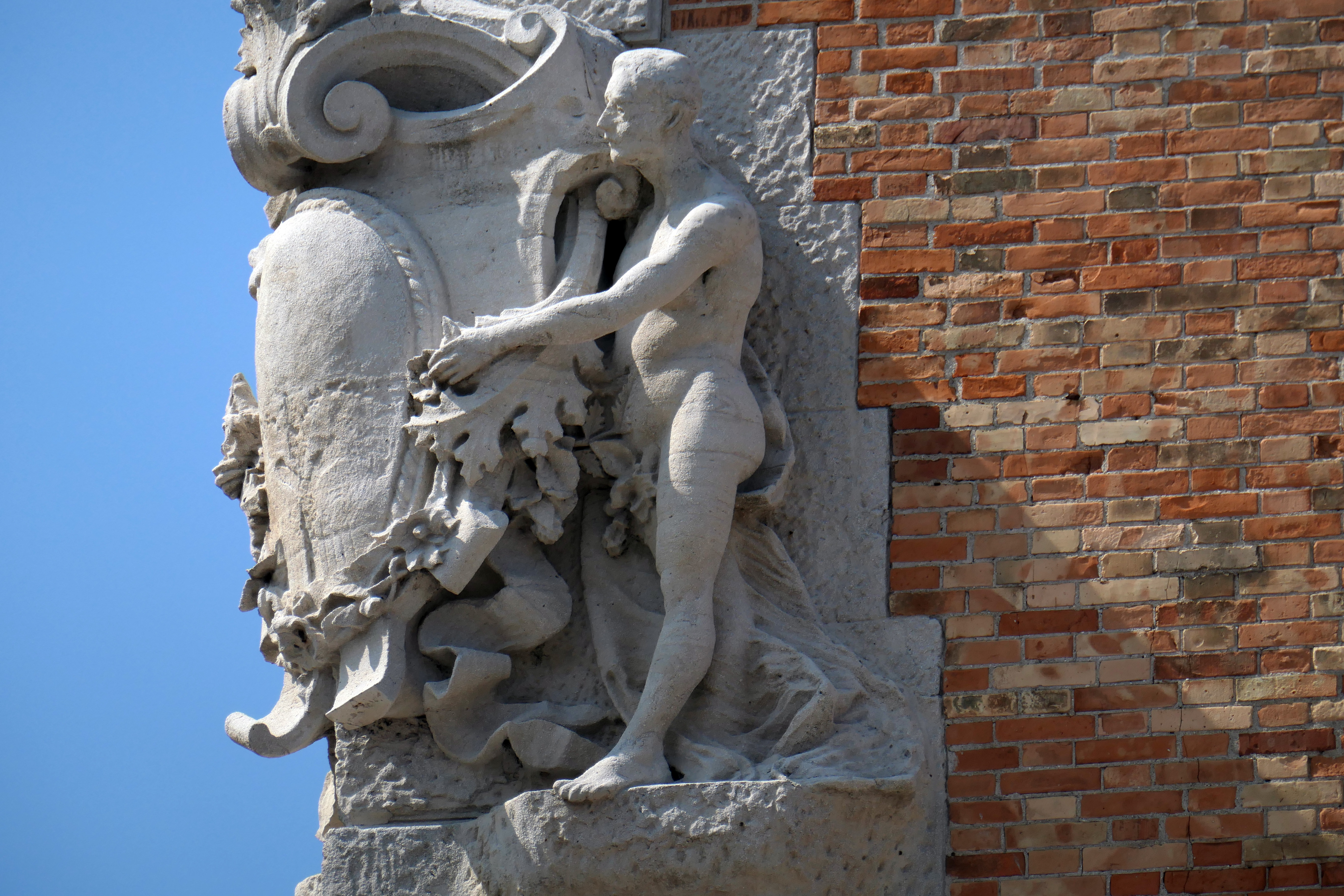
Photographs are mosaics and relief work found in Trieste last summer.

Consider the Speed

Photograph by Dolores Ochoa

What a difference 4 years make. It was only 2014 when one of the most spectacular buildings in all of South America was inaugurated. Filled with powerful hope then, with people seeking coalitions, with reminders of solidarity and progress across nations, it now approaches the status of a ghost town.

I am referring to the headquarters of the Union of South American Nations (UNASUR) near Quito, Ecuador. It strikes me as a singular example of how history can turn on a dime, leaving ruins behind in more ways than one, even if they are futuristic looking. Actually the building is not quite a ruin, the Ecuadoran government wants to convert it into an indigenous university with the UNASUR members who claim ownership, refusing so far. It is the idea of UNASUR that has been ruined by hostile, increasingly nationalistic reality.

https://www.star-telegram.com/news/nation-world/national/article224065275.html

UNASUR, founded in 2008 as a project of regional economic and political integration, was championed by progressive leaders such as former Venezuelan President Hugo Chavez and former Ecuadorean President Rafael Correa. It has faced challenges as a surge of right-wing governments have begun to oppose it. Chavez is dead, Lula de Silva is in jail, and members are dropping (out) like flies. Of late, six member countries – Argentina, Brazil, Colombia, Chile, Ecuador, Paraguay, and Peru – announced they were abandoning the bloc.

The goal had been to create better lives for all South American citizens, to improve their health, and, as the mission stated, create an environment of peace, equity, inclusion and justice.  Lots of health-related progress was made under the aegis of UNASUR; the inability to intervene or mediate in the various growing conflicts, particularly with regard to Venezuela, however, led to the demise of the organization. They were not even able to elect a secretary general to lead integration efforts, and so the whole thing fractured.

Gloating from the likes of writers linked to below, is in no short supply.

I am struck by two things that I associate with these reports: one is the general tendency, across the world, to question or actively undermine bodies that look for ways to unite nations rather than isolate them. Name one that has gotten stronger rather than weaker in the wake of rising populism. It stands in such jarring contrast to the fact that multinational corporations in late stage capitalism have become supranational powers.

Secondly, the speed of the demise is truly scary. While we pay attention to each passing individual scandal or manipulation in our own country, history flies towards much larger fractures, almost unnoticed.

Photographs of modern architecture in CDMX, since I had no camera when backpacking through Ecuador some 40 years ago.


Consider the Monkey

This week I will try to convey how singular examples can bring a point home, and sometimes pave the way to understand a larger pattern. At least they do so for me. often provoking thoughts about how we are repeating history in one way or another.

I will start with the case of Ota Benga, a Congolese pygmy of the Mbuti tribe, who was bought by an American explorer from African slave traders in 1904. After having been displayed at the St Louis World Fair, he was brought to the Bronx zoo. Together with his pet chimpanzee he was locked in the Orangutan cage and exhibited to visitors as a kind of animal, his teeth filed to sharp pints by the zoo keepers and with bones added to the cage to hint at cannibalism.

Clergy eventually protested and had him moved to an orphanage for non-white children. By 1910 he was forced to work at a tobacco company in Lynchburg, VA where he later killed himself, having built his own pyre beforehand, with a stolen gun.

https://www.powells.com/post/original-essays/consider-the-monkey

Treating someone who looks different from the white norm as subhuman has not stopped, even if we don’t put exemplars in the zoo these days. We still put them behind bars, in large numbers, caging them for the purported fear of their wild, dangerous impulses. We call them animal names – remember George Allen, Republican Senator from Virginia, who called Indians at his rallies Macaques? Or Roseanne Barr decrying Valerie Jarrett as the child of an ape? Or he who shall not be named calling Omarosa Manigault a dog?? And if you are a soccer fan you’ll know about the 1000s of European fans making monkey noises in stadiums when the scoring opposing-team player is a black person.

Psychological research, originally looking into Nazi use of dehumanizing language in preparation for the Holocaust, has shown that merely listening to it increases the willingness to use violence; some international agencies even consider that kind of naming a precursor to genocide. Once a class of people is dehumanized, the usual compassion and empathy that we extend to fellow human beings is weakened. The part of your brain that controls social relations becomes less active, a physiologically measurable effect when you are exposed to this kind of language. The door to systematic mistreatment is then wide open.

http://theconversation.com/the-slippery-slope-of-dehumanizing-language-97512

One of the ways we try to expose the past and help overcome it, is by creating museum exhibits that show the consequences of racist behavior. Case in point is the The Equal Justice Initiative’s National Memorial for Peace and Justice , a public memorial of the lynching of Black people in Alabama. By all reports – I have not been there – it is an astoundingly emotional site that brings the relevant points home. At a cost, though, that few of us probably considered.

Kunta Kinte – Alex Haley – Roots Memorial

The disturbing article attached below talks about the re-opening of wounds for those who lost family members to lynching. More generally, it describes how watching the exhibits can become itself a kind of voyeurism, or entertainment for those taking selfies with the displays. “This memorial, intentionally or not, reproduces the opportunity for white onlookers to engage in the spectacle of lynching.”

It makes you really wonder, what can be done to provoke change. One thing we can start with, I think, is to watch our own language and eradicate the spontaneous use of animal terms during denigrating fits – myself included.

Photographs today from Annapolis, Maryland, where a memorial celebrates the first African-American Supreme Court Justice, Thurgood Marshall.

And Strange Fruit by Billie Holiday, in commemoration of the lynchings.

Resentment

A lot of people want change. That is true for the Left and also applies to the Right. If you think about it, the two are really on opposing trajectories – the Left fights, among other things, for structurally disadvantaged people’s rights to access, for them to be able to rise to a place of equal opportunity in society, to ascend to equality from their place at the bottom of the heap. They want a future filled with justice.

The Right is, to large parts, constituted of people who fear a descent, a decline in their status, a loss of privileges, a replacement by others they deem non-legitimate. They want a return to a past they perceive to be their birthright. Opposing trajectories, as I said, both with regard to the experienced direction of change, up or down, and the respective times, future or past, under consideration.

What both movements share, though, is some kind of resentment (no clue why they call it the fancier ressentiment, but they often do.) It’s not about an individual’s desire simply to have what others have (that would be envy. ) It is about generally and collectively questioning the legitimacy of the principles of distribution of goods and rights: who is justified to own/have access/call the shots and who is not. And, in the case of the Right, it’s often about seeing one’s own displacement or descent as directly caused by the ascent of specific others – women who work, migrants who come into the country, etc.

Resentment grows when there is a discrepancy between what you consider your right and what your actual life provides. And it becomes particularly strong if you feel you’ve played by the rules, and those are changed mid-game, or the other team is cheating.

.https://divinity.uchicago.edu/sightings/whats-ressentiment-got-do-it.

Unfortunately, these emotions are often stirred by easily manipulated beliefs rather than facts: if your job is gone, it is easier to blame the women who you see working all around you for displacing you, than questioning an economic system that relies on automation and outsourcing to continue to reap profits. If you believe that South American migrants will deprive you of your share of limited resources you don’t even look at the facts that show this to be untrue. And those emotions mobilize: You see yourself attacked as a class, no longer as a failing individual, and that unites you with the many who share your view. Rather than apportioning blame to yourself as not being competitive, you can blame a shared out-group enemy – making for these dangerous movements that are now sprouting across the US, movements that are willing to consider even violence to defend what they believe is ripped from them.

I’m musing on this because I promised to report on my readings and because I think it is essential that we understand the psychological underpinnings of what leads to populist movements. If we want to have a chance to reach these people we must convey, among other things, that we are not playing a zero-sum game, where you either win or lose.

Source, alas, in German (and I only reported on a smidgen of the entire argument….https://www.freitag.de/autoren/der-freitag/der-blick-nach-unten

Photographs today from NYC’s streets in honor of our new congressional members who will hopefully shake things up and seem to have a sense of humor.

Music is self explanatory…https://www.youtube.com/watch?v=e7qQ6_RV4VQ