Browsing Category

Health

Pipe Dreams

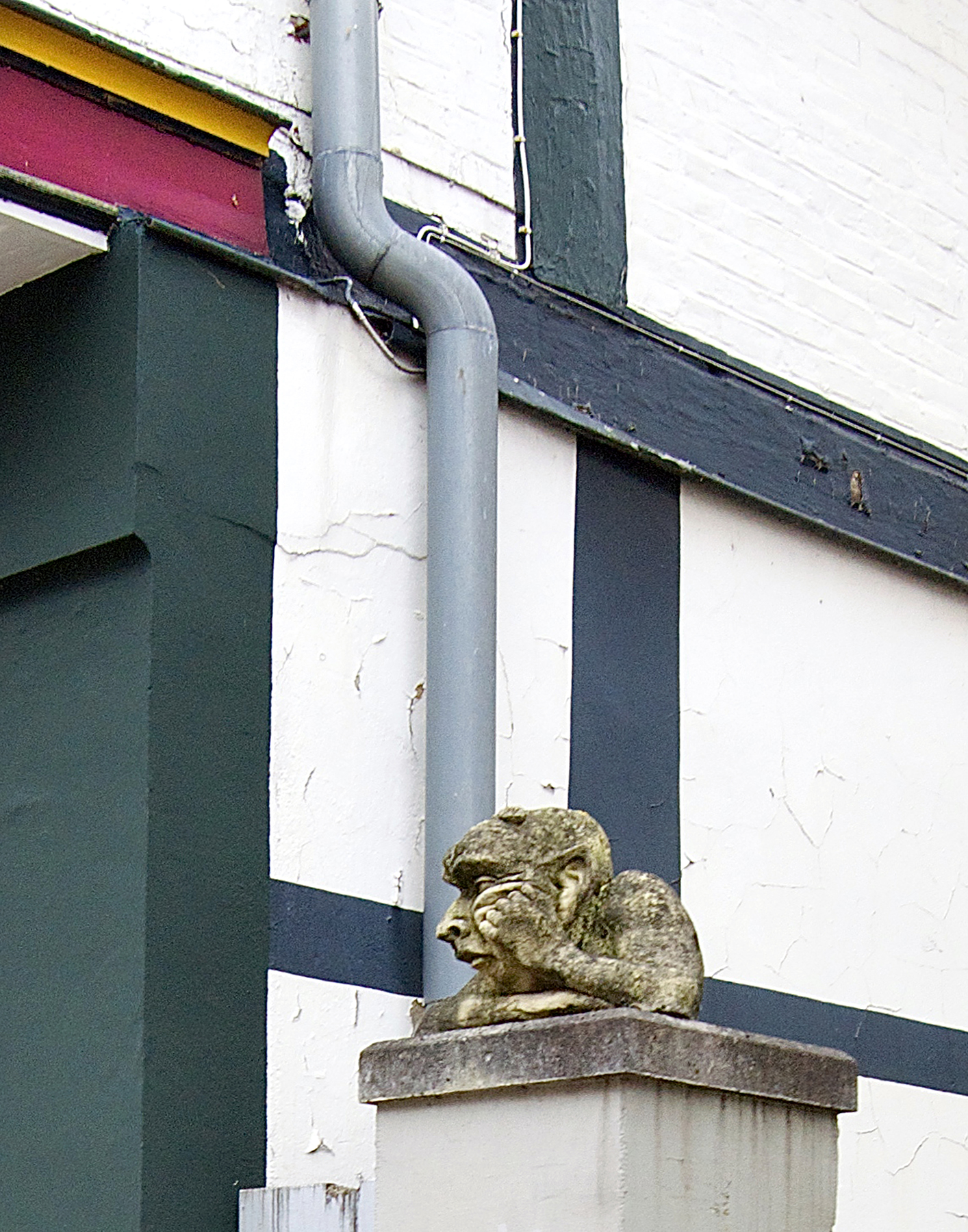
Looking into the endless gray this week, all I wanted was color. The rain hammered on my roof during the nights, with leaf-stuffed gutters overflowing, water gushing by my window. Of course! Drainpipes! The solution to filling my eyes with color and pattern and my brain with delightful memories of prior travels. Thus today’s barrage of photographs, since pipes held my interest for years on end, always with faint plans to use them eventually for abstract montages.

Of course you don’t get away today with just admiring rusting pipes. Too pressing the problem – in Portland and elsewhere – of health issues associated with lead in the water.

The nation, for the most part, knows about Flint, MI and the water troubles they experienced. The crisis there has become synonymous with environmental disaster. Turns out, Portland is worse.

Since the late 1990s, samples have shown Portland exceeding the federal safety threshold for lead 11 times. In 2017, after Portland had once again surpassed that threshold, OHA required the water bureau to build a corrosion control treatment facility, according to Salis’ letter. Water from the Bull Run watershed is naturally corrosive, which can cause lead from copper plumbing and fixtures to leech into people’s homes. By building a facility to make Portland’s water less corrosive, the bureau expects to reduce the amount of lead dissolving from old plumbing into stagnant water. The facility is slated to be completed by April. (Ref.)

Here is the water bureau’s January 2022 response after decades of complaints:

Some of the actions the Water Bureau is taking include:

  • Treating the drinking water to reduce lead and copper;
  • Offering free lead-in-water testing to all residential customers and childcare providers;
  • Increased education and outreach to customers through mailings to multifamily residences and all homes built between 1970 – 1985; 
  • Actively managing drinking water in the distribution system to maintain the effectiveness of corrosion control treatment; And
  • Proactively partnering with the Oregon Health Authority and Multnomah County Health Department.

I leave it to you to assess the quality of government/management in this city when you consider this problem was known for 30 years now.

In case you’re worried: The water bureau offers free lead-in-water testing to all residential customers and childcare providers. People can contact the LeadLine at leadline.org or 503-988-4000 to receive a free lead-in-water test.

And since we are in a practical mood today, here are 9 gutter fails that are slowly killing your house….only half joking, a beloved neighbor of ours had utterly expensive damage from rain water making its way into the walls and house foundation.

Children are, of course, the ones most at risk. They are often exposed to multiple sources of lead contamination: the water they drink, the dust they inhale from the paint used in older houses or contaminated soil in poorer neighborhoods often build adjacent to industrial sites. Parents who work in certain industries – automotive repair shops for example – can inadvertently bring lead particles home on their clothing. Kids are also surrounded by toys that expose them to lead:

“Lead softens the plastic and makes it more flexible so that it can go back to its original shape. It may also be used in plastic toys to stabilize molecules from heat. Lead dust can be formed when plastic is exposed to sunlight, air, and detergents that break down the chemical bond between the lead and plastics.” The CDC recommends to keep plastic toys away from young children who put their hands in their mouths after or during play.

Lead poisoning has serious consequences, developmental delay and learning difficulties included. Here is a link to the Mayo Clinic site that describes what to be on the look-out for symptoms.

And if all this is not enough justification to dig into my drainpipe archives, then maybe this is: Drainpipes are having a moment after homophobic Politician arrested at Gay Sex Party. (A right-wing Hungarian politician tried to avoid being arrested at a party in Belgium during lockdown by climbing out of the windows and down a drain pipe.) Everything that puts shade on the ruling Fidesz party is welcome….. (a rival lawmaker in Hungarian parliament, Zoltán Varga, reportedly brought a drainpipe to the floor of the legislature to use as a prop in a recent speech railing against the ruling Fidesz party’s hypocrisy.)

And here is a piece of music that captures sounds of rain and multiple rhythms when it runs, or dips or plops or gushes down the pipes…beautiful composition by John Luther Adams (2009.)

Let’s end with Ford Maddox Ford. (The entire wonderfully snarky poem can be read here.)

In the Little Old Market-Place

(To the memory of A. V.)

It rains, it rains,
From gutters and drains
And gargoyles and gables:
It drips from the tables
That tell us the tolls upon grains,
Oxen, asses, sheep, turkeys and fowls
Set into the rain-soaked wall
Of the old Town Hall.

Here’s to the next 8 days that are supposed to be entirely dry!

Vaccination Refusal

In this country, partisanship, age and level of education are predictors of who refuses to get a vaccine against Covid-19 in all its variants, or who is skeptical about the severity or the danger of the disease. Even though more people are now willing to get the shot, attitudes have hardened among those who don’t, encouraged by a never-ending stream of conspiracy theories or ideological battle cries by influencers on the far Right and conservative media. Refusal has also intensified for many during recent discussions of vaccination mandates, with multiple law suits filed against the Biden administration’s vaccination requirements. Deeply republican states have imposed policies that ban vaccine mandates or prohibit requiring proof of vaccination.

Vaccination levels are also low among those who have difficulties accessing vaccination opportunities in rural areas, who lack transporation or time off from work because every penny of income is essential and cannot be endangered. So there are structural variables of access and economics, independent of ideological considerations.

The third group of unvaccinated people are those among us who have no choice due to pre-existing conditions or compromised immune systems. If you consider that 15% of the world’s population lives with disabilities (some of which preclude vaccination) according to the World Health Organization, we are taking huge numbers of people whose only protection can come from those who surround them and behave accordingly. And that number does not even include those under active treatment for cancer or other life threatening diseases at any given point in time.

Those who refuse vaccination on ideological grounds often insist that they have a “natural right” of self determination and if that freedom includes the endangerment of others, so be it. Conspiracy theories about “chip implantation” or some such aside, there is an underlying agreement among vaccine skeptics that disease is a process of natural selection, where the strong will live and the weak will be culled. No need to listen to the (deeply mistrusted) science selling the advantages of vaccination. Solidarity with the young, the old, the sick is simply off the table in groups that believe in nothing but individualism and the “survival of the fittest.” In some cases religious considerations about G-d’s will or beckoning paradise add to the determination to carry vaccination refusal as a political flag. Above all, it is about “freedom” to reject the state’s interference with your own body (unless you are a woman, when decisions about bodily integrity are ripped out of your hands in case of pregnancy. Yesterday’s opinion piece by Michelle Goldberg in the NYT (linked above) was brilliant in showing the contradiction.)

In Europe we see additional variants on the theme. Within the far Right there is an explicit anti-Semitic streak that associates vaccinations with sinister Jewish plans for world domination, making an extra buck or at least a push away from the “natural.” Cartoons like the one below are from another era (published by 3rd Reich vaccination opponents in The Stürmer in 1933)), yet deeply embedded in contemporary neo-Nazi discourse.

I feel uneasy, since poison and Jews never add up to anything good.

There is also, however, a different group of German, Swiss and Austrian vaccine deniers who have previously not allied with the far Right. These are often educated middle-class citizens (more than half of them have finished their university education, and 67% consider themselves to be middle class, 23% of the surveyed said they had cast their ballots for the Greens in Germany’s 2017 federal election. Eighteen percent voted for the Left party and 15% for the far-right Alternative for Germany (AfD) and they are in their 40s and 50s.(Ref.)

There are many educators and medical professionals among them, who swear by homeopathy or are adherents of the Rudolf Steiner/ Waldorf School movement around anthroposophy. The German South-West is a stronghold of the anthroposophical movement.

Officially, educators and administrations of Waldorf Schools are not prohibiting inoculations; however if you look at the rates in which kids in these institutions are inoculated for dangerous childhood diseases like the measles or whooping cough, you find the numbers way below the national average.

What lies beneath their vaccination refusal, now extended to the current Covid pandemic? Historically (and particularly during the third Reich) people considered a strong immune system to be sufficient to ward off disease, and that system was created and sustained by a romanticized “natural living,” a diet free of poison, physical exertion in sunlight and fresh air. All things modern – large cities, poor immigrants, technology and mass culture were seen as the enemy of health, external agents poisoning the immune system and sickening the body.

Rudolf Steiner added to that a theory rooted in occultism. He preached that humans reincarnate in ever new bodies. (Note, I do not judge the belief held by billions on this planet that reincarnation is part of the life cycle. I do have problems with the specifics touted by Steiner attached to his philosophy.) Only high fever in a child’s body allowed reincarnated kids to take root in that new space, which until then was dominated by the mother’s “protein” which needed to be replaced by the child’s own “protein.” Only then could emerge a true representation of this new person’s identity. Furthermore, illness has special meaning in this never-ending cycle of re-incarnation. It educates us to the fact of what has gone wrong in a previous life and provides karmic balance for earlier misbehavior. (Steiner even named specific illnesses for specific misdeeds – I’m not going there.)

There was an additional racist element present in his theorizing as well. Bacteria and viruses were considered of demonic nature, specifically the astral demons and putrescence of earlier, “inferior peoples” – the Mongols, for example, who carried their foul nature to the Germanic nations in their mass migrations. (No, I am not making this up. (Ref. To find his own words, go here.)

The new version for the current epidemic, in its extreme form, states that vaccination prevents you from receiving the karmic insights brought by the messenger disease. You might protect your body, but your soul will not be able to grow. Should you die, the healing experience for your soul will put you on fast track in the next life, so nothing is lost. Healing is all well and good, but suffering has a place in the world that is irreplaceable for spiritual growth. (Note, this approach is a legally recognized field of study in Germany for medical doctors who want to specialize in this sub- discipline.)

And before you shake your head and wonder who would subscribe to this, demonstrations against vaccination have drawn up to 40.000 people in individual cities on a given weekend, mixing Querdenker (the equivalent of Qanon), neo-Nazis and Steiner adherents. A useful article from the Council for European Studies (in English) on the history of the movement can be found here. Generalized science aggressions has morphed into increasingly violent behavior – hospital personnel, schools, doctors who offer inoculation, and even bystanders have been attacked and in one case killed.

I find it remarkable how in times of crisis all the long-held prejudices, stereotypes and nationally rooted beliefs make an outspoken come-back. Anti-Semitism and stereotyping esotericism, buried deep after 1945, are raising their ugly head. Racism in this country is no longer subdued, but proudly presented in calls for a return to the good-ole-times, with racial hierarchies re-established and intact. Simply asking people to put their beliefs aside is not going to cut it. If the only way out from the danger of the pandemic and new viral mutations is world-wide vaccination, then countries have to come together and impose vaccination mandates, legal requirements that no-one can escape other than for medical reasons. It has been done before. (Since 1809 in the U.S., 1807 in Germany.) It can be done again.

There’s a Drop of Hope, though, from the Francis Crick Institute in London. Their vaccination center had 12 international artists in residence who wrote poetry about inoculation collected under above title. You can find the poems here and the intro explains the interactive poetry project. Sensible, moving and perceptive takes on vaccination.

1807 was also the year this Beethoven piece was written (or transcribed from his violin concerto op. 61.)

Brooding photographs were taken late yesterday. Should reincarnation occur against scientific odds, I’ll put in a request to be a tree. Preferably not at aspen, though, I’ve done enough trembling in this life time. Red chestnut would be nice. Oak will do, too.

Stigmatism and Health

This essay was supposed to be up on Monday, but we lost power for literally 4 full days, with no heat, no internet, no telephone. Luckily the contents are not bound to a specific time; I tried to convey general knowledge by health psychologists, oncologists and research teams about what we know about stigmatized diseases.

A dear friend sent me an extraordinarily beautiful piece of music. It will be your reward after making it through the troubling and/or enraging facts I am going to introduce today.

I want to talk about the consequences of being diagnosed with a disease that is generally stigmatized in our society, consequences that affect both the individual patient and also the general fight against the disease. I will need to cover some general statistics, but my focus will be on the psychological and societal effects of living with or dying of a disease that carries a large stigma. (I have by now read widely on the issue, but am too tired to put all the references in order – you just have to trust me. General sources for many of the details can be found here and here. These were the most recent data I could find, maybe lagging by two years or so.)

It used to be the case that AIDS was the prototypical stigmatized disease. General homophobia had plowed the ground for condemnation of sexual “lifestyle” choices that resulted in this deadly illness. People were judged to be, if not deserving (according to bigots), then at least responsible for their own fate, given their sexual behavior. In addition to carrying the stigma of being gay, they now were perceived to be spreaders of the plague, usurpers of medical resources that could have been devoted elsewhere.

Many patients internalized a sense of shame or guilt (even if they acquired the disease through non-sexual contact like blood transfusions) and suffered from the taboo to reveal it. But patients were also diagnosed relatively young and increasingly able to live long, full lives on pharmacological regimens; subsequently, many of them had the years and motivation to become advocates and fundraisers that pushed research in to treatment and cures forward.

These age characteristics are not true for lung cancer, another deadly scourge that carries the great stigma of having been self inflicted, through smoking. Lung cancer can be triggered by genetic factors, by external pollutants like asbestos and radon, by exposure to second hand smoke – but about 80% of patients do have a smoking history, often barely remembered in their youth, stopped long ago, which comes back to haunt them.

The disease has a dreadful prognosis, when detected late which is mostly the case (only 16% are detected early, I am one of the lucky ones.) More than half of people with lung cancer die within one year of being diagnosed. It is the leading cancer death among men and women (these days almost as many women are diagnosed as are men,) killing more than colon, breast, and prostate cancers combined. Blacks die from lung cancer in larger numbers than Whites, even though they smoke less than their counterparts. Mediating factors seem to be worse access to good health care, genetic factors, co-morbidity of other ailments, and additional exposure to environmental pollutants.

The guilt over having smoked, or fear of being judged as a morally weak person for giving in to the addiction (never mind that the product, cigarettes, is made addictive and cleverly advertised to promote sales) has many patients wait to go to the doctor until it is too late. It also leads to self recrimination and depression which are not conducive to an engaged fight against the disease. Lung cancer patients have one of the highest rate of refusing treatment because some of them feel they deserve their fate.

The hesitancy to admit to a lung cancer diagnosis for fear of being shunned isolates people, preventing joint advocacy for better treatment conditions. Being on average diagnosed around age 70 and having such short survival rates does not help either with advocacy. As a result, non-profit fundraising for research and treatment developments is woefully meager, complicated by the fact that people do not want to give money to people who they feel caused their own suffering.

The money raised for breast cancer, for example, is five-fold compared to what lung cancer receives. In absolute terms, lung cancer accounts for 32% of cancer deaths while receiving 10% of governmental cancer research funding. The difference is staggering and has a “spill over” effect—fewer dollars attracts fewer researchers which leads to fewer breakthroughs. We do start to see targeted therapies and immunotherapies, but it is sparse in comparison to other cancer research successes.

Here is the crux: many oncological researchers advance a “utilitarian” argument, insisting that it is not lives saved that matter but years of life overall – and that is of course correlated to the age of diagnosis (again late in life for lung cancer) and the speed of spread of the particular cancer. Saving a 40 year-old with a cancer that has less of a tendency to ravage all parts of your body in no time, gains more years of life than saving several crones for a short while before they come down with likely metastases. It is a rational argument, and a devastating one, not unlike the considerations we have seen in Covid-19 situations where limited resources led to triage decisions that involved statistical life expectancy. I get it.

I think the tendency to hold people responsible for their own fate – you should never have smoked!! – can be sourced back to a much deeper psychological need, the maintenance of an illusion of control. “If I do the right thing, nothing bad will happen to me. If they didn’t do the right thing, then no wonder that bad things ensued…” – That logic protects you from the disquieting fear that something ripping your breath away and taking the very source of life with it might lurk haphazardly around every corner. But the logic also requires to stick to blaming the victims in obvious ways, even if they were young, uneducated or unknowing, acquiring the seeds of the cancer in the 1960s and 70s.
To stigmatize – describe or regard as worthy of disgrace or great disapproval – for a single behavior, irrespective the qualities of a patient as a whole, allows distancing from the fear of a miserable death.

A cruel assessment, from the perspective of the patient, let me tell you.

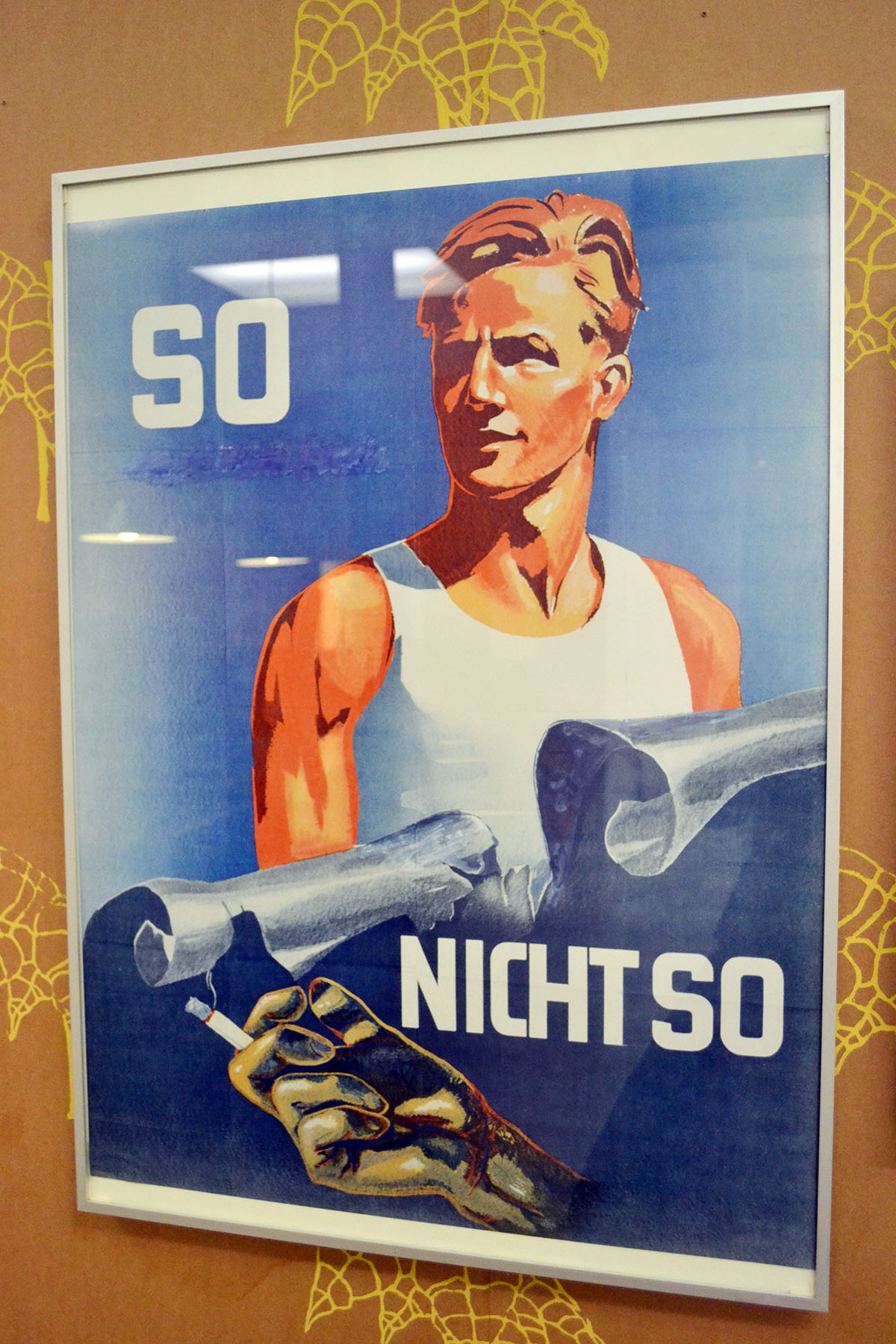
Photographs are of posters in an exhibition about smoking and advertisement at the Museum der Arbeit In Hamburg, Germany.

Music as promised. Dedicated to my Beloved the day after Valentine’s Day, since I could not make it through all this without him.

A shout-out also to the cardiothoracic surgeon Dr. David G. Tse and the oncologist Dr. Dilip Babu, both at Kaiser Permanente. Their medical expertise was matched by their kindness, both valuable in more ways than I can count.

Thoughts on Vaccination

· ·

It looks like we will be able to get vaccinated to be (somewhat) protected against Covid-19 in the near future. Or will we? There are many questions attached to the issues of vaccines: their development, their approval, their distribution, their side effects and the (un)willingness of the population to be inoculated, to name a few. I’ll try and report on some of these issues today, including the fascinating fact of people volunteering to be infected with the virus in so-called challenge trials for vaccine development that risk their deaths, given the absence of definitive treatment options for the disease when it hits you hard.

First a lightning round on what vaccines do in general: they basically fake the disease without making you sick, helping the body develop protective immune responses so when the actual crud arrives you have a shield. There are three established ways to accomplish this and one that has never been approved before but seems to be a valuable candidate in the fight against Covid-19.

For one you can take a virus, inactivate it so it can no longer multiply in your body and expose your system to it to develop a defense. Successfully done in cases of the flu, polio, hepatitis A, and rabies, for example. Secondly you can work with a viral vector that carries the immobilized virus. Loosely put, scientists use DNA as a vector (often from chimpanzee adenoviruses) that your own system copies into RNA and then acts with a protective response. It worked for Ebola, some retroviruses, and small pox among others. Third, there are protein-based vaccines, which work with viral proteins only from the spike of the virus that tries to invade your cells. These vaccines are historically very safe and effective, among others protecting against hepatitis B virus, shingles, and whooping cough. And last, there are genetic vaccines, which introduce genes directly as either DNA or messenger RNA, which is used by the cell as a template to build a protein through a process of translation, then activating the protective response. They are easier to manufacture and distribute, but we have never used them before outside cancer research, and they also will require 2 doses.

Ok, let’s say you have developed something that seems to work, like Pfizer, Moderna, Astra Seneca and various other international pharmaceutic industries claim. Now what? You need approval – usually only given for vaccines that can prove to protect for longer than a year. We have no data on that and do not know how long each vaccine will protect you. This is particularly relevant in the light of the fact that we now have cases of re-infection after 4 months.

Then you need to manufacture on a grand scale, under sterile conditions. There are shortages of the glass containers and the custom bags that line the bioreactors in which vaccines are produced. In some cases, the vaccine ingredients are so unstable that they need to be kept at insanely cold temperatures( – 94 degrees Fahrenheit!) and expire after 10 days, a problem for distribution that relies on dry ice – also in short supply, as are syringes. The vaccine must be mixed at the administration site with a sterile liquid — usually water — and given within six hours of creating the solution. Since the vaccine will be shipped in cases with a high volume of doses, rural communities may not have the population, or infrastructure, to administer a case of doses while still cold. Hospitals across the country might also not have funds available to buy the fancy freezers that can be used where there is lots of electricity. (Ref.)

Then you have to decide who gets it first, since vaccines will be in limited supply (to achieve herd immunity, we need to inoculate about 5 billion people across the world, but we, if all get approved, are only likely to have enough for 2.5 billion people, given that the vaccine needs two doses.) First responders, health professional and old people, who are the most at risk? Younger people who are the super spreaders? People in certain areas of the country, so-called hotspots? Decision vary from country to country and are based on political reasons as well as medical evaluations. Details of allocation issues can be found here.

Given that we need more vaccines, people are trying to speed up development, and one way to do so is to run studies that use far fewer than the 10thousands of participants in normal randomized trials where you wait for people to get naturally infected, a process that takes time.

These faster studies are called “challenge” trials in which half of a group of a hundred or so participants gets actively infected with the virus, with the other half being the control group after they all received the developing vaccine. No longer using your gardener’s son (as Edward Jenner did in 1796 with small pox), or prison- or developing world populations who sign up under duress or are simply forced, these trials use volunteers. The World Health Organization has established complex protocols to insure ethical proceedings, but the ethics are still a hot topic of debate.

Would you sign up to be infected by this disease when we have no known treatments that are certain to cure? Would you risk long-term impairment, even if you can avoid death under the stellar medical care these programs provide? Would you agree to isolation for months on end to be under close supervision? Well, 37.000 people have signed up for this since May alone. PBS aired a segment on the One Day Sooner website that calls for volunteers and had an insane response.

When journalists from the Radiolab Podcast asked participants for their reason they found them all over the map. From gas station attendants to Nobel Prize Winners in Physics, they calculated the gain for humanity vs. their own vulnerability, they wanted to protect their parents, or escape boredom, they felt they were dying in a short time anyhow and might as well help science, they urged a commitment to our nation and community after these years of division, they wanted to have a voice at the table for underrepresented communities, and so on. It’s an interesting short listen, if you ignore the small numbers of respondents.

In contrast to those willing to face the disease personally and help develop vaccines against it, there are the many who are not willing to be vaccinated in the first place. There are multiple reasons why they might refuse. For one, there is a large anti-vaccine and anti-science movement in this country, amplified by the partisan divide in the Covid-19 case of acknowledging the danger of the disease. If it is all a hoax, why would I allow the state to prick me with a needle and have me suffer the side-effects (by all reports getting the vaccine will make you feel sick for a bit, with fevers and aches common) or worse inject some – insert your favorite conspiracy theory here – into me. The Lancet reports: “31 million people follow anti-vaccine groups on Facebook, with 17 million people subscribing to similar accounts on YouTube. The CCDH calculated that the anti-vaccine movement could realise US$1 billion in annual revenues for social media firms.” They are also an easy target for further radicalization.

Secondly, there are understandable reason for subparts of the population to be wary of being exposed to unproven substances. The experience of poor and people of color populations in our history has been exposure to forced experimentation in combination with much reduced access to good health care and pre- existing, poverty-related vulnerabilities. A devastating summary can be found here. Suffice it to say that the Nazi defense (!) at the Nürnberg Trial used the fact of experimentation by the US Army and the University of Chicago that infected prison population with malaria in the 1940s, and many such other cases, as justification for “international practice.” Current estimates say that only 42% of the US population is willing to get vaccinated, a number too low to achieve a win in the fight against the disease (and a number much lower than comparable choices in other western nations.)

In sum, do we know if and when we will get vaccinated? Can we trust the voices that claim we’ll be well into it at the beginning of next year? I fear so many things can go wrong, so many factors will influence distribution and allocation, that there is no way to be sure. But I do know that the minute the scientific sources I trust give the green light, I will still wait a month or two to see how things unfold and also give priority to those with a more and immediate need for limited supplies. But then I will stand in line and do my part to protect the community as a whole. No worries, you’ll hear about it!

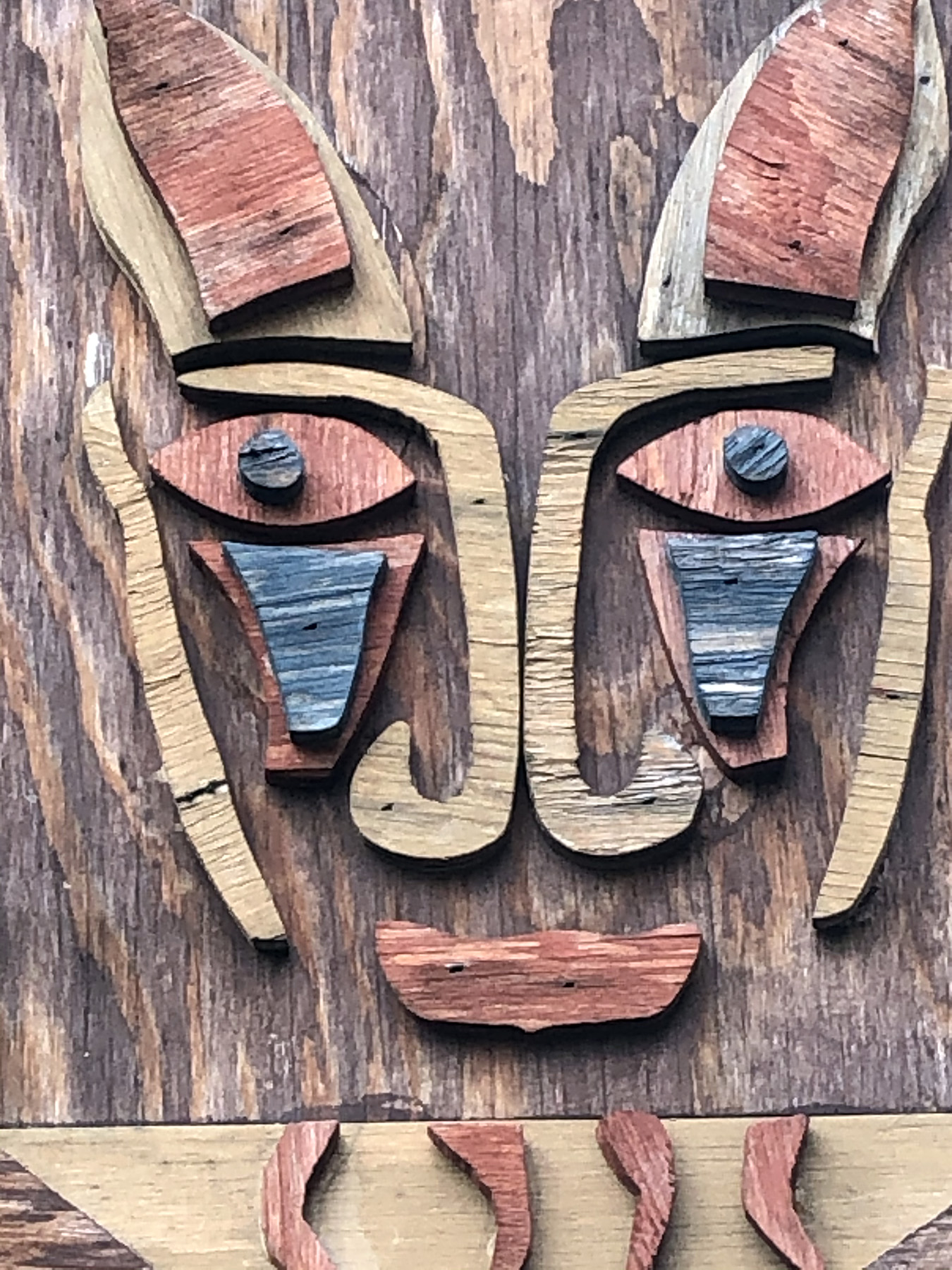
Photographs are from my local Jackson Middle School on whose fields I walk my dog. The students have decorated their buildings with totem pole-like assemblages with abundant creativity – made me think again how hard these times are on children and how much we owe them to make this a better, less dangerous and more equitable world.

And here is music from illness-induced periods of social isolation of various composers. I found the source here.

Chopin wrote this while isolated during a bout with tuberculosis.

Stravinsky wrote this while recovering from typhoid (contracted from eating oysters…) in a nursing home.

And Rachmaninoff transcribed and played this after he was stricken with the Spanish Flu upon arrival in the US in 1918.


Gardens

By all reports, people are emptying nursery shelves of edible plants and seed catalogues are running out of products to ship because we are back in Victory Garden mode. With all that war-related terminology – fighting the invisible enemy – it’s no wonder that old war concepts are making a come-back.

Planting additional gardens to provide food was originally started in WW I, ironically to save our European allies from starvation- their farms had become battlefields and their farm workers soldiers. US citizens were asked to grow their own food so that we could send more industrially produced foods to Europe. During WW II 20 million additional gardens produced 40% of the nation’s food; the process included administrative manuals to help citizens with planting and pest control, and instructions for canning and preserving to help with excess crops. Here is an interesting re-counting of the history. And here is an incredible historical propaganda video sporting a patriotic family doing their share towards the war effort in a HUGE (quarter acre) victory garden, mostly dug by a horse and tended by a 14-year old who inhales enough pesticides to be guaranteed lung cancer – (as a side commentary, every one in the film has a name, Dad and Grandpa Holder, Dick and Jane, and then there is…. mother! Also, Jane likes to garden in penny loafers. Just saying.)

Food insecurity is indeed a monster raising its ugly head even higher in times of mass unemployment and disrupted supply chains. Yes, I’m speaking of today, not 1944. The statistics from just 2 years ago are staggering – over 37 million Americans, including 1 million children, lacked consistent access to enough food for an active healthy life. African-Americans are hit twice as hard compared to Whites when it comes to hunger. (Which reminds me: if you read one single thing today that I link to, read this: Kendi on the causes for disproportionate suffering experienced by minority populations facing Covid-19.)

Extra vegetable gardens, with now so much more need for food arising, are indeed a good idea. That is if you have a plot, as small as 2 by 6 feet, that gets 6-8 hours of sun a day, an inclination to get your hands dirty and a nursery that can still provides some seedlings and bags of soil or other stuff to plant in. Never gardened before? Luckily you don’t have to rely on James Burdett’s 1943 book, The Victory Garden Manual. He was the founder of the National Garden Bureau, a non-profit organization “that exists to educate, inspire, and motivate people to increase the use of plants in homes, gardens, and workplaces by being the marketing arm of the gardening industry.”

Yes, they market, oh do they market, but they do so cleverly to help the un-initiated find the joy of gardening. Their latest effort, Victory Garden 2.0, is a step by step internet tool that I can actually see being successful in adding food to the food banks. They offer instructions for raised-bed or container gardens of various types, a salad garden, a kitchen garden, a high yield garden and a giving garden – for the hungry. Everything is spelled out – from soil preparation to pest control to what kinds of seed you need, how to plant, space, water, pollinate – you name it. Example below. The link goes into way more detail.

Way to go.

While waiting for vegetables to grow, I’m getting anticipatory pleasure from fruit-tree blossoms – not my own, since my garden is too shady, although I have one ancient pear tree that yields about 4 exemplars per year, worm-eaten in my pesticide-free zone, but pears none-the-less….

Music today by Béla Bartók who seemed to appreciate certain kinds of vegetables:  

“And then, after moving to America in 1940, he and his wife visited Los Angeles where he first encountered the avocado pear while eating a version of Waldorf salad. ‘This is a fruit somewhat like a cucumber in size and colour,’ he carefully recorded. ‘But it is quite buttery in texture, so it can be spread on bread. Its flavour is something like an almond but not so sweet. It has a place in this celebrated fruit salad which consists of green salad, apple, celery, pineapple, raw tomato and mayonnaise.”

Schiff’s playing is tight, and the second movement of the 3rd piano concerto sounds at times as if the ducks have gotten lose in the garden…

Meadows

One of my earliest memories concerns an escape, a short-lived flight from the confines of a sanatorium on an island in the North sea, Norderney, where I had been shipped for one of my perennial recuperation stints from childhood disease. Measles, Mumps, Scarlet fever, Whooping cough – I forget. I ran away onto a street that was being resurfaced, the smell of fresh tar sweetly tickling my nose, towards a meadow filled with buttercups, into which I threw myself and rolled around as any self-respecting four-year-old would do. Is it just me, or are old memories coming up in force these days, as if the sense of end times triggers a perusal of one’s life?

Ok, let’s cut the dramatic flair, and get to the point of the story. I have caught myself daydreaming that if and when testing for anti-bodies is widely available I will get the test and upon testing positive will re-experience that same sense of freedom of the meadow of yore – running out of confinement into a sunny, yellow, brilliant, sweet smelling world. Hah.

Here is the trick – the promise of an anti-body test, however sensitively testing who had the dreaded crud and who not, is one that is misleading and likely creating a dangerous situation. Here is the deal, more or less in the words of my Beloved who has brilliantly taught the underlying principles of Bayes’ Theorem for years. (Hearing it’s mathematics you are shutting off? DON’T! It’ll really be interesting, I promise.)

Let’s assume we have a test that we trust – it finds antibodies 94% of the time in people who did indeed have the disease and misses them only 6% of them time. It is also correct 96% of the time for those people who don’t have antibodies showing that they did not yet catch Covid-19 and gives us only 4% of false alarms – detecting antibodies, when you really didn’t have the disease. So far so good? We have a hit rate of 94%, a miss rate of 6% and a false alarm rate of 4%. To repeat, this is pretty encouraging: If you really do have the antibodies, there’s a 94% chance that the test will (correctly) confirm that you have the antibodies. If you really DON’T have the antibodies, there’s only a 4% chance that the test will (falsely!) say you do have the antibodies. That’s the false alarm number.

Here is the problem, though. Let’s assume that we give the test to the entire population of U.S. citizens, for sake of argument let’s round them to 330,000,000. If 1% of that population actually had the virus, over 3 million people were sick in other words, we would correctly detect the antibodies in 94% of these people, or precisely in 3,102,000 cases. So far so good.

Now let’s look at the remaining 99% of citizens who did not yet catch the virus. We had said earlier that the false alarm rate for these cases was low, around 4%, where a test said it found antibodies when you really didn’t have them because you never had the virus. We are talking about 326,700,000 people in this population of uninfected people of whom 4% would be 13,068,000. Over 13 million people, in other words, would be told they had the virus, when they actually didn’t, because even a small false alarm rate becomes a big number when it is applied to a huge number of people in a particular category (here the not-yet infected.) Again, 3 million people would get a correct assessment of their status – you previously had the crud and don’t have to fear infection- and over 13 million would get the same message incorrectly. IN OTHER WORDS, the test is wrong four-times more often than it’s right!

How would you, as an individual, know in which group you are if the test comes back positive? Yes, you had the cough, some fever, all the known symptoms, but they could just as well have been from the hideous rhino virus going around this spring – but if the test tells you you have antibodies to Covid 19 it is more likely mistaken than not. The real up-shot is, of course, that it gives many, many people who tested positively a sense of security that might be false and expose them to infection if they go back out into the world going about their business as they used to. But, since they’re not safe, we’re on our way toward disaster.

Many people find this confusing, because, after all, we said that the test detects Covid 94% of the time. How could that sort of test be WRONG more often than not? The key is to understand what that 94% actually is. The 94% (officially called the test’s “sensitivity”) is the ability to detect the virus when it’s there. That’s not the same as the test’s accuracy (which is the test’s ability to tell whether you’ve got the virus or not). Accuracy can be (and, in this case, IS) rather low if you give a sensitive test a lot of opportunity to be wrong. That’s because the false alarm rate is a small percentage, but — again – it’s a small percent of a big number, and that’s a lot of errors. That’s what drives down the overall accuracy.

Note that all this would change if and when a larger percentage of the population actual had indeed been ill, say 30 million people instead of 1 million which was our assumed number. But also note, that there are other troubles associated with testing beyond the issues discussed so far. The podcast below and the NYT article from yesterday spell those out.

https://slate.com/podcasts/what-next-tbd/2020/03/where-are-coronavirus-tests

Meadows have to wait, folks, like it or not, until we have a vaccine. (Or at least meadows where you meet other people – you can still enjoy them tout seul….)

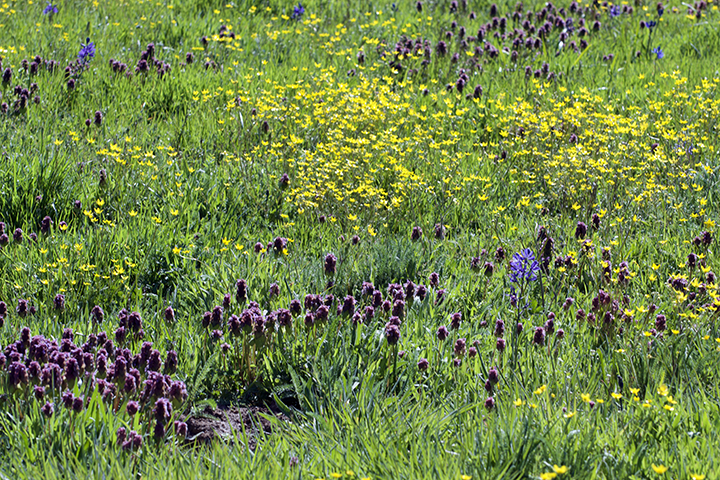
Photographs today are from last week’s walk at a local meadow and my current backyard, daisies, dandelions (!) and all.

And here is a spring symphony.… Schumann’s 1st, op. 38

Disease Prevention

So this bug passed, leaving me tired, but essentially functioning again. Today’s blog will be more stream of consciousness musings than anything else, however, with my brain still trying to iron out the fever wrinkles.

Garden variety flu (accompanied by garden variety birds, yes, I need the cheer, but promise there will be non-avian photos in the future…) led to thoughts about Covid 19 – since all of a sudden the world has started to react.

If you are a regular reader you will remember that I wrote about it already over a month ago. Since then we have learned a lot of things; my own information comes in large part from the ministry of health in Germany, which has been placing ads on FaceBook and other social media for a week now urging people to go to their website to learn about prevention and treatment options.

Contrast this with our own government: with so many lies destroying its credibility, how would I trust them for advice? With its cutback of health resources, how can it functionally combat a potential pandemic now that it is arriving? How can we rely on an administration that has the most stunningly incompetent appointees in memory? How can its focus on the stock market instead of the virus not make us all nervous about the efficacy of potential plans? Is secrecy part of the deal?

Oregon, for example has currently 254 people monitored for an outbreak of the virus, but I have not seen public notices to alert people to come in for monitoring if circumstances suggest. In many states testing equipment to verify the presence of the virus is not available in sufficient numbers. (Nor are essential preventative gear for help personell should we see a real onslaught all of a sudden.) We cannot verify the exact lethality of the virus, since the way who is counted as sick or even verified as sick changes so often. It is certainly higher than the flu. It starts with vage symptoms, often a bit of nausea and fatigue, then fever and cough. Most people will recover, but for some the dangerous part sets in after about a week of having the milder symptoms. Males over 60, with preexisting conditions like high blood pressure and diabetes, are particularly at risk. People can infect others before they themselves show obvious symptoms. The virus survives on surfaces (doorknobs, tables) depending on who you believe, from 1 to up to 9 days. (Cannot verify.)

Here is an informative pamphlet that helps us to take control of what can be controlled (and includes links to what the CDC has suggested for business owners last week.) The suggestions for private citizens in a nutshell:

  • Try to get a few extra months’ worth of prescription meds, if possible. (Supply chain disruptions are a guarantee.)
  • Try to have a several week supply of non-perishable food. (Hard to suggest when you know some can afford that, most can not.)
  • Think through now how we will take care of sick family members while trying not to get infected. 
  • Cross-train key staff at work so one person’s absence won’t derail our organization’s ability to function.
  • Wash hands, soaping them for the duration of TWO rounds of Happy Birthday that you can hum silently. That is 20 seconds, eternally long but necessary.
  • Practice touching our faces less. So how about a face-counter app like the step-counters so many of us use? (Ask friends and family to point out overtime they see you do it- it helps the learning process.)
  • Replace handshakes with elbow-bumps (the “Ebola handshake”). 
  • Start building harm-reduction habits like pushing elevator buttons with a knuckle instead of a fingertip. 

Here is a psychologically interesting question for which I have no answer: if you consider how Obama got trounced by the media during the Ebola scare of years gone by, how come our dear leader has essentially gotten a pass on Covid 19 so far? Wouldn’t you think that in an environment as divided as ours, people would jump on the opportunity to hold him to task? What is the secret key to evading responsibility over and over again?

Music today reminds us there is always a need for cheer!

The Year of the Rat

Really, all I wanted yesterday was to glimpse some color on an extraordinarily dreary, damp day. Off I went to visit Lan Su Chinese garden since the red New Years lanterns all around old town/Chinatown reminded me that the Year of the Rat is upon us and the garden celebrates the occasion. I’d surely find some color there – as I did indeed. Red, pink, white, green against the dark grey of the stone and the light grey of the drizzling rain – it was perfect.

And then the chain of associations kicked in: Rats reminded me of disease vectors, disease of course of the new, deadly Wuhan Corona virus, a relative of the dreaded SARS virus. It is communicable between humans, and now emerging wherever infected people travel, including the first case that has appeared in Washington State. Our dear leader, of course deems it totally under control. We really wouldn’t know, would we, given the deregulation and cutting of funding for research and disease control (here is a fascinating interactive chart by the Brookings Institute of ALL the deregulatory actions committed by this administrations of January 2020.)

And the WHO seems to think otherwise:

The World Health Organization is convening an expert panel today to discuss whether the Wuhan virus should be designated “public health emergency of international concern,” a rare step aimed at getting more money and resources from global donors to fight an outbreak. The emergency designation has been used just five times: against polio, the swine flu, the Zika virus and two recent Ebola virus outbreaks in Africa.

The Chinese Government, despite attempts at secrecy and minimization of the expected danger – the virus is making people intensely ill with a high proportion of deaths, with no known immunization or effective counteragents – does take it seriously. As of yesterday, the 11 million people of Wuhan and surrounds (8.9 million in the city proper) are prohibited to travel and leave the region, despite the Chinese New Year which customarily sees people travel all across the country to be with their families.

That is like telling the entire city of London that it is quarantined. You don’t make that decision lightly. Travel warnings and advisories are also given to those coming into China, with dire consequences for tourism – dependent industries, particularly around the New Year which usually draws hundreds of thousands of people in addition to the millions traveling within China.

*

Clearly a life and death battle against an invisible enemy is anticipated and the forces are closing the hatches. Or the airports, as the case may be. Battle reminded me of another, more positive association with recent things Chinese: the first ever translation of Sun Tzu’s The Art of War into English by a woman, Berkeley’s Professor of early Chinese History, Michael Nylan (yes, that’s her first name. And why do people focus on the gender? Valerie Niquet already translated the same book into French in 1988, and some of the best war novels ever written were by women – Pat Barker’s Regeneration trilogy and Silence of the Girls, Christa Wolf’s Cassandra.) Art of War has been glued to the pockets of Ho Chi Minh and Mao Zedonga, served as a manual for military men and Steve Bannons of the world, many trying to understand how to vanquish one’s enemies, not necessarily just on the battle field. The translation has received positive reviews, all of which mention that the translator sent out the manuscript to a huge variety of scholars, military people and politicians to receive input.

I found most interesting what she herself had to say both about the art of translation and the lessons she drew from the text itself: that the book is in essence a manual about how to avoid war. (Her essay is really a fascinating read, found in LitHub of all places.) And how can you not be curious about a woman whose research interests include belief. (Research interests: Early China: Seven centuries of Warring States through Eastern Han (475 BC–AD 220), with an emphasis on sociopolitical context; aesthetic theories and material culture; and belief.)

 “It is not only that The Art of War might as well be named The Art of Life, since it famously advises readers (originally all powerful men at court) to avoid war, by any means, if possible, on the two cogent grounds that it is far too costly a substitute for diplomacy and long-term strategies, and that the outcome is never assured, given all the variables at play. Equally importantly, the Art of War, like Thucydides, conjures the entire spectrum of human motivations that lead the already ultra-powerful to seek more power through violence. Then, too, The Art of War is interested in what I call the “politics of the common good” essentially, inquiring what sort of leadership can create a stable society in which domestic disruptions and painful divisions are at a minimum. In conversation with the so-called “Confucian” Classics, The Art of War imagines a three-pronged approach, wherein the vast majority can be brought to identify with good leaders, without imposing much conformity, as those leaders have shown themselves to be humane and deliberate when serving the people’s needs, desires, and interests.”

Loved how they picked a slightly pink balloon color to match the camellias in one courtyard

Politics of the Common Good – take that, Steve Bannon! And for all those women who adhere to the Chinese New Years taboo that a woman may not leave her house all day (!) otherwise she will be plagued with bad luck for the entire coming year – think of all those ancient Chinese generals who were female! They did not exactly stay home.

新年快乐 / 新年快樂 (xīn nián kuài lè) “Happy New Year!”

步步高升 / 步步高陞 (Bùbù gāoshēng)  “A steady rise to high places!” / “on the up and up” – yup, that’s not happening in your kitchen!

Music today is also a climb – for our ears and brains used to more traditional fare.

Campy, whimsical and evocatively comical,
Rated R wildly re-imagines the myths of the Chinese Zodiac Animals to encompass zany comedy and to dramatize serious social issues. In a post-apocalyptic world, the Zodiac gods suffer a crisis as their human underlings lose interest in reproducing. The Lark, a chirpy court entertainer who dreams of becoming the first Goddess, descends to the Earth to solve the mystery. Through the journey, she discovers her real passion and therefore, revives the world.

* *   *       *         *               *                           *

A CHAMBER OPERA IN THREE SCENES WITHOUT INTERMISSION
Music and Libretto by Wang Jie.
Instrumentation: Singers, Fl, Cl, Bsn, Hn, Tpt, Trbn, Tba, 3 Perc, Keyboard soloist: Hpsd (amplified)/Cel/Pno, Strings.
The Lark (Coloratura/High Lyric Soprano), Peasant woman (Mezzo-Sop.), The Rooster (Actor or Tenor), The Rat (Basso Profundo/Bass-Baritone)

The remaining ten Zodiac Gods, humans on Earth (SATB chorus of minimum 16 voices)

Rated R for Rat was commissioned by the American Composers Orchestra through the Underwood Commission Prize, American Opera Projects through an OPERA America Female Composers Commissioning Grant, and received its first workshop with assistance from the San Francisco Conservatory of Music Opera Program.

And what did my joss stick reveal? Advice noted!

Close the Floodgates

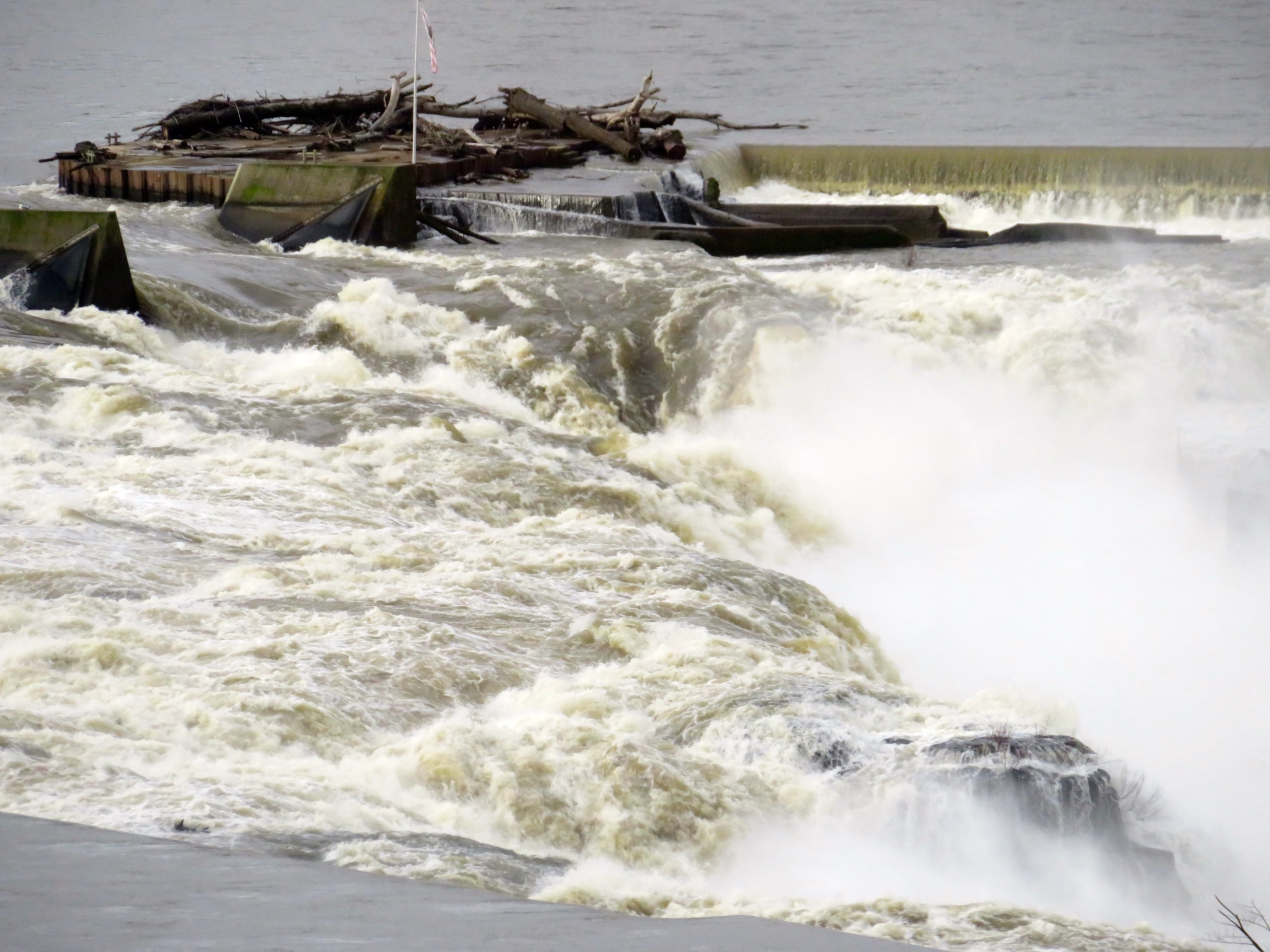
For the last bit of this week, a bit of PR for one of the projects I am involved in as set photographer: OUR BODIES OUR DOCTORS. I’ve written about it before here. And here is an overview article on the multi-pronged legal and political assaults on our rights. Don’t let them be swept away by floods resembling the current state of the Willamette river….

On this Important Anniversary of Roe v. Wade 
Cinema 21 Hosts a Special Screening of OUR BODIES OUR DOCTORS
Winner “Best Documentary Feature” 2019 Portland International Film Festival
The event includes WE ARE FORBIDDEN, a short film 
directed by Cheryl Strayed and Brian Lindstrom.

On this anniversary of Roe v. Wade, Cinema 21 hosts a special screening of OUR BODIES OUR DOCTORS, Winner of “Best Documentary Feature” at the 2019 Portland International Film Festival as well as Best of SIFF and the “Lena Sharpe Persistence of Vision Award” at the 2019 Seattle International Film Festival. This feature length film has been described as “bold and brave” and “nothing short of revolutionary” in the depth of its portrayals of the work of abortion providers.

The film screens Thursday, January 23rd at 7:00 PM at Cinema 21, 616 NW 21st Ave., Portland. For more info and to buy tickets, go to https://www.cinema21.com/movie/our-bodies-our-doctors

OUR BODIES OUR DOCTORS features Portland providers, often unsung heroes, and the creative work of feminist clinics in the Pacific Northwest.

“When I took on this documentary project, I was struck by how little people knew—even those that are pro-choice—about what’s actually involved in abortion care. What I found in making OUR BODIES OUR DOCTORS was a quiet rebellion in the field of medicine led by a new generation of progressive physicians fighting religious control over healthcare. The providers in the film take up difficult questions: How do they deal with the emotional and political aspects of abortion?  What makes second term abortions medically and emotionally challenging, for the providers themselves and for their women patients? These are areas where pro-choice films have previously not ventured. But the providers featured in this film—and many of their patients–are bold and brave enough to take us there.” – Jan Haaken, Director

Screening with WE ARE FORBIDDEN, a 10-minute film directed by Brian Lindstrom and Cheryl Strayed. 

In parts of Nepal, menstruating girls and women are considered impure. They are banished from their homes or sequestered to a room; forbidden from eating most foods and not allowed to attend school, visit a temple or even look at male family members. In this moving short film, nine Nepalese girls share their menstruation stories. The film derives its power from allowing the girls to speak for themselves, demonstrating their courage, strength and inspiring desire for change.

Providers featured in the film will join Director Jan Haaken and Producer David Cress for a Q&A session after the screening. Co-directors Brian Lindstrom and Cheryl Strayed will be present at the event.

“While a handful of forthrightly pro-choice documentaries have successfully conveyed the enhanced urgency of the issue in the 2010s – few films have managed to offer a truly novel perspective that goes beyond red-alert despair about the state of the world… OUR BODIES OUR DOCTORS is a smart, affecting documentary… Shining a light on the abortion issue from a vital yet neglected angle.”

–Cinema St Louis 

“This film feels nothing short of revolutionary. The experiences of abortion providers have for too long been left out of the pro-choice vs. pro-life debate, and presenting these doctors with honesty and compassion will have a profound impact on the discourse around abortion in this country.” 

— Grayson Dempsey, Executive Director, NARAL ProChoice Oregon

Screening Details: https://www.cinema21.com/movie/our-bodies-our-doctors

Film Website:  http://ourbodiesourdoctors.com

Facebook:  https://www.facebook.com/OurBodiesOurDoctors/

Instagram: https://www.instagram.com/ourbodiesourdoctors/

I often wonder…

I often wonder how so many women out there manage to face health decisions and catastrophes with courage, independently of how varied their circumstances. Making life and death decisions around illness or reproductive choices in itself is hard enough – if you add to that a hostile environment, economic factors like lack of employment or risk to employment, no health insurance, family needs etc., it can become an overwhelming task.

I was reminded of that by two pieces I read this weekend, marveling at the courage around us. One was an article by a young Health Care reporter at Politico, Alexandra Glorioso, whose last name is an apt description for her candor in speaking about her breast cancer diagnosis at age 31. The candor is glorious. We live in a time when the enforced silence that even only two generations earlier had to endure, is no longer an issue. If anything, there is such a flood of testimonials about going through cancer (of all kinds) and living with disease, that interest has been saturated. Or in any case devoted to hearing the success stories, not the fact that 42.200 women each year in this country still die from breast cancer.

Among this deluge, Glorioso stands out for her willingness to admit to all of the factors driving her choices about treatment and how to deal with the effects of treatment, less heroic ones like vanity included. And how can you not feel for a 30-year old dealing with issues of threats to fertility and artificially induced menopause (potentially reversible) so that the cancer can be fought without estrogen feeding it. Yet this young woman also has a support structure that is phenomenally helpful – beginning with a scientist father who knows all the right experts, to a fresh boyfriend who soon becomes a fiancee, to a health insurance that covers, if not all, then seemingly a lot of the procedures and medications. She thrives on the solidarity between strangers on the web-wide “cancer club,” who add succor and practical help with their electronic interactions.

I was moved, but it was nothing in comparison to the other piece on my desk, a book review of poet Anne Boyer’s new book The Undying. The very first paragraph had me jump up and call a book order in at my local bookstore:

The pink ribbon, that ubiquitous emblem of breast cancer awareness, has long been an object of controversy and derision, but the poet and essayist Anne Boyer doesn’t just pull it loose, unfastening its dainty loop; she feeds it through a shredder and lights it on fire, incinerating its remains. “The world is blood pink with respectability politics,” she writes, “as if anyone who dies from breast cancer has died of a bad attitude or eating a sausage or not trusting the word of a junior oncologist.”

Boyer, a single mom in precarious employment circumstances as a teacher, also still young when diagnosed at age 41, has an unusually lethal type of breast cancer that now, 5 years and many extraordinary debilitating treatments later, seems to be absent. From what I gather from the reviews (and here is another one by Sarah Resnick that is intellectually richer and putting the memoir within a larger framework of society’s interaction with cancer,) the book is only partially about the author’s experience on the medical front. Instead it deals with how the world reacts if you disclose the anguish, the fear, the exhaustion, the pain and the losses not within a narrative of heroic survival, sticking to your on personal war story. As Resnick notes:

To linger in the grammar of pain or anger or sorrow, in the bleak syntax of one’s illness, risks summoning “a chorus of people, many of whom have never had cancer, accusing her of ingratitude, saying she is lucky, warning her that her bad attitude might kill her, reminding her she could be dead.” These impositions, Boyer explains, arrive as diktats from a new boss: “the boss that is everyone.” “Self-manage,” they cry from their open-plan workspace. Avoid speaking of death, practice meditation, do yoga. Take care of others. Summon your inner warrior. Smile. Fight! This new boss is doing the bidding of our unjust and unhinged economic system (“white supremacist capitalist patriarchy”): If the onus of responsibility—for recovery, for health, for well-being—falls on the person who is sick, the rest of the world gets a pass, is not accountable for whether a person lives or dies, and if she lives, in what state…..Breast cancer, Boyer insists, cannot be understood as an ahistorical sameness, an uncontrolled division of abnormal cells. It is, rather, a socially and historically constructed nebula, and the women who have it do not suffer from the illness alone. They suffer from the world.

A world, we might add, that faces ever increasing attacks on our ability to stay healthy and avoid carcinogenic exposure: this week we learned about new EPA restrictions on using science to draft and monitor health regulations. Let’s breathe poisonous air, drink poisonous water, have the kids be exposed to lead – as long as industrial profits are not endangered….

*

Why was I so much more receptive to the issues raised within the book review than the Politico essay? Partly from admiration for the harder fate of the poet, facing much more radical treatment, who might leave an orphan behind if things didn’t work out, who had to do all this without the network of supporters. More likely, though, because I always thrive on reading about the larger picture – not purely the human interest story, no matter how much I can relate to it, but the anchoring within the system, the world that surrounds us, whose parameters affect us all. Again, the red thread of this week, receptivity to information is so much defined by what is already there. Which leaves me wondering, what kind of information is not getting through to me when it should, caught in the net of preconceived notions or habits.

As William Congreve once said: music can tame the savage breast. It can also tame the sorrow over the absent breast. This is particularly true for music written by someone unwell himself, in this case Beethoven who suffered severely from Inflammatory Bowel Disease and after a bout wrote a string quartet (Opus 132) in 1825 with one movement titled: “Song of thanksgiving to God for recovery from an illness, in the Lydian mode.” It washes over you with anguish and joy, echoing the everlasting longing for recovery.

Photographs today ignore pink ribbons and instead offer multitudes of silvery slivers of hope.