Browsing Category

Politics

TseSho – What’s That?

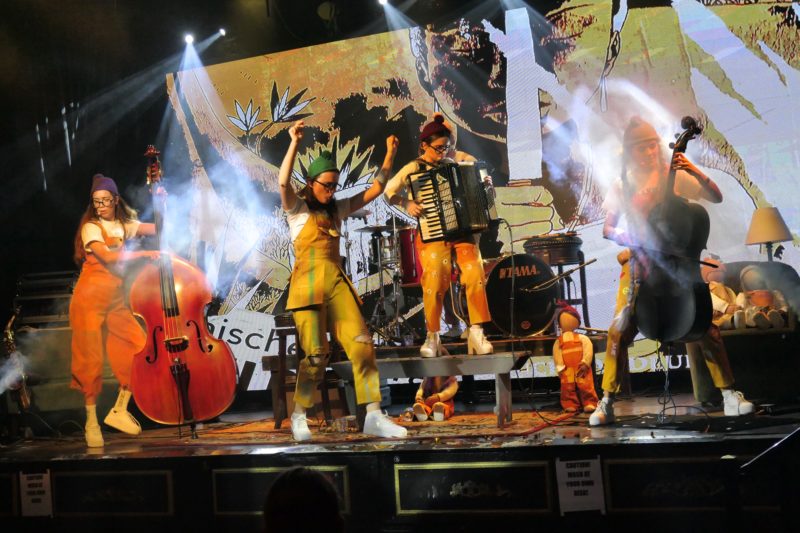
When your hope for humanity has reached a pretty low point, there is sometimes art that comes to the rescue. Case in point was Saturday’s rambunctious cabaret TseSho, performed by musically and artistically gifted young people who applied art to politics. The Ukrainian Teatr-Pralnia’s satirical take on current cultural issues and their heart-breaking descriptions of hatred and war were mixed up in an exuberant show using puppets, video art and vibrant music that made your heart sing and your feet dance. TseSho – What’s That? was a romp about urgent contemporary topics.

The show was both fun to watch and listen to, but also deeply thought-provoking. Four young woman on stand-up bass, cello, saxophone and accordion and one male drummer presented songs about love, gender issues, cultural clichés,


the need for affirmation (in a hilarious send-up of Facebook likes) and the desire to forget (alcoholic means included.)


Most profoundly, they described a world riddled by hate and destroyed by war through the eyes of a (puppet) child, who with ever increasing levels of fear recited alphabetically ordered words that defined the experience of those who are oppressed, imprisoned, threatened by violence and without means of escape. That takes courage, when thinking about the fate of some politically engaged artists in the Eastern Bloc. Just remember Sentsov, a Ukrainian filmmaker imprisoned in Russia for allegedly plotting terrorist attacks, ended a long hunger strike about 3 weeks ago, with irreversibly damaged health.

https://www.newshub.co.nz/home/world/2018/10/ukrainian-prisoner-ends-144-day-hunger-strike.html

Living in a world where political art is not just censored but can be dangerous had me even more impressed with the cabaret performers on hand.


The performers used puppets to tell some bits of their stories, stories that had universal appeal, striking the distance between audience and actors from a foreign land. The props and other visuals, like lighting, costuming, and background videography were just as remarkable as the athleticism that accompanied the music. Texts were either in English or Ukrainian, with helpful, projected super-text translations. The one thing I could have done without was a smoke machine – it generated atmospherics that were not needed, given the rest of the theatrical trick bag on display.


Most impressive, though, was the sleight of hand (or mind) that led the audience into a happy, funky, slightly agit-prop romp reminiscent of the very early Frank Zappa concerts at the beginning of the show; the message became progressively darker without you quite realizing it until all of a sudden it hit the point where descriptions of conflict and aggressive war entered the room. Musically this was profoundly expressed by the instruments mimicking the war noise to perfection, a kind of musical onomatopoeia.

The show is part of the US State Department’s Center Stage cultural diplomacy initiative, presented by Boom Arts here in PDX.  This year numerous artists from Ukraine and Egypt are invited to present their work during a month-long tour. Government doing good! Who’d thought….

https://exchanges.state.gov/non-us/program/center-stage

The concert will repeat this Friday and Saturday (10/26/27) at the Paris on Burnside & 3rd.

Don’t miss it!

I’ll be there, dancing instead of photographing for the next round! Unless they display additional interesting socks….

Here is 2016 clip: https://www.youtube.com/watch?v=B88Q2Ng6oRE

Leaf Hopping

The leaves are changing color. Uniform green now glows in gold, chartreuse, orange, red and brown. Some of the patterns look almost like expressionist watercolors.

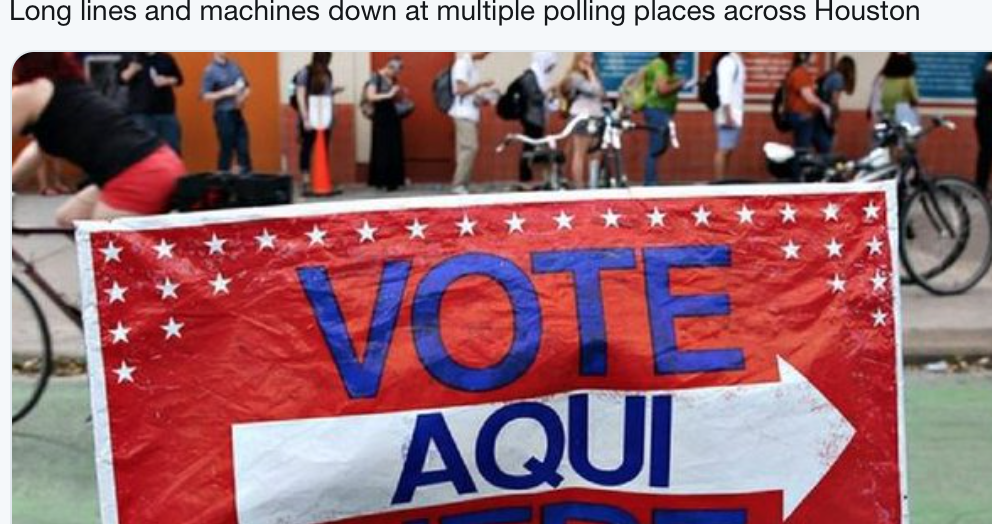
Change is generally in the air, or so we hope. Across the generational divide people are promoting change – look, for one, what young people accomplish. On the heels of Parkland and the political engagement of the shooting survivors, we have seen a surge on youth voter registration. Will the young actually show up at the midterms? Some think it is possible, again the traditional pattern of midterm apathy among the 18-30 years olds.

Young Voters Might Actually Show Up At The Polls This Year


On the other end of the spectrum is this example of musical exhortation created by friends at the senior residence in Boston.of my 90-year old mother-in-law.

https://youtu.be/IVOycHHr270


Walking these last days under ethereally blue skies with leaves seemingly floating in the air even if they were still attached to their branches had a certain feeling of unreality.


There was a world suffused with beauty in front of my eyes, about to change the minute the rains hit, or the storms come in, just as nature proscribes it. We might not be able to escape the changes imposed by nature, but we sure do, as a society, make it hard for other change to happen.  That is true on the individual level – attached is a thought-provoking article from the NYT -click on the picture –

as well as the general level. And no, I am not going to discuss voter suppression, redistricting, closure of voting locales, hacking and so on – you are aware of it all as well as I am. I am just going to hop around in big piles of leaves, camera in hand, wishing that the forces battling the midterm elections are as strong as the forces of nature.

And here are Autumn Leaves from 1924 by Georgia o’Keefe

Autumnal Ambling

Portland’s Lan Su Chinese garden is a great spot for a fall walk. Or rather an ambling, since something beckons to be looked at every 2 seconds. I have written about it before, and indeed today’s images were taken last October, but they perfectly represent what is there now. What they did not capture is this month’s exhibit, though, by Alice Debo, a graphic artist, and Jen Fuller who works with glass. I had the opportunity to see Jen’s representation of leaves in the making – she works in the studio of a friend of mine – the botanicals look like being made out of spun sugar and have a tender fragility that captures the mood of fall.

The mood of fall, the fragile, not tender, version, hits you if you sit down at any corner of this contemplative garden and allow your thoughts to gather. Not sure what’s in yours, but some of my thoughts circle around the various attempts these days, by a variety of actors, the bad as well as the seemingly less bad ones, to curb our constitutional rights.

There is the concerted attempt to curb protests in DC by effectively blocking them along the north sidewalk of the White House and making it easier for police to shut them down. The National Mall, site of MLK’s rousing speeches, Lafayette Square, Pennsylvania Ave, the area at Trump’s hotel. Not coincidentally this comes at the heels of protesters being labeled “angry mobs” and constitutional dissent describes as mob rule.

As Mara Verheyden-Hilliard, executive director of the Partnership for Civil Justice Fund, which opposes the effort, describes: ‘‘And now you have the Trump administration that is not only engaging in extreme rhetoric against demonstrators and suggesting that protests should be illegal, [but] taking concrete actions to suppress dissent and suppress free speech.’’

https://www.seattletimes.com/nation-world/trump-proposal-could-squelch-washington-d-c-protests/


Then there is the National Park Service. It proposes charging organizers for the cost of erecting barricades or reseeding grass.   Arthur Spitzer, legal director of the American Civil Liberties Union (ACLU) in the District of Columbia points out that fee requirements could make mass protests “too expensive to happen.”

So many inroads to curb dissent. It all reminds me of the 1970’s in Germany, where a new law stated that even peaceful demonstrators could be charged for the entire cost of police operations, helicopters, wate canons, over- time and all, if they were present at a demonstration where violent actors did not disperse upon police instruction. Think about your willingness to go and demonstrate if by no action of your own your life can be ruined if you are the bystander the cops happen to get their hands on.

Closer to home, we had  yet another violent clash between white supremacists and left protesters this week. https://www.portlandmercury.com/blogtown/2018/10/15/23708319/joey-gibson-encouraged-proud-boy-violence-in-portland-they-are-going-to-feel-the-pain

In response, beleaguered Portland Mayor Ted Wheeler proposed an emergency ordinance that would clamp down on how protests are handled. It would allow the police commissioner in charge (currently Wheeler) to assess if a planned protest will become a threat to public safety based on “statements or conduct” by members of any protesting groups or based on “other credible information” obtained by police before the event. He can then restrict time and place of any planned protests well as how many people are allowed to participate.  This is particularly worrisome given the Portland Police Bureau’s use of the “both sides” narrative, equating aggressors from the alt- right with reactions from the Antifa -left.

As commissioner Chloe Eudaly, who is not happy with how fast this proposed ordinance is pushed through, points out:”There is a legitimate balance to be struck between public safety and free speech,” Eudaly went on. “In my view, this begins with an acknowledgment that in our city, although our policies must be content-neutral, it is far-right extremists and hate groups who are necessitating these measures.” PPB, for example, has only now acknowledged that they confiscated whole caches of fire weapons brought in by the white supremacists at previous brawls back in August. No charges or arrests, the and now, just like there were no arrest in NYC some days back when the very same Proud Boys engaged in violent clashes. No wonder comparisons of police passivity during the Jim Crow era and police inactivity now are starting to crop up in the media.

The ACLU gave this statement:

“The mayor’s proposal grants broad authority to the mayor’s office to regulate constitutionally-protected speech and assembly with no meaningful oversight for abuse,” said dos Santos in a press statement. “This action by the mayor demonstrates a lack of trust in the public and is an end-run around our usual democratic processes.”

https://www.wweek.com/news/city/2018/10/15/aclu-on-portland-mayors-new-policy-we-already-have-laws-against-street-fighting-and-violence/

Art today:

北宋 郭熙 樹色平遠圖 卷
Old Trees, Level Distance

Artist:Guo Xi (Chinese, ca. 1000–ca. 1090)

Period:Northern Song dynasty (960–1127)

Date:ca. 1080


Conflict Solved

I came of age during a feminist wave that pretty much condemned the desire to be or make oneself beautiful. It was never exactly clear to me why a movement towards androgynous looks – so obviously tending in the direction of the masculine away from the feminine – was a sign of strength, rather than a narrow reaction to society’s demands on women.

But the question remains: Can feminists embrace beauty and beautification, or is it a sell-out to The Man? Is it just one more thing where women are not in control of their fate, but trying to live up to ideals set for them by someone else?


The advantage of having raised feminist sons is that they are perfectly able to solve the conundrum for you when you mull over this at the dinner table, while trying to explain how you are drawn to photograph all the beauty found in people’s hair, their necklines, the way they dress, and, let’s not forget it, their feet. Have to photograph that coveted footwear!

“Of course you can enjoy beauty, Mutti! That is different from  forcing ideals onto people, or body shame them when they don’t reach them, or fill their heads with preoccupation with looks rather than ideas. You want to honor bodily autonomy, in both women and men. And you want to think through your choices – if three hours of putting on make-up stops you from volunteering it might not be a cool choice, but you still are free to choose. If your choices are driven by a desire to conform, or please, or not be excluded, maybe think again.”


Indeed, I think we want  to free ourselves of gender expectations, but be free to express our gender anyway we want – if that includes stereotypically feminine aspects, from heels to nail polish, so what. We should simply not judge or be judged by ways of self expression. I know that when it comes to theory – in fact I brought my infant sons dressed in perfect pink into my graduate class room to have my students react with glee or frowns or astonishment or pure joy – to discuss gendered issues. I also let my boys play with Barbies which they coveted at childcare, and am certain I would have found that unacceptable if they had been daughters because of the body image issues. But when it comes to practice – myself drooling over lace and pearl- studded veils, or frilly pink, or shining tresses –  I still have pangs of bad conscience.


I also remember the far more consequential discussions among women, myself included, who had to make choices after mastectomies. Do you opt for breast reconstruction, or not? It involves serious additional surgery, money and potential obstacle to easy detection of cancer recurrence. Do you opt for false bras, or go flat? Does it matter that you are 30 or 50 or 70 years when the plague hits, partnered or still searching? When looks and sexuality are directly linked in a society that is so focused on these specific body parts, “free” choice is made maddeningly difficult.


https://www.elle.com/culture/books/a37113/can-beauty-culture-and-feminism-co-exist/

So there  – here is the juxtaposition of theory and practice, my dialectic approach to fashion: I document the beauty around me, adore it, allow myself to buy funky clothes as long as it doesn’t involve cutting the budget for charity and includes second-hand stores, I skip make-up, and dream of high heels.  A start.


And I plan to wear unmatched socks, too!

Musical choice today is the Marshallin from Strauss’ Rosenkavalier who bemoans the loss of beauty and the burden of aging when inside she is and feels like still the same young person she always was.  But then she declares that all that matters is how you tackle it.  Onwards!

Street Roots


After a week of portraying travel options mostly linked to the past, today I want to direct us to the present. The here and now where we are all called upon to walk on paths shared with those who are less fortunate than most of us. And with those who are steadfastly around to help them. Traveling, in other words, not necessarily for fun and adventure, but for the larger good. Good for social justice as much as for your soul. Down a road that is not necessarily comfortable, either.

These thoughts were triggered by attending a breakfast fundraiser at the ungodly hour of 7:30 in the morning, in the company of hundreds of other slightly bleary-eyed souls, to celebrate the incredible work of Street Roots, our local weekly newspaper produced and sold by people experiencing homelessness and poverty. Here is what they do:


From a beginning of a few volunteers 19 years ago, they have grown to a large organization winning prizes for their journalism, winning political battles affecting housing and poverty, and, most importantly, giving voice to those who are not usually listened to, with their contributed articles and in their interactions with those of us who buy the paper. More detailed history here: http://streetroots.org/about/work#history 

The organization has a fighting spirit, in the best possible meaning of the word, not shy to risk losing donors if demanded by principle (they lost an annual $10.000 grant from the PDX Archdiocese for refusing to take Planned Parenthood off their resource guide for people in need, not exactly peanuts.) But they also fight for cooperative action, as was evident by the wide range of city players and business donors present at the breakfast, willing to engage across social class, political and economic divides.

Metro

Portland Fire and Rescue

Trimet

Portland Housing Bureau


Kaia Sand, recently appointed executive director of Street Roots, embodies these core values of principled defiance and energetic partnership quite well. (She’s also one of those more interesting poets meandering at the crossroads of literary art and activism – more on that on another day.) http://kaiasand.net/#wavebook


The award procedures for Vendor of the Year and Keystone member of the Street Roots community were moving,

and I was lucky enough to be close to a beloved 4-legged companion of one of the honorees,  Migo the best dressed dog in recent memory.


Still resonating is the keynote address by Michael Buonocore, executive director of  Home Forward, (the former Housing Authority of Portland,) which provides access to affordable housing and services for people facing low income, addiction, disabilities and other issues making it difficult to maintain a safe existence.

http://www.homeforward.org/home-forward/welcome


He called on everyone to choose what I called a difficult path at the beginning of today’s musings: to engage in honest interaction with those outside of our comfort zone, when encountering them on the street, when put off by their attire, when seeking distance because of the potential threat to our own emotional well being while confronted with misery.” LEARN TO SEE EACH OTHER. ”

It might provide the best traveling companions yet!

PS: On my way home from the bus after the event I came by this under the bridge that carries the Highway traffic. A steep cement slope, noisy and full of exhaust gases, attracts sleepers desperate to be dry. Regularly dispersed.


Swift Apparitions

This mini-Trump. This histrionic, petulant, entitled, raging, shameless small man. This liar. Even in the details – The WSJ reports that he listened to Dr. Ford’s testimony on a monitor in a side room. He denied this when asked by Senator Harris. Never mind the lies about all the rest of it, even for facts that can be verified, like drinking age in 1980s Maryland.

These sycophants. A huge round of applause, apparently, when Senator Graham walked into a closed-door meeting after the hearings. These hypocrites. After their female assistant so spectacularly blew her job by not catching the accuser in any conflicts and starting to dig into endangering facts with the accused, she was fired on the spot, and never publicly thanked for her role even pro forma after that. These angry old, white men, (a)rousing themselves after their cowardly silence in front of Dr. Ford.

And now they vote. Judicial temperament be damned. Truth be ignored. Power exercised. Perhaps it is just as well that the farce of having a Supreme Court pretend to be a neutral arbiter and guardian of checks and balances can no longer be upheld. And perhaps important to acknowledge that this is not only a Trumpian phenomenon but the result of a long arc – Bush himself made multiple phone calls to senators urging a vote for the dissembler. As one of Germany’s major newspaper wrote over night: The Senate hearings fully revealed the advanced state of decay of American political culture.

This courage. This exemplary willingness to overcome sheer terror for the good of the nation. This calmness, vulnerability, honor. This dignity. Whatever the outcome, Dr. Christine Blasey Ford will be a model for generations of women to come. As the target of unadulterated misogyny she stood in for all of us, prepared to sacrifice life as she knew it to do what is right. Reminds me of a another heroine, Käthe Kollwitz, “I am in the world to change the world.”

One of my thoughts while listening to the Senate Hearings was about today’s blog: How could I possibly write something while in a state of disbelief, upset, sadness, and above all anger at what is unfolding before us?

I came up with an imperfect solution, but the only one I could think of: depict a moment of unadulterated happiness during this last week of misery and churning, even if the happiness came swiftly, and went swiftly.

Boys and birds. All it took. Or, come to think of it, lovely girls as well. (Since I feel 100 years-old this morning I am allowed to use that youthful term for once.)


Boy and girl took me to see the annual fleeting spectacle of swifts filling the evening sky, before they descend, at some mysterious signal, into the chimney of a local grade school for their night’s rest.


The Vaughx swifts visit PDX every September during their annual migration South. With much old growth forest being cut down they use artificial structures like chimneys these days to take a break. They adapt to changing environments to ensure their survival. As we will have to do. Alas, hiding in chimneys is not one of our options.

Up to 12.ooo or more birds twirling in the sky, advancing and retreating until they disappear, it is a sight to behold.

The mood on the ground is communal and festive.

Young entrepreneurs make the rounds.

Up to 2000 people gather nightly on the school grounds, bring the kids, have a picnic, marvel at the movement and lightness above them. For a short while your awe of nature takes over and lets you forget the ugliness of our world.

As Flake declares he is voting for the liar and TV declares that too much of a year of woman is happily gone and this is the year of men, cherish whatever fleeting moments of happiness you can get – there won’t be many of them for many of us.

https://www.youtube.com/watch?v=uhNqso6VElE

And Popper’s Elfentanz might as well have been written for swifts and not elves….


Visions of Transience

Humanism is the only – I would go as far as saying the final – resistance we have against the inhuman practices and injustices that disfigured human history.

Separation between peoples is not a solution for any of  the problems that divide peoples. And certainly ignorance of the other provides no help whatever. Cooperation and co-existence of the kind that music lived as we have lived, performed, shared and loved it together, might be.


Words by Edward Said, University Professor of English and Comparative Literature at Columbia University, who died this week 15 years ago. A scholar, an activist, a true intellectual, he had lived with leukemia for over a decade, longer than anyone thought possible, until he succumbed at age 68. People either adored him or despised him for his political views, his literary analyses and creation of the field of post-colonial studies. All agree, though, that he was a fighter. Against the disease, but more importantly, for the right of Palestinian self-determination and against human rights abuses in the Middle East and everywhere else.


His best known book is Orientalism, published 40 years ago in 1978, a groundbreaking study of figurative and narrative representations of the East. It looked at the relation between knowledge and power, or more precisely the motivated relationship between interested knowledge and the power it serves. Who benefitted from false descriptions of the peoples under colonial rule?  I have attached below an obituary from 2003 that offers a better introduction of Said and his work than I ever could. I am also linking to an interview with Said (within an Amherst lecture) that allows us to appreciate the depth of his thinking and his political passion. Longish, but so worth it.

https://newleftreview.org/II/24/tariq-ali-remembering-edward-said


I also want to focus, though, on a lesser known aspect of Said: his love for and scholarship of music. He was the music critic for The Nation for decadesHe was also a close friend of Daniel Barenboim who established a music academy in both their names, devoted to cultural cross-fertilization, in Berlin in 2015.


You can read all about it and its fabulous programs here:

https://barenboimsaid.de/about

Said’s last book On Late Style: Music and Literature Against the Grain was an exploration, among others, of Beethoven’s late works. In his honor and memory I am posting Barenboim’s rendition of Beethoven’s Piano Sonata No. 29, Op. 106 (Hammerklavier)


Photos are from the Portland International Rose Garden. The younger set had, coincidentally, spotted roses reclaimed from the Gaza Strip and Fallujah this year, which prompted me to visit the fall garden myself, finding perfect representations of transience.


Leveling

This week’s topics of luck, randomness and bias have all been discussed in the context of inequality. I tried to point out some of the beliefs attached to these terms and how they psychologically benefit those who hold them or harm those who are excluded by them.

Should that be changed?  Some clearly don’t think so – here is an elucidating editorial from yesterday’s Washington Post, arguing that Trump and his ilk actually want racism and misogyny, to choose but two examples, to continue to exist:

https://www.washingtonpost.com/blogs/plum-line/wp/2018/09/13/trump-really-hates-apologizing-for-misogyny-and-racism-new-reporting-explains-why/?utm_term=.251049b6edde

For the rest of us, the question is more likely: how can we change it?  We have a few answers to that question, but nothing definitive and certainly nothing that could pull societal transformation easily out of a hat. In history, only truly earthshaking events have made a dent into inequality, and even then only for limited amounts of time.

Wars, revolution, state collapse and plagues have been the great levelers, according to Stanford ancient history professor, Walter Scheidel – and who wants to live through those? Revolution might have a cool ring to it, but the societal costs have historically been tremendous.


Even if you are not up for a serious and slightly depressing discussion, the short article here  – https://www.economist.com/open-future/2018/09/10/can-inequality-only-be-fixed-by-war-revolution-or-plague?fsrc=scn/tw/te/bl/ed/howtofixinequalityopenfuture 

is worth your time for Scheidel’s science fiction-like speculations of what type of levelers the future might hold. Interesting concepts, for a guy who teaches classics. In terms of real policy changes, he has nothing convincing to offer.  Man, there are days where I am grateful that I am at the older range of the spectrum……

I am writing this while hurricane Florence is about to make landfall, and after I walked through the fields of Sauvie Island, documenting this summer’s drought that has yellowed the corn stalks before their time; both are triggering thoughts how climate change might lead to the kinds of upheavals that are discussed in the article above.  I fear, however,  that the consequences might lead to even greater inequality rather than excising the existing one. Time will tell.


Coincidence?

Here is an interesting speech on luck by a Harvard luminary for a commencement some years back.

http://www.harvard.edu/president/2012-baccalaureate-service-updraft-inexplicable-luck

What about those who happen to pay with their lives for being less privileged? (Bad) luck, random event, coincidence? Organizations like Black Lives Matter believe that the frequent police violence against Blacks is anything but. So did many other people, at least when surveyed in 2015.

https://www.theatlantic.com/politics/archive/2015/05/systemic-racism-or-isolated-abuse-americans-disagree/392570/

Law enforcement officials, as you might have anticipated, disagree. Maybe a look at the numbers would help to figure this out. Except that numbers are hard to come by.

Just yesterday The Atlantic published an article that offers some statistics about crimes committed by police, on- and off-duty,  collected by private individuals, stating “Former FBI Director James Comey went so far as to say in 2016 that “Americans actually have no idea” how often police use force, because the federal government has not bothered to collect the relevant data. Although the FBI now plans to track the number of people killed by police across the United States, by early 2018 only 1,600 of the more than 18,000 state and local law-enforcement agencies had agreed to submit data for the project. And initial data collection had not yet commenced. “

Here are the numbers collected the private database ( I can, of course, not vouch for how comprehensive they are or whether correctly collected. But they agree with other patterns I have seen from other sources.) The numbers ain’t pretty.

https://www.theatlantic.com/ideas/archive/2018/09/amber-guyger-fallout-how-common-is-police-crime/569950/


But what about the racial bias? The tightest case analysis I could find comes from a 2017 report in the Tampa Bay Times. (Actually I didn’t find it – I’m just lucky to live with guys who bring them to me…) The reporters examined every Florida police shooting between 2009 and 2014 (so even before the Trump disinhibition pattern of racial animosity officially set in) using police reports, law suits, news articles and autopsies to determine the patterns.

There were 827 people shot, 673 of them were either black or white. More (343) black people were shot than white ones (330)  – despite the fact that in Florida Whites outnumber Blacks 3:1. If you conservatively disregard all cases that involved violent crimes or threats against police officers, you are left with 147 shootings. Of those 97 were black victims vs 50 white ones.

If we look at unarmed people being shot, Blacks outnumber White 2:1. Pulled over for traffic violation? Blacks shot twice as many times as Whites. They are three times as likely being shot if there was a chase on foot. Same for being suspected of a minor crime, smoking pot or no crime at all. Blacks are four times as likely to be shot in the back.

And if you look at cases where many of these factors intersect, you have the scenarios for many of the more controversial police shootings in the nation.

http://www.tampabay.com/projects/2017/investigations/florida-police-shootings/

Unlucky numbers.

Telltale numbers.


Photographs are from Miami Beach.