Sometimes you wonder – prominent art website announces fall line up for “art adjacent” events in NYC.
What is mentioned? Dance at the Whitney. Edges of Ailey will include over 90 live dance performances, classes, and engaging talks held in the museum’s third-floor theater, honoring the legacy of the legendary choreographer. Here is a blurb from the museum website about one of the performances I would no doubt want to see, if I still went into theaters…
DEATHBED: Trajal Harrell remembers the African American choreographer, dancer, and anthropologist Katherine Dunham (1909–2006), who toured the world in the 1940s and ’50s and developed a technique based on dances from African and Afro-Caribbean cultures as well as Vodun, ballet, jazz, and modern dance. Harrell wonders about Dunham’s relationship to the Japanese choreographer and dancer Tatsumi Hijikata (1928–1986), who is known today as one of the founders of the postwar Japanese dance Butoh and has been a major influence on Harrell’s work.
Art or Art adjacent: Dance?
Images from the Whitney terrace where Ailey’s work will be performed.
***
Next up: a Procession of Angels for Radical Love and Unity, organized by the photographer, performance artist and 2023 MacArthur Genius Grant recipient María Magdalena Campos-Pons, will happen on September 20. Artists and the public will walk through Manhattan with stops at sites significant to Black, Cuban, and Cuban American communities, ending at Madison Square Park with a concert by Daymé Arocena. Here is a clip of her singing in Havana, Cuba, and here a longer concert from 5 years ago, best listened to without looking at the screen I find, too distracting a background. She has a phenomenal voice. Lots of poets performing during this march as well, so I ask:
Art or Art adjacent: Poetry?
Images from the African Burial National Monument on Duane St. As I have written elsewhere about this site that memorializes the dead slaves of NY, the second larges slave holding city after Charleston, SC:
15,000 to 20,000 in a “Negroes Burial Ground” then, and what do you see now? A strange little memorial, that does not really evoke the horrors of slavery and untimely death (scientists analyzed the bones of the 400 + skeletons they unearthed and found severe malnutrition, wounds from violence and for women childbirth to be the grim reaper. ) What was evoked for me, instead, was disgust when contrasting the modesty of this site with the close-by extravaganza of the 9/11 memorial. The burial ground plaza feels cowering under the surrounding buildings with an artificial quietness as if it does not want to complain loudly. The use of very reflective materials means that the present day world imprints itself on the monument speckling it with harsh light and reflections, as if full blackness cannot be tolerated. But at least the fight for declaring coveted Manhattan real estate as a National Monument was won.
***
Last but not least: Film scores played live by the New York Philharmonic, while the movies are shown – John Williams, of course, wouldn’t you’ve guessed it? Jaws will attract plenty of visitors keen on reliving the blockbusters of their youth, as will The Empire strikes Back. Lure with the familiar, rather than truly amazing unfamiliar music made for films that never had the impact as those blockbusters. They could have chosen Ennio Morricone’s score for the 1986 film The Mission, here played by Yo-Yo Ma. Ok, I’m a fan of Morricone. What about The Power of the Dog? Here’s the soundtrack, composed by (Radiohead’s) Johnny Greenwood, with clear echoes of his fascination with Krzysztof Penderecki. Beautiful music. Disquieting too, like so much in that film. (I reviewed the film here.)
Art or Art adjacent: Music?
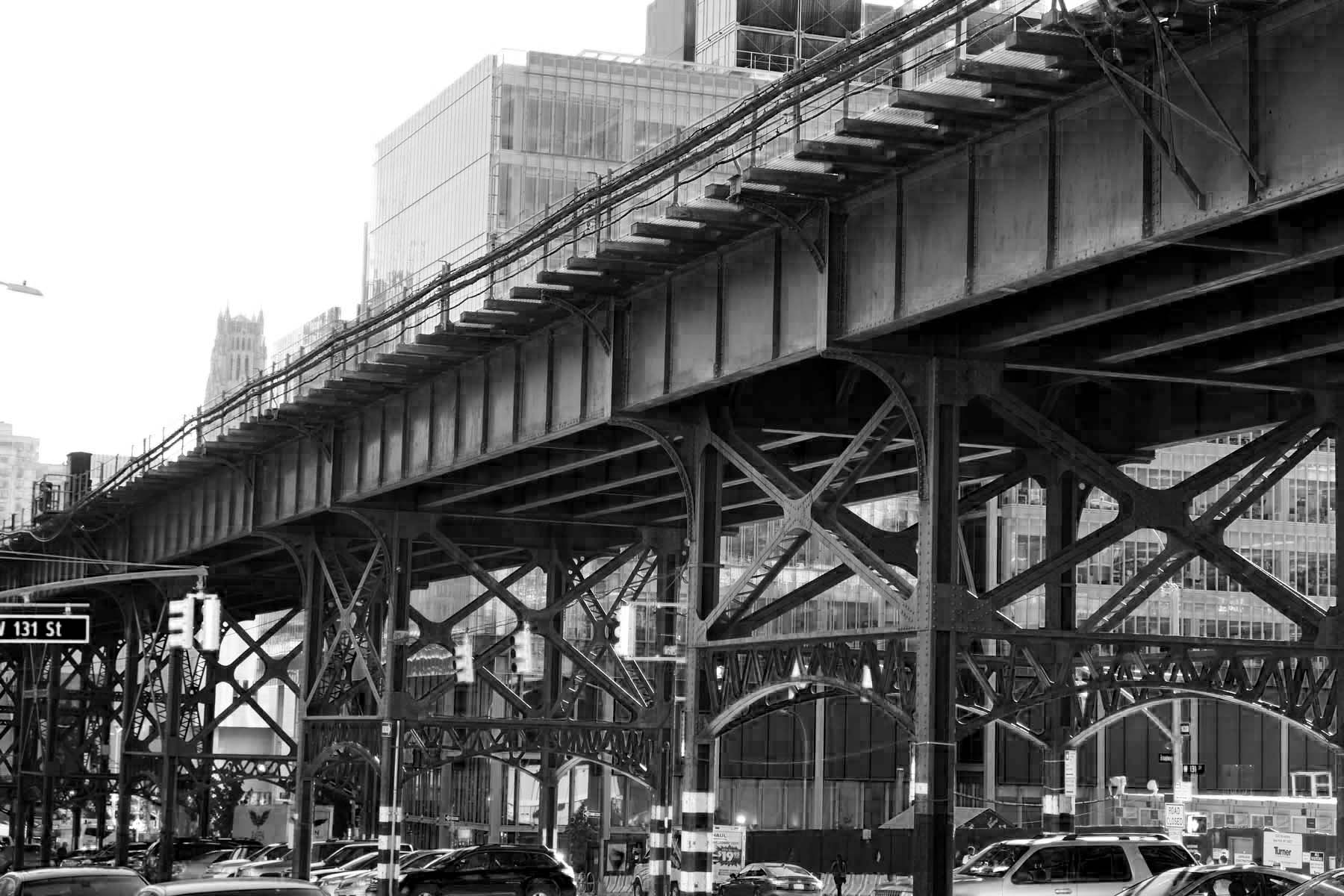
Images from Harlem, with various theaters and the Langston Hughes House.
***
And to top it off: in the middle of Art Net’s fall recommendations pops up a shout out for a soon to be opened bakery on 1, Ludlow St: Elbow Bread.
Art adjacent: pastries!
In any case, lots of exciting things coming up. Photographs from my old haunts relevant to some of the communities called upon to participate in the Procession. Wish I could be there with my friends.
Using mundane, found objects as canvases for painting seems to be a trend right now. Some do it better than others, among them David Cass. Tins, cardboard boxes, beer coasters, old nautical maps and antique pulleys serve him well.
David Cass Ask (2023) egg tempera, watercolour & pencil on photo mount
David Cass Refuse (2024) oil on wooden box lid
David Cass Commit (2022-2023) oil on bus blind on board
David Cass Work in progress for ‘Where Once the Waters.’
David Cass “Pulley I – Rockport, ME” (2023-24), oil on marine pulley
His depictions of light on water are appealing, focussed on the structure and utility of water, rather than some etherial glow that uplifts traditional seascapes. According to reviews he is also concerned with climate change and pollution of the oceans, but that cannot easily be deducted from the paintings – at least not by me. (I also, admittedly, always wonder if we all, I am not excluding my own work, need to push an agenda, offer something that has “meaning”, rather than just focus on depicting the beauty that is. A topic for a different day.)
Cass is currently exhibited at The Scottish Gallery in Edinburgh. I wish I could see the show. From the images of the gallery walls, it seems that seeing the work in bulk, many paintings next to each other, helps to get a sense of representation, rather than abstraction – a curious mix in each individual painting, with abstraction dominating for me while looking at individual work.
______
I tried to think if that combination was familiar to me from famous paintings of water. Of course, Turner comes to mind:
J. M. W. Turner Snow Storm: Steam-Boat off a Harbour’s Mouth (1842.)
Or looking only at the water in Monet’s depiction (but there you are too distracted by the whole scene.)
Contemporary efforts:
Carina Francioso The Ionian Shimmers (2019) Oil on wood panel
In any case, it all reminds me of the fact that I have not been at the ocean once this summer, despite living so close to it. That tells you all you need to know about how my summer has gone…. the energy reservoir too depleted. Luckily there are the archives, allowing visual remembrance. Here, then, light not on but above the water, from previous excursions.
Well, I really meant to write bioaesthetics, but since today’s musings relate entirely to bees, we might as well go with bee aesthetics. Bioaesthetics is the scientific field that seeks to understand how humans develop an appreciation of art, derived from their interaction with the environment. Bees have been a large part of these explorations, with scientists particularly interested in the fact that humans depicted bees since art’s beginnings, long before we all became so worried about their potential extinction.
Most of what I am presenting today I learned from an international team of ecologists led by an Australian researcher who calls her self Bee Babette – how can you not love that name…. Kit S. Prendergast and her colleagues looked at representations of all kinds of bees and bumblebees across history, starting with cave drawings, and ending with contemporary film and video games, with everything in between.
They, like so many of us, are concerned with the fact that bees are on the decline due to a variety of factors including natural habitat fragmentation, urbanization, climate change, and pesticide use in agriculture. But they also observed that bee’s gifts to humanity – their pollination, their honey, their wax, made them important throughout the ages. I will leave out the discussions of “neuro-aesthetic appreciation of art in a biologically plausible evolutionary framework … (researchers) thus evaluate how early forms of meaningful communication may utilise existing neural mechanisms and enable contemporary aesthetic art appreciation.” Instead I’ll focus on forms of representation, interspersed with the photographs of (bumble)bees I took in the fields. (You’re welcome….)
The importance of bees is clearly in evidence cross-culturally, and found its way into the arts of many diverse population groups across time. You see bees in 8000-year-old Egyptian hieroglyphs, in European cave art in Spain and on ancient Greek coins, and in religious or spiritual representations across the globe. Bees were symbolized in the Americas long before the colonialists arrived, integrated into Mayan ceremonies. First Nations people in Australia have used the motif of bees for over 65.000 years, found in their oral histories, ceremonies and construction of didgeridoos and their rock art. Bees became an important design feature during the Napoleon era in France, the imperial bee symbolizing the higher-level hardworking goals Napoleon wanted the republic to achieve. Jewelry across the world has represented bees in various configurations.
You find paintings of bees in China even before the Ming Dynasty, 1368–1644. Architecture has used the structure of the beehive from domed Celtic huts, south African Bantu dwellings, Gaudi’s parabolic arches, to Frank Lloyd Wright’s Hanna-Honeycomb House. Buckminster Fuller’s geodesic domes are modeled after bee habitats and found hexagonal heirs in the Eden Project Biomes by Grimshaw Architects (Cornwall, England; 2000–2001), and the world’s largest open air geodesic dome which serves as the headquarters of the American Society for Metals (ASM) International by John Terrence Kelly (Ohio; 1958). (Again, all this can be found in incredible detail with image sources here.)
Renaissance painters used the bee motif in landscape and religious paintings ubiquitously. Fast forward to the 20th century, Joseph Beuys was an ardent admirer of bees and incorporated them into his art practice in multiple ways, using bees wax as well as honey for his paintings and installations. In his wake, multiple artists across Europe started interactive installations with live bees and sculpture combined. One of the most integrated shows is now on view in Liverpool’s World Museum. Wolfgang Buttress’ Bees: A Story of Survival. The video clip show some of the audio-visual experiences that takes you right into the sight and sounds of the bees’ world. One of his previous installations, The Hive at Kew Gardens, is a favorite of mine.
The Hive’s mesh frame is constructed from 170,000 aluminium parts and 1,000 LED lights, which light up according to the vibrations of the bees in the surrounding wildflower meadows. In turn, it activates musical notes in the key of C – the key bees buzz in – with you standing inside this 17 meters high structure, as if in a hive. Check it out, next you visit! It’s awe- inspiring.
And if you can’t travel, the beauty of bees is all around you – easily observed in the late summer fields.
Music today is Schubert’s bee. And for good measure my favorite flight of the bumble bee version from the movie Shine.
Two nights ago I heard a fox bark in our garden. There had been sightings according to our neighbor’s gardener, but I was skeptical. With so many coyotes around, maybe they just saw a young one, still small? But this sound was identifiably “fox” when I went to Google to check against my memories.
It felt like an affirmation of my – long debated – decision to include the image of a fox into a montage about The Cunning Little Vixen, an opera by Leo Janàcek. I hesitate to be too literal, but I also have a fascination with plucky characters, and if there ever was one, it is the fox heroine in this piece of music. She does deserve place of honor, or at least some visibility.
Janàcek’s opera is a romp, composed late in life, daringly taking a newspaper serial/comic strip as a basis for the libretto that includes all kinds of animal characters featuring nature’s life cycle and humans’ ties to it, in good and bad ways. The score is gorgeous, influenced by Czech folk music and language, animal sounds that the composer ardently recorded, and the fluidity of the Moravian landscape, its pine forests and lakes. It is also about the lives and interactions of generations, one’s place in a chain alternating between life and death.
Janàcek lost his son at age two, and his wife took his daughter away from him after separating, the girl subsequently died at age 20. The opera can be seen as one way of trying to come to terms with the legacy left through one’s children, literally and symbolically. I got to know the music in intimate detail when I sat through the rehearsals of the Portland Opera Production in 1999. I was no longer doing the super-text calls during actual performances, which also required rehearsal attendance. Instead I was accompanying my then eleven-year old who had been selected for a solo performance of one of the young fox roles, and the chorus of fox cubs. The mix of parental pride and anxiety was intense.
As parents we were intent on not pushing our children into activities, or force them to excel, or make their days endlessly structured outside of school, with little room for exploration and/or boredom (which I consider an important part of creative development, in many ways.) Years of adolescent time spent in front of computer games, without sports or social contacts, were quite worrying, yet we did not change our approach. We offered options, and any time some interest emerged, a passion for theatre camp, a new hobby of rock climbing, or the like, we had the privilege to enable them to participate, schlepp them there, funding equipment and the like. We also had the privilege of school choice – whether we chose the right one, who knows. But the boys did end up, eventually, with an education that suited their interests and talents, now doing meaningful work, these two amazingly cool human beings. With partners the same!
I have been thinking about Michelle Obama’s DNC speech which included a quip about “the affirmative action of generational wealth.” It is not just about parent’s money. It is about the time they are willing and, importantly, able to invest, the education that they themselves received and that now opens doors for their children, whether directly passed on around the dinner table, or linked to networking in academic communities and the like. It is about the willingness and ability to move into a good school district even if it means leaving a neighborhood you love, or stretching your funds beyond comfort level. It is about access.
It is about access to education at all – just look at the mind boggling numbers, newly published, that show how state-provided bikes for girls has impacted the rates of attending and finishing high school in rural areas around the world. Cycling, rather than walking miles on end, empowered female students.
It is about access to the education you wish to receive. In the context of voucher scams and political reemergence of publicly rooting for segregated schools, it becomes a burning issues connected to racism. (Here is an informative essay about school choice published this week in ProPublica.)
It is about access to education that is tailored to the needs of the disability community. We are not just talking about Project 2025, the Heritage Foundation’s blueprint for a conservative administration. It includes the elimination the Department of Education altogether and drastically cuts federal funds for schools. The plan includes proposals to phase out the $16 billion Title I funding program over the next 10 years, convert the $13 billion IDEA program for students with disabilities to block grants or a private school choice offering. This means that students with disabilities no longer have the protections during public school education imposed by law. Vouchers for private schools? Does not include the cost of transportation, schools can throw them out at will, with no oversight, these schools are not accountable for outcomes, and they can reject students whose disabilities are particularly severe. (Ref.) Note that these are not just future possibilities. Last May House Republicans proposed to “Reduce Support for Students with Disabilities.” Under the proposal, as many as 7.5 million children with disabilities would face reduced supports—a cut equivalent to removing more than 48,000 teachers and related services providers from the classroom.
The montage is based on a photograph of a pine forestc like those in Bohemia, reflected in an icy lake, with several pale suns traversing the horizon to indicate the change of seasons. The vixen is peeking through the tree trunks, their pattern of repeated bars reminiscent of a cage (one she escapes in due course in the opera, as kids escape into adulthood.) Whether we continue to erect barriers like this towards equal opportunity education for all remains to be seen. Vote accordingly!
Here is the Orchestral Suite that gives you a glimpse of the music.
Five years ago I hiked in the Bandelier National Monument in Frijoles Canyon, New Mexico (a previous report on my adventure with lots of photographs is in the link.)
It is an incredible place, a plateau formed by volcanic eruptions, with steep rocks made of volcanic ash, their crevices enlarged and inhabited by the Ancestral Pueblo People living there over 10.000 years ago, grid farming at the bottom of the canyon and adjacent mesas.
The canyon is bisected by a small creek, carrying scant water for most of the year. On occasion it brings death: when wildfires destroy the upper watershed, as happened in 2011 and, worse, 2013, flash floods ensue and take out entire parts of the extant vegetation, the last remnants of old forest included. The devastation was visible everywhere when I visited, but so was new life, small pines that had survived and young cotton trees in verdant green that radiated against the grey, pink and white of the tuff rocks. Swallows and ravens flew overhead, I saw quail along the path and woodpeckers were busy.
I don’t know if it was the quail running – I suddenly thought of Mozart’s Papageno, the bird catcher in Mozart’s opera TheMagic Flute. One of his arias (Hm! Hm! Hm! Hm! Hm! Hm! Hm! Hm!) has the same speed and staccato feel as the passing quail did. (The name Papageno actually comes from Papagei, the German word for parrot.) In any case, the opera is about how things in life never unfold in a straight line, how trials and tribulations need to be weathered with persistence, courage and fortitude to arrive at a satisfactory (or happy, if you’re lucky) ending. Nature in front of me contained both, downfall and renewal. The music in my head – its beauty as breathtaking as the canyon around me, as filigree as the fresh greenery on the saplings – was tightly linked to the same alternations in my own life.
During the seemingly endless years spent in bed with childhood diseases, rubella, mumps, the measles, whooping cough, ear infections and later staph infections, I was allowed to listen to a small radio my mother brought up from the kitchen. There was a program called Schulfunk (school radio) that educated young listeners for an hour or two during the week days. It was started in 1924, but after the war it really took off, with the opening music being Papageno’s first aria. It is probably the only piece of operatic music that every German person of my generation knows by heart.
Everyday, in addition to language, biology, music or physics instruction, there was an episode in this program acted out by famous actors, of some dilemma or social conflict happening in a small village, not unlike the one I lived in. The character in News from Waldhagen (Neues aus Waldhagen)represented all aspects of society, and were as familiar to us as the Sesame Street characters would later be for TV audiences in the U.S. The social studies message was uniformly one of “peace, pals and pancakes” (Friede, Freude, Pfannekuchen) as the German proverb goes: keep the peace, stay in your place, conform and life will be sweet. Moralistic treacle, but dressed up in witty enough garb that we swallowed it line, hook and sinker.
Or did we? I surely was equally drawn to the allure of Papageno, who withstood authority, acted out in strange ways, who had real problems pursuing a straight path of virtue. All these trials, all this non-linear unfolding of a life, made him into a very different person – maybe a better one, maybe just different. Stretches of submissiveness alternating with defiance could be the one sentence-description of my own life, finding myself alone, bursting with happiness, strength and adventure in a New World canyon in my late 60s, a million miles and years away from that little Old World girl in pain, being comforted by listening to Mozart.
He died at age 35. The Magic Flute was the last opera he composed, thrilled that it took off to great appreciation in the two months before he died, even though the tale is internally quite inconsistent, defying logic wherever you inspect it closely. But the music? Eternally thrilling.
35 was the average life expectancy of the Ancestral Pueblo people as well, felled by childbirth and diseases. My generation had vaccinations against polio and small pox, helping us on, my children benefited from inoculation against mumps and measles. Spared much suffering, let me tell you. It is incomprehensible to me how an anti-vax attitude has been able to take root in our current lives. In my darker moments I think it must be a combination of sadistic joy at the suffering of others, mixed with eugenic aspirations. More likely it is caused by forces smartly laid out in this short essay from last year’s Atlantic.
The montage consists of a photograph of the wooded oasis in Frijoles, luminous green matching the exuberance of the music. The superimposed bird catcher was a mural by street artists in Montreal, defying anti-tagging ordinances in solidarity with a non-conformist Papageno. Or so I fantasize.
Here is the full opera, a production by the MET with James Levine. (My favorite version is a 1990 production with the Vienna Philharmonic under Solti, but that is not available for free.)
When I was little, my bedroom was situated right above the room where my mother played the grand piano some evenings. The minute I heard Morning Mood from the Peer Gynt Suite No. 1, Op. 46 by Edvard Grieg, I waited for the piece I really adored, Anitra’s Dance, trying to stay awake through the intervening The Death of Åse. I had no clue how popular this music had become and knew even less about its origins, a dramatic poem by Henrik Ibsen that he made Grieg set to music. I was just taken by the melodies and chords.
Fast forward to 1965, now in boarding school as a 13-year old, at war with an elitist all girls’ world I despise and yet try to find a place in. My piano teacher, she of the permanent bad breath but sensitive understanding of lost souls, complains about my perfunctory performance of the suite – all I can do to stave off my homesickness is hammering the keys mechanically. She hands me a dogeared paperback with Ibsen’s poem translated into German, so I get an idea of what we’re working on. I devour it, like any other book given to me in those years, and don’t have the faintest idea what it really is about – other than having a strong reaction about why a woman would wait and waste all her life to take a narcissistic fraud and con-artist back into her lap after he ditched her. Got my priorities right, early on!
(I also stupidly abandoned my piano teacher to take up the cello – for the sole reason that it allowed me a weekly escape from school into the city where the conservatory was offering lessons. That did not last long, a story for another day.)
The short version of the Peer Gynt poem, now seen through the eyes of an adult, is this: boy tries to be someone, not sure who, and confabulates, lies, tricks and swindles his way through the world, from Norway to Northern Africa and back, with abduction of other people’s brides, intermittent stops in the halls of mythological troll kings, royal interludes in insane asylums and pursuit by the devil. Two women love him, yet see through him and call him on it, his mother, Åse, who dies, and Solveig, who takes him back when he returns broken, unrecognized, still without identity, her love the key to his redemption.
Essential here is Gynt’s search for identity (or the rejection thereof), a trying on of roles, and a desperate avoidance to be cast in fixed form while the searching is so much more exciting. Why be an ordinary person if you can be an adventurer, a rich merchant, a wise man, a king? With the arrival of modernity, predestined class or social organization no longer determines who you are – replaced by a compulsive search for self -determination. Sooooo many options to choose from, why settle on one? And so Peer steals stories from others, trying on their selves, forever non-authentic, as called out by his mother from the very beginning. He runs away from negative feelings with fantasies of omnipotence or flat-out denial, and does not care who gets hurt in the process. No wonder he feels deadened by the end, but then gets miraculously saved by Solveig’s unconditional love.
Young – and – old Heuer: Spare me the romanticism! Give me poetic justice!
In reality, I was probably enraged that in my teenage existence any deviation from “good girl” stereotypes, any trying out of alternative identities would surely be punished – WAS punished – no redemption in sight. Reserved for the boys, as per usual.
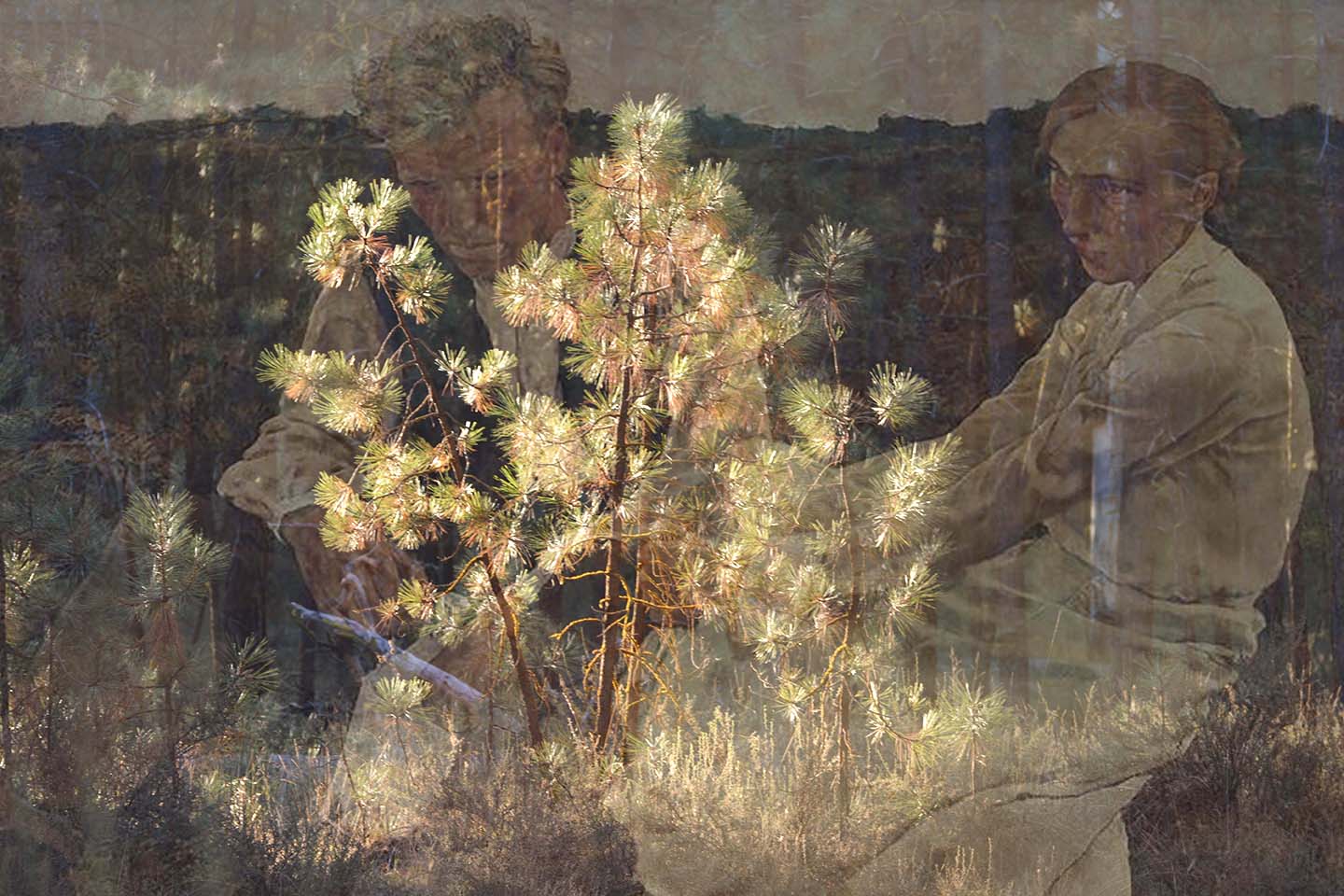
The montage is capturing the original childhood joy at hearing the sounds of Morning Mood waft up to my room, the lightness and serenity of the atmosphere mirrored by the sunlit pine sapling. The image also includes two figures in a wishful representation of Peer and Solveig sharing a life as equals rather than foils for each other.
I selected the super-imposed painting, Couple on the Heath, because the woman looks a little bit like my young mother. She often escaped her grief through music and I want to dedicate the image to her, in gratitude of opening the world of art to me from an early age.
The painter, Lotte Laserstein, spearheading the Neue Sachlichkeit movement, was a prominent artist in Weimar era Berlin, where my mother was born and raised. Of Jewish origins, Laserstein fled Germany for Sweden in 1935, anticipating that a particular identity could be a death sentence under the new regime. In an ironic, if horrid, twist, Ibsen’s Peer Gynt was adapted by the Nazis and made into a nationalistic heroic tale with Gynt’s Nordic identity absurdly fixed into the fascist cult, with the trolls representing Jews.
Maybe next time when you roll your eyes that Classic FM is playing the old war horse again, you can think about all this complicated stuff associated with the music. As much as Grieg was set on showcasing the folk tunes of his country, or the sensuality of desert princesses, or the grief associated with losing a parent, all musical transcriptions of concrete events in the tale, he nonetheless reminds us that there was a larger narrative behind it all. Worth a re-read, in a time where identity politics, the need for belonging and othering, respectively, continue to play such a poisonous role across a divided world.
Here is Grieg’s Morning Mood as an orchestral version by the Berlin Philharmonic and as a PIANO VERSION.
Robert Pinsky once said that many of the poems by Polish poet Adam Zagajewski are “about the presence of the past in ordinary life: history not as chronicle of the dead, or an anima to be illuminated by some doctrine, but as an immense, sometimes subtle force inhering in what people see and feel every day—and in the ways we see and feel.” (Zagajewsky’s work is intensely copyrighted since his death three years ago, so here is a link to one of his most famous poems, Try to praise the Mutilated World, which encouraged hope and believed in the return of light after darkness.)
I have been thinking that it is certain pieces of music that inject the past into my own, ordinary present, affecting how I feel and see things, a past that was formative in dealing with the history of my own origins and era.
One of the focal points of coming of age in the Germany of the 1960s was, of course, the working through the Holocaust as our responsibility as one of the first post-war generations. There was, at that time, little to go by. Our parents, who had participated in the war and/or the fascist horrors, or had been victimized by either, were shocked into silence by shame or guilt or trauma, or all of the above. The country, at the time, did not want to look backwards, but rather forwards and so institutions did not exactly educate about the history or engage in a memorial culture for the victims. (That has changed in the intervening decades in impressive and encompassing ways, although there is certainly room for doubt how far true remorse and willingness to accept responsibility has come. A topic for another day.)
For those of us growing out of the post-war gloom and rebelling against a society bent on economic achievement, conservative alliances and new wars, protest music became an important tool to learn about the past and envision a future without war and oppression. The music was widely performed, at demonstrations, during gatherings, on May Day and so on. One that lodged deeply in my head was a song created in 1933 by inmates in one of the very first Nazi labor camps, Emsland Lager, filled with political prisoners, mostly socialists, communists and union members.
The Peat Bog Soldiers was written by a miner, Johann Esser, and an actor, Wolfgang Langhoff. Music was composed by Rudi Goguel, and sung through the next decades by Ernst Busch, a famous German musician, and eventually picked up as an anthem by the International Brigades in the Spanish Civil War. 16 members of a workers’ chorus performed it for the first time in August 1933 in the camp, having over a thousand of the inmates join the chorus, once they picked up the melody. The song describes the harsh labor in the camps, a life where nature has fallen cold and silent, the inevitability of death if you try to escape, and the intense longing for home and loved ones. At the end the performers stuck their spades into the ground, that now looked like a graveyard of crosses.
The very last stanza, though, expresses hope: winter and darkness cannot last forever, and at some point there will be a return to home. I think what registered most for me was the fact that hope could not be eradicated even during the worst of human experiences, a shared sentiment that bonded those thousands of doomed souls. Maybe I locked onto that because it was easier to think about than the despair contained in the remaining stanzas or my association with the perpetrators. Or maybe because I knew that I need to fight a tendency to be fearful, then and now. In any case the song has remained with me through a life time.
Here is the English translation:
Wherever the eye gazes Bog and heath all around, No chirping of birds entertains us. Oaks are standing bare and crooked.
Refrain: We are the peat bog soldiers, And we’re marching with our spade into the bog. We are the peat bog soldiers, And we’re marching with our spade into the bog.
Here inside this barren marshland, the camp is built up. Where we are, far from any joy, stowed away behind barbed wire.
Refrain
In the morning, the columns march towards the moor to work digging under the searing sun. but our mind toward our homeland yearns.
Refrain
Homeward, homeward everyone yearns to the parents, wife and child. Some chests are widened by a sigh, because we are caught in here.
Refrain
Up and down the guards are walking Nobody, nobody can get through. Escape would only cost the life Four fences secure the castle.
Refrain
But for us there is no clamoring, It can’t be an endless winter. One day we’ll say happily: “Homeland you are mine again!”
Refrain
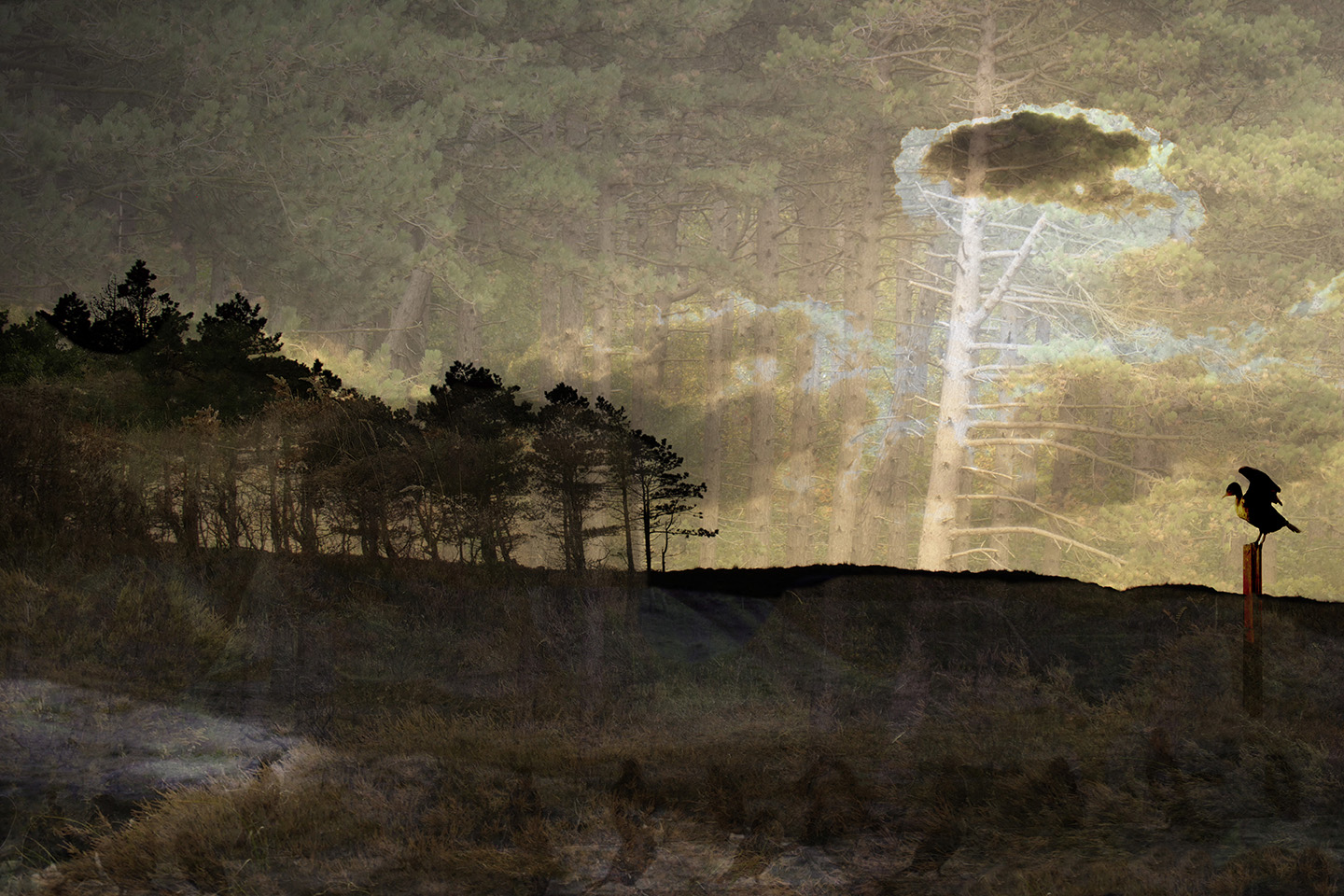
The montagereflecting on this piece of music, from the series Beyond the Tree Line, is primarily based on a photograph I took during sunset in the heath of Lower Saxony, the state where the camp was located, about 2 hours away from my grandparents’ village. I added the cormorants because they are essentially silent birds (the absence of birdsong so prominent in the first stanza), hang out in groups like the inmates, but also represent the guards ensuring no escape – dual roles that can be switched in history in the blink of an eye, with victims becoming perpetrators and vice versa, as we see all too clearly in the wars of 2023/24.
I pierced the cloud, covering the setting sun, in honor of those who still believe in the return of the light, reminding myself to focus on silver linings rather than the darkness that descends.
Here is the German version of the song and here the music in English, song by Paul Robeson.
This month I came across a book that was exceedingly clever, merging parallel storylines in seemingly effortless ways and making me think hard about a lot of things. Gorgeously, sensitively written, it was also truly funny and often pleasurably steamy. I wanted to throw it across the room once I was finished, in pure envy.
TheMinistry of Time by Kaliane Bradley alternates the tales of a 19th century arctic explorer with that of the daughter of Cambodian refugees who escaped the slaughter in their native country and try to make a life in an England of the near future. She is employed at the Ministry of Time, an administrative government branch that has somehow acquired a key to time travel. Concerned that they might change the history of the world, they pluck a motley crew of people from various centuries who were all about to be dead in their respective environments (trapped in the ice, wounded in the Great War, etc.) and thus unlikely to create a butterfly wing effect. The expats are put under scientific observation to see if adjustment to a different century is possible without lethal cost, and distributed to handlers who will be their bridges to a new life and spend the first year living with them. Cue the experiences and woes of an immigrant across cultures and time, the adventures of human beings treated like lab rats, a love story among the most opposite of characters, and a lot of historical facts sprinkled in that bring the past to life while you read about the near future.
It gets darker, though, imperceptibly first, then at a fast clip, when the narrative explores why time travel has appeared, seemingly out of nowhere, at Britain’s doorstep. Without giving too much away I will just allude to the consequences of ignoring climate change and desperation to retroactively change an unbearable future. The philosophical questions are hinted at, the psychological issues treated in more depth and deftly. For the present at hand: Whether immigration happens across time, or across continents, will the issues of the past, for first and second generations, get resolved? Is trauma so ingrained that you cannot escape it, even if all circumstances are miraculously changed? When do you realize that colonial exploits were nothing to be proud of? Where do you cross a line when experimenting with humans, and how does love challenge ethics (or vice versa?) Importantly, how do you place yourself in a hierarchy of power, finding yourself trapped in conformity and complicity, when power was the only antidote to your people’s history as victims of genocide?
The novel is thoughtful, elegant, and never ever polemical. You have to work your brain a bit to get to the real questions, although you can also read it simply at the level of a historical fiction/romance romp, if that is all you have the energy for – such is the clever construction of all the intertwining strands of narrative.
I was envious because I have been struggling for some time with creating something that reaches across different realms as well, and giving the cross-over some meaning. The core idea was to link pieces of music that I care for and that come from diverse historical eras, with visual capture of something that echoes the sentiment of the music, but is firmly located in the here and now – all landscapes I photographed across the last decades. I wanted to create a bit of mysteriousness when two genres, music and image, as well as past and present, align. I was open to adding the occasional protagonist, if they carry weight in the music, picking those, too, from different centuries, but planting them in the 21st century. Playfulness was acceptable, but only if the musical mood and style was respected in the overall visualization. So how do you mirror Wagner, Beethoven, Ravel, Schubert, Weill, Janacek, Glass or Satie? It’s been an intellectual rollercoaster: Beyond the Tree Line – Musical Tableaux.
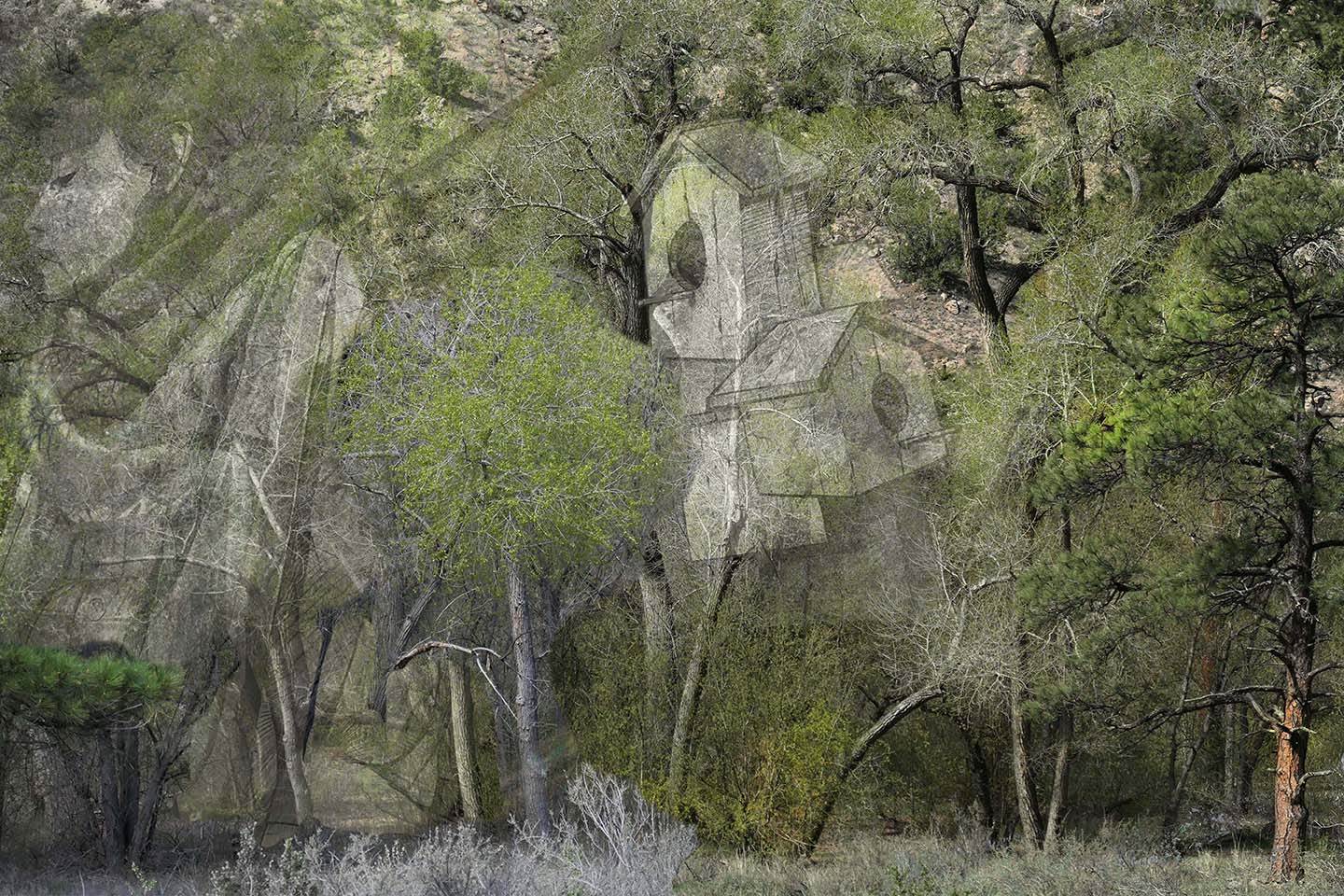
I will post some samples across the next weeks so you can see the progress. We’ll start with a suite for violin and piano from 1914 by Erik Satie, Choses vues à droite et à gauche, (sans lunettes), (Things Seen to the Right-and-Left, without Glasses.) The trees were likely around when it was composed, they are carefully tended plane trees in Paris’ Parc de la Villette in the 19th arrondissement. The sculptural elements below them pick up the interlinking characteristics of the fugue.
“Human beings have always been on this path to extract what we can from the environment around us for financial gain, oftentimes without a mind to the kind of environmental costs that come along with that sort of industry.” — Naomi Slipp, chief curator, New Bedford Whaling Museum
One of my all-time favorite museums is the New Bedford Whaling Museum. It is a place where art, science and history intersect, where you can be caught in wonder and be educated at the same time.
This summer they offer an exhibition that places Scrimshaw in a context larger than the whaling industry it was traditionally associated with. The Wider World & Scrimshaw juxtaposes objects from their own collection with other items representing the carved decorative arts and material culture made by Indigenous community members from across the Pacific and Arctic.
Scrimshaw is the incising, engraving, carving or fashioning of primarily ivory and bone (and sometimes other natural and man-made materials) into works of art or other decorative or useful articles. The origin of the word is debated, likely an English nautical slang expression meaning “to waste time.” Carving on ivory and bone had been done by indigenous cultures for centuries before it took off as a trend among sailors in the whale fishing industries. Being on trips that could last up to three years, these folks needed something to pass the time.
These days it is hard to come by the original materials, so there are a lot of “fakeshaws” appearing – yes, that is actually a term used by dealers in those art objects. Faux ivory is made from molded polymers or celluloid plastics, which yellows with age like real ivory. The fakes are often enhanced with added materials during the casting process to give them the color, grain, patina, and weight of ivory. (Ref.) Motifs are taken from the original scrimshaw craft and applied to these fake surfaces.
This is very different from what is also shown in the museum’s current exhibition: new work by Duke Riley who uses scrimshaw on plastic objects found during clean-up actions of beaches. His contemporary approach to depict environmental degradation fits perfectly with the museum’s mission to educate about the cost of industrial extraction and pollution, and he does not disguise the true nature of his canvases.
He paints the found objects, laundry detergent jugs and plastic bottles, flip-flops, cassette tapes, with colors that mimic ivory or whale bones, and then carves or inscribes motifs onto them that are done in the style of traditional scrimshaw engravings, but portray contemporary pollution and the industrial figures behind the environmental destruction.
Riley’s work is deadpan funny, yet instills horror for those of us interested in environmental protection at the same time. From oil barons to marine creatures, he spins a tale that connects the dots from the beginnings of the whaling industry to the polluted oceans we are navigating today. More details about his artistic approach and philosophy can be found here.
What registered with me was the fact that the artist alluded to his frequent visits to the Whaling Museum as a child as an inspiration to link traditional craft as exhibited there to present-day conceptual ideas. In some funny ways, the same thing happened to me – although I visited only once 5 years ago, I was prompted to mix what I had photographed there – paintings of whaling expeditions – with my own representation of the needs to protect our oceans. The visit gave rise to the series Postcards from Nineveh, with the photographs superimposed onto shots of current landscapes or cultural landmarks. My show’s opening at the Newport Visual Art Center coincided with the first Covid Lock-Down in 2020, so hung unseen for many months.
I have written about the specifics of my approach here. The upshot, though, (and I am recycling my thoughts here) is that as artists we represent a subject. “Reasoning about and constructing representations helps us to grasp new perspectives and to learn about the world. In this sense art and science share a common core; the human ability to construct and interact with representations in order to learn about what it is that they represent.”
In the case of environmental degradation, we have to figure out ways of representing what is or isn’t done to the environment, the costs of inaction, and somehow capture what is at risk if we don’t change course. Luckily, with photomontage, we can go beyond what exists in real life (as depicted by photography) and convey something that is constructed, giving the artist the leeway to represent possibilities, anomalies, products of imagination, just like painters do. By combining, manipulating, and altering photographs it creates something that cannot be found in reality and yet convey a sense of alternate reality, of imagined recourse. And all this because I saw all these whaling-related treasures at the New Bedford museum.
Here are some samples.
Music today is a tribute to sailors. Shanties and ballads.
I have to admit, it’s been ages since I visited the World Forestry Center. No more explaining to my (now grown) kids that the fake logger climbing a fake tree with a fake goose and owl calmly sitting on branches below him, are there for educational purposes, and maybe, just maybe, meant as a joke. Or to stimulate discussions how museum exhibits not necessarily reflect the real world. Don’t get me wrong, they and I loved the place during too many rainy days in Portland, Oregon, and some of the educational displays did promote meaningful conversations.
As it turns out, there are now more and better reasons to visit, than simply looking for bad weather diversions. The place is changing at a fast clip, with an ambitious plan to update and modernize this Portland treasure. Among the important improvements are a program of new art exhibitions that should attract a wide swath of visitors who are interested in both, information about the environmental conditions of our state as well as of international forests and how contemporary issues of changing nature is represented by serious artists.
Let’s face it: today’s cultural institutions have a near impossible burden to carry. Besides the particular content they are supposed to display in aesthetically appealing ways – here forestry in all its permutation and history – they have to engage in educational missions, social outreach, community involvement, and simultaneous financial juggling between higher cost and decreased funding. To fulfill all these imperatives you need innovative thinking, creative solutions, and a vision that extends beyond the safe, habitual offerings we’ve come to expect from specialty museums. Judging by the current exhibition, the Discovery Museum at the Center has found someone who fits the bill. Stephanie Stewart Bailey, the new experience developer (unfamiliar title to me, but makes sense when you look at the intersection of art, science and nature) has managed to mount a show that combines stellar international photography with an educational mission to help us understand better the central role and function of trees in numerous civilizations.
Tree People by Ritva Kovalainen and Sanni Seppo was the first installment of a three part artistic collaboration between these two prize-winning Finnish photographers interested in the interrelationship between nature and those that populate it. For over three decades the duo have explored the mythology associated with trees and forests, (Tree People, 1997) the way forest management and silviculture affect both land and people, (Silvicultural Operations, 2009) and now how primeval forest look (and act) differently from those that have been exposed to centuries of human commercialization (Forests of the North Wind , 2024).
The visual work is compelling (as is their environmental activism), but the deeper attraction to me lies in the artists’ rigorous research, amounting to an anthropological tour de force across these 30 years, including field interviews and archival exploration. Each of the three installments stands on their own. I found the choice of Tree People for the Discovery Museum timely because they speak to some issues that are currently of great cultural interest in the Pacific Northwest as well.
The exhibition is divided into topics, photography always accompanied and enhanced by written explanations of the historical context. One section explores the destruction of sacred spaces, groves believed to be hallowed, once Christian proselytizing started in earnest, cutting down worshipped trees and replacing them with churches. One of the most appealing aspects of the curation was a circle of fabric panels, printed with trees, that you could enter as if it was a grove. It was mounted by Stewart Bailey in a clever way, hanging from a braided wreath of twigs and branches, which stayed with the topic of trees, and were visually harmonious. More interestingly, they projected shadows onto the semi-permeable canvas, doubling the sense of being close to trees.
There is a part on forest spirits, and traditional fare around how to combat them and keep a boundary between human civilization and the forest.
There is an introduction to good luck/sacred trees that are associated with a particular homestead. One of the photographs depicts a houseless person who had made his home under a tree in a Finnish park. It was a comforting thought to one of the younger visitors feeling they would never be able to afford a piece of property where a legacy tree could serve multiple generations. Stewart Bailey told me, that the idea to choose a tree in one’s general environment was visibly uplifting. Must be the Zeitgeist (or more likely the housing market…): the Washington Post just last week had an article strongly encouraging us to select a favorite public tree and tie our own life events to frequent visitations.
Last but not least, there are two sections devoted to memorializing the departed, humans and animals alike. These provide a direct link to a big question raised in the contemporary Pacific Northwest where competing interests fight over the preservation of certain trees that were culturally modified.
***
Oregon, like Finland, has an important history linked to the ways we have handled forestry, claiming ourselves to be the state that timber built. The natural riches of fir trees, cedars and Ponderosa pines were there for the taking, and taken they were, generating winners and losers along the way. Depending on one’s perspective you could think of pioneers conquering the wilderness, or robber barons using illegal timber sales through the rail road contracts to make a fortune. Here, as well as in Europe, opposing interests fought over legislation that promoted their often contradictory goals.
Logging throughout the first half of the last century provided great pay, secure employment and boons to the infrastructure of many growing timber communities. When private timber reserves dwindled in the late 1950s, the Forest Service and Bureau of Federal Land Management were pushed to permit increased harvesting on public lands and allow clear cutting and use of chemical herbicides. Eventually environmentalists started to fight back, and during the 1990s the “timber wars” ensued – protection of endangered species like the spotted owl was weighed against the fate of the many communities that lost their livelihoods with stricter federal regulations on logging, or the earnings of the lumber industry, respectively. (The link brings you to a fabulous OPB series on the history of the law suits.) An early verdict prohibiting national forest timber sales in potential spotted owl habitat in May 1991, set off years of litigation over animals and plants that had been listed as endangered and severely curbed logging.
The attempt to change the rules and regulations governing timber harvest and protection of old growth forests is ongoing. The 1994 Northwest Forest Plan is in the process of being amended, partially due to fast changing environmental conditions. Catastrophic wildfires and tree-killing pests have done intense damage to all habitats. Barred owls are conquering spotted owls’ habitat, ever diminishing their numbers. A committee working under immense time pressure has made numerous recommendations, several of which were slashed by the Forest Service, deemed irrelevant to the amendment. There is also a planned amendment for all national 128 forest plans, a draft of which was release in June. In theory the public has 90 days to comment, and the timeline declares hopes for a decision and implementation by January 2025. Many of the parties involved in this joint effort to find compromises for forestry management have expressed worries that different national election outcomes would affect the planned amendments in various ways. (Ref.)
Most of us have probably an inkling of this history, although the extent to which it is related to violations of treaties with tribal groups who had to cede old growth forest in land swaps or were simply dispossessed, has rarely been stressed. New to me, and bringing us back to the context of the exhibition and its focus on the function of trees as keepers of memory, archivists of entire civilizations, is the call for protection of individual trees in the fight over the right to harvest large swaths of timber by the industry. What is at stake here is the fate of culturally modified trees (CMTs), living trees that have been visibly altered by indigenous cultural practices. They were related to food production (peeling the bark), cultural traditions (weaving, producing ceremonial regalia, building shelter or carving of paddles and canoes.) Trees were selected for memorial or mortuary poles as well, and many exhibit drill holes that tested the strength of the tree so that sustainable harvesting could be completed, not hurting future growth.
These trees are of cultural and spiritual significance, sacred memorials to tribal ancestors and living archeological sites that allow insight into historical practices. Equally important, they are of legal significance. When indigenous rights are challenged, carbon dated trees with indigenous modification can be testament to the occupancy and forest stewardship of tribes at a given point in time. For cultures that existed without much written record, whether the indigenous Samis for Finland, or the first nations, tribes and bands in the North American sphere, these trees are archives that can be precisely dated and are a rare historical source for archeologists, anthropologist and historians alike. The question is how they can be legally protected from clear cutting, before they die a natural death given their age in old growth forests. (Here is a great book for further information about the research and the political debate around CMTs.)
It would have been fascinating to link the photographs of the Finnish memorial trees with their arboglyphs, those carvings of dates and numbers, to the contemporaneous questions raised by the protection of modified trees in our own backyard. But I am sure those connections to place and universal issues will be made once the museum has found its stride with traveling as well as independently curated exhibitions.
As is, I cannot recommend a visit to see this work strongly enough. It is like falling into another time and place, yet eerily familiar. Then go home and (re)read Richard Power’s The Overstory. The winner of the 2019 Pulitzer Prize in Fiction is a paean to trees, nature and environmental activism, one of my favorite novels of all time. Or, alternatively, just hang out under a conifer it Forest Park. The trees will speak to you.