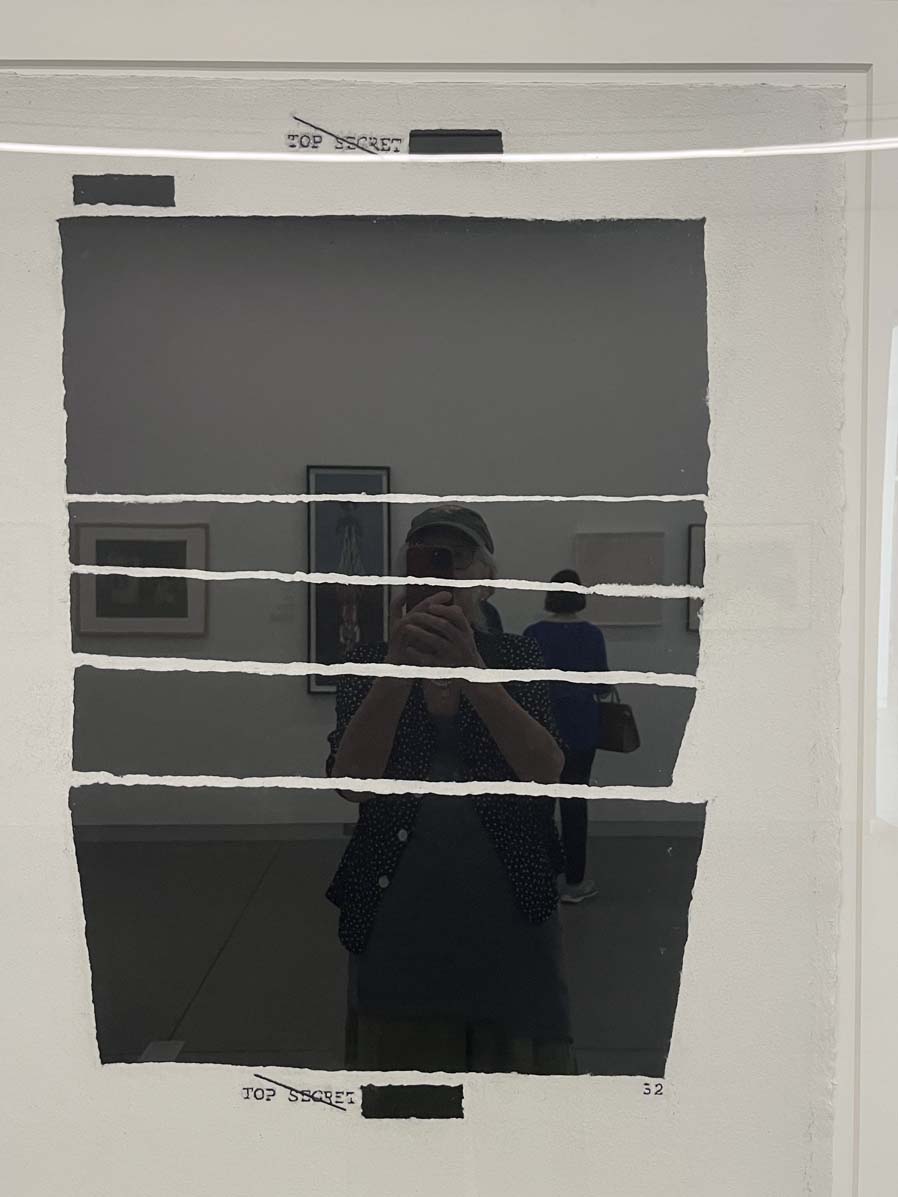
 July 23, 2025
Framing – n. the process of defining the context or issues surrounding a question, problem, or event in a way that serves to influence how the context or issues are perceived and evaluated. Also called framing effect. – APA Dictionary of Psychology
***
I have been thinking a lot about framing lately. The notion of framing plays a large role in traditional areas in psychology, judgement and decision making and cognitive behavioral therapy, respectively. In decision making, our responses are very much influenced by how a question is framed – emphasizing a gain, or a loss, for example. The very same content information can lead to very different choices, depending on the way it is phrased. We are prone to a kind of cognitive bias, where the salience of certain features, or the stress on positive or negative outcomes, influences our response. We know, for example, that framing significantly influences the choice of cancer treatment by altering how options are presented, such as emphasizing survival rates versus mortality rates. Patients often prefer a treatment framed in terms of the probability of living rather than dying, even if the underlying statistics are identical.

Framing also plays a role in visual art – affecting both, the understanding and appreciation of a work of art.
Some of these thoughts were triggered when I visited an exhibition at the Benton Museum of Art/Pomona College some weeks ago. (The show is now closed. Here are upcoming offerings, equally interesting.)
Doubles: Prints and Drawings from the Museum Collections presented paired works that had been selected by graduate students and young professionals during a seminar introducing works on paper. The approach of “compare & contrast” is a traditional one in art education, with instructions to focus on everything from compositional features, perspective, techniques to comparisons between art movements, different art historical eras, or different approaches to the same topic. What we see in one picture often frames our response to the other one.
Doubles exhibited pairs that most frequently juxtaposed different artists along the lines of either shared topic or shared visual expression. Each selection had a very short statement by the student that explained their choices, with varying degrees of success and/or sophistication. The power of the exhibition came from the accumulation of pairings that made it abundantly clear how juxtaposition can affect your own perception of each individual art work. In some instances, that is, not all of them. Graphic similarities, for example, were cleverly selected, but did not necessarily frame the interpretation of each piece.


Roger Vail Untitled (Figure in Profile) (1970 Photolithograph on paper – Kenji Ueda Untitled (abstraction) (1972) Lithograph on paper
(Be warned, most photos today have lots of reflections due to unfortunate lighting conditions in the galleries, fluorescent strips dominating the rooms.)

Robert Cottingham F. W. Woolworth, 1975 Aquatint on paper – Edward Ruscha Street Meets Avenue, 2000 Lithograph on Rives BFK paper
Thematic pairs – war, the flag, colonial oppression, then and now – came closer to having an impact on each other, although they mostly seemed to be coming from a shared viewpoint, rather than exposing a rift between perspectives.


Francisco de Goya y Lucientes Los Desastres de la Guerra, Plate 66, Extraña devocion! (Strange devotion!), printed 1863 Etching and drypoint on paper
Enrique Chagoya Homage to Goya II: Disasters of War (Plate 33: Goya conoce a Posada), 1983-2003 Etching and aquatint on paper

Fernando Marti American Flag, 2017 Serigraph on paper Barbara Kruger Untitled (Questions) from Celebrating 20 Years of Explosive Graphics series, 2009 Serigraph on paper

(Out in the real world, this photograph of LAPD units assembling to “quell the protests”, with Kruger’s Questions mural in the background (on MOCA’s wall), was taken around the same time of my visit, by Jay L. Clenendin. Pulitzer prize material, if you ask me….)

Jesse Purcell War Is Trauma Grenade, 2011 Serigraph on paper Mary Tremonte Battle Cross over Iraq, 2011 Serigraph on paper – both from War Is Trauma portfolio, Produced by the Justseeds Artists’ Cooperative

Umar Rashid (Frohawk Two Feathers) Map of the West Indies, 1790. Born Alone, Die Alone, 2024 Archival pigment print hand-finished with acrylic paint – Enrique Chagoya Escape from Fantasylandia: An Illegal Aliens Survival Guide, 2011. Lithograph and gold metallic powder on paper


(One of my favorite examples for framing that tags different perspectives instead, comes from the Virginia Museum of Fine Arts in their educational tools about perspectives in art. Their explanation is found in the link above.

***
The most fascinating double in the Benton exhibition was a juxtaposition of work by Lorna Simpson and Naomi Savage.

Lorna Simpson 9 Props (complete set of 9), 1995 Waterless lithograph on wool felt panel – Naomi Savage Upper Torso, 1969 Embossed paper
It was intellectually challenging on multiple levels, with the framing centered on absence rather than presence. Naomi Savage was a photographer, niece to Man Ray, who is represented here with a relief print rather than her photographic work. It was chosen with a focus on “invisibility” because the embossing technique makes the image barely perceptible at numerous angles or in different light conditions.


The usual presence of visual clarity in photography is also turned on its head by the work of Lorna Simpson. Here is The MET’s description of the work, held in their collection:
In 9 Props Simpson challenges preconceived notions about what constitutes a portrait. Rather than depicting actual people, she photographs nine surrogates—vases and bowls that are based on objects in the portraits taken by famed Harlem photographer James VanDerZee in the 1920s, 30s, and 80s. Working with the artisans at Pilchuck Glass School in Seattle, where she was an artist-in-residence, Simpson had the photograph vessels replicated in black glass. Her captions below each “prop” describe the people, clothing, and furnishings in VanDerZee’s original photographs. Unlike VanDerZee’s pictures, however, which seem tied to a particular time and place, Simpson’s conceptual portraits are enigmatic and open-ended, relying on the incongruity of her words and images to suggest meaning and context, but without providing obvious answers.


James VanDerZee 1926 photograph that is referred to. I had to dig those up, just as examples, they were not shown for comparison at the Benton.
(Here are some examples of VanDerZee’s portraiture in general.)
A contemporary Black photographer translating the portraits of well-to-do Blacks by a 20th century Black photographer into black objects that obscure any individuality, just enigmatic stand-ins. She provides narratives seemingly unconnected to the objects in view, if you do not know the history of the referent art. Something visible (mis)representing something invisible to the current viewer, framing the experience as one of searching for connections in the absence of visual clarification. Lack of knowledge of the history fundamentally defines our experience as well as our ability to interpret correctly what is in front of us.


Excerpt of James VanDerZee’s 1923 photograph that is referred to.
For me, then, the larger framing was one of the erasure of historical Black experience with the eradication of visibility. My “framing” of her art was perhaps affected by our present day experience of the obliteration of Black visibility and agency in the public sphere.
300 000 Black women alone have lost their jobs in the federal work force across the last 6 months, work that provided middle-class stability. Black top officers and other senior officials at the Pentagon, fired, historical records about Black achievement in the military, purged. The least diverse Cabinet of any in recent history.

In any case, what is visible in an image, or what needs to be imagined to make sense of it, will have large implications for our own interpretation the art. Drawing conclusions, based on our own available framing, often biased by our previous experiences, or our access or embrace of different versions of history, will guide what we see and what we feel. Pairing black and white pieces, defined by absence more than presence, was a clever, clever way to make that point.
***
Framing affects not only the appreciation of art, but also its creation. In my own case, how do I frame the intent to flag environmental fragility and the need for protection, for example, in a photograph or photomontage? Do I depict loss, or do I depict the possibility of positive outcomes? What can represent each of these states, and do they need to be integral to the landscape or can they be extraneous? Do they need to be literal or can they be symbolic, in order to create the largest affective impact? Do I frame the issues and my respective choices verbally as well for the viewer, or do I let them frame it themselves? All this has me preoccupied as we speak.
You can judge the results for yourself here.
In any event, whether art or life: a reminder to those of my soulmates also prone to catastrophic thinking – framing is a choice, and there are multiple frames to choose from, most often. Pick a perspective that brings you forward, rather than holds you back in waves of anticipatory anxiety.

Let’s do a musical pairing as well, one that shows very different sonatas by the same composer, Beethoven’s Piano Sonata #1 and #32.
PS: Housekeeping: I will be down to 2 postings per week for the summer months. So the next iteration will come next Monday.


