 July 21, 2025
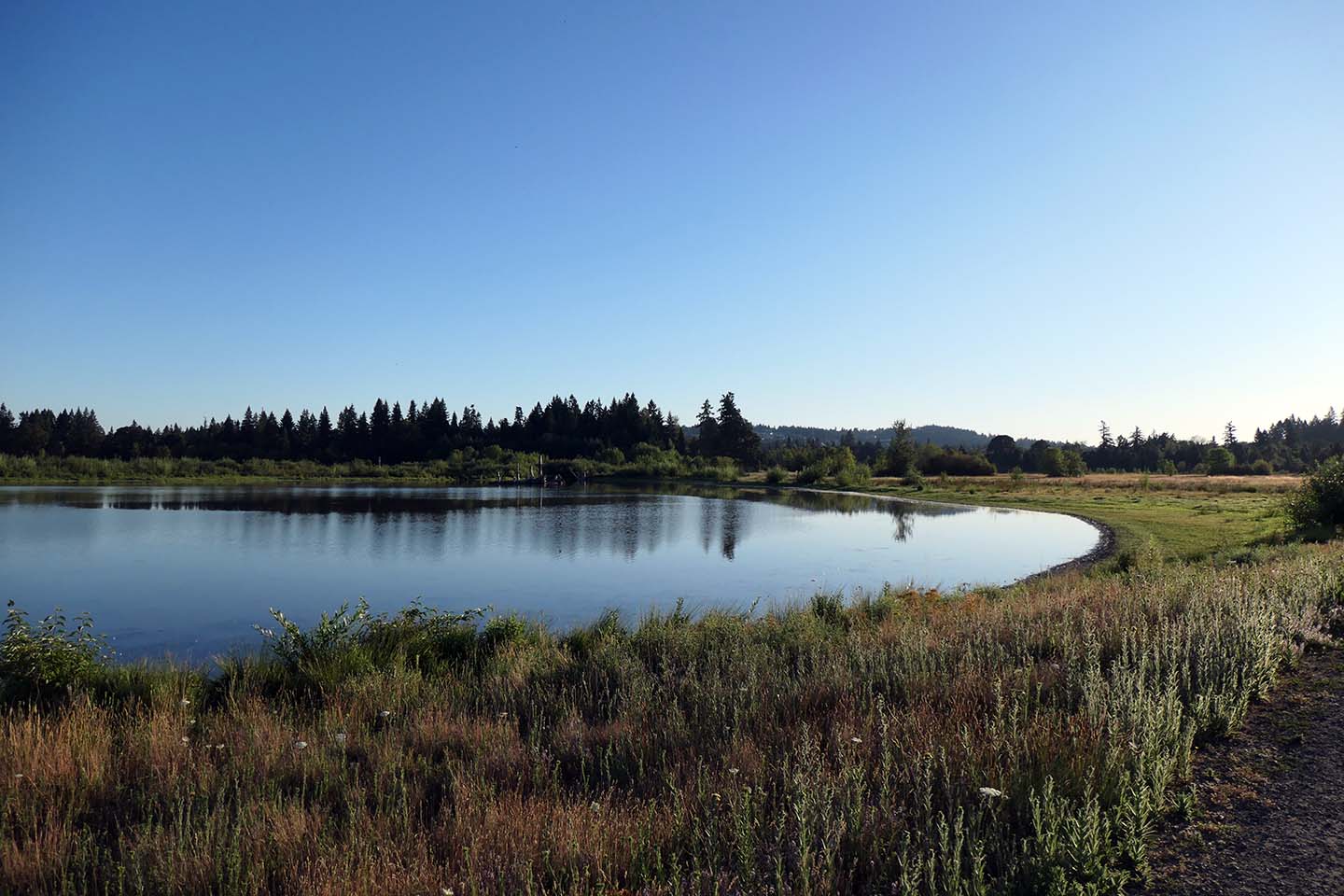
Walk with me, before the heat sets in, very early morning. I know, it has been a long time, longer than anticipated. Had a bit of a rough stretch here, paralyzed by what is unfolding in our world, unable to face it with my usual determination. Then again, resignation is a luxury. Particularly when blessed with a position of privilege. So, shall we dive back into it, the rumination on where we are and perhaps what can be done about it? I vote yes, with hopes of not getting overwhelmed quite so soon again. Nature walks to the rescue….

Heron at his/her morning toilette


I think what got to me was the opening of more camps here and the forced abduction of humans, without legal recourse, to prisons abroad, sanctioned by a Supreme Court who knows that torture and slave labor are awaiting at those sites. What is here they call migrant tent camps or detention centers. You could also call them concentration camps for long term American residents who have not been convicted of any crime and face deportations to countries they’ve never set foot in. (A reminder: Mere unlawful presence in our country is not a crime. It is a violation of federal immigration law to remain in the country without legal authorization, but this violation is punishable by civil penalties, not criminal.)

Concentration camps hold a special place in the imagination of people like me growing up in post-war Germany. I’ll write about that history and the emergence of a secret police which paved the way, a bit later. Today, walking in this amazing landscape, I am reminded that we don’t have to look to Europe for these kinds of atrocities. Our very own history contains plenty applicable examples – all based on the Merriam-Webster definition of concentration camp:
“A concentration camp is a facility where large numbers of people, often political prisoners or members of ethnic or religious minorities, are detained in small spaces under armed guard without fair trial or legal process. These camps are typically associated with harsh conditions.”


The recent history is probably remembered by most of us: the 1942 interment of Japanese-Americans in camps, most of them US citizens, no less. But there were other, earlier examples.
Take 1927, for example, when the Mississippi river flooded, with extensive damage to Mississippi, Arkansas, and Louisiana. Hundreds of thousands of people were displaced and put in camps, segregated by race, since this was during Jim Crow. Black camps quickly turned to labor camps, run by the National Guard, forcing refugees to work on white-owned plantations or doing repairs, rebuilding the levees, unloading supplies from ships, all as unpaid labor. Black evacuees were, in contrast to Whites, not allowed to leave and go North by decree of the Governor. People trying to escape or refusing labor were beaten or killed by National Guard troops. 300 000 Black Americans, interned in 154 camps, sleeping on the wet ground, provided with scant food.
All this on the heels of the Tulsa Massacres in 1921, where 6000 Black Americans were put into an internment camp with forced labor requirement.


Thistle, chamomile, a house finch in an elderberry bush, bindweed, mallow and mystery flower…
Further back, the bloodshed proceeded unimpeded. Andrew Jackson proposed that
“emigration depots”were introduced as an integral part of official US Indian removal policy. Tens of thousands of Cherokee, Muscogee, Seminole, Chickasaw, Choctaw, Ponca, Winnebago and other indigenous peoples were forced from their homes at gunpoint and marched to prison camps in Alabama and Tennessee. Overcrowding and a lack of sanitation led to outbreaks of measles, cholera, whooping cough, dysentery and typhus, while insufficient food and water, along with exposure to the elements, caused tremendous death and suffering.
Thousands of men, women and children died of cold, hunger and illness in camps and during death marches, including the infamous Trail of Tears, of hundreds and sometimes even a thousand miles (1,600 km). This genocidal relocation was pursued, Jackson explained, as the “benevolent policy” of the US government, and because Native Americans “have neither the intelligence, the industry, the moral habits nor the desire of improvement” required to live in peace and freedom. “Established in the midst of a… superior race, and without appreciating the causes of their inferiority… they must necessarily yield to the force of circumstances and long disappear,” the man who Donald Trump has called his favorite president said in his 1833 State of the Union address.” (Ref.)


Red-winged blackbird, a kingfisher diving and a purple martin.
American history – soon to be deleted from a curriculum near you. One can see that as sort of a lie, a criminal lie: the erasure of what we should remember, our very own atrocities.
“The lie of active forgetting. While humans are doomed to forget and be forgotten, that is a passive process. Instead I am referring to active forgetting. Erasure comes when a society takes active steps to forget the horrors it has committed. These steps often include developing a counter mythology to help erase the truth. Think of your typical mid-20th century American Western. Myths about savage Indians harassing “innocent” settlers, particularly white women and children, requiring the cavalry ride to the rescue. This is just one of many examples of how American society actively erased the truth about settler genocide of Indigenous societies. Not savage Indians, but Indigenous civilizations whose only “crime” was thousands of years of occupation and use of American land and resources. Scores (if not more) of ethnic cleansing and genocide campaigns repackaged as “civilization” rightfully replacing bloodthirsty, ignorant “me talk dumb ug-um Indian” savagery. And all of this in turn allows a society to actively forget, or erase, the atrocities it has committed.” (Read Akim Reinhardt’s full, thoughtful essay on suppression of historical knowledge here.)


Babies!!!

Egret and heron were spooked when I walked up.
There are obviously a number of reasons why public education is currently under relentless and brutal attack. But erasing the knowledge of painfully violent and unjust history is surely one of them.


Deer jumping across the path in front of me
We walk here on land of the Atfalati [aˈtɸalati], also known as the Tualatin or Wapato Lake Indians, a tribe of the Kalapuya Native Americans who originally inhabited villages on the Tualatin Plains in the northwest part of the U.S. state of Oregon. In 1856, the tribe was removed to Grand Ronde Reservation, some sixty miles southwest of their original homeland. Another forced relocation – a story for another day.


Bunnies at breakfast.

This turtle was on the path nowhere near water. Must have made a wrong turn. Just like this country.
Music today by Walter Zanetti. Might have poste before. Beautiful enough to repeat endlessly….


Kristie S
Your beautiful and calming photographs juxtaposed against the disturbing text is jarring to say the least. Our history is so often nothing to be proud of. The incidents you describe are the tip of the iceberg. Attempting positivity in our current world is not easy. But we have to continue to TRY and find a way ….. to be positive.
Sara Lee Silberman
The juxtaposition of these wonderful photos alongside paragraphs detailing “our very own atrocities” [and mention of the fact that Trump et al. would expunge them from our history books] is so painful and dispiriting. A comment NOT meant to critique the posting, I hasten to add….
I wrote the above before seeing Kristie’s earlier posting. I now see that we had the same (inevitable?) reaction….
Kristie S
Yes – my comment was not meant to be critical of the post at all. Simply a very sad observation.
Kimberly Marlowe Hartnett
I am grateful that you took on this topic — your perspective on this is so valuable. Of all the hideous things happening in our country, the newsreels of the “Alligator Alcatraz” camp in Florida are the images that bring me to my knees. The idea that my country has constructed something Hieronymus Bosch might have imagined is absolutely stunning. As you say, we do not need to look to Europe for evidence of this kind of atrocious activity. Your examination of this from personal, historic, philosophical, ethical angles is crucial.