Browsing Category

Nature

Shared Fields

Do you know that feeling when you have completely conflicting reactions to a person or an event? When a lot strikes you as admirable or interesting or unusual, but other things bug you, and you can’t quite find a resolution to that emotional tension? So it is with me and Helen Frankenthaler (1928 – 2011), today’s painter of choice, since large blocks of landscape colors reminded me of her color fields.

Helen Frankenthaler (American, 1928–2011). Hint from Bassano, 1973. 

She was born into an upper-class, wealthy and cultured New York family and early on given a sense of superiority by her father, New York state supreme court judge Alfred Frankenthaler. Her life was defined by remaining within that class and its perks, with multiple residences, staff, the works. Her education was privileged from the beginning, from ultra-conservative prep-schools to progressive institutions like Bennington College. Affairs and then marriage to arrived art critics and artists opened the door to the intensely creative world of the 1950s, including exposure to Jackson Pollock who stimulated her thinking about painting method. A short stint of being mentored by Hans Hofman, one of my own favorites (I wrote about him here) set her on her path, never looking back after that.

Helen Frankenthaler, Provincetown Window, 1963-64.

Yet she paved her own way, and despite all her socially somewhat conservative inclinations she was nothing less than revolutionary when it came to her art. And she came to it on her own – after a bitter break-up after 5 years with Clement Greenberg, the art critic du jour, and before her 1958 marriage to Robert Motherwell, another unusually wealthy artist, she managed to achieve recognition as one of the few women in the mid-century art world by pushing away from expressionism into true abstraction. (The marriage ended in 1971, she later wed an investment banker.)

Helen Frankenthaler, Untitled (Cover of a book, not dated.)

She was 23 years old when she started to paint in ways that would be known as the color field movement, influencing other artists later associated with that school. Pouring thinned oil paint on unprepared canvasses which absorbed it while flat on the ground (rather than using a brush), she created luminous, evanescent paintings that hinted at landscape but were as ambiguous as only good abstract art can be. British art critic Nigel Gosling reviewed her in 1964: “If any artist can give us aid and comfort,” he wrote, “Helen Frankenthaler can with her great splashes of soft colour on huge square canvases. They are big but not bold, abstract but not empty or clinical, free but orderly, lively but intensely relaxed and peaceful … They are vaguely feminine in the way water is feminine – dissolving and instinctive, and on an enveloping scale.”

Helen Frankenthaler, For E.M, 1982

I have always thought that she had the courage to create beauty (for women in general a treacherous undertaking, in my view,) but sometimes it was almost too beautiful. I was gratified when I found this review by Deborah Solomon which expresses my reservations in better ways than I could. Written in 1989 for the New York Times, she teases apart the contradictions between the artist’s bourgeois, anti-feminist, controlling nature and her lyrical work that depends to a large extent on accidents and improvisation.

Helen Frankenthaler, Tantric, 1977

It was, above all, beauty she was after, managing to translate ephemeral watercolor-like paintings onto a truly large scale. In later years sponges, squeegees and mops were added to the mix, now spreading diluted acrylics onto raw canvas, but the style pretty much remained the same, yet nowhere seeming boring. She did not seem to mind that the art world had moved on and the younger set deemed her caught in the past – that I admire too: to stick to your ways of expression independent of vogue.

Helen Frankenthaler, Canal, 1963

In her own words:”What concerns me when I work is not whether the picture is a landscape, or whether it’s pastoral, or whether somebody will see a sunset in it. What concerns me is – did I make a beautiful picture?”

Below are two videos describing her life and recording her musings during a visit here at Portland State University some 50 years ago.

And here is a local artist, recently discussed, who continues a tradition of luminosity.

And here is music that reminds me of Frankenthaler’s soothing effects on my mind – an unapologetic melodic approach with hints of romanticism.

Shared Colors

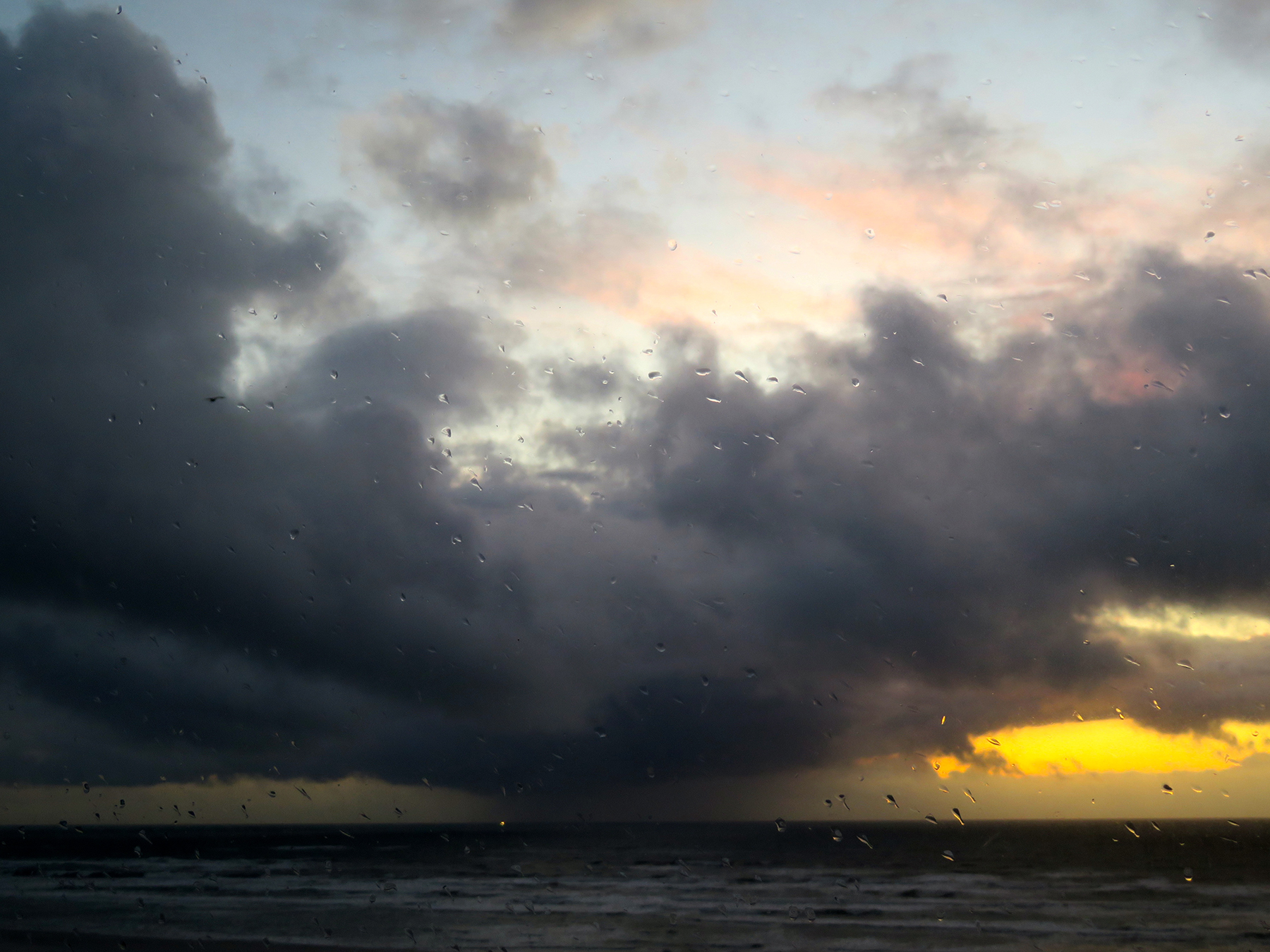
Here are some skies. The painted ones reflect the landscape of Northern Germany, up at the North Sea. The photographed ones were all taken while looking at the Pacific, a century later. I loved the painter, Emil Nolde (1867 – 1956), for much of my early life, being drawn to the color work, his expressionism, an unmatched intensity in his paintings – and the myth that he was the courageously resisting victim of Nazi terror, re-told in a famous novel by Siegfried Lenz, The German Lesson.

Emil Nolde, Meer (hoher Himmel, dunkel-grünes Wasser, qualmender Dampfer)
  1946–1947

I am still fascinated by the evocativeness of his colorization, the way it makes me ask is this really how the maritime sky looks? Indeed, it does! But everything else has collapsed, the beliefs that were so carefully instilled in post-war Germany, and the admiration that had been based on false premises.

Emil Nolde, Dampfer unter rot gelbem Himmel, circa 1935

Nolde was a man who was energetically and successfully building legends around his status as an artist, from day one. He was the misunderstood genius, the martyr at the hands (depending on the era in question) of the Jewish cabal dominating the art market who would not allow a true, pure nordic German to be successful, or at the hands of the Nazis who suppressed his art.

Emil Nolde, Dampfer unter gelbem Himmel, circa 1946

As it turns out, he was an ardent National Socialist himself (as was his wife Ada), a virulent anti-Semite, who even after the war did not change autobiographical writings depicting his loathing for Jews, and who stopped painting religious motifs because he could no longer stand painting “Jews.” Letters from him to Goering and Hitler contained suggestions as to how to rid Germany of “that race.” His subject matter shifted over to painting Vikings and other nordic mythology in the belief he could this way participate in forming the national-socialist art canon.

Emil Nolde, Rote Wolke, circa 1930

In 1933 he admired the writings of fascist Julius Langbehn (Rembrandt as Educator) who claimed that “a pure German art was needed to counteract modernist malaise. He deplored internationalism, mass culture, big city life, argued against specialization, knowledge, a culture of enlightenment, and called for a return to an education of the heart, based on character and individualism, the root of all German art.” Nolde loved this image of a national redeemer, the artist as a German quasi-religious idol. His unmet craving for recognition morphed into a sense of mission that he saw matched by the Führer’s plans. Alas, the admiration was not mutual. Hitler was rejecting the modernism exhibited by Nolde and assigned some of his work to the degenerate art exhibitions (soon to be removed from them by some high-up Nolde admirers in the 3rd Reich administration.) He was, however, sanctioned not with a prohibition to paint (as his later legend has it) but by restrictions on his possibility to freely seek and/or exhibit his art.

Emil Nolde, Herbsthimmel am Meer circa 1940

After the war Nolde carefully crafted the story of himself as a secret resister, having painted 1000s of small works (the unpainted pictures) while being checked on by the Gestapo (a lie.) The paintings date back to almost a decade before he was told to desist sales, and include topics that expressed alliance to the Nazi cause. Here is the interesting thing: much of German society was all too eager to join into this myth building, desperately needing a collective moral saga that matched each person’s need to absolve themselves from accusations of conformity if not collaboration, showing a way out: they had all gone into some kind of inner emigration. The Foundation archiving his work refused all access to incriminating written materials, benefitting from the myth making themselves. Nolde became a figure of cultural identification in post-war Germany, where clean heroes were desperately needed to regain a sense of identity and self-esteem. He was deemed the modern martyr who relentlessly served his art, regardless of defamation and persecution, helping people to redefine their own roles during the 3rd Reich.

Emil Nolde, Landschaft mit hohem Himmel und roten Wolken
circa 1930-1935

Last year saw the first comprehensive revision of the legend around this painter at a retrospective exhibition in Berlin, with a catalogue exploring the true history. The Nolde foundation is now under new leadership and fully participant in the research efforts.

Here is a fabulous review that offers more detail.

Music today from another Northern-born German, Johannes Brahms. No conflict between self presentation and content here, or between his art and his identity. Sigh of relief.

Shared Forms

Last year the Centre Pompidou did a retrospective of Victor Vasarely’s life works, titled Le Partage Des Formes, Shared Forms. I only read about it, but the title stuck in my head. It probably referred to the repetitive, grouped forms in his paintings. I, on the other hand, often see forms in nature which remind me of abstract art, and I always wonder what unconscious influence is extended by having been exposed to these patterns across a life time. Art offering its share of nature.

As a little exercise, then, I tried to come up with photographs I took on my walks and match them up with art works that they reminded me of. I’ve added a short description of the painter’s life, keeping us as far away from discussion of politics as possible. I think it helps to look at something beautiful, just to keep our spirits up.

Georges Braque, Still Life with Metronome, 1909

Vasarely’s work might, in individual instances, fit the bill for today’s nature photographs, but overall his op-art paintings are just too regular and bent towards creating visual illusions. Someone else, however, hits the jack pot: Georges Braque.

Georges Braque, Bottle and Fishes, 1910-1912

Born in 1882 in France, he was a trained as a house painter, but interested enough in fine art that he pursued an education. Originally influenced by Fauvism, he soon struck up a friendship with Picasso. (In his own words, they were tied together for some time like mountain climbers on a rope.) The two revolutionized painting by developing Cubism in parallel. The first, Analytical phase of Cubism was dominated by slab volumes, somber colouring, and warped perspective.

 “The colours are brown, gray, and green, the pictorial space is almost flat, viewpoints and light sources are multiplied, contours are broken, volumes are often transparent, and facets are turned into apparently illogical simultaneous views.”

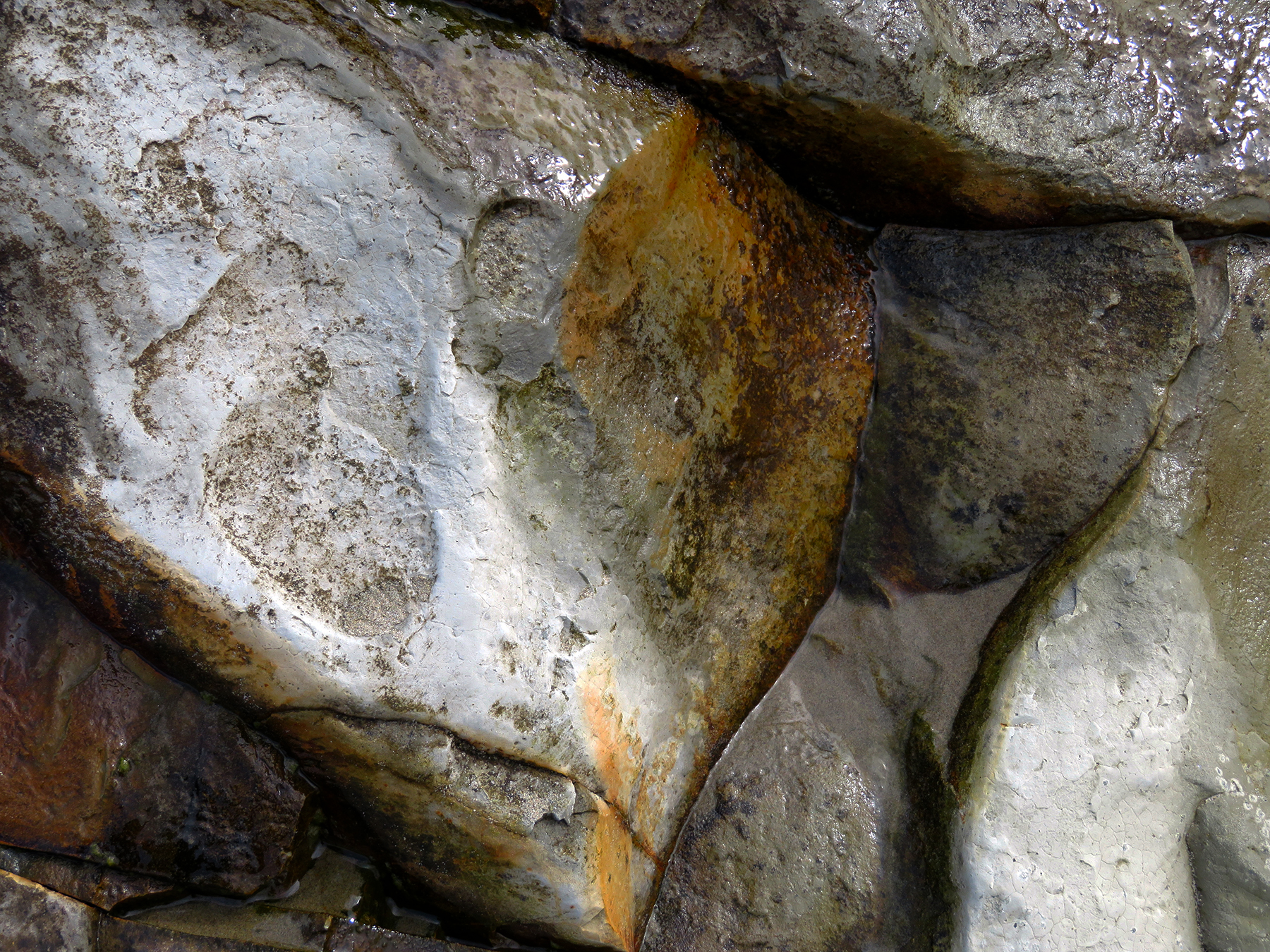
Exactly the kind of view of sandstone and basalt cliffs when you inspect them closely.

Georges Braque, Piano and Mandolin, 1909

Braque became famous and well-to-do during his life time. He served in WW I with distinction, incurring a serious head wound that required multiple surgeries and months of recuperation. He had but one wife, and eventually separated from Picasso who chose a very different path. He died in 1963, with the last years of his life devoted to more figurative painting and subjects of Greek mythology.

Georges Braque, Le Sacre Coeur, 1910

Of particular interest to me is his development of collage work; he was one of the first to add paper and other substances to his paintings in his later career. He wrote much about the fact that paintings should no just be the representation of an anecdote, but an independent object. That is the inherent joy for me, of course, when I make montages: creating something that is in itself new and non-existent in reality from something as reality-based as possible: photographs. A representational illusion.

Here, however, is the representation of the real thing!

And here is the website of contemporary Oregon artist Lee Musgrave, who has a penchant for echoing nature in his abstract art or find abstraction in nature, depending on where and when the muse strikes him.

Music today is a 1917 ballet with cubist influence, Parade, composed by Eric Satie for a one-act scenario by Jean Cocteau, original costume design by Picasso. For the overlapping fragments, Satie uses jazz elements, a whistle, siren, and typewriter in his score.

For something a little bit more melodious: Here are the piano works.

Fowl to the Rescue

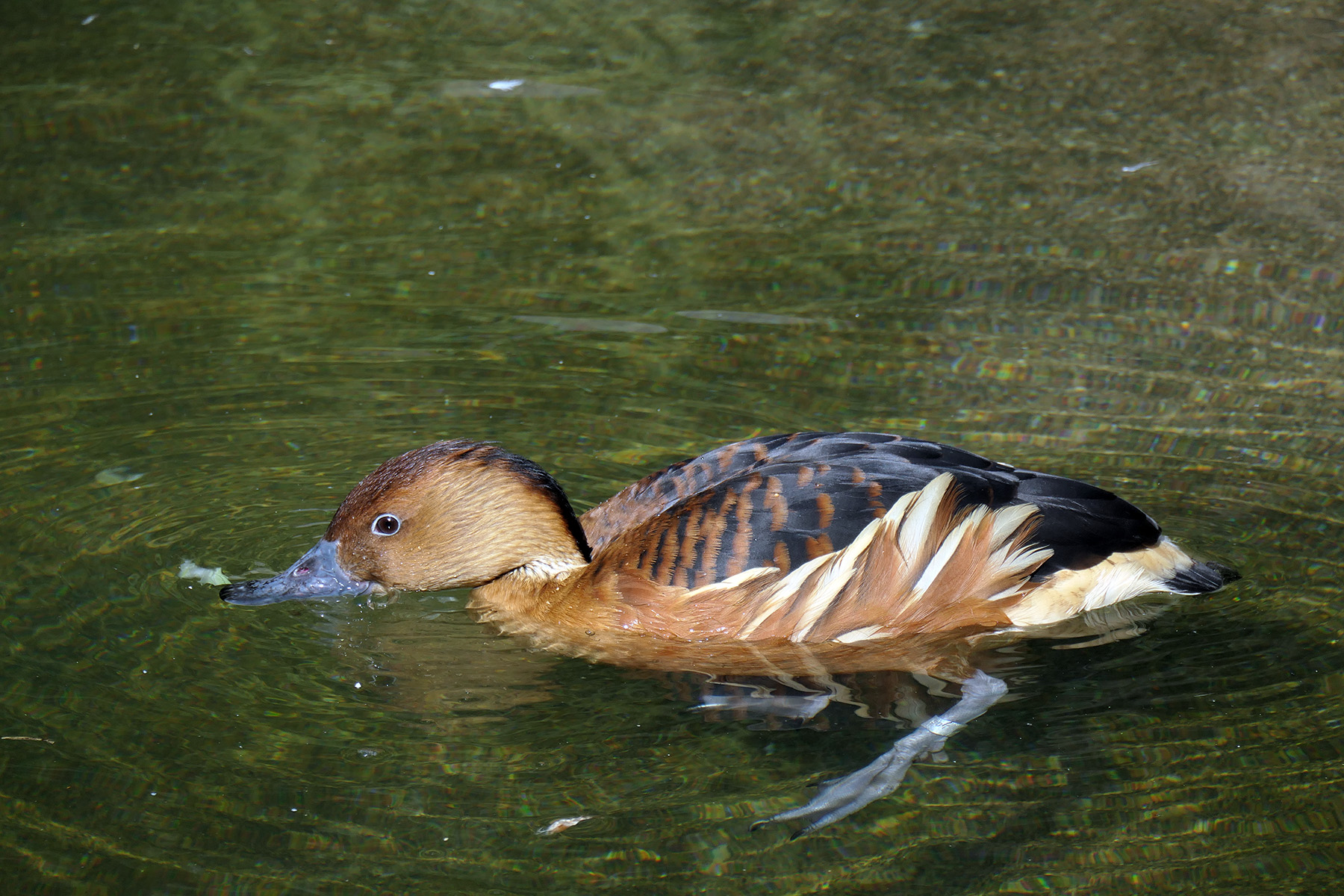
And in the let’s see how can we rescue the mood for the weekend – department, here is a glimmer of hope for locus-infested Pakistan: 100 000 ducks. Courtesy of China, no less.

Locusts had three uninterrupted exceptional breeding cycles due to the 2018/19 cyclone season that brought deluges to the Arab peninsula. They are now swarming into East Africa and South Asia, threatening already scarce food supplies and leading to states of emergency.

Sending hungry fowl is not new – in 2000, a 700,000-strong army of ducks and chickens was used to gain control over swarms of locusts that devoured over 3.8 million hectares of crops and grassland. As it turns out, ducks were more efficient than chickens at guzzling down the devastating pests, they stayed in group and did not disappear randomly into the landscape like their little headless friends…

So: 100,000 ducks are awaiting deployment along some 3,000 miles from the eastern province of Zhejiang to Pakistan, which shares a border with the Xinjiang province.

Quack. Quack. Let’s hope they have insatiable appetites.

Musical topic today is not for the faint of heart but for those who want to faint from laughing. The larger than life persona behind The Homosexual Necrophilica Duck Opera is duck guy Kees Moeliker, Director of the Museum for Natural History Rotterdam. He won the Ig Nobel Prize in 2003 for his paper of the same name as the opera. The video has him introduce the work and then presents the miniature opera.

Let no-one ever accuse me of not trying to widen our horizons, musical and otherwise….

One of those days

I am out for the count. Between bouts of fever, fits of coughing, no sleep and anxious glances to the clock if it’s time for the next round of pain meds, I am watching the crows in my back yard from bed. And that is with the flu shot.

Here are some of them during better, or certainly more vertical times…

Moss Green

And when thou art weary I’ll find thee a bed
Of mosses and flowers to pillow thy head; – John Keats To Emma (ca. 1815)

I cherish this couplet, find the thought of a pillow of moss appealing (although currently you might want to bring a waterproof plane before you sit down…)

And since I want to start the week with making you less weary, the couplet is the perfect fit. (Which cannot be said for the rest of the poem, which closes with this: So smile acquiescence, and give me thy hand,
With love-looking eyes, and with voice sweetly bland
. No sweetly bland voice here, googly eyes and/or acquiescence…. but lots of intentions to get your spirits up.

Moss it shall be: for one, because it shines, glimmers, glows in abundance right now, greenest, most brilliant green in those watery woods (Tryon Creek). Secondly because it gives me the opportunity to cite Wikipedia’s color page where I found this gem: Green is common in nature, especially in plants.

I hope you spill your coffee laughing. I did. Or maybe you need to know German, where the equivalent of nature is green: Wir gehen ins Grüne…

Let’s proceed to name the biological greens:

We are subsequently told that:

Moss green is a tone of green that resembles moss. Who would have thought.

Tidbit: Moss is practical. It used to be the diaper of millennia of babies – Native Americans stuffed spagnum in bags with which they swaddled their children, the Inuit used moss inside sealskin covers, and Mongolians used fur sacks stuffed with moss to carry the young. Biodegradable, too. It was used as antiseptic bandages to treat the wounds of thousands of WWI soldiers, when the Allied forces ran out of cotton bandages. (Link is to a fascinating article in the Smithsonian.)

I have written a bit more seriously some time back on moss and lichen, with a focus on the latter. If memory serves me right, we talked about rootless Bryophyta, which is the botanical name for moss, attaching themselves to their environment via hairy protrusions called rhizoids, take water and air in to create their food through photo synthesis.

Today I am more interested in why moss appears so intensely luminous when you hike through the forests during these dark, rainy days.

It has to do with a process called the Purkinje effect, or Purkinje shift, named after the Czech anatomist Jan Evangelista Purkyne, who proposed it at the beginning of the 19th century. It is the tendency for the peak luminance sensitivity of the human eye to shift toward the blue-green end of the spectrum at low illumination levels. Simply put, we have two main receptor types in the retina, the rods and the cones. The former are more light sensitive, but pretty much worthless for distinguishing color. They take over when it gets dark, because the cones, which are color-sensitive, fire best only when there is lots of light.

When light is scarce, at dawn and dusk, but also on these cloudy, rainy days in the woods, the reds, processed by cones now starved of stimulation, will appear duller and duller. The greens take on a contrasting brightness, because the rods take over. Voilà, iridescent green.

Before we all get too happy basking in that glow, here is the dark side of moss: half a billion years ago, when Bryophyta first appeared on land, they plunged earth into an ice-age and caused mass extinction of ocean life. Before you freak out, it took them 35 million years to do so, and they might just be the antidote to global warming if we could only wait that long.

Nonetheless, then it was a catastrophe – moss secretes a wide range of organic acids that can dissolve rock, and the altered rock can then suck CO2 out of the atmosphere. Sharp reduction in carbon dioxide levels ensues – here comes the ice. (For a more detailed account, go here.)

Reminder to self: this was supposed to cheer, not make more weary. Music to the rescue:

So here is a ditty from the 50s – Ja ja im Moos, da ist was los – well, well, things are hopping in the moss…..

Pileated woodpecker

and one a little older: Brahms says it all about the cool forest.


Exquisite Creatures

If you enjoy perpetual whiplash between disgust and fascination, do I have the thing for you! That is, if you hurry – this is the last weekend of Christopher Marley’s Exquisite Creatures at OMSI, and then they are packed away in cartons, glass or metal containers, and shipped off.

You’ll meet a jarring abundance of dead animals, 1000s and 1000s of them across two full floors of the museum, with the amounts of applied embalming fluid alone making centuries of Egyptian pharaohs roll in their pyramids, green with envy.

The exhibition shows the corporeal remnants of insects, butterflies, chameleons, crabs, scorpions, shells, snakes, turtles, fish and birds – all found dead, it is repeatedly emphasized, not killed for the show. The point, though, is, they are mostly not displayed as single specimens, to introduce the public to the wonders of nature, as they would in a natural history museum, where the aurochs might elicit awe that cannot be had on the streets of NYC (or only be had by other sources…)

The corpses are displayed in patterns and arranged by color, carefully calibrated by Marley, a self-taught naturalist who was a school drop-out and men’s fashion model at various points in his life, but is now a true nature enthusiast who speaks from the heart about the interconnectedness of things and travels the world to find the materials for his designs.

And designs they are: spanning the spectrum from a likely advertisement for room freshener, to semblance of abstract aboriginal art.

And they are fascinating, as long as you can suppress thoughts about the source of the collage pieces. The eye part of me could not get enough of the colors on display, the variations of nature’s palette, the sheer beauty of evolution’s blueprints and the inventiveness of Marley’s kaleidoscopic creations. The brain part of me could not forgive that there is yet another way we exploit nature, by manipulating it into artificial constructs that speak to artificial design rather than an intended place in the world.

Accumulations of feathers and seashells seem innocuous enough. It gets a bit trickier with the bugs, although they look sufficiently like buttons you get way with ignoring where they once might have crawled.

The butterflies are familiar as cased objects, centuries of collectors, pins in hand, made sure of that.

The fish and turtles seem so plastic-like that you can avoid thinking about their origins.

It gets complicated with the 4-legged creatures

and for me, surprise, dear reader, with the birds. To see them used as token kaleidoscopic images feels sacrilegious.

I tried to think through what produced my reaction. People have always displayed nature with precision – I grew up, for example, with prints by Maria Sibylla Merian, one of my heroines, on the dining room wall, the 17th century naturalist and artist, who embarked on trips around the world to collect insect specimens for truly scientific purposes and rendered them beautiful. But these were engravings. People make land art with found natural materials, but these are inanimate, stones and wood for the most part. I have no problem with floats being covered with designs made out of dead flowers (other than the tastelessness of their arrangements, as a rule.)

It must be the sense that what was once animate, a living, creeping, crawling, slithering, hopping, swimming or fluttering subject, has become an object. The placement in complicated designs might invoke overall iridescent beauty, but it creates tokens, puzzle pieces, erasing a singular existence. And clearly the troubling effect on viewers gets linearly stronger the higher upward the evolutionary ladder we get. As a thought experiment try to envision that you’d place dead hamsters in geometrically intricate patterns. Dead Cats? Dead Sheep? It is no coincidence that mammals make no appearance in this show.

For every gaggle of kids surrounding me, squealing with delight about the wonders in front them, there was the one wailing in the corner,”I can’t look at this!” Empathetic 4th graders dragging their class mate to a display of flowers: “It’s safe here, it’s flowers! “Little did they know they’d just arrived at pitcher plants, insect-killing machines……

I left OMSI with a treasure trove of images that remind me of individual beauty of a creature – and a sense of renewed commitment to and respect for nature, not because of what I saw, but in opposition to it. Not a bad outcome for a museum visit!

Let’s now hear the fleas! https://www.youtube.com/watch?v=Drzcj5LF7K4&feature=emb_logo

Our Place when we need a break….

Our place when we need a break? Why, nature, of course. In my instance, after a week of extensive writing projects, it’s no further than my garden. Soaked, peaceful, waiting for spring.

The Hellebores:

The last of the Hawthorne berries, ignored by the squirrels who grow fat on our birdseeds…

The cedars, crying

The roses, sending out a first leaf

And my ornamental fish growing a moss beard with all the rain…

Feeling better, already.

Here are the last lines of a Thomas Hardy poem, Proud Songster. You’ll hear them in the song cycle by Finzi which will conclude this week.

But only particles of grain, and earth, and air, and rain.”

Urban Green Spaces

Add a third person to the list of those actually managing to make me reluctantly listen to podcasts – next to my Beloved and my son, I now owe some gratitude to Gordon Caron, a dear friend who yesterday sent a link to an NPR program, HUMANKIND.

The program features Mike Houck from the Urban Greenspaces Institute at Portland State University, who launched the Urban Naturalist program at the Audubon Society many years ago, and helped form the Metro Parks and Nature program.  He also serves on the City of Portland’s Planning and Sustainability CommissionThe Intertwine Alliance board of directors; and The Nature of Cities board.

Houck’s central focus, other than acknowledging and preparing for climate change, concerns the integration of natural spaces into built environments, cities and the like. He feels strongly that we should not just preserve the pristine wild, a priority of so many other environmental organizations, but ensure immediate encounters with nature on a daily basis. Providing easy access, in other words, to nature where people live, whether it is San Francisco, LA, Chicago or Portland, every day, not just on vacation. “How can a child care for the survival of the condor, if s/he has never known a wren,” is something he cites in the conversation with Humankind’s broadcaster, Freudberg.

He urges that we need to protect urban green spaces and (re)build them, including metropolitan wildlife preserves. It will make people engage in nature, come to love and thus protect it, reap health benefits and even financial advantages, since property close to natural areas are increasing in value. Indirectly that protects rural and more pristine areas as well, because people will reside in livable cities and not expand beyond the urban growth boundary, parceling up the country side (and using the car to drive to work….)

One of the urban nature preserves he is keen on is Oaks Bottom, my regular Tuesday haunt as readers of this blog (particularly those who I cherish as my coffeecup coven) are well aware of. (iPhone photographs are from yesterday! Original introduction here.) The 160 acre wetland was filled with rubble from building the freeway and once used as a landfill.

Black cottonwood and ash forest only partially obstruct the view to the downtown skyline. Yesterday I saw a bald eagle (there is a pair nesting close by)

a barred owl (!)

and once again the little kingfisher from last week, although too far away to get in view with the phone in one hand, an impatient leashed pointer on the other…

S/he is on top of the stick jutting out on top from the pile.

In the podcast you hear Houck’s voice get all excited when he reports, live, all the kinds of critters he is seeing. Map that marveling onto my face, and you got me pinned Tuesday mornings. The podcast is worth a listen.

So is today’s music: Schumann’s Wald Szenen (Forest Scenes.) I chose not the perennial version by Richter, but a faster one by Kadouch. If you ignore his theatrics, it’s really a lovely interpretation. Just close your eyes.

Staying Put

Having looked at multiple aspects of migration (at least within the animal kingdom) I want to close out the week with a contemplation of the value of staying home. Not for the reasons that immediately come to mind: “Hey, curb your carbon foot print, no longer fly or drive so much, built your own backyard farm so you are are independent from the vicissitudes of national ecological decisions, etc.

I believe that is the California Towhee, but below I am certain its our very own here in OR

No, I’d like to explore the philosophical approach embraced by the bioregional movements, these days prominently represented by regions like Cascadia (our very own backyard) and the Ozarks, to name just a few and early on developed by Peter Berg who died 9 years ago.

Here are a few key terms to understanding the concept: bioregionality concerns itself with both the way how a) nature differs in different areas (and thus different geographical regions need differential treatment) and b) how a mindful ecosocial movement would approach the nature in its region finding ways to maximize all that is good for region and people at once, even if it means intense adjustments to the way things used to be done.

Mocking Bird

Bioregions are defined by watersheds, natural communities, places that are associated with a particular climate, seasons, aspects of soil, and types of native plants and animals. The boundaries are often defined by the people who live in these regions, and their ways to live sustainable and harmoniously within these given environments. Nature and culture, then, are interlaced parts of a given bioregion. People do count as much as the rest of the biological and geological package. Details for the husbandry of such an entity – a bioregion – can be found here. Resource management, land planning, conservation biology, social and political structuring towards ethical approaches to nature are part and parcel of the bioregionalism movement.

The Night Heron

Importantly, and this brings us back to where we started this week when arguing that we need to actually learn from and listen to nature herself, the bioregionalism movement urges us to familiarize ourselves with the region we live in: feel its time and place, and become if not intimate with then at least knowledgeable about the fauna and flora of your environs. This knowledge will be a good stepping stone to decide how you as an individual should live in this region and what communal, social, economical and political structures would be of the best interest of the region.

Acorn Woodpecker

Here is a fabulous example of writer and activist, Jenny Odell, who teaches at Stanford, trying to get to know her particular region through listening, mindfully, to the typical birds she encounters. If you open the link below and click on each of the 5 bird names you get multiple sound recordings of their songs.

Finch in full mating colors

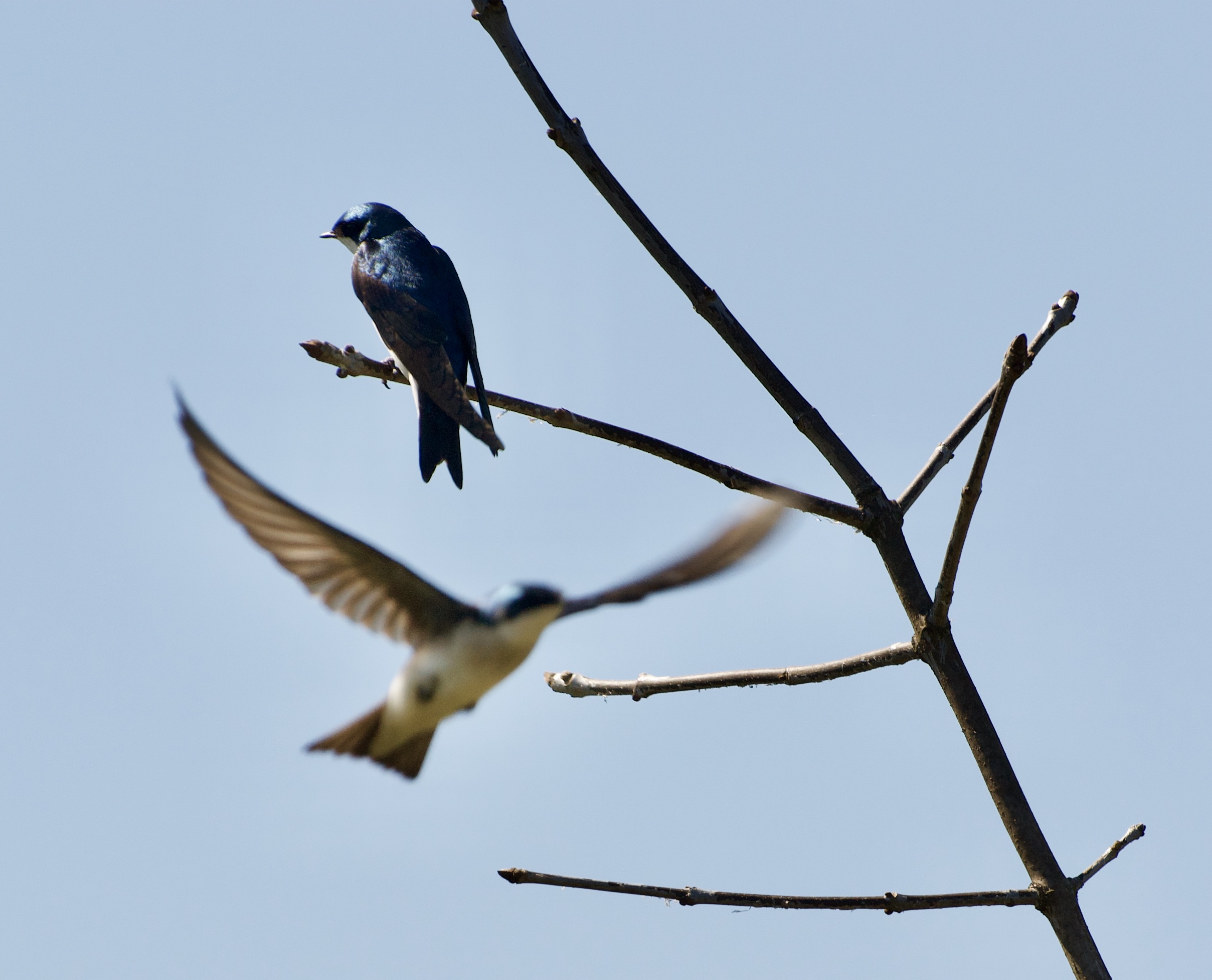
I have photographed some of the bird she mentioned, although they are likely the Oregon counterparts to her California species. Will throw some other in for good measure since I listen to them on a daily basis, except when the herons croak, then I cover my ears….

This kingfisher was a rare encounter 3 days ago – they never sit still to be photographed….

Here is music in honor of our own region’s little ruler. The 2 movements couldn’t be more different.

(PS There is also a unconvincing sonnet by this name (by Gerald Manley Hopkins) and an off- Broadway play that had good reviews about a Nazi, sentenced to life without parole in a Vatican prison, discussing free will, life and death with a priest before being smuggled to freedom. I’ll skip that…..)