Browsing Category

Nature

Helpful Advice.

Walk with me, but bring the gloves, on a brilliantly sunny and cold day at the wetlands. Puddles covered with ice, ponds slightly frozen, fallen leaves coated with sparkling crystals putting to shame any jewelry store – display.

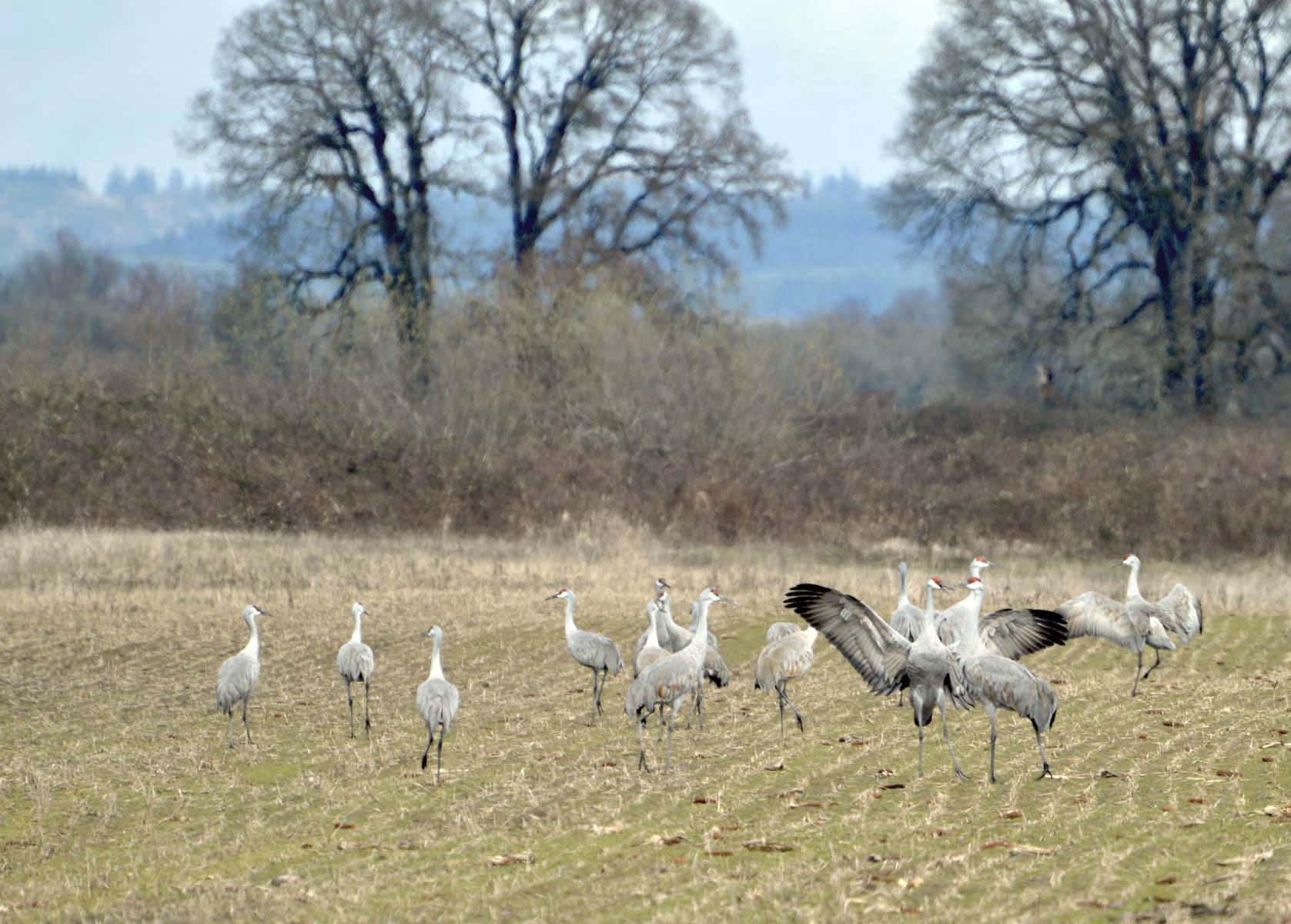
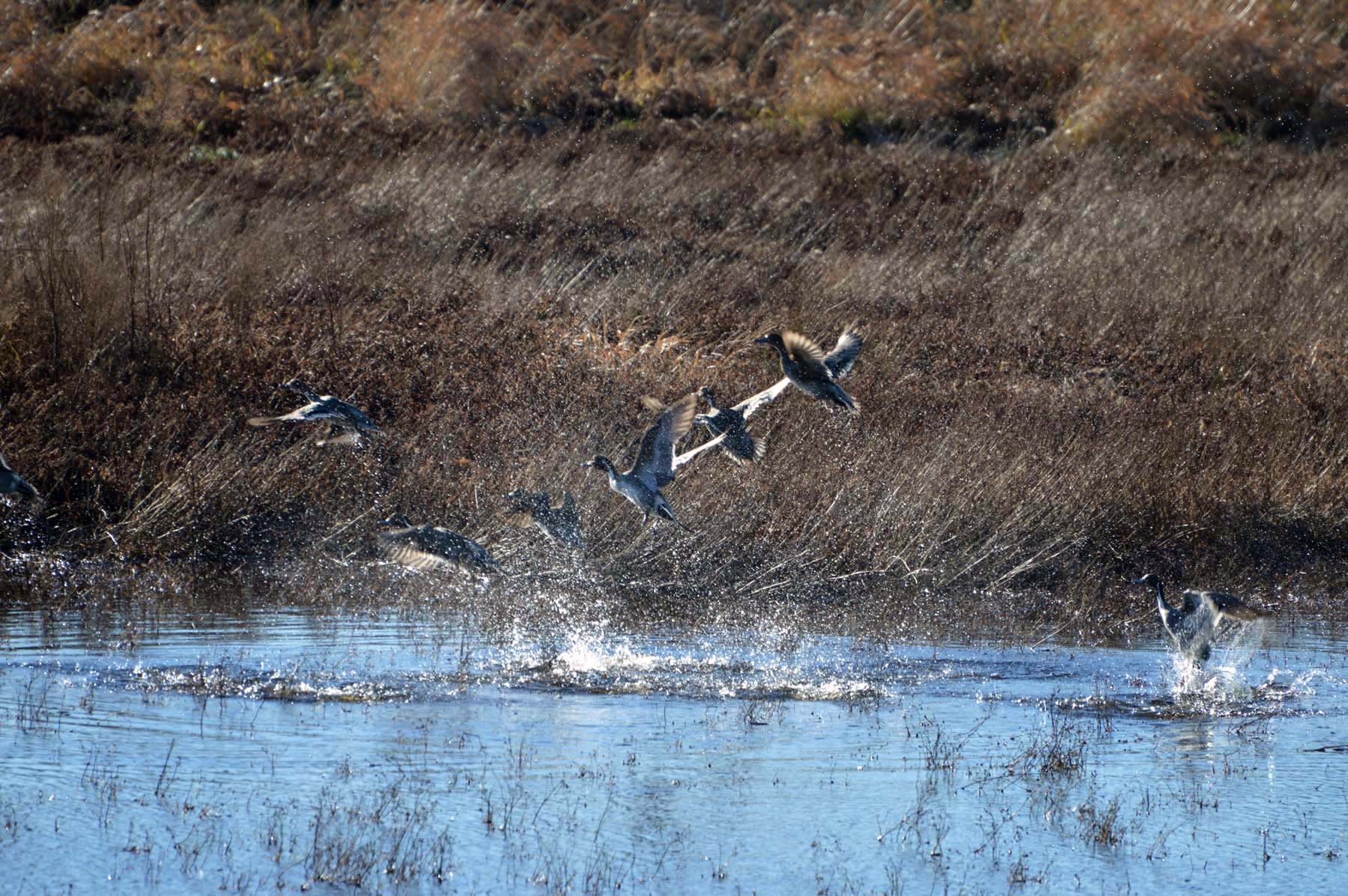
My avian friends are warming up in the sun. For every heron at rest, there is an egret flying to the next perch, surveying their realm.

The sky occasionally fills with geese spooked by some raptor, and I wish I could add the sound here of them chattering and honking, a spectacular chorus. Eventually they come to rest, returning to snoozing.

I, on the other hand, have not been snoozing this week, driven by a sentiment probably shared by many of you: What can we do? I have been reading quite a bit, soaking up good advice from trusted sources, and making use of many helpful sites that display what we need to know in straightforward and legible ways.

Much of the advice overlaps: inform yourself, pace yourself, don’t give up in advance, protect the most vulnerable, engage, build and cherish community from the ground up. Two things I found particularly helpful:

  • Ask yourself what your strengths are: not all of us are able or willing to do public work, or join committees, or have the resources to support causes financially, or get engaged in elective office. We all have something to contribute, however. If you like baking, organize bake sales. Agreed, chocolate chip cookies are not going to defeat fascism, but a community nourished by seeing members contribute in whatever ways they can, will be more resistent and more effective in coming together and taking the necessary steps.
  • Focus on your interest. You cannot fight on every front. Pick the arenas where you have the most expertise or the most passion, and join efforts there.

In my case, I have a platform with this blog where I can summarize both relevant sources and write about my interpretations of them. I can do much of the reading you don’t have time for, and pick the best pieces with a critical eye on informational value, not necessarily ideology. I am also deeply interested in science and climate crisis, so that is where I will be particularly involved. Note, though, it really is up to everyone – if you are interested in protecting immigrants, DEI-or women’s rights, or fight against racism, Islamophobia, anti-Semitism or newly established prison camps, it matters. There is no hierarchy of what needs to be protected- there is much under attack and requires advocates.

Here are Robert Reich, Dave Troy, and Timothy Snyder with pragmatic advice lists. And here is a helpful conversation between Jen Rubin and Heather Cox Richardson.

Here is a nifty google drive action tracker listing all the Executive Orders and memos proclaimed so far, grouped by targets. That allows you to inform yourself about your area of interest and what is currently affecting the status quo.

***

Given one of my interests, science, here is another bit of news (in more detail in Paul Krugman’s assessment today):

As of now there is a new communications ban from HHS. The gag order includes the publication of scientific information, including reports that are already done, prohibits emergency alerts for pandemic information, or rising health risks, including weekly data on respiratory disease developments.

Meetings and report releases for the National Vaccine Advisory Committee and the Presidential Advisory Council for Combating Antibiotic Resistance are canceled. HHS is searching for DEIA programs and threatening anyone who disguises them. They are asking for people to report colleagues.

NIH study sections are canceled/postponed. These are the sections that approve grant proposals and provide funding for institutional research. This affects more than 300.000 researchers and 2500 institutions. All travel is suspended and conference publications must be approved in advance by a presidential appointee. That affects nearly $50 billion of scientific research.

Pausing public health communications and research means delays in responding to emerging threats, like H5N1. But these measures also have an economic impact. Public health protects more than health—it safeguards our economy. Disruptions in systems can ripple across industries, as we’ve already seen with avian flu and egg prices.

Note that every $1 spent by NIH generates $2.46. For example, in 2023, $47B in NIH spending generated ~$93B. Halting it all will cost us money, create worse health outcome and might motivate all the scientific talent that is now losing their grant funded jobs to go elsewhere. As of now, it is all gone, with health and education directly implicated.

If you click this link, it offers map and you can tap on your state and find out what is affected by the new administration’s directive towards the National Institute for Health (NIH). Here are the OR and CA impacts, respectively.

Before we are getting too discouraged, here is the long read for the weekend that argues the world isn’t as bad as you think. I agree with much of it, but also want to point out that it is psychologically much harder to relinquish a right or protective matter that you already held or is available to you, than experiencing improvements of a state of need. If we know we can protect our children with vaccines or health risk alerts and they are subsequently blocked by political maniacs, it is a huge blow, individually for all the little ones I love and societally for what the future will hold.

Music today dates me since I still saw it live – album by The Band. RIP Garth Hudson, who died this week.

Eaton Fire

Since so many of you have inquired, for which I am truly grateful, I want to just answer a few questions.

My son and family in Altadena escaped the fire unharmed, but lost their house and all of their belongings. They are currently staying with a family friend some 20 miles away from the active fires and, importantly, the smog. We have no clue what will come next, and are taking it a day at a time, just mindful of the privilege to remain physically intact and surrounded by a strongly supportive network.

When this is all over and the kids are settled – wherever remains to be seen, I would love to rebuild the little one’s library that was turned to ashes. If any of you want to have an eye on Thriftstore treasures of children’s books, please keep us in mind. I am happy to pick up and/or reimburse and store at our house here in Portland. Age range 3 – 8, she devours everything, particularly nature oriented themes.

I will go silent until l have processed all this a bit more, but hopefully will be back on track next week.

These are apocalyptic times.

Fluke

You never know. Here I was planning a quiet walk in one of my favorite places on earth, the place where I go to air out my soul. It reminds me of the landscape of my childhood, flat as a pancake, skies low, agricultural fields and watery flats seamed by alders and willows.

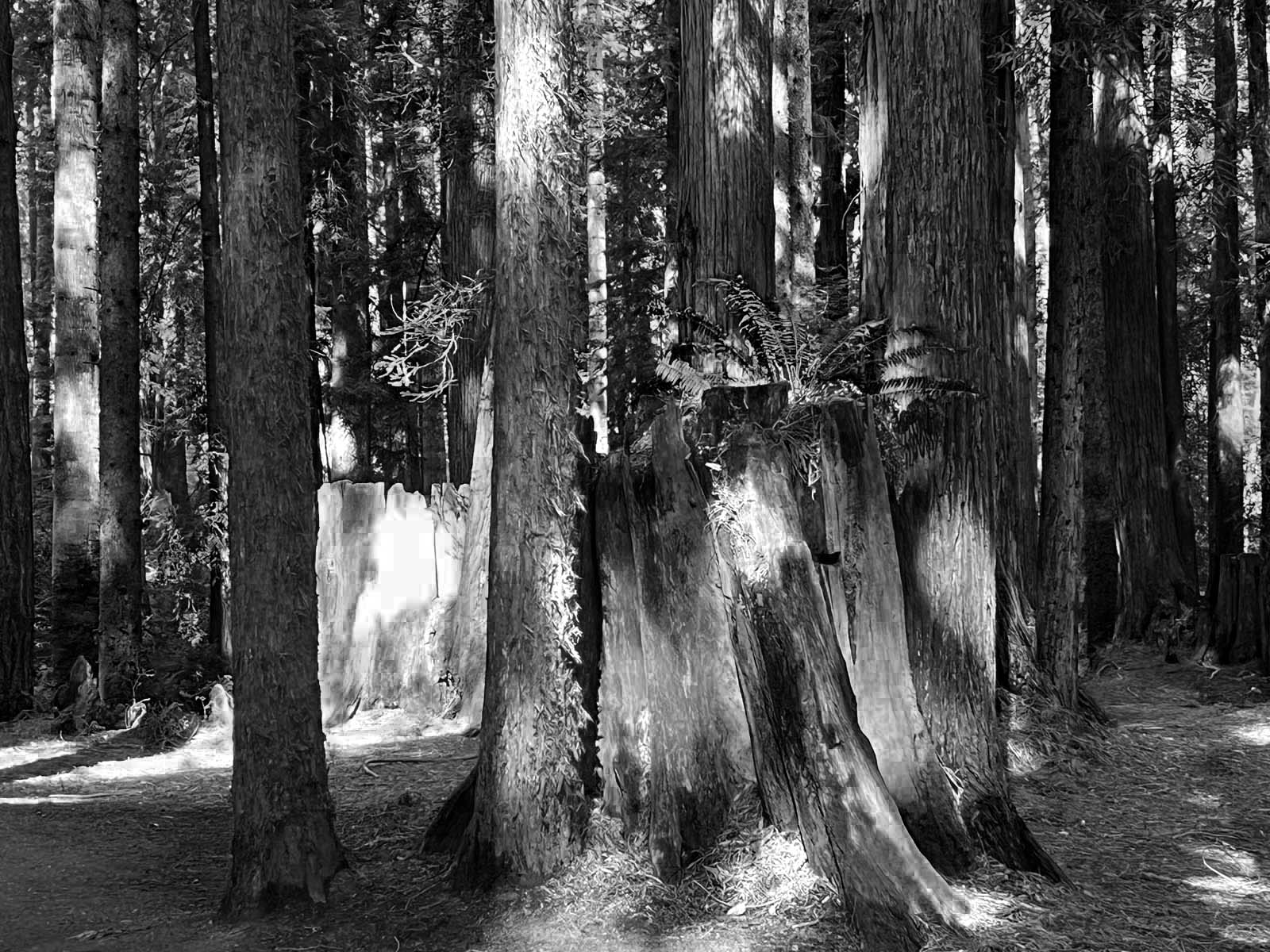
A landscape best caught in black and white for its riches of patterning and contrasts of shadow and light. A reminder, too, that black and white belongs to photography and not thinking, the need to fight rigidity of both, really, thought and feeling. A landscape that has changed across the decades of my visits without losing its essential beauty, a pointer towards aging gracefully. A place you all know by osmosis, given how often I have posted from there throughout the seasons.

Weeping Willows

I meant to contemplate 2024, in all its horrors as well as gifts, its losses and riches, and above all this sense of “What now? How do I meet the challenges before us, without losing a sense of hope and integrity? How to combat the worries that tend to overtake me? The irritability with my uncooperative body? “

It was not to be. The minute I hit the footpath on Monday, usually a solitary walk towards a dike, I saw throngs of people, strangely moving at speed back and forth, as small groups, excitedly chattering. What was going on?

A field sparrow! There’s supposed to be a field sparrow! The chance of a life time to scratch if off a Western birder’s life list, since the bird resides in the Eastern US and must have made a wrong turn. Or two. Is it here, in the blackberry patch? It is there, hiding among the reeds?

What’s a field sparrow, you ask? Beats me. It looks (and I never saw it live, had to look it up in my guide book) like a million other sparrows, even when I learned to watch for the eye rings and the pinkish beak.

But you know what? It completely changed my mood, my outlook that day, this fluke of a bird appearing out of nowhere, this fluke of me arriving at the island at just that time. It was invigorating to see people as a community, whipping out their phones to call birder friends to come on down, people showing each other photos they had taken half an hour earlier, discussing the rarity of the event, people carefully placing their tripods for heavy cameras as not to interfere with their neighbor’s, and a general sense of camaraderie, excitement and passion suffusing the air. Most importantly, regardless of the current fires sweeping the world in all their manifestations, there was this bond to nature and the wonders it offers, the willingness to stand or run in the damp cold for hours on end to catch a glimpse of a TLB (tiny little bird in my “couldn’t identify it for the life of me” vocabulary.) To be free of worry for a small window in time.

The excitement was contagious and I kept smiling for the rest of my walk, long after leaving all of them behind, entering the wetlands and communing with slightly larger birds instead.

Tuesday a library book arrived from the longish wait list, Fluke: Chance, Chaos, and why everything we do matters, by Brian Klaas. I had ordered it after reading an essay (today’s Long Read) by him that hooked me, and that you might find thought-provoking. Judging by the first half read so far, the book is interesting, written in ways completely graspable for the layperson, filled with fascinating examples, but also slightly too repetitive for this reader who likes to roar through new information.

Mist in the air

Take a typical example: Stimson, U.S. Secretary of War in 1945, persuaded President Truman not to drop the nuclear bomb on Kyoto, much against the resistance of the military brass who believed it to be the ideal target, not least because its university was the intellectual center of Japan. Why did he care? He had had a wonderful visit there with his wife in the fall of 1926, seeing it in all its historic and seasonal beauty and felt that it needed to be preserved. A total fluke. He fought for the city being spared on multiple occasions until Truman relented. It had to be Hiroshima and Nagasaki instead.

The upshot, so far, is this: we need to revise our thinking about issues of chance, the order of things, and our ability to control the way life unfolds. Infinitely complex systems like our interconnected world can be affected by minute changes, as chaos theory predicted (think butterfly effect). Every one of us should likely take less pride in our accomplishments and feel less guilty about our failures, because pure luck (the very definition of chance) affects any old outcome. It’s hard to accept the notion of random drift – then again, maybe it’s liberating? Just think of the possibility that something completely random could happen that shifts the world’s current embrace of war and authoritarianism…

As the Kirkus Review observed: The book can provoke existential unease, but it also helps explain the cockamamie nature of the way things are, and it’s an always-interesting read.

That about captures it!

And who knows, maybe the fluke of my encounter led to eating less junk food that day since I was feeling more upbeat. That in turn might improve my immune system, leading to more cancer fighting power. A random bird the cause for added years of blogging…. I’ll take it.

Long live the field sparrow!

Music today adheres to the more traditional views of orderly, controlled and willful creation with the representation of chaos at the beginning: Haydn’s Die Schöpfung.

Orange to the Rescue.

Walk with me. You have the choice of pouring rain (Tuesday) or bright sun, unseasonably warm (Wednesday.) On both days, the highlight of the visual riches in the woods and marshlands was the color orange – in many variations, sometimes subdued, sometimes fiery, at all times enhancing the cooler hues in the landscape with a pleasing contrast effect. Ever up-lifting.

In the visual arts, orange has been around for a long time. The Egyptians used it for tomb paintings, despite the fact that the pigment they employed, realgar, was derived from monoclinic crystals and was highly toxic. Medieval monks colored their manuscripts with it as well, ignorant of its effects on health.

Orange really took off in the 18th and 19th century, after Louis Vauquelin, a French scientist, discovered the mineral crocoite, which led to the production of the synthetic pigment chrome orange. The Pre-Raphaelites paved the way, with the Impressionists not far behind. Van Gogh took it to extremes, and Expressionism pledged itself to this intensive hue. Abstract artists of our own time made good use of the color as well. Below are some of my favorite examples, paired with what nature has to offer, in every which way as visually rich as what sprang from painters’ imaginations.

John Constable The Hay Wain (1821)

Sunsets are, of course, a perennial favorite. Not to be found this week, alas.

Caspar David Friedrich Das Große Gehege (1832)

Reflections rule.

J. M. W. Turner, Fighting Temeraire (1839)

The most famous of the orange suns,

Claude Monet Impression, Sunrise (1872)

and vineyards echoing the color choice.

Vincent van Gogh Red Vineyards at Arles (1888)

Light, captured,

Emil Nolde Coastal Landscape Date unknown

landscape abstracted.

Richard Diebenkorn Berkeley No 46 (1955)

Color reduction.

Mark Rothko Orange and Yellow (1956)

The strangest of them all – the man’s head below the woman’s face detectable in her lap only with a bit of help, covered by orange tresses, that might be the burn of love or loss, who knows.

Edvard Munch Love and Pain (1893)

Music today is dedicated by me to this ill-fated couple….

In a season where light during the darkness takes on a certain symbolism, (Hanukkiahs and Christmas trees, I see you!) the brightness of orange is nature’s contribution – gratefully accepted. Even when drenched in rain.

Here is a Long Read, suggested for the weekend. Elad Nehorai, a former orthodox Jew who writes for the Guardian, The Forward and Times of Israel, asks us to think through the implications of how the American public reacted to the murder of the healthcare CEO. He offers thoughts on how we can bring about change with non-violence and what the civil rights movement had to say about the challenges with such an approach. I thought this is a worthwhile topic during a season where Christianity celebrates the arrival of someone who was supposed to bring peace on earth, no luck so far, and Judaism celebrates a miracle of sustainability during a violent civil war …. https://substack.com/home/post/p-153227333

Wildfires.

In 1998, author and activist Mike Davis published a book, The Ecology of Fear: Los Angeles and the Imagination of Disaster. (I had reviewed one of his preceding brilliant analyses of the geography, ecology and politics of LA, City of Quartz, last spring here, which I mention because it gives you a short overview of the issues he was concerned with and how he approached them.) The new book included profound analyses of the danger, handling and, yes, politics of wildfires with an emphasis on Malibu.

20 years later, a Malibu fire started on November 8 and burned nearly 97,000 acres, destroying over 1,600 structures and resulting in three fatalities. More than 295,000 residents were evacuated and an estimated $6 billion in damages incurred. The folks at Longreads.com used the occasion to publish an excerpt of Davis’ book describing the history of fires at the Malibu coast, by consensus deemed the wildfire capital of North America, and a postscript he added in 2018.

Sunrise colors accentuated by smog from wildfires.

I was sent a link to the excerpt given that this week saw another Malibu fire erupt, the Franklin Fire, which seems to be less likely to develop into a monster fire like last month’s Mountain fire in Ventura County, or the earlier, massive Thomas and Woolsey fires, which exploded with disastrous winds that pushed flames for miles and grounded firefighting aircraft. Saved by luck only – the direction and strength of winds for once in favor of the fire fighters.

My own brush with fire on a California hillside this year still sits in my bones and occasionally keeps me up at night. Reading Davis’ chapter on the politics of California wildfires – the reasons why they occur more strongly and frequently, why they harm populations in inequitable ways, and why no-one considers stopping the rebuilding of houses and mansions on fire-prone hills – and even expanding further onto the wilderness – helped to focus my head on the issues, rather than give in to my soul that shudders at the memories. What he wrote in 1998 is more relevant than ever, a quarter century later.

One of the core issues lies with our approach to fire. Fire prevention tactics like nurturing large areas of chaparral and forest into old age, have actually created conditions for stronger fires, once they ignite. Horticultural fire-breaks near towns, like citrus groves and agricultural land have disappeared due to water issues or the need for more land for construction. And we insist that we have to focus on fire handling: ever new regulations specify flame retardant building materials and brush clearing, in essence “fire proofing” human habitat. More than half of new California housing has been built in fire hazard zones since 1993, with more than 11 million Californians, roughly a quarter of the state’s population, living in high-risk wildfire areas known as the wildland-urban interface.

Karen Chapple, an urban planning professor and director of UC Berkeley’s Center for Community Innovation suggests that rather than focussing on specific [wildfire] mitigation measures such as hardening homes, prescribed burns, fuel breaks, we should revise land-use planning, creating more sustainable settlement patterns around the state. (Ref.) This is particularly urgent in light of all the insurance companies now refusing to insure for damage or loss due to fire, given how costs have skyrocketed with more frequent fires. You could lose everything if you (re)build in fire-prone regions.

I very much encourage you to read the 15 minute excerpt of Davis’ book, it is grippingly written as well as informative, and might provide insights for all of us who are exposed to future potential catastrophes, given that climate change has upped the ante for fires now spreading into previously less likely areas, followed by landslides and flooding. Dare I add that the historian’s prescience, evidenced in historical unfolding of his predictions, likely extends to what now lies in wait? Here is a summary of another of his books:

Davis’s 2005 book, The Monster at Our Door: The Global Threat of Avian Flu, argues that a combination of poor government planning and a consolidation of resources in the hands of profit-obsessed pharmaceutical companies has left the world—and especially its poorest populations—dangerously vulnerable to pandemics. (The book was widely praised for its foresight during the COVID-19 pandemic in 2020, and it was expanded and republished that year as The Monster Enters: COVID-19, Avian Flu and the Plagues of Capitalism.)”

What can we do, in an era when this morning’s news included the announcement that R.F.Kennedy’s advisor had earlier asked the F.D.A. to revoke approval of the Polio and Hepatitis B vaccines? Never mind the development of pandemic vaccines…. If RFK gets approved to be the new health secretary, he can intervene in the F.D.A. petition as well as approval processes. I refuse to say “we are doomed.” But we should seriously think about what can be done, because we very well might be – particularly our grandchildren – if this insanity rules the day.

In the meantime, here are some photographs from Southern California with glimpses of the ecology that burns like tinder.

And Piazzolla’s musical take on hot summers.


Intermission

I am leaving town a bit earlier than anticipated, so am jumbling to get everything squared for a month-long trip. Yes, I owe you a book review, no worries, it will come. So will travel reports and of course Art on the Road, given how much is currently on offer in Southern California. Just not on a regular schedule.

In the meantime, walk with me one last time in the fall woods of Oregon, along the river. It was an easier choice than that of the peace dove from this fabulous photograph that my sister sent. Clearly her options are overwhelming, a sad testimony to the current state of the world, but the set-up was, I thought, ingenious. (The lowest sign adds: and all other countries not mentioned here…)

I was encouraged by the fact that there is this public reminder expressing our hope for peace. I was also propped up by a recent article by Anne Applebaum making a case against pessimism. (Gift link, should allow you access.) And I want to remind you that excursions into nature are by far the easiest and most effective remedy for momentary despair, if only to remind you what’s a stake to fight for, rather than give up.

Need not be a monumental hike. Can be sitting on a park bench, for all I care, or counting the daisies in a strip of lawn, or, as in the case below, walking around a wildlife preserve on easy paths.

Falls has arrived, luminously so.

Herons, ibis and cormorants hanging out, ready for lunch.

Some finding morsels more easily than others.

Next to the yellows, and isolated reds, there was a sense of the lushest of green, almost mirroring early spring in one last Hurrah before the cold nights set in.

As always, there were surprises: yesterday some form of land art, I suppose, although it made me think of all these sneakers slung across the street wires…

Familiar trees, ever changing. Through seasons, through wildlife activity, through human interference. A reminder that change is inevitable, at times beautiful, and we might as well go with it. Says this aging blogger, about to drive my car to L.A. for a change in scenery.

I’ll listen to Piazzola’s seasons on the way South, but here is Fall.

Fungi-Curious.

· Julie Beeler and Jordan Weiss at the COLUMBIA GORGE MUSEUM ·

October, time for my annual sharing of the recent beauty I found in the woods.

I’m clearly not the only one preoccupied with mushrooms at this time of year. This coming Saturday, October 19th, Stevenson, WA offers its inaugural Mushroom Festival. In their words: “Whether you’re a seasoned mycologists, blossoming enthusiast or simply fungi-curious, don’t miss this unforgettable weekend in Stevenson, Washington.”

Loved that. Call me Fungi-curious!

There will be culinary attractions, lots of vendors for all things mycological, and workshops and demonstrations, including plenty of kid activities. Details here.

With perfect timing, the Columbia Gorge Museum opens its doors to the community once again with particularly interesting offers. Currently on exhibit is artist Julie Beeler, with works directly and indirectly driven by her passion for mycology. Symbiosis features, according to the exhibition announcement, “immersive ‘tree totems’ showcasing the vibrant hues derived from regional fungi, alongside textile pieces, mono prints, and photographs that illustrate their connection to the environment.”

Photo Credit Columbia Gorge Museum

Beeler derives dyes from mushrooms, forty varieties of fungi to create 825 vibrant natural pigments, dyes, and paints by some count, and creates sometimes wondrous textile configuration that capture the essence of the PNW landscape colors and configuration.

Julie Beeler Fungi Bedrock (2020) Mushroom dyed wool, embroidery thread (41.75” x 28.5”)

In addition, she conveys all that knowledge in a recent published book, illustrated by Yuli GatesThe Mushroom Color Atlas. The interactive feature on the link allows you to pick any specific color and then learn which mushroom provides that kind of dye. The book, overall, teaches us about the mycological world, drawing people into exploration of our natural environment.

The artist will be giving a hands-on pigments, paints and inks demonstration at the museum on Saturday. Columbia Gorge Museum | 990 SW Rock Creek Drive | 1pm – 2pm.

It will be followed, at 3:30 pm by Mycophilia In This Now, a presentation by mycology educator and facilitator Jordan Weiss. The educator will feature spectacular mushroom photography and explore the emerging use of technology for fungi as well as information about psilocybin. Weiss has been sharing his knowledge of fungi for decades, working with groups such as the Oregon State University Extension Master Gardener program and Telluride Mushroom Festival as well as mushroom clubs in Salem, Estacada and Bend.

If you can’t make it out to the Columbia Gorge Museum (it is a 50 minutes, beautiful drive, with easy parking, but I get it…) there is another opportunity to dive into the world of mushrooms. The Oregon Mycological Society offers its annual Mushroom Show at the World Forestry Center in PDX on October 27th, from 12 – 5 pm.

Photocredit: OMS website

Yours truly will seek the pleasure of the solitary (photographic) mushroom hunt instead. Blissfully ignorant about their classification, usage, or poison power, just attracted to their spectacular visual beauty, iPhone in hand, composing the next photo montage in my head.

Music today is the latest installment of DJ Farina’s Mushroom Jazz, compilations started many years ago. One more delightful than the next.

Come to me, said the World.

I was walking on a dike towards the Columbia river, water levels so low that the geese rested on sand banks in the middle of the sidearm.

Drought had emptied the ponds of all water, colored the landscape with muted browns.

(The brown center is usually a lake)

Leaves of the cottonwoods all silvery in the bright light, mustard yellow on the ground once shed, echoing the lichen.

A few familiars, a harrier hawk, herons and deer, a fearless kestrel advertising the location, an egret flying in search of water. It was hot and it was still, only some isolated chants of geese formations carrying across the meadows, stark light, air shimmering.

If you can’t walk with me through a strangely out-of-season October landscape, find a comfortable spot to sit and read a very long poem. It contains worlds. Cyclic worlds of destruction, worlds of renewal, worlds of despair and ultimately resilience.

It also contains lines that describe perfectly what I experienced yesterday, “summer after summer has ended, … the low hills shine, ochre and fire, even the fields shine… a sun that could be the August sun … a day like a day in summer, exceptionally still.”

I have not been exactly a fan of poet Louise Glück who won the Nobel Prize in 2020, and died this week a year ago. For me, her biting wit too often veered into cruelty. Yet I do see why the Nobel committee awarded Glück “for her unmistakable poetic voice that with austere beauty makes individual existence universal.” She describes the core of coping with trauma regardless of what it was or whom it affected: a person, a people, a planet. There is indeed a universality to the processes she describes, understands and accepts, with a few recommendations toward action or acceptance thrown in.

Having written last week about Kintsugi as a ceramic art form addressing trauma, I thought we might be challenged by looking at poetry that shares some of that approach. Laying bare the scars, acknowledging the irreversibility to a prior state of being, but finding beauty in acknowledgment – there with gold dust as a means of emphasis, here with determined words that claim an untouchable core.

The poem I chose for that purpose is called October. It was written in 2002 as a response to the World Trade Center bombing, and published in Averno in 2006. Lago d’Averno is the name of a deep crater lake near Naples, Italy, thought to be the gateway to the underworld by the Romans. The volume contains several poems describing the myth of Persephone and her cyclical return to earth, with imagery alternating between the destructive world of Hades where she has to reside, and the fruitful world of earth where she is permitted to return to her mother, Demeter, and makes things grow, for periods of time.

22 years later, the poem fits with a world gone mad, whether with personal loss, or the ravages of war, the lure of fascism, or the fears brought on by nature shedding all reserve – through pandemics, or catastrophic changes in climate that lead to the disasters we are now experiencing. It alludes to fear, memory distortion, experienced harm and a refusal to give in to despair, even when we have to acknowledge that we cannot turn to the earth and the planets to rescue us.

Here is my spontaneous take (and you might want to read the poem below first, so I make at least a semblance of sense…):

The first section describes disorientation, a shifting and uncertainty of where the narrator is in time, a loss of a sense of hearing or the ability to decipher meaning. It alludes to pointlessness in trying to anchor herself, no more grasp on reality. It mentions a better, more fertile past where we believed in growing things, in good outcomes. It is a jumble of confusion. Wasn’t life supposed to have a happy ending?

The second section has the narrator reemerge with a strong mind, one that is tested and wary, observing, able to discern that the violence of trauma changed her, harmed a body in ways that cannot be reversed, but a mind now clearly assessing the world that is. Nature is still around, like a bit player, observed but not able to intervene.

Section 3 is given to memory. Remnants of beauty, succor in nature, a world beckoning you to be part of it. Reminiscence makes way to acknowledgment that life can bring pain worse than death. An inkling of defiance, not a submissive nod to saying good bye. So many amazing things to list.

Section 4 starts – for me – to deliver the goods. The poet acknowledges how horrid things have become, how fall (after trauma) contains so much more loss than spring, but she starts to add up what still exists: ideals still burn in us, like a fever or a second heart, music remains, though changed, perceptions are sharpened.

“How privileged you are, to be passionately
clinging to what you love;
the forfeit of hope has not destroyed you.
Maestoso, doloroso:
This is the light of autumn; it has turned on us.
Surely it is a privilege to approach the end
still believing in something.”

Majestic. Painful. A core of us remains intact, despite the horrors, indestructible.

The fifth section reminds us that there is still work to do, work that can be done, and that we are not alone in all of this, whether in collective grief or through collective action.

And lastly, section six seems to sink into the depth of defeat, acknowledging the destruction of a barren earth, no longer nurturing, no longer an option to act as a rescuer. But then the moon appears, with the last lines referring to beauty and friendship. There is no illusion that the moon will do what the earth can no longer, but the concepts of beauty and friendship counteract hopelessness, suggesting there are still forms of connection.

Like in real trauma work, the alternations of drowning and lift-up, of cycling between hope and despair, of past and future orientation, allow us to spiral upwards on our own path towards healing.

“How privileged you are, to be passionately clinging to what you love.”

Maybe it’s privilege. Maybe it’s grace. Maybe it’s simple grit, refusing to give up.

I’ll cling as long as I want to, trauma be damned. I’m not forfeiting hope either, let me tell you. There is still too much work to do. (And I hope I’m not eating my words after the election. Then again, remember what Persephone and Demeter, central figures in the Eleusinian Mysteries, promised true believers: a happy afterlife. Looks like we have one final shot…)

October

1.
Is it winter again, is it cold again,
didn’t Frank just slip on the ice,
didn’t he heal, weren’t the spring seeds planted
didn’t the night end,
didn’t the melting ice
flood the narrow gutters
wasn’t my body
rescued, wasn’t it safe
didn’t the scar form, invisible
above the injury
terror and cold,
didn’t they just end, wasn’t the back garden
harrowed and planted—
I remember how the earth felt, red and dense,
in stiff rows, weren’t the seeds planted,
didn’t vines climb the south wall
I can’t hear your voice
for the wind’s cries, whistling over the bare ground
I no longer care
what sound it makes
when was I silenced, when did it first seem
pointless to describe that sound
what it sounds like can’t change what it is—
didn’t the night end, wasn’t the earth
safe when it was planted
didn’t we plant the seeds,
weren’t we necessary to the earth,
the vines, were they harvested?

2.
Summer after summer has ended,
balm after violence:
it does me no good
to be good to me now;
violence has changed me.
Daybreak. The low hills shine
ochre and fire, even the fields shine.
I know what I see; sun that could be
the August sun, returning
everything that was taken away—
You hear this voice? This is my mind’s voice;
you can’t touch my body now.
It has changed once, it has hardened,
don’t ask it to respond again.
A day like a day in summer.
Exceptionally still. The long shadows of the maples
nearly mauve on the gravel paths.
And in the evening, warmth. Night like a night in summer.
It does me no good; violence has changed me.
My body has grown cold like the stripped fields;
now there is only my mind, cautious and wary,
with the sense it is being tested.
Once more, the sun rises as it rose in summer;
bounty, balm after violence.
Balm after the leaves have changed, after the fields
have been harvested and turned.
Tell me this is the future,
I won’t believe you.
Tell me I’m living,
I won’t believe you.

3.
Snow had fallen. I remember
music from an open window.
Come to me, said the world.
This is not to say
it spoke in exact sentences
but that I perceived beauty in this manner.
Sunrise. A film of moisture
on each living thing. Pools of cold light
formed in the gutters.
I stood
at the doorway,
ridiculous as it now seems.
What others found in art,
I found in nature. What others found
in human love, I found in nature.
Very simple. But there was no voice there.
Winter was over. In the thawed dirt,
bits of green were showing.
Come to me, said the world. I was standing
in my wool coat at a kind of bright portal—
I can finally say
long ago; it gives me considerable pleasure. Beauty
the healer, the teacher—
death cannot harm me
more than you have harmed me,
my beloved life.

4.
The light has changed;
middle C is tuned darker now.
And the songs of morning sound over-rehearsed.
This is the light of autumn, not the light of spring.
The light of autumn: you will not be spared.
The songs have changed; the unspeakable
has entered them.
This is the light of autumn, not the light that says
I am reborn.
Not the spring dawn: I strained, I suffered, I was delivered.
This is the present, an allegory of waste.
So much has changed. And still, you are fortunate:
the ideal burns in you like a fever.
Or not like a fever, like a second heart.
The songs have changed, but really they are still quite beautiful.
They have been concentrated in a smaller space, the space of the mind.
They are dark, now, with desolation and anguish.
And yet the notes recur. They hover oddly
in anticipation of silence.
The ear gets used to them.
The eye gets used to disappearances.
You will not be spared, nor will what you love be spared.
A wind has come and gone, taking apart the mind;
it has left in its wake a strange lucidity.
How privileged you are, to be passionately
clinging to what you love;
the forfeit of hope has not destroyed you.
Maestoso, doloroso:
This is the light of autumn; it has turned on us.
Surely it is a privilege to approach the end
still believing in something.


5.
It is true there is not enough beauty in the world.
It is also true that I am not competent to restore it.
Neither is there candor, and here I may be of some use.
I am
at work, though I am silent.
The bland
misery of the world
bounds us on either side, an alley
lined with trees; we are
companions here, not speaking,
each with his own thoughts;
behind the trees, iron
gates of the private houses,
the shuttered rooms
somehow deserted, abandoned,
as though it were the artist’s
duty to create
hope, but out of what? what?
the word itself
false, a device to refute
perception— At the intersection,
ornamental lights of the season.
I was young here. Riding
the subway with my small book
as though to defend myself against
the same world:
you are not alone,
the poem said,
in the dark tunnel.


6.
The brightness of the day becomes
the brightness of the night;
the fire becomes the mirror.
My friend the earth is bitter; I think
sunlight has failed her.
Bitter or weary, it is hard to say.
Between herself and the sun,
something has ended.
She wants, now, to be left alone;
I think we must give up
turning to her for affirmation.
Above the fields,
above the roofs of the village houses,
the brilliance that made all life possible
becomes the cold stars.
Lie still and watch:
they give nothing but ask nothing.
From within the earth’s
bitter disgrace, coldness and barrenness
my friend the moon rises:
she is beautiful tonight, but when is she not beautiful?

by Louise Glück


Here is Mahler’s Der Einsame im Herbst ( The lonely one in fall.) Das Lied von der Erde.

Chicken Chatter

You’d think when you randomly google “chicken” you’d come up with good news, so direly needed at the end of this week. After all, a certain vice-presidential candidate claimed that his two kids eat 14 eggs every morning and then complained about the price of eggs being $4 a dozen, directly contradicted ($2.99) by the display he stood in front of while being filmed at a store in Pennsylvania. Hard to decide which of these two pieces of information is more out of touch with reality, but the latter was laid at the foot of the current administration, once again falsely blaming them.

So, chicken news. Here are literally the first 4 headlines that came up in a Google search:

Chickens lack the most basic legal protection.

Chickens are the most populous bird on Earth and are widely considered among the most abused animals on the planet. Despite their ability to think and feel, billions of chickens are raised and killed for food each year and subjected to some of the worst living and slaughter conditions imaginable to meet the increasing demand for meat worldwide.

I stopped reading after this. Remember, we want good news.

Do backyard chickens save you money?

In case you wondered, they don’t.

Truck traveling in Oklahoma loses chicken over a mile

What can I say. They sent troopers in to wrangle chickens on I-44….

Chickens attack tourists walking along pavement

Maybe that is the good news?

I give up. Enjoy your weekend, have brunch eating eggs Benedict, if you like them. I’ll go and see if I can find a red wheelbarrow to photograph. Maybe good thoughts will appear while staring at a “thing” rather than the news reports. After all, the poet linked below had a famous maxim, “No ideas but in things.”

The Red Wheelbarrow

So much depends
upon

a red wheel
barrow

glazed with rain
water

beside the white
chickens

BY WILLIAM CARLOS WILLIAMS

“So much depends upon “? What is referred to? Maybe my sanity depends on it – here is a red bench. Red wheelbarrow next…

Music today is Jaco Pastorius and friends celebrating Chicken.