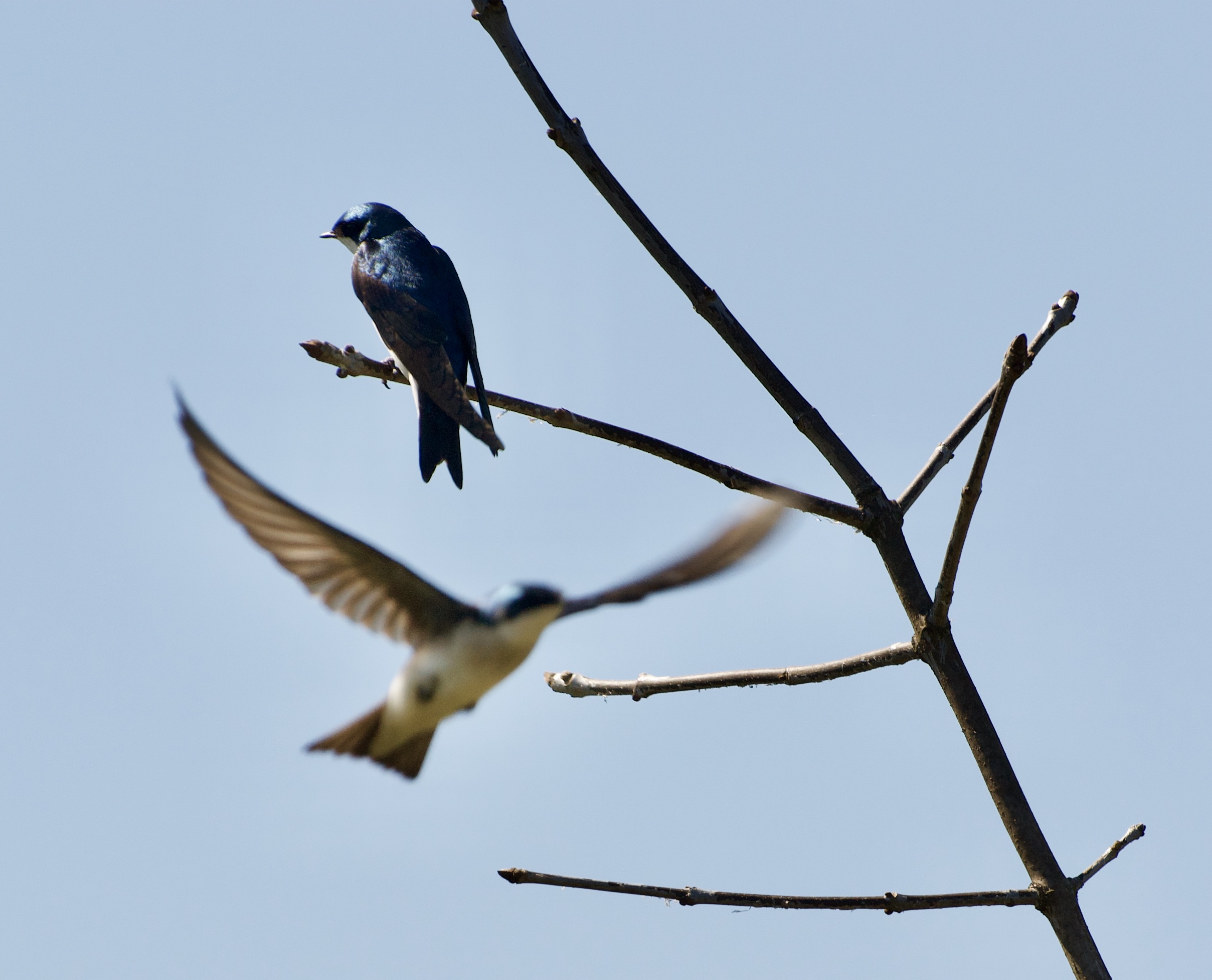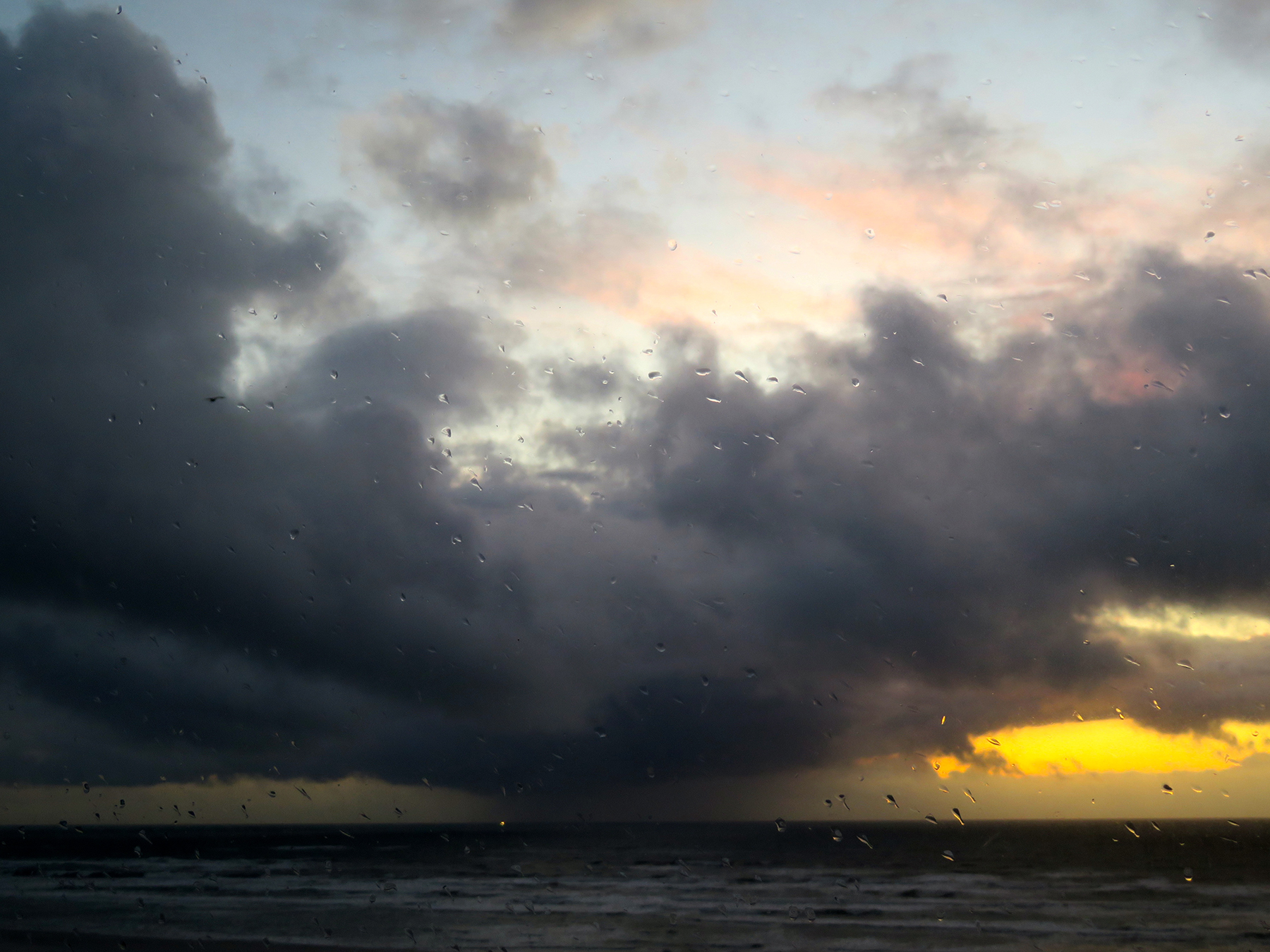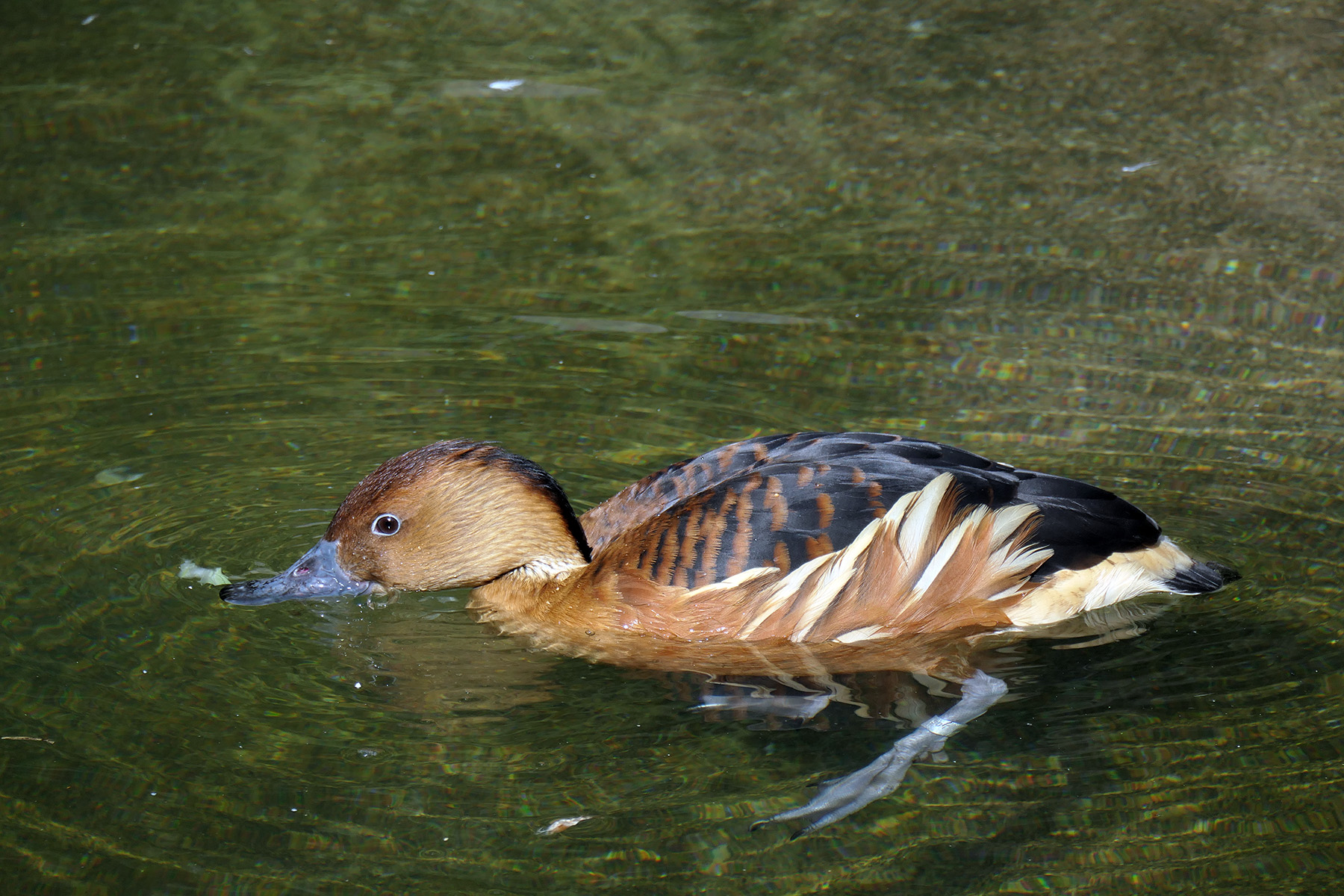
And in the let’s see how can we rescue the mood for the weekend – department, here is a glimmer of hope for locus-infested Pakistan: 100 000 ducks. Courtesy of China, no less.
Locusts had three uninterrupted exceptional breeding cycles due to the 2018/19 cyclone season that brought deluges to the Arab peninsula. They are now swarming into East Africa and South Asia, threatening already scarce food supplies and leading to states of emergency.
Sending hungry fowl is not new – in 2000, a 700,000-strong army of ducks and chickens was used to gain control over swarms of locusts that devoured over 3.8 million hectares of crops and grassland. As it turns out, ducks were more efficient than chickens at guzzling down the devastating pests, they stayed in group and did not disappear randomly into the landscape like their little headless friends…
So: 100,000 ducks are awaiting deployment along some 3,000 miles from the eastern province of Zhejiang to Pakistan, which shares a border with the Xinjiang province.
Quack. Quack. Let’s hope they have insatiable appetites.
Musical topic today is not for the faint of heart but for those who want to faint from laughing. The larger than life persona behind The Homosexual Necrophilica Duck Opera is duck guy Kees Moeliker, Director of the Museum for Natural History Rotterdam. He won the Ig Nobel Prize in 2003 for his paper of the same name as the opera. The video has him introduce the work and then presents the miniature opera.
Let no-one ever accuse me of not trying to widen our horizons, musical and otherwise….
I am out for the count. Between bouts of fever, fits of coughing, no sleep and anxious glances to the clock if it’s time for the next round of pain meds, I am watching the crows in my back yard from bed. And that is with the flu shot.
Here are some of them during better, or certainly more vertical times…
And when thou art weary I’ll find thee a bed Of mosses and flowers to pillow thy head; – John Keats To Emma (ca. 1815)
I cherish this couplet, find the thought of a pillow of moss appealing (although currently you might want to bring a waterproof plane before you sit down…)
And since I want to start the week with making you less weary, the couplet is the perfect fit. (Which cannot be said for the rest of the poem, which closes with this: So smile acquiescence, and give me thy hand, With love-looking eyes, and with voice sweetly bland. No sweetly bland voice here, googly eyes and/or acquiescence…. but lots of intentions to get your spirits up.
Moss it shall be: for one, because it shines, glimmers, glows in abundance right now, greenest, most brilliant green in those watery woods (Tryon Creek). Secondly because it gives me the opportunity to cite Wikipedia’s color page where I found this gem: Green is common in nature, especially in plants.
I hope you spill your coffee laughing. I did. Or maybe you need to know German, where the equivalent of nature is green: Wir gehen ins Grüne…
Let’s proceed to name the biological greens:
We are subsequently told that:
Moss green is a tone of green that resembles moss. Who would have thought.
Tidbit: Moss is practical. It used to be the diaper of millennia of babies – Native Americans stuffed spagnum in bags with which they swaddled their children, the Inuit used moss inside sealskin covers, and Mongolians used fur sacks stuffed with moss to carry the young. Biodegradable, too. It was used as antiseptic bandages to treat the wounds of thousands of WWI soldiers, when the Allied forces ran out of cotton bandages. (Link is to a fascinating article in the Smithsonian.)
I have written a bit more seriously some time back on moss and lichen, with a focus on the latter. If memory serves me right, we talked about rootless Bryophyta, which is the botanical name for moss, attaching themselves to their environment via hairy protrusions called rhizoids, take water and air in to create their food through photo synthesis.
Today I am more interested in why moss appears so intensely luminous when you hike through the forests during these dark, rainy days.
It has to do with a process called the Purkinje effect, or Purkinje shift, named after the Czech anatomist Jan Evangelista Purkyne, who proposed it at the beginning of the 19th century. It is the tendency for the peak luminance sensitivity of the human eye to shift toward the blue-green end of the spectrum at low illumination levels. Simply put, we have two main receptor types in the retina, the rods and the cones. The former are more light sensitive, but pretty much worthless for distinguishing color. They take over when it gets dark, because the cones, which are color-sensitive, fire best only when there is lots of light.
When light is scarce, at dawn and dusk, but also on these cloudy, rainy days in the woods, the reds, processed by cones now starved of stimulation, will appear duller and duller. The greens take on a contrasting brightness, because the rods take over. Voilà, iridescent green.
Before we all get too happy basking in that glow, here is the dark side of moss: half a billion years ago, when Bryophyta first appeared on land, they plunged earth into an ice-age and caused mass extinction of ocean life. Before you freak out, it took them 35 million years to do so, and they might just be the antidote to global warming if we could only wait that long.
Nonetheless, then it was a catastrophe – moss secretes a wide range of organic acids that can dissolve rock, and the altered rock can then suck CO2 out of the atmosphere. Sharp reduction in carbon dioxide levels ensues – here comes the ice. (For a more detailed account, go here.)
Reminder to self: this was supposed to cheer, not make more weary. Music to the rescue:
If you enjoy perpetual whiplash between disgust and fascination, do I have the thing for you! That is, if you hurry – this is the last weekend of Christopher Marley’s Exquisite Creaturesat OMSI, and then they are packed away in cartons, glass or metal containers, and shipped off.
You’ll meet a jarring abundance of dead animals, 1000s and 1000s of them across two full floors of the museum, with the amounts of applied embalming fluid alone making centuries of Egyptian pharaohs roll in their pyramids, green with envy.
The exhibition shows the corporeal remnants of insects, butterflies, chameleons, crabs, scorpions, shells, snakes, turtles, fish and birds – all found dead, it is repeatedly emphasized, not killed for the show. The point, though, is, they are mostly not displayed as single specimens, to introduce the public to the wonders of nature, as they would in a natural history museum, where the aurochs might elicit awe that cannot be had on the streets of NYC (or only be had by other sources…)
The corpses are displayed in patterns and arranged by color, carefully calibrated by Marley, a self-taught naturalist who was a school drop-out and men’s fashion model at various points in his life, but is now a true nature enthusiast who speaks from the heart about the interconnectedness of things and travels the world to find the materials for his designs.
And designs they are: spanning the spectrum from a likely advertisement for room freshener, to semblance of abstract aboriginal art.
And they are fascinating, as long as you can suppress thoughts about the source of the collage pieces. The eye part of me could not get enough of the colors on display, the variations of nature’s palette, the sheer beauty of evolution’s blueprints and the inventiveness of Marley’s kaleidoscopic creations. The brain part of me could not forgive that there is yet another way we exploit nature, by manipulating it into artificial constructs that speak to artificial design rather than an intended place in the world.
Accumulations of feathers and seashells seem innocuous enough. It gets a bit trickier with the bugs, although they look sufficiently like buttons you get way with ignoring where they once might have crawled.
The butterflies are familiar as cased objects, centuries of collectors, pins in hand, made sure of that.
The fish and turtles seem so plastic-like that you can avoid thinking about their origins.
It gets complicated with the 4-legged creatures
and for me, surprise, dear reader, with the birds. To see them used as token kaleidoscopic images feels sacrilegious.
I tried to think through what produced my reaction. People have always displayed nature with precision – I grew up, for example, with prints by Maria Sibylla Merian, one of my heroines, on the dining room wall, the 17th century naturalist and artist, who embarked on trips around the world to collect insect specimens for truly scientific purposes and rendered them beautiful. But these were engravings. People make land art with found natural materials, but these are inanimate, stones and wood for the most part. I have no problem with floats being covered with designs made out of dead flowers (other than the tastelessness of their arrangements, as a rule.)
It must be the sense that what was once animate, a living, creeping, crawling, slithering, hopping, swimming or fluttering subject, has become an object. The placement in complicated designs might invoke overall iridescent beauty, but it creates tokens, puzzle pieces, erasing a singular existence. And clearly the troubling effect on viewers gets linearly stronger the higher upward the evolutionary ladder we get. As a thought experiment try to envision that you’d place dead hamsters in geometrically intricate patterns. Dead Cats? Dead Sheep? It is no coincidence that mammals make no appearance in this show.
For every gaggle of kids surrounding me, squealing with delight about the wonders in front them, there was the one wailing in the corner,”I can’t look at this!” Empathetic 4th graders dragging their class mate to a display of flowers: “It’s safe here, it’s flowers! “Little did they know they’d just arrived at pitcher plants, insect-killing machines……
I left OMSI with a treasure trove of images that remind me of individual beauty of a creature – and a sense of renewed commitment to and respect for nature, not because of what I saw, but in opposition to it. Not a bad outcome for a museum visit!
Our place when we need a break? Why, nature, of course. In my instance, after a week of extensive writing projects, it’s no further than my garden. Soaked, peaceful, waiting for spring.
The Hellebores:
The last of the Hawthorne berries, ignored by the squirrels who grow fat on our birdseeds…
The cedars, crying
The roses, sending out a first leaf
And my ornamental fish growing a moss beard with all the rain…
Feeling better, already.
Here are the last lines of a Thomas Hardy poem, Proud Songster. You’ll hear them in the song cycle by Finzi which will conclude this week.
“But only particles of grain, and earth, and air, and rain.”
Add a third person to the list of those actually managing to make me reluctantly listen to podcasts – next to my Beloved and my son, I now owe some gratitude to Gordon Caron, a dear friend who yesterday sent a link to an NPR program, HUMANKIND.
Houck’s central focus, other than acknowledging and preparing for climate change, concerns the integration of natural spaces into built environments, cities and the like. He feels strongly that we should not just preserve the pristine wild, a priority of so many other environmental organizations, but ensure immediate encounters with nature on a daily basis. Providing easy access, in other words, to nature where people live, whether it is San Francisco, LA, Chicago or Portland, every day, not just on vacation. “How can a child care for the survival of the condor, if s/he has never known a wren,” is something he cites in the conversation with Humankind’s broadcaster, Freudberg.
He urges that we need to protect urban green spaces and (re)build them, including metropolitan wildlife preserves. It will make people engage in nature, come to love and thus protect it, reap health benefits and even financial advantages, since property close to natural areas are increasing in value. Indirectly that protects rural and more pristine areas as well, because people will reside in livable cities and not expand beyond the urban growth boundary, parceling up the country side (and using the car to drive to work….)
One of the urban nature preserves he is keen on is Oaks Bottom, my regular Tuesday haunt as readers of this blog (particularly those who I cherish as my coffeecup coven) are well aware of. (iPhone photographs are from yesterday! Original introduction here.) The 160 acre wetland was filled with rubble from building the freeway and once used as a landfill.
Black cottonwood and ash forest only partially obstruct the view to the downtown skyline. Yesterday I saw a bald eagle (there is a pair nesting close by)
a barred owl (!)
and once again the little kingfisher from last week, although too far away to get in view with the phone in one hand, an impatient leashed pointer on the other…
S/he is on top of the stick jutting out on top from the pile.
In the podcast you hear Houck’s voice get all excited when he reports, live, all the kinds of critters he is seeing. Map that marveling onto my face, and you got me pinned Tuesday mornings. The podcast is worth a listen.
So is today’s music: Schumann’s Wald Szenen (Forest Scenes.) I chose not the perennial version by Richter, but a faster one by Kadouch. If you ignore his theatrics, it’s really a lovely interpretation. Just close your eyes.
Having looked at multiple aspects of migration (at least within the animal kingdom) I want to close out the week with a contemplation of the value of staying home. Not for the reasons that immediately come to mind: “Hey, curb your carbon foot print, no longer fly or drive so much, built your own backyard farm so you are are independent from the vicissitudes of national ecological decisions, etc.
I believe that is the California Towhee, but below I am certain its our very own here in OR
No, I’d like to explore the philosophical approach embraced by the bioregional movements, these days prominently represented by regions like Cascadia (our very own backyard) and the Ozarks, to name just a few and early on developed by Peter Berg who died 9 years ago.
Here are a few key terms to understanding the concept: bioregionality concerns itself with both the way how a) nature differs in different areas (and thus different geographical regions need differential treatment) and b) how a mindful ecosocial movement would approach the nature in its region finding ways to maximize all that is good for region and people at once, even if it means intense adjustments to the way things used to be done.
Mocking Bird
Bioregions are defined by watersheds, natural communities, places that are associated with a particular climate, seasons, aspects of soil, and types of native plants and animals. The boundaries are often defined by the people who live in these regions, and their ways to live sustainable and harmoniously within these given environments. Nature and culture, then, are interlaced parts of a given bioregion. People do count as much as the rest of the biological and geological package. Details for the husbandry of such an entity – a bioregion – can be found here. Resource management, land planning, conservation biology, social and political structuring towards ethical approaches to nature are part and parcel of the bioregionalism movement.
The Night Heron
Importantly, and this brings us back to where we started this week when arguing that we need to actually learn from and listen to nature herself, the bioregionalism movement urges us to familiarize ourselves with the region we live in: feel its time and place, and become if not intimate with then at least knowledgeable about the fauna and flora of your environs. This knowledge will be a good stepping stone to decide how you as an individual should live in this region and what communal, social, economical and political structures would be of the best interest of the region.
Acorn Woodpecker
Here is a fabulous example of writer and activist, Jenny Odell, who teaches at Stanford, trying to get to know her particular region through listening, mindfully, to the typical birds she encounters. If you open the link below and click on each of the 5 bird names you get multiple sound recordings of their songs.
I have photographed some of the bird she mentioned, although they are likely the Oregon counterparts to her California species. Will throw some other in for good measure since I listen to them on a daily basis, except when the herons croak, then I cover my ears….
This kingfisher was a rare encounter 3 days ago – they never sit still to be photographed….
Here is music in honor of our own region’s little ruler. The 2 movements couldn’t be more different.
(PS There is also a unconvincing sonnet by this name (by Gerald Manley Hopkins) and an off- Broadway play that had good reviews about a Nazi, sentenced to life without parole in a Vatican prison, discussing free will, life and death with a priest before being smuggled to freedom. I’ll skip that…..)
Happy sloths. Happy storks. Happy Cows. Unhappy whales. At least some of them. (And yes, you only get the jokes if you regularly read the blog when it resorts to the to be continued mode….)
This week was devoted to looking more closely at nature and in particular at migration. Whales, of course, are among the most familiar species doing an annual trek, and we would be remiss not to mention some of the scientific findings around their existence. (I wrote a bit about them last year here.)
So why describe them as unhappy? Well, several of their kind are severely endangered, and not just because the whale oil industry of yore pursued them to the brink of extinction.
Take right wales, for example, who once roamed the Atlantic and whose numbers are dwindling. In the last 10 years the number of calves born to them have dropped tremendously. And when a calf is born it rests for some 5 months with the mother at the ocean’s surface – completely at risk to be stricken by shipping vessels, or caught in fishing gear. Mariners cannot detect them with listening devices, to avoid collisions, because the instinctual behavior is NOT to make sounds, to avoid natural predators. Between declining fertility and rising accident mortality, they are at risk of extinction. Only 400-500 of them remain in the Atlantic and fewer than 100 in the Pacific.
Sei whales? Endangered. Blue whales? Endangered. Sperm and fin whales? Vulnerable. Any tidbits that can distract us from getting too depressed by these facts? The tongue of a blue whale alone is equivalent to the weight of an elephant! They migrate from the polar and subarctic regions in summer to the tropical and subtropical waters in winter, some of them are over 150 years old – which means they actually were alive during commercial whaling times and might remember being hunted by whalers. Autopsies on dead sperm whales revealed up to 65 pounds of plastic in their stomachs, leading to blockage and causing lethal peritonitis. Ok, not helping with the depression, is it.
I can do better. Humpback whales are thriving after coming close to extinction! Scientists stress the role of proper management for the recovery (details here) but also warn that the food for which whales and so many other marine animals compete, namely Krill, is strongly affected by global warming, getting increasingly scarce. If more whales feed on it, there’s less to go around for the ones lower in the food chain….
Ok, I give up. All these facts are part of why I currently have turned to working on an art series that uses (partial) 17th century dutch paintings of traditional whaling expeditions, combined with my photographs of contemporary Northwest landscapes and birds, as an example of the consequences of ruthless environmental exploitation to both nature and humankind. Today’s images are the latest examples in that endeavor, I had, after all, promised some art as well.
And here is a tone poem by Alan Hovhaness performed by the Seattle symphony.
Yesterday I introduced the happy sloths of Panama. Today, let’s turn to happy cows. Doing whatever cows do in the Bavarian country side, they were unperturbed when a flock of large, strange white birds descended, alit on their backs and began nit-picking bovine fleece. Maybe there is something stronger than alkaloid compounds in the Bavarian water. In any case, it was enough of a strange sight that a young birder-in-training rushed to the relevant experts trying to find out what on earth had just happened.
It was a flock of unfamiliar cattle egrets who had made a wrong turn during their migration.
Some decades later, our observant youngster Martin Wikelski has become the director of the Max Planck Institute for Ornithology in Radolfzell, Germany, after teaching stints that included years at Princeton. He is still interested in birds, and now in general migration patterns as indicators of disease spread, disaster detection, and global change. He is spearheading ICARUS, (International Cooperation for Animal Research Using Space) a program connected to the International Space Station as a tracking site for interacting animal migrations, installed last summer. (Equally impressive, in my book, is of course the fact that this guy lists adventurer in first place on his CV, scientific grandeur notwithstanding.)
He stuck with birds, but cows have not disappeared either. They are currently part of a research program that has fitted sensor-studded radio transmitters in quake-prone regions around the world to various birds and mammals, trying to pick up earthquake warnings from changes in the animals behavior and physiology (a controversial project, one might add, with geologists not convinced that animal behavior changes around the timing of an earth quake. But that will be obviously explored now.)
*
What do we know about migration, though? Take one short minute and check out this video, which shows you the flow of movement across the globe. It is astounding.
We know that they move and where they move, at least for some of the species. We do not quite understand why they move such huge distances and, when finding a place that is perfectly suited, regularly leave it nonetheless to make the long trek back home. Home being not just a general area, but a specific tree in a specific forest, a distinct chimney, church tower or other nesting sites. Sometimes the specificity is encoded across generations, so that some butterflies return to exact places where their great-grand parents came from, not more immediate forbears.
We know that migration serves not just the migratory animal populations, but others along their routes, who feed on the carcasses of those who didn’t make it, or live on lands fertilized by the droppings, or cleared of pests, insects that are devoured by the birds in flight (swallows, or more precisely, swifts, fly for six months (!) non-stop, and are eating insects en route and apparently sleeping while flying as well…)
We cannot yet explain why migration happens to such far away places as the Amazon, when Ft. Lauderdale is just around the corner, equally warm and comfy, say… and why distances increased across the millennia. And in particular we have not yet figured out why on average each species follows its particular migratory routes, but then there are always outliers, who do not comform.
Leave it to our intrepid ecologist and adventurer to follow exactly these non-conforming individuals, trying to figure out if it was disease that stopped them, or external forces or something else altogether. Pursuing a stork he had named Hansi, he jets to Turkey, awaits once-daily radio transmissions to narrow the distance to the subject, and eventually finds Hansi perfectly happy and healthy gorging on frogs in some field near the Syrian border.
The hypothesis is that natural selection programs some section of the progeny to wander farther afield. That innovative individual will be important for the species to thrive, to survive when aggregate flows are threatened by disaster, by pathogens, or by obstacles put in their way by human activities. (This reminds me of a nasty fight going on between two factions of German environmentalists right now. Some want to erect wind turbines to curb carbon emissions, others fight against them to protect wetlands and birds. The laughing third is of course the oil and coal industry.)
We’ll see what the research data will reveal. In the meantime I decided to pull some hang-gliding photographs from the archives in Wikelski’s honor. He reports that he has become an avid hang glider in order to explore how it must feel to be a bird (his words.) Well, he won’t be up there for 6 months at a time…… and I also hope he is never the parent of a kid who does this – cost me many an anxious moment in my lifetime. Then again, it also took me on some pretty spectacular hikes, like the one shown here at Silverstar Mt.,WA.
There’s always Panama. If we get too overwhelmed by the insanity of the contemporary world we could migrate to some island near Panama joining a troupe of exceedingly happy, permanently stoned sloths. You read that right: the moss there, and the water infused by the moss, has an alkaloid- based chemical composition that is also found in Valium…. much appreciated by an already slow-moving species.
Canada Geese, who no longer migrate
I picked up this comforting tidbit of information from a radio show that taught me a lot about migration, something I’ve been again wondering about last week when I found myself amongst hundreds of visiting white geese, Canada geese and sandhill cranes during my walks. Below is the condensed version of what I learned.
Sandhill Cranes
Questions like why does migration happen in general, and where do these birds come from or where do they go, how do they know the travel routes and/or final destinations, have been asked for 1000s of years. We have now answers for some of the questions, and are still surprisingly clueless about others.
White Geese
Aristoteles – is there any subject he didn’t tackle, ever? – suggested three possibilities to explain the disappearance of birds during the Greek winter months. One was the speculation that they traveled to other places, one was the suggestion that they might hibernate (behavior that people had observed in bats around Athens) and the third was transmutation. Wish that were true – let’s just all transmute into happier forms when we are bored with our worm pecking, grub searching existence…. let’s become sloths!
The migration hypothesis was elevated in the 17th century with the (re)invention of the telescope by Hans Lippershey in the early 1600s. (He applied for a patent (!) thus outsmarting a local competitor who claimed it was his design – but that is a mystery story for another day.) Peering into the sky and seeing all those lunar hills and craters suggested perfectly sensible travel plans of birds: they go to the moon! It took until 1822 to dislodge this human projection of our own dream, when some hunting Count von So and So returned with his kill from the heaths of Northern Germany: a stork. A stork with a spear embedded in his neck, that had not prevented him from traveling North. A weapon that was, according to the consulted German luminaries in the university ethnology departments, of African origins. (You can read more about the “Pfeilstorch” here.)
Care to try flying with that thing in you for 2000 miles? At least you’re not a tern – they have a round trip of 60 000 miles!
Across the next years about 25 individual birds were collected that had somehow managed to migrate from one continent to the other with a piece of ebony poking through their necks… Mystery solved – birds migrated South. Scientific insight gained beyond the migration destination: some form of marking allows us to identify the birds and tracking their routes. Banding was born. Nowadays it comes in more sophisticated forms of transmitters and receivers. And it does not just apply to the field of ornithology, but people research the migration patterns of everything, from wildebeests, caribous, whales, to turtles and butterflies, to name a few.
More on the specifics of these patterns tomorrow. They do matter, beyond feeding into the passions of your friendly bird photographer, for our understanding of nature as a system, as it turns out.