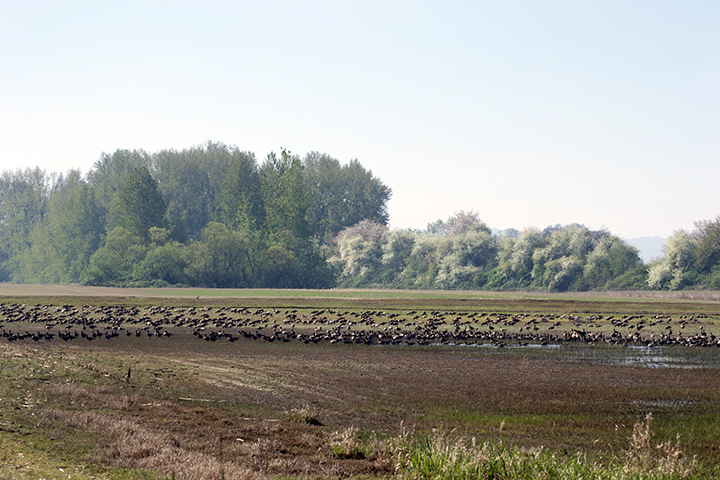
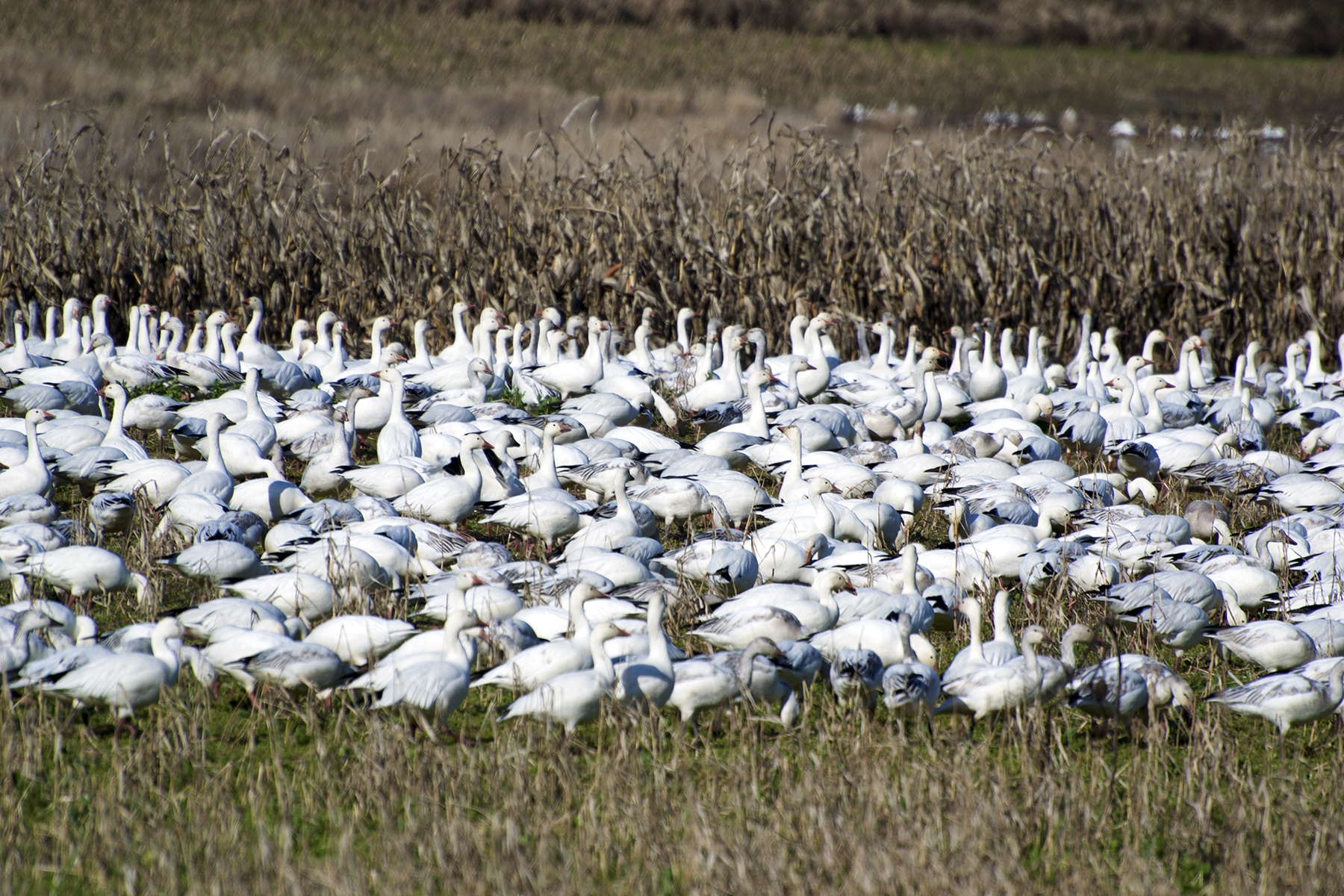
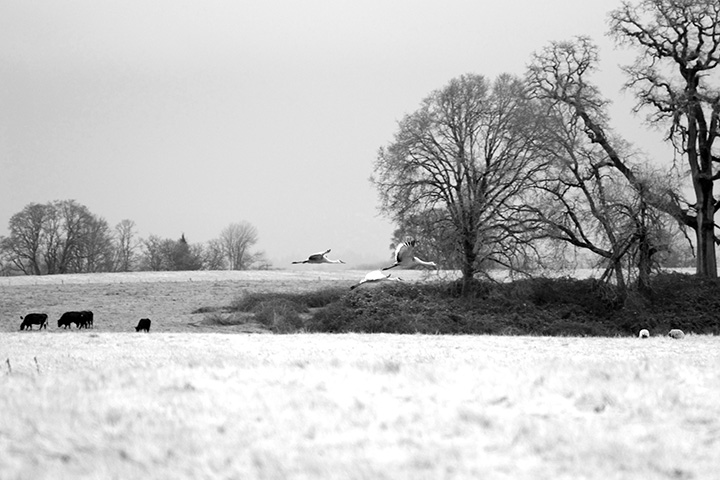
There they were in the fields, this Monday. Hundreds and hundreds of them. So much for social distancing….
Usually at this time of year Canada Geese would gather for the migration back North. Many of them now stay here, having found both food sources and breeding grounds that suit them. They are really amazing in what they pull off, once in flight. They can fly up to 1000 km a day, which means they could fly around the world in 48 days, if they’d wish to. But they wish to stay.
Looking at them reminded me of Inuit art that has depicted them for ages.
Traditional stencil,
Lukta Qiatsuk, Canada Geese Nesting Ground, 1959
modern stone cut and stencil,
Killiktte Killiktee, Canada Geese, 2016
Litographs,
Kananginak Pootoogook, Canada Geese Mating, 1976
Carvings,
Johnnysa Mathewsie Canada Goose, 2018
Acrylic and ink on paper,
Benjamin Chee Chee Goose in Flight 1977
And these artworks, in turn, reminded me of a small, riveting exhibit at the Portland Art Museum that I had a chance to explore earlier this year before everything shut down. Akunnittinni: A Kinngait Family Portrait exhibited the works of three Inuk women, grandmother, mother and daughter, Pitseolak Ashoona, Napachie Pootoogook, and Annie Pootoogook respectively. Their work was intimate, direct, jarring. They described the world as seen and experienced by them, providing autobiographical narratives as much as a glimpse of historical and cultural episodes that taught me much about Inuit culture and the resilience of women in a violent world, violence to which the youngest artist succumbed in 2016, and which was born by the older ones, during a time where husbands would rent out their wives by the hour to traveling sailors.
Trading Women for Supplies by Napachie Pootoogook, Ink,(1997/98).
It was fascinating to see three generations describe their lives, and display an astute summary of the mundane, the quotidian, the cultural influences of later years on the first nation lives. PAM’s Center for Contemporary Native Art picked a winner (the exhibition was curated by Andrea R. Hanley (Navajo.) I will be eager to go back to the smaller galleries, once the museum is open again, and let me be surprised at what I find.
Oh, to be a bird, and just leave it all behind, hide in that big gaggle in the safety of numbers, wander through the fields with less of a sense of past or future and just living in the moment of grazing. There is some continuity for them as well, though – they mate for life! And geese, believe it or not, often live for up to 24 years.
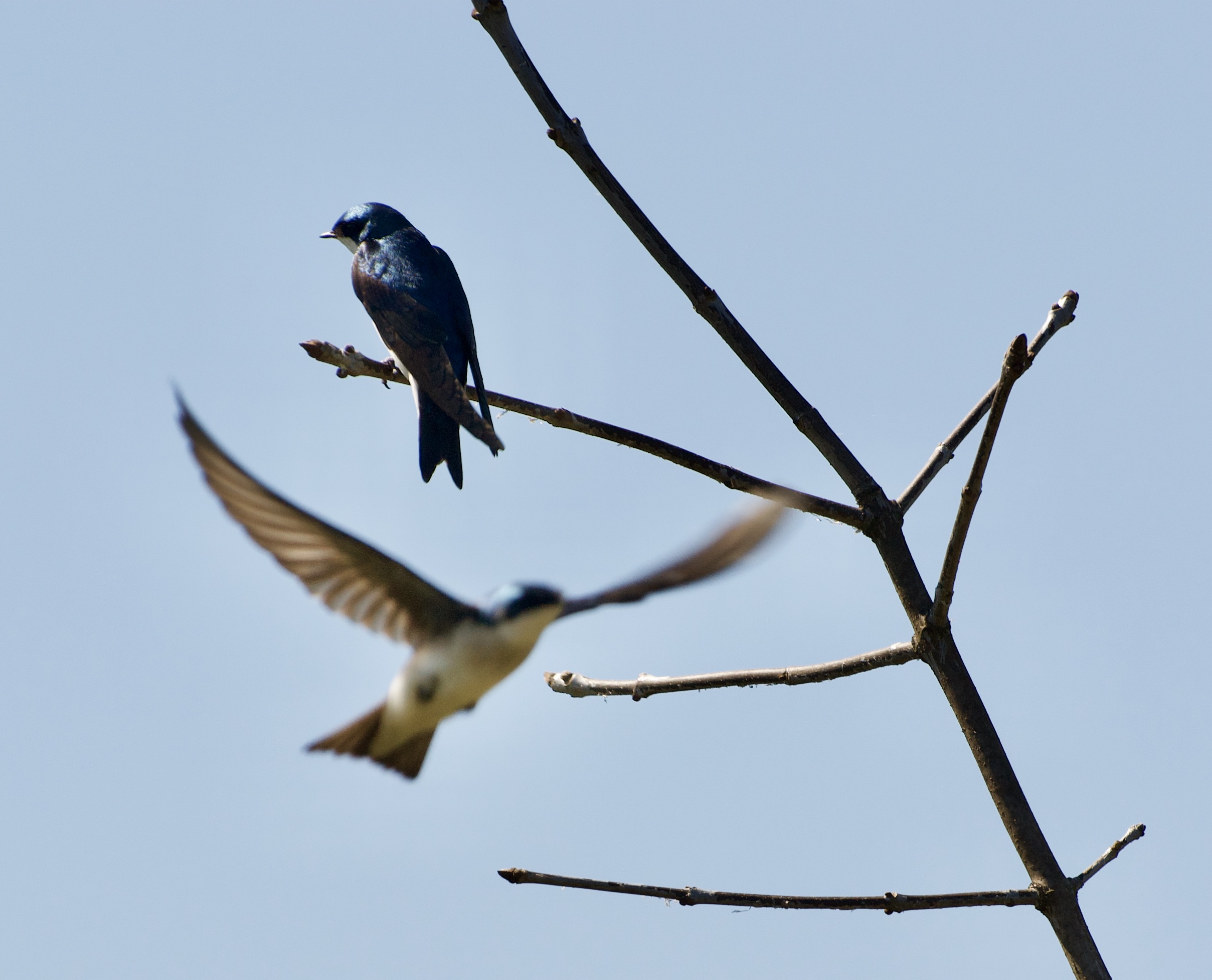
I have always liked swallows. They were constant companions from late spring through fall in our village, nesting in corners under the barn roofs, often in large numbers. Barn swallows are quite social, attack in groups, if they feel their mud abodes are threatened, and they sing their heart out to attract a mate. They swoop and fly fast, doing all kinds of acrobatic maneuvers to catch the insects that they feed on while in the air, with unending chirpy commentary. Mating up there as well, must be a fleeting pleasure.
The old lore of “when swallows fly high, the weather will be dry,” lost its magical prediction power when my scientist father explained to me, early on, that of course swallows change the level at which they fly depending on weather, if you think where their food source will be: when it’s warm, outside thermal activity carries bubbles of air up and with it the insects that swallows hunt. Convection is even stronger near heated surfaces of sunlit buildings. If it rains or colder weather brings winds, the insects seek shelter under trees and bushes, with the swallows following in lower swoops.
Well, magic could still be had elsewhere. One of my favorite fairy tale books of Hans Christian Andersen tales had color plates depicting an old fashioned Thumbelina flying South to a warm, sunny, fairy tale land on the back of her rescuer, a neon-blue swallow, only to meet a prince her size and live happily ever after. Things had seemed pretty hopeless after having been abducted and given in service or forced marriage to all kinds of threatening creatures, but hey, swallow to the rescue. I longed more for the trip than the prince, all of age what, 6 or 7?
The tales containing swallows changed over time, becoming much darker when reading turned from fairy tales to Greek mythology. Remember the myth of two sisters, Philomela and Procne? Procne was married to King Tereus, a political alliance forced by her father, an Athenian king. Tereus coveted her sister, raped her and cut her tongue out so she could not tell. She managed to put the story into her weavings which were sent to her sister. The two sought revenge, unwilling to let the crime and the silencing of female voices stand – something that impressed me tremendously as a teenager, even though it included infanticide of the king’s son with Procne, and feeding Tereus the child, unbeknownst to him. The glimpse of justice served by two strong women refusing to be victims almost made up for having to read Ovid’s Metamorphoses.…
When Tereus tries to persecute the sisters, they ask the Gods for help and are changed into a nightingale (Philomela) and a swallow (Procne) respectively, voices forever heard in beautiful song. (Never mind that female nightingales in real life are mute, and it is the males who sing.) The sisters avenge the assault and regain their honor and freedom, much in contrast to so many others in Greek mythology who share the female fate and get punished on top of it (just think Medusa!) Then again, it is ravaging Gods in most other cases, who get away with it, while Tereus was a mere mortal – maybe those will be punished after all. Or will they?
*
In North America you mostly see tree swallows, migratory birds that come back every spring. They are amazing aerialists and they are some of the migratory birds most affected by climate change. Shifts in temperature and amount of rainfall since the 1970s have led to breeding patterns that have been catastrophic. Due to warmer winters, eggs are laid earlier, but then the critical period for babies’ weight gain falls into time windows where there are not enough insects to go around to feed them because of excessive spring rains. Not only has the insect population itself steadily declined, but insects hide when it is wet and cool, and the swallow parents stop going to the nesting sites for days on end since they can’t find food. Often it is too late for the fledglings who die of starvation and hypothermia before better weather resumes.
One way to combat that is, of course, to increase insect availability. That means creating more wetlands, no spraying with pesticides, and allowing weeds to grow that really attract insect populations. Dandelions are among the ones that really help fight the insect decline and yet they’ve become scarcer and scarcer due to overeager gardeners and farmers waging war on them (yours truly included before I learned this.) Let them bloom!
In any case, when I see and hear swallows it makes me happy, it makes me think back to the fascination they have obviously held for many across centuries, to the fact how they were integrated into the literary arts. It makes me want to document their beauty to get us all more engaged in trying to do what’s right for the environment.
You can have the chattering of swallows by Janacek.
I could not believe my eyes. Here I was on the first longer outing in weeks, visiting one of my regular haunts in the domain of nature preserves, and the landscape had completely changed. Acres of open fields and meadows now planted with saplings and strewn with decaying logs – a worthwhile restoration project to re-establish former bogs. I lost it. “Everything is shifting and now even the familiar landscape changes. I can’t take it,” I wailed.
“Yes, you can!” said the wren,”just keep your tail up.” “I don’t have a tail.”
“Yes, you can!” said the sparrow, “just raise your wing and hug yourself.” “I don’t have a wing.”
“Yes, you can!” said the heron, “look down to see the wonders by the roadside.” “Yes, you can!” said the other heron, just look up and see how fires and floods have always reshaped the land.” ” You can’t even get your stories straight…”
“Yes, you can!” said the Kestrel, just sit and enjoy the warmth of the sun.” “I’m here to take a walk, now among these skeletal sights.”
“Yes, you can!” said the nuthatch, knock on wood.” “I agree,” said the pileated. ” “See, you have doubts as well….”
“Yes, you can!” said the geese, too noisy to be understood.
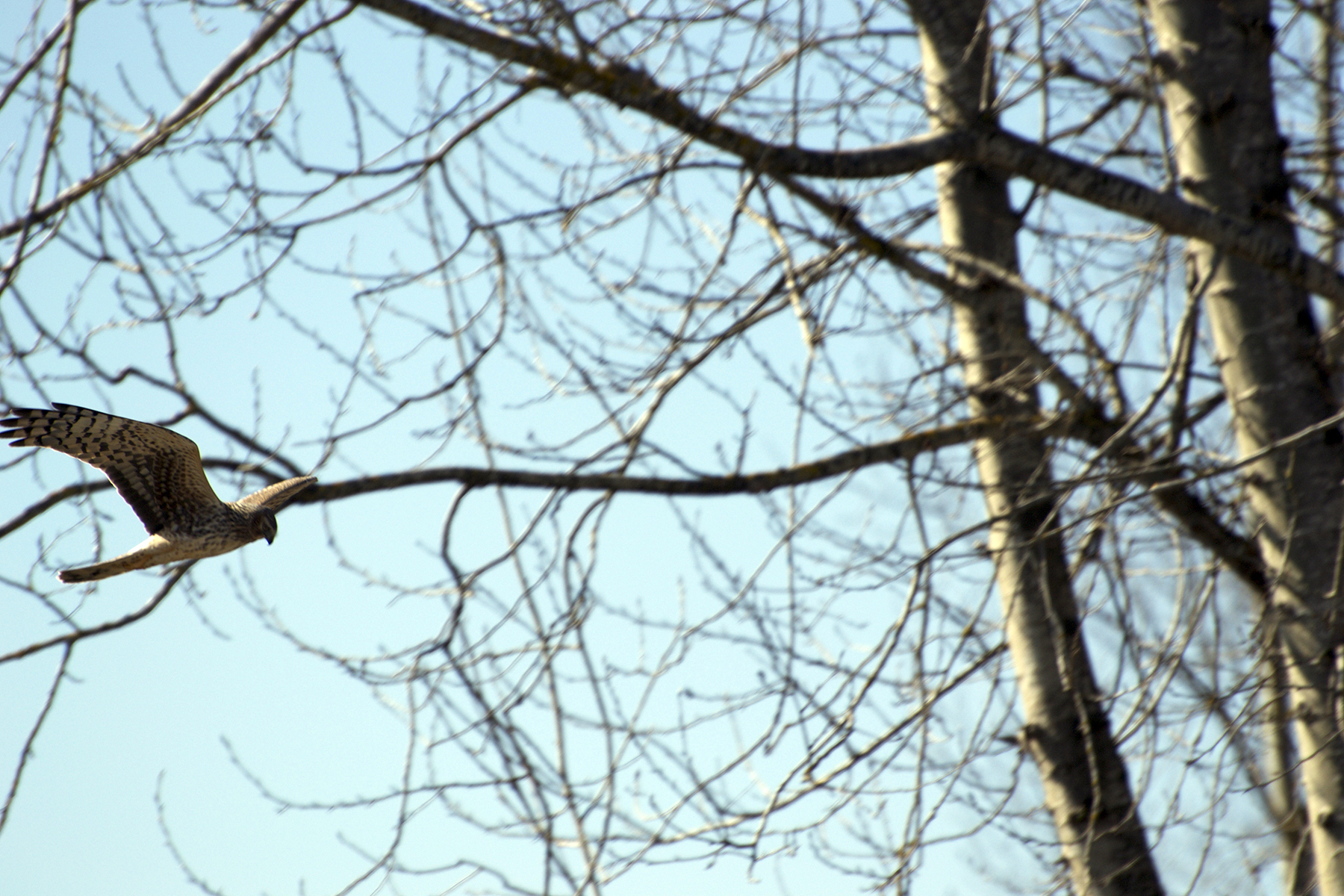
“Yes, you can!” said the turtles, “just slow down and be.” “Yes, you can!” said the harrier hawk, “just speed up and soar.” “I’m not a rollercoaster! Although I life sure feels like it.”
“Yes, you can!” said the swallow, “spring will help.” “One swallow doth not maketh spring…”
“Yes, you can!” said the goose, don’t be a goose. “Selber dumme Gans!”
“Reframe,” said the bald eagle, “there is nothing new under the sun. Go and read this. There’s always Thucydides. The world has made it through, many times over, and the birds are rooting for you. Hush!
“Thucydides, the “The secret of happiness is freedom. The secret of freedom is courage” guy? Do I have the song for you……. note, though, it also contains the secret to stop moping: solidarity in action. We are all in this together.
Special shoutout to my kids in California on Lockdown as of today.
I want to sound an optimistic tone to end a week that has seen so many egregious events. Someone else already said it better than I, so I am attaching Walter Shaub’s instructions below. (He is an attorney specializing in government ethics, and was the director of the United States Office of Government Ethics under Obama.)
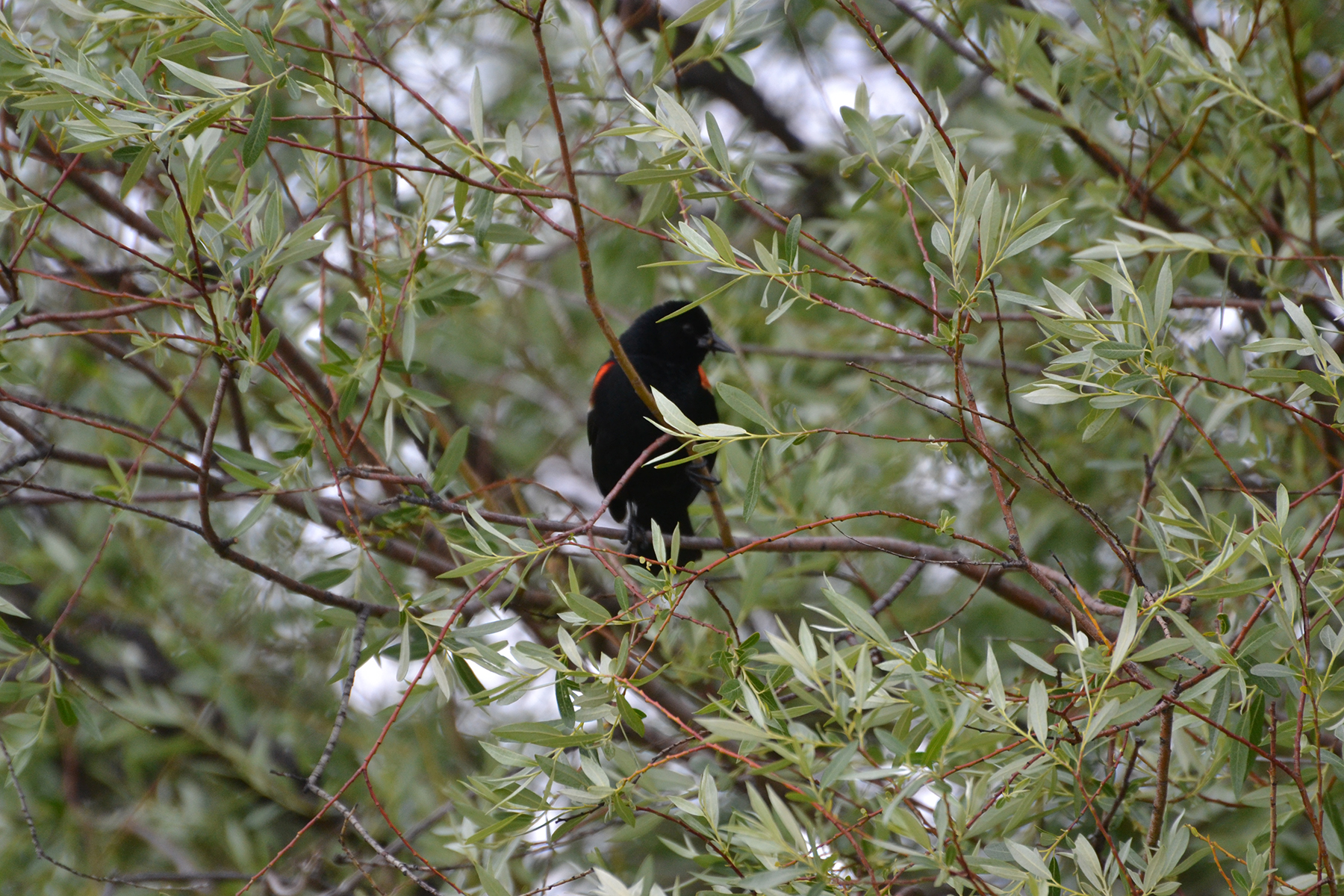
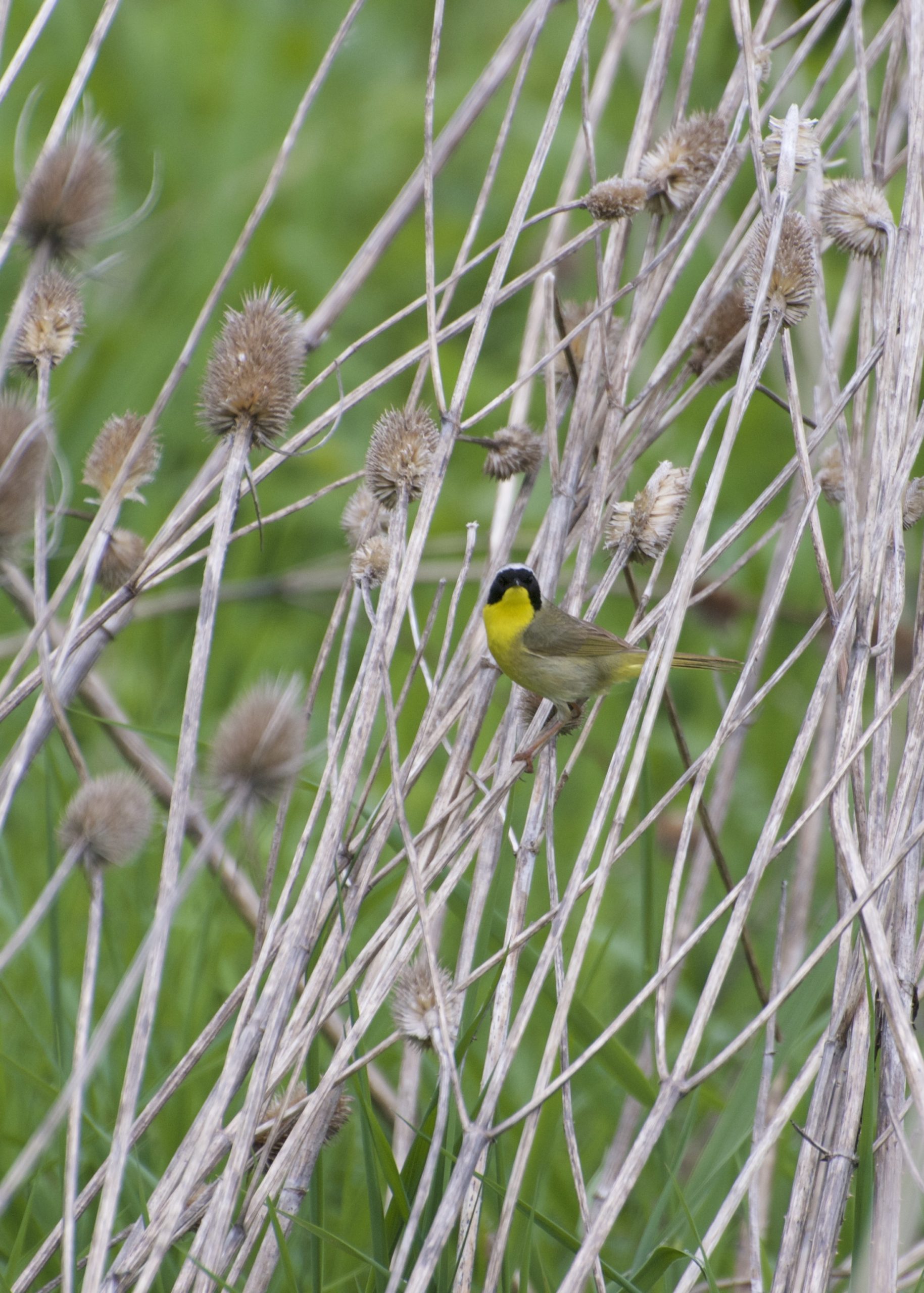
I am interspersing them with birds from this week, all photographed before, during or after action, showing us how it’s done.
Ready, set, go…
W.S.: “I have some suggestions for folks feeling overwhelmed by the assault on democracy.
First, take action. Any action in defense of democracy. Make a very small donation, even just a dollar, to something; sign up to volunteer for one hour, go learn how to register voters, go to a meeting of a group fighting for democracy; hand out literature; sign up to send postcards encouraging voters to show up and vote (just vote, no need to worry about for whom); sign up to be an election official; ask people for suggestions for other actions you can take.
Second, if that doesn’t make you feel better, do it again. Do it again after that. Do it some more. Action is a key to feeling better. If it’s not working, the remedy is likely more action, not less. Be be action oriented.
Third, bring in the horizon a little closer. Put the future out of your mind. It’s not here yet. Borrowing pain from the future doesn’t help. Instead, bring the horizon in to THIS day. We can control only this day. Let’s ask ourselves what we can do today, and do it!
Fourth, take breaks if needed. Everyone has a bad day. Stay off Twitter on those days. Twitter is a festering wound that rots joy. Get outside, read a book, watch an idiotic comedy you’d be ashamed to admit to watching for fear people would think you stupid, or whatever helps.
Fifth, refrain from posting discouraging comments on Twitter. Don’t add poison to the festering wound. We can take turns carrying the baton, but it makes no sense to fling demoralization bombs at those carrying the baton for you.
Tweet only melodies!
Sixth, find sources of inspiration. For some, that might be listening to speeches of strong historical figures, for others it might be reading about acts of courage. Seek out examples of people overcoming seemingly insurmountable odds. They exist!
Seventh, again, TAKE ACTION. Any action. It’s not big things that will save us. It’s persistent small actions carried out by one individual, and another, and another and another across the nation. Change comes not from waiting for Some Big Action but from building momentum.
Eighth, believe democracy prevails if we fight for it. Choose belief. Great feats follow belief. I haven’t seen anyone accomplish a thing they didn’t believe they could achieve. Maybe it has happened, but I haven’t seen it. Ignore doubts. Believe! Then, fight for democracy!”
*
Hey, with sufficient momentum we might arrive at the color blue, in all this darkness….
This will cheer you up as well (and motivate, if you make it through the second movement without tears) – Mozart’s concerto # 23 in A major (K 488) – hope clad in notes.
Lucked out this week. I had an encounter with what must have been thousands of snow geese, as close as I’ve ever gotten to them, who were eventually spooked by a bald eagle and took off with a cacophony of noise. It was, honestly, breathtaking. I could feel the airwaves from their flapping wings on my face.
My first serious encounter with geese, other than the real life variety honking their way through my childhood village, took place in a first grade classroom. Called Dumme Gans! (stupid goose) – a typical condescension towards young humans of the female variety in 195Os Germany – by a teacher irritated by yours truly, I had the nerve to reply: “I might be a goose, but I am NOT stupid,” something I was convinced of at age 6. It did not end well.
My second encounter came later during endless years of Latin. The teacher was obsessed with Livy’s History and so we learned about and translated among other things the attempted sacking of Rome by the Gauls (390 BC), all prevented by a gaggle of attentive geese…. here is the translation by Bohn (Book V, ch. 47-49)
The Capitol of Rome was meantime in great danger; for the Gauls had remarked the easy ascent [to it] by the rock at the Temple of Carmentis. On a moonlight night, after they had first sent ahead a man unarmed to test the way, by alternately supporting and being supported by one another, and drawing each other up, as the ground required, they gained the summit all in silence. Not merely had they escaped the ken of the sentinels, but even the dogs, sensitive as they are to noises at night, had not been alarmed. But they did not escape the notice of the geese; for these creatures were sacred to Juno, and had been accordingly spared [by the garrison] despite the scarcity of food.
Thus it befell that Marcus Manlius, who had been consul three years earlier, and who was a redoubted warrior, was awakened by their hissing and the clapping of their wings. He snatched his arms, and calling loudly to his fellows, ran to the spot. Here he smote with the boss of his shield a Gaul who had already gained a foothold on the summit, and tumbled him headlong. The fall of this man as he crashed down dashed over those next to him. Manlius also slew certain others who in their alarm had cast aside their weapons and were clinging to the rocks. By this time the rest [of the Romans] had rushed together, and crushed the enemy with darts and stones, so that the whole bank, dislodged 32from their foothold, were hurled down the precipice in general ruin.
Lesson one: don’t eat geese, they might protect you. Lesson two: remember your history – maybe the keeping of geese could have prevented the real destruction of Rome in 1527 by mutinous troops of Charles V, head of the Holy Roman Empire — pretty much ending the Italian Renaissance. Lesson three: superfluous facts crowd your brain into your late age….
Thoughts of fighting off invaders led, unfortunately, to associations with another bit of news from more recent history: the deployment of elite border agents (BORTAC) to sanctuary cities by the Trump administration.
From the NYT: “…members of the elite tactical unit known as BORTAC, which acts essentially as the SWAT team … With additional gear such as stun grenades and enhanced Special Forces-type training, including sniper certification, the officers typically conduct high-risk operations targeting individuals who are known to be violent, many of them with extensive criminal records.”
We are clearly seeing a militarization of civil society and I wouldn’t bet the bank on the attempts of public figures, like Elizabeth Warren, for example, to get to the bottom of the motivation for these deployments. Now where have we seen the establishment of special (secret) police forces before? Need I spell out a reminder?
Jenn Budd, a former Border Patrol agent turned civil rights activist, reported a conversation (it was on Twitter, 2/12/2020) she had with a former senior agency official:
Border Patrol does not believe they are a civilian law enforcement agency. They believe they are kin to the Marine Corps. They do not believe they are accountable to Congress, which is why they have no issues lying to them even while under oath.
They believe they are only accountable to … presidents like Trump. Border Patrol believes it is not required to answer to local police, FBI, CIA or any other law enforcement agency. They claim to be the “premiere” law enforcement agency, superior to all others. They say they will become a “national police force” to be used by a president to enforce laws even among citizens. (Italics are by John Stoer of the editorial board at RAW story, my source for the details here.)
Marching in goose step, proceeding in front of our very eyes. Goosebumps not far behind.
Let them all fly away
And be gone
And in my eternal attempt at balanced reporting – balancing emotionally crappy with pleasurable stuff, that is, here is something in the uplift direction:
One of the highlights of House House’s Untitled Goose Game, the “slapstick-stealth-sandbox” game in which you play a terrible goose wreaking havoc in a lovely English village, is the adaptive soundtrack of Debussy’s Preludes. The playful piano music almost provides a kind of insight into the goose’s mind — the melody plays in quiet, short bursts when it’s up to no good, creeping up on its next victim. When the goose is in full chaos mode, waddling away from the gardener who just wants his keys back, the piano tune plays out in full, encouraging the player to keep up the shenanigans.
I like each and every sound in a concert hall before and during a performance. The coughing, the rustling of cough drop wrappers being unwrapped, the dropping of programs, the gentle snoring of this weekend’s seat neighbor (a stranger,) the gasps when someone’s cellphone goes off despite house warnings, the whiny kid, the tapping feet of Rachmaninoff enthusiasts – I love them all. Music is a communal enterprise, not just between the musicians but in the shared experience, in time, with an audience, and the noise we produce makes it clear we exist and are all in this together. Community, if only for a few hours.
This weekend’s program at the Oregon Symphony added a third kind of sound to the music played and the muted noise of the listeners: the music itself contained references to things heard in the real world and then translated into notes, in this instance a ping-pong game.
Yup. Table tennis. Spin Flip by Korean composer Texu Kim was a romp of musical allusions, tightly and energetically conducted by Eun Sun Kim. (I am linking to an older performance by a different orchestra in Korea which unfortunately does not capture the richness that was heard here in Portland.)
And if this piece was about flying balls, the next one, Chopin’s Piano concerto Nr. 2, reminded me of dispersing, clattering and rolling marbles. A gorgeous performance by Benjamin Grosvenor. (My link is to Rubinstein, all I could find.) I will remain silent on the nostalgic molasses of the third part of the concert, Rachmaninoff’s 3rd, since I have no time for enraged comments about my ignorance about the true modernist core of the piece….
*
We are not unfamiliar with world sounds imported into musical notations, just think of all the bird songs making an appearance, prominently with Beethoven’s Pastorale (here are his bird calls) and extensively with Messiaen’s Catalog of Birds – I wrote about it some years back here:
Since then I have learned a lot more – particularly about the relationship between environmental sounds in music and social practices. Listen to some instances here. People either imitated the voices with instruments (or whistling – a fascinating topic for another day,) or they imported the real ones through recordings. Composers also started to have extensive notations about the kind of places they wanted you to imagine while listening.
“…identifies species or environmental things like “stream” or whatever he was going for. Something about that, too, also indicates (at a really basic level) the relationship between the score and the piece. There is this project at work, in addition to the music, supplementary to the music, or complementary to the music. I’m of the mind that it’s key to understanding the piece. These really descriptive, poetic presentations of where we are in the land, in addition to the detailed marking-up of the score, says to me that this piece had a multi- sensory, multi-modal way of being in the world that it desired…where you were not only a listener, but you were also a reader, you were also a body in a physical space to absorb the sounds in a particular way.”
A true attempt to invite us to share the glories of nature.
Eventually you end up with something altogether strange: music composed of themes entirely constructed with real birdcalls, Jim Fassett’s Symphony of the Birds. (Actual piece starts at 6:20.) Ornithologists reacted with dismay – they were the specialists in recording bird song and did not cherish intruders into their scientific domain. G-d forbid, art should dilute science…
Never mind the competition for marketing: The Cornell Lab of Ornithology with its amazing collection of recordings, and the associated Cornell University press, was often selling or licensing them to Walt Disney or other film companies for their projects, creating a market place for environmental sounds.
They should ALL hurry up with the recoding: new data show we’ve lost 3 billion birds over the last half century across North America, 29 % of the population.
Having looked at multiple aspects of migration (at least within the animal kingdom) I want to close out the week with a contemplation of the value of staying home. Not for the reasons that immediately come to mind: “Hey, curb your carbon foot print, no longer fly or drive so much, built your own backyard farm so you are are independent from the vicissitudes of national ecological decisions, etc.
I believe that is the California Towhee, but below I am certain its our very own here in OR
No, I’d like to explore the philosophical approach embraced by the bioregional movements, these days prominently represented by regions like Cascadia (our very own backyard) and the Ozarks, to name just a few and early on developed by Peter Berg who died 9 years ago.
Here are a few key terms to understanding the concept: bioregionality concerns itself with both the way how a) nature differs in different areas (and thus different geographical regions need differential treatment) and b) how a mindful ecosocial movement would approach the nature in its region finding ways to maximize all that is good for region and people at once, even if it means intense adjustments to the way things used to be done.
Mocking Bird
Bioregions are defined by watersheds, natural communities, places that are associated with a particular climate, seasons, aspects of soil, and types of native plants and animals. The boundaries are often defined by the people who live in these regions, and their ways to live sustainable and harmoniously within these given environments. Nature and culture, then, are interlaced parts of a given bioregion. People do count as much as the rest of the biological and geological package. Details for the husbandry of such an entity – a bioregion – can be found here. Resource management, land planning, conservation biology, social and political structuring towards ethical approaches to nature are part and parcel of the bioregionalism movement.
The Night Heron
Importantly, and this brings us back to where we started this week when arguing that we need to actually learn from and listen to nature herself, the bioregionalism movement urges us to familiarize ourselves with the region we live in: feel its time and place, and become if not intimate with then at least knowledgeable about the fauna and flora of your environs. This knowledge will be a good stepping stone to decide how you as an individual should live in this region and what communal, social, economical and political structures would be of the best interest of the region.
Acorn Woodpecker
Here is a fabulous example of writer and activist, Jenny Odell, who teaches at Stanford, trying to get to know her particular region through listening, mindfully, to the typical birds she encounters. If you open the link below and click on each of the 5 bird names you get multiple sound recordings of their songs.
I have photographed some of the bird she mentioned, although they are likely the Oregon counterparts to her California species. Will throw some other in for good measure since I listen to them on a daily basis, except when the herons croak, then I cover my ears….
This kingfisher was a rare encounter 3 days ago – they never sit still to be photographed….
Here is music in honor of our own region’s little ruler. The 2 movements couldn’t be more different.
(PS There is also a unconvincing sonnet by this name (by Gerald Manley Hopkins) and an off- Broadway play that had good reviews about a Nazi, sentenced to life without parole in a Vatican prison, discussing free will, life and death with a priest before being smuggled to freedom. I’ll skip that…..)
There’s always Panama. If we get too overwhelmed by the insanity of the contemporary world we could migrate to some island near Panama joining a troupe of exceedingly happy, permanently stoned sloths. You read that right: the moss there, and the water infused by the moss, has an alkaloid- based chemical composition that is also found in Valium…. much appreciated by an already slow-moving species.
Canada Geese, who no longer migrate
I picked up this comforting tidbit of information from a radio show that taught me a lot about migration, something I’ve been again wondering about last week when I found myself amongst hundreds of visiting white geese, Canada geese and sandhill cranes during my walks. Below is the condensed version of what I learned.
Sandhill Cranes
Questions like why does migration happen in general, and where do these birds come from or where do they go, how do they know the travel routes and/or final destinations, have been asked for 1000s of years. We have now answers for some of the questions, and are still surprisingly clueless about others.
White Geese
Aristoteles – is there any subject he didn’t tackle, ever? – suggested three possibilities to explain the disappearance of birds during the Greek winter months. One was the speculation that they traveled to other places, one was the suggestion that they might hibernate (behavior that people had observed in bats around Athens) and the third was transmutation. Wish that were true – let’s just all transmute into happier forms when we are bored with our worm pecking, grub searching existence…. let’s become sloths!
The migration hypothesis was elevated in the 17th century with the (re)invention of the telescope by Hans Lippershey in the early 1600s. (He applied for a patent (!) thus outsmarting a local competitor who claimed it was his design – but that is a mystery story for another day.) Peering into the sky and seeing all those lunar hills and craters suggested perfectly sensible travel plans of birds: they go to the moon! It took until 1822 to dislodge this human projection of our own dream, when some hunting Count von So and So returned with his kill from the heaths of Northern Germany: a stork. A stork with a spear embedded in his neck, that had not prevented him from traveling North. A weapon that was, according to the consulted German luminaries in the university ethnology departments, of African origins. (You can read more about the “Pfeilstorch” here.)
Care to try flying with that thing in you for 2000 miles? At least you’re not a tern – they have a round trip of 60 000 miles!
Across the next years about 25 individual birds were collected that had somehow managed to migrate from one continent to the other with a piece of ebony poking through their necks… Mystery solved – birds migrated South. Scientific insight gained beyond the migration destination: some form of marking allows us to identify the birds and tracking their routes. Banding was born. Nowadays it comes in more sophisticated forms of transmitters and receivers. And it does not just apply to the field of ornithology, but people research the migration patterns of everything, from wildebeests, caribous, whales, to turtles and butterflies, to name a few.
More on the specifics of these patterns tomorrow. They do matter, beyond feeding into the passions of your friendly bird photographer, for our understanding of nature as a system, as it turns out.
Post-pandrial torpor, I think it’s called. That state when your brain has taken a leave of absence because the masses of Thanksgiving food require all the available blood supply for digestion. I did not even have to look that up, mind you, such is the familiarity of the experience of eating too much…
I did, however, peek into the always open dictionary to find some words associated with birds given a) the absence of brain function and b) the fact that I had a magical afternoon last week photographing all kinds of avians.
Here goes, then, all words that originate with birds.
Carnard: a false or ungrounded report.
Canard refers to a duck in French (as in French dishes like confit de canard), via the Old French quanart, meaning “drake.” The connection to rumor and untruth follows a route of creative phrasing. A 16th-century French idiom was vendre des canards à moitié—literally, “to half-sell ducks,” but used as a colorful way of saying “to fool” or “to cheat.” No one really knows how one half-sells a duck, or where the idiom originated, but the expression was perpetuated enough for canard to carry the meaning of something commonly accepted as true that is actually unfounded.
It is a canard that I ate an entire cherry pie on Thursday. Not for lack of trying, however.
In Latin, auspex means “bird seer,” formed from the noun avis (“bird”) and the verb specere (“to look”). In ancient Rome, these “bird seers” were priests, or augurs, who based their prophecies on the flight and feeding patterns of birds.
Well, your bird seer just hikes around Sauvie Island, camera in hand, with a prophecy that you’ll favor what she saw.
Volatile: “characterized by quick or unexpected changes.”
Four centuries ago, volatile was used as a noun, a general term referring to birds or other flying creatures (such as butterflies). Related to the Latin volare, to fly.
Fly they did – so many, in such compact flocks, the sky filled with the noise of wings flapping and birds shouting. My kind of music.
Musket: a muzzle-loading shoulder firearm used primarily in the era before rifles.
Less well known, however, is that the word musket can also refer to a male sparrow hawk. This is consistent with the word’s etymology: musket derives from the Old Italian moschetto (meaning either “small artillery piece” or “sparrow hawk”), which is a diminutive of the noun mosca, meaning “fly.
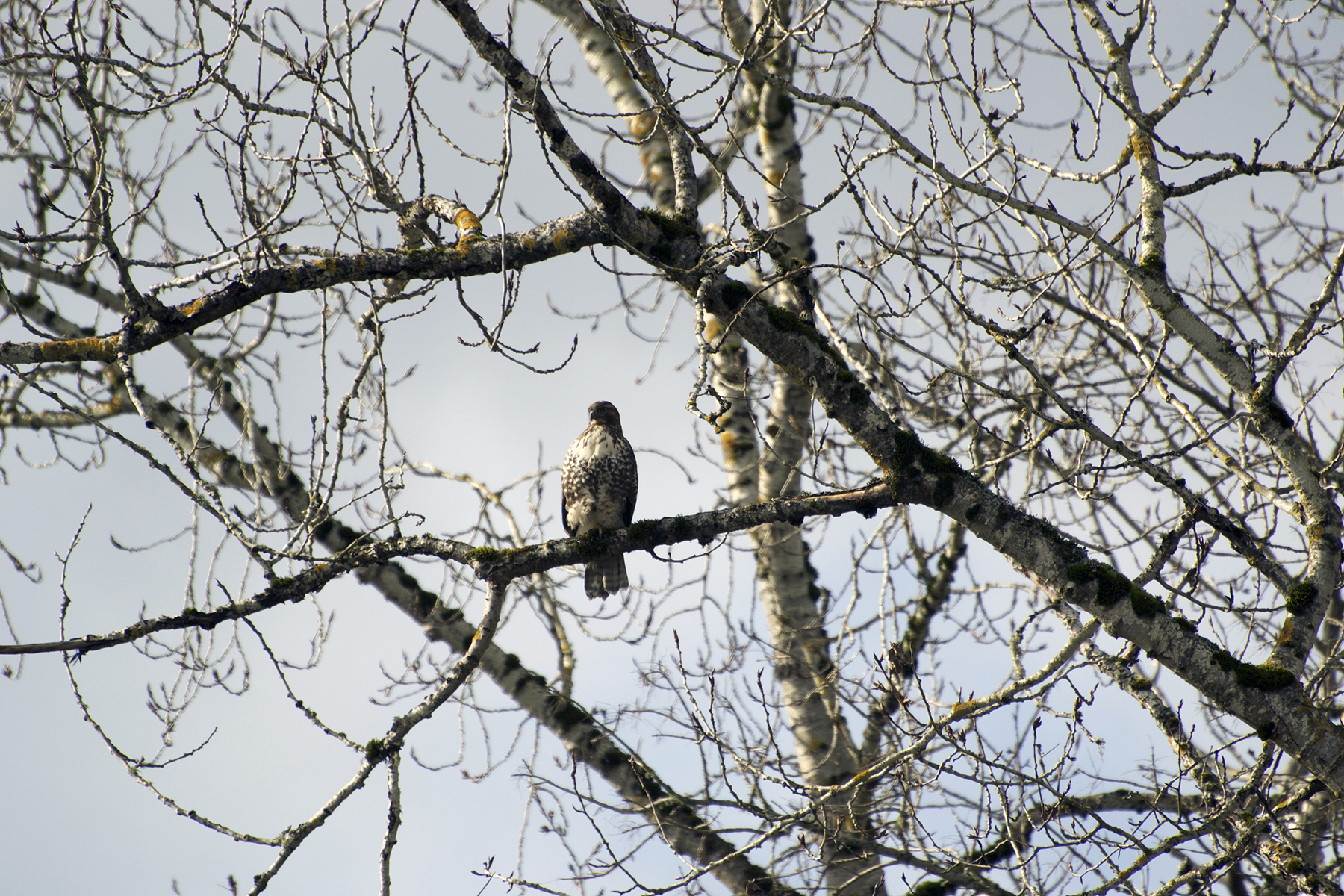
Here’s your hawk.
Halcyon: “calm or peaceful.” In ancient times, the word referred to a bird now identified with the kingfisher.
In Greek myth, Alkyone, the daughter of Aeolus, the god of the winds, became so distraught when she learned that her husband, Ceyx, had been killed in a shipwreck that she threw herself into the sea and was changed into a kingfisher, later named alkyon or halkyon.
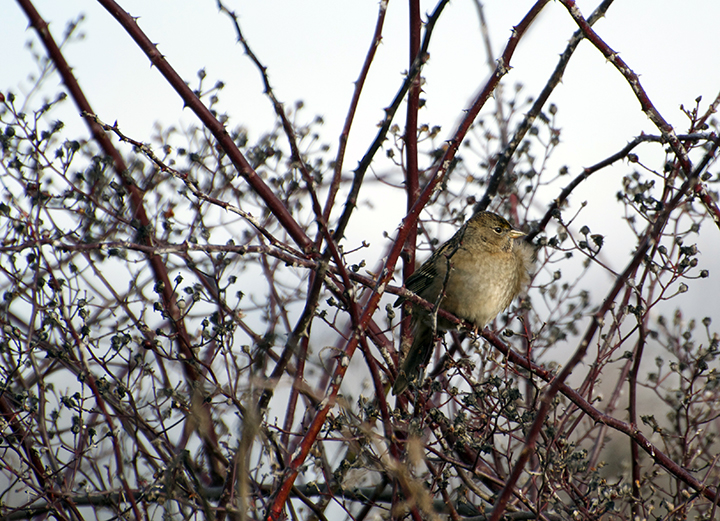
Well, I did not capture a king fisher, this time around. But I always feel calm and peaceful when my patience is rewarded with capturing these little sparrows in the black berry brambles. They hop and flutter fast, but if I stand quietly enough for long enough, I’m able to connect with the camera.
And I got a good laugh out of the Merriam Webster example:
Remember the halcyon days of Facebook, when no one was concerned with who might peep their drunken pictures and angsty missives, and discussions of privacy settings were met with a mix of dismissiveness and apathy? — Jessica Roy, BetaBeat, 3 May 2012
Let’s start the week with some Halycon Days by Purcell….
On Sunday I walked in Tacoma, the second biggest city and urban area in the state of Washington. It has a large working port, created in 1918 on Commencement Bay, in South Puget Sound, known as the “Gateway to Alaska”.
It also has a beautiful museum dedicated to glass – Museum of Glass a.k.a. MOG – and the largest hot shop on the West Coast where you can sit and observe glassblowing in action.
I will report on the exhibit I had come to explore and write about later. Today I just want to share the photographs from the outside around the museum, and the bridge that connects it, across a highway, to downtown.
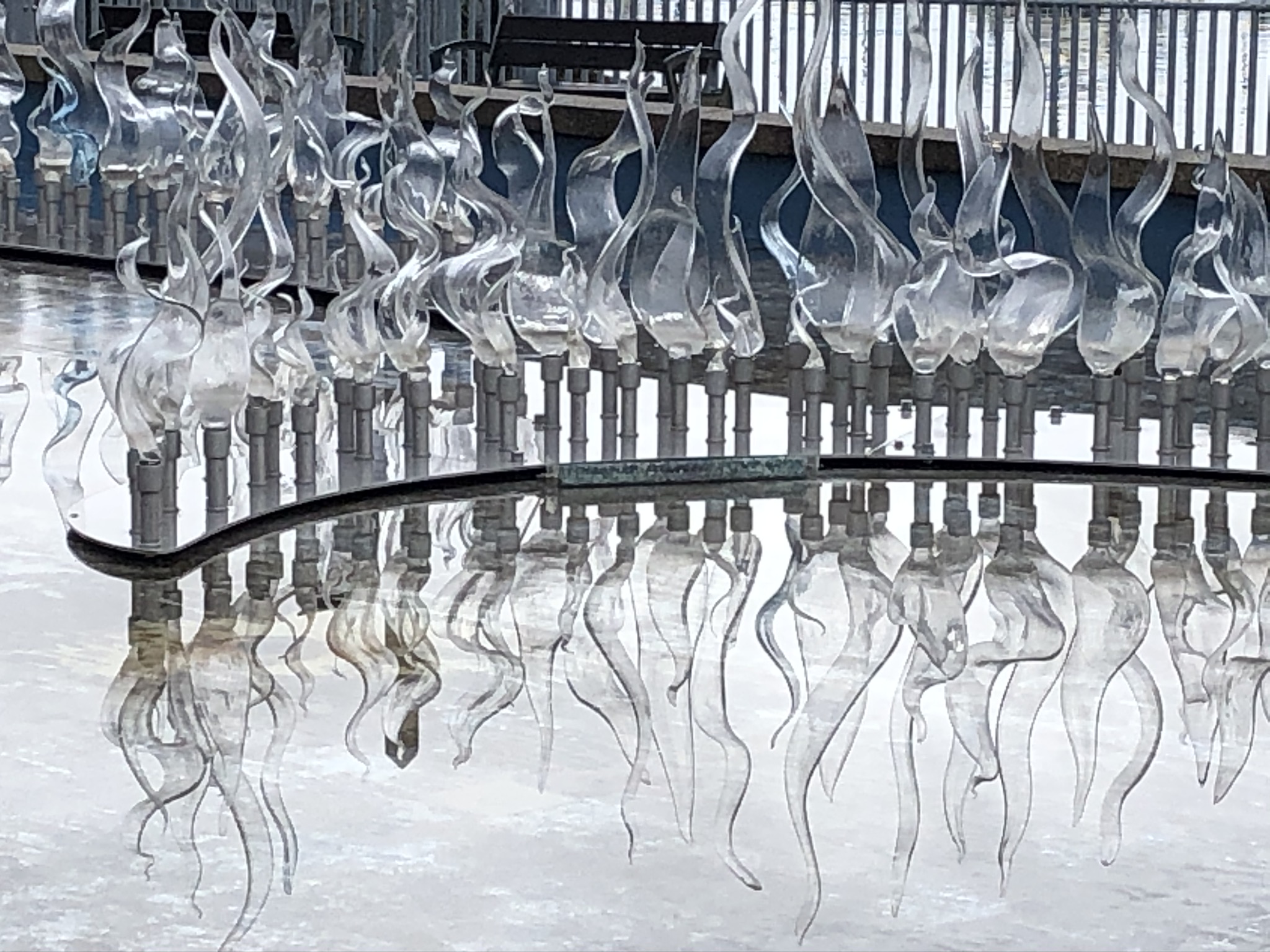
It was a moody day as far as the sky was concerned, which made for perfect light being reflected by the glass installation located outside in the museum’s courtyard. A bit of rain, a whisper of wind, and later the sun breaking through the clouds on this November morning.
The display was under renovation, which meant that the water that usually covers the steel columns holding up the glass had been drained from the basin.
The emerging peeling blue paint was the perfect foil for the glass. The few places where puddles covered the cement were terrific for reflection. The water was too low and shallow to be ruffled by the wind, so that it offered a still mirror surface.
I had not seen any of this before, it was my first visit to Tacoma. I assume there is a symmetry to the installation when the basins are filled that was absent on Sunday. But the sense of slight decay and roughness in the cement surface really enhanced the impression of pieces and shards and crumblings of glass, rather than the perfect flow perhaps intended.
It probably did not look like the vision of artist Martin Blank who conceived of this installation called Fluent Steps, but I was impressed – and I seemed to be the only one around on a Sunday morning at 11:30 (the museum opened at noon.) I could barely stop looking at all this shiny beauty, the rain softly glittering where it hit the surface. You can find a detailed description of the installation and the artistic process here.
*
The bridge of glass, free to walk for all, is located on the other side of the large architectural cone that airs the hot shop inside the museum and has a lattice pattern found in much of NW blown glass art. The bridge displays a large percentage of the Chihuly collection that it MOG’s hallmark, with a “Venetian Wall” that is an 80-foot-long installation housing 109 individual showcases. I am, truth be told, not a fan of his work, but walking along these many pieces, backlit by the light that was occasionally peeking through the rain clouds into the cubicles that housed them, was quite delightful.
What stopped me dead in my tracks, of course, was the gift of daily wildlife: a flock of starlings that fluttered about and made its home, on and off, telling by the masses of bird poop, on the top of the sculptural columns at the center of the bridge. The “Crystal Towers,” two 40-foot-tall structures on either edge look like gigantic pieces of turquoise rock candy. The towers are made from 63 pieces or “crystals” of Polyvitro, a polyurethane material known for its durability. The Polyvitro has a strange way with light, not quite reflective, not quite absorbing, altogether mysterious.
The starlings congregating on the various candy pieces, on the other hand, were as shiny as can be, their oily feathers insulating them against the Northwest rain and making them look like little dark pearls on the turquoise surfaces. Busy, chattering, fluttering pearls, I might add.
It was the perfect morning.
Music today, how can it not be: Glassworks by Philip Glass