Browsing Category

Poetry

In(ter)dependence

Lots of thoughts about dependency lately. Triggered by general sorrow about the ongoing wars, or specific preoccupation with weather-related problems, never mind an aging body necessitating caution. We are so intensely dependent on the actions and solidarity of others, their help and support, their wisdom, skills, presence and availability in our lives. “Nothing wrong with solidarity, support, wisdom, presence,” you say? I agree – but to depend on it also means to suffer if it isn’t available, and I experience a degree of helplessness just thinking about that scenario which bugs the hell out of me.

Antony Gormley – Horizon Field Hamburg, 2012, steel, wood, 25 m x 50 m, 60t (thereof 40t steel), 7.40m above hall floor, Deichtorhallen, Hamburg, 2012

Autonomy is shrinking in a world that closes in around you, with threats to your physical safety, most pronounced in war zones, but similarly present with a climate that wrecks havoc on your immediate surround, or age that insists on limitations. I find it most upsetting in regards to freedom of movement – or absence thereof – again in the life and death scenario of incoming bombs preventing relocation, or floods and fires forcing relocation, or a simple ice storm keeping you stuck inside without your daily refueling in nature because you can’t afford to break a bone or two.

Probably not a coincidence that I was drawn back to a poem by one of my favorite poets of all times, a poem that celebrates the independence of the soul (relative even to us, its bodily container), and also of quotidian objects like mirrors that exist and work regardless of anyone’s attention. It drives home several points: independence is desirable and we simply have to accept that we can’t always call the shots – even our own soul might or might not attend to us, depending on its own whims and wishes. But the poem also comforts with the suggestion that there are nonetheless states where gifts – and closeness – are still available. Its speculation of likely interdependence, made in the last lines, somehow softens the burden of dependence.

My favorite stanza, though, is this:

We can count on it
when we’re sure of nothing
and curious about everything.

Since this is my perpetual state, frankly, I cling to Szymborska’s suggestion that soul will be regularly on hand.

A Few Words on the Soul

We have a soul at times.
No one’s got it non-stop,
for keeps.

Day after day,
year after year
may pass without it.

Sometimes
it will settle for awhile
only in childhood’s fears and raptures.
Sometimes only in astonishment
that we are old.

It rarely lends a hand
in uphill tasks,
like moving furniture,
or lifting luggage,
or going miles in shoes that pinch.

It usually steps out
whenever meat needs chopping
or forms have to be filled.

For every thousand conversations
it participates in one,
if even that,
since it prefers silence.

Just when our body goes from ache to pain,
it slips off-duty.

It’s picky:
it doesn’t like seeing us in crowds,
our hustling for a dubious advantage
and creaky machinations make it sick.

Joy and sorrow
aren’t two different feelings for it.
It attends us
only when the two are joined.

We can count on it
when we’re sure of nothing
and curious about everything.

Among the material objects
it favors clocks with pendulums
and mirrors, which keep on working
even when no one is looking.

It won’t say where it comes from
or when it’s taking off again,
though it’s clearly expecting such questions.

We need it
but apparently
it needs us
for some reason too.

by Wislawa Szymborska

­ —Translated by Clare Cavanagh and Stanisław Baranczak

If the soul is an independent agent leaving us soulless for years at a time, it is interesting that we are nonetheless so committed to pave the way for its escape – think of the customs so prevalent in many cultures to shroud mirrors in the house after a death occurred, for fear the soul might be trapped in one. Souls and mirrors have a long history of connection in mythology and literature (as does death and mirrors, come to think of it. Break a mirror: 7 years of misfortune, likely leading to death! Make a mirror: death guaranteed at a young age, as it turns out. Fabrication of this luxury item involved the use of noxious substances, quicksilver included, until very recently, establishing an average life expectancy of but 30 years for the members of the guilds in Italy and France that produced mirrors as well as glass ware.)

The largest mirror I ever saw was an installation in a huge former market hall in my hometown of Hamburg, Germany, as part of the Documenta in 2012. Called Horizon Field, it was one of sculptor Antony Gormley‘s ongoing explorations of the interdependence of humans and their environments, both regarding their spontaneous interactions, or their effects on each other.

Imagine 3800 square meters of empty hall with a platform suspended from the ceiling, about 25 feet above you in the air. Made of 40 tons of steel, it took a full month to install.

The whole thing was 82 feet wide and 164 feet long, dark as night from below, and coated with a silver mirror on top, reflecting the flood of light coming in from the arched glass windows. A single person walking across it (you had to stash your shoes at the bottom of the stair case, guards making sure of it) could make the thing vibrate.

It was fascinating to watch how visitors were preoccupied with their own mirror images laid out underneath them, rather than exploring the strange doubling of architectural features of an industrial building that had played historically a huge role in the enrichment of the Hanseatic economy. Built between 1911 and 1914, the hall is one of the few surviving examples of industrial architecture from the transitional period between Art Nouveau and 20th century design.

It was also a perplexing sight to see a large proportion of the visitors now in their socks, slipping and sliding with child-like amusement, centered on their proprioceptive senses once done with visual self-admiration. It was somewhat challenging to photograph it all given the swinging of the platform, and a slight queasiness induced by the oscillations. But staying underneath, in relative darkness, was not the best option either, wondering, with the mind of a skeptic, if and when that thing would come crashing down. Too many associations with the impending doom signaled by breaking mirrors….

Well, I was free to move, then, and walked off to wander the streets still familiar to me. No bombs or ice storms keeping me from it – unclear, however, if in company of soul.

Music today is by Arvo Pärt, his 1977 Tabula Rasa (and not Spiegel im Spiegel as one might have predicted.) I just love those meditations, and they fit the travels of the soul as well.

The Pear Tree revisited.

I figured I’d offer some reassurance at the beginning of 2024: YDP will be as eclectic as ever, as haphazard in what gets picked up and woven in with the rest of what fills my brain, so that you can rely on at least one thing remaining the same in your lives.

For a start it’ll be some thoughts by the Italian Marxist Antonin Gramsci, a poem by Ruth Awad, a Lebanese-American poet who is also a tattoo artist and an insurance manager who collects rescue Pomeranians, and some views of my pear tree. How is that for a mix?

House Finches

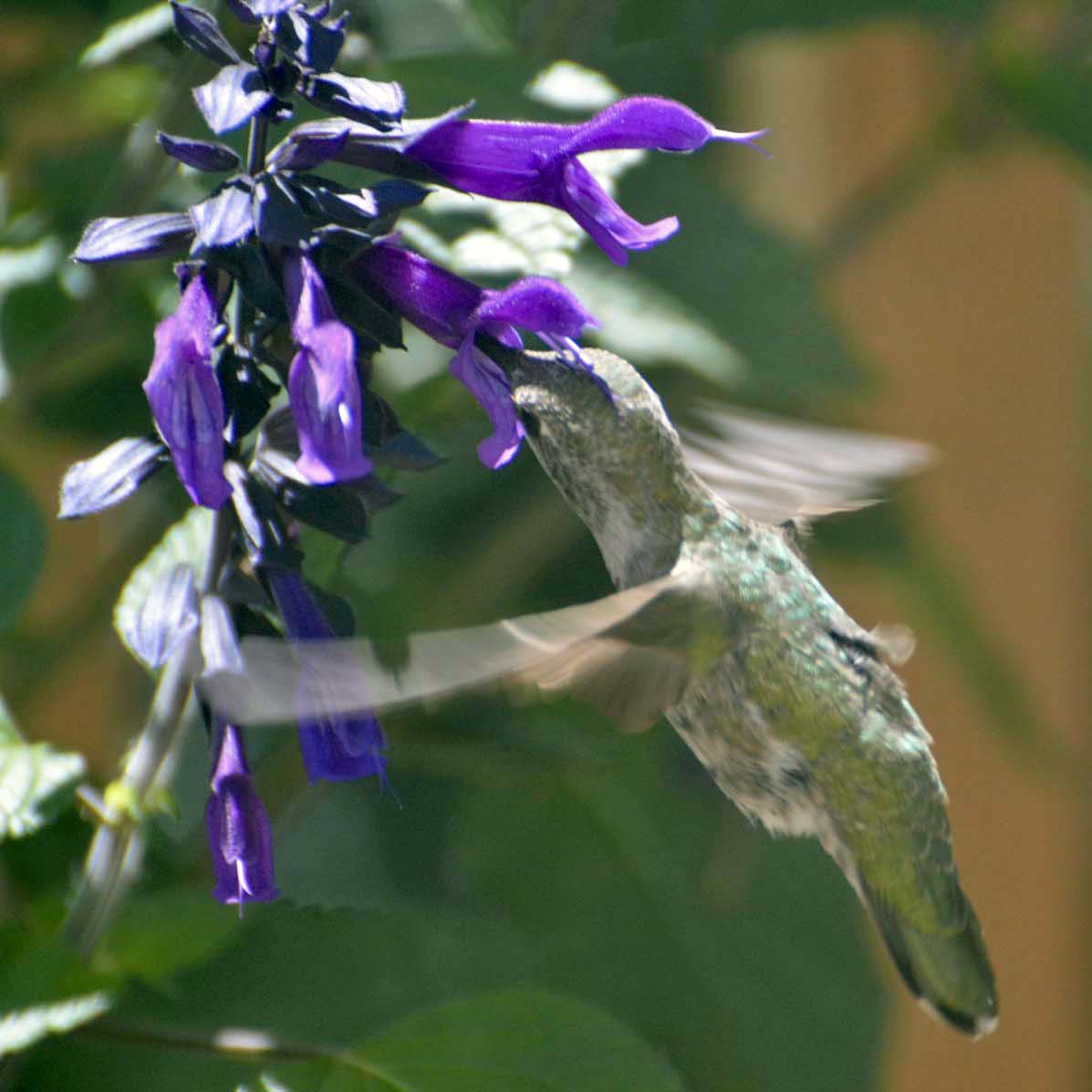
Regular readers are familiar with the pear tree, and its neighboring hawthorn tree, seen from my chair where I hang out when my body – what else is new – vetoes the plans for various hikes and outings yet again. It is where I found myself last week, amazed at the variety of birds who kept me company this late in the season, a humming bird included.

Anna’s Hummingbird

It gave me time to reread Gramsci, in particular his apropos musings on (not) celebrating the New Year. I don’t share his sentiment of hating the occasion, although I don’t love New Year’s either. At my age, frankly, one of the thoughts that is inescapable when you are feeling lousy and the numbers change from ’23 to ’24, is personal: will this be the year I die? After all we lost a lot of friends this year – here is an Oregon ArtsWatch list which included a mirror photograph I took of Henk Pander during our Mutual Portraits project, a close friend enormously missed.

But Gramsci sets me right in the rest of his one page-proclamation: you want to focus on continuity and spirit, not on breaking points and final balances, filled with resolutions that you will not keep.

I want every morning to be a new year’s for me. Every day I want to reckon with myself, and every day I want to renew myself…..I would like every hour of my life to be new, though connected to the ones that have passed.”

Song Sparrow

In one of the stranger deliberations I’ve read in a while, he also hopes for the arrival of socialism in order to jettison the celebration dates handed down by the ancestors. I guess it would give us something to talk about, shared hopes for differing reasons….

Thrushes

Not so sure what I would talk about with today’s poet, Ruth Awad, whose work, as far as I’ve read it, lacks the balance of emotionality and intellect that I so crave. If that sounds condescending it is not meant to be – there is much to be said for the offerings of the Ruth Awads or Maggi Smiths of the world, embraced by contemporary readers for their accessibility and courage to be sentimental. If it keeps an interest in poetry alive, so be it.

I mean it.

Black capped chickadees

The poem below, published in The Atlantic at the end of the year, drew me in, though, for one specific sentiment, expressed in the last words:

“…if only you’ll let he world soften you with its touching.”

To let the world soften us, or even better, to comfort and fill us with occasional awe at a time when we tend to harden from fear and/or sorrow, we have to attend to it. The “world” is all around us, easily, constantly available, no extravagant or even local excursions needed. You just have to sit and look, birds perching in the pear tree, reminding us of an existence not governed by dates, or resolutions, just renewal from hour to hour, here, now, in 2024.

Gramsci’s theory of Hegemony, a strategy of power pursued through cultural work, can wait. So can my knitting. Or folding the laundry. I just look at the birds. It is healing.

White crowned sparrow

Reasons to Live

Because if you can survive
the violet night, you can survive

the next, and the fig tree will ache
with sweetness for you in sunlight that arrives

first at your window, quietly pawing
even when you can’t stand it,

and you’ll heavy the whining floorboards
of the house you filled with animals

as hurt and lost as you, and the bearded irises will form
fully in their roots, their golden manes

swaying with the want of spring—
live, live, live, live!

one day you’ll put your hands in the earth
and understand an afterlife isn’t promised,

but the spray of scorpion grass keeps growing,
and the dogs will sing their whole bodies

in praise of you, and the redbuds will lay
down their pink crowns, and the rivers

will set their stones and ribbons
at your door if only

you’ll let the world
soften you with its touching.

by Ruth Awad

Chestnut backed Chickadees

Music today is conducted by a guy named Birnbaum – pear tree – the enchanting second movement of Schubert’ Symphony #8, the Great.

Here is the full version with a different orchestra, Mallwitz conducting.

Nuthatch

A Breed unto Themselves

The Mushroom is the Elf of Plants – (1350)


The Mushroom is the Elf of Plants –
At Evening, it is not
At Morning, in a Truffled Hut
It stop opon a Spot

As if it tarried always
And yet it’s whole Career
Is shorter than a Snake’s Delay –
And fleeter than a Tare –

’Tis Vegetation’s Juggler –
The Germ of Alibi –
Doth like a Bubble antedate
And like a Bubble, hie –

I feel as if the Grass was pleased
To have it intermit –
This surreptitious Scion
Of Summer’s circumspect.

Had Nature any supple Face
Or could she one contemn –
Had Nature an Apostate –
That Mushroom – it is Him!

-by Emily Dickinson

At no time in the year is the concept of “fleeting” more realized than now. Thoughts are drawn to the nature of time, the passing of yet another cycle around the sun, when we approach New Year’s Eve.

Nature, as well, basically screams about transience. One day you see the mushrooms firmly planted on logs and soils, the next day they’ve disappeared. When you walk the same route, as I do, several times a week, it is almost spooky how the fungi jump into your field of vision or vanish, almost while you look.

The Thesaurus definition of the verb to mushroom – as in sprout or grow quickly – confirms that aspect of mycological nature:

Strongest matches

Strong matches

Weak matches

Their transient nature extends to my ability to remember the classifications, despite the fact that the five Phyla in the kingdom of fungi have such wonderfully strange names.

There are Chytrids, who live in water. There are the Zygomycota, also called the conjugated fungi, known to us more familiarly as bread mold. I can just see my self sighing at the breakfast table: “oh no, conjugated fungus again…”

Sac fungi, where did I put you?” wonders the baker, looking for the package of yeast, or the cook looking for morels and truffles. These belong to the Phylum of Ascomycota, and can have horrid consequences for people with compromised immune systems, inducing fungal pneumonia, for example, as well as being harmful to multiple crops.

What you buy in the store, or collect in the woods to cook with your pasta are Basidiomycota, the club fungi, which often have gills under their caps. However the shelved creatures you see on trees also belong to this Phylum.

The imperfect fungi flourish in imperfect households, or suitably moist and dirty conditions in nature: the common mold are part of the Phylum Deuteromycota. Their reproduction is strictly asexual. Which is weird, given how fast they spread – all without fun?

And here we demonstrate the fleeting nature of intentions: all I wanted to do today was show off the beauty seen in the woods this week and the persistent cleverness of Dickinson’s observations. Had to yield to the desire to learn more, once more. Well, at least I can now be brilliantly exclamatory when I open the bread drawer – should I be able to remember conjugated fungus for more than two minutes…..

We’ll hear today from a composer who fell for fungi, John Cage. (The link is to an article that lays out Cage’s passion.) Here is one of his Piano pieces in a strange arrangement for Thai gongs and electric bass – why not, we’re dealing with strange nature, after all.

Mothers and Daughters

Walk with me. No, scratch that. Stand with me. Because that is what I have been doing, standing, ever so slightly frustrated, at the edge of flooded roads, hiking paths, and wetlands, with no way in. This is what the start of the rainy season looks like in Oregon. By February, if the winter has average amounts of precipitation which you never know these days, it will be worse.

Still plenty of landscape, fall color and birds there for appreciation. Photographs from 3 outings combined across this week. The herons and egrets sure loved the flooding.

Happy to have you around today, particularly the literary types, since I need help to understand something. A title that I have trouble with, of a poem by Andrea Cohen that was first published in 2012 in the ThreePenny Review. I rather like it and think I’ve have a handle on it overall, if not the issues it raises. Yet, the title???

The Committee Weighs In

I tell my mother
I’ve won the Nobel Prize.

Again? she says. Which
discipline this time?

It’s a little game
we play: I pretend

I’m somebody, she
pretends she isn’t dead.

—Andrea Cohen

The waterway on the left is a footpath, usually!

A seeming interaction between mother and daughter ends with the revelation that the mother is no longer alive. With that new perspective we understand that an issue of self-worth, expectations, and appreciation (or lack thereof) continues to be salient for the daughter even after the source of those sentiments is no longer around.

It begins with achievement and why not go for the top of the heap, the Nobel Prize. Will receiving the prize satisfy a parent? Will receiving it for the umpteenth time make a difference? No word of praise, no explanation of delight, no pride expressed towards the achieving daughter. Just a matter-of-fact question about the discipline, as if to check that in the hierarchy of the Nobel you’ve climbed the ladder. Maybe physics is more important than literature, maybe the Peace Nobel Prize is the epitome? Is anything ever enough?

That sense of having to perform, yearning for acknowledgement is so ingrained that the game has to be played with an imaginary parent, or one that only carries on in one’s imagination, in perpetuity.

Duckies!

One the one hand, it is scary to think that we, the parents, who inevitably have messed up across our children’s life time, will have made such an impact that it cannot be shaken, even if that impact is based on perceptions that don’t need to be entirely true. Maybe our children assumed us to be much more demanding than we actually were or meant to be.

Goldfinches

Brown creeper and downy woodpecker

Flicker

On the other hand, it is frightening that we, the children, will never be free of these psychological binds, conjuring our parents up in endlessly empty gestures of imagined appeasement. And then encounter repeat performances of lack of appreciation. In essence telling ourselves in this inner monologue/dialogue that we are simply never good enough.

This image has an empty alt attribute; its file name is DSC_0045-2-1024x681.jpg

But then again, maybe the desire to please speaks of love, of a connection that we thought would hold if we are mutually recognizing players. The poem certainly gives agency to both, daughter and mother, in the sense that both are presented as “pretending.” Yet the expressed sense of inadequacy, framed by a mother’s refusal to recognize, overshadows, for me everything else.

Or maybe it all means something completely different, what do I know.

But who is the committee that weighs in? Nobel prize is associated with committee, but don’t we assume “weighing in” refers to the current vignette of mother-daughter interaction? Is she awarded a prize for keeping the memory of her mother alive, warts and prior hurt and all? Help me out!

Turned color of blackberries, hazelnuts, wild currants, hawthorn and dog roses.

Here are some comforting thoughts about remedying what we’ve wrought, (or at least acknowledging that sometimes remedy is necessary,) words encountered in a post by a friend of LeGuin’s:

I think that when I die, I can breathe back the breath that made me live. I can give back to the world all that I didn’t do. All that I might have been and couldn’t be. All the choices I didn’t make. All the things I lost and spent and wasted. I can give them back to the world. To the lives that haven’t been lived yet. That will be my gift back to the world that gave me the life I did live, the love I loved, the breath I breathed.”

~Ursula K. Le Guin

(From: The Other Wind)

Fish for lunch…

Music today is a sweet debut album of a young singer, Kara Jackson, who reminds me of Joni Mitchell half a century ago. The topics, if you listen closely, are very much concerned with self worth, fearing or defying expectations set by society, struggling as a woman to find her own personae. But there is also a song about the loss of a loved one (unfortunately over-orchestrated/ Why does the earth give you people to love) that is quite moving.

There will come soft rains

I meant to brighten your Thanksgiving weekend with imagery of beautiful nature, all kinds of appealing fauna I came across during my southern California sojourn. Alas, I can’t stop my brain and keep my mouth shut. Nature, its lasting beauty and seeming resilience, as well as its wrath, was linked to destruction in my war-preoccupied mind. Thus a poem and a short story derived from the poem, that depict post-apocalyptic nature with us humans no longer playing any relevant role, really any role at all. The way we’re going, that might not be too far in the future.

If you prefer the tranquility of a post-prandial daze, stop reading here and just look at the pictures! No offense taken. My gratitude on this day of Thanksgiving, however, extends to all those refusing to be indifferent.

“There Will Come Soft Rains”
(War Time)

There will come soft rains and the smell of the ground,
And swallows circling with their shimmering sound;

And frogs in the pools singing at night,
And wild plum-trees in tremulous white;

Robins will wear their feathery fire
Whistling their whims on a low fence-wire;

And not one will know of the war, not one
Will care at last when it is done.

Not one would mind, neither bird nor tree
If mankind perished utterly;

And Spring herself, when she woke at dawn,
Would scarcely know that we were gone.

by Sara Teasdale in Flame and Shadows, 1920

Teasdale (1884 – 1933) was an American poet who won the first Columbia Poetry Prize in 1918, a prize that would later be renamed the Pulitzer Prize for Poetry, yet she was marginalized as a second-rate poet by next generations. Depressed, ill and isolated, she took her own life before she even turned 50 years old. The poet was highly educated and deeply influenced by reading Charles Darwin and thinking through the implications of his evolutionary theory regarding the centrality – or absence thereof – of human kind in nature. A personified Spring and the rest of nature’s representatives in the poem couldn’t care less if we self-obliterated.

She was also a pacifist, whose views had to be carefully phrased into the framework of a pastoral setting in her poetry. After all, this poem was first published in 1918, two months after the Sedition Act of 1918 was enacted. The law made it a criminal offense to “willfully utter, print, write, or publish any disloyal, profane, scurrilous, or abusive language about the form of the Government of the United States.” It still theoretically exposed her to criminal prosecution – and if she had the courage to speak out against war, we should have the decency to bear witness.

Fast forward to the 1950s, we have Ray Bradbury (1920-2012) expressing his fears of nuclear war in a short story, August 2026: There Will Come Soft Rains’, published in his Martian Chronicles. The setting is a house filled with technological gadgets that continue their daily routines and tasks, when the world and all its inhabitants have been wiped out by nuclear war. The house in Allentown, CA, and a badly maimed dog, are all that remains. There is cooking, cleaning, laying the table and reading a daily randomly selected poem to the extinct inhabitants – Teasdale’s poem, as you might have guessed. Random debris is pushed down the incinerator, called evil Baal, a reference to the praying at the altar of false gods, our belief in the gifts of technology that prove futile when they are made obsolete by even more powerful technological inventions like the atomic bomb.

Ironically, nature has the last word: a violent wind lights a fire in the house which burns it down, the last vestige of human habitation. Only a ticking clock survives.

The worry about nuclear arms has resonated across the media during the weeks since the war started. Really years, since it is a topic for both the ongoing war in Ukraine and the bombardment of Gaza by Israel. Focussing on the latter, I found that a recent essay by Roger Cohen in the NYT is required reading, spelling out some of the causal mechanisms that have led to the chasm now impeding any hope for peace.

Almost forgotten are the Palestine Liberation Organization’s recognition in 1993 of Israel’s right to exist in peace, and Prime Minister Yitzhak Rabin’s determination to pursue that peace, a decision that cost him his life in 1995 at the hands of an extreme right-wing Israeli assassin who said he acted “on the orders of God.”

These were the ephemeral glimmerings of shared humanity, soon quashed.

In the intervening decades, Hamas and the ultranationalist religious Israeli right have each extended their influence. The conflict now involves fundamentalist religious ideologies, distinct in critical regards but equally convinced that all the land between the Mediterranean Sea and the Jordan River has been deeded to them by God.

A political and military struggle between two national movements for the same land can be resolved by compromise, at least in theory. France and Germany settled their differences in Alsace-Lorraine. Peace came to Ireland. But absolutist claims of divine right to territory appear impossible to reconcile.” (My emphasis.)

I am citing at length because the religious fervor is something we regularly underestimated and are increasingly facing at home as well. But I also want to mention some other facts: an Israeli minister, Amihai Eliyahu openly stated that dropping a nuclear bomb on Gaza was an option. (He was suspended from Cabinet meetings, and later claimed it was a metaphorical statement. Israel has not confirmed or denied its nuclear capabilities.) Nothing metaphorical about the bombs that have been dropped, though. According to the Euro-Med Human Rights Monitor, as of three weeks ago already, Israel has confirmed that it bombed over 12,000 targets in the Gaza Strip, with a record tally of bombs exceeding 10 kilograms of explosives per individual. That is the equivalent of two nuclear bombs (absent radiation.)

Due to technological developments affecting the potency of bombs, the explosives dropped on Gaza may be twice as powerful as a nuclear bomb. This means that the destructive power of the explosives dropped on Gaza exceeds that of the bomb dropped on Hiroshima, Euro-Med Monitor said, noting that the area of the Japanese city is 900 square kilometres, while the area of Gaza does not exceed 360 square kilometres.”

1200 human souls lost their lives in Israel, indiscriminately slain by Hamas attackers, with over 200 hostages taken – 36 of them children! – , and women violently raped. As of now, 14.500 human souls indiscriminately killed in Gaza, with over 5000 children ! among them (and that is not counting the lives lost in the Westbank over the last months.) Food, water and fuel cut off, preceding likely epidemics. The report of the World Food Program of the United Nations is shocking with its implications of starvation.

Sick and wounded dying for lack of medical treatment, the former not even making it into death by war statistics. All this without even the ability to flee for a civilian population, given that the borders are closed on all sides, by Israel and Arab nations alike. Flight is, however traumatizing, at least a possibility for Ukrainians – current estimates vary that between 6 and 8 million people left their homeland to escape war, of a total population of 36 million in Ukraine.

No end in sight. Certainly no guarantees that this will make Israel safer. A heightened chance that war will regionally spread. No obvious solutions for a longterm arrangement either, since both the two-state solution or a unified non-ethnocratic state seem to be relegated to fantastic wishful thinking given the conditions on the ground.

And, for that matter, no “gentle rains” either, since we’ve managed so thoroughly to wreck climatic conditions on this planet that there will be violent storms and deluges instead, not yet known to either Teasdale or Bradbury, once human suffering has been terminated for good. Or by evil, as the case may be.

It’s easy to feel depleted and paralyzed. Let’s practice hope, though, starting with being consciously grateful for all the privileges and blessings we enjoy on this particular day. May they strengthen us to face what we have to do in days to come.

Music set to the words of the poem.

Patterns of Conquest

By Scott Greer (1922 – 1996)

Scott Greer was Distinguished Professor of Sociology and Urban Studies at the University of Madison, Wisconsin, and also a published poet. His focus as a social scientist was the issue of globalization, in particular the issue of increasing societal scale which implied necessary subdivisions. That, in turn, leads to loss of common institutions and bonds of trust, according to his theorizing. He was a committed pacifist, often documented in his poetry. The poem is dedicated to another anti-war intellectual, Nazi-refugee Lucian Marquis, who had served in the American army in Europe during WW II and was vocally opposed to the Vietnam war, starting the very first teach-ins as a professor at the University of Oregon during the 1960s. Considering that the “massive shuddering currents we have wrought” are presently shaking up our world again with no solution in sight, I thought this poem would provide some reminder that we need to “take the measure of the force that burns….”

Photographs are of SoCal plant patterns, starkly geometric, given hat the notion of asymmetry of warring factions dominates my mind right now.

Today’s music was dedicated by the composer to the victims of fascism and war – specifically to the victims of fire bombing.

Eaton Canyon, Revisited

October 21st was Ursula Le Guin’s birthday. I was reminded of that by, of all people, my beloved, who is not exactly into literature and/or poetry, but knows how much it – and her authorship – matters to me. Oblivious to that date, I had actually been thinking about her a few days earlier, while hiking Altadena’s Eaton Canyon, completely transformed from how I had experienced it the first time last April.

Verdant then, with roaring water, now dry, with but a trickle. Full of bloom then, color and the songs of birds, now reduced to pattern, lounging frogs and lizards. Still heartrending beautiful.

I was thinking of the many poems I had read where Le Guin describes the very essence of landscapes, desert as well as coast or woods, and how I could not remember a single one in its accurate wording.

That stood in contrast to one about war, that for obvious reasons now rose to the fore:

The Next War

It will take place,
it will take time,
it will take life,
and waste them.

I don’t know about you, but even when I try, when I immerse myself in beauty combined with physical exertion – something even a few miles will do these days – I cannot distract myself away from the sorrow of the extant and future loss of life in the Middle East. When I read about proposed solutions to the conflict, it seems to me that people are just throwing out words, hopes, and closer inspection reveals that no one really has a clue as to how to bring about realistic change, on ALL sides. (Ukraine, by the way, not forgotten by me, either.) Here is an essay worthwhile contemplating that tries to make a distinction between legality and morality of retaliatory actions, and here is one that talks about the difficulty of speaking to the issues without being labeled anti-semitic or islamo-phobic, rendered to silence when we need to speak up.

When I came home from the hike I tried to find a desert poem to post, but chanced on the one below, from her ultimate collection of poems,  So Far So Good, finished 2 weeks before her death in 2018.

The volume offers meditations on nature, the recurring topic of so much of her work, but also on aging and the relationship between body and soul. Meditations that are moving, wise, courageous – and also seem an incredible luxury provided by peace time, not available to those tortured, killed and abducted, starved or rained on by bombs. As a committed pacifist, she would have likely agreed.

How It Seems to Me 

In the vast abyss before time, self

is not, and soul commingles

with mist, and rock, and light. In time,

soul brings the misty self to be. 

Then slow time hardens self to stone

while ever lightening the soul,

till soul can loose its hold of self

and both are free and can return

to vastness and dissolve in light,

the long light after time. 

— Ursula K. Le Guin

Fauré seems fitting today for music.

Days of Mourning, Days of Clinging to our Humanity

I had driven down to Los Angeles anticipating glorious times among family and Southern Californian wonders, plant life included. Instead my head is filled with disbelief and grief about the atrocities unleashed upon the world.

Mourning for civilians of all ages massacred in their homes, at festivals, in the fields. In numbers that, relative to population, would amount to over 40 000 here in the US in a matter of two days. Not counting the wounded. Not counting the innumerable ones left behind, having lost children, parents, siblings, friends. Not counting the trauma that will cling to the survivors for ages. Not counting the disillusionment of the idea there would be one safe place in the world for Jews.

Mourning for civilians of all ages with almost half of them under the age of 14, exposed to white phosphorus bombs, deprived of food and water, told to leave their homes within a 24 hour window, with no place to go, all border crossings remaining closed. A population that has seen the last election in 2006, when 1 million of them were not even born, under the thumb of fanatic Islamists whose goal to destroy any Jewish state includes the knowing sacrificing of their own people. Bent on undermining rapprochement between parts of the Arab world and Israel.

Mourning for the peacemakers on all sides who have been out-gamed by religious zealots on all sides who scorned compromise or political solutions.

Mourning for the consequences of an all-out war for those who will be killed and maimed and traumatized. A war that will create displacement, re-enacting the Nakba, the catastrophe for Palestinians expelled from their lands in 1948. Consequences that will also include fuel to the fires of anti-Semitism, when the extent of suffering of a civilian population trapped in a 140 square mile strip becomes visible to the world, a world that historically preferred to ignore the plight of the Palestinians. Mourning for the Jewish civilians who will then be victimized in the next cycle of violence, in Israel and across the world. As Steven C. Beschloss wrote:

It’s a stunning, heartbreaking moment on so many levels: The violent horror for every individual and family involved. The grim fact that this will escalate not only as a result of Israel’s retaliation and effort to recover hostages through urban warfare in a densely packed city but possibly also by increasingly triggered neighbors. The tragedy of a Mideast region in which war not peace, conflict not calm, has defined its modern and ancient history. The terrible reality for people who continue to confront a world where enmity is a central fact of life.

Mourning. But also determined to cling to our basic humanity and acknowledge the suffering of all victims caught in this maelstrom. That does not imply justification of terrorist actions, or excusing potential military defiance of the laws of war. It does not mean political analysis – time for that comes later. It means empathy with the barrage of sorrow unleashed upon this world.

Here is a poem by German Jewish poet Mascha Kaléko who fled Nazi Germany to exile in the U.S and then Israel. It reminds us of the compounded trauma that exists and has been triggered again.

Music today provides a ray of hope, but also tears.

Resilient, flexible, forgiving: the Gifts of Lillian Pitt

“…and we will remain here as long as we can see ourselves in the stars.”

– Minnesota Poet Laureate Gwen Westerman, from her poem We come from the Stars.

***

IMAGINE coming into a room filled with certain vibes: feeling peaceful, enjoying the flow, feeling grounded, dressed up to party, enjoying the rain, feeling the happiest ever, preparing for a calm rest, ready to unwind, feeling the brightness of the day, blending in, feeling proud of your people, feeling regal, filling the sky with stars. I don’t know about you, but these emotions, expressed in the titles of Lillian Pitt‘s newest exhibition, elicited a sense of joy in me, as well as a smidgen of envy, when I walked among them and the sculptures they were attached to. How can we tap the source of such serenity?

A collection of Pitt’s work is currently on display at the Bush Barn Art Center in Salem. It is an assembly of masks, carved wooden figures, ceramic and cast-glass sculptures, shimmering with color, wit and reflections echoing the positive affect of their titles. The exhibition The Art of Lillian PittPast and Present is on view until the end of October, with an artist talk scheduled for Saturday, September 30, 2023. It is more than worthwhile to visit, if only for the reason that Pitt announced it to be her last public showing. I could not envision a more beautiful way to bow out.

Much has been written about the artist (Confederated Tribes of Warm Springs/ Wasco/ Yakama), born on the Warm Springs Reservation in 1943 and living in Portland for the last 60 years, so much that it is hard not to sound repetitive. She is the recipient of multiple arts Awards and part of many, many public and private collections nationally and in Canada. I happily refer to detailed accounts in an Artswatch interview with Dmae Lo Roberts from 2021 and a short documentary video by Jacob Pander from last year. My title lines were borrowed from something Pitt said in that video when asked about her approach to art as well as life. 

What I want to focus on, rather than repeating facts about her evolution as an artist, is the double role she has powerfully used to enrich all of us: that of a member of her own Native American community who reminds the world of both the history and the contemporary presence of tribal life, art and achievements, and that of an artist who brings beauty and new knowledge to the rest of us who are exposed to her works inside or outside wherever we happen to encounter them. Works that teach and produce wonder at the same time. 

Here are a few examples of public art projects that I happen to encounter on my walks, or when taking the Max train (admittedly before the pandemic.) They introduce both familiar and not so familiar imagery to us passing by, clues of a history that has not necessarily been frequently taught. At the Rosa Parks Trimet station depictions of baskets, pictographs, petroglyphs and salmon remind us of the tribal modes of existence in the Pacific Northwest. 

If you live in NE Portland you have surely encountered the Mammook Tokatee Housing around Ne 42nd Ave, which offers surprises around every corner. 

If you walk along the South West waterfront, the RiveGuardian greets you regardless of the weather – but in full brightness, when the sun hits just right during mid-morning, she sends out these luminous rays that feel like a life force.

And last but not least, at the plaza in Hillsboro there are multiple basalt boulders that reveal their secrets with differing degrees of ease – 30 petroglyphs have been carved by Pitt in an installation called Riverbed. It is a timely reminder that the city is located on Tualatin Kalapuya (Atfalati) land, in this specific case. These are just a few of the many examples that can be found. In general, her public art works weave themselves into our daily lives, making us conscious with whom we share a space and how long lasting a culture and its artifacts or religious objects teaches us about the history of the region and its inhabitants that predate us by ten thousands of years.

***

IN CONTRAST to the large configurations discoverable across the city, the current exhibition has many smaller objects, among them Pitt’s traditional Raku-fired masks,

and the familiar presence of She Who Watches.

There were also numerous wood carvings adorned with, at times, whimsical details. I must admit I was partial to these for idiosyncratic reasons. One of my childhood pleasures was to be allowed to open my grandmother’s sewing box and take out a can with buttons, often large and unusual, playing with them and arranging them to my liking. Multiple buttons can be found on Pitt’s work as well, making my fingers itch…. 

Left to Right: Star person enjoying the Flow, Star person feeling peaceful, Star person feeling grounded, Star person with many stars. Details below.

Details:

Last row: Star Person enjoying the copper rain.

Star persons? I learned from Pitt’s introduction that different tribes had origin stories about the Star People, who helped generate agricultural skills and introduced the most important food groups, according to the Navajo People’s legends; the Sioux used stories of the Star and Cloud people to instill hope among suffering, with animal ancestors coming down from the stars to guide the way home. 

These Star People stories have now found instantiations in the star people capturing color and light: here are some of my favorite instances:

Top to bottomt: Star Person ready to unwind, Star Person feeling the brightness of the day, Star Person preparing for a calm rest, Star Person feeling the happiest ever, Star Person blending in. 

I could not help but wonder if these were companions during mental preparation for retirement, an artist’s recital to herself that a life so full as her’s deserved a rest, unwinding, happiness. And that that would unfold. I cannot imagine for a second, though, that a creative mind like Pitt’s would ever slow down, much less shut down. Maybe the public exposition of her work, but not the ideas themselves. After all, she is a story teller in the grand tradition of her people, full of experience, wisdom, knowledge to be shared. And storytellers need to tell their stories. 

Of course, this is the pleading voice of the audience, here, who doesn’t want to let go of opportunities to explore the legends. To hold the beauty, a beauty, in my book, most emotionally conveyed in Pitt’s ceramic work:

Starperson feeling the strength of the Snake Goddess

Star Person Blushing

Star Person filling the sky with stars.

Resilient, flexible, forgiving: attributes of the clay that she shapes into testimonials to Native American history. Attributes that shaped her into one of our most important sources of artistic expression inseparable of that history. 

Dear Lillian Pitt, could we respectfully ask you to please postpone retirement a little longer?

***

Here is the full poem about what the Star People brought.

Wicaŋhpi Heciya Taŋhaŋ Uŋhipi

(We Come from the Stars)

Stellar nucleosynthesis.
That explains 
where everything

in our universe

came from according to astrophysicists who 
only recently discovered the cosmological constant causing
the expansion

of our universe.

Our creation story tells us we came from the stars to this place Bdote
where the Minnesota and Mississippi rivers converge,
our journey along the Wanaġi Caŋku, 

in our universe,

that stargazers later called the Milky Way now disappearing 
in the excessive glow of a million million urban uplights. 
The original inhabitants of this place,

of our universe,

we are Wicaŋhpi Oyate, People
and will remain here as long as 
we can see ourselves 

in the stars.

Gwen Westerman (Sisseton Wahpeton Dakota Oyate/ Cherokee)

***

THE ART OF LILLIAN PITT: PAST AND PRESENT

SEPTEMBER 1 – OCTOBER 29, 2023

Bush Barn Art Center + Annex

Bush’s Pasture Park
600 Mission St. SE
Salem, OR 97302

Wednesday-Friday, 11:00 a.m. to 5:00 p.m. and noon to 5:00 p.m. on Saturday and Sunday

Sunflowers, Umpteenth Edition.

Yes, this time of year again. A few years ago I paired the real flowers with the painted ones (see below). I figured this year we just look at the real thing, the surround where they grow and the words they bring to mind.

So walk with me, and bring a bucket, since the farm where I went near Hillsboro allows you to pick all things ripe. Grapes were beckoning – the vines laden – or is it loaded? Whatever, lots of grapes. Still dry on Wednesday, the day before the rain came.

But I had come for the sunflowers – equally attracted by the buds,

the blossoms,

This one had a drop of water in the center like a jewel

the stems and the leaves. Intent to paint with the camera:

Emil Nolde would have been proud of me – except I am not proud of him…

Daily wildlife made an unanticipated appearance. It pays, if you are old and walking slowly, so that critters like these are more curious than frightened. S/he put on quite the show.

The makeshift tents to protect against the sun had their own structural beauty, folded and unfolded, plastic, metal rods, netting all claiming attention.

I can never decide if the poem below is full of wisdom or soppy (or both.) But in August, with the annual radiance of sunflowers, it speaks to me. (Although I’d prefer to embrace the present rather than reveling in memory. Move forwards. not backwards.)

You Can’t Have It All

But you can have the fig tree and its fat leaves like clown hands
gloved with green. You can have the touch of a single eleven-year-old finger
on your cheek, waking you at one a.m. to say the hamster is back.
You can have the purr of the cat and the soulful look
of the black dog, the look that says, If I could I would bite
every sorrow until it fled, and when it is August,
you can have it August and abundantly so. You can have love,
though often it will be mysterious, like the white foam
that bubbles up at the top of the bean pot over the red kidneys
until you realize foam’s twin is blood.
You can have the skin at the center between a man’s legs,
so solid, so doll-like. You can have the life of the mind,
glowing occasionally in priestly vestments, never admitting pettiness,
never stooping to bribe the sullen guard who’ll tell you
all roads narrow at the border.
You can speak a foreign language, sometimes,
and it can mean something. You can visit the marker on the grave
where your father wept openly. You can’t bring back the dead,
but you can have the words forgive and forget hold hands
as if they meant to spend a lifetime together. And you can be grateful
for makeup, the way it kisses your face, half spice, half amnesia, grateful
for Mozart, his many notes racing one another towards joy, for towels
sucking up the drops on your clean skin, and for deeper thirsts,
for passion fruit, for saliva. You can have the dream,
the dream of Egypt, the horses of Egypt and you riding in the hot sand.
You can have your grandfather sitting on the side of your bed,
at least for a while, you can have clouds and letters, the leaping
of distances, and Indian food with yellow sauce like sunrise.
You can’t count on grace to pick you out of a crowd
but here is your friend to teach you how to high jump,
how to throw yourself over the bar, backwards,
until you learn about love, about sweet surrender,
and here are periwinkles, buses that kneel, farms in the mind
as real as Africa. And when adulthood fails you,
you can still summon the memory of the black swan on the pond
of your childhood, the rye bread with peanut butter and bananas
your grandmother gave you while the rest of the family slept.
There is the voice you can still summon at will, like your mother’s,
it will always whisper, you can’t have it all,
but there is this.

by Barbara Ras

The sky filled with clouds, the rain would appear in force the next day.

Music today played by the talented Sol Gabetta, who was seemingly dressed in a cloud, but her cello sounded more like thunder, appropriately Shostakovian. If that’s a word. They seem to be reticent today!