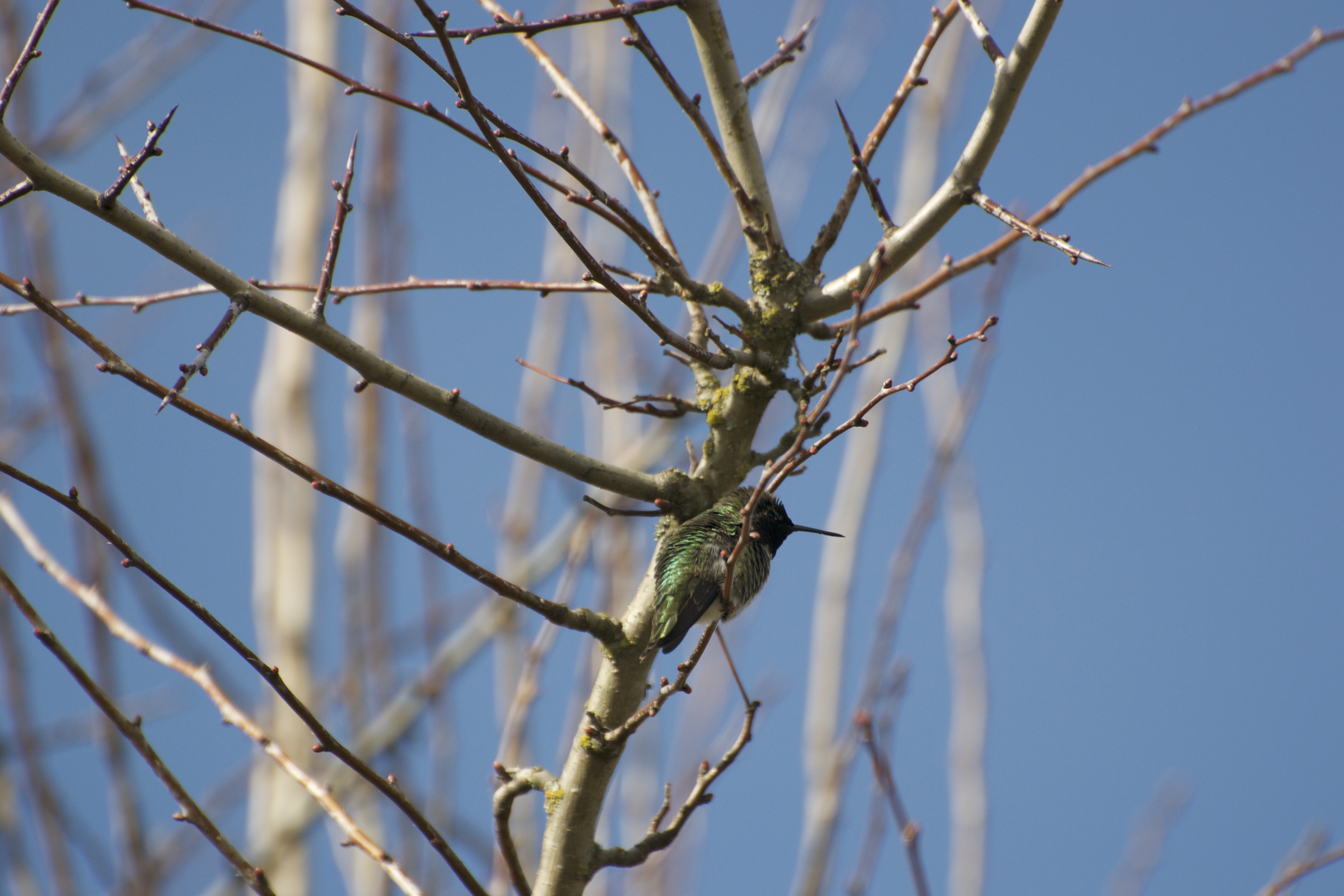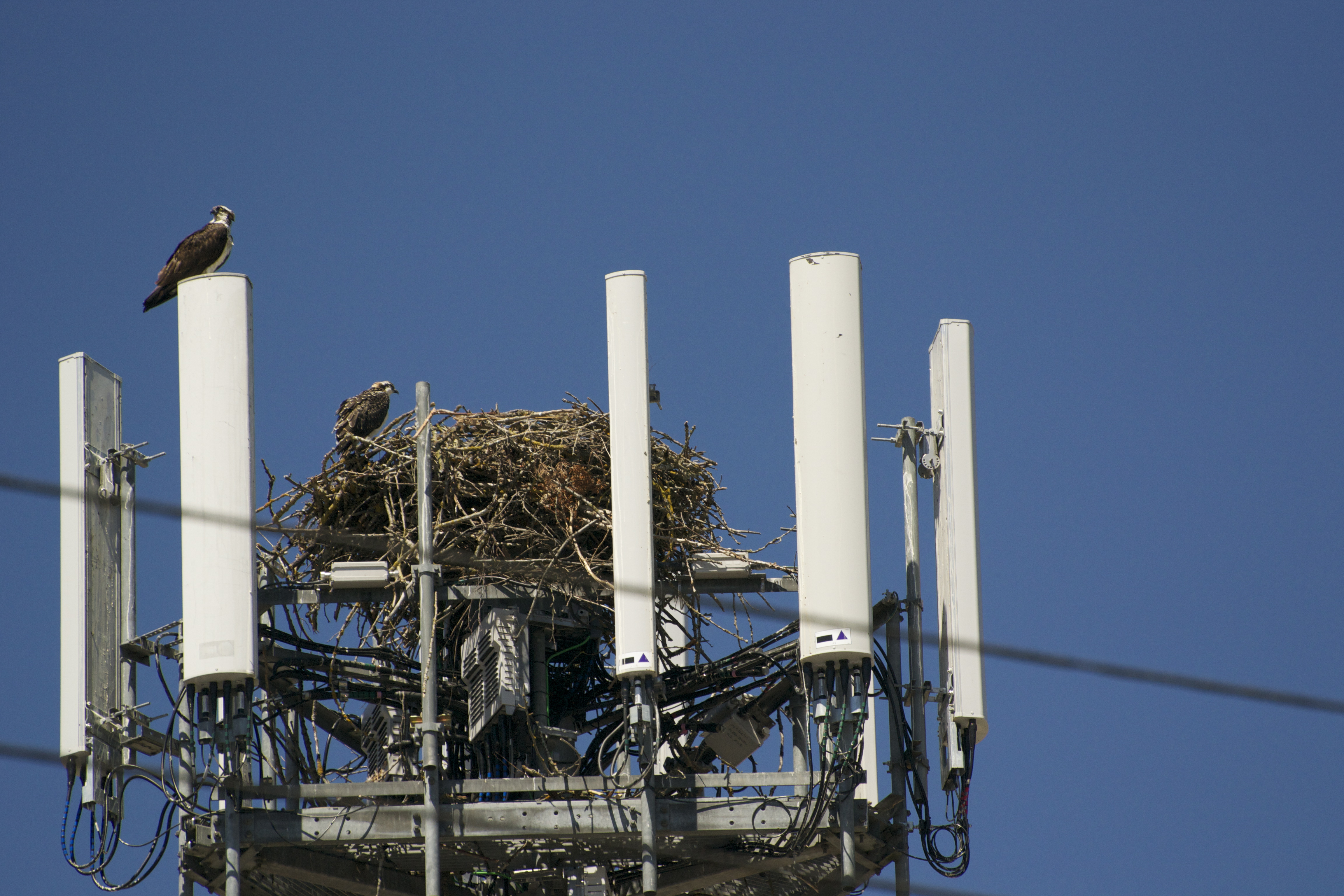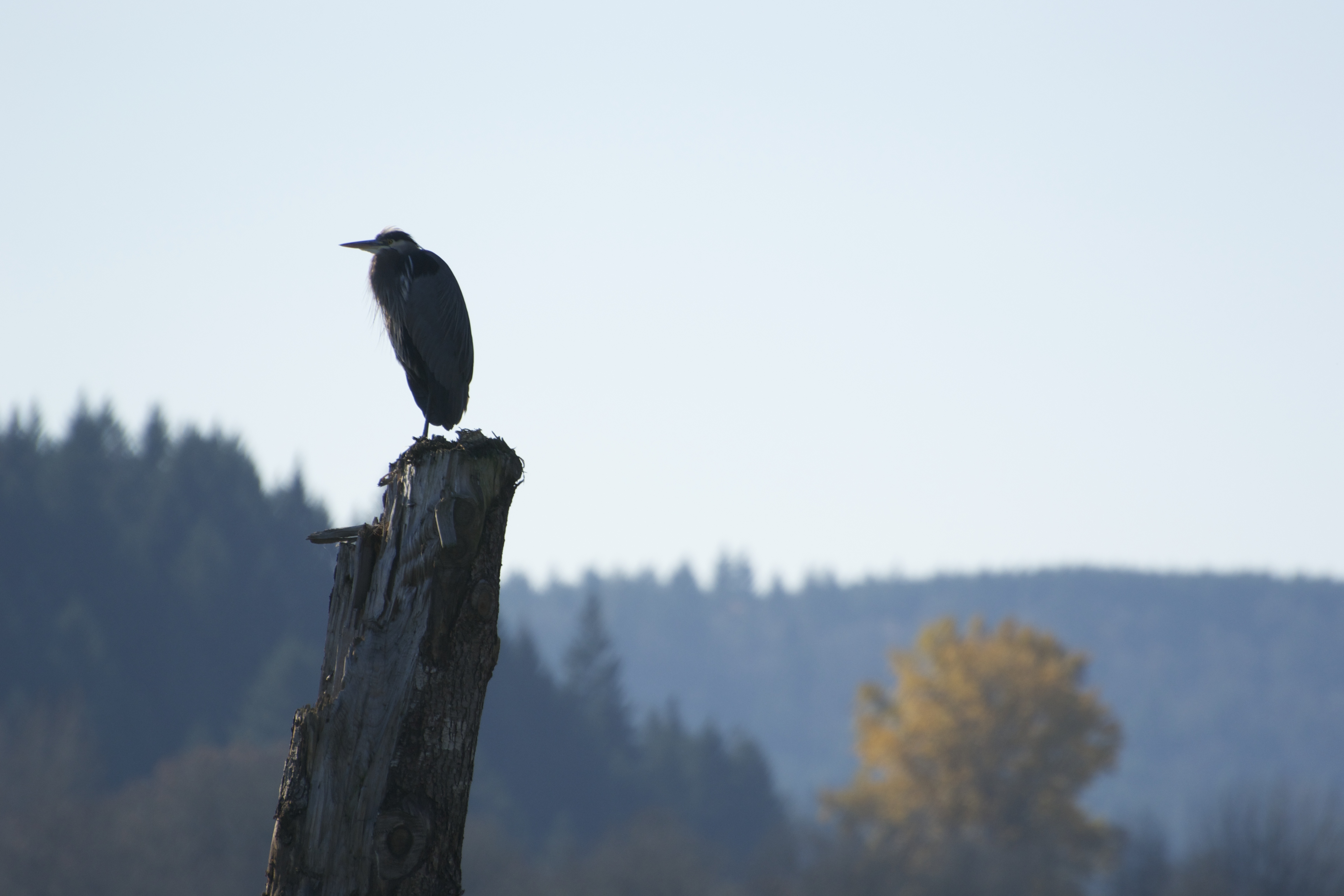
When dandelions star the fields Another alien singer, I, Nursed upon England’s flowery wealds, Seeking no tithe of treasured yields, dropp sudden from a summer sky To where the spangled clearing spills Its gold about your timbered hills.
A mite in splendid motley clad, I mark the field, I know the hour When choicest morsels may be had; When blooms are gay, when days are glad, And thistledown wafts in a shower To dance and drift and disappear, I, who was not, am with you here.
I cling beside the thistle head, I dance about your cattle’s feet, I revel in the banquet spread By many a blazing yellow bed, And feast until I am replete; Then seek the house roof’s topmost tile To linger yet a little while.
No ingrate I, no niggard churl Tho’ what I take you well may spare Ere azure skies have grown to pearl, With many a grace-note, many a skirl, I pay gold coin for golden fare, And profer an abundant fee In long sweet bursts of melody.
“There’s a lot of courage out here,” were the words of Kaia Sand, executive director of Street Roots, when introducing 11 women and men last night who have lived, fought, and survived homelessness, ready to present their poetry to a full house.
Kaia Sand
There could not have been a more fitting title for the poetry presentation either: Making the Invisible Visible was what happened during each and every reading, words opened windows into worlds often unknown to those of us protected from living on the streets.
Aileen McPherson
Brandon Morgrove
Bronwyn Carver
There’s a lot to learn out there. At least for those of us who pacify their conscience by buying Street Roots on a regular basis, supporting the entrepreneurs, members of the local homeless community, who sell the weekly street newspaper published in Portland, OR. Vendors receive 75 cents for every $1 paper they sell. For that they stand day on ends on cold street corners, in all weather, facing who knows how many people who avert their eyes for everyone who glances at them, or engages in quick conversation while buying the paper.
Char GarciaDaniel CoxKerry Anderson
What stays invisible is the talent and perceptiveness of those trying to connect. What stays hidden is our own timidity to face misery that contrasts with our privilege. Off we rush, having paid a token buck.
There’s an incredible amount of creative power out there. Last night’s poems covered a wide range of topics, lengths and forms, and skill levels that demanded, at their heights, publication in its perfection. My belief that poetry should, if possible, be presented orally to unfold its full power, was confirmed again. The merging of words, describing lived experience, and the face, voice and gestural expressiveness of the experiencer made a whole, doubling the impact. Some of the poetry was polished, some written that very day, some describing personal experiences that make you wonder how they can be survived, some lovely paeans to a world we all inhabit, and others a call to political action to fight for economic and social justice.
Lori LemattaLeo Rhodes
There was a lot of palpable emotion out there, on all sides, presenters and audience alike. It veered from sadness to anger to joy, from disbelief to curiosity to relief that we share aspects of the world, when the poems covered experiences we are all familiar with. Tears and laughter were openly displayed helping to forge a sense of community in a group of people from backgrounds all over the map. I sat next to a woman who turned out to be one of the leaders of the poetry workshops organized by Street Roots. Her display of encouraging words, gestures, sounds and smiles added one more emotion to the mix: my jealousy of never having had writing teachers of such humanity.
Miles Garner
Peter SalzmannRob Thaxton
There’s a lot of community engagement out there. The event was organized by one of the artists currently showing at Gallery 114 who hosted the gathering, David Slader, and introduced as well by a Board member of the Pearl District Neighborhood Organization, Stan Penkin. A terrific review of InkBodySkinPaint+Fire, Slader’s work and that of his friend Owen Carey, a renowned Portland photographer who I admire, can be found here: https://www.orartswatch.org/tattoo-you-art-in-the-flesh/#more-72865
David Slader
Stan Penkin
Owen Carey (a soulmate when it comes to being an omnivore of photographic subjects)
You have a few more days to catch the exhibition, it’s worth it, if only for the whimsey of small plastic cows strategically placed across the room…long story.
You also have a few more days to make up your mind how to help an organization like Street Roots, but then get to it! Here are some options to show support: http://streetroots.org/support
Another possibility is to get engaged in their newest advocacy project, a plan to improve the ways we respond to problems unfolding on the street. It is a big endeavor and could use all hands on deck. Attached below is an outlining of the problems and proposed solutions and a TV interview that describes the project in a few minutes.
Let me close with a poem of one of last night’s presenters, Brandon Morgrove.
Photographs of the presenters, via iPhone, since there’s a lot of ineptitude out therewhen your’s truly once again packs a camera with an empty battery…. I also couldn’t figure out for the life of me why the names and the images did not want to center. Oh well. The title photograph was grabbed from the Street Roots social media site, they will forgive me!
And just like that, it snowed again. Covering the Hellebores, the bamboo, the whole of the backyard. I am very fond of Hellebores, also known as Christmas or Lenten Roses, their origins explained by lots of different folk tales.
A different take on them can be found in Darwin’s writings. No, not that Darwin, but his grandfather (as well as Francis Galton’s), Erasmus. Erasmus Darwin was an English physician, one of the key thinkers of the Midlands Enlightenment, a natural philosopher, physiologist, abolitionist, inventor and poet in the late 1700s. He was beyond fascinated with the newly revealed research and subsequent taxonomy of plants devised by Linnaeus.
Darwin wrote The Loves of the Plants, a long – eternally long – poem, which was a popular rendering of Linnaeus’ works, as well as the Economy of Vegetation, and together the two were published as The Botanic Garden.
Finally a way to talk about sex! Even if in the disguise of the propagation amongst plants. So many poetic possibilities!
Here is the bit about Hellebores:
And here are some of his explanatory notes:
Clearly he anticipated natural selection in ways to be explored and confirmed by his grandson 60 years later. And the colors now vary, from white, to pink, to the deepest of purples. Which is not true for snowdrops, which have stayed in their wintry camouflage forever.
I’m throwing some other garden sights in for good measure. It’s all too beautiful!
Sparrows seem to be a popular topic for poetry. From Catullus to Keats, Bill Collins to Charles Bukowski they appear as various symbols – with the added twist of many of these poets citing each other.
My choice for today, though, is a writer I introduced some time before – Paul Laurence Dunbar who was one of the first black poets to rise to national fame in the late 1800s. You’ll remember him from “When the caged bird sings….”
I was reminded this morning that the poem’s message to heed what is important is anything but trite or outdated. Ady Barkan, Yale Law School graduate and a fighter for social justice at the Center for Popular Democracy, is in hospital. I have followed his work for some time, unaware until recently that he is dying from ALS and writing basically with eye movement commands these days. In his early 30s, a few years older than my own sons and already a father.
The message this morning was personal compared to his usual politics: “If you have your health, I urge you to cherish it every day. Say thanks for it, and never take it for granted. Make the best use you can of your brief time on this earth. Do today what will make you proud tomorrow, proud on your deathbed.”
I find myself uttering it often, to myself and others, oh, think of what’s really important, carpe diem, etc. Writing about it today because I MEAN IT, and want to honor people who’ve been in environments of Jim Crow or on their deathbed having the strength to remind us all. Even we, perhaps privileged mortals all, can make significant choices. And we should.
To close the week I’ll post Ginsberg’s poem Hospital Window, written in response to the last battle of the Vietnam War, mourning futile deaths in a futile war.
Here is the Wiki summary of the Mayaguez Crisis:
The Mayaguez incident took place between Kampuchea and the United States from May 12–15, 1975, less than a month after the Khmer Rouge took control of the capital Phnom Penh ousting the U.S. backed Khmer Republic. It was the last official battle of the Vietnam War. The names of the Americans killed, as well as those of three U.S. Marines who were left behind on the island of Koh Tangafter the battle and were subsequently executed by the Khmer Rouge, are the last names on the Vietnam Veterans Memorial. The merchant ship’s crew, whose seizure at sea had prompted the U.S. attack, had been released in good health, unknown to the U.S. Marines or the U.S. command of the operation before they attacked. Nevertheless, the Marines boarded and recaptured the ship anchored offshore a Cambodian island, finding it empty
In response to the poem, I have been working over the last weeks on sketching still lives with bridges, looking from the inside out to a world where crossings lead us in all kinds of directions, challenged by longing and choices. The Brooklyn Bridge (above), part of the poem below, is among them.
Hospital Window
At gauzy dusk, thin haze like cigarette smoke ribbons past Chrysler Building’s silver fins tapering delicately needletopped, Empire State’s taller antenna filmed milky lit amid blocks black and white apartmenting veil’d sky over Manhattan, offices new built dark glassed in blueish heaven–The East 50’s & 60’s covered with castles & watertowers, seven storied tar-topped house-banks over York Avenue, late may-green trees surrounding Rockefellers’ blue domed medical arbor– Geodesic science at the waters edge–Cars running up East River Drive, & parked at N.Y. Hospital’s oval door where perfect tulips flower the health of a thousand sick souls trembling inside hospital rooms. Triboro bridge steel-spiked penthouse orange roofs, sunset tinges the river and in a few Bronx windows, some magnesium vapor brilliances’re spotted five floors above E 59th St under grey painted bridge trestles. Way downstream along the river, as Monet saw Thames 100 years ago, Con Edison smokestacks 14th street, & Brooklyn Bridge’s skeined dim in modern mists– Pipes sticking up to sky nine smokestacks huge visible– U.N. Building hangs under an orange crane, & red lights on vertical avenues below the trees turn green at the nod
of a skull with a mild nerve ache. Dim dharma, I return to this spectacle after weeks of poisoned lassitude, my thighs belly chest & arms covered with poxied welts, head pains fading back of the neck, right eyebrow cheek mouth paralyzed–from taking the wrong medicine, sweated too much in the forehead helpless, covered my rage from gorge to prostate with grinding jaw and tightening anus not released the weeping scream of horror at robot Mayaguez World self ton billions metal grief unloaded Pnom Penh to Nakon Thanom, Santiago & Tehran. Fresh warm breeze in the window, day’s release from pain, cars float downside the bridge trestle and uncounted building-wall windows multiplied a mile deep into ash-delicate sky beguile my empty mind. A seagull passes alone wings spread silent over roofs.
One of my favorite contemporary baritones, Sanford Sylvan, suddenly died last month, a year younger than I.
“We are going to a very deep place within ourselves. And what comes up and what comes out is our Self.” This was part of his philosophy of singing (and teaching singing) and related to deep breathing but I think it encapsulates what is essential about any true artist. I had earmarked that sentence at some earlier time when trying to remind myself what, among other things, art is about. It tells you about yourself in addition to what you are trying to tell the world in hopes of reaction.
The obituary gives you a fair summary of how singular Sylvan was as a singer. The link below let’s you hear for yourself – it is a remarkable performance of John Adam’s The Wound-Dresser. (And 3 cheers for the Oregon Symphony under Kalmar’s direction…) The album is called Music for a Time of War – but this is an anti-war piece if there ever was one.
Here is the Walt Whitman poem the music is based on:
The Wound-Dresser
An old man bending I come among new faces, Years looking backward resuming in answer to children, Come tell us old man, as from young men and maidens that love me, (Arous’d and angry, I’d thought to beat the alarum, and urge relentless war, But soon my fingers fail’d me, my face droop’d and I resign’d myself, To sit by the wounded and soothe them, or silently watch the dead;) Years hence of these scenes, of these furious passions, these chances, Of unsurpass’d heroes, (was one side so brave? the other was equally brave;) Now be witness again, paint the mightiest armies of earth, Of those armies so rapid so wondrous what saw you to tell us? What stays with you latest and deepest? of curious panics, Of hard-fought engagements or sieges tremendous what deepest remains?
2
O maidens and young men I love and that love me, What you ask of my days those the strangest and sudden your talking recalls, Soldier alert I arrive after a long march cover’d with sweat and dust, In the nick of time I come, plunge in the fight, loudly shout in the rush of successful charge, Enter the captur’d works—yet lo, like a swift running river they fade, Pass and are gone they fade—I dwell not on soldiers’ perils or soldiers’ joys, (Both I remember well—many of the hardships, few the joys, yet I was content.)
But in silence, in dreams’ projections, While the world of gain and appearance and mirth goes on, So soon what is over forgotten, and waves wash the imprints off the sand, With hinged knees returning I enter the doors, (while for you up there, Whoever you are, follow without noise and be of strong heart.)
Bearing the bandages, water and sponge, Straight and swift to my wounded I go, Where they lie on the ground after the battle brought in, Where their priceless blood reddens the grass, the ground, Or to the rows of the hospital tent, or under the roof’d hospital, To the long rows of cots up and down each side I return, To each and all one after another I draw near, not one do I miss, An attendant follows holding a tray, he carries a refuse pail, Soon to be fill’d with clotted rags and blood, emptied, and fill’d again.
I onward go, I stop, With hinged knees and steady hand to dress wounds, I am firm with each, the pangs are sharp yet unavoidable, One turns to me his appealing eyes—poor boy! I never knew you, Yet I think I could not refuse this moment to die for you, if that would save you.
3
On, on I go, (open doors of time! open hospital doors!) The crush’d head I dress, (poor crazed hand tear not the bandage away,) The neck of the cavalry-man with the bullet through and through I examine, Hard the breathing rattles, quite glazed already the eye, yet life struggles hard, (Come sweet death! be persuaded O beautiful death! In mercy come quickly.)
From the stump of the arm, the amputated hand, I undo the clotted lint, remove the slough, wash off the matter and blood, Back on his pillow the soldier bends with curv’d neck and side falling head, His eyes are closed, his face is pale, he dares not look on the bloody stump, And has not yet look’d on it.
I dress a wound in the side, deep, deep, But a day or two more, for see the frame all wasted and sinking, And the yellow-blue countenance see.
I dress the perforated shoulder, the foot with the bullet-wound, Cleanse the one with a gnawing and putrid gangrene, so sickening, so offensive, While the attendant stands behind aside me holding the tray and pail.
I am faithful, I do not give out, The fractur’d thigh, the knee, the wound in the abdomen, These and more I dress with impassive hand, (yet deep in my breast a fire, a burning flame.)
4
Thus in silence in dreams’ projections, Returning, resuming, I thread my way through the hospitals, The hurt and wounded I pacify with soothing hand, I sit by the restless all the dark night, some are so young, Some suffer so much, I recall the experience sweet and sad, (Many a soldier’s loving arms about this neck have cross’d and rested, Many a soldier’s kiss dwells on these bearded lips.)
Agnes Dei
Photomontages today from another source for anti-war sentiment – my commissioned work for Karl Jenkin’s Armed Man – A Mass for Peace.
“So brave you’re crazy.” That is the meaning of the last name of poet Joy Harjo, a member of the Muscogee (Creek) Nation. I chose her poem attached below (it is too long to paste, alas,) given that her vision of mapping unknown worlds is related to today’s topic.
After talking about an art detective yesterday, I want to introduce an archeological sleuth today, a man who was indeed both brave and crazy. Heinrich Schliemann took old texts as a map for his archeological ventures. Old as in The Iliad. His vision was set on fire when, as a seven year-old in 1829, he saw a print of burning Troy in a history book, and later, in the green-grocer store where he clerked, heard someone reciting the Iliad in the original Greek. (It’s Germany. It’s possible…so many of us running around looking for potatoes while declaiming classical texts in the original.)
Anyhow, the guy was a bit of a self-promoter, so it is hard to tell what is truth and what is fiction. The following facts are supported, however: he survived a shipwreck near the Dutch coast and later sailed on to America. (Brave and crazy.) He made fortunes in the US Gold Rush and as a war profiteer during the Crimean War in Russia. (Neither brave nor crazy.)
Barely 36, he used his fortune to educate himself both linguistically (it is said he was fluent in more than 10 languages, crazy) and archeology (brave.) He went around the world to gather knowledge, including India, China and Japan. Long story short: he discovered the sites of Troy, Mycenae, and Tiryns by taking the Iliad’s story as a guide that was not just a literary invention.
Along the way he conveniently omitted the names of all the experts who helped him, divorced his Russian wife to marry a young Greek schoolgirl, destroyed important evidence at the archeological digs through rough and unprofessional excavations and stretched the facts whenever it helped his reputation. Let’s settle on crazy.
He did, however, rekindle enormous interest in ancient history and popularized archeology. And German kids like me certainly read wide-eyed about his discoveries when young. Until the day when we realized that he in some fashion was responsible for the introduction of one of the most reprehensible symbols in the 20th century, the swastika.
“He would go on to see the swastika everywhere, from Tibet to Paraguay to the Gold Coast of Africa. And as Schliemann’s exploits grew more famous, and archaeological discoveries became a way of creating a narrative of national identity, the swastika grew more prominent. It exploded in popularity as a symbol of good fortune, appearing on Coca-Cola products, Boy Scouts’ and Girls’ Club materials and even American military uniforms, reports the BBC. But as it rose to fame, the swastika became tied into a much more volatile movement: a wave of nationalism spreading across Germany.
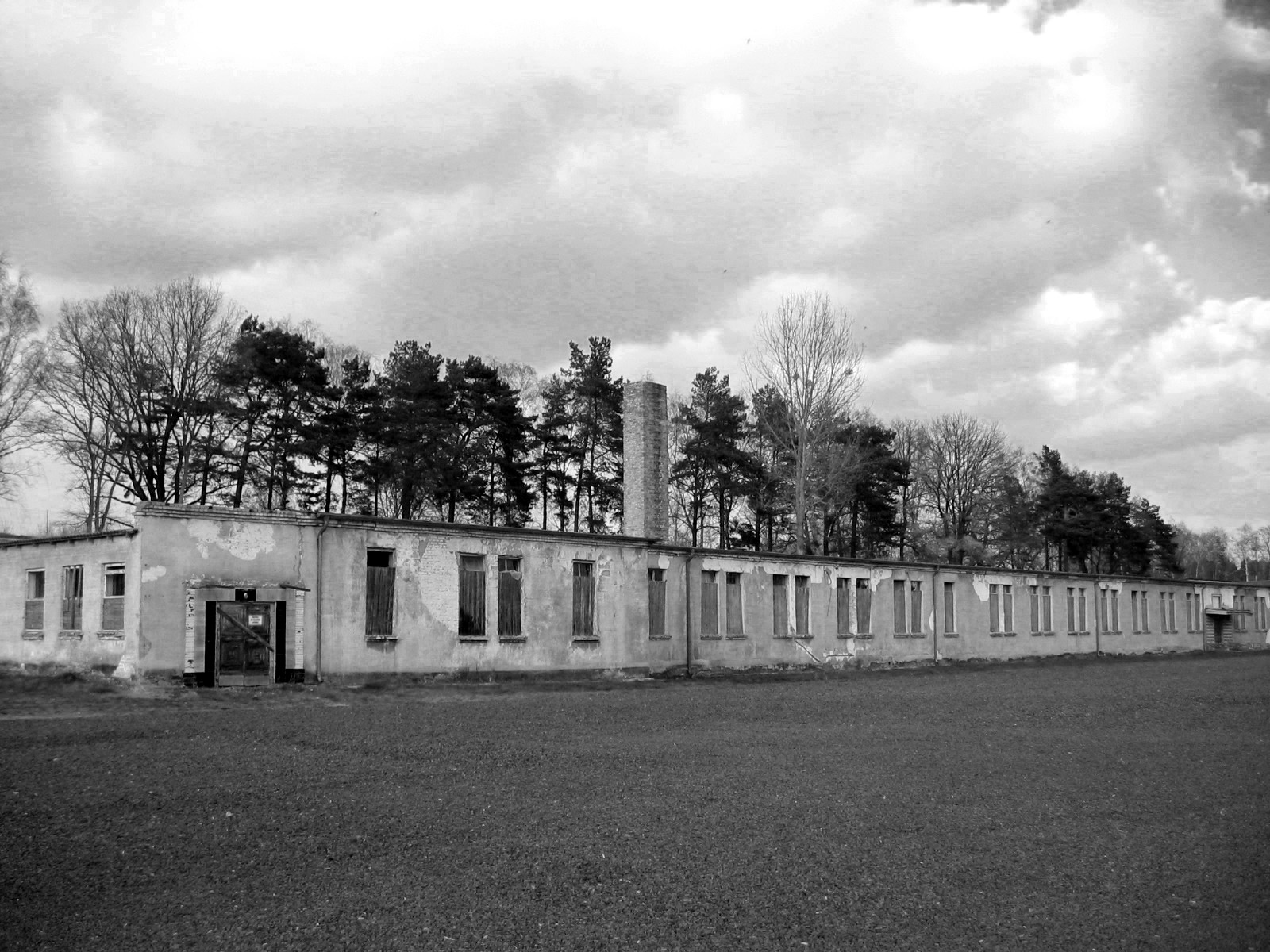
Photographs today are of the state where he was born, Mecklenburg-Vorpommern. They were taken in 2007, 18 years after the wall came down.
For music it shall be something from Mendelssohn’s Antigone. For those interested, there is a fascinating 2014 book on the Politics of Appropriation: German Romantic Music and the Ancient Greek Legacy by Jason Geary.
A plume of smoke, visible at a distance In which people burn.—George Oppen
Plumes
Love, can I call you that, you called me that the other night, Love, I couldn’t move today, or only sank, fell, falling. Today I slept until I couldn’t and looked for your call. Your message woke me. I replied. Twice, worried you hadn’t gotten the first. And you replied, and I thought, What folly. I cleared and fell asleep again. I looked for you online. Friends post pictures of Gaza in pieces, people in bits. The skyline in plumes. Plume, a pretty word, but who can afford it? I click through the OED, arranged in pixels on my screen. Regarding the souls of poets, Plato said, “Arrayed as they are in the plumes of rapid imagination, they speak truth.” Beholding the Angels Life and Death, Longfellow wrote of “somber houses hearsed with plumes of smoke.” In “The Exile,” Ibrahim Nasrallah, an exile, writes, “Poets surround me like the fruit of regret.” If we began as light, we became flesh and have become information. Light unto sensor into bytes. Digits, pixels. Our daily bread. The news feed: Omar al-Masharawi, eleven months, dead of burns, wrapped in white, borne upon his father’s arms, whose fingers splay across the shroud, steady and soft. More photos. In Gaza City, Jabaliya, more shrouds. Charred blocks in Khan Younis, Beit Lahiya. The dead, the dying. Rubble, stalks of rebar, ash and limbs. Columns of smoke gore the air, choking daylight. Missiles from a distance. And from a distance, plumes.
The poem about Gaza was written by an Iranian-American artist and educator in 2016.
Here are some 2018 facts from Amnesty International:
As of October, 150 Palestinians had been killed, 10,000 had been injured, “including 1,849 children, 424 women, 115 paramedics and 115 journalists. Of those injured, 5,814 were hit by live ammunition.” The death toll rose by early December to 175 and by the end of the year to an alleged 220, and those shot in the legs are by now at least 6,392.
One Israeli soldier has been killed and one injured.
The Human Rights and Gender Justice Law Clinic (HRGJ) at the City University of New York (CUNY) School of Law just submitted a human rights abuse report to the UN about 45 children being killed during the Right of Return Marches since last March. The report notes that of the 56 Palestinian children killed by Israeli forces and settlers in the OPT during 2018, a total of 45 children were killed in the Gaza Strip since March 30, according to evidence collected by DCIP. In the overwhelming majority of cases, DCIP was able to confirm children did not present any imminent, mortal threat or threat of serious injury when killed by Israeli forces.
Photographs today are industrial plumes, not the plumes of war and occupation. Music here:
Last week I visited a traveling exhibit at the Oregon Museum of Science and Industry which displayed, quite beautifully, a replica of the burial chamber of an Egyptian pharaoh, King Tut. When the glare of all that gold subsided, and the wonder, that so many things had survived millennia intact, found by relentless searching of a passionate amateur archeologist, what was left?
Thoughts on looting and attention. The riches of the pharaohs, the sagas of finding their tombs, the mythology around the curses befalling the grave diggers all have been in the spotlight of public attention for more than a century. Academia was fascinated with deciphering the hieroglyphs. Scientists to this day use every tool in the box to determine modes of living and cause of death (as well as consequences of severe incestuous marriage practices) on various mummies. Exhibits of the real thing, as well as of the replicas of the artifacts and relics found, attract literally more visitors than any other exhibitions on earth.
What is the fascination? I remember as a child being dragged to see queen Nefertiti’s bust in Berlin, flying into the city which was walled off by the Iron Curtain in the 60s, my first flight ever. Stumped by my mother’s awe, unmoved by anything I saw and uncomfortable about the fact that I seemingly didn’t get it. Is it the thought that at least some remain unforgotten after death? Admiration of successful sleuthing? Awe at the riches devoted to select individuals?
Pleasure at the object evidence that some ancestral “deities” also had musical instruments, played board games and scratched their backs just as we do? These are not rhetorical questions, I truly wonder.
Here is a reflection from 1818 by romantic poet Percy Bisshe Shelley, about another pharaoh and the vagaries of civilizations.
Ozymandias
I met a traveller from an antique land, Who said—“Two vast and trunkless legs of stone Stand in the desert. . . . Near them, on the sand, Half sunk a shattered visage lies, whose frown, And wrinkled lip, and sneer of cold command, Tell that its sculptor well those passions read Which yet survive, stamped on these lifeless things, The hand that mocked them, and the heart that fed; And on the pedestal, these words appear: My name is Ozymandias, King of Kings; Look on my Works, ye Mighty, and despair! Nothing beside remains. Round the decay Of that colossal Wreck, boundless and bare The lone and level sands stretch far away.”
Certainly the Egyptian people have been looted. I am not talking about artifacts being dragged to European museums, either. I am thinking about what it would have taken to accumulate the riches displayed in the tombs, the building of the pyramids, the exploitations of the fellahs, or the victims of internecine conflicts among the families of the anointed in c. 1332–1323 BC when Tutankhaten lived his short life.
More recently, think what the Ottoman Empire, the French, starting with Napoleon and then the British did to the country. The latter occupied Egypt by 1882, stopping short of full annexation because of rival French interests, with endless empty promises that troops would be removed soon. Ostensibly to secure access to the Suez canal, the colonial move was much about marauding the country’s ability to grow lucrative crops.
By 1922, when Tut’s tomb was discovered, the British had eroded the country’s ability to feed itself by installing a mono crop approach on over 80% of all agricultural land: king cotton. Other than growing it and providing the unhealthy work of cleaning the fibers, the cotton processing industry was solely placed in England, depriving the Egyptian people of much needed work and industrial investment, making them dependent on expensive food imports, and prohibited any tariff or tax income from the cotton exports. And don’t get me even started on the Suez Canal…..that requires another full blog.
The people started to revolt in 1919 and by 1922 the British declared a limited independence – it took another 30 years to achieve full independence of the occupying forces – until they bombed the country in 1956 over the ownership of the canal. A great summary of the history can be found here: https://www.nonviolent-conflict.org/egyptian-independence-1919-22/
Despite life under colonial occupation, the intellectual life flourished – here is one of my favorite examples: surrealism found its local expression around George Henein and his followers .
I feel like that bedraggled, aging thrush of Hardy’s poem, who believes in hope in a world that is a rather dark place, then and now. Or who simply does what nature requires, doing what’s needed for survival, equipped for that with instincts that aim at continuity and consequently inspiring hope.
Hope it shall be, then, during a celebration of same that is called Christmas.
I leant upon a coppice gate When Frost was spectre-grey, And Winter’s dregs made desolate The weakening eye of day. The tangled bine-stems scored the sky Like strings of broken lyres, And all mankind that haunted nigh Had sought their household fires.
The land’s sharp features seemed to be The Century’s corpse outleant, His crypt the cloudy canopy, The wind his death-lament. The ancient pulse of germ and birth Was shrunken hard and dry, And every spirit upon earth Seemed fervourless as I.
At once a voice arose among The bleak twigs overhead In a full-hearted evensong Of joy illimited; An aged thrush, frail, gaunt, and small, In blast-beruffled plume, Had chosen thus to fling his soul Upon the growing gloom.
So little cause for carolings Of such ecstatic sound Was written on terrestrial things Afar or nigh around, That I could think there trembled through His happy good-night air Some blessed Hope, whereof he knew And I was unaware.