Browsing Category

Poetry

Unglücksrabe

Random chain of thought on language and politics while I was watching my beloved crows and their babies.

We have a phrase in our household, disaster crow, that loosely refers to someone who attracts accidents or is otherwise stricken by bad luck. The original German was Unglücksrabe, a raven, not a crow. It is well integrated into the German vernacular and originated with a poem, Hans Huckebein, der Unglücksrabe, about a raven who was brought home from the woods by a boy, only to wreck havoc on a household with mean spirited and sinister raven intentions, ultimately hanging himself in a ball of yarn he tried to destroy. All this in a classic poem by writer and famous satirist Wilhem Busch, whose dark, dark stories, often cruel and vile with punitive death at the end, amused generations of Germans, since the lat 1800s.

Young as well as old readers reveled in the mischievous (mis)deeds of various protagonists depicted in early comic strips, almost, the most famous of them Max and Moritz, and rejoiced at their fitting ending, less of a parable than a sadistic lay-out of consequences. What went unmentioned is the in-your-face expressed anti-Semitism, both in Busch’s poetry and his letters. It was only in 1961 and only for some publishing houses that they simply removed the worst stanzas from whole poems, as if they didn’t exist. (I will not give the garbage room, but my German readers can see for themselves in a smart review in the Jüdische Allgemeine.) The public discussions around Busch’s centennial birthday tried their hardest to minimize, often by adding that he attacked others as well, the catholic church included. The desire to revel in texts that celebrate the misfortune of others seems too strong to be abandoned… Schadenfreude as a national pastime.

However, it also serves to extend latent anti-Semitic ideas in a population that was raised on these stories – and we have ample evidence that anti-Semitism is alive and well. Just this week unknown perpetrators cut down 7 trees planted in memory of the victims of Nazi euthanasia programs and forced death marches, kids among them, at the concentration camp Buchenwald in Weimar. Closer to (now) home, Jewish parents were confronted with the new logo of a Georgia school district:

Distribution is now halted, but anti-Semitic incidents in Georgia have more than doubled between 2020 and 2021, according to a report by the Anti-Defamation League. (Ref.)

And just in case it is seen as isolated incidents: last week every single Republican House member voted against a Neo-Nazi probe of the military and law enforcement. )The amendment to the National Defense Authorization Act did pass with the votes of the House Democrats. All they wanted was for the FBI to report the total number of people who were discharged from the military or police because of their links to or support for far-right extremism .)

In any event, what I was really thinking about before getting side lined by politics, was how frequently phrases pick up bird characteristics or are associated with birds in one fashion or another. That’s true for English as well as German.

Here are some: Crazy as a loon (haunting cry), happy as a lark (melodious songs), skinny as a rail (they hide among the reeds in camouflage), like water off a duck’s back (their uropygial glands coat their feathers,) take someone under your wing (fledglings), ugly duckling (before you develop plumage…), night owl, eat like a bird (small quantities,)eagle eye (superior vision, ability to detect prey), birds of a feather flock together, scarce as a hen’s teeth, proud as a peacock, graceful as a swan, dead as a dodo, free as a bird, as a duck to water and, of course, straight as the crow flies. (I found these here; more complicated bits about words associated with birds can be found in Merriam-Webster.)

For an endless list of the equivalent German expressions you can go here. Notable that bad parenting is called having raven parents, funny or unlucky people are called Spassvogel and Pechvogel, respectively. Instead of picking a bone you pluck a chicken, Hühnchen rupfen, and considering someone stupid or mistaken is expressed as “you have a chickadee,” du hast ‘ne Meise, or “you’re obviously chirping”, bei dir piept’s wohl.

Yes, I know, I’m chirping a lot…

Spatzenhirn (sparrow brain), Gänsehaut (goose bumps,) Hühneraugen (corn on the feet/ chicken eyes, literally), Krähenfüsse (crows’ feet in the face) are also known attributes of this writer. A komischer Kauz (weird screech owl) or odd character, after all.

Oh, I revel in applied language. One of my favorites in this context is the German invention of the phrase Nachtijall, ick hör Dir trapsen, a Berlin idiom that is grammatically false. Literally translated it says, nightingale, I hear your heavy footsteps, (an absurd assertion) but the meaning implies something along the lines of being able to tell which way the wind is blowing. Living language blended two lines from a famous song from Des Knaben Wunderhorn, about hearing and seeing a nightingale, creating a whole new meaning with a joke.

Then again, maybe we should stick to the short vocabulary of this crow: woo or wow? Click on this link!

Here is the song about the nightingale from Des Knaben Wunderhorn set to music by Mendelsohn.

The whole cycle set to music by Gustav Mahler:

Des Knaben Wunderhorn: Alte deutsche Lieder (German; “The boy’s magic horn: old German songs”) is a collection of  German folk poems and songs edited by Achim von Arnim and Clemens Brentano, and published in HeidelbergBaden. The book was published in three editions: the first in 1805 followed by two more volumes in 1808.

The collection of love, soldiers, wandering, and children’s songs was an important source of idealized folklore in the Romantic nationalism of the 19th century.  Des Knaben Wunderhorn became widely popular across the German-speaking world; Goethe, one of the most influential writers of the time, declared that Des Knaben Wunderhorn “has its place in every household”.

And why stop with avian attribution? Here is your poetry fix for the weekend.

Hang in there, world!

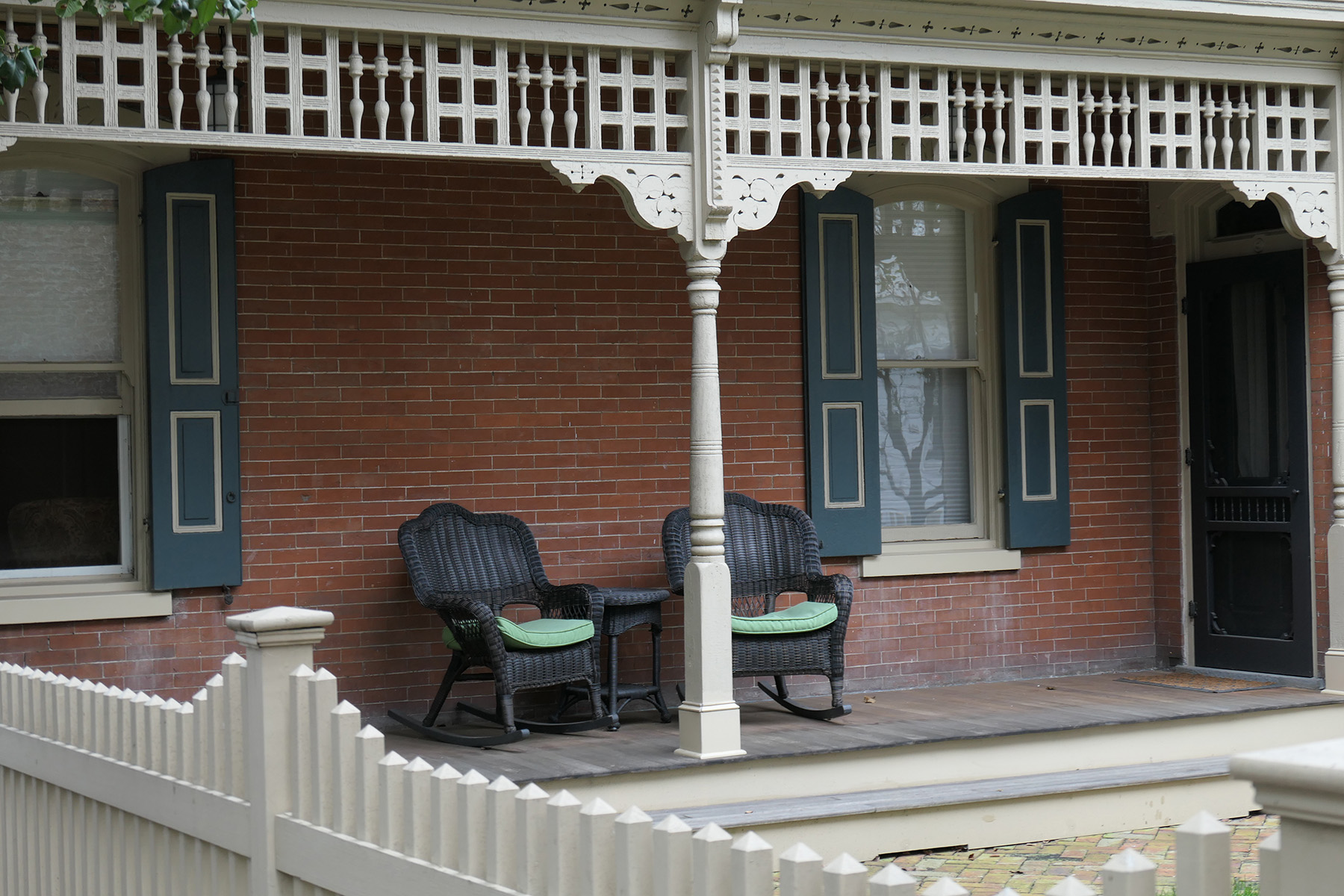
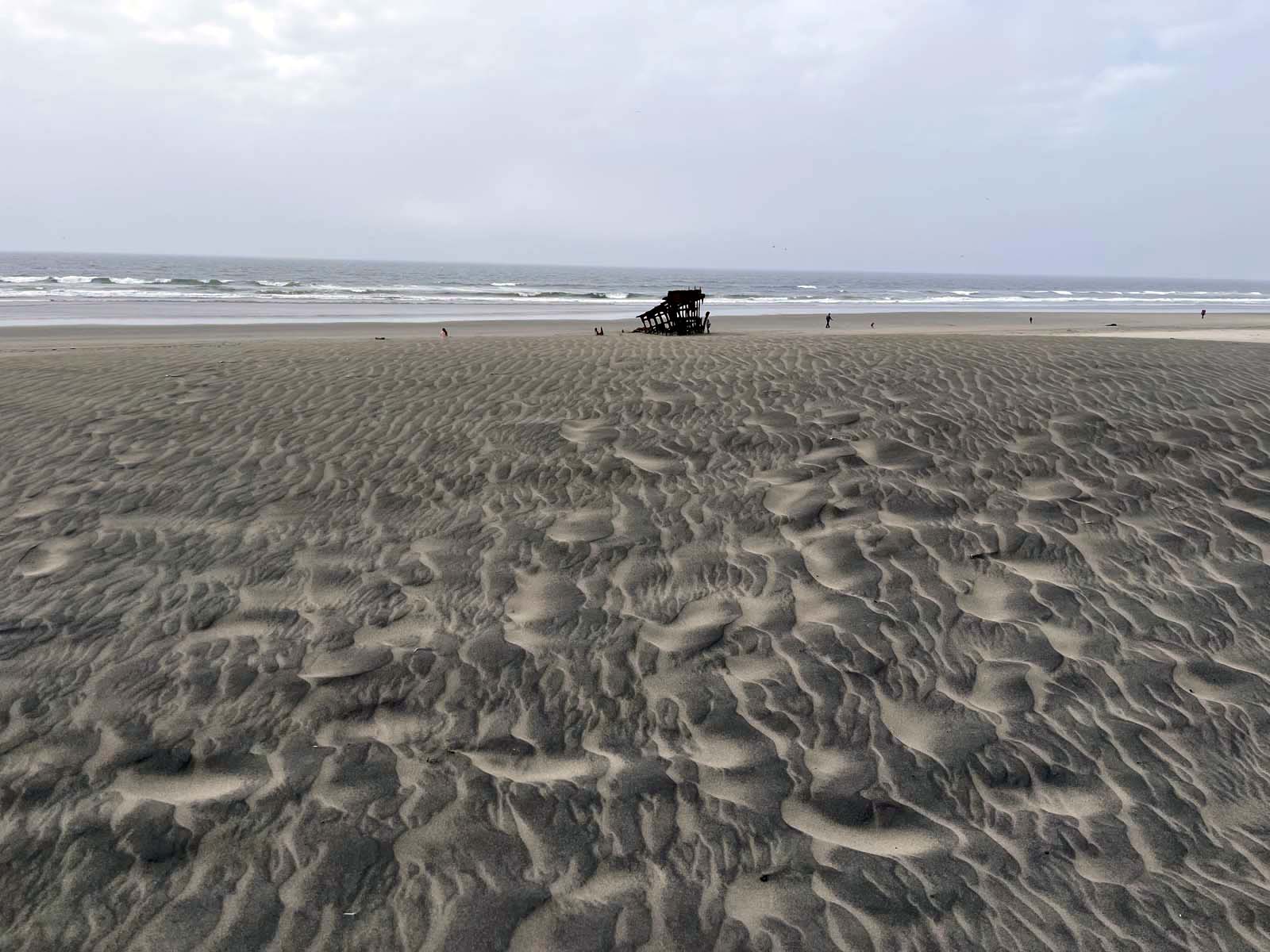
Instead of a nature walk you get to accompany me on a neighborhood walk this week. I figured I’d do a bit of my daily “practicing hope,” after this sign early on reminded me that we are all kind of limping along. All photographs taken with iPhone within a 2 mile radius in NE PDX.

So what could I interpret in ways providing us all with a bit of optimism?

—> Not everyone sits on a high horse – there are some down to earth ones to be found, always.

—> My favorite birds decorated cottage gardens, and pottery at pop-up sales, arranged on brightly colored shelves. I found the website of the artist, Natalie Warren, here. And am now thew proud owner of a tiny cup painted with a crow’s head. Art + birds, wherever you look!

I know, consumerism. But then again, we need to support local artists!

—> Unclear whose art this was, some shades of Max Ernst, some Phoenix more Escher than ashes, some arrangement of pies that had me lust, fully aware that I have enough to eat and even afford the luxuries of sweets…

—> Happy to note that Yellow Peril support Black Power and that someone, anyone, still remembers Leonard Peltier.

Not everyone, then, withdraws into idyls complete with Gartenzwerg….

In fact, some neighbors very explicitly reminded us that we have obligations to remember:

All of us:

—> In any event, the keys to hope were visible: in explicit and implicit forms – you’ll forgive me if I post an overused poem, but could not escape the symbolism in front of my eyes.

“Hope” is the thing with feathers

BY EMILY DICKINSON

“Hope” is the thing with feathers –

That perches in the soul –

And sings the tune without the words –

And never stops – at all –

And sweetest – in the Gale – is heard –

And sore must be the storm –

That could abash the little Bird

That kept so many warm –

I’ve heard it in the chillest land –

And on the strangest Sea –

Yet – never – in Extremity,

It asked a crumb – of me.

And because I did not make your brains work today, I will go harder on your ears – here is what I am currently listening to, constantly, some fascinating experimental music from a Chicago/NY based group je’raf. Their political satire is another reason for hope – there are still people out there fighting! AND having fun while doing it.

Ospreys as distraction.

A perceptive friend remarked that I have been offering much contemplation on nature when not writing about the larger art projects across the last months. It is true, I have been using nature to distract myself from politics, the relentless onslaught of bad news, piling up like yesterday’s clouds, pictured below.

So it was yesterday when I hung out with a number of ospreys. Or so it was supposed to be. Alas, the politics refused to leave my head. While the birds circled, hunted, tended to their brood, I thought about how the accumulation of shootings not only numbs us, but makes the average citizen more eager for strongman or authoritarian protection. The repeated shocks drive the last ones away from our attention, to be replaced by the newest massacre.

Remember the supermarket shooting in Buffalo, mid-May? The school shooting in Uvalde, some weeks back, now Highland Park during the 4th of July parade? So far, in the U.S. this year, we have had 322 mass shootings, (defined as 4 or more dead, excluding the wounded.)

And then this:

” the shootings were “designed” to get Republicans to support gun restrictions. Here’s what I have to say. I mean. Two shootings on July 4: one in a rich white neighborhood and the other at a fireworks display. It almost sounds like it’s designed to persuade Republicans to go along with more gun control. I mean, after all, we didn’t see that happen at all the pride parades in the month of June,” Greene said.

“But as soon as we hit the MAGA month,” she continued, “as soon as we hit the month that we’re all celebrating, loving our country, we have shootings on July 4. I mean, that’s … oh, you know, that would sound like a conspiracy theory, right?”

So spouts Congress woman Marjorie Taylor Greene, conveniently forgetting that just a few years back 49 people were killed at an Orlando gay bar. This month police in Idaho foiled an attack by affiliates of a white supremacist group on a Pride celebration in a park. A scooting scare at the SF Pride Parade sent the crowd running (evidence was not found.)

And then there was the Las Vegas shooting in 2017, that killed 60 people and wounded over 400. At a music festival, not during “MAGA” month….

Kathy Fish wrote her most widely anthologized piece to date in response to that murderous act.

“It was first published in Jellyfish Review. It was then chosen by Sheila Heti for Best American Nonrequired Reading 2018 and by Aimee Bender forBest Small Fictions 2018. Variously described as a poem, flash fiction, prose poem, or flash essay/creative nonfiction, this hybrid piece has also been selected for Literature: A Portable Anthology (Macmillan), Stone Gathering: A Reader (French Press Editions), Humans in the Wild: Reactions to a Gun Loving Country (Swallow Publishing), Advanced Creative Nonfiction: A Writer’s Guide and Anthology(Bloomsbury), and the newly released 15th edition of The Norton Reader (W. W. Norton).

Collective Nouns for Humans in the Wild

A group of grandmothers is a tapestry. A group of toddlers, a jubilance (see alsoabewailing). A group of librarians is an enlightenment. A group of visual artists is a bioluminescence. A group of short story writers is a Flannery. A group of musicians is — a band.

resplendence of poets.

beacon of scientists.

raft of social workers.

A group of first responders is a valiance. A group of peaceful protestors is a dream. A group of special education teachers is a transcendence. A group of neonatal ICU nurses is a divinityA group of hospice workers, a grace.

Humans in the wild, gathered and feeling good, previously an exhilaration, now: a target.

target of concert-goers.

target of movie-goers.

target of dancers.

A group of schoolchildren is a target.

by Kathy Fish

I have no use for conspiracy theories, from any faction. The facts speak for themselves. The number of available guns needs to be reduced. Gun laws need to be reformed, waiting periods initiated, background checks performed. Large capacity magazines need to be prohibited. Politicians need to be prevented from benefiting from lobbyists’ largesse. As long as we do not acknowledge these facts, children remain targets. Or their parents. Or anyone else in the fabric of things.

Come on ospreys, do your thing. Distract me.

Here is a beautiful album that might do the trick.

Grace in unlikely Places.

I was thoroughly bummed. A friend had reached out if I could resume photographing one of his Master Classes, this time at BodyVox and on-line, offering a Dance Workshop on July 8th and a Drum Workshop on the 9th. How I would have liked to do that, but of course I can still not attend inside sessions. It’s been almost three years since I’ve documented those African drummers and I miss it (wrote about them last here.) Check it out – it’s open to all and an exhilarating experience.

My mood did not exactly improve when I tried to soothe my irritation with a walk. The extent of the damage that last summer’s drought and this spring’s cold floods did to the trees at the Oak Bottom nature preserve is now evident, and it is considerable. Worse, there are open fire pits to be found in the park, a clear and present danger to the old growth around it, never mind the trash. I so understand the houseless pitching their tents away from dangerous highways, or sidewalks where the next forced removal is around the corner. But my heart fears for the safety of the forest when fire becomes involved.

Fire ring ashes above, Cottonwood tree fluff lying around like tinder below.

In case we’d forget, someone spelled out the systemic root causes, adding cries for help.

“Capitalism ruined everything.”// Save Kids.

Read by me during a month when the Supreme Court had revoked women’s constitutional rights to bodily autonomy, decided that Miranda rights aren’t really necessary, declared that states can’t regulate firearms, assured that the EPA cannot regulate assaults on our – and the world’s – environment, but states can use new powers in “Indian Country,” not just further diluting Native American sovereignty, but also opening an avenue to criminalize and punish any non-native protesters who come to states that go ahead with drilling and pipelines. Mood further deteriorating.

As Vox Senior Correspondent Ian Millhiser remarked: “The United States has three branches of government, the Judiciary, which makes laws. The Executive, which sends a lawyer to the Supreme Court to argue in favor of laws. And the Senate, which blocks Democratic nominees to the Judiciary. Oh, and the House which asks for campaign donations.”

Still, wildflowers, chicory and sweet peas, morning glory and jewel weed among them, lined the path.

Ducks went about their business, watched over by a solitary heron (where did all the others go?)

Raccoon and I exchanged meaningful glances before we parted.

And the birds ignored it all and just trilled out their song. Or foraged for lunch. Or fed their fledgelings, closer to home. At the equal opportunity bird feeder in front of the study window.

This is about 5 meters from the road which she regularly crosses to get to my roses and hostas….whatever small fruit had managed to set on the apricot trees are gone as well.

Daily practice of hope? Turn to British writer and poet Tom Hirons. How can you not seek help from a poet who describes himself on his website as:

Essentially a cheerful fellow driven to apoplexy and grief by the madness of our times, Tom is calmed most effectively by walking on Dartmoor, by sleeping in the deep greenwood and by the sound of true words spoken.

Holding each other fast against entropy was likely the principle behind this tagger’s planting of joy, which ultimately cheered me up – a distributed garden of flowering hearts, specimens all photographed at Oaks Bottom on this one round yesterday. Grace occurs in unlikely places.

Here is a recent performance of Sekou, his mates and the young dancers at a Blazers game.

And here is some Kora music from West Africa.

Foxgloves

Some things finally awaken in the garden, the columbines, some iris, a first little hedge rose, corn flowers, daisies, buttercups,

and the foxgloves.

A magnet to bees, this plant is actually highly toxic, but, used in the right amounts, can also be healing. (Don’t try at home…!) As a source of dioxin, it is used to treat cardiac arrhythmia, ever since British physician, William Withering, published his book, An Account of the Foxglove, in 1785.  He and subsequent healers used it for a variety of ailments, edema, epilepsy, hydrothorax (fluid in the pleural cavities) and phthisis pulmonalis (probably tuberculosis.)(Ref.)

Some people speculate that Vincent van Gogh used digitalis (the plant’s latin name) to treat his epileptic seizures towards the end of his life. The chemicals cause haziness of vision, or a yellow tinge to everything one sees, known as xanthopsia. Occasionally, points of light may appear to have coloured halos around them. Rarer still are effects on pupil size, such as dilation, constriction or even unequal-sized pupils.

“The effects of digitalis intoxication have been suggested as the cause of Van Gogh’s “yellow period” and the spectacular sky he painted in The Starry Night. More circumstantial evidence comes from the two portraits Van Gogh produced of his doctor, Paul Gachet, showing him holding a foxglove flower. One of Van Gogh’s self portraits also shows uneven pupils.

All of this is very interesting but it is pure speculation. Van Gogh may not have taken digitalis, and perhaps simply liked the colour yellow and the effect of swirling colours around the stars he painted. Unequal pupil size in his self-portrait may have been the result of a simple slip of the paintbrush.” (Ref.)

Then again, he was known to indulge in drinking absinthe. The alkaloids in Artemisia absinthium which is used to brew the liquor cause similar visual effects.

Who knows…

Vincent van Gogh Dr. Gachet (1890)

The bees don’t care….

Today’s poem is by John Lee Clark, a DeafBlind poet, essayist, and independent scholar from Minnesota. The German name for the plant is Fingerhut, which translates as thimble.

Music is some mellow folk songs today. Titled Foxgloves, of course.

The Hocus-Pocus of the Universe.

I take my victories where I can find them. Two days ago I won a staring contest with a coyote. The bunny, paralyzed with fear between us, lived, too. I stood still for what seemed half an eternity, he approached a step or two but then reconsidered. Time enough to take the photographs, and for a Painted Lady to land on the scat he left behind. No matter how often I feel blessed by nature, some encounters are unexpected, as if by magic, and make my heart race. With joy more than fear.

It had already been a morning filled with sweet encounters. The hungry scrub jay fledglings waiting for their mother,

other mothers readjusting worms in beaks.

Egrets hanging out, with a cacophony of their screaming offspring in nests in the woods behind them.

Glimpses of snowcapped Mt. St. Helens in the distance.

I had come to photograph something altogether different, though. I wanted to capture the star-like flowers of hemlock or cow parsley, you choose. (I have written about the distinction between these two, the former highly toxic, the latter good for making soup, previously here.) I needed a stand-in for stars, since they play such an important role in the poem attached below, not having images for the real thing since I rarely see them these days. Either it is too cloudy, or I am in bed already.

I don’t know why I had not come across this poem earlier – it has been around for a long time. Since 1977, to be precise, in a volume called The Hocus-Pocus of the Universe. The author, Laura Gilpin, had received the Walt Whitman Poetry award the previous year. She died, not yet age 56, barely 6 months after a diagnosis of cancer, in 2007.

The Two-Headed Calf

Tomorrow when the farm boys find this
freak of nature, they will wrap his body
in newspaper and carry him to the museum.

But tonight he is alive and in the north
field with his mother. It is a perfect
summer evening: the moon rising over
the orchard, the wind in the grass. And
as he stares into the sky, there are
twice as many stars as usual.

by Laura Gilpin (1950- 2007)

The poem hit me at gut level, about the precariousness of life, about “othering,” and the hope one can find when staying in the moment, if only for a moment. It also fascinated me with a level of writing skill that manages to suggest so many different scenarios in so few lines.

What do we have here? Immediately we get introduced to the derogatory term freak. Wrapped in newspaper (a calf with two heads? Large newspaper…) reminiscent of ways to discard refuse like stinking fish. It will be displayed, gawked at, the museum replacing freak shows of yore on the circus circuit.

According to the Encyclopedia Britannica, freak show is

“...a term used to describe the exhibition of exotic or deformed animals as well as humans considered to be in some way abnormal or outside broadly accepted norms. Although the collection and display of such so-called freaks have a long history, the term freak show refers to an arguably distinct American phenomenon that can be dated to the 19th century.”

Promoted by P.T.Barnum, people raved about the entertainment delivered by watching disfigured animals or humans with disabilities, weight and height differences, dwarfism included, absence or increased presence of limbs, vitiligo, and persons with ambiguous sexual characteristics including hermaphroditism. Given how indefensible and indecent amusement at the sight of human abnormalities is, it is no surprise that the world saw a “Revolt of the Freaks” in 1898, when a collection of the 40 or so most-famous performers in the world staged a labour strike while on tour in London, demanding that the management of the Barnum and Bailey circus remove the term freak from promotional materials for their shows. To no avail. It took until the middle of the 20th century for these shows to be abandoned.

What is unfortunately alive and well, though, is a (religious and ideological) movement that defines “non-normative” people as freaks, abnormalities to be eradicated from a healthy societal body, and threatens to, at best, exclude them and force them into hiding, or punish them and those who support them, or, at worst call for their extermination. From a church pulpit, no less.

In this year alone, more than 240 bills have been introduced directed against LGTBQ people, most of them trans, and the year isn’t half over. The Human Rights Campaign reports that last year, 50 transgender and gender non-conforming people have been killed in the U.S., 14 so far this year. That is not counting the suicides of mobbed or despairing trans teenagers. According to NPR, a third of the known trans-youth, 58.000 people, are in danger of losing gender affirming health care. Actually, newest statistics show that the U.S. has about 1.6 million people who are transgender, 43% young adults or teenagers.

Gilpin draws a scenario in the second stanza that shows the domesticated framework of a summer evening at the farm. North field, like a neighbor’s address, with mother, a loving family then, mellow conditions lit by the moon, soothing noises by soft wind, the mention of an orchard promising the sweetness of fruit. All is right here, as long as the cruel world can be kept at bay, and the fate of non-conforming to norms, or of disability, postponed for just a few hours longer. It is inevitable, but in the meantime there is beauty to behold. And here is a glint of magic: four eyes in two heads see double the beauty, a privilege not granted to the rest of us.

Yet the added shimmer is no compensation, in my mind, for the lack of a glimmer of hope that people will attempt to integrate physical or mental disability without prejudice, or accept gender non-conformity (not a disability!) as a human right. Or stop using it as a wedge issue in a war between polarized ideological factions.

Gilpin worked for decades on a second volume of poetry, finished shortly before her death and published posthumously, The Weight of a Soul. Mine was left less heavy by the thought that poetry can still help us think things through, sort out who is discriminating and who needs protection. My soul was also made lighter by the hocus-pocus of nature, creating every variability imaginable, shimmering in the light.

Here is some beautiful music from Australia Superclusters. More stars, for your ears this time.

Hemlock towering over me by a foot at least…

Drying Out

The sun was out. The sky was blue. Puffy white clouds. Miracle of miracles, after these endless rains, the cold, a May more like February. Yesterday was a promise of better times.

And everyone, I mean everyone, was out drying their plumage, preening, soaking up some warmth.

The herons opened their wings to the sun rays, or flying low in a bit of a breeze.

The Bullock’s Oriole (says my bird book) competed with the golden light around it, more interested in getting the gnats out of its feathers than watching the busy swallows right above it.

Bullock’s Oriole

And the turtles?

Lined up in a row, late comers trying to score a place as well, not too successfully.

Mothers and offspring sharing a log.

Heads stretched up high, opening wet folds, drying out.

Before we get too excited with all those harbingers of better times ahead, let’s be pragmatic. The rains will reappear in the not too distant future, says the weatherman. Good for our parched state, bad for our mood. Lets not be like the theoretic turtle – let’s follow canine advice: work around it and all other nuisances…

The Theoretic Turtle

The theoretic turtle started out to see the toad;
He came to a stop at a liberty-pole in the middle of the road.
“Now how, in the name of the spouting whale,” the indignant turtle cried,
“Can I climb this perpendicular cliff and get on the other side?
If I only could make a big balloon I’d lightly over it fly;
Or a very long ladder might reach the top though it does look fearfully high.
If a beaver were in my place, he’d gnaw a passage through with his teeth;
I can’t do that but I can dig a tunnel and pass beneath.”
He was digging his tunnel with might and main, when a dog looked down at the hole.
“The easiest way, my friend,” said he, “is to walk around the pole.”

by Amos Russel Wells (1862 – 1933)

Kids Who Die

by Langston Hughes

This is for the kids who die,
Black and white,
For kids will die certainly.
The old and rich will live on awhile,
As always,
Eating blood and gold,
Letting kids die.

Kids will die in the swamps of Mississippi
Organizing sharecroppers
Kids will die in the streets of Chicago
Organizing workers
Kids will die in the orange groves of California
Telling others to get together
Whites and Filipinos,
Negroes and Mexicans,
All kinds of kids will die
Who don’t believe in lies, and bribes, and contentment
And a lousy peace.

Of course, the wise and the learned
Who pen editorials in the papers,
And the gentlemen with Dr. in front of their names
White and black,
Who make surveys and write books
Will live on weaving words to smother the kids who die,
And the sleazy courts,
And the bribe-reaching police,
And the blood-loving generals,
And the money-loving preachers
Will all raise their hands against the kids who die,
Beating them with laws and clubs and bayonets and bullets
To frighten the people—
For the kids who die are like iron in the blood of the people—
And the old and rich don’t want the people
To taste the iron of the kids who die,
Don’t want the people to get wise to their own power,
To believe an Angelo Herndon, or even get together

Listen, kids who die—
Maybe, now, there will be no monument for you
Except in our hearts
Maybe your bodies’ll be lost in a swamp
Or a prison grave, or the potter’s field,
Or the rivers where you’re drowned like Leibknecht

But the day will come—
You are sure yourselves that it is coming—
When the marching feet of the masses
Will raise for you a living monument of love,
And joy, and laughter,
And black hands and white hands clasped as one,
And a song that reaches the sky—
The song of the life triumphant
Through the kids who die.


I had said I’m taking the week off, and I am. But could not think about yesterday’s massacre in Texas without thinking of this poem, and the insistence on life triumphant in the last lines, a defiant – helpless- cry, wrapped in hope. Needed to share it.

The powers that be in this country tolerate that guns are the highest cause of death for kids in this nation. 27 school shootings in the first 5 months of this year alone. The powers that be are content to see money from weapons flow into certain coffers, their own included. I am not even listing the ones that got NRA donations in the tens of thousands, just the ones overt a million.

But the powers that (want to) be are interested in more than money, and that is important to remember. We will not see any significant change because mass death primes for authoritarianism. As Ruth Ben-Ghiat explains, systemic gun violence is part of a Republican political design to destabilize American society. Her recent essay in the Washington Post spells out in great detail how transforming public schools into death traps is tolerated as part of a deliberate strategy to create an atmosphere of fear and suspicion conducive to survivalist mentalities and support for illiberal politics.

Let Langston Hughes be right, a day will come where the song of life triumphant will rise to the sky, a monument to all the lost kids. But in whose lifetime?

… so the darkness may glitter.

Hope doesn’t preclude feeling sadness or frustration or anger or any other emotion that makes total sense. Hope isn’t an emotion, you know? Hope is not optimism. Hope is a discipline… we have to practice it every single day.” 

— Mariame Kaba

You are getting two for one today. I wanted to post a piece of music, Our Phoenix by Mari Esabel Valverde, because it is a heartbreakingly beautiful reaction to the white-supremacist incited and enacted violence and terrorism in this country, Buffalo, NY as the most recent instance. The words are from a poem (full text of Our Dangerous Sweetness in the link) by Amir Rabiyah, who was born in London, England, to a mixed Cherokee and white mother and a Lebanese and Syrian father and who, as a trans poet, explores living at the margin.

I thought, though, that another one of their poems is more powerfully hopeful, needed in a world and era where positive thinking is ever harder to conjure, as well as gloriously full of double-meaning. So here’s my daily dose of practicing hope. And besides, I can show you what’s currently on my kitchen windowsill, glittering in the darkness …still waiting for blossoms, though.

Cactus Flower

We flash victory signs in the darkness, so the darkness may glitter.
                — Mahmoud Darwish

As the sun sets—we set our plan into motion.
Our sole purpose to overthrow

any assumptions, to change
the course of ordinary thinking.

Our work begins by speaking to darkness
and telling darkness    soon   :

             we will demonstrate through the secrecy of stars,

earth’s magnetic embrace
how we can be many things at once.

So much of the work we do
is internal, goes unnoticed, uncompensated.

We get written off or not written at all,
labeled freakish, prickled,
rough around the edges.

We learn to thrive
in the dry humor of soil;
carry water in our bellies
to quench our own thirst.

We survive, over again.
Adapt. Even after being
carried in the beaks of birds,
dropped elsewhere,

far from our roots, we grow.
We flourish.
And when least expected, when histories

not told by us, for us, claims we are defeated,

we gather our tears as dew.                        We release our anguish,
intoxicated by our own sexed pollen.
                                                              We burst,

displaying the luscious folds of our petals.

by Amir Rabiyah

And if you you are in the mood for analysis rather than poetry, read this. Or this from the Jewish perspective. Or this from an economic-systems approach.

Band-Tailed Pigeons

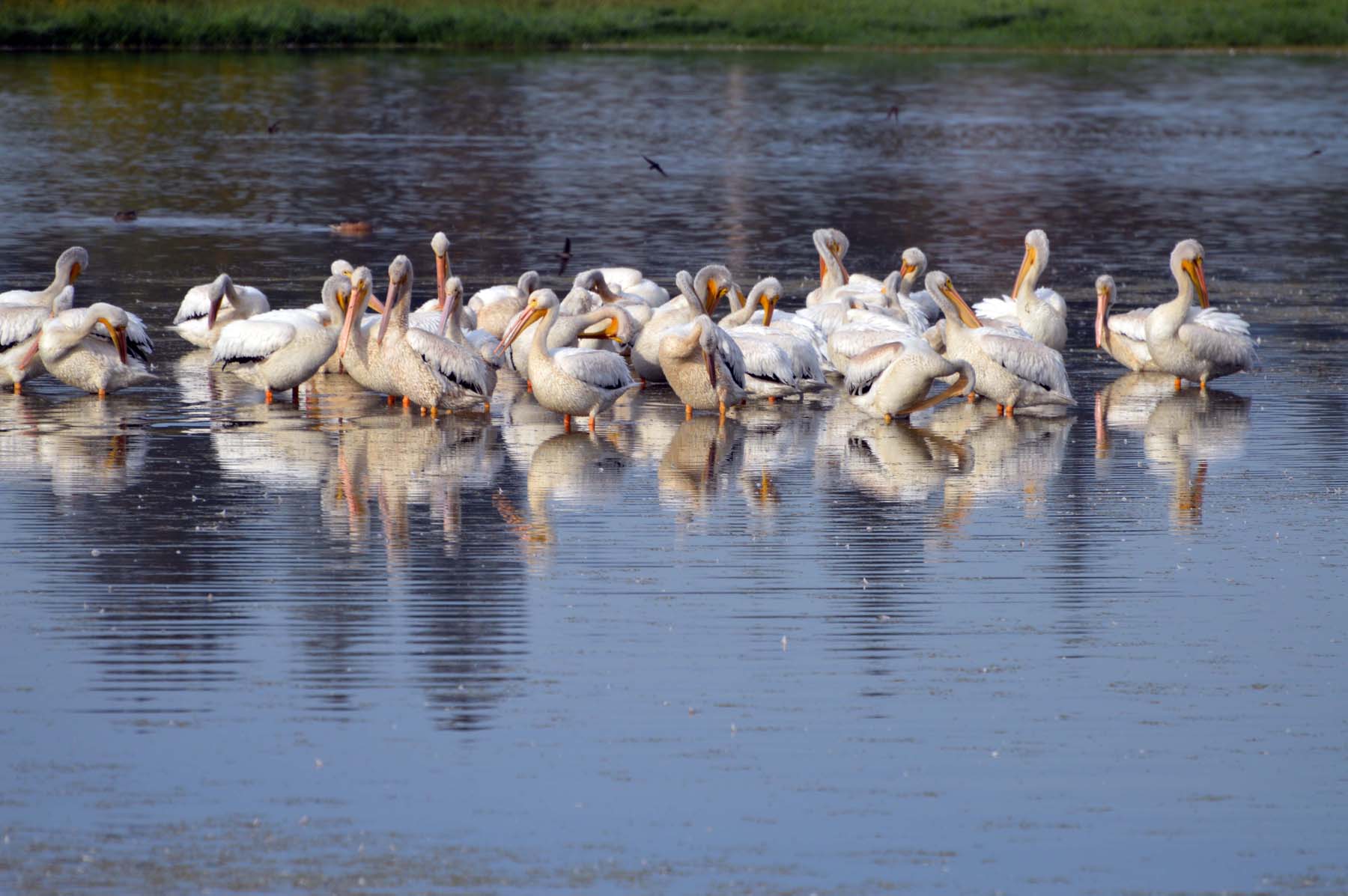
They are sitting in front of my window, courting, day after day. Sometimes they come as a small flock, sometimes just the two of them, she more cautious, reserved, but eventually joining him at the bird bath. We used to put seeds out, but that attracted too many squirrels onto the balcony.

These birds have been struggling, over-hunted, numbers slowly picking up for a while, now declining again. They eat berries, love to hang out in the Hawthorne and munch, sitting upright. I wave to them, they blink at me, unperturbed. Leaving as suddenly as they appeared.


Two Pigeons

BY MARY JO SALTER

They’ve perched for hours
on that window-ledge, scarcely   
moving. Beak to beak,

a matched set, they differ   
almost imperceptibly—
like salt and pepper shakers.

It’s an event when they tuck   
(simultaneously) their pinpoint   
heads into lavender vests

of fat. But reminiscent   
of clock hands blandly   
turning because they must

have turned—somehow, they’ve   
taken on the grave,   
small-eyed aspect of monks

hooded in conferences
so intimate nothing need
be said. If some are chuckling

in the park, earning
their bread, these are content   
to let the dark engulf them—

it’s all the human   
imagination can fathom,   
how single-mindedly

mindless two silhouettes   
stand in a window thick   
as milk glass. They appear

never to have fed on   
anything else when they stir   
all of a sudden to peck

savagely, for love
or hygiene, at the grimy   
feathers of the other;

but when they resume   
their places, the shift   
is one only a painter

or a barber (prodding a chin   
back into position)   
would be likely to notice.


Source: Henry Purcell in Japan (1984)

And all this to play today’s music, since Antonín Dvořák fits my mood these days…..