Self-reliance is a trait that many nations cherish, but none more so than the United States. The worship of self-reliance, the distrust in government regulation, the celebration of the self-made man, the “American Dream,” the belief in rags-to-riches success stories (Horatio Alger as one example,) are structural components of our social contract.
Why do we buy into it, despite all the empirical evidence that shows it to be detrimental for the majority of our population? Why do we cling to it, despite the fact that in times of crisis going it alone, favoring only a few in the best of times, is threatening to dissolve the social fabric? Why are we willing to turn a blind eye to the fact that the first of the two pillars of a democratic society – liberty (we determine our own fate) and equality – has been advanced at the expense of the latter?
Horatio Alger stories, in all their literary, cinematic and political variations, are of course peddled so that we do not question the status quo. Their core message: hard work, honesty and determination can conquer all obstacles. Never mind that every sociological and economic study shows, of course, that circumstances of birth – wealth, class, race, gender and the luck of natural talent or ability – win out over hard work and determination any time, when it comes to establishing or maintaining disparities in our nation. The working poor have not chosen NOT to succeed – they are structurally disadvantaged. By NOT acknowledging that, we can continue to withhold our empathy, and can pretend that things are fundamentally fair, after all. Work harder, and you, too shall become a millionaire!
If we embrace the notion that fairness rules the distribution of opportunities then we can say with relief: our system is just! The obscene excess wealth we see in this society, the gaping distance between the rich and the poor, all just, because every person is the captain of their own fortune.
*
Pour yourself another cup of coffee, or beverage of your choice, and sit down with me for a thought experiment. Design for me the ideal society. What would the rules be? The governing structures? What role would justice play, how would you define it? How will you remedy problems faced by larger systems, problems that include conflicting opinions, needs and beliefs? How would you distribute limited resources? Oh, and did I mention: I will not tell you who you will be in that utopia, man or woman, rich or poor, living with disability or without, black or white, talented or not. You are blind to your potential future status. Get going.
I am referring here to the work of philosopher John Rawls, who linked, in his seminal work A Theory of Justice, justice to fairness and devised the veil of ignorance as a tool to show what rational people would come up with in this situation, creating a social contract that would not hurt them in that imaginary world. Here’s what people agree to:
(1) Each person is to have an equal right to the most extensive basic liberty compatible with a similar liberty for others.
(2) Social and economic inequalities are to be arranged so that they are both (a) to the greatest benefit of the least advantaged and (b) attached to offices and positions open to all under conditions of fair equality of opportunity.
If I might end up as the weakest link in that society, equality becomes much more important than anything else, including the notions of independence and self-reliance. (Here are more details.)
As applied to our own current crisis, we have already an inkling that the over-reliance on self-reliance can be fatefully wrong. Instead of a top-down, universal, federally-led production and distribution of life-saving products, it’s a Hobbesian world out there, each state, hospital or individual trying to wrestle resources on their own. If you don’t manage to get the necessary protective gear? Not working hard enough! If blue states are systematically ignored? Not determined (to be obsequious) enough! If prisoners die like sitting ducks – well, if they’d been honest they wouldn’t have ended up in prison…. In times where cooperation, empathy and solidarity would protect society as a whole, the myth of individual ruggedness, independence and deservedness trips us up. All of us, not just the ones who were always shafted by that myth to begin with.
What can be done? Stay tuned. I’ll try and summarize some suggestions from clever people tomorrow.
Photographs of my favorite clouds are stand-in’s for veils in front of our future, or symbols of our clouded thinking, or longing reference to travel – take your pick.
Music by Schütz – They who sow with tears will reap with joy. They go out and weep and carry worthy seed, And return with joy and bring their sheaves. Psalm 125:5-6
Could be read as “be meek, bear your troubles and you’ll be rewarded,” (Justice in the afterlife as tool of appeasement.) I prefer, though, to read it as “we cry now, but if we sow the right seeds, we’ll be joyful later.” Where’s the Green New Deal already? And in any case, the music is sublime.
Honestly, I am not trying to add to all of our fears and sadness. I do think, however, that we need to face some substantive issues, if we want to learn from this crisis before the next one, climate catastrophe, hits on an incomparably larger scale than Covid 19.
This way: Justice
Therefore I decided to introduce a paradigm today that has been in my thoughts. Fascists in Germany revived a concept in the 1930s of “Thinning The Herd” which goes back to the 18th century belief that when the population exceeds resources government should use war, famine or widespread disease to thin the herd. Now why am I thinking of that?
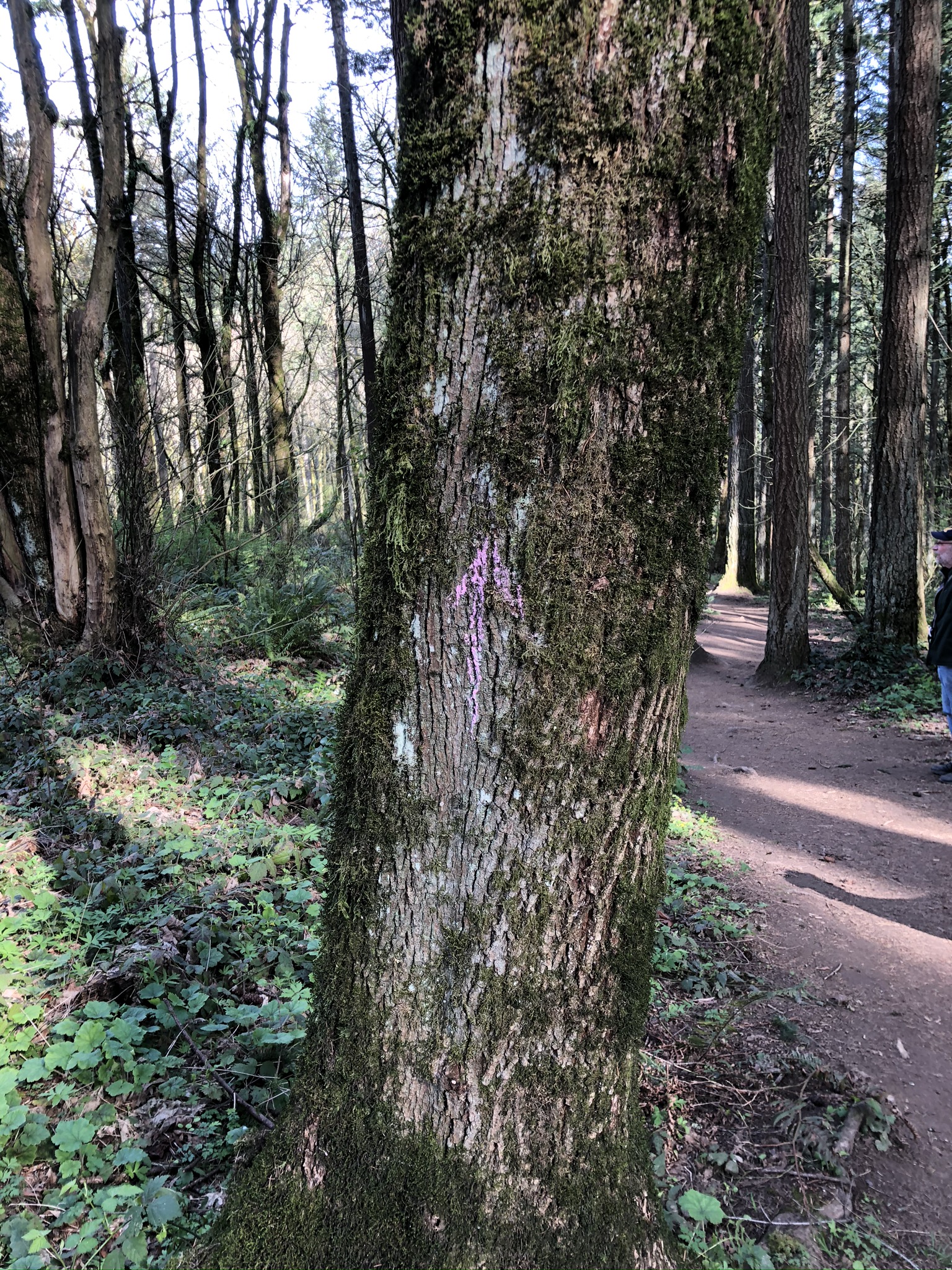
To counterbalance the heaviness of the topic, photographs today are of chalk arrows that I found on Sunday’s walk in the neighborhood park. In my imagination they point to the goals we are all trying to reach. Should be trying. MUST try!
This way: Peace
Achille Mbembeis a distinguished Cameroonian historian and political philosopher, one of the most brilliant thinkers on the African continent as well as in the US – he holds dual appointments at Duke University and in South Africa. Among the honors he received for his work on social grievances, postcolonial politics and racist thought structures was the 2015 Geschwister Scholl prize (members of the resistance group the White Rose executed by Hitler) and the 2018 Ernst Bloch prize (a German philosopher known for his seminal work The Principle of Hope,) for his philosophy outlining the need for a more humane world.
This way: Solidarity
Mbembe has developed the concept of Necropolitics, the idea of the subjugation of life to the power of death in our contemporary world. In simple words: There are powers that get to decide who lives and who dies, using proximity of death as population control. Before we apply this to our current situation let’s acknowledge that not everything is about the virus. Instead, there are ubiquitous ways in which large populations have been politically and economically managed: people exposed to wars, genocide, refugee crises, prisons, in Syria or the Gaza strip, as well as those whose poverty and precarious living circumstances have been increased through political removal of safety nets, all are governed through direct or indirect proximity to death.
This way: Equity
The philosopher talks about new and unique forms of social existence in which vast populations are subjugated to conditions of life conferring upon them the status of “living-dead,” calling them death-worlds. They are governed by certain forms of economics, which withholds public goods and rights, making existence precarious. They are structured through confinement of precarious populations in certain spaces, most often in camp-form. Refugee-camps, prisons, ghettos, banlieues, suburbs, favelas, all serve as examples. Often these are policed or militarized spaces in which human beings are controlled and can be killed, “a permanent condition of living in pain.” Underlying these management structures is the key characteristic of those in power accepting (e.g. the refugee camps on the Greek Islands) if not actively pursuing (e.g. war in Syria) the possibility of death on a large scale.
This way: Bridge to Safety
We can find these kinds of politics not just in authoritarian, but also in democratic states, where the state confines, imprisons and persecutes certain populations. Not that violence is a state monopoly: when private groups in a society separate into those who arm themselves, and those who are not armed (militias vs citizens,) the idea of killings as something acceptable is normalized. The production of weapons, both for private use or in the context of expanding wars, is a source of economic revenue in these political systems. Exploiting natural resources for economic gain also tolerates that populations are endangered, displaced or eliminated, or future generations sacrificed (Amazon rain forest destruction, for example.)
This way: Anti-Racism
What moral justifications can possibly be given for the way human populations are treated by the powerful? Mbembe offers a catalogue of their excuses, such as the eradication of corruption, different types of “therapeutic liturgy”, “the desire for sacrifice”, “messianic eschatologies”, and, importantly, “modern discourses of utilitarianism, materialism, and consumerism.” The underlying causal mechanism for necropolitics to be performed and expanded in a given society, allowing for exploitation and natural elimination of poor or powerless populations? Racism, both in its institutional and private forms. It’s beyond my scope here to go into detail – here is his book. (And here is the article that I relied on heavily for the summary of the concept.) Eye-openers.
This way: Environmental Protection
*
Back to Covid 19. Doctors and first responders who have to make utilitarian decisions about who gets to live and who will die are not to be faulted in this crisis. Younger lives are weighed against older one, existing conditions against healthy bodies, parenthood against singles, how else can you justify distribution of scarce resources. There are, however, whole governments who have also made utilitarian decisions – this time to benefit individuals (keep the numbers low so my re-election is not endangered) or political ideologies (the free market rules, I am not invoking the Defense Production Act for manufacture of rescue items, or the closing of beaches) or, as I write this, to choose a structural system – our economy and its value – over people’s lives (scrap “expendable” scientific offices, fire “expendable” administrative personell, remove social distancing rules to restart production.)
This way: Sustainability
When someone literally says that the cure cannot be worse than the disease in this situation, they imply that lives need to be sacrificed for profit. And whose lives will this be? Who are the disposable people that no-one is directly mentioning? For every single middle-class or wealthy person there are masses of those who are already going to work sick, because they cannot afford to lose their wages. For every safely ensconced work-from-home person there will be those stuffed into public transportation and factories. There are those who live in cramped quarters because of poverty, or imprisonment, who will drop like flies. There are those who have no access to medical help until it is too late, for fear of cost, or absence of clinics in their counties. There are the homeless who have a high percentage of underlying conditions.
This way: Community
We should say it out loud: those who are deemed disposable are, for the most part, poor, uneducated, deprived of resources, and, in the US, all that is correlated with being black or brown. You think I’m making this up? Look at yesterday’s comments from the Republican right after our dear leader started to get impatient with the duration of the shut-down: here is but one example
Or the Texas Governor suggesting that lots of grandparents would be willing to die to rescue the economy for their grandchildren (never mind that 3.6 million children are raised by their grandparents in this country…) – an expendable group is identified.
This way: Grace
Our task, then, first and foremost, seems to me to identify who is in power, who employs necropolitics, and who benefits from them. That is where the first change has to be forced, by putting someone else at the helm. Secondly we have to pinpoint the underlying economic systems that have enthroned their representatives for their purposes, and figure out how they can be shifted towards a more just and balanced distributions of our communal resources. We can no longer rely on a patchwork of individual support, non-profits, mutual aide societies who try at alleviate the worst of the suffering. Structural change is the only thing that will save us. Quite literally save us, as it turns out.
Maybe my brain is certifiably going downhill, but I watched this video of Stella, the dog, jumping over and over and over and over into leaf piles yesterday with such fascination and abandon that I actually forgot to worry for the entire 3 minutes of its duration.
I have, as you’ll know if you have followed me for the last years, never posted an animal video, I believe, outside of some scientific demonstrations of the intelligence of crows or some such. But this was what I needed. Joy, pure. Go ahead, roll your eyes already….
It mattered, because I was thinking about animals in two very different, but related contexts: For one, the horrific use of racist language – the Chinese virus, the Kung flu – by people working in our government is just one step removed from the language that comes next: dehumanizing terms that compare people to animals, humans to what is conceived of as subhumans. From a previous blog entry:
Psychological research, originally looking into Nazi use of dehumanizing language in preparation for the Holocaust, has shown that merely listening to it increases the willingness to use violence; some international agencies even consider that kind of naming a precursor to genocide. Once a class of people is dehumanized, the usual compassion and empathy that we extend to fellow human beings is weakened. The part of your brain that controls social relations becomes less active, a physiologically measurable effect when you are exposed to this kind of language. The door to systematic mistreatment is then wide open.
And secondly, I learned about the (differing) roles animals played in the Third Reich, from a by all reports fabulously researched and described new German book by Jan Mohnhaupt, Tiere im Nationalsozialismus. Here is my summary of the book review (not yet in English translation, alas):
The book looks at animals as the daily companions of Nazis, as means of propaganda, as depictions of the enemy and as pest. Horses were seen as heroic, trained to find landmines and boiled to save soldiers from starvation. Potato beetles were intended to be used as a biological weapon to induce starvation in nations at the Eastern front. Brown bear cubs were kept as a source of entertainment for concentration camp wardens, in a “zoo” on site built by inmates. Dogs were seen as part of the master race, cats as Jewish. German Shepherds in particular, represented the purest of German dogs, the idealization of the populist-national race ideologies. Apex animals like lions and wolves (Hitler’s code name was Wolf ) ranked net to ………pigs! Pigs scored high in their fanatical phylogenetic universe, setting a contrast to Jewish custom that declares pigs unclean for consumption.
Jews were soon not allow to keep pets and had to euthanize the ones they already owned, because the Gestapo did not want to deal with them after their owners were deported. Nazi scientists applied knowledge and methodological approaches extrapolated from animal research to humans once the moral borders had shifted toward labeling our own kind as subhumans or human animals. The racial fanaticism managed to elevate some animals above humans, in other words. But it also allowed to engage in plans for genetic “purification,” just like farmers attempted to perfect the breed and purge the coarser element.
This becomes particularly evident if you look at Nazi legislation. (Here is an essay in English that delivers the details.) To summarize, by 1933 laws for the protection of animals and the regulation of slaughter and hunting were passed. Herman Goering announced an end to the “unbearable torture and suffering in animal experiments” and threatened to “commit to concentration camps those who still think they can continue to treat animals as inanimate property.” Between Nazi leaders’ affection for animals (Hitler was a committed vegetarian) and enmity towards humans, and the political and ideological purpose served by abolishing the moral distinctions between animals and people the systematic extinction of whole groups of subhumans was just a matter of time.
How is that for downward comparison? Did I make you forget about our own situation for a minute? If not, just watch Stella again!
Yesterday’s walk – you guessed it, Oaks Bottom – served as the background for composing today’s blog. It’s a miracle that so many birds hung out, given that the place was filled with young, noisy families trying to escape cabin fever…
Today I invite you to spend your 10 minutes usually dedicated to the blog watching a video instead. It comes from a PBS series on American Masters – Unladylike 2020 – Unsung Women who changed America. It is a well- executed series, alternating between documentary clips and artistic renderings, telling short stories of activists.
Given the current circumstances, where travel in general and flying specifically is curtailed for many of my generation or for others who want to help flatten the Covid-19 infection curve, I was specifically drawn to a portrait of a pilot. The first black woman pilot who was awarded an international license, as it turns out. (She HAD to learn flying in France, since the soul crushing times around 1919 in this country prevented anything that racist possibly could prevent from being shared with those deemed inferior.)
Bessie Coleman defied everything and everyone – as one of 13 children of a Texan sharecropper she migrated to Chicago and eventually fulfilled her dream of becoming a pilot and sound artist. As an activist she refused to fly at events – now being a sought-after celebrity in her late 20s – that enforced segregation between the races – a public and effective gesture. Her life was cut short at age 34 when she was thrown out of her plane during a stunt, but her goal to open flying schools for POCs was eventually met by friends who finished what she was not able to see to fruition. The video has her story but also voiced-over commentary culled from writing she left behind. It is awe inspiring.
Here is an imagined obituary from the NYT that provides more detail; (Overlooked is a series of obituaries about remarkable people whose deaths, beginning in 1851, went unreported in The Times.)
Photographs are of young ones who hopefully have more of an opportunity to choose whatever they want to pursue – I am sure there are several Bessie Colemans among them.
And here is an entire album devoted to Bess by Pursuit Groove. Click the first track and then it will unfold. I particular liked Lady Bird.
Ever heard of Maria Louise Baldwin (1856 – 1922)? Neither had I. You can find a portrait of her and other female African-American activists at this Library of Congress site. I came across her name and that of many other activists in an illuminating essay by a SUNY professor of anthropology and women’s studies, Denise Oliver Velez, who talks about a fitting term for the lack of prominence that black women activists experience: misogynoir. Love that word, hate the concept, namely that being black makes it even harder for women to be treated fairly or even being remembered…. gender compounded by race.
Photograph today are from a Guardian report on International Women’s Day 2020 – poignant images, NOT my own.
Baldwin was a highly respected and successful educator in the Boston area in the early 1900s, and believed that a democratic multiracial society could be established in the US. She was a prominent leader, teaching people like e.e.cummings, among others, and became part of the Niagara Movement, the precursor of the NAAPC (not without a fight there, either: the male members of the movements at first did not want to admit women…) The movement was convened to renounce Booker T. Washington’s accommodation-ism (the movement name derived from the fact that as black folks they had to rent hotel rooms in Ontario, Canada, because nobody would let them on the US side.) Here is what Baldwin and others in the movement fought for (and here is a good source for the general history of resistance in that era:)
…. freedom of speech and criticism; a free press; manhood suffrage; abolition of all caste distinctions based on race or color; recognition of the principle of human brotherhood; belief in the dignity of labor; and a united effort to realize these ideals under wise and courageous leadership.
That fight has continued throughout the last 120 years, obviously, with black women leading the charge in so many cases, voting rights included. We only have to remember the events of Bloody Sunday in Selma, which has its anniversary in close proximity to this International Women’s Day. To borrow the words of Marcela Howell, the founder and president ofIn Our Own Voice: National Black Women’s Reproductive Justice Agenda: “Black women leaders are carrying both the water — as we do the hard, unglamorous work of organizing in and nurturing our communities — and the torch, as we inspire the country to see past the darkness to a just future.”
If all this makes you more curious about history and you are looking for informative sources – here’s a reading list (selected not by me but Keisha N. Blain, an Associate Professor of History at the University of Pittsburgh. She is the author of the multi-prize winning book, Set the World on Fire: Black Nationalist Women and the Global Struggle for Freedom. The list looked interesting, and the two books I knew spoke for the rest that I have not (yet) read.
I want to sound an optimistic tone to end a week that has seen so many egregious events. Someone else already said it better than I, so I am attaching Walter Shaub’s instructions below. (He is an attorney specializing in government ethics, and was the director of the United States Office of Government Ethics under Obama.)
I am interspersing them with birds from this week, all photographed before, during or after action, showing us how it’s done.
Ready, set, go…
W.S.: “I have some suggestions for folks feeling overwhelmed by the assault on democracy.
First, take action. Any action in defense of democracy. Make a very small donation, even just a dollar, to something; sign up to volunteer for one hour, go learn how to register voters, go to a meeting of a group fighting for democracy; hand out literature; sign up to send postcards encouraging voters to show up and vote (just vote, no need to worry about for whom); sign up to be an election official; ask people for suggestions for other actions you can take.
Second, if that doesn’t make you feel better, do it again. Do it again after that. Do it some more. Action is a key to feeling better. If it’s not working, the remedy is likely more action, not less. Be be action oriented.
Third, bring in the horizon a little closer. Put the future out of your mind. It’s not here yet. Borrowing pain from the future doesn’t help. Instead, bring the horizon in to THIS day. We can control only this day. Let’s ask ourselves what we can do today, and do it!
Fourth, take breaks if needed. Everyone has a bad day. Stay off Twitter on those days. Twitter is a festering wound that rots joy. Get outside, read a book, watch an idiotic comedy you’d be ashamed to admit to watching for fear people would think you stupid, or whatever helps.
Fifth, refrain from posting discouraging comments on Twitter. Don’t add poison to the festering wound. We can take turns carrying the baton, but it makes no sense to fling demoralization bombs at those carrying the baton for you.
Tweet only melodies!
Sixth, find sources of inspiration. For some, that might be listening to speeches of strong historical figures, for others it might be reading about acts of courage. Seek out examples of people overcoming seemingly insurmountable odds. They exist!
Seventh, again, TAKE ACTION. Any action. It’s not big things that will save us. It’s persistent small actions carried out by one individual, and another, and another and another across the nation. Change comes not from waiting for Some Big Action but from building momentum.
Eighth, believe democracy prevails if we fight for it. Choose belief. Great feats follow belief. I haven’t seen anyone accomplish a thing they didn’t believe they could achieve. Maybe it has happened, but I haven’t seen it. Ignore doubts. Believe! Then, fight for democracy!”
*
Hey, with sufficient momentum we might arrive at the color blue, in all this darkness….
This will cheer you up as well (and motivate, if you make it through the second movement without tears) – Mozart’s concerto # 23 in A major (K 488) – hope clad in notes.
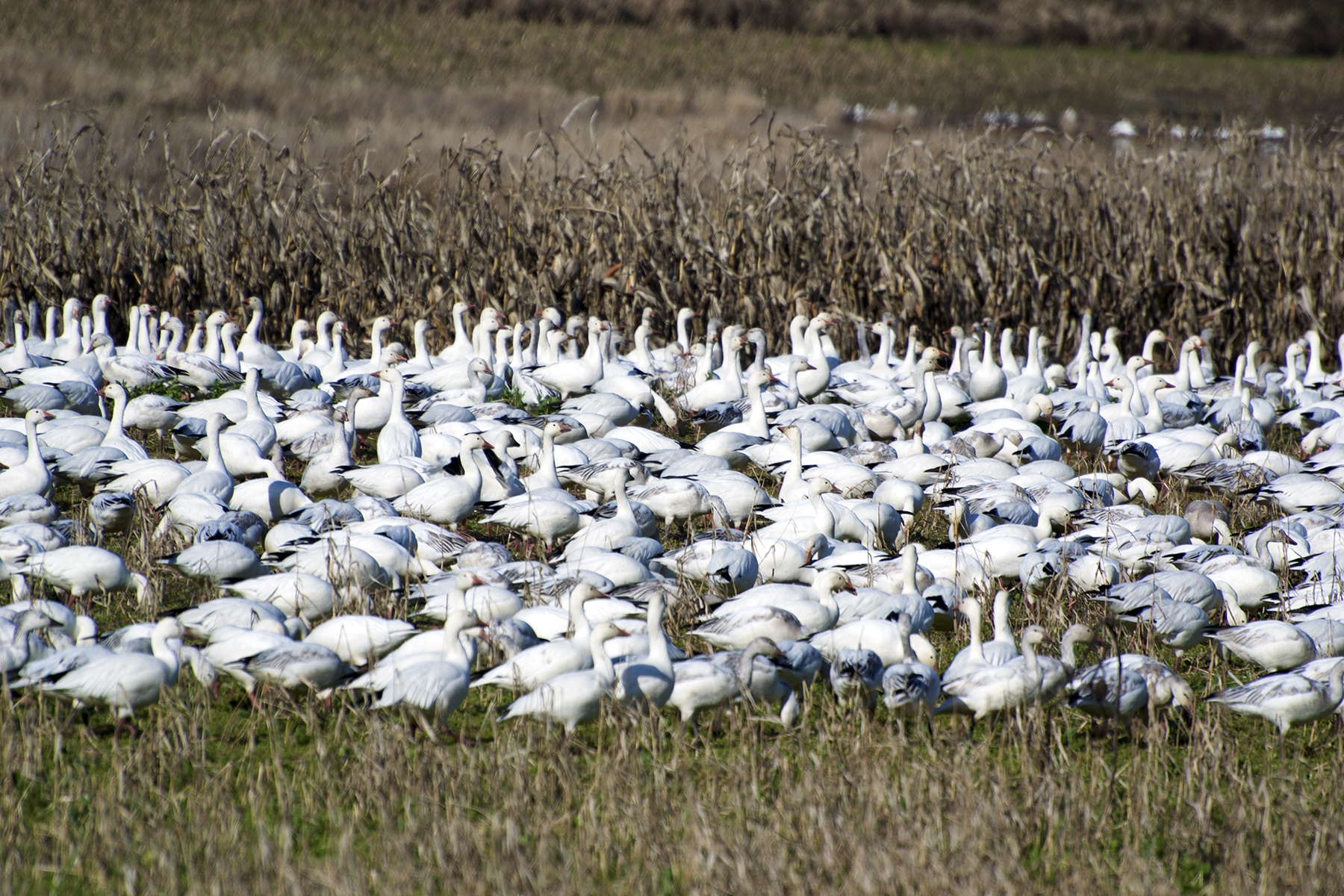
Lucked out this week. I had an encounter with what must have been thousands of snow geese, as close as I’ve ever gotten to them, who were eventually spooked by a bald eagle and took off with a cacophony of noise. It was, honestly, breathtaking. I could feel the airwaves from their flapping wings on my face.
My first serious encounter with geese, other than the real life variety honking their way through my childhood village, took place in a first grade classroom. Called Dumme Gans! (stupid goose) – a typical condescension towards young humans of the female variety in 195Os Germany – by a teacher irritated by yours truly, I had the nerve to reply: “I might be a goose, but I am NOT stupid,” something I was convinced of at age 6. It did not end well.
My second encounter came later during endless years of Latin. The teacher was obsessed with Livy’s History and so we learned about and translated among other things the attempted sacking of Rome by the Gauls (390 BC), all prevented by a gaggle of attentive geese…. here is the translation by Bohn (Book V, ch. 47-49)
The Capitol of Rome was meantime in great danger; for the Gauls had remarked the easy ascent [to it] by the rock at the Temple of Carmentis. On a moonlight night, after they had first sent ahead a man unarmed to test the way, by alternately supporting and being supported by one another, and drawing each other up, as the ground required, they gained the summit all in silence. Not merely had they escaped the ken of the sentinels, but even the dogs, sensitive as they are to noises at night, had not been alarmed. But they did not escape the notice of the geese; for these creatures were sacred to Juno, and had been accordingly spared [by the garrison] despite the scarcity of food.
Thus it befell that Marcus Manlius, who had been consul three years earlier, and who was a redoubted warrior, was awakened by their hissing and the clapping of their wings. He snatched his arms, and calling loudly to his fellows, ran to the spot. Here he smote with the boss of his shield a Gaul who had already gained a foothold on the summit, and tumbled him headlong. The fall of this man as he crashed down dashed over those next to him. Manlius also slew certain others who in their alarm had cast aside their weapons and were clinging to the rocks. By this time the rest [of the Romans] had rushed together, and crushed the enemy with darts and stones, so that the whole bank, dislodged 32from their foothold, were hurled down the precipice in general ruin.
Lesson one: don’t eat geese, they might protect you. Lesson two: remember your history – maybe the keeping of geese could have prevented the real destruction of Rome in 1527 by mutinous troops of Charles V, head of the Holy Roman Empire — pretty much ending the Italian Renaissance. Lesson three: superfluous facts crowd your brain into your late age….
Thoughts of fighting off invaders led, unfortunately, to associations with another bit of news from more recent history: the deployment of elite border agents (BORTAC) to sanctuary cities by the Trump administration.
From the NYT: “…members of the elite tactical unit known as BORTAC, which acts essentially as the SWAT team … With additional gear such as stun grenades and enhanced Special Forces-type training, including sniper certification, the officers typically conduct high-risk operations targeting individuals who are known to be violent, many of them with extensive criminal records.”
We are clearly seeing a militarization of civil society and I wouldn’t bet the bank on the attempts of public figures, like Elizabeth Warren, for example, to get to the bottom of the motivation for these deployments. Now where have we seen the establishment of special (secret) police forces before? Need I spell out a reminder?
Jenn Budd, a former Border Patrol agent turned civil rights activist, reported a conversation (it was on Twitter, 2/12/2020) she had with a former senior agency official:
Border Patrol does not believe they are a civilian law enforcement agency. They believe they are kin to the Marine Corps. They do not believe they are accountable to Congress, which is why they have no issues lying to them even while under oath.
They believe they are only accountable to … presidents like Trump. Border Patrol believes it is not required to answer to local police, FBI, CIA or any other law enforcement agency. They claim to be the “premiere” law enforcement agency, superior to all others. They say they will become a “national police force” to be used by a president to enforce laws even among citizens. (Italics are by John Stoer of the editorial board at RAW story, my source for the details here.)
Marching in goose step, proceeding in front of our very eyes. Goosebumps not far behind.
Let them all fly away
And be gone
And in my eternal attempt at balanced reporting – balancing emotionally crappy with pleasurable stuff, that is, here is something in the uplift direction:
One of the highlights of House House’s Untitled Goose Game, the “slapstick-stealth-sandbox” game in which you play a terrible goose wreaking havoc in a lovely English village, is the adaptive soundtrack of Debussy’s Preludes. The playful piano music almost provides a kind of insight into the goose’s mind — the melody plays in quiet, short bursts when it’s up to no good, creeping up on its next victim. When the goose is in full chaos mode, waddling away from the gardener who just wants his keys back, the piano tune plays out in full, encouraging the player to keep up the shenanigans.
When that thing formerly known as the sun reappeared on Sunday morning in my garden, it threw beautiful columns of foggy silver across trees and meadow.
Fairy slides we used to call them when the kids were little. Alas, current associations go to magical thinking of a different kind: the installment of a king, if not emperor, wishing for a return to neoclassical building styles emulating the architecture of Greece and Rome millennia ago with columns as tokens of power and order, linking the current regime to nasty ones before them.
It was, after all, Hitler and Mussolini, who appropriated the tradition and grandeur of neoclassicism to serve the Nazi image and reminded a fascistic Italy of the power of the Roman Empire. No surprise, then, that our dear leader is going for Dictator Chic.
But who will be his Albert Speer, the equivalent to Hitler’s main architect?
Speer was as nasty as they come, but able to escape a death sentence at the Nuremberg trials because it was not yet known when he was tried how deeply he had been involved in the Holocaust. After his prison sentence he was released in 1966 and lived a life writing successful books until the died in 1981. Here is historians Ulf Schmidt assessment.
“Speer was personally involved in the Holocaust, that his ministry provided the building materials for an extension of Auschwitz, that he made a substantial fortune with Aryanized property, denounced uncooperative competitors, initiated the construction of concentration camps, and supported the draconian measures used against forced and slave labourers in some of Germany’s most horrific underground production facilities. If only a part of this had been known during the International Military Tribunal in 1945, which preceded the trial against Karl Brandt and others, Speer would probably have been sentenced to death. The fact that most of it was unknown at the time gave Speer the possibility of creating his own carefully constructed, but also greatly biased, post-war narrative of himself and the regime, a convenient and plausible story, which scholars and journalists either took for granted or were unable to refute.”
And here is an incisive essay by Chimamanda Ngozi Adichie, on reading Speer’s Inside the Third Reich as a child in Africa, then re-reading it as an adult at Yale. “His rueful acknowledgment of his dedication to Hitler, and his philosophical puzzlement at his own complicity, seeks to cast a glaze of innocence over him.” Perhaps the kind of book a certain attorney general might write in the distant future?
Back to the white columns: it is not architecture per se that should be seen as the problem. As I learned here there were lots of good guys (relatively speaking) who used neoclassical styles in their capitals (Paris’ Pantheon, London’s National Gallery,) and lots of bad guys, who have used the most progressive architects and architecture to set monuments to themselves. These include monumental buildings in totalitarian states such as Kazakhstan and Azerbaijan, designed by progressives like Norman Foster and Zaha Hadid. Jair Bolsonaro from Brazil is apparently hiring the Danish star architect Bjarke Ingels.
The problem is the political process that seeks to reverse the Guiding Principles for Federal Architecture (with us for 60 years now,) which insisted that architects suggested the designs to the government, not vice versa.
Entitled “Making Federal Buildings Beautiful Again,” the draft of the executive order argues that the founding fathers embraced the classical models of “democratic Athens” and “republican Rome” for the capital’s early buildings because the style symbolized the new nation’s “self-governing ideals.”
Here are the details and also the reactions of various parties involved, including the resignation of the General Service Administration’s Chief Architect and Director of the Design Excellence Program, David Insinga, and the response of the American Institute of Architects.
“The AIA strongly opposes uniform style mandates for federal architecture. Architecture should be designed for the specific communities that it serves, reflecting our rich nation’s diverse places, thought, culture and climates. Architects are committed to honoring our past as well as reflecting our future progress, protecting the freedom of thought and expression that are essential to democracy.”
I believe proscribing certain styles of architecture is a statement of power, and an imposition of values associated with the style. It is not just a brand, it signals an ideology. If it is historically associated with authoritarian regimes by someone with authoritarian tendencies, we should be alarmed. Restricting creative freedom is just one more step in line of the developments we have seen over the last few years. We should march in protest columns, not have neoclassical ones stare in our faces.
Bruckner’s 4th symphony (a beautiful piece) starts with a sunrise, but since he was appropriated by the Nazis we’ll skip him. Let’s listen to this instead: Carl Nielsen’s Helios overture. Fittingly composed during a journey to Greece…
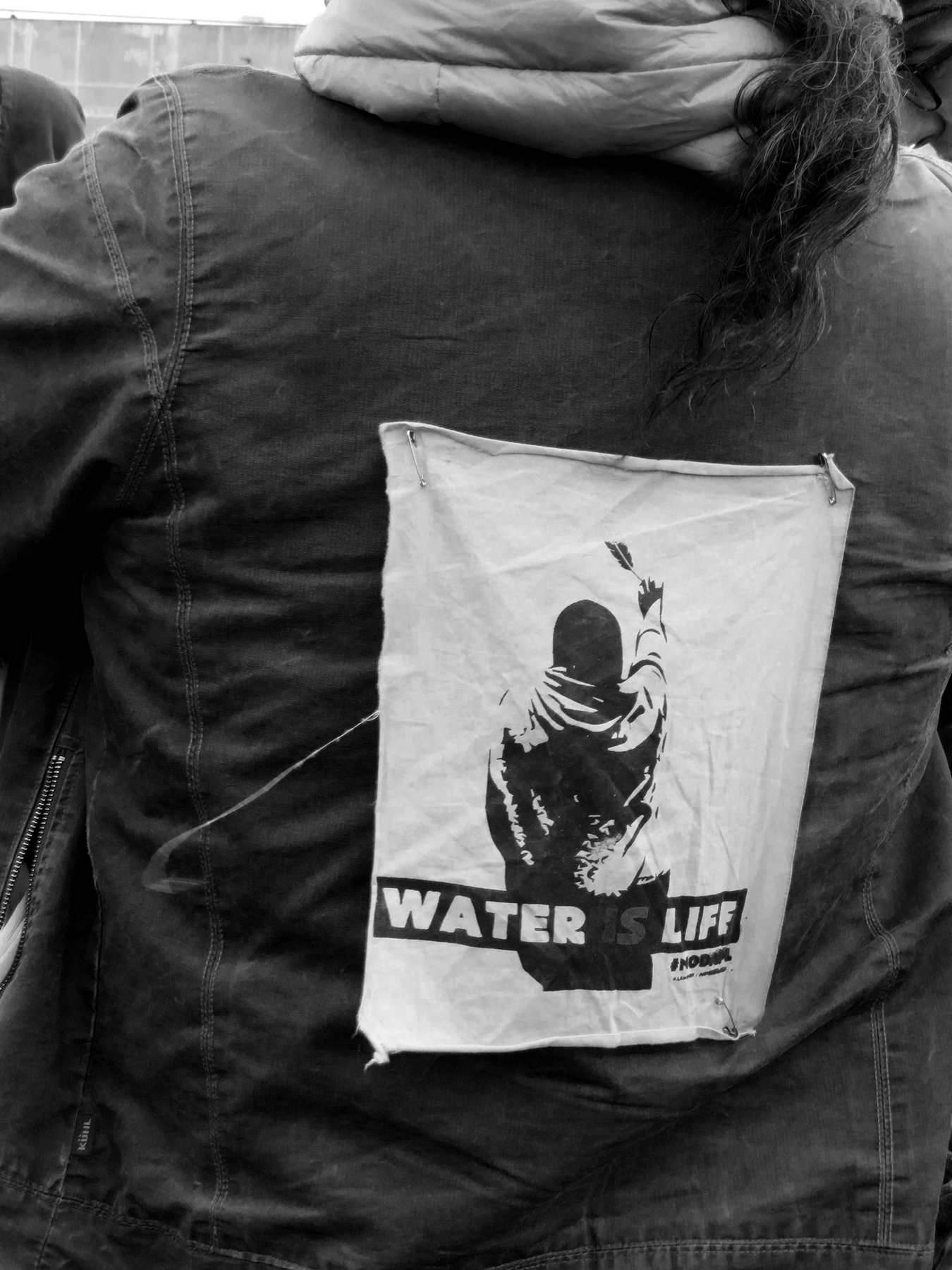
TIMES ARE HARROWING for people trying to protect Indigenous ancestral land and prevent accidents from pipeline spillage that would poison and pollute the regions’ land and water. The movement is taking place on many fronts, several of them cultural and artistic, including an Oregon-produced documentary film,Necessity: Oil, Water, and Climate Resistance, that focuses on the work of climate activists on the front lines and movement lawyers involved in supporting that struggle. And last week a group of Native American leaders and community allies in Portland gathered at the Port of Vancouver to protest the dangers of the continued use and expansion of pipelines, and alert us to what is going on farther north.
The Wet’suwet’en people in northern British Columbia, trying to stop construction of the Coastal GasLink pipeline (CGL,) were arrested by Canadian police and tactical teams in the dark of night by militarized police with night vision and automatic weapons, their camps destroyed and media hindered on filming and reporting the police action. The BC Supreme Court granted the company behind the Coastal GasLink project, TC Energy, an injunction to continue construction activities and issued an enforcement order for the RCMP to clear the area.
“TC Energy says it reached agreements with 20 elected First Nation bands along the pipeline’s route and has the necessary permits to build. It has hailed the Coastal GasLink project as a way to create jobs and bolster economic development. But Wet’suwet’en hereditary chiefs, who under Indigenous law hold authority over approximately 22,000sq km of land, say they never gave Coastal GasLink their consent to move ahead with the project.”
Protests are an urgent summons during a time when the 2019 UN Climate Change Summit failed to deliver, and scientific predictions of how fast we are approaching a point of no return are growing more dire by the day. The summons try to reach those who deny the dangers (or the very existence) of the climate emergency, those who ignore it and those who are giving in to helpless passivity in the face of it.
Cathy Sampson-Kruse, a Umatilla Tribal ElderPaul Che oke ten Wagner of the Vancouver Island Saanich Tribe
Those who are determined to raise awareness about the crisis, call for change, at a minimum, of our behavior, or, more urgently, of our whole system of relating to nature and each other. They are forging alliances across a whole spectrum of organizations and participants, setting aside differences in ideology and strategic approaches, and join forces to rescue this planet in whatever fashion is still possible. By necessity.
*
NECESSITY: OIL, WATER, AND CLIMATE RESISTANCE is a locally produced documentary film, directed by Jan Haaken and co-directed by Samantha Praus, that focuses on the work of climate activists on the front lines and movement lawyers involved in supporting that struggle.
Here is a trailer of the feature length film, that describes what is at stake for the health of our waters and the populations that depend on them.
https://vimeo.com/297226350
*
THE FILM INCLUDES conversations with lawyers who are central in protecting those who protect the waters. The conversations make it clear what is involved with organizing the movement and defending those who are accused of crimes around protest actions or to be made an example by the legal system to alert those who are contemplating joining the protest movement. One of the defenses under consideration is the Necessity defense, which states that when all legal and political means are exhausted it might be necessary to engage in non-violent illegal action to prevent irreversible harm.
One of the lawyers is Tara Houska, whose incisive opinion piece, My Culture is not Super Bowl Entertainment, was published on Super Bowl weekend in the New York Times. It called out the lasting damage done to Native Americans with the exploitation and degrading of their culture, particularly during the Super Bowl. The continuing use of mascots, and the nostalgic racism transmitted with stereotypes of the fallen noble savages is dehumanizing, and it hurts every new generation of Native American children, never mind their parents who have to live in a world with systemic suppression of opportunities to right the historical wrongs.
Tara Houska, Couchiching First Nation Anishinaabe
People like Houska, an Ojibwe from Couchiching First Nation, are changing that. As a tribal attorney, the Campaigns Director of Honor the Earth, co-founder of Not Your Mascots, a non-profit committed to eradicating Native stereotyping, and founder of the Giniw Collective, she pushes back, fights hard and smart, and is central to building alliances with those who can and want to be supportive. Here is Houska in a TED talk on the Standing Rock resistance movement.
One of her statements during the interview struck me as particularly important. Roughly paraphrased, as best as I remember: as allies, non-Native Americans have to learn to listen and respect that there is knowledge and wisdom regarding goals and strategies to combat environmental destruction and other consequences of climate change. As survivors of genocide, indigenous people all over the world have accumulated strength and insights that should not be superseded by Whites rushing in and thinking they know the next best tactic to achieve shared goals. Leadership in coalitions needs to be assigned to those whose very existence is threatened by potential environmental disasters.
*
IN THE INTENSIFYING conflict between industry and climate protesters, SLAPP suits abound. These are Strategic lawsuits against public participation (SLAPP) that are intended to censor, intimidate, and silence critics by burdening them with the cost of a legal defense until they abandon their criticism or opposition. These are in some ways only place holders, until state legislatures get their ducks in a row to pass laws that make anti-pipeline and other protest activities a crime. Since 2017 18 states have put forward legislation criminalizing protest, constitutional rights be d-mned. West Virginia, as just one example, has hearings today, February 10, on industry-drafted legislation (HB 4615) that would make peaceful civil disobedience against gas pipelines and other fossil fuel projects a felony.
Luckily there are experienced people one can turn to for issues concerning civil rights. One of them is Lauren Regan, a founding member and executive director of the the Civil Liberties Defense Center (CLDC) based in Eugene, OR, which supports “movements that seek to dismantle the political and economic structures at the root of social inequality and environmental destruction. We provide litigation, education, legal and strategic resources to strengthen and embolden their success.”
As a trial lawyer she handles state and federal criminal defense, SLAPP defense, grand jury resistance, and federal civil rights litigation against police and government agencies for violating the rights of activists and organizations – 3000 cases across the last 15 years together with her staff attorneys.
Lauren Regan, Executive Director at the Civil Liberties Defense Center
Here she is in a podcast where she talks about surveillance of social movements. (It starts out with very loud music, be warned, but then goes to normal decibels…)
The topic of alliances, in all their strength and challenges, came up in our conversations here as well. You cannot swoop in and take over what are the existential fights of certain groups. To achieve trust, furthermore, and create a blueprint for constructive collaboration, you need to connect and build relationships before crisis hits. That means extensive and longitudinal involvement between and learning from allies, so that a structure is established that carries everyone through when the need arises.
Given the potential increase in actions around climate resistance movements, this is something to be acknowledged.
*
NECESSITY: OIL, WATER, AND CLIMATE RESISTANCE, depicting the efforts and challenges of the resistance movement, was selected by the Doc Society NYC for their Inaugural Climate Story Lab as a film about climate resistance that could make a difference. The non-profit organization, with their mission “dedicated to the impact of art and the art of impact,” supports the production of documentary films and helps to connect them to global audiences.
Their partnering with the NECESSITY project makes it feasible to produce a film series featuring different regions where Indigenous and non-Indigenous allies confront the fossil fuel industry. The documentary series will educate about the front lines of climate resistance, including lessons that climate activists are learning about legal tactics and various rights and risks associated with the calls in the movement for acts of civil disobedience. Bearing witness – one possible contribution to climate activism in joint efforts to protect the planet.
“What do I want? Why do I want it? And how do I get it?” – Stacey Abrams, in a TED talk shortly after she lost in the 2018 midterm elections.
AS SHOULD BE OBVIOUS by now, I rarely review exhibitions that I don’t like. The world doesn’t need more negativity and I don’t need the emotional aggravation. It is therefore with some trepidation when I accept invitations to review something I have not yet had a chance to see. I will only do so if I am deeply committed to an institution and usually trust their choices, as is the case with the Oregon Jewish Museum and Center for Holocaust Education (OJMCHE.)
Felicia after the Black Prom, Vidalia, Georgia, 2009. Photographed by Gillian Laub.
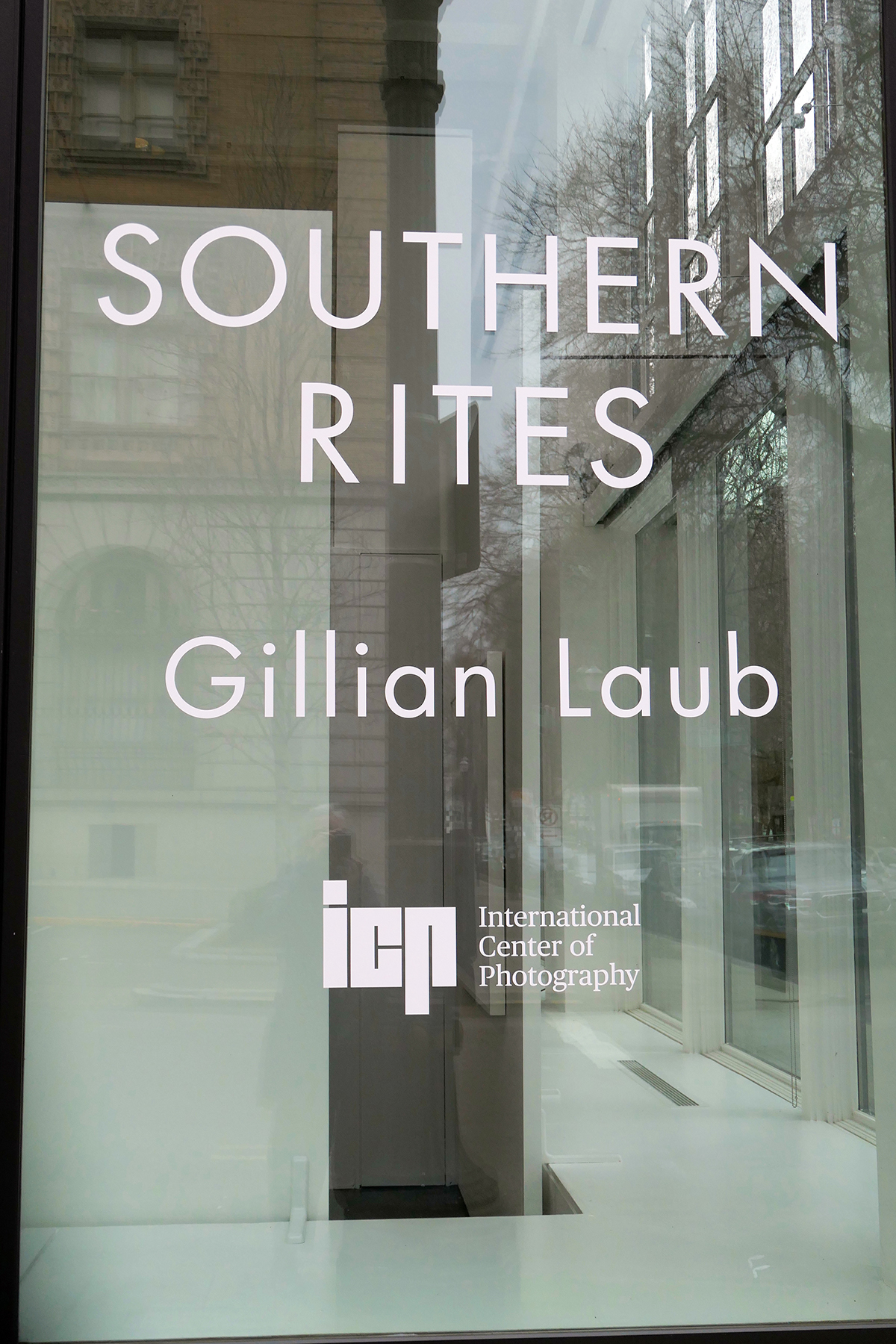
No need to fret: OJMCHE’s newest exhibition, Southern Rites, is one of their strongest yet, a moving and thought-provoking tour de force about race relations and racism in contemporary America. Organized by the International Center for Photography and judiciously curated by Maya Benton, the exhibition of photographs by Gillian Laub is visual activism at its best: perceptive, engaged, critical photography of human beings in a context that defines them. Did I mention beautiful? Beautiful!
Artist Talk at OJMCHE before the official opening of the exhibition
It is not the beauty that matters here, though. It is the package of three elements that make this not just an artful, but an important exhibition: a longitudinal project executed with skill and courage in the light of tremendous obstacles, for one. Secondly, a slew of smart curatorial decisions how to present that project, equally important for creating a narrative. And finally, the flexibility of a Jewish museum bent on going beyond the traditional role of keeper of memory, whether Holocaust-related or preserving the history of the local community.
Museum Director Judy Margles welcomes the artist.Bruce Guenther, frequent guest curator at OJMCHE, attends the opening
OJMCHE’s invitation to have difficult conversations about racism and relations between African Americans and Whites — at a time when this city is, again, in the midst of a murder trial for someone accused of hate crimes and where the weekend brings marches by the KKK and their allies in close vicinity of the museum — provides the very model of inclusivity that is a prerequisite for change. To hark back to Stacey Abram’s questions (and potential answers): if it is change that we want, and if it is justice that demands it, then to get there we are helped by the kind of art Gillian Laub creates and museums like OJMCHE that channel it.
Qu’an and Brooke, Mt. Vernon, Georgia, 2012. Photographed by Gillian Laub..
*
“I am an invisible man…I am a man of substance, of flesh and bone, fiber and liquids—and I might even be said to possess a mind. I am invisible, understand, simply because people refuse to see me.” –Ralph Ellison (1952)
GILLIAN LAUB IS A STORY TELLER. I cannot tell whether the New York-based photographer and film maker intuitively grasps the effectiveness of a human interest narrative, or if her projects are the results of intellectual decisions to employ a certain method – probably both, but in the end it doesn’t matter. Her work delivers a comprehensive view into the lives of other human beings, the way that they are shaped by their environments. Her interactions with her subjects elicit an openness and willingness to communicate that are rare for documentary photographers. The fact that she graduated from the University of Wisconsin-Madison with a degree in comparative literature before studying photography at the International Center of Photography, clearly exerts an influence. At her best she makes the invisible visible.
Gillian Laub, photographer and film maker
The images that you encounter at the museum depict the African-American and White High School seniors of small towns in Montgomery County, Georgia. The towns had segregated Proms way into the 21st Century. Laub visited, on assignment for he NYT, after a high-schooler had sent a cry for help to Spin Magazine in the early 2000s. Not only was she escorted out of the White Prom, chased out of town, car tires slashed, but repeatedly so, across several years that she returned, even when the Prom was now officially integrated some time later.
Yearbook of Segregated Prom
The topic of Prom politics – and the eventual accumulation of Prom photographs – was soon superseded by a tragic death in the community: in 2011 one of the young men associated with all the teens she had been photographing, was murdered by the father of a girl who had invited Justin Patterson and friends to come at night to her house. He shot at several of them several times. Originally charged with seven offenses, among them murder and false imprisonment the man was offered a plea deal and spent a year in a State detention center and some years probation. The victim’s parents’ claim that the shooting was racially motivated, went unheard. In later interviews, once freed, the shooter showed no remorse. In addition to portraits of the involved people, the exhibition shows a tape of the 911 call that is hair raising in its lack of humanity.
Curator Maya Benton in front of a photograph of the shooter and audio tape of the 911 call
A detailed HBO documentary of the Patterson killing, filmed by Laub, can be seen at the museum every Wednesday at 2:00 pm and on demand on the weekend.
Documentation of the Town’s Coping
The third part of the show consists of a large number of B-roll footage, glimpses of workers in the onion fields of Georgia, the town, the churches, and, fascinatingly, the many church signs and billboards that display evangelical messages. Most of the churches are still segregated by choice. Yet you cannot tell by eyeballing which constituency posted the religious slogans. A shared appeal to fear of Divine punishment for your aberrations, however, does not translate into anything much else that’s shared, it seems.
Noted.
*
MAYA BENTON, EDUCATED AT BROWN, Harvard University and the Courtauld Institute of Art in London, was faced with a tough choice for this exhibition. Many of the questions and subject matters raised by the extensive body of images and their implications had to be sifted through to cull a manageable display. More importantly, how do you tell a story that is not entirely your own? How do you document reality without appropriating someone else’s history? I have previously asked these questions here for other visual artists.
Maya Benton, Curator, Lecturer and Writer
In the current exhibition the decision was made – successfully – to let the subjects of the portraits speak for themselves, with transcriptions next to the images. It is then equally important to look at the photographs AND read the accompanying texts, particularly in instances where Laub had repeated contact with individual students across time, allowing us to be witness to changes in perspective caused by concurrent events. Believe me, it does not feel like the usual chore of digesting endless artist statements. These are living testimonials of voices that we rarely get to hear, and help to do both for us: to acknowledge stereotypes and perhaps to combat them.
A substantial amount of general information about the history and politics of segregation in our public school systems is displayed in additional showcases. Getting a refresher about the path from Plessy v, Ferguson to Brown v. Board of Education doesn’t hurt. What does hurt is reading the evidence of communal complicity in maintaining segregative practices even during the years of the Obama Administration: teachers’ comments on students’ essays bemoaning the divided Proms, classmates notes decrying calls for change as in the face of Southern tradition and so on. The displays are superbly assembled.
Note from classmate
*
“One wants to break free of the past: rightly, because nothing at all can live in its shadow, and because there will be no end to the terror as long as guilt and violence are repaid with guilt and violence; wrongly, because the past that one would like to evade is still very much alive.” –Theodor W. Adorno, (1959)
WHEN ADORNO WROTE in 1959 about the (refusal of) working through the past, he had fascism and in particular the guilty German people foremost in mind. OJMCHE is on target when the museum allows us to see how some of this can be translated to the memory culture of slavery and racism in this country as well, I believe. What is striking though, and that is what this exhibition certainly has made me think about, is how much those who used to enjoy the advantages of segregation and relative power in society, want return to the past, rather than forget it, never mind come to terms with it.
Public Shaming, Vidalia, Georgia, 2013. This Country. This Century. Photographed by Gillian Laub.
For large groups of Whites, power is perceived to be a birthright, and resentment surges when one sees one’s own displacement or descent as directly caused by the ascent of specific others – women who work, migrants who come into the country, African-Americans who take over the Prom. Unfortunately, these emotions are often stirred by easily manipulated beliefs rather than facts: if your job is gone, it is easier to blame the women who you see working all around you for displacing you, than questioning an economic system that relies on automation and outsourcing to continue to reap profits. If you believe that South American migrants will deprive you of your share of limited resources you don’t even look at the facts that show this to be untrue.
Those emotions mobilize: You see yourself attacked as a class, no longer as a failing individual, and that unites you with the many who share your view. Rather than apportioning blame to yourself as not being competitive, you can blame a shared out-group enemy – making for these dangerous movements that are now sprouting across the US, movements that are willing to consider even violence to defend what they believe is ripped from them.
Scientific studies have shown this to be true nowhere more so than in the American South. In their book Deep Roots: How Slavery Still Shapes Southern Politics Avidit Acharya, a political scientist at Stanford, Matt Blackwell, a professor of government at Harvard and Maya Sen, a professor of public policy at the John F. Kennedy School of Government at Harvard, link current conservative attitudes towards gun rights, death penalty and racial resentment in parts of the South directly to a slave holding history.
In a nutshell: Southern Cotton and tobacco industries thrived on chattel slavery, since those crops were extremely labor intense. After the Civil War, those regions’ economic survival depended on finding ways to continue to exploit Black labor. Anti-Black laws and practices, from Jim Crow to the undermining of education and participation in the political sphere, served that purpose. But there is another important mechanism at work, called behavioral path dependenceby the authors: Generation after generation passes down and reinforces beliefs about racial inequality and the need to impede progress of those deemed inferior. Children learn from their parents and teach their own children, all the while being backed up by local institutions that echoe the value judgments and create spaces for segregation. After slavery was abolished and with it Ante Bellum Laws, the subjugation of Blacks now relies increasingly on cultural mechanisms.
“…things like racialized rhetoric from the top down can have really, really damaging and long-term impacts. So things like talking about people in dehumanizing language, institutionalizing policies that treat people as less than human. Those things can really create attitudes that then persist for a long time.
.. to be able to kind of preserve the same structure, economic structure that we had with slavery it required a lot more kind of local vigilance to kind of enact these policies. So you had a kind of creation of a culture, a maintenance of a culture that required things like extrajudicial violence, it required basically training and indoctrinating young children into thinking about the world in certain ways.“
Shelby on her grandmother’s car. Mount Vernon, Georgia, 2008
And this culture is incredibly resistant to change, proceeding at a glacial pace. In other words, federal interventions, like the Civil Rights Act or the Voting Rights Act (or what’s left of it) can address behavioral discrimination, but they do nothing with regard to attitudes. Children who are indoctrinated from an early age will carry their parents’ attitudes to the next generation.
For change to happen, we must pursue the one public cultural mechanism at our own disposal: education. This is whatSouthern Ritesdoes on so many levels and so successfully.
Gillian Laub, artist, Maya Benton, curator.
In the true tradition of concerned photography, the early documentary approach to describing the injustice of the world, it educates through imagery, through text, through augmenting materials. It does so effectively because it taps into something beyond our thoughts. Show me one person who is not going to leave that exhibition emotionally riled, to varying degrees. It elicits empathy, pure and simple, an opening to relating in new ways. I just hope every high schooler in town has a chance to visit!
Southern Rites
From the International Center of Photography Photographs by Gillian Laub