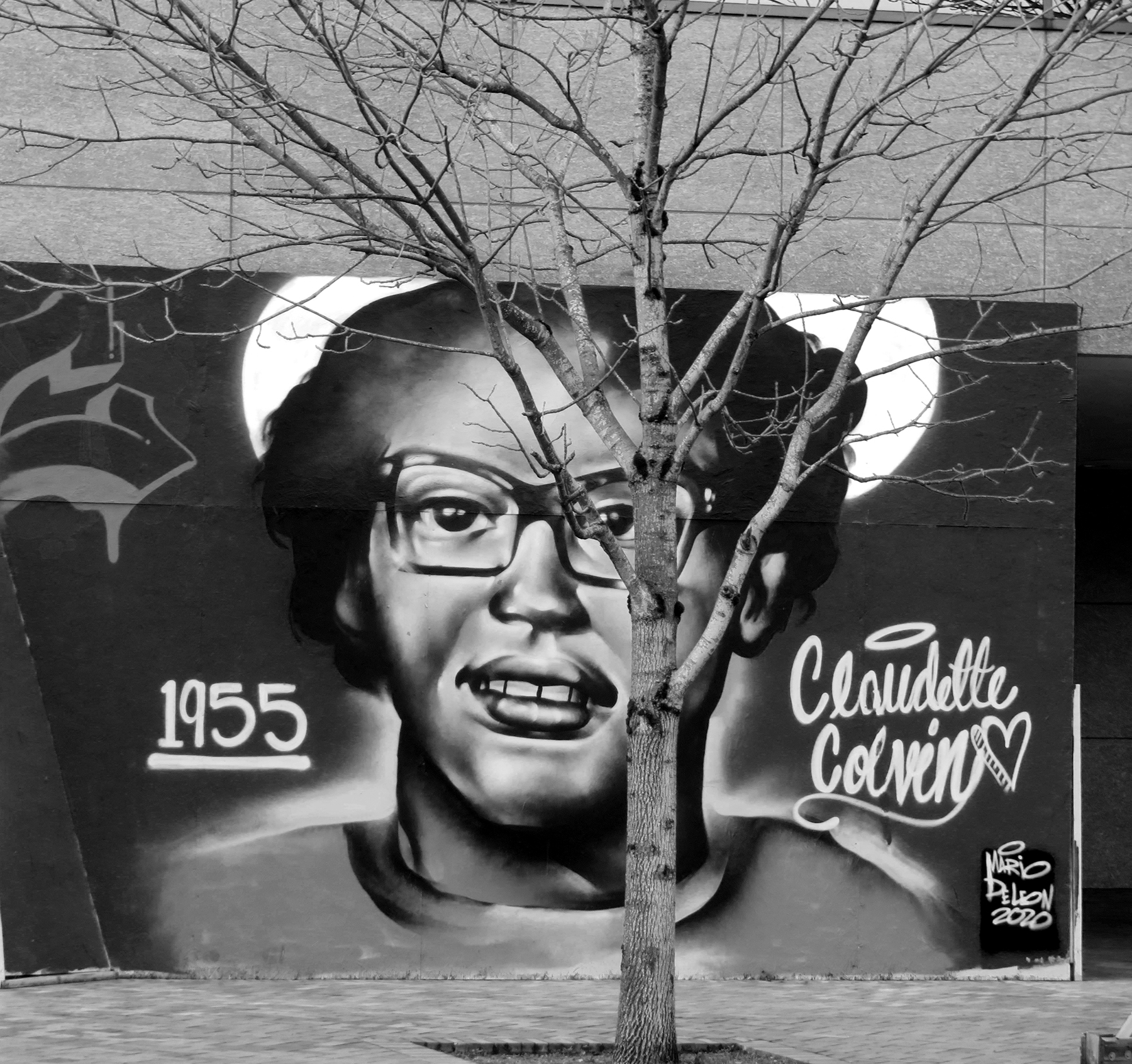
22-year old poet Amanda Gorman was chosen to read at the inauguration of President-elect Joe Biden. I am linking back to my post from 2019, below, where I had introduced her while writing about reasons for optimism. The poem I chose, “In This Place (An American Lyric),” was her work for the 2017 inauguration of U.S. Poet Laureate Tracy K. Smith. It celebrated poetry as a tool in the service of and fight for democracy.
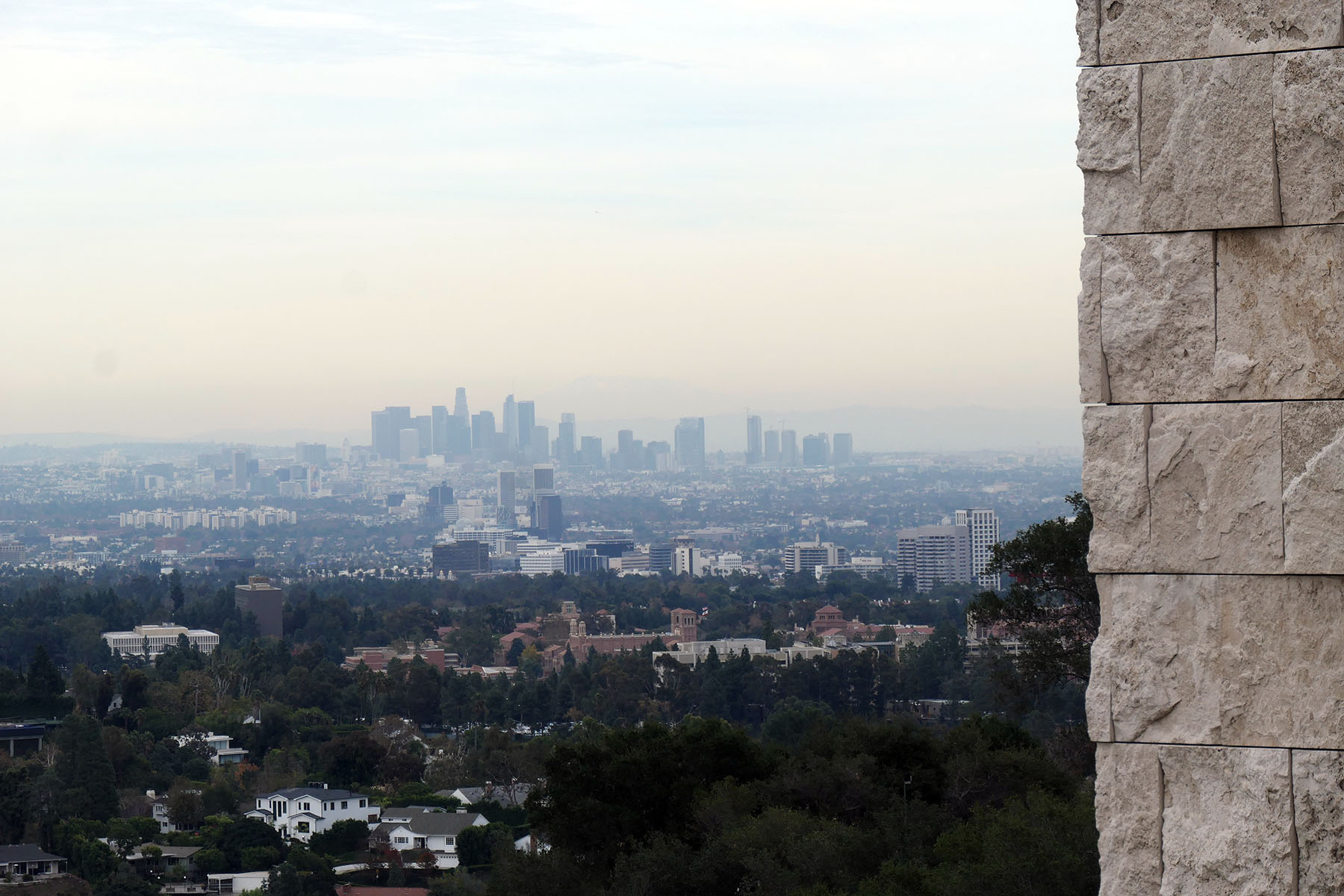
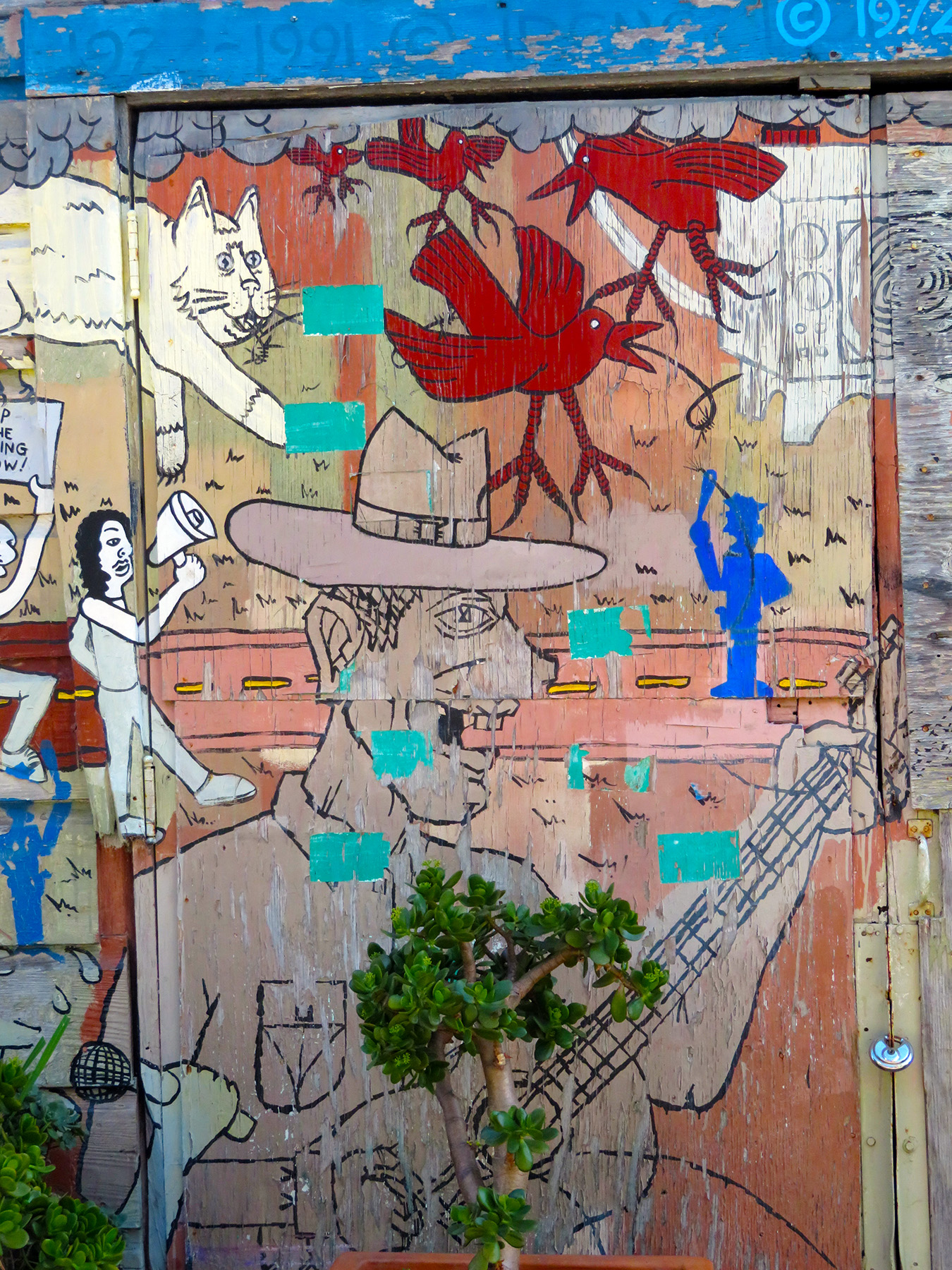
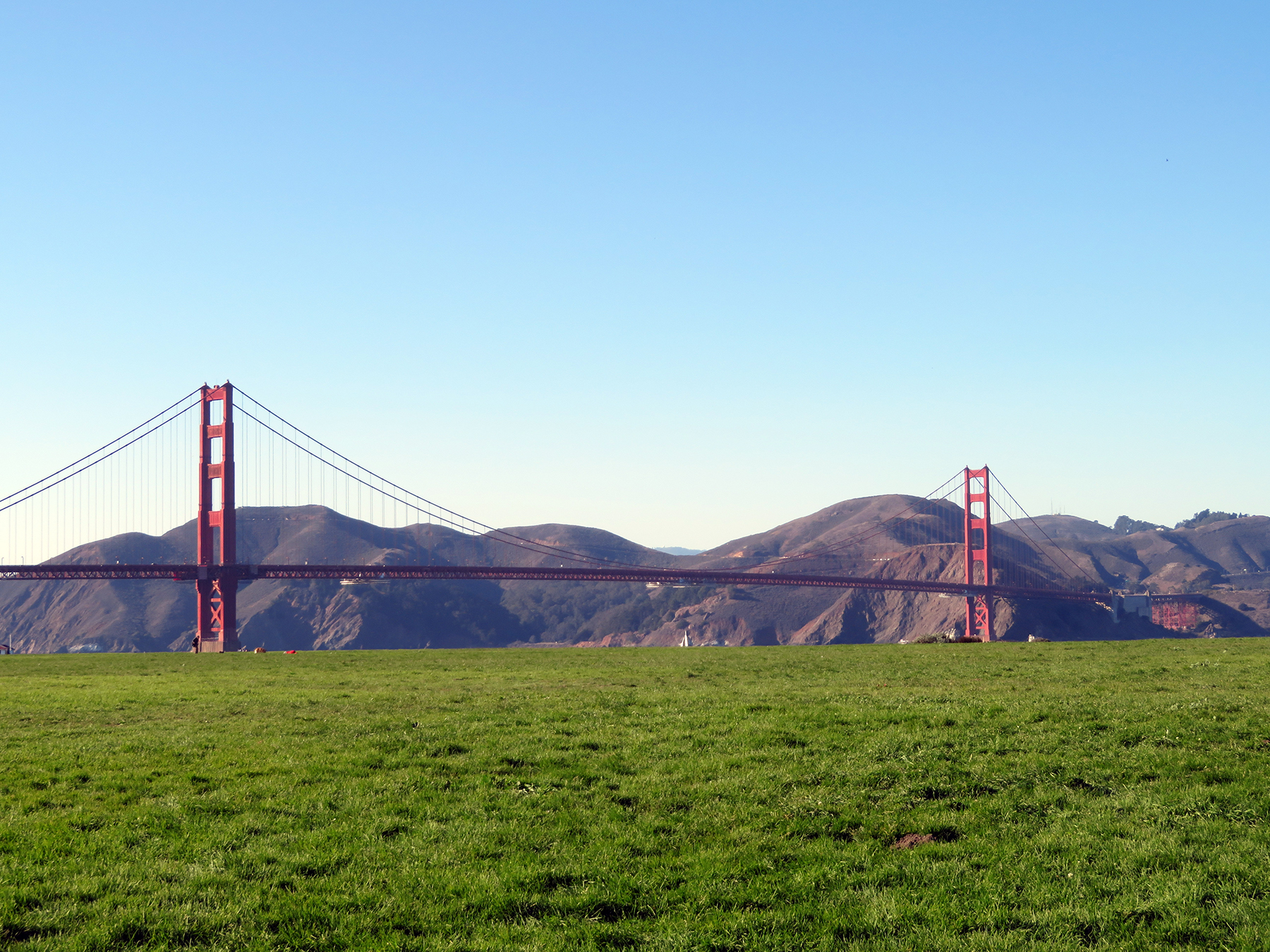
Apparently Jill Biden recommended her for this week’s inaugural reading. The poet lives in L.A., hence today’s choice of photographs.
As reported in the Baltimore Sun: “She is calling her inaugural poem “The Hill We Climb” while otherwise declining to preview any lines. Gorman says she was not given specific instructions on what to write, but was encouraged to emphasize unity and hope over “denigrating anyone” or declaring “ding, dong, the witch is dead” over the departure of President Donald Trump.”
Now, personally, I wouldn’t mind hearing ding, dong the witch is dead on Wednesday. Except that would be a lie – let us not, ever, forget that we are dealing not with a singular witch but a coven, which is going to have its tentacles in our political and social fabric for a long time. Or was that the Kraken? Getting my metaphors mixed here, which is why you’ll never hear anything written by yours truly at any inauguration of any kind or anybody.
Better that way. I am sure the powerhouse that is Amanda Gorman will move us all with her words, the words of a generation that has to live with the consequences of the disastrous policies of the last 30 years – yes, I mean it – longest.
I was thrilled when I heard the news, just at the moment when I finished reading Anand Giridharadas’ short piece in the.Ink proclaiming hope and optimism.
“And I see then that this is both a very dark time and, potentially, a very bright time. It’s important to hold these truths together.
When I look down at the ground of the present right now, I feel depressed. If I lift my head to the horizon, I see a different picture.
This is not the chaos of the beginning of something. This is the chaos of the end of something.”
……
“We are living through a revolt against the future. The future will prevail.”
AMEN!
Poetry matters, but so do books from 2020 about politics, by Black women writers. MLK would have approved – Happy Birthday, Martin Luther King!
Words fail. Well, they fail me, which is why today you are getting smarter, more experienced and reflective words from someone else. They sure are a wake-up call. (Which is why you also get not my own, but Associated Press photos of people who are sleeping in an unusual place, where they should never ever have to wake up and be on guard.)
The essay was written by Ibram X. Kendi, Director of the Boston University Center for Antiracist Research. I had introduced his writings before here. My motivation for posting the entire essay today is simple: we cannot hear this truth often enough and clearly enough. Unless we understand the basic underlying causes for everything that we are experiencing now, unless we stop denying what is at the core of American history, our hope – and fight – for change will be doomed.
Denial Is the Heartbeat of America
When have Americans been willing to admit who we are?
“Let me be very clear: The scenes of chaos at the Capitol do not reflect a true America. Do not represent who we are,” President-elect Joe Biden said during Wednesday’s siege.
“The behavior we witnessed in the U.S. Capitol is entirely un-American,” read a statement from a bipartisan and bicameral group of elected officials that included Senators Joe Manchin, Susan Collins, Mitt Romney, and Mark Warner as well as Representatives Josh Gottheimer and Tom Reed.
“We’re the United States of America. We disagree on a lot of things, and we have a lot of spirited debate … But we talk it out, and we honor each other—even in our disagreement,” said Senator James Lankford, a Republican from Oklahoma. “And while we disagree on things—and disagree strongly at times—we do not encourage what happened today. Ever.”
“That’s not who we are,” Senator Ben Sasse said.
“This is not the America I know and love,” Representative Brenda Lawrence said.
“I know this is not our America,” Representative Ed Case said.
“This is not who we are,” Representative Nancy Mace said.
“This is how election results are disputed in a banana republic—not our democratic republic,” Republican former President George W. Bush said.“This is a national tragedy and is not who we are as a nation,” Democratic former President Jimmy Carter said.
Do these statements represent the American dream? Is the American dream the great delusion about what America is and who Americans are?
To say that the attack on the U.S. Capitol is not who we are is to say that this is not part of us, not part of our politics, not part of our history. And to say that this is not part of America, American politics, and American history is a bald-faced denial. But the denial is normal. In the aftermath of catastrophes, when have Americans commonly admitted who we are? The heartbeat of America is denial.
It is historic, this denial. Every American generation denies. America is establishing the freest democracy in the world, said the white people who secured their freedom during the 1770s and ’80s. America is the greatest democracy on Earth, said the property owners voting in the early 19th century. America is the beacon of democracy in world history, said the men who voted before the 1920s. America is the leading democracy in the world, said the non-incarcerated people who have voted throughout U.S. history in almost every state. America is the utmost democracy on the face of the Earth, said the primarily older and better-off and able-bodied people who are the likeliest to vote in the 21st century. America is the best democracy around, said the American people when it was harder for Black and Native and Latino people to vote in the 2020 election.
At every point in the history of American tyranny, the honest recorders heard the sounds of denial. Today is no different.
Americans remember and accept the enfranchising of citizens and peaceful transfers of power as their history, while forgetting and denying the coup plots, the attempted coups, and the successful coups. White terror is as American as the Stars and Stripes. But when this is denied, it is no wonder that the events at the Capitol are read as shocking and un-American.
In March 1783, Continental Army officers plotted mutiny against the Confederation Congress until George Washington convinced the officers to remain loyal. In 1861, pro-slavery insurrectionists assembled at the U.S. Capitol to stop the counting of electoral votes for Abraham Lincoln. The Civil War came, lasting until 1865. White terrorists laid siege to the county courthouse in Colfax, Louisiana, on Easter Sunday 1873, and violently overthrew the local parish government, massacring roughly 150 Black people in the process. On September 14, 1874, the White League violently attempted to overthrow the newly elected governor of Louisiana in the Battle of Liberty Place, in New Orleans. White terrorists rioted; destroyed ballot boxes; and intimidated, wounded, and murdered Black voters in Alabama’s Barbour County on Election Day in 1874, securing victories for their candidates.
In 1898, white supremacists murdered dozens of Black people and violently overthrewthe democratically elected and interracial government of Wilmington, North Carolina. In 1921—in one of the most devastating economic coups in history—white supremacists murdered hundreds of Black residents of Tulsa, Oklahoma, and destroyedtheir prosperous Greenwood District, known affectionately as “Black Wall Street.” In 1933, financiers attempted to persuade President Franklin D. Roosevelt to hand overpower so they could establish a fascist government.
This is a small sampling—but are all the attempted and successful coups in American history not part of American history?
The denial runs through America like the Mississippi River system. I guess after Senator Harry F. Byrd of Virginia called for massive resistance to desegregating schools on February 25, 1956, those were not Americans who mobbed schoolchildren and college students from Little Rock, Arkansas, to Boston in subsequent decades. I guess those weren’t Americans who beat, jailed, and slaughtered the Americans waging the civil-rights, anti-war, Black-power, Brown-power, Red-power, Yellow-power, women’s-liberation, and gay-liberation movements from the 1950s to the 1980s. I guess their badges and Bibles and American flags weren’t American.
But distant history is one thing. Has American denial blinded Americans from seeing what has happened in their country over the past year in states across the land, on social-media apps across the internet?
Donald Trump has been attempting to incite coups since April 17, 2020, when he tweeted: “LIBERATE MICHIGAN!; LIBERATE MINNESOTA!; LIBERATE VIRGINIA, and save your great 2nd Amendment. It is under siege!” Armed and unarmed people gathered in state capitols in Michigan in April, Idaho in August, South Carolina in September, and Oregon in December over COVID-19 restrictions. And white terrorists plotted to kidnap the governors of Michigan and Virginia last year.
On January 6, 2021, as the siege occurred at the U.S. Capitol, officials in several states, including New Mexico, Georgia, and Colorado, evacuated state capitols to protect against the gathering mobs. The crowds, on that day, breached the gate to the grounds of the governor’s mansion in Washington State.
All of this evidence. All of this, and still some say these people are not part of America. Their antidemocratic politics are not part of American politics. The long history of coups is not part of American history. Denial is the heartbeat of America.
A 2018 music video shows Childish Gambino shirtless in an empty warehouse. Two gold chains hug his neck. An afro and thick facial hair hug his face. Gambino starts walk-dancing to a sweet-sounding folk melody. He comes upon a man, head covered, sitting in a chair. Gambino pulls out a handgun, assumes a comical stance evocative of a Jim Crow caricature, and shoots the man in the back of the head.
The gunshot transitions the sweet melody to a hard-thumping trap beat. As the man falls to the ground, Gambino faces the camera, holds the caricature pose, and raps, “This is America.”
A child appears holding a red cloth. Gambino carefully lays the weapon on the cloth, and dance-walks away, toward the camera. Two children carelessly drag the body away in the background as Gambino raps, “This is America.”
Don’t catch you slippin’ now Look at how I’m livin’ now Police be trippin’ now Yeah, this is America
After a while, the thumping transitions back to the melody. A robed Black church choir sings and sways. Gambino reappears, walk-dancing in glee, until someone tosses him an automatic weapon. He guns down the church members, in an unmistakable reference to the 2015 Charleston, South Carolina, church shooting.
The gunshots again transition the melody back to the thumping beat. Gambino raps, “This is America,” as the bodies are dragged away, as he delicately lays the rifle on a red cloth again, held again by a waiting child.
Is this America? Does America protect violence more than people? Is gun life America?
Were the Trump supporters violently occupying the U.S. Capitol America? Was all that violence, all that antidemocratic sentiment, who Americans partially are? Did more than 74 millionAmericans vote for Trump? Do 77 percent of those voters believe what he believes, what those insurrectionists who sacked the Capitol believe, against all evidence to the contrary: that the election was stolen from Trump and that he actually won? Is all that happened on January 6 part of America?
It is. They are. All of what we saw at the U.S. Capitol is part of America. But what’s also part of America is denying all of what is part of America. Actually, this denial is the essential part of America. Denial is the heartbeat of America.
Since 2018, when “This Is America” unpacked three words used to cloak persisting violence, I’ve been arguing that the heartbeat of racism is denial. There is the regular structural denial that racial inequity is caused by racist policy. And whenever an American engages in a racist act and someone points it out, the inevitable response is the sound of that denial: I’m not racist. It can’t be I was being racist, but I’m going to try to be anti-racist. It is always I’m not racist. No wonder the racist acts never stop.
What is the inevitable response of Americans to tragic stories of mass murder, of extreme destitution, of gross corruption, of dangerous injustice, of political chaos, of a raw attack on democracy within the very borders of the United States, as we witnessed at the U.S. Capitol? This is not who we are. From this bipartisan perspective, America is existentially nonviolent, prosperous, orderly, democratic, just, and exceptional. America is apparently not like those so-called banana republics, which are existentially violent, poor, chaotic, tyrannical, unjust, and inferior—as Republicans and Democrats keep implying. America is apparently not like those “shithole” countries, as Trump called them.
To overcome Trumpism, the American people must stop denying that Trumpism is outside America. Trump is the heartbeat of American denial in its clearest form. He is America, shirtless and exposed, like Childish Gambino in the video. Trump is not fundamentally different from those elected officials saying, “This is not who we are.” He denies. They deny. The difference is the extremism of Trump’s denial. While Americans commonly say, “I am not racist,” Trump says, “I am the least racist person there is anywhere in the world.” While Americans commonly say to those Trump supporters who attacked the Capitol, “You’re not us,” Trump says, “You’re very special.”
Trump’s political opponents rage about the red meat he keeps feeding his base while starving them of truth. But when Republicans and Democrats say, “This is not who we are,” whom are they speaking to? Are they speaking to swing voters? Do they believe that older white centrists can’t handle the truth? Are they starving them of the truth, too? Are they feeding white centrists the red meat of denial?
Two groups of Americans are feeding, and feeding on, American denial. There are Americans like Trump who nonviolently—and, like his supporters, violently—rage, and engage in the carnage at the U.S. Capitol in complete denial of the election results. And there are the Americans who during and after the carnage say, “This is not who we are,” in complete denial that the rioters are part of America.
The white domestic terrorist who denies his own criminality and the American politician who denies that the terrorist is part of us both remain in the foreground of the American media, of American politics—taking up all our care and concern. Meanwhile, in the background, the violence is placed on red cloths as the victims of the carnage are carelessly dragged out of sight and mind—as Eddie S. Glaude Jr. powerfully says, “This is us.”
In a fall 2020 survey, 54 percent of Americans said that their nation is the greatest in the world, with 80 percent of Republicans and 35 percent of Democrats expressing this sentiment. In January 2020, the majority of Americans said in a survey that the United States embodies the grandeur of gender equality, happiness, health consciousness, and public health. Nearly four in 10 Americans said that their nation promotes income equality.
But America’s actual standing in the world tells a different story on these issues and others. The life expectancy of Americans is shorter than for people in other rich countries that spend far less on health care. The U.S. has the highest maternal-mortality rate of any rich country. Police in the U.S. kill their fellow citizens at significantly higher rates than in any other rich country. The United States has the largest incarcerated population per capita in the world. The rate of gun violence here is significantly higher than in any other wealthy nation. Only Israel has a higher rate of poverty among rich countries than the United States. Among G7 nations, the United States has the highest rate of income inequality. The U.S. ranks second only to Greenland in the highest rate of suicides by firearm, and most of those suicides are by white men.
This is America, just like the insurrection in the Capitol was America. We need to see this reality with clear eyes, because nothing has held back America more than its denial. Nothing has caused more human carnage than American denial.
If you can look at the carnage and respond That’s not us, then you’ll consider it to be an anomaly. Humans—like nations—are not going to perform radical surgery on cancers that they don’t think are part of them. Instead of seeing white supremacists as the greatest domestic-terror threat of our time, too many see them as marginal actors. Thus, the marginal response to the carnage. Thus, the carnage continues.
Police violence—instead of being seen as the unnecessary killing of three Americans every single day—is dismissed as the product of bad apples. Thus, the marginal response to Breonna Taylor’s and George Floyd’s killings. Thus, the carnage continues. Voter suppression—instead of being seen as corroding American electoral politics—is dismissed as a rogue GOP operation. Thus, the marginal response to electoral carnage. Thus, the carnage continues.
Economic inequality and mass poverty—instead of being seen as the inevitable results of racial capitalism—are dismissed as glitches in the economy. Thus, the marginal response to economic carnage. Thus, the carnage continues. Sexism, racism, homophobia, and anti-Semitism—instead of being seen as systemic and pervasive—are dismissed as being carried out only by those individual red hats and rednecks. Thus, the marginal response to the carnage. Thus, the carnage continues. And on and on, with climate change and pipelines and transphobia and assault rifles and #MeToo. And on and on, the carnage continues.
We must stop the heartbeat of denial and revive America to the thumping beat of truth. The carnage has no chance of stopping until the denial stops. This is not who we are must become, in the aftermath of the attack on the U.S. Capitol: This is precisely who we are. And we are ashamed. And we are aggrieved at what we’ve done, at how we let this happen. But we will change. We will hold the perpetrators accountable. We will change policy and practices.We will radically root out this problem. It will be painful. But without pain there is no healing.
And in the end, what will make America true is the willingness of the American people to stare at their national face for the first time, to open the book of their history for the first time, and see themselves for themselves—all the political viciousness, all the political beauty—and finally right the wrongs, or spend the rest of the life of America trying.
In 1995 the German publishing house Aufbau-Verlag printed two volumes of diaries, covering the years 1933 to 1945. They were written by Victor Klemperer, a German Jewish professor of Roman languages, who had survived the Holocaust. The diaries won great acclaim both in Germany and later in English translation in the US – Peter Gay, in his review for the New York Times, declared them a collective masterpiece and referred to Klemperer as “one of the greatest diarists—perhaps the greatest—in the German language.” Klemperer had been dead for over 30 years by the time of publication, having spent his post-Holocaust years in his hometown of Dresden, chronicling life in East Germany as well.
Immediately after the war, Klemperer published a small book, a lexicon of what he called Lingua tertii imperii (“the language of the Third Reich”), in which he noted and analyzed the rhetorical giveaways of the regime in painstaking detail. Equal part linguistic analysis and survivor’s memoir, the book describes many of the rhetorical tools that we see in abominal revival in our current political landscape. (It is a hard read, on many levels.)
Some contemporary authors, Timothy Snyder’s On Tyranny comes to mind, pick up on Klemperer’s analysis of the language of fascism and pre-facism and draw out the parallels to our time in more accessible form. Tools of supremacist language range from distorting the meaning of words, lulling people into a collective trance, erasing boundaries between fact and fiction, making it impossible to hold on to truth. Importantly, the rhetoric establishes an infinite repeat of an “us vs them,” uniting your followers against a common enemy.
Klemperer describes numerous ways in which truth is thrown out of the window. For one, leaders ignore it and supplant it with numerous small lies. Secondly, they do so by relentlessly repeating phrases and ideas, making the concepts or slogans familiar, familiarity that builds an emotional connection between them and their followers. Thirdly, they consciously use contradictory logic, forcing us to abandon rational reasoning. And lastly, they demand unlimited faith and loyalty, establishing faith over reason. When you put loyalty and emotion before reason, you will not be able to be persuaded by rational argument, becoming a true follower buying into any lie delivered by the leader.
All this came to mind when I was confronted with anti-Semitic language and symbols displayed in the media images of the people storming the Capitol last week. The rioters came from many different backgrounds, but were fused by shared “enemies,” using language (displayed on t-shirts and sweatshirts, or symbolized by hand gestures or types of flags and banners) that identified the enemy as “the Jew.”
Some of the language is easily (and horridly) accessible, like Camp Auschwitz printed on a sweatshirt. Other parts are more available to the initiated – or do you know what “6MWE” on a t-shirt means? It is an acronym common among white supremacists standing for “6 Million Wasn’t Enough.” Or have you noticed how certain names appear in triple parentheses? They stand for “the Jew,” or Jewish, a linguistic marker that fascist Germans used to employ: Forced to repeat “the Jew Klemperer” enough times, one thinks of that person not as Victor Klemperer but as “The Jew.” The Jews were in effect deprived of their name, and in turn of their humanity.
The New Synagoge
The Anti-Defamation League has a website that compiles and explains these various hate symbols, a great educational tool. Here are some examples.
I have been unable to stop thinking about the rhetoric used by the GOP and these words found in The American Interest, (not exactly a hotbed of progressivism, but I do try to read all sides…) by the very smart Elisabeth Draw:
“Demagogues and authoritarians need enemies. They use language to distort, manipulate, and corrupt discourse; to direct, control, and oppress…..In Hitler’s Germany linguistic habits shaped attitude and culture, and eventually acquiescence to a system of segregation and dehumanization. The language of the Third Reich was corrosive, and contagious.”
Someone here, and now, surely has learned and re-implemented that lesson. We saw the consequences on January 6th.
Photographs are from Dresden, Klemperer’s hometown.
Music is presenting Victor Klemperer’s cousin, Otto Klemperer, a world-renowned conductor. I chose Egmont because it is a tragedy, written by the quintessential German poet Goethe, about the downfall of a man who trusts in the goodness of those around him.
Two articles caught my attention last week, reporting on people who at first glance could not be more different. The first appeared in the New York Times, The Social Life of Forests, and (re)introduced Suzanne Simard, a scientist who looks at forest ecosystems. You might have encountered her if you followed my earlier recommendation to read Richard Power’s The Overstory, one of my favorite books of recent years. She was the model for one of the prominent characters in the novel.
What could a contemporary professor of forest ecology and a 19th century artist and writer known prominently for his wall paper designs possibly have in common? Lots, I tell you!
Both devoted their lives to exploring new directions in their respective fields, Simard as a researcher who ventures daringly (and brilliantly) far from the main stream science at times, Morris as an artist who is now known as a founding father of the British Arts and Craft movement which upended the trend towards industrialization and mass production in the Great Britain of the 1800s.
Both can be counted as ardent environmentalists.
And, importantly for my spontaneous linking the two in my mind after reading these pieces, both make us see, keenly, the interconnectedness of things in nature as much as in our social, political, and economic lives. Interconnectedness can be a boon, when all pieces work together for maximum achievement, and it can be a bust, if some random (or not so random) interruption paralyzes the system as a whole.
The NYT article is an easy read, and reveals some astonishing scientific findings in everyday language. (It also reinforces things we have learned form another book about the secret life of trees, which is reviewed here.) Among other things,
“….Simard has discovered that fungal threads link nearly every tree in a forest — even trees of different species. Carbon, water, nutrients, alarm signals and hormones can pass from tree to tree through these subterranean circuits. Resources tend to flow from the oldest and biggest trees to the youngest and smallest. Chemical alarm signals generated by one tree prepare nearby trees for danger. Seedlings severed from the forest’s underground lifelines are much more likely to die than their networked counterparts. And if a tree is on the brink of death, it sometimes bequeaths a substantial share of its carbon to its neighbors.”
Underground fungal networks that improve the overall health of the forest system by re-directing needed resources are, of course, affected by indiscriminate logging, or other forms of environmental degradation. William Morris thought the same to be true for art when the benefits it bestows on a given society are endangered. Environmental degradation, either in the literal sense of destroying the beauty and health of nature, or in the figurative sense of our lives being accosted by industrialization and labor exploitation, was the main culprit in his view when it came to the disappearance of art in everyday life.
If you have the time and interest, here is a prescient lecture that Morris gave on the relationship between destroying the earth, undermining its beauty and the pernicious effects of wage labor, all of which alienates humans from their creative capacities. In general, he believed that “art was man’s expression in his joy of labor,” art encompassing not just the intellectual achievements of a chosen few, but the daily beautification of one’s environment that across centuries was part of society’s existence.
He implored us “to take in not only painting and sculpture, and architecture, but the shapes and colors of all household goods, nay, even the arrangement of the fields for tillage and pasture, the management of towns and of our highways of all kinds; in a word, to extend to the aspect of the externals of our life.” That could be accomplished by a medieval potter’s careful decorations, a glass blower’s feel for form, a cottage gardener’s lush color schemes up to the hand-pressed paper, hand-printed and colored designs of Morris’ famous tapestries. The very ideas of combining the higher arts with applied art eventually found their homes in the German Bauhaus in the 1920s and its contemporary Russian twin, Vkhutemas, the most fascinating art school you have never heard of. The workshops had artistic and industrial faculties; the art faculty taught courses in graphics, sculpture and architecture while the industrial faculty taught courses in printing, textiles, ceramics, woodworking, and metalworking.
By no means did Morris imply that industrialization and machine production were the causal agent in the disappearance of daily creativity. It was the fact that only capital, not laborers benefitted from the automization and speed of production, workers receiving no increased leisure time to use for creative activities to make up for the increasingly non-creative work serving the machines. His writings on socialist models to remedy the unfairness were astoundingly clear-sighted and pragmatic.
He was also quite the character, which, as you all know by now, always excites me. A rich Bourgeois drawn to Ruskin and Marx, an artist and successful business man who marries a working class girl who happens to be his painting model, leaves him for his best friend and then they all manage to establish a menage à trois, a risk taker who late in life shifts gear from designing pretty things (if you like flowery wall paper) to establishing a printing press – it’s all pretty fascinating. Details here.
For a final bit of reading on new claims about the ultimate biological interconnectedness, the Gaia Hypothesis, go here. Would love to know what either Simard or Morris or for that matter Darwin would have thought about this view of an evolving planet.
Photographs of Pacific Northwest forests from this spring. Wallpaper has to wait….
Who should do the heavy lifting? Preferably someone else other than yourself, it seems, when you look at how people generally are willing to give up thinking for themselves and buying into whatever seeming authorities tend to sell them.
I had touched on that issue in yesterday’s musing about one of Remedios Varo‘s most famous paintings, The Juggler (The Magician), 1956. Longing for enlightenment, or just simple instructions of how life should be handled, as a matter of fact, could lead the masses to become enchanted with a charlatan, and willingly give up personal identity to do so.
Today I want to turn to a specific case, one of existential importance for all of us: the acceptance of millions of people of Trump’s pandemic response. (You are getting the summary argument of a long and informative essay by James Hamblin in The Atlantic, that can be found here.)
I will not go into statistics of the disease, I’d rather try to stick to the psychological mechanisms that make us fall for the kind of false promises, outright lies and suggested solutions that ask for unthinkable sacrifice, all presented by a President who saw the pandemic as more threatening to his economical fortunes tied to re-election than to the fate of the nation.
His claims about the virus and the ways to attack it were not just false and/or self-serving. They were accepted or even approved by millions of voters who did not punish him for the failures that are responsible now for a system break-down. The nature of the claims, not rooted in science and fabricated out of wishful thinking, are similar to those that we see in faith healers, cult- and authoritarian leaders. What makes us buy into them?
When we feel threatened, we tend to accept promises of relief, clinging to wishful thinking. When authorities disagree (science: it takes time and it’s complicated – charlatan: do this now and simply don’t worry) we are persuaded by the more attractive option of help, now. The disease is not that bad! You can’t get easily infected! If you don’t believe me and go with the science crowd, your jobs are in jeopardy! We’ll have a vaccine soon! Who does not want to hear that?
There is, however, another element at play as well, the possibility of identity fusion, when you subsume your personal identity under something larger, a social group, or the person of a charismatic leader. This kind of alignment allows you to improve your sense of self, providing a feeling that the leader’s or the group’s good fortunes extend to yourself. It also allows you to work less hard on thinking for yourself or doing the work of critical analysis, since the word of the leader is good enough for you, in all its glowing conviction.
And when is a positive sense of self particularly needed? In times of doubt, of threat, of fear, whether in regards to a concrete present danger, like Covid-19, or a longer-term sense of deprivation, be it economic decline, or status loss in a society that does no longer grant you special privileges with changing population compositions. Fusion, importantly, is not just blind fellowship. It is an engaged process in which you adopt the values laid out to you, no longer evaluating your own, because it makes you feel valued, important, and belonging. And so you buy quackery hook, line and sinker.
How can we turn things around? Hamblin says it most eloquently:
“There are ways to serve as a confident, optimistic leader without making up nonsensical promises. Hope can be conferred with promises to take care of people, and to be there for them. Reassurance can be offered by guaranteeing that no one will go into debt because they had to go to the hospital, and that people will have paid sick leave and job security so they can stay at home when necessary. If the public-health community does not do more to give people hope and reassurance in the face of this disaster, it will see people defect to those who will—even when they know the promises are too good to be true.”
Varo had a solution as well, not surprisingly for a woman whose life had been touched by fascism, forcing her to flee France when the Nazis invaded and prohibiting her from retuning to her native Spain ruled by Generalissimo Franco. In her 1960 painting WomanLeaving the Psychoanalyst we see a woman outside the dark corner office tagged Dr. FJA (Freud, Jung, Adler) approaching a courtyard well. An ominous sky threatens to descend and whispers of fog on the bottom seem to cling to her leg, not ready to let go.
In one hand she holds a basket with psychological detritus (thread, a key, a pair of glasses and a clock – I leave the game of interpretation within the context of the therapeutic session to you…) in the other hand she holds the head of a patriarch by the long beard, about to drop him like a discarded condom into the depth of the well. A father figure, a ruler, an autocrat, a charlatan, off and away with his head, now that she can see clearly.
The part of her long cloak that covered her face has slipped down, after all, the blinding mask just dangling. The hair freed – oh, that hair! – forming horns becoming any old Pan…
One promise of much of analytic therapy is, of course, that you discover your true identity, a sense of self no longer ruled, through unconscious mechanisms, by authority figures or our relation to them. (In)sight arrived! Independence it shall be!
Now just be willing to think independently as well, to do the work of informed choice. You might just stay healthy.
Photographs are from the San Francisco Bay waterfront at the newly opened Crane Cove park.
Music presents many of Varo’s paintings. I swear, I’ll be a painter in my next life….
Yesterday, November 9th, marked the anniversary of Kristallnacht, a date when Germany and Jews around the world commemorate the November progrom(s) against Jews carried out by SA paramilitary forces and civilians throughout Nazi Germany in 1938. Synagogues, shops, apartments were set on fire, destroyed, looted, their Jewish inhabitants beaten, abducted or killed.
Berlin Jewish Cemetery
Germany’s President Steinmeier and Chancellor Merkel offered the usual speeches yesterday, a perennial calling for rigorous action against anti-Semitism. Steinmeier said he was ashamed in light of the recent multiple attacks on Jews, ashamed that they did not feel free to wear Kipot in public, and grateful that “German administrative offices took their responsibility seriously by adding police protection to synagogues and pursuing antisemitic crimes to the fullest extent of the law.” Hmmmm.
This on the same day, when a public commemoration of Kristallnacht in Dresden, usually an annual event, was prohibited with reference to Covid-19, but a demonstration by neo-Nazi forces, many of them Holocaust deniers, with an invited extremist speaker, was permitted. The local Jewish community was outraged. Here is a report (with google translator, hopefully somewhat true to the original.)
Organizational Structure of the SS, in memorial exhibition
Anti-semitism does, of course, not stick to borders. Only a week ago Jewish graves were once again defaced in this country, this time in Grand Rapids, Michigan, smeared with Trump and MAGA slogans. It was one of many openly hateful acts that have increased in frequency and intensity through the years of the Trump administration.
Here is the strange thing, though: a lot of Jews were voting for Trump according to polls, and many more this year compared to 2016. This according to data coming from the AP poll published in the NYT and a poll commissioned by the Republican Jewish Commission and the Jewish Electoral Institute. In Florida alone, Trump got around 150.000 Jewish votes. Nationally, Jewish Orthodox voters went for Trump by a 70 to 19 margin!
To each his own – front door at concentration camp Buchenwald
If you look at all Jewish voters combined, Biden scored a 69 to 30 margin over Trump, but received the lowest total vote by Jewish voters in almost 4o years, while Trump’s numbers are the best for a Republican for the same time span. Clearly the American Jewish community has split into factions that can no longer be seen as having more in common than what divides them. Liberal Jews do believe Trump presented a clear and present danger with his openings toward autocratic if not fascistic tendencies, while the remaining third believed no such thing and celebrated him as Israel’s best friend.
Concentration camp Ravensbrück
As they say, divide and conquer. Some people quietly rubbing their hands and longing for future Kristallnächte. In the meantime, they’ll go and vandalize cemeteries.
Berlin Holocaust Memorial
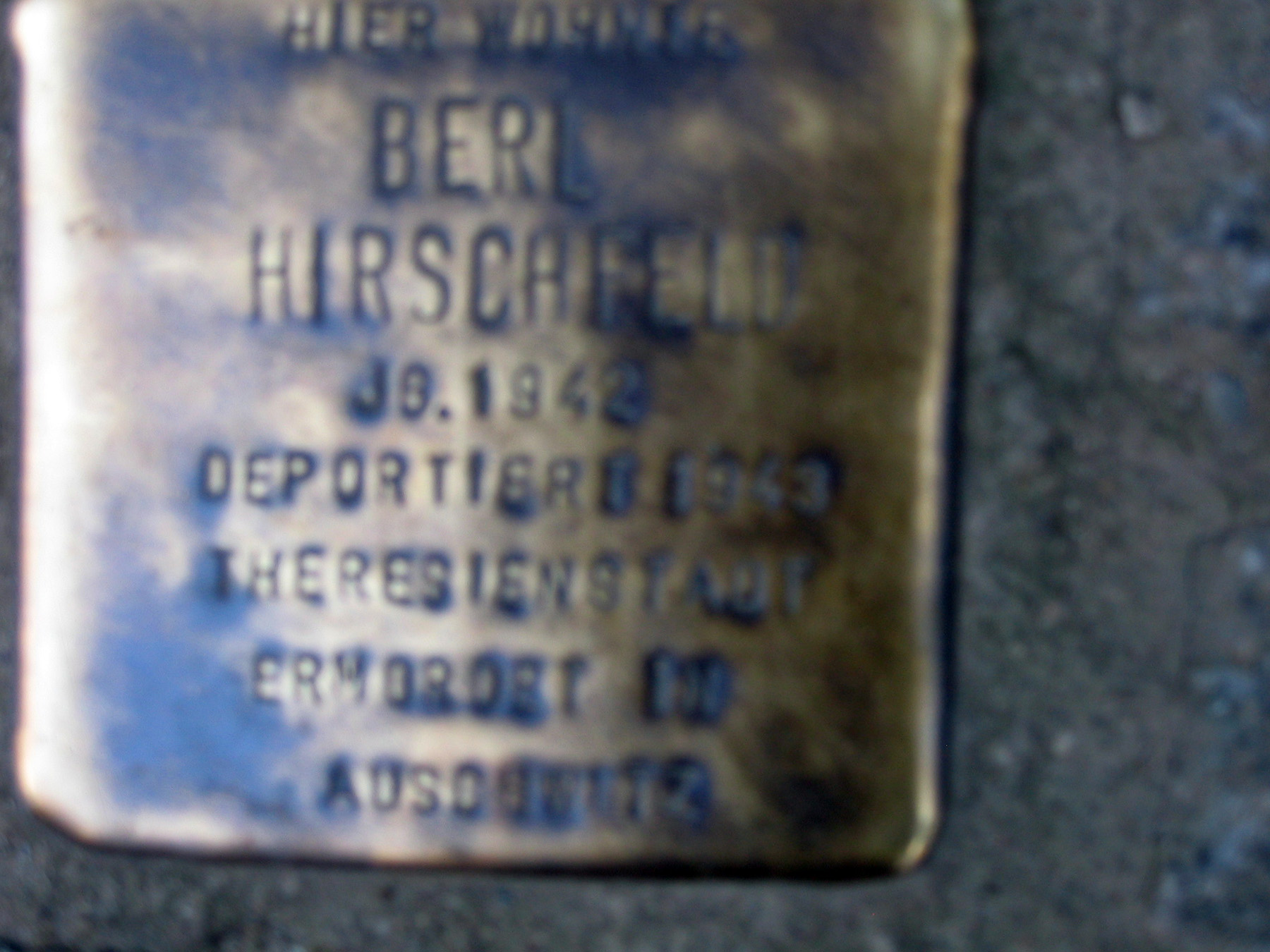
Let’s end on an optimistic note, though. Many, many righteous people headed the calls of the organization that has by now placed over 70.000 stumbling stones across Europe, commemorating the names, locations, death or survival dates of persecuted Jews and other Nazi victims,
calls to polish them before they fade into oblivion. Across countries, regions, cities, towns and village, people went out to scrub the markers.
Photographs today are from my various visits to European memorials. A bit of difficult music by a Jewish composer, appropriate to the topic, though. If you need a smile, read the comments under the video. Someone will have expressed some of your very own sentiment.
I figured we’d celebrate the wave of relief felt by more than half of this country with a color that stands for enthusiasm, positivity and enlightenment. Or so the color gurus tell me…. conveniently ignoring that yellow has often had different connotations.
Just think of its association with sickness – yellow-fever, hepatitis, yellow-jack (a flag on a ship that is under quarantine) – or associations with excess – yellow journalism. Then there are yellow-dog contracts which deny workers the right to join unions. And my own yellow-bellied (cowardly) manner towards a personal nemesis: yellow jackets.
Oops, I announced a celebration, so let’s look at the positive side: yellow daffodils are one of the few bulbs that are absolutely resistant to being devoured by critters, and who bring brightness to spring. And yellow is certainly the color in late fall, early winter, that captures, mirrors and reflects the last of the light, reminding us of escape from the darkness.
Yellow mums bring cheer, modeling patience for long winter days given the eternity they last even in a vase or through first frost. The vivid contrast between yellow and the dark surroundings in the fall woods feels energizing, no hiding here, no shyness, a sturdy presence, at least when it comes to mushrooms.
——————————————————————————————————————–
Yellow was van Gogh’s favorite color. Speculations abounded what could account for his “yellow vision.”
It was his abuse of absinthe, the alcoholic drink he favored! No, he suffered from xanthopsia, a state where everything in your sight looks yellowish, the result from exposure to toxins, including poisonous foxglove tinctures prescribed by his doctor in the asylum at St. Remis! It was subacute angle closure glaucoma that accounted for the yellow ‘halos’ in his paintings!
Basically all of these arguments are put to rest here. The use of digitalis from the foxglove plant was well understood in the 19th century, and by the time van Gogh would have reached sufficiently toxic levels (from absinthe as well) to exhibit xanthopsia he would have been unable to paint. Furthermore, he did not display any of the other symptoms associated with the kind of assumed glaucoma (brow ache, blurred vision,) never once mentioned in his otherwise detailed thousands of letters home.
His vision was also tested by his Doctor in 1889, using the kinds of color vision tests available for railroad personnel in safety tests, and found to be normal, as was his short- and long-distance vision. The guy was in his early 30s at the time, remember?
In contrast, we have his own thoughts in letters about his use of color, of his experimentation with color (yellows were almost always off-set with blue and white, a white he could not have distinguished from yellow with xanthopsia) and the fact that the use of yellow was already dominant in his very young years in Holland, before any of the potentially poisonous agents appeared on the scene. (Here is an invaluable source for his letters, searchable by key concepts.)
Last but not least we also have the assessment of his colleague Paul Gaugain:
‘Oh yes, he loved yellow, this good Vincent, this painter from Holland — those glimmers of sunlight rekindled his soul, that abhorred the fog, that needed the warmth.’
Now why do I bring up so much of this debate, in my view solved by looking at scientific facts with an eye on the whole package of historical data?
I have been thinking of how arguments are flying around in the Democratic party post-mortem of the election, claiming this or that or those being at fault for losses, for gains, on all sides. Often the loudest arguments win, or the ones that jive most with our own closely held beliefs (confirmation bias,) or the ones that are repeated most often. Now more than ever it seems paramount to wade through them all and really test the veracity of claims, not just their plausibility.
This is important because we will not prevail if we do not learn from mistakes. I am all in favor of celebrating today – but the work of tomorrow has to begin with honest assessments of future moves. And a good start is to look at the differing voices. We can contemplate what AOC had to say in an interview with the NYT yesterday, pointing to the fact that we urgently need and utilize the help of marginalized communities, but then tend to drop them and their demands once we’ve won, giving plum political jobs to anyone but progressives. Or we can turn to a thoughtful, intelligent essay in the Atlantic about what it would mean for democracy to simply go back to the status quo ante 2016. (Highly recommended reading.)
We can look at the argument of many that a centrist Biden, or down-stream candidates like him, overall outperformed the more progressives, even if those won in their own districts. We need to ask, if those claimed differences (we don’t even have yet all the numbers!) are based on message content differences (Medicare for All/Defund the Police) or were inherently driven by misogyny or racism (the more progressive candidates also tended to be POC, many of them women.)
There has to be an assessment of the way messages were conveyed – did we match the skillful bite-size narratives of the republicans with our more complicated stories, did we match their community engagement (democrats did not do door to door canvassing because of Covid)? Did top-down regulations and media approaches hamper individual democratic candidates because they were not appropriate for their communities?
Was there a failure to nationalize attacks on Trump for fear of scaring potential republican voters ready to jump ship – a population that did NOT materialize? After all, campaigns that accepted top-down funding were obliged to run under basic strategic maps brought to them by the DCCC/DSCCC/DLCC and this was their strategy.
Was lack of skill or funding or awareness for the need for social media dispersion a factor? There are so many variable to be taken into account beyond the core issues of progressive demands versus centrist calls for reconciliation and moderateness, that it will take time to isolate them and analyze them all. Most of all it will take the will to do that, otherwise we will not stand in 2022.
Reward yourself for due diligence in exploring these issues with a walk in the woods showering you with exuberant yellow. It will lift your soul.
Music today is by Michael Torke who has composed a lot around colors, including bright blue and its opposing color on the wheel: YELLOW. (Yellow Pages are not the only industry to flag that color. Think Nikon, National Geographic, McDonalds, and CAT and Caterpillar…..) Someone knows what they are doing.
One of the most remarkable historical figures on the American Left was born to French immigrant parents on this day in 1855 in Terre Haute, Indiana. Growing up comfortably middle-class, supported by family throughout his life-time (his brother Theodore did the bulk of his administrative work forever, his wife was a strong supporter and intellectual soul mate,) Eugene Debs grew from being a moderate to being a socialist, a labor organizer, fighter for militant unions and a founding member of the Socialist Party of America.
Never heard of him? Here is a short documentary narrated in the late 70s by none other than Bernie Sanders.
During his three presidential runs in 1900, 1904 and 1908, Debs embraced the proclaimed ideals of American democracy – popular sovereignty, equality, republican liberty) – but argued, with speeches that were in turn hopeful and criticizing, full of revolutionary as well as religious fervor, that one could only reach these ideals if one broke the hold of industrial bondage, the reign of unevenly distributed power on the basis of capitalism. That revolution, he was convinced, was in the hand of the working class who had to realize its potential for changing an undemocratic system.
Democracy, under attack in what we currently are witnessing, in all of the vote suppression, manipulation of voting, legal attacks on voting and vote counting, was defined by Debs as the drive to replace unaccountable hierarchies with something approximating an equality of power. He understood that this could not be done without a broad coalition of forces fighting for change, and his party included an enormous range of constituents: Jewish garment workers in New York City, German brewery workers in Milwaukee, white tenant farmers in Oklahoma, black lumber workers in Louisiana.
In fact, outspoken anti-racist arguments filled a lot of Deb’s work.
The Socialist Party would be false to its historic mission, violate the fundamental principles of Socialism, deny its philosophy and repudiate its own teachings if, on account of race considerations, it sought to exclude any human being from political equality and economic freedom . . . Of course the Negro will “not be satisfied with ‘equality with reservation.’” Why should he be? Would you? Suppose you change places with the Negro just a year, then let us hear from you — “with reservation.” (Ref.) )1904!
In 1918 he gave his famous CantonSpeech linking capitalist mechanism and war efforts, calling for freedom for workers, and expressing hope for a commonwealth and fervor for Internationalism. It landed him in prison, sentenced for 10 years, serving 3 (his sentence eventually commuted, but his citizenship stripped) for “trying to cause and incite insubordination, disloyalty, mutiny and refusal of duty in the military,” as well as for trying “to obstruct the recruiting and enlistment service of the United States.”
He died a few years later, his health never recovering from the prison ordeal. A posthumously book, Walls and Bars published in 1927, spelled out his primary belief in the need to abolish the hierarchies that had come to replace those of ancient kings and feudalist lords, hierarchies that held people in bondage even if they were no longer owned by chattel slavery.
One of his rightful heiresses, Alexandria Ocasio-Cortez, framed the political goals of Democratic Socialism in terms relevant for today.
“I believe that in a modern, moral, and wealthy society, no person in America should be too poor to live. So what that means is health care as a human right. It means that every child, no matter where you are born, should have access to a college or trade school education if they so choose it. And, you know, I think that no person should be homeless if we can have public structures and public policies to allow for people to have homes and food and lead a dignified life in the United States.”
Seemingly straightforward, acceptable goals. We will not achieve them if we do not face, as Democrats, whom we are beholden to and how the distribution of power interferes with a pursuit of these goals. A democratic administration – should we be so lucky to get one – and a democratic party going into the next rounds of elections in decades to come, has to reckon with where their true power will come from and who to court as allies. As Eugene Debs would have it, true democracy should be our guiding principle, and reforms should be sought that tilt the balance of power away from those who unjustly wield it. (Ref. – the link here is to a superb historical overview of Deb’s life and the basis of much of my summary today.)
Now let’s continue to bite our nails hoping for the least worst outcome of this election. And listen to the people sing….
As much as I want to provide some sense of relief, or encourage some optimism, I am hard pressed. I am writing this in the early hours of the morning after an election that – even if the outcome ushers in a new President, still undetermined – has shown that millions of people in this nation cling to representation that chooses white (male) supremacy over true democracy. Millions and millions who are willing to empower politicians and lawyers who embrace danger, chaos, neglect and violence in the pursuit of power and profit, the world be damned.
Yes, there are more people who did not vote for Trump, than there were who did.
But the Senate stands unpunished, with a single exception. More people voted for Trump after 4 years of his governing than did in 2016, and the court battles ahead will reveal how far we have sunk away from a nation that prided itself in the pursuit of justice, at least in name.
I am exhausted from driving home from California through apocalyptic landscapes of miles of charred forest, with climate change measures also implicitly rejected by millions on the ballot. The attached poem came to mind, which circulated after tragic losses due to domestic terrorist acts years back in this country. Written by Maggie Smith (NOT the British actress, but a name sake) it is not a particularly good poem but at the time seemed to encourage people to look underneath the rot for the good “bone structure,” the dormant true nature of this nation that could be refurbished.
Well, today I see but rotting bones, come back to life as a specter clinging to hate, to a cult-like embrace of a mad king, to the vision that they will not ever have to share what they perceive to be their birthright: the power to declare what’s theirs and what’s right against all who differ, the power of Whiteness, exclusion, of ownership, exploitation and hunger, the power over life and death for all who do not look and think like them, be it from guns, an unchecked virus or a foot on top of your neck.
The task has to be to look at the many more people who desperately tried to make this place beautiful, even if the chance should be snatched away from them through antiquated electoral college rules that serve to preserve established power, or through courts that have been strategically seated with partisan judges. The task has to be to question democratic party strategies that believed in wooing centrist “Biden republicans,” a non-existing slice of the electorate. The task has to be to see progress as a marathon, our efforts needed across the decades, not the years. The task has to be to model for the generations after us that you don’t tire when evil escalates and withdraw into resigned or willfully blind domesticity, no lessons learned from the 1930s.
Our task is not to surrender to hopelessness, disgust, fear or fatigue.
Our task is not to give up.
Here is music that will help us with this pursuit.
If you drive north along palmtree-lined Bay Road, passing the Bay Bridge,
the Piers,
and somewhat confusing public art,
you’ll eventually end up at Crissy Field, a large expanse of park, with a bit of marsh enclosed, and sandy beaches to walk on.
The views of the Golden Gate Bridge are postcard material, and as such sold in every tourist trap in town. That said, the views are gorgeous.
Walking in those green meadows and along the pristine beach you wouldn’t know that the area was for the longest time one of the major military air fields on the West Coast if not the country. Parking lots and concrete- plastered runways covered the area since 1921, with barracks on the infill of what was once a marsh housing enlisted men, and other buildings serving as administrative offices and officers’ quarters.
Fog made for difficult flying conditions, as did the construction of the Golden Gate Bridge in 1937. After World War II the field was primarily used to received MedEvac flights bringing wounded Vietnam soldiers from Travis Air Force Base to Letterman Hospital. It closed eventually in 1974.
The bridge is in that cloud!
In 1994, Crissy Field and the rest of the Presidio became part of the Golden Gate National Recreation Area, under the care of the National Park Service. Three years later they started enormous restoration efforts, the results of which are now enjoyed by throngs of people, tourists and neighbors alike.
About 230,000 cubic yards of soil had to be removed from Crissy Marsh alone to transform it from a parking lot back into a habitat for plants and animals like herons, egrets, crab and fish. The rest of the area had to be cleaned from decades of accumulation of hazardous materials, an undertaking that was supported by millions of dollars in donations from citizens and organization alike.
Here is a detailed history provided by the National Parks Conservancy, with remarkable before and after photographic footage of the transformation. A true restoration.
Have we learned anything? Cargill Inc., the nation’s largest privately held company, recently wanted to develop nearly 1,400 acres of the shoreline along the San Francisco Bay in Redwood City, destroying existing marsh land. Trump’s Environmental Protection Agency tried to give the green light, ignoring both it’s own agency regulations and the Supreme Court’s decision on the Clean Water Act.
Save the Bay, an energetic environmental protection organization, California Attorney General Xavier Becerra, and three other environmental organizations sued the EPA and EPA Administrator Andrew Wheeler over the agency’s March 2019 decision not to protect the salt ponds under the Clean Water Act. A federal judge has now ruled in favor of the environmentalists, but one wonders, of course, what will happen if and when the issue winds its way up to the newly configured Supreme Court.
Why is it that every bit of nature has to be ripped out of the maw of forces trying to destroy it in these urban environments? Why do always either the state or private business reap the economic benefits of their strongholds, while the damage removal has to rely the generosity of citizens’ purses or the tax payer stepping up? And are people even aware of the work and time and money and sweat and tears provided by conservancy organizations who try to rescue what they still can? Rhetorical question, I admit.