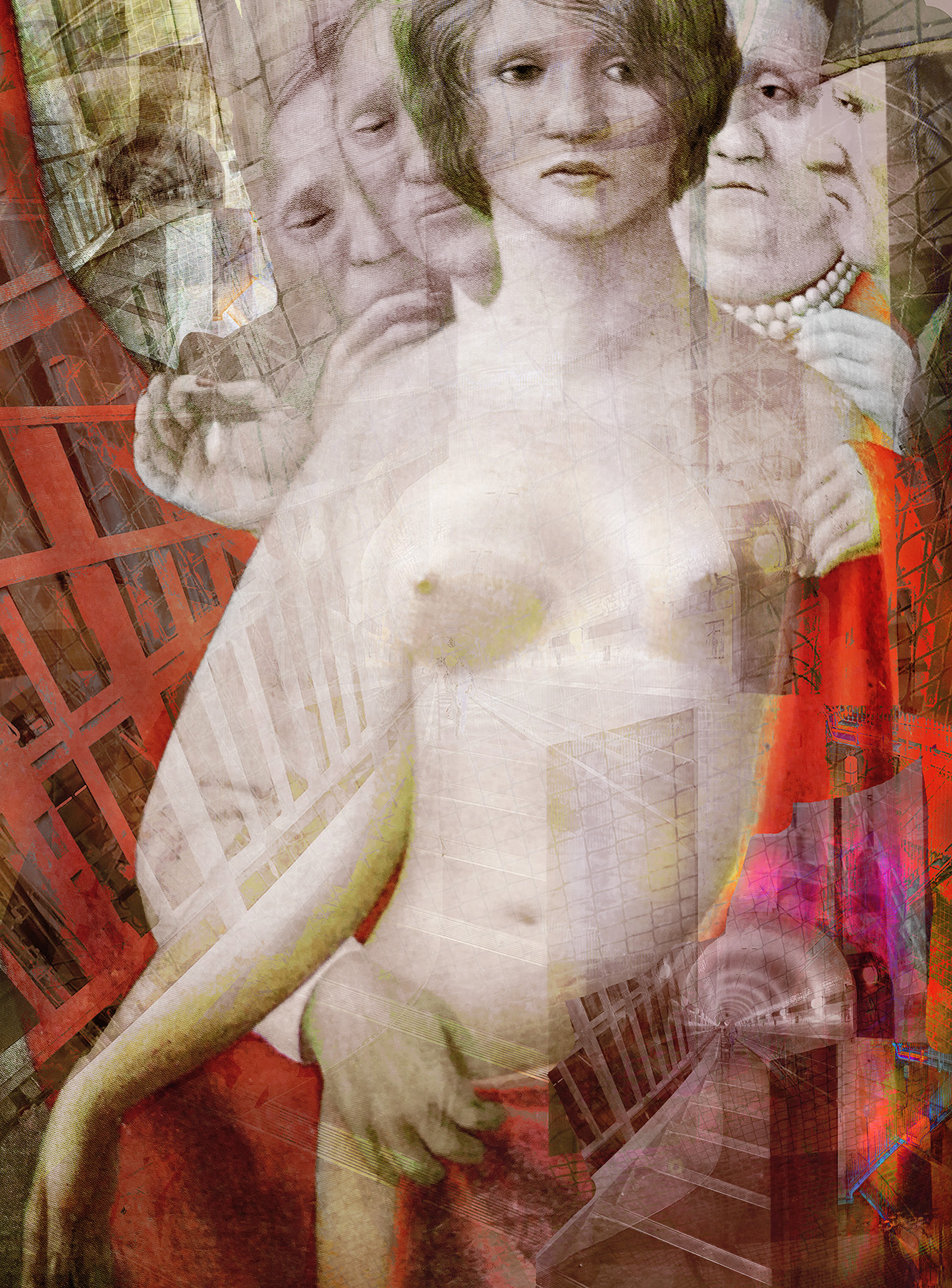
It is never easy, is it? Here you thought I’d let you off the hook from politics by offering a full week of blogs about flowers and literature. Think again.
The blossoms have hit rock bottom. So has the social contract. Remember the definition?
“…an implicit agreement among the members of a society to cooperate for social benefits, for example by sacrificing some individual freedom for state protection. Theories of a social contract became popular in the 16th, 17th, and 18th centuries among theorists such as Thomas Hobbes, John Locke, and Jean-Jacques Rousseau, as a means of explaining the origin of government and the obligations of subjects.”
I don’t need to go into the details of its demise, you read that daily in your news sources. I do want to bring up a related issue, though, the racial contract. The term was coined in a small book, The Racial Contract, written in 1997 by Charles Mills, now professor of philosophy at the Graduate Center at CUNY. He argued that linked to the social contract there was an implicit racial contract that divided the world into Whites and non-Whites, the latter a subhuman class who was originally denied equal rights by the law, while now we pretend that it enjoys them. The book goes on to describe all the historical, political, sociological, economical and structural factors that have continued to keep this racial hierarchy intact.
A refined and extended version of the arguments can be found in Mill’s 2017 Black Rights/White Wrongs, which points, among other things, at “white ignorance” as our shameful ignoring of reality that keeps the status quo intact. My ongoing attempt to fight my own avoidance led to the decision to link to an article today that I found enlightening. I hope you will make time to read it. If you prefer to listen, here is the podcast that talks about the same issues.
Adam Server’s essay describes the many fronts where we currently see racial disparity unfold in full force. He explains Mills in succinct ways:
If the social contract is the implicit agreement among members of a society to follow the rules—for example, acting lawfully, adhering to the results of elections, and contesting the agreed-upon rules by nonviolent means—then the racial contract is a codicil rendered in invisible ink, one stating that the rules as written do not apply to nonwhite people in the same way.
He offers evidence in form of the the various events of the last weeks, the murder of Ahmaud Arbery and other Black people, the police treatment of social distancing rules depending on who breaks them, and in detail the disproportionate impact the pandemic has had on people of color. Non-Whites get ill and die from Covid-19 in larger numbers relative to their population percentage and they are harder hit by the economic devastation caused by the inertia or deliberate ignorance of the current administration.
Whether we are talking undocumented workers, most often non-White, or prison populations, or even the poor workers of Wisconsin, now forced to get back into infectious situations with little ways of protecting themselves (by a Supreme Court that had the deciding vote cast by a lame duck judge who had been thrown out in the March election…), the touted principle of equal rights for all is glaringly not happening in praxis. The invisible ink of the racial codicil is becoming legible with the heat applied by the current catastrophe.
The revealed injustice goes beyond color lines, but is strongly defined by them. It might lead to changes that we as a nation are not prepared to face – today’s very last reading assignment in this regard comes from the New York Times, and then you can enjoy the weekend!
Photographs today found while hanging my head.
Music by the Tomeka Reid Quartet, on the other hand, lifted me up again, in the Lone Wait her cello playing captures the mood….
“A Tribute to Ida B. Wells” published inThe Chicago Defender on April 18, 1931.
Weeping for you is lost—worthless
As a veil of sorrow tinged despair
That comes from the foul air
Of a clime where man’s access
Is defeat, hushed and desertness.
Your future is no turmoil bare
Of reward, etched in the glare
Of right and wrong, bubbling for
redress
Of black men. Yours is no death,
For you are not dead, but yet
With us in this realm where blatant
woc [sic]
Is out of its ken. buried beneath
Your always vibrant shining web.
Where the glow of justice yet will go.
Wallace Webb Scott
*
On Monday, Ida B. Wells was awarded the Pulitzer Prize, posthumously. Here is a link to a short biography and below a moving documentary, laying out the details of her political engagement, social activism, relentless pursuit of justice and truth, and above all her courage.
Born into slavery, she, too, lived through a pandemic – yellow fever – loosing both of her parents and a sibling to the illness. Only 16, she decided to work as a teacher to support her siblings. At every junction where despair hit, including losing anti-discrimination lawsuits at the Supreme Court, her anguish turned to fury and motivated her to increase her efforts to fight for social reform, to educate and to seek justice. She soon thrived on the work of being a journalist, even though it led to her losing her teaching job.
Lynch Laws were used to terrorize the Black population, and three of Well’s friends were murdered by a mob in 1883 when they opened a grocery store competing with White interests across the street. It is strongly believed that the local criminal court judge himself was one of the lynchers. No-one was brought to justice. And if you think that it’s all long ago: Read up on the modern day lynching of Ahmaud Arbery in Georgia, three months ago. A Black jogger hunted down and shot by two White men, three DAs doing nothing, the last of whom only convened a Grand Jury after a video of the crime surfaced two days ago. A reminder that nothing but nothing lies in only in the past. Wells is probably turning in her grave.
Wells took her power to the pen, and with her understanding of the politics of economics called for Blacks to leave Memphis – as they did by the thousands, migrating to Midwest locations. The White establishment was enraged, hit by the loss of business. Within Memphis she organized a boycott of the Trolley system that hurt the public transport people enough that they came to beg her to end the strike – she refused. She had discovered the power of organizing and devoted efforts towards it for all her life.
Lynching, of course continued and increased in numbers, attended by crowds up to 10.000 people who got voyeuristic pleasure out of the murders. So did violence against those who spoke out: Wells’ offices were ransacked, the printing presses destroyed, her life no longer safe in the South – she was in exile for a full 30 years before she returned, writing and organizing in NYC, creating the first national anti-lynching campaign (eventually she settled in Chicago). Her insight that slaves’s bodies were economically too valuable to be sacrificed, and therefor only harmed, not killed, but that freed Black bodies only represented competition and therefor had to be eliminated, drew national attention. People like Frederick Douglass started to correspond with her and acknowledge her contributions, although many Black leaders decried her for rocking the boat (and also having a problem with a woman being so powerful.)
It was when she visited Europe and founded an international-lynching organization that threatened to curtail the import of American cotton, an industry at the heart of the South, that lynchings became part of public debate among Whites and trailed off in reaction to the economic pressure. Her fight on two fronts – racism and sexism – continued. She joined the suffragist movement as well. The fight within the Black community – between the Radicals represented by DuBois whom she joined, and the Accommodationists, aligned with Booker T. Washington’s mission to keep segregation as a protective sphere for Blacks, also took a lot out of her, but she did not back down.
Before she died in 1931 she wrote about the Arkansas Race Riots, where her work had brought justice to 12 imprisoned, tortured men who had tried to unionize Black cotton-farmers. It’s worth a read if you care about organizing. Or justice.
She was a phenomenal woman, and the late recognition is something that should encourage us all.
Bullypulpit here. Essential reading. Sweetened by the sweetest birds, I believe Wilson warblers, photographed from my window during their fleeting, skipping, hopping, fluttering visit on Saturday. Tired of birds yet? Tired of politics of racism? Granting the former, but we don’t have the luxury of fatigue for the latter. As I said, bullypulpit today.
In a friendlier, pleading voice: please read this short essay by Ibram X. Kendi. It is enlightening, non-belligerent, and so, so timely. (Alternatively, I put the key paragraphs below to get the message in plain view.)
In a nutshell he argues that we see parallels between the American history of slaveholding mentality and the division in approaches to containing the Covid-19 pandemic today. Embedded in some plain teaching about historical facts of our founding fathers and the Civil War is this core insight:
Slaveholders desired a state that wholly secured their individual freedom to enslave, not to mention their freedom to disenfranchise, to exploit, to impoverish, to demean, and to silence and kill the demeaned. The freedom to. The freedom to harm. Which is to say, in coronavirus terms, the freedom to infect.
Slaveholders disavowed a state that secured any form of communal freedom—the freedom of the community from slavery, from disenfranchisement, from exploitation, from poverty, from all the demeaning and silencing and killing. The freedom from. The freedom from harm. Which is to say, in coronavirus terms, the freedom from infection.
From the beginning of the American project, the powerful individual has been battling for his constitutional freedom to harm, and the vulnerable community has been battling for its constitutional freedom from harm. Both freedoms were inscribed into the U.S. Constitution, into the American psyche. The history of the United States, the history of Americans, is the history of reconciling the unreconcilable: individual freedom and community freedom. There is no way to reconcile the enduring psyche of the slaveholder with the enduring psyche of the enslaved.
*
Much has been written about the origins of individualism, the settler mentality, the connection to the belief in the doctrine of exceptionalism and the fact that it is a specifically Western value, so different from the rest of the world which cherishes communal values.
Here is another take that I found quite interesting. New research published six months ago explores a connection between the teachings of the Catholic Church and the rise of individualism, including its specific beliefs in independence, agency and autonomy, starting in the 6th century. In essence there was a church directive to cease intrafamily marriages – to stop marrying your cousins, eventually up to the 6th degree (so not just an incest taboo,) or their widows or adopt their orphans, which changed the traits shared by most people in the world to something different, individualistic, specifically Western.
The research used an enormous range of data to look at correlations between time and intensity spent under the directions of the church, and development of these Western values, including comparisons within one and the same country (Italy) that provided two parts differentially dependent on the church, the industrial North and the poor South. The data “included historical records of church exposure in every nation on Earth, beginning in the first century and ending in 1500 C.E., when European society had become nearly fully Christianized. They also looked at they consulted anthropological data to assign a kinship intensity score to each of the world’s major ethnolinguistic groups. This score was based on historical rates of cousin marriage, polygamy, and other factors. Finally, they drew on dozens of studies that used established psychological measures such as the World Values Survey to determine modern population-level scores for traits such as individualism, creativity, nonconformity, obedience, and ingroup/outgroup trust.”
The large family clans that had been constituted by these family connections guaranteed survival. Growing crops and protecting land required cooperation, and marrying cousins was an easy way to get it. When these kinship systems were broken apart it had enormous consequences, not all good. On the one hand, less dependency and obedience to clans, elders, community did lead to more freedom of choice for the individual, less forced obedience and conformity. Individualistic people working together across family boundaries (and thus with less in-group conformity) formed a precursor civic society that eventually enabled democracy.
The disruption of extended family systems in favor of a nuclear family, however, also meant less security in case of emergencies, famine, disease, with no familial system to fall back on. This is where the church jumped in, corralling the poor in their alms/work houses. Depriving folks of the leadership of their elders left space for the church to take over as authority, requiring obedience, extending influence. The disruption of family ties also led to less land consolidation among the intermarried, from which the church benefited by snatching it up for itself. This was particularly the case during the demise of entire family branches when the lack of succession through adoption was blocked and the estates fell by default to the church.
And, of course, the prime value that we eventually put on individualism weakened the values attached to communal existence.
The interconnection between human psychology, religion, economy and politics never ceases to amaze me. As does our willingness to ignore history and look away from causal factors – like the ongoing effects of slavery or the disadvantages of individualistic societal structuring – when we try to move towards solutions in crises. The worst thing, though, is the fact that so often the price for acting in our self-interest is paid by others, the masses who are granted neither: the freedom for or the freedom from.
And here is freedom-related music – in an old but still unmatched version by Otto Klemperer:
And here is to someone who saw it all early and clearly: Happy 202nd birthday, dear Karl.
TRIER, GERMANY – MAY 05: Some of the 500, one meter tall statues of German political thinker Karl Marx on display on May 5, 2013 in Trier, Germany. The statues, created by artist Ottmar Hoerl, are part of an exhibition at the Museum Simeonstift Trier commemorating the 130th anniversary of the death of Marx in 1883. Marx, who was born in Trier, is the author of The Communist Manifesto, and his ideas on the relationship between labour, industry and capital created the ideological foundation for socialist and communist movements across the globe. (Photo by Hannelore Foerster/Getty Images)
Since we are all over the map this week anyhow, I might as well think out loud about one of my current preoccupations in the art department.
As those of you familiar with my montage work know, I often appropriate partial images from other artists into my art. I am not alone in that venture: artists more famous or talented than I have long pursued all forms of appropriation, sometimes even direct copying. A more detailed discussion in the art world can be found here.
Air France (Fluchtgedanken, 2020)
My rule has always been that I only use snippets that I photographed myself, and that the ultimate outcome – the montage – produces significant change to the parts appropriated, and provides a completely new creative context.
That said, I find myself in a novel situation with the series I am presenting to you today. It uses not just one partial painting by a single painter, but incorporates multiple works by that painter. The series is one way of my dealing with the emotions and thoughts generated by the current situation, less so about the social isolation and more about the way we as a society are distributing risk, often unfairly, and in some recent whispered discussion within the framework of accepting eugenic principles. Took us what, only 75 years to get around to it again? What are expandable lives? The old? The diseased? The incarcerated? The poor?
The Tunnel (Fluchtgedanken, 2020)Virus Whispers (Fluchtgedanken, 2020)
All the painted portraits I manipulated in the new series Fluchtgedanken – Thoughts of Escape are from an interesting guy, George Tooker; I found an old art magazine in a pile in my basement that my husband for some incomprehensible reason saved from his grandfather. It had a spread of Tooker paintings printed on grainy cheap paper, painted in the 1950s and 60s, that I photographed. Tooker was openly gay, first living in Manhattan, then somewhere rural up North, totally engaged in civil rights movement, including the march on Selma, and preoccupied with the fate of the working class. Had quite a bit of success with egg tempera paintings in the Social Realism style in the 1960s. I had honestly never before heard of the guy or seen his work.
At the Soup Kitchen (Fluchtgedanken, 2020)Grand Central Station (Fluchtgedanken, 2020)Plexiglass (Fluchtgedanken, 2020)
The people in the paintings all had such a gripping zombie look, such empty eyes, that they seemed the perfect representations for those being pushed or having no choice but to attend the Covid-19 frontlines. The essential workers, the nurses, the unemployed, the hungry, the people in lock – down, the ones hiding from racism – all there! Well, with a bit of imagination they fit into the roles – and with even more imagination I linked them to themes of escape, hinting at modes of getting away.
Filing for Unemployment (Fluchtgedanken, 2020)Waiting for the Bus (Fluchtgedanken, 2020)
I embedded them in montages that include a lot of linear abstractions to counterbalance the figurative work and used my older, existing work that focussed on means of transportation, planes, ships, bikes, trains etc. connecting them to the figures in our constrained environment. I figured Tooker would not be offended by my recycling of some of his portraits given the shared politics and impetus to force people to think about the realities of our world through art. Then again, who knows. He’s dead. I couldn’t ask.
The Harbor (Fluchtgedanken, 2020)Quarantine (Fluchtgedanken, 2020)
Would very much appreciate feedback on what you see here today – if and how it speaks to you, ore more basically whether the points come across….
At the Airport (Fluchtgedanken 2020)
and for May Day, tomorrow, I’ll honor the striking workers (and recommend this from The Intercept for your perusal about the labor relations at major US companies under current dangerous conditions.)
The Strikers (Fluchtgedanken, 2020)
Music is a mix of the traditional kind sung during May 1 demonstrations in the class struggle and the kind Tooker would have heard while he painted…one of my favorite albums of all time, I used to scream in sync with it…
Self-reliance is a trait that many nations cherish, but none more so than the United States. The worship of self-reliance, the distrust in government regulation, the celebration of the self-made man, the “American Dream,” the belief in rags-to-riches success stories (Horatio Alger as one example,) are structural components of our social contract.
Why do we buy into it, despite all the empirical evidence that shows it to be detrimental for the majority of our population? Why do we cling to it, despite the fact that in times of crisis going it alone, favoring only a few in the best of times, is threatening to dissolve the social fabric? Why are we willing to turn a blind eye to the fact that the first of the two pillars of a democratic society – liberty (we determine our own fate) and equality – has been advanced at the expense of the latter?
Horatio Alger stories, in all their literary, cinematic and political variations, are of course peddled so that we do not question the status quo. Their core message: hard work, honesty and determination can conquer all obstacles. Never mind that every sociological and economic study shows, of course, that circumstances of birth – wealth, class, race, gender and the luck of natural talent or ability – win out over hard work and determination any time, when it comes to establishing or maintaining disparities in our nation. The working poor have not chosen NOT to succeed – they are structurally disadvantaged. By NOT acknowledging that, we can continue to withhold our empathy, and can pretend that things are fundamentally fair, after all. Work harder, and you, too shall become a millionaire!
If we embrace the notion that fairness rules the distribution of opportunities then we can say with relief: our system is just! The obscene excess wealth we see in this society, the gaping distance between the rich and the poor, all just, because every person is the captain of their own fortune.
*
Pour yourself another cup of coffee, or beverage of your choice, and sit down with me for a thought experiment. Design for me the ideal society. What would the rules be? The governing structures? What role would justice play, how would you define it? How will you remedy problems faced by larger systems, problems that include conflicting opinions, needs and beliefs? How would you distribute limited resources? Oh, and did I mention: I will not tell you who you will be in that utopia, man or woman, rich or poor, living with disability or without, black or white, talented or not. You are blind to your potential future status. Get going.
I am referring here to the work of philosopher John Rawls, who linked, in his seminal work A Theory of Justice, justice to fairness and devised the veil of ignorance as a tool to show what rational people would come up with in this situation, creating a social contract that would not hurt them in that imaginary world. Here’s what people agree to:
(1) Each person is to have an equal right to the most extensive basic liberty compatible with a similar liberty for others.
(2) Social and economic inequalities are to be arranged so that they are both (a) to the greatest benefit of the least advantaged and (b) attached to offices and positions open to all under conditions of fair equality of opportunity.
If I might end up as the weakest link in that society, equality becomes much more important than anything else, including the notions of independence and self-reliance. (Here are more details.)
As applied to our own current crisis, we have already an inkling that the over-reliance on self-reliance can be fatefully wrong. Instead of a top-down, universal, federally-led production and distribution of life-saving products, it’s a Hobbesian world out there, each state, hospital or individual trying to wrestle resources on their own. If you don’t manage to get the necessary protective gear? Not working hard enough! If blue states are systematically ignored? Not determined (to be obsequious) enough! If prisoners die like sitting ducks – well, if they’d been honest they wouldn’t have ended up in prison…. In times where cooperation, empathy and solidarity would protect society as a whole, the myth of individual ruggedness, independence and deservedness trips us up. All of us, not just the ones who were always shafted by that myth to begin with.
What can be done? Stay tuned. I’ll try and summarize some suggestions from clever people tomorrow.
Photographs of my favorite clouds are stand-in’s for veils in front of our future, or symbols of our clouded thinking, or longing reference to travel – take your pick.
Music by Schütz – They who sow with tears will reap with joy. They go out and weep and carry worthy seed, And return with joy and bring their sheaves. Psalm 125:5-6
Could be read as “be meek, bear your troubles and you’ll be rewarded,” (Justice in the afterlife as tool of appeasement.) I prefer, though, to read it as “we cry now, but if we sow the right seeds, we’ll be joyful later.” Where’s the Green New Deal already? And in any case, the music is sublime.
Honestly, I am not trying to add to all of our fears and sadness. I do think, however, that we need to face some substantive issues, if we want to learn from this crisis before the next one, climate catastrophe, hits on an incomparably larger scale than Covid 19.
This way: Justice
Therefore I decided to introduce a paradigm today that has been in my thoughts. Fascists in Germany revived a concept in the 1930s of “Thinning The Herd” which goes back to the 18th century belief that when the population exceeds resources government should use war, famine or widespread disease to thin the herd. Now why am I thinking of that?
To counterbalance the heaviness of the topic, photographs today are of chalk arrows that I found on Sunday’s walk in the neighborhood park. In my imagination they point to the goals we are all trying to reach. Should be trying. MUST try!
This way: Peace
Achille Mbembeis a distinguished Cameroonian historian and political philosopher, one of the most brilliant thinkers on the African continent as well as in the US – he holds dual appointments at Duke University and in South Africa. Among the honors he received for his work on social grievances, postcolonial politics and racist thought structures was the 2015 Geschwister Scholl prize (members of the resistance group the White Rose executed by Hitler) and the 2018 Ernst Bloch prize (a German philosopher known for his seminal work The Principle of Hope,) for his philosophy outlining the need for a more humane world.
This way: Solidarity
Mbembe has developed the concept of Necropolitics, the idea of the subjugation of life to the power of death in our contemporary world. In simple words: There are powers that get to decide who lives and who dies, using proximity of death as population control. Before we apply this to our current situation let’s acknowledge that not everything is about the virus. Instead, there are ubiquitous ways in which large populations have been politically and economically managed: people exposed to wars, genocide, refugee crises, prisons, in Syria or the Gaza strip, as well as those whose poverty and precarious living circumstances have been increased through political removal of safety nets, all are governed through direct or indirect proximity to death.
This way: Equity
The philosopher talks about new and unique forms of social existence in which vast populations are subjugated to conditions of life conferring upon them the status of “living-dead,” calling them death-worlds. They are governed by certain forms of economics, which withholds public goods and rights, making existence precarious. They are structured through confinement of precarious populations in certain spaces, most often in camp-form. Refugee-camps, prisons, ghettos, banlieues, suburbs, favelas, all serve as examples. Often these are policed or militarized spaces in which human beings are controlled and can be killed, “a permanent condition of living in pain.” Underlying these management structures is the key characteristic of those in power accepting (e.g. the refugee camps on the Greek Islands) if not actively pursuing (e.g. war in Syria) the possibility of death on a large scale.
This way: Bridge to Safety
We can find these kinds of politics not just in authoritarian, but also in democratic states, where the state confines, imprisons and persecutes certain populations. Not that violence is a state monopoly: when private groups in a society separate into those who arm themselves, and those who are not armed (militias vs citizens,) the idea of killings as something acceptable is normalized. The production of weapons, both for private use or in the context of expanding wars, is a source of economic revenue in these political systems. Exploiting natural resources for economic gain also tolerates that populations are endangered, displaced or eliminated, or future generations sacrificed (Amazon rain forest destruction, for example.)
This way: Anti-Racism
What moral justifications can possibly be given for the way human populations are treated by the powerful? Mbembe offers a catalogue of their excuses, such as the eradication of corruption, different types of “therapeutic liturgy”, “the desire for sacrifice”, “messianic eschatologies”, and, importantly, “modern discourses of utilitarianism, materialism, and consumerism.” The underlying causal mechanism for necropolitics to be performed and expanded in a given society, allowing for exploitation and natural elimination of poor or powerless populations? Racism, both in its institutional and private forms. It’s beyond my scope here to go into detail – here is his book. (And here is the article that I relied on heavily for the summary of the concept.) Eye-openers.
This way: Environmental Protection
*
Back to Covid 19. Doctors and first responders who have to make utilitarian decisions about who gets to live and who will die are not to be faulted in this crisis. Younger lives are weighed against older one, existing conditions against healthy bodies, parenthood against singles, how else can you justify distribution of scarce resources. There are, however, whole governments who have also made utilitarian decisions – this time to benefit individuals (keep the numbers low so my re-election is not endangered) or political ideologies (the free market rules, I am not invoking the Defense Production Act for manufacture of rescue items, or the closing of beaches) or, as I write this, to choose a structural system – our economy and its value – over people’s lives (scrap “expendable” scientific offices, fire “expendable” administrative personell, remove social distancing rules to restart production.)
This way: Sustainability
When someone literally says that the cure cannot be worse than the disease in this situation, they imply that lives need to be sacrificed for profit. And whose lives will this be? Who are the disposable people that no-one is directly mentioning? For every single middle-class or wealthy person there are masses of those who are already going to work sick, because they cannot afford to lose their wages. For every safely ensconced work-from-home person there will be those stuffed into public transportation and factories. There are those who live in cramped quarters because of poverty, or imprisonment, who will drop like flies. There are those who have no access to medical help until it is too late, for fear of cost, or absence of clinics in their counties. There are the homeless who have a high percentage of underlying conditions.
This way: Community
We should say it out loud: those who are deemed disposable are, for the most part, poor, uneducated, deprived of resources, and, in the US, all that is correlated with being black or brown. You think I’m making this up? Look at yesterday’s comments from the Republican right after our dear leader started to get impatient with the duration of the shut-down: here is but one example
Or the Texas Governor suggesting that lots of grandparents would be willing to die to rescue the economy for their grandchildren (never mind that 3.6 million children are raised by their grandparents in this country…) – an expendable group is identified.
This way: Grace
Our task, then, first and foremost, seems to me to identify who is in power, who employs necropolitics, and who benefits from them. That is where the first change has to be forced, by putting someone else at the helm. Secondly we have to pinpoint the underlying economic systems that have enthroned their representatives for their purposes, and figure out how they can be shifted towards a more just and balanced distributions of our communal resources. We can no longer rely on a patchwork of individual support, non-profits, mutual aide societies who try at alleviate the worst of the suffering. Structural change is the only thing that will save us. Quite literally save us, as it turns out.
Maybe my brain is certifiably going downhill, but I watched this video of Stella, the dog, jumping over and over and over and over into leaf piles yesterday with such fascination and abandon that I actually forgot to worry for the entire 3 minutes of its duration.
I have, as you’ll know if you have followed me for the last years, never posted an animal video, I believe, outside of some scientific demonstrations of the intelligence of crows or some such. But this was what I needed. Joy, pure. Go ahead, roll your eyes already….
It mattered, because I was thinking about animals in two very different, but related contexts: For one, the horrific use of racist language – the Chinese virus, the Kung flu – by people working in our government is just one step removed from the language that comes next: dehumanizing terms that compare people to animals, humans to what is conceived of as subhumans. From a previous blog entry:
Psychological research, originally looking into Nazi use of dehumanizing language in preparation for the Holocaust, has shown that merely listening to it increases the willingness to use violence; some international agencies even consider that kind of naming a precursor to genocide. Once a class of people is dehumanized, the usual compassion and empathy that we extend to fellow human beings is weakened. The part of your brain that controls social relations becomes less active, a physiologically measurable effect when you are exposed to this kind of language. The door to systematic mistreatment is then wide open.
And secondly, I learned about the (differing) roles animals played in the Third Reich, from a by all reports fabulously researched and described new German book by Jan Mohnhaupt, Tiere im Nationalsozialismus. Here is my summary of the book review (not yet in English translation, alas):
The book looks at animals as the daily companions of Nazis, as means of propaganda, as depictions of the enemy and as pest. Horses were seen as heroic, trained to find landmines and boiled to save soldiers from starvation. Potato beetles were intended to be used as a biological weapon to induce starvation in nations at the Eastern front. Brown bear cubs were kept as a source of entertainment for concentration camp wardens, in a “zoo” on site built by inmates. Dogs were seen as part of the master race, cats as Jewish. German Shepherds in particular, represented the purest of German dogs, the idealization of the populist-national race ideologies. Apex animals like lions and wolves (Hitler’s code name was Wolf ) ranked net to ………pigs! Pigs scored high in their fanatical phylogenetic universe, setting a contrast to Jewish custom that declares pigs unclean for consumption.
Jews were soon not allow to keep pets and had to euthanize the ones they already owned, because the Gestapo did not want to deal with them after their owners were deported. Nazi scientists applied knowledge and methodological approaches extrapolated from animal research to humans once the moral borders had shifted toward labeling our own kind as subhumans or human animals. The racial fanaticism managed to elevate some animals above humans, in other words. But it also allowed to engage in plans for genetic “purification,” just like farmers attempted to perfect the breed and purge the coarser element.
This becomes particularly evident if you look at Nazi legislation. (Here is an essay in English that delivers the details.) To summarize, by 1933 laws for the protection of animals and the regulation of slaughter and hunting were passed. Herman Goering announced an end to the “unbearable torture and suffering in animal experiments” and threatened to “commit to concentration camps those who still think they can continue to treat animals as inanimate property.” Between Nazi leaders’ affection for animals (Hitler was a committed vegetarian) and enmity towards humans, and the political and ideological purpose served by abolishing the moral distinctions between animals and people the systematic extinction of whole groups of subhumans was just a matter of time.
How is that for downward comparison? Did I make you forget about our own situation for a minute? If not, just watch Stella again!
Yesterday’s walk – you guessed it, Oaks Bottom – served as the background for composing today’s blog. It’s a miracle that so many birds hung out, given that the place was filled with young, noisy families trying to escape cabin fever…
Today I invite you to spend your 10 minutes usually dedicated to the blog watching a video instead. It comes from a PBS series on American Masters – Unladylike 2020 – Unsung Women who changed America. It is a well- executed series, alternating between documentary clips and artistic renderings, telling short stories of activists.
Given the current circumstances, where travel in general and flying specifically is curtailed for many of my generation or for others who want to help flatten the Covid-19 infection curve, I was specifically drawn to a portrait of a pilot. The first black woman pilot who was awarded an international license, as it turns out. (She HAD to learn flying in France, since the soul crushing times around 1919 in this country prevented anything that racist possibly could prevent from being shared with those deemed inferior.)
Bessie Coleman defied everything and everyone – as one of 13 children of a Texan sharecropper she migrated to Chicago and eventually fulfilled her dream of becoming a pilot and sound artist. As an activist she refused to fly at events – now being a sought-after celebrity in her late 20s – that enforced segregation between the races – a public and effective gesture. Her life was cut short at age 34 when she was thrown out of her plane during a stunt, but her goal to open flying schools for POCs was eventually met by friends who finished what she was not able to see to fruition. The video has her story but also voiced-over commentary culled from writing she left behind. It is awe inspiring.
Here is an imagined obituary from the NYT that provides more detail; (Overlooked is a series of obituaries about remarkable people whose deaths, beginning in 1851, went unreported in The Times.)
Photographs are of young ones who hopefully have more of an opportunity to choose whatever they want to pursue – I am sure there are several Bessie Colemans among them.
And here is an entire album devoted to Bess by Pursuit Groove. Click the first track and then it will unfold. I particular liked Lady Bird.
Ever heard of Maria Louise Baldwin (1856 – 1922)? Neither had I. You can find a portrait of her and other female African-American activists at this Library of Congress site. I came across her name and that of many other activists in an illuminating essay by a SUNY professor of anthropology and women’s studies, Denise Oliver Velez, who talks about a fitting term for the lack of prominence that black women activists experience: misogynoir. Love that word, hate the concept, namely that being black makes it even harder for women to be treated fairly or even being remembered…. gender compounded by race.
Photograph today are from a Guardian report on International Women’s Day 2020 – poignant images, NOT my own.
Baldwin was a highly respected and successful educator in the Boston area in the early 1900s, and believed that a democratic multiracial society could be established in the US. She was a prominent leader, teaching people like e.e.cummings, among others, and became part of the Niagara Movement, the precursor of the NAAPC (not without a fight there, either: the male members of the movements at first did not want to admit women…) The movement was convened to renounce Booker T. Washington’s accommodation-ism (the movement name derived from the fact that as black folks they had to rent hotel rooms in Ontario, Canada, because nobody would let them on the US side.) Here is what Baldwin and others in the movement fought for (and here is a good source for the general history of resistance in that era:)
…. freedom of speech and criticism; a free press; manhood suffrage; abolition of all caste distinctions based on race or color; recognition of the principle of human brotherhood; belief in the dignity of labor; and a united effort to realize these ideals under wise and courageous leadership.
That fight has continued throughout the last 120 years, obviously, with black women leading the charge in so many cases, voting rights included. We only have to remember the events of Bloody Sunday in Selma, which has its anniversary in close proximity to this International Women’s Day. To borrow the words of Marcela Howell, the founder and president ofIn Our Own Voice: National Black Women’s Reproductive Justice Agenda: “Black women leaders are carrying both the water — as we do the hard, unglamorous work of organizing in and nurturing our communities — and the torch, as we inspire the country to see past the darkness to a just future.”
If all this makes you more curious about history and you are looking for informative sources – here’s a reading list (selected not by me but Keisha N. Blain, an Associate Professor of History at the University of Pittsburgh. She is the author of the multi-prize winning book, Set the World on Fire: Black Nationalist Women and the Global Struggle for Freedom. The list looked interesting, and the two books I knew spoke for the rest that I have not (yet) read.
I want to sound an optimistic tone to end a week that has seen so many egregious events. Someone else already said it better than I, so I am attaching Walter Shaub’s instructions below. (He is an attorney specializing in government ethics, and was the director of the United States Office of Government Ethics under Obama.)
I am interspersing them with birds from this week, all photographed before, during or after action, showing us how it’s done.
Ready, set, go…
W.S.: “I have some suggestions for folks feeling overwhelmed by the assault on democracy.
First, take action. Any action in defense of democracy. Make a very small donation, even just a dollar, to something; sign up to volunteer for one hour, go learn how to register voters, go to a meeting of a group fighting for democracy; hand out literature; sign up to send postcards encouraging voters to show up and vote (just vote, no need to worry about for whom); sign up to be an election official; ask people for suggestions for other actions you can take.
Second, if that doesn’t make you feel better, do it again. Do it again after that. Do it some more. Action is a key to feeling better. If it’s not working, the remedy is likely more action, not less. Be be action oriented.
Third, bring in the horizon a little closer. Put the future out of your mind. It’s not here yet. Borrowing pain from the future doesn’t help. Instead, bring the horizon in to THIS day. We can control only this day. Let’s ask ourselves what we can do today, and do it!
Fourth, take breaks if needed. Everyone has a bad day. Stay off Twitter on those days. Twitter is a festering wound that rots joy. Get outside, read a book, watch an idiotic comedy you’d be ashamed to admit to watching for fear people would think you stupid, or whatever helps.
Fifth, refrain from posting discouraging comments on Twitter. Don’t add poison to the festering wound. We can take turns carrying the baton, but it makes no sense to fling demoralization bombs at those carrying the baton for you.
Tweet only melodies!
Sixth, find sources of inspiration. For some, that might be listening to speeches of strong historical figures, for others it might be reading about acts of courage. Seek out examples of people overcoming seemingly insurmountable odds. They exist!
Seventh, again, TAKE ACTION. Any action. It’s not big things that will save us. It’s persistent small actions carried out by one individual, and another, and another and another across the nation. Change comes not from waiting for Some Big Action but from building momentum.
Eighth, believe democracy prevails if we fight for it. Choose belief. Great feats follow belief. I haven’t seen anyone accomplish a thing they didn’t believe they could achieve. Maybe it has happened, but I haven’t seen it. Ignore doubts. Believe! Then, fight for democracy!”
*
Hey, with sufficient momentum we might arrive at the color blue, in all this darkness….
This will cheer you up as well (and motivate, if you make it through the second movement without tears) – Mozart’s concerto # 23 in A major (K 488) – hope clad in notes.