I get mail that tells me I make too much use of the bully pulpit and should seduce the reader on an easy slope into hard topics. Noted.
I get mail that urges me to be more straightforward and cut the superfluous trimmings from the message core. Under consideration.
I get mail that compares me to a mindreader, expressing word for word what is a fog of thoughts in someone’s brain. I don’t think so.
I get mail that simply says: Spot on! Makes my heart sing.
On some days, I am told by strangers that they love my work, so glad they stumbled on the blog. Makes my day.
Occasionally I get yelled at. So be it.

Yet all agree I have some quirky habits. One of them is to recommend books to read that I have not (yet) read myself, as you all well know. (There are other, quirkier habits. They include one that I have had since childhood. I leave the cores of apples, religiously consumed as one per day for the last 60-odd years, lying around wherever I drop them, much to the consternation of my mother who called me Appelschnut, a vernacular for “little apple mouth,” and my roommates, lovers, girlfriends, or my husband. Should I ever get lost in the Hänsel and Gretel woods, just follow the trail of pips….
Regarding that unseemly habit, I wouldn’t know the answer to the question: “Why?”

*
I do know the reason for the book recommendations, though: I simply do not have enough time to read everything in a timely fashion. When books crop up that tie into something that is of current interest or importance, and if they are recommended by a source I trust, I have no quarrel with putting them up and out there. Who knows, maybe I’ll get mail that tells me they were worth it?!

Case in point was a reminder in our current discussion about race relations and discriminatory treatment, that our educational institutions, as designed, have been at the forefront of keeping race and class in separate corners, perpetuating a division that prohibits young minds to snap out of historically and culturally ingrained patterns of group identity.
An article in yesterday’s Washington Post reported on the results of studies of White students’ attitudes after forced school segregation was ended in Charlotte, NC, in 2002. Students’ views became closer to those of their minority peers, and a significantly smaller proportion registered as Republicans later in life. Exposure to minorities in grade school also affected whether you doubted that they were structurally disadvantage in our society and influenced your choice of room mated during the college years.

The book Cutting School – The Segrenomics of American Education by Noliwe Rooks who is the W.E.B. Du Bois professor of literature and the director of American studies at Cornell University, and was for ten years the associate director of African American studies at Princeton University, paints a larger picture. On the one hand, the book is a personal memoir of living in two very distinct educational environments simultaneous – she alternated between her divorced parents’ households in Florida, with an overwhelmingly white, integrated school, and San Francisco, where her peers were POC or all Black.
“That experience, and my family history, led me to understand the tremendous influence of the segregated history of American education on our educational present.
“In our current moment, the type of education, the quality of the school buildings, the experience of the teachers, and the ability to graduate are vastly different depending on the racial and economic makeup of one’s community. It is apartheid: a system that is, at its core, organized by physically separating racial groups and then privileging one racial group over another (a construct that cannot be disentangled from social class). “
On the other hand, it is a rigorous research study of the historical dynamics of race and class, and contemporary attempts to co-opt educational reform in favor of maintaining double standards and increasing further privatization (often as a means to blur the separation between church and state as well. Here is a verbatim quote ( I found somewhere else) by Betsy de Vos: “Our desire is to confront the culture in ways that will continue to advance God’s kingdom.”)


Rooks’ work came to my attention when I listened to a conversation between Amy Goodman and the author in a radio program about the effects of the pandemic on education. Rooks felt that our current circumstances in some ways shine a light on the inequalities that are already there, with those who are suffering the most tending to be Black and poor. Remote education – the fall-back option after city after city had to close the schools – works for some parts of the population, but not those for whom school meant so much more than just receiving lessons: a place to get fed, wash their clothes, have structure and social services, mental health stability.

In communities where you do not have access to stable, fast Internet, on-line learning is problematic. For many poor people, the internet is accessed through their phones, which means on-line sessions accrue more charges, money they don’t have. And in much on-line learning schools expect parents to hand out lesson plans and facilitate homework assignments beyond the twice-a week 40 minute lectures, which many poor parents are unlikely to be able to do. Home environments also do not facilitate concentration needed for remote learning, if they are cramped or noisy. (Harvard Law asked students worried about these issues to rent office space – no joke!.)
On the college level, the vast majority, well over 60%, of Black and Latinx kids who get BAs do so at community colleges or for-profit universities, not at four-year institutions. There has been little exploration about how these institutions are going to re-open, if at all. What works perhaps at truly wealthy institutions who have funds to spend for prevention and protection, is not going to work at the schools that serve the majority of the population. And we are not even having a national discussion about this.

Nothing is easy. Learning about the historical factors that created and perpetuate unequal education for groups of people in this country, however, might help figuring out what must be urgently re-structured and how we can go about it.
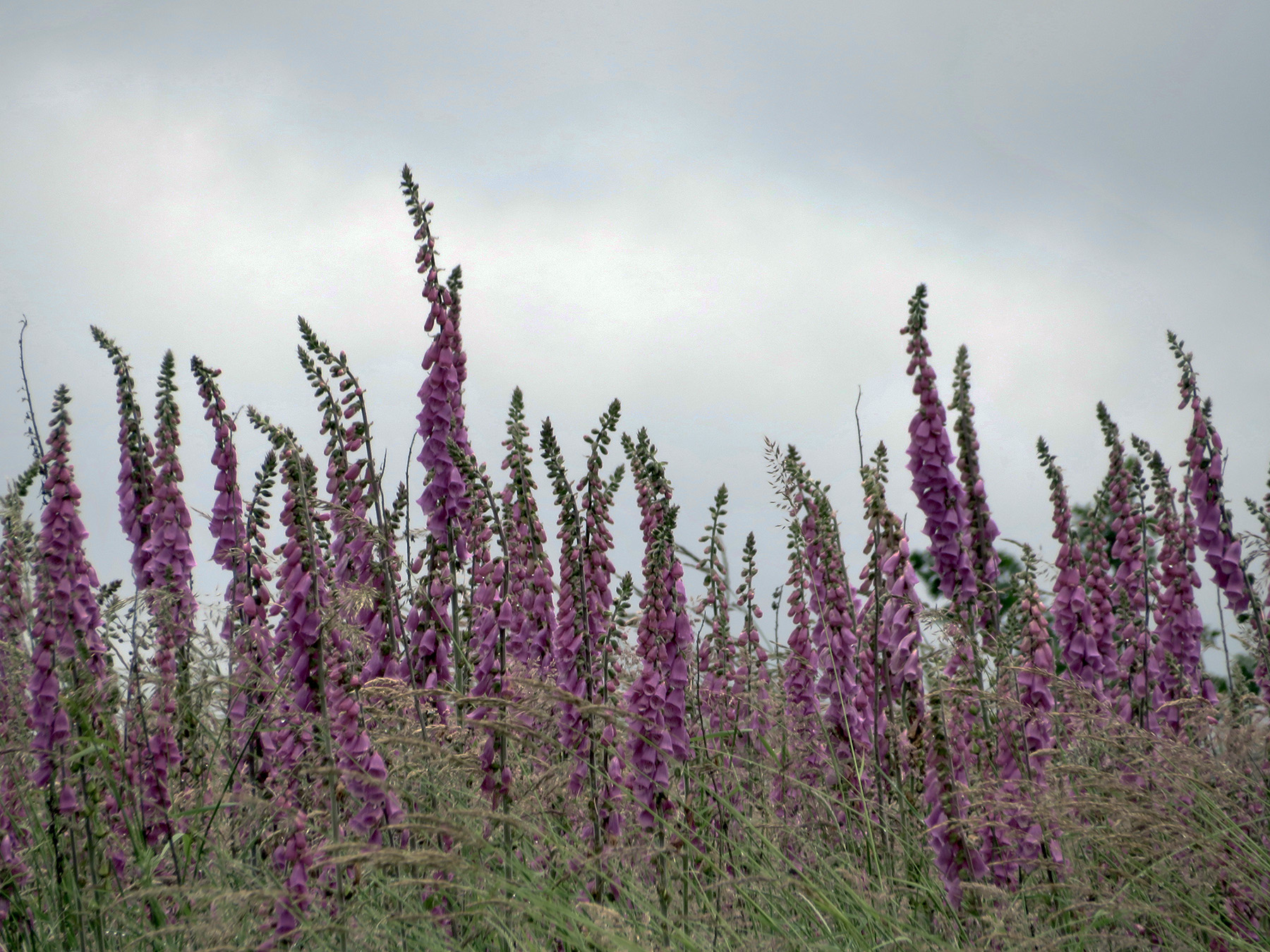
Should all this be thoroughly depressing, the photographs of yesterday’s walk might just be the balancing ticket – the beauty out there cannot be tempered even with the rain-filled skies.

Music today about schooling across several generations.