Browsing Tag

Zbigniew Herbert

Wasp Love

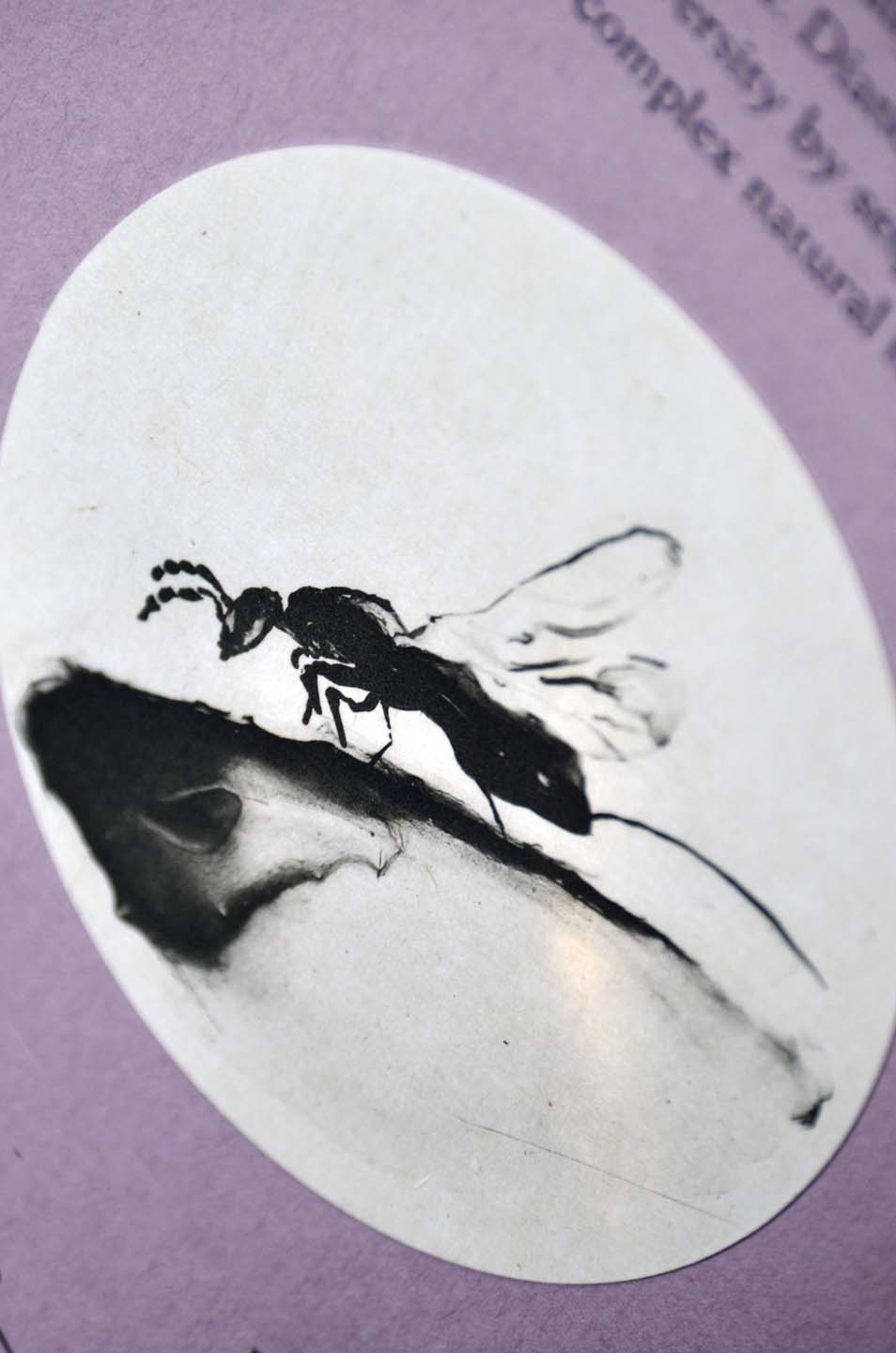
Wasp

When the honey, fruit and flowery tablecloth were whisked from the table in one sweep, it flew off with a start. Entangled in the suffocating smoke of the curtains, it buzzed for a long time. At last it reached the window. It beat its weakening body repeatedly against the cold, solid air of the pane. In the last flutter of its wings drowsed the faith that the body’s unrest can awaken a wind carrying us to longed-for worlds.

You who stood under the window of your beloved, who saw your happiness in a shop window – do you know how to take away the sting of this death?

by Zbigniew Herbert

***

Imagine entering a small garden, overgrown paths lined with lungwort. A humongous fig tree granting shade, a few vegetable beds exploding with the smell of ripe tomatoes. Sun dappled verdant corners, whimsical ceramics catching the light here or there.

Red calla lilies shining like little lamps eager for attention, chicken contentedly clucking in a coop next to the persimmons, fruit still green.

Your eye is caught by the plum trees, laden with fruit, some ripe on the ground, the purple skin of Italian prunes encasing glimpses of gold where the fruit has split open.

A feast for wasps, and wasps were what I came for.

An art book about wasps, to be precise.

Let me hazard a guess: your first reaction upon hearing the word “wasp” was not entirely positive. Pesky yellow jackets interfering with your labor day picnic, stings that not too infrequently hurt like hell or even lead to anaphylactic shock, visions of angrily buzzing swarms of insects building their dreaded nests too close to the eves of your house.

Wasp nest, displayed in the artist’s studio.

You would not be alone in this assessment, and surely not the first one. Already in 300 bc, Aristotle insisted ‘Hornets and wasps … are devoid of the extraordinary features which characterize bees; this we should expect, for they have nothing divine about them as the bees have.’

A recent scientific study published in the Royal Entomological Society, found that people across 46 countries really had it in for wasps. They are universally disliked much more than bees or other insects. The public associates them with negative terms like angry, painful, dangerous, scary, and those sentiments map onto relative research efforts: wasps are significantly under-studied. Across 40 plus years of thousands of papers published in entomological journals, more than 80% cover bees, and not even 20% wasps.

Paper fold drawing our attention to common reactions.

Consequently what we know is relatively little, and what little we know is not communicated sufficiently to open people’s eyes to the utility of wasps for humans as well as their general importance for ecosystems as a whole.

From the studio collections.

Just a few facts: the wasps that bug us – the yellow jackets, the hornets – represent less than 1% of the stinging wasps, the species Vespines. Wasps belong either to social or to solitary species – the latter containing many more species, in fact hundreds of thousands of them, who do not sting and live quite separate from human contact areas.

Folded paper telling a story.

Wasps have several functions. Like bees, they pollinate our crops (although to a lesser extent.) They excel, though, in helping get rid of parasites. They regulate populations of arthropod pests and vectors of disease, decompose organic matter and improve soils. Important contributors to maintaining biodiversity, then, and now severely threatened, just like bees. Agricultural practices (use of genetically modified seeds, pesticides, etc.) habitat loss due to encroaching urbanization, and climate change all contribute to endangering these guardians of our ecosystems.

Eco prints of plants frequented by wasps.

Our implicit bias against wasps can only be remedied, if we change the rhetoric of fear to a rhetoric of love. For that to happen, we need to be familiarized with what there is to love: the beauty, the amazing survival mechanisms, the intricacies of wasp life cycles, and last but not least the tremendous ecological services these insects render. Which brings me to the owner of the enchanted garden described above, artist Diane Jacobs who has just finished creating a book celebrating all things wasp, the culmination of years of study and creative exploration of the subject.

***

Jacobs received an MFA in printmaking from San Francisco State University in 1996. and was awarded multiple prizes, fellowships and residencies in the years since. Her work – prints, sculptures and folio books – can be found in museums (The Portland Art Museum, the San Francisco Museum of Modern Art, the De Young Fine Arts Museum,), and educational institutions (The New York Public Library, the Library of Congress, Savannah College of Art and Design, University of Alberta, University of Chicago Library, University of Miami, Corcoran School of the Arts & Design, Yale, and Stanford among them.)

Artist Diane Jacobs.

Her newest book intends to educate us about wasps and show the intrinsic beauty of Apocrita, those narrow waisted insects that populate pretty much our entire planet. Wasps and their environments are represented in stunning detail and through a plethora of artistic processes. The deeply serious intent to help us overcome our antipathies by getting to know the various species and their quirks, is often softened by using more whimsical means to do so.

Pop-up structures vie for attention,

Pop-ups.

paper layers inviting hands-on folding and unfolding to reveal ever more details are hidden in various pouches along the folios.

Paper folding for multi-surface info presentation.

Miniature sculptures made of natural and artificial materials expose the delicateness of wasps’ body parts, and also point to means of helping identification.

Beads and plant materials (thorns from a defunct dragon tree) sculpted into antennae.

The work evolved through Jacobs’ friendship with naturalist and photographer Kate Taormina, their shared interest and separate expertise cross-pollinating a successful collaboration. The joint project started in earnest during Jacobs’ 2024 residency at PLAYA, located in extremely remote Lake County in Oregon. The prestigious PLAYA residencies foster interaction between international artists and scientists, true to the belief of the organizers (and many of the rest of us who happen to have a foot in each of those camps!) that interdisciplinary exchange helps shape new ways of seeing the world, ultimately enhancing our approach to conservation. The concept of the book evolved over time. Now each page affords glimpses into a different universe, some pleasantly playful, others creating a sense of awe given nature’s diversity.

Whatever I learned about wasps, I learned even more about what can happen when an artist puts their mind to a singular pursuit of topic, but is open to embracing a huge number of different representational processes. Some of them surely needed to be acquired long after formal education had run its course.

Woodcuts in paper windows.

Just look a the list of processes and materials that the artist provided, all used to create the 16 hand-made copies of this book – one already snapped up by Yale University.

Materials and printmaking techniques for this project include reduction woodcuts, wood engravings, mono print, lithography, photogravure etching, stitching, beading, hand painting, pressure printing, collage, polymer plates, book cloth, ceramic wasp, beech wood, unique eco print, and glass petri dish. Papers include Kitakata, handmade abaca, kozo, Gampi, mino washi, masa, Rives Lightweight, rayon, and Tyvek. All text on pages is handset and letterpress printed. Some booklets are letterpress printed from polymer plates and some are handset.”

So many artists who have had a successful 30 year career really stick to the tried and true, their developed expertise, even their general subjects. To embark on new fields of learning, as well as new processes that require tolerance of potential imperfection, takes courage. Jacobs, for example, was introduced to photogravure etching only 3 years ago, during a workshop at Mullowney Printing. Also fairly recently she learned how to do wood engraving. For Wasp Love alone the artist was going to carve 8 little wood engraving blocks. “It took me a bit to get in the groove.”

Wood engraving.

Yes, it takes courage, or at least an absence of vanity in pursuit of a greater goal. In this case helping nature to survive human indifference, or, worse, capitalism’s endless extractive exploitation, by deconstructing one stereotype after another.

Jacobs’ book Wasp Love is a marvel, not least in the way it balances education with art to be appreciated in its own right, independent of the book’s subject. Pacific NW audiences will be able to see and explore a show copy next February at The Patricia Reser Center for the Arts. It will be shown together with her wasp-related sculptural work and a series of her eco prints, as well as installations and paintings by Susan Murrell and my photomontages, in the context of Collective Effervescence. The exhibition is dedicated to our love of and fear for nature.

Pop-up folio.

***

Replacing the rhetoric of hate with the rhetoric of love – not an easy task. One of the obstacles lies in the psychological nature of hate, compared to love. For hate all you need is a simple, stereotyped target. There is “the enemy,” out to get us, in a zero-sum game of one side wins, when the other side loses. “Wasps are aggressive and hurtful.” Simplistic ideas like that are much more easily communicated and adhered to, than more complex ones.

It’s more difficult to convey the many aspects of multidimensional targets – endless species of wasps, a variety of functional advantages outweighing the occasional sting by a minority of Vespines. Complex concepts defy our desire to stereotype by means of their sheer diversity. You need to learn and integrate so many different facts. Which is made even more difficult by the reality that our old feelings were negative and now need to be recalibrated (in comparison to just sticking to your culturally transmitted biases that ruled the world across time.)

Wood engraved plates.

Art is enormously useful here. It can try and break the cycle of negative stereotyping in many different ways.

There is poetry. If we go back to the beginning of this post, you have Zbiegniew Herbert’s poem that subtly reminds us of the similarity of wasps and humans, not elevating one species over another. Rather than showering us with facts, and patronizing demands to let go of prejudice, its symbolism offers something that speaks to our emotions. Are we not all familiar with the feeling of being trapped in certain realms of our existence? Are we not all hoping against hope, to the last breath, that moving forward at all cost will bring us to a longed-for future, no matter how much we bang our heads against the wall? Because we look in the mirror, the observed death causes a premonition, a sting that cannot be resolved. Could it be that wasps are us?

Paper fold in book pocket.

Then there is literature. What comes to mind are Ursula LeGuin’s brilliant musings published some 40 years ago in The New Yorker. We are told that a woman is un-naming all members of creation, a woman who we later learn is Eve, about to leave Adam and the garden of Eden, unhappy with having been named in certain ways. The idea is that a name usually allows for categorization and/or stereotyping. Its absence will lead to equality not impeded by artificially drawn hierarchies.

The insects parted with their names in vast clouds and swarms of ephemeral syllables buzzing and stinging and humming and flitting and crawling and tunnelling away.

None were left now to unname, and yet how close I felt to them when I saw one of them swim or fly or trot or crawl across my way or over my skin, or stalk me in the night, or go along beside me for a while in the day. They seemed far closer than when their names had stood between myself and them like a clear barrier: so close that my fear of them and their fear of me became one same fear. 

The merging of equals, affiliating through emotion, becoming extremely close: could it be love? As always with LeGuin, of course, there’s an undercurrent of brusqueness below the witty narration, pointing to the power naming has for those on top of social or gendered hierarchies.

Trial paper folding in the studio.

And finally, there is visual art. Jacobs’ book radiates joyfulness, in its colorfulness, playfulness with hidden and revealed shapes, its use of surprise perspectives. You cannot help but find these folios emotionally rousing, no matter how concept-driven and filled with scientific facts they are. The book might not manage to induce love, admittedly. But surely it ignites strong admiration for a life form that is so much more complex than we had known. A first step away from hate or fear.

I’ll take that in a heartbeat.

Or a wingbeat, as the case may be.

Snippets in Jacobs’ studio.
Exquisite Gorge II: Ariadne’s Thread

“A labyrinth is a symbolic journey . . . but it is a map we can really walk on, blurring the difference between map and world.” – Rebecca Solnit, Wanderlust: A History of Walking

Remember Ariadne? The labyrinth? The Minotaur, half man, half bull? Vague memories of vengeful Cretan king, Athenian hero, lovestruck princess and a ball of yarn? I could not help but thinking of the myth during my first artist visit for this year’s Exquisite Gorge II project, offered by Maryhill Museum of Art. Thirteen fabric artists, in collaboration with community partners, will portray an assigned section of the Columbia river in three dimensional form on frames. The sections will be linked in the end, forming an “Exquisite Corpse” during a public outdoor celebration at the museum in August. I hope to introduce all of them and their work with individual portraits during the next few months.

———————–

THE EXQUISITE GORGE PROJECT II

“…a collaborative fiber arts project featuring 13 artists working with communities along a 220-mile stretch of the Columbia River from the Willamette River confluence to the Snake River confluence. The project, again initiated by Maryhill Museum of Art and following the original one by printmakers in 2019, takes inspiration from the Surrealist art practice known as exquisite corpse. In the most well-known exquisite corpse drawing game, participants took turns creating sections of a body on a piece of paper folded to hide each successive contribution. When unfolded, the whole body is revealed. In the case of The Exquisite Gorge Project II, the Columbia River will become the ‘body’ that unifies the collaboration between artists and communities, revealing a flowing 66-foot work that tells 10 conceptual stories of the Columbia River and its people.”

———————–


So much to take in at Kristy Kún‘s studio in Ashland, OR. So many associations to the Ariadne myth.

A short refresher: Vengeful Cretan king subdues Athenians in war, extracts human sacrifice ever so often, feeding the youth to his hungry Minotaur, a monster conceived by the queen and an angry God because the king betrayed him with a cheap sacrifice. Half bull, half man, the creature is conveniently stashed out of sight in a labyrinth built by clever engineer Daedalus. Athenian hero Theseus vows to slay the beast. Clever daughter of the king, Ariadne, helps Theseus by providing a spun, woolen thread that allows him to navigate the steps through the maze for his return after the bloody deed is done. He takes her, as promised, away on his ship as his bride, but then dumps her on the Island of Naxos, as instructed by Goddess Athena in a dream. Marries Ariadne’s sister, no less. Depending on who you read (or listen to, lots of opera material!) and in which century, Ariadne either hangs herself out of despondence, or marries a God, Dionysus. Oh, no one lives happily after. Just saying.

Rising Sand 2018 46″ x 26” x 4″ Details below

There were labyrinthine works hanging on Kún’s studio walls or spread on surfaces, pathways ebbing and flowing with no discernible entry or exit.

There were threads pulled from materials, threads criss-crossing layers to be felted, threads waiting in skeins of wool to be pummeled.

There was instance after instance of the application of Ariadne’s thread, a problem solving method – by definition, a logical method that traces steps or takes point by point a series of found truths in a contingent, ordered search that reaches an end position. You solve a problem by multiple means, keeping a record so you can see where you dead-ended or progressed.

It might sound strange to introduce artistic work with a focus on problem solving, but the work at hand requires so many steps, so many intricate levels of processing, so much, indeed, engineering, that a logical, even mathematical mind is required.

The result, flowing, extravagant, holistic beauty belies the tight construction that goes into the creations.

Kún works with felt. Makes felt. Shapes felt. Compiles and arranges felt, with a brain trained as an engineer and the eye of a visual artist.

The matted fabric we call felt is created by binding protein fibers (wool from animals like sheep, goat, yak or alpaca) to each other in a process that involves the physical tangling of the fibers by means of special needles, or by using water and agitation that pummels the raw materials. Ever accidentally shrunk your favorite sweater by 2 sizes in the washer/dryer? That is wet felting…. the hair in the wool consists of shafts that are covered by protein scales. The water and detergents open up the scales and the agitation in the rotating drum, or rolling and rubbing and tossing, binds them together, shrinking them up to 40%.

Dry felting involves barbed needles that you stick into the raw material over and over, weaving the fiber strands together. It can be done by hand or by machine, when large projects are involved.

Felting has been around since at least the 6th century B.C., predating spinning and weaving. It likely originated with nomadic peoples in Asia, and remnants were discovered in burial places all across Siberia and Northern Europe. It was essential for shelter (think Mongolian yurts!) warmth and durability in clothing and boots, and protection from saddle burn for animals carrying loads. Ornamental uses have found their way into beautiful blankets and carpets, now extending to 2-D or 3-D sculpture.

The fabrication of today’s materials has come a long way from being coarse, wet wool stomped by camels, or pummeled by the hoofs of horses. Kún, for example, varies the kinds of fibers going into the felt. The selection involves the density of wool – wool is measured in microns, which describe the diameter of a wool fiber, the smaller the micron the finer the wool.

Micron 23

The artist also uses materials like silk that get entangled into the pressed fibers, dying the silks herself to achieve desired color gradations.

Layered wool and silk get run through the needling machine up to 6 times, then cut into strips, or fins, by a power cutter, wet felt aligned with cheese cloth, worked on surfaces that allow to pool the water.

Eventually the materials get shaped. That includes insane detail work of pulling threads out of the sides by hand to achieve a chenille-like effect that adds to the beauty.

Individual elements are stitched on, wet felt fibers shaved or torched to achieve the desired smoothness.

And then it’s time to finish the design, long planned and recorded to the tiniest detail. Some of the pieces are huge.

Photograph by Kristy Kún.

———————–

The artist with the clear face, beautiful eyes half hidden behind her glasses, is the descendent of Hungarian immigrants who settled in the Mid-West, establishing Presbyterian churches in and around Ely, Iowa, working hard to feed large families. She certainly has inherited that incessant, laser-focussed work ethic, a red thread like Ariadne’s throughout the many changes along her professional path. Trained as a construction engineer at the University of Nebraska, Omaha, she found her first real calling in wood working and furniture making. She settled in Northern California, interned and worked and learned the craft. A marriage to a fellow craftsman dissolved swiftly, leaving her as a single mother to a young daughter, trying to eke out a living in a male-dominated domain.

A side line of supplying crafts materials to her daughter’s Waldorf School led to an import business of Italian wool, selling it to spinners and felters. She got increasingly drawn into the fiber arts world, attending bi-annual workshops and camps for craft artists, the Frogwood Collective among them. Inspired by artists like Janice Arnold and Jenne Giles, Kún turned to felting in a serious way in the last decade, shifting from roles as supplier to that of artist.

It did not make her economic existence less precarious. Now located in Portland, OR, she was trying to support her family, while struggling with the illness of her new partner, who she lost to cancer in a painful battle to the end. Two years ago she moved to Ashland, leaving the familiarity and friendship network of PDX behind, to start a new life with a new love and a new studio, all during pandemic woes.

Life has felted Kristy Kún – my take, expressed with admiration. The various analogues of pummeling and stabbing, prodding and stomping have produced a tough, resistant core combined with (intellectual and emotional) flexibility like the fabric counterpart. Loose threads of flickering temper and intense empathy stick out here and there. Like the matted material absorbs water, she absorbs ideas and visions, turning amorphous input into shaped Gestalt. In addition to her raw talent, her persistence and technical skill have registered with the art world. Her work will be shown at this year’s Smithsonian Craft Show, Future Focus, and large commissions from collectors and designers across the world are regularly received.

—————————

While Kún and Lou Palermo, Maryhill Museum’s Director of Education, brainstormed over technical details of construction and placement of the frames – now stashed in her show room – within the Exquisite Corpse design, my thoughts wandered back to the tale of Ariadne, Theseus and the Minotaur. The myth has inspired countless works of art, from tellings by Catullus 64 and Ovid’s Heroides 10 in the first century B.C., to paintings spanning over 1000 years (here is a link that provides 73 of them!), to musical compositions, Monteverdi in the Baroque period, and Richard Strauss in 1916. And let’s not forget the modern version of myth telling – most recently seen in Dark, the German sci-fi thriller available on Netflix, that makes heavy use of Ariadne’s story and symbolism. A smart review of Dark in the NYT pointed out the particular theme’s relevance to contemporary history.

One of the reasons for its ongoing popularity, I believe, is that one can apply so many different perspectives to any one of the characters or actions involved. Across time you can see how interpretations of Ariadne focussed first on her passivity, her abandonment by yet another fickle male, then on her possible emancipation, her cunning in helping her lover, her ruthlessness in sacrificing a half-brother to a hero she saw as her ticket off the island – you name it. All links to shifting perceptions of gender roles.

Theseus has had his share of fans and critics too, understood as a self-sacrificing hero, or simply power-hungry. His wandering in the labyrinth has been appropriated by psychodynamic approaches in psychology, an archetypal representation of the psyche and a path to individuation, the authenticity you reach when you’ve made your way through the convoluted maze of feelings.

Comparisons to creativity have been offered as well. Serpentine windings to a goal without knowing the way, many a dead end, unclear what fates await – you get the idea. It looks to me that Kún’s creativity has not at all been impeded by labyrinthine obstacles. If anything, her work has blossomed from tightly constructed, somewhat rigid, representational beginnings to more freely flowing abstractions of natural forms that are willing to stand on their own. To link back to Rebecca Solnit’s quote at the beginning: Kún has created a bridge between map and world, walking along in its folds.

This leaves us with one final contemplation, how shifts in perspective define the Minotaur. The creature could either be seen as a bloodthirsty monster, depraved and deserving of slaughter, or as someone who in his deformity had to be hidden away as to not offend the sensibilities of the viewer(s.) Is he an enemy to the outside world? Or is his confinement an act of brutality against him? Do we project our fears of power, aggression, rage, disability and death onto this misshapen creature? Avoid the Other? Classic takes rejoiced forever in his slaying.

There were a few compassionate voices, Polish poet Zbigniew Herbert’s among them, expressed in a post-humosly published volume of essays, Labyrinth on the Sea, which described his visit to Crete in 1964. Elaborated in a later prose poem, The history of the Minotaur (1974), he sees the misshapen prince as a victim of those who insist on political, social and religious norms as defining who does and does not belong. Which – and yes, we were getting there eventually! – also applies to women and textile art.

I will talk about the history and politics of textile arts in depth at a later point in this series of essays. Let me just say here the very basics: not only were the arts and crafts divided into domains, with gender roles assigned, for centuries. Different arts were also linked to different values – male painters and sculptors scored higher than their female counterparts, the latter for the most part chained to their textile universe behind the embroidery frame. Hidden away in a maze, for all intents and purposes, forever invisible and unnamed even if they created stunning woks of art – just think Bayeux tapestries. Only in the last 40 years has textile art been given a platform, previously reserved for the male dominated, traditional fine arts field. With the help of some pioneers in the early 1920s who opened the flood gates, women have emerged to show the world how true art is independent of medium and how neglected media add novelty to the traditional canon in ways that are intensely beautiful.

Kristy Kún has to be counted among them.

It was a cold night in Ashland, sky shimmering with stars. I would not have found the Corona Borealis even if it had been present (I looked it up, it appears in July) – I barely can locate the Big Dipper. The small constellation of stars is said to represent the crown (corona) that Dionysos gave to Ariadne after she had been abandoned. It comforted me to think that, even if connected to a consolation prize, a woman with a thread is visibly remembered.

Here’s an alternative outcome!

New Year’s Resolutions.

2022. Welcome to a glut of grim as NYT editorialist Frank Bruni put it so aptly a few days ago.

Let’s ignore it and focus on New Year’s resolutions instead.

Which happen to be the same as the Old Year resolutions…. well, mine anyway.

What have we got?

A deep urge to bear witness, even if it hurts so often, since it is about the only thing I can do these days with times of active protesting gone the same way as has my unwrinkled skin, my youthful energy (hah), my casual risk taking.

Bearing witness can come in a number of ways – one is not to look away when confronted with the misery or injustices of the world, the plight of the houseless and incarcerated, for example. Another is to seek out facts that truly inform us, when those facts are often conveniently stashed out of sight.

Which brings me to the second resolution: staying grounded in observation and reason, not believing with “blind faith” or falling for “alternative truths.” Two plus two equals four. Wishing otherwise doesn’t make it so. Neither does claiming so. In a world where fear and unpredictability have given rise to unprecedented amounts of conspiracy theories, let’s focus on scientific expertise.

Add to that a third resolution: let’s practice courage. Courage to live, to resist, to speak up, to goof off on tangents because they bring pleasure. Courage to chronicle, knowing full well that we are witnesses in the shadow of death around us. Courage to turn to both: the historians and the poets. Historians because they tell us about those in power and what they do with it, crimes and lies included. Poets because they often convey the essence of history from the perspective of the victims – suffering and humiliation.

And no poet did this better than Zbigniew Herbert. I want to start 2022 with the poem I have offered here before – it just remains one of my favorites of all time, and encapsulates all I have listed above. His words infuse me with courage, remind me of the power of faith (in whatever you happen to believe) and point to our moral obligations even when the going gets rough. It sings a quiet defiance to historical facts of oppression and manipulation.

The Envoy of Mr Cogito 
                   by Zbigniew Herbert

                   Go where those others went to the dark boundary 
                   for the golden fleece of nothingness your last prize

                   go upright among those who are on their knees 
                   among those with their backs turned and those toppled in the dust

                   you were saved not in order to live 
                   you have little time you must give testimony

                   be courageous when the mind deceives you be courageous 
                   in the final account only this is important

                   and let your helpless Anger be like the sea 
                   whenever your hear the voice of the insulted and beaten

                   let you sister Scorn not leave you 
                   for the informers executioners cowards – they will win 
                   they will go to your funeral with relief will throw a lump of earth 
                   the woodborer will write your smoothed-over biography

                   and do not forgive truly it is not in your power 
                   to forgive in the name of those betrayed at dawn

                   beware however of unnecessary pride 
                   keep looking at your clown’s face in the mirror 
                   repeat: I was called – weren’t there better ones than I

                   beware of dryness of heart love the morning spring 
                   the bird with an unknown name the winter oak 
                   light on a wall the splendour of the sky 
                   they don’t need your warm breath 
                   they are there to say: no one will console you

                   be vigilant – when the light on the mountains gives the sign- arise and 
                   go 
                   as long as blood turns in the breast your dark star

                   repeat old incantations of humanity fables and legends 
                   because this is how you will attain the good you will not attain 
                   repeat great words repeat them stubbornly 
                   like those crossing the desert who perished in the sand

                   and they will reward you with what they have at hand 
                   with the whip of laughter with murder on a garbage heap

                   go because only in this way you will be admitted to the company of cold 
                   skulls 
                   to the company of your ancestors: Gilgamesh Hector Roland 
                   the defenders of the kingdom without limit and the city of ashes

                   Be faithful Go

  
                                                               translated by John Carpenter & Bogdana Carpenter 

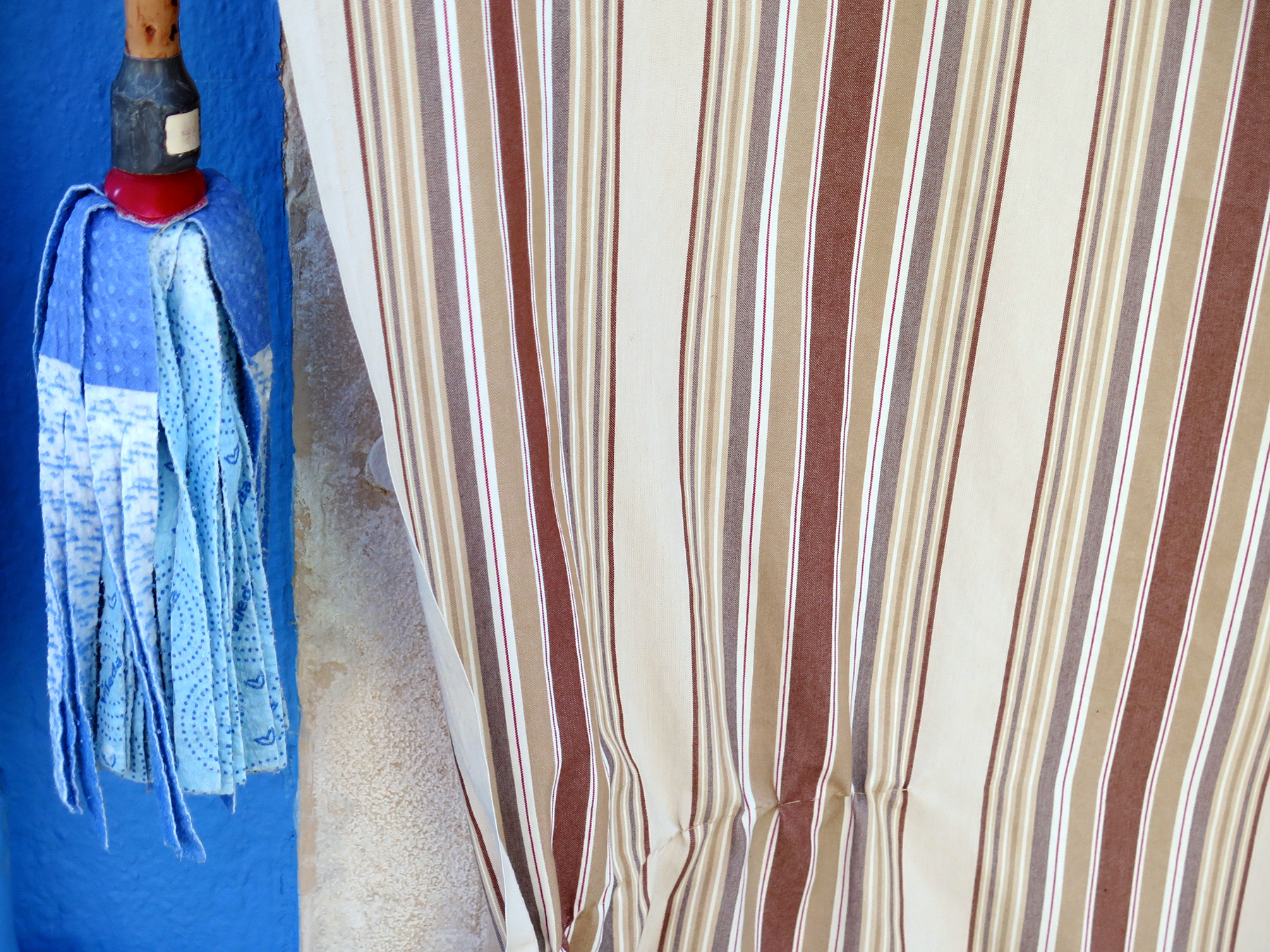
Counterbalancing the gravity of the resolutions and the darkness of the season I offer you colorful brooms – someone reminded me that tradition forbids to sweep and clean on the first day of the New Year. Now where did that myth come from? Found that and other New Year’s old wives’ tales on Maids.com, no less.

Or brooms used for flying, another myth, I’m told. One first mentioned in 1451. Here is a fascinating account of the history associated with witches and brooms. Told you, I’d dig out the fact! Even the facts of the origins of myths…

OK, let’s just remember what sunlight does to color – and that it will surround us again, eventually, sweeping clean the last cobwebs of superstition.

Music today is a reference to the energy which I hope fills the new year and gives you an idea of my kind of house cleaning….

Thoughts and Feelings

“Be courageous when the mind deceives you
Be courageous
In the final account only this is important”
― Zbigniew Herbert

I am not good with New Year’s Resolutions. Not good in devising them, and certainly not good in keeping them. I am, however, taking a benchmark date like January 1st at least to think through what I have accomplished with things I cared about, where to continue and possibly how to improve. And then I forget about it…..

My daily writing has been important to me as a tool to focus my thoughts, learn new things, exercise my brain and either offer some teaching, or some cheer, or simply some tangible evidence that we are all in this together, sharing thoughts if not able to keep company with each other.

The delight of writing about my experience of art has been curbed by the restrictions we all face: inaccessibility of travel and museums or galleries. The passion of writing about politics has been severely impacted by the depth to which this realm has sunk into ugliness and despair, at the existential expense of the most vulnerable among us, and the emotional expense of all of us who often can’t bear to hear yet another piece of bad news.

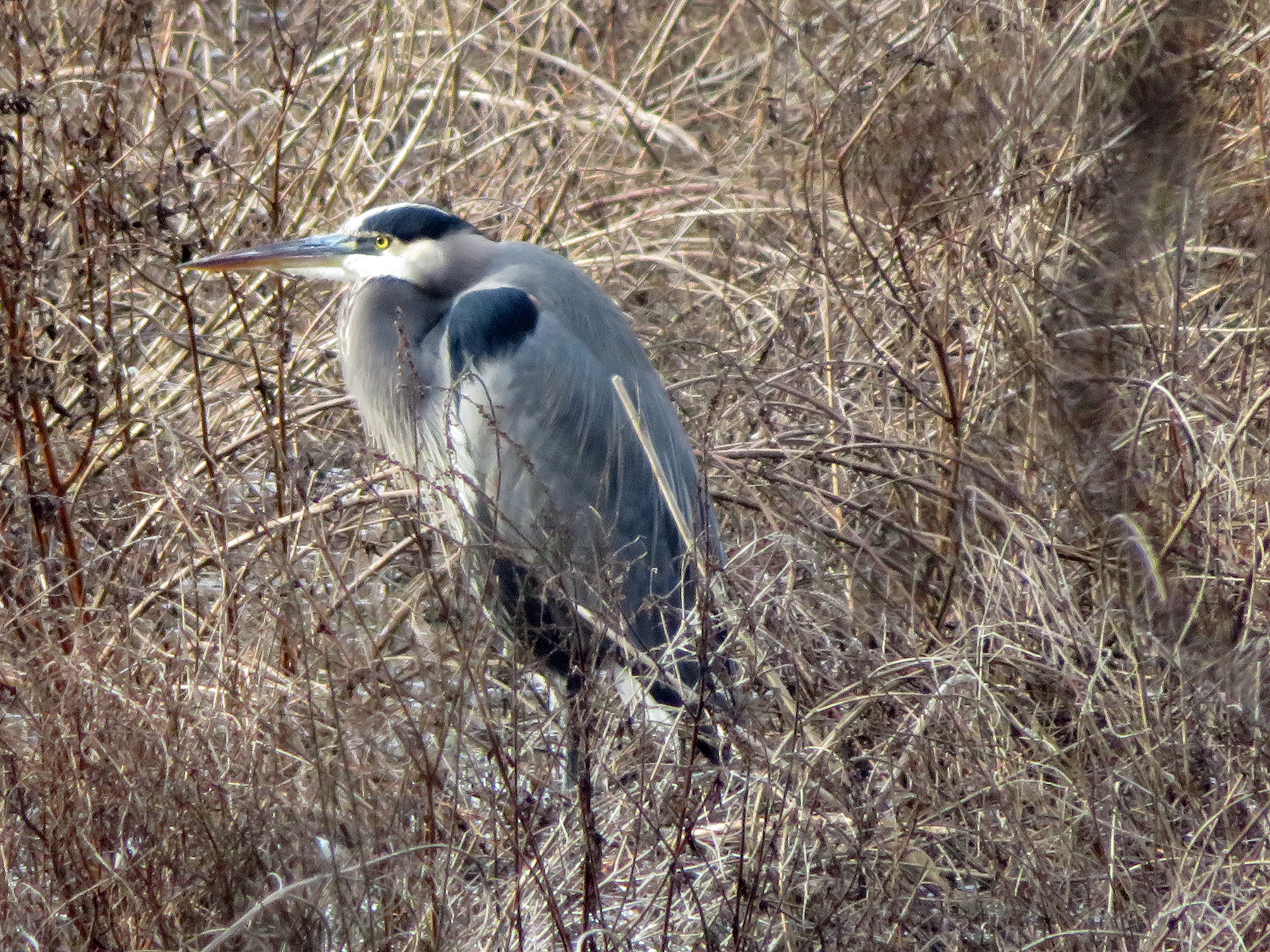
Luckily, the realm of science remains open for exploration as does the domain of literature and poetry, both providing insights and beauty to come in a year that will still not be easy. Gratefully, the everlasting joy provided by nature has no limits either, even if my current photographic explorations are narrowed to the Pacific Northwest – plenty of beauty all around! (Photographs are from last week’s walk at Oaks Bottom. The herons were out in droves – look closely at the water’s edge.)

So I will go on to describe my thoughts, difficult as it may be.

When it comes to the difficulty of describing feelings, I defer to a writer who, for me, has the distinction of infusing us with the courage to live like no other poet I know. (OK, scratch that. I have discovered Emily Dickinson this year, after all. They are in a tie.) The Polish poet Zbigniew Herbert died of causes related to poverty in 1998, despite being recognized as one of the most brilliant European minds of our life time. As a staunch opponent of communism he was later betrayed by many in the Solidarity Movement he had supported, when they turned NeoCon. His work was shaped by the fall-out from the traumas Poland experienced throughout its history, and he managed to convey the history itself, the issue of moral necessity, human suffering but also human resilience, all at once. Here is a fine introduction to the man and his work by his latest translator.

Here is his quest to find the right words, or, more importantly, the right insights.

I Would Like to Describe

Zbigniew Herbert – 1924-1998

I would like to describe the simplest emotion
joy or sadness
but not as others do
reaching for shafts of rain or sun

I would like to describe a light
which is being born in me
but I know it does not resemble
any star
for it is not so bright
not so pure
and is uncertain

I would like to describe courage
without dragging behind me a dusty lion
and also anxiety
without shaking a glass full of water

to put it another way
I would give all metaphors
in return for one word
drawn out of my breast like a rib
for one word
contained within the boundaries
of my skin

but apparently this is not possible

and just to say - I love
I run around like mad
picking up handfuls of birds
and my tenderness
which after all is not made of water
asks the water for a face
and anger
different from fire
borrows from it
a loquacious tongue

so is blurred
so is blurred
in me
what white-haired gentlemen
separated once and for all
and said 
this is the subject
and this is the object

we fall asleep
with one hand under our head
and with the other in a mound of planets

our feet abandon us
and taste the earth
with their tiny roots
which next morning
we tear out painfully

I’ll settle for dragging a dusty lion behind me in the new year, and drinking the water that was not spilled by trembling hands, embracing feelings as well as thoughts, in whatever fashion they are described, all the blurriness contained in me, grateful for new beginnings.

Happy New Year – or at least a content one where we can still connect to planets and taste the earth, something that is happening in today’s music selection as well. Here is Beethoven’s Piano concerto Nr. 4, Op 58.