Some folks by the name of Chad Crabtree and Brandon Woods in Eugene, OR, founded a small literary magazine last year, fittingly called Arboreal. Their titular choice was linked to their own names, but also to the notions of “going out on a limb” – presenting new and surprising work, and “evergreen” – the idea that art is timeless. I have found the occasional interesting new voice there, but also benefitted from the editors’ knowledge of poetry in general. A real enrichment for the literary landscape.
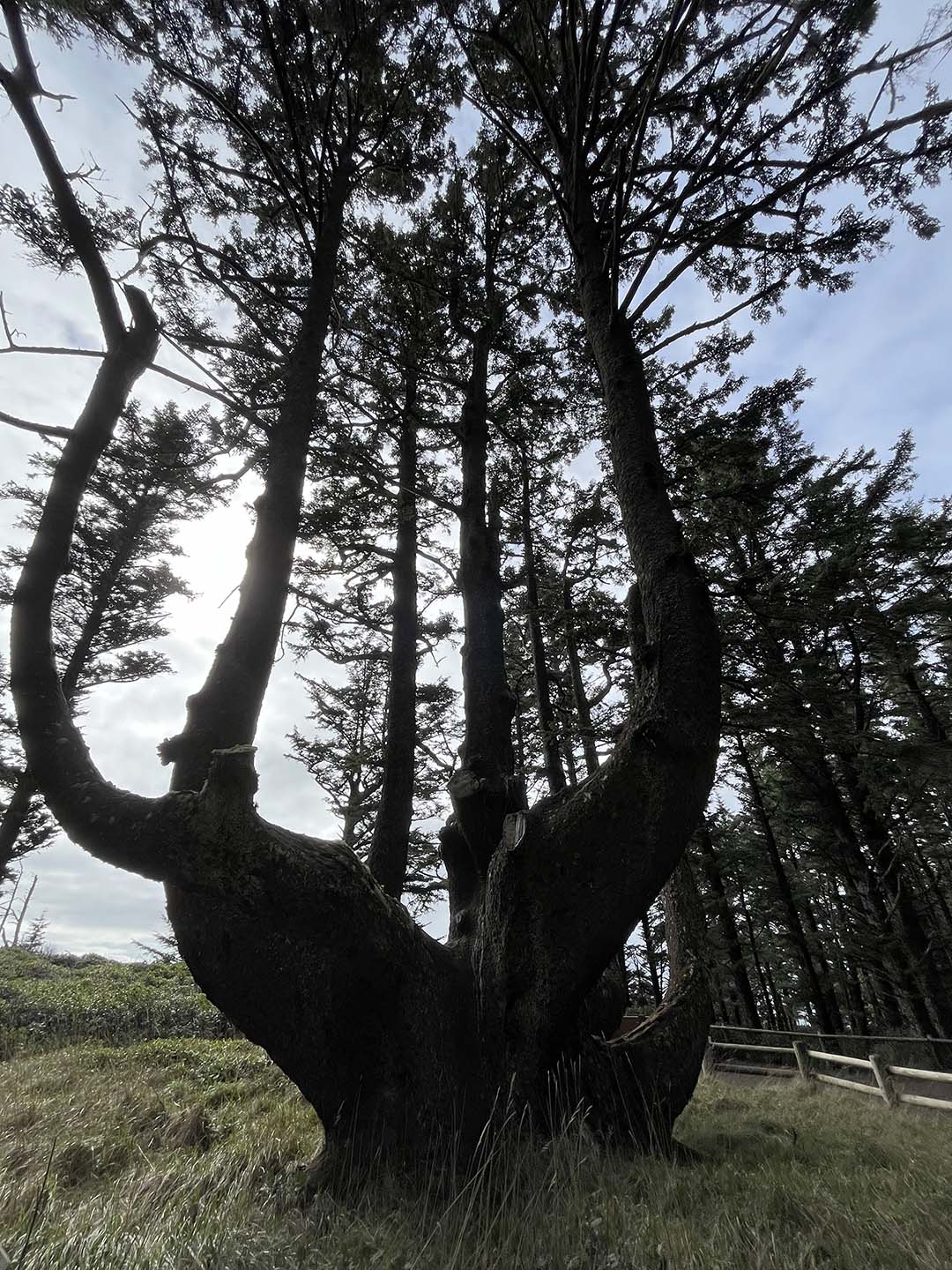
Today’s selection of poems, for example, came from one of Crabtree’s recent essays, called Rooted in Verse: Our Favorite Poems About Trees which I went back to after I had seen an unusual tree last week, a 300 year old Sitka spruce that is called the Octopus tree for its shape that lacks a center trunk but has unfolding tentacle-like limbs.
I picked the Brooke and Larkin poems because they both dwell on the fragility of life, the darkness that is impending, the hopelessness that sneaks up on you when you consider the fleetingness of it all, loss and mortality – but then they both rise to a version of hope, the possibilities of peace or new beginnings. I think that’s what we need: hope and the possibility of dawn or spring (or even a permanent cease fire), even if they are delivered by the minor poet, but golden poster boy of romantic lyricism, Brooke, or the major poet of dark snakiness and sarcastic leanings, Larkin. On average, they got it right this time!
Pine-Trees and the Sky: Evening
I’d watched the sorrow of the evening sky, And smelt the sea, and earth, and the warm clover, And heard the waves, and the seagull’s mocking cry.
And in them all was only the old cry, That song they always sing — “The best is over! You may remember now, and think, and sigh, O silly lover!” And I was tired and sick that all was over, And because I, For all my thinking, never could recover One moment of the good hours that were over. And I was sorry and sick, and wished to die.
Then from the sad west turning wearily, I saw the pines against the white north sky, Very beautiful, and still, and bending over Their sharp black heads against a quiet sky. And there was peace in them; and I Was happy, and forgot to play the lover, And laughed, and did no longer wish to die; Being glad of you, O pine-trees and the sky!
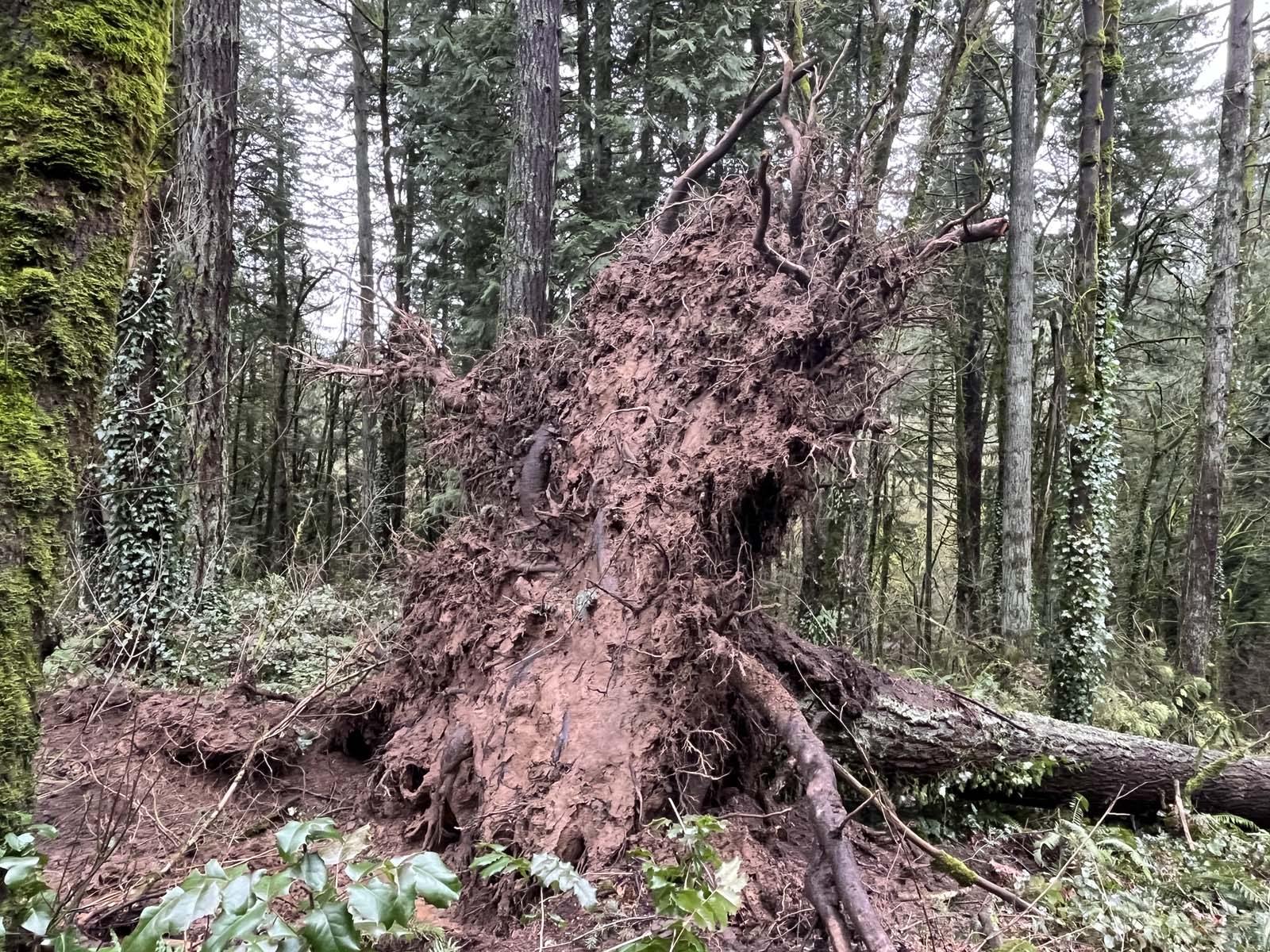
Climb with me over the fallen trees in my immediate neighborhood, the park where I walk every day. Sink your boots with the most delicious sloshing sounds into the mud of the holes that the root balls left, and once again realize the power in nature. Bringing it all down.
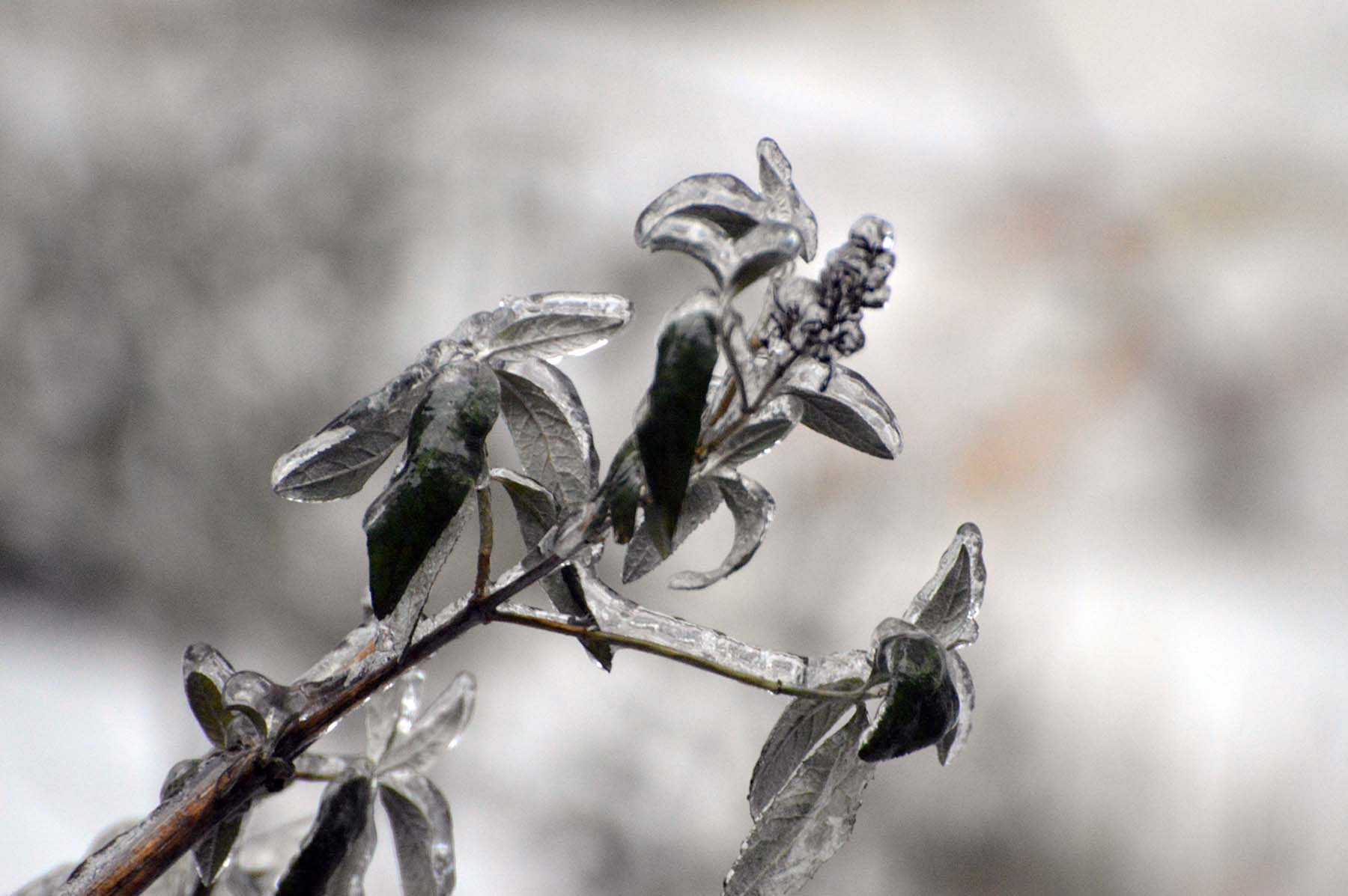
Several speculations have been making the rounds why this particular ice storm did so much damage, and the given reasons probably overlap or interact. For one, the drought of the last several years has really stressed the trees and their root system. Secondly, the heavy rains in late fall saturated the ground, leaving the roots in unstable earth. Lastly, the storm that arrived two weeks ago had winds with gusts of up to 60 mph, winds that spiraled for some reason, encircling the trees, rather than swaying them back and forth, which apparently has more power (with even higher speeds those would be tornadoes or hurricanes, with a rotating function.) The ice then did the rest, its weight on the trees felling those that were unstable.
Hundchen not so sure about all of this
For counterbalance, here are a few of the soaring creatures that I photographed on Tuesday – with some others thrown in from previous January/February visits to Sauvie Island, just to marvel at the diversity of migrating visitors. Up they go….
Pelicans, Geese, Swans, Sandhill cranes, buzzards, kestrels. And then there were the bald eagles, cavorting, resting, chasing each other again, and finally getting some lunch.
That really is all for today, I simply do not have much stamina after these outings. But I do have an up & down song by Blood, Sweat and Tears from a looong time ago……
And since we’re already on memory lane, here is Earth, Wind and Fire – I guess all we’re missing is the ice that the storm brought.
When you are iced in for pretty much a full week, as we were last week, there is a lot of time to ponder disaster scenarios.
If 200 ft (61 meters) sequoias topple in your yard (sparing your house with a stroke of luck, while many others in the Portland area saw their houses destroyed or even human life taken) your vulnerability becomes even more the center of attention.
Several trees came down, this the largest – about half of it in view here.
When you have no power for 4 full days, as we did during temperatures in the teens, you focus on what can be done during even worse scenarios: the mega earthquake that is looming on the time horizon for the Pacific Northwest.
I am talking about all this for another reason as well: somehow the prolonged shut-in has also frozen my brain, and so I have no capacity to write about something more interesting. Humor me then with reading a few suggestions for disaster preparedness, and store the links to more detailed instruction for a time when you have room and interest to act on them.
Wrens in action (Zaunkönig)
The most essential needs will be water, food and warmth (See the FEMA instructions for quantities, per head.) Energy bars will do for a few days if you have no means to heat up other dried food. If you have pets remember some emergency rations for them as well (and have a sticker at your door that informs rescue personnel what animals live in your house – they can be ordered on line.) Camping stoves will be useful if a major disaster cuts you off for weeks on end. (And yes, I realize, it is hard to stash all that stuff if you live in an apartment.)
Robins (Rotkehlchen)
Having a bag that contains solid shoes, a change of warm clothes, basic toiletries, first aid kit and some spare meds that are essential, water and energy bars, is helpful if you need to leave for a shelter in a hurry. Flashlights that wrap around the head are useful since they keep your hands free. Include a whistle, so search teams can find you. Matches or lighter. Stash in it photocopies of your drivers license, your insurance name and number, and your prescriptions for medications. Spare power blocks and charging wires for your cell phone should be included.
Thrushes (Drosseln)
If you can stay in your (damaged) house, a cheap tent and sleeping bags come in handy to preserve body heat. We stayed warm(ish) this week and had no water pipes break because we have a wood stove in the basement that heated the adjacent area and kept the house overall in the 40s. Having a crowbar available helps with earthquake debris. A fire extinguisher is helpful.
Here is a website that offers the FEMA recommendations, with a few highlights for preparing the house/apartment, some relevant links for insurance and building codes, and a detailed listing of the risk to the PDX neighborhoods where we live.
Junkos and Towhees (Winterammern und Grundammern)
This week was a reminder that nature should never be underestimated. And now I’ll go and check out ads for generators…..
Photographs are self explanatory.
Chickadee (Kohlmeise)
Let’s make the music equally melodramatic as the weather: Sviridov’s Snowstorm.
At no time in the year is the concept of “fleeting” more realized than now. Thoughts are drawn to the nature of time, the passing of yet another cycle around the sun, when we approach New Year’s Eve.
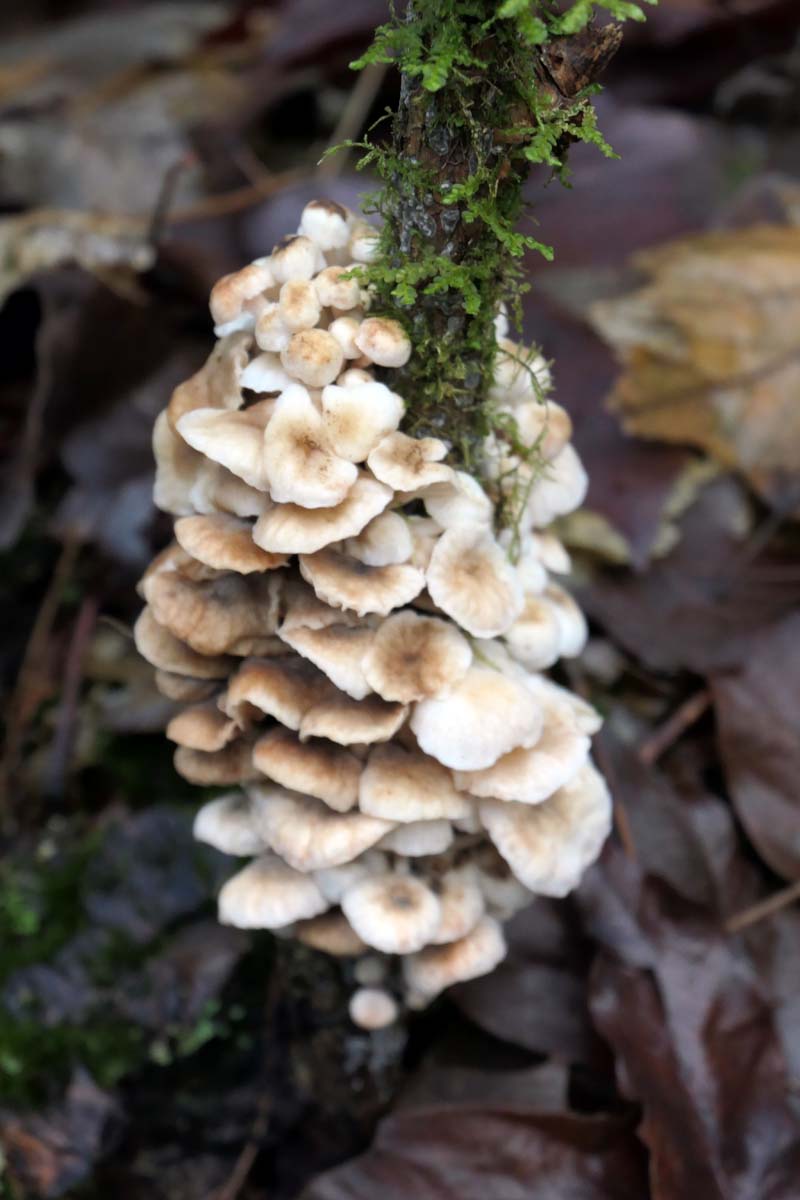
Nature, as well, basically screams about transience. One day you see the mushrooms firmly planted on logs and soils, the next day they’ve disappeared. When you walk the same route, as I do, several times a week, it is almost spooky how the fungi jump into your field of vision or vanish, almost while you look.
The Thesaurus definition of the verb to mushroom – as in sprout or grow quickly – confirms that aspect of mycological nature:
Their transient nature extends to my ability to remember the classifications, despite the fact that the five Phyla in the kingdom of fungi have such wonderfully strange names.
There are Chytrids, who live in water. There are the Zygomycota, also called the conjugated fungi, known to us more familiarly as bread mold. I can just see my self sighing at the breakfast table: “oh no, conjugated fungus again…”
“Sac fungi, where did I put you?” wonders the baker, looking for the package of yeast, or the cook looking for morels and truffles. These belong to the Phylum of Ascomycota, and can have horrid consequences for people with compromised immune systems, inducing fungal pneumonia, for example, as well as being harmful to multiple crops.
What you buy in the store, or collect in the woods to cook with your pasta are Basidiomycota, the club fungi, which often have gills under their caps. However the shelved creatures you see on trees also belong to this Phylum.
The imperfect fungi flourish in imperfect households, or suitably moist and dirty conditions in nature: the common mold are part of the Phylum Deuteromycota. Their reproduction is strictly asexual. Which is weird, given how fast they spread – all without fun?
And here we demonstrate the fleeting nature of intentions: all I wanted to do today was show off the beauty seen in the woods this week and the persistent cleverness of Dickinson’s observations. Had to yield to the desire to learn more, once more. Well, at least I can now be brilliantly exclamatory when I open the bread drawer – should I be able to remember conjugated fungus for more than two minutes…..
We’ll hear today from a composer who fell for fungi, John Cage. (The link is to an article that lays out Cage’s passion.) Here is one of his Piano pieces in a strange arrangement for Thai gongs and electric bass – why not, we’re dealing with strange nature, after all.
Walk with me. No, scratch that. Stand with me. Because that is what I have been doing, standing, ever so slightly frustrated, at the edge of flooded roads, hiking paths, and wetlands, with no way in. This is what the start of the rainy season looks like in Oregon. By February, if the winter has average amounts of precipitation which you never know these days, it will be worse.
Still plenty of landscape, fall color and birds there for appreciation. Photographs from 3 outings combined across this week. The herons and egrets sure loved the flooding.
Happy to have you around today, particularly the literary types, since I need help to understand something. A title that I have trouble with, of a poem by Andrea Cohen that was first published in 2012 in the ThreePenny Review. I rather like it and think I’ve have a handle on it overall, if not the issues it raises. Yet, the title???
The Committee Weighs In
I tell my mother I’ve won the Nobel Prize.
Again? she says. Which discipline this time?
It’s a little game we play: I pretend
I’m somebody, she pretends she isn’t dead.
—Andrea Cohen
The waterway on the left is a footpath, usually!
A seeming interaction between mother and daughter ends with the revelation that the mother is no longer alive. With that new perspective we understand that an issue of self-worth, expectations, and appreciation (or lack thereof) continues to be salient for the daughter even after the source of those sentiments is no longer around.
It begins with achievement and why not go for the top of the heap, the Nobel Prize. Will receiving the prize satisfy a parent? Will receiving it for the umpteenth time make a difference? No word of praise, no explanation of delight, no pride expressed towards the achieving daughter. Just a matter-of-fact question about the discipline, as if to check that in the hierarchy of the Nobel you’ve climbed the ladder. Maybe physics is more important than literature, maybe the Peace Nobel Prize is the epitome? Is anything ever enough?
That sense of having to perform, yearning for acknowledgement is so ingrained that the game has to be played with an imaginary parent, or one that only carries on in one’s imagination, in perpetuity.
Duckies!
One the one hand, it is scary to think that we, the parents, who inevitably have messed up across our children’s life time, will have made such an impact that it cannot be shaken, even if that impact is based on perceptions that don’t need to be entirely true. Maybe our children assumed us to be much more demanding than we actually were or meant to be.
Goldfinches
Brown creeper and downy woodpecker
Flicker
On the other hand, it is frightening that we, the children, will never be free of these psychological binds, conjuring our parents up in endlessly empty gestures of imagined appeasement. And then encounter repeat performances of lack of appreciation. In essence tellingourselves in this inner monologue/dialogue that we are simply never good enough.
But then again, maybe the desire to please speaks of love, of a connection that we thought would hold if we are mutually recognizing players. The poem certainly gives agency to both, daughter and mother, in the sense that both are presented as “pretending.” Yet the expressed sense of inadequacy, framed by a mother’s refusal to recognize, overshadows, for me everything else.
Or maybe it all means something completely different, what do I know.
But who is the committee that weighs in? Nobel prize is associated with committee, but don’t we assume “weighing in” refers to the current vignette of mother-daughter interaction? Is she awarded a prize for keeping the memory of her mother alive, warts and prior hurt and all? Help me out!
Turned color of blackberries, hazelnuts, wild currants, hawthorn and dog roses.
Here are some comforting thoughts about remedying what we’ve wrought, (or at least acknowledging that sometimes remedy is necessary,) words encountered in a post by a friend of LeGuin’s:
“I think that when I die, I can breathe back the breath that made me live. I can give back to the world all that I didn’t do. All that I might have been and couldn’t be. All the choices I didn’t make. All the things I lost and spent and wasted. I can give them back to the world. To the lives that haven’t been lived yet. That will be my gift back to the world that gave me the life I did live, the love I loved, the breath I breathed.”
~Ursula K. Le Guin
(From: The Other Wind)
Fish for lunch…
Music today is a sweet debut album of a young singer, Kara Jackson, who reminds me of Joni Mitchell half a century ago. The topics, if you listen closely, are very much concerned with self worth, fearing or defying expectations set by society, struggling as a woman to find her own personae. But there is also a song about the loss of a loved one (unfortunately over-orchestrated/ Why does the earth give you people to love) that is quite moving.
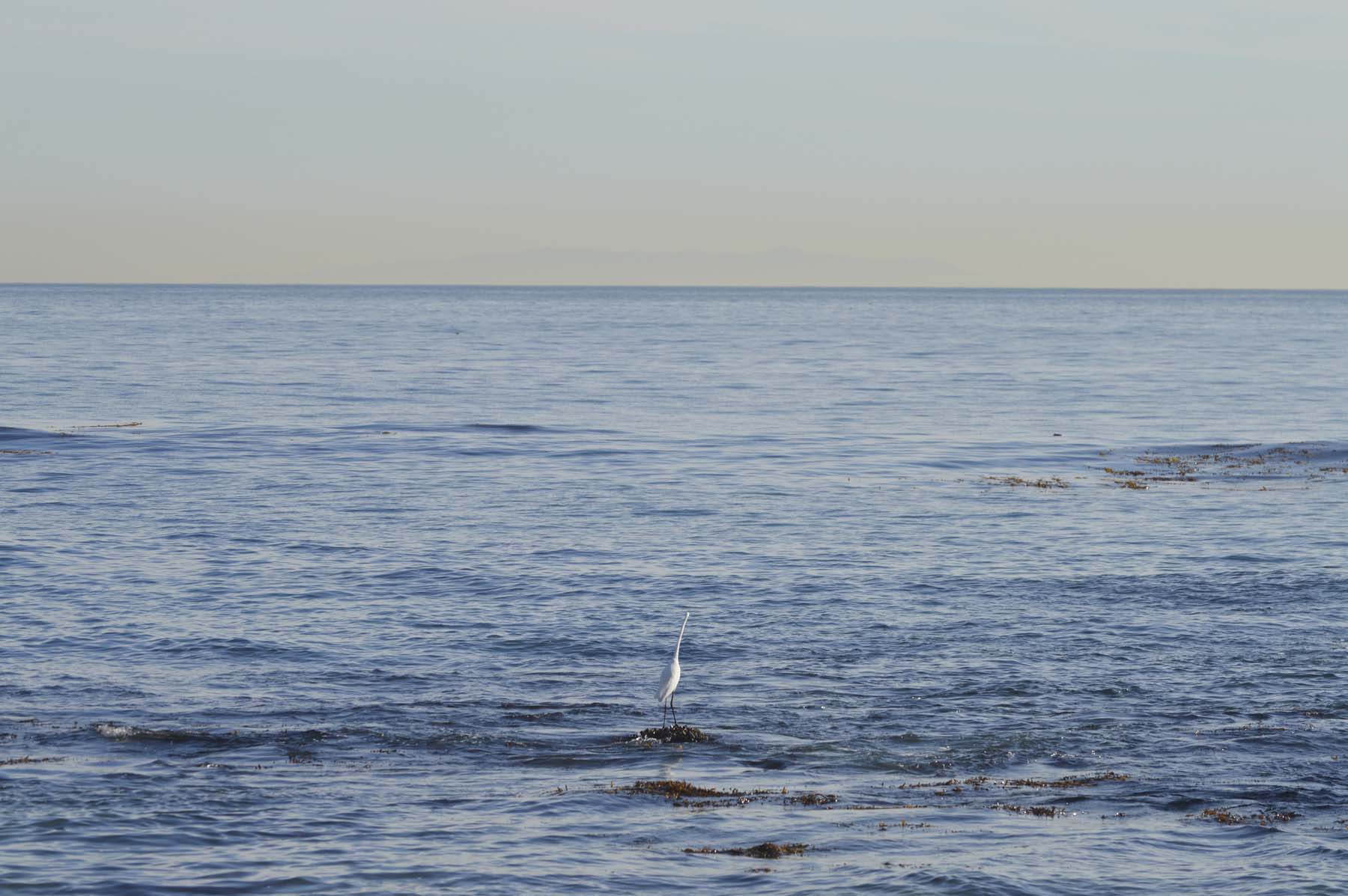
Less reading, more listening today. That is, if you’re inclined to follow me down the rabbit hole that opened up when I searched for sounds relevant to today’s images of the Pacific ocean at Malibu Beach, CA.
I came upon the field recordings of Sam Dunscombe, who mixes his music with environmental sounds collected across the world. If you click on the link, an album appears that has one track of forest noises and one of oceanic sounds.
The second one (O) is the one you want to listen to while perusing the photographs, oceanic sounds that calm (unless you cannot stop thinking about what a Tsunami or rising sea levels would do to the beach houses, or about the yellow line on the horizon that is light reflected in thick bands of pollution. (I know, can’t I just simply enjoy a sweet day at the beach? You know me.)
In any case, I read up on Dunscombe and encountered the musical concept of Just Intonation a phrase that sounded lovely. No worries, not trying to explain it, it’s too hard for my tired brain (here is an introduction, if you are curious.) Suffice it to say there is a community of researchers, composers and musicians who explore this specific way of notating music by giving pitches as fractions and focusing on pure, natural harmonics, and he is actively part of such a group in Berlin.
While trying to wrap my mind around it, I learned that this tuning system was used in medieval music that used melodies only, but proved impractical for polyphonic music that we’ve enjoyed for the last many centuries. Yet composers are aware of it, and that, in turn, led to a pointer that mentioned Benjamin Britten, who had written a piece that in its prologue and epilogue uses the horn’s natural harmonics. I had never heard this Serenade, and was bowled over while listening.
The Serenade for Tenor, Horn and Strings, Op. 31 is not just musically riveting in its marriage of tenor and horn, but the lyrics of the song cycle are also timely: six poems, ranging from an anonymous 15th-century writer to poets from the 17th, 18th and 19th centuries, describe aspects of the night: from serene setting to the horrors emanating from the dark. Written in 1943 during World War II, with bombs raining down, the darkness of night took on a different weight, and the sinister feelings are conveyed to perfection. Once again I am struck by how words depict, while music expresses, making the layers that are indescribable felt nonetheless.
This music transcends into our own time of war, even for all of us who sit in the safety of our homes, and it should help to raise levels of empathy. Night invoking sleep, the final sleep brought by war to its victims, their souls in flight, in contrast to those who profit from it in so many ways in broad daylight, unimpeded.
Here is one of the poems Britten used. (I picked William Blake, since I had just reviewed his work in these pages a couple of weeks ago.)
Elegy
O Rose, thou art sick; The invisible worm That flies in the night, In the howling storm,
Has found out thy bed Of crimson joy; And his dark, secret love Does thy life destroy.
I meant to brighten your Thanksgiving weekend with imagery of beautiful nature, all kinds of appealing fauna I came across during my southern California sojourn. Alas, I can’t stop my brain and keep my mouth shut. Nature, its lasting beauty and seeming resilience, as well as its wrath, was linked to destruction in my war-preoccupied mind. Thus a poem and a short story derived from the poem, that depict post-apocalyptic nature with us humans no longer playing any relevant role, really any role at all. The way we’re going, that might not be too far in the future.
If you prefer the tranquility of a post-prandial daze, stop reading here and just look at the pictures! No offense taken. My gratitude on this day of Thanksgiving, however, extends to all those refusing to be indifferent.
“There Will Come Soft Rains” (War Time)
There will come soft rains and the smell of the ground, And swallows circling with their shimmering sound;
And frogs in the pools singing at night, And wild plum-trees in tremulous white;
Robins will wear their feathery fire Whistling their whims on a low fence-wire;
And not one will know of the war, not one Will care at last when it is done.
Not one would mind, neither bird nor tree If mankind perished utterly;
And Spring herself, when she woke at dawn, Would scarcely know that we were gone.
Teasdale (1884 – 1933) was an American poet who won the first Columbia Poetry Prize in 1918, a prize that would later be renamed the Pulitzer Prize for Poetry, yet she was marginalized as a second-rate poet by next generations. Depressed, ill and isolated, she took her own life before she even turned 50 years old. The poet was highly educated and deeply influenced by reading Charles Darwin and thinking through the implications of his evolutionary theory regarding the centrality – or absence thereof – of human kind in nature. A personified Spring and the rest of nature’s representatives in the poem couldn’t care less if we self-obliterated.
She was also a pacifist, whose views had to be carefully phrased into the framework of a pastoral setting in her poetry. After all, this poem was first published in 1918, two months after the Sedition Act of 1918 was enacted. The law made it a criminal offense to “willfully utter, print, write, or publish any disloyal, profane, scurrilous, or abusive language about the form of the Government of the United States.” It still theoretically exposed her to criminal prosecution – and if she had the courage to speak out against war, we should have the decency to bear witness.
Fast forward to the 1950s, we have Ray Bradbury (1920-2012) expressing his fears of nuclear war in a short story, August 2026: There Will Come Soft Rains’, published in his Martian Chronicles. The setting is a house filled with technological gadgets that continue their daily routines and tasks, when the world and all its inhabitants have been wiped out by nuclear war. The house in Allentown, CA, and a badly maimed dog, are all that remains. There is cooking, cleaning, laying the table and reading a daily randomly selected poem to the extinct inhabitants – Teasdale’s poem, as you might have guessed. Random debris is pushed down the incinerator, called evil Baal, a reference to the praying at the altar of false gods, our belief in the gifts of technology that prove futile when they are made obsolete by even more powerful technological inventions like the atomic bomb.
Ironically, nature has the last word: a violent wind lights a fire in the house which burns it down, the last vestige of human habitation. Only a ticking clock survives.
The worry about nuclear arms has resonated across the media during the weeks since the war started. Really years, since it is a topic for both the ongoing war in Ukraine and the bombardment of Gaza by Israel. Focussing on the latter, I found that a recent essay by Roger Cohen in the NYT is required reading, spelling out some of the causal mechanisms that have led to the chasm now impeding any hope for peace.
“Almost forgotten are the Palestine Liberation Organization’s recognition in 1993 of Israel’s right to exist in peace, and Prime Minister Yitzhak Rabin’s determination to pursue that peace, a decision that cost him his life in 1995 at the hands of an extreme right-wing Israeli assassin who said he acted “on the orders of God.”
These were the ephemeral glimmerings of shared humanity, soon quashed.
Inthe intervening decades, Hamas and the ultranationalist religious Israeli right have each extended their influence. The conflict now involves fundamentalist religious ideologies, distinct in critical regards but equally convinced that all the land between the Mediterranean Sea and the Jordan River has been deeded to them by God.
A political and military struggle between two national movements for the same land can be resolved by compromise, at least in theory. France and Germany settled their differences in Alsace-Lorraine. Peace came to Ireland. But absolutist claims of divine right to territory appear impossible to reconcile.” (My emphasis.)
I am citing at length because the religious fervor is something we regularly underestimated and are increasingly facing at home as well. But I also want to mention some other facts: an Israeli minister, Amihai Eliyahu openly stated that dropping a nuclear bomb on Gaza was an option. (He was suspended from Cabinet meetings, and later claimed it was a metaphorical statement. Israel has not confirmed or denied its nuclear capabilities.) Nothing metaphorical about the bombs that have been dropped, though. According to the Euro-Med Human Rights Monitor, as of three weeks ago already, Israel has confirmed that it bombed over 12,000 targets in the Gaza Strip, with a record tally of bombs exceeding 10 kilograms of explosives per individual. That is the equivalent of two nuclear bombs (absent radiation.)
“Due to technological developments affecting the potency of bombs, the explosives dropped on Gaza may be twice as powerful as a nuclear bomb. This means that the destructive power of the explosives dropped on Gaza exceeds that of the bomb dropped on Hiroshima, Euro-Med Monitor said, noting that the area of the Japanese city is 900 square kilometres, while the area of Gaza does not exceed 360 square kilometres.”
1200 human souls lost their lives in Israel, indiscriminately slain by Hamas attackers, with over 200 hostages taken – 36 of them children! – , and women violently raped. As of now, 14.500 human souls indiscriminately killed in Gaza, with over 5000 children ! among them (and that is not counting the lives lost in the Westbank over the last months.) Food, water and fuel cut off, preceding likely epidemics. The report of the World Food Program of the United Nations is shocking with its implications of starvation.
Sick and wounded dying for lack of medical treatment, the former not even making it into death by war statistics. All this without even the ability to flee for a civilian population, given that the borders are closed on all sides, by Israel and Arab nations alike. Flight is, however traumatizing, at least a possibility for Ukrainians – current estimates vary that between 6 and 8 million people left their homeland to escape war, of a total population of 36 million in Ukraine.
No end in sight. Certainly no guarantees that this will make Israel safer. A heightened chance that war will regionally spread. No obvious solutions for a longterm arrangement either, since both the two-state solution or a unified non-ethnocratic state seem to be relegated to fantastic wishful thinking given the conditions on the ground.
And, for that matter, no “gentle rains” either, since we’ve managed so thoroughly to wreck climatic conditions on this planet that there will be violent storms and deluges instead, not yet known to either Teasdale or Bradbury, once human suffering has been terminated for good. Or by evil, as the case may be.
It’s easy to feel depleted and paralyzed. Let’s practice hope, though, starting with being consciously grateful for all the privileges and blessings we enjoy on this particular day. May they strengthen us to face what we have to do in days to come.
You can join me for all the benefits of an outing without:
rattled bones
jolted heart
having to listen to my umpteenth lecture on why I really, really don’t like added attractions in botanical gardens… I declare myself outvoted, promo art is here to stay.
What’s this all about? Drive with me about an hour south of Altadena to South Coast Botanic Garden. When you arrive you have to navigate a road approaching a parking lot, both of which present like egg cartons, made by and for giants, with you driving across peaks and valley, wondering about your bones, even at minimum speed, and what kind of So Cal frost could have buckled the asphalt like this. Not frost, you learn. Rather, this garden, started in the 1960s, was placed on a landfill, the latter a practical solution to yawning pits left over from mining that had started around the early 1900s, and now settling.
Mining companies went after white diatomite, the ancient deposits of marine diatoms. The region offered a continuous 500-foot-thick belt of nearly white diatomite, made of silica from ocean creatures that settled to the bottom of the sea. Over millions of years, with the addition of heat and compression, diatomaceous earth was formed and now mined as a desirable ingredient for filters, toothpaste and compounds used to produce certain forms of pesticides. When the open pits were depleted and subsequently abandoned, the current eighty-seven acres of land had been filled with three-and-a-half million tons of trash mixed with local soil by the Los Angeles County Sanitation District.
So what happens when you place a garden on a landfill? The latter settles because the trash decomposes, causing dips and buckles in trails and road. Irrigation pipes break.
“The intense heat generated as a by-product of decomposition burned the roots of trees and shrubs, leading to much devastation among the early plantings. Pockets of out-gassing methane, carbon dioxide, and sulfur caused “hot spots” to form where nothing would grow. Sometimes, plant roots would get into the trash itself; in one instance, roots grew inside a tire. The soil used to cap the trash deposits is generally low in nutrients and acts much like clay, expanding when wet and cracking during the summer dry season. This puts additional stress on root systems and allows for new gaps to vent gases. As time progressed, new plants were accessioned to replace those lost, and the rate of subsidence began to slow, resulting in greater stability of the land.” (Ref.)
The various folks establishing this garden were passionate and prevailed. Frances Young, a district director of California Garden Clubs & Horticulture Societies, began to promote a regional botanic garden, William S Stewart, then director of the Los Angeles State & County Arboretum in Arcadia joined the cause, and Donald P Woolley was responsible for the landscaping – all dedicated to the ecological use of the existing resources.
The garden has matured pretty well, given how young it is. The front is loaded with the kinds of things most of the general public might enjoy: a slightly overwrought rose garden, a decent fuchsia collection, an impressive staghorn fern collection, and a seasonal spot filled with colorful annuals. Diverse, inviting resting places everywhere.
For me it got more attractive once you wander deeper into the landscape – lots of interesting trees, an artificial stream and lake, both dry during my visit, canyons that provide shade and opportunities for indigenous plantings and wildlife.
Also the stage for a potential heart attack during my meanderings. The garden was in the process of setting up for their annual light show during the dark months, and what I thought were camouflaged projectors turned out to be loudspeakers – imagine wandering along a quiet forest trail and all of a sudden a booming voice shouts “Testing, testing” into your ear. Should have seen me jump….
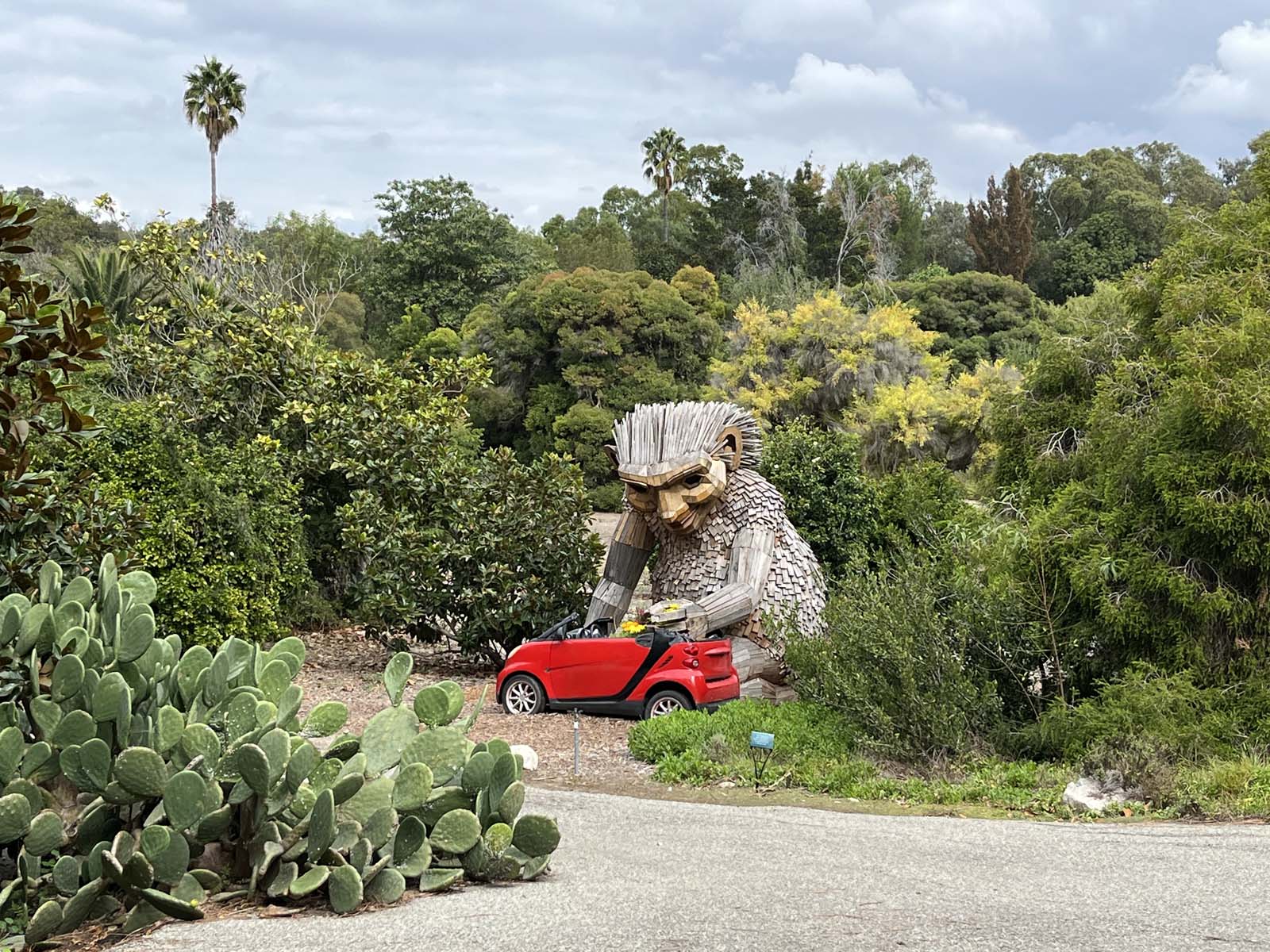
The current major attraction in the garden are Thomas Dambo‘s sculptures of giant trolls which might make the kiddos jump but not your’s truly. I had previously written about his amusing efforts to recycle wood and place these creatures into the open to lure people into nature. Here now was the opportunity to see the real thing, and I might have enjoyed it more if not for the fact that the signage explaining their mission was so intensely didactic.
There is Ibbi Pip, the birdhouse troll, with birdhouse pointing the way throughout the garden
There is Rosa Sunfinger, the botanical troll,
Here is Ronya Redeye, the speaker troll,
and Camma Can, the trash troll
My favorite, if one can call it that, was Softus Lotus, the listening troll,
and here is Base Buller, the painting troll.
Squirrel unperturbed…..
Then again, who knows for whom it might register and be thought provoking or providing a teaching moment. And if it brings you to the garden, might as well teach about succulents, or the variability in needle trees or about anyone of the 200.000 plants on offer these days. Mission accomplished! She says, grumblingly.
Music is Grieg’s Peer Gynt Suite today, am I predictable, or what? Maybe the trolls dance at night.
Just a short note to those readers who are eager to support a ceasefire in the Middle East – call your representative and urge them to support a ceasefire.
Here is how you can find out how to reach them easily.
That gets you to a switchboard which asks for your zip code to connect you to the relevant office – in my case Susan Bonamici’s office and it took 2 minutes to tell the legislative aide there how you hope she might act and use her influence.
Phone calls might be registered differently from emails, but the latter sure works as well.
As hide-outs go, you could do worse. Particularly when you have attempted to escape prison four times, sentenced for stealing horses, and finally succeed, in 1862, with ten men dead in the process. When you are a poet at heart, you’re surely sensitive to the indescribable beauty of your surrounds.
Who and what am I talking about? Tiburcio Vasquez, son of a founding family of San Francisco, born in Monterey, and drawn to Southern California in the wake of the gold rush. He wrote poetry, he operated a gambling saloon, and eventually he robbed stage coaches when he wasn’t seducing everyone with a skirt on, married or not, apparently quite generous with the spoils of his thefts to those in his crew and needy people in the region.
Eventually he was caught, after multiple feuds and shoot-outs, hanged in 1875 after spending time in San Quentin. He might or might not have been the Robin Hood-like figure who Zorro was modeled after, but he was the one from which the otherworldly landscape neighboring the small town of Aqua Dulce derived its name.
The strange formation of sandstone is a park today, some 45 minutes north of L.A. off Highway 14. You drive through the Sierra Pelona into Santa Clarita valley, then through Aqua Dulce, a small town advertising the high school Fall Festival,
and then reach Vasquez Rocks where the Pacific Crest Trail intersects with multiple other hiking loops, all opening to awe inspiring vistas.
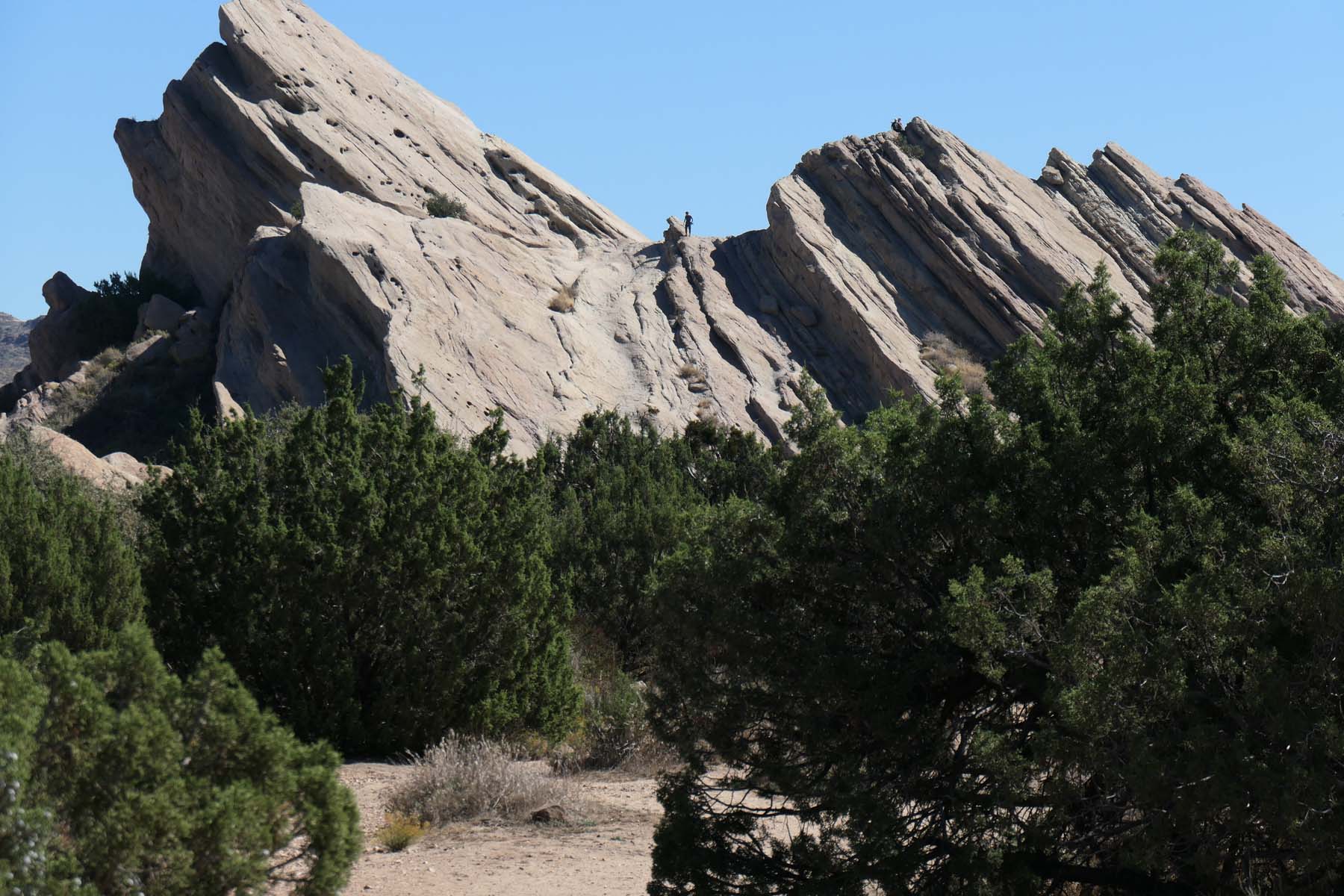
The rocks were formed by runoff from higher mountains, dirt, sand, plant remnants and so on, layer after layer for millions of years – 25 million, I believe – compressed by the weight of each additional layer, compacted into sandstone. Underneath it all runs the Elkhorn Fault which was actively shifting tectonic plates, thus elevating the rocks into angles as steep as 40 – 50 degrees (and pushing some of them up to 4 miles underground, in equally angular formations, it is believed.)
The main rock formations within the 932 acres of the park can be divided into those that are hard and brittle, called hog back ridges and others that are soft and round, full of holes (often occupied by owls!), eroded across time. There are also grinding holes to be found in these rocks, signs of the presence of the Tataviams (originally linked to the Shoshone) who inhabited the region for some 1300 years, from 450 BC until the 1800s.
When the Spanish missionaries arrived and founded the Mission San Fernando Rey de España some 20 miles away, a lot of them were brought in, converted, and forced to labor for their colonial masters. Within a few generations their language was lost. Today, the Fernandeño Tataviam Band of Mission Indians instruct us about their history and heritage and are working towards official recognition by the federal government.
There was much archeological evidence that informed about the Tataviams’ lives as gatherers, hunters and traders, including pictographs. Near the nature center where you enter the park, you can see exact replicas of many of them, all in one place. The original pictographs are in a section of the park that is closed to the public so they will not be destroyed. The originals have been there since 450 AD.
When I visited, the area was dry, suffused with light, filled with shrubbery that tenaciously clung to rocks, and a shining color palette from the greens and reds of the lichen to the orange glow of some of the boulders.
It was also relatively empty, not too many people hiking mid-day, but some climbing the formations, which provided perfect scale for the photographer.
At other times the landscape was booming with people: it has been used as a backdrop for Hollywood films since the 1920s, when it was still private land, leased to the film industry. Below is the list from Wikipedia, and that does not even include a far longer one for TV shows….
It was a perfect day. And here is locally sourced music….