Browsing Category

Bird Photography

Reveling in the Present

The last photographers I want to introduce this week are wizards when it comes to capturing birds on camera. It doesn’t hurt that they live near spectacular nature sanctuaries in Hungary and bordering nations, which attract thousands of avians when the Danube river floods the area.

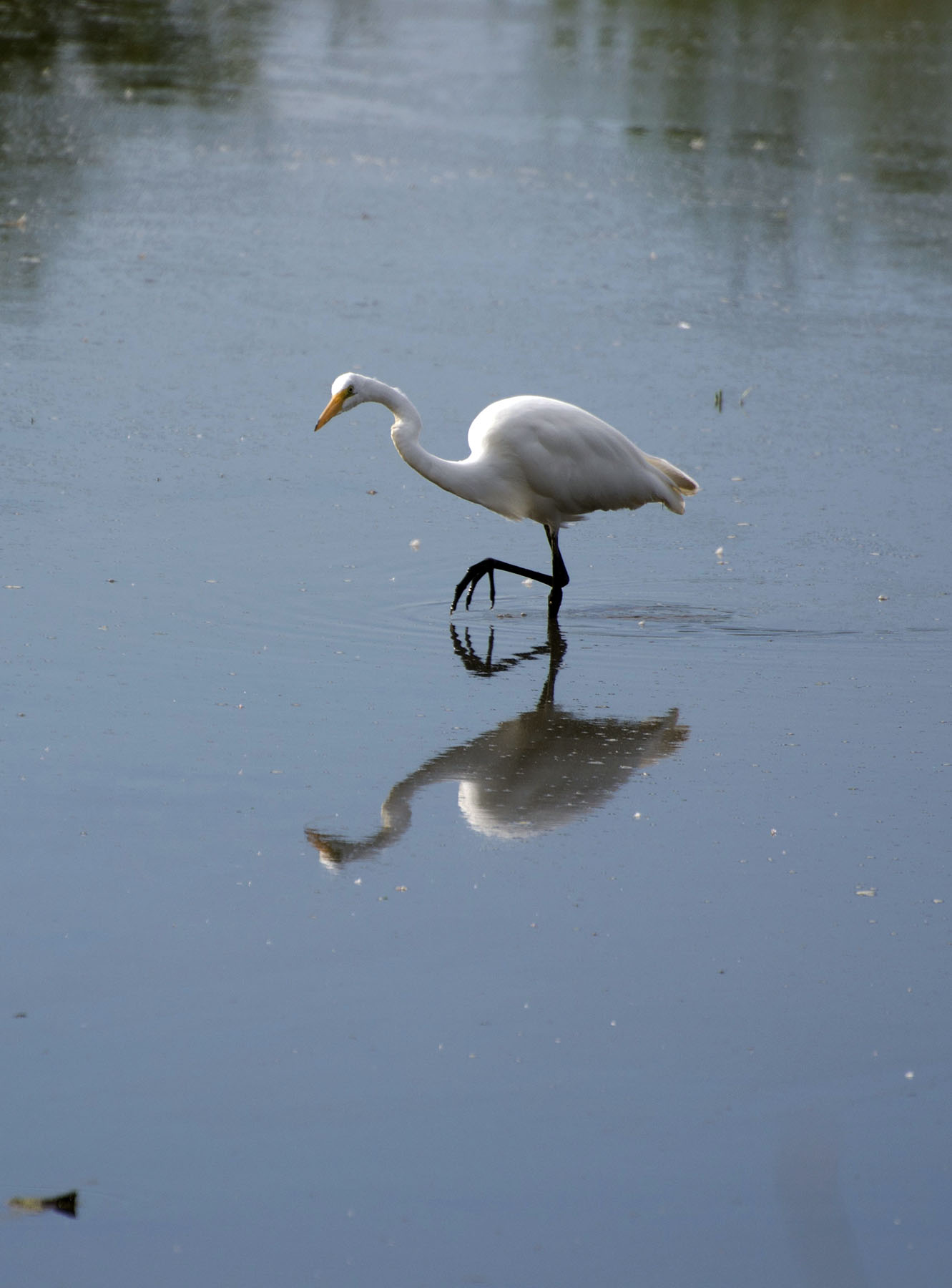
Zsolt Kudich and Réka Zsirmon document, among others, the lives of the great egrets. If you click the link in his name, you see what I mean. Commissioned by European Commission and Danubeparks, they took their photos in fourteen nature conservation areas of eight countries alongside the Danube River, in ways that have showered awards upon him and his colleagues, deservedly so.

The photographs are magical, something I would have said with loads of envy not so long ago, coveting the equipment, which makes a difference, and the access, which provides opportunities.

All photographs above by Zsolt Kudich and Réka Zsirmon

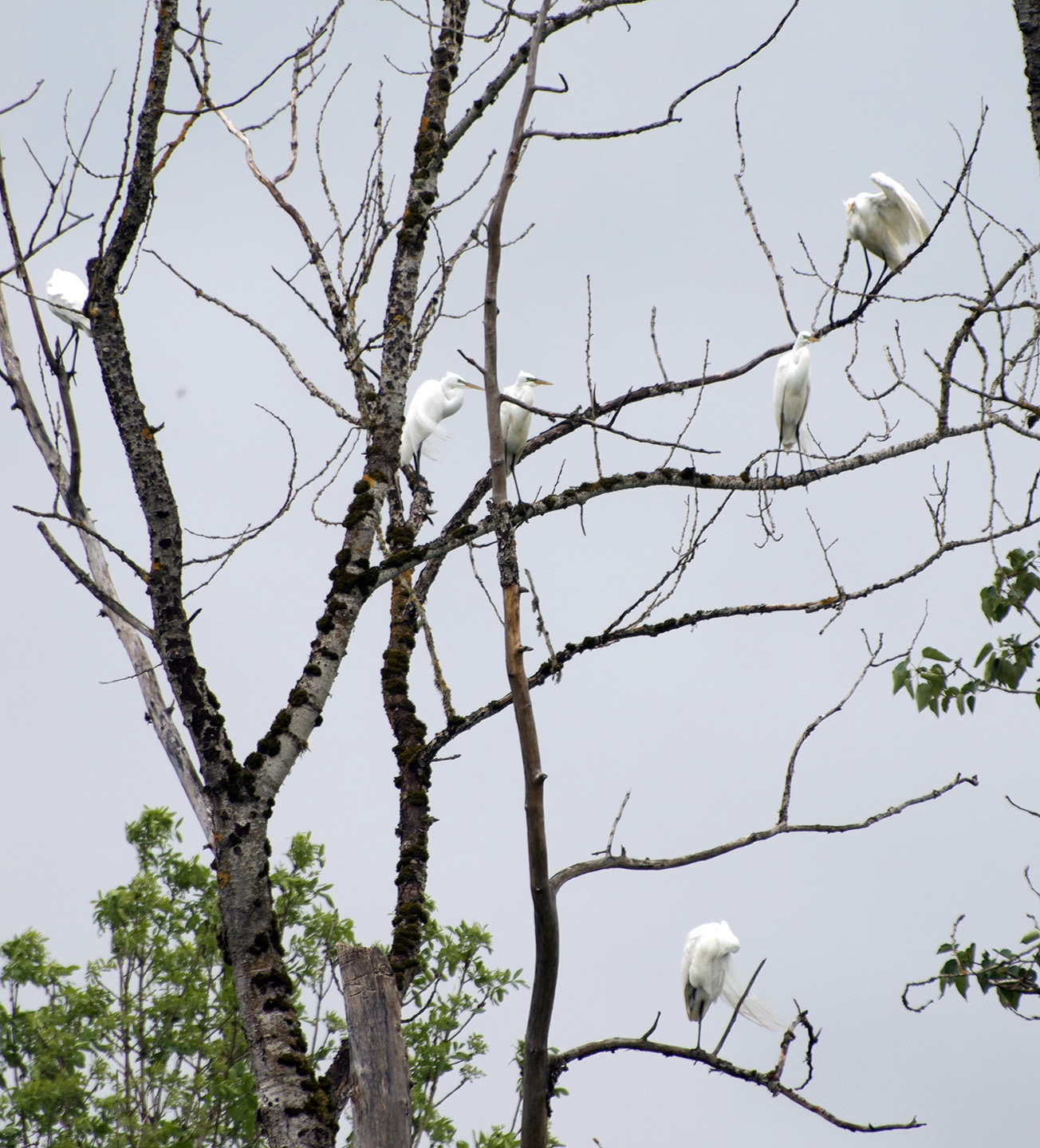
No longer. It has become so clear to me that what moves me most deeply is the sense of wonder when nature is willing to let you come close for experience, surprising you with unexpected encounters in your daily life. Here is a path that I have walked for over 30 years multiple times a month, and all of a sudden there is a tree, dead after this strange winter, that serves as seating for multiple great egrets. I have seen these kind of birds before, in various places, sometimes more than one in water and swamp lands, but never here, that high, that unperturbed. Documenting them from a distance with an amateur’s camera is a bonus, not the prize.

The awe is in the encounter. I could not feel more connected to nature if there were hundreds of them, or my lens magnified every detail. And I couldn’t agree more with Irish songwriter Van Morrison who, in his 1985 song (attached below,) insists that his love is not wisdom (Sophia) but the study of the fundamental nature of knowledge, reality, and existence (philosophy.) The musician is also pointing to a higher power that provides wonder. I believe that the reality of nature is providing wonder as much as questions about our role in it. Any old jaunt into the outdoors will confirm this – one plant, bird, lichen, insect, shadow and light play at a time.

A Sense of Wonder

Van Morrison

I walked in my greatcoat
Down through the days of the leaves
No before after, yes after before
We were shining our light into the days of blooming wonder
In the eternal presence, in the presence of the flame

Didn’t I come to bring you a sense of wonder
Didn’t I come to lift your fiery vision bright
Didn’t I come to bring you a sense of wonder in the flame

On and on and on and on we kept singing our song
Over newtonards and comber, gransha and the
Ballystockart road
With boffyflow and spike
I said I could describe the leaves for samuel and felicity
Rich, red browney, half burnt orange and green

Didn’t I come to bring you a sense of wonder
Didn’t I come to lift your fiery vision bright
Didn’t I come to bring you a sense of wonder in the flame

It’s easy to describe the leaves in the autumn
And it’s oh so easy in the spring

But down through january and february it’s a very different thing

On and on and on, through the winter of our discontent
When the wind blows up the collar and the ears are frostbitten too
I said I could describe the leaves for samuel and what it means to you and me
You may call my love sophia, but I call my love philosophy

Didn’t I come to bring you a sense of wonder
Didn’t I come to lift your fiery vision
Didn’t I come to bring you a sense of wonder in the flame

Wee alfie at the
Castle picture house on the castlereagh road.Whistling on the corner next door where
He kept johnny mack brown’s horse
O solo mio by mcgimsey
And the man who played the saw
Outside the city hall
Pastie suppers down at davey’s chipper
Gravy rings, wagon wheels
Barmbracks, snowballs
A sense of wonder
A sense of wonder
A sense of wonder

Didn’t I come to bring you a sense of wonder

Documenting Past and Present

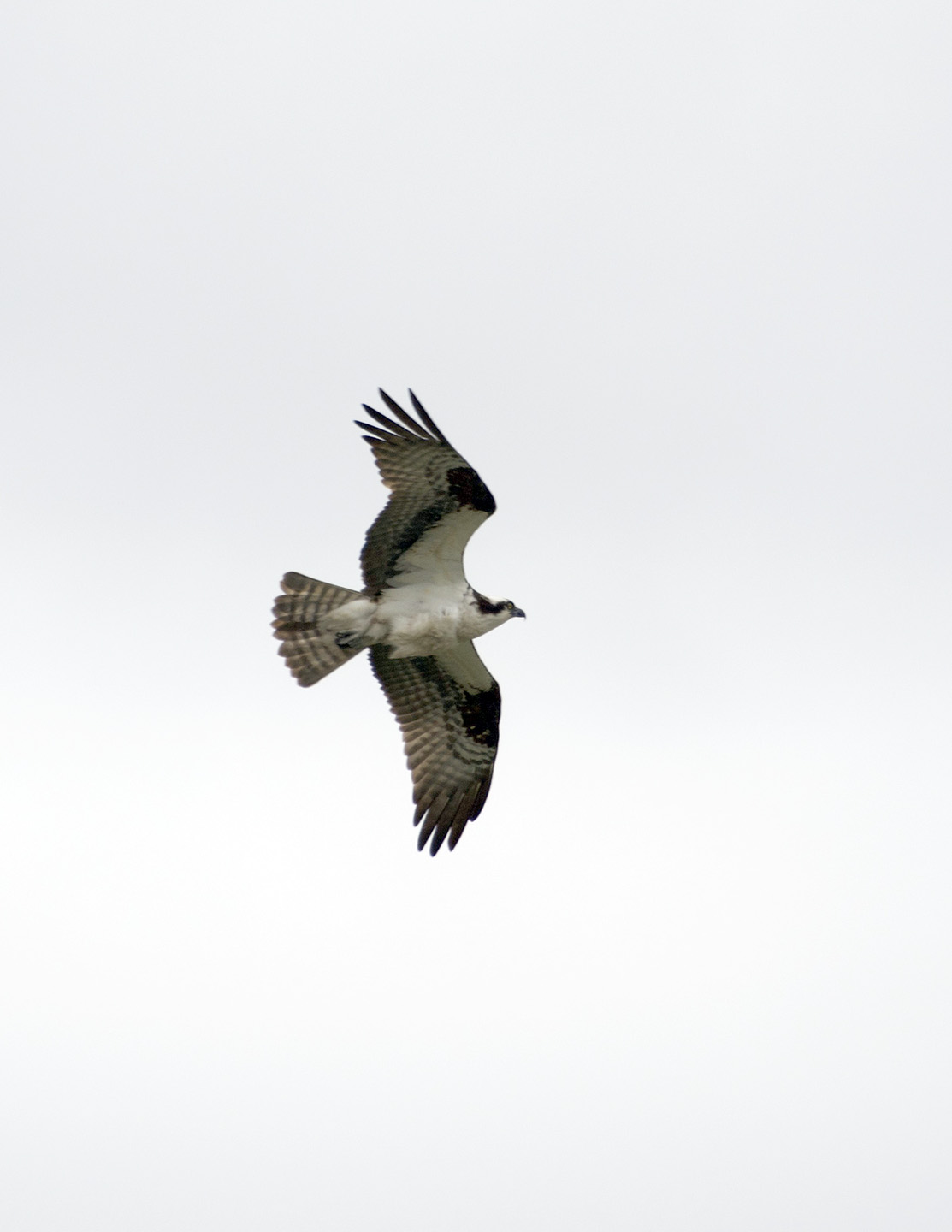
Give me an example where you felt triumphant and demoralized at the same time. Nothing comes to mind? Here is one of mine: two days ago I drove myself to Sauvie Island for the first time in 5 months, taking the first solo photography walk there since my surgeries. Feeling triumphant that I dared (and was able to,) demoralized because I could only get so far and at a snail’s pace. Also, the heavy camera was shaky in my hands, as evidenced by the out-of-focus quality of some of the birds, but hey, I did it.

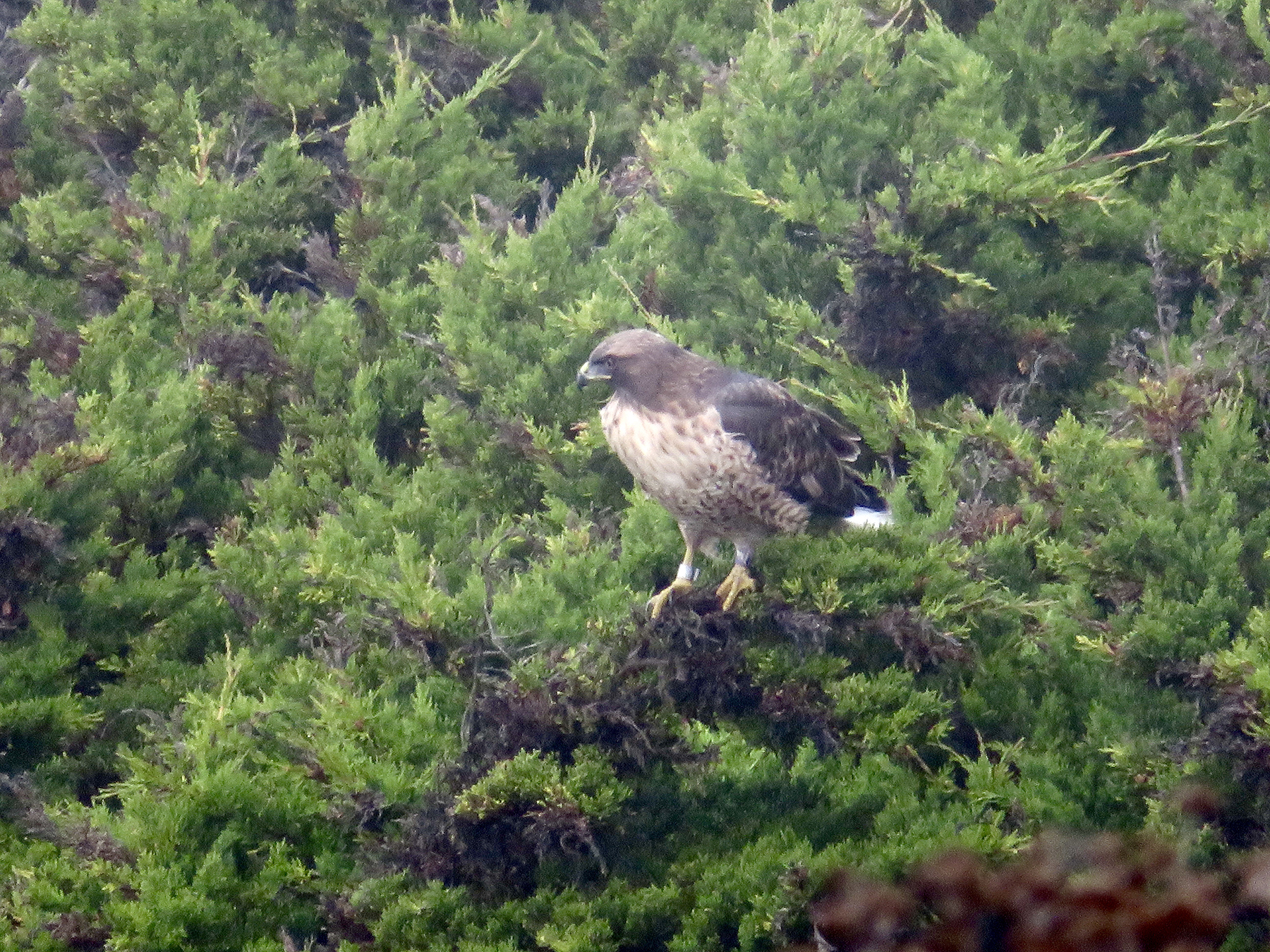
I eagerly wanted to visit the ospreys during their nesting season. Part of that motivation came from the need for appropriate photos for today’s topic, the work of a photographer who turned from photojournalism documenting armed conflicts to working extensively on environmental issues. Christian Åslund, an award winning Swedish photographer, often focuses on the High Arctic and the Arctic Ocean, in need of saving from the oil industry and commercial overfishing, forces of destruction of the natural balance, raptors included. He, some years back, even joined an expedition skiing to the Northpole to call for a global sanctuary of the region. If he can ski at the North Pole, I can toddle along Rentselaer Road, observing the nests…..

The link to the photographer’s name above leads to some magnificent photos of the ocean ice. I want to focus, though, on his documentation of the changes of a particular range of glaciers. As I have mentioned before, people are both hesitant or unwilling in acknowledging what is going on around us, particularly if t seems to occur in a far away future, with the loophole that science might rescue us in the intervening years.

Looking at something concretely, at a change that has happened and is in the process of continuing to happen might be a wake-up call that is harder to ignore. Visual evidence is sometimes more effective than abstract ideas. Aslund was able to find archival photos from 100 years ago of Svalbard Glaciers courtesy of the Norwegian Polar Institute. He then set out to photograph the very landscape from identical angles, ingeniously adding a modern human figure into the mix when the old photo contained one as well – making the interaction between nature and human salient.

The series can be found on his website, which is, as websites go, remarkable for the wealth of information and quality of the design. With easily accessed links you can get written factual information, pause the slides and enlarge them, as well as find different topics at a glance. Might not matter to you, but for someone who is interested in photography websites this one scored big. Ok, I digress.

“The archipelago of Svalbard, a land of ice and polar bears, is found midway between mainland Norway and the North Pole. Its capital Longyearbyen on the main island of Spitsbergen is the world’s most northerly city, some 800 miles inside the Arctic Circle.

Svalbard is also home to some of the Earth’s northernmost glaciers, which bury most of the archipelago’s surface under no less than 200 metres of thick ice. Taken together, Svalbard glaciers represent 6% of the worldwide glacier area outside the large ice sheets of Greenland and Antarctica.”

The danger of these glaciers melting completely is not just one of raising water levels of oceans and feeding into the cyclic nature of global warming. Freed from ice, these areas will be much more accessible to both mining industries and tourism, further disturbing excessively shrinking habitat of endangered species, in this particular case making it harder for polar bears to survive.

.

Which brings us back to the Oregon ospreys and, for once, good news. Their population rapidly declined due to deforestation and pesticide use until about the 1970s. They have recovered, though, partly because they have found nesting sites on power poles and river channel markers, helped along by utility companied and the U.S. Coast Guard that see to the safety of the sites, or take armloads of previous used nesting materials to sites that they build near by. (See below.)

Ospreys are migrating birds, going to warmer climes in Mexico and South America for 6 months of the year. The couples separate during that trek, but then reunite upon return during March in Oregon, with great fidelity to the old nesting site which they rebuild. The chicks usually hatch mid-May, flying in July, and then depart for the wintering grounds in mid-August. (I saw one nest with two chicks on my walk, and another one just being built – timing obviously varies.) The female is in constant contact with the chicks for the first month or so, then perches nearby and occasional hunts, something the male did all along. About 375 pounds of fish are needed to sustain an osprey couple with two chicks in the nest – note what that implies for needing clean rivers with healthy fish populations….

If only we could do for the polar wildlife what we were able to do for the raptors here. Work like Aslund’s might help, if enough people were to see it.

Here’s to the next generation of preservationists, learning early!

Annoyance

Today I’ll attempt to come to terms with some terms ascribed to me by self and/or others. Too frequently these days, I might add. I’ll juxtapose them with photographs that take the wind out of all their negativity – no-one can remain a killjoy, a fussbudget, a crosspatch or a grouch when looking at these visions of new life.

Killjoy (Do you have to write about depressing topics when all we want is some pleasurable distraction???) is an interesting word from the class of cutthroat compounds. These words describe the actions of people or name what things do. The verb is usually on the left (at least in English and German, not so in the romanic languages.) You can surely come up with a lot of these, like pickpocket, daredevil, know-nothing, tattletale, scarecrow or passport. Did I say a lot? There are almost 1300 of them (find the compilation here,) with the very first one documented as early as the 11th century. Sort of practical: instead of thinking of me as “one that inspires gloom or counteracts joy or high spirits : one that tends to pessimism or a depressing solemnness especially among people that are happy or optimistic : one that dispirits” (as Merriam Webster’s Unabridged Dictionary puts it) I just get called out:” KILLJOY!”

Fussbudget (Do you have to complain about half-raw green beans, when I prepare every meal and like my beans crisp? – Oh, my Beloved has every right to say that!) describes a person who, according to the Cambridge dictionary, is often not satisfied and complains about things that are not important. Etymologists believe that the words comprising this compound came from fuss, a state of agitation turning to complaint, and budget, from the old French bougette, diminutive of bouge (bag), from Latin bulga (bag). Luckily, the associated words of finicky, pedantic, perfectionist or purist do not apply to me. I think.

Crosspatch (Do you have to shout? I know you’re irritable, understandably so, but please lower your voice.) is a being who makes an appearance in this household when the going gets rough. The word describes an ill-tempered person, who is cross at the state of affairs, but also makes a fool of herself… patch is believed to have its etymological roots in Italian, where paccio refers to fool. Another possible linguistic root might be the name of Henry VIII’s jester, a man named Patch. Apparently the word took flight in the 1500s, during his time. Fool I am, since every shout these days elicits coughing fits rather than a relief of tensions.

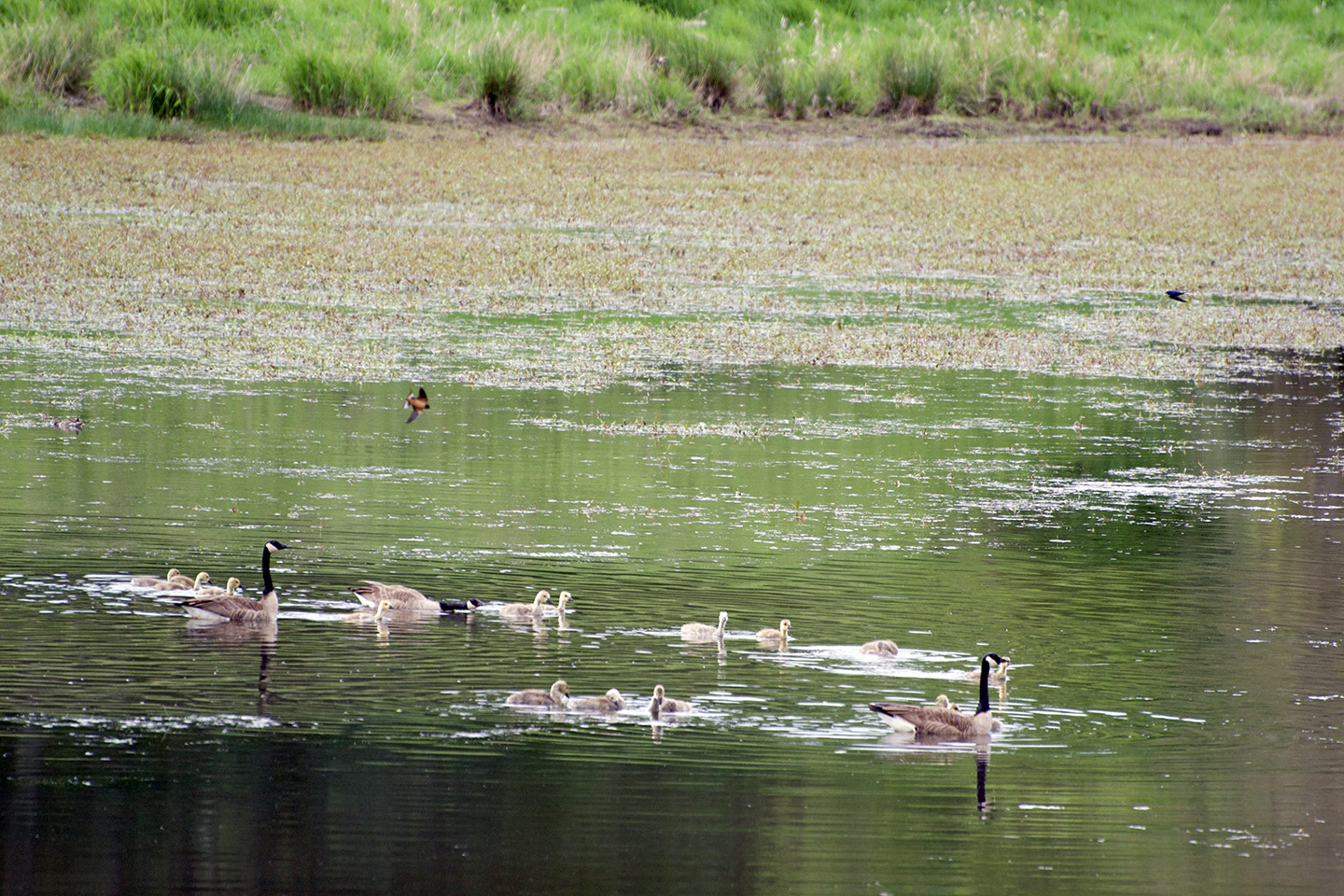
Which leaves us with a grouch, which I am not! A habitually irritable person, as the dictionary defines them, is not found on these premises. Just the occasionally grouchy one, as when taking these photographs this weekend, my first trip to the nature preserve since the surgeries. It was so unexpectedly cold and I so underdressed that I had to get back to the car after a scant 15 minutes. I was swiftly pushed out of that mood when looking at nature’s gift: the renewal of the life cycle as evidenced by goslings all around you. A miracle, each and every year.

Here is music that fits well with being in a bad mood – echoing it (the Allegro) and then helping you beyond (the rest). The full version of Shostakovich’s 10th symphony here.

Only the Allegro here.

Magicicada Mysteries

If creepy-crawlies give you the creeps you might consider skipping today’s blog. Not for the faint of heart. But, oh, so fascinating in terms of what nature has, once again, to offer, and in terms of the utter cluelessness of science in answering some very big questions. Skip right to the end to listen to Bartok’s piano piece which will enrich your day.

2021 is the year where the central and eastern U.S. is expecting a mass emergence of cicadas, millions and millions of them who leave their burrows underground and climb the trees in synchronized fashion, for a 6 week-short life- span of reproduction after having been underground for 17 years.

They are known as periodical cicadas. Only 7 of the 300 species of cicadas worldwide have this strange life rhythm, waiting for 17 or 13 years, respectively, to then come up all at once. While developing underground they suck the liquid of plant roots, apparently counting the seasonal pulsed of fluid flowing from those roots – when the plants have completed 13 or 17 cycles and the temperature has gotten warm enough (65º/18º) they know to emerge. During the long time underground they molt their shells 5 times – and not all at the same speed. But somehow towards the end of that interval the more developed nymphs wait and the lagging ones catch up, so the they are all ready for time x, ready to fly and populate the trees where they mate and lay eggs. No one knows how they pull that off.

Unlike locusts that devour crops, cicadas are good for our ecosystem. Their weight en masse in the trees helps to prune weak branches, they release tons of nutrients into the soil after death and they serve as an abundant food source for all kinds of predators, four-legged and winged varieties included. This despite the fact that the sheer number of bugs (as many as 1.5 million may crowd a single acre) has anyone of them at practically zero risk for being breakfast, lunch or dinner. Although interestingly – and here is one of the unanswered questions – bird populations that are normally predators of annual cicadas decline just at the point where the periodical cicadas emerge. In the years before and after these birds a back to their normal population density.

So why these prime numbers – 13, 17, – for the emergence? We do not know for sure. Some mathematicians have offered the following hypothesis:

Both 13 and 17 are prime numbers, meaning they’re divisible only by 1 and themselves. This means that emergences rarely overlap with predator population cycles that occur in shorter intervals. For example, if cicadas emerged every 10 years, they’d be susceptible to predators whose population boomed on a cycle of one, two, five or 10 years. If they came out every 12 years, they’d be a tasty snack for any predator on a cycle of one, two, three, four, six or 12 years. Thirteen years, though? Only one and 13. The same goes for a 17-year cycle.

Climate change might put and end to that, too. Scientist are seeing shorter emergence cycles on the horizon for cicadas, prompted by ever warmer temperature and speculated to come down to something like 9 years in the future – no longer a prime number. This implies far more exposure to predators, obviously.

Cicadas have one natural enemy that is not affected by time spans at all: a fungus named Massaspora which does an ugly job on them. Its spores colonize the backend of the bugs, disintegrating it while the cicadas are alive, while injecting the them with a compound similar to amphetamine that keeps them moving while dying. Thus they disseminate the spores across a larger area. For male cicadas it also has the weird effect that they start flicking their wings like females, attracting other males who then try to mate, getting immediately infected. Told you it would get creepy.

The short clip below is a marvel of time-lapse photography showing the life cycle of cicadas.

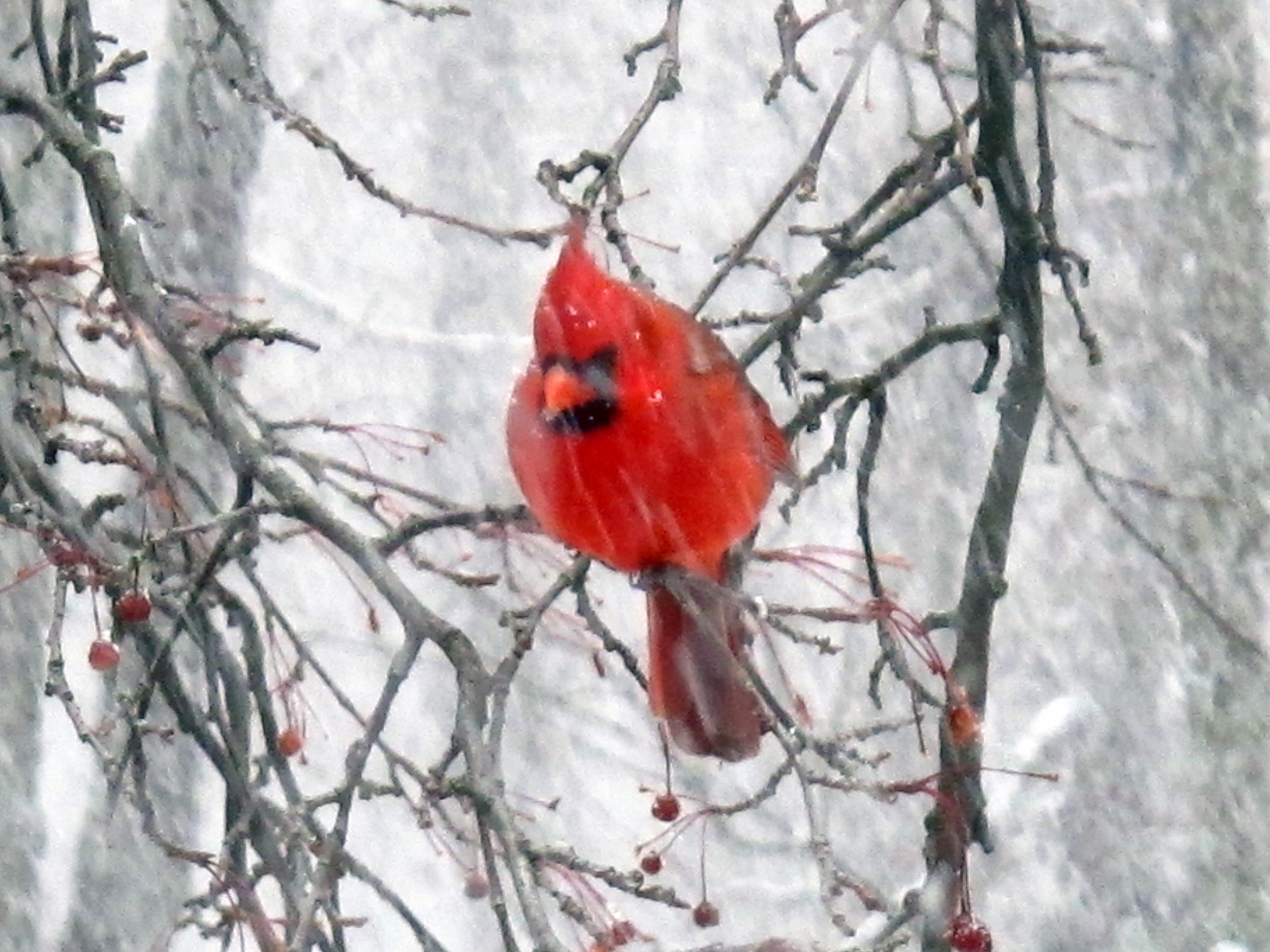
Photographs are of Maryland and Massachusetts birds, cardinals in particular, that will be in shorter supply this year.

And maybe not the best way to play: saxophone amidst the cicadas.

Here is a different musical take: “The most obsessive admirer of bugs was Bela Bartók. The Hungarian composer evoked the cicada in his 1926 piano suite Out of Doors, the fourth movement of which is called “The Night’s Music.” Here Bartók piles up tone clusters to create an eerie evocation of frogs, birds and cicadas that are audible right from the very beginning.”

French Revolution meet my Pear Tree

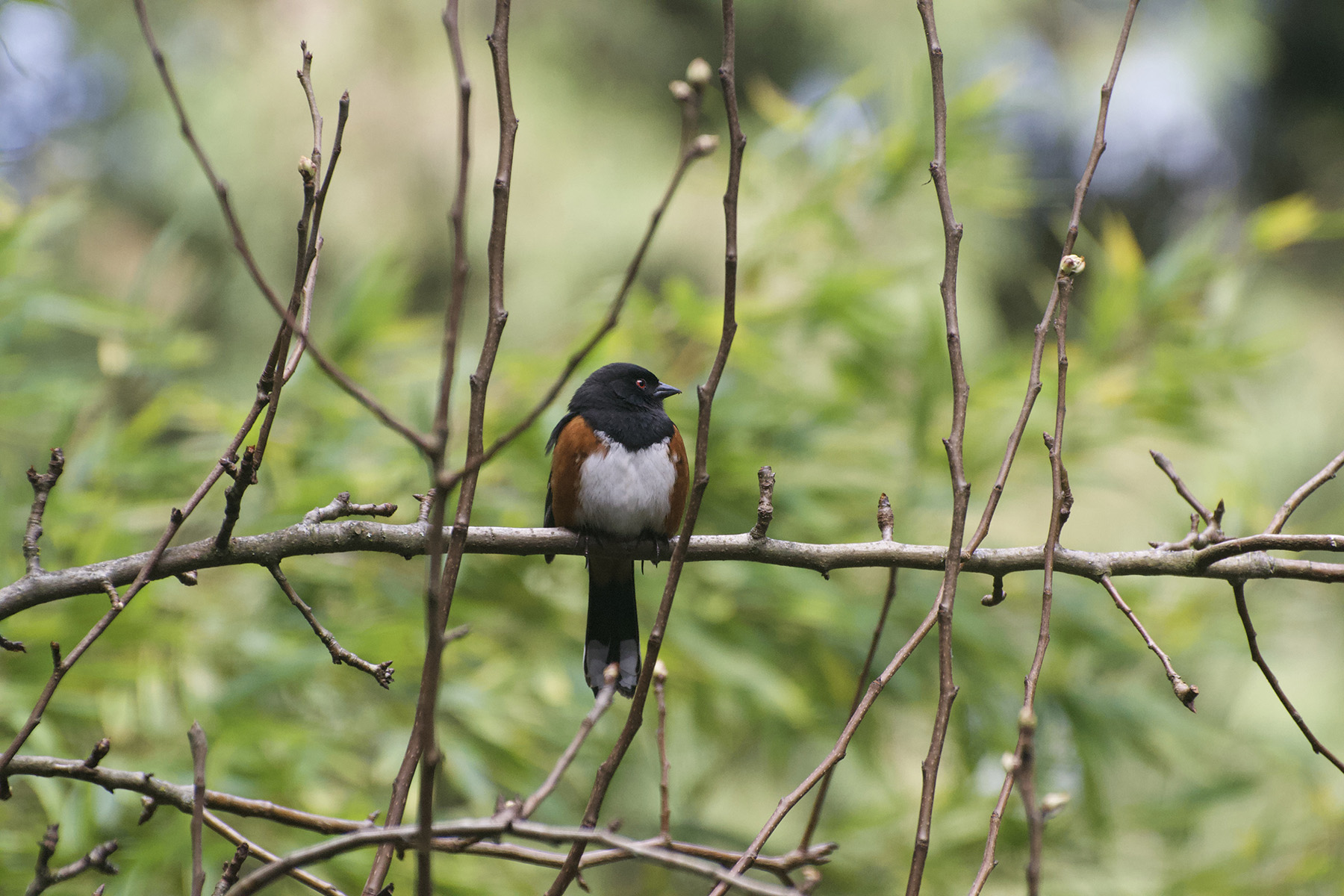
I spend a lot of hours these days in an easy chair facing a budding pear tree nestled in a tall bamboo hedge. Its branches provide perches for all kinds of small birds, sparrows and chickadees, juncos and bush tits who disappear into the shelter of the bamboo the second they sense some change.

They certainly scatter when the Rufus Towhee, depicted below, appears to lord it over them all, choosing the highest branch and admiring his own colorful feathers, turning slow circles, spreading his wings and generally pretending he owns the place. Except for one pesky little brown sparrow who won’t have it, starting low on the tree and hopping with fierce determination ever higher until he is in Rufus’ face who is stunned enough at the chutzpah that he flies off.

And since we are on a roll with the anthropomorphizing, let’s hear it for the story that came to mind as an analogy – having just picked it up a couple of days ago in my insatiable appetite for narratives about unusual individuals who defy constraints and expectations.

Meet Zamor, a Bangladeshi boy who, at age 11, was captured by British slave traders who trafficked him to France via Madagascar and sold him to Louis XVI. He gave the boy as a gift to his mistress, Madame du Barry. The countess, by her on words, used him as a plaything and invited courtiers to tease and ridicule her “little African.”

At first I looked upon him as a puppet or plaything, but… I became passionately fond of my little page, nor was the young urchin slow in perceiving the ascendancy he had gained over me, and, in the end… attained an incredible degree of insolence and effrontery.”

The boy craved and received education, devouring Rousseau and studying the classics. At the start of the French revolution he joined the Jacobins and became an office-bearer in the Committee of Public Safety. Using his influential position he got the police to arrest the Countess in 1792, who was released from jail on this round eventually. Further charges by Zamor who was done with a slave’s existence, led to her second arrest, trial and execution by guillotine. It is sort of tragic, given that the Countess was born out of wedlock to a working class mother, made her way out of poverty and up the social ladder as a hired prostitute in ever more aristocratic circles due to her uncommon beauty, and eventually ended up as the King’s courtesan, an association that doomed her during the revolution.

Not exactly a happy ending in the wings for Zamor either. He was arrested by the Girondins on suspicion of being an accomplice of the Countess and a Jacobin. Friends secured his release from prison and helped him to flee France, only for him to return to a life of poverty and premature death after the 1815 fall of Napoleon.

The lavish pretender at the top of the social ladder was brought down by a small Jacobin hooked on big ideas about inequality, social contracts and other tenets of enlightenment. Let’s hope the colorful Towhee and the assertive small rebel sparrow do not exactly reenact the ultimate fate of their counter-parts. Just getting things shaken at the top is joy enough.

Then again, the Heritage Foundation might not agree….

Here is Pola Negri as Madame du Barry in a 1919 silent movie directed by Ernst Lubitsch. Spectacular mass scenes. Alas, explanatory text in French and German only. Zamor is played by a Victor Janson, hmmmmm.

For a more short lived musical amusement – La Piaf in It’ll be fine…..

Trekvogels

The poem about migratory birds below was written at the end of World War II by one of the more prolific Flemish poets, Hubert van Herreweghen. Tricky translation – in the original the very last sentence really conveys that you should learn to love life or what is left of it. There was, with winter approaching, probably longing to follow the birds, away from the fields of Flanders, to a a warmer South, leaving the violence, the losses and serious hunger of those years behind.

MIGRATING BIRDS

The summer that has cheated us; 
the gloomy lesson autumn brings. 
Beneath the slow, high cumulus, 
I see a black bird fly across,
heading south with beating wings. 

The magical flight of the wild geese 
and cranes with their clamouring cries 
over the land like a golden fleece. 
Winter brings shadows, dark without cease, 
until a new journey fills up the skies. 

Vulnerable heart and senses in pain, 
There is no home, in east or west, 
where, landed, you’re not restless again. 
You must learn to love life, that’s plain, 
Or, anyway, to love the rest.

By Hubert van Herreweghen, translated by Paul Vincent

From: Verzamelde gedichten
Publisher: Orion, Bruges, 1977

I picked it as a bridge to one of my favorite clips of all time, my go-to when I need peacefulness.

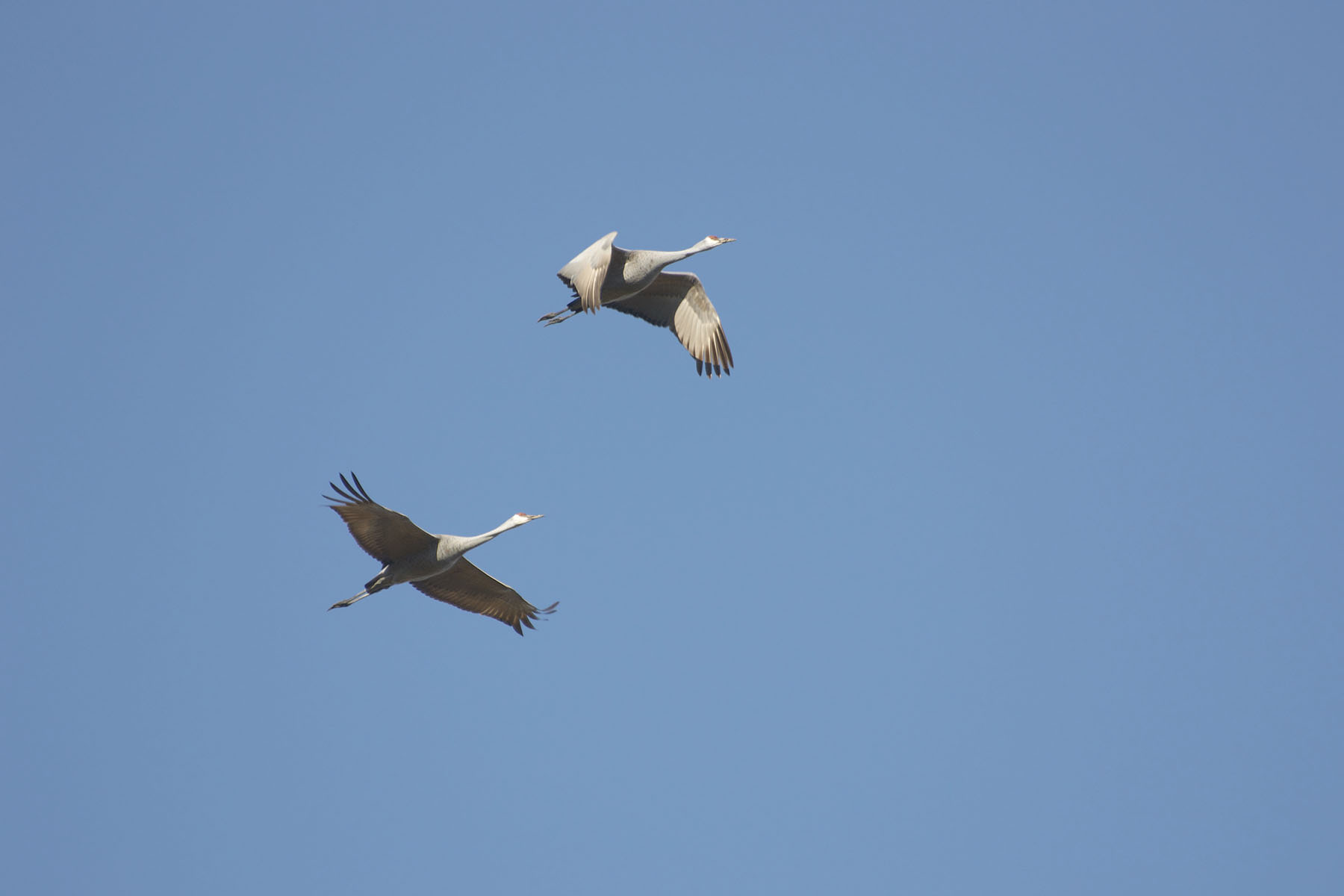
I photographed the migratory swans, geese and cranes this week on their journey in the opposite direction – going North to meet longer days, more light, the delights of mating and nesting season. No longing to follow them – in love with my home, that does exist here in the West, and loving life as always, no need to learn that. Magical flights, though, indeed.

Swans

Joys to be had then, this week. Attached to change, in nature and elsewhere. Grateful for the respite.

Geese soaring

TREKVOGELS

De zomer die ons heeft bedrogen; 
o weemoed die de herfst ons leert. 
Onder de wolken, trage en hoge, 
een zwarte vogel voor mijn ogen 
die naar het zuiden keert. 

Magische vlucht der wilde ganzen 
en kraanvogels met luid gekrijs 
over het land vol gouden glansen. 
Dan valt de schaduw die de ganse 
winter verduistert tot de nieuwe reis. 

Ontvankelijk hart, kwetsbare zinnen, 
er is geen honk in oost of west 
of gij zijt rusteloos, er binnen. 
Leert toch het leven te beminnen 
of wat er van het leven rest.

Music today comes from a vision of migratory destinations for swans. As you can imagine the whole cycle of Cantus Arcticus is a favorite of mine.

And these are about 1000 snow geese on a stop-over, that white strip on the horizon.

I dwell in possibility

Nothing you haven’t seen before, if you have followed this blog for a while. The same vistas, the same trees, the same kind of birds. A recurrent destination for my walks, Sauvies Island. And yet….

Yesterday, the light was moody. It felt like dawn had lingered into mid-morning, reluctant to leave to wherever dawn goes, a darker place perhaps.

The birds were moody. Resting one minute, then driven into the air by the hunters’ shots or a hungry raptor chasing their weakest links, no safety here.

Canada Geese, now staying year-round

Snow geese, on their migratory routes, in dire need of refueling and rest, where constantly erupting into their airy circling, feeling threatened.

The ducks were just trying to hide, making themselves small in the water.

The clouds were moody as well. Forming bulwark banks in some places, wispy sheets in others, breaking on occasion to remind us the sun still exists. Flecked and blue skies in alternation, until the rain came and washed the light into uniform grey.

The corn was moody. Late, dry stalks whispering when not drowned out by the cries of a thousand geese. Bordering on water that came too late in the year to be of use. Or maybe it was the hunters whispering in their corn-clad hide-outs.

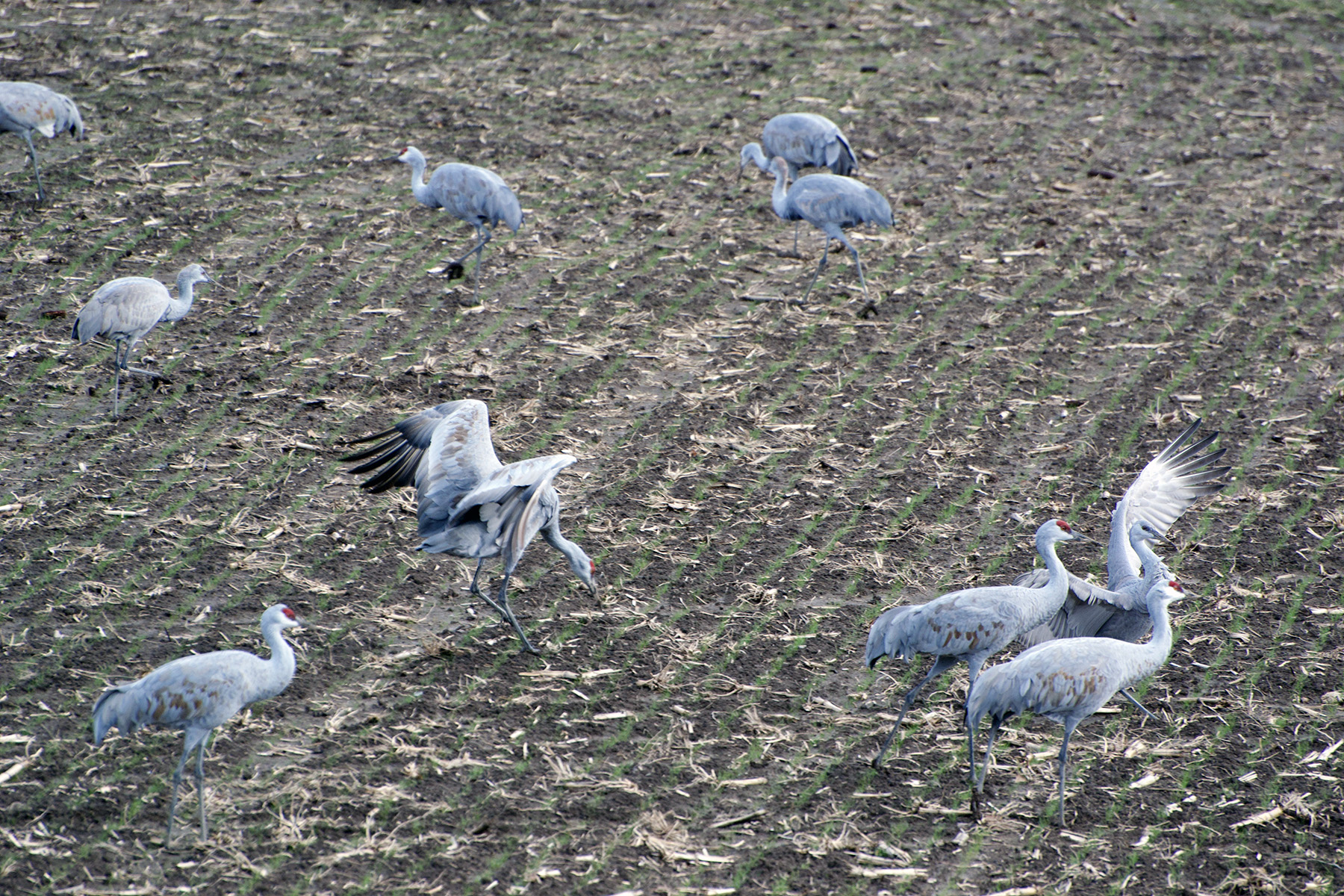
I was moody. But as always, nature soothed with magic. The sandhill cranes danced.

Each return to this ever changing place reminds me of possibility. I might not gather paradise, but at minimum a distraction. If lucky, a kind of peace that descends temporarily from that everlasting roof of a sky.

I dwell in Possibility

BY EMILY DICKINSON

I dwell in Possibility –
A fairer House than Prose –
More numerous of Windows –
Superior – for Doors –

Of Chambers as the Cedars –
Impregnable of eye –
And for an everlasting Roof
The Gambrels of the Sky –

Of Visitors – the fairest –
For Occupation – This –
The spreading wide my narrow Hands
To gather Paradise –

Might even spot some flying swans, reminding us of nature’s gift of transition.

Music today is Debussy‘s perfect capture of moody possibility.

Dreaming, while snared, of murmurations.

I have been working on a project that, once again, tries to express the feelings associated with our current predicament: longing for freedom of movement and togetherness with others while being forced into spatial isolation. (I wrote about my last one along those lines here.)

The most recent exploration was initiated by watching a clip about those eerie kinetic artists, starlings, swooping through air in energetic and coordinated murmurations. The freedom of movement combined with a sense of communal action seemed like the perfect symbol for all that we deprived of right now during (in)voluntary quarantine due to Covid-19.

Artists have, of course, taken an interest in starlings for centuries. A contemporary one is photographer Søren Solkær who has observed the flights for many years now and published the images in a series called Black Sun. It’s worth clicking on the link below (Colossal) to see a spread of what he captured, some etherial beauty of stark landscapes in addition to the murmurations.

This project has taken me back to the landscape of my childhood and youth in the marshlands of Southern Denmark. A place where as many as one million starlings gather in the spring and fall, prior to onwards migration, and set the stage for one of nature’s most spectacular phenomena. As the countless birds congregate in large murmurations before collectively settling in the reeds at dusk they put on an incredible show of collaboration and performance skills. And now and then, by the added drama of attacking birds of prey, the flock will unfold a breathtaking and veritable ballet of life or death. The starlings move as one unified organism that vigorously opposes any outside threat. A strong visual expression is created – like that of an ink drawing or a calligraphic brush stroke – asserting itself against the sky. Shapes and black lines of condensation form within the swarm, resembling waves of interference or mathematical abstractions written across the horizon. At times the flock seems to possess the cohesive power of super fluids, changing shape in an endless flux: From geometric to organic, from solid to fluid, from matter to ethereal, from reality to dream – an exchange in which real time ceases to exist and mythical time pervades. This is the moment I have attempted to capture – a fragment of eternity.

One of my favorite paintings of a young starling is by Dutch painter Jan Mankes (1889 – 1920) who, come to think of it, deserves his own YDP one of these days.

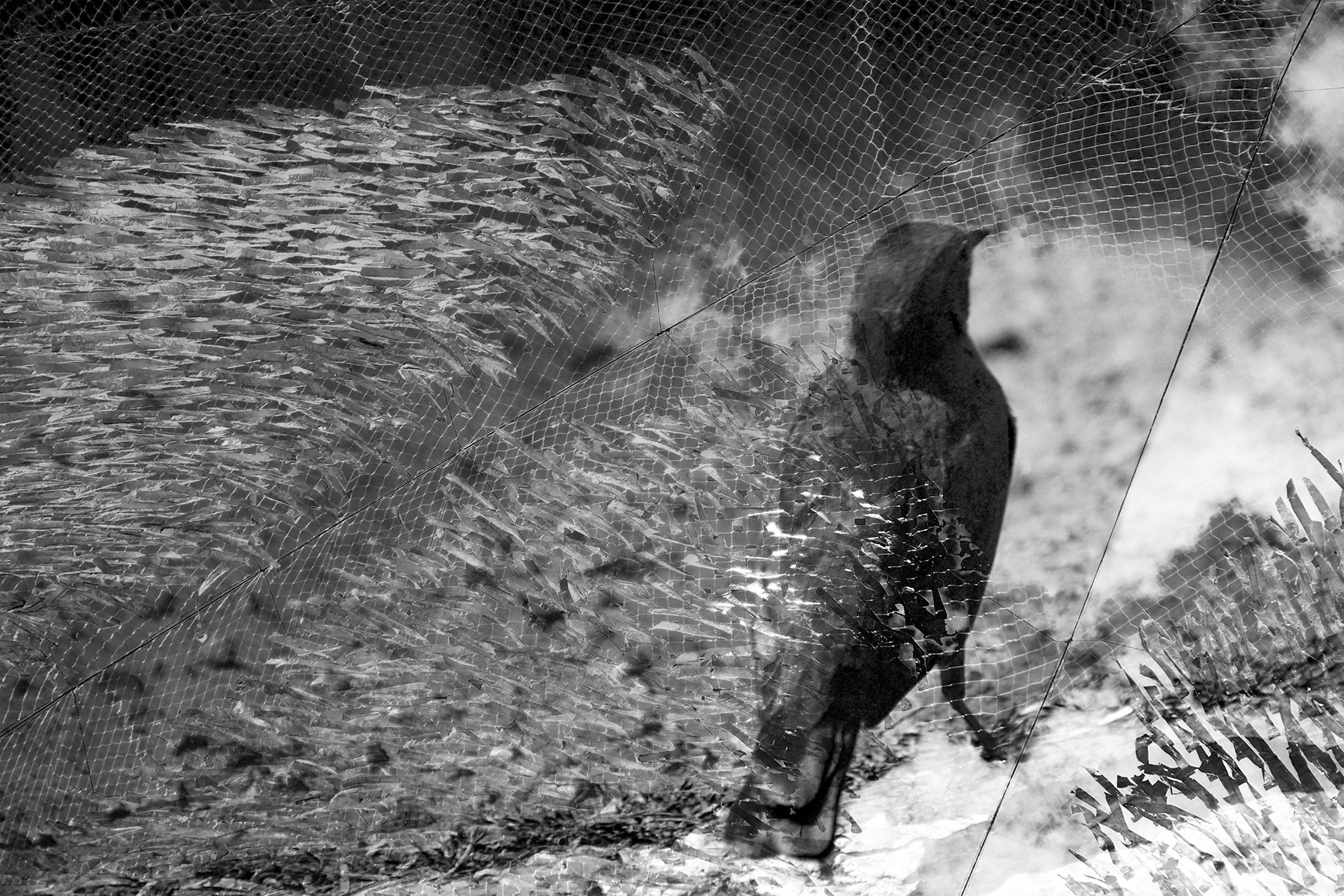
Starlings are often snared – they are perceived as a nuisance when they descend in great numbers onto cities, Rome being a case in point, where 5 million of them spend the entire winter before flying to Scandinavia to nest in spring. The city, no longer allowing nets, now has taken to releasing falcons to hunt them and places loudspeaker with starling distress calls and calls by other predatory birds near their roosting sites. Why such efforts, you wonder? In one word: Poopocalypse….. More than a nuisance are starlings at airports, endangering safety when they get caught in the jets of planes – Seattle’s airport SEA TAC catches over a thousand each year.

In any case, I had to combine, for my own Covid response purposes in my montages, a sense of being snared with a sense of symbolic murmuration. You tell me if the sentiment is adequately captured.

Music today is in honor of Mozart’s starling – a bird he held as a pet. Details on that in an interesting interview here. Apparently Mozart’s piece Musical Joke was part of their collaboration….

Mozart’s Musical Joke was completed very shortly after his starling died in 1787. And I’m not the first to make the connection between this starling and this piece of music. That was Meredith West in a 1990 piece for American Scientist magazine [co-written with Andrew King]. She noticed that musicians hated this piece because it made them sound really bad — a lot of disharmony, fractured phrases, very odd key changes. Finally, she noticed that if you overlaid some of the most disconcerting parts over the song of a starling, there are a lot of similarities. You find the same kind of fractured phrases and general playfulness.”

Birds of a Feather

Birds of a feather, and loners. Time to share some the birds that hopped or flew across my way while in San Francisco, or simply hung out to be admired.

Looking at them will be the easy part. Reading assignments for today, on the other hand, will involve some effort, one, I PROMISE, that will be highly rewarded. Not a coincidence that I am posting some of my favorite subjects – the birds – after a particularly depressing day given the travesty of the new Supreme Court appointment, and offer readings that will help us battle our despondent states. Or so I hope.

The two authors I picked are birds of a feather in some ways – progressive, politically engaged, extremely talented writers who tackle the pressing issues of our time. Smart women with a laser focus on the topics of their choice, the legal system in one case, women’s issues in the other, both within the context of the history of power distribution in our country.

Dahlia Litwick has a background in Law (she holds a JD from Stanford and clerked for the 9th circuit Court of Appeals) and writes for publication as diverse as Newsweek,  The New York Times Op-Ed page (as guest columnist) and Slate, where she is Senior editor. Her writing has developed over the years, becoming increasingly passionate, committed, but never shrill. Two years ago she received the prestigious Hillman Prize for Opinion and Analysis Journalism, deemed to be the best legal commentator in the last many decades. I could not agree more – I turn to her writing on a regular basis, both for the amount of information conveyed, the ease with which it enables me to digest complicated issues, and the cleverness of the way she creates concepts that feel intuitively like perfect descriptions of a given situation.

Case in point: Litwick’s latest essay talks about the mechanisms in which current power distributions both within the legal system and the political realm at large have been cemented and simultaneously used to make us willing participants in a move towards minority rule. If you don’t have the time or energy to read her short piece, here is one excerpt that exemplifies what I mean:

If nobody in any position of authority feels the need to provide information, it’s a decent bet you aren’t in a functional democracy anymore. And I am not here to tell you how to fight the cynicism that comes with being lied to or told you can’t change anything. I am just here to note that the inchoate rage and despair are real, and that even the possible resounding defeat of Lindsey Graham in his race for his Senate seat may not be enough to cure it. I am also here to remind you that some of the reflexive reaction to the daily reminders of your own powerlessness—including your possible hopelessness, blame-shifting, and the ritual saying of “who cares”—really is the reaction they are trying to elicit. It is the object of the exercise. You’re now in the autocracy trainee program. Mitch McConnell’s court coup is designed not just to decrease your political power but to teach you that you should expect yet more political powerlessness. That is how they are trying to ensure that even though there are more of you than there are of them, it doesn’t matter and they still get to call the shots.

Autocracy training program: the perfect encapsulation of the goal to keep the citizenry in check. As she points out eventually, though, it’s up to us to refuse hopelessness. There are ways to resist.

This is a point that is echoed in Rebecca Traister‘s writing as well, the second author I’d like to introduce today. In fact, her most recent book, Good and Mad: The Revolutionary Power of Women’s Anger is all about the ways of organizing resistance in these times. Writing for New York Magazine and its website The Cut, editing for Elle Magazine, and some years back interestingly also for the New Republic, Traister’s gift for analysis and her wit are equally sharp.

If you have time, DO read the attached article from yesterday’s The Cut. It is long, I know, and the real meat appears way into the description of all of the movements uniting to fight our slide into autocracy, not just the women’s movement. The author is at her best when she lays out the dangers and complications arising from the diverse strands of groups and ideologies who should, must unite to fight the onslaught onto our democracy. Her optimism is tempered by pessimism, which both reflects what so many of us are feeling, and also makes it hard reading because we are so brilliantly reminded of the mountains that need to be climbed, even if the election should produce a new and improved government.

Not to read these kinds of pieces, though, is exactly giving in to the danger that they point out: the fatigue, the helplessness, the retreat into passive lives. I know, I’m prodding. Yield already! Anyone who called on Obama to seat a judge on the US Supreme Court who is a cross between Rachel Maddow and Emma Goldman (in 2009 no less, anticipating what would eventually come true), is worth your time!

An owl. At dusk.

Crows, Pursued.

I have written about crows before, describing my fascination with and admiration for corvids.

New research results have the birds back on my mind, as did observing their antics during a short walk on the beach when the air cleared.

The newest neurobiological evidence claims that crows have a kind of consciousness previously believed to only exists in humans and macaque monkeys. Should we trust those claims? They are based on the the fact that the 1.5 billion neurons in a crow’s brain are architecturally arranged in similar ways as are our’s, and that they seem to fire in a similar manner to our’s when we consciously experience something or relate that we are experiencing something.

I am always weary of the “if it looks like a duck and it quacks like a duck, it must be a duck!” kind of arguments pursuing the quest to find ourselves in other forms of life. To equate forms of neuronal reactions to our human consciousness is a huge step; I would be much happier if people cautiously formulated that along a continuum of reacting to a stimulus directly on one end to having thoughts about one’s reaction, or being aware of one’s thoughts on the other end of the scale, some biological entities approach us more closely than others, but all in degrees.

There is no question that corvids are extremely smart, but why insist that their experience is the same as ours, when you are a scientist? Let’s leave that to the poets. And none has done a better job of pursuing crows as conscious, questing heroes than Ted Hughes in his book Crow, From the Life and Songs of a Crow (1970.) Recovering from the loss of his wife through suicide, he responded to the American artist Leonard Baskin’s request to write a collection that would complement Baskin’s crow-focussed artwork.

Crow, born from a nightmare in the story, is an ultimately inadequate hero on a quest. Lots of mythological and folkloric tidbits are woven into the narrative, and this little hero is very much like a traditional trickster, challenging, funny, amoral, sometimes destructive and always sharp.

Here is one of Hughes’ poems that fits perfectly with my recent observations of crows (and brought home how many birds I am sorely missing) at the edge of the ocean:

Aware of their thoughts or not, they sure know how to survive, and seem to have fun while at it. My kind of model!

Music today was inspired by Hughes’ book – the piece by Benjamin Dwyer is called Crow’s Vanity. For a bit more cheerful enjoyment let’s have Charlie Parker guide us into the weekend with Ornithology.