Browsing Category

Movies

Let’s Talk About Ghosts.

Really? Talk about ghosts? What kind of ghosts? There are no ghosts!

Of course there are no ghosts. I use the term metaphorically, to talk about intrusions into our consciousness, or the realms close to it, like dreams, or inklings, or vague memories. But there are also representations of ghosts used by artists to get a point across that would be hard to convey otherwise.

This brings me to three films that I watched across the last weeks, with nods to ghosts as an artistic tool in two of them, and my own private “ghosts” being triggered by the third.

The latter, The Perfect Lie, is psychodrama disguised as a murder mystery. Good entertainment, if you go for that sort of stuff (as I do.) The other two, My Sad Dead and The Sound of Falling (In die Sonne schauen) are something altogether different. Both are immeasurably cruel and gory in images and message, and will linger in your head for months to come. The best – and paradoxically most beautiful – cinematography I have seen in a long time. Heartbreaking, as a package.

Why am I writing these reviews? I guess to consolidate my thoughts and get them out of my system. My prediction is that most of my readers will not want to expose themselves to fare that is violent and painful. But for the few who might, you will be amply rewarded. There is something about being in the presence of true art and hard questions that cannot be found anywhere else, and might change how you think about things.

***

The Perfect Lie is one of those typical slick Netflix productions that showcase the filthy rich having the same problems as us average mortals. (“See, the rich suffer too, no need to be envious of them…”)

Sex, drugs, partying and consumerism cannot hide the rot underneath, which eventually leads to the fiery death of one partner and the attempted murder of another in a tight group of four couples. The WHODUNNIT ensues, with each episode being told from the point of view of the remaining participants. No spoiler alert on my part – it is unclear how it ends for at least one of the victims, since Season 2 is waiting in the wings….

Why did I watch glitzy fare like that? It was filmed in a small village at the Dutch North Sea, a place where I spent my childhood summers. At that time it was still a sleepy artist colony, just opening up to tourism. Wide, sandy beaches, dunes and conifer forests that were protected as National Park, endless opportunity to be outside, play with other kids without curfew and eat lots of french fries and ice cream. Bliss, on the surface of it.

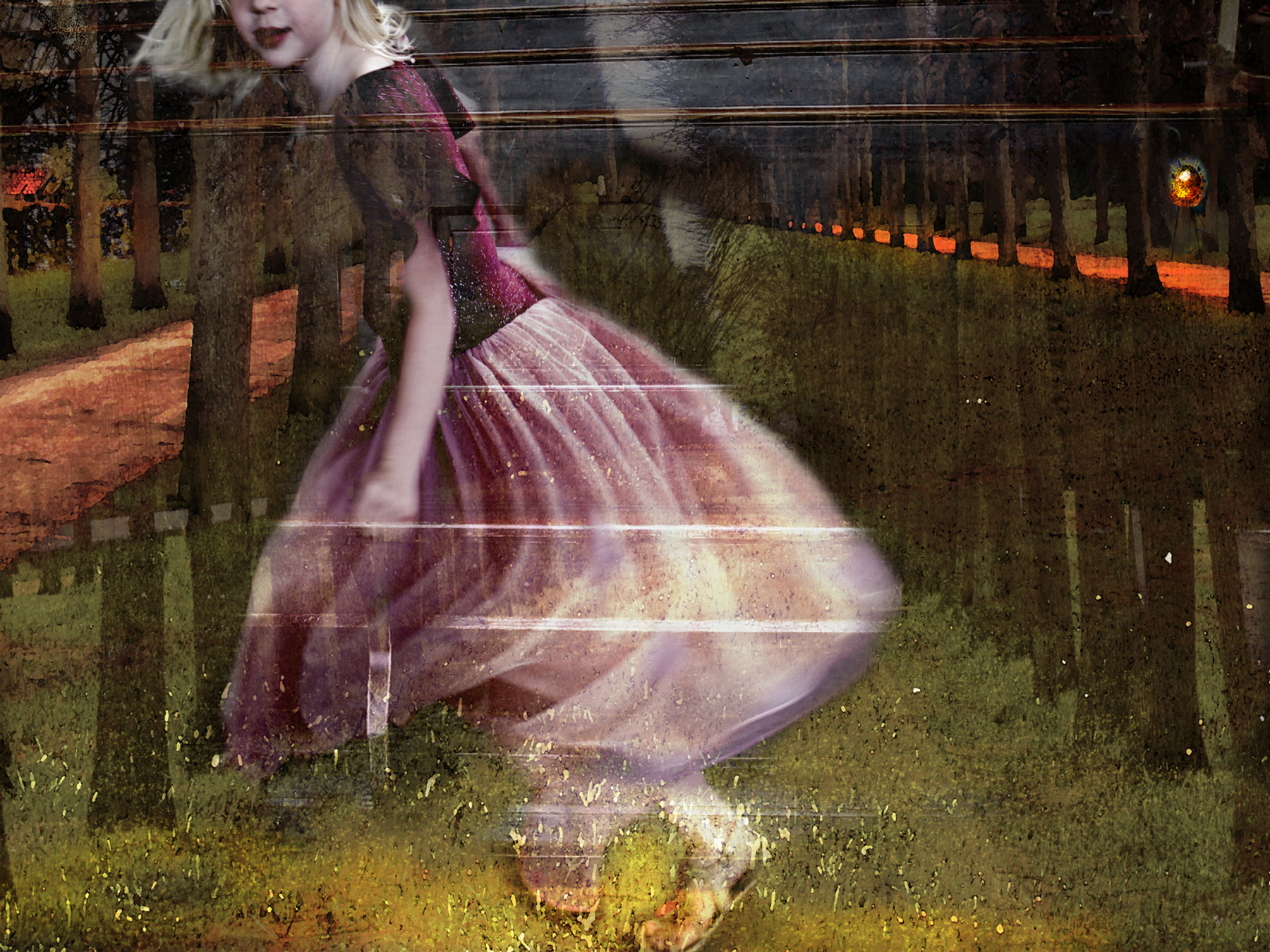
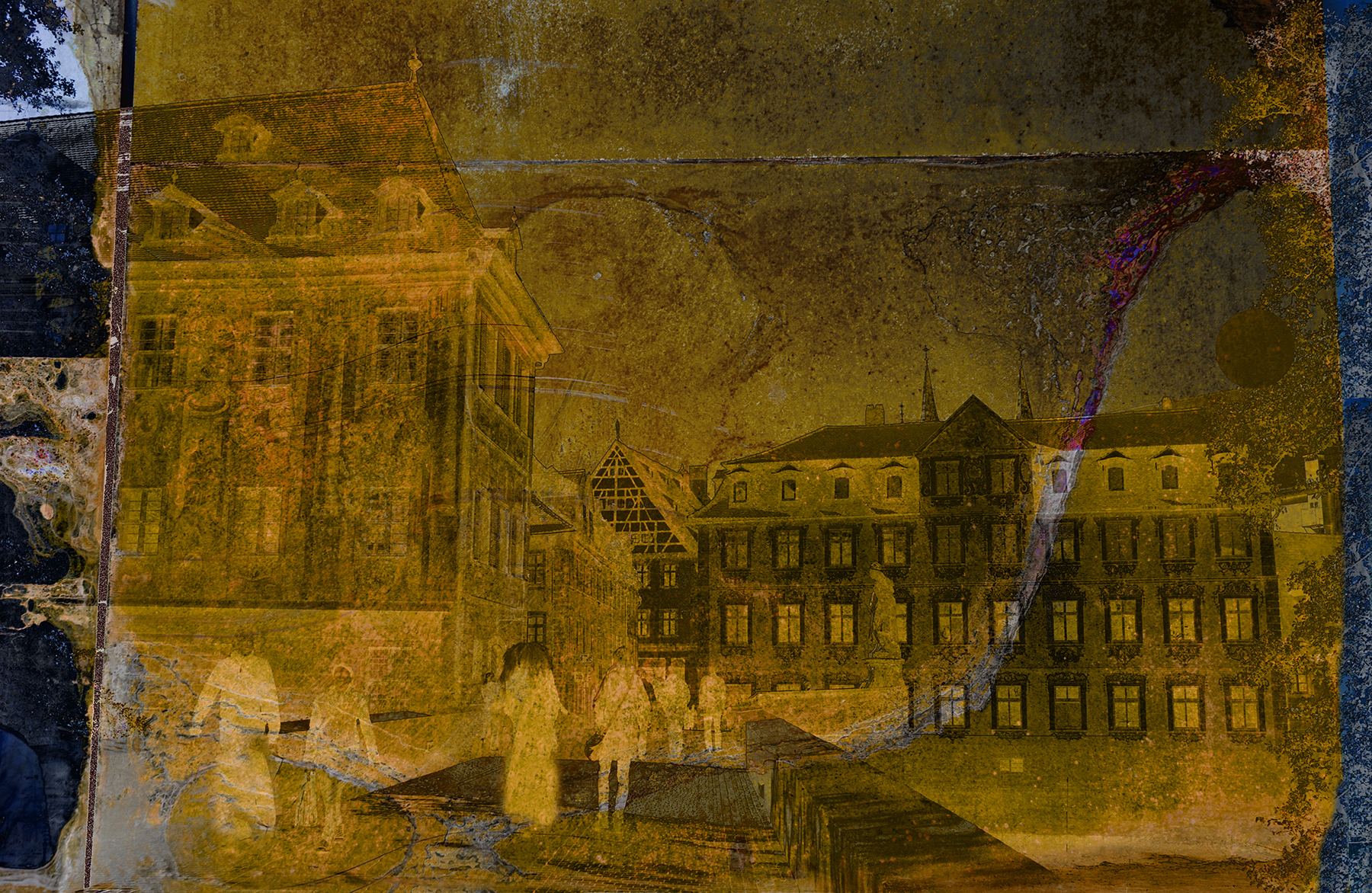
Friderike Heuer Mirage (2017) (Series: The Refugees’ Dreams) Dune Villa photographed in Bergen aan Zee, the site of the film.

I have been back there a few times as an adult, the last time almost a decade ago. It was just for short visits with family, centered on strolling the lanes, walking on the beach, the occasional short hike through the dunes. The film captures wide swaths of the landscape with a lot of drone footage, including landmark buildings that stand as strong as they did in 1959. The distinct (often stark) nature of the area is poignantly depicted.

Did those images ever trigger the ghosts in the machine. So many emotions flooded to the surface, crowding out any rational reactions in my mind. These summers were the first time when I sensed that something was wrong, observed adults being crippled and fragile, not just strong, protective parents. Could not put any name to it yet – the notion of the damage WW II had induced, including perpetual PTSD, came along much later in my young adult years. The core message of the film, that constant adult lying or subterfuge provokes unease and confusion (and eventually catastrophe), perfectly mirrored the state of this 7-year-old trying to make sense of a world that was volatile.

For anyone else watching this series as just another glimpse into European regions and lifestyles, it might be a perfectly entertaining romp.

Friderike Heuer Ghosts (2017) (Series: The Refugees’ Dreams) Landscape photographed in Bergen aan Zee, the site of the film.

***

Spoiler Alerts

“Real” ghosts populate the screen in My Sad Dead, another Netflix production of a very different kind. Directed by Pablo Larrain and filmed by Sergio Armstrong, it is closer to an arthouse movie with social criticism at its core and political analysis on the side lines. If that sounds like an intellectual construct – it is not. It is an emotional, empathetic art work that captures some essential parts of what it means to be human in our own times. Based on a selection of short stories by Mariana Enriquez, the series introduces a 60-year-old doctor living in Buenos Aires, who has been able to see and talk to the dead since she was a child. The viewer also sees these ghosts behind slightly obfuscating veils. They are not happy or complacent, but relive the painful moments of their deaths, exposing the doctor (and us) to their constant agony.

Friderike Heuer What’s Left Behind (2017) (Series: The Refugees’ Dreams)

Bit by bit, we learn that Ema lost her hospital job after having engaged in triage of patients during Covid, letting some die to help others with better survival chances to get access to the oxygen tanks. We realize that her fraught relationship with her daughter who seems as lonely and isolated as the mother, has partially to do with the daughter’s participation in a lethal overdose of her boyfriend. And we meet her estranged sister who visits from far away Oregon with her family. She is bringing her daughter for medical treatment, available for free in Argentina. The young woman is morbidly obese and deemed mentally ill because she, too, sees ghosts, and has a circle of close friends among them, with all continuously engaging in noisy group sex. (Yes, we see that too, if we can bring ourselves to watch, confronting our own body image prejudices.)

Ema intermittently lives in the house of her mother who recently died, in a suburban neighborhood surrounded by projects that teem with poverty and crime, leading the middle-class neighbors to embrace ever more fascistic means to defend themselves. (Historical references to Argentina’s past and presently rising fascism, including neighborhood brownshirts, abound.) Ema’s niece escapes her psychiatric confinement and chooses to end her life in a water tower that supplies the entire neighborhood. Her mother abandons her, even in death, pretending she is still alive, insisting that she cannot handle abnormality, or deviation from body norms, literally striking her very memory from her life and fleeing the country.

Soon everyone can hear the cries of the dead after having consumed the water, and the doctor is constantly called to quiet them down and send them away. The eager demand of her extraordinary skill turns into a witch hunt when it becomes clear that it was her niece who contaminated the water. The menacing mood is amplified by spectacular cinematography that focusses on the hostile architecture of the projects and industrial sites in muddled grey and browns. But it also circles back over and over to the clear, determined, unflappable face of the doctor, who just dons her bright blue scarf and brings peace to the ghosts as well as her neighbors.

Friderike Heuer Border Crossings (2017) (Series: The Refugees’ Dreams)

In the end she and her daughter sit with the now happy ghosts of her niece and her mother contentedly around the dinner table, having an ordinary meal. Almost like a reminder that if you acknowledge the suffering brought on by horrible societal forces and don’t avert your gaze, courageously engage in some form of remediation, you will not be haunted by instantiated memories.

No didacticism detected. Just a subtle underlying narrative that reminds us of the possibility (and the rewards) of being an ethical human being, even under oppressive circumstances, forced gender roles and class divisions.

***

The Sound of Falling (In die Sonne schauen) is a German film directed by Mascha Schilinski with Fabian Gamper behind the camera. It won the Jury Prize in Cannes in 2025, the year of its release, and was nominated for multiple categories at the Oscars. I have now watched it multiple times and am still uncertain how the filmmakers pulled it off: they tell a coherent story with the use of mosaic-like snippets, both visually and thematically, that follow no straight time line. The film involve endless characters that contribute to the narrative unfolding in ways that are almost undetectable at first viewing, many of them children filmed in a way that we see the world – literally – from their eye level.

Set on an old farmstead in the East of Germany (in the state that just voted for right-wing extremist AfD), the film follows the fate of four girls and their families across a century, starting in the years before WW I, and ending in our own time. Even though there are no actual ghosts depicted, the framing and jumps across time in the same location – the kitchen, the house, the hayloft, the river that eventually divides East from West Germany – leads to a sense that the remnants of previous lives and deaths are contained in the material world. The walls, the hallways, the underwater current in the river all affect subsequent generations, united by the only escape open to them from suffocating and violent fates – a willing encounter with death.

Although the theme as it unfolds has to do with how women are subjugated, sexually abused, shamed and silenced, the film starts with a reminder that men were not exempt from harm – the oldest son of the farm is mutilated by his parents to escape being drafted for WW I. A small boy is unceremoniously lying in state in a barn with other children playing around him without inhibition – death being part of their lives. We meet little Alma who discovers a photograph of her look-alike sister, also named Alma and long gone. She worries she will be next, but it is one of her older sisters who takes her own life by jumping off a rolling hay wagon. She was “traded”as a farm girl to a neighboring farmer who had sustained her family after a bad harvest. These farm girls were forcibly sterilized – historical fact – so that they could be sexually used by any of the male farmhands without getting pregnant, which would have interrupted their ability to provide hard labor. Alma’s sister cannot live, literally, facing that fate.

Also historical fact was that many women of the next generation, now in the 1940s shortly before the end of WW II, went in groups into the rivers. Laden with stones, they drowned themselves, to avoid being raped by the incoming Russian army. Erika is among them. Her sister survived, never to be mentally intact again or able to protect her own daughter, Angelika. A teenager in the 1980s, she is sexually abused by her uncle and harassed by her cousin. We last see her like a ghost on a family photograph before she left the farm – it remains unclear if she swam through the mined river towards freedom (there was prior information that she was a very strong swimmer) or if she, too, drowned herself. She is never heard from again.

The last views of farm and river come through the eyes of a young teen, Lenka, who grapples with growing up under the leering eye of adult males. Her parents and a younger sister all moved out from Berlin to renovate the now empty farm, with the mother destroying precious tiled ovens with a pickax and a degree of fury that you wonder what she will do next. Lenka’s younger sister Nelly is plagued by nightmares and anxiety, and eventually climbs the height of the hay barn to tumble to her death, ambiguously shown in ways that could be either intentional or accidental.

Friderike Heuer Shelter (2017) (Series: The Refugees’ Dreams)

The German title of the film is Looking into the sun. What happens when you look into the sun? You are blinded. Are we the ones blinded? Blinded to cruel undercurrents when the imagery we see is incredible beautiful? Willingly ignorant of the fact that nothing much has changed across a century when it comes to the victimization of women? Blind to the reality that life was cruel, when we are yearning for the so-called good old times? Grateful for blinders that protect us from the eerie possibility that place contains traces of memory independent of rememberers (a question the filmmakers asked themselves)? The film successfully rips those blinders off, exposing us to what we so very much don’t want to see.

The English title, The Sound of Falling, elicits some speculation as well. There is very little sound in the film, other than music. Few lines are spoken, some of them in a language (a version of low German) that practically no longer exists, and so is incomprehensible. And you don’t hear the impact of the various falls, much less any sound in the process of the falling. Have we closed our ears, as well as our eyes, to suffering? These are sounds that cannot be imagined, un-real – just like ghosts. What haunts us here, though, is not ghosts but an inescapable co-experiencing of people’s lives, people who had no real means of escape.

Haunting, indeed.

The Wave

Four years ago I wrote a post about disaster porn, contemplating how we react to disaster movies and how we are prepared by them for what is happening in real life. It was one of my most clicked posts of all times – the word porn must have had a magnetic effect… – but I doubt that it was one of the most read ones, given its analytical rather than pornographic content.

I had meant to get back to the topic after watching a wildly successful Norwegian disaster film from 2016, The Wave, that eerily sketches a scenario we have now observed in real life. A mountain crumbling (in Nepal and Tibet a glacier melting that led to tectonic shifts and a rockslide), causing a catastrophic movement of water, a mudslide in real life, a tsunami in the movie. The unstoppable wave took everything in its path.

What happened in the Himalayas is in detail described here by folks who monitor and assess geological risks. Nepal is calling for climate compensation, as a moral obligation for India, China and the US who are world’s top industrial emitters of carbon dioxide. Their acceleration of climate change makes countries who are far less contributing to the world’s warming far more likely to be harmed by its effects. Thousands have died in the August Rasuwa flood, and more than 6000 are still missing. That is not counting all those who were physically harmed, or the loss of possession, physical structures, and economic disruption.

The disaster movie keeps us in the dark about how many people were killed by the environmental catastrophe. It focuses on human connections – on heroic people and people less so, who happen to meet “just ends” for their failures. The film is overall splendidly done, visually enticing, at the right level of narrative speed, some real scary action shots, sympathetic and talented actors

It drove me nuts, though, in its function to seed thoughts that good people, those you identify with from the beginning, almost always survive. Minimal outline: smart scientist and his family about to leave a touristy village where he worked in risk assessment as a geologist. He senses something is wrong when his team ignores data, partially afraid that a false alarm might disturb the village’s summer income from all those visitors. When the intuited catastrophe hits, he and his 7 year-old daughter miraculously survive the tsunami. Much focus on communal mutual aid during the escape scenes, and one or another peripheral character dies. Hero’s wife and their older son are trapped in the bomb shelter of the hotel where she works. He goes in to rescue them – after some drama, happy ending for the nuclear family.

The message here? If only they had heeded the warning, more could have escaped. (Wake-up call: in real life, those warnings often don’t exist, or the means to distribute them are absent, or escape routes are unavailable.) Catastrophes occur, but there will always be survivors! (This is true, but gives the false hope that you must be among them, through identification with the narrators through whose eyes you see the story unfold.) Good guys get rewarded, bad guys get their just desserts. (Not how life works.) Each one of those messages undermines our willingness to tackle the causes of disaster, climate change in particular, before it is too late.

***

Well, today’s focus is now on an entirely different wave, a destructive force of a different kind. A small German state had an election yesterday, with almost 78% of the voters casting a ballot (up from 60% 4 years ago.) The right-wing extremist party AfD (Alternative for Deutschland) got almost 44% of the vote, 3 seats short of a majority government in that state. For the remaining parties to be able to gain the majority for governing, all 5 would have to unite, which is incomprehensible given their ideologically differences.

It was a shock, if not a surprise. The most conservative party that currently leads the country with chancellor Merz, got absolutely trashed, despite their political maneuvering of adapting to, if not plain adopting some of the topics of AfD during the election campaigns, with ever increasing hatred towards immigrants and culturally “woke” populations. Calls for a prohibition of the AfD were ignored or seen as counter productive.

Here is the deal: In contrast to the United States, Germany has restrictions of what people can say and do, if those things undermine the democratic constituents of our legal order, endanger democracy itself. This was the hard won lesson from having succumbed to fascism (with Sachsen Anhalt, that same state, by the way, also electing the Nazis with 44% in 1933.) Never again was written all over these constitutional restrictions. In fact, people tried to prohibit a Nazi-aligned party, the NPD, under these guidelines, which the German Constitutional Court (our Supreme Court) denied. The core idea is that we cannot allow a majority vote for something that in turn establishes anti-democratic rule, no matter how many people buy into the authoritarian ideology and would be happy to give up their democratic rights if only their other needs – economic, psychological, tribal – are met.

I will attempt to describe the AfD party program in detail in my next blog, including their false promises and their copycat talking points containing Nazi benchmarks. I’ll also try to understand why so many people contributed to this brown wave, in a country that lived through the horrors of the first one, not so long ago. For now, I just need respond to the many messages I got last night, with people wondering about the parallels between here and there, the seeming rise of an authoritarian Right across the globe, now in a country that, of all of them, should know better.

Music today by Telemann who was born in what is today Sachsen Anhalt.

Here is a Poem for my German readers –

Bei Hitlers brennt noch Licht.
Es ist nie ganz erloschen,
nur eine kurze, ruhige Zeit war’s Fenster fest verschlossen.
Nur ab und zu, ganz schüchtern fast, kaum hörbar, ein Gewisper…
Man nahm’s kaum wahr und dachte sich: „Was soll’s? Da ist noch Licht an.“
Bei Hitlers brennt noch Licht – Jetzt treten sie ans Fenster.
Jetzt sieht man sie, jetzt hört man sie …
das sind keine Gespenster.
Ganz stolz und lautstark steh’n sie da, entzünden und krakeelen.
Und ihre Drohung ist ganz klar: „WIR GEHEN WIEDER WÄHLEN!“
Bei Hitlers brennt noch Licht.
Vernunft wo bist Du? Wo?
Komm‘ raus und hilf … und schalt‘ es aus.
… sonst brennt es lichterloh.

Simon Pearce or Erich Kästner – debates about origins….

I’ll take it all.

Instructions on Not Giving Up

 
More than the fuchsia funnels breaking out
of the crabapple tree, more than the neighbor’s
almost obscene display of cherry limbs shoving
their cotton candy-colored blossoms to the slate
sky of Spring rains, it’s the greening of the trees
that really gets to me. When all the shock of white
and taffy, the world’s baubles and trinkets, leave
the pavement strewn with the confetti of aftermath,
the leaves come. Patient, plodding, a green skin
growing over whatever winter did to us, a return
to the strange idea of continuous living despite
the mess of us, the hurt, the empty. Fine then,
I’ll take it, the tree seems to say, a new slick leaf
unfurling like a fist to an open palm, I’ll take it all.

by Ada Limón


The greening of the trees? Really the greening of everything else as well. Whether you look up or down, the sheer saturation and brightness of every plant is the cheeriest sight imaginable. Verdant renewal.

I’ll take it all, as well.

The weeds in my garden, alas, are growing faster than everything else, and so I will make it short here today, so I can go out there and tackle them, ruthlessly.

Three recommendations for things to watch (and I might have recommended one already, if so, blame the repetition on an aging brain.

A Canadian series on Amazon Prime or Hulu, Coroner, (not The Coroner), is a police procedural from Toronto, tackling relevant contemporary themes, from racism, houselessness, queerness, military PTSD, tribal issues to the lure of cults, with a surprising amount of candor and criticism. It centers around the family story of said coroner, her father battling dementia, her gay son, and a mother who abandoned her as a child. Every time it threatens to veer into soap opera territory it rescues itself, and the cast is the most diverse cast I have seen on TV in a long time. The only downer were the last episodes of the last season, which didn’t know how to rap up, featured some deus-ex-machina concoction and a somewhat pathetic ending in the true meaning of the word pathos. Overall intelligent entertainment.

And speaking of racism, here is an astounding film capturing its essence. Black Girl is not for the faint of heart, it is enraging and very sad, but a masterpiece, created by Ousmane Sembène in 1966 to expose French Colonialism. For anyone keen on classic art films, do not miss it.

My last suggestion might be the one mentioned before: the eternally long and equally important documentary that partially explains America today as written up in this Atlantic essay. The link provided by the Atlantic does not work. Here is one I found that shows the full running time of The Sorrow and the Pity. Yes, 4 hours of your life, but none better spent. Marcel Ophuls made this film about the collaboration between the Vichy government and Nazi Germany during World War II. He uses interviews with a German officer, collaborators, and resistance fighters from Clermont-Ferrand. They comment on the nature of and reasons for collaboration, including antisemitism, Anglophobia, fear of Bolsheviks and Soviet invasion, and the desire for power.

Yes, deep into the weeds of politics. I, on the other hand, will be deep into the weeds of my garden, momentarily.

For today I feel like traditional Senegalese music, in honor of the Black Girl.

Mars on my Mind.

Well, well, well. Mars plans scuttled, with new attention instead directed to the moon by Musk, or so I hear. Another failed prediction, and waste of a perfectly abominable T-shirt he wore the day when leaving DOGE in the dust.

Mars-related thoughts, though, were mostly triggered by a Japanese mini series currently on Prime, Queen of Mars. It provided the appropriate level of distraction for a head-cold addled brain and a body that did not leave the house for days. I don’t know how they pull it off every single time, but Japanese Sci-Fi productions just have me cheering.

Beautiful people, serious method acting; broken families, families reunited! Good guys, bad guys, in-between guys shifting allegiances. Bad guys clearly labeled by looks – the military alone composed of star troopers, German Nazi lieutenants, an officer inexplicably looking like Ursula the sea witch in The Little Mermaid. Good guys win – yeah. Happy Ends rule! Mysterious objects appearing and disappearing, supernatural phenomena backed by some crafty AI visuals. Science rules!

The plot is perfectly commensurate with brain fog (spoiler alert!)

100 years from now, Mars has been colonized for 40 years, to extract valuable minerals. Profit rules! Now holding some 100.000 inhabitants, economically presented in the film by some 45 extras in changing costumes, the planet is governed by the Interplanetary Space Agency.

Plucky group of early settlers resists the organization’s attempts to repatriate them to Earth – Mars is their home! They also refuse requirements of machine-human interphases, not having surveillance tags implanted in hands and communication devices in foreheads. Young blind heroine gets kidnapped by profusely apologetic settlers to stop repatriation, then joins their cause.

Evil head of Space Agency, accepting bribes of mining companies and other extraction forces, has more than repatriation plans. Power rules! She wants to explode the planet to create an environment with atmosphere and water in 1000 years (Long-termism rules!), doomed remaining settlers be damned.

Feisty combo of two aging scientists and two young lovers separated by 140 million miles use mysterious objects to expose the rot at the core of the agency. Along the way we are advised we should take risks for science, not be afraid of the unknown and listen to the calls from the Universe. Curiosity rules!

The series was adapted from an original novel commissioned from sci-fi writer Satoshi Ogawa and created by Japan’s Broadcasting Corporation (NHK) in commemoration of its 100th anniversary. The narrative core, then, rests on communication, radio waves, and celebrates the underground neighborhood radio station that helps our protesting settlers topple the surveillance state. Radio rules!

They play with interesting concepts associated with communication – everyone in the movie speaks a different language, simultaneously translated by either embedded or clipped-on devices, a veritable cave of Babel, given the subterranean Martian accommodations. Subtitles rule!

Communication between Earth and Mars has a 10 minute time lag in 2125, originally. So how do you converse if it’s never “with” each other? The blind heroine has acute hearing to compensate for visual deprivation, important to the plot. And eventually we discover the value of interplanetary exploration by some means of echolocation….. A paean to auditory power.

Truth be told, these were three hours of my life well spent – there was something endearing, amusing, and at times thought provoking to this series. It makes a clear case for what is ethically and morally right – oh, do we need those reminders in our time – without being patronizing. The cinematography is beautiful in its own right. The film never yields to the temptation to speed up to move the plot along, but allows lingering. Very much recommend.

***

The broadcast I am really longing for, however, does not yet exist: a full recording of Jennifer Walshes new opera about the take-over of Mars by toxic tech bros, as experienced by an all female astronaut team on a mission to Mars. Here is the trailer. The themes cover some of the same ground as the Japanese mini series. As the composer declares: “when we talk about Mars we are talking about ourselves – about our ideas of the future, and about the operations of power in the present.” She refers back to the likes of Peter Thiel  who told the New York Times: “Mars is supposed to be more than a science project. It’s … a political project.” Consequently the opera explores the reaction of these 4 women astronauts to “isolation, sinister ideologies, the prospect of alien life and a vibe shift toward corporate authoritarianism,” when the tech bros take over (Ref.)

Apparently the women are able to overcome a bleak future with hopeful, defiant and, importantly, collective resistance. Although it would have been easier if they had not mistakenly taken with them the wrong on-board entertainment compilation. For nine long months all they have is Shrek the Third and a few seasons of The Real Housewives of Beverly Hills…

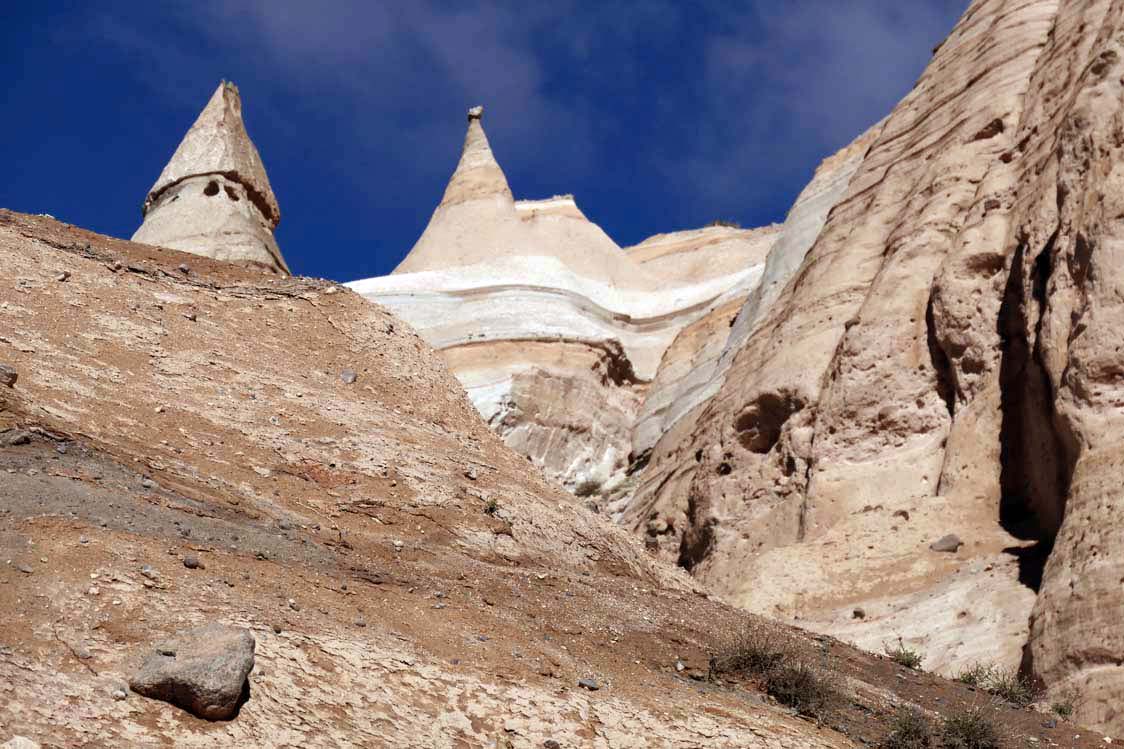
Who needs Mars when I was able to hike in New Mexico? Photographs today from Kasha-Katuwe Tent Rocks National Park. As close to Mars as I’ll ever come.

Music a nod to sensitive listening skills and subsequent translations into different auditory configurations; a wonderful new album by the Vision String Quartet, which really should be named the Listening String Quartet. In the Fields is inspired by Bela Bartok’s Fourth String Quartet, but adds experimentation on Ravel and Dvorak, among others.

Leave mothers alone!

Here is the good news: you can keep the popcorn in the cupboards and avoid empty calories if you don’t watch the Korean and Dutch movies I’ll introduce today. However, both cinematic explorations under review have brain power and pretty amazing visuals. If you are a fan of disaster movies, science fiction films or mysteries, as I am, you’ll be riveted.

Here is the bad news: you will need a lot of buttered popcorn to erase a bad aftertaste left by watching the movies under discussion. Both delve deeply into psychological issues using women as projection screens of stereotypical, often misogynistic concepts, centered on versions of manipulative women and bad mothers. Sufficiently warned?

Alice Neel Mother and Child (1982)

SPOILER ALERT! I will reveal plots.

I turned to The Great Flood on Netflix without any prior knowledge, simply because I saw it was a Korean film; they are known for excellent apocalyptic movies. I find disaster porn to be the perfect distraction from real life affairs since they remind me that things could be worse, and usually have a happy ending for a select few. We can dream of being the lucky ones!

The story unfolds in the predictable manner; some catastrophic weather event (asteroid melts arctic – buy that!), sets all of Seoul under water; heroine plus child live in a 30 stories apartment building, stratified along class lines, inhabitants now jamming the stairways to get to safety. A male figure appears, half threat, half protector, to guide her and child to a helicopter waiting for them on the roof. It turns out she is the remaining lead researcher in a secret UN project. They are trying to develop AI programs intent on preserving humanity’s emotional tool bag for whatever comes after humanity gets wiped out. Without her being rescued the program is doomed. Along the way she encounters massive challenges, physically and morally, revealing herself to be a tough cookie and originally not particularly attached mother.

Suddenly the film switches gears, and it turns out (for all I could decipher, since there are enough plot holes to drive a truck through,) that she volunteered to be a subject in the data extraction of human emotions for her research project. Looks like it to me, though, that the extracting powers are not interested in human emotions per se, but the shaping of emotions deemed appropriate for a good mother. She finds herself in a time loop, going through thousands of simulations of the same disaster scenario, (conveniently indicated by the changing numbers on her t-shirt for the dull viewer), finding “better” ways to handle ethical dilemmas in order to reach the goal state: a reunion with and rescue of her child lost along the way. Who turns out not to be a child at all, but a preprogrammed AI creature. With some sort of diabetes, no less, making us wonder if they had bad programmers or this was another ruse to instill extra “nursing” tendencies in a woman who had not given birth.

Kaethe Kollwitz Mütter (1911)

Across all these re-iterations of her flight we see her develop from an emotionally distant care taker to someone who is deeply attached to the child. She is ever more engaged in being there for other people in distress, even if that might harm herself or her goals. Along the way AI is shaping her, by providing adaptive memory clues and selective reinforcers, tweaking algorithms towards a preferred outcome. Just as we, the viewers, are shaped by finding our own stereotypes confirmed – isn’t it comforting to see someone evolve to be nurturing, sensitive, present, attached, servile and self-less? A “good mother”, in other words?

Helene Schjerfbek Mother and Child (1886)

As someone who currently holds two young mothers closely in my heart, mothers who could not possibly do a better job than they are doing already, I was irked that the film regurgitated every single societal demand imposed on mothers, in order to bestow the final award, success of the mission. It overshadowed the larger philosophical – and interesting – question the movie raises, how Artificial Intelligence can shape us all – and theoretically in all directions, towards becoming good, or evil, or accepting evermore incoherent entertainment….when looking at the evolution of this film. In contrast to what I watched next, though, the movie rocked!

***

The Shouwendam 12 runs on Amazon Prime. I love to watch Dutch movies for a number of reasons. They help me keep in touch with the language, provide blissfully normal looking actors (no Hollywood glam here, ever) and offer glimpses into the darker aspects of the human psyche (which I attribute to Holland’s colonial past rather than the darkness of the northern latitudes of Scandi-Noir films.)

At first glance, the series presents the familiar script of whodunits: teenagers disappear from the village 25 years ago, someone with amnesia comes back to figure out if he is one of them, a suspicion shared by some in the village, but not others. Then someone gets murdered and a hastily called detective, with the help of the young village cop, tries to find the culprit, setting her eyes on the amnesic newcomer. So far, so typical.

All of a sudden, the series picks up rocket speed with multiplying subplots involving drug dealing, gay sex, child abuse and the like. People start dropping like flies, each killed in a different fashion, with our guy having alibis for many of them, but not all. The script is clever in the sense that we really don’t learn the full extent of a very complicated narrative until the last (10th!) episode.

Paula Modersohn-Becker Stillende Mutter (1903)

Spoiler: the whole set-up revolves around women who have lost their minds, quite literally, after having or losing a child. In the mildest version, the detective is deemed incompetent because she is still shattered by losing her son to suicide. Two cases of postpartum depression then depict women with murderous impulses, trying to kill their babies or killing someone else. Finally, the main culprit is a woman completely deranged after losing her lover to suicide and their unplanned baby in a subsequent miscarriage. She goes out to revenge those losses, murdering everyone who ever harmed her lover, who was one of the missing village kids ago from all those years ago. She drags her brother – hinted to be incestuously bound to her – along in the psychotic scheme, pretending to be the “returning” amnesiac to rattle the villagers into revealing the secrets tied to the disappearances. She escapes punishment by jumping off the church tower in the end, while he shows some redeeming feature by preventing her from killing yet another innocent victim, before he is sent to prison.

It is beyond infuriating. Women are presumed to be murderous harpies under the influence of hormonal imbalance. One is shown to be suffering the hallmarks of clinical depression before she tries to drown her daughter, others are depicted just as murderously aggressive crazies. Instead of giving the viewer tools to understand postpartum depression and its harrowing burden on new mothers, it simply terrifies us with what these women are capable of with destructive intensity.

Mary Cassat Mother and Child (1880)

No mention of the gradation seen in the real world. Up to 85% of mothers experience postpartum blues, a slight impact on mood with hormonal shifts, which remits spontaneously 2 weeks or so after delivery. Then there is postpartum depression, which is clinically indistinguishable from garden-variety depression, with sadness, anxiety and hopelessness often part of the picture for a longer stretch, infinitely treatable. And then there is postpartum psychosis, appearing directly after birth for maybe 1-2 in a 1000 women (if that – the data vary widely). A rare event, and often coinciding with the emergence of dormant bipolar disease, triggered by the stress of pregnancy and birth.

If movies want to raise larger questions – is AI a dangerous tool or possibly preserving the essence of humanity; are given life events a path to madness under certain circumstance – please find something that does not involve motherhood. Mother bashing has such a long and treacherous history, we should really move beyond that. True not just for movies, but also for books – just look at all the new memoirs about and by mothers, or the endless novels about bad mothers…

Max Ernst- Die Jungdrau züchtigt das Christuskind (1926)

True, too, for operas: just think Madame Butterfly willing to give up her child, or Azucena in Verdi’s Il Trovatore with her fragile mental equilibrium, not knowing which baby went into the pyre and which she kept and raised as her own. Or Bellini’s Norma, who spares her child, but that was that for sane actions. The Queen of the Night is an ambivalent mother in Mozart’s Magic Flute, and Cherubini’s Medea is the worst of them all, killing both of her children in an act of revenge.

Enough mother bashing! Could you please leave them alone?

Here is a naughty child instead, for today’s music, in the end (at ca. 39 minutes into the video) crying for Maman, no less. L’enfant et les sortilèges is a beautiful opera by Maurice Ravel.

Mother and Child, 1902 by Pablo Picasso

Pablo Picasso Mother and Child (1902)

Your very own Town Crier.

Walk with me. That way we can talk and I don’t have to yell “Oyez, oyez, oyez!” like the town criers of yore, to get your attention for today’s public announcements. Oyez means “hear me,” (still used in French, originally Anglo-Norman.) I have always wondered if the German expression Oh Je – oh no! – is a derivative, since the news were mostly bad and the expression is one of concern, regret, or surprise….but I digress.

Let’s walk the just re-opened Oak Island Loop, at its most glorious colors this time of year, on a sunny and warm day, too warm for April, really. Trudge across the large meadows and turn a corner into the oak woods – unclear who was more startled, the calves hanging out in the shade or this hiker. But guess who ran!

Vultures hovering close, ever hopeful. Not this day, my friends, not yet!

Golden sheen wherever you look. The unfurling oak leaves green-gold, the poplar leaves not yet covered with dust reflecting sunlight like golden dots, the buttercups not far behind.

Colors in general more on the pastel side, soft pink hawthorne, nettles, the blues of the camassia everywhere, and white, tinged occasionally with pink in the fruit blossoms and emerging white hawthorne.

I had been thinking about colors, having wasted 90 minutes of my precious life time on an inane movie with nothing to show for but admiration for the colorist who designed costumes and backgrounds to sheer perfection. The Room Next Door was on my list for the mere fact that I am a sucker for Tilda Swinton and director Pedro Almodóvar‘s work. I don’t know what they were thinking here. Stilted dialogue, a plot too hard to believe, a display of photogenic suicide with nary a bit of pain in sight.

Narcissistic woman who has managed to drive everyone from her life, is now facing cancer death in loneliness. Neither estranged daughter nor distant friends answer her request not to die alone when taking her own life. Forgotten friend from long ago, who makes a living writing about her fear of death, inexplicably yields to the request for companionship even though both know it endangers her for criminal aiding and abetting. Rent a mansion in upstate NY (costing enough to cover the price of a first class flight to Switzerland, where assisted suicide for any reason is legal, is my bet.) Patient takes her own life, friend barely escapes legal trouble, daughter (also played by Swinton in a ridiculous wig) reappears to find no real answers.

In any case, the ethics of suicide are never discussed, the pragmatics not based in reality, and the question of succumbing to requests that are entirely selfish, not once tackled. Political questions are reduced to the plight of personal trainers not allowed to touch clients any longer, or whiney ex-lovers hinting at their disgust for climate change. Almodóvar, what has got into you? In any case, not recommended, but for the colors which rule in setting up space and personalities.

***

Back to the public proclamations of your personal town crier. On Wednesday, the members of Portland City Council Community and Public Safety committees voted on passing a resolution about the fate of Portland Street Response‘s future to the full City Council. Part of Portland’s Public Safety area, the program is a successful tool in assisting people experiencing mental health and behavioral health crises, rather than calling the police on the frequently unhoused people in distress. The new resolution seeks to strengthen this program, among other things, by fully realizing Portland Street Response as a 24-7 co-equal branch of the first responder system. Here is the resolution in full.

Water is ominously low already. St. Helens in the background.

Two of the committee’s members, Loretta Smith (District 1) and Eric Zimmerman (my istrict 4) voted against bringing the resolution to the full council – really trying to throw a wrench into the gears of progress in dealing with our homelessness crisis. They ignore the positive example of many other cities (Seattle, Albuquerque, and Durham, NC, among them) that have shown that independence – not reporting to either police or fire department, in other words being co-equal – has improved service capabilities. Luckily, Steve Novick cast the decisive vote to bring the resolution forwards.

Mt. St. Helens, Mt. Adams and Mt. Hood in full view.

The meeting for the full council is in early May. If you cannot attend – a lot of presence always helps – I encourage everyone here in Portland to consider writing to their respective council members what you think should be voted for (or against.) Seven ayes will be needed to pass the resolution. (I have already written to Mitch Green, who is the District 4 member to vote next. And to Zimmerman to protest.) Here is the link where you can choose to write to your counselor. There is a spot where you can pick the name of your representative to be alerted.

Back to private proclamations: the woods were full of birdsong, the warblers picking up the golden dot theme,

For obvious reasons called butter butt…

the mourning doves, the red-winged blackbirds, the robins, song sparrows and swallows joining the chorus. Baldies shrieking, Heuer happy.

Instead of music today we’ll have the splendid sound scape of a day’s recording – dawn to dusk – of nature sounds on the Knepp Estates, one of Englands pioneers in rewilding. The album was released 4 days ago and is revelatory. From the producers:

The recordings were made by Alice Eldridge of the University of Sussex, who explained the idea behind the wilding.radio project that inspired this release:
“I have come to believe that nature sounds are not only ‘calming’, but offer a powerful, visceral means to remind us that we are a part of the wider tapestry of life. This simple listening experience has been received with extraordinary enthusiasm and gratitude. Britain is one of the most nature-depleted countries in the world. This reduction in biodiversity has serious consequences for the future of life on this planet. It also radically depletes our sensory connection to wider nature. And if we don’t feel our connection to the rest of life on this planet, we are less likely to care for and take positive environmental action in the future.”

Moloch

Some persistent bug had me under the weather last week. Consequently I watched even more movies than usual, with shows divided between those I stream while knitting and those I devour intently. Given the quality of what’s currently out there, the “knitting” category covered about 90% of my movie diet, with the remaining 10% providing a sigh of relief.

I photographed at the waterfront in San Francisco in September 2020, around noon. The smoke from the fires blocked out the sun. These colors are not manipulated.

In the latter category, one series stood out in particular. It’s a French/Belgian production from 2020, now playing on the Sundance Channel, called Moloch. Not for the faint of heart – the series contains not just very violent images, it also creates pervasive fear in any viewer sensitive to horror and asks disturbing psychological questions that we have to answer ourselves. It offers magic realism as a plot device, but it is also as smart a documentation as they come of what ails our societies, and delivers superb psychodrama. Next to the terrific acting, the cinematography is brilliant, mirroring the suffering of its protagonists in the desolate land- and cityscapes that are as beautiful as paintings. If you plan on viewing it and don’t want spoilers, stop reading here!

The plot revolves around people spontaneously combusting into columns of fire in a Northern French coastal town. An unlikely duo of a young journalist and an older psychiatrist team up to solve the mystery, both burdened with tragedies of their own. A number of the psychiatrist’s patients are peripherally involved, as potential victims or perpetrators of the deeds, no one knows. As the story unfolds, the crimes are attributed by the increasingly riled population to Moloch, the ancient God of Fire to whom children were regularly sacrificed. (Evidence concerning Moloch worship in ancient Israel, by the way, is found in the legal, as well as in the historical and prophetic literature of the Bible, in the Pentateuch, Deuteronomy, the Books of Kings and Numbers. The Moloch cult was an established institution with a fixed location (the Topheth), at Carthage, a colony founded by Phoenicians on the coast of Northeast Tunisia. Archaeological discoveries at Carthage attest some 20,000 burials of infant bones along with animal bones in what are evidently was institutional sacrifice. )(Ref.)

The film’s victims of these seeming self-immolations are all revealed to have been violent, cruel and abusive in their own right, and the steady background noise of radio and news reports points to larger syndicates as well, recklessly polluting the sea with toxic run-offs, setting a general tone of late-stage capitalism dysphoria.

Some part of the population, however, thrives on the sense that justice is done in an unjust world, a world that sees repeat areas of violation: child abuse, sexting among teenagers bent on shaming young girls, crimes related to drug dealing, bankers driving people into ruin, and so on. The treatment of immigration – refugees as witnesses or potential perpetrators – slowly emerges, with a compassionate lens on the fate of African migrants whose suffering makes them buy into religious frenzy of an avenging God.

The core issue, though, turns out to be anger, depicted in various degrees and various manifestations, ultimately so intense in those who have no means to escape it, that it becomes fiery enough to immolate hated targets. And what, at first, was meant to be a crusade for a better world, with victims given a chance to change their behavior lest being punished, becomes in the end a reckless tour of revenge, blind with fury. The allegory of a society devouring its young who then strike back by sacrificing representatives of said system, ultimately ends in self-sacrifice of the perpetrator. And the viewer’s own moral compass is by then upside down, feeling only compassion for a life un-lived, turned to evil. All this is narrated in long, calm, pensive scenes, only occasionally disrupted by action shots.

Who needs such bleakness, you ask? My answer: any work of art that teaches us something about our state of affairs might help us, in turn, to promote some change, if only we are courageous enough to look. Regarding the particular theme of Moloch, the best artists of their times picked it up – just re-watch Metropolis from 1927 or re-read Allen Ginsberg. (More below.)

I think the question why so many young men (and increasingly some young women) are turning to dreams or actualization of violence, to revenge fantasies concerning a world that is seen as depriving them, trapping and suffocating them, needs to be investigated. How can we convey that it is not feminism, or DEI, or some other convenient subgroup thwarting them, dangled as culprits before their eyes by some politicians eager for foot soldiers? Flooding them with ideology that keeps them in suspension, unable to think of and realize a productive future for themselves?

What can be done to unravel myth from reality about the causes of inequality, injustice and purposeless lives for entire generations experiencing a steady drop in life quality and life expectancy, leading to ubiquitous anger? If a film makes you think about those issues along parallel lines, brings them up with metaphors that grab you emotionally as well as philosophically, more power to it, even if it uses the tropes of thriller-cum-horror movie as a vehicle.

Here is poetry published in 1956 (!) alerting us to the point: an excerpt of Allen Ginsberg‘s Howl.

II.

What sphinx of cement and aluminum bashed open their skulls and ate up their brains and imagination?

Moloch! Solitude! Filth! Ugliness! Ashcans and unobtainable dollars! Children screaming under the stairways! Boys sobbing in armies! Old men weeping in the parks!

Moloch! Moloch! Nightmare of Moloch! Moloch the loveless! Mental Moloch! Moloch the heavy judger of men!

Moloch the incomprehensible prison! Moloch the crossbone soulless jailhouse and Congress of sorrows! Moloch whose buildings are judgment! Moloch the vast stone of war! Moloch the stunned governments!

Moloch whose mind is pure machinery! Moloch whose blood is running money! Moloch whose fingers are ten armies! Moloch whose breast is a cannibal dynamo! Moloch whose ear is a smoking tomb!

Moloch whose eyes are a thousand blind windows! Moloch whose skyscrapers stand in the long streets like endless Jehovahs! Moloch whose factories dream and croak in the fog! Moloch whose smoke-stacks and antennae crown the cities!

Moloch whose love is endless oil and stone! Moloch whose soul is electricity and banks! Moloch whose poverty is the specter of genius! Moloch whose fate is a cloud of sexless hydrogen! Moloch whose name is the Mind!

Moloch in whom I sit lonely! Moloch in whom I dream Angels! Crazy in Moloch! Cocksucker in Moloch! Lacklove and manless in Moloch!

Moloch who entered my soul early! Moloch in whom I am a consciousness without a body! Moloch who frightened me out of my natural ecstasy! Moloch whom I abandon! Wake up in Moloch! Light streaming out of the sky!

Moloch! Moloch! Robot apartments! invisible suburbs! skeleton treasuries! blind capitals! demonic industries! spectral nations! invincible madhouses! granite cocks! monstrous bombs!

They broke their backs lifting Moloch to Heaven! Pavements, trees, radios, tons! lifting the city to Heaven which exists and is everywhere about us!

Visions! omens! hallucinations! miracles! ecstasies! gone down the American river!

Dreams! adorations! illuminations! religions! the whole boatload of sensitive bullshit!

Breakthroughs! over the river! flips and crucifixions! gone down the flood! Highs! Epiphanies! Despairs! Ten years’ animal screams and suicides! Minds! New loves! Mad generation! down on the rocks of Time!

Real holy laughter in the river! They saw it all! the wild eyes! the holy yells! They bade farewell! They jumped off the roof! to solitude! waving! carrying flowers! Down to the river! into the street! 

(The entire written poem can be found here. A reading by Ginsberg himself here.)

Here is new music for an old (1927) silent movie: the Moloch Scene in Metropolis, rescored by Matt Mason.

Cheesy Movies and other Diversions

Hot. Again. I spend the mornings watching the birds upstairs, on the balcony and in surrounding trees. Nuthatches, a young finch, flocks of fluff ball bushtits and the familiar band tailed pigeons all make a daily appearance, happy for the water dish.

Later I’ll move to the cooler (daylight) basement to hang out on the couch and unapologetically watch movies, junk and otherwise. The perks of retirement.

I blame my fried brain for all the recent fare I liked for little reason, but the truth is I would have liked it anyhow. I’m a sucker for delicious trash, as you all know.

What fits that description to a tee is Netflix’s new show A Perfect Couple, a star studded mystery that reviewers called “profoundly unserious in all the best ways.” The Who dunnit element of an Agatha Christie-like country-estate dinner- party murder (can you tell my brain is hot with all these haphazardly placed dashes?) soon recedes in the background when the spotlight falls on what rich people all do to keep up appearances.

An icy matriarch, Nicole Kidman is half of that perfect couple, botoxed into porcelain doll – existence, with a cemented cascade of hair to match, emphasized by delft and wedgewood blue outfits. Her husband is a drug addled lecher, whose pregnant mistress is the murder victim. Multiple children, partners, (Dakota Fanning shines)and house guest complete the assembly of outrageously overdrawn character, romping through the beauty of Nantucket Island. One wonders during this search for the culprit, how many real sins we are exposed to, besides murder, given that there are so many of them spoofed. The sin of binging, in my case.

Also over the top, but growing on you after a few episodes, is the British black comedy Kaos, a retelling of Greek Myths supplanted into modern times. It is equal parts trying hard and exceedingly clever, star studded as well, with Jeff Goldblum as Zeus, Nabhaan Rizwan as a ravishing Dionysius and Billie Piper as a perfectly cast Cassandra. Someone, I swear, tried to reference as many famous film makers as possible in the visuals, from Antonio, to Bergman, to Eisenstein. I had a blast.

If you like historical dramas with a twist, I was quite taken by The Serpent Queen, featured on Amazon. It is a retelling of Catherine de Medici’s role in France’s politics, her steady rise to power from Italian orphan to queen consort to regent in lieu of her under-age son. The acting shines for both the young Catherine (Liv Hill) and the old one (Samantha Morton), with a super strong cast surrounding them.

Visually it is a feast. Narratively, it tends to cast one of the most scheming women in history into a role that demands empathy for her plight, and understanding for her cruel moves. It does so with dishonesty via omission – the rise to her ultimate power, we are told, rests on her desire to protect a France free of religious compulsion, inclusive to both Catholics and Protestants (in contrast to her daughter in law, Bloody Mary, known for her persecution of Protestants.)

The series, however, conveniently ends with the coronation of Catherine’s second son (and her regency,) before she herself becomes the killers of the Huguenots, one of the most heinous religious persecutions in history. Oh well, artistic license, I gather, extending to the decision to underscore the period costume drama with utterly modern music. Somehow it all worked.

And there is always Season 2, relying on our forgetfulness of Season 1, I suppose.

On my way down to the basement now…

Listening to a melody from Orpheus & Euridice.

Monsters among us.

The election results for the European Parliament are in. While not surprising, they are horrifying regarding the advancing power of the extremist right, with France’s Macron, facing terrific losses, even calling for new elections in the middle of preparation for the Olympics.

How shall we escape a monstrous present? If you are like me, by watching monster movies, of course, where all the horror is safely contained in a make-believe world. All the better if they amuse you – and today, for all the reviews I’ve read with people claiming they shed tears over the moving melodrama in question, I have to admit, mine were tears of laughter.

I am talking about the newest Netflix addition, fresh from a short, extremely successful run in real cinemas, praised to the heavens by most who know their cinematic stuff and adorned with an academy award for special effects: Godzilla Minus One.

The public loves it. The critics loved it. (Reviews from the US and abroad here, here and here.) It was shot on a minuscule budget as these kaiju – strange creatures – movies go, and it has two parallel storylines allowing you to focus either on a human interest drama, or the frisson of seeing a mega-monster trample Japanese cities, throw large ships and train cars miles through the air, and dooming all the extras.

So what’s wrong with me that I felt it provided a huge amount of comic relief? Particularly since the underlying message is really an anti-war stance and a reminder of what hell nuclear bombs created (viz. monsters) and what trauma a government forced upon a population asked to sacrifice for war without sufficient militaristic, technological or other support?

The movie’s title already introduces the idea of devastation. Set in 1946, the war has brought Japan to ground zero. A potentially successful attack by Godzilla, a sea creature that grew, radioactive flame throwers included, from the exposure to nuclear bombs and later nuclear testing at surrounding atolls, would move the needle even further into the dark ages – from zero to minus one. Would I have known that if I hadn’t scoured the internet for explanations? Of course not. Maybe not the best start.

Here’s the (abbreviated) plot line (spoiler alert!): Kamikaze pilot Koichi Shikishima chickens out during the war and lands his plane with a pretext on a small island outpost with Japanese mechanics. Godzilla appears and our “hero” freezes again, not shooting the monster who then kills the crew but one. Returning to Tokyo after the war, Koichi as well as everyone else counts their losses, but with a large heart takes in a plucky young woman, Noriko, and an orphaned baby, Akiko, supporting them with dangerous work as a mine sweeper. On the job, he bonds with a band of diverse characters, the typical roster for action movies (think Ocean 11) with geeks and planners and musclemen well represented.

His shame and guilt prevents him from reentering life, attaching to the love interest, or becoming passionate about just about anything. When Godzilla reappears, now even more humongous than before, and destroys a city where love interest works, seemingly killing her in his spree as well, our hero decides to join the desperate attempts of civilians – with the government once again leaving them to their own – to tame and maim the monster, back to his old tricks as a kamikaze pilot. Except this time a mate provides his plane with an ejection seat, something the Japanese government had not afforded to war pilots before.

Curiously many ships get destroyed in the battle with Godzilla except for the ones manned by our merry band of misfits. After much fiddling and nail biting, the monster is slain, although some of the last underwater shots show parts of him regenerating already. Hero and love interest are re-united and he feels he has done sufficient restitution to his honor that he can “live” again.

The core story is indeed: war is bad, human bonds are good, trauma can last forever unless there is an occasion to redeem yourself. Survivor guilt dominates the post-traumatic stress experience. But it also hints at taking honor seriously, and being a bad person if you don’t sacrifice everything for the nation, or your fellow countrymen.

My problem? The acting is so cheesy, and the hero having not even a smidgen of charisma, that you feel you are in a method acting exercise with superlative special effects thrown in. Add to that the complicated approach to honor in imperialistic systems, with revisionism just about kept at bay, and a lack of familiarity with the details of these monster film scenarios on my part, and there you have it: I just felt amused, not riveted.

The special effects, though, and the visuals in general, were truly impressive. Shot in real water, the ocean-faring scenes are striking, the creature itself half terrifying, half exhilarating. I’d recommend watching it on a large screen rather than a small laptop, as I did.

Here is the trailer.

Funny thing is, I remembered having seen another monster story that struck me for its wooden acting and sappy melodrama many years ago, but for the life of me I couldn’t recall which one it was. A dear old friend came to the rescue, pointing to the 1954 movie Creature of the Blue Lagoon that we watched in the early seventies, feeling extremely confident that our scorn was justified.

I just rewatched it and must admit that the entire narrative about evolution, ecology, the value of science and the rotten nature of economic extraction was lost on this then 20 year old. At least I didn’t remember the white bathing suit of the heroine either, which apparently was a main attractant for scores of male movie watchers at the time….

And since things like to come in threes – here is another horror movie – and, yes, not a spoof. Apparently this 2 minute music video depicts what lots of Americans genuinely believe and why DJT’s scandals don’t impact his Christian support. Fanatics having found the CHOSEN one.

And with this, it’s back to the real world.

Photographs today from war ships and other fleet items echoing the movie’s maritime scenery.

Protecting the Young

Let’s treat ourselves with something amusing, if slightly moralistic, at the end of this week: a short animated film about the strenuous efforts of parental love. Enjoy the clip while you can, because much darker contemplations follow in short order…

Would a parent risk their own life, like we’ve seen in that charming animation, if that pregnancy was violently imposed on them, created by rape, and secured by laws that demand forced birth? You probably have seen the same statistics as I did this week, horrifying enough that I could not just ignore them.

Since the SC Dobbs decision revoked the rights and protections offered by Roe vs Wade not so many months ago, some 64.500 pregnancies resulted from rape in the 14 states that now have complete abortion bans. (If that number is not horrifying enough, think about this one: it is estimated that 5% of all rapes result in pregnancy. That means that you have a 20 fold number of rapes that occurred in these states, within less than two years.

Friderike Heuer Jupiter’s Moons (2023) Figures by Paula Modersohn Becker (1876 – 1907)

What do we know about children born from rape? Psychologists have identified a number of factors that severely impact the development of these secondary victims of the crime. Risk factors are pregnancy and delivery, bad parent-child relationships, stigmatization and discrimination, identity issues, and, last but not least, significant numbers of infants being farmed out to foster care where they often enter a cycle of violence themselves since that system is not in good shape or under supervision.

The post-traumatic stress experienced by the mothers who were raped can influence the development in utero of these babies, as does the frequent intake of anti-depressant and anti-anxiety medications to deal with the horrors of PTSD, or self-medicating with alcohol and/or drugs, substances that affect embryonic development.

For many mothers it is hard to love a child that was forced on them twice, first by the rapist and then the state depriving them of bodily choices. According to the research literature, communities treat children of rape with disdain and families, communities and the children themselves are hyper-vigilantly looking for negative traits that might have come down to them from the criminal.

Many of these children, later on trying to get a handle on their identity, want to know their fathers despite the harm those brought upon their mothers, and that leads to internal conflict and a sense of guilt, particularly if these rapes occurred during war times.

These combined factors, exacerbated by the rape victims’ shame and/or anger, predict serious mental health consequences for the majority of children born this way.

Friderike Heuer Aphrodite (2023) Portraits by Helene Schjerfbeck (1862 – 1946)

As I said, I could not avoid touching on these issues, given their political importance in a country that is trying to take rights and decisions away from women, and willfully ignores what happens to their children as well.

Let’s have music that might lift the mood a bit, again related to some sort of animation. When was the last time you listened to Peter and the Wolf ? There is a reason it has had such staying power.

Today’s photomontages are from an ongoing series that attempts to bring painters I cherish into my contemporary world. The two on offer happen to depict women protecting their children in landscapes I photographed in the US and in Europe.)