
I came across a sentence today in the LA Review of Books that I HAD to quote: The fundamental question for writing today is how to make the world less stupid. That is also the fundamental political question of our time. The review tackled an older book by David Shields, Reality Hunger, which was ahead of its time in predicting the problems with facts and truth in contemporary society.
https://lareviewofbooks.org/article/david-shieldss-reality-hunger-age-trump-write-now/
The reason this sentence resonated is because I often think while reading contemporary science writing that it is making the world MORE stupid. Here is a perfect example, culled, via RAWstory, from the International Business Times of August 5th.
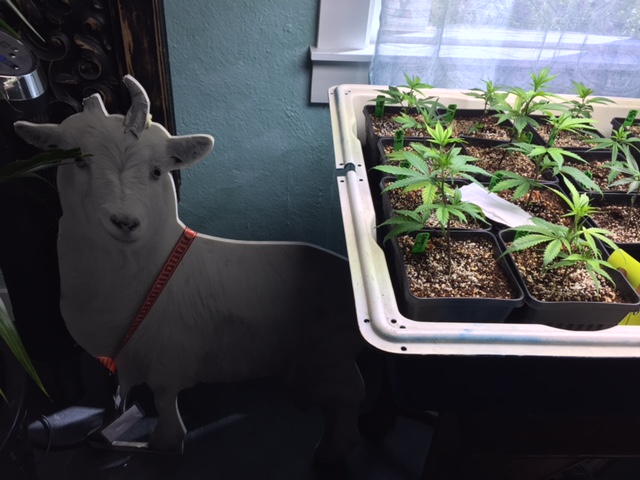
Let me take a shot at it, just for kicks, ok? So, the title asks if weed can cure cancer. If you look at the article, nowhere is that questions answered. The intro talks about recreational use, legal in some states (which is different from medical marihuana and not meant to introduce it as a medical drug, claimed by the author. It’s meant to bring recreational use out into broad daylight where it can be taxed and, major benefit, no longer criminalized as to decrease prison populations.) The article mentions California as one of the states, which, as it turns out will only legally allow recreational pot in 2018. (Illegal growing is a major problem, in addition to whatever one thinks of illegal use. It poisons the lands in ways not seen before – and the clean-up of the toxic sites, hundreds at the size of an average of 50 acres a piece in California alone, is a huge problem.) http://www.rawstory.com/2017/08/toxic-waste-from-us-pot-farms-alarms-experts/
The article then talks about the benefits of the substance for cancer patients, citing chemo induced seizures and nausea, weightloss, pain, anxiety and depression, sleep issues, constipation, itching. Those are effects on symptoms, that very well are or might be alleviated by smoking or ingesting THC products, but not a cure for cancer. My favorite here are his musings on constipation: Chemo induces it, and weed helps to reduce bowel movements….
Eventually it mentions Cancer Treatment: saying there are preclinical trials showing that pot may be capable of killing some cancer cells. NO Reference. (Preclinical also means rats and mice…)

The author immediately turns to studies of patients suffering from MS that show pot might improve muscle function, and that it helps with sleep for people suffering from chronic pain. The End.

This is one of the reasons why people, already not particularly educated in the sciences, turn away from it or do not trust it. There might indeed be studies that approach the question of THC attacking cancer rather than its symptoms – although when I checked the National Cancer Institute Site it was slim pickings. Approaching zip. Much talk, again, though, about combating side effects.
https://www.cancer.gov/about-cancer/treatment/cam/hp/cannabis-pdq

So how DO we make the world less stupid?
(The OR State Government website, by the way, showed 100 medical dispensaries in 2017, and recreational dispensaries outnumber McDonalds franchises – 281 weed shops vs 205 burger joints….. Let’s hope all the tax revenue gets used for medical research or writing education!)
PS: And the there is always the Willamette Week with news from Potland…











 So he digs a 30 meter long passage and has the thinnest member of the local spelunking club climb into Bruniquel cave in France. Another almost half kilometer on they find something mind boggling: “a vast chamber where several stalagmites had been deliberately broken. Most of the 400 pieces had been arranged into two rings—a large one between 4 and 7 metres across, and a smaller one just 2 metres wide. Others had been propped up against these donuts. Yet others had been stacked into four piles. Traces of fire were everywhere, and there was a mass of burnt bones. ” I am quoting from the attached article here:
  But now to my real wondering: how can it be that even in science there is so much happening due to pure chance? I am not referring to the determination of locals to explore their environs. The cave was discovered in 1990. By 1999 archeologist Francois Rouzaud had decided, by means of carbon dating the bear bones, that the stalagmite rings were older than any know cave painting, some 46.000 years or so, and thus could not have been the work of Homo Sapiens but the Neanderthals. He died of a heart attack that very year. Almost 15 years later, another caver who is also a specialist in stalagmites happens to vacation in the region. She hears about the cave, tests the stalagmites themselves with more modern means and voilà, they are actually 176,500 years old, give or take a few millennia. Given the nature of the rings, and the absence of functional items, or tools, scientists are now speculating this was a ritual place. Furthermore there are red and black streaks that are applied to diverse areas, hinting at the controlled use of fire hot enough to crack rocks. Views of social organization and communication patterns of Neanderthals are revised as we speak, following these discoveries.



 I got interested in the people who Darwin selected as correspondents after reading Roger McDonald’s Mr. Darwin’s Shooter, a book that tells the story from the perspective of Sym Covington, fiddle boy on the HMS Beagle and later man servant to Darwin. He ends up in Australia, still corresponding with Darwin and sending specimens collected there, increasingly deaf from his days of shooting rifles at Darwin’s behest. How would it have felt to have been so instrumental in collecting data (if only in the form of shot specimen) and yet to receive little recognition? Foreshadowing of the fate of graduate students, last on the authoring list? How did he reconcile his fervent religious beliefs with his support for someone seen to pull the rug up from under them? (Which, by the way, goes for Darwin’s wife as well.) (Review of the book:

