If creepy-crawlies give you the creeps you might consider skipping today’s blog. Not for the faint of heart. But, oh, so fascinating in terms of what nature has, once again, to offer, and in terms of the utter cluelessness of science in answering some very big questions. Skip right to the end to listen to Bartok’s piano piece which will enrich your day.
2021 is the year where the central and eastern U.S. is expecting a mass emergence of cicadas, millions and millions of them who leave their burrows underground and climb the trees in synchronized fashion, for a 6 week-short life- span of reproduction after having been underground for 17 years.
They are known as periodical cicadas. Only 7 of the 300 species of cicadas worldwide have this strange life rhythm, waiting for 17 or 13 years, respectively, to then come up all at once. While developing underground they suck the liquid of plant roots, apparently counting the seasonal pulsed of fluid flowing from those roots – when the plants have completed 13 or 17 cycles and the temperature has gotten warm enough (65º/18º) they know to emerge. During the long time underground they molt their shells 5 times – and not all at the same speed. But somehow towards the end of that interval the more developed nymphs wait and the lagging ones catch up, so the they are all ready for time x, ready to fly and populate the trees where they mate and lay eggs. No one knows how they pull that off.
Unlike locusts that devour crops, cicadas are good for our ecosystem. Their weight en masse in the trees helps to prune weak branches, they release tons of nutrients into the soil after death and they serve as an abundant food source for all kinds of predators, four-legged and winged varieties included. This despite the fact that the sheer number of bugs (as many as 1.5 million may crowd a single acre) has anyone of them at practically zero risk for being breakfast, lunch or dinner. Although interestingly – and here is one of the unanswered questions – bird populations that are normally predators of annual cicadas decline just at the point where the periodical cicadas emerge. In the years before and after these birds a back to their normal population density.
So why these prime numbers – 13, 17, – for the emergence? We do not know for sure. Some mathematicians have offered the following hypothesis:
Both 13 and 17 are prime numbers, meaning they’re divisible only by 1 and themselves. This means that emergences rarely overlap with predator population cycles that occur in shorter intervals. For example, if cicadas emerged every 10 years, they’d be susceptible to predators whose population boomed on a cycle of one, two, five or 10 years. If they came out every 12 years, they’d be a tasty snack for any predator on a cycle of one, two, three, four, six or 12 years. Thirteen years, though? Only one and 13. The same goes for a 17-year cycle.
Climate change might put and end to that, too. Scientist are seeing shorter emergence cycles on the horizon for cicadas, prompted by ever warmer temperature and speculated to come down to something like 9 years in the future – no longer a prime number. This implies far more exposure to predators, obviously.
Cicadas have one natural enemy that is not affected by time spans at all: a fungus named Massaspora which does an ugly job on them. Its spores colonize the backend of the bugs, disintegrating it while the cicadas are alive, while injecting the them with a compound similar to amphetamine that keeps them moving while dying. Thus they disseminate the spores across a larger area. For male cicadas it also has the weird effect that they start flicking their wings like females, attracting other males who then try to mate, getting immediately infected. Told you it would get creepy.
The short clip below is a marvel of time-lapse photography showing the life cycle of cicadas.
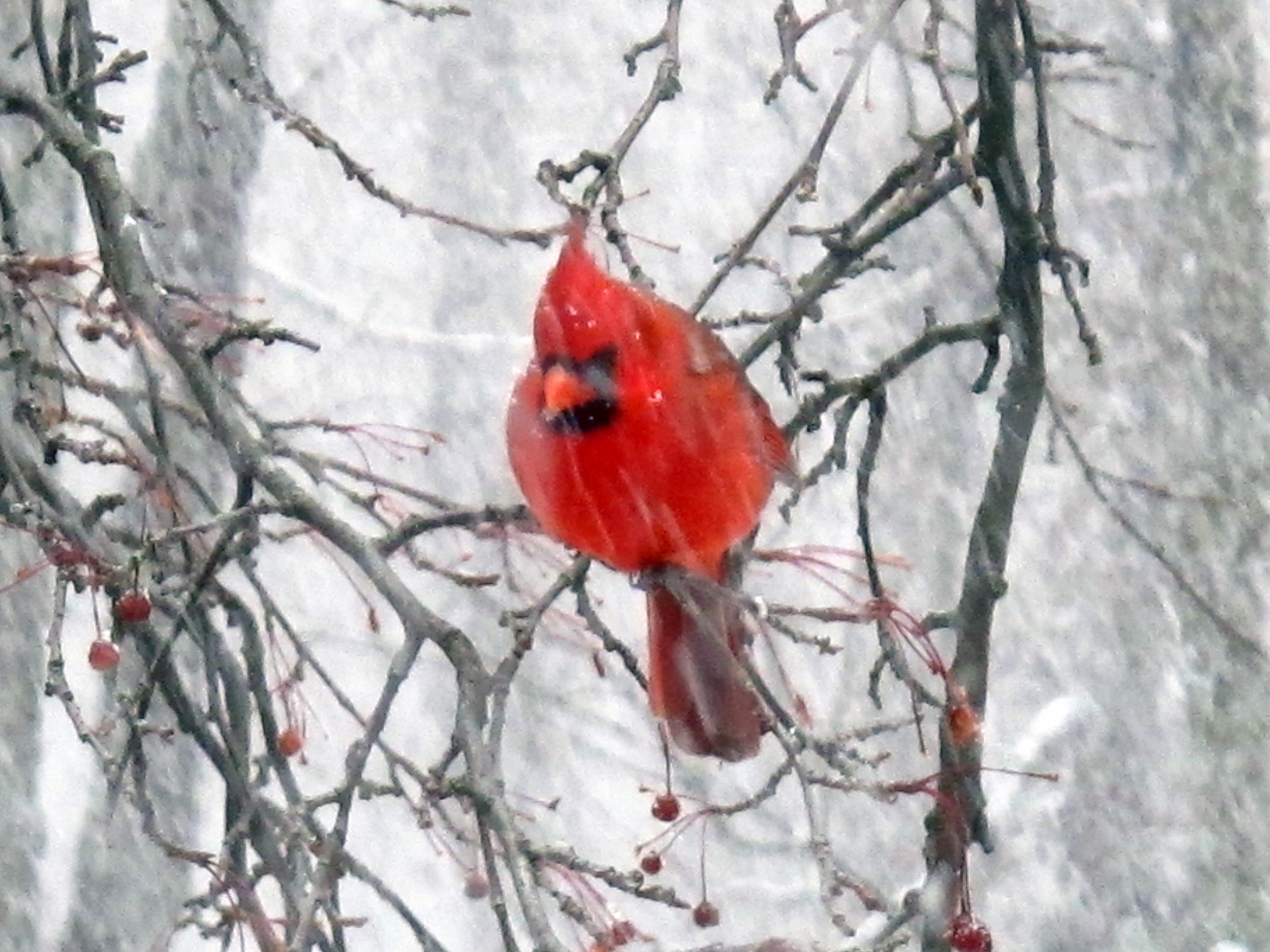
Photographs are of Maryland and Massachusetts birds, cardinals in particular, that will be in shorter supply this year.
And maybe not the best way to play: saxophone amidst the cicadas.
Here is a different musical take: “The most obsessive admirer of bugs was Bela Bartók. The Hungarian composer evoked the cicada in his 1926 piano suite Out of Doors, the fourth movement of which is called “The Night’s Music.” Here Bartók piles up tone clusters to create an eerie evocation of frogs, birds and cicadas that are audible right from the very beginning.”
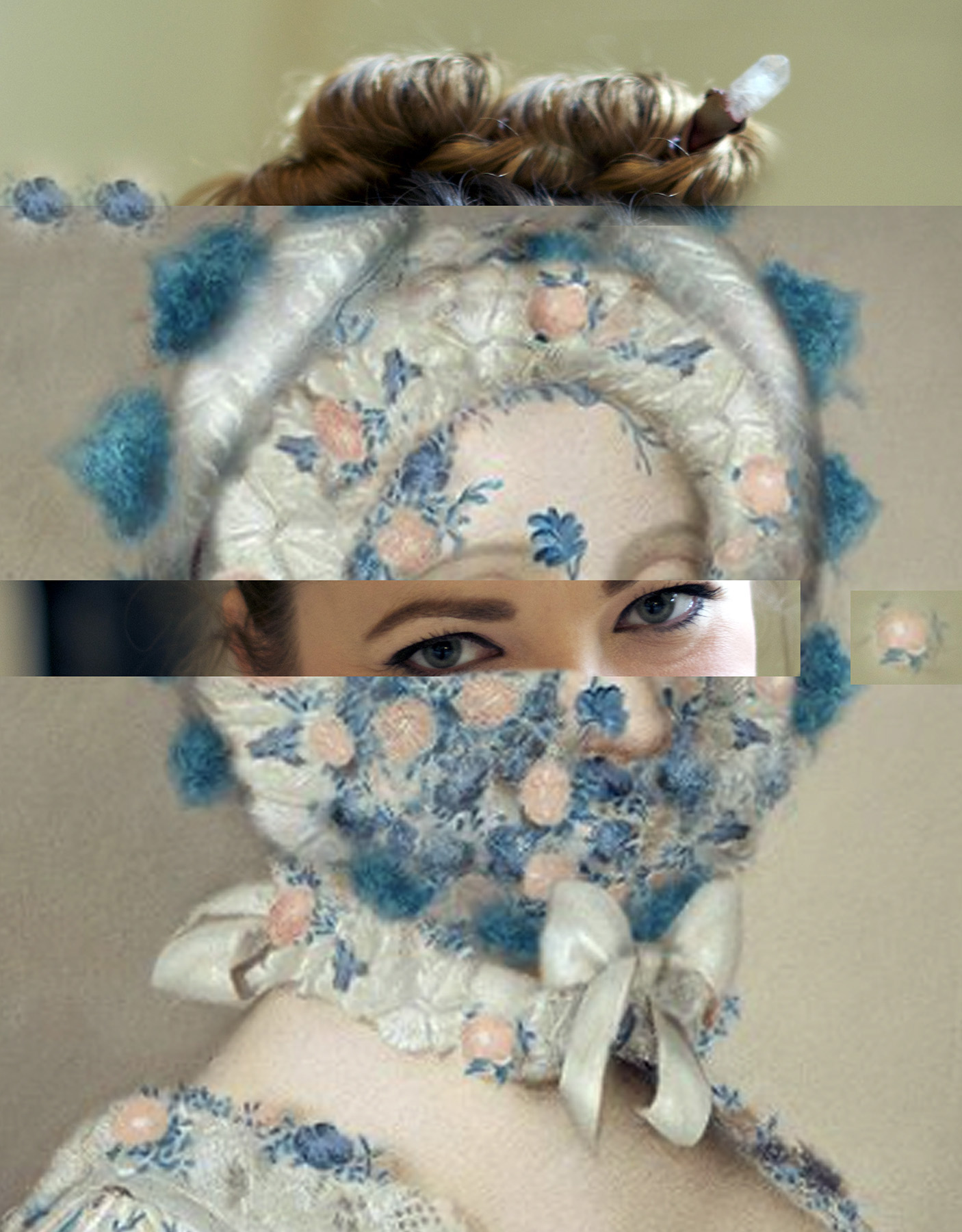
Something curious and creative today: a German artist’s work, created long before Covid-19 entered our lives, that is focussed on masks. I might have been particularly attracted to his digitally altered portraits because of my own work in a similar domain (I wrote about the mix here.) I believe though, that there should be general delight in his compositions, because they are witty, technically accomplished, and certainly exhibit fluent bending of art historical styles. They also make you think about – or they made me think about – the role that facial expressions play in deciding whether a portrait is outstanding or middling at best.
Just for the fun of it, I have superimposed Hermes’ digital portrait onto parts of my contemporary photographic portrait. An urge to play!
Volker Hermes, born in 1972, as it turns out just a few kilometers from my childhood village, decided to reinterpret classical portraits from the historical archives by obscuring the faces, sometimes partially, sometimes beyond recognition. He uses what he finds in the portraits themselves, parts of the jewelry, accessories, hair, or clothing to create the mask. It directs our attention first to the now invisible face, and subsequently, perhaps, to the remainder of the figure – symbolic aspects within the dress-up, gestures, background.
His series Hidden Portraits displays enormous range, as best seen in this link, that will give you an overview. Do check it out, one portrait is more inventive than the next.
Good portraiture depends on both, capturing a likeness, however fleeting, and also an essence that reveals more than a mirror. Neither is available to the viewer if the face is obscured, leaving us with nothing but style and baubles, status symbols or flower code, ultimately nothing but a husk. Something that might or might not have been great art, depending on what the face accomplished for the viewer, is reduced to costume design, with the stroke of imagination and photoshop. Well done.
In real life we have probably all grappled with the problems that arise when faces are partially obscured. A person’s face readily exposes their identity, gender, emotion, age, and race, all of which are harder to discern when the face is covered by a mask. Not only are we worse at recognizing faces; the way we usually perceive them, holistically, is also disrupted, which leads to qualitative changes in person perception. It can interfere with social interactions, for sure.
Hey, you might say – and I’d join you in a second – at least masks game those intrusive facial recognition systems, which use algorithms that analyze our facial geometry – disrupted when mouth and nose are obscured.
I wish.
“…these types of errors are likely temporary, as companies that produce facial recognition technology are racing to update their algorithms to better adapt to face coverings. As Recode previously reported, firms were already touting their algorithms’ ability to account for masks as early as February, and Panasonic indicated it had cracked the mask problem even earlier. Since the pandemic started, a slew of facial recognition companies, including UK-based Facewatch, California-based Sensory, and the China-based firms Hanwang and SenseTime, have all begun to tout their ability to recognize people wearing masks.” (Ref.)
Well, masks do protect us from infection. Grateful for that. Although even that can backfire, wouldn’t you know it. The mask-induced, remarkable decline in active cases of the flu this year has scientists scratching their head. The dearth of data makes it difficult to predict what strains should be included in the vaccine preparation for next year, making them likely much less effective.
Looks like we might be wearing masks for years to come….. might as well embellish them in ways suggested by Volker Hermes.
As we enter Passover I am fondly remembering the glee with which the kids recited the 10 plagues at the annual Seder table. That part of the service is accompanied by dipping your finger into red wine and, if you’re 8 years old, wildly flinging the drops across the table instead of gently letting them fall onto your plate. Washer women (well, people) of the world unite!
Remembering the plagues that befell the Egyptians who held the Israelites in slavery – water turning to blood, frogs, lice, flies, livestock pestilence, boils, hail, locusts, darkness and the killing of firstborn children – is an important part of Jewish tradition, mindful of suffering and existential threat across history, as well as the belief that G-d’s protection will eventually come through.
I was reminded of the plagues when I ran across new research that claims to affect the breeding and feeding behavior of disease-transmitting mosquitos, by blasting them with techno music. Apparently the dub beats interfere with wing beat synchronisation of the mating couples necessary for success. Wouldn’t that be a grand alternative to chemical eradication? The video in the link above shows the lab work, short and fascinating.
Do those plague narratives, faithfully handed down from generation to generation, have any grounding in fact? Archeological research offers some options.
The first suggests that the volcanic eruption on the island of Santorini in the south of Greece around 1620-1600 BCE sent ashes to Egypt. They included the mineral Cinnabar which would have turned the rivers red. The generated acidity would have made the frogs jump to their death. Insects buried larvae in dead bodies which increased the noxious insect population. Acid rain could have caused the boils on people, poisoning the grass and in turn the livestock, with hail increasing humidity that fostered locust breeding. Volcanic eruption would also account for the many days of darkness that we hear about.
The second theory suggests red algae as the causal culprit.
“Red algae could have sucked oxygen out of Egypt’s waterways, killed the fish and turned the water red. Just as in the volcano theory, frogs then leapt out looking for food, and died. Without frogs to eat the insects, the pests proliferated and feasted on corpses, a feeding frenzy for flies and locusts. The paper argued that the lice could have been a type of insect called culicoides, which can carry two diseases that could explain the livestock deaths: African horse sickness and Bluetongue. The boils on humans could have been caused by glanders, an airborne bacterial disease spread by flies or tainted meat.”
In this theory the darkness was coincidentally caused by a sandstorm. It would have left the crops moldy, which could have produced airborne toxins that might explain widespread childhood death.
The third claim concerns climate change. Research on stalagmites —elongated mineral deposits that form out of calcium in precipitation — suggested that there had been a dry period towards the end of the rule of Pharaoh Ramses II. That change would have dried up the Nile and significantly slowed down the flow of water, ideal conditions for red algae to develop.
The central religious message of punishment for the oppressors’ reluctance to abandon slavery does, of course, not care about scientific models. The core insight that people cling to their power, their advantage, their “traditional rights,” at the expense of those they harm, exploit, abandon is a universal one, true for us today as much as for those 3500 years ago. The desire to believe that the harm that befell the Egyptians was G-d given punishment is, in my view, our clinging to the ideal of a “just world.” I’m convinced it takes our own actions to ensure that justice is restored – and this year we might as well start by eliminating a source of enacted racism and reluctance to yield power: the Filibuster. 11th plague, be gone!
Music today is one of the most transcendental movements I know, written in Bartok’s last year of life while dying from leukemia. It has insects chirping in the middle, thus the connection, but it also radiates a kind of grounding that religious tradition can install.
Chag Sameach to all who celebrate Pesach, Happy Easter to others and Happy Spring to the rest!
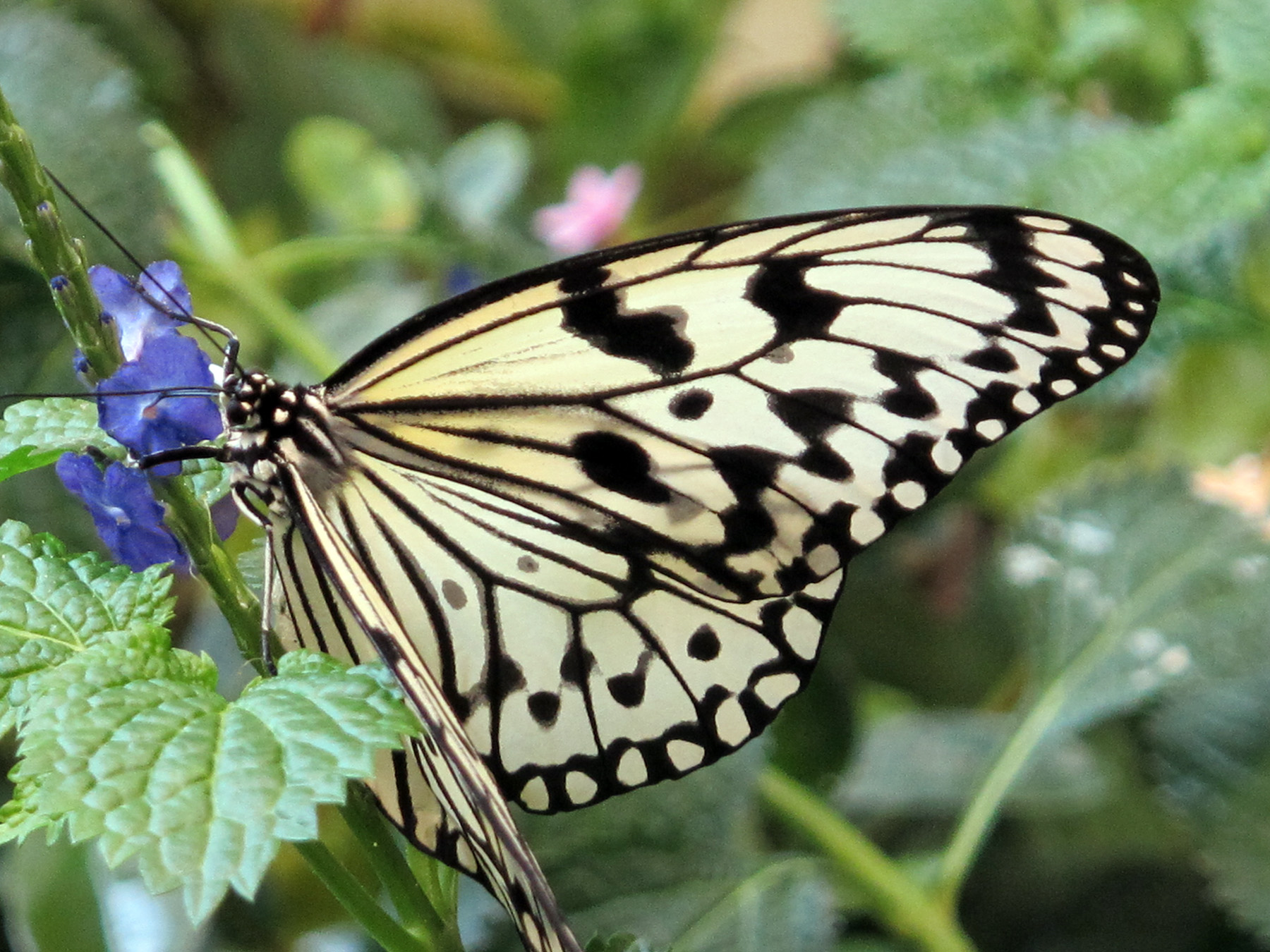
Photographs are of butterflies rather than creepy crawlers. I assume you’ll thank me.
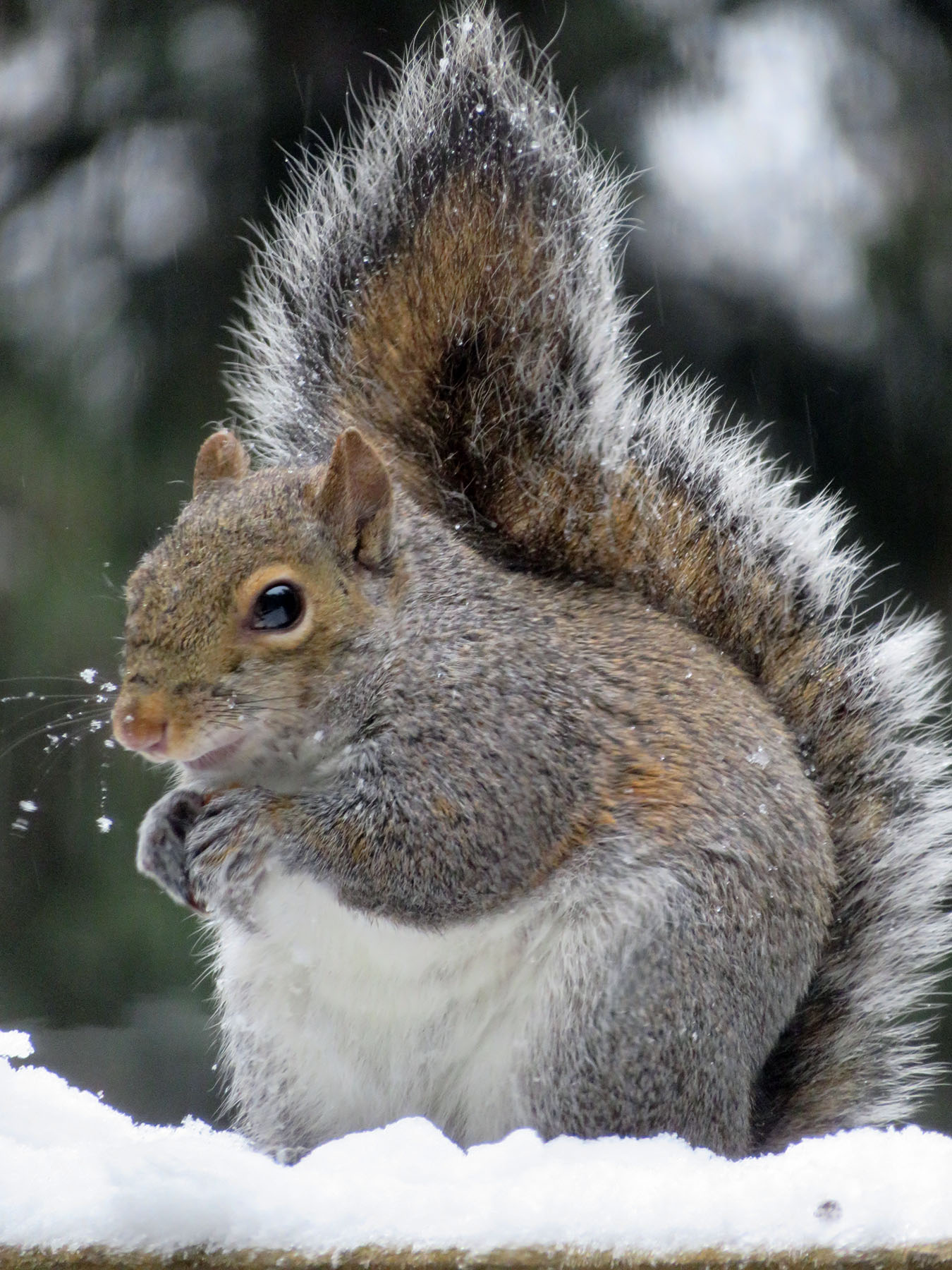
Kissed by privilege. Not only do I live in a place surrounded by old-growth trees, but from my bed I look directly onto a balcony that has become a cafeteria for all kinds of creatures during the cold months. The crows visit, as do the thrush and the nuthatches, the juncos and the towhees, some sparrows and the occasional shy chickadee. And then there are the squirrels, scrambling up the side of the house.
We had put seeds and nuts out onto the railing before the snow hit. The squirrels lost no time to dig them all up and either eat them right there or abscond with them to refill empty caches. It brought nature as close to me as possible, a source of considerable joy and distraction. Photographing with my small digital camera – I am not allowed to lift or hold the large one until the incisions are healed – through the window yielded some fun images.
It also made me think about the double-edged sword of the fragmentation of boundaries between human and animal territory with our human incursions into nature’s spaces. On the one hand, you gain so much knowledge if you can observe and research animal behavior of populations close to you. On the other hand, we all know how pandemics are generated if territorial lines are crossed. I feel like Cassandra just mentioning the fact that 7 Russians were the first humans found to be infected with the H5N8 bird flu last week.
Let’s start the week on a more optimistic footing, though. Here are two amazing things about squirrels.
They have not only the capability to listen for and identify predators’ calls, like owls and hawks, predators that could become dangerous to them. They also eavesdrop on the general bird population around them. If other birds continue to chatter unperturbed, the squirrels relax.
“Eavesdropping on alarm calls or eavesdropping on chatter is a cheap and easy way to supplement the information they have access to. Because it’s free. It’s produced by other individuals in the environment. It’s publicly available to any organism that has the cognitive ability to recognize and interpret that information.”
Nifty, but nothing in comparison to what other squirrels’ brains have to offer in the fight against human disease, Alzheimers in particular. Recent research of the brain of arctic ground squirrels revealed some facts that no one ever anticipated.
These critters, at home in Siberia, Alaska and Canada, burrow about a meter under the tundra surface to hibernate for 7 months. During that process, their body temperature plummets, below the freezing point of water!, and their brains stop producing a lot of neural activity. Structurally their neurons shrink and the connections between neurons shrivel away. Think of it as if a tree crown sheds all of its twigs and branches, just leaving a few big limbs intact.
But here comes the amazing part. When the squirrels wake up, they grow back, within only two hours, not just all the synapses lost during hibernation— their brain cells now boast many more links than those of an active squirrel in the spring or summertime. A day later, their brains prune many of these ties, probably recognizing them as superfluous, and so end up in exactly the state before they started hibernation. The details of this process can be found here. The implications for brain plasticity and potential application to brains that have lost a lot of their dendritic connections (dementias) are now explored by scientists around the world.
Maybe my own synapses start firing again, one of these days, emerging from this semi-hibernating interlude. And I will walk in nature again. Which reminds me of one of my favorite poems about walking while stewarding nature’s cycles or mythology, your pick. It was written by former Oregon Poet Laureate Paulann Petersen. The story of Demeter and Persephone really focusses on the eternal cycle of sowing, growth, harvest, withering and dying back, questions as to the nature of human life and death, including the possibility of resurrection from Hades. A mother, Goddess of the harvest, Demeter, carries her tears with her grains, missing her abducted daughter. The pomegranate seeds, mentioned late in the poem, hold life but also the banishment to the underworld, if you remember Persephone’s fate. A temporary excursion into the realm of the dead, just like squirrels in hibernation….
Music by Stravinsky, I’m indulging in the incomparable German version with Fritz Wunderlich.
If you think my interests run eclectic, you might not be wrong. But why spinach? Let me count the reasons.
Spinach belongs to the chenopodiaceae family, also known asgoosefoot (the family includes beets, chards and quinoia.) I am currently saddled with a post-op drainage bag dangling from my ribs that my husband lovingly dubbed The Goose for the honking noises it makes every time I cough (which is about every two minutes; if we lived in ancient Rome where geese were used as guards, we’d be all set for invasion by the Gauls.) My fantasy is that if I consume enough spinach, that goose will acquire feet and waddle away sooner rather than later.
2. Spinach originated in Persia and spread to Europe in the 12th century, later circling the globe with a reputation for strengthening health (and muscles – alas, my brain is currently not muscular enough to come up with an appropriate Popeye the sailor joke.) That reputation is based on facts – among other things, spinach is rich in iron, important to replenish after you lost a lot of blood. Iron plays a central role in the function of red blood cells which help in transporting oxygen around the body, in energy production and DNA synthesis.
3. Spinach was recently in the news in the context of scientific advances explained in ways that caused serious eye rolling in yours truly. The study, by the way, is 5 years old, but caught someone’s attention some days ago and has ever since made the rounds in competition for clever titles: MIT scientists hack spinach plants to send email.Spam’s new frontier? Now even spinach can send emails. You get the idea.
The premise is clever: researchers engineered the roots of spinach plants to contain microscopic nanosensors that are capable of detecting nitroaromatics — chemicals that are often found in explosives and man-made industrial chemicals. Spinach absorbs and constantly recycles groundwater, being in a good position to detect changes in pollution or the presence of explosives devices. (Although, honestly, how could you prepare the ground to plant spinach if there is a danger of landmines, without exploding them? Hoping that they are buried deep?)
When the nanosensors detect those compounds, they can send a signal to an infrared camera, which can shoot out an email alert. So far so good.
Now comes the eye rolling part: “This is a novel demonstration of how we have overcome the plant/human communication barrier,” said Michael Strano, a chemical engineer at MIT and a co-author of the paper.
Spinach-human communication? That’s like saying my thermostat is talking to me when beeping that the room temperature falls above/below its setting. Signaling a measurement is not exactly opening a channel for conversation! Then again, the urge to talk to plants is nothing new…
Let’s consume, not converse with spinach. My humble suggestion.
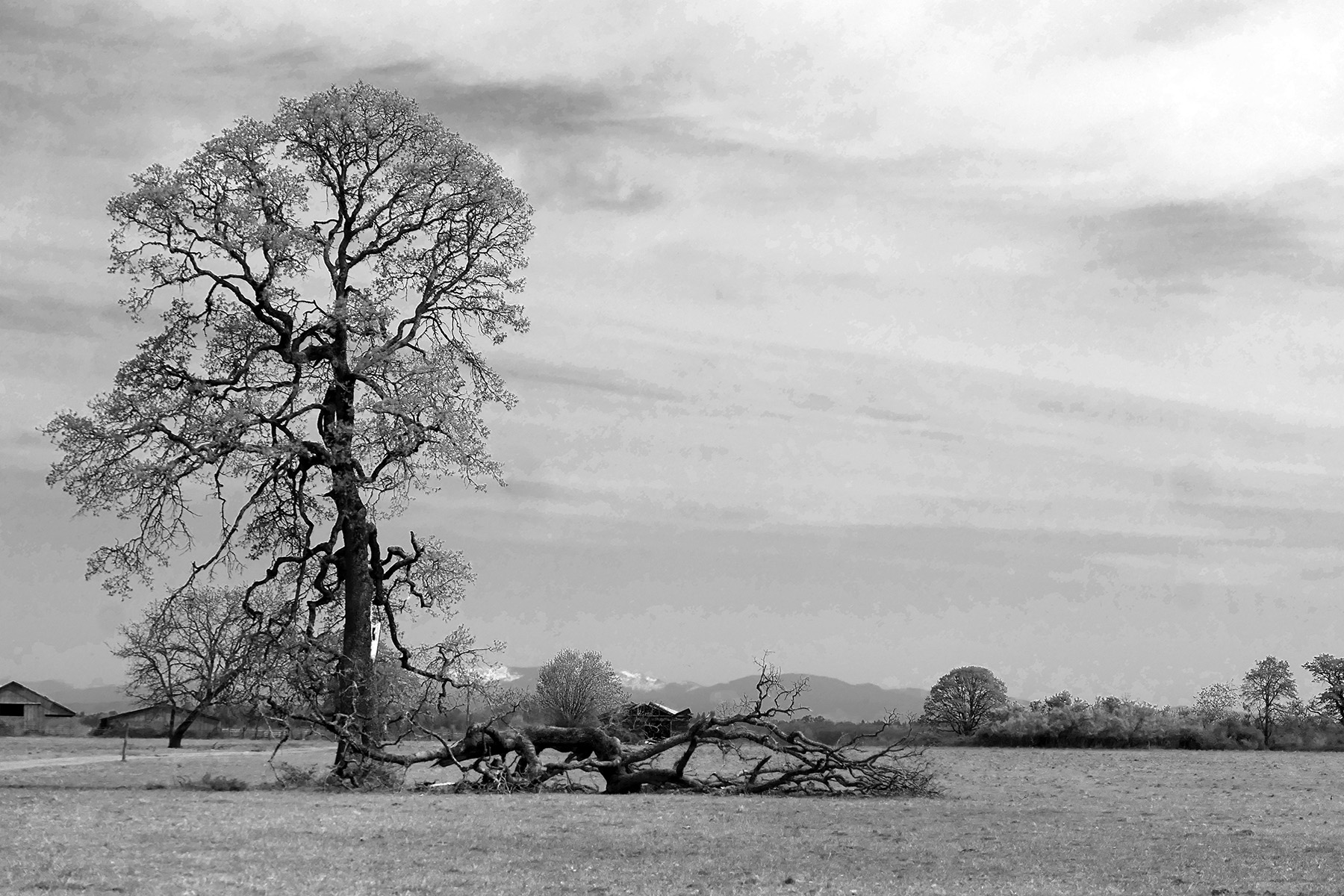
Archival photographs are of fields where spinach could be planted…
Music is a 1947 recording that might or might not be about spinach, banned by the American Forces Radio Network, (AFN) Europe until 1975.
“A ray of sunshine” is one way to describe a bit of good news. I saw that sunny yellow reflected in the gold medal recently awarded to a brave rat.
You read that right, I am reporting on Magawa, the HeroRat. To date he has found 39 landmines and 28 items of unexploded ordnance in Cambodia. Over the past 4 years he has helped clear over 141,000 square meters of land (the equivalent of twenty football fields), allowing local communities to live, work and play without fear of losing life or limb.
Actually I am introducing a general program, APOPO, that breeds and trains rats for multiple important purposes: detecting landmines, identifying tuberculosis in people, and sniffing out illegally trafficked wildlife. APOPO is an acronym from Dutch which stands for “Anti-Persoonsmijnen Ontmijnende Product Ontwikkeling“, or in English, Anti-Personnel Landmines Detection Product Development. The idea to use rats was born in the mid 1990s in Holland, the choice to train African Giant Pouched rats based on their longevity and origins in Africa where the work was to be done.
Rats get rewarded with treats like ripe, yellow bananas when they detect the correct scent (associated with explosives, or TB or pangolins, one of the most smuggled endangered species) in the lab. Eventually they will do the same in the field, with a speed that escapes their human counter parts, and with more accuracy in detection, as it turns out. Rats can check on 100 TB samples in 20 minutes, for example, which would take 4 days to be done by a doctor with a microscope. You can watch them here.
In 2000, APOPO established office and training facilities in Tanzania, and started developing what would be the most extensive training minefield in Africa in collaboration with local universities and the people defence forces. A year later they were approved by The Geneva International Centre for Humanitarian Demining (GICHD) and expanded to teach the rats to smell remote explosive, and soon started research into detecting tuberculosis via scent. In 2004 the first 11 rats passed International Mine Action Standards accreditation and began to operate in multiple countries in Africa and later Cambodia, Laos, Thailand and Vietnam. By 2015 a country like Mozambique was cleared of all landmines! By 2017 the mine action was invited to Colombia, South America.
Since the APOPO TB-detection research program began in 2007, the rats have checked more than 680.000 patient samples. They discovered 18.300 missed cases, helping not just those patients but preventing another 150,000 likely new infections. APOPO’s programs work within government health systems to support over 100 partner clinics in Tanzania, Mozambique and Ethiopia in their fight against TB. They find both, cases that have been missed – according to estimates of the World Health Organization (WHO), about half of the TB patients in these countries are ‘missed’ – and find TB among non-symptomatic but high-risk population ( like prison inmates.)
I think it is phenomenal to see something this life-saving to develop from the idea of a single person to a global organization in 2 decades. They surely had a lot of help on the way, from educational institutions to stay agencies to business initiatives to NGOs – individuals can and have helped, too – you can adopt a rat to support the program, for example.
It also stands in stark contrast to using animals to enact warfare in the first place. As I learned at the dinner table last night, when talking about today’s subject, B.F. Skinner spearheaded Project Pigeon during WW II. It aimed at using pigeons to guide missiles to their respective targets but apparently never took off. Video describing the idea can be found in this link.
Detecting illness by scent has become a hot topic in scientific study in general, with the hopes of finding helpful markers for diagnosis that avoid intrusive procedures for diseases as varied as cancer, Parkinson’s Disease, asthma and traumatic brain injury. Not all done by rats, of course. Dogs are involved, and electronic “noses,” devices that pick up and analyze scent.
I like to think of it though as if it looks like we’re moving from smelling a rat to have one smell us!
Since I don’t have my own photographs of banana loving rats (rats today are from the APOPO website), I’ll make do with random yellows from my archive that might deliver tasty bits to rats – sunflowers, canola, corn, pears, some odds and ends.
Music depicts rats in a variety of ways….
words by Carl Sandburg : There was a gray rat looked at me with green eyes out of a rathole. “Hello, rat,” I said “Is there any chance for me to get on to the language of the rats?” And the green eyes blinked at me, blinked from a gray rat’s rathole.
Rats away opens the second movement. Hear them scurry!
Two articles caught my attention last week, reporting on people who at first glance could not be more different. The first appeared in the New York Times, The Social Life of Forests, and (re)introduced Suzanne Simard, a scientist who looks at forest ecosystems. You might have encountered her if you followed my earlier recommendation to read Richard Power’s The Overstory, one of my favorite books of recent years. She was the model for one of the prominent characters in the novel.
What could a contemporary professor of forest ecology and a 19th century artist and writer known prominently for his wall paper designs possibly have in common? Lots, I tell you!
Both devoted their lives to exploring new directions in their respective fields, Simard as a researcher who ventures daringly (and brilliantly) far from the main stream science at times, Morris as an artist who is now known as a founding father of the British Arts and Craft movement which upended the trend towards industrialization and mass production in the Great Britain of the 1800s.
Both can be counted as ardent environmentalists.
And, importantly for my spontaneous linking the two in my mind after reading these pieces, both make us see, keenly, the interconnectedness of things in nature as much as in our social, political, and economic lives. Interconnectedness can be a boon, when all pieces work together for maximum achievement, and it can be a bust, if some random (or not so random) interruption paralyzes the system as a whole.
The NYT article is an easy read, and reveals some astonishing scientific findings in everyday language. (It also reinforces things we have learned form another book about the secret life of trees, which is reviewed here.) Among other things,
“….Simard has discovered that fungal threads link nearly every tree in a forest — even trees of different species. Carbon, water, nutrients, alarm signals and hormones can pass from tree to tree through these subterranean circuits. Resources tend to flow from the oldest and biggest trees to the youngest and smallest. Chemical alarm signals generated by one tree prepare nearby trees for danger. Seedlings severed from the forest’s underground lifelines are much more likely to die than their networked counterparts. And if a tree is on the brink of death, it sometimes bequeaths a substantial share of its carbon to its neighbors.”
Underground fungal networks that improve the overall health of the forest system by re-directing needed resources are, of course, affected by indiscriminate logging, or other forms of environmental degradation. William Morris thought the same to be true for art when the benefits it bestows on a given society are endangered. Environmental degradation, either in the literal sense of destroying the beauty and health of nature, or in the figurative sense of our lives being accosted by industrialization and labor exploitation, was the main culprit in his view when it came to the disappearance of art in everyday life.
If you have the time and interest, here is a prescient lecture that Morris gave on the relationship between destroying the earth, undermining its beauty and the pernicious effects of wage labor, all of which alienates humans from their creative capacities. In general, he believed that “art was man’s expression in his joy of labor,” art encompassing not just the intellectual achievements of a chosen few, but the daily beautification of one’s environment that across centuries was part of society’s existence.
He implored us “to take in not only painting and sculpture, and architecture, but the shapes and colors of all household goods, nay, even the arrangement of the fields for tillage and pasture, the management of towns and of our highways of all kinds; in a word, to extend to the aspect of the externals of our life.” That could be accomplished by a medieval potter’s careful decorations, a glass blower’s feel for form, a cottage gardener’s lush color schemes up to the hand-pressed paper, hand-printed and colored designs of Morris’ famous tapestries. The very ideas of combining the higher arts with applied art eventually found their homes in the German Bauhaus in the 1920s and its contemporary Russian twin, Vkhutemas, the most fascinating art school you have never heard of. The workshops had artistic and industrial faculties; the art faculty taught courses in graphics, sculpture and architecture while the industrial faculty taught courses in printing, textiles, ceramics, woodworking, and metalworking.
By no means did Morris imply that industrialization and machine production were the causal agent in the disappearance of daily creativity. It was the fact that only capital, not laborers benefitted from the automization and speed of production, workers receiving no increased leisure time to use for creative activities to make up for the increasingly non-creative work serving the machines. His writings on socialist models to remedy the unfairness were astoundingly clear-sighted and pragmatic.
He was also quite the character, which, as you all know by now, always excites me. A rich Bourgeois drawn to Ruskin and Marx, an artist and successful business man who marries a working class girl who happens to be his painting model, leaves him for his best friend and then they all manage to establish a menage à trois, a risk taker who late in life shifts gear from designing pretty things (if you like flowery wall paper) to establishing a printing press – it’s all pretty fascinating. Details here.
For a final bit of reading on new claims about the ultimate biological interconnectedness, the Gaia Hypothesis, go here. Would love to know what either Simard or Morris or for that matter Darwin would have thought about this view of an evolving planet.
Photographs of Pacific Northwest forests from this spring. Wallpaper has to wait….
There it was again. Bobbing for seconds above the water, then disappearing, leaving a bunch of seagulls screaming in its wake. The head, then the rump of a sea lion, about 100 miles upstream from where it was supposed to be, surfacing as little speck in front of me in the Willamette river yesterday.
Sea lions are driven upriver by hunger, and find a veritable feast in salmon that return to their spawning grounds. To protect the fish whose numbers are in dire decline due to human intervention, people now kill the sea lions, whose numbers are on the rise, due to human intervention.
“Sea-lion populations were once declining, too, but they have rebounded under the Marine Mammal Protection Act. Such is the challenge for humans trying to manage vast, interconnected ecosystems. Put a thumb on one part of the scale, and something somewhere else goes out of whack. Try to correct that, and you create another problem. Eventually, you end up with a policy of fisheries managers killing sea lions.” (Ref.)
Walking downstream, my thoughts stayed on hunger. A passage from the book I am currently reading, Tyll by Daniel Kehlmann, had uncomfortably lodged in my brain. It described a man condemned to die for witchcraft having the first real meal ever – soup, meat, cake – as his last meal. He realizes then that he has been hungry all his life with no exception, an awarenesses only revealed in the hours before his church tribunal – imposed execution.
Put a thumb on one part of the scale, and something somewhere else goes out of whack. Set in early 17th century Europe, in the wake of the disastrous 30 Years’ war (1618- 1648), the novel weaves a tale with the help of its protagonist, the trickster Tyll Ulenspiegel (Till Eulenspiegel,) that draws us deeply into a world of hunger, catastrophe, superstition, religious fervor and conspiracy theories. In some ways, one might argue, not quite unlike our own.
It was Emperor Ferdinand II, a staunch Catholic, who put his thumb on the scale, trying to force his religion on the uneasy detente of Europeans states that had emerged after the upheavals of the Reformation. Hell ensued, and as with all catastrophes in human history, drove people into ever cruel and persecutory forms of thinking and behavior, seeking salvation in authority, often church-associated, and scape goats often linked to the devil and magic.
Daniel Kehlmann’s Measuring the World, a small novel linking the 19th century explorer and mathematician Alexander von Humboldt and Carl Friedrich Gauss respectively, was a literary sensation. When it appeared in 2006, it replaced Harry Potter and Dan Brown from the charts in Germany, no small feat for a historical novel. It had to do something right, given that it elicited major praise across the literary reviews of the globe and major condemnation by the folks at the American Mathematical Society.
The book delivered easy-access, colorfully wrapped, inventively speculated bites of historical facts. You felt smarter afterwards without having to stretch your brain all too much. Tyll, I have to say, is much different. Although it echoes Kehlmann’s earlier writing with its reliance on wit and comical relief, it is much darker, much more opaque, and in some ways much smarter in its subtle ways of drawing parallels between a world from the past and our own. It makes your brain work, while your heart beats faster, more defensively.
A smart review in The New Yorker spells out the focus on magic and survival. It links to historical views of Tyll Ulenspiegel as “a dangerous vagrant, a folk hero, a journeyman magician, a bawdy circus performer, a jester and prankster who, like the Shakespearean Fool, recklessly needled those in power into looking honestly at themselves.” It also provides a perceptive enumeration of all the interesting characters populating the novel, testament to the author’s depth and breadth at this go-around, since historical sources to fall back on are much sparser.
My own reading was hooked more by the narrative line throughout the book of how unequal distribution of riches and power – from the village level to the international state players, the intra-religion conflicts to those between world religions, between emerging scientific rationality and religion-fervored superstition – affect human behavior and its psychological consequences.
Hunger creates catastrophe, a hunger driven by the inhuman conditions of a world divided into those who hold the goods and those who fight for daily survival. Without giving away too much, the small child Tyll, during a traumatic event, is driven by hunger to sacrifice the only thing he is attached to. The psychological consequences forcibly stamp out what we call conscience. Tyll, for no fault of his own, morphs into an amoral and untrustworthy hero, so vividly imagined and described that you see the world through his eyes, and blanche.
How many children are driven by hunger, by daily experience of unfairness and injustice, into life paths that end in catastrophe? Finding the escape as a jester (or a tycoon, a rap star or a sports hero) is the exception to the rule, thus making it into the canon of cautionary or triumphant tales, I gather. Well, here is one number: 13.9 million children in the US alone lived in a household characterized by child food insecurity as of late June. School lunch programs were already struggling to meet rising demand before the pandemic. With COVID-19 now keeping children out of school, many don’t have access to school lunches at all. (Ref.) And we don’t even know the dark numbers, or what it will look like when people start to be evicted from their homes by the end of the year. Nor can we wrap our minds around the likely numbers in even poorer parts of the world.
And no Willamette to fish from…..
Time to think seriously about forms of re-distribution.
Flatulence, you know, the activity that releases methane into the atmosphere, is not usually a topic discussed in polite company. But since we all appreciate some good news these days, flatulence it shall be. Or the absence thereof.
Many of you might have heard the report already on NPR 2 days ago. It has been picked up all over the place: one of the major sources of methanol emissions, gas with high global warming potential, heating up the atmosphere, are the burps and farts of cows. There, I said it.
Cows have several stomach chambers, in which microbes help digest the food. They belch due to enteric fermentation, which is the digestive process of converting sugars into simple molecules for absorption into the bloodstream and which produces methane as a by-product. On the other end of the cow, manure is dropped which contains and releases methane as well.
It turns out (and it seems to be a bit of a rediscovery, if you look at what the ancient Greeks or 18th century Icelanders reported,) adding seaweed to the bovine feed helps reduce methane emission by an astonishing 98%. Minute amounts of those submarine grasses seem to be enough.
Asparagopsis taxiformis and Asparagopsis armata are 2 species of a crimson submarine grass that drifts on waves and tides all around the world’s oceans. These 2 species are emerging as an effective tool in innovative, regenerative, and cleaner production for the wider agriculture sector. Asparagopsis and other types of seaweed have specialized gland cells that make and store bromoform, an organic compound. When this deep red seaweed is freeze-dried, powdered, and sprinkled as a garnish on a cow’s meal, bromoform blocks carbon and hydrogen atoms from forming methane in the stomach. (Ref.)
Given that there are about 1.5 billion cows on our planet, this seems an exciting step forward in our attempts of decarbonization to save the earth.
Incidentally it also seems to make the cows healthier and increase milk production. The whole seaweed issues started in this newest version, in fact, when a farmer noticed that his cows that feed near the ocean shore thrived in comparison to his other ones that fed at higher pastures. The power of observation, leading to scientific exploration.
Unclear to me, though, is how large-scale seaweed production will impact marine environments, and how much global efforts to get people away from eating beef will be undermined if we now think cows are no longer complicit in climate change. There are still the countless acres of Amazon rainforest cut down to make pastures for cows, who surely will not be fed seaweed in the first place…
But for now, let’s celebrate diminished flatulence – we take our small victories where we can find them these days – and amuse ourselves by going back to what Benjamin Franklin had to say in 1781 on the very topic. “It is universally well known, That in digesting our common Food, there is created or produced in the Bowels of human Creatures, a great Quantity of Wind.” The essay can be found here. A fun read. It is titled: A Letter to a Royal Academy about Farting. Gone with the wind, I guess, since it never arrived at that august body.
Music today is by Tcherepnin from his Le Monde en Vitrine – The Greyhounds and the Cow. It was incited by the vitrine of a patron of the arts that held numerous chachkas. “The first movement,” the composer wrote, “is inspired by a group of miniature greyhounds in glass, which in the show-case stands next to a massive porcelain cow. The greyhounds are full of action, whilst the cow is placid. This contrast inspired me deeply. How often in life is our enthusiasm thwarted by something as placid as a cow!” To which I say: Give me placidity any day….
(Placidity – a feeling of calmness; a quiet and undisturbed feeling. placidness. calmness – a feeling of calm; an absence of agitation or excitement. 2. placidity – a disposition free from stress or emotion.)
Here is fuller menu of his piano works, if you click play all.
It looks like we will be able to get vaccinated to be (somewhat) protected against Covid-19 in the near future. Or will we? There are many questions attached to the issues of vaccines: their development, their approval, their distribution, their side effects and the (un)willingness of the population to be inoculated, to name a few. I’ll try and report on some of these issues today, including the fascinating fact of people volunteering to be infected with the virus in so-called challenge trials for vaccine development that risk their deaths, given the absence of definitive treatment options for the disease when it hits you hard.
First a lightning round on what vaccines do in general: they basically fake the disease without making you sick, helping the body develop protective immune responses so when the actual crud arrives you have a shield. There are three established ways to accomplish this and one that has never been approved before but seems to be a valuable candidate in the fight against Covid-19.
For one you can take a virus, inactivate it so it can no longer multiply in your body and expose your system to it to develop a defense. Successfully done in cases of the flu, polio, hepatitis A, and rabies, for example. Secondly you can work with a viralvector that carries the immobilized virus. Loosely put, scientists use DNA as a vector (often from chimpanzee adenoviruses) that your own system copies into RNA and then acts with a protective response. It worked for Ebola, some retroviruses, and small pox among others. Third, there areprotein-basedvaccines, which work with viral proteins only from the spike of the virus that tries to invade your cells. These vaccines are historically very safe and effective, among others protecting against hepatitis B virus, shingles, and whooping cough. And last, there are genetic vaccines, which introduce genes directly as either DNA or messenger RNA, which is used by the cell as a template to build a protein through a process of translation, then activating the protective response. They are easier to manufacture and distribute, but we have never used them before outside cancer research, and they also will require 2 doses.
Ok, let’s say you have developed something that seems to work, like Pfizer, Moderna, Astra Seneca and various other international pharmaceutic industries claim. Now what? You need approval – usually only given for vaccines that can prove to protect for longer than a year. We have no data on that and do not know how long each vaccine will protect you. This is particularly relevant in the light of the fact that we now have cases of re-infection after 4 months.
Then you need to manufacture on a grand scale, under sterile conditions. There are shortages of the glass containers and the custom bags that line the bioreactors in which vaccines are produced. In some cases, the vaccine ingredients are so unstable that they need to be kept at insanely cold temperatures( – 94 degrees Fahrenheit!) and expire after 10 days, a problem for distribution that relies on dry ice – also in short supply, as are syringes. The vaccine must be mixed at the administration site with a sterile liquid — usually water — and given within six hours of creating the solution. Since the vaccine will be shipped in cases with a high volume of doses, rural communities may not have the population, or infrastructure, to administer a case of doses while still cold. Hospitals across the country might also not have funds available to buy the fancy freezers that can be used where there is lots of electricity. (Ref.)
Then you have to decide who gets it first, since vaccines will be in limited supply (to achieve herd immunity, we need to inoculate about 5 billion people across the world, but we, if all get approved, are only likely to have enough for 2.5 billion people, given that the vaccine needs two doses.) First responders, health professional and old people, who are the most at risk? Younger people who are the super spreaders? People in certain areas of the country, so-called hotspots? Decision vary from country to country and are based on political reasons as well as medical evaluations. Details of allocation issues can be found here.
Given that we need more vaccines, people are trying to speed up development, and one way to do so is to run studies that use far fewer than the 10thousands of participants in normal randomized trials where you wait for people to get naturally infected, a process that takes time.
These faster studies are called “challenge” trials in which half of a group of a hundred or so participants gets actively infected with the virus, with the other half being the control group after they all received the developing vaccine. No longer using your gardener’s son (as Edward Jenner did in 1796 with small pox), or prison- or developing world populations who sign up under duress or are simply forced, these trials use volunteers. The World Health Organization has established complex protocols to insure ethical proceedings, but the ethics are still a hot topic of debate.
Would you sign up to be infected by this disease when we have no known treatments that are certain to cure? Would you risk long-term impairment, even if you can avoid death under the stellar medical care these programs provide? Would you agree to isolation for months on end to be under close supervision? Well, 37.000 people have signed up for this since May alone. PBS aired a segment on the One Day Sooner website that calls for volunteers and had an insane response.
When journalists from the Radiolab Podcast asked participants for their reason they found them all over the map. From gas station attendants to Nobel Prize Winners in Physics, they calculated the gain for humanity vs. their own vulnerability, they wanted to protect their parents, or escape boredom, they felt they were dying in a short time anyhow and might as well help science, they urged a commitment to our nation and community after these years of division, they wanted to have a voice at the table for underrepresented communities, and so on. It’s an interesting short listen, if you ignore the small numbers of respondents.
In contrast to those willing to face the disease personally and help develop vaccines against it, there are the many who are not willing to be vaccinated in the first place. There are multiple reasons why they might refuse. For one, there is a large anti-vaccine and anti-science movement in this country, amplified by the partisan divide in the Covid-19 case of acknowledging the danger of the disease. If it is all a hoax, why would I allow the state to prick me with a needle and have me suffer the side-effects (by all reports getting the vaccine will make you feel sick for a bit, with fevers and aches common) or worse inject some – insert your favorite conspiracy theory here – into me. The Lancet reports: “31 million people follow anti-vaccine groups on Facebook, with 17 million people subscribing to similar accounts on YouTube. The CCDH calculated that the anti-vaccine movement could realise US$1 billion in annual revenues for social media firms.” They are also an easy target for further radicalization.
Secondly, there are understandable reason for subparts of the population to be wary of being exposed to unproven substances. The experience of poor and people of color populations in our history has been exposure to forced experimentation in combination with much reduced access to good health care and pre- existing, poverty-related vulnerabilities. A devastating summary can be found here. Suffice it to say that the Nazi defense (!) at the Nürnberg Trial used the fact of experimentation by the US Army and the University of Chicago that infected prison population with malaria in the 1940s, and many such other cases, as justification for “international practice.” Current estimates say that only 42% of the US population is willing to get vaccinated, a number too low to achieve a win in the fight against the disease (and a number much lower than comparable choices in other western nations.)
In sum, do we know if and when we will get vaccinated? Can we trust the voices that claim we’ll be well into it at the beginning of next year? I fear so many things can go wrong, so many factors will influence distribution and allocation, that there is no way to be sure. But I do know that the minute the scientific sources I trust give the green light, I will still wait a month or two to see how things unfold and also give priority to those with a more and immediate need for limited supplies. But then I will stand in line and do my part to protect the community as a whole. No worries, you’ll hear about it!
Photographs are from my local Jackson Middle School on whose fields I walk my dog. The students have decorated their buildings with totem pole-like assemblages with abundant creativity – made me think again how hard these times are on children and how much we owe them to make this a better, less dangerous and more equitable world.
And here is music from illness-induced periods of social isolation of various composers. I found the source here.
Chopin wrote this while isolated during a bout with tuberculosis.
Stravinsky wrote this while recovering from typhoid (contracted from eating oysters…) in a nursing home.
And Rachmaninoff transcribed and played this after he was stricken with the Spanish Flu upon arrival in the US in 1918.