Browsing Category

Poetry

The Bright Sun was extinguish’d.

Forgive me if my mind wanders even more than usual these days. I used to think of my habit of forming strange and far-reaching connections as an asset; these days associations come unbidden, feeling more intrusive than clever or surprising. Be that as it may, here is the most recent chain of thought, originally triggered by a day of darkness.

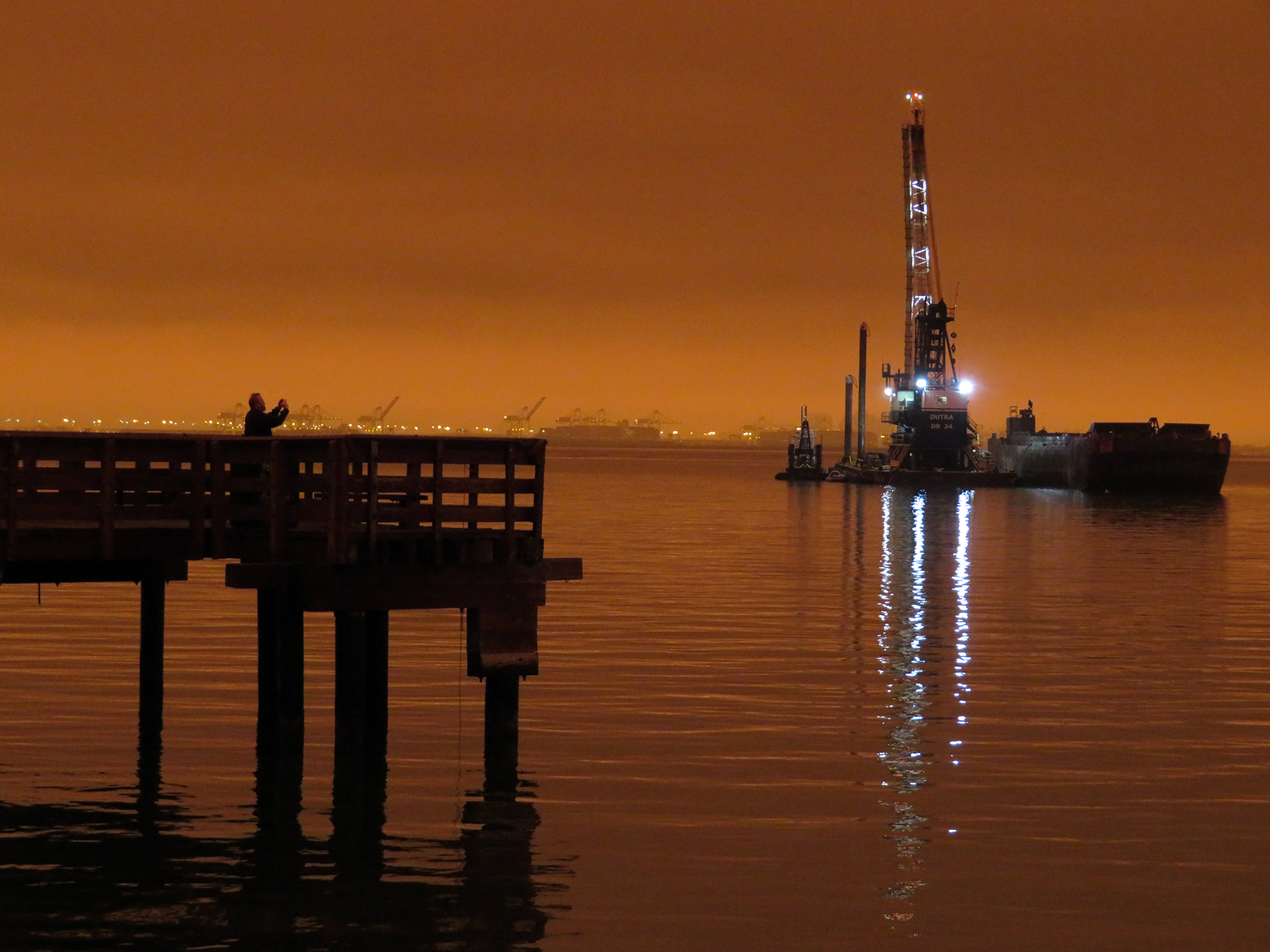
Literal darkness, that is, as you can discern yourself when realizing today’s photographs were taken at noon, overlooking San Francisco Bay, some days ago. A darkness likely to have enshrouded the Oregon landscape as well, a consequence of the devastating fires.

It brought to mind Lord Byron’s poem, Darkness, attached below. It was written in the summer of 1816 after the explosion of the Indonesian volcano Mount Tambora in 1815. The eruption killed more than 10,000 people, while an additional 30,000 across the world perished from the crop failures, famine, and disease that resulted from extreme weather triggered by the explosion. Volcanic ash blotted out much of the sun for more than a year, having people believe that the sun was dying. The average global temperature dropped by a whole degree. The poem reads like a prescient description of both climate change and/or the more figurative darkness that surrounds us in these days of the demise of our democracy.

Darkness

BY LORD BYRON (GEORGE GORDON)

I had a dream, which was not all a dream. 
The bright sun was extinguish’d, and the stars 
Did wander darkling in the eternal space, 
Rayless, and pathless, and the icy earth 
Swung blind and blackening in the moonless air; 
Morn came and went—and came, and brought no day, 
And men forgot their passions in the dread 
Of this their desolation; and all hearts 
Were chill’d into a selfish prayer for light: 
And they did live by watchfires—and the thrones, 
The palaces of crowned kings—the huts, 
The habitations of all things which dwell, 
Were burnt for beacons; cities were consum’d, 
And men were gather’d round their blazing homes 
To look once more into each other’s face; 
Happy were those who dwelt within the eye 
Of the volcanos, and their mountain-torch: 
A fearful hope was all the world contain’d; 
Forests were set on fire—but hour by hour 
They fell and faded—and the crackling trunks 
Extinguish’d with a crash—and all was black. 
The brows of men by the despairing light 
Wore an unearthly aspect, as by fits 
The flashes fell upon them; some lay down 
And hid their eyes and wept; and some did rest 
Their chins upon their clenched hands, and smil’d; 
And others hurried to and fro, and fed 
Their funeral piles with fuel, and look’d up 
With mad disquietude on the dull sky, 
The pall of a past world; and then again 
With curses cast them down upon the dust, 
And gnash’d their teeth and howl’d: the wild birds shriek’d 
And, terrified, did flutter on the ground, 
And flap their useless wings; the wildest brutes 
Came tame and tremulous; and vipers crawl’d 
And twin’d themselves among the multitude, 
Hissing, but stingless—they were slain for food. 
And War, which for a moment was no more, 
Did glut himself again: a meal was bought 
With blood, and each sate sullenly apart 
Gorging himself in gloom: no love was left; 
All earth was but one thought—and that was death 
Immediate and inglorious; and the pang 
Of famine fed upon all entrails—men 
Died, and their bones were tombless as their flesh; 
The meagre by the meagre were devour’d, 
Even dogs assail’d their masters, all save one, 
And he was faithful to a corse, and kept 
The birds and beasts and famish’d men at bay, 
Till hunger clung them, or the dropping dead 
Lur’d their lank jaws; himself sought out no food, 
But with a piteous and perpetual moan, 
And a quick desolate cry, licking the hand 
Which answer’d not with a caress—he died. 
The crowd was famish’d by degrees; but two 
Of an enormous city did survive, 
And they were enemies: they met beside 
The dying embers of an altar-place 
Where had been heap’d a mass of holy things 
For an unholy usage; they rak’d up, 
And shivering scrap’d with their cold skeleton hands 
The feeble ashes, and their feeble breath 
Blew for a little life, and made a flame 
Which was a mockery; then they lifted up 
Their eyes as it grew lighter, and beheld 
Each other’s aspects—saw, and shriek’d, and died— 
Even of their mutual hideousness they died, 
Unknowing who he was upon whose brow 
Famine had written Fiend. The world was void, 
The populous and the powerful was a lump, 
Seasonless, herbless, treeless, manless, lifeless— 
A lump of death—a chaos of hard clay. 
The rivers, lakes and ocean all stood still, 
And nothing stirr’d within their silent depths; 
Ships sailorless lay rotting on the sea, 
And their masts fell down piecemeal: as they dropp’d 
They slept on the abyss without a surge— 
The waves were dead; the tides were in their grave, 
The moon, their mistress, had expir’d before; 
The winds were wither’d in the stagnant air, 
And the clouds perish’d; Darkness had no need 
Of aid from them—She was the Universe.


________________________________________________________

The poem’s apocalyptic tone was not just caused by the strange, dark weather. Byron himself was at one of the lowest points in his life, his reputation shattered by revelations of his incestuous relationship with a half-sister, and public disclosure of his marital cruelty (he was sexually and emotionally abusive to his partners, men and women alike, throughout his life time.) He left England in disgrace at age 28, never to return again, wracked by debt and alcoholism. He died in exile from illness contracted through exposure to the elements. Notorious to the last, and yet he was a shining star in romantic poetry’s firmament, of bright intensity or intense brightness, your pick.

—————————————————————————————————————-

Notorious is also a term for me, for many of us, prominently associated with RBG. Supreme Court Justice Ruth Bader Ginsburg, may her memory be a blessing, died last week on the eve of Rosh Hashanah, a bright sun extinguish’d. For all she fought for, trailblazed, conquered, for a life lived with integrity at the opposite end of the spectrum from Byron, she, too was not granted a peaceful death. The very knowledge that her passing would be exploited for yet another power grab by those who care for nothing but, must have weighed heavily for someone ready to be freed from the ravages of cancer and yet clinging to life in hopes of gaining time towards the election. It was not to be.

We must mourn her, and then tend to her legacy by whatever means we have. I find it heartening to be reminded that this is not on individuals alone. If you reread the poem above, look at the lines that signal connectedness – “And men were gather’d round their blazing homes 
To look once more into each other’s face” – we are in this together. Or the lines that point to a future, even if shrouded by fear – “A fearful hope was all the world contain’d.”  And then various descriptions of how people, other than those giving up, acted on that hope.

The poem does not end happily, but rather in desolation. That is a choice, but one the poet himself did ultimately not give into. Byron dreamt of revolutionary changes for the world and actually fought for social justice in his few years in government service. So did Bader Ginsburg in her reckonings with the powers that be. Here are Byron’s words from Canto IV of Childe Harold:

But I have lived, and have not lived in vain:
My mind may lose its force, my blood its fire,
And my frame perish even in conquering pain,
But there is that within me which shall tire
Torture and Time, and breathe when I expire [.]

For the rest of us: let’s tire, if not torture or time, then at least the current President and Senate hellbent on filling a Supreme Court Seat that does not belong to them. Make them weary with an onslaught of action. Exhaust them, weaken them by all means in our repertory. Unless darkness becomes the universe.

Music today uses the words from another Byron poem, She walks in Beauty. Rest in power, RBG. You have not lived in vain.
The Grace of the World

The Peace of Wild Things

by Wendell Berry

When despair for the world grows in me
and I wake in the night at the least sound
in fear of what my life and my children’s lives may be,
I go and lie down where the wood drake
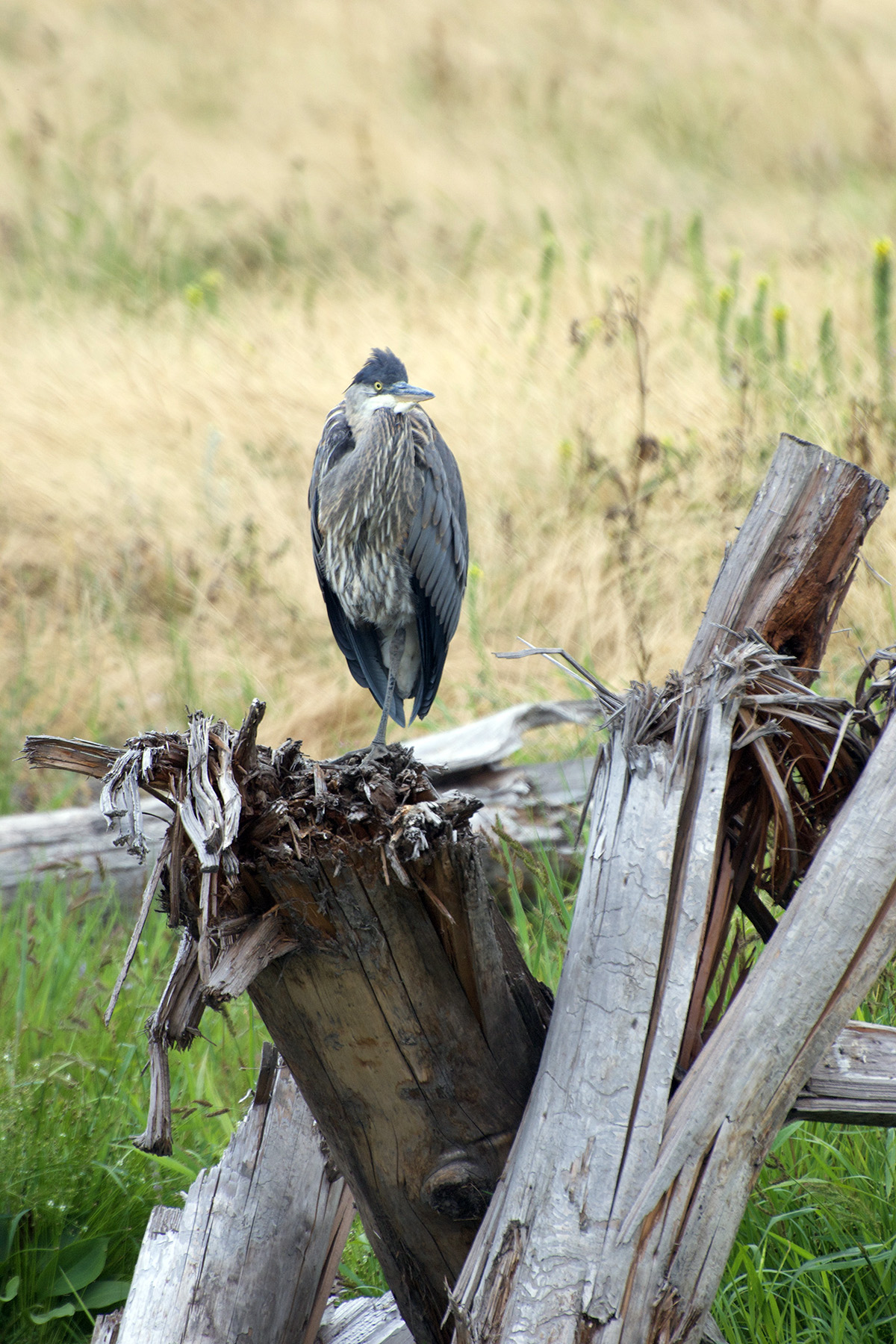
rests in his beauty on the water, and the great heron feeds.
I come into the peace of wild things
who do not tax their lives with forethought
of grief. I come into the presence of still water.
And I feel above me the day-blind stars
waiting with their light. For a time
I rest in the grace of the world, and am free.

Breaking Silence

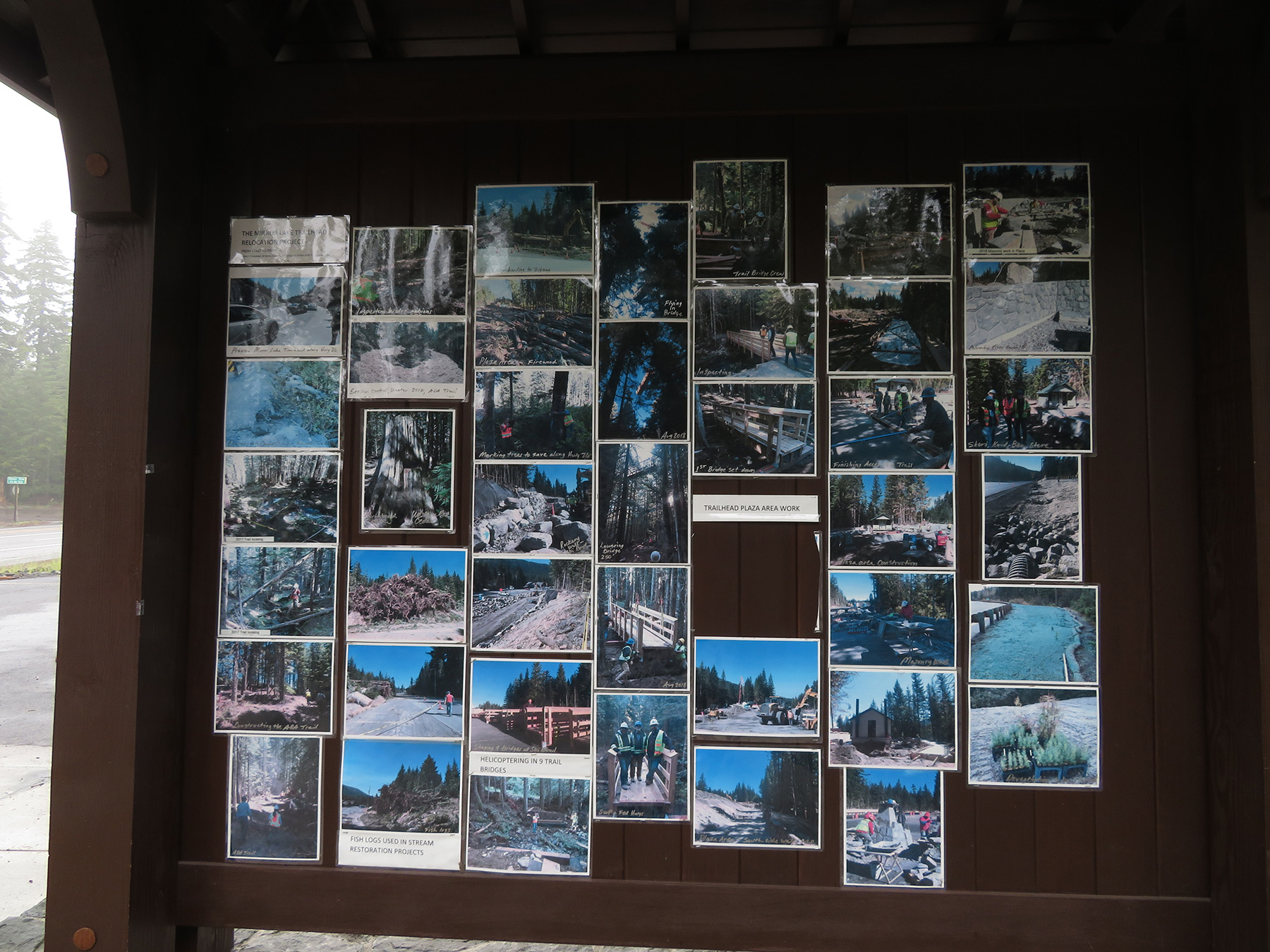
I had to think about this amusingly sarcastic poem, Breaking Silence, by Whitby yesterday, when a gorgeous hike along Mirror Lake trail and up to Tom, Dick and Harry mountain yielded all kinds of beautiful vistas – but no silence. The car noises carried heavily over from US 26, and the trail was populated by all kinds of not so silent people, some blaring loud music no less. Kids happily screaming at the lake

shrouded view in the morning
clear in the afternoon

found their counterpart in screeching Gray Jays, also known as Canada Jay, Camp robber, and Whiskey Jack, as I learned yesterday.

We made our Goretex exodus through ascending crowds of people in flip-flops and slippers later in the afternoon…. no longer silenced, in some fashion, by masks, which had been rigorously worn by the early morning hikers we encountered during ascent at 8 am.

The trail is probably the most heavily trafficked wilderness exposure close to the Portland area, and many conservationists are eager to develop alternative plans to protect the environment in the long run while allowing people to hike along these vistas.

The brooks gurgled, branches made the occasional odd noise when moved by a bit of wind, leaves shaking off the raindrops from previous showers.

The crinkly plastic paper from a devoured power bar rustled in my pant pocket, annoying enough that I had to transfer it into the backpack.

Loose boulders along screes rumble under your feet, and you wonder what the one large rock cairn you encounter would sound like if climbed. I could not figure out, after the hike, who built that cairn, or the rock stacking walls on the overview. Native Americans used cairns either for religious purposes, or as markers to show the way, but there is no information to be found if this cairn comes from a time before their land was stolen.

On top the clouds provided a bit of eeriness, no views of Mt. Hood. The mountain only appeared later in the day.

Even the chipmunks started to vocalize, when chasing each other in competition for the crumbs of my lunch. Rapid, high cadence sounds of chip-chip and cluck cluck in alternation, it seemed. Here is the real thing from National Geographic.

My knees creaked.

Only the raven on the summit kept his silence. A blissful day.

And since it was such a popular and populated trail, let’s have some popular classical music guide us into the weekend, inspired by landscapes, forests, and a river coming down from the mountain, Ma Vlast.

Of Melancholy and Sails

“When […] I first dabbled in this Art, the old Distemper call‘d Melancholy, was exchang‘d for the Vapours, and afterwards for the Hypp, and at last took up to the now current Appellation of the Spleen, which it still retains, tho’ a learned Doctor of the West, in a little Tract he hath written, divides the Spleen and Vapours, not only into the Hypp, the Hyppos, and the Hyppocons; but subdivides these Divisions into the Markambles, the Moon-palls, the Strong-Fives, and the Hockogrokles.” – Physician Nicholas Robinson, 1732

Free me of the Hockogrokles…. isn’t that what we all wish when the sadness hits again, no matter how justified the emotion is in response to external events?

I came across these inventive nomenclatures for depression when reading up on an 18th century, English woman poet yesterday, Anne Finch, who took the topic of melancholy, solidly in male hands at the time, and ran with it. Wrong word, she didn’t run with it, she inspected it, talked to it, turned it inside out, related it to science, and, in the end, seemingly threw up her hands in resignation and surrender.

I had dug out her poem on melancholy in honor of my beloved father, whose Jahrzeit is this weekend – he died 18 years ago – and it still makes me deeply sad. Prone to depression, he nonetheless taught us how to put up a fight even under the severest of circumstances, resisting the temptation to roll over and accept our lot in life.

Finch had her own share of difficulties in her lifetime, including a predisposition for depression, perhaps even bipolar disease. She was exposed to political storms that threw her and her husband from comfortable positions in monarchic circles into an unsecured existence, when they distanced themselves from the ascendence of William and Mary, after the revolution of 1688 deposed King James.

She was also keenly aware that women writers in her times were at best tolerated, mostly ignored, and at worst ridiculed. To pick up a topic like melancholia, firmly seen as a gendered disease reserved for highly sensitive, artistic or creative men, required strength. As you know, I value strong women. As I value realism, which Finch’s poetry exhibits in spades: she tries all kinds of things, friendship in particular, poetry, what have you and just can’t get a grip on the darkness experienced with bouts of serious depression. She describes as it IS, not as it should be, well anticipating how women will be labeled as hypochondriacs or hysterics down the historical pipeline. I also value finding voices that tell of shared experiences, even or particularly if centuries apart. It never hurts to remind ourselves that we are not the first or only ones going through difficult times.

I am not an expert on poetry, as I have stated repeatedly, and I have no clue if her poems attack the patriarchy, or create religious parallels to the world as perceived or any of the many other things written about her. I just read the poem and multiple things rang true, hundreds of years later.

Ardelia, who Finch uses as a pseudonym, seems to be a victim of melancholy, unable to shake it across the years. But she also calls on it not just as an adversary, but a power source, addressing it as a challenger, gaining intermittent control over the sadness by being able to harness some creativity from it. I think this is the push me-pull me dichotomy that I have tried to write about this week in various ways for our very own times of sadness.

You cannot or should not pretend the sadness doesn’t exist. It does not help to favor rejection of it over acceptance; however, acceptance cannot mean to be engulfed, allowing ourselves to be paralyzed. There is such a thing as resistance, claimed for both the private and the public sphere. And creativity, art – in Ardelia’s case poetry – is a form of resistance. The fact that she in the end, declares resistance as futile, cannot mean that we should.

Why do I say that? Because some 300 years later, science has enabled us to treat the clinical forms of depression, the endogenous ones due to the physiological disfunction in the neurotransmitter systems, depression that paralyzes indeed. Medications and/or ECT treatments can work wonders, particularly for people living with bipolar disease.

The exogenous forms of depression, the sadness many of us experience in reaction to the events in our lives and the world, are the ones that serve a more healing function and also can be harnessed. The form of resistance will be, has to be a personal choice – your’ baking bread to my montages to her going to demonstrations to his meditation to their cognitive therapy. Anything that works to make our dusky, sullen foe into a companion, not an oppressor.

“Ardelia to Melancholy”

by Anne Finch

At last, my old inveterate foe, No opposition shalt thou know. Since I, by struggling can obtain Nothing, but encrease of pain,

I will att last, no more do soe,
Tho’ I confesse, I have apply’d
Sweet mirth, and musick, and have try’d A thousand other arts beside,
To drive thee from my darken’d breast,

Thou, who hast banish’d all my rest.
But, though sometimes, a short repreive they gave, Unable they, and far too weak, to save;
All arts to quell, did but augment thy force,
As rivers check’d, break with a wilder course.

Freindship, I to my heart have laid,
Freindship, th’ applauded sov’rain aid,
And thought that charm so strong wou’d prove, As to compell thee, to remove;
And to myself, I boasting said,

Now I a conqu’rer sure shall be, The end of all my conflicts, see, And noble tryumph, wait on me; My dusky, sullen foe, will sure N’er this united charge endure.

But leaning on this reed, ev’n whilst I spoke
It pierc’d my hand, and into peices broke.
Still, some new object, or new int’rest came
And loos’d the bonds, and quite disolv’d the claim.

These failing, I invok’d a Muse,

And Poetry wou’d often use,

To guard me from thy Tyrant pow’r; And to oppose thee ev’ry hour
New troops of fancy’s, did I chuse. Alas! in vain, for all agree

To yeild me Captive up to thee,
And heav’n, alone, can sett me free.
Thou, through my life, wilt with me goe, And make ye passage, sad, and slow.
All, that cou’d ere thy ill gott rule, invade,

Their useless arms, before thy feet have laid;
The Fort is thine, now ruin’d all within,
Whilst by decays without, thy Conquest too is seen.

(From: Anne Finch: The Poems of Anne Countess of Winchilsea. Ed. Myra Reynolds. Chicago: University of Chicago Press, 1903.)

*

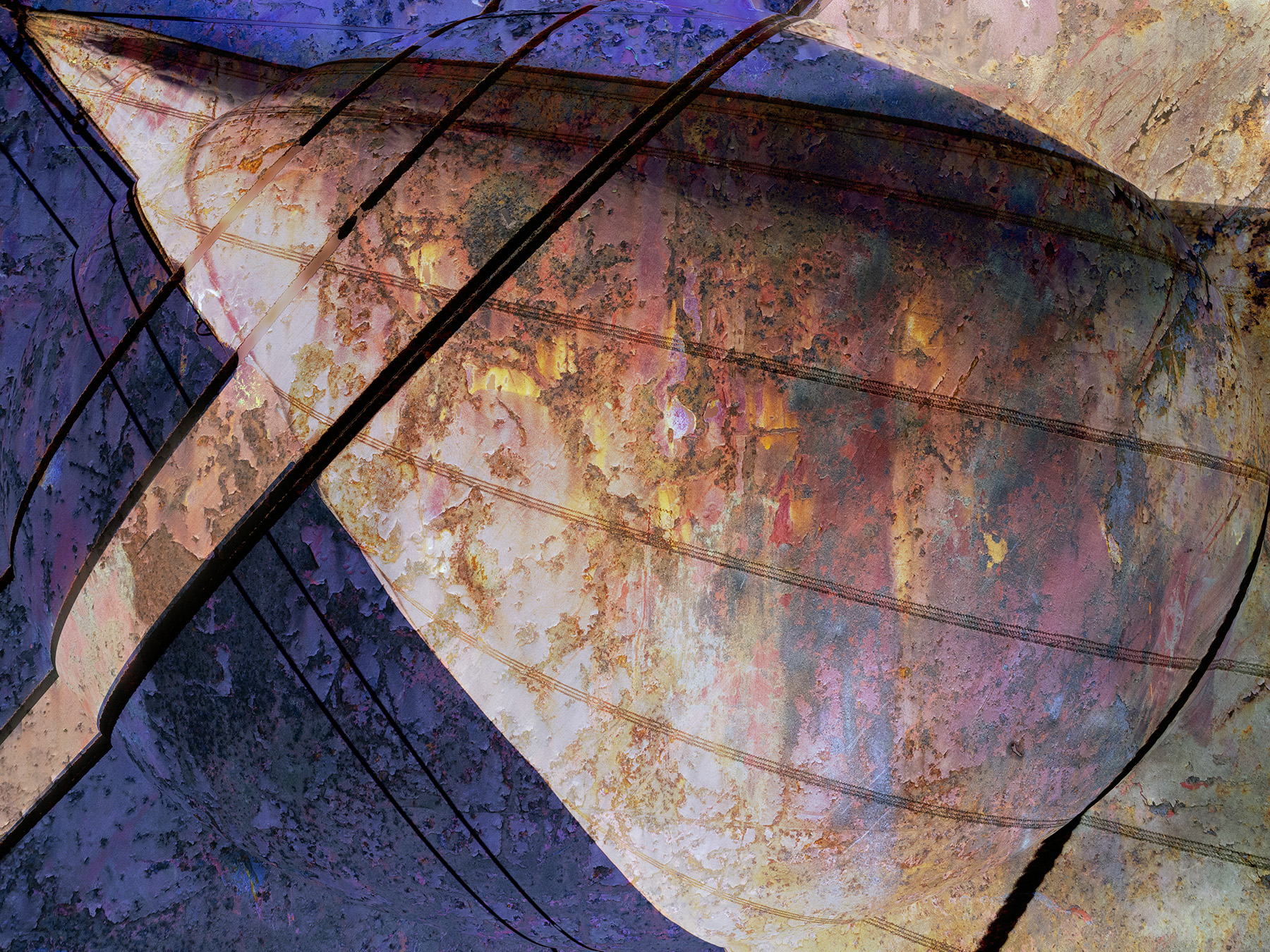
Photographs today are a few samples of a new series of montages I have been working on in response to the loss of life incurred by the pandemic and the ways it has been catastrophically mismanaged. Setting Sail hopes that there is someone waiting on the distant shores to greet the departed and help them rest in power. I like to think my father, who’s dream it was to sail the seas to escape the narrow confines of true poverty in his childhood, is among the welcoming committee.

More of the series can be seen here.

And here is a musical antidote to the Markambles and Moon-Palls…

All is transformed

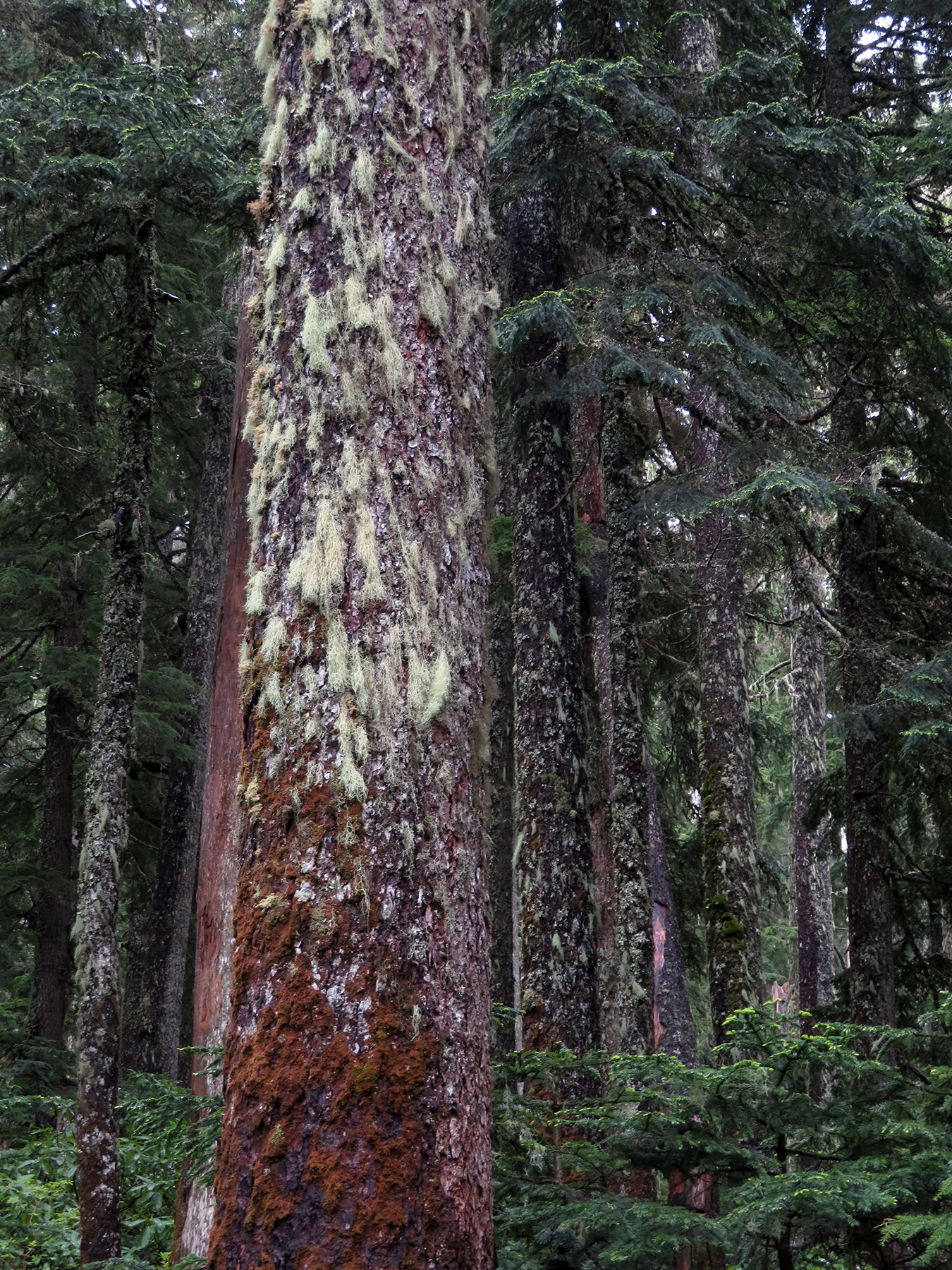
For the Lobaria, Usnea, Witches Hair, Map Lichen, Beard Lichen, Ground Lichen, Shield Lichen

by Jane Hirshfield

Back then, what did I know?
The names of subway lines, busses.
How long it took to walk 20 blocks.

Uptown and downtown.
Not north, not south, not you.

When I saw you, later, seaweed reefed in the air,
you were grey-green, incomprehensible, old.
What you clung to, hung from: old.
Trees looking half-dead, stones.

Marriage of fungi and algae,
chemists of air,
changers of nitrogen-unusable into nitrogen-usable.

Like those nameless ones
who kept painting, shaping, engraving,
unseen, unread, unremembered.
Not caring if they were no good, if they were past it.

Rock wools, water fans, earth scale, mouse ears, dust,
ash-of-the-woods.
Transformers unvalued, uncounted.
Cell by cell, word by word, making a world they could live in. 

I wrote about lichen and moss about a year ago, unaware of this poem then, otherwise it would have been added.

In some ways fortunate, because it gives me opportunity today to bring together those words with new pictures. I have, of course, no clue what the lichens are called that I saw this week, much less do I know if any of them appear in Hirshfield’s listing. But I love the sentiment of her words, the observation that a world can be made to live in, where life is possible, and that not all agents of transformation call for recognition – they just provide.

Fungus for good measure

Music today celebrates a master of (thematic) transformation: Liszt.

Here is another take, by a master of (Liszt) interpretation, Lazar Berman.
The Duty to Protest

Here the poem is read.

Want to guess when Protest was published? In 1914, in a book by Ella Wheeler Wilcox, titled Poems of Problems. (She was a prolific writer, there are also poems of experience, of passion, of courage, really books and books of poems in addition to numerous novels. She was quite a complex character worthy of closer examination, but I really don’t want to dilute the prescient words above with more information. Here you can read up on her if interested.

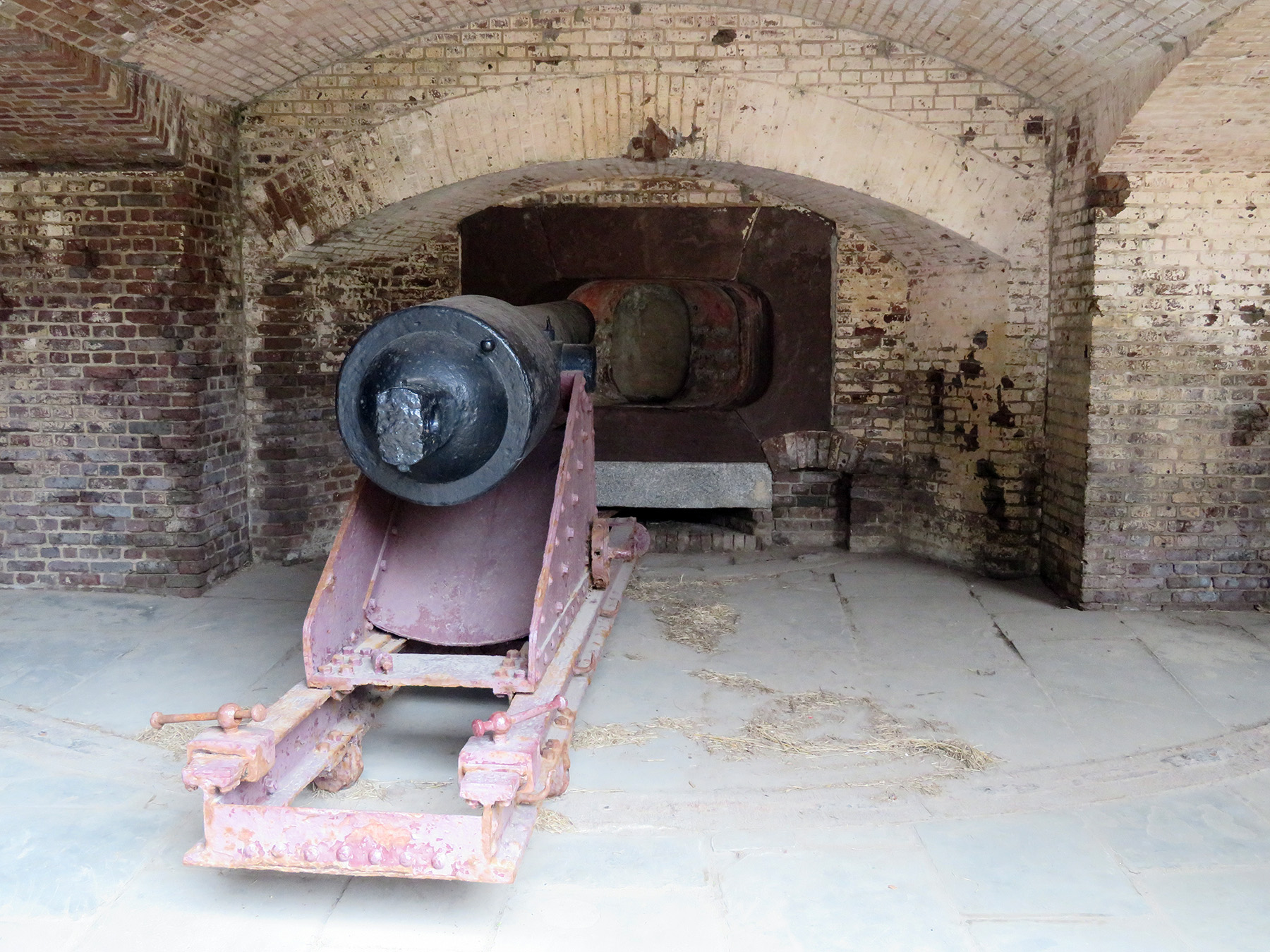
Images are from Fort Sumter in NC, where the Civil War started. How many people are hoping/scheming right now for its return or a new version under the guise of condemning protest?

Music today by a progressive British composer who died way too young, Cornelius Cardew. A short discussion of his brilliance, his politics and his demise can be found here. His reversal from someone at the highest echelons of classical music culture in Europe, a Wunderkind of sorts, to someone who wrote revolutionary songs that never caught on because they were too sophisticated in structure, is worthy of its own blog – maybe later this month. Who knows. The Thälmann from the title was a German revolutionary who twice ran for president to lose against Hindenburg, executed in Buchenwald by the Nazis.

And some contemporary form of musical protest from the Northwest Tap Connection in Seattle.

Let that rhythm and that message take you into the weekend.

The Urge to Display

Yesterday was an emotional day. We attended my son’s dissertation defense via Zoom, sad that we could not be there in person for his graduation. I was also bursting with pride, of course, and simultaneously raging that the current circumstances prevent travel so I could not hold my son in my arms. I was frustrated that I did not understand a word of what he talked about in his presentation, just as I never did when I had occasion to hear my father giving a talk – both passionate chemists. It was bittersweet to think that his grandson chose the same path, never to be seen by him, or his other grandfather, unless there are little viewing slots between this dimension and the one for the departed. Shutters that open for special occasion….

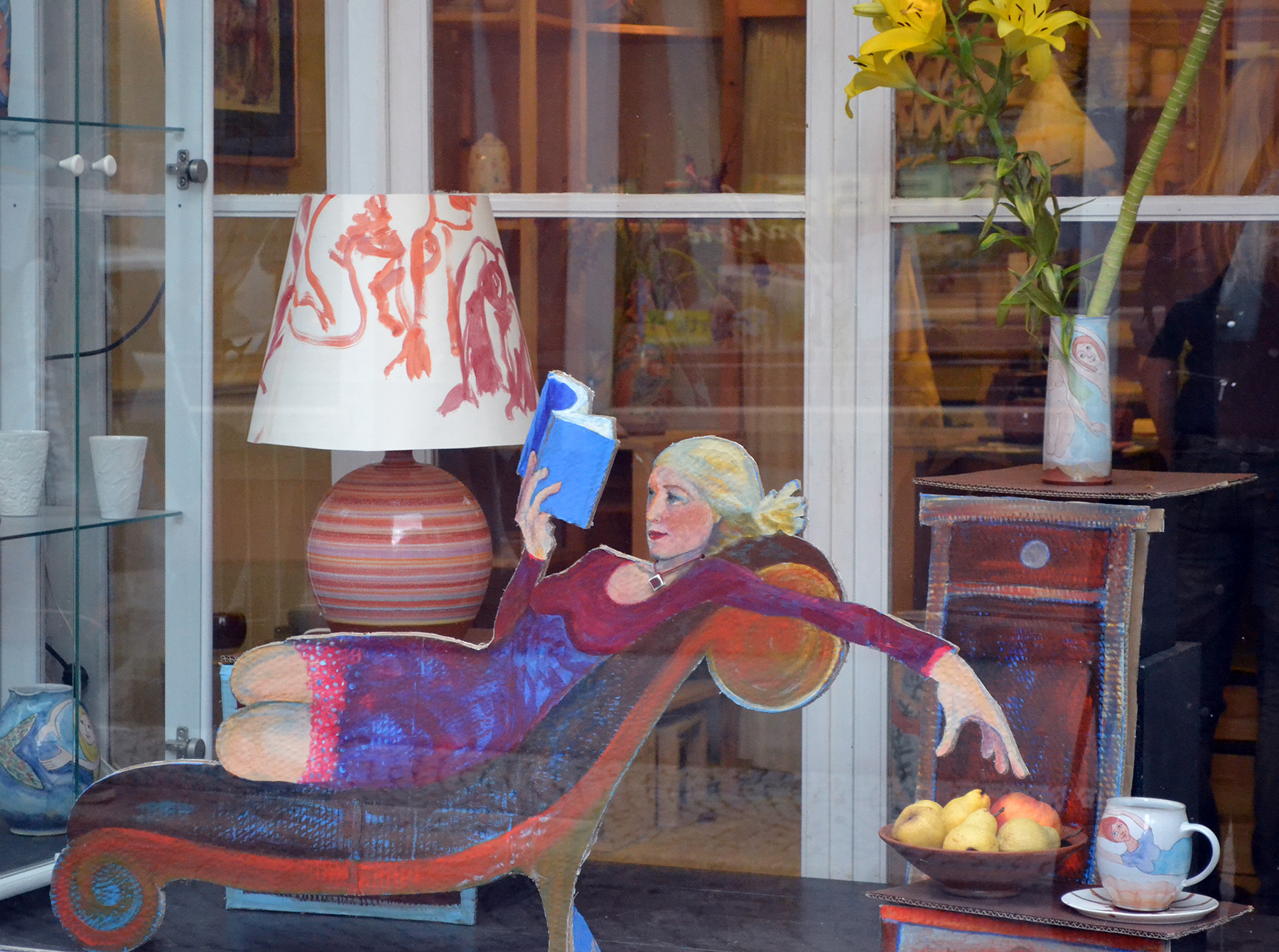
Shutters made me think of windows, windows made me think of how people decorate them, or simply use them to display, well, almost anything, from signs to art to whole collections of stuff. So much stuff. Spilling out.

I have attached a small sample of what caught my attention over the last decade, most of it from Europe, but a couple of them from the U.S.

*

For me it was simply curiosity, while more professional photographers approach window displays with strategy. To lovely results in the case below, I might add. Larger images can be found on the links.)

Jean-Luc Feixa has a new book out that really captures much what is familiar to me from Northern Europe (in his case he photographed in Belgium.) Although I am keen to introduce mostly young women photographers, given the gender imbalance regarding recognition in this as in so many fields, I really liked Feixa’s work when I first saw his landscapes some years ago. They were photographed at the Franco-Spanish border with its contradictory landscape of misty mountains and barren desert. And how can you not covet an artist statement like this:

False American decor – perfect! Now what do we call all that decor in the windows? Open to suggestions!

And here is poetic wisdom that points to the trouble with clinging to the past, the urge to display, and holding on to things…..

The Three Oddest Words

By Wislawa Szymborska
Translated by S. Baranczak & C. Cavanagh

When I pronounce the word Future,
the first syllable already belongs to the past.

When I pronounce the word Silence,
I destroy it.

When I pronounce the word Nothing,
I make something no non-being can hold.

And here is César Franck‘s quintet, wistful (in honor of the Belgian windows,) and intricately constructed (in honor of my son’s synthetic molecule.) Mazel Tov, Solomon!

I look at the World

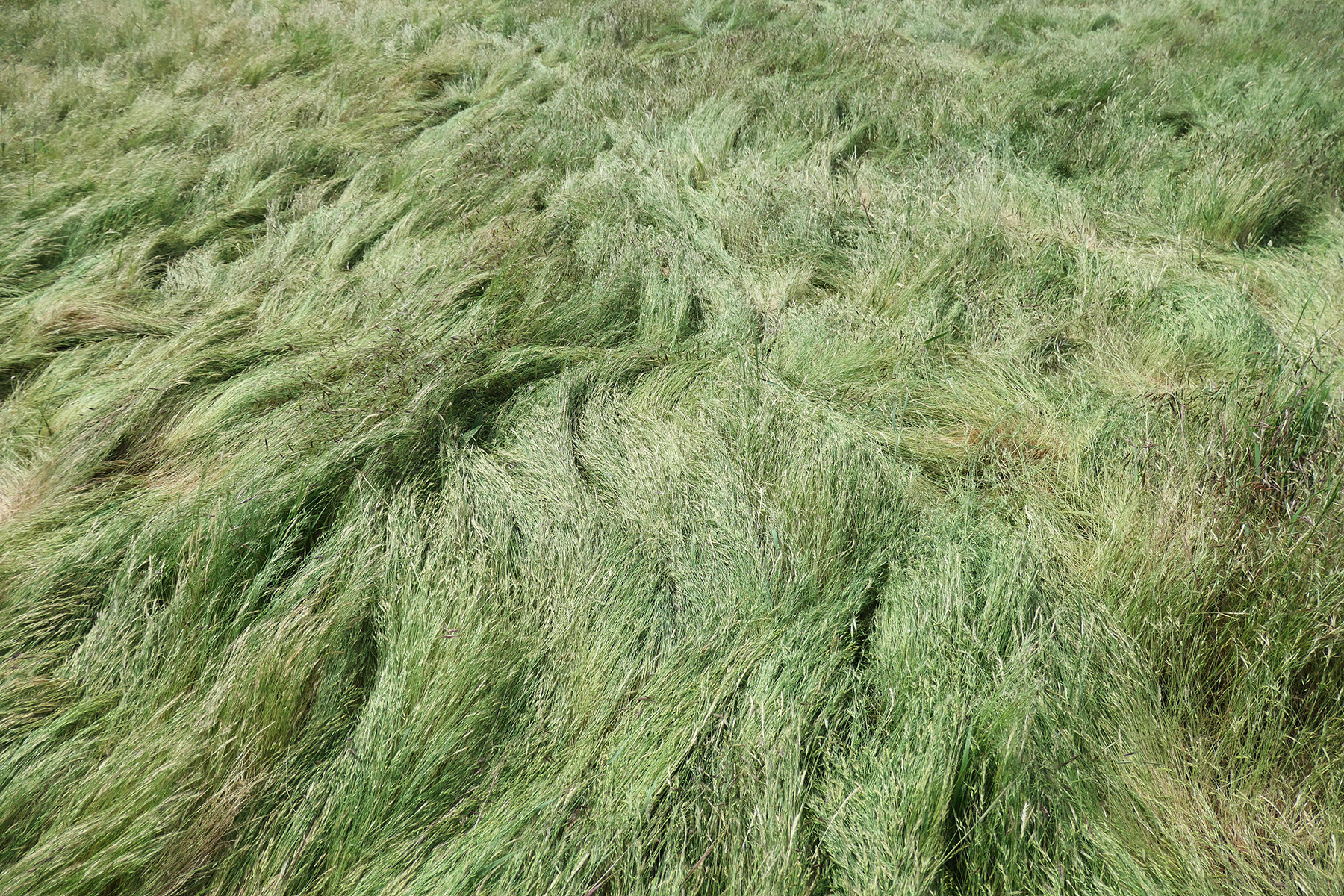
I’ll end this week with images depicting the state of our nation: things in flux,

despite being trampled down,

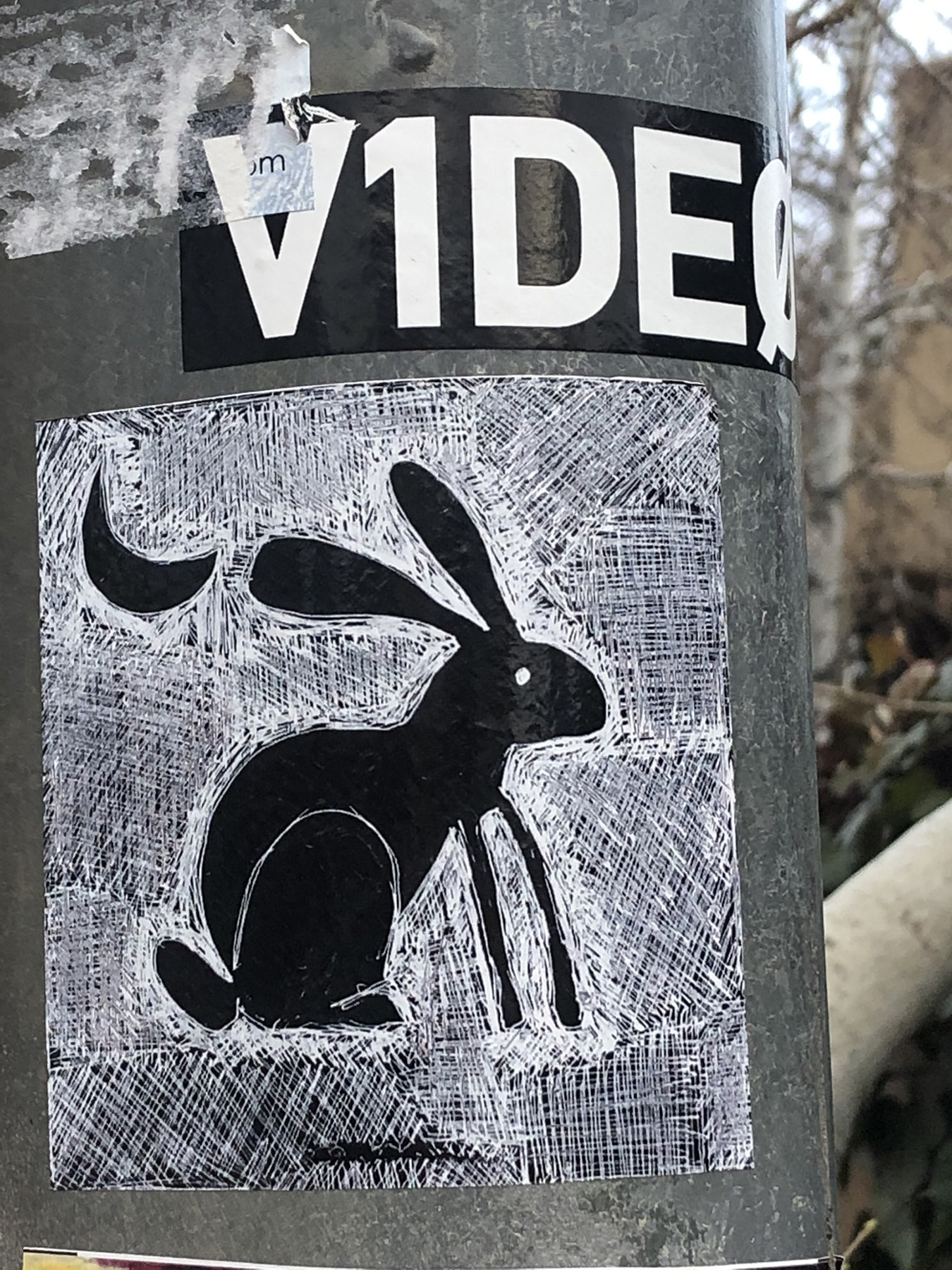
Black and White in sharp contrast,

in fragile states,

with darkness trying to suppress light,

with anonymity seeking impunity,

and yet: there are glimpses of bright horizons.

I think that has always been the power of Langston Hughes’ poetry for me: he never gave up the belief that we can initiate change towards a better future. With our very own hands – particularly if we link them to others.

I look at the world

BY LANGSTON HUGHES

I look at the world
From awakening eyes in a black face—
And this is what I see:
This fenced-off narrow space   
Assigned to me.

I look then at the silly walls
Through dark eyes in a dark face—
And this is what I know:
That all these walls oppression builds
Will have to go!

I look at my own body   
With eyes no longer blind—
And I see that my own hands can make
The world that’s in my mind.
Then let us hurry, comrades,
The road to find.

Langston Hughes, “I look at the world” from (New Haven: Beinecke Library, Yale University, )

*

There might be a path forward, after all.

And here is how it’s done, young Wynta-Amor showing us the way. Fierceness and belief.

Music today is from an 2014 album that celebrates Hughes’ poetry: Vari-Colored Songs by Leyla McCalla. The song was originally from a KurtWeill/Langston Hughes production Street Scenes.

And here is another of her timely songs, one he would surely have approved of.

*

Today would have been Breanna Taylor‘s 27th birthday – another victim of police shootings, in bed, in her own department, with no cause.

May they celebrate you on whatever shore you’ve arrived!

Marooned

Vaivén de fantasías

Los argonautas se albergaron
en la oscuridad de mis zapatos
y un dragón azul acudió
a encenderme la estufa.
El cielo limpio se escondió
en las gavetas del armario,
lo que explica el silencio
de los pájaros y el exceso
de neblina en la ropa que me puse.
Hoy la soledad es un vaivén
de fantasías.
Mejor así.
Ayer el día desató un
huracán de anzuelos
que dejó al mar vacío
y al sol humedecido
como ojo de ballena herida.

Marooned

The argonauts took shelter
in the darkness of my shoes
and a blue dragon arrived
to light the stove for me.
The clear sky hid
in my dresser drawers
which explains the silence
of the birds and the excess
of mist in the clothes I put on.
Today solitude is an ebbing and flowing
of fantasy.
Better this way.
Yesterday set off a
hurricane of fish hooks
that left the sea empty
and the sun slick                             
like the eye of an injured whale.

I looked it up, given that my Spanish vocabulary consists of approximately five words. Was marooned really the English word for Vaivén de fantasias? Particularly when that phrase, in the body of the poem posted above, was translated into ebbing and flowing of fantasy?

The official translation of Vaivén was sway, or seesaw, the latter a playful term much more in sync with the rest of the poem’s vivid imagery (and its reference to the fate of the argonauts, in their continual push/pull adventures.) What was the translator thinking? That we needed a hint? Is that kosher?

The poet is Carlos Parada Ayala, a recipient of the Larry Neal Poetry Award from the DC Commission on the Arts, a member of the Late Night Hour poetry collective, and a founding member of ParaEsoLaPalabra, a multi-genre arts collective in DC. Parada Ayala is included in podcast series “The Poet and The Poem at the Library of Congress.” The poem comes from his first published collection in 2013, La luz de la tormenta / The Light of the Storm, which focused on solitary experience way before the current lock-down ensued.

It so happens, though, that the English as well as the Spanish title and my resolve to end this week’s display of photographed fauna rather than flora with a cache of artificial creatures collected across my travels, provided a perfect match. I am marooned, thus living out my longing for travel by going back to the archives. I have bunches of images of fantastical fauna that could have been encountered any day by the argonauts on their mythical voyage, swaying reality for just a moment in our realm of solitude. All that’s missing is the blue dragon that I could ride out of here….maybe I’ll take the unicorn instead.

*

Hm, argonauts hiding in the obscurity of a shoe – whatever happened to Jason and his buddies? Lost interest in the golden fleece? Lost interest in Medea, his fratricidal lover/spouse? Decided to give up the fight for the throne usurped by his uncle in view of all the giants and dragons and gods they had to challenge? Too exhausted for adventure, with physically or psychologically injured beings wherever we look?

And isn’t marooned the wrong analogy when next he turns to fishhooks – pointing to events on the ship delaying their pursuers so they could escape? Medea not only killed her brother to protect her lover, but cut Absyrtus into myriad pieces and threw them overboard, so his family was obliged to pick every one of them out of the sea for proper burial, an exceedingly important ritual? Sure slowed them down. Sure horror movies are not a thing of the recent past. Sure solitude is the last thing you find on a ship carrying a band of heroes. Oh, all so confusing.

Not just solitude ebbing and flowing here – interpretation as well. Your take on all of this is as good as mine – I’m easily swayed, with no Argo in sight to pick me up and carry me away!

Music today is from Latin America, where Parada Ayala was born.

They are Hell on Salad

I had to laugh out loud when I read that sentence embedded in an erudite prose poem on snails. They are hell on salad, indeed – and bring up a fond memory of a long ago trip with my then 13 year-old to France. There we were, having lunch in an outdoor café, when what I thought to be a black olive began to move…. the waiter, resenting that I called him over, just shrugged, did not even take the plate away, much less took it off the bill or compensated with a free dessert. “What did you assume,” a bystander at the next table declared, “after all, it’s Marseille.” My son’s aversion to French waiters, who regularly scolded him for not finishing the food on his plate, a move long given up by his mother, went up a notch.

Here is another passage from the poem (it is too long to print here, therefor the link above,) revealing Francis Ponge‘s artistry with words as much as observations:

“There is more to be said about snails. First of all their immaculate clamminess. Their sangfroid. Their stretchiness.“

One might add: their pace…..

*

Ponge (1899-1988) was an interesting character and marvelous wordsmith. He was keen on creating a “visual equivalence” between language and subject matter by emphasizing word associations and by manipulating the sound, rhythm, and typography of the words to mimic the essential characteristics of the object described.” Seems more like an auditory equivalence to me, but what do I know.

Trained as a lawyer and philosopher, he was loosely connected to the Surrealist movement in the 1920s, and affiliated with the French Communist Party in 1937, and was active during the war in organizing the Resistance movement among journalists. He left the Party in 1947 decrying its embrace of Stalinism. In 1952 he became a professor at the Alliance Française and started to concentrate on writing. His politics remained progressive, though, and his choice of subjects – the everyday, common use, down-to-earth objects of the material world around us in some way echo his commitment to make the world a better place. Being mindful about the things around us and respectful of nature were frequent themes in his work. He was made Commander of the Legion of Honour in 1959 and received the French Academy’s grand prize for poetry in 1972 and the National Poetry Prize in 1981.

His early work had a focus on small things. Soap, shells, cigarettes, plants, – and, of course, snails. There is something to be learned from looking at the minute, then extrapolating from it to the larger world around us. I find myself doing that as a photographer as well and maybe his astute observations crafted into detailed descriptions of the visual qualities of things explains why I am drawn to his early writings.

.


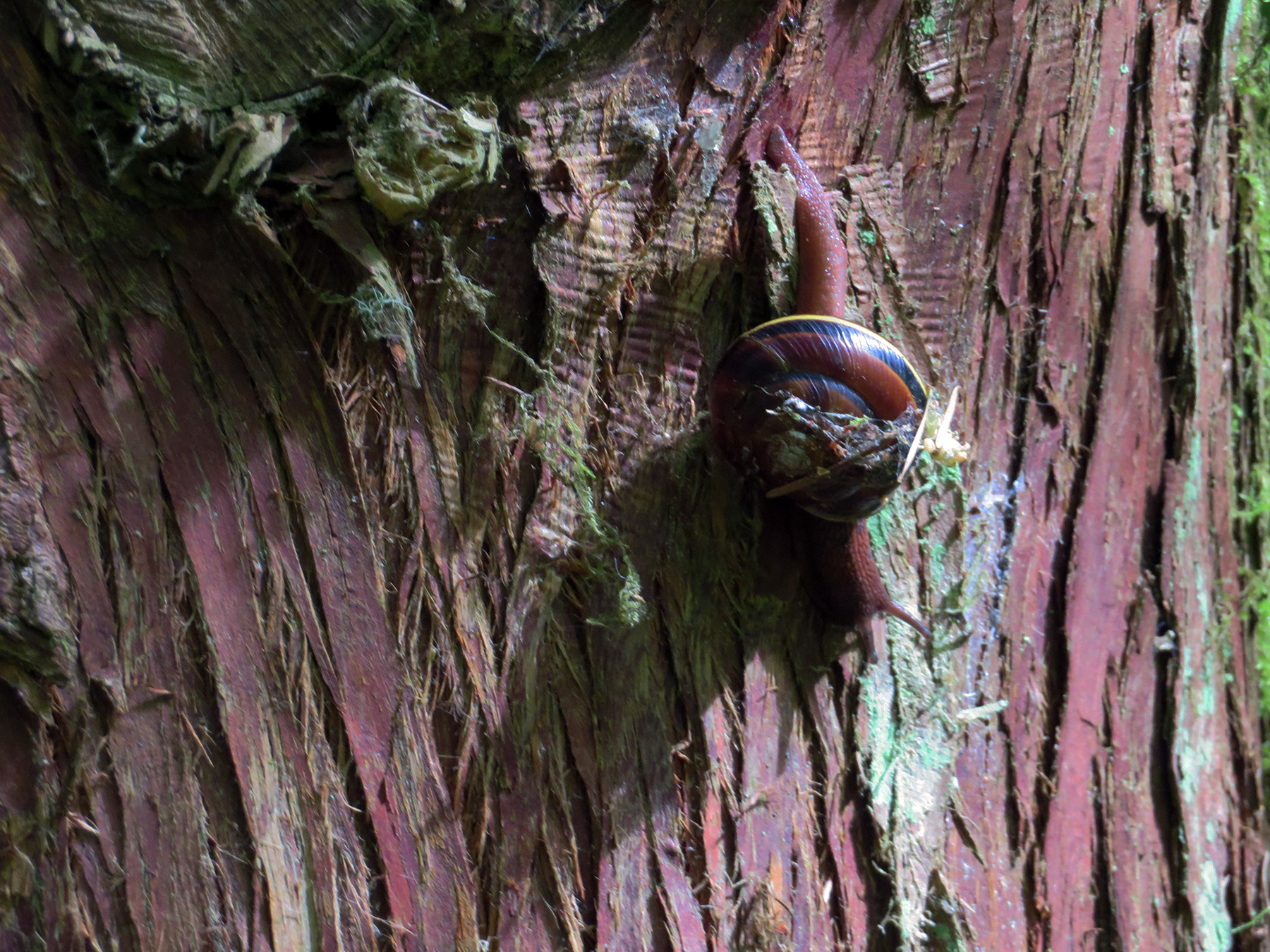
And so it was some days ago, when the rains had once again made the woods into a muddy, moist, verdant, dripping landscape where fungi unfolded in full curves and snails and slugs slimed their way across the glistening surfaces.

My camera depicted, as did Ponge’s poetic words, but stuck to the observable, in contrast to his musings. For one so interested in a materialistic aesthetic it is surely weird to anthropomorphize the feelings of snails.

“It must be a pain to have to haul that trailer around with them everywhere, but they never complain and in the end they are happy about it. How valuable, after all, to be able to go home any time, no matter where you may find yourself, eluding all intruders. It must be worth it.

They are a little vain about this convenient ability: “Look at me, a vulnerable and sensitive being, who is nevertheless protected from unwanted guests, and so always in possession of happiness and peace of mind!” It’s not surprising the snail holds his head so high.

“At the same time I am glued to the earth, always touching it, always progressing, though slowly, and always capable of pulling loose from the soil into myself. Après moi le déluge, I don’t care, the slightest kick may roll me anywhere. I can always get up again onto my single foot and reglue myself to the dirt where fate has planted me, and that’s my pantry: the earth, the most common of foods.”

Oh well, to each their own. I certainly appreciate that there are people other than me who indulge in the beauty of these creatures, even though I regularly smite them when they decide to eat my garden. Hell on salad and hell on hostas, too. Aesthetic appreciation only goes so far.

Here is a strange snail ballet from 2019, part of Cryptic’s Sonica Festival.

From the announcement: “176 snails will travel to Kings Place to take centre stage in a live sonic installation like no other. French artists Elizabeth Saint-Jalmes and Cyril Leclerc conduct an immersive sensorial experiment as they harness each snail with a small diode. Slow Pixel highlights Kings Place’s theme of ‘time’ and invites the audience to slow down as the snails draw their individual trajectories through this sensory environment.”

If Leclerc’s music is too jarring (certainly for my Monday brain), here is something classical, lilting albeit at a snail’s pace, the Adagio from Mahler’s 9th.

And here is a shorter prose poem about the substance that makes snails (presumably) happy, particularly on this rainy Monday morning:

Rain

BY FRANCIS PONGE

TRANSLATED BY JOSHUA COREY AND JEAN-LUC GARNEAU

The rain, in the backyard where I watch it fall, comes down at different rates. In the center a fine discontinuous curtain — or network — falls implacably and yet gently in drops that are probably quite light; a strengthless sempiternal precipitation, an intense fraction of the atmosphere at its purest. A little distance from the walls to the right and left plunk heavier drops, one by one. Here they seem about the size of grains of wheat, the size of a pea, while elsewhere they are big as marbles. Along gutters and window frames the rain runs horizontally, while depending from the same obstacles it hangs like individually wrapped candies. Along the entire surface of a little zinc roof under my eyes it trickles in a very thin sheet, a moiré pattern formed by the varying currents created by the imperceptible bumps and undulations of the surface. From the gutter it flows with the restraint of a shallow creek until it tumbles out into a perfectly vertical net, rather imperfectly braided, all the way to the ground where it breaks and sparkles into brilliant needles.

Each of its forms has its particular allure and corresponds to a particular patter. Together they share the intensity of a complex mechanism as precise as it is dangerous, like a steam-powered clock whose spring is wound by the force of the precipitation.

The ringing on the ground of the vertical trickles, the glug-glug of the gutters, the miniscule strikes of the gong multiply and resonate all at once in a concert without monotony, and not without a certain delicacy.

Once the spring unwinds itself certain wheels go on turning for a while, more and more slowly, until the whole mechanism comes to a stop. It all vanishes with the sun: when it finally reappears, the brilliant apparatus evaporates. It has rained.
Translated from the French