They are sitting in front of my window, courting, day after day. Sometimes they come as a small flock, sometimes just the two of them, she more cautious, reserved, but eventually joining him at the bird bath. We used to put seeds out, but that attracted too many squirrels onto the balcony.
These birds have been struggling, over-hunted, numbers slowly picking up for a while, now declining again. They eat berries, love to hang out in the Hawthorne and munch, sitting upright. I wave to them, they blink at me, unperturbed. Leaving as suddenly as they appeared.
Maybe it was the cold. Maybe the decline in pollinators. The number of wildflowers were sparse. It made finding every single one a particular joy, of course, hah, another iris! Maybe this 231 acres Cooper Mountain park, new to me, never had that many to begin with, or it was still too early in the season. When trails announce Larkspur Meadow, and all you find are a few puny specimens of the plant, it does make you wonder, though.
Made me think about a recent book. If you have time, read the The Arts of Living on a Damaged Planet. It is a fascinating anthology of conversations between and presentations by some twenty scientists and humanists (artists and poets included), presented during a conference at UCSC Santa Cruz a few years go. As conferences go, this was surely an imaginative one: the topics of how we can live and progress on a damaged planet were divided under two headings concerning he Anthropocene: Ghosts and Monsters.
Ghosts referred to issues around landscapes altered by the violent extraction and modification during human expansion. Monsters concerned interspecies and intraspecies social interactions. The goal for all theses scholars in anthropology, ecology, science studies, art, literature, and bioinformatics was to suggest critical and creative tools for collaborative survival in a more-than-human Anthropocene. A planet we share with other species, in other words, while making it inhabitable.
Dandelion and Wild Geranium
It is a book that has a wide range of topics, not to be read as a whole, but digested bit by bit, at least that worked for me with my aging brain. It will familiarize you with ants, lichen, rocks, electrons, flying foxes, salmon, chestnut trees, mud volcanoes, border zones, graves, radioactive waste, to name a few. We learn what has been harmed, what can be rescued, what needs adapting, and, importantly, how art can be of help in the process.
Lupine
It came to my mind on a walk on Sunday, a warm, sunny day so atypical for this dreadful April, where I found myself ambling through various biotopes: paths through old growth forests, along sunlit prairie, and in groves sheltering what remains of the oaks and freshly budding maple trees, both hung with veils of Spanish moss. Me and the rest of town – this is an easy 3.4 mile hike on Cooper Mountain near Beaverton and e v e r y o n e was out. Good for all of us – being in nature remains restorative, even when the damage is visible and seen, perhaps, by multitudes. Engaging with nature helps with (re)learning how to be in the world.
At least this was part of what Ursula Le Guin, a participant in the conference that led to the book, suggested: “To use the world well, to be able to stop wasting it and our time in it, we need to relearn our being in it.” She defined two possible approaches in ways I have cited before: “Science describes accurately from outside; poetry describes accurately from inside. Science explicates; poetry implicates. Both celebrate what they describe.” She explained: Skill in living, awareness of belonging to the world, delight in being part of the world, always tends to involve knowing our kinship as animals with animals.”
And here she put it in her inimitable poetic way:
THE STORY It’s just part of a story, actually quite a lot of stories, the part where the third son or the stepdaughter sent on the impossible mission through the uncanny forest comes across a fox with its paw caught in a trap or little sparrows fallen from the nest or some ants in trouble in a puddle of water. He frees the fox, she puts the fledglings in the nest, they get the ants safe to their ant-hill. The little fox will come back later and lead him to the castle where the princess is imprisoned, the sparrow will fly before her to where the golden egg is hidden, the ants will sort out every poppyseed for them from the heap of sand before the fatal morning, and I don’t think I can add much to this story. All my life it’s been telling me if I’ll only listen who the hero is and how to live happily ever after.
–Ursula Le Guin
I’d like to add to the focus on animals an acknowledgement of plants. People nowadays, kids in particular, know fewer plants than ever before. It is a phenomenon called Plant Blindness,the inability to notice or recognize plants in our own environment. The term was coined by two botanists, James Wandersee and Elisabeth Schussler, who originally proposed that we are blind to plants because they lack visual attention cues. They don’t have a face; they don’t move in the way that animals do; and they aren’t threatening. They look more like each other than animals do – and the human brain is geared to detect differences over similarities. We also favor things more familiar, and animal behavior is closer to humans in that regard, establishing some bio behavioral kinship. Add to that our general separation from nature, and you end up with people unable to identify more than a few plants.
Larkspur
This ignorance, echoed and anchored in the demise of academic instruction in plant biology, is all the more worrying given the role plants play in societal developments: global warming, food security and the need for new pharmaceuticals that might help in the fight against diseases. Without young people being drawn into plant sciences we might not be able to fight new plant diseases or develop plant strains adapted to changing climate conditions or discover new medications, and so on. In Great Britain you can no longer enroll for a botany degree, for example. Across the US, university Herbaria are closing. Funding is affected: 10 years ago plants made up 57% of the federal endangered species list – they received less than 4% of the endangered species funding! (Here is a good overview article on the consequences.)
Wild Strawberries
If schools fail at instruction, take the kids to the park. An emotional connection outweighs dry instruction in any case. Teach them how plants can be – are – heroes when it comes to their healing properties or their role in environmental protection – there are plenty of guides and apps for the phone available in case you’re not so sure yourself about names and species. Snap a picture and have an identification within a minute.
Prairie Meadow. I believe the yellow flower is Monkey flower, but am not sure.
Turn it into a treasure hunt to spur the kids’ interest. Who can find more larkspur than irises? Who spots the first saxifrage? Who can tell a strawberry by their blossom?
Saxifrage
Tell fairy tales where plants play a significant role (Hans Christian Andersen scored here, as do many Native American tales), seek out botanical gardens that help with education.
Lilies
I have my doubts about living happily ever after at which LeGuin’s poem hinted – but I believe walks are the moments when we can live happily, encountering spring’s renewal, however sparse, in all its beauty, and learn in the process.
Last Friday was Earth Day. The Oak Island nature trail on Sauvies Island had just opened after its annual 6 months-closure to protect migratory birds. I can think of no better place to celebrate nature – off I went, except it felt more like an attempt to escape than to celebrate.
Escape from thinking about the ever expanding, ever faster cycle of crises, ever larger looming dangers, ever more consequential action (or inaction) threatening this planet and its inhabitants. A carnival of negativity, as someone put it in The Atlantic while describing what is happening to our young people. There comes a point where you either shut off in depression or get enraged to the point of non-functioning.
One of the opinion writers at one of Germany’s most influential weekly, Der Spiegel, advised us this week to go milk cows, or commune with nature in any which way, or hang out at a spa, in all seriousness grappling with these options to fend off paralyzing doom, sounding simultaneously ridiculous and echoing my own sentiments (I guess ridiculous ones as well.)
Poets have gone a step further, exploring the desire to go back to a state of non-sentient existence, compared to one of calmed thought after a bovine encounter (the latter state, by the way, does not result from milking cows. As one who has engaged in that activity regularly, it is somewhat nerve-racking, just saying.)
The poem below speaks to the issue, the desire to be a speck that seeded the universe, un-thinking, un-feeling, un-remembering. It will be followed by another poem written in response, that I found somehow more encouraging (and encountered here). Written by Marissa Davis, illustrated by Lottie Kingslake and sort of sung by Toshi Reagon, it celebrates more than just “being.”
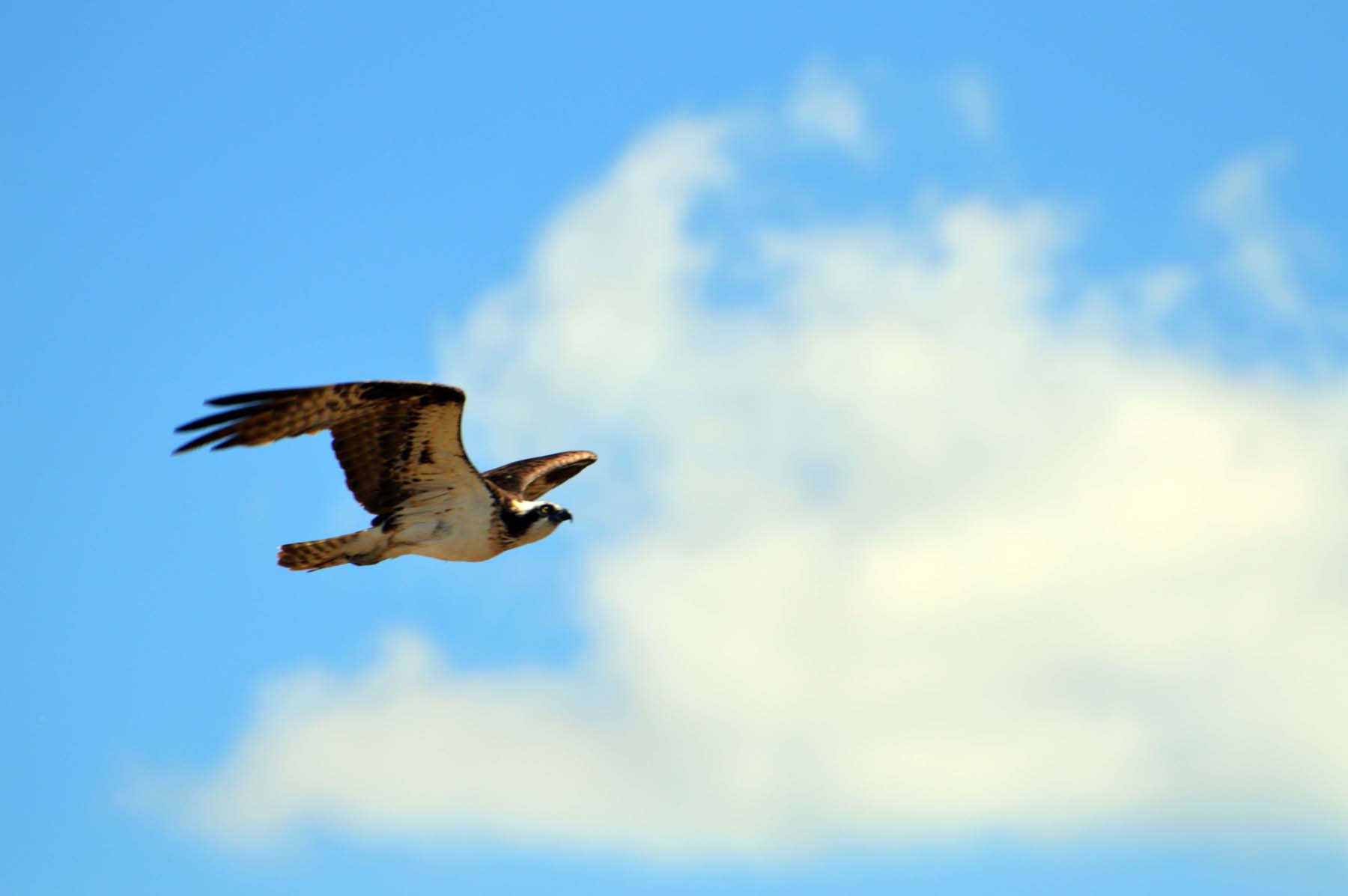
Ospreys
I was thinking of these kinds of poems while walking the loop. It used to be knee deep under water in April, now dry underfoot even though this has been one of the wettest Aprils in a long while. Trees had crashed down during the winter in unprecedented numbers.
Song birds flourished. Junkos and white crowned sparrows galore.
Those old fruit trees who remained standing were pushing out enormous amounts of blossoms – I hear that is a reaction to last year’s drought, cannot confirm.
Busy birds, herons up very high flying to and fro from their nests hidden in the woods across the slough.
I even saw a humongous swan flying west from the Columbia river (not captured on camera.) Ospreys nesting, hawks hanging, buzzards circling.
Jays everywhere,
and a few glimpses of yellow-rumped warblers and wrens.
Wren in center
The sky changed constantly, from grey to blue and back. The land and water was shimmering green, a color associated with the word hope in German. If we have to feel at all, unable to escape into the singularity, let that be the emotion associated with Earth Day! (Fed by the election results in France and Slovenia this Sunday, as well. Although I do believe, as you know, that a continuation of unconstrained neoliberal policies is but creating the substrate on which those barely defeated extremist political movements grow.)
Do you sometimes want to wake up to the singularity we once were?
so compact nobody needed a bed, or food or money—
nobody hiding in the school bathroom or home alone
pulling open the drawer where the pills are kept.
For every atom belonging to me as good Belongs to you. Remember? There was no Nature. No them. No tests to determine if the elephant grieves her calf or if
the coral reef feels pain. Trashed oceans don’t speak English or Farsi or French;
would that we could wake up to what we were —when we were ocean and before that to when sky was earth, and animal was energy, and rock was liquid and stars were space and space was not
at all—nothing
before we came to believe humans were so important before this awful loneliness.
Can molecules recall it? what once was? before anything happened?
No I, no We, no one. No was No verb no noun only a tiny tiny dot brimming with
is is is is is
All everything home
And here is the response poem, also called Singularity, by Marissa Davis.
I have been cold in April before. Seriously cold. Shipped off to England from Germany during Easter break to learn English as a 10-year-old, the host family’s daughter dragged me to old churches and had me do some brass rubbing while she absconded with a secret boyfriend. On my knees on someone’s commemorative brass plaques on the floor, large swaths of butcher paper rolled over it and rubbing oil crayon on it, like you would do with a pencil over a coin. Hours on end in unheated Cambridge cathedrals. Miserable, as well as cold.
A decade later the state was self-inflicted. I had agreed to “meet” my boyfriend who was traveling in North Africa at the Spanish port of Algeciras to drive back home together. I had taken a ferry, crowded with drunk tourists, from the island of Ibiza where my mother spent Easter with me, to Barcelona. From there a long train trip to the Southern tip of Spain. All this in the age before cell phones and credit cards, the early 70s, mind you. Found the cheapest hostel possible in Algeciras with no heat, a threadbare blanket matched by a threadbare towel for the sink with cold water in the room, WC down the hall, no showers. And then the wait began. Each day a walk to the post office to see if there was a letter kept at “poste restante.” Each day a walk to the harbor where the ferry from Africa (Ceuta, really a Spanish enclave) arrived. Standing in harsh winds from the Strait of Gibraltar waiting for the cars to unload in long lines. No message, no boyfriend. Plenty of catcalling. Cold nights with only one incomprehensible book to distract me, Leon Trotsky’s letters – don’t ask – until funds ran out, must have been a week or so. I hitchhiked home, having not enough money left over for a train ticket, with some friendly Brits. Happy ending delayed by about 2 weeks, when the parts for the broken-down land rover finally arrived in some atlas mountain hamlet and the return trip resumed. I think I was still freezing when we reunited in Germany all those weeks later…
And now snow. Mid-April. In Portland, Oregon. Obscuring the plum- and pear-tree blossoms, eliciting shivers and uncanny thoughts about another harvest damaged by extreme weather. Dickinson came to mind and her ways to observe the landscape, distilling views, providing new associations. Never mentioning the word snow once while writing an entire poem about it….
Photographs today from my garden within a 5 day span, from warmth in the 70s to today’s snowfall of 2.5 inches. I first thought I might add the newest political news on the climate denial/regulation/Supreme Court decisions front. Then I decided against it. Why mix the brightness of the snow with the underlying dark issues. Let these beautiful words ring in our ears, and the images speak for themselves.
The poem below was written this year in obvious response to what’s lurking. Volodymyr Dibrovar is a scholar at Harvard’s Ukrainian Research interview, historian Timothy Snyder was the translator. Dibrovar is a writer, translator and literary critic, a laureate of the Mykola Lukash Award in Translation for his translation of Samuel Beckett’s “Watt” (1991) and the Ukrainian BBC Book of the Year Award for his novel “The Andriivskyi Descent” (2007.)
I am posting it not to feed the increasing depression I see rising in myself and many around me, but because I think it speaks to something larger than the horrors of war alone. The sulphur fumes of a desire to annihilate born out of contempt and clinging to power are spreading everywhere, nationally and internationally. I write this after the Hungarian and before the French election this weekend, and cannot but wonder why fascism is even allowed at the doorstep, much less across it.
My photomontages today were work commissioned byThe North Coast Chorale in Astoria for a 2016 concert performance of Karl Jenkins’ The Armed Man – a mass for peace (which in turn was dedicated to the victims of the Kosovo conflict.) The music uses the structure of a catholic mass, but is filled with diverse, surprising and moving texts from all kinds of sources.
As it unfolds it brings the listener closer and closer to the devastation wrought by war, the emotional emptiness and trauma that comes with loss and being a victim as much as with being part of the perpetrating forces. It ends with appeals to hope, with a belief that we can and must pursue peace and that memory of the suffering must be kept alive to avoid repetition of warfare.
Look!
The barrier between us and the netherworld. We don’t usually see it. Why should we pay attention? Our cares are heavy enough already.
But something has happened.
Do you see?
The membrane is broken, a miasma of lies and hatred flows out. It drains will and reason from the weak. Even the strong are in shock.
It seems to defy the laws of physics
It is what it is, look out.
Toxic, not to be touched, not yet named. And that’s our problem.
What is unnamed escapes unpunished.
Where’s our word for spasmodic contempt and blinding annihilation?
For a lie so thick it absorbs every truth?
Search. To name is to know.
That is the only rule.
Of our only game.
Volodymyr Dibrova, (2022) Translated by Timothy Snyder.
***
Дивися!
Ось той невидимий кордон, який захищає нас від потойбічного світу. Тому ж ми його і не бачимо. Нащо він нам? Ми й без нього ледве даємо собі раду.
Але щось сталося.
Бачиш?
Загата розірвана, і з рани цебенить суміш ненависті та брехні. В слабаків вона відбирає розум і волю. Сильних вкидає у шок.
За законами фізики такого не може бути.
Але так є.
Обережно!
Це – дуже токсична субстанція. Її не можна торкатися. Тому вона й досі не має назви. І в цьому проблема.
Усе, що не названо, вислизає й лишається непокараним.
Де ж нам знайти влучне слово для корчів ненависті та бажання нищити все на своєму шляху?
Або для брехні, настільки щільної, що її не можна розчинити ніякою правдою?
The doves are back. Parading in front of my window, giving me stern looks that I have not put out any seed, puffing up when the cold breeze strikes. Next week is supposed to have 76 degrees one day, snow the other. Crazy.
The song sparrows are singing their little heart out, perched on my pear tree, about to blossom.
The wood violets are exploding.
The trillium are in full swing.
Maple and elderberries are stretching to the light.
Bluebells hiding in the shadow.
And importantly, the bleeding hearts are back. Just around the corner, clusters in the woods.
These are wild flowers, Pacific Bleeding Heart (Dicentra Formosa,) not the cultivated ones that you find in English cottage gardens (shown below).
There’s a somewhat timely story as to how the name, Bleeding Heart, got transformed into an insult along the lines of “such a bleeding heart liberal…”
As early as the 14th century, the phrase referred to a sincere emotional outpouring, found in poems by Chaucer, for example (Troylus and Chriseyde):
That nevere of hym she wolde han taken hede, For which hym thoughte he felte his herte blede.
Later, so Merriam-Webster dictionary tells me, the term was associated with religious iconography, referring to the bleeding heart of Christ. It was connected to his teachings and compassion for the poor, sick or struggling.
Leave it to a right-wing American newspaper journalist, Westbrook Pegler, a nasty Senator, Joe McCarthy, and a Republican President, Ronald Reagan, to turn a thought of brotherly love into an insult.
Pegler was a hater. The list was long: Communists, fascist, Jews, liberals. In the context of a new bill before Congress, he coined the term bleeding-heart liberal in 1938. The bill? Aimed to curb lynching.
Pegler argued that lynching was no longer a problem the federal government should solve: there had only been eight lynchings in 1937, he wrote, and “it is obvious that the evil is being cured by local processes.” The bill, he thought, was being “used as a political bait in crowded northern Negro centers.” (Ref.) He, by the way, became too right-wing even for the John- Birch -Society, which threw him out eventually.
The term found full attention when picked up by Joe McCarthy in the 1950s who called Edward R. Murrow one of the “extreme Left Wing bleeding-heart elements of television and radio.” Leave it to Ronald Reagan, then newly elected Governor of California, to make it his own in the 60s: “I was quite the bleeding-heart liberal once,” he told Newsweek.
Let’s co-opt the term! I am a proudly caring, compassionate, social-justice oriented bleeding-heart progressive! There! The world needs us.
Oh, and the lynching bill? Finally, passed this March after a century or so. It failed on 200 (!) previous attempts. The Emmett Till Antilynching Act, which was introduced by Rep. Bobby L. Rush (D-Ill.) in the House and Sens. Cory Booker (D-N.J.) and Tim Scott (R-S.C.) in the Senate, is named for the 14-year-old Black boy whose brutal torture and murder in Mississippi in 1955 sparked the civil rights movement. The three no votes: Republican Reps. Andrew S. Clyde (Ga.), Thomas Massie (Ky.) and Chip Roy (Tex.) Glad they were not on the jury during a contemporary lynching victim’s trial, Ahmaud Arbery.
(Sacral) Music is from 18th Century Ukraine today.
We started the week with Native American art and we will close with it too. LeAnne Howe (Choctaw Nation of Oklahoma) is the Eidson Distinguished Professor in American literature at the University of Georgia, who “connects literature, Indigenous knowledge, Native histories, and expressive cultures in her work.”
You can learn more about this brilliant poet here. Photographs are of fowl in action, busy in March.
Ya kut unta pishno ma* Ya kut unta pishno ma Ya kut unta pishno ma Ya kut unta pishno ma
So I moved to this place, Iowa City, Ioway Where green-headed mallards walk the streets day and night, and defecate on sidewalks. Greasy meat bags in wetsuits, disguise themselves as pets and are free as birds. Maybe Indians should have thought of that?
Ya kut unta pishno ma Ya kut unta pishno ma Ya kut unta pishno ma Ya kut unta pishno ma
Maybe you would have left us alone, if we put on rubber bills, and rubber feet, Quacked instead of complained, Swam instead of danced waddled away when you did what you did…
Ya kut unta pishno ma Ya kut unta pishno ma Ya kut unta pishno ma Ya kut unta pishno ma
So I moved to the Place The “Jewel of the Midwest” Where ghosts of ourselves Dance the sulphur trails.
Fumes emerge continuous from the mouths of Three-faced Deities who preach, “We absolve joy through suffering.”
Ya kut unta pishno ma Ya kut unta pishno ma Ya kut unta pishno ma Ya kut unta pishno ma
So I moved to this place where in 1992, up washed Columbus again like a pointy-chinned Son of Cannibals. His spin doctors rewrite his successes “After 500 years and 25 million dead, One out of 100 American Indians commit suicide One out of 10 American Indians are alcoholics 49 years is the average lifespan of American Indians.”
Each minute burns the useful and useless alike Sing Hallelujah Praise the Lord
Ya kut unta pishno ma Ya kut unta pishno ma Ya kut unta pishno ma Ya kut unta pishno ma
And when you foreigners build your off-world colonies and relocate in outer space This is what we will do We will dance, We will dance, We will dance to a duck’s tune.
Ya kut unta pishno ma Ya kut unta pishno ma Ya kut unta pishno ma Ya kut unta pishno ma
We were walking along the promenade, kids visiting from L.A., a rare treat. The sky and the light changed rapidly, threatening showers, then sun emerging. Remarking on the brown, muddy water of the Willamette river, I mused about writing about the dangers of cyber war for water treatment centers. “You shouldn’t,” I was told, “it’s too depressing.” Couldn’t help but think of a snarky poem from the 1930s, by one of Germany’s most astute satirists and writers, Erich Kästner. He urged to face the truth and not insist on pretending that the world is all right. I follow, quite obviously, in his footsteps, with the same approach, though not his talent. (Below is the original for my German readers and my attempts at translation which can, of course, not capture the elegance of his rhymes, but I think I got the gist.)
“Und wo bleibt das Positive, Herr Kästner?”
Und immer wieder schickt ihr mir Briefe,
in denen ihr, dick unterstrichen, schreibt:
»Herr Kästner, wo bleibt das Positive?«
Ja, weiß der Teufel, wo das bleibt.
Noch immer räumt ihr dem Guten und Schönen
den leeren Platz überm Sofa ein.
Ihr wollt euch noch immer nicht dran gewöhnen,
gescheit und trotzdem tapfer zu sein.
Ihr braucht schon wieder mal Vaseline,
mit der ihr das trockene Brot beschmiert.
Ihr sagt schon wieder, mit gläubiger Miene:
»Der siebente Himmel wird frisch tapeziert!«
Ihr streut euch Zucker über die Schmerzen
und denkt, unter Zucker verschwänden sie.
Ihr baut schon wieder Balkons vor die Herzen
und nehmt die strampelnde Seele aufs Knie.
Die Spezies Mensch ging aus dem Leime
und mit ihr Haus und Staat und Welt.
Ihr wünscht, daß ich’s hübsch zusammenreime,
und denkt, daß es dann zusammenhält?
Ich will nicht schwindeln. Ich werde nicht schwindeln.
Die Zeit ist schwarz, ich mach euch nichts weis.
Es gibt genug Lieferanten von Windeln.
Und manche liefern zum Selbstkostenpreis.
Habt Sonne in sämtlichen Körperteilen
und wickelt die Sorgen in Seidenpapier!
Doch tut es rasch. Ihr müßt euch beeilen.
Sonst werden die Sorgen größer als ihr.
Die Zeit liegt im Sterben. Bald wird sie begraben.
Im Osten zimmern sie schon den Sarg.
Ihr möchtet gern euren Spaß dran haben …?
Ein Friedhof ist kein Lunapark.
*************************************************
“And Where’s the Positive, Herr Kästner?“
You send me letters, again and again,
with the question, thickly underlined:
"Mr. Kästner, where’s the positive?"
Well, the devil knows where it's at in these times.
You’re still reserving the empty space
above the couch for the good and the bright.
You still deny that, besides being smart,
you need to summon your courage all right.
You retreat, once again, to Vaseline
to pretend there's butter on the stale, old bread.
You insist, yet again, with a trusting mien:
"Upgrades to seventh heaven are right ahead."
You sprinkle sugar on top of your pain
and assume the sugar will make it flee.
You overstretch your wide-open heart
and rock your flailing soul on your knees.
The human species has been falling apart
and with it house and state and world.
You request that I'll fix it with a pretty rhyme
and think that that way the pieces hold?
I don't want to lie. I will not lie.
Times are black, no white-washing can be allowed.
There are others who’ll pamper you happily
and some even do it for free in this crowd.
Invite the sun to all body parts,
and wrap up your worries in tissue paper!
But do it quickly. You have to hurry,
or else the worries get greater and greater.
An era is dying. It will soon be buried.
In the East the casket is fashioned right now.
You'd still like your fun and games in a flurry?
A graveyard is no amusement show.
So what is it about water that makes me invite you to store enough to last for some days for you and your pets, independent of earthquake prep?
Cyber attacks can unfortunately do more than just interrupt water testing. They can actually manipulate things to poison the water. Why should that happen here, you ask? Well, that’s probably the same question pondered by almost any municipality in this country and the you have cases like the one in Oldsmar, Florida, last year. A hacker, using someone else’s stolen credentials, gained control of the operational panels and drove up sodium hydroxide content in the water to poisonous levels. It was caught, fortunately, swiftly enough to prevent lasting damage, but that was a question of luck. (Ref.)
The Biden administration has certainly been on alert for the threats, during normal times associated with cyber criminals or individual actors. They have an active program in the works to heighten security measures. How that plays out if we are – however indirectly – at war or in conflict with more sophisticated and powerful state actors, I have no clue. We are seeing in real time how a population can be cut off from water during a war, as reported from Ukraine.
And yet these worries are a drop in the bucket, compared to the general situation of water scarcity and quality in the world. Here is ICCP’s new report on the ravages half of the world is facing in the light of climate change. I think we can all intuit the overall picture. What I did not know is how few of the suggested adaptation strategies are actually tested for whether they work or not. These strategies are aimed at water hazards (droughts, floods, groundwater depletion, glacier depletion) or water-related direct responses (irrigation, rainwater harvesting and wetlands conservation).
There are more than 1,800 climate change adaptation strategies registered worldwide, yet only 359 had been analyzed for effectiveness. We do not know if most of these strategies actually reduce the impacts of climate change on health, safety and economy. Here is an overview of the types of adaptive measure we are talking about and what we know they might or might not accomplished. A muddy picture.
No white-washing then, even if we wanted to. But before you curse me for drowning you in miserable thoughts at the beginning of the weekend, here is an antidote. A bit of sugar to sprinkle, if you will, after all. The link describes the public hotline where you can dial in to receive a (pre-recorded) pep talk by – Kindergarteners! Call 707-998-8410. My favorite: option #4 – the laughter of 5 year-olds as a cheer-me-up.
A pod village for the houseless, next to the Hawthorne Bridge
Don the down-coat. Pack the parka. Meet the early morning mist.
If you are lucky – and I was early Monday morning – you’ll see some wispy clouds evaporate over the water, hear the different birdcalls and have the wetlands practically to yourself.
Well, the birds were naturally on location. Pretty active, too, fighting the lingering cold and scoring on breakfast. Red-tailed hawk preening…
The diffuse light blocked out the harshness of the world and gave rise to thoughts about peace against the backdrop of war.
And talking about war and peace, have you ever considered why so few birds are equipped with weapons? I mean, snakes have fangs, tigers have teeth, elephants, narwhales and walruses have tusks, deer have antlers, bees have stingers – a whole arsenal of martial gear can be found in nature. The occasional evening spent in front of PBS’s NOVA programs about animal warfare confirms this.
Scientists have devoted their lives to figuring out the evolutionary pressure behind this all, notably Douglas Emlen, who wrote one of the best overviews in the field, Animal Weapons, the Evolution of Battle. Here is a short review of the book which includes this:
“Throughout the book, Emlen’s demonstrations of the many parallels between human and animal weapons are fascinating, even when the possibilities are frightening. “I stand awed and shaken,” he writes, “thrilled by the parallels and, at the same time, terrified by the prospects.”
Back to birds, though, who have not participated in the arms race. The reason? They practically get all they want or need by flashing colors, elaborate dancing, song competition and only occasional claws, pecking or spores. (I’m summarizing what I read here.)
The REAL reason? Flight. Anything that flies has to worry about weight. Flying consumes much more energy than movement on the ground or in water, and energy need increases with added weight, even tiny bits. We have indeed mathematical models of flight that spell out in detail how leg or wing spurs, no matter how small, increase fuel cost in untenable ways (given that fuel acquisition itself – searching for food – costs energy as well,) particularly for smaller birds.
(A funky comparison from the article: United Airlines started printing its inflight magazine on lighter paper to reduce the weight of a typical flight by about 11 pounds, or 0.01% of an airplane’s empty weight. Through this tiny decrease, the company cut its annual fuel use by 170,000 gallons, saving US$290,000 yearly. Think through this with today’s news about gas prices….)
Spurs, then, are primarily found on land fowl and in fewer than 2% of all avian species. And beaks used for fighting are rare as well, given that any injury to them might compromise the ability to feed – a direct threat to survival. Yes, some raptors fight with their talons, but overall, we are seeing a peaceable kingdom, if interrupted by screaming matches over territorial rights..
Evolution, you botched this. Should have provided mankind with wings!!
Swallows already returned, harbingers of renewal.
Killdeer twittered.
Hummingbird glowed.
The morning softness continued, sun broke through clouds.
Later the rain set in. What better reminder of “teaching our troubled souls… to heal.”
Mother rain, manifold, measureless, falling on fallow, on field and forest, on house-roof, low hovel, high tower, downwelling waters all-washing, wider than cities, softer than sisterhood, vaster than countrysides, calming, recalling: return to us, teaching our troubled souls in your ceaseless descent to fall, to be fellow, to feel to the root, to sink in, to heal, to sweeten the sea.
Today I am posting someone else’s photography for obvious reasons. Ukrainian photographer Yevgeniy Kotenko has captured quotidian life in a beautiful series called On the Benchsince 2007.
He photographed the view from his parents’ kitchen window in Kiev throughout the seasons.
At this very moment the images strike me as tragically poignant, wondering what all these individual people are going through, likely for years to come, if they survive.
And survival is doubly imperiled for people with life-threatening illnesses, in hospitals that are either not functioning due to dire lack of medication and supplies or being attacked themselves. The World Health Organization reports that shortages of cancer medications, insulin and oxygen supplies are reaching hazardous levels. Hospitals have been hit with cluster munition, according to the Human Rights Watch, and sick children are moved to make-shift bomb shelters in hospital basements.
Ukraine had put particular efforts into the care of sick children, beyond medical treatments. Here is a link to a project that provides children’s wards in hospital with constructed environments that support healing through play and discovery.
“The design studio Decor Kuznetsov and the Vlada Brusilovskaya Foundation have teamed up for CUBA BUBA, a project that transforms hospital rooms throughout Ukraine into sensory wonderlands for young patients. Complete with comfy seating, reading nooks, and even open-air chimes, each module is compact and intended for children to rest and relax as they undergo various treatments.The group recently installed its sixth iteration, “CUBA BUBA SUNNY,” which features a shelved room full of greenery and sculptures. Suspended below the light is an ornately carved ceiling that shines a unique pattern onto the eclectic collection. To inspire play, an earlier design’s facade is comprised entirely of holes, allowing kids to wind rope throughout the structure into a vibrant web.” (Ref.)
I lived in the first century of world wars. Most mornings I would be more or less insane, The newspapers would arrive with their careless stories, The news would pour out of various devices Interrupted by attempts to sell products to the unseen. I would call my friends on other devices; They would be more or less mad for similar reasons. Slowly I would get to pen and paper, Make my poems for others unseen and unborn. In the day I would be reminded of those men and women, Brave, setting up signals across vast distances, Considering a nameless way of living, of almost unimagined values. As the lights darkened, as the lights of night brightened, We would try to imagine them, try to find each other, To construct peace, to make love, to reconcile Waking with sleeping, ourselves with each other, Ourselves with ourselves. We would try by any means To reach the limits of ourselves, to reach beyond ourselves, To let go the means, to wake.