In May 1947, Poetry – A magazine of verse published a poem by Clara Brussel (1921 – 1983). She was an accomplished translator of German authors (under her married name of Clara Winston), including Thomas Mann, Hanna Arendt, Herman Hesse and Franz Kafka. The young woman nonetheless continued to write poems, something she had started in high school in New York City, before attending Brooklyn College. Much of her work was affected by the horrors of a world at war, the plight of displaced refugees (including some of the authors she translated) and the role of women in societies that went through major upheaval.
An instrument to be sold, its accidental survival incomprehensible, compared to the children who perished in a country destroyed by war. Real and empty at the same time, an “unstrung husk,” per chance leading to barter that might help survival during famine. Completely divorced from its musical function, a symbol for extreme anguish and senseless fate.
Much to think through. Today’s poem, however, only came to mind because I was introduced to how guitars are made. The recent ArtsWatch road trip provided me with the unusual opportunity to learn how string instruments are build and how that craft is affected by modern economic and scientific, as well as traditional educational factors.
No anguish or any other negative sentiment on view during a visit to Breedlove, a company in Bend, OR, that makes its guitars by hand for the most part. Through the 30 years of its existence, the company has changed ownership a few times, with each new owner bringing improvements and different focus to the process. (You can learn about their history here.)
Mother of pearl and abalone inlay hand placed on necks.
Their instruments come in various versions, from root to artisan to collector series, and range in prices from about $3000 to 5-figure numbers, if you have personalized desires. Dreadnoughts, concert and concert cutaway guitars use different tone woods, top finishes, and custom-made inlays of abalone or mother of pearl for the necks. All instruments can be equipped to work with electronic amplifiers.
Breedlove guitars are known for their sound optimization, with each instrument’s top and back hand-tuned dependent on the unique properties of the selected woods, giving each an individual sound.
Some technological advances like CNC (Computer Numerical Control), a machining process that uses programmed commands to precisely cut and shape guitar bodies, help create parts of the instruments. But it is the hand work of the luthiers, who put it all together and work on the hand-tuning and finishing.
These skills are learned through years of apprenticeship and practical application, with many a botched instrument discarded until you reach perfection. It takes patience, passion, an eye for geometry and an ear for sound, never mind dexterity, to become a successful luthier. Hats off to those who make it.
To keep up with a competitive world, pricing has to be balanced between the quality you achieve and the time it takes to produce a sufficient number of guitars to bring to market. Not an easy task when much of the market is saturated with cheaper imports that use way more production line techniques and computerized processes.
***
Guitars and their relatives, the gittern and the lute, have been around for a long time. One of the oldest predecessors of the guitar is the tanbur, believed to have originated in Mesopotamia over 4,000 years ago. The first guitar as we know them today emerged during the 19th century, built by Antonio Torres. Contemporary concert guitars use nylon strings, blues and rock guitars use steel strings, but it is the form of the body, the hollow, and the shape of the neck that affect the overall sound we associate with guitars.
15 years ago, the Metropolitan Museum had a fascinating show of guitars and their makers, work that dated back to renaissance Italy and progressed to 20th century America.
They looked like art objects, rather than instruments and remind me of art: painters certainly have been fascinated by string instruments and depicted them through the ages.
Johannes Vermeer Woman with a Lute (1662)
Bartolomeo Veneto Lady Playing Lute (active 1502 – 1546)
Frans Hals Buffon playing Lute
Pablo Picasso The Old Guitarist (1903)
So why are guitars so popular? The best speculation I read came from here:
For “immediacy” is why a guitar is a folk instrument, i.e. the instrument of folks. The guitar is lightweight, cheap, easy to play. Anyone — and I would like to stress anyone — with two hands and the inclination can spend an afternoon learning three major chords (A D E is a good combo or D A G) and be then well equipped to instantly rock scores of songs from “Back in Black” to “You Are My Sunshine.” (Like the old ‘70s fanzine said: “This is a chord, this is another, this is a third. Now form a band.”) This is not so with the piano, nor the drums, the flute, the fiddle. Flung over the heart or across the back, the guitar is good for anywhere and any occasion. The guitar is a folk instrument because it is an easy extension of our bodies, and therefore an easy expression of our humanity. The guitar — and all its predecessors and incarnations: the bouzouki, the saz, the oud, the guitarrón — represents the parts of us that are spontaneous, angry, lazy, joyous, raw, unsophisticated and unadorned. The only other instrument that surpasses the guitar in capturing this immediacy is the voice. Which is the final reason why the guitar is not just a folk instrument but the folk instrument — it’s an easy companion to singing.
Let’s sing the praise of the guitar and listen to music by guitarists who mastered a bit more than three cords….
Here’s something truly astonishing: I recently found out that Emily Dickinson inserted the same lines over and over into a variety of poems that she sent as condolence letters to grieving family or friends. Almost like a form letter – a core message about the unknowability of death and what follows included in words addressing the particulars of each loss.
I cannot, for the life of me, imagine that I’d write the same thing to mourners I love, or am friends with. Which, in this year of manifold losses, has been particularly true. Each case so different, hitting home, sometimes intensely, sometimes less so, with different feelings and reactions. Each requiring a specific reply that honors them, not my own concerns, as I suspect the poet did.
Maybe those short lines were really meant as reminders for herself, incantations to ward off the emptiness or fear elicited by yet another death in her vicinity. In a letter to Charles Clark after the death of Charles Wadsworth (1883), she put those 5 lines (bolded below by me) at the end of the poem. Not exactly words of condolence. More a quest for what will be, acknowledging we’ll never know it. Can’t peek behind that gate, until you’ve passed through it. But could be something good waiting for you…
Maybe her world was used to Dickinson’s style of writing, able to decipher all these complicated words and hidden meanings. I am reduced to a simpler approach: my heart goes out to yet another friend enduring the loss of a child, another senseless death of one too young. My thoughts go out to those mourning the victims of war in Gaza, Ukraine, countless African nations, the dead of climate catastrophes in Nepal, earthquakes in South America, the fires and floods unleashed onto this planet by our carbon emissions. The next catastrophe around the corner at this very moment.
Senseless deaths breaking the fabric of time. A hoped for future lost, thoughts confined to revisiting the past, over and over, memory all that’s left.
"These thoughts disquiet me, and the great friend is gone, who could solace them—Do they disturb you?"

  The Spirit lasts—but in what mode—
  Below, the Body speaks,
  But as the Spirit furnishes—
  Apart, it never talks—
  The Music in the Violin
  Does not emerge alone
  But Arm in Arm with Touch, yet Touch
  Alone—is not a Tune—
  The Spirit lurks within the Flesh
  Like Tides within the Sea
  That makes the Water live, estranged
  What would the Either be?
  Does that know—now—or does it cease—
  That which to this is done,
  Resuming at a mutual date
  With every future one?
  Instinct pursues the Adamant,
  Exacting this Reply,
  Adversity if it may be, or wild Prosperity,
  The Rumor's Gate was shut so tight
  Before my Mind was sown,
  Not even a Prognosticator's Push
  Could make a Dent thereon—
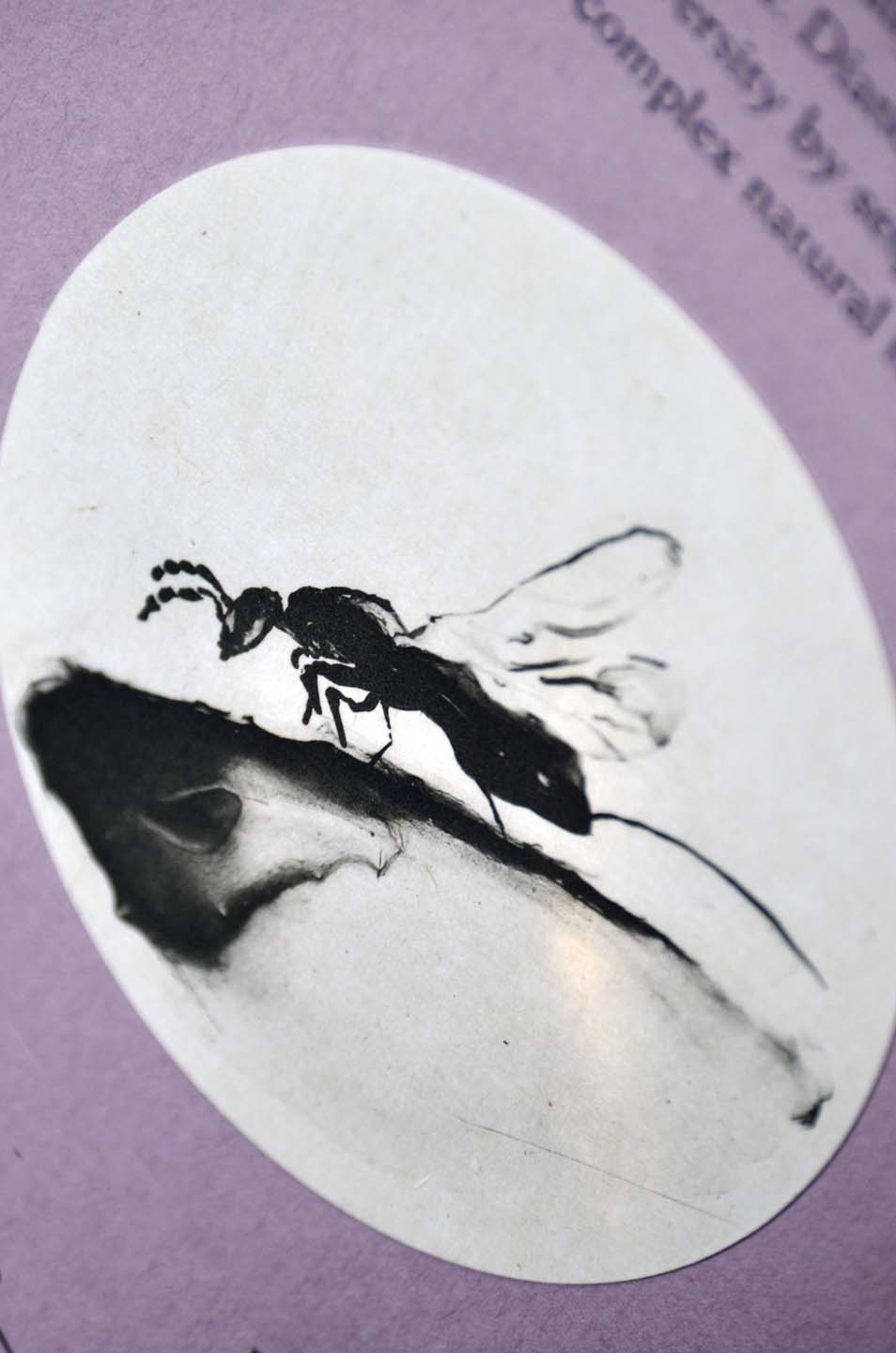
When the honey, fruit and flowery tablecloth were whisked from the table in one sweep, it flew off with a start. Entangled in the suffocating smoke of the curtains, it buzzed for a long time. At last it reached the window. It beat its weakening body repeatedly against the cold, solid air of the pane. In the last flutter of its wings drowsed the faith that the body’s unrest can awaken a wind carrying us to longed-for worlds.
You who stood under the window of your beloved, who saw your happiness in a shop window – do you know how to take away the sting of this death?
Imagine entering a small garden, overgrown paths lined with lungwort. A humongous fig tree granting shade, a few vegetable beds exploding with the smell of ripe tomatoes. Sun dappled verdant corners, whimsical ceramics catching the light here or there.
Red calla lilies shining like little lamps eager for attention, chicken contentedly clucking in a coop next to the persimmons, fruit still green.
Your eye is caught by the plum trees, laden with fruit, some ripe on the ground, the purple skin of Italian prunes encasing glimpses of gold where the fruit has split open.
A feast for wasps, and wasps were what I came for.
An art book about wasps, to be precise.
Let me hazard a guess: your first reaction upon hearing the word “wasp” was not entirely positive. Pesky yellow jackets interfering with your labor day picnic, stings that not too infrequently hurt like hell or even lead to anaphylactic shock, visions of angrily buzzing swarms of insects building their dreaded nests too close to the eves of your house.
Wasp nest, displayed in the artist’s studio.
You would not be alone in this assessment, and surely not the first one. Already in 300 bc, Aristotle insisted ‘Hornets and wasps … are devoid of the extraordinary features which characterize bees; this we should expect, for they have nothing divine about them as the bees have.’
A recent scientific study published in the Royal Entomological Society, found that people across 46 countries really had it in for wasps. They are universally disliked much more than bees or other insects. The public associates them with negative terms like angry, painful, dangerous, scary, and those sentiments map onto relative research efforts: wasps are significantly under-studied. Across 40 plus years of thousands of papers published in entomological journals, more than 80% cover bees, and not even 20% wasps.
Paper fold drawing our attention to common reactions.
Consequently what we know is relatively little, and what little we know is not communicated sufficiently to open people’s eyes to the utility of wasps for humans as well as their general importance for ecosystems as a whole.
From the studio collections.
Just a few facts: the wasps that bug us – the yellow jackets, the hornets – represent less than 1% of the stinging wasps, the species Vespines. Wasps belong either to social or to solitary species – the latter containing many more species, in fact hundreds of thousands of them, who do not sting and live quite separate from human contact areas.
Folded paper telling a story.
Wasps have several functions. Like bees, they pollinate our crops (although to a lesser extent.) They excel, though, in helping get rid of parasites. They regulate populations of arthropod pests and vectors of disease, decompose organic matter and improve soils. Important contributors to maintaining biodiversity, then, and now severely threatened, just like bees. Agricultural practices (use of genetically modified seeds, pesticides, etc.) habitat loss due to encroaching urbanization, and climate change all contribute to endangering these guardians of our ecosystems.
Eco prints of plants frequented by wasps.
Our implicit bias against wasps can only be remedied, if we change the rhetoric of fear to a rhetoric of love. For that to happen, we need to be familiarized with what there is to love: the beauty, the amazing survival mechanisms, the intricacies of wasp life cycles, and last but not least the tremendous ecological services these insects render. Which brings me to the owner of the enchanted garden described above, artist Diane Jacobs who has just finished creating a book celebrating all things wasp, the culmination of years of study and creative exploration of the subject.
***
Jacobs received an MFA in printmaking from San Francisco State University in 1996. and was awarded multiple prizes, fellowships and residencies in the years since. Her work – prints, sculptures and folio books – can be found in museums (The Portland Art Museum, the San Francisco Museum of Modern Art, the De Young Fine Arts Museum,), and educational institutions (The New York Public Library, the Library of Congress, Savannah College of Art and Design, University of Alberta, University of Chicago Library, University of Miami, Corcoran School of the Arts & Design, Yale, and Stanford among them.)
Artist Diane Jacobs.
Her newest book intends to educate us about wasps and show the intrinsic beauty of Apocrita, those narrow waisted insects that populate pretty much our entire planet. Wasps and their environments are represented in stunning detail and through a plethora of artistic processes. The deeply serious intent to help us overcome our antipathies by getting to know the various species and their quirks, is often softened by using more whimsical means to do so.
Pop-up structures vie for attention,
Pop-ups.
paper layers inviting hands-on folding and unfolding to reveal ever more details are hidden in various pouches along the folios.
Paper folding for multi-surface info presentation.
Miniature sculptures made of natural and artificial materials expose the delicateness of wasps’ body parts, and also point to means of helping identification.
Beads and plant materials (thorns from a defunct dragon tree) sculpted into antennae.
The work evolved through Jacobs’ friendship with naturalist and photographer Kate Taormina, their shared interest and separate expertise cross-pollinating a successful collaboration. The joint project started in earnest during Jacobs’ 2024 residency at PLAYA, located in extremely remote Lake County in Oregon. The prestigious PLAYA residencies foster interaction between international artists and scientists, true to the belief of the organizers (and many of the rest of us who happen to have a foot in each of those camps!) that interdisciplinary exchange helps shape new ways of seeing the world, ultimately enhancing our approach to conservation. The concept of the book evolved over time. Now each page affords glimpses into a different universe, some pleasantly playful, others creating a sense of awe given nature’s diversity.
Whatever I learned about wasps, I learned even more about what can happen when an artist puts their mind to a singular pursuit of topic, but is open to embracing a huge number of different representational processes. Some of them surely needed to be acquired long after formal education had run its course.
Woodcuts in paper windows.
Just look a the list of processes and materials that the artist provided, all used to create the 16 hand-made copies of this book – one already snapped up by Yale University.
” Materials and printmaking techniques for this project include reduction woodcuts, wood engravings, mono print, lithography, photogravure etching, stitching, beading, hand painting, pressure printing, collage, polymer plates, book cloth, ceramic wasp, beech wood, unique eco print, and glass petri dish. Papers include Kitakata, handmade abaca, kozo, Gampi, mino washi, masa, Rives Lightweight, rayon, and Tyvek. All text on pages is handset and letterpress printed. Some booklets are letterpress printedfrom polymer plates and some are handset.”
So many artists who have had a successful 30 year career really stick to the tried and true, their developed expertise, even their general subjects. To embark on new fields of learning, as well as new processes that require tolerance of potential imperfection, takes courage. Jacobs, for example, was introduced to photogravure etching only 3 years ago, during a workshop at Mullowney Printing. Also fairly recently she learned how to do wood engraving. For Wasp Love alone the artist was going to carve 8 little wood engraving blocks. “It took me a bit to get in the groove.”
Wood engraving.
Yes, it takes courage, or at least an absence of vanity in pursuit of a greater goal. In this case helping nature to survive human indifference, or, worse, capitalism’s endless extractive exploitation, by deconstructing one stereotype after another.
Jacobs’ book Wasp Love is a marvel, not least in the way it balances education with art to be appreciated in its own right, independent of the book’s subject. Pacific NW audiences will be able to see and explore a show copy next February at The Patricia Reser Center for the Arts. It will be shown together with her wasp-related sculptural work and a series of her eco prints, as well as installations and paintings by Susan Murrell and my photomontages, in the context of Collective Effervescence. The exhibition is dedicated to our love of and fear for nature.
Pop-up folio.
***
Replacing the rhetoric of hate with the rhetoric of love – not an easy task. One of the obstacles lies in the psychological nature of hate, compared to love. For hate all you need is a simple, stereotyped target. There is “the enemy,” out to get us, in a zero-sum game of one side wins, when the other side loses. “Wasps are aggressive and hurtful.” Simplistic ideas like that are much more easily communicated and adhered to, than more complex ones.
It’s more difficult to convey the many aspects of multidimensional targets – endless species of wasps, a variety of functional advantages outweighing the occasional sting by a minority of Vespines. Complex concepts defy our desire to stereotype by means of their sheer diversity. You need to learn and integrate so many different facts. Which is made even more difficult by the reality that our old feelings were negative and now need to be recalibrated (in comparison to just sticking to your culturally transmitted biases that ruled the world across time.)
Wood engraved plates.
Art is enormously useful here. It can try and break the cycle of negative stereotyping in many different ways.
There is poetry. If we go back to the beginning of this post, you have Zbiegniew Herbert’s poem that subtly reminds us of the similarity of wasps and humans, not elevating one species over another. Rather than showering us with facts, and patronizing demands to let go of prejudice, its symbolism offers something that speaks to our emotions. Are we not all familiar with the feeling of being trapped in certain realms of our existence? Are we not all hoping against hope, to the last breath, that moving forward at all cost will bring us to a longed-for future, no matter how much we bang our heads against the wall? Because we look in the mirror, the observed death causes a premonition, a sting that cannot be resolved. Could it be that wasps are us?
Paper fold in book pocket.
Then there is literature. What comes to mind are Ursula LeGuin’s brilliant musings published some 40 years ago in The New Yorker. We are told that a woman is un-naming all members of creation, a woman who we later learn is Eve, about to leave Adam and the garden of Eden, unhappy with having been named in certain ways. The idea is that a name usually allows for categorization and/or stereotyping. Its absence will lead to equality not impeded by artificially drawn hierarchies.
“The insects parted with their names in vast clouds and swarms of ephemeral syllables buzzing and stinging and humming and flitting and crawling and tunnelling away.
…
None were left now to unname, and yet how close I felt to them when I saw one of them swim or fly or trot or crawl across my way or over my skin, or stalk me in the night, or go along beside me for a while in the day. They seemed far closer than when their names had stood between myself and them like a clear barrier: so close that my fear of them and their fear of me became one same fear. “
The merging of equals, affiliating through emotion, becoming extremely close: could it be love? As always with LeGuin, of course, there’s an undercurrent of brusqueness below the witty narration, pointing to the power naming has for those on top of social or gendered hierarchies.
Trial paper folding in the studio.
And finally, there is visual art. Jacobs’ book radiates joyfulness, in its colorfulness, playfulness with hidden and revealed shapes, its use of surprise perspectives. You cannot help but find these folios emotionally rousing, no matter how concept-driven and filled with scientific facts they are. The book might not manage to induce love, admittedly. But surely it ignites strong admiration for a life form that is so much more complex than we had known. A first step away from hate or fear.
Letter to the Person Who Carved His Initials into the Oldest Living Longleaf Pine in North America —Southern Pines, NC
Tell me what it’s like to live without curiosity, without awe. To sail on clear water, rolling your eyes at the kelp reefs swaying beneath you, ignoring the flicker of mermaid scales in the mist, looking at the world and feeling only boredom. To stand on the precipice of some wild valley, the eagles circling, a herd of caribou booming below, and to yawn with indifference. To discover something primordial and holy. To have the smell of the earth welcome you to everywhere. To take it all in and then, to reach for your knife.
If your first reaction to this poem resembles mine, you’d be thinking about vandalism, or ignorance, or a vile belief system that sets man above nature. Enraged about the continued thoughtlessness and indifference of people uselessly harming trees, or anything else out there in nature.
Some second thoughts, though. What do we know about tree carvings? Turns out that there are reports of arborglyphs (or dendroglyphs or sylvaglyphs, however you want to call them) since ancient times. Both Callimachus and Virgil wrote about lovers commemorating the presumed longevity of their feelings by carving the bark of trees with their initials. Shakespeare followed centuries later.
People around the world, not just couples, have carved patterns for communication, expressions of cultural significance, scientific pointers (astronomy) or spiritual appeals into trees. Some were maps or way markers, some related to burial customs. Here in the US, the Chumash tribe used tree carving to relate astronomical movement of the planets. Shepherds in the Southwest, many of them of European origin, carved into aspen trees, including drawings and poems. We have more than 20,000 documented tree carvings across California, Nevada, and Oregon, dating from the early 1900s. Who knows, of course, how many are left after the fires.
Does carving hurt a tree? Potentially (and often) yes, if it is too deep.
Does it make sense to “engrave” important local, or scientific information into trees presumed to be around for a long time to help tribal movement and information sharing before technological means of communication? I’d say yes to that, too.
And was promptly reminded of another way of communication that conveyed not necessarily pragmatic instruction, but instead psychological resilience: the Kilroy Was Here meme found throughout the battlefields of WW II, left by the Allies to indicate presence, power, the might to invade deep behind enemy lines. It boosted morale during times fraught with killing and dying. Of course, it also used every available surface, from beach sands to fences, to bombs or lavatory walls that literally confounded the likes of humorless Hitler and Stalin, respectively. But I digress.
What is the psychological motivation, though, for individuals to leave their marks on trees, marks that have no informational value, e.g. plain initials?
For lovers, it might be a spell-like, wishful thinking that nothing will part them in the future. Alas, sealing your love that way might indeed seal the fate of that tree.
And maybe, for individuals like the poem’s villain, it has to do with our shared fear of mortality. Maybe we can ward off that sense of discontinuity, triggered by a landscape that signals eternal presence, historic continuity, a landscape in which we are but a temporary speck?
So we assert ourselves, leaving a legacy, however destructive, that will remind others and ourselves that we existed (well, someone with those initials, at least.) A cheaper, if equally perverse, version of gilded triumph arches in Washington, D.C. ….
I tend to believe that views of majestic, or even just beautiful natural landscapes often conjure thoughts of past and future, and thus instill a sense of temporality. How many millennia did it take to carve a gorge into mountains of basalt? How many centuries to grow trees of this size? Will these meadows survive the droughts ahead of them, with snowcaps no longer sufficient in providing runoffs? Will these streams run dry during our life time?
It is a short jump to mull our own life span, or the possibilities of being remembered, the next best thing if we can’t be around ourselves. Most people hope that they can influence that remembrance through their achievements, or their sharing of their story, their generosity, or through their children’s recollection.
Here is what I remember: my father showing me the tree he marked with his initials as a 10-year old in a forest that later lived through WW II, bombs and all. I was in awe when I saw it at approximately the same age. And so he lives in my memory. (As he would have without that tree-endangering carving….) Was it a villainous act?
And some people will live on in collective memory through their destructiveness, their cruelty, their indifference. Like it or not. Anything that makes them feel big, rather than enduring a sense of insignificance. Having a future beyond the grave. That includes, of course, arsonists. Those who commit arson by starting fires, and those who omit to engage in environmental protection, leaving us with ever increasing risks from climate change, burning the planet. Much more “efficient” than carving and destroying just a single tree.
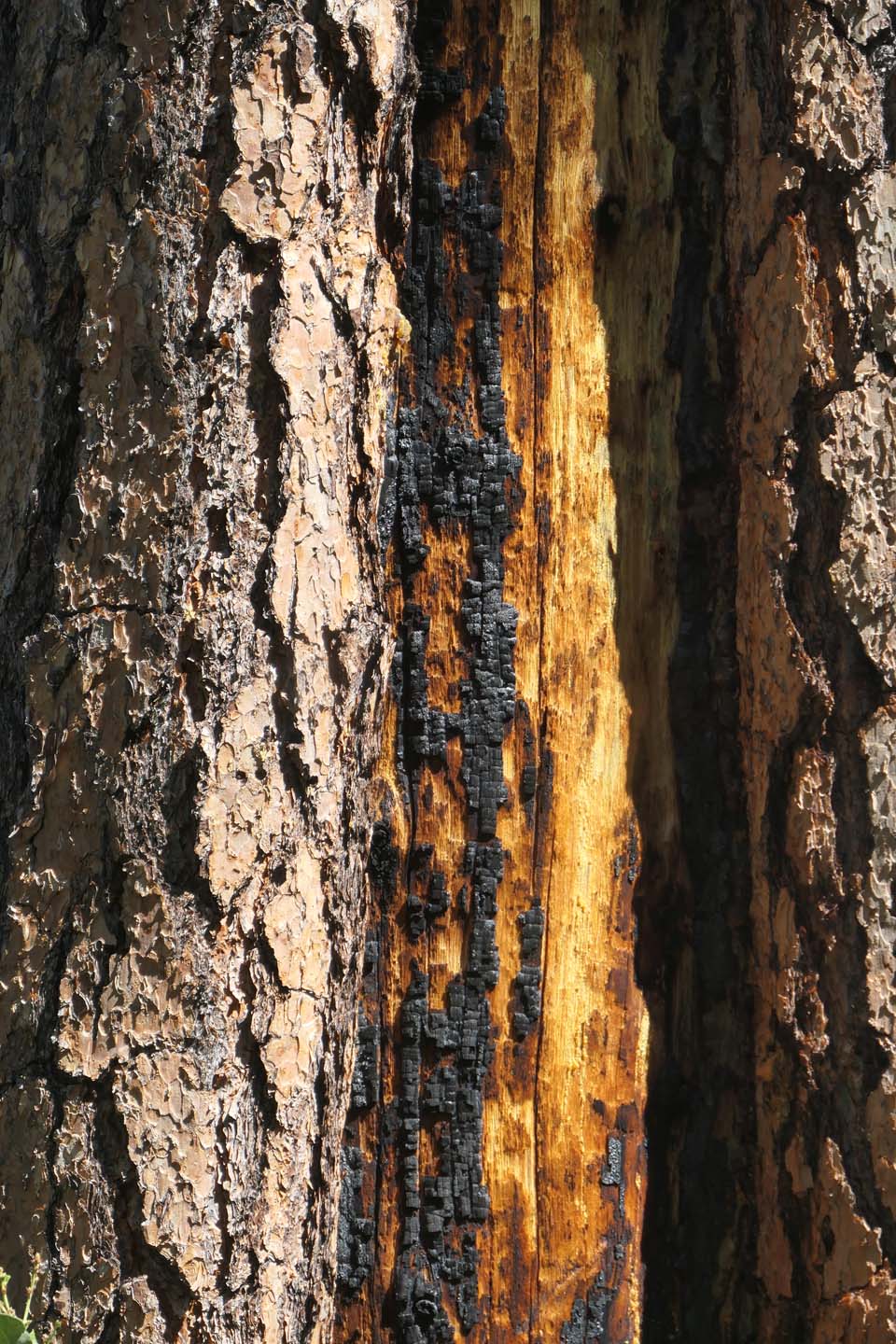
Trees serve well as symbols of a future. They are strong, long-lasting, easily imagined to survive, and thus carry a message from (eventually) the past. That assumption is now, of course, likely to be burnt to crisp, alongside its subject. The ever growing fires are making sure of that.
General ideas about the future and our place in it are changing as well. Here is a gift article from the NYT that I strongly recommend for your perusal. Ivan Krastev is the chairman of the Center for Liberal Strategies in Sofia, Bulgaria, a permanent fellow at the Institute for Human Sciences in Vienna and a Financial Times contributing editor.
“We are living in a world very different from the world of the Cold War. Probably our very idea of governance will change. Some of the changes we witness are really radical. Imagine for a moment that some of our most fundamental assumptions have been challenged. We disagree on many things, but we have tended to believe that the future will be better than today and that individuals are mortals but nations are immortals, and we continue living through our children, our sacrifices for the nation, our books. Now some individuals — particularly in Silicon Valley, but also including people like Putin — are starting to genuinely hope that they will not die, some nations are starting to genuinely believe that they will die, and many young people for different reasons have decided not to have children. This political world cannot be understood or explained in the language of the 20th century. This is why neither awakening the utopian energies nor simply defending institutions will be enough to deal with the current crisis.
This is where this sense of vertigo comes from. In politics vertigo is when you see the abyss, but you are not sure: Is this the past or the future?”
What we see from here is, literally, smoke and ashes.
Music today is a fascinating concept album picturing Alexander von Humboldt’s trek to explore nature and cultures on a continent different from his own. Last Lost Words.
The allegory of Fire combines objects that are related to fire. The cheek is formed by a large firestone, the neck and chin are formed by a burning candle and an oil lamp, the nose and ear are contoured by firesteels; a blond moustache is formed by a crossed bundle of wood shavings for kindling, the eye is an extinguished candle stub, the forehead area is a wound-up fuse, the hair of the head forms a crown of blazing logs. The breast is composed of fire weapons: mortar and canon barrels together with the respective gunpowder shovel and a pistol barrel. Prominently positioned in the picture is the collar of the Order of theGoldenFleece, beneath which the imperial double-eagle can be seen: a clear reference to the Habsburg House and the beneficiary of the series, Emperor Maximilian II. (Wikimedia)
***
The winds shifted, and we, the lucky ones in a city not yet burning, have been exposed to smoke coming from the fires in the region. Over 50 wildfires in Oregon alone, with fire season still lasting many more months. I pretty much stay indoors all day and night, with air purifiers running 24/7 and masks handy, when the little light starts to glow red. As of this moment our AQI is 159. Red zone, unhealthy for all, not just sensitive, groups.
Josepha Jane Battlehooke The Great Fire of London (1675)
The light is hazy orange, the sun burnt red when rising, plants and tree contours in my yard obscured by a thin layer of smoke. It brings back terrifying memories of California stays in 2020 and 2024, not to mention the familial proximity to the Eaton fire and the losses it caused last year.
Herri met de Bles – Fire of Sodom, (1545)
What are we inhaling from all this smoke?
“Wildfire smoke is a complex mixture composed of water vapor and numerous pollutants, including, gases (e.g., carbon monoxide, oxides of nitrogen [NOx]), organic compounds (e.g., polycyclic aromatic hydrocarbons [PAHs]), volatile organic compounds [VOCs]) and particulate matter (PM). Of these pollutants, PM is one of the main components found in smoke and there are decades of research documenting that exposure to PM is associated with serious health effects.” (Ref.)
And that is before even touching the issue of ozone pollution exponentially worsened by wild fires.
We are talking about exacerbation of asthma and heart failure and premature death here, potential impact on brain function, and pulmonary inflammation and transient reductions in lung function. All this long after your intermittent raw throat and burning eyes are gone.
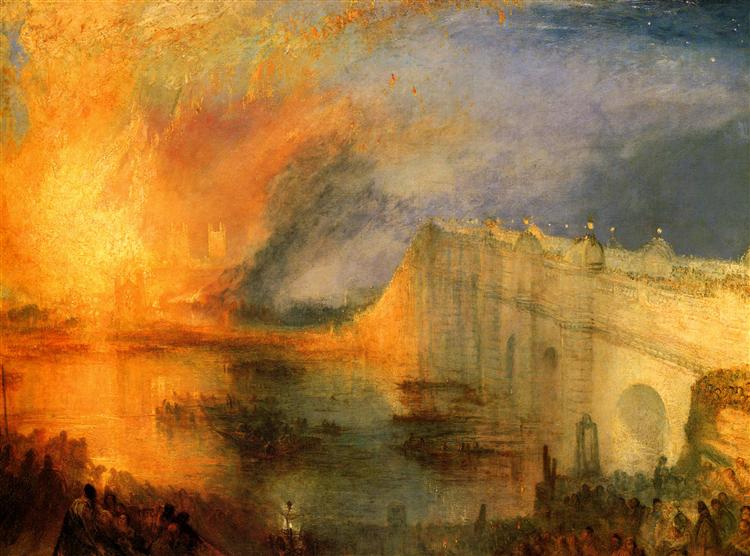
J.M.W. Turner The Burning of the Houses of Parliament, (1834)
What can we do? Leaving for healthier regions is not an option for most people, be it because of local obligations or lack of economic resources. Staying inside depends on the ability to cool off spaces without having to open windows. The EPA advice page tells people to go to the mall, the library, museums, sports arenas or senior centers. Hmmmm. Ever tried that if you are houseless, or working, or have a family with small kids?
Hubert Robert The Fire of Rome, July 18, 64 CE, (1786)
I decided to remind us that people during much of the history of the world were afflicted by fires, and somehow managed to go on. Painters clearly have been drawn to the visual drama of urban fires, and delivered eye witness accounts of sorts. Misery loves company, I guess.
William James Müller The Burning of the Mansion House, Queen Square, Bristol, 1831-32
Poets, on the other hand, are drawn to the psychological implications of traumatic, wide-ranging fires, and consequences that often remain obscured because they are too scary to think about. The poem below is timely, then, even if written 8 years ago, reminding us what it is that we are inhaling these days.
Francesco Guardi (Venice) Fire in the oil warehouses at San Marcuola (1789)
“I wrote this poem after the Camp Fire was contained in Paradise, CA, where 85 lives were lost. I live 50 miles away. A friend was running the domestic animal housing operation for the survivors at a nearby county fairground so I was in close touch with stories about the devastation. We’d been wreathed in smoke for weeks and something about her stories and the smoke caused me to think more specifically about exactly what we were breathing in. I’m a literal person. Plus the linguistic link of particulate to particular struck a chord.”
Antoine Félix Boisselier L’incendie du théâtre de l’Ambigu-Comique le 13 juillet (1827)
Why did we ever think we would be the exception to the rule? Particularly when ignoring the warning signs about climate change and building urban enclaves ever closer to nature in infinite hubris?
Those of us on the periphery of the fires should really not complain too much – my knees buckle when I think of all the evacuees and the fire fighters and personnel involved day and night in dangerous and arduous work with inevitable health consequences. So many of them prisoners who are more or less not having a choice to be exposed. My immense gratitude goes out to them, and my heart to those who are directly affected.
The Great Fire at Chicago Oct. 9th, 1871. View from the west side, Gibson & Co. (Cincinnati, Ohio), c. 1871. Source: Library of Congress, Washington DC
My break is not quite over, but I wanted to share a few thoughts and images, before I hibernate again.
I have been driving South to spend time with family, taking occasional photographs when nature allowed – between the heat and hazardous smoke everywhere, it was not easy to find solace in nature.
I have been mourning the rather sudden death of a close friend, and I have been pouring energy into creating and editing new montage work that is (re)imagining our world past, present and future.
As chance would have it, I came across a poem that embraces a similar approach, down to the details of using a bit of fantasy or surrealism to get across some of the points.
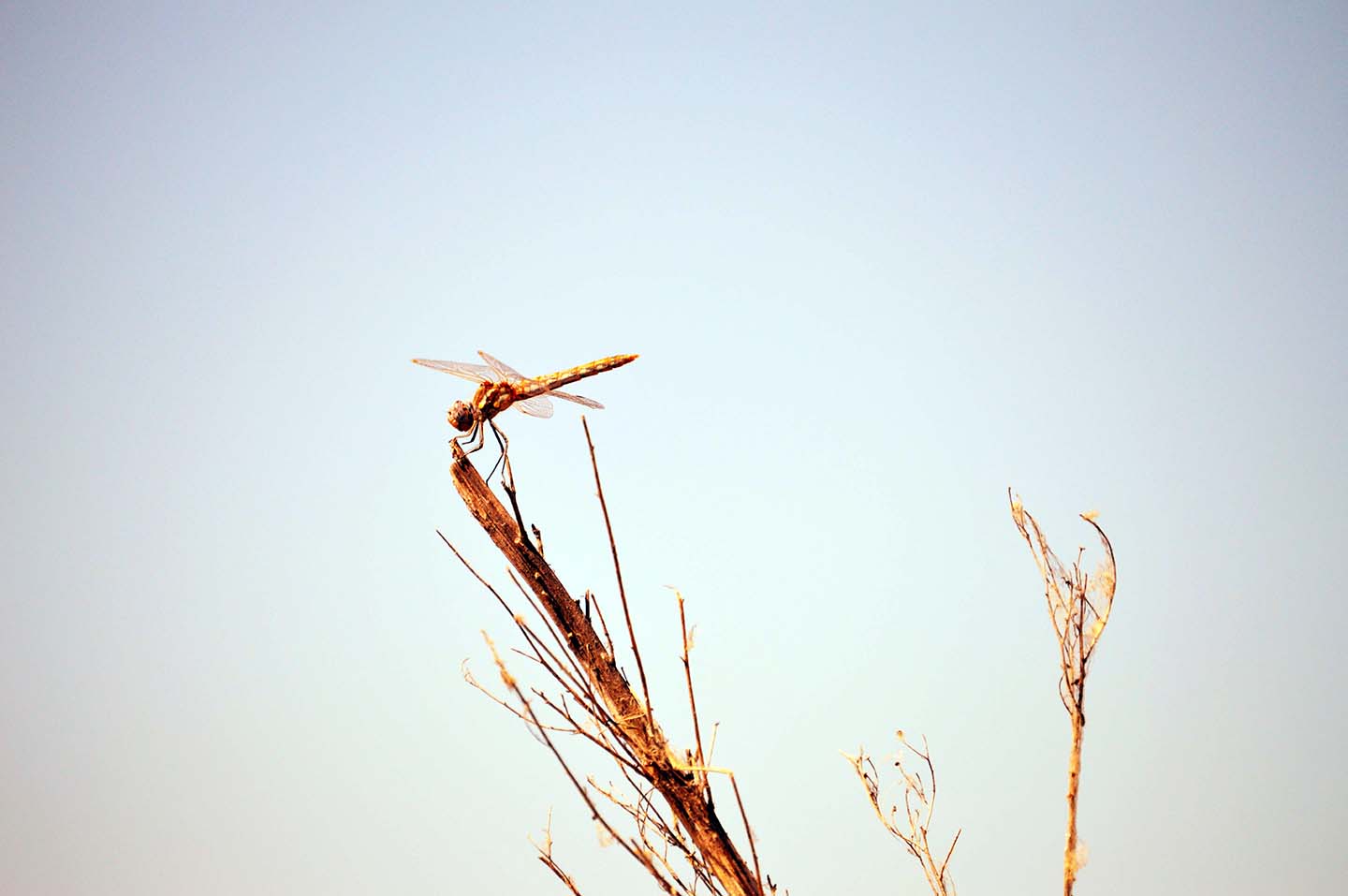
The poet had dragonfly choppers hovering above Walden Pond. The ones I saw were unusually static, likely as fatigued as I was, with temperatures in the 100s, in dried-out, dusty Sacramento wetlands. Their images will end up in future landscapes envisioned while thinking about what the hell we are doing to our country, our planet, most likely.
If just one of the montages approaches the brilliance of this poem, I will be content.
Why Is We Americans
We is gator teeth hanging from the rear- view mirror as sickle cells suckle at Big Momma’s teats. We is dragonfly choppers hovering above Walden Pond. We is spinal cords shedding like the skin of a cottonmouth. We is Psalm 23 and the Pastor’s chattering chicklets. We is a good problem to have. We is throats constricting and the grape juice of Jesus. We is Roach and Mingus in Birdland. We is body electric, eyes watering with moonshine, glossy lips sticky with lard. We is half brothers in headlock, arm-wrestling in the dirt. We is Vaseline rubbed into knocked knees and cracked elbows. We is ham hocks making love to kidney beans. We is Orpheus, lute in hand, asking do we have a problem? We is the backstory of myth. We is sitting horse and crazy bull. We is brown paper bags and gurgled belches. We is hooded ghosts and holy shadows roaming Mississippi goddamned. We is downbeats and syncopation’s cousin. We is mouths washed out with the blood of the lamb. We is witch-hazel-coated backs sucking on peppermint wrappers. We is the spiked antennas of a triangle face praying mantis. We is barefoot tongue-tied hogs with slit throats and twitching bellies. We is sun tea and brewed bitches. We is the crying pussies that stand down when told to man up. We is Radio Raheem and Zoot Suit Malcolm. We is spit-slick low cuts and fades. We is scrappy black-masked coons and turkey-necked bullfrogs. We is the pits of arms at stake, the clouds frothing at the mouth. We is swimmers naked, private parts allegedly fondled by Whitman beneath the water. We is late lurkers and castrated tree limbs on the Sunday before last. We is red- veined pupils and piss-stained knickers, slack-jawed and slumped in the bathroom doorway. We is whiplash and backhanded ways of settling grief. We is clubbin’ woolly mammoths upside the head, jammin’ fingers in Darwin’s white beard. We is comin’ round yonder, pigeon-toed and bowlegged, laughin’ our heads off. We is lassoed cowboys swingin’ in the sweet summer breeze.
doesn’t come with feathers. It lives in flip-flops and, in cold weather, a hooded sweatshirt, like a heavyweight in training, or a monk who has taken a half-hearted vow of perseverance. It only has half a heart, the hope I know. The other half it flings to every stalking hurt. It wears a poker face, quietly reciting the laws of probability, and gladly takes a back seat to faith and love, it’s that many times removed from when it had youth on its side and beauty. Half the world wishes to stay as it is, half to become whatever it can dream, while the hope I know struggles to keep its eyes open and its mind from combing an unpeopled beach. Congregations sway and croon, constituents vote across their party line, rescue parties wait for a break in the weather. And who goes to sleep with a prayer on the lips or half a smile knows some kind of hope. Though not the hope I know, which slinks from dream to dream without ID or ally, traveling best at night, keeping to the back roads and the shadows, approaching the radiant city without ever quite arriving.
Last week, I set my mind to beach combing, rather than keeping it from the idea. Hope needs sustenance, and it can be found on beaches, unpeopled or otherwise. Although the one I went to seemed to be a world in its own, not a soul in sight. Only traces left via drift wood edifices. Intriguing, but not as beautiful as the drift wood itself.
It was cool, bordering on cold, with intermittent squalls. Not flip-flop weather, a rain coat over the sweatshirt. A welcome break from the heat, though, that had taken a bite out of me.
After so many decades after my arrival in the United States I am still amazed at the frequent experience of being alone in vast spaces, nature easily reached near population centers, all yours, and yours alone, for the taking.
No witnesses to loud singing with a voice cracked by chemo so many years ago, or angry screaming, or crying your eyes out – all the things I phantasize about as possible private acts during solitude. Except, once I’m in nature, those urges completely vanish, my mind and soul entirely focused on the treasures around me, the intricacies of evolutionary design.
A focused mind, until it drifts to things I’ve read about the beach and ocean when I was young and completely impressionable. Now old, and intermittently impressionable, I shudder to think about how I was moved by Ann Morrow Lindbergh’s meditations on grief adjacent to emerging environmental concerns, A Gift from the Sea.
Little did I know, beyond her tragic loss of a child to kidnapping and murder, that she was a not-so-closeted admirer of fascism and Hitler in particular, arguing that totalitarian regimes were “manifestations of an inevitable historical wave of the future.” (Will she have the last laugh, after all?) Being married to a serial cheater, sympathizer and fascist-adjacent Charles Lindbergh, and bearing him 6 children, was nowhere on my teenage horizon. I was simply eager to embrace female role models that excelled in flying air planes and being a successful writer simultaneously.
Role models that embraced science and poetry in one fell swoop, like – the political impeccable – Rachel Carson, who wrote about the oceans with a conservationist’s mind even before I was born. I devoured The Sea around Us.
Hope, at the time, was not about approaching a radiant city, like Thomas Centolella describes in his poem above, but about finding an independent place in the world to explore who I was. Self-centered, in other words, but aware of threats to nature even then.
Carson had it right:
“I wonder if we have not too long been looking through the wrong end of the telescope. We have looked first at man with his vanities and greed and his problems of a day or a year; and then only, and from this biased point of view, we have looked outward at the earth he has inhabited so briefly and at the universe in which our earth is so minute a part. Yet these are the great realities, and against them we see our human problems in a different perspective. Perhaps if we reversed the telescope and looked at man down these long vistas, we should find less time and inclination to plan for our own destruction.”
Like the poet, I know many types of hope. Mine, as well, struggles to keep its eyes open. And it occasionally centers on the young being able to find all kinds of books and be educated, not censored; to read and comprehend early, with patience and the ability to analyze; to tolerate the hard parts of learning, because the acquired knowledge will sustain you through many decades of your life. In other words, not let their minds rot through the use of AI.
If we’re lucky, they will be able to fight the planned destruction, enabled by knowledge and critical thinking! The destruction of the radiant city, the shining symbol on the hill, for one. Before Reagan used this biblical phrase to celebrate American exceptionalism, it was meant to remind us that morality was the cornerstone of this symbol of hope.
Speaking of which (a moral approach to bolstering democracy, that is): if you are in favor of vote by mail, now is the time window to send your comments to the Postmaster regarding the plan to refuse vote mail delivery/absentee ballots in States that will not hand over their voter rolls to the Trump Administration. Here is the link for easy commenting, offered by the League of Women’s Voters. It takes two minute, max.
Music is happy today. In celebration of the (unexpected) majority decision of the Supreme Court to allow counting of mailed ballots that arrive after election day, but were post marked in time. A win for democracy and voters.
It is transition season in the garden, before the hot colors and voluptuous forms of the true summer flowers arrive.
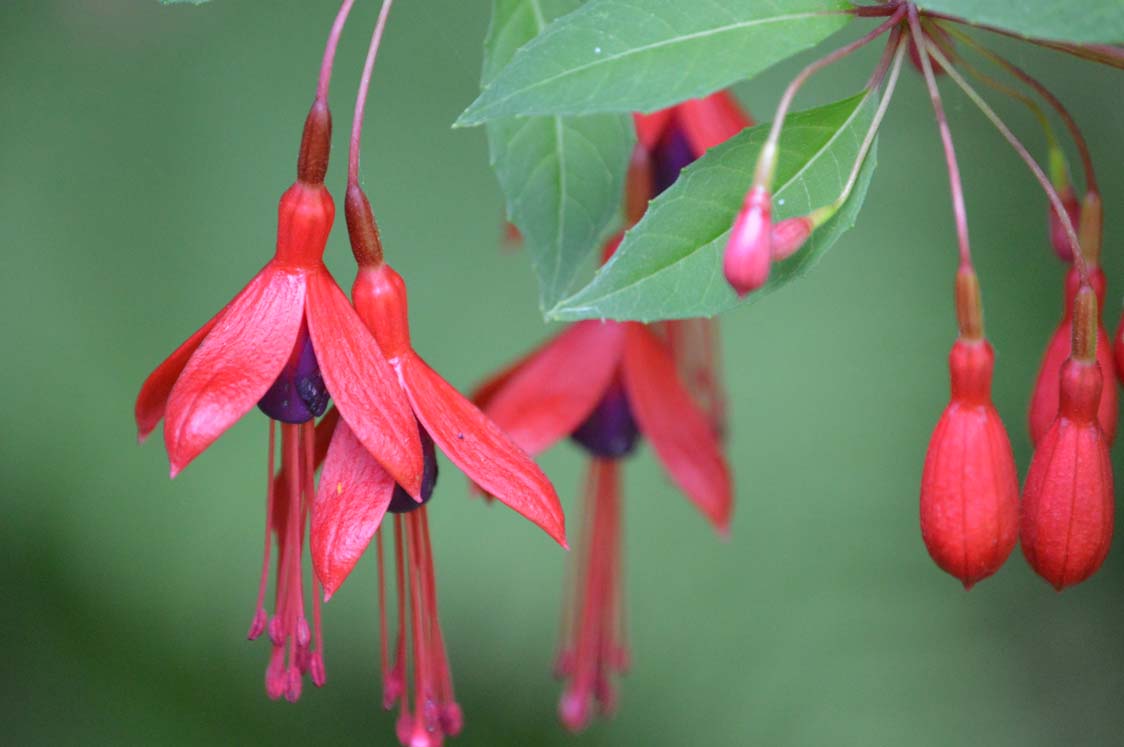
There are feverfew, wild geraniums, hedge roses and coral bells, all sporting their pastels. This year, there is also a profusion of early fuchsia blossoms, which remind me of ballerinas, with their tutus and a general dainty flair.
Today a friend of mine enters another year in her 8th decade of life. Interested in all things ballet, accomplished critic of and writer about the art form. Published in journals like New York City’s Dance Magazine, the New York Times, encyclopedias and periodicals, or local press here in the PNW, the Oregonian, Willamette Week and Oregon ArtsWatch, among others. She wrote a deeply researched and fiercely argued book about Todd Bolender, Janet Reed and the Making of American Dance that came out in 2021.
Dainty she ain’t. Which I consider a compliment. It’s also a way of being that empowers those asked to master complicated and often painful lives, early widowhood included. There is a fiery intellect groomed during a New York childhood closely associated with intensely intellectual and artistic circles, and an education at Barnard. There is a ferocious quality of protecting and defending who and what she loves, at almost any cost. There is scorching rage there against the vicissitudes of aging and bodies no longer willing to comply. There is hot contempt for the unprincipled, the immoral, the compromising and the indifferent ones, in public and private sphere alike.
She has a special gift for friendship, keeping early ones alive, opening herself to the vulnerabilities of new ones, established late in life. We have known each other for some years now, old enough at the start not to waste time on frivolities and chitchat. Instead there are repeat conversations that allow exploration of topics relevant to finding closure without throwing in the towel. Conversations that sometimes venture into the territory of illness, death and dying. Topics that are rarely spoken of openly in this society, issues preferably explored with someone equally non-moribund as I consider myself. Thoughts triggered by accumulating losses in our respective social spheres. Ideas (and tears) better confronted in the company of someone curious and open, rather than alone.
In this spirit I offer one of my favorite poems as a birthday gift: an unflinching, yet positive look at what life holds for us, good or bad; an allusion to belonging to an infinite universe; a profoundly stern but also reassuring reminder that here is still here: no terrifying cracks in the wall sucking us into oblivion just yet.
Let us cherish the day, each day, fatigue, pain, irritations notwithstanding.
Cherish the memories of an extraordinary life (I AM STILL WAITING FOR THE AUTOBIOGRAPHY, Martha!).
Cherish the dance still left in us.
Happy Birthday!
Here

I don’t know about other places,
but here on Earth there’s quite a lot of everything.
Here chairs are made and sadness,
scissors, violins, tenderness, transistors,
water dams, jokes, teacups.

Maybe somewhere else there is more of everything,
only for some reason there are no paintings there,
cathode-ray tubes, dumplings, tissues for tears.
There are plenty of places here with surroundings.
Some you can particularly get to like,
name them your own way
and protect them from evil.

Maybe somewhere else there are similar places,
But no one considers them beautiful.


Maybe like nowhere else, or in few other places,
here you have your own body trunk,
and with it the tools needed,
to add your children to those of others.
Besides that your hands, legs, and the amazed head.

Ignorance here is hard at work,
constantly measuring, comparing, counting,
drawing conclusions and finding square roots.

I know, I know what you’re thinking.
Nothing is permanent here,
for since ever forever in the power of the elements.
But notice—the elements get easily tired
and sometimes they have to take a long rest
before the next time.

And I know what else you’re thinking.
Wars, wars, wars.
But even between them there happen to be breaks.
Attention—people are evil.
At ease—people are good.
At attention we produce wastelands.
At ease by the sweat of our brows we build houses
and quickly live in them.

Life on earth turns out quite cheap.
For dreams for instance you don’t pay a penny.
For illusions—only when they’re lost.
For owning a body—only with the body.

And as if this was not enough,
you spin without a ticket in the carousel of the planets,
and along with it, dodging the fare, in the blizzard of galaxies,
through eras so astounding,
that nothing here on Earth can even twitch on time.

For take a good look:
the table stands where it stood,
on the table the paper, exactly as placed,
through the window ajar just a waft of the air,
and in the walls no terrifying cracks,
through which you could be blown out to nowhere.

by Wislawa Szymborska
Music directed by another redhead – Ballet scores by Mozart.
A lot of eggs popped up last week. First a nest with duck eggs right off the footpath – unclear who was more startled, the duck who sat on them when I walked by, or I, when the duck flew up in a panic, practically fluttering into my face. (If s/he does that every time someone walks by, I predict there will be zero ducklings hatched…)
Next I saw a number of eggs or egg-shaped forms of various materials arranged in the house of a friend. A ceramic artist herself, she creates beauty with whatever she finds.
We shared the excitement of seeing bushtit parents flying in and out of a nest next to her kitchen window. Alas, the very next day the nest was destroyed by predators. Another generation lost.
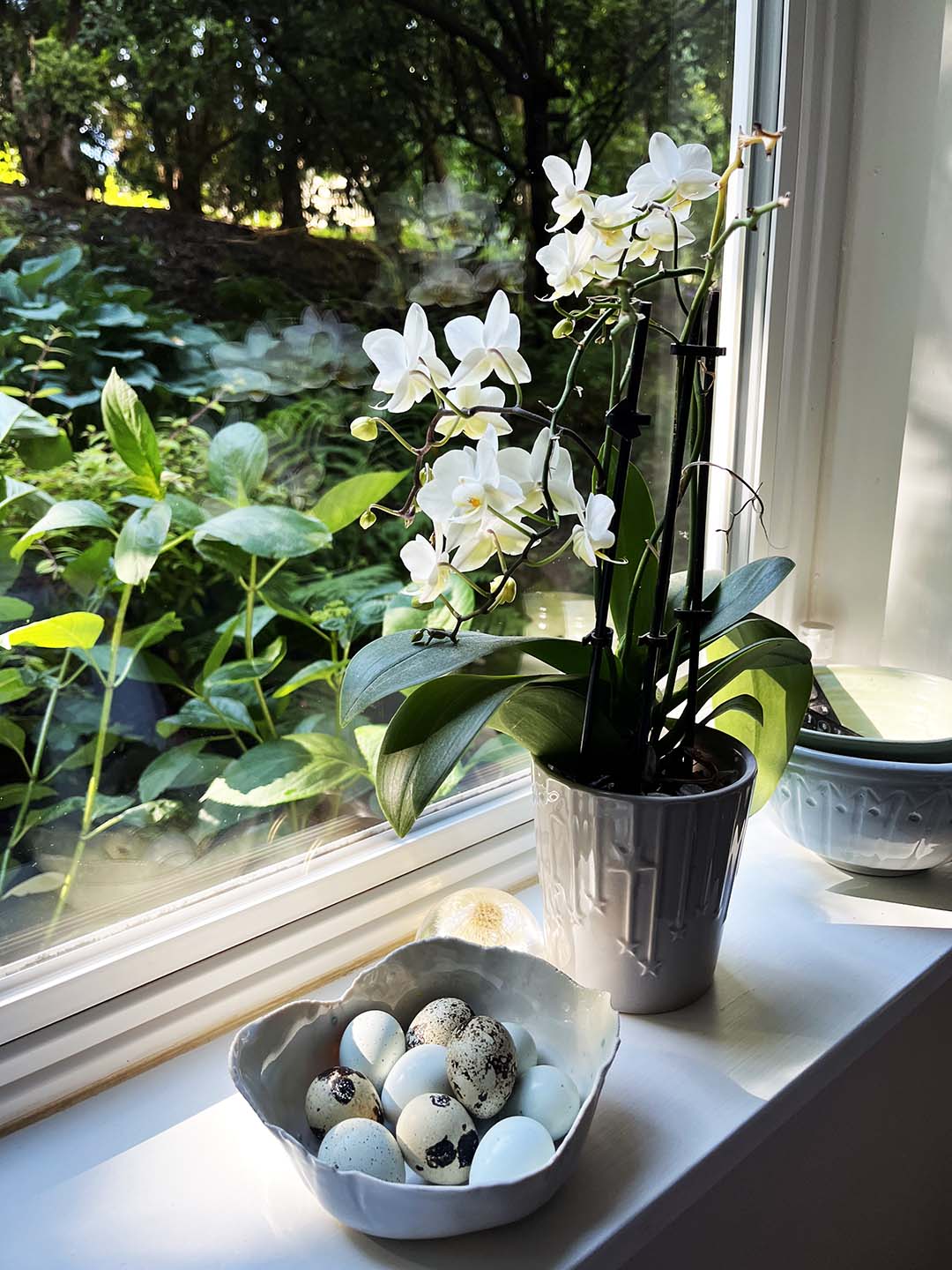
My friend sent me home with a bag of quail eggs which are now on my windowsill until they, predictably, rot and start to smell up the kitchen. The eggs, in turn, triggered thoughts about genetics, since I had just read Brian Klaas’ fascinating essay about research into genetics and the question who owns your genome. If researchers discover information about our genome that contradicts everything we believe to be true about ourselves, should we be allowed to interfere with publication of that knowledge? Should they be allowed to withhold that information from us? And how are those questions linked to potential abuse by people with racist agendas? If you find the introduction below of interest, here is the link to the whole piece:
“…..Thus began a descent down a fascinating rabbit hole into the thorny philosophical debates that define modern research into population genetics. What happens when longstanding historical narratives of identity collide with hard genetic evidence? Should DNA scientists always publish findings that could destroy a population’s sense of itself? And, if not, who gets to decide which kinds of scientific research are too sensitive to release?”
Science caught my eye, or my brain, as the case may be. But so did poetry – again related to stories of origin, linkage to tribal membership as juxtaposed to “others,” and, of course, quail eggs. The lines below were published in 2022 (link in the title.)
1. Seventeen months after I moved off the reservation, I traveled to London to promote my first internationally published book.
2. A Native American in England! I imagined the last Indian in England was Maria Tall Chief, the Osage ballerina who was once married to Balanchine. An Indian married to Balanchine!
3. My publishers put me in a quaint little hotel near the Tate Gallery. I didn’t go into the Tate. Back then, I was afraid of paintings of and by white men. I think I’m still afraid of paintings of and by white men.
4. This was long before I had a cell phone, so I stopped at payphones to call my wife. I miss the intensity of a conversation measured by a dwindling stack of quarters.
5. No quarters in England, though, and I don’t remember what the equivalent British coin was called.
6. As with every other country I’ve visited, nobody thought I was Indian. This made me lonely.
7. Lonely enough to cry in my hotel bed one night as I kept thinking, “I am the only Indian in this country right now. I’m the only Indian within a five-thousand-mile circle.”
8. But I wasn’t the only Indian; I wasn’t even the only Spokane Indian.
9. On the payphone, my mother told me that a childhood friend from the reservation was working at a London pub. So I wrote down the address and took a taxi driven by one of those London cabdrivers with extrasensory memory.
10. When I entered the pub, I sat in a corner, and waited for my friend to discover me. When he saw me, he leapt over the bar and hugged me. “I thought I was the only Indian in England,” he said.
11. His name was Aaron and he died of cancer last spring. I’d rushed to see him in his last moments, but he passed before I could reach him. Only minutes gone, his skin was still warm. I held his hand, kissed his forehead, and said, “England.”
12. “England,” in our tribal language, now means, “Aren’t we a miracle?” and “Goodbye.”
13. In my strange little hotel near the Tate, I had to wear my suit coat to eat breakfast in the lobby restaurant. Every morning, I ordered eggs and toast. Everywhere in the world, bread is bread, but my eggs were impossibly small. “What bird is this?” I asked the waiter. “That would be quail,” he said. On the first morning, I could not eat the quail eggs. On the second morning, I only took a taste. On the third day, I ate two and ordered two more.
14. A gathering of quail is called a bevy. A gathering of Indians is called a tribe. When quails speak, they call it a song. When Indians sing, the air is heavy with grief. When quails grieve, they lie down next to their dead. When Indians die, the quails speak.
(Alexie has acknowledged sexual misconduct allegations in 2018, and apologized. Many of his prizes and fellowships were rescinded or renamed. I do not know if he has written a novel since then, but his short writings appear on his substack. As always, we can debate if you can separate the person from the work, but I often go back to reading his words.)
May the quails be silent this weekend, and may lots of eggs hatch….
***
Speaking of hatching: PLEASE SAVE THE DATES:
I have two exhibitions coming up. One will hang at the Columbia Gorge Museum in Stvenson, WA, starting June 24, 2026 with a reception on September 11th, 2026 ( a combined celebration of lace artist Maggi Hensel Brown and community lace makers and my photographic work.)
Fragilityis a 2025 series of photomontages that grew out of ongoing concern about insufficient environmental protection. Fauna and flora in the depicted landscapes – photographed mostly around the Pacific Northwest – are endangered. Climate change and the renewed threat of industrial extraction of resources, forests and minerals alike, will do irreparable harm. I thought the ephemeral nature of clouds and the fragility of lace (superimposed on the landscapes) were fitting symbols for why we need step up in our efforts to turn things around.
Collective Effervescence brings together the work of Diane Jacobs, Susan Murrell and my own to explore our evolving relationship with the natural world. Rooted in shared energy, connection, and interdependence, the exhibition examines how human actions shape and destabilize the landscapes we inhabit. Through painting, photography, printmaking, and mixed media, we create environments that are at once familiar and altered. Together, we invite viewers to look closely, to explore and perhaps share the artists’ fervent belief that we can have a positive impact on preserving nature, once we shift from individual awareness to shared responsibility, and from observation to action. My contributions come from a new series When We Broke the World.
I will post more detailed information closer to the dates – just put them in your calendars for now!
Music today is from all around the world, I guess every shared gene pool! A collection of modernized folksongs. A beautiful album by Marisa Anderson.
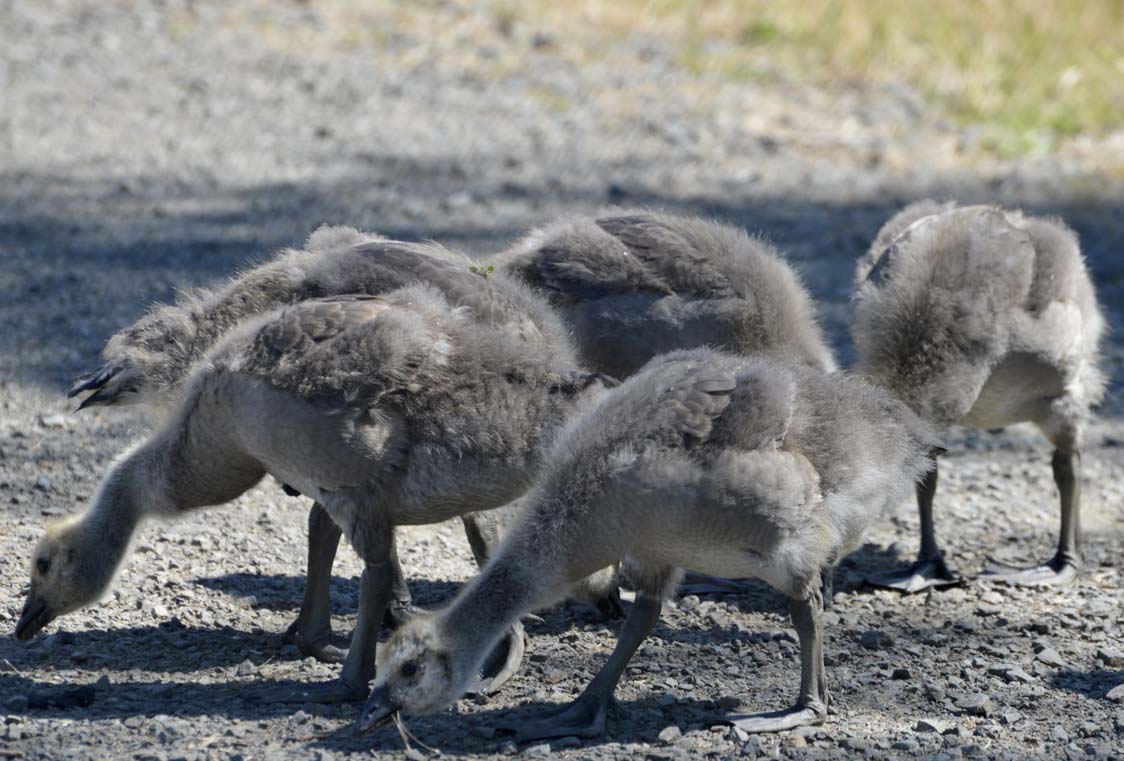
I turned around the corner, and just like that, there were two families of geese. Completely unperturbed by my presence, they walked up from the lake shore, through the grass, onto the path, not 2 meters away from me.
The German word for the way goslings follow a leader in a straight line is “Gänsemarsch”, geese march. Not to be confused with goose stepping, which in German is called Stech Schritt, literally translated as stabbing step.
Goosesteps
A collector of walks, I was practicing my llamastep when one of those white geese with the knob of cheddar on its bill honked at the goslings ignoring the art of the rank and file so adored by Mussolini and other assorted lunatics who I have trouble believing could ever raise one leg parallel to the earth they scorched without falling prey to gravity that was given a special kind of dominion over the fascist paunch, a shabby thing I have never seen hang around the waist of a goose, though who can say for sure under all that heavenly down where the hips of a goose begin and end; and even if tomorrow some budding scholar published a treatise titled The Mystery of Goose Hips to fanfare, it would be an exaggeration of the grossest kind to equate a goose’s trumpet with the barking from the balcony by the sad bullies whose love of the locked leg I will never understand since the knee was so obviously made to flex, which means locking one is most likely a kind of sin against Darwin or God, both of whom I think would disapprove of anything so unnatural as even twenty people moving in stiff unison to music unless the brass and strings were just about to sway and bend to the hot version of “When the Saints Go Marching In.”
I associate goose stepping with authoritarian leaders, although it originated in 18th century Prussia under Prince Leopold I. Locked knees, lifted to a 90 degree angle, brought crashing down with a loud slap, a totally unnatural and physically demanding, if not exhausting form of walk.
Originally performed by batallions or platoons, it was meant to impress with physical prowess, and disciplined determination. By the time Mussolini and Hitler made it one of their trademarks, something else was added to the mix. The synchronized mass movement of bodies was participatory without being democratic. People bought into the mass spectacles, but it was directed top down, all in service of a leader. I am thinking back to what Hannah Arendt wrote about Totalitarianism: an organized, privileged elite pushes masses together into a form of experienced unity that relieves the individual of a sense of isolation. Our need for belonging is sated by participation in a larger whole, the nation or paternalism of some charismatic leader.
Synchronized movement fosters a loss of self, a bonding to or being usurped by some larger unit, taking with it the worries and the loneliness generated by a society in flux. That kind of de-individuation might also, however, lead to complete abdication of responsibility, or upholding of one’s individual moral standards. A mass becomes a mob….. and at the center of it is always a component of fostered hatred.
Arendt, writing about a time when goose stepping was on the rise in Germany between the world wars, described it succinctly:
Enough. I have to stop thinking about urgent political, historical parallels, or I go nuts. Let’s just marvel at the fluffiness of the goslings, the nurturing parent geese, the poet’s ability to distance himself from the horrors with a good portion of humor.
And here the Boss version of the Saints marching…..




















_-_M.Ob.600_MNW_-_National_Museum_in_Warsaw.jpg)