Today the text is the music and the music is the text. The words of the 1948 UN Human Rights Declaration, in their demands for and implicit belief in humanity – the vision of a better and fairer world that is within our reach if we choose it – remind us that we still have a long way to relieve the trauma that millions of people undergo everyday, imposed by cruelty, greed and injustice.
Eleanor Roosevelt, credited with its inspiration, was the chair person of the UN Committee that drafted the document. She referred to the Declaration as the “international Magna Carta for all mankind,” and considered the 30 Articles of the Declaration as her greatest achievement. It was adopted by the United Nations on December 10, 1948. Here is Roosevelt reading the preamble.
Composer Max Richter put her words to music, incorporating her reading of the preamble into a piece called All Human Beings from his new album Voices, to be released by the end of July. He then crowdsourced hundreds of readers of all ages who repeated the words in various languages, interwoven with the music. They are the voices of the title.
Here is an interview with the composer about his approach to music as a conduit for political or philosophical thought and here is a play list of his works broadcast on NPR.
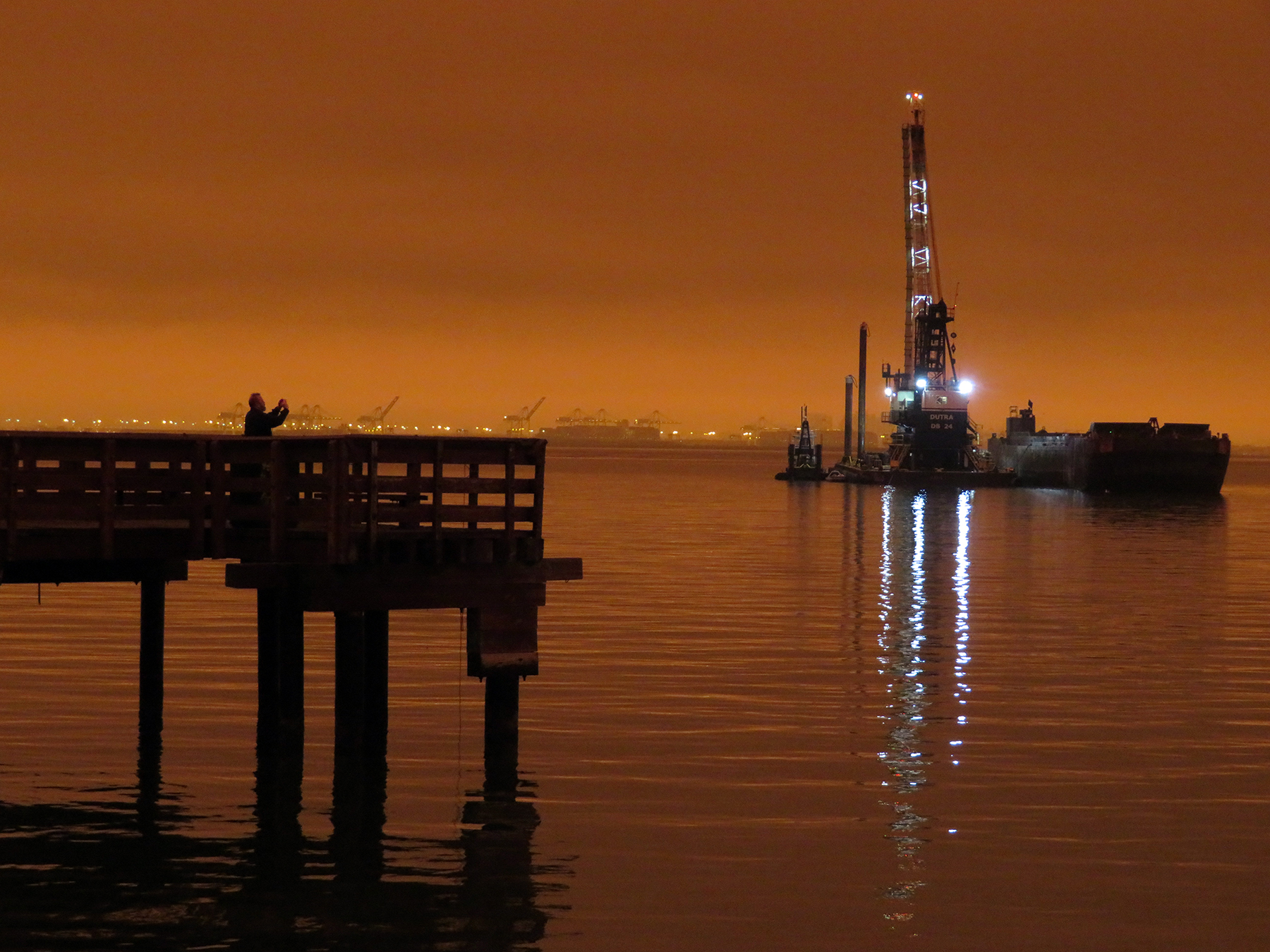
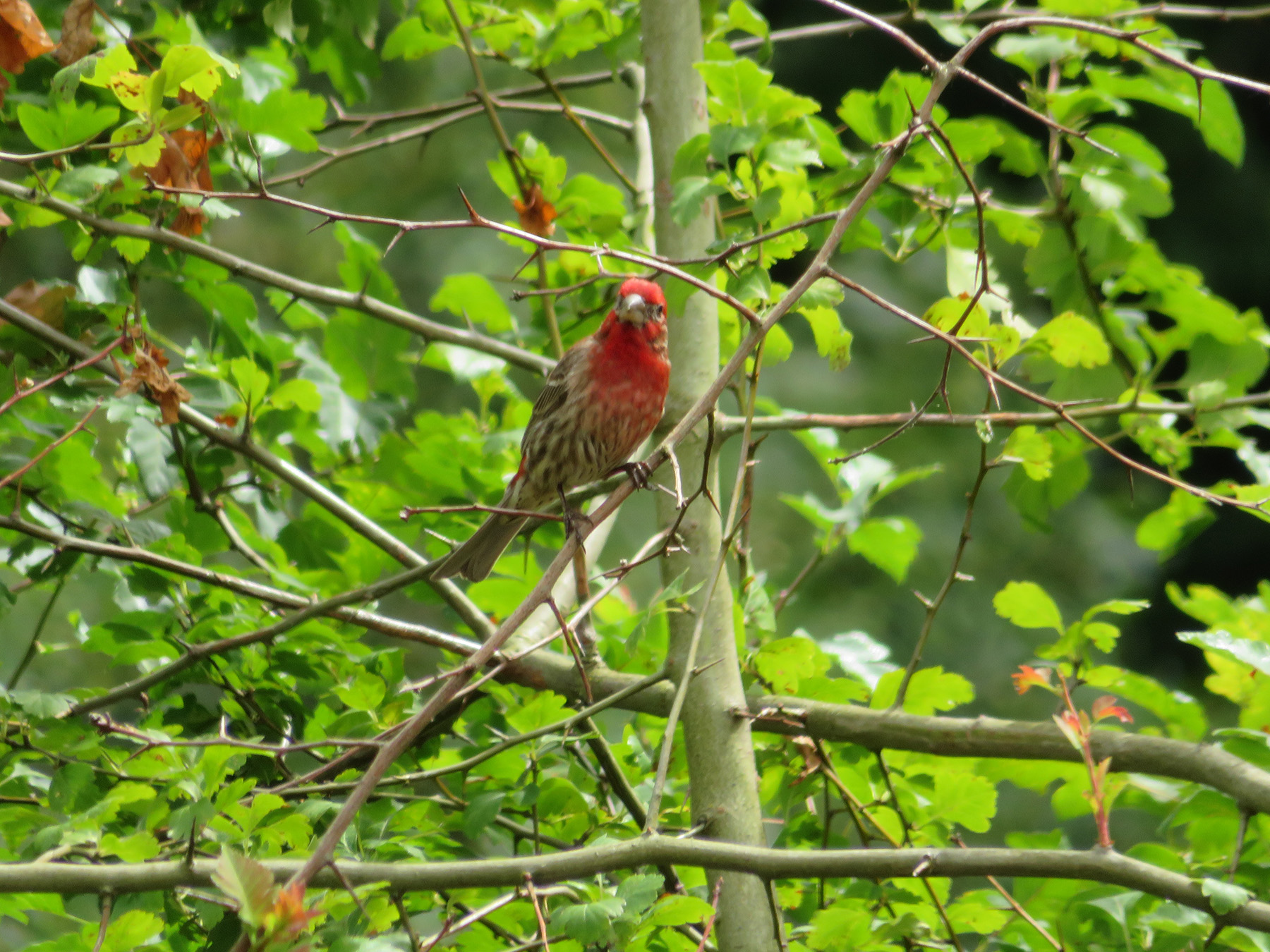
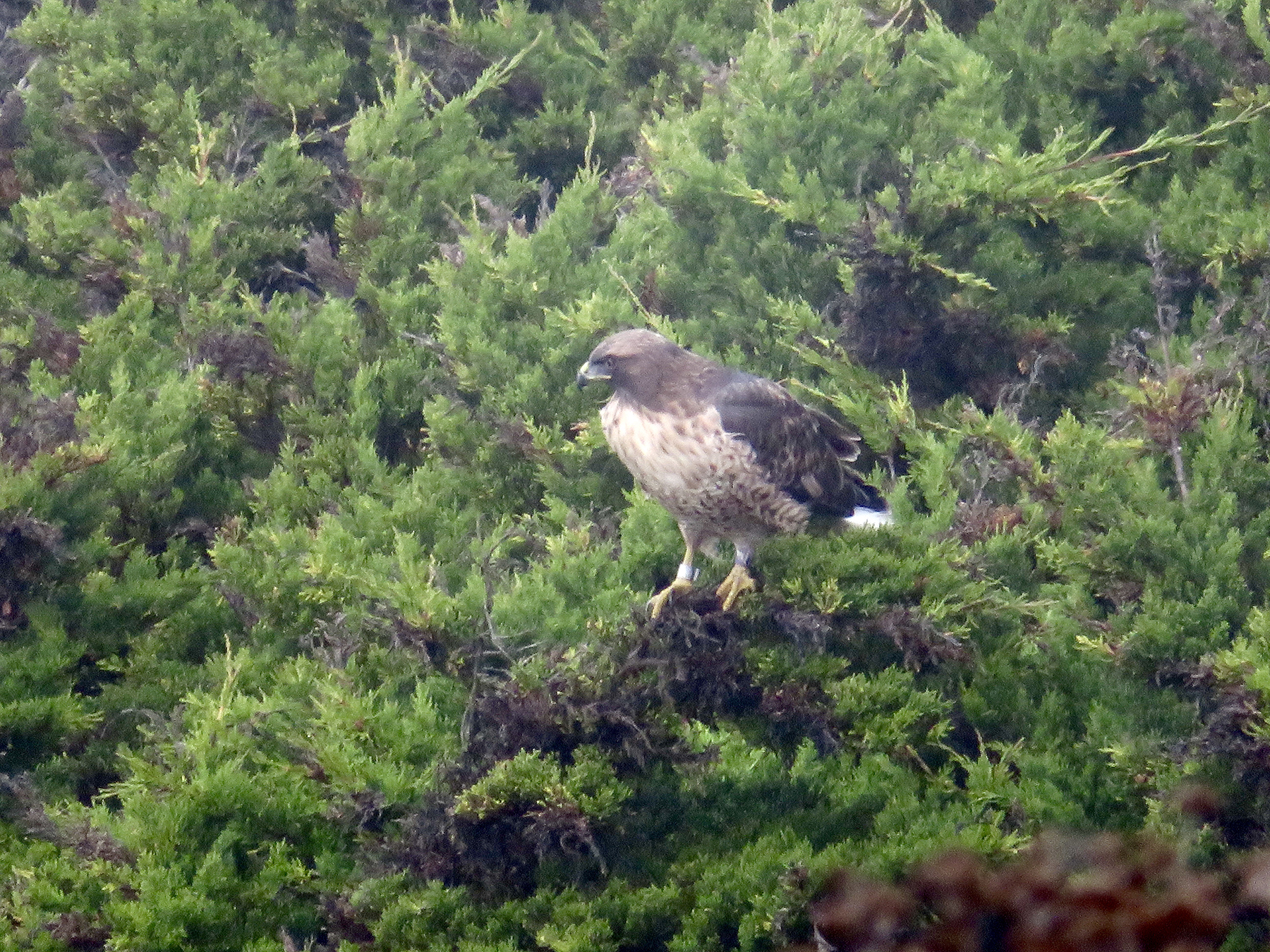
Photographs today are a variety of finches, gold finches, house finches – the male plumage still intense for mating, to produce a second clutch of eggs. Their color comes from pigments in the food they eat, and so varies depending on the quality of the food. The better quality food, the more intense color, the more likely to be chosen as a mate by Ms. Finch….
I chose finches because they range across the entire world – in tune with the United Nations mission. Bunting, canary, cardinal, chaffinch, crossbill, Galapagos finch, goldfinch, grass finch, grosbeak, and sparrow classify as finches.
3: to cause to cease hostile firing or criticism// silence the opposition
Silence, in other words, is not just a desirable state to enable contemplation or soothe our stretched nerves. It can also be used to achieve certain communicative goals: keeping a secret (which can be good or bad,) signaling who belongs to certain groups or serving as a means of exclusion, or as manipulation in the service of power. You can be silent because you have nothing to say, or you don’t want to say something or you are not allowed to say something.
There are controlled, calculating silences: The majority of Republican politicians, until yesterday, were silent on the wearing of masks even though all scientific evidence pointed to them as effective in slowing the pandemic. Being silent on the numbers of infected people seems to be a magical tool to make the disease disappear, whether we are talking the President’s proposals regarding testing, or the disappearance of hospital admittance statistics across red states.
Then there are resigned, powerless silences – children who are undergoing traumatic experiences often cease to speak. People who have never been listened to don’t want to waste energy by futilely raising their voices.
Silence is often socially and culturally regulated: who gets to speak first or who does not get to speak at all tells volumes about power hierarchies. There are not many languages who do not have proverbs that allude to the desire to silence chattering women folk, for example. And we can finally put a myth about gossiping women to silent rest: new research shows they don’t do any more of that than men.
Many terms in both German and English connote a critical or negative perspective rather than a positive one: “Shut Up!, wall of silence, I’m lost for words, under the cloak of silence, speechlessness, the silence treatment, shocked into silence, hushing something up. (The German translation for the last one, by the way, is literally “killing with silence,” totschweigen, wanting to make something disappear for good.)
Silence, then, can be political. Some years back, for example, a famous German author, Martin Walser, talked in his acceptance speech for the Peace Prize of the German Book Trade about the “instrumentalization of the Holocaust” and the Nazi concentration camp Auschwitz as a “moral bludgeon.” Let’s no longer talk about it, we feel bombarded! He recommended that Germans withdraw to their own conscience, to a place of “profound inward solitude” and engage in “the withdrawal into themselves.”
All hell broke loose. The solution to return to the individual conscience in order to avoid the public remembering, silencing it, in effect, was not something that sat easily with many people who had worked hard to educate about the Holocaust particularly in light of the rising neo-fascist tendencies in younger generations as well. The Jewish community was mortified, with its then-leader Ignaz Bubis decrying the re-establishment of a scenario which has nourished anti-Semitism for hundreds of years: the revengeful Jew, who doesn’t want to make peace and the poor Christian victim who seeks salvation through his quiet lonely suffering. (Ref.)
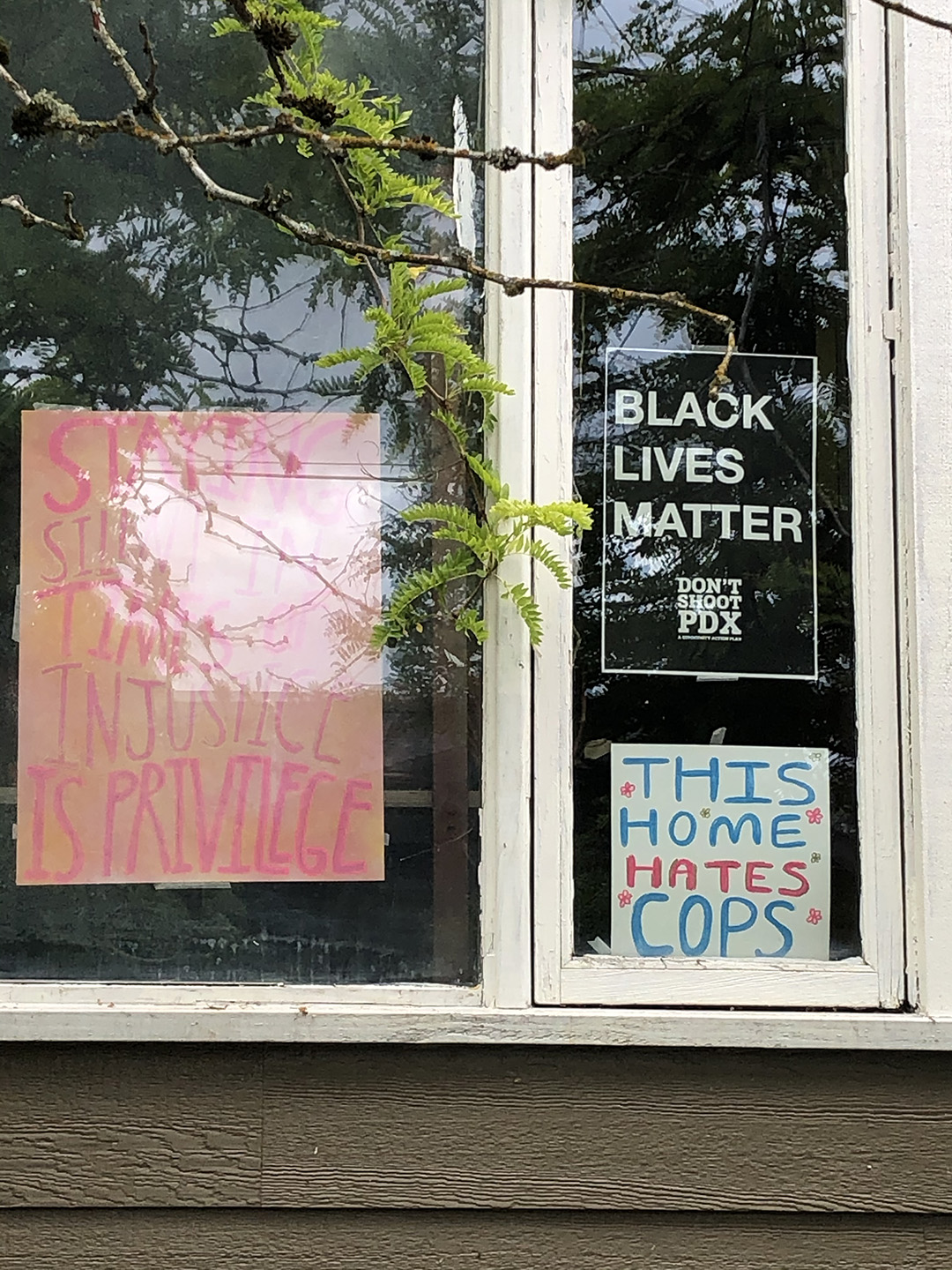
Closer to home we have a great many examples of silence in politics to choose from – beginning with Richard Nixon’s invocation of the silent majority in 1969. Or think of the current debate around the persistence of racism in all of its ugly forms. Pence, for example, has not allowed the words Black Lives Matter to cross his lips even if directly asked in interviews. Police departments around the country are silent on crimes committed against Black citizens, until public pressure boils over. The current failure of the Senate to pass pending legislation – The Emmett Till Anti-Lynching Bill – is another example of silence on the part of the American state. No federal law was EVER passed to criminalize the practice of lynching.
The moment of silence that is invoked like clockwork in our age of mass shootings is a tool as well: we do not wish to acknowledge that gun suicides claim more than 20,000 lives in the United States annually; that American women are 11 times more likely to be shot and killed than their counterparts in other high-income countries; that black men account for 6 percent of the U.S. population but half of its gun homicide victims. With its roots in religious practice the gesture seems to indicate that we are helpless to prevent something we’d like to think of as an act of G-d, rather than the outcome of profit motives for the weapons industry combined with structurally racist policies.
Back to the word itself: silence has its etymological root in the latin verb desinere: to cease, stop, desist, abandon. Silence across history has been responsible for abandoning those who needed a voice, their own being stopped. Silence, if you want to reverse the letters, gave license to the abuse of power. Let’s desist.
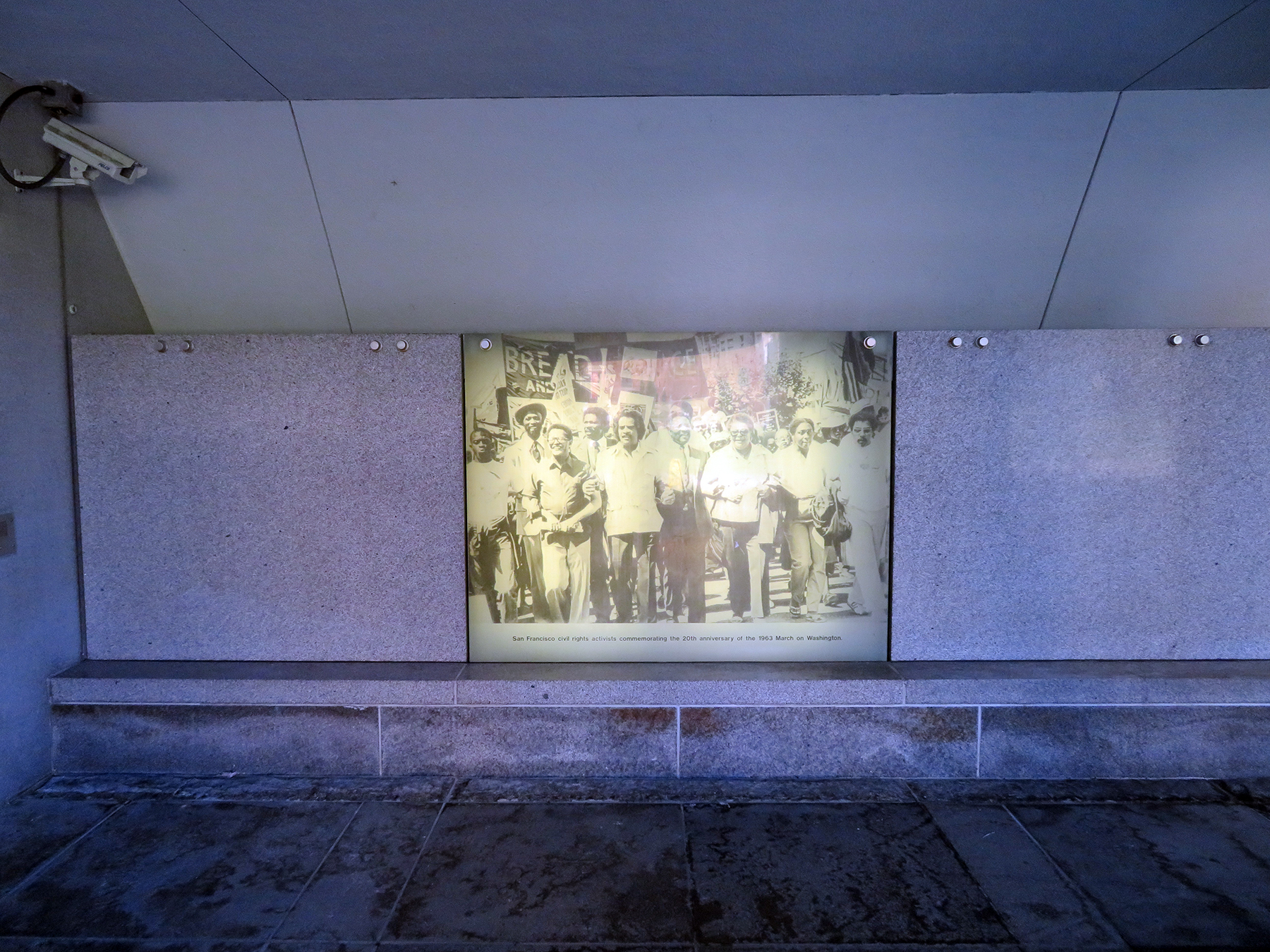
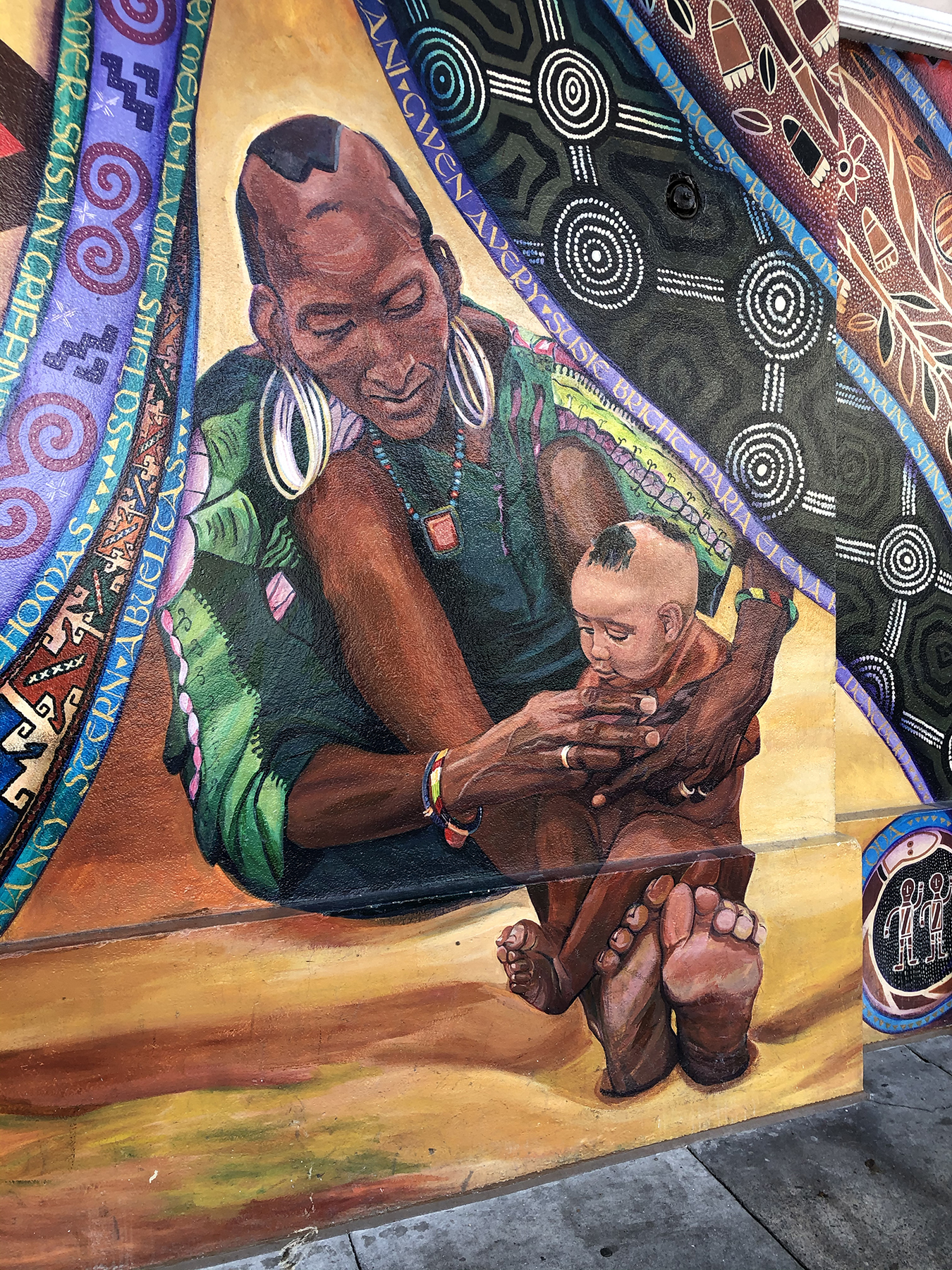
Photographs today found on a walk along NE 22nd and surrounds.
Music by Sir John Tavener, composed to capture his escape from a near-death experience.
I like silence, though I am not one of those people who crave it constantly. In fact, one of the pleasures of travel that takes me away from a place where the incessant screeching of crows is the dominant sound in an otherwise quiet environment, is the return to city noise. New York City in particular, a place where I spent many years, greets me with “Ah, this is the noise indeed,” (as well as “Oh, I remember these inescapable, foul smells,”) in ways that provide a bittersweet jolt of familiarity and reminiscence. Different, of course, if you visit, and don’t have to live any longer immersed in the constant barrage of sounds.
Silence is certainly the mode when I work, no background radio for me when writing or creating montage, despite my love for music. Silence was the biggest prize when moving out of shared housing, including boarding school dorms where you could not hear your own inner voice for constant vigilance of what the noises meant across the hall, the whispered ones most dangerous of all. Silence unimpeded by the neighbors in surrounding flats was a gift when finding our house.
Many have written about silence and its nemesis, the bombardment with noise in our culture. The linkage is smartly captured in a book by George Prochnik from a decade ago, In Pursuit of Silence. A comprehensive review can be found here.
But today I want to share descriptions of types of silence that I’ve come across, in hopes they’ll spark recognition and give you as much pleasure as they did for me.
“Not speaking and speaking are both human ways of being in the world, and there are kinds and grades of each. There is the dumb silence of slumber or apathy; the sober silence that goes with a solemn animal face; the fertile silence of awareness, pasturing the soul, whence emerge new thoughts; the alive silence of alert perception, ready to say, “This… this…”; the musical silence that accompanies absorbed activity; the silence of listening to another speak, catching the drift and helping him be clear; the noisy silence of resentment and self-recrimination, loud and subvocal speech but sullen to say it; baffled silence; the silence of peaceful accord with other persons or communion with the cosmos.”
It is somewhat ironic that they were written by a man eulogized in 1973 by journalist Nat Hentoff, his friend and colleague, asCitizen Va – r- ooooooom! The author in question, Paul Goodman, would be one of those people I’d choose to invite to the proverbial lonely island.
Born to a sephardic Jewish family in NYC, he led an intellectual life as rich as they come, and a practical life as poor as they can be endured. His openly lived bisexuality cost him educational status, jobs, group memberships in even the most progressive environments. His anarchist writings did nothing to improve that lot. Fame, or notoriety, you choose, that were accrued in the 1950s as a philosopher of the New Left, a social critic, as co-founder of the Gestalt Therapy movement and psychotherapist, as a novelist and activist, did not extend much beyond his early death from a heart attack.
And yet his writings are especially applicable to our current times. His World War II-era essays on the draft, resisting violence, moral law, and civic duty were re-purposed for youth grappling with the Vietnam War but can be applied to state violence in general. In Growing Up Absurd(1960), he addressed young protesters, really young Americans in general, whom he encouraged to reclaim ThomasJefferson’s radical democracy as their birthright. The book was not just about school reform to re-engage disaffected youth, but a reckoning with a political and economic system that used and discarded human beings as pawns. If alive today, he would be a welcome, loud voice indeed, not a proponent of silence.
More on the uses of silence tomorrow.
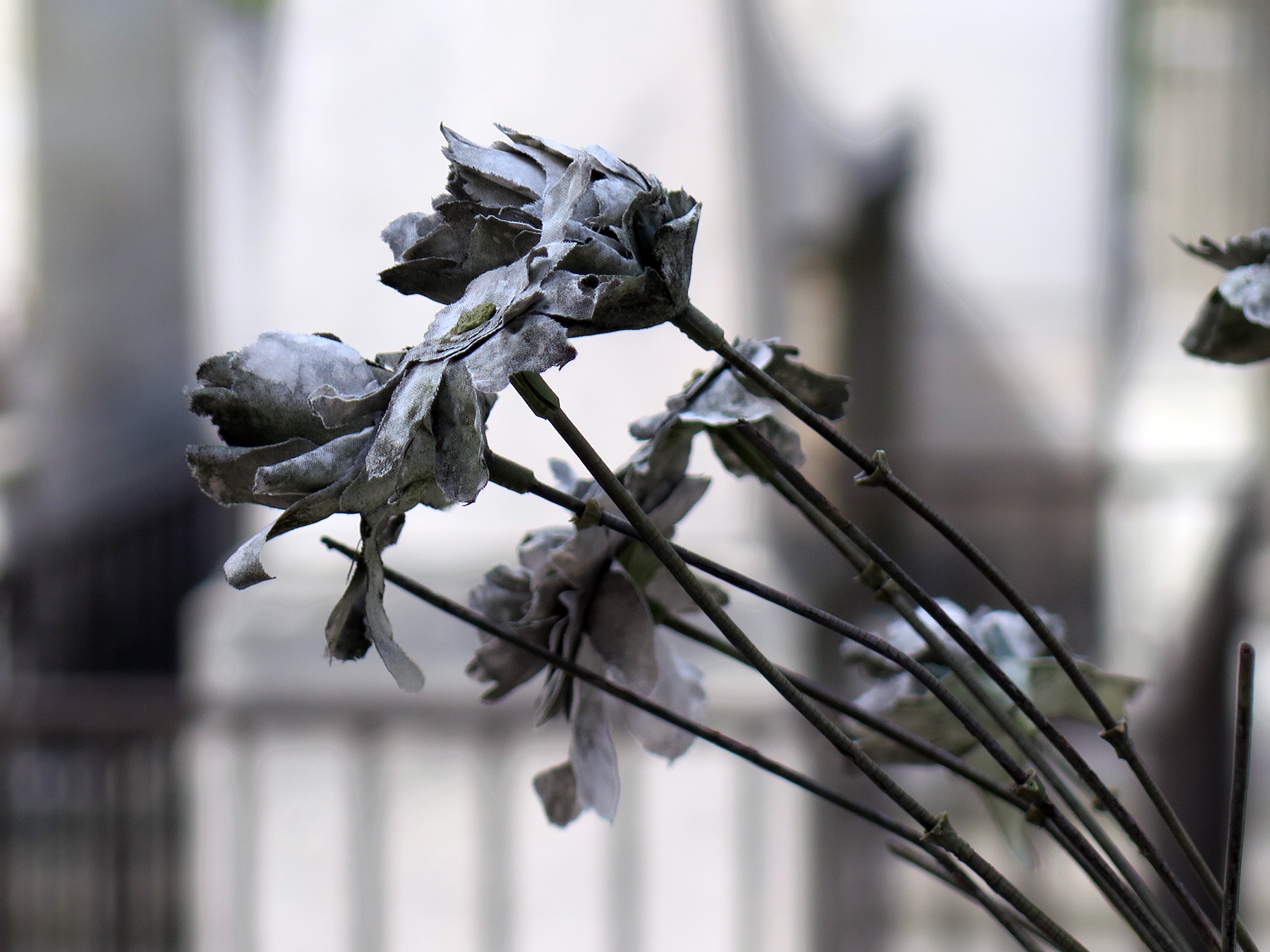
Photographs today from a place where you commune in silence – collected across cemeteries in Paris, another nicely noisy city.
“Silence is not acoustic. It is a change of mind, a turning around,” composer John Cage once remarked. He was drawn to it in his studies of Zen Buddhism. So it shall be his music for today, the Sonatas and Interludes in a prepared Piano, recently performed in Seattle. For those interested, here is an approachable introduction to the composer and the music. Open your week-end rested brain to the challenge!
I get mail that tells me I make too much use of the bully pulpit and should seduce the reader on an easy slope into hard topics. Noted.
I get mail that urges me to be more straightforward and cut the superfluous trimmings from the message core. Under consideration.
I get mail that compares me to a mindreader, expressing word for word what is a fog of thoughts in someone’s brain. I don’t think so.
I get mail that simply says: Spot on! Makes my heart sing.
On some days, I am told by strangers that they love my work, so glad they stumbled on the blog. Makes my day.
Occasionally I get yelled at. So be it.
Yet all agree I have some quirky habits. One of them is to recommend books to read that I have not (yet) read myself, as you all well know. (There are other, quirkier habits. They include one that I have had since childhood. I leave the cores of apples, religiously consumed as one per day for the last 60-odd years, lying around wherever I drop them, much to the consternation of my mother who called me Appelschnut, a vernacular for “little apple mouth,” and my roommates, lovers, girlfriends, or my husband. Should I ever get lost in the Hänsel and Gretel woods, just follow the trail of pips….
Regarding that unseemly habit, I wouldn’t know the answer to the question: “Why?”
*
I do know the reason for the book recommendations, though: I simply do not have enough time to read everything in a timely fashion. When books crop up that tie into something that is of current interest or importance, and if they are recommended by a source I trust, I have no quarrel with putting them up and out there. Who knows, maybe I’ll get mail that tells me they were worth it?!
Case in point was a reminder in our current discussion about race relations and discriminatory treatment, that our educational institutions, as designed, have been at the forefront of keeping race and class in separate corners, perpetuating a division that prohibits young minds to snap out of historically and culturally ingrained patterns of group identity.
An article in yesterday’s Washington Post reported on the results of studies of White students’ attitudes after forced school segregation was ended in Charlotte, NC, in 2002. Students’ views became closer to those of their minority peers, and a significantly smaller proportion registered as Republicans later in life. Exposure to minorities in grade school also affected whether you doubted that they were structurally disadvantage in our society and influenced your choice of room mated during the college years.
The book Cutting School – The Segrenomics of American Education by Noliwe Rooks who is the W.E.B. Du Bois professor of literature and the director of American studies at Cornell University, and was for ten years the associate director of African American studies at Princeton University, paints a larger picture. On the one hand, the book is a personal memoir of living in two very distinct educational environments simultaneous – she alternated between her divorced parents’ households in Florida, with an overwhelmingly white, integrated school, and San Francisco, where her peers were POC or all Black.
“That experience, and my family history, led me to understand the tremendous influence of the segregated history of American education on our educational present.
“In our current moment, the type of education, the quality of the school buildings, the experience of the teachers, and the ability to graduate are vastly different depending on the racial and economic makeup of one’s community. It is apartheid: a system that is, at its core, organized by physically separating racial groups and then privileging one racial group over another (a construct that cannot be disentangled from social class). “
On the other hand, it is a rigorous research study of the historical dynamics of race and class, and contemporary attempts to co-opt educational reform in favor of maintaining double standards and increasing further privatization (often as a means to blur the separation between church and state as well. Here is a verbatim quote ( I found somewhere else) by Betsy de Vos: “Our desire is to confront the culture in ways that will continue to advance God’s kingdom.”)
Rooks’ work came to my attention when I listened to a conversation between Amy Goodman and the author in a radio program about the effects of the pandemic on education. Rooks felt that our current circumstances in some ways shine a light on the inequalities that are already there, with those who are suffering the most tending to be Black and poor. Remote education – the fall-back option after city after city had to close the schools – works for some parts of the population, but not those for whom school meant so much more than just receiving lessons: a place to get fed, wash their clothes, have structure and social services, mental health stability.
In communities where you do not have access to stable, fast Internet, on-line learning is problematic. For many poor people, the internet is accessed through their phones, which means on-line sessions accrue more charges, money they don’t have. And in much on-line learning schools expect parents to hand out lesson plans and facilitate homework assignments beyond the twice-a week 40 minute lectures, which many poor parents are unlikely to be able to do. Home environments also do not facilitate concentration needed for remote learning, if they are cramped or noisy. (Harvard Law asked students worried about these issues to rent office space – no joke!.)
On the college level, the vast majority, well over 60%, of Black and Latinx kids who get BAs do so at community colleges or for-profit universities, not at four-year institutions. There has been little exploration about how these institutions are going to re-open, if at all. What works perhaps at truly wealthy institutions who have funds to spend for prevention and protection, is not going to work at the schools that serve the majority of the population. And we are not even having a national discussion about this.
Nothing is easy. Learning about the historical factors that created and perpetuate unequal education for groups of people in this country, however, might help figuring out what must be urgently re-structured and how we can go about it.
Should all this be thoroughly depressing, the photographs of yesterday’s walk might just be the balancing ticket – the beauty out there cannot be tempered even with the rain-filled skies.
Music today about schooling across several generations.
When I observe wildflowers, plants and the natural environment around me, I feel joy, a sense of place, being here and being now. When I look at larger vistas, particularly if clouds are involved, I feel longing, a desire to go to places far away, a yearning to be untethered.
(Wouldn’t you know it, my bird watching is in-between – which probably explains the constant avian barrage that you are exposed to in these pages.)
The opportunity to do both on last week’s hike, feeling grounded and dreaming of a world beyond, reminded me of the work of a brilliant young photographer from the Democratic Republic of Congo. (I was introduced to her by Maaza Mengiste, whose book “The Shadow King” I recommended earlier, and whose public postings continually provide new insights.)
Gosette Lubondo is a photographer from Kinshasa who has already found international acclaim in less than a decade of professional work since she received her degree in visual arts from the Academy of Fine Arts in Kinshasa. Lubondo’s most recent series, Tala Ngai, invites viewers to visit with contemporary Congolese women in their own homes, portrayed in the clothes they wear outside of the house, inside of it, and a glimpse of their personal surroundings. It is strikingly intimate, the triptychs almost defiantly capturing this very moment in time, with no explicit nod to the trauma that Congo (formerly Zaire) had to go through with the worst of wars after the yoke of brutal Belgian colonialism.
Books I’ve read about that country, from the horrible Joseph Conrad’s Heart of Darkness, to Barbara Kingsolver’s The Poisonwood Bible, which I liked, have educated me about the history. Tram 83 by Fiston Mwanza Mujila, a remarkable first novel and highly recommended, made an emotional impact. Here is my favorite sentence from a 2015 review:
“Evoking everyone from Brueghel to Henry Miller to Celine, Fiston — as he’s known — plunges us into a world so anarchic it would leave even Ted Cruz begging for more government.”
The photographic work, in contrast, has one overarching appeal: I made me long to get to know those women, creating a desire for connection that is so lacking in our post-colonial world.
*
Two of Lubondo’s previous series, created in 2016 and 2018, Imaginary Trip I and II, have more historical pointers and relate back to how I started today’s musing: rootedness versus journey. They combine not just the spatial dimension of travel, near and far, but also propel us into a dimension of time, then and now.
The combination is achieved by manipulating photographs of historical sites, associated with travel (disused train compartments in an old train depot,) or linked to place (an abandoned school building from Congo’s colonial past) from the past, with images of people as they are now or would have been in the respective times and locations. Truly clever.
The work has impressive layers. Independent of the striking visual aesthetics it makes you think about how experience is tied to place (the Belgian colonial oppression was surely one of the most violent in the entire world) and educates about Congolese specifics. On a whole different level, though, it appeals to how much the imagination is involved in travel, in the ability to pick up and go, to leave behind, to become less visible in the distance. She achieves this by often integrating transparent figures or objects into the depictions. And ultimately, the body of work has to be placed within the context of obstacles to migration that are put up against African people by many a nation in the world, regardless of the trauma they experience in countries that are wrecked by civil war, or the exploitation of multinational companies (just look at the Lithium extraction in Congo) that leads to ever increasing levels of deforestation, famine and poverty.
*
Knowing about the context – historical, cultural, geographical, political – is here, as so often, a key to understanding the depth of the expressed ideas. The artist’s work was displayed at schools in the DRC to increase students’ understanding of history. Not many of us do, myself included of course, when it comes to countries that are on other continents, outside of our regular information diet.
The same is often true, though, for what is happening right here and now in the US as well: a key to understanding where we are and where we need to move toward is a matter of having contextual insight. An understanding that includes the fact that all of us are affected, not just populations we have kept separate from ourselves. As Stacey Abram’s points out in her new book: “No assault on democracy will ever be limited to its targets.”
And who better to provide the context than Keeanga-Yamahtta Taylor in her most recent essay in the New Yorker, How to Change America. If you have time to read one thing today, make it this one.
We need to learn.
Music is from the DCR with a bit of political background. And here is Ferre Gola, a contemporary singer (sorry if ads interrupt…) .
“Vorsicht, Kindchen, Vorsicht!” (Careful, kiddo, careful…) was a constant refrain in the household of my childhood, outnumbering even the “Straighten your back!” and “Darling, would you fetch me my cigarettes….”invocations.
Vorsicht – care, caution, precaution, restraint – built an invisible fence around a child’s desire and need to explore, to risk. For my war-traumatized parents, danger (understandably) lurked in shadows and around every imaginable corner. “Don’t jump off that swing, don’t race your bike, don’t hitchhike, don’t spend time to travel abroad instead of proceeding straight to your clerkship,” the variations were endless. Physical danger, psychological danger, danger to the vision of an unencumbered life in a straight line from school to university to career to marriage to happily ever after. Anticipatory fear was literally a cloud forming a cage.
Steep Creek Falls
Except that we escaped through the invisible bars, at every possible turn, skimmed knees, black&blues, twisted ankles, tropical diseases be damned. I never felt more alive than when climbing prohibited trees as a kid, when sleeping rough on the beaches of Morocco in the early 70s, or hunting for orchids in the temperate rainforests of Venezuela. In fact, lovingly imposed constraint continually incited the opposite: a yearning for risk taking, a struggle with conformity, a will to disobey.
All this is on my mind because in some miniature ways I still thrive on adventure, even when it is now limited to scrambling up and down a pile of rocks on an otherwise moderate, although insanely beautiful hike.
Luckily someone lend me gloves…The top
No more solo hiking for me, like last year in New Mexico. Photographs today are from an outing last week where two kind souls invited me sight-unseen (regarding my physical condition) to explore with them a tiny slice of the Pacific Crest Trail (Rock Creek Pass). Am I ever grateful they took me with them – Charlie and Dennis, I owe you!
Wildflowers abounded, water rushed down the outcrops, lichen glowed in the diffuse light, snakes saw no reason to scurry away, rock wrens serenaded us and old growth forest calmed the soul along the way.
*
Risk taking, of course, also figures in the larger picture of deciding how to approach life while the country re-opens. We are no longer talking about thrill seeking, but a real and present danger to our lives, if we risk infection with Covid-19.
Any decision has to be based on an assessment of the probabilities of both the danger levels in situations we might seek out or avoid and our own specific vulnerabilities. Outside differs from inside, crowdedness differs from emptiness, duration of encounter with others is a huge factor, as is the presence or absence of masks. Your age and your health status has to be part of the equation.
Indian Paint BrushPenstemonBalsam Root (I think)
For me, there is also the question of why. It is not just going to be what am I doing, but why am I doing it? What are the reasons that justify for me to take risks? Do I go back to work, because I and my family could not survive otherwise? Am I truly needed for something, or am I too compliant to simply refuse? Am I staying away from the outside world because I let irrational fear rule me or because I legitimately cannot afford to risk infection? Is there such inherent meaning to be part of a community, or not being idle, that it justifies tolerating moderate risk at my work or the market place? Has fear become a mistress that we need to find the will to disobey?
Bleeding Hearts at the Bottum Pioneer Violet Arnika
The same is true for the larger question of risk and civic participation, when you decide the time has come to protest even in the face of radicalized police- and state action, perpetuation of historical injustice.
It is even a question when you contemplate actions often associated with protests, rioting and looting. Asking ourselves why people are doing that might provide surprising insights. One of the best explantations, both in content and rhetorical skill, that I have come across is in the attached short video. Note I have not linked to any other reading today, just so you have time to listen to a powerful voice. (Bonus: you will never play Monopoly again….)
And for music today one of the best choirs in the country with a familiar encouragement:We are not AFRAID today! Let that guide us, within reason.
I rarely regret my habit of discarding mementos. No kids’ kindergarten drawings clog my drawers, no receipts for memorable journeys, few letters. Except on days like these, when I have to reconstruct what I was told, in a poem no less, by a lover half an eternity ago.
It had to do with cornflowers. My blue eyes? My toughness? (Not only did the plant invade the farmers’ fields taking up valuable nutrients, but it blunted the hand sickles with its tough stems – Thou blunt’st the very reaper’s sickle and so in life and death becom’st the farmer’s foe….) The intensity of blues, found in flower and my moods alike? Honestly, I forget. I do remember, however, that he left me for a violinist, and ended up, despite a brilliant dissertation on Trotsky in exile, teaching Spanish to 6th graders. She switched from concert hall to babies. I wonder what became of them.
Cornflowers are on my mind because of seeing too many images of people’s burnt and swollen eyes from tear gas or other noxious substances. Distilled in the right way, like the famous French concoction of the title, they can calm inflamed ophthalmic surfaces, work as anti-inflammatories and anti-irritant on lids, and as a decongestant for swollen mucous membranes. No use to put it on the officially permitted medic stations helping protesters with water and first aid, though, when even those get destroyed by police in sheer spite like yesterday in Ashville, NC.
I have always been partial to cornflowers (Centauria Cyanus). They grew wild, together with poppies and chamomile, in the fields around our village. We picked them, and they actually lasted in the vase for quite some time. I was fascinated by the story in my book of Greek Mythology in which Cyanos, the child poet, sang the praises of nature so well that the goddess Flora transformed him into cornflower so that we remember him every year anew. Well, these years we lack reminders: the industrial agricultural use of land with its systemic herbicide and pesticide application, has driven the plant pretty much out of our view, other than in ornamental gardens. No swaths of blue alongside and within fields of oats, wheat, barley and rye for us.
*
In ways, however, that remind me of the dilemma of how to approach art you love when you despise the artist who creates it, I have had mixed feelings when I look at cornflowers ever since I learned that is was a secret symbol for the Austrian Nazi part in the 1930s. Wouldn’t you know it that some of the contemporary German neo-Fascists took up the symbol used by the then-banned National Socialists in 1930s Austria before the Anschluss of 1938 brought the Nazis to power in the country?
By obvious chain of association, I have been unable to stop thinking about how political change can creep up on you when disbelief has kept you for the longest time in a state of denial. One of the things that matter and that I have certainly underestimated, is the degree of contemporary conformity – or complicity – despite all historical warnings, that allows the poisonous elements to gain power and solidify it. I hope you have the time to read a rather long, but perceptive case description of personalities who shared beginnings, but ended up in very different positions when it came to stand up against evil. Anne Applebaum’s essay on complicity and its consequences is informative in its detailed description of the process; I am not sure I learned enough to understand the causes that differentiate the psychological profiles of those who resist complicity and those who embrace it. But much food for thought in a week where I think we are so overloaded on emotional facts that counterbalancing it with thinking about underlying patterns is perhaps helpful. If only to distract us.
And if your eyes are strained from all that reading – there’s always Eau de Casselunettes! Or a bit of art to restore you.
Music today is Mahler’s first song cycle of the wayfarer – Lieder eines fahrenden Gesellen. The wayfarer would have seen cornflowers along the fields while traveling, thinking of the blue eyes of his beloved. She dumped him, too, provoking much baritonal despondency…
And why take ye thought for raiment? Consider the lilies of the field, how they grow; they toil not, neither do they spin: Matthew 6:28 (King James Version (KJV) of the New Testament.)
In a week where a bible was used as a prop and a dogwhistle, let us actually open one. You don’t have to be Christian to be familiar with these words from the Sermon on the Temple Mount; nor do you need to be religious to understand the meaning of the entreaty: there is a higher power that provides for you, do not spend your life in fear.
In general, I’m all in favor of being counseled not to fret. I do start to get suspicious, though, when it becomes an admonition for those worried about their existential conditions, asking for help only to be quieted by vague references to a God who will provide, rather than to be allowed to demand a share of the pie.
A God, in the case that I am trying to think through today, that is also known as the free market. Before you judge me blasphemous, I am just using the metaphor as a pointer to the economic concept of all-knowing, invisible forces that regulate our society for the good of all, rising tides carrying little ships, trailing freedom in their wake. Or so they say.
Funny thing is, while we all are told not to worry, there are others who systematically, sometimes clandestinely, work hard on being protected from anything that could make them worried. They do so by shifting risk to those who cannot easily defend themselves. I believe knowing some of the history of our economic system in this regard is essential to understand why we see such concentrated, pent-up rage (beyond the injustices of racism) of large parts of the population in the course of the pandemic.
My (by necessity simplified) summary today is derived, among others, from articles I read by Jacob Hacker, Professor of Political Science at Yale University, and Edward A. Purcell, Joseph Solomon Distinguished Professor at New York Law School, both not exactly hotbeds of anti-capitalist insurgency, last I checked. The worries, in other words, are described by people who are generally in favor of a market economy.
There have, at the ideological extremes, always been two views about capitalism. For some it produced freedom, opportunity, economic growth and ultimately led to prosperity, democracy, and international cooperation. It linked your risk taking to your reward. For others it created massive inequalities, political oppression, and international rivalries and ultimately led to fascism, imperialism, and war. It saw no reward for those who shouldered most of the risk. Yet all agree that our economic system has always bent towards methodical risk calculation. You could make money with it: think Life Insurance. Or bets on the stock exchange. Or risking a fortune to develop a medicine that in turn made you even richer. Yet in addition to calculating risk to create value, e.g. take risk as an entrepreneur or corporation, those who had the means have managed to shift anticipated risk to weaker parties.
“Releases” from workplace or consumer injuries, “independent contractor” agreements, anti-union policies, race- and gender-based wage discriminations, and the use of part-time employees and unpaid interns shifted operational costs onto the weak, uninformed, and vulnerable. On a more sophisticated level investment banks, brokerage firms, and credit agencies used risk analysis to design complicated financial instruments that generated huge fees and profits while shifting the risks of those instruments onto distant, ill-informed, and often misled investors.” (Ref.)
Some general form of risk shifting has forever dominated our system: we historically asked our government (the taxpayer, all off us) to shoulder the greatest risks for the benefit of private profiteers. The government was called to build and maintain massive infra- structure, invest in institutions that secured order, like “courts, postal services, and police and military protection to highways, canals, railroads, and facilities for air travel to the internet, cybernetics, digitalization, and nanotechnologies, government investment and leadership underwrote economic growth, spurred ever more efficient methods of transportation and communication, and generated stunning new technologies that entrepreneurs exploited to create new products and industries. “(Ref.)
Industries also exploit risk by selling you things to “reduce risk,” (AK-15s , anyone?) or lie about the danger of products to continue selling them (cigarettes, anyone?) Risk assessments are used to discriminate against certain groups of customers (higher interest rates or premiums) etc.
Importantly, businesses avoid risks of liability for the wrongs they cause by adopting legal devices that make it impossible to sue them. We are seeing a clear case of that now in what is discussed around Covid-19 related infections, industry liability laws and Trump’s Executive Order. If your unemployment benefits run out and you HAVE to go to work to put food on the table, into an environment that does not protect you from infection, you have no recourse if you get sick. Which also means employers will have ever less incentive to make the work place safe. We are worse off than before the 1920s, after which ultimately workers’ compensation programs were passed to help with death and disability. Even though these programs are still around, they only compensate for documented injuries incurred on the job – virus transmission on the job cannot be easily verified. It looks like organizations are succeeding in pushing us back into early industrial America, before (socialized) safety-nets were established.
In other words the original link between risk and reward, the historical justification for the way our economic system works, is broken. The increasing demand for ever less interference in “free market” regulations, calls for less taxation and fewer social welfare programs add to the destruction. We see the consequence of this anti-government sentiment clearly: tax-cuts brought huge deficits and reliance on foreign investment. Budget cuts led to decline in services and safety-net measures. Our infrastructure is crumbling. Public education is undermined. And wealth inequality is rising to proportions that were unthinkable during the early, enthusiastic days of capitalism. And now we have 40 million people without a job, and consequently without health insurance, with no end in sight. Economists predict that up to 40% of the lost jobs will never be reinstated and we are facing long-term unemployment worse than that of the Great Depression, all while awaiting the announcement of the first ever trillionaire.
We started with Matthew. Let’s end with Proverbs. 31:9, to be precise (KJV):
“Open thy mouth, judge righteously, and plead the cause of the poor and needy.”
Check.
Music today is mix of protest ballads. Here and in Germany.
As with so many things in life, where poison or rot is only revealed by a closer look beneath the beautiful surface, so it was when I hiked among this fairy-tale landscape of a sea of white blossoms last Friday, an incandescent lace pattern against the fresh spring greenery.
What you expect to see in meadows or at the edges of woodlands is cow parsley, Anthriscus sylvestris. What I found was its rather more famous cousin hemlock (both are in the families of carrots,) Conium maculatum, which looks almost identical, but is highly toxic, even deadly. It grows tall, sometimes over 5 feet, with leaves that are triangular and lacy, and little flowers clustered im umbels – just like cow parsley. The only way to figure out which is which for the lay botanist not schooled in subtle variations, is to look closely at the stem: if it has blotches of purple or dark red color, it is hemlock.
Medieval lore insisted that hemlock grew on the hills of Golgatha and Christ’s blood touching it upon crucification – the purplish spots – made it forever toxic.
Those crucified die by asphyxiation – they cannot breathe.
Death by hemlock comes through lack of air as well. Hemlock contains a poisonous alkaloid named coniine, which has a chemical structure similar to nicotine. This poison disrupts the central nervous system—a small dose can cause respiratory collapse. Death can result from blockage of the neuromuscular junction caused by coniine. In practice, it eventually stops your ability to breathe, causing you to suffocate.
We all know why I am thinking of this right now: the killing by police of George Floyd, another suffocation of an unarmed Black man, and poisonous state violence, from up on high through the ranks of the police who wield teargas, nightsticks, rubber and pepper projectiles with abandon, having people gasp for air. Or the smoke from the fires that are erupting in the course of the protests, set by those enraged, or those intent to provoke and instigate blame, manipulating the racial divide. Or breathless, distracting focus on property destruction, so we can maintain a state of denial about police violence against human bodies. Or Covid-19 which makes it impossible for drowning lungs to provide you with oxygen, or hard to breathe through masks that are a necessity to prevent the spread of the disease.
Bushtit parent with chicks lined up above the hemlock
It is more than that, though: as Dahlia Lithwick points out in one of the most thoughtful short pieces I’ve seen in recent journalism, you can’t breathe when you are unable to stop screaming in anger or frustration or plain fear. You can’t breathe when you are sobbing or terrified. You can’t breathe, or breathe with shallow intakes, when you are forced to be in public or work in places where you are not protected and surrounded by potential spreaders of a lethal virus. We will also not be able to breathe if clean and cool enough air is no longer available due to the climate catastrophe, at least for most of humanity stuck in the places where it will unfold in first extremes.
“To be dying of a lack of air is a powerful symbol; it’s a metaphor for scarcity, for insufficiency. It’s a marker for ways in which the “richest country in the world,” the “most powerful nation in the world,” and the “leader of the western world” somehow finds itself gasping. Fighting for what should be plentiful….. We can’t breathe, and the words “last gasps” seem to have taken on a new force as we contemplate the stunning fact that we all breathe the same air, whether we like it or not, and that a nation in which only some people can draw breath safely is not a nation, but rather a tenuous hostage situation.”
To be confronted with or dying of a lack of air is a traumatizing experience. I was 13 years-old when first put on a post-operative ventilator, after 9 hours of lung surgery, and then again at age 16. It is drowning with full consciousness, the very essence of life, of living somehow clogging your throat, unable to get in or out, accompanied by ever rising panic. I do not wish that on my worst enemy. Much less on all those who are exposed to variations of that experience now, due to no fault of their own other than having been born into a certain race or class or circumstances beyond their control.
And yet here we live in a country and a time where it is inescapable. Imagine to be a person of color, or their parent, the horror of slavery encased in your DNA, venturing out daily into a world that disrespects you, denigrates you, debases you, discriminates against you. A world where you are deprived of opportunities or dispossessed if you grabbed them. A world where physical harm awaits you to the point of being killed when you encounter those who, stoked by group mentality in their like minded corps, empowered by weapons, sheltered by partial immunity, and fortified with the knowledge that historically they never ever had to bear the consequences for unlawful, excessive violence, can decide to make you gasp for your last breath. It is a life of trauma.
How can you breathe?
*
You might vaguely remember that Socrates, the famous Greek philosopher, chose a cup of hemlock as his execution method when sentenced to die for religious disobedience and corrupting the young. Officially he was condemned for his teachings, but political motivations were behind it, since he quite literally engaged in civil disobedience (Martin Luther King, Jr. would cite it in his “Letter from a Birmingham Jail.”)
Through the reports of his students (he never wrote anything himself) we know that one of the questions that concerned him was personal ethics. Why do we do wrong when we genuinely know what is right? He believed that we go wrong when the perceived benefits seem to outweigh the cost. We have not developed the right “art of measurement,” correcting the distortions that skew our analyses of benefit and cost.
In line with Socratic method – instilling knowledge through a questioning dialogue, rather than provide answers directly – I ask those of us who are White, privileged, living in relative security from state violence or racist encounters in public for our own measurement:
What kind of civil disobedience is appropriate when all other peaceful methods have failed to right a wrong?
What kind of actions are needed to stop racially motivated killings?
What means do we have to shift the value attached to preserving property compared to the value of preserving human health and life (on all fronts, not just the direct killing through police, but the endangerment through exposure to to lethal diseases or hunger, poverty, environmental degradation, lack of education, science phobia etc etc.)
How do we become conscious of language that uses a passive mode for protestors gettin hurt (the journalist lost her eye when struck by a projectile,) versus an active mode when protesters act (they laid a dumpster fire)?
How do we change the fact that we judge the protestors by the most violent elements among them (those rioting looters), versus allowing the “a few bad apples” schema application for structural police violence?
What price are we willing to pay for changing a system that is inherently unjust? What are our personal ethics when it comes to giving up privilege?
Some of the answers can be found here: I have recommended Kendi’s book before. (#HowToBeAnAntiracist by @DrIbram is sold out on Amazon and third party sellers on that site are engaging in major price gouging. Please order on @Bookshop_Org or from any indie such @PoliticsProse or @Shakespeare_Co.)
Some of the answers can be found by honestly looking into the mirror; a closer look might reveal a paper-thin membrane between the truth and denial, one that could easily be ripped off to allow living up to our purported ethics.
Here is Lianne La Havas singing Paperthin. I chose this music because it is about human connectedness, not afraid of strong emotions, and as immediate, un-artifical a musical experience s we can have right now.
And here is evidence of a red thread through history, particularly for minority groups who always suffered from state-sanctioned prosecution.
It is never easy, is it? Here you thought I’d let you off the hook from politics by offering a full week of blogs about flowers and literature. Think again.
The blossoms have hit rock bottom. So has the social contract. Remember the definition?
“…an implicit agreement among the members of a society to cooperate for social benefits, for example by sacrificing some individual freedom for state protection. Theories of a social contract became popular in the 16th, 17th, and 18th centuries among theorists such as Thomas Hobbes, John Locke, and Jean-Jacques Rousseau, as a means of explaining the origin of government and the obligations of subjects.”
I don’t need to go into the details of its demise, you read that daily in your news sources. I do want to bring up a related issue, though, the racial contract. The term was coined in a small book, The Racial Contract, written in 1997 by Charles Mills, now professor of philosophy at the Graduate Center at CUNY. He argued that linked to the social contract there was an implicit racial contract that divided the world into Whites and non-Whites, the latter a subhuman class who was originally denied equal rights by the law, while now we pretend that it enjoys them. The book goes on to describe all the historical, political, sociological, economical and structural factors that have continued to keep this racial hierarchy intact.
A refined and extended version of the arguments can be found in Mill’s 2017 Black Rights/White Wrongs, which points, among other things, at “white ignorance” as our shameful ignoring of reality that keeps the status quo intact. My ongoing attempt to fight my own avoidance led to the decision to link to an article today that I found enlightening. I hope you will make time to read it. If you prefer to listen, here is the podcast that talks about the same issues.
Adam Server’s essay describes the many fronts where we currently see racial disparity unfold in full force. He explains Mills in succinct ways:
If the social contract is the implicit agreement among members of a society to follow the rules—for example, acting lawfully, adhering to the results of elections, and contesting the agreed-upon rules by nonviolent means—then the racial contract is a codicil rendered in invisible ink, one stating that the rules as written do not apply to nonwhite people in the same way.
He offers evidence in form of the the various events of the last weeks, the murder of Ahmaud Arbery and other Black people, the police treatment of social distancing rules depending on who breaks them, and in detail the disproportionate impact the pandemic has had on people of color. Non-Whites get ill and die from Covid-19 in larger numbers relative to their population percentage and they are harder hit by the economic devastation caused by the inertia or deliberate ignorance of the current administration.
Whether we are talking undocumented workers, most often non-White, or prison populations, or even the poor workers of Wisconsin, now forced to get back into infectious situations with little ways of protecting themselves (by a Supreme Court that had the deciding vote cast by a lame duck judge who had been thrown out in the March election…), the touted principle of equal rights for all is glaringly not happening in praxis. The invisible ink of the racial codicil is becoming legible with the heat applied by the current catastrophe.
The revealed injustice goes beyond color lines, but is strongly defined by them. It might lead to changes that we as a nation are not prepared to face – today’s very last reading assignment in this regard comes from the New York Times, and then you can enjoy the weekend!
Photographs today found while hanging my head.
Music by the Tomeka Reid Quartet, on the other hand, lifted me up again, in the Lone Wait her cello playing captures the mood….