Still thinking about walls. Or, more precisely, about borders. They rule politics, these days, or the talk about them does. Case in point is the border between Northern Ireland and the Republic of Ireland that might reemerge if Brexit happens without some miracle solutions. I think I finally understood the problem of the Irish backstop yesterday when I read the article attached at the end.
The worry is that the decades-old conflict between unionists who are allied with the UK and nationalists who want a unified Ireland for the Irish will erupt again. Fears are that this will happen if and when a hard border is re-erected because half of the island will belong to the EU and the other half will leave because of Brexit. Lest we forgot: this conflict claimed close to 4000 lives over 30 years, and sparks of violence are already happening again in form of car bombs or other dangerous attacks.
Peace had been called by the Good Friday agreements in 1998. The border, which was heavily militarized during the conflict, both a symbol of the strife and a very real target for nationalist paramilitary groups, was eradicated, helped by membership and free flow of goods via the EU. If a hard border is re-established between Northern Ireland and the Republic of Ireland, many fear it could inflame still-simmering tensions and reignite conflict. So the backstop is the idea that refers to a guarantee that a “hard” Irish border — meaning actual physical checkpoints for goods and people trying to cross it — won’t be put in place when the EU and UK break up.
But of course there is no agreement about the backstop, with the Brexiteers furious about the possibility that it implies no clean break with the links to the EU, the EU furious that May wants to have that back door open to appease the warring Irish parties and so on. Alternatives, like technological gimmicks and/or drones instead of watchtowers, seem to be pragmatically still far from ready to be implemented. For the full argument go here- it does a better job at explaining than I can, still having trouble to connect all the dots.: https://www.vox.com/world/2019/2/18/18204269/brexit-irish-border-backstop-explained
Which brings me to one of my favorite perceptual illusions of dots that are present but that you cannot see in their totality – only those (and perhaps a few others in the vicinity) which you look at directly with your fovea will be perceived. The rest vanishes before you can connect them. The fun part in the demonstration below is interactive, though: if you change a few parameters you can make the illusion disappear or re-appear. Just like the Irish troubles – change some parameters, and it will raise its ugly head again…..Click on the link below.
This week I’ll tackle one or another illusion from a variety of contexts. Well, that’s the plan, let’s see how it goes.
The first one, clearly triggered by the events of last week, is the illusion that walls can provide security. I found the argument nowhere better laid out than here:https://fpif.org/the-psychology-of-the-wall/
Here is the summary of Feffer’s arguments (in Foreign Policy in Focus) to contemplate on President’s Day: In 1989, when the Berlin Wall finally came dow, there were 15 border walls around the world. Want to guess what that number is in 2019? Seventyseven. 77 walls that were erected to keep people (and things) out – and that refers only to the actual concrete objects in form of mortar, brick, razor wire, steel slats and so on – not counted are the walls that are more ephemeral in terms of barriers concerning trade, finance, movement of manufacturers or labor.
In Eastern Europe from the Czech Republic to Slovakia to Romania to Hungary you have newly established walls. Some to keep foreigners out, some to separate Roma from non-Roma populations. The Brexit debacle is another kind of wall – just a wet one, called English Channel. Spain has walled off its cities on mainland Morocco, Saudi Arabia is walled off from Iraq.
And let’s not forget Israel – if you can stomach reading the justifications (e.g.The security fence does create some inconvenience to Palestinians, but it also saves lives. The deaths of Israelis caused by terror are permanent and irreversible whereas the hardships faced by the Palestinians are temporary and reversible” – I guess they count generations of traumatized, and orphaned, West Bank children as having a temporary condition….) or are adapt at skipping, here are some intense statistics on walls, fences and security barriers supposed to protect the state. https://www.jewishvirtuallibrary.org/background-and-overview-of-israel-s-security-fence
Trump’s wall, and let’s not forget also that of his followers and a GOP that does nothing to stop him, is supposed to keep people out. Here as elsewhere we see a focus on exclusivity – keeping people out of the enclave of the rich, the institutions of the elite, and preserving privilege for a tightly circumscribed minority who is unwilling to share. The promised security then is really about the insecurity of those who see their privileges endangered by others who want to be part of the club. Privileges derived from race, gender and class, let’s face it, and from being an American.
The Right. Feffer argues, “wants that wall to prevent all these privileges — individual, communal, national — from leaking out. It’s the architectural equivalent of a gun. It’s for defense, a way for people to “stand their ground.” But it’s also compensation for powerlessness and lack of control. As with guns, the sense of safety and security is almost entirely illusory.”
Add to the illusion that walls provide security the establishing of the illusion that it is about security and you have last week in a nutshell!
Music is a really funny song by a young Egyptian songwriter which should lift our mood for the week!
Youssra el-Hawari – The Walls يسرا الهواري – السور Essour
In order to prevent protests, SCAF, the military government ruling over Egypt following Mubarak’s ousting, erected large walls in the city of Cairo. These walls have become a site of resistance in the form of graffiti and the like, and in this song, an even simpler expression of discontent.
Here is the translation from the Arabic:
– The Wall
In front of the wall In front of the ones who built it In front of the wall In front of the ones who erected it And in front of the one who guards it as well A poor man stopped to pee On the wall and those who built it, erected it, and guard it On the wall and the ones who built it, the man peed
“It’s an old ploy of the bourgeoisie. They keep a standing ‘art’ to defend their collapsing culture.” George Grosz
Down the street from where I went to law school used to be a rare-book store, some steps down into a daylight basement. They sold prints as well and it was there where I first encountered George Grosz. I had no clue who he was, or how his work was anchored in yet another period of horrid German history. I was 18 and just starting to wake up to political reality. I also had no money to buy a print, which is probably why I remember this whole episode in the first place, since I was overwhelmed by what I saw, coveted it and couldn’t have it. It was different from anything I had been exposed to before.
You can see the original Faith Healers at MOMA. The KV stands for KriegsVerwendungsfähig which is usually translated as fit for active service; the literal translation is: usable for war.
Grosz’ experience with the horrors of war as a soldier in WW I made him a committed pacifist. He became intensely involved in subversive art and social critique, became a political activist and documented the upheaval of the 1920s in Germany. Hannah Arendt called his drawings “reportage.” He was dragged into court multiple times over accusations of agitation against the state, or blasphemy, and eventually escaped the rise of Hitler and his minions by moving to the States.
The man who had been a principal member of the Neue Sachlichkeit movement, co-founder of DADA, who collaborated with John Heartfield and Raoul Hausmann in the invention of photomontage (!), did not fare too well as an emigrant. The revolutionary spirit was subdued – “You come from another country you don’t start right away criticizing – they took you in.”
His art which had so brilliantly subverted the bourgeois style and content, turned into landscape painting and still life, with the occasional apocalyptic sheen. I almost spilled my coffee when I read in the Brittanica that his art became “less misanthropic…” He lived and taught on Long Island, still enamored with the country that took him in, but also clearly suffering the consequences of displacement.
In 1958 he returned to Germany, and died a short time later in an inexplicable fall down a staircase.
Until mid-July you can see some of his works at the Tate Modern in their Magic Realism – Art in Weimar Germany 1919-1933 exhibition. In case you, like I, didn’t know either: the term Magic Realism, for me always linked to South American literature, was actually invented by German photographer, art historian and art critic Franz Roh in 1925 to describe modern realist paintings with fantasy or dream-like subjects. Hah, not a day without learning something new. Lusting for a London trip…..
For music today go to this website and click on the arrow in the black box offering different titles. It is a compilation of music from the Weimar Republic.
Photographs today are street art from Berlin, his hometown.
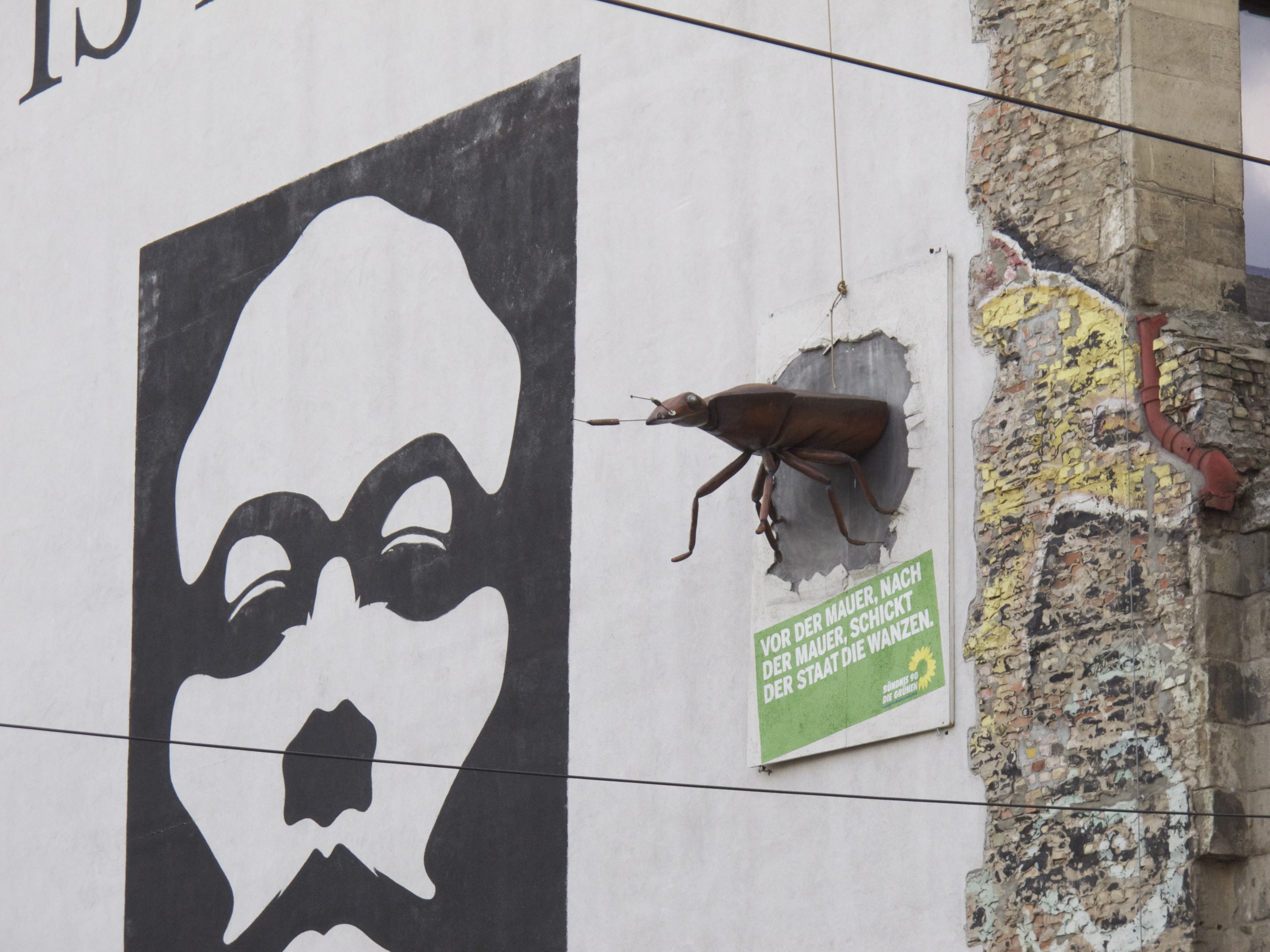
PS: In the title photograph of today’s blog you can see half a bedbug and a sign below that reads: Vor der Mauer, nach der Mauer , schickt der Staat die Wanzen. – This is a wordplay on an old nursery rhyme: Auf der Mauer, auf der Lauer, liegt ‘ne kleine Wanze, roughly translated: On the wall lies a bedbug in wait to bug you. The wordplay: Before the wall, after the wall, the state sends bugs to bug you.
I literally just started a novel, Americanah by Chimamanda Ngozi Adichie. Reviews were reportedly stellar, my friends urged me to read it, a kind one gave the book to me and now it is also a community reading project by the Multnomah County Library.
In the first 6 pages I learned that the protagonist currently lives in Princeton, NJ and is on the verge of going back to her homeland of Nigeria. She seems to be a witty person, rather successful at blogging in perceptive and ironic ways about the people she encounters. She has also decided to quit blogging because “… she began, over time, to feel like a vulture hacking into the carcasses of people’s stories for something she could use. … The more she wrote the less sure she became. Each post scraped off yet one more scale of self until she felt naked and false.”
I have no idea where this will end up; if the ambivalent nature of being a stranger in a strange land contributes to her dilemma; if race and racism plays a part, as is seeming, or fat shaming, or a preoccupation with the past. I am struck by how much she is already a character in my head, making me curious about her moves, annoyed at her willingness to give something up that obviously taught others even if it was hard on herself.
Which leads to two thoughts: for one, Adichie clearly deserves her reputation as an engaging novelist. Secondly, I am thinking about her novel’s blogger in contrast to a real-life writer, long dead, long mourned. Molly Ivins is back in my head because of a documentary about her and her life that just ran to rave reviews at Sundance Film Festival. Here was a writer and political columnist (the old-fashioned way of having a regular piece out) devoured by a devoted readership or loathed by her targets. She defied any expectation for what an upper-class Texan female should become and honed in on an acerbic writing style skewering the right and calling to arms against conceited politicians, a rigged system and unfairness.
She didn’t last long at the NYT which shied away from her progressivism, but her column was eventually syndicated by more than 400 newspapers. I remember listening to her on the radio and laughing tears at her wit, while also feeling comfort that some one that smart could succinctly describe an outrage, laying out all the useful arguments, while making me laugh.
She was able to keep her humor intact even when she was diagnosed with the disease that killed her in no time: “On a personal note: I have contracted an outstanding case of breast cancer, from which I intend to recover. I don’t need get-well cards, but I would like the beloved women readers to do something for me: Go. Get. The. Damn. Mammogram. Done.” And later: “Having breast cancer is massive amounts of no fun. First they mutilate you; then they poison you; then they burn you. I have been on blind dates better than that.”
While facing grueling treatment she never gave up on her mission to hold politicians responsible for their action and calling them on their failures, particularly with regard to decisions about war and economic disenfranchisement of the working class. Her columns did not “scrape off yet one more scale of self” as I cited above, but instead were emanations of a lucid mind bend on teaching us all about justice. Raise hell – one of her favorite expressions – she did. I wish we had more of those. In the age of Trump she would have been each morning’s salvation….
Photographs today are some random shots from from Texas, Ivins’ home state..
The German word Entschleunigung is, like so many of our words, hard to translate. It refers to a general slowing down, but it also implies intention about dialing down the speed. It has a mate, Entleerung. That means an emptying, again a willful purge of what’s not deemed essential.
These terms came to mind when I watched Silencio Blanco’s recent performance of Pescador/Fisherman. The group of 7 young puppeteers from Chile is on a return visit to Portland presented by Boom Arts, showing their newest creation at Imago Theatre.https://silencioblanco.cl/en/home-eng/
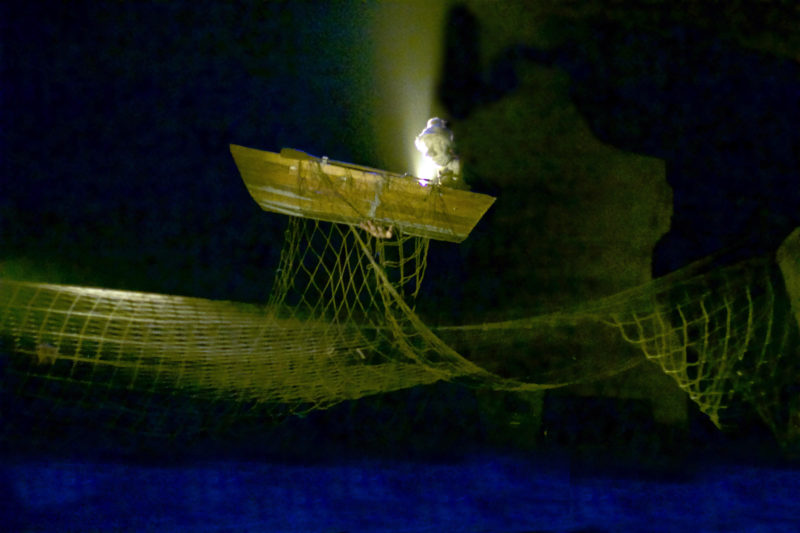
Like any terrific work of art, their play works on a multitude of levels. The dialogue-free story line (as I interpreted it) is simple: Fisherman Federico arduously launches his small skiff, rows out to the fishing grounds, throws the net. Low booming horns and colonies of seagulls announce the approach of a huge trawler, the kind that is surrounded by these many greedy birds hoping for scraps. The huge waves created by the industrial fishing boat tear Federico’s net to pieces, and fling his little skiff into an abyss of motion. The plucky fisherman survives the ordeal and makes it back to the dock, shaken but determined.
That’s it. For 45 minutes you are immersed in a slowly, languidly developing universe of minimalist action, a visual landscape and soundscape that unfolds before your eyes, drawing you in in mesmerizing ways. The props are but the puppet, a wooden pier, the boat and net and a technically impressive bunch of linked birds flapping their way across the ocean. The sound consists of repeated wave action rising and falling depending on the narrative, the ship horns, gull cries and a few interludes of music enhancing or easing the tension. The occasional grunts or coughing of the fisherman add a human element that soon makes you feel that he is real, weary and cold.
It all happens in darkness, with enough light to be aware of the carefully choreographed movements of the puppeteers who become part of that universe of waves. Their flowing, watery movement, ebbing and cresting, a boat quite literally thrown through the air, is a heavy physical performance on top of making a puppet come to life.
On one level the simplicity opened a space for being, not thinking, becoming part of a created universe. Best evidence for this was brought to me by my seat neighbors of the under-10-year-old set whose early wiggles were completely calmed down during the performance to sitting still in rapt, sustained attention.
On another level, the simplicity provided a veil for the complexity underneath, leaving it up to the viewer to decide to leave it on or take it off to explore what’s hidden. You had a choice to simply experience an individual narrative, in other words, or to probe the context in which this tale unfolds. The latter is, of course, requiring effort. Puppetry, as we experience it today, no longer has the privilege it once enjoyed: audiences who either watched fixed familiar roles (think Judy&Punch or the German equivalent, Kasperle Theater) or watched known tales set in familiar landscapes, story books. The absence of dialogue, so valuable to reach international audiences, as Silence Blanco increasingly – and deservedly! – does, also prohibits the spelling out of contextual details.
Which, in the case of Chilean fisheries, is a tragic tale, wouldn’t you know it. The details can be found in the links attached below, but here’s the punch line: The fish supply has been dwindling due to over-fishing and pirate fishing. The government comes up with half hearted measures to control quotas, but has been upping them recently again, turning a blind eye to the crisis. “The quotas weren’t divided evenly, either. Chile’s 92,000 artisanal fishermen got 40 percent of the country’s total catch. The industrial fleet, which is owned by just seven wealthy families, took the remaining 60 percent.”https://www.ecowatch.com/pirate-fishing-chile-2615164866.html
I leave it up to the reader to discern how much this is a fig leaf, not affecting the purge of artisanal fisheries by industrial interests. There are certainly accounts of aggressive action against individual fishing communities standing in the giants’ way.
Silencio Blanco has a working model that puts research at the local level at the start of their creation. They spend time with the people they portray, in the locations that are their focus. They then build their small tool kit of props, and, for this particular performance, have developed choreography as well. They work hard. I saw them fully rehearse the play a morning after they had performed and 3 hours before they were on for the next round, relentlessly practicing the moves and transitions.
A water bottle stands in for the tossed boat during rehearsal.Dancers’ Feet
For me it was a visual feast, but more importantly a reminder how art can be a political catalyst, making us, when it is at its best, think and, in this case, expose us to international issues that we otherwise ignore in our little PDX oyster.
You have another chance to see for yourself:
February 8th: 7pm/ February 9th: 3pm – Imago Theatre, 17 SE 8th Ave, Portland
Music today (above) is Sergio Ortega’s resistance song that accompanied Salvador Allende’s Popular Unity government from 1970 – 1973 – much good did it do the latter. When I visited Santiago in 1975 the city was still visibly riddled with Pinochet’s butchers’ bullet holes. Ortega was able to flee to France; the Nueva Cancîon Movement’s most famous musician,Victor Jara, was murdered – https://www.youtube.com/watch?v=GN_M3u7GWgo
Money has been on my mind. For one, the Jewish Museum in London is going to open a new exhibit mid-March, called Jews, Money, Myth. From the catalogue: ….it examines the origins of some of the longest running and deeply entrenched antisemitic stereotypes: the theological roots of the association of Jews with money; the myths and reality of the medieval Jewish moneylender; and the place of Jews – real and imagined – in commerce, capitalism and finance up to the present day.
The exhibit will feature international art works, including Rembrandt’s Judas returning the 30 Pieces of Silver, manuscripts, board games, cartoons and whatever cultural objects and commissioned videos you can think of that reflect on the theme. Will it enlighten those who hold deep beliefs about Jewish money secretly running the world? Will it harden the attitude of those who feel victimized by the stereotypes? Will it speak to the fears of those who think highlighting the topic will only strengthen anti-Semitic thinking? We should revisit this in the summer….
Just as the stereotype persists that Jews have too much money or use it for nefarious purposes, so does our ignorance about he consequences of the lack of money. This could not have been more clear than when I realized, with shock, what is happening in Florida right now. Here we were all celebrating the restoration of voting rights to convicted felons, miraculously voted in during the midterm elections.
Never mind that certain felons were permanently barred from the return to civic rights – those convicted for murder or sexual offenses. And that 400.000 are on parole or probation, which also excludes them. It still leaves about 1.1 million people who could theoretically register to vote.
As the ACLU chapter of Florida reports, registration requires that your sentence is completed. That, in turn, involves paying off all the fees and fines accrued during the judicial process. They estimate that 560.000 or so of the ex felons have fines that they are not able to pay off, simply because they are too poor. The idea that you can reenter society after having payed for your crime in prison is clearly attenuated by the requirement that you pay for your imprisonment. What a travesty.
At least we now have initiatives that combat the lack of money at the beginning of the criminal proceedings: The Bail Project. It fronts money to people too poor to come up with cash bail. The money is released when the accused show up in court, being available for the next case. Do people show up, you wonder? It looks like 96% of them do. More importantly, 90% of those held on bail plead guilty. When bail is paid, it turns out 50% of the cases are dismissed, and less than 2% receive jail sentences. Compare those two outcome in light of prison overcrowding (never mind in light of what it does to the life of a person.) You can check out the details (and donate….) here, including the organization’s 5-year plan to open offices across the country: https://bailproject.org
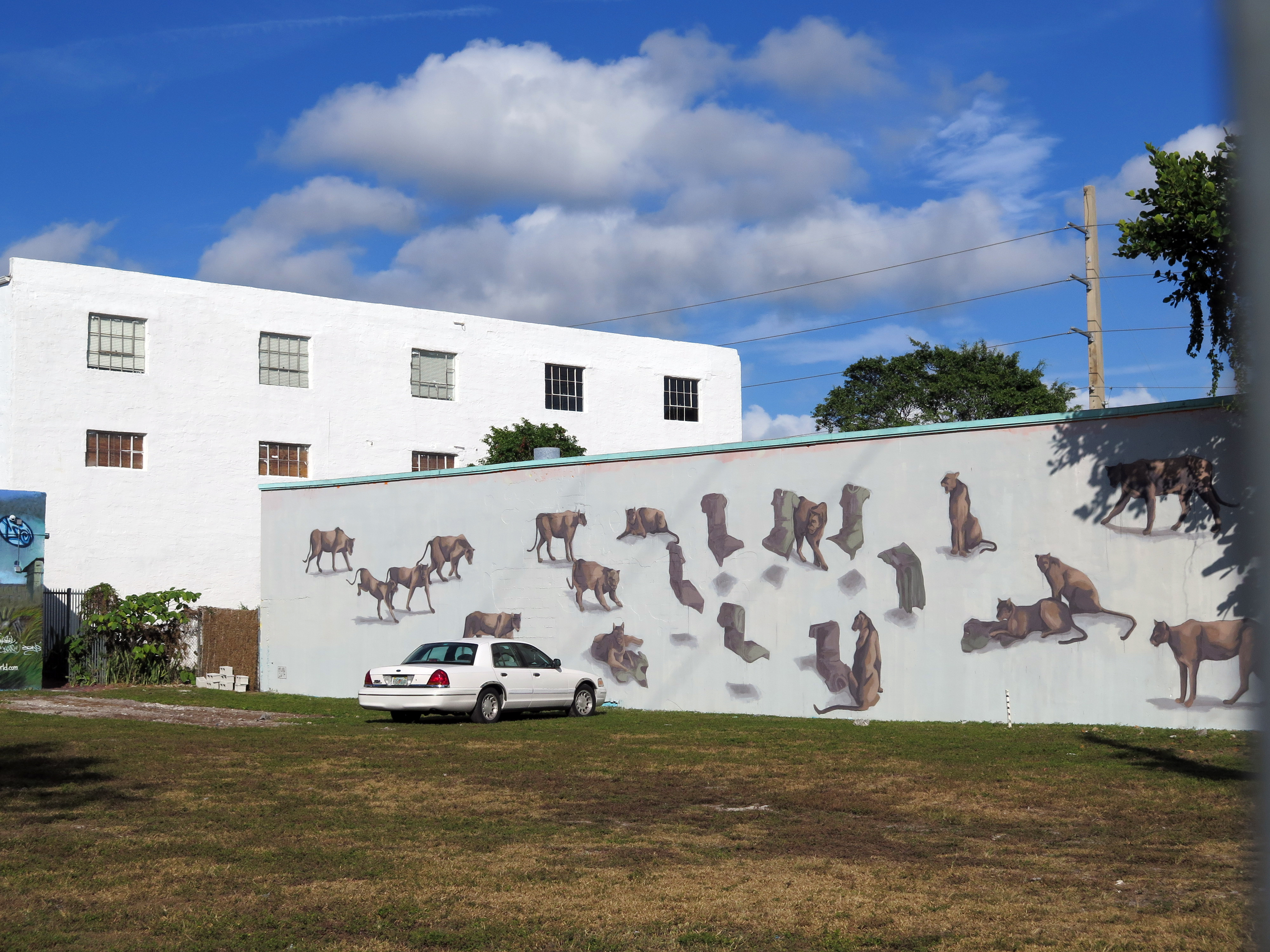
Photographs today are from Miami in honor of the restored voting rights, but also sort of related to money: a lot of traditional neighborhoods there as elsewhere in the country are gentrified with the help of “art washing” – the influx, often supported and financed by real estate developers, of artists and galleries who make the neighborhood more attractive, draw in tourists and investment and displace the original poor tenants (until the artists are driven out as well….)
This week was mostly devoted to how to find things that are lost or stolen: archeological treasures, land, art. The academic discussion around textual archeology, learning from past texts, literary or otherwise, eventually had me think about maps.
48×71 $4,800
Maps, you know, those paper things that half of us can read and half of us cannot, that pointed the way to our destinations before the arrival of talking machines that tell you how to proceed – and then reroute. Maps, now seriously, that were supposed to adhere to “the empiricist paradigm of cartography”—that “cartography’s only ethic was to be accurate, precise, and complete.”
Since the 1970s, this view has been strongly challenged, and there are many enlightening efforts to reveal what maps are often really all about – persuasion to accept a particular view of the world, and not just geographically. For example, in 1992 the Cooper-Hewitt Museum in NYC put on a show about “all maps –whether rare or familiar, new or old, Western or non-Western — are more than simply guides to help you find your way. Like advertisements and other forms of graphic design,maps express particular viewpoints in support of specific interests. Depending on their function and purpose, all maps present information selectively, shaping our view of the world and our place in it.”
The author argues that persuasive cartography is as old as mapping itself. Its scope ranges from religion, imperial geopolitics (think colonialism), slavery, British international politics, social and protest movements to, of course war. It was made explicit in the 1920s (and later taken on in force by the Nazis) when in reaction to the shameful defeat in WW I German cartographers decided to go for the “Suggestive Map,” cartographic propaganda which they thought had given the British a strategic advantage.
“The goal of suggestive mapping was to achieve political objectives (while avoiding lies, which could be easily exposed) by appealing to emotions and rigorously excluding anything that didn’t support the desired message. Its maps were intended specifically to engage support from the general population, and they were often “shamelessly explicit. The movement produced “striking” results: by the early 1930s “there was a ‘virtual flood’ of suggestive maps in Germany; entire atlases were devoted to them, and they appeared in “every public lecture, every newspaper, and in countless books.”
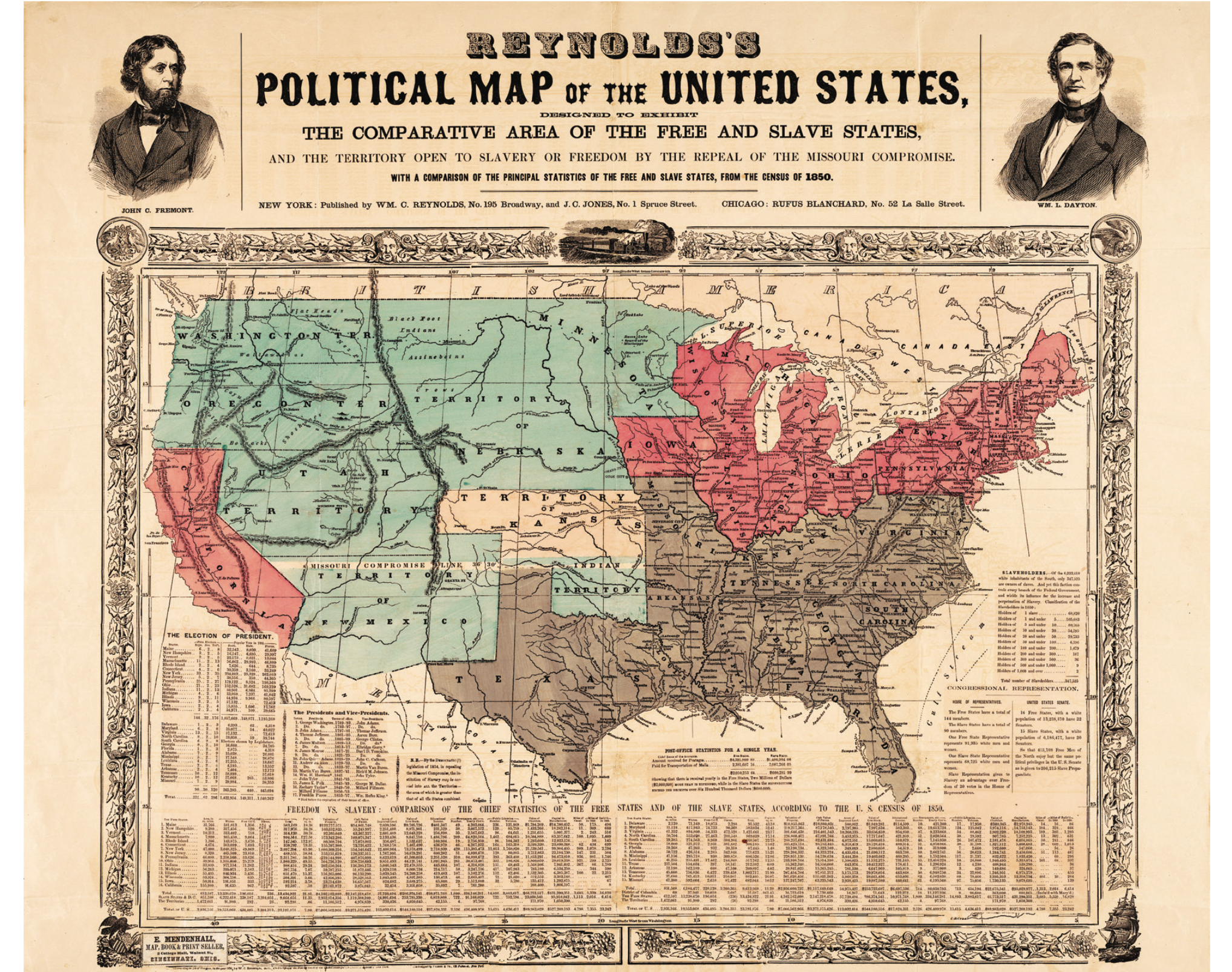
In the 1970s Brian Harley and many other progressive historians pointed to the fact that persuasive cartography was not restricted to a particular nation or political movement. “Social purposes between the lines” were typically the goals of the authoritarian elite, who used maps to legitimate their power and manipulate the weak.” If you look closely at the maps I am posting today instead of photographs, you’ll get the point.
A great overview of myths, lies and blunders on maps can also be found here:
and that is before we even get to maps of fantasy worlds…..
Music today is about a traveling man who could not have been saved by the best maps in the world: The flying Dutchman. If you are not up to listening to 3 hours of Wagner, there is a hilarious 3 minute version ….
The real thing is attached here. As typical for Wagner (reminded by the spoof above): the men need redemption, the women do the sacrificing. And that pattern is pretty well mapped out…
And here is the last poem one of my favorite poets ever worked on:
MAP Wisława Szymborska
Flat as the table it’s placed on. Nothing moves beneath it and it seeks no outlet. Above—my human breath creates no stirring air and leaves its total surface undisturbed.
Its plains, valleys are always green, uplands, mountains are yellow and brown, while seas, oceans remain a kindly blue beside the tattered shores.
Everything here is small, near, accessible. I can press volcanoes with my fingertip, stroke the poles without thick mittens, I can with a single glance encompass every desert with the river lying just beside it.
A few trees stand for ancient forests, you couldn’t lose your way among them.
In the east and west, above and below the equator— quiet like pins dropping, and in every black pinprick people keep on living. Mass graves and sudden ruins are out of the picture.
Nations’ borders are barely visible as if they wavered—to be or not.
I like maps, because they lie. Because they give no access to the vicious truth. Because great-heartedly, good-naturedly they spread before me a world not of this world.
_
Translated, from the Polish, by Clare Cavanagh NewYorker April, 14th, 2014
A plume of smoke, visible at a distance In which people burn.—George Oppen
Plumes
Love, can I call you that, you called me that the other night, Love, I couldn’t move today, or only sank, fell, falling. Today I slept until I couldn’t and looked for your call. Your message woke me. I replied. Twice, worried you hadn’t gotten the first. And you replied, and I thought, What folly. I cleared and fell asleep again. I looked for you online. Friends post pictures of Gaza in pieces, people in bits. The skyline in plumes. Plume, a pretty word, but who can afford it? I click through the OED, arranged in pixels on my screen. Regarding the souls of poets, Plato said, “Arrayed as they are in the plumes of rapid imagination, they speak truth.” Beholding the Angels Life and Death, Longfellow wrote of “somber houses hearsed with plumes of smoke.” In “The Exile,” Ibrahim Nasrallah, an exile, writes, “Poets surround me like the fruit of regret.” If we began as light, we became flesh and have become information. Light unto sensor into bytes. Digits, pixels. Our daily bread. The news feed: Omar al-Masharawi, eleven months, dead of burns, wrapped in white, borne upon his father’s arms, whose fingers splay across the shroud, steady and soft. More photos. In Gaza City, Jabaliya, more shrouds. Charred blocks in Khan Younis, Beit Lahiya. The dead, the dying. Rubble, stalks of rebar, ash and limbs. Columns of smoke gore the air, choking daylight. Missiles from a distance. And from a distance, plumes.
The poem about Gaza was written by an Iranian-American artist and educator in 2016.
Here are some 2018 facts from Amnesty International:
As of October, 150 Palestinians had been killed, 10,000 had been injured, “including 1,849 children, 424 women, 115 paramedics and 115 journalists. Of those injured, 5,814 were hit by live ammunition.” The death toll rose by early December to 175 and by the end of the year to an alleged 220, and those shot in the legs are by now at least 6,392.
One Israeli soldier has been killed and one injured.
The Human Rights and Gender Justice Law Clinic (HRGJ) at the City University of New York (CUNY) School of Law just submitted a human rights abuse report to the UN about 45 children being killed during the Right of Return Marches since last March. The report notes that of the 56 Palestinian children killed by Israeli forces and settlers in the OPT during 2018, a total of 45 children were killed in the Gaza Strip since March 30, according to evidence collected by DCIP. In the overwhelming majority of cases, DCIP was able to confirm children did not present any imminent, mortal threat or threat of serious injury when killed by Israeli forces.
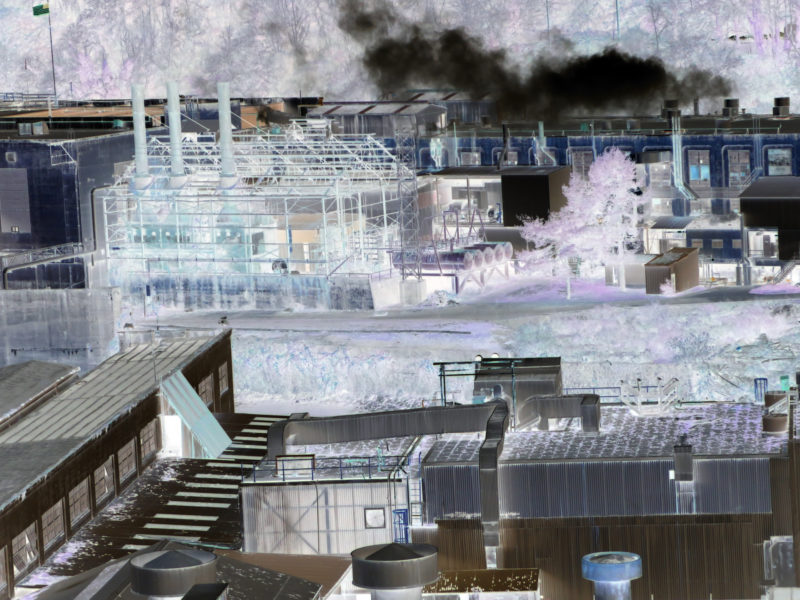
Photographs today are industrial plumes, not the plumes of war and occupation. Music here:
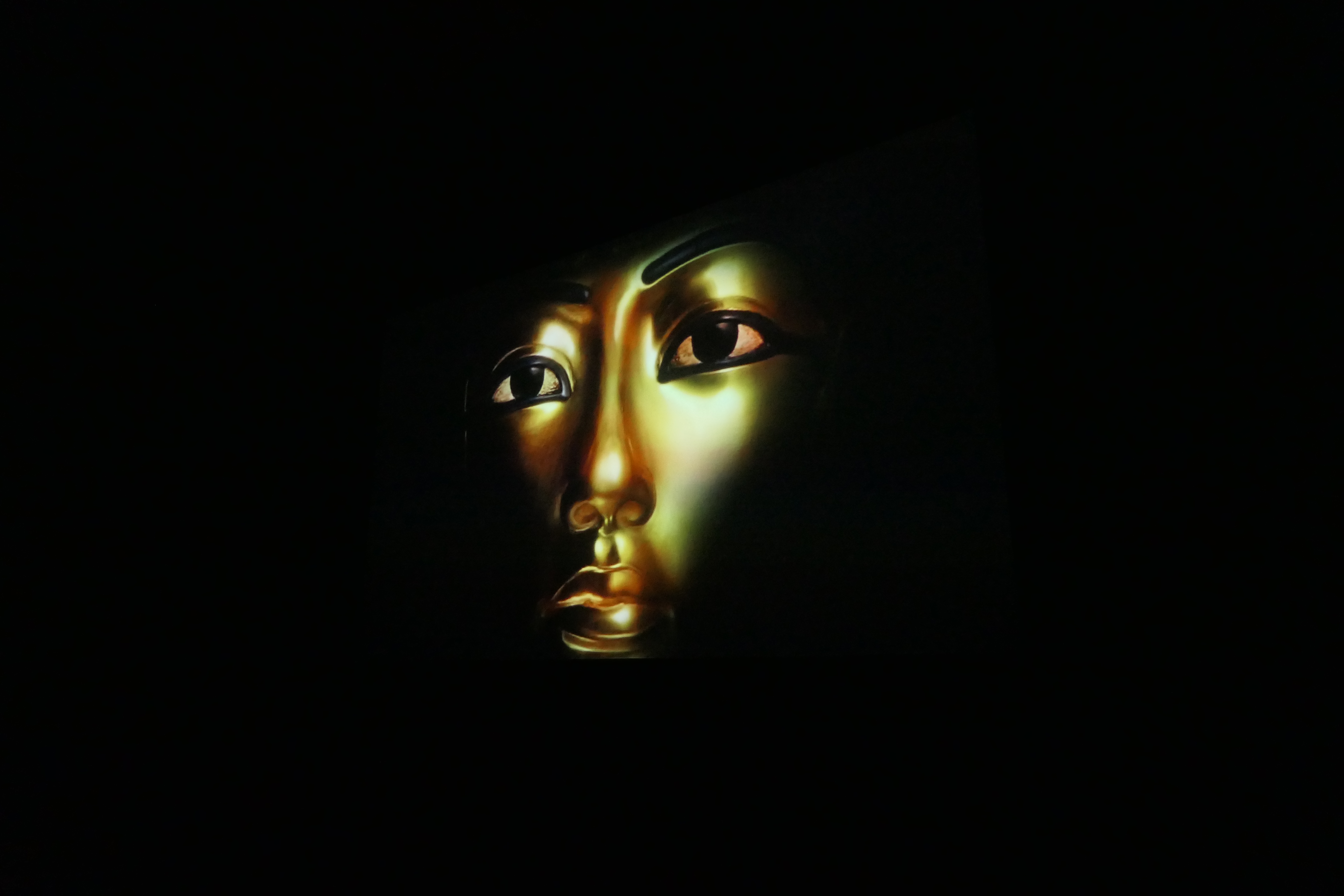
Last week I visited a traveling exhibit at the Oregon Museum of Science and Industry which displayed, quite beautifully, a replica of the burial chamber of an Egyptian pharaoh, King Tut. When the glare of all that gold subsided, and the wonder, that so many things had survived millennia intact, found by relentless searching of a passionate amateur archeologist, what was left?
Thoughts on looting and attention. The riches of the pharaohs, the sagas of finding their tombs, the mythology around the curses befalling the grave diggers all have been in the spotlight of public attention for more than a century. Academia was fascinated with deciphering the hieroglyphs. Scientists to this day use every tool in the box to determine modes of living and cause of death (as well as consequences of severe incestuous marriage practices) on various mummies. Exhibits of the real thing, as well as of the replicas of the artifacts and relics found, attract literally more visitors than any other exhibitions on earth.
What is the fascination? I remember as a child being dragged to see queen Nefertiti’s bust in Berlin, flying into the city which was walled off by the Iron Curtain in the 60s, my first flight ever. Stumped by my mother’s awe, unmoved by anything I saw and uncomfortable about the fact that I seemingly didn’t get it. Is it the thought that at least some remain unforgotten after death? Admiration of successful sleuthing? Awe at the riches devoted to select individuals?
Pleasure at the object evidence that some ancestral “deities” also had musical instruments, played board games and scratched their backs just as we do? These are not rhetorical questions, I truly wonder.
Here is a reflection from 1818 by romantic poet Percy Bisshe Shelley, about another pharaoh and the vagaries of civilizations.
Ozymandias
I met a traveller from an antique land, Who said—“Two vast and trunkless legs of stone Stand in the desert. . . . Near them, on the sand, Half sunk a shattered visage lies, whose frown, And wrinkled lip, and sneer of cold command, Tell that its sculptor well those passions read Which yet survive, stamped on these lifeless things, The hand that mocked them, and the heart that fed; And on the pedestal, these words appear: My name is Ozymandias, King of Kings; Look on my Works, ye Mighty, and despair! Nothing beside remains. Round the decay Of that colossal Wreck, boundless and bare The lone and level sands stretch far away.”
Certainly the Egyptian people have been looted. I am not talking about artifacts being dragged to European museums, either. I am thinking about what it would have taken to accumulate the riches displayed in the tombs, the building of the pyramids, the exploitations of the fellahs, or the victims of internecine conflicts among the families of the anointed in c. 1332–1323 BC when Tutankhaten lived his short life.
More recently, think what the Ottoman Empire, the French, starting with Napoleon and then the British did to the country. The latter occupied Egypt by 1882, stopping short of full annexation because of rival French interests, with endless empty promises that troops would be removed soon. Ostensibly to secure access to the Suez canal, the colonial move was much about marauding the country’s ability to grow lucrative crops.
By 1922, when Tut’s tomb was discovered, the British had eroded the country’s ability to feed itself by installing a mono crop approach on over 80% of all agricultural land: king cotton. Other than growing it and providing the unhealthy work of cleaning the fibers, the cotton processing industry was solely placed in England, depriving the Egyptian people of much needed work and industrial investment, making them dependent on expensive food imports, and prohibited any tariff or tax income from the cotton exports. And don’t get me even started on the Suez Canal…..that requires another full blog.
The people started to revolt in 1919 and by 1922 the British declared a limited independence – it took another 30 years to achieve full independence of the occupying forces – until they bombed the country in 1956 over the ownership of the canal. A great summary of the history can be found here: https://www.nonviolent-conflict.org/egyptian-independence-1919-22/
Despite life under colonial occupation, the intellectual life flourished – here is one of my favorite examples: surrealism found its local expression around George Henein and his followers .
If Portland, Oregon ever wanted something like an idol it would have elected Ursula LeGuin. Never mind that she would have been the first to scoff at such a notion. The author’s death last year caused true grieving across the city, not just the “let’s write clever obits for a celebrity” kind, but the “find yourself crying spontaneously” kind.
I photographed the street where she lived on a walk yesterday – picking views that in my imagination would have perhaps given her inspiration for the next quip. She was known not just for her breadth of writing, from science fiction to poetry, but also for her barbed wit.
Yuppie lingo prevails….
Independent of LeGuin’s prolific literary output and her political activism, she did much for the community in other ways, and, as it turns out, for individuals as well. I was reminded of that by a singular case of reminiscence by a young writer who found her footing through LeGuin’s advice.
Literary Hub Tin House is closing Tin House Magazine come June. Another loss.A writer is to make revolution irresistible (unless s/he gets erased on the blackboard…)
As a young, misfit college student’s Alison Smith spent a week as driver and guide to LeGuin during the latter’s visit in Rochester, NY. She was empowered by LeGuin’s books, politics and, importantly, her personal advice. She went on to be a fine writer in her own right, evidence of which can be seen in this moving essay, attached below:
The Thurman St Library current center display – science fiction, anyone?Zombies next?
Encounters matter. Encounters with role models matter. Encounters with role models who don’t look down but lift you up matter.
See, not everything is bleak, even though I have been writing about a few depressing issues this week (why should this week be different from any other…) With guarded optimism, I am particularly thrilled to add Katha Pollitt’s assessment of women’s increasing defiance in her latest bit on likability politics: https://www.thenation.com/article/aoc-tlaib-warren-womens-march/
She talks about the new crop of female politicians who refuse to be cowed.
Not changed – the oldest coop food store. Probably got her food here.
Fat Tire Farm goes bucolic
The Peculiarium’s windows, forever unchanged
LeGuin wrote in The Wave in the Mind : “All of us have to learn how to invent our lives, make them up, imagine them. We need to be taught these skills; we need guides to show us how. If we don’t, our lives get made up for us by other people.” She clearly modeled for many of us how to do that, and the young female politicians around us are now modeling defiance for the next generations.
There is hope! Let’s toast to that and strong role models in general!