Browsing Category

Politics

A Brief History of Hostility

In view of the current violence unleashed unto the world, whether here or in Eastern Europe, I want to dedicate today’s poem, A Brief History of Hostility, to the victims: in Portland, and likely soon in Ukraine, in Russia. So many families losing loved ones, so many friends losing their allies, so many communities destroyed by wrath, greed and ambition.

Jamaal May’s poem appeared in “The Big Book of Exit Strategies,” published in 2016. Given its purview of themes of war and slavery, it seems a good choice for Black History month, but also relevant during a week where Europe is on the brink of war.

On Saturday here in Portland marchers had planned a protest to remember Amir Locke and Patrick Kimmons, Black men killed by police. Multiple women, directing traffic in preparation of the peaceful demonstration, were gunned down by a man living nearby, who approached them on the street and called them terrorists, killing June Knightly, a 60-year old woman walking with a cane, having just overcome cancer, and severely wounding the others. In the words of one of the victims:

We were unarmed traffic safety volunteers who weren’t with any protestors. Four women trying to de-escalate & he unloaded a 45 into us because he didn’t like being asked to leave and stop calling us terrorist c*nts. We were in high vis and dresses. He murdered a disabled woman.”

The shooter was then shot by someone in the crowd, trying to come to the rescue of the victims. The aggressor’s name has not been released by the police while I write this, 48 hours after the event, and the Portland Police has erected a wall of silence other than calling him a home owner (code for White, or linked to castle doctrine) involved in a confrontation with armed protesters, unaffiliated with any political background. All counterfactual, as it turns out. There was no notification if he was arrested while in hospital, and his apartment was searched only after the FBI stepped in, suspecting a hate crime. Roommates, colleagues and family had testified to his links to the Proud Boys and other alt right forces, his frequent threats to shoot up Black Lives Matter folks, and the possibility that he was running unregistered guns. According to the media, virulent anti-semitic and islamophobic threats had been conveyed earlier to police, with no reaction.

(Update: he is now charged with multiple crimes. A GoPro video of the massacre, viewed by the DA, confirmed that he was the attacker. One of his victims is paralyzed from the neck down and in critical condition at OHSU.)

Meanwhile, on February 21, Russian President Putin basically said Ukraine shouldn’t exist. “A steady statehood didn’t occur.” Almost the same words that Stalin said about Poland in 1939.

He also confirmed he will recognise two breakaway Ukrainian regions as independent, a move that Ukrainian politicians see as “dangerous and a declaration of war.” It is certainly a violation of international law, the Minsk agreement. We will know, when you read this, if an invasion of (all of) Ukraine has begun in earnest. As I write this, military columns are entering Donbass.

I am linking back to an older blog here, that described the ebullient musical comedy of the Ukrainian Teatro Pralnia, a group of young musicians who are on my mind today, wondering what their future holds. You can see their 2018 full show at the Kennedy Center here.

A Brief History of Hostility

Jamaal May

In the beginning
there was the war.

The war said let there be war
and there was war.

The war said let there be peace
and there was war.

The people said music and rain
evaporating against fire in the brush
was a kind of music
and so was the beast.

The beast that roared
or bleated when brought down
was silent when skinned
but loud after the skin
was pulled taut over wood
and the people said music
and the thump thump
thump said drum.
Someone said
war drum. The drum said war
is coming to meet you in the field.
The field said war
tastes like copper,
said give us some more, said look
at the wild flowers our war plants
in a grove and grows
just for us.

Outside sheets are pulling
this way and that.

Fields are smoke,
smoke is air.

We wait for fingers to be bent
knuckle to knuckle,

the porch overrun
with rope and shotgun

but the hounds don’t show.
We beat the drum and sing

like there’s nothing outside
but rust-colored clay and fields

of wild flowers growing
farther than we can walk.

Torches may come like fox paws
to steal away what we plant,

but with our bodies bound
by the skin, my arc to his curve,

we are stalks that will bend
and bend and bend…

fire for heat
fire for light
fire for casting figures on a dungeon wall

fire for teaching shadows to writhe
fire for keeping beasts at bay
fire to give them back to the earth

fire for the siege
fire to singe
fire to roast
fire to fuse rubber soles to collapsed crossbeams
fire for Gehenna

fire for Dante
fire for Fallujah
fire for readied aim

fire in the forge that folds steel like a flag
fire to curl worms like cigarette ash
fire to give them back to the earth

fire for ancient reasons: to call down rain
fire to catch it and turn it into steam
fire for churches
fire for a stockpile of books
fire for a bible-black cloak tied to a stake

fire for smoke signals
fire to shape gun muzzle and magazine
fire to leap from the gut of a furnace
fire for Hephaestus
fire for pyres’ sake
fire licking the toes of a quiet brown man
fire for his home
fire for her flag
fire for this sand, to coax it into glass

fire to cure mirrors
fire to cure leeches
Fire to compose a nocturne of cinders

fire for the trash cans illuminating streets
fire for fuel
fire for fields
fire for the field hand’s fourth death

fire to make a cross visible for several yards
fire from the dragon’s mouth
fire for smoking out tangos
fire to stoke like rage and fill the sky with human remains
fire to give them back to the earth
fire to make twine fall from bound wrists
fire to mark them all and bubble black
any flesh it touches as it frees

They took the light from our eyes. Possessive.
Took the moisture from our throats. My arms,
my lips, my sternum, sucked dry, and
lovers of autumn say, Look, here is beauty.
Tallness only made me an obvious target made of
off-kilter limbs. I’d fall either way. I should get a
to-the-death tattoo or metal ribbon of some sort.
War took our prayers like nothing else can,
left us dumber than remote drones. Make
me a loyal soldier and I’ll make you a
lamenting so thick, metallic, so tank-tread-hard.

Now make tomorrow a gate shaped like a man.
I can’t promise, when it’s time, I won’t hesitate,
cannot say I won’t forget to return in fall and
guess the names of the leaves before they change.

The war said bring us your dead
and we died. The people said music
and bending flower, so we sang ballads

in the aisles of churches and fruit markets.
The requiem was everywhere: a comet’s tail
disappearing into the atmosphere,

the wide mouths of the bereft men that have sung…
On currents of air, seeds were carried
as the processional carried us

through the streets of a forgetting city,
between the cold iron of gates.
The field said soil is rich wherever we fall.

Aren’t graveyards and battlefields
our most efficient gardens?
Journeys begin there too if the flowers are taken

into account, and shouldn’t we always
take the flowers into account? Bring them to us.
We’ll come back to you. Peace will come to you

as a rosewood-colored road paver
in your grandmother’s town, as a trench
scraped into canvas, as a violin bow, a shovel,

an easel, a brushstroke that covers
burial mounds in grass. And love, you say,
is a constant blade, a trowel that plants

and uproots, and tomorrow
will be a tornado, you say. Then war,
a sick wind, will come to part the air,

straighten your suit,
and place fresh flowers
on all our muddy graves.

Heavy clouds looming.

You have a choice of music today – Bob Dylan’s Talking World War III Blues

or War’s War is coming (Blues Version)

What they don’t tell you

(Welcome to the new subscribers – come for the nature, stay for the rest!)

Want to come on a hike with me? Follow along, explore the beauty of the Lacamas Heritage Trail!

At least that’s what I thought two weeks ago when we still had night frosts and the mornings were cold, with brilliant light. All long shades, blues and golds, a balm for the eyes.

Some source – PDX Monthly or The Mercury or some such – had recommended the hike as an easy start to hiking season. Located in WA, some 40 minutes north by car, it’s not exactly around the corner but I thought, give it a try!

As the photographs will show you, looking on one side of the trail, there’s plenty of beauty to see. The path winds along a small lake through some old growth forest, including Madrona trees, and occasional glimpses of Mt. Hood on a cloud-free day.

What they don’t tell you: on the other side of the trail, you pass right by a golf course, plenty of condos and then McMansion after McMansion overlooking the water, with fences and signs for private property, both sheltering the property owners and their access to private docks for water sports. I don’t call that a hike. The seven miles (it’s a there and back) really are a stroll through suburbia on steroids, although a nice one if you live close by and want your daily exercise. Which countless people did, so that it was more like a group walking event. Not my idea of a day in nature. (Note, though, the path was so groomed that it is really wheelchair accessible and easy for people with limitations on walking, a big plus.)

The whole concept of what we see and what we don’t, or what we don’t know if the telling is in the fine print or there’s no telling at all, was on my mind this week for a number of reasons.

Take data protection, for example.

In general, we have little protection against the abuse of private data. Just last months, three state A.G.s brought a lawsuit against Google that claims the company deceived customers into giving up sensitive data. While customers were told they could avoid location trackers by choosing the right account setting, their data were nonetheless syphoned through a backdoor. In addition, rules favoring the company are often hidden in legalistic language that no-one bothers to read, or provided with opt-out options for notice and consent that are often obscured enough that the average consumer doesn’t have a clue.

I don’t know if you use a health app, for instance, one of those things that track fitness, nutrition, sleep and other health-related metrics. According to a Gallup poll conducted 2 years ago, in the United States about one in five women between the ages of 18 and 49 currently use them. At this point the numbers might even be higher. Some of the most widely used tools are apps that track your menstrual cycle – period trackers like Flo or Clue, which have 50 million and 10 million downloads respectively. Apple has its own cycle tracking for the iPhone and the Apple Watch.

The advantages of these tracking systems are obvious. You can track fertility if you want to get pregnant, you are warned about missed periods, you might discover patterns to be discussed with your doctor, and so on.

What they don’t tell you, though, is that there are huge red flags regarding your privacy. Generally, and this might surprise you, consumer health apps do NOT have to comply with a federal privacy law called the Health Insurance Portability and Accountability Act, known as HIPAA, which specifically covers patient data collected by and shared among doctors, hospitals, labs and health insurers in the U.S. Europe, by the way, is way ahead of the game, they have stricter controls. (Ref.)

Many of these apps tell you, indeed, promise you, that your personal data will be protected. Yet the Federal Trade Commission has revealed how many of the data collected by these firms are nonetheless illegally shared with third parties. Once received by Facebook or Google, these data are used to send specifically targeted ads to you. Pregnant? Buy maternity clothes! Oily skin around your period? Buy this pimple cream!

Ok, maybe being showered with cringe-inducing ads is the price you’re willing to pay for having the practical advantages of health apps. What about this, though? In 2019 the state of Missouri monitored the Planned Parenthood health apps, looking at women’s menstrual cycle to identify those who had (failed) abortions. In a world of changing laws, data might very well be used for surveillance of criminalized behavior. Reproductive surveillance is theoretically and practically as possible as contact tracing or any other set of data used by agencies that you never dreamt would get their hands on your information.

And just yesterday we learned, that women’s most personal data, their DNA, collected to help solve a case when they were the victim of a rape crime, has been used, without any information or permission, to identify them if there is suspicion that they themselves were involved in a crime at some point.

San Francisco’s DA Chesa Boudin made it clear that if DNA from a rape kit was used without consent for purposes other than investigating the underlying rape case, it may be a violation of constitutional protections against unreasonable searches and seizures as well as California’s Victims’ Bill of Rights. As of now, nobody has a clue how often and how long this has been going on.

Rape is one of the most underreported crimes of all. Women are hesitant to come forward for numerous, justified reasons, shame, vile treatment in trials, dreaded accusations of being a liar if the defendant is not convicted, among them. If you add to that the possibility that the preservation of your DNA opens you to arrest in an unrelated situation, it functions as a huge deterrent to reporting and cooperating with law enforcement.

It really is no longer just about what they don’t tell you, or in such small print that it is easily overlooked. We have to decide, fully aware that data might be illegally distributed or analyzed, if we really want to share them at all. Reverse from a what they don’t tell you to a determined: What I won’t tell you!

Music today are the energizing four seasons by Piazzolla – getting ready for spring hikes on this end!

The Real Trial Lies Ahead.

The Sparrows of Butyrk

by Irina Ratushinskaya

Now even the snow has grown sad –
Let overwhelmed reason go,
And let’s smoke our cigarettes through the air-vent,
Let’s at least set the smoke free.
A sparrow flies up –
And looks at us with a searching eye:
‘Share your crust with me!’
And in honourable fashion you share it with him.
The sparrows – they know
Who to ask for bread.
Even though there’s a double grille on the windows –
And only a crumb can get through.
What do they care
Whether you were on trial or not?
If you’ve fed them, you’re OK.
The real trial lies ahead.
You can’t entice a sparrow –
Kindness and talents are no use.
He won’t knock
At the urban double-glazing.
To understand birds
You have to be a convict.
And if you share your bread,
It means your time is done.

Translated by David McDuff

It was one of those weeks where I seriously wondered if I should throw some crockery through a window or not leave bed ever again. Didn’t know whether to scream or to cry. I can only acknowledge helplessness in this never ending cycle of bad news or anxiety-inducing ventures into a seriously restricted world. The way we process death from Covid – or refuse to – by thinking of the thousands of daily victims as poor or POC (if you are a Trumpist) and thus not counting, or unvaccinated (if you are not a Trumpist) and thus somehow deserving, was just one of the things that had me upset.

My usual distraction, filling my eyes and brain with images of nature, did not exactly work out either. Having driven for over 40 minutes to the spot where birds of all kinds are usually guaranteed, I found none, well, just a few ducks and geese. It was as if all, in view of the ominous skies, had decided to leave or hide, exactly the hint I did NOT need. No hawks, no herons, no raptors of any kind, no shorebirds, zip.

Except a few sparrows, immature gold-crowned ones, I believe, but what do I know. Which led to locating the poem by Russian dissident Irina Ratushinskaya, imprisoned for years in a hard labor camp South East of Moscow, until she was released early for strategic reasons to affect the Reykjavik summit between then US president Ronald Reagan and then Soviet leader Mikhail Gorbachev.

Ratushinskaya, trained in physics and mathematics, had signed appeals and demonstrated for the exiled Sakharov in 1981, and was again arrested in 1982, tried in 1983 and punished with a severe seven-year labor camp and subsequent five-year internal displacement sentence. It was assumed that the persistent Christian voice in her ever more prominent poetry led to the harshness of the sanctions. After her release she joined her husband in exile in England, and later spent two yeas as poet in residence at NorthWestern University. Eventually, with Russia now led by Yeltsin, they returned to Moscow to raise their sons there. She died of cancer in her early 60s in 2017.

The poet came to mind not just because of her sparrow poem; she wrote a goose-bump-producing book on prison conditions and interactions with other political dissidents and comrades, Grey Is the Colour of Hope (1988.) That was in the 1980s. Now we have again a situation where famous people like opposition leader Aleksei A. Navalny are imprisoned (and as of Monday put on the terrorist list,) but also where an increasing number of opposition allies, rights activists and independent journalist have to choose between potential prison and exile (if they are still lucky enough to choose at all.)

And if you are still rolling your eyes over the likes of Newt Gingrich in this country threatening the members of the January 6th commission with jail time if – or when – the GOP wins the midterms, I’d advise to look at what is happening in plain sight. Independently of what the committee has – or has NOT – accomplished so far (overview here) there are real-time attacks on its members or people who favored an investigation. The Virgina attorney general, for example, just fired Tim Heaphy, University of Virginia’s counsel and member of the committee, from his post. In Texas, U.S. Rep. Van Taylor, R-Plano, is facing an unexpected number of powerful primary challenger angry over his simple vote to investigate the insurrection. I could go on.

I would not dismiss the idea of jailing opponents as a, if not plausible, at least possible fact of life under new management in 2024. After all, we have history as a guide. Which brings me back to throwing things or crawling under the covers for good. Or maybe I, too, should jump into a puddle. Which shall it be?

Alternatively, I might just run to the hills. Here are Scottish composer Sally Beamish’ Hill Stanzas. She has also set some of Ratushinkaya’s words to music, but I could not find those pieces.

Seeds and Such

A young German historian, Annika Brockschmidt, recently published a book about America’s Holy Warriors (so far available in German only as Amerikas Gotteskrieger,) detailing the evolution of Trumpism, the general turn to an authoritarian, evangelical, cult-like movement within the GOP and the resulting danger to democracy. It met with acclaim, moved up the ranks in bestseller lists, until last week a sudden shitstorm unfolded, led by Politico’s chief Europe correspondent and echoed by representatives from the right-wing German press. She had not visited America! She had not interviewed Republicans in person! She was just echoing propaganda from leftwing US sources! Independent of the fact that the pandemic made travel impossible, the criticism conveniently overlooked that the contents were not claims by an investigative journalist (although she sure has an incredible breadth of source information as well as journalistic experience) but source analyses by a trained historian. The book, by the way, is smart, concise and perfectly reflective of what we here in the U.S. are experiencing.

I am bringing this up partly because I have been wrestling with the fact that my current reviews of visual artists are confined to a virtual experience of their art, or reading about their art. I am forced to look at their work on-line, if that is even possible. I can describe none of the emotional reactions that come with a real-life encounter, in situ, or thoughts that are spontaneously elicited when you meet face to face with something extraordinary. Maybe that is why universally available poetry has taken over so much of the recent musings. Does that mean I cannot, for now, review visual art? No. Just like it was for Brockschmidt, I still have access to the ideas, the concepts and insights that drive visual artists to their creations and can describe how those affect me or what they imply for the likely standing of the work.

Today, then, I want to introduce the ideas of a gifted young Palestinian artist, Jumana Manna, a film maker and sculptor, who was born in the U.S., grew up in Israel, and now spends her time between Berlin and Jerusalem. She recently received one of Germany’s more coveted awards for up and coming young artists, the bi-annual Max Pechstein Prize. It is the latest in a string of accomplishments that include stints at the 2017 Venice Biennale, and solo shows in major European and American institutions.

Let me trace the evolution of Manna’s ideas that have clearly marked her thinking for much of her career. As always, I am impressed when someone is able to have a continuous body of work that pursues different aspects of a general question.

Or questions. Who gets to decide what gets preserved when power hierarchies determine access and interpretation in situations defined by conflict? Who gets to determine how memories are shaped and transmitted? Who gets to choose what artifacts or living organisms get preserved or extinguished? Who gets to fix a value hierarchy that often serves indirectly political purposes? Manna looks at these question in the domains of botanical and agricultural preservation and opens the door to new ways of thinking about everything from the way religious botanists shaped the description and preservation of a region’s flora, to the insidious side effects of the Green Revolution in Middle Eastern countries torn by war, to Israeli laws and punishments imposed on foragers for traditional Palestinian foods.

An early body of work, Post Herbarium, looked at the American missionary, botanist and surgeon George E. Post (1838–1909) who in the late 19th century traveled to the Levant to collect botanical specimens. He believed they would be a key to understanding Christian theology. A depiction of the inherent tension between biblical beliefs and assumed scientific rationality was focal to Manna’s installations that used information gathered at the Post Herbarium at the American University of Beirut, where the specimens collected in Syria, Palestine and Sinai are archived.

Next came the film Wild Relatives (2017). (The link to Manna’s website includes a short trailer. The whole thing can be watched on True Story, but needs subscription.) The film is a marvel. It follows the journey of seeds between Syria, Lebanon and Norway, seeds collected and crossbred by scientists at local seed banks, then lost due to war, recouped from the Global Seed Deposit in Svalbarg and eventually sent back there again. (I had introduced that Seed Bank in the blog in 2017, when melting permafrost frost threatened it with flooding. Here is a more recent description of their work. )

I cannot begin to describe how the dry and often horrifying facts are told in lyrical fashion and with a sensitivity to human suffering that makes you cling to the story while absorbing scientific detail. I can, however, describe what we learn from the film. The International Center for Agricultural Research in the Dry Areas, known as ICARDA, a center that focuses on seed collection, cultivation and research, was moved from Lebanon (during that war) to Syria, back to Lebanon (during this war.) Scientists were lucky to escape Aleppo and much of their stock was lost. They requested their original seeds back from the Svalbard Seed Bank which had housed earlier deposits. Refugees from Syria are now working the fields in Lebanon to continue the local seed collection, cultivation and cross breeding with wild relatives of the species, and, once established, packages of these seeds are returned to Svalbard for further safe keeping. The film follows the journey and the humans involved in both Lebanon and Norway, their dreams and their nightmares shaped by both science and religion.

A detailed description of ICARDA’s work and struggle can be found here. What the film offers, though, is a question of the impact of Western agricultural practices and developments on the lives of small holding farmers in poor countries. What we know about the Green Revolution, the production of more food due to genetic manipulations that increased yields, is that it was a double edged sword. With increased food security (good), you also had increased use of pesticides, increased agricultural water consumption, increased areas of land needed for efficient farming, driving small holders out of the business (all bad.) Monocultures depleted the soil, and indigenous varieties of crops got extinct (really bad.)

The loss in biodiversity is real – and a problem. In the U.S. alone, 95 percent of cabbage, 91 percent of corn, 94 percent of pea, and 81 percent of tomato varieties were lost between the nineteenth and twentieth centuries. More importantly, in countries that are more exposed to current assault from climate change, like Middle Eastern countries are regarding droughts, the industry-produced seeds have not adapted to the shift and thus deplete water resources ever more. Seed preservation in vaults, theoretically a good thing, stores genetic material from times past, just like you keep animals in a zoo. The genes, however, do not adapt if they are not exposed to changing environmental conditions, yet it is exactly those adaptations that are needed to feed a world that grows drier and hotter. And hungrier.

The film makes clear that on the one hand questions of scale – who has the means, economically and scientifically, to run preservation projects for humanity’s safe keeping – favor organized institutions. But those who have the means also make the choices about genetic varieties in breeding and are able to monopolize world markets. Small breeders and preservationists who have still access to wild varieties of plant species contribute an enormously valuable part in fighting declining agrobiodiveristy, but they are an endangered species themselves. What will be preserved, what will be developed all rests on who is in power to make decisions that affect much of the world.

Here are some additional considerations how the interaction of climate crisis, monopolized agricultural decision making and urbanization contributed to the revolution turned war in Syria.

Fast forward to 2022 for Manna’s most recent video installation. Here at the West Coast we can currently see her newest work, Foragers, at the University of California, Berkeley Art Museum and Pacific Film Archive (BAMPFA.) The video installation was co-commissioned by BAMPFA, BAK Utrecht, and the Toronto Biennial of Art and filmed primarily in occupied Golan Heights, the Galilee and Jerusalem. (Full disclosure: I have not seen Foragers yet, but have been deeply moved by Manna’s essay on the issues exposed by the film – highly recommended reading, an insightful contemplation of many interrelated historical and political topics as well as an autobiographical testament: Where nature ends and settlements begin, translated into German by Fabian Wolff.) The text about the genesis of this work and her own personal experiences is a powerful reminder of what it means to live in occupied territories. Culture and tradition can be drawn into the struggle between opposing forces, and that extends even to what is allowed to be picked and eaten as per centuries-old customs.

In this specific case wild thyme and wild thistle, central to the Palestinian cuisine, known respectively as za’atar and ‘akkoub, were put on a protected species list by the Israelis, even though harvesting actually encourages the growth of these plants year after year. Individuals caught by the Nature Authority are put on trial with significant punishments, all the while many more of these plants are destroyed when the ground is prepared for the construction of new Israeli settlements. Here is a detailed description of the video installation.

If you remember, I have recently written about foraging here in the U.S. and its relationship to slavery and the impact of historical change on the African-American traditions. Traditions and knowledge were cut off with the hardships and legal (or customary) exclusion from nature following emancipation. Proprietary rights of White landowners were harshly enforced, once they had no gain from people’s survival through foraging, a survival that depended on supplementing the meager scraps of food they received on plantations. I have also discussed the effects of the Bonneville Power Act on the destruction of traditional food sources for Pacific Northwest tribes, by destroying fishing sites and generally endangering the salmon runs in order to regulate and increase water needed for aluminum production.

The interplay between nature, its products, competition for resources and power hierarchies are not an isolated phenomenon, but something found throughout history. An artist’s rendering of these complex and often rather dry topics (Seed propagation? Genetic engineering?) can open a space for us to think through the issues. Work done that reflects not just some distant past but the actual situation of growing food, lacking food, monopolizing food seems incredibly timely, given that we can expect food production to suffer in a world hit by pandemics, changing weather patterns and armed conflict. To do all this without wagging fingers, but with grace and inclusivity as Manna’s work does, is quite an achievement.

And I haven’t even talked about her work as a sculptor yet which happened in parallel to her video explorations.

Music today from a live performance in Amsterdam: Trio Joubran.

Pipe Dreams

Looking into the endless gray this week, all I wanted was color. The rain hammered on my roof during the nights, with leaf-stuffed gutters overflowing, water gushing by my window. Of course! Drainpipes! The solution to filling my eyes with color and pattern and my brain with delightful memories of prior travels. Thus today’s barrage of photographs, since pipes held my interest for years on end, always with faint plans to use them eventually for abstract montages.

Of course you don’t get away today with just admiring rusting pipes. Too pressing the problem – in Portland and elsewhere – of health issues associated with lead in the water.

The nation, for the most part, knows about Flint, MI and the water troubles they experienced. The crisis there has become synonymous with environmental disaster. Turns out, Portland is worse.

Since the late 1990s, samples have shown Portland exceeding the federal safety threshold for lead 11 times. In 2017, after Portland had once again surpassed that threshold, OHA required the water bureau to build a corrosion control treatment facility, according to Salis’ letter. Water from the Bull Run watershed is naturally corrosive, which can cause lead from copper plumbing and fixtures to leech into people’s homes. By building a facility to make Portland’s water less corrosive, the bureau expects to reduce the amount of lead dissolving from old plumbing into stagnant water. The facility is slated to be completed by April. (Ref.)

Here is the water bureau’s January 2022 response after decades of complaints:

Some of the actions the Water Bureau is taking include:

  • Treating the drinking water to reduce lead and copper;
  • Offering free lead-in-water testing to all residential customers and childcare providers;
  • Increased education and outreach to customers through mailings to multifamily residences and all homes built between 1970 – 1985; 
  • Actively managing drinking water in the distribution system to maintain the effectiveness of corrosion control treatment; And
  • Proactively partnering with the Oregon Health Authority and Multnomah County Health Department.

I leave it to you to assess the quality of government/management in this city when you consider this problem was known for 30 years now.

In case you’re worried: The water bureau offers free lead-in-water testing to all residential customers and childcare providers. People can contact the LeadLine at leadline.org or 503-988-4000 to receive a free lead-in-water test.

And since we are in a practical mood today, here are 9 gutter fails that are slowly killing your house….only half joking, a beloved neighbor of ours had utterly expensive damage from rain water making its way into the walls and house foundation.

Children are, of course, the ones most at risk. They are often exposed to multiple sources of lead contamination: the water they drink, the dust they inhale from the paint used in older houses or contaminated soil in poorer neighborhoods often build adjacent to industrial sites. Parents who work in certain industries – automotive repair shops for example – can inadvertently bring lead particles home on their clothing. Kids are also surrounded by toys that expose them to lead:

“Lead softens the plastic and makes it more flexible so that it can go back to its original shape. It may also be used in plastic toys to stabilize molecules from heat. Lead dust can be formed when plastic is exposed to sunlight, air, and detergents that break down the chemical bond between the lead and plastics.” The CDC recommends to keep plastic toys away from young children who put their hands in their mouths after or during play.

Lead poisoning has serious consequences, developmental delay and learning difficulties included. Here is a link to the Mayo Clinic site that describes what to be on the look-out for symptoms.
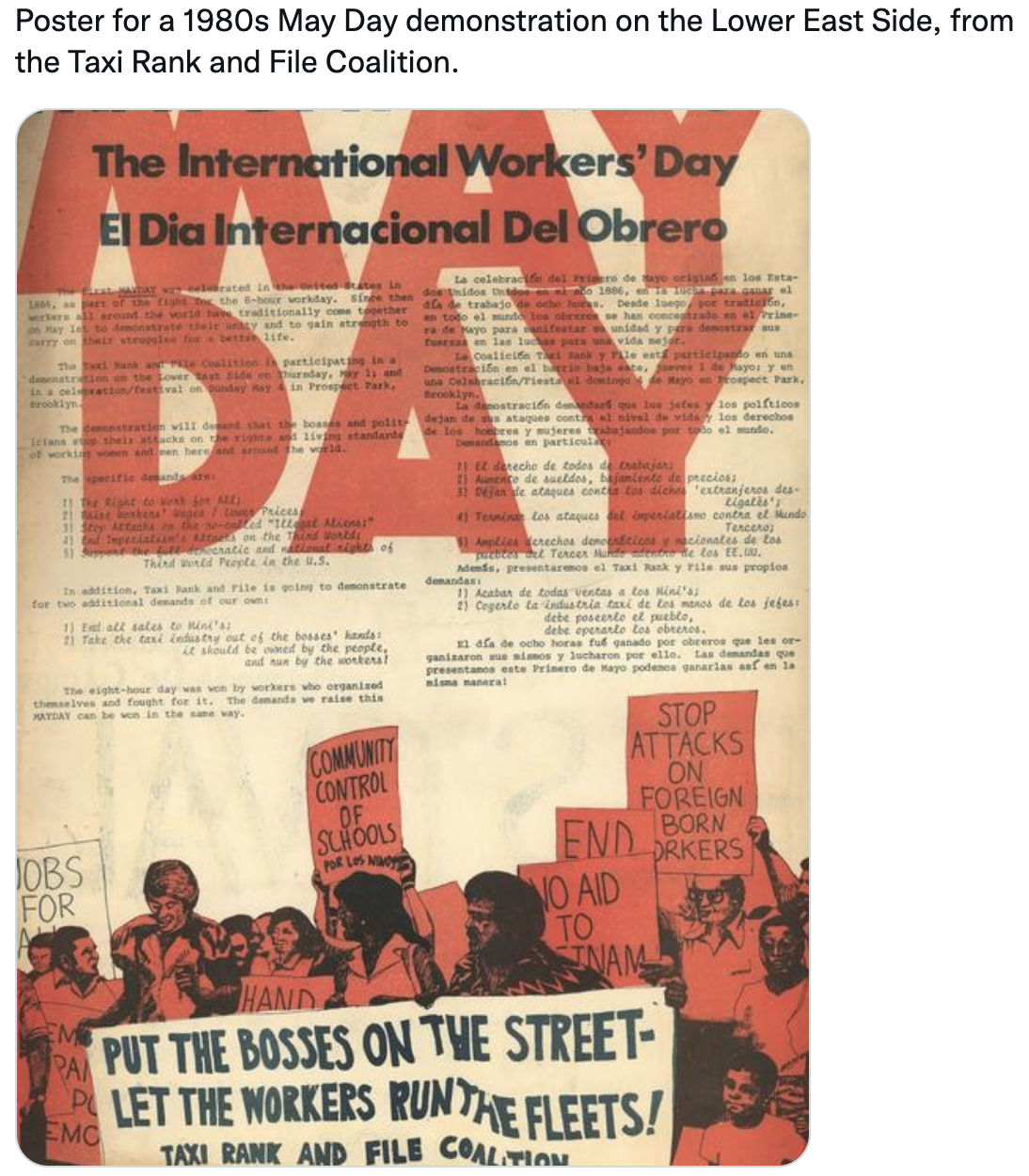
And if all this is not enough justification to dig into my drainpipe archives, then maybe this is: Drainpipes are having a moment after homophobic Politician arrested at Gay Sex Party. (A right-wing Hungarian politician tried to avoid being arrested at a party in Belgium during lockdown by climbing out of the windows and down a drain pipe.) Everything that puts shade on the ruling Fidesz party is welcome….. (a rival lawmaker in Hungarian parliament, Zoltán Varga, reportedly brought a drainpipe to the floor of the legislature to use as a prop in a recent speech railing against the ruling Fidesz party’s hypocrisy.)

And here is a piece of music that captures sounds of rain and multiple rhythms when it runs, or dips or plops or gushes down the pipes…beautiful composition by John Luther Adams (2009.)

Let’s end with Ford Maddox Ford. (The entire wonderfully snarky poem can be read here.)

In the Little Old Market-Place

(To the memory of A. V.)

It rains, it rains,
From gutters and drains
And gargoyles and gables:
It drips from the tables
That tell us the tolls upon grains,
Oxen, asses, sheep, turkeys and fowls
Set into the rain-soaked wall
Of the old Town Hall.

Here’s to the next 8 days that are supposed to be entirely dry!

Geopolitical Primer

In January 2020 I wrote about my foreboding regarding a recently emerged virus no-one had ever heard of. Maybe my sense of unease had to do with the fact that the Chinese government put millions of people on strict lockdown – it HAD to be serious to justify such intense reaction, hadn’t it? Last weekend I had similar disquiet about what is unfolding in Kazakhstan; let’s hope I am wrong this time and there will be no comparable consequences. Doesn’t hurt, though, to try and understand the situation.

Kazakhstan is a huge country (the size of Europe, basically) bordering on both Russia (as former part of the Soviet Union) and China. Both, Russia and China have major interests in maintaining and/or expanding their grips on the country, for political and economic reasons. So does the West, for that matter (bitcoin bros who do a lot of mining there, included.) (I am summarizing today what I learned from several sources here, here and here, from the progressive to the conservative spectrum. The most easily read overview was found here.)

The country, after achieving independence from Russia, was governed for the longest time by an autocratic ruler, former President Nursultan Nazarbayev. In a surprise move to avoid democratic elections, he appointed a successor, Kassym-Jomart Tokayev, in 2019, who seems to be now in a power struggle with the old guard, trying to wrest influence from their hands. The country had opened up its vast resources (it contains 60% of all the mineral sources of the former Soviet Union) to Western investment right after 1990. The incoming riches were not spread evenly, though, with kleptocracy being a major problem. The population suffered from increasing debt and poverty after the 2008 financial crash. Repercussions of the MG17 flight disaster followed, since Western sanctions against Russia hit Kazakhstan equally hard as member of a customs union with Russia.

Then came Covid and killed not only huge numbers of people, but left many more in financial ruin. When gasoline prices were increased at the beginning of the year and inflationary pressure rose, anger erupted and large protests rose in Almaty and spread to other large cities, challenging the ruling party. As I write this, over 160 people have been killed, thousands wounded and close to 10 000 arrested. Government buildings have been destroyed, the airport shortly occupied, and the security forces were given orders to “shoot to kill without warning.” Just 3 days in, Tokayev’s government called on the “Collective Security Treaty Organization,” the Russian-led equivalent of NATO, to send troops to quell the unrest. It’s the first ever CSTO intervention, and it’s based on the accusation of a foreign attack on the sovereignty of Kazakhstan.

Russia immediately sent 3000 paratroopers (including some from Belarus and Armenia) who Putin says will stay “as long as needed,” but are now expected to be withdrawn within the week. Russia has multiple, important reasons for intervention. For one, Russia’s nuclear fuel cycle depends on Uranium from Kazakhstan, with their own companies mining it there and enriching it in Novouralsk, Russia. Also, the Baikonur Cosmodrome in Kazakhstan was the heart of the Soviet space program and is still used as its primary space-launch facility.

More importantly, about one-quarter of the population of Kazakhstan is ethnic (orthodox-christian) Russians, deeply resented by the nationalist who are Muslim. If there was a civil war, ethnic cleansing would be a problem, including a stream of refugees across Russian borders, which Russia cannot easily absorb given its own problems.

Most importantly, though, Russia wants to quell any possibility of Western-oriented revolutions a la Ukraine, that could extend into its very own territory. Putin and the Kazak government claim that outside forces are stoking the fires, as they did in Ukraine. Western NGOs (many of them funded by Americans) are said to have encouraged protests against the incumbents, and armed “provocateurs” are claimed to incite the violence. Activists from other “color”revolution certainly have shared their tactics and strategies by their own public claims.

One question is, of course, how all of this will influence the NATO-Russia talks concerning Ukraine. Russia has before threatened to react to Western provocations and amassed troops at the Ukrainian border, demanding that Ukraine will never join NATO. Russia is also determined not to have “revolutionary fervor” spread within its own borders, clamping down on political change. These talks will surely be affected by this recent example of flexing a military muscle at the drop of a call. Russia’s military response has already been declared a win for Putin by media across the globe.

A more Moscow-friendly Regime in Kazakhstan might be a danger for other Central Asian strongmen and certainly be fought by China, because Kazakhstan is the route for some 10% of China’s annual natural gas consumption and some 29% of its imports. China is also worried about spillover effects” which could encourage citizens in Kazakhstan’s neighbors, or even Chinese citizens, to rise up against their government. If Kazakhstan moves closer to Russia as a result of the current situation this would pose a threat to China’s interests.

Other markets could be influenced as well, with inflationary pressures that drove these protests alighting in many more countries. In short, it’s a volatile situation that could have major repercussions in geopolitics. By all reports, an invasion of Ukraine, if intended, will have to happen sooner rather than later, with weather conditions permitting heavy artillery to proceed while grounds are still frozen and a (U.S.)world, distracted by the pandemic and weakened by polarization, that has fewer resources to respond.

The Kazak people have a history of both suffering and resilience. Stalin-imposed starvation cost 1.3 million lives; suppression of strikes and protests by unions against land reforms and rigged elections incited many more. The protests now are likely directed against the concentration of power and riches in the hands of a few, are asking for political reform and more independence as well as economic reprieve. They might, in the best of all worlds, lead to concessions. More likely, they will increase subsequent repression.

I tried to find female Kazak artists (I had seen an exhibition by a feminist collective some years ago in Berlin), but many websites are cut off (apparently the internet there has been affected by the protests.) Images today are therefore by photographer Nadav Kander, one of my favorites. He went to Kazakhstan in 2011 to photograph the landscape, ravaged by nuclear bomb- and long-range missile testing near the cities of Priozersk and Kurtchatov. The testing program included covert studies of the public’s exposure to radiation. The series took its name from T.S. Eliot’s The Wasteland. Good time to revisit this work.

” I will show you fear in a handful of Dust.” 

And here is some traditional Dombra music.
 

Moving along

I skimmed two unusual books across the last weeks. Skimmed because I could not read 700 pages for one and who knows how many for the other before giving them as Hanukah presents to the kids. But I read enough (plus the reviews) to form an opinion that I can recommend them if you are willing to have your mind blown by one, and learn surprising facts in the other. Long slog today, so you are allowed to skim as well. But another wet weekend might give you enough time to read…

I am talking about The Dawn of Everything by David Graeber and David Wengrow (which I will definitely finish in full when my library loan comes through,) and Move by Parag Khanna.

The Dawn of Everything is a strange, mesmerizing window into the authors’ minds, who are willing to speculate about everything that has been accepted theory about 40.000 years of human history. The anthropology and archeology duo tackle the question if durable hierarchies in the form of nation states are inevitable. Nation states are usually assumed to be the outcome of a natural process due to the development of agriculture, accumulation of property that requires protection and increased population sizes amassed in cities, all leading to leadership hierarchies, domination exerted by state power and bureaucracies. The duo claims that nation states, and in particular undemocratically governed nation states are not at all inevitable, contrary to popular opinion. They point to alternative ways of humans organizing themselves and their lives across history from the very start.

The book is a tour de force of speculation, offering (elsewhere disputed) facts that help question the accepted wisdom of historians. The authors provide example after example of early human societies that avoided states, or subverted them, or decided to accept hierarchies during some times of the year and not during others. The authors certainly make the point that early societies were not in a natural state (innocents in the Enlightenment’s view, or brutes in Hobbes’) until agriculture inevitably changed the picture from an egalitarian to a hierarchical society. Instead they show that hunters and gatherers built their societies intentionally, with consensus. Some showed all signs of democratic approaches, others had inequality already built in. There were endless configurative possibilities and people made choices among them.

So why are we now stuck with nation states? Without providing an answer, the book challenges us to think through if there is STILL a possibility for alternatives, something the authors strongly believe. The classic reasons for statist views of history lie potentially with the fact that people can no longer easily move somewhere else if they dislike a given country, and the fact that bureaucracies have grown to impenetrable proportions. But Graeber and Wengrow show that many early cities thrived for centuries with no sign of hierarchy, contradicting scholars who assume that authoritarian rule appears naturally whenever large populations gather.

I found the book empowering not because it answers questions (it often doesn’t) or simply defies common assumptions (it always does.) It provides a model of a fresh approach when you question things differently. If you no longer think that there has to be an overarching pattern or law that inevitably governs the progression of human development then you can start to think through what alternatives could look like and how to bring them about. You can look at evidence for alternatives or interpret data in a new light. And once you acknowledge the possibility for human intervention, you can alter mind sets and explore ways how to change the status quo of domination of some over others.

The authors worked on this book for 10 years, planning more volumes to come. Graeber died suddenly of an infection at a young age shortly after completion. Here is a written portrait of this unusual, gifted man.

*******************************************************

So why would I read Move when the author is dissed like this from a New Republic review for a previous book:

Khanna’s contempt for democracy and human rights aside, he is simply an intellectual impostor, emitting such lethal doses of banalities, inanities, and generalizations that his books ought to carry advisory notices. Take this precious piece of advice from his previous book—the modestly titled How to Run the World—which is quite representative of his work: “The world needs very few if any new global organizations. What it needs is far more fresh combinations of existing actors who coordinate better with one another.” How this A-list networking would stop climate change, cyber-crime, or trade in exotic animals is never specified. Khanna does not really care about the details of policy. He is a manufacturer of abstract, meaningless slogans. He is, indeed, the most talented bullshit artist of his generation. And this confers upon him a certain anthropological interest.

Okaaaayyyyy. In German you would say this reviewer “had a louse crawling across his liver.” Same origin as the phrase “he’s an offended liverwurst” – since antiquity the liver was assumed to be the seat of emotions, and even as small a trigger as a louse could torpedo one’s mood. Never mind a bullshit artist. But I digress.

Let’s just say, I occasionally try and read widely and consciously from people I don’t necessarily agree with. And you know what? There were some interesting things to be learned from this book and it spoke to the issues of mobility and migration which played also such a role in the volume discussed above. Khanna makes an argument for opening up international borders, given the inevitable future mass migrations due to climate and political factors combined. He proclaims mobility across borders as a human right. He sees realignments likely to be regional (the millions of displaced Asian people will move into Kazakhstan, displaced Chinese will move into Russia, and Central Americans into Canada – all of which have tons of empty space that can be settled with the change in temperatures and according agricultural possibilities.)

The author argues that we need to move people to resources and technologies to people, something that will not happen if we cling to nativist notions of sovereignty. The question is how can you preserve geographic nation states that people feel culturally rooted in and move beyond sovereignty at the same time, into shared administration and stewardship of crucial geographies and resources?

He uses the examples of Canada and, surprisingly, Japan, as nations that have a futuristic outlook towards opening their borders to migrants. Khanna speculates that Europe will attract masses of Asian youth talent, while the nativist US stays behind. He also shows that migration needs to be done sustainably, so that newly opening eco systems are not trampled and then have to be deserted again and gives claimed catch-all phrases like “cosmopolitan utilitarianism” at face value, (the notion of holding all people equal and maximizing their happiness or welfare seems a bit of lip service in his rendering), we should debate how we can move towards open borders and mass wealth redistribution. Here is a summary article where the author explains his position.

In the context of pandemics and the emergence of newer, scarier variants, I believe one might indeed think through how more globally organized administrative powers would protect humanity as a whole. We can close borders all we want to, viruses and other invisible agents will always have a way to escape across them. If we do not coordinate research, prevention and treatment it is only a matter of time until things get worse, and no riches and fortified national castles will protect us. Decisions to give priority to pharmaceutical companies’ investments over radical, global distribution of available vaccines has been rather short sighted.

In any case, both books help move our thinking along, particularly when we don’t agree with some or much of what the authors offer. Just the right thing for late December when the holiday hectic calms down and you need an excuse not to leave the house or the couch on yet another rain soaked day or are forced into lockdown, and can tackle something more than the next mystery novel.

Photos today of birds last week on Sauvie Island, all of whom ignore borders.

Music today can be ambient listening, sustaining dreams of a better future, if reading becomes too cumbersome.

Science Denial

It was infectious. The laughter of a tiny Russian grandmother, loud, unabashed, unceasing, first made me smile, then laugh as well. I was standing next to her and her family, all of us marveling at the antics of an Orangutan who was trying on various blankets to protect himself from the rain, finally settling on a tartan throw. I so miss laughter. I so miss regular interaction with strangers, if only via glances or smiles or a kind word. That whole social scenario when you take the bus, or stand in line, flirt with the waiter or encounter people in museums.

In any case, I had made it to the zoo, now requiring on-line tickets for a particular time-slot to be reserved in advance, and I happened to be standing at the primate enclosure outside when the family with young kids and grandma in tow arrived. I relished the laughter. I also admired how the dad was reading and sometimes translating for the kids the signs that describe scientific information about the animals, their habitat, their characteristics and so on.

Here is a question: why do people unfailingly accept scientific knowledge presented to us by some experts, zoologists for example, learn about it with pleasure and expose our kids to it? Yet invariably reject other scientific information that happens to be in domains equally unfamiliar as the mating rituals of the rhinoceros, but could save our lives if we only listened? Virologists’ insights, for example?

This question looms particularly large when scientists are thrown into the middle of political conflict, unable to avoid their unfortunate position because their knowledge is required to make administrative decisions. How do scientists not loose the public trust, how do they avoid becoming targets of aggression because their claims collide with vested interests or different world views? Issues in which these conflicts have become quite visible concern everything from the danger of tobacco consumption, the safety of nuclear power, the long term predictions for the climate crisis if fossil fuel use is not reduced, and, of course, the approach to handling the current pandemic.

For every you and I who think scientific input should shape policies, there are two others out there (if not more) who do not believe scientists, or assume they have nefarious motives, or believe in a different “scientific” truth. Public opposition to science-based governing can come in one of two versions. There are those who are motivated by disinformation or plain old conspiracy theories, disseminated by crack pots or those who have a political ax to grind (or both…) There are, however, also those who offer justified opposition on the basis of legitimate value judgments. The trick is to know the difference and react, as a scientist, accordingly. (I am summarizing today a longish article by a group of scientists that is in press Ref.)

The tobacco- and fossil fuel industries aside, we have individuals in, for example, the U.S. Senate who are torpedoing household resolutions to protest against scientifically recommended mask or vaccination mandates by the administration. Do they have vested interests, signaling to their constituencies who have been blasted by misinformation from partisan media sources that they are on their side, or signaling to their (former) leader that they still toe the line? Are they correct in claiming that scientific proscriptions created policies that limit individual liberties and impair economic activities in unprecedented ways, without proof that public health required it?

Isn’t it also true (spoiler, science agrees it is) that social restrictions like lock-downs have also negatively impacted mental health at scale and have disproportionately impacted women, single parents, young people, minority groups, refugees and migrants, and poor people who cannot afford to buy basic personal protective equipment? (Not that said senators would care.)

Frustration with, and opposition to, social restrictions are therefore potentially legitimate grievances that deserve to be heard in democratic public discourse.”

The problem is how to distinguish between science denial due to politically motivated misinformation, and legitimate disagreement with governmental policies. One way is to spot how people diverge from a scientific consensus. Here are some pointers of what is usually present for those motivated by ideology:

Fake experts: Using doubtful/questionable/discredited/fake experts.

Logical fallacies: patterns of reasoning that are invalid due to their logical structure.

Impossible expectations: The act of demanding undeniable proof beyond what is scientifically feasible.

Cherry-picking: Regarding and disregarding pieces of evidence such as to advance one’s point.

Conspiracy theories: Explaining evidence by means of an evil conspirator, while consecutively expanding the theory to defend against challenging evidence.

A FLICC of the tongue, and you have your misinformation….

Contrast this with people whose lived experiences might make them averse to accepting scientific insight. If the history of your people was one where scientists harmed you or lied to you (see experimentation on POCs,) why should you trust science? If “denial” of the severity of Covid outcomes helps you not to lose your mind, but remain optimistic, shouldn’t scientists take that into account? Denying the effectiveness of social distancing might be an adaptive strategy if isolation would increase your sense of loneliness and depression. Denial can also be a protective mechanism against fear. If you HAVE to use public transportation and work surrounded by sick people, denial of Covid facts might be the only move you have not to break down in fright for what might happen to you.

In short, before we condemn any and all people who question science and scientists’ motives, let’s look a bit closer and figure out how to help those who are not conspiracy theorists to overcome their hesitation to accept scientific knowledge. If it could just be as easy as outlining the dietary habits of the Rocky Mountain goats….

Accosting scientists is, of course, not new under this sun.

Music reminds us. Some clips from the Galileo project concert.

Vaccination Refusal

In this country, partisanship, age and level of education are predictors of who refuses to get a vaccine against Covid-19 in all its variants, or who is skeptical about the severity or the danger of the disease. Even though more people are now willing to get the shot, attitudes have hardened among those who don’t, encouraged by a never-ending stream of conspiracy theories or ideological battle cries by influencers on the far Right and conservative media. Refusal has also intensified for many during recent discussions of vaccination mandates, with multiple law suits filed against the Biden administration’s vaccination requirements. Deeply republican states have imposed policies that ban vaccine mandates or prohibit requiring proof of vaccination.

Vaccination levels are also low among those who have difficulties accessing vaccination opportunities in rural areas, who lack transporation or time off from work because every penny of income is essential and cannot be endangered. So there are structural variables of access and economics, independent of ideological considerations.

The third group of unvaccinated people are those among us who have no choice due to pre-existing conditions or compromised immune systems. If you consider that 15% of the world’s population lives with disabilities (some of which preclude vaccination) according to the World Health Organization, we are taking huge numbers of people whose only protection can come from those who surround them and behave accordingly. And that number does not even include those under active treatment for cancer or other life threatening diseases at any given point in time.

Those who refuse vaccination on ideological grounds often insist that they have a “natural right” of self determination and if that freedom includes the endangerment of others, so be it. Conspiracy theories about “chip implantation” or some such aside, there is an underlying agreement among vaccine skeptics that disease is a process of natural selection, where the strong will live and the weak will be culled. No need to listen to the (deeply mistrusted) science selling the advantages of vaccination. Solidarity with the young, the old, the sick is simply off the table in groups that believe in nothing but individualism and the “survival of the fittest.” In some cases religious considerations about G-d’s will or beckoning paradise add to the determination to carry vaccination refusal as a political flag. Above all, it is about “freedom” to reject the state’s interference with your own body (unless you are a woman, when decisions about bodily integrity are ripped out of your hands in case of pregnancy. Yesterday’s opinion piece by Michelle Goldberg in the NYT (linked above) was brilliant in showing the contradiction.)

In Europe we see additional variants on the theme. Within the far Right there is an explicit anti-Semitic streak that associates vaccinations with sinister Jewish plans for world domination, making an extra buck or at least a push away from the “natural.” Cartoons like the one below are from another era (published by 3rd Reich vaccination opponents in The Stürmer in 1933)), yet deeply embedded in contemporary neo-Nazi discourse.

I feel uneasy, since poison and Jews never add up to anything good.

There is also, however, a different group of German, Swiss and Austrian vaccine deniers who have previously not allied with the far Right. These are often educated middle-class citizens (more than half of them have finished their university education, and 67% consider themselves to be middle class, 23% of the surveyed said they had cast their ballots for the Greens in Germany’s 2017 federal election. Eighteen percent voted for the Left party and 15% for the far-right Alternative for Germany (AfD) and they are in their 40s and 50s.(Ref.)

There are many educators and medical professionals among them, who swear by homeopathy or are adherents of the Rudolf Steiner/ Waldorf School movement around anthroposophy. The German South-West is a stronghold of the anthroposophical movement.

Officially, educators and administrations of Waldorf Schools are not prohibiting inoculations; however if you look at the rates in which kids in these institutions are inoculated for dangerous childhood diseases like the measles or whooping cough, you find the numbers way below the national average.

What lies beneath their vaccination refusal, now extended to the current Covid pandemic? Historically (and particularly during the third Reich) people considered a strong immune system to be sufficient to ward off disease, and that system was created and sustained by a romanticized “natural living,” a diet free of poison, physical exertion in sunlight and fresh air. All things modern – large cities, poor immigrants, technology and mass culture were seen as the enemy of health, external agents poisoning the immune system and sickening the body.

Rudolf Steiner added to that a theory rooted in occultism. He preached that humans reincarnate in ever new bodies. (Note, I do not judge the belief held by billions on this planet that reincarnation is part of the life cycle. I do have problems with the specifics touted by Steiner attached to his philosophy.) Only high fever in a child’s body allowed reincarnated kids to take root in that new space, which until then was dominated by the mother’s “protein” which needed to be replaced by the child’s own “protein.” Only then could emerge a true representation of this new person’s identity. Furthermore, illness has special meaning in this never-ending cycle of re-incarnation. It educates us to the fact of what has gone wrong in a previous life and provides karmic balance for earlier misbehavior. (Steiner even named specific illnesses for specific misdeeds – I’m not going there.)

There was an additional racist element present in his theorizing as well. Bacteria and viruses were considered of demonic nature, specifically the astral demons and putrescence of earlier, “inferior peoples” – the Mongols, for example, who carried their foul nature to the Germanic nations in their mass migrations. (No, I am not making this up. (Ref. To find his own words, go here.)

The new version for the current epidemic, in its extreme form, states that vaccination prevents you from receiving the karmic insights brought by the messenger disease. You might protect your body, but your soul will not be able to grow. Should you die, the healing experience for your soul will put you on fast track in the next life, so nothing is lost. Healing is all well and good, but suffering has a place in the world that is irreplaceable for spiritual growth. (Note, this approach is a legally recognized field of study in Germany for medical doctors who want to specialize in this sub- discipline.)

And before you shake your head and wonder who would subscribe to this, demonstrations against vaccination have drawn up to 40.000 people in individual cities on a given weekend, mixing Querdenker (the equivalent of Qanon), neo-Nazis and Steiner adherents. A useful article from the Council for European Studies (in English) on the history of the movement can be found here. Generalized science aggressions has morphed into increasingly violent behavior – hospital personnel, schools, doctors who offer inoculation, and even bystanders have been attacked and in one case killed.

I find it remarkable how in times of crisis all the long-held prejudices, stereotypes and nationally rooted beliefs make an outspoken come-back. Anti-Semitism and stereotyping esotericism, buried deep after 1945, are raising their ugly head. Racism in this country is no longer subdued, but proudly presented in calls for a return to the good-ole-times, with racial hierarchies re-established and intact. Simply asking people to put their beliefs aside is not going to cut it. If the only way out from the danger of the pandemic and new viral mutations is world-wide vaccination, then countries have to come together and impose vaccination mandates, legal requirements that no-one can escape other than for medical reasons. It has been done before. (Since 1809 in the U.S., 1807 in Germany.) It can be done again.

There’s a Drop of Hope, though, from the Francis Crick Institute in London. Their vaccination center had 12 international artists in residence who wrote poetry about inoculation collected under above title. You can find the poems here and the intro explains the interactive poetry project. Sensible, moving and perceptive takes on vaccination.

1807 was also the year this Beethoven piece was written (or transcribed from his violin concerto op. 61.)

Brooding photographs were taken late yesterday. Should reincarnation occur against scientific odds, I’ll put in a request to be a tree. Preferably not at aspen, though, I’ve done enough trembling in this life time. Red chestnut would be nice. Oak will do, too.

Historic Parallels

Imagine a flood of young men who are uprooted, lack perspective, unable to find employment, frustrated by promises of improvement that never materialized, psychologically fragile because they feel displaced by others who they deem less deserving, and burdened with shame for an uncontrollable situation. Provide them with weapons, and encourage them to band together for ideological causes that clearly identify an “other,” a defined enemy, a target in a deeply divided country. Provide them with markers that signal belonging (to an in-group) like hats, or insignia. What have you got?

No, wrong, country, wrong century, not the Proud Boys and their ilk.

I want to talk today about the German Freikorps, armed paramilitary groups that wreaked havoc in the the years after WW I, from 1918 to about 1923 during the Weimar Republic. About 3 million soldiers returned to Germany from Belgium and France after the armistice in November 1918, experienced by them as a shameful loss. The treaty of Versailles reduced the numbers of German soldiers in a standing army to 100.000 down from a total of 6 million before the war. Many of the former soldiers, in fact almost half a million, kept their weapons after formal decommissioning, and were soon organized into militias that were financed by the government interested in defending Eastern borders, in Poland and the Baltics, and crushing sectarian uprisings in Germany itself.

In a starkly polarized country where the left as well as strongly reactionary forces hoped for political change (and the right-wing myth that the left had betrayed the army stoked hatred,) the armed members of these right-wing militias started to kill members of the opposition, both everyday Germans and famous political players. Leftists Karl Liebknecht and Rosa Luxemburg were among them because they had been publicly anti-war. The Bavarian Senat president Kurt Eisner was killed because he was a pacifist. Matthias Erzberger (from a centrist party) was murdered because he had signed the armistice of Compiègne as a government representative. Foreign minister Walther Rathenau was killed because he was Jewish. The militias supported (failed) coups, like the Kapp-Lüttwitz Putsch where reactionary forces under Kapp tried to destroy the government. Anti-semitism became a battle-cry, Jews being even more abhorred than communists who were active participants in the struggle for political representation.

Fearing a civil war, the government did not punish the Freikorps members who had supported the coups and let them retreat, and even paid their wages. Many of these now floating veterans organized themselves loosely afterwards and eventually drifted into a growing Bavarian party: the NSDAP. In total, and that in itself a frightening fact, in a few years about 354 radicalized right wing killers where systematically protected by the German legal system, getting away with murder without punishment, while 10 of the 22 leftist killers received the death penalty. (Ref.)

That’s a political assassination every four days or so in a country smaller than Montana across the span of four years. We are not living in these times.

Born of war, defeat and compromise, the new German republic was reeling from the effects of wartime rationing, material deprivation and the millions killed or wounded. The horrors of the Somme, the Marne and Verdun did not end so much as trickle back into whole towns, villages and cities, which had to accommodate the countless returning invalids, with their missing limbs and gashed faces, their damaged psyches and shell-shocked nerves.….more than four million people died as a result of armed conflicts throughout Europe in the first five years after the war, a number greater than the combined wartime casualties of France, Britain and the United States. Vicious cycles of civil war, revolution and counterrevolution meant that, between 1918 and 1923, the European continent was “the most violent place on the planet.” (Ref.)

But there are parallels that we ignore at our own peril. We do see numerous electoral successes by right-wing and authoritarian candidates in the United States, Britain, Poland, Hungary, Italy, India and countries in South America. The resentment towards globalization and cultural pluralism, combined with racist and anti-semitic ideas attitudes, echo the invective aimed at the Weimar Republic by nationalists and conservatives during the 1920s. We also face a disturbing increase in right-wing political violence across the world. A long but brilliant description by Anne Applebaum of the current slide towards autocracies can be found here.

In our own country cries for violence to be permitted are on the rise. So are little veiled comments by politicians that foment chaos and violence – just look at the January 6th evidence. And we have no way yet to measure the psychological ramifications of a pandemic that has blanketed us with death and given further rise to political division around the (enforced) mechanisms to combat the scourge.

Without invoking an analogy, we can still learn from the mistakes that were made in the 1920s, (in)actions that promoted if not installed a dictatorial regime that claimed to provide a way out of the chaos and reinstate power hierarchies of yore, so desperately longed for by the shaken German people. We can look at the role of the legal system.

“One of the most crucial failures of the Weimar Republic was the failure of its courts to uphold and defend the constitution. Court judges and state prosecutors tended to side overwhelmingly with right-wing offenders; the Kapp Putsch of 1920, for instance, in which right-wing nationalists attempted to overthrow the government, resulted in just a single conviction.”

I don’t know if the train has left the station already. The appointment of ideologically biased judges, the vagaries of the American Jury system that is so open to manipulation, the fact that politicians get away with explicit calls for violence without major legal ramifications, are cause for worry. As congress-woman Ocasio-Cortez, after being the target of a video from a republican congressman depicting her being killed, said: “core recognition of human dignity, value and worth is a line that cannot be crossed.” If we forgo accountability, we open the floodgates.

This point is acknowledged even by some truly conservative thinkers. Aaron Sibarium, associate editor at the Washington Free Beacon, writes about the “Weimarization of the American Republic” here. I don’t agree with his both-sides are extremist approach, but he has interesting things to say about the fact of and mechanisms towards polarization that are implicated in rising threats of violence, the judiciary included.

Not mentioned, of course, is the very pragmatic, rational first step a country could take: curtail the absurd amount of lethal weapons that have deadly consequences in political violence. For all we know, our very own Supreme Court will march in the opposite direction come June. As I said: look at the legal system…the parallels there are frightening. Germany turned brown, the signature color of the Nazis. We know who contributed.

Photographs today are from the city of Weimar, from a trip I took there some years back.

The LA Philarmonic had a program last year called “The Weimar Republic: Germany 1918-1933″, selected by Esa-Pekka Salonen. Here are two of the pieces that were part of it (I only found them performed by other companies.) Kurt Weill’s Berliner Requiem and Hindemith’s strange one act-opera Mörder, Hoffnung der Frauen.