Browsing Category

Politics

Upheaval at the Whitney

Yesterday I published a long piece, am currently working on another, and am aware that all of that can be taxing for the reader who is perfectly hot and tired and ready for vacation. Therefor it will be short and sweet today.

I mentioned yesterday a terrific Calder show at the Whitney, without getting into the details of what else is going on over there. Having written about protests at this institution earlier this year I will just re-up this piece here, which talked about protest against board member(s) and donors who make their money by selling death, for some in form of teargas.

For the most recent developments in this continuing saga go to the link here. As of this weekend, multiple artists have withdrawn from the Whitney’s Biennial exhibition. Among the first was the most recognized person in the show, MacArthur winner Nicole Eisenman, but soon 7 more followed.

Probably not coincidental timing: the departures happened a day or so after this essay on The Teargas Biennial appeared on Artforum. It is a smart analytic piece; it leaves open the fact that people who accepted the invitation to participate in the Biennal (one that finally, finally was populated by women and people of color) and now withdraw will be accused of trying to get the best of two worlds: all the prestige and value-accumulation that comes from having participated in the Whitney Biennial, and at least some of the moral authority that comes from having withdrawn from it. (For the full argument, go here.)

I wonder how many artists will follow – I had planned to visit the Biennial later this year – we’ll see what’s still there.

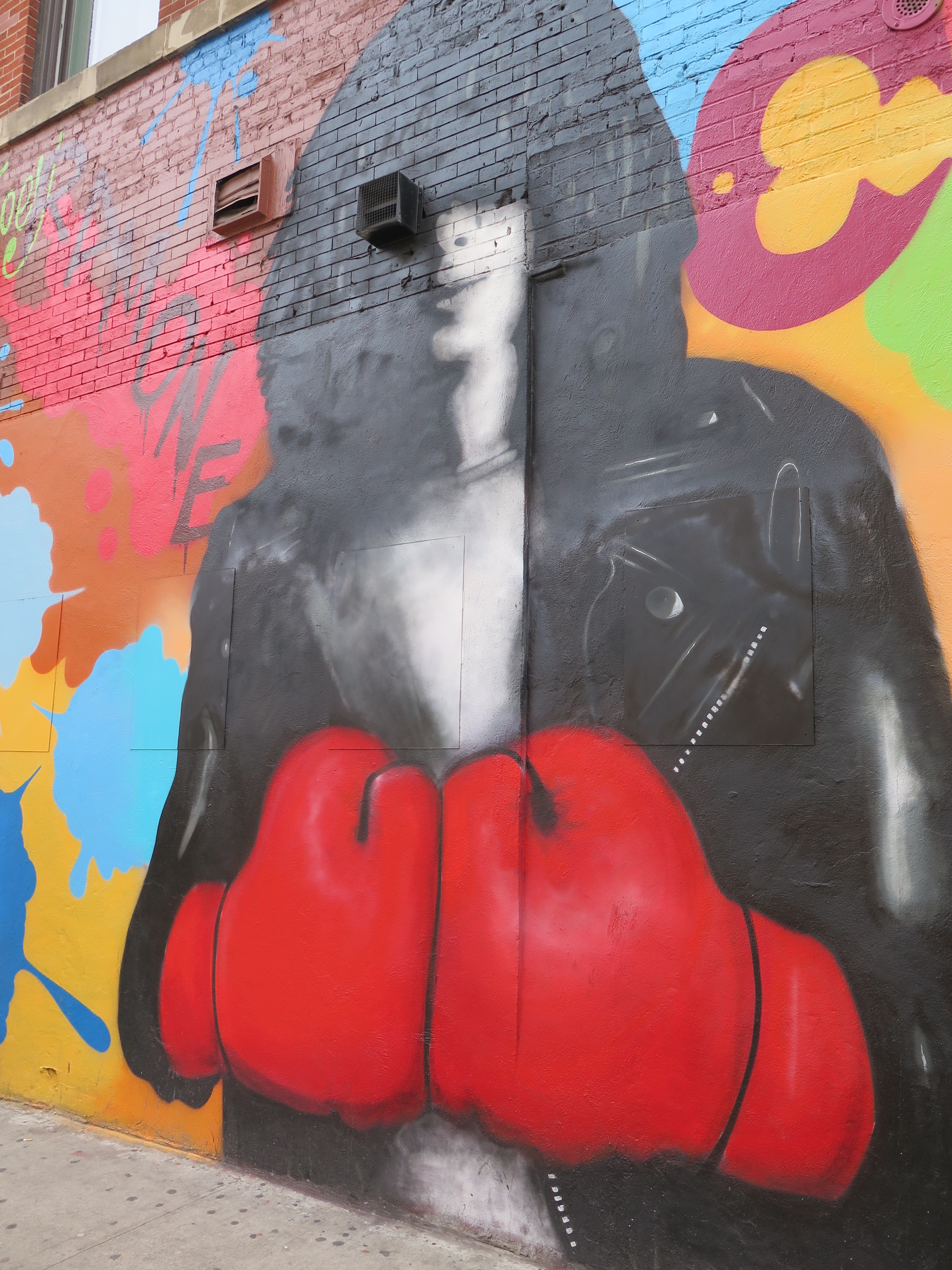
Photographs today are from prior visits to NYC.

Music is by Jorge Sylvester Ace Collective who will appear at the Harlem Jazz Series on Friday 7/26 – 43-55 WEST 124TH STREET NEW YORK, NY, 10027

Undeterred

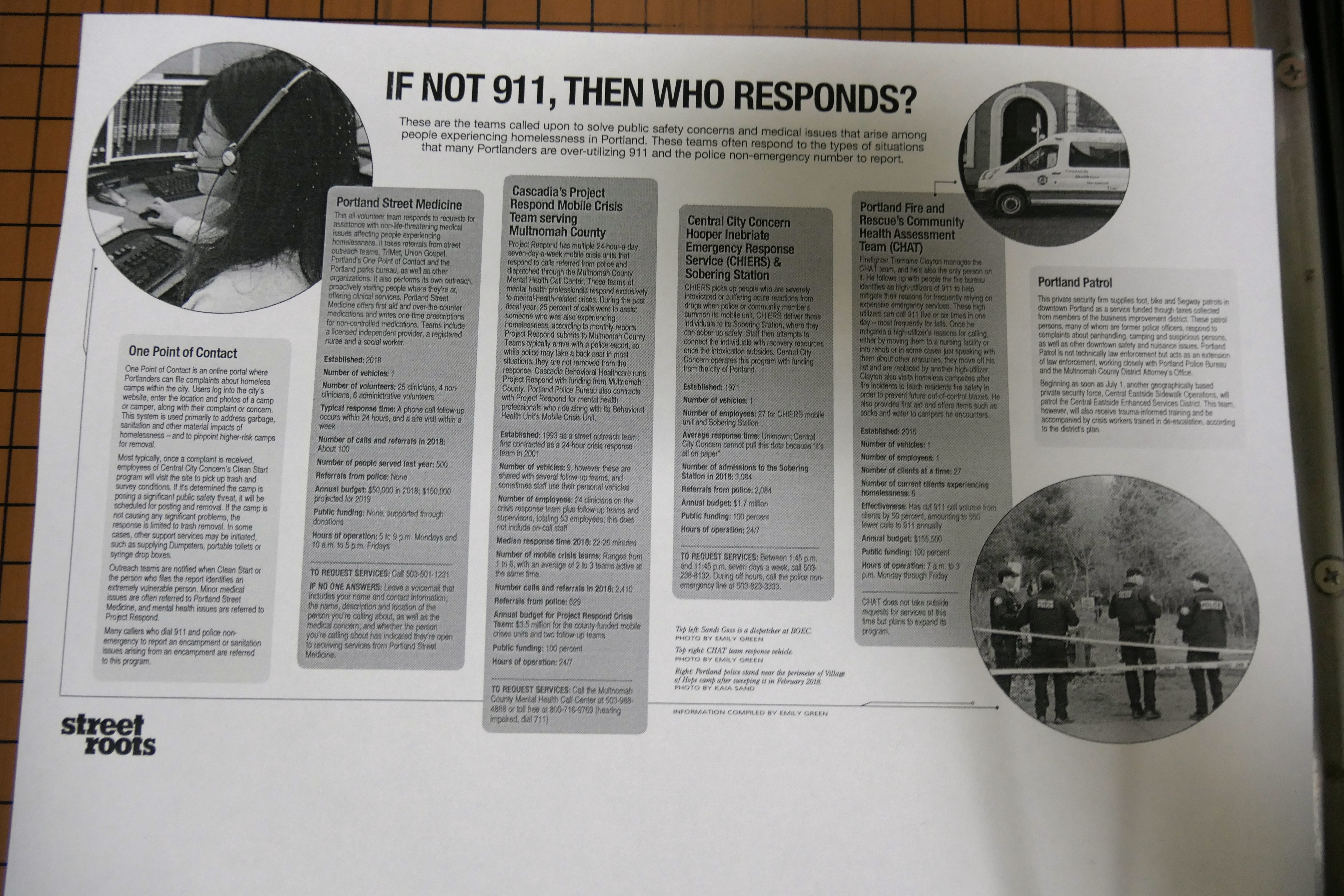
Today I would first like to draw your attention to a film Undeterred that documents the community resistance in the small border town of Arivaca, Arizona. I’ll then get to new beginnings at Street Roots, presented in today’s photographs.

From the press release for a new documentary about what’s happening at our southern border:

Since NAFTA, 9/11 and the Obama and Trump administrations border residents have been on the front-lines of the humanitarian crisis caused by increased border enforcement build up. UNDETERRED is an intimate and unique portrait of how residents in a small rural community, caught in the cross-hairs of global geo-political forces, have mobilized to demand our rights and to provide aid to injured, oft times dying people funneled across a wilderness desert. The film was made by Eva Lewis, a resident of Arivaca and long-time member of People Helping People in the Border Zone (PHP). UNDETERRED was created in close collaboration with the Arivaca community and members of PHP.”

Here is a link to the trailer.

And here is what can be done (beyond donations) to support those fighting on the front lines of humanitarian crises during increased border enforcement: show up for the screenings! One of the founders of People helping People in the border zone in 2012 will be on site for the discussion. Sophie Smith is a native Portlander and instrumental in the all-volunteer community organization that works together for the protection of human life, regardless of immigration status. They organize to stop Border Patrol abuse and the militarization of the borderlands.

When: Thursday, July 11th, 7-9 pm. Doors open at 6:45; program starts at 7 pm. Where: Ainsworth United Church of Christ, 2941 NE Ainsworth St, Portland, OR. Suggested donation: $5-25 at the door; no one turned away for inability to pay.

What: The screening of the film will be followed by a Q and A with Sophie Smith and Juan Rogel. Sophie Smith is a long-time humanitarian, community organizer and writer living in the militarized zone of the US borderlands, and the co-founder of People Helping People in the Border Zone. Juan Rogel has played multi-faceted roles serving communities of color in Oregon. Juan is the founder of Milenio.org grassroot group which intends to empower political participation from the Latinx community.

The event is hosted by KBOO Community Radio and Ainsworth United Church of Christ (AUCC), one of the early Portland congregations to provide sanctuary for migrants seeking refuge in the United States. The event is moderated by Jan Haaken, professor emeritus of psychology at Portland State University, a documentary filmmaker, and KBOO programmer

I will unfortunately not be able to attend since I will be on the road, starting Monday, back mid July. Reports will come intermittently but I’ll try and document the marvels of the world….

————————-

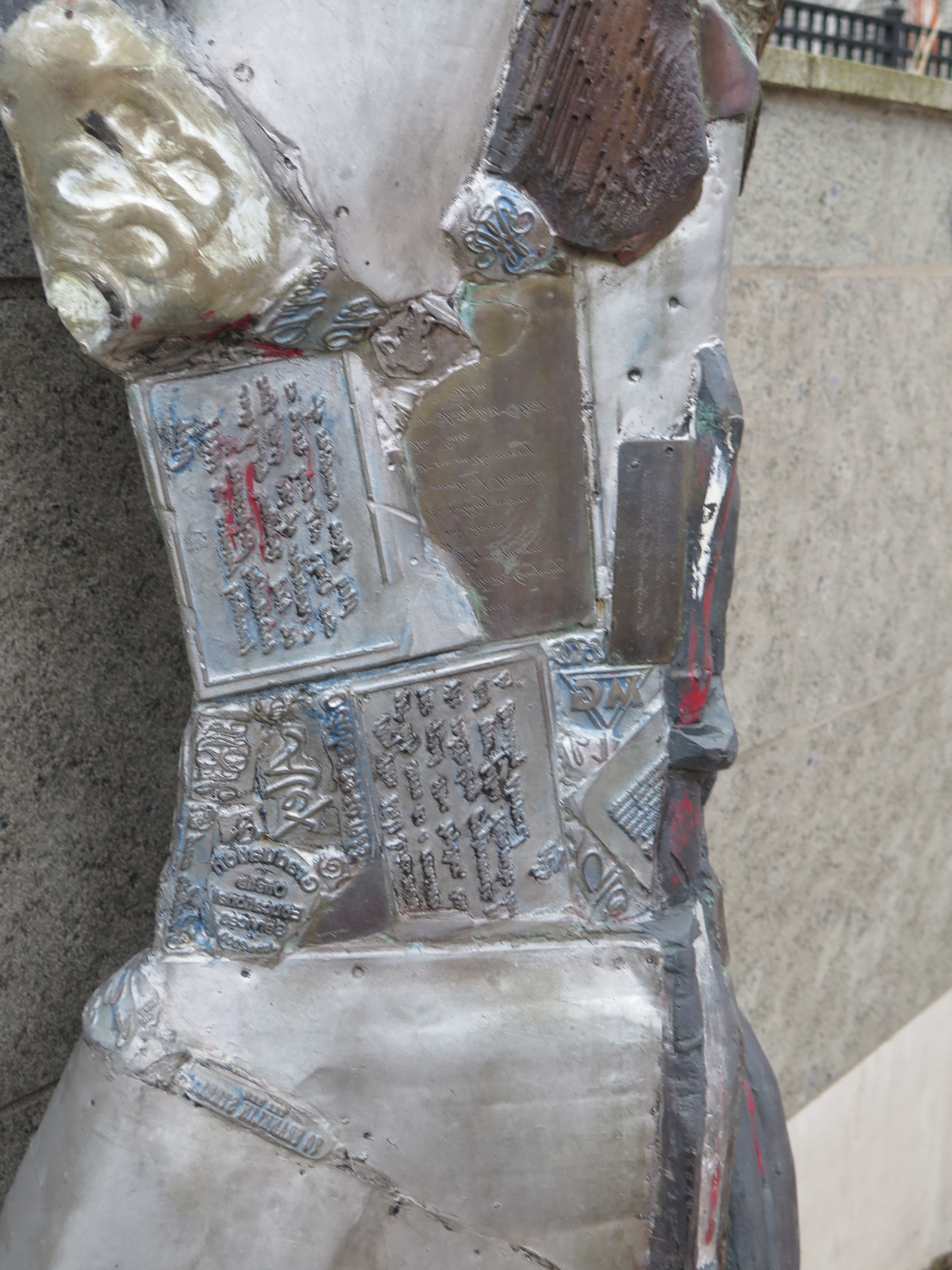
Here is another, local organization that remains undeterred. Last week during my volunteer hours I had a chance to photograph the renovations to the Street Roots offices. Timothy Kennedy and Mark Lakeman – a key organizer at City Repair, Village Building Convergence and Communitecture –  and Street Roots staff have worked a miracle with a difficult, cramped, at times chaotic, space that resembled a long open train car.

The new structures were made from recycled and repurposed materials, from windows found a boat docks, to doors from the re-building center. Fallen Alder logs from someone’s land hold up the structures, as do piles of Street Roots newspapers as cornerstones.

Clay painted walls and fabrics clamp down on loudness,

with those cob walls made from earth removed in cemeteries when graves are prepared for new takers. To quote Kaia Sand, Executive Director of the organization: “We are never far from the dead at Street Roots – too many people die on the streets, and we insist on honoring them in our work.”

Well, these offices are luckily about the living, a crew I admire for all they do in one of the most important humanitarian and political efforts this city faces to date: empowering the homeless beyond helping them to survive.

Music today is music by and for strong women from another generation in honor of Sophie and Kaia who are the future. Forward!

My homeland

Today you get a simple (could not echo the rhyming) translation of a poem that appeared in a German newspaper yesterday. Written by Cornelius Oettle and titled My Homeland, it captures for me something essentially true for us here in the US as well, including the current debate of labeling camps as what they are – but also other developments. The tenor about willful blindness and subsequent surprise applies to this discussion as well, as was so perfectly demonstrated yesterday by Ta-Nehisi Coats.

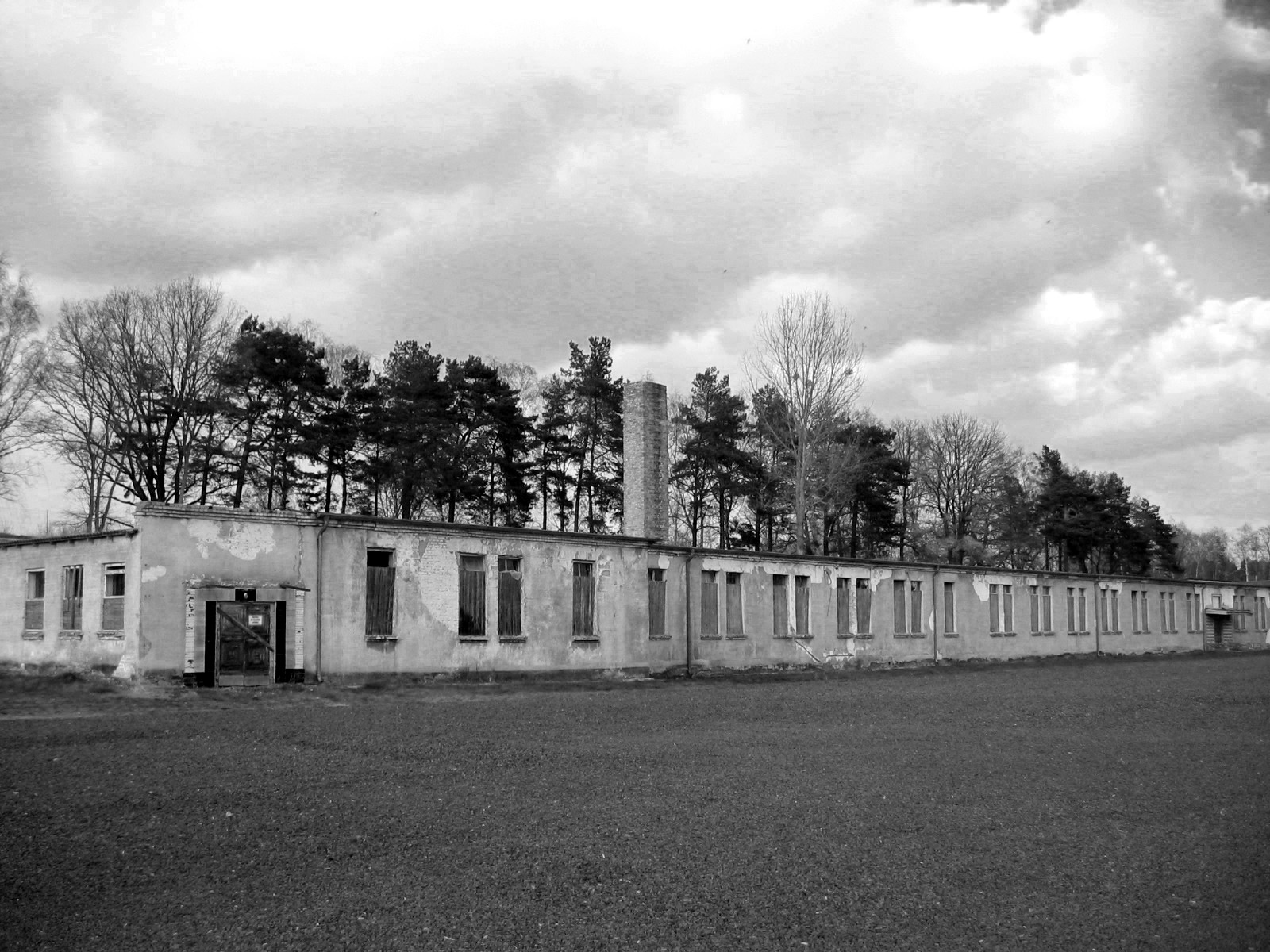
Photographs were taken at Ravensbrück, a German concentration camp that was not officially an extermination camp.

Where Nazis teach school, Where Nazis complain on the internet, Where Nazis appear on nightly TV, Where Nazis buy Facebook friends, Where Nazis use tricks to cheat on taxes, Where Nazis trend on Twitter, Where Nazis are not blocked, Where Nazis fly to Mallorca, Where Nazis are contributors to Focus (weekly German magazine,) Where Nazis remain in the police force, Where Nazis serve as soldiers in the military, Where Nazis dine with reporters, Where Nazis invite Reinhold Beckman, Where Nazis don’t threaten anyone’s reputation, Where Nazis blog for Springer (rightwing mainstream publishing house,) Where Nazis vigilantly jog through Chemniz, Where Nazis run soccer clubs, Where Nazis wave fan club banners, Where Nazis walk alongside of Hoecke (AfD), Where Nazis don’t see any Nazis, Where Nazis prepare for war games, Where Nazi rap runs high in the music charts, Where Nazis bring rock to Themar, Where Nazis sing a song for you, Where Nazis means number of clicks, Where Nazis ring bells for Hitler, Where Nazis appear in throngs on the talk shows, Where Nazis interrupt book expos, Where Nazis demand upper limits, Where Nazis order true fruit smoothies, Where Nazis support Victor Orban, Where Nazis protect the constitution, Where Nazis listen to Rainer Wendt (a former German policeman and since 2007 Federal Chairman of the German Police Union (DPolG), Where Nazis disrupt the rescue of drowning refugees, Where Nazis shred the files of Nazis, Where Nazis destroy memorials, Where Nazis grieve for a dog, Where Nazis regret the comment of birdshit (inhalation to the Holocaust,) Where Nazis found Nazi villages, Where Nazis like to burn down refugee homes, Where Nazis form alliances, Where Nazis shoot foreigners, Where Nazis annually whistle to Wagner, Where Nazis kill members of the CDU (a prominent government director was shot to death on the terrace of his own house by a neonazi last week – the first assassination of a politician since the Weimar republic) – there everyone is wondering right now, where do all these Nazis come from? 

The Reuters photo below was attached to the publication.

Plastic garden dwarves with their arms outstretched in the stiff-armed Hitler salute are pictured in the Zeise cinema to promote the movie premier “Little Germans” in Hamburg, Germany May 9, 2019. The garden dwarves with their arms outstretched have been part of the 2008 installation “Dance with the Devil” by German artist Ottmar Hoerl in Germany, and first time with 700 dwarves in Ghent, Belgium, with the title “Poisoned”. REUTERS/Fabian Bimmer

Music is from an album by the Grenzgaenger who collected songs from the anti-fascist resistance, many derived from interviews with camp survivors who recalled what was sung.

Fraught Freight

With the oil boom in North Dakota and the extraction of Canadian tar sands, shipment of crude through the states of Washington and Oregon has increased by 250% since only a decade or so ago. Last year Oregon alone saw 19.000 of those tankers on mile-long oil trains pass through, and much of it ends up in Portland at a terminal owned by Zenith Energy. Here the crude is unloaded into massive storage tanks and later pumped onto ships bound for refineries and factories. (An informative article about the problems with this can be found here.)

View of Mt. Hood

The Columbia River Gorge is the key route for oil transport moving through the Pacific Northwest. You have as many as 18 oil trains a week – and no one is fully prepared for action against toxic inhalation hazards or worse, catastrophic accidents, particularly since the oil moving through WA and Oregon is unusually volatile. The railroad companies responsible for the trains have had accidents elsewhere, in North Dakota and Alabama, and of course we got our first warning with what happened in Mosier, OR in 2016, when a Union Pacific oil train derailed, catching fire and spilling a small amount of oil into the river during salmon migration.

View of Mt. Adams

I thought it was time to remind ourselves of all this when I heard that the house legislature passed a spill planning bill (House Bill 2209) on Monday. The bill had been delayed for years by corporate money in politics while other West Coast states have long taken action. It now allows the state to levy two fees to fund plans for spills.

What happens to amateur identification with a sieve as brain – best guess: buckwheats and desert parsley

For an oil bill it is still pretty watered down:

“The bill requires railroads to prove they carry enough insurance to pay to clean up a worst-case spill in Oregon. It defines a worst-case spill as 15 percent of a train’s load — far less than spilled in the worst spill to date.”

But at least it contains no secrecy provision:

A few months after the tanker cars overturned in Mosier, Union Pacific wrote a check for $5,000 to then-Rep. Mark Johnson, R-Hood River. When oil spill legislation came up in 2017, Johnson introduced an amendment Union Pacific wanted: to keep any spill plan secret. That bill died after The Oregonian/OregonLive and Oregon Public Broadcasting reported on the unique secrecy provision.

Lupines
Rock Penstemons
Small Sunflower
Windflower

————————

Here is once again the trailer to the documentary film I am involved with as a set photographer about the dangers of crude oil extraction and transportation, and the ways progressives are trying to tackle the issues in court.

Indian Paintbrush
Pink Phlox
Mariposa Lily
Campion and Larkspur

And to drive the point home to what is at stake if explosions start fires, photographs today are from a gorgeous hike near the Columbia River on Sunday, up to the Monte Carlo ridge. (Alternative routes can be found here.)

And in our irony department, here is a beautiful set of songs by Woody Guthrie commissioned by the Bonneville Dam administration for PR….

The Small Fix

Continuing from yesterday, here is another long take on what to do about fake news.

Yesterday I offered some suggestions why propaganda and other big lies are so successful in manipulating all of us. Some of us – those prone towards delusion, dogmatism, religious fundamentalism or lacking analytic thinking skills – are more vulnerable to manipulation than others. But all of us are in the same boat when it comes to cognitive overload: if we are flooded with information, particularly contradictory information, we often feel overwhelmed, don’t know who to trust and eventually decide not to believe anything at all. Or we decide it is just too much effort to dig deep into analysis and/or not worth it to expand so much mental energy.

The second point – is it really worth the effort? – is where a mix of self service and poor calibration determines how much you are likely to buy into falsehoods. If you really hate a claim, then you’re motivated to challenge and undermine the claim, so maybe you do the work. If the claim aligns with your prior beliefs, confirmation bias will make you lazy. Calibration suffers because people are often poor in judging how well established a claim is — i.e., how good the evidence is. As a result, they often regard strong claims as only weakly established (and so they waste time challenging the claim), and often regard weak claims as well established (and so, mistakenly, don’t bother to scrutinize the evidence). If you look at how social media influence your assessment of “well established” by the sheer number of likes or retweets or linked Hashtags, it is easy to understand why we are increasingly bad at calibration.

Recent research in Europe has shown that people intent on manipulation are quite aware of these factors and form entire troll bands to sway public opinion towards their right-wing or neo-fascist directions by sheer volume of clicks. There are now movements to oppose this tendency, under the hashtag #Iamhere. Private individuals, more than 10.000 in Germany alone, although the initiative started in Sweden, are fighting hate speech on FaceBook. They don’t argue directly with extremists. Instead they collectively inject discussions with facts and reasonable viewpoints. The idea is to provide balance so that other social media users see that there are alternative perspectives beyond the ones offered up by the trolls. FB supports this here.

The big difference between US and European approaches to free speech, hate speech and lies, however, is not happening in the private sector but in European legislation. Germany, with its fascist past, is particularly alert to the dangers associated with hate speech. Free speech is acknowledged to be a fundamental right and a basic constituent for democracy. But it is seen as something to be balanced with other factors necessary to maintain a democracy, which can restrict certain contents of speech if deemed a danger to democracy. (It is part of a concept of militant democracy, held by German government since the establishment of the republic, more on that another time.)

The German criminal code contains 22 statutes that prohibit and punish actions deemed a threat in this regard. They include inciting hatred, racist insulting of particular groups and Holocaust denial; forming terrorist organizations, the use of symbols of unconstitutional organizations, defamation of religions, religious and ideological associations in a manner that is capable of disturbing the public peace, and forgery of data intended to provide proof, among others.

These restrictions are justified by assuming that propaganda would create racist majorities, could lead to violence and discrimination and could cause resentment that in turn destabilizes the democratic order. Not many of these statutes would stand the test of the US 1st amendment; the differences are really based on a fundamentally opposed understanding of government: Here, in our mistrust of government and celebration of individualism, we seek the least amount of intervention possible. In Germany, pluralism is valued above individualism, and the government is seen as a protector of minorities, of tolerance, of the good of the whole, rather than of individuals only or foremost.

And from the other side of the political spectrum:

Free speech, folks.

In this spirit, as of 2018, Germans also ratified a Network Enforcement Act (Netzwerkdurchsetzungsgesetz or NetzDG) that holds social media platforms responsible for enforcing the statutes mentioned above.

NetzDG targets large social network platforms, with more than 2 million users located in Germany. It requires these platforms to provide a mechanism for users to submit complaints about illegal content. Once they receive a complaint, platforms must investigate whether the content is illegal. If the content is “manifestly unlawful,” platforms must remove it within 24 hours. Other illegal content must be taken down within 7 days. Platforms that fail to comply risk fines of up to €50 million.

Serious criticism of this hate speech law can be found here

Most importantly, you have a restriction of free speech enshrined in the German constitution: Art. 18 states that anyone who abuses freedom of expression (or any number of other important freedoms cited within) in a way to undermine a freedom-oriented democratic system cannot invoke this fundamental right. They have learned their lesson, it seems.

————————–

Photographs today are from the Esplanade during this year’s Rose Festival. Free speech reigned, as did disgusting visuals, and I would have given a lot to have the military personnel talk to me about their views of democracy…..

Here is a wonderful essay on Beethoven and democracy – let’s go for the 9th in 1989! Such hope then.


The Big Lie

“…. this was inspired by the principle – which is quite true in itself – that in the big lie there is always a certain force of credibility; because the broad masses of a nation are always more easily corrupted in the deeper strata of their emotional nature than consciously or voluntarily; and thus in the primitive simplicity of their minds they more readily fall victims to the big lie than the small lie, since they themselves often tell small lies in little matters but would be ashamed to resort to large-scale falsehoods. It would never come into their heads to fabricate colossal untruths, and they would not believe that others could have the impudence to distort the truth so infamously. Even though the facts which prove this to be so may be brought clearly to their minds, they will still doubt and waver and will continue to think that there may be some other explanation. For the grossly impudent lie always leaves traces behind it, even after it has been nailed down, a fact which is known to all expert liars in this world and to all who conspire together in the art of lying.”

Yes, I am going to ruin your perfectly fine Monday with a quote from a source that until January 2016, could not be purchased in Germany: Hitler’s Mein Kampf. Why would I dare to cite an early autobiographical statement made in reference to Jews and lies before he came to power, but perfectly applied for his own agenda once he was in power?

Because I am thinking through issues of free speech, fake news and the consequences of trying to make the truth irrelevant for a talk tomorrow sponsored by the Leo Baeck Institute and the Oregon Jewish Museum and Center for Holocaust Education that I was asked to join as a panelist. The topic of the evening is a comparison between the similarities and differences of fake news now and in the 1930s, and before you can say “That sounds interesting,” the event is sold out. I feel the pressure already….. what you read today, then, is an attempt to sort my thoughts at a snail’s pace into some semblance of a structured argument. Thank you in advance for your patience! (Never mind that snails’ slime triggers associations to fake news…)

I think we have to distinguish, first of all, how the term “Fake News” and “Big Lie” can be construed. Fake news is often used in the context of the press, when the powers that are do not like what is reported in the media. This started in Germany even before the Nazis came to power, with efforts to discredit the international press during WW I. Lügenpresse was a term and a concept then happily adopted by the Nazis, often in association with conspiracies that the press was ruled by Jews who were trying to usurp power. Creating the impression of a lying press led to first restrictions and eventual a shut-down of the critical media, and worse fates for individual journalists.

The Big Lie on the other hand, is what regimes have used since time immemorial to manipulate or confound public opinion. I do not need to give examples of our own recent history here in the US that confirms the conscious use of lies to promote political goals.

A take-over of the press, in turn, allows an easy spread of state propaganda. Not that we, in 2019, need official state outlets (although we have one that is one but in name, Fox News, and maybe being an official news channel lends gravitas to its lies): the internet channels offer a free-for-all that allows lies and incitement of hatred to spread at the speed of light and in numbers comparable to that of the stars, to stick with metaphors borrowed from the universe.

———————

The psychological factors why people might fall for the Big Lie are likely the same for then and now, the assumption that people would not believe anyone would dare to lie BIG being the least of them. Cutting edge psychological research shows that the belief in Fake News (here interchangeably used with big lies) is associated with delusionality, dogmatism, religious fundamentalism, and reduced analytic thinking. See details in the link above.

Some of these personality variables are of course linked to structural factors: if public education is systematically weakened and so no longer teaches analytic or critical thinking skills, people are more easily manipulated. If religious schools are preferred to run-down public schools, fundamental values are more easily transmitted.

If a loss in status through unemployment, or an ascendance of previously less valued groups like women or minorities, threatens identity, a motivated belief in lies about the causes of the threat can keep you going. If the 16 billion (!) dollar Advertising business on something like YouTube allows for relentless flooding with lies, the repetition alone will make it hard to question the core of the messages.

Another general psychological factor might be our wish to defend ourselves from an unwanted truth, and so we buy into a lie because the truth is unacceptable. Many 1930s Germans thought themselves to be “the good guys”, from a line of poets and thinkers (Dichter und Denker) dedicated to enlightenment values, simply not willing to acknowledge that something insanely inhumane and atrocious could happen in their country. I fear the same is true for all of us here, who have bought into the concept of American exceptionalism, the shining beacon on the hill, or, to put it more simply, the wearer of the white cowboy hats…. we could not possibly have prison camps for children here, deny legal assistance and adopt out to childless Christian couples before you blink, could we? We are not the kind of people who put people behind bars for 20 years because they distribute water and food to starving refugees in the desert, are we?

And I think this is the core motivator for the relentless onslaught of lies told in public by government officials while simultaneously questioning the truth of reports critical of them: if there is so much falsehood out there, so many conspiracy theories, how could we possibly discern what is truth and what not? If we want to avoid knowing the truth because it would be too horrific to know, all we have to do is tell ourselves we can’t possibly know what is true or not – case closed, propaganda succeeded. Motivation to believe what we want to believe is also exploited by the fabricators of lies in the ways that they choose the content of those lies: it is no coincidence, for example, that lies are told about migrants taking away your jobs, when you fear unemployment and have already been steeped in racist sentiments. I’m sure you can think of plenty of those kinds of examples.

———————

Last point today (and yes, this will be continued tomorrow): perhaps now more so than during the Weimar Republic some people are aware of the Big Lies – and perfectly happy to run with it. “Let them spread those lies if it serves a larger goal: keep us in power for just a bit longer, stop those fetuses from dying, allow us basking in reflected glory of those who so brilliantly give the finger to our enemies…and accumulate capital while it lasts. ”

Photos by iPhone walking as slowly as thinking….

Music today is a musical lie, a big one, indeed, in response to the threat by an authoritarian ruler, a symphony seemingly contrite and yet full of subversive hints, if I can trust the experts. So hard to know the truth these days. Joke.

It’s just rowdy youth, they say

It’s just rowdy youth was a typical commentary found in some Austrian media in light of the news that an art project honoring Holocaust survivors was defaced and destroyed over the last couple of days in Vienna. German-Italian photographer Luigi Toscano had erected 80 larger-than-life portraits of Holocaust survivors, an exhibit called Lest We Forget, opened recently by Austrian’s President Van Bellen.

Photo credit:DPA

Many of these faces were slashed by knives, some had antisemitic slurs and swastikas written all over them.

The portraits are large, 8 ft tall, and printed onto gauzy, water-repellent material. The exhibit has been shown in San Francisco and other places without incidents, while one version that is currently up in Germany has police protection. So does every single Jewish institution from daycare centers to schools to synagogues in Germany, according to Chancellor Merkel who was interviewed about the matter after the government agent responsible for anti-Semitism had announced last Saturday that Jews should not always be wearing kippot in public because it has become unsafe. As a response to this warning the German government suggested that all German citizens should go out in public with skull caps to show solidarity. A lot of good it will do….

Certainly the Austrian police will not follow this call for solidarity. They did not even show up when the vandalism was reported originally and the artist called to have the perpetrators pursued. “It’s just property damage.” Yes, let’s pretend there is no political context during a week where the Austrian Neo-Nazi Vice Chancellor Strache had to resign amidst scandal (a secret taping of his pre-election discussions with a presumed Russian agent to exchange favors for help.) A resignation that extended to cabinet members, a vote of no confidence for Chancellor Kurz, and new elections slated for September. The whole sordid story here.

Before we descend into complete gloom, however, there is also good news. Muslim citizens came to protect the images, artist collectives guarded them overnight, and a group of young people brought sewing kits and repaired the slashed surfaces. And at the beginning of this month Timothy Snyder (a Yale historian who specializes in the study of the Holocaust) delivered a remarkable speech at the Viennese Judenplatz on the occasion of Europe Day 2019. If you have time and inclination, it’s truly worth a read.

Photographs are from the old Jewish section of the Zentral Friedhof in Vienna. It has fallen into terrible disrepair, with waving fields of stinging nettles, roaming deer, and only an occasional sign that someone still comes to visit.

Music is by the quintessential Viennese composer Schubert. This, his very last sonata, was called by someone a message from the dead to the living if there ever was one.

Lest we forget.

The Crystal Ball’s Defect, they say

First there was Australia. Polls predicted the Australian Labor Party would win over the conservative-led coalition in the two-party preferred vote. That turned out be wrong. Big outcry over the unreliability of polling. However, if you look closely at the numbers, the conservatives trailed by 2 points in the polls, won by 2 points in the election, which makes for a 4 point error. The average error in past Australian elections was 5 points – so nothing out of line here. The combination of urban/rural divide and the cost of fighting climate change was a determining factor here.

Then there was the European Parliament election this weekend. The results can be pretty easily summarized: things differ according to country: in Germany, for example, the Social Democrats drowned (as did to a lesser extent the other centrist party, CDU). In the Netherlands and Spain, against expectations, the equivalent parties (Workers Party and PSOE) soared. Rightwing nationalists were punished in NL, they scored in the Eastern parts of Germany. The Greek are in for new elections after Syriza got drubbed. Conservatives are waiting eagerly in the wings.

The Austrian conservative government was dissolved after a vote of no confidence for the right-wing enamored chancellor, the first such vote that succeeded ever. The Greens, focussed on climate change, were victorious across the board, but so were the nationalists in Italy around Salvini, and in France around Le Pen. The victory of the former had not been predicted, the gain of the latter was smaller than the polls had assumed.

Overall it is safe to say, that the centrists, across the board, lost, and lost more than was expected by polling. The Left won, the far Right as well, although the latter again with weaker showings than predicted. With regard to the mess in Great Britain polls in the UK European parliamentary elections significantly underestimated support for the Liberal Democrats and the Greens, two pro-Remain parties. They slightly overestimated support for the Brexit Party, Labour and Conservatives.

One could rush to take all this and try to extrapolate for our own upcoming elections. Is there a bias towards assuming centrists are more electable when in reality more progressive forces win? Is there a lessons from the strong surge of nationalism in old, established democracies that foreshadows our own future? Is there a reason to look towards Belgium’s Parliament when we have the election results of our own recent midterms showing regional strength of Trump and his minions?

You tell me. Or ask the right crystal ball.

Here is a fun escape into the world of the unexplainable

And here is Beethoven’s Moonlight Sonata – which its composer called Piano Sonata No. 14 in C♯ minor “Quasi una fantasia” – which loosely translated means “in the manner of a fantasy” or “as if improvised”. Just what we might consider to be occasionally true for polling…….

Glorious Sacrifice, they say.

Yesterday’s Memorial Day commemorations, honoring those who lost their lives fighting wars, happened in the context of this warning:

“It is a virtual certainty that you will fight on a battlefield for America at some point in your life. You will lead soldiers in combat. It will happen. Some of you will join the fight against radical Islamic terrorists in Afghanistan and Iraq. Some of you will join the fight on the Korean Peninsula and in the Indo-Pacific, where North Korea continues to threaten the peace, and an increasingly militarized China challenges our presence in the region. Some of you will join the fight in Europe, where an aggressive Russia seeks to redraw international boundaries by force. And some of you may even be called upon to serve in this hemisphere.”

This from the Vice president of the US, Mike Pence, who addressed young men and women who have an obligation to serve for the next 5 years, with an additional 3 years of being in the reserve. That is a time span of 8 years within which he predicts active warfare, potentially in this hemisphere…. The clouds of war are gathering.

View East from the Esplanade 5/25/2019

Maybe he read the scientific reports and takes them seriously, when the rest of the administration is actively undermining any acknowledgement of the consequences of climate change.

New research has shown a causal linkage between climate change, conflict and migration. The International Institute for Applied Systems Analysis (IIASA) has provided data as of January of this year that confirms the speculation about the relationship between climate change and armed upheaval with hard numbers (Syria included.)

—————————

Time to plan yet another war memorial? In the small town of Marseille, IL, a group of civic-minded bikers fund-raised and built a memorial for those killed in ongoing wars. From the website:

On June 19th, 2004 a Granite Memorial Wall was dedicated commemorating the servicemen and women who have lost their lives in worldwide conflicts since 1979. The project was conceived by Tony Cutrano and Jerry Kuczera, built with donated material and labor and is the first of its kind in the History of the United States to give honor to our fallen by name while a conflict is ongoing. It took 20 years to Honor our Vietnam Veterans. Almost 60 years to Honor our World War II Veterans. The names on the wall represent our fallen heroes from such diverse locations as Panama, Lebanon, the Balkans, Grenada, Somalia, Haiti, USS Cole, USS Stark, Terrorist attacks in Italy, Greece, Scotland, and the current conflicts in the Middle East.

Here is a report by a father of a soldier about a visit of this memorial. I found it intensely moving.

Photographs today are all IPhone snaps from a single stroll along the Esplanade this weekend. The dysphoric content seems a fitting background for musings on the losses, pain, futility and causes of war.

Music are some choices across the board that helps us to remember.

Community Alliances

Large parts of the European population are trembling this week, worried about the outcome of the upcoming European elections where 350 million people across the EU are eligible to cast ballots for the 751 legislative members of the European Parliament (MEPs).

The threat of nationalists and populists winning big is real, with Euro-skepticism blossoming cross the continent, Brexit included. The predicted exponential gain of these disruptive forces, who want to make Europe great again according to Italian Deputy Prime minister Matteo Salvini, is based on an alliance of far-right parties across nation borders. Observers at the Center for European Reform hope, however, that populists, nationalist and euroskeptic parties will ultimately struggle to work together “so their influence will diminish a lot because of the lack of coordination.”

I have been thinking of alliances fron the other end of the spectrum – how a weak(ened) left or progressive movement needs to organize to develop sufficient thrust to stop the populist machine. An interesting article in the NYT from organizers in Poland provided some pointers. (Since my photographs of Poland hide somewhere in the digital universe, I am offering images of the Baltic Sea today, as close to Poland as I can get.)

In order to fight the illiberal wave crashing over Poland in the guise of the Law and Justice party, “nearly every party that opposes Law and Justice — from conservatives to Greens — united into an electoral list named the European Coalition, ahead of the elections this month. These parties have come together under the umbrella of protecting a minimum of democracy and the rule of law, as well as support for the European Union.”

The organizers stress the complications of having to compromise. Many if not all of the partners in the alliance had to give up on some of their demands. But they realize the power that comes from putting away their differences to speak in many voices expressing the same message. Something to be learned here for our own election campaigns, I suggest.

————————————–

A different alliance also caught my eye, one that stretches across an abyss deeper than anything a disunited left has ever known: the Israeli-Palestinian divide. Israeli and Palestinian members of Combatants for Peace (CFP) and the Parents Circle-Family Forum have come together to hold and alternative Memorial Day ceremony on Israel Memorial Day. “ … we stood with over 9,000 people who came to support families in mourning from (Green Line) Israel, the West Bank and—over video conference—from Gaza. Each loss is different. Some mourn IDF soldiers killed in battle; others, Palestinians who died at the hands of Israeli forces. But our message is shared: We refuse to allow our bereavement to be manipulated for nationalistic purposes and we insist that, despite all complications of asymmetry and power gaps, we have a right to recognize one another’s losses.

It took 14 years to grow this alliance from the early 200 people to one that now numbers almost 10.000, and is vehemently, sometimes violently opposed by both the Israeli Right Wings and also by Palestinians, who accuse the CFP of normalizing relations with an oppressive government. (The article here gives details.)

But this is the message of the alliance: “Binational mourning is a sign that Palestinians and Israelis are capable of taking down the walls of fear that he works so hard to erect and maintain, and that we are able to find our own, independent moral compass, even in dark times. We know that the moral insight born of our ceremony is not enough, on its own, to change reality here; but we also know that no real change can happen without it.

As we look across the seas and watch Muslims and Jews being killed—albeit under very different circumstances—by white-supremacist terror in Christchurch, New Zealand, in Poway, California, and in Pittsburgh, Pennsylvania, we invite mourners to join in our practice. It is imperative to remember the dead. It is transformative when we remember them together.”

Music ist by Swiss/Jewish composer Ernest Bloch who lived and composed in Oregon by 1916.