Browsing Category

Psychology

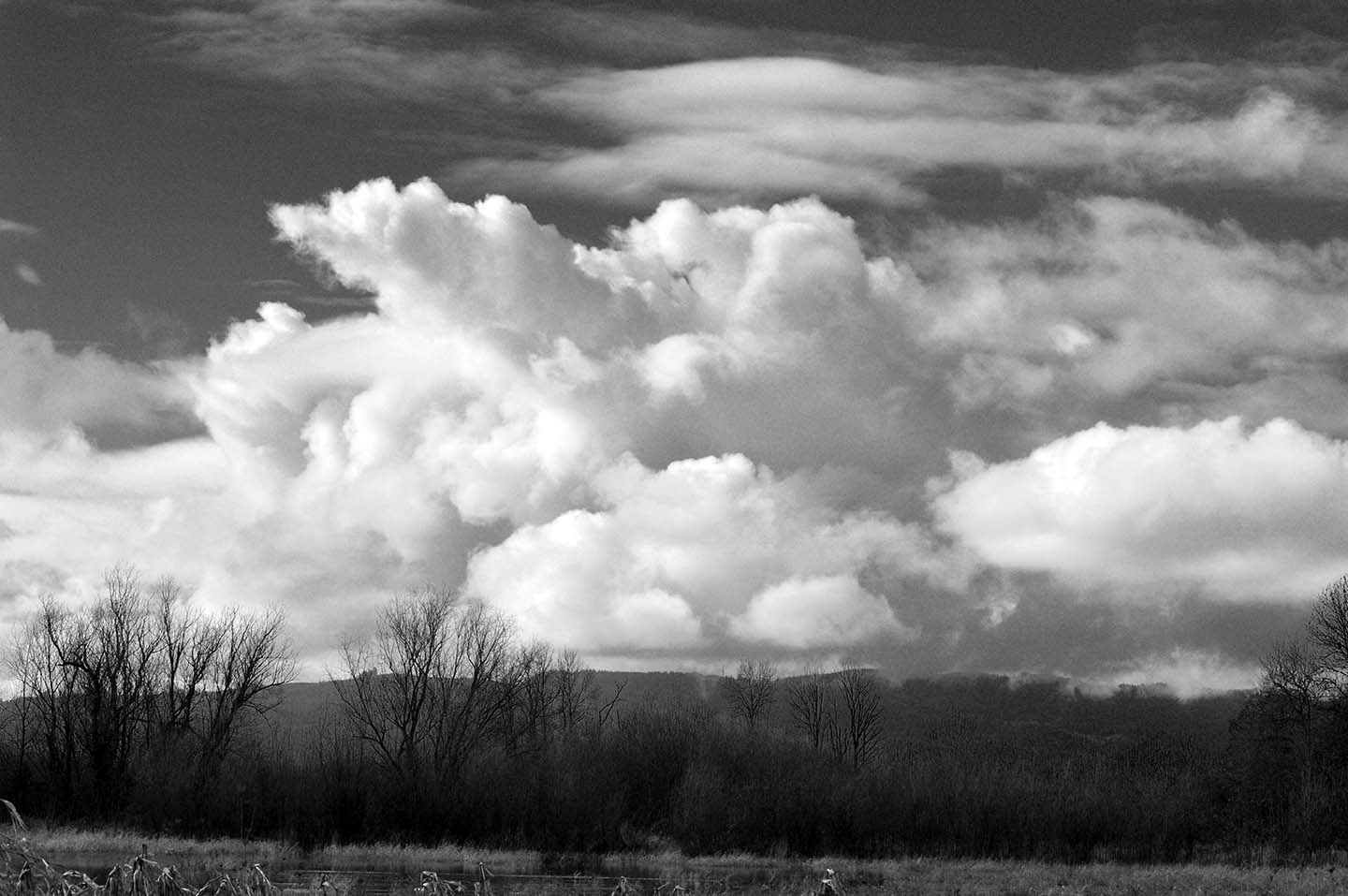
A Curtain of Clouds

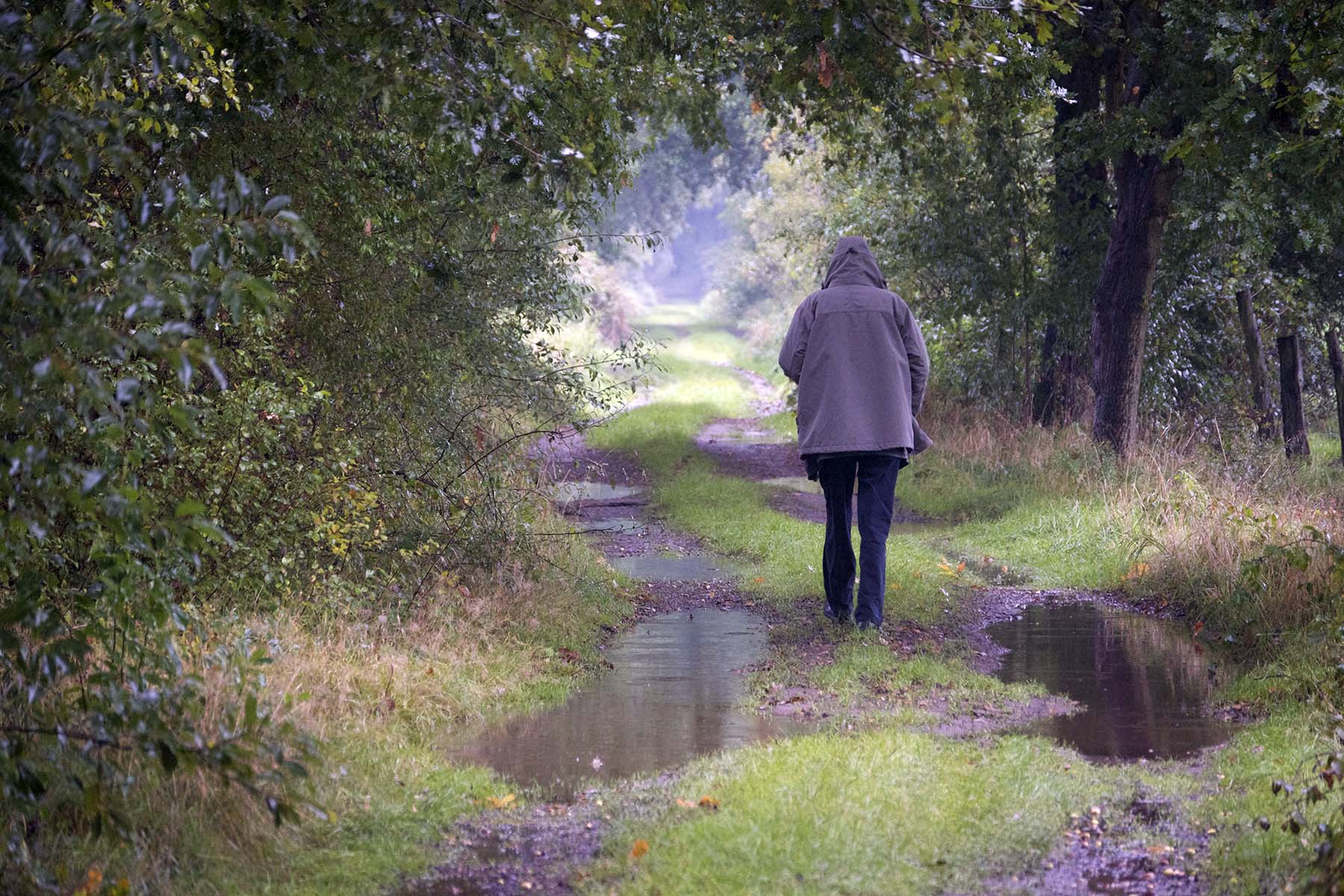
Walk with me. Make sure you bring the rubber boots which I, as per usual, forgot on Monday.

It was a spectacularly beautiful day along the Columbia river, with cloudscapes encouraging all kinds of fantasies and re-interpretations. They also made you wonder what would appear if you lifted them. Were they hiding Mt. Hood, or Mt. St. Helens, or would a peek of Mt. Adams appear? Those speculations relied, of course, on the general knowledge that those mountains are situated in the approximate location you were staring at.

What happens when you lift clouds without having the faintest idea what the background will reveal? Pleasant surprise, useful information, or a wish they’d hung in the air forever given what you discover?

These thoughts were rumbling since I had just read a fascinating new paper by two Yale psychologists, Woo-Kyoung Ahn and Annalise Perricone. In essence their research looks at the consequences of providing genetic information to people, information concerned with their potential susceptibility to mental disorders like depression, Alzheimer’s disease, alcohol abuse or eating disorders. (I’m summarizing below.)

Would you like to receive that information? Hand it over, hey, all knowledge is good! Allows for personalized treatments, specific interventions! What could possibly go wrong?

A lot, as it turns out, and not always what you’d predict. Information can harm you, and curiously enough, both the kind of information that confirms genetic susceptibility to a disease or its opposite, the reassurance that you don’t have the genes that might contribute to a problem.

Let’s say you learn that you have an elevated genetic risk of living with depression. Would you change your behavior in ways that might affect the emergence or severity of the disease? As it turns out, people generally don’t. That failure to do so is closely connected to our general misunderstanding of how genes work: most of us think they are immutable, that we can’t change anything about their expression. “Genes are destiny,” is the assumption. This mistaken belief is called psychological essentialism, where genes are believed to provide the essence for the characteristics observed in a person. Take height, for example. People tie a person’s height to their genetic make-up – never mind that an environmental manipulation, the absence of presence of sufficient nutrition, can stunt growth in any given individual.

Now add prognostic pessimism, our general belief that mental disease is pretty resistant to treatment.

“The extent to which one believes that one’s mental disorder has a genetic origin is positively associated with the extent to which one believes that mental disorders are untreatable or inevitable . For instance, the more individuals with depression attribute their symptoms to genetic factors, the more pessimistic they are about their own prognoses.”

Once you’re in this loop – knowing you have an elevated genetic risk and doubting treatment efficacy, the clinical consequences are dire, since your negative expectations will affect the treatment course.

However, we are able to intervene if we teach people about the malleability of genes, and how genetic expression can be counteracted, even shut down, with environmental interventions. Learning about this, people actually become more optimistic about the prognosis. Lots of clinical programs now use that kind of education to help people understand that genes do not mean a certain destiny.

Unfortunately, even if we are able to help people look more confidently at a future where their genetic risk is not all that counts, we have so far no comparable mediations of how they look at the past. When people learn that they have a genetic predisposition for depression, for example, they start to interpret their experienced symptoms as much worse than they actually were. Study after study show memory distortions of the severity of symptoms once you learn about your genetic risk. That exaggerated belief, of course, affects one’s expectation in therapeutic efficacy, a self-fulfilling prophecy.

___

What about learning that you do not have an elevated risk for a particular condition?

That, too, can produce harm. Let’s say you enjoy drinking, or eating, in ways that border on abuse, or so you fear. Receiving the results from your genetic test that you do not have an elevated risk for Alcohol Abuse Disorder or Eating Disorder can now become a risk factor, as you think you’ve been given green light to continue or even increase your behavior. The feedback affects your interpretation of the seriousness of the harm you might expose yourself to, a false reassurance that can have disastrous consequences.

Lifting the clouds of ignorance? Maybe not.

The birds didn’t care, one way or another. Flocks of snow geese huddled in great masses against the wind.

Sandhill cranes starting their track north.

Harrier hawk, hungry as always,

bald eagle surveying his kingdom,

and ibis and herons doing their thing,

all just on autopilot as their nature demands. No mediations required. No pessimism to optimism. Just BEING.

Debussy on clouds for your listening pleasure.

A Path towards Transformation

On a dry day last week I walked among the cornfields, aware of climate change with the water levels in the ponds still unseasonably low.

A bunch of corn stalks looked to me like a little band of marchers, moving forwards in determined protest. (Yes, my tendency to anthropomorphize has made it into 2023 intact…and you were worried!)

It got me thinking about what I’ve read in the scientific literature about how to communicate climate change for effective public engagement, in preparation for the documentaries I’ve been involved with. One memorable bit of instruction about collective action came from a TED talk by Maike Sippel, a Professor of Sustainable Economics at the University of Applied Sciences Konstanz, Germany.

Her name popped up again this week in an essay full of suggestions about what might help to change the world’s or our own approach to climate action. Her introduction refers to the proposal of the scientists of the IPCC that presence or absence of climate action in our decade will determine the living conditions on earth for the next 1000 year, a claim I agree with. Humanity is at a turning point. (And yes, I know I repeat myself. That, too, won’t change in 2023.)

Here (in German) are her 12 ideas to aide transformation, loosely summarized and translated by me below.

  • Think of yourself as part of the world, embedded within a community, but also within a timeline. Our actions need to be considered in the context of multiple generations to come.
  • Be grateful. A sense of gratitude to be alive and part of a larger whole can immunize you against the constant push to consume, to own, to search for novelty. Gratitude, perhaps captured in a diary or expressed in other forms of regular communication, can make us more content, and plays a role in how we treat others: it increases a sense of connectedness and generosity amongst ourselves.
  • Acknowledge pain and grief. Surveys reveal that 60 to 90% of respondents admit to climate anxiety – the burden of hearing about ongoing disasters, the fears about an uncertain future and the sacrifices that have to be made. If you talk about your own reactions with others you are strengthened by not being alone, being part of a community that shares both feelings and goals.

  • Base your actions on your values. This will be hard. Our behavior is entrenched, our joys often derivative from sources that are not climate friendly (think consumption of meat, or flying and driving, among others.) Listen to the unease that cognitive dissonance – I want x, but I’m doing y – brings about, and figure out what you can do.
  • Remember that change is possible. Social movement have historically been successful in ways nobody had anticipated. Things now are in flux, with many organizations, scientists, politicians and even international structures starting to call for and implement change.

  • The handprint matters. We all know about our climate “footprint,” the way our individual behavior contributes to noxious emissions. Personal decisions, however, take place within a framework of conditions, set by societies to influence choices, often in favor of industries that call the shots. Price regulation (flying is cheaper than taking the train), food availability (cafeterias are not offering vegetarian fare), social and legal covenants of acceptable behavior all constrain what the individual can do. Individual or collective efforts to change these structures are “handprints” – complementary efforts to the restriction of “footprints”. Individual contributions (fight for meat-less Mondays at your office, join groups to make the cities partly car free, engage in efforts to re-direct subsidies to industries that are not fossil fuel based, etc.) towards more climate friendly, structural conditions might have transformative results.
  • Use tools available for transformational processes. There are lots of leadership trainings available by people who have successfully helped groups with climate projects, for example Art of Hosting and Collective Leadership.
  • Seek out Good News. Fight the click-bait, over-representation of bad news to give your brain a break from permanent stress.
  • Talk about climate change. Not necessarily about the science or statistics, facts and morality, but about your experience with engagement and action, your own, personal way of dealing with the challenges.
  • Consider it an adventure. Transformation is not a walk in the park. You will encounter obstacles and resistance – just like in a real adventure. As heroes and heroines in this story we need courage, and, of course, allies. We will experience growth by overcoming obstacles, and we will persist without knowing if we will ever meet our goals. Every single human being bent towards transformation across history had to live through this, consider yourself in good company.
  • Take care of yourself. Everyone of us is needed for change. It’s imperative that we engage, invent solutions, and join the process with courage and positivity. All that is only possible if we are mindful of balance, and don’t overdo it to the point of burn-out. Too many balls in the air? Consider which one can be safely dropped. Stick to what’s most meaningful for you and is sustainable.

Music today by one of the most talented young cellists around, an arrangement of a Welsh song and excerpts from a classical Elgar concerto. Sheku Kanneh-Mason is a name you will remember and part of a generation that is spearheading change.

A Plea against Narrowing

“And now let us believe in a long year that is given to us, new, untouched, full of things that did not exist before, full of work that has never been done, full of tasks, expectations and impositions; and let us see to it that we learn to tackle all that without dropping too much of what it has to bestow…”

„Und nun wollen wir glauben an ein langes Jahr, das uns gegeben ist, neu, unberührt, voll nie gewesener Dinge, voll nie getaner Arbeit, voll Aufgabe, Anspruch und Zumutung; und wollen sehen, daß wirs nehmen lernen, ohne allzuviel fallen zu lassen von dem, was es zu vergeben hat […]” – Rainer Maria Rilke Letter to Clara Rilke 1907.

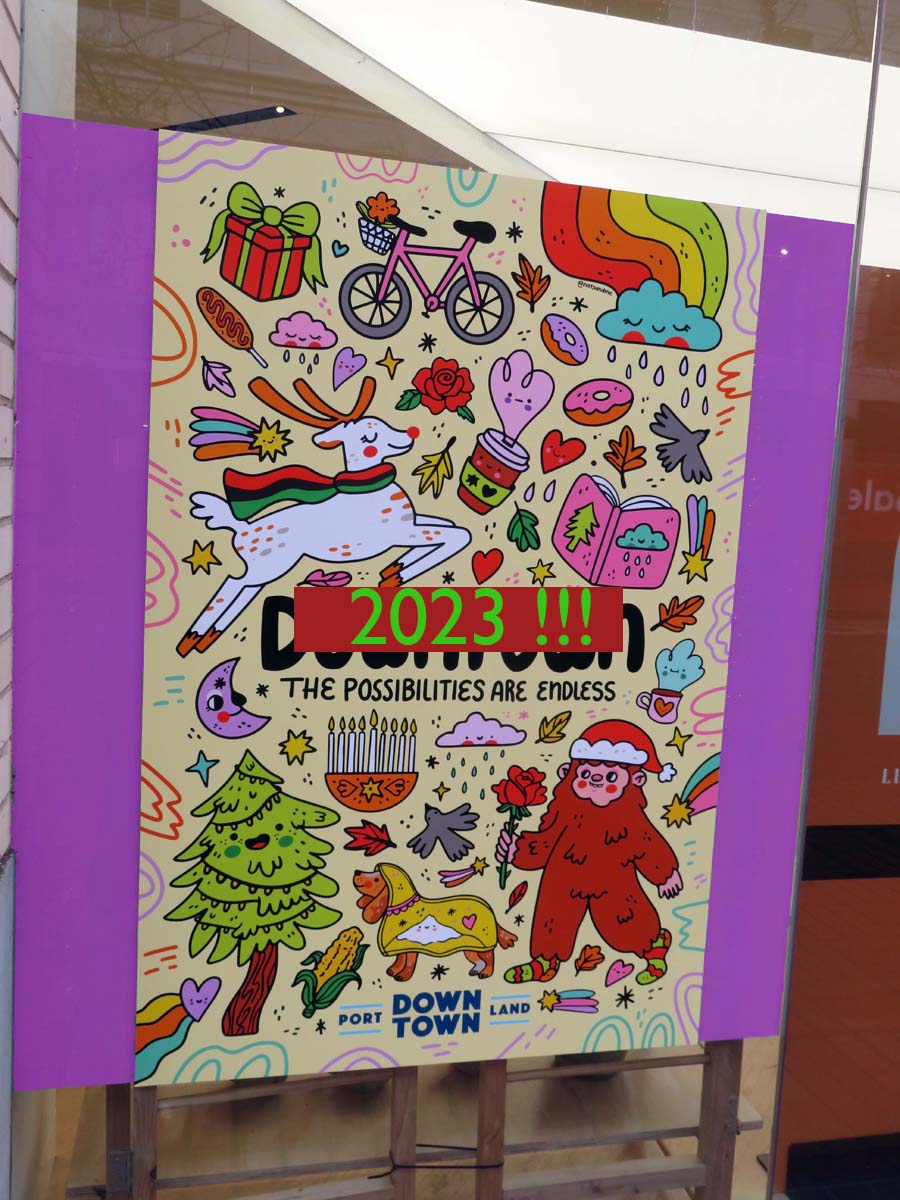
Walk with me. On one of the last days of the old year, as it happened, a stroll through downtown that was a deserted place on a grey Friday morning, the quiet ruptured only by loud screams of a houseless person, the wailing echoing in the canyons between the high-rises. The few pedestrians cautiously crossed the street away from the misery, avoiding eye contact with the tent that looked wet, cold, forlorn.

Photographs today are all from a downtown PDX walk between the Portland Art Museum and Pioneer Square, going north on 10th Ave and coming back South in the park blocks.

And now 2023 already here. No New Year’s resolutions for me, since I know from long experience I won’t keep them in the first place. Although IF I would claim some, they would be echoing this British advice:

Get slightly older each day – Eat more cheese – Discard old socks – Drink the same amount of tea (ok, coffee for me) – Never run out of biscuits – Say “getting there” a lot – Muddle through.

Yet I do have a wish: to have the courage to witness (and report on) what is happening in the world, no matter how deep the darkness goes.

I want to continue to fight against the gentrification of the soul, the self, that comes with aging and privilege. It is so easy to narrow your focus when you become overwhelmed by the suffering in the world, to declare that turning away from the darkness is an act of self protection, when it is an act of choosing comfort instead.

Comfort that is not available, much less granted, to the people exposed to war, oppression, subjugation, or exploitation, by mad men in power, governments, institutions or their neighbors. If the people of Ukraine have incomparable courage to live through bombardments and invasion, the people of Iran facing gallows for desiring liberation, as do their Afghan brothers and sisters, if the Kurds have no allies in the world, nor the Palestinians any protectors, if they all summon this courage daily to live, I might at least have the courage to look. To witness, fully knowing my solidarity amounts to nothing other than emotional discomfort over the experienced helplessness.

Empty squares, with the houseless crouched in corners, and a lone city worker blowing fallen pine needles that moved in small waves and eddies.

We don’t just have to look abroad. There are plenty of discomforting sights close to home. So easy to narrow your eyes and blink the “blight” away, turning to more uplifting views. Don’t get me wrong – I embrace the powerful offerings of nature and art, literature and science as happily as anyone to make me feel better or console me, perhaps even to bestow some hope for a more just world, as my regular readers know full well. But not at the expense of the minimal tribute I can pay by witnessing what else is going on in a nation filled with racism, inequality, culture wars and drifts towards authoritarianism, even or particularly when I have reached an age where active participation in a fight for change has become harder. Maybe my reporting can encourage others who still have energy to get engaged.

Age imposes a narrowing of our lives through the declining powers of our bodies or the restrictions of disease, all multiplied to the nth degree by living in a pandemic era. It is understandable that that narrows the heart as well, the capacity for compassion when preoccupied with your own making it through the day.

It need not narrow the mind though, as long as we are mindful of how and where we apply attention and if we make sure we stretch towards learning. American-Serb poet Charles Simic once said: “The attentive eye makes the world mysterious.” I never understood that, still don’t. For me the attentive eye is all about learning about the world, de-mystifying what we are told to believe. The Jewish tradition with its intense focus on learning has always struck me as something that provided more than just tools for professional advancement, or, more importantly, understanding. It is such a thrill when you realize there is an infinite potential for growth, both of knowledge and as a person, every day, even when the potential for your body is decidedly limited.

For 2023 that means my steady diet of junk novels and movies will continue to be supplemented with stuff that is hard to read and topics that require intense familiarization.

It is somehow fittingly ironic that the question about liberty and justice for all is raised at the Louis Vuitton store. The brand’s trade tag is “Truth. Live and love truth.” No clue why a manufacturer of luxury goods comes up with that, but I don’t exactly think they’d like to hear the truth about the effects of capitalism where the consumption of luxury items plays a large role, if only as marker of the class that can afford the luggage.

***

What I learned on the first day of 2023 came about because I wondered why the sound of human misery is so deeply afflicting when you walk by, half scared, half upset. My search found, instead, a splendid analysis on a related topic: Why do Rich People love Quiet. The Brooklyn-based author of Puerto Rican descent, Xochitl Gonzales, was just made a staff writer at The Atlantic. She describes how she and her cohort of students of color experienced their lives at an Ivy League Institution and then again when White young professionals’ arrivals started to gentrify the traditionally non-White boroughs of NYC.

“The passive-aggressive signals to wind our gatherings down were replaced by point-blank requests to make less noise, have less fun, do our living somewhere else, even though these rooms belonged to us, too. … In those moments, I felt hot with shame and anger, yet unable to articulate why. It took me years to understand that, in demanding my friends and I quiet down, these students were implying that their comfort superseded our joy. And in acquiescing, I accepted that.

For generations, immigrants and racial minorities were relegated to the outer boroughs and city fringes. Far, but free. No one else much cared about what happened there. When I went to college, it was clear to me that I was a visitor in a foreign land, and I did my best to respect its customs. But now the foreigners had come to my shores, with no intention of leaving. And they were demanding that the rest of us change to make them more comfortable.”

The essay then explores the regulation of noise from above, the various administrations, mayoral office and NYPD, through laws and by moving noisy venues like nightclubs out of gentrifying neighborhoods like Chelsea and the Lower East Side and into Brooklyn. That borough, now thoroughly gentrified itself, racked up the most noise complaints of 2019 to the city hotline, the majority of them grievances about lifestyle choices: music and parties and people talking loudly. One culture’s preferences demanding acquiescence from another.

The Apple Store is barricaded behind steel net fences, with only one entrance ramp controlled by police. Moats next? Tiffany, on the other hand, let’s you peek into the window under the watchful eyes of no fewer than three security guards for the one storefront.

Gonzales’ recent novel Olga Dies Dreaming was named a Best of 2022 by The New York Times, TIME, Kirkus, Washington Post, and NPR. On my ever expanding list to read. The title is taken from a stirring poem by Pedro Pietri (1944-2004), Puerto Rican Obituary, linked here because it is too long to post. Don’t want to go overboard with the first blog of the year. Read it, though, if you have the time, it expanded my narrowing view of the world, offering glimpses into a culture so close and yet so far from my experience.

The park blocks offer a strange assortment of sculpture. The museum declared itself “indigenized” – whatever that means – during an exhibition by a Native American artist, Jeffrey Gibson, who produced timelines recording important events for indigenous and non indigenous Americans alike. How will 2023 be added? Since I still do not go inside museums and galleries I cannot report on the show.

Music today offers some classic Puerto Rican Salsa by Héctor Lavoe and, if you want to stretch yourself, the song Titi me preguntó, by Black Bunny, Billboard’s Artist of the Year. “Titi” is Time Magazine’s best song of 2022 pick, the voice of someone who acknowledges and tries to break with his toxic masculinity. The rapper’s music is ubiquitous in NYC right now.

No Black Bunny, but a bronze sculpture of an English bulldog, ridiculously dressed like the doormen of the Heathman Hotel where she resides outside, flagging the pet friendly policies of the establishment.

Gifts!Gifts!Gifts!

The season is upon us. Gifts needed. Gifts hoped for. Gifts dreaded.

What to get? Where to get it? How to escape consumerism, when you, like I do, love giving and receiving gifts? How to hide disappointment and lie successfully when well-intended gifts don’t hit the spot, as to not hurt the feelings of the giver? How to hide the embarrassment when funds are so stretched that gift giving can no longer occur? How to avoid credit card debts when caution is thrown to the wind? How to give freely while wanting to discard unspoken reciprocity rules and assumptions, and not be overbearing? How to feel not obliged when flooded with unexpected presents? How to say no to receiving when longing to break the cycle without breaking the underlying relationship?

I thought I’d do a quick survey of the psychological literature to figure out what we know about gift giving. Wouldn’t you know it, the first things popping up in the search were ubiquitous articles in consumer research publications, about gifts and philanthropy among others – how to rope in donors by giving them something (hear me, OPB membership drive???) and ways to surreptitiously force people into expanding gift giving in ever widening social circles.

The next large area was anthropology: how did cultural contexts determine gift exchanges, a custom as old as history and universal across different cultures? As a form of reciprocity it was assumed to integrate societies, and to communicate in symbolic ways about social dimensions of power, status and/or desire for connection. It greased the gears of economic exchange, consolidated political power (note that women were given as “gifts” into alliance marriages, slaves were given as “gifts” to appease conquerers,) solidified peace treaties, and created obligations ($2 billion for Jared Kushner’s equity firm from the Saudis ain’t just good will, one might speculate.)

Last but not least, from an anthropological perspective, gifts were universally used to socialize. Want that toy – better behave! Even charitable giving, seemingly without hidden motive, can be transactional as well – just think of greenwashing or the tycoons who give to museums and concert halls, trying to distance themselves from their role as merchants of death – just ask the Guggenheim or the Tate about the Sacklers. Or New York’s Museum of Modern Art, the Massachusetts Institute of Technology, the Mayo Clinic and the Guggenheim who accepted millions of dollars from tycoons aligned with Russian President Vladimir Putin, including several who are the targets of Western sanctions.

In cultural contexts, then, gifts are a form of contract and a way of shaping behavior and expectations. Reciprocity is generally assumed and needed to keep the cycle going. Giving too much, too little or too late can strain relationships to the point of cracking.

So what’s up with the gift giving in our own lives, at this fraught time of year? Current Directions in Psychological Science tells me that we have to look at what givers and recipients, respectively, focus on and how alignment in those two perspective matters. For one, people often prefer to receive gifts of potential experiences, rather than objects and consumer goods. Secondly, people really prefer gifts that they explicitly wanted (go to that couple’s registry at Target, don’t surprise them with an unrequested gift, no matter how extravagant!) while gift givers think the surprise would be a smashing success. Gift recipients don’t care as much about the price of a gift, while givers think it matters.

Givers also assume that a gift that reflects its recipient (I give her a gift card for Powells, she loves books!) is a great hit. Recipients disagree, on the whole, preferring versatility (give me a Visa gift card I can use anywhere, for what I need most.) And, surprisingly, since it is opposite to my own experience (which once again goes to show n=1 is not a successful scientific predictor,) gift recipients are not particularly fond of socially responsible gifts like donations to charities. Givers might think that it is appreciated, but recipients experience little ownership value in this and would prefer traditional gifts. (Think about that for the next Bar Mitzvah in your life. Then again, our bookshelves still hold umpteen copies of the book ” The Jews of Oregon.”…) Last but not least, gifts that confer value over an extended period of time, rather than make for a brilliant splash at the moment of delivery are by far the most appreciated. That boring wooden salad bowl for the newlyweds WILL score, when still around on your 40th wedding anniversary!

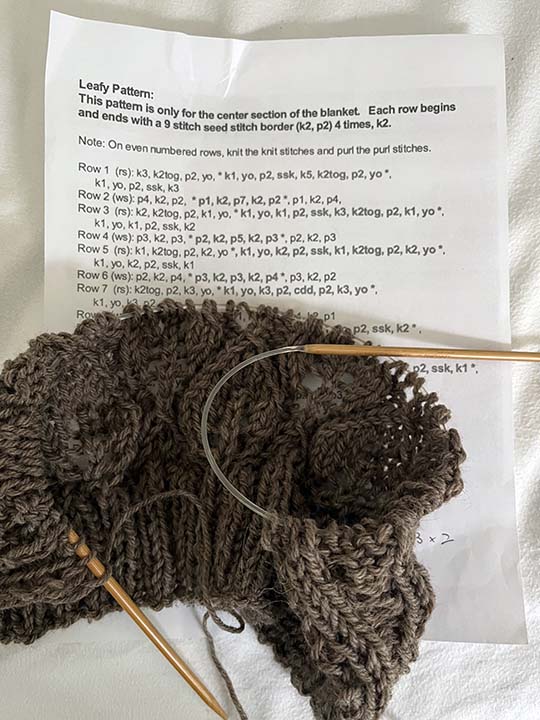
I make my own gifts these days where retirement allows the time and leisure to produce needle work – knitting has turned out to be an effective therapy for frayed nerves. And the photomontages from across the year usually find their way into a calendar. I do appreciate receiving self made gifts, given that I am surrounded by so many talented friends who excel in creativity. But that requires privilege, and people should not add to their stressful lives by investing time that is already a scarce commodity. A friend and I who experienced 30 years of lovely exchanges, decided that from now on its going to be books for the other’s grandchildren in lieu of our own pleasures, to build libraries for the next generation. There’s a way to break the cycle without bad feelings and only fleeting regret since I loved her presents.

It’s still true, though, that gifts – the ones given and the ones gotten – CAN provide a lot of joy, a sense of connectedness and enrichment beyond the material value. Not everything has to be transactional, or part of structural pressures that want to stratify social relations. Just make sure there are no strings attached.

Music contains words about the Magi, the three Kings who brought gifts to Bethlehem, in the classic version – Bach’s Christmas Oratorio Cantata 5 and 6.

Hoping for Grace

In Praise of Craziness, of a Certain Kind

On cold evenings
my grandmother,
with ownership of half her mind-
the other half having flown back to Bohemia-

spread newspapers over the porch floor
so, she said, the garden ants could crawl beneath,
as under a blanket, and keep warm,

and what shall I wish for, for myself,
but, being so struck by the lightning of years,
to be like her with what is left, that loving.

by Mary Oliver

from New and Selected Poems: Volume Two

This is probably one of the poems I love most, for so many reasons. The way it shifts between description and evaluation, the former showing an outsider’s perspective, the latter a relationship to another human being as well as a yearning for some form of grace. The tenderness with which a seemingly “crazy” act is put into perspective, disambiguated as a form of loving, is striking. We so often, scared to death by the perceived reality of losing our minds, rather distance ourselves from crazy behavior, instead of finding some remaining value in it. Oliver also acknowledges that we cannot count on (or control) a particular way of aging, but might be blessed – either avoiding dementia or finding a light within. A frightful admission and her unswerving insistence on finding hope, as in so much of her work.

There is a German saying that age brings out either the cow or the goat in women. The former is supposed to be a hefty, placid, friendly, not particularly flexible form of being. The latter has more the qualities of what English speakers would call “catty” a nervous, snippy, mean and often stubborn crone. Folk wisdom like this is wrong as often as it is right, or contains at least partial kernel of truths, as all stereotypes do. Fact is, despite an explosion of research into aging across the last decades we, as scientists as well, know very few things for sure.

We do know that the brain parts that regulate inhibition of behaviors are affected early on. The subsequent disinhibition might be relevant for becoming “a goat,” bitterness and anger now more expressed.

There seems to be overall agreement, that although personality traits remain relatively stable across the life span (UNLESS dementia occurs, which can completely change your personality without your fault) some traits seem to get a bit stronger age, and others diminish. Of the “Big Five” personality traits, agreeableness, conscientiousness and emotional stability seem to be getting a lift with maturation. Two other traits do decline with age – a general openness to experiences, and both facets of extraversion, social vitality and social dominance. (Ref.) Personality and aging interacts – some of us have an easier go accepting the hardship of aging than others. Personality resources such as self-esteem, perceived control, self-efficacy and resilience shape the person’s response to adversity in later life, not surprisingly.

What else do we know? Some of our long-held beliefs – for example that older people display a positivity bias and are better at emotional regulation compared to younger ones – are now questioned. New insights have found that contemporary old people are cognitively much better off than their peers who were born 20 years earlier, when tested at the same age. This is not because we somehow managed to delay the onset of age-dependent decline or because we decline more slowly across the years. Rather, we have been overall, across our lifespan, cognitively strengthened with better education, technological use, wider access to information, and that overall improved performance is giving us some slack to cover up the early signs of decline with age.

Here is a short list of the questions that are currently asked in the field (NIH/National Institute of Aging.)

  • There is a whole enterprise exploring the biology of aging to help with prevention, progression and prognosis of disease and disability. It is a two way street – aging is a risk factor for developing chronic disease, but diseases also hasten aging.
  • There is a body of work dedicated to better understand the effects of personal, interpersonal, and societal factors on aging, including the mechanisms through which these factors exert their effects. Research is looking into the interaction between behavior (lifestyle)social, psychological and economic factors, as well as the timing of intervention during critical periods in a person’s life span where the course is set, and the effect of place (there are geographic aspects that impact aging.)
  • Researchers are interested in looking a population differences, to see where disparities need to be tackled, and also how we can improve our understanding of the consequences of an aging society to inform intervention development and policy decisions.

They got their work cut out for them. Whether potential answers enable us to improve our empathic responses to people living with dementia, or help us to prepare better for our own decline, I cannot tell.

May what is left be loving.

Disaster Porn

Disaster-porn: “to satisfy the pleasure that viewers take in seeing other people’s misfortunes, as by constantly repeating vision of an event, often without commentary or context”. – Australia Macquarie Dictionary

My morning readings include the news from Europe, brought to me among others by Der Spiegel, a German weekly and the country’s largest news platform on the web. All photographs but one today were seen on their site last week, and elicited decidedly mixed feelings. They lure with beauty while depicting disaster, simultaneously drawing attention to human suffering as well as away from it.

An ice vendor waiting for customers during the worst heat wave in decades. In neighboring Nawabshah (Pakistan) the highest value ever recorded: 128.7 F on May 1st.

Somehow the term disaster-porn came to mind. It is a phrase often used to define depictions of suffering in the developing world, but also applied to the increasing number of end-of-world or other catastrophe movies coming out of the film industry, and not just in Hollywood. Is it ethical to depict, create and watch all this stuff? Let me put the answer right in front: it can be, theoretically. At least this was what I concluded after reading the essay that I am summarizing today while trying to solve my dilemma.

The remnants of a container depot in Bangladesh that stood in flames and then exploded, throwing heavy objects through the air for hundreds of yards. Dozends dead, hundreds injured. Foto: picture alliance / dpa / AP

The term disaster-porn can be found as early as 1987 when a Washington Post editorial about the stock market crash. It described that those of us doting on the disasters in cinematic action dramas are lured into believing that it is either all fake, or that we personally will escape bad fate in the end, never mind the millions we watch dying in catastrophic scenarios. The term has been popularized ever since, sometimes in specific ways, like in Pat Cadigan’s 1991 Sci-Fi novel Synner which used “porn” as a suffix denoting an excessive, overly aestheticized focus on a single topic. (The award-winning novel, by the way, envisions a world where the line between machines and reality becomes porous, a possible disaster scenario now in the real-life news 30 years later…just google AI.) The phrase is thus applied not just to fictional descriptions of disasters but also to round-the-clock depictions of round-the-world catastrophes by the media.

Iraqi boys herding sheep in a sandstorm. They are not allowed to enter into the province of Najaf, to avoid spreading the Crim-Congo fever. They are stuck at the border in the middle of the storm. Foto: Quassem Al-Kaabi / AFP

What is the problem? On the one hand, in an ever more interconnected world where we might be called on or able to help with disasters even at distant locations, information about them helps our collective mind to make decisions. In other word, the depictions might elicit empathy and understanding, which can turn into human solidarity.

On the other hand, there are multiple problems. Disaster-porn can be gratuitous and exploitative – published to sell clicks, or used as justification to simplify complex geopolitical realities, and thereby encourage military operations under the guise of humanitarian action.

In addition, over-exposure to images of doom can lead to a muting of your reaction, draining our reserves of pity, desensitizing us to others’ pain. It can be experienced as damaging our own sense of well-being, thus having us turn away from the suffering in the world. Compassion fatigue elicited by a pity crisis.

Boy amidst storks sifting garbage in the Indian province of Guwahati. Dangerous because of the extreme heat – several garbage dumps have spontaneously caught fire and combusted. Foto: Biju Boro / AFP

There is some inherent psychological truth to the fact that we better protect ourselves from too much exposure to bad news. If we feel that there is absolutely no way we can interfere with the starvation, drowning, imprisoning, wounding, torture, and killing of people, seeing them exposed to these situations will create a sense of anxiety that we will try to resolve by averting our eyes. A barrage of doom scenarios leads to feelings of hopelessness and helplessness, both associated with depression, and subsequent paralysis when we think about possible action – just no sense left, that we could make a difference. Here is just one of the studies that lays out that scenario.

Another way to cope with extreme heat across Asia.

And yet…

Disaster porn, then, in all its iterations and for all its flaws, is a vital political terrain in which publics are at least implicitly asked to struggle with the social significance of the suffering of others. It connects public issues like war, famine, earthquakes, and terrorist attacks to the private lives of those they affect, and shows us how disruptions of social structure become disruptions in individual biographies. This is the case in even the most seemingly stereotypical news reports of suffering in the developing world, and in even the most outlandish Hollywood disaster epics as well.” (Ref.)

Literature and disaster movies contribute in an odd way: they do describe the role chance plays with some people being more endangered than others, some surviving when others don’t. Yes, there are heroes (or villains) who manage to suggest that with some amount of smarts and vision you can still control the outcome (echoing our sense of exceptionalism in U.S. culture), but there are all the others who are not so lucky, because it is often determined by the vicissitude of geographical location alone, rather than specific talents or skills. Chance confers the privilege of survival. It might make us think about our own privilege and so raise compassion, since so far chance has spared us, amidst the forest fires, or floods or infectious diseases.

The Clark Ford River flooded the houses of many of the inhabitants of Fromberg, MO. This is a lawn ornament submerged in the waters. Foto: David Goldman / AP

Leave it to me to read and watch these kinds of novels and films, if only to spare you to have to do it yourself…..

My current target is a 1973 science fiction novel by Sakyo Komatsu, Japan Sinks, which took 9 years to write. It has been made into numerous films, a highly praised animé version among them. Some had altered endings, some were withheld during certain time periods because they were too close on the heels of real life disasters in Japan, given the exposure to earthquakes and the Fukushima catastrophe. The latest, a Netflix production, is so bad that I recommend it on a day where you need help to erupt in laughter – the acting – if you can call it that – guarantees that you will.

The book, however, is worming its way into my brain. The basic story concerns a scientist’s discovery of the likelihood that all of Japan, the entire archipelago, is going to go under due to earthquakes, ocean floor faults, and what not. One of the narrative lines concerns how the government is handling the crisis, from negligence to obstruction to panic. Don’t look up, this year’s U.S. disaster movie that I discussed here, probably took a page out of that book. Another line focusses on the distribution of millions of people around the world, with nationalist impulses against immigration vying with empathy for a drowning people. The philosophical question it raises, though, is one that we will have to think through in climate change migrations to come: what does it do to your identity, as member of a nation, or a tribe or a culture or a language group, when the place that defines you ceases to exist? Literally is no longer there to return to? Is it destructive to lose that connection to place which is a base for underlying sense of self, or is it empowering because you can shed the debt you incurred as a member of the nation (say of an imperialistic or fascistic past) and start from scratch?

Think it through – time not spent doom scrolling…

We could also focus on the message conveyed by a random stranger who was kind enough to let me photograph her t-shirt 2 days ago.

Here’s to The End of Time, in music at least.

Of optimistic and offensive pigs

I think we missed it twice in 40 years, our annual pilgrimage to a zoo on “ZooDay.” It is a commemoration of our first date ever at the Bronx zoo in NYC, all those centuries ago. Since we misremembered the original date by about 2 weeks when we first went back, we decided to add two weeks to the calendar every year and so it has been rotating through all seasons. This year it was cold, like all of this interminably rainy spring.

Traditionally a pilgrimage is defined as a journey, “often into an unknown or foreign place, where a person goes in search of new or expanded meaning about their self, others, nature, or a higher good, through the experience. It can lead to a personal transformation, after which the pilgrim returns to their daily life,” tells me my trusted Wikipedia. What we are doing at the zoo is not exactly a pilgrimage, but a celebration of a journey together – plenty of unknown places encountered there as well, and, yes, personal transformation.

I sometimes wonder why we stick to it (the zoo date, not the marriage!) Zoos elicit mixed feelings – how can you not feel for living beings put into cages? Then again, some species only escape extinction because zoos these days enable them to live and, with luck, procreate. And certainly zoos have an important educational function, allowing kids cut off from nature to experience first glimpses of awe when seeing something beyond a two-dimensional screen. At least that was what I thought, before reading some more on it.

There is quite a bit of smart writing around the controversy of zoos’ legitimacy these days. Here is a list of zoo-related books that cover a wide array of topics. Many argue that zoos should be abandoned. The most fascinating, for me at least, is a recent book called Zoo Studies, an interdisciplinary collection that examines zoos from historical, philosophical, social, and cultural perspectives, edited by Tracy McDonald and  Daniel Vandersommers. And here is a fun paper, What’s new at the zoo?, that looks at the last decade of research results around zoo-related issues, including whether animals have human-like emotions and should be afforded the rights of people.

(The New York York Court of Appeals, by the way, ruled this week that animals are not persons in the legal sense, and therefor can be denied fundamental human rights, like not being illegally imprisoned in zoos. The advocacy group who sued on behalf of an elephant interestingly used the legal construct of habeas corpus, in vain. (Funny how the Supreme Court decided that corporations are persons, for even longer than Citizens United, when our closest biological relatives are not, but that is a story for another day.)

There are many articles around claiming that science has “proven” that animals have emotions (happiness, sadness, fear, etc.), even complex emotions (shame, for example), like humans. One that caught my eye was a study about pigs that were deemed optimistic. The pigs were conditioned to two different sounds that signaled either something positive (food) or something unpleasant. They quickly learned to approach the good and avoid the bad. They were then put in differing environments – the lucky pigs got room to roam, and stimulating interactive toys. The control group pigs were in small cages with one non-interactive toy. Next they were presented with a novel sound, and, surprise, the stimulated pigs approached it, the other ones avoided it. Conclusion by the research team: good “mood” or stimulation fosters “optimism” in their research participants. They’ll approach in hopes the goodies will come.

I have a beef with that pork interpretation: Let’s start with Occam’s razor which is basically a scientific principle that says you should always prefer simpler explanations over complicated ones (parsimony). Why is this? The answer has several parts, but at the least, you should put into your theory only things that are truly demanded by the evidence, and no more.

The notion of pig optimism tramples that principle. First, let’s be clear that the evidence that’s at issue is nothing more than a behavior of approach or avoidance. That’s all. Where is the evidence here that in any way speaks to the pigs’ mood or emotions much less complex emotions?

How should we think about these pigs? One of the classic principles of behavior is Thorndike’s Law of Effect which basically means if you do something and it has a good result, you keep at it. If you do something and it turns out badly, you’ll stop. This principle explains many bits of human behavior but it also explains the behavior of a range of other animals, including organisms as simple as sea slugs. And that is all the theory you need for the pigs.

In the enriched environment the pigs saw novel objects, approached them, found them to be not harmful and in some way useful. That encouraged a habit of approaching novel objects. They learned to generalize broadly, in contrast to the control group who was provided only with a narrow gradient of experience. The pig did not have to develop a world view of the sort we might call optimism, the pig did not have to develop any feelings about this, and the pig didn’t need any brain sophistication to follow the Law of Effect. I say again: extraordinarily simple organism follow that law, with no implications for what they feel or believe.

Is it possible that pigs have feelings? Yes, I suppose. But if this behavior counts as evidence, then we lose any hope of figuring out which animals are complex enough to feel emotions and which are not. Here is a really interesting overview of the issues, anthropomorphism included, by Philipp Ball, a science writer.

And on a completely unrelated topic, involving a pig that elicits complex emotions rather than having them: the highest German Court just decided this week that a 13th century stone relief of a huge sow suckling identifiably Jewish people, with a Rabbi lifting the pig’s tail and staring into her anus, can remain in place above a famous church door. Jewish plaintiffs had gone to court to have the anti-Semitic sculpture removed, unsuccessfully. The BGH ruled that the church in Wittenberg (where Martin Luther – a rabid anti-Semite himself – once preached) had done enough to transform the sculpture into a “memorial,” by adding a bronze baseplate and a nearby display with an explanatory text. The sculpture is known as Juden Sau, Jewish Sow, a derogatory term for Jewish people used then and now by anti-Semitic Germans. For much longer than since the first ever zoo was ever established in 1793 in France….

Of course, not a single photograph of a pig. At least it’s the title of today’s music – the beautiful sound track for a movie I still have not seen but am told I have to…Pig.

Agnotology

Guns symbolize the power of a minority over the majority, and they’ve become the icons of a party that has become a cult seeking minority power through the stripping away of voting rights and persecution of women, immigrants, black people, queer people, trans people – all of whom have been targeted by mass shootings in recent years.” –Rebecca Solnit

Agnotology is another word I had to look up in the dictionary. It refers to the study of ignorance, and the ways in which ignorance can be the outcome of acts of interference with your learning. Ignorance, then, not just as the absence of knowledge, but the product of cultural or political processes designed to prevent you from knowing.

(Photographs today are from the museum at Fort Sumter, the site of the start of the American Civil War, and graves of the fallen in Charleston, South Carolina, mostly decked with confederate flags and visited by birds.) I approached the monument by boat a few years back.

AGNOTOLOGY, The Making and Unmaking of Ignorance, a 2008 classic text edited by Stanford profs Robert Proctor and Londa Schiebinger, both historians of science, is worth revisiting in the context of the 2nd Amendment debate.

According to Proctor the “cultural production of ignorance” has been instrumental for the tobacco and fossil fuel industries. It is now embraced by the gun lobby as well. (I am summarizing what I learned here.)

Think of things that can make you sick: tobacco, sugary foods, chemicals applied for agricultural use, poisoning ground water, to name just a few. The industries peddling these commodities are focused on certain propaganda. You can cast doubt on the scientific linkage between cigarettes and cancer, for example. You can shield producers and sellers from scrutiny. And you can shift the debate to issues of “personal responsibility.” Same for things that sicken the planet: you can cast doubt on the relationship between fossil fuel use and climate change, protect the oil industry from scrutiny, and shift responsibility to the consumer, rather than reveal structural policies that harm.

With regard to guns that kill: you can prevent research from being done (or revealed) that shows the true causes for gun violence, including objective measures of what freely available gun access implies. You can spare the industry any liability, and you can blame individual factors, like mental health, or loosening family structures, or grooming teachers, or sexual mores or video games – you name it, all with the goal to prevent policies that curb the unconstrained purchase of arms.

And last but not least, you can sell alternative “legal scholarship,” which eventually makes it upstream to the courts when interpreting 2nd Amendment origins and meanings.

Given the amount of misinformation, what DO we know about the history of gun laws? The first law prohibiting guns for certain people was enforced in Virginia in 1633. No guns for Native Americans. Other colonies followed suit. Enslavers, too, wasted no time (Source here):

As early as 1639, on the other hand, laws were requiring White men to be armed to be able to act as militias controlling the enslaved population.

Eventually the 2nd Amendment to the Constitution was written not to favor individual gun use but for the protection of these slave-controlling militias, so that no-one could disarm them and disadvantage the Southern, slave-holding states who needed their might.

Note the phrasing in the museum annotation (below images of slaves) above. “only a small percentage…” as if that makes it less egregious. The rest was sold into slavery in the Caribbean and Brazil, with North American interests in plantations fed there as well. And they brought sickness to the continent! How dare they?

Below the focus on the variability of slavery experiences almost suggest there were some conditions that weren’t as bad as others, and prosperity demanded it!

Fast forward to the 20th century. The NRA early on approved of legislation limiting access to certain weapons, like the National Firearm Act of 1934 and the Gun Control Act of 1968. Things changed, though, with the achievements of the Civil Rights Movement and the New Deal, expanding the powers of government and altering structural hierarchies of US society. Fierce backlash happened among those seeing their status threatened, and a push towards unfettered arming of men. In the 1990s we saw a growing militia (Christian white power) movement in response to Clinton’s gun laws. (Think Ruby Ridge, Idaho and Waco, Texas.) These extreme right wing forces subscribe to the “insurrection theory” of the 2nd Amendment, which says that the 2nd Amendment protects the unconditional right to bear arms for self-defense and to rebel against a tyrannical government. If and when a government turns oppressive, private citizens have a duty to take up arms against the government. The Proud Boys were just one division that put this into action, among other things, during the January 6th storming of the Capitol.

By 2007 the majority of justices on the Supreme Court had been appointed by presidents who were members of the NRA. In D.C. vs. Heller, Scalia argued that the 2nd Amendment protects an individual’s right to own guns (unconnected to a well-regulated militia), but vaguely implied that there were limits to the right, frustrating both gun control voices and the NRA folks who had never seen a limit they liked, as far as their own desires were concerned

If you can tolerate a style of writing that does not shy away from a somewhat excessive use of expletives, I highly recommend reading Elie Mystal’s Allow Me To Retort, an analysis of the Constitution in extremely accessible form, with insights into the 2nd Amendment in particular. It is a short, brilliant primer. Here is a review that captures everything I felt after finishing this book.

A radical change to the law is expected to be handed down by the Supreme Court this month, expanding 2nd Amendment rights. Here is is the Brennan Center for Justice‘s full analysis of what we will likely face. It is worth noting that once the door has been opened to prohibit the government from sensible regulations, as is expected here with regard to carrying guns, other regulative power might soon be taken away as well: environmental protection, public health requirements, work place safety, to name just a view.

It is no surprise, then, that the teaching of history as it unfolded, and of the conditions some try to maintain (most Americans want stricter gun laws), is anathema to those who want to turn the clock back, weapons in hand to meet a government that does not please them (after they meet their neighbors, who do not please them either given the neighbors’ quest for righting the injustices of a racially segregated society.) They do everything to obscure and obfuscate the knowledge that could empower true democratic policies and decision making and impact the sales of deadly military-style weapons and the ideological purposes they serve – agnotology in action. A Supreme Court undermining majority rule acts as the hand maid.

A sense of place

My twitter feed regularly sends me images of three artists, without me ever having followed those sources. Riddle me that! I like two of them very much (Max Ernst and Varo Remedios,) but had never heard of the third one, Ivan Shishkin (1832-1898). He was a Russian Realist (in contrast to the other two surrealists,) and I now recall I included one of his paintings in a recent blog about people wandering through landscapes. But that’s it.

Pine on sand # Heuer #photography

In any case, looking at Shishkin’s landscapes, painted around the area of St. Petersburg and elsewhere in Russia, I was struck how many of them resided in variations in my photographic archives, without ever having set foot into Russia. The scenes were photographed in Europe and North America. The fact that similarities can be salient, just as dissimilarities can, seemed noteworthy in light of the fact that I know so many people who are currently moving away or have moved away from places they have called home for years. Not everything will be unfamiliar!

Stone in the forest # Heuer #photography

For the younger ones, the reasons for moving have to do with increased flexibility of the workplace, allowing to do your job long distance. For those I am most familiar with, a continual change of location implies mostly excitement, and has also been the norm between college, grad school, post docs and so on. Relocation of us older folks is a different thing – often done to be closer to family, to be of mutual support, sometimes done to find environments easier on an aging body or to escape into (visions of) tranquility. Not an entirely new phenomenon, if you think of the many East Coast “snowbirds” who annually tracked to Florida in the winter from the Northern states (again, I am aware it is the privilege of a certain class.)

Oaks # Heuer #photography

You give up a few things when you move. Your familiarity with the lay-out of your city and environs, your ease of finding your way, your knowledge of where to find things (in shops or nature,) not to mention your doctors, dentists, and last but not least the friends who remained (this latter one is for older people often a reason to move rather than to stay – people around you are no longer.) And your sense of place, your attachment to and pride in the place you call home, will be disturbed, although, as we will see, it can be reestablished on the other end with remarkable fluency.

Mounds # Heuer #photography

There is a whole research enterprise in various scientific disciplines that explores the (dis)advantages of a sense of place that comes mostly from having lived somewhere for a long time, if not all of your life. (I got my information here and here.) Definitions vary as do approaches, it can be confounding to try and get a grasp of it.

For psychologists, it is the experience of a person in a particular setting, feelings and thoughts included. In geography, it’s called topophilia, the affective bond between people and place or setting. For historians it is a sense of place that we ourselves create in the course of time. It is the result of habit or custom, reinforced by what might be called a sense of recurring events. For anthropologists, place attachment is more than an emotional and cognitive experience, it includes cultural beliefs and practices that link people to place, a symbolic element tying us to shared history.

The tree in the field # Heuer #photography

Let’s stick with the psychology: the feelings and thoughts about where you live. They can be influenced by numerous bonds. There is the biographical tie, you were born here or lived here for a long time. The bond can be based on spiritual relationships, you feel a sense of belonging within your people’s history, for example. You can be tied to a place for ideological reasons (let’s skip that…) or due to an accepted narrative (creation myths, stories of origin.) And, importantly, the relationship can be a commodity: you choose a place based on desirable attributes, grand children high on the list (!), life style preferences, health advantages and so on. Last but not least the tie to a place can be involuntary, a bond by material pressures, constrained by economic dependency or lack of choice (and I am not going into the legislative proposals floating around that in the future women will only be allowed to leave a state if they prove they are not pregnant.)

Sandy Coastline #ivanshishkin # Realism

Sandy Coastline # Heuer #photography

Note, for all of you who move(d) with mixed feeling: the element of choice is one that can (re)establish a sense of place, a positive attachment. Given that our notions of a somewhat ideal community change across the life span, it follows that we would want to relocate towards something closer to our ideals. It might not be easy, but then being stuck in an increasingly lonely place isn’t either. It might not be your first choice, but at least you have a choice, in contrast to people displaced by involuntary reasons.

Mirror Lake shrouded in mist # Heuer #photography

The research bears out that you increase the likelihood of positive attachment to a place with increased participation in a community, with benefits for the environment in return (the more attached people are to a place, the more they invest to protect that place, urban or rural). I think community participation is particularly difficult if you are older, and now constrained by the pandemic dangers for many of us. Nonetheless, focussing on ways to integrate with people who share interests or political goals might be the way to go. Joining walking tours to explore the architecture or history of a place might help. Even if you loathe group activities or don’t feel up to take history courses, there are ways to familiarize yourself with the place on one’s own. Worthwhile exploring!

(And on a totally selfish note: I miss every single one of you who is moving/has moved…. you are putting a dent in my sense of place! And welcome to the ones moving in!)

Grass # Heuer #photography

Music by a quintessential Russian composer. (And YES I do not cancel Russian artists if they have no affinity to current events.) “The 14th symphony is scored for soprano, bass, and orchestra and dedicated to English composer Benjamin Britten. Comprised of 11 texts by Federico Garcia Lorca, Apollinaire, Küchelbecker, and Rainer Maria Rilke, the theme of mortality unites these varied texts. The result is a highly unorthodox, engrossing reminder that death is always waiting.”

So we might as well make the best of our remaining time, moving and all!)

Forest Landscape # Heuer #photography

Get a Grip, Heuer!

Originally, I meant to write about my Trouble with Change. I decided to get a grip instead – let me explain.

Columbia River, looking East

Two of my regular haunts, the Steigerwald Lake National Wildlife Preserve in WA, and parts of the Tualatin River National Wildlife Preserve south of Portland closed a while ago for considerable amounts of time, 3 and 1.5 years respectively, to restructure the landscape, reconnecting the rivers with floodplains. Altogether important environmental improvements, with me (and others) moping about years of lost access even while acknowledging the need, and now celebrating the re-opening.

Restored flood plain and lake, respectively

When I first learned about the closures in 2019, I was upset that everything changes, even landscapes, usually reliable points of constancy. In fact, hiking through both preserves this week, I was again sad about some paths no longer accessible, while others were rerouted and still bore signs of human construction and interference, which will soon disappear, I guess.

Harrier Hawk

I consider myself a person pretty open to change, even if it is not always chosen by myself. I have lived through and adapted to major changes, the types of environments I lived in, from small rural German village-life to years in metropoles like New York City, the languages I have spoken, careers that came and went, constellations within my household, rise and decline of friendships and last, but not least, changing capacities of an ailing body. All taken, with the exception of short interims of sadness or agitation, in stride. So why is the change in the faces of familiar landscapes such an issue? You tell me.

Herded goslings and flock of lesser yellowlegs, I think

Plain old ducks

It makes me embarrassed. Almost ashamed, given the intense demands for adaptation to change required by the many refugees in this war- and misery-torn world of 2022. Think about the psychological burdens for any given refugee, with Ukraine of course holding a special place in my consciousness right now. The trauma load often consists of the pre-flight part, where violent events, threat to life or loss of loved ones and destruction of home are experienced. Then the flight itself whether under a carpet of bombing, or across ocean with unstable boats, drowning in the Mediterranean, burning to death in dry Greek island camps or freezing to death at closed Polish borders, you name it. Then the arrival in the host country, which reacts to despondency with varying degrees of helpfulness, often dependent on the color of your skin, the (dis)similarity of religious and cultural practices, your ability to speak or learn the language and degree of prior education.

Northern flicker, joined by swallows

Add to this forms of survivor guilt, that you escape a dreaded fate that others didn’t (think of the large number of Afghans who were left behind by those who were allowed to flee,) the separation of family units (men not allowed to leave their country of origin, for example, to be recruited) and the complete loss of trust when your very own friends and neighbors became the enemy who killed you and yours (think Bosnia, for example,) or refused to believe the reality of your plight (your Russian family not accepting that war occurs in Ukraine.) It is no surprise, then, that studies indicate that depression and anxiety are at least as common as post-traumatic stress disorder (PTSD)and suggest that one or a combination of these conditions affects at least one in three refugees. (Ref.) One in three…

Turtles

Of course there are exceptions – here is a well-told story of a Syrian refugee in Germany whose intelligence, achievement orientation and a good portion of luck enabled successful adaption despite cultural and bureaucratic obstacles. Here is a thoughtful document for professionals how to help children through the acculturation process that speaks to a larger, more general need and seems to have been successful. (Source is Canadian, the only thing I could find in English.)

Blue herons roosting

In any case: the burden of required change while under psychological duress, or even traumatized, is immense.

My own reaction to changes in nature should be nothing but endless gratitude for what I have and what I’m spared. Duly noted. Grip gotten.

Common yellow throat

Yellow-rumped warbler (Butter butt!)

Music today is a favorite cello concerto. War horse, I know, doesn’t make it less beautiful.

And here is someone waiting for the mosquitoes to enter his beak:

Red-winged blackbird